24 Tiny Bedroom Ideas for Renters Who Need More Space
TL;DR
Tiny rental bedrooms are frustrating because they often force people to live around limitations they cannot permanently fix. The walls may be plain, the closet may barely function, the lighting may feel harsh, and every piece of furniture seems one size too large for the room. These tiny bedroom ideas focus on renter-friendly ways to create more visual space, better storage flow, calmer layouts, and a softer atmosphere without damaging the apartment or spending a fortune.
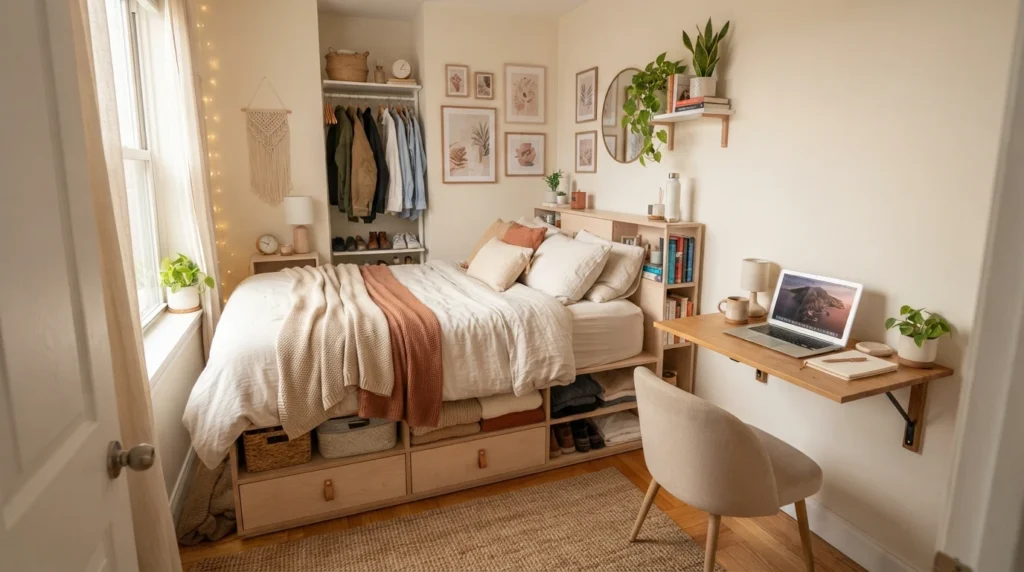
1. Choose Furniture That Does More Than One Job
Tiny rental bedrooms become overwhelming fast when every piece of furniture serves only one purpose. A bed, dresser, desk, nightstand, laundry basket, and storage cabinet can easily consume an entire room before the space even starts feeling personal.
Furniture that quietly combines functions changes everything. Storage beds, benches with hidden compartments, foldable desks, and ottomans that store blankets reduce visual crowding because fewer separate objects compete for floor space.
This is one reason hotel rooms often feel more spacious than small apartments with the same square footage. Their furniture works harder while visually saying less.
2. Use Peel-and-Stick Wall Lights Instead of Floor Lamps
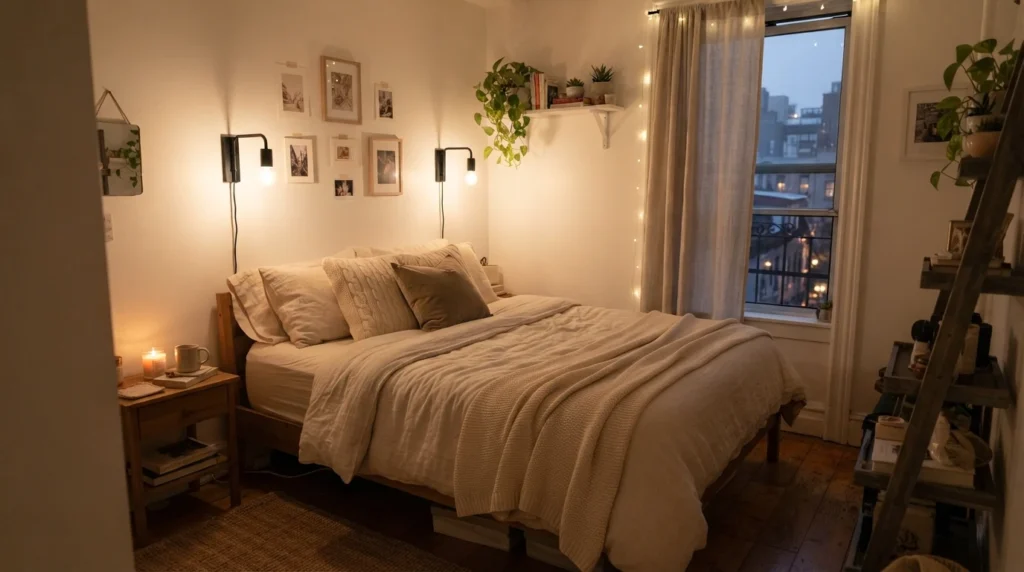
Tiny bedrooms feel cramped surprisingly quickly when floor lamps start occupying corners and narrow walkways. In rentals where hardwiring is not possible, peel-and-stick wall sconces create warmth without sacrificing movement space.
This works especially well beside beds where nightstands already struggle to hold essentials. Soft wall lighting also creates a calmer nighttime atmosphere because it spreads light more gently across the room instead of blasting brightness from one harsh source.
Warm lighting matters more than expensive decor in tiny spaces. A room with soft lighting often feels cleaner, calmer, and more inviting automatically.
3. Keep the Floor as Visible as Possible
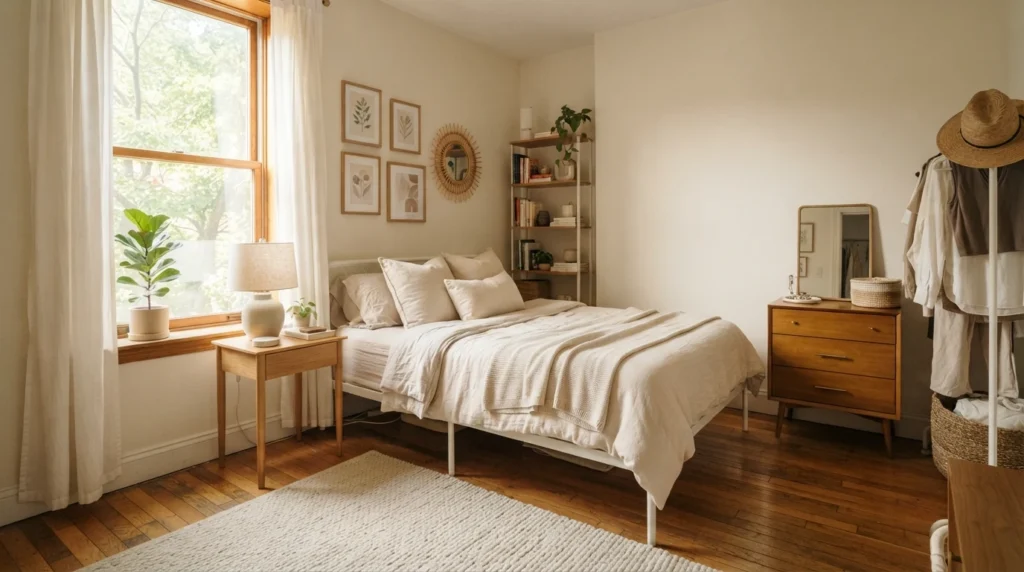
One hidden reason small rental bedrooms feel suffocating is because too much furniture blocks the floor visually. When the eye cannot follow open flooring across the room, spaces start feeling compressed and cluttered.
Furniture with visible legs helps dramatically because light and flooring continue flowing underneath. Even slim visual gaps create psychological openness in tiny rooms.
This is also why oversized platform beds can sometimes make apartments feel heavier emotionally, especially when paired with bulky dark furniture.
4. Use Curtains to Hide Open Storage
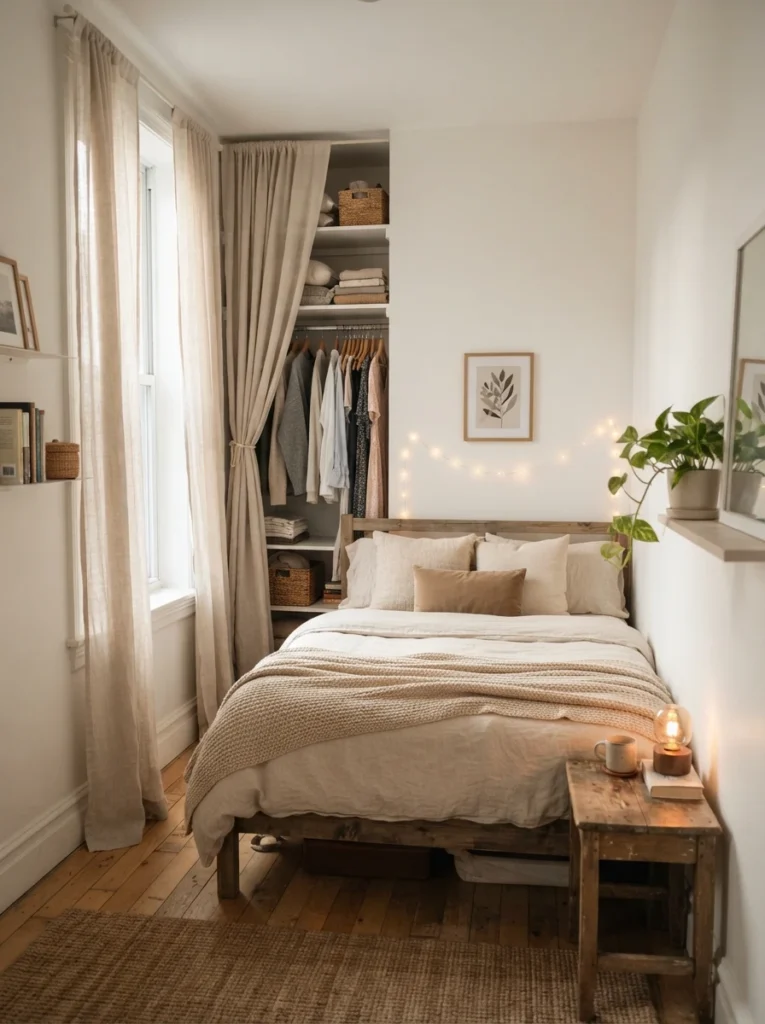
Rental bedrooms rarely contain enough closet space, which often leads to exposed clothing racks, stacked bins, or overloaded shelving units. The problem is not only physical clutter. It is visual exhaustion.
Soft curtains instantly calm open storage because the eye no longer processes every object individually. Linen curtains work especially well because they soften the room instead of making it feel blocked off.
This simple trick makes storage feel intentional rather than temporary and chaotic.
5. Push Large Furniture Toward the Darkest Wall
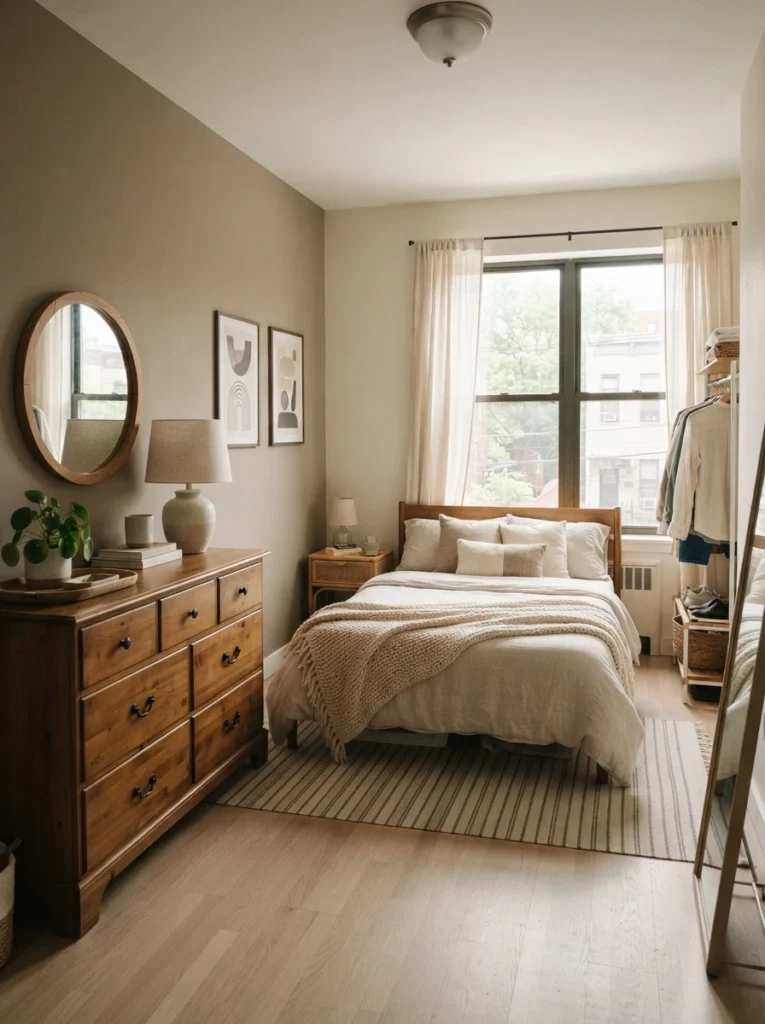
Many renters automatically place furniture wherever it physically fits, but visual balance matters more than people realize. Large dark furniture pieces usually feel less overwhelming when positioned along darker walls or corners of the room.
This allows natural light to move more freely across open areas instead of getting visually interrupted immediately. Tiny bedrooms feel calmer when brightness spreads evenly instead of being blocked by heavy objects.
The room starts feeling intentionally arranged instead of accidentally crowded.
6. Replace Bulky Dressers With Vertical Storage
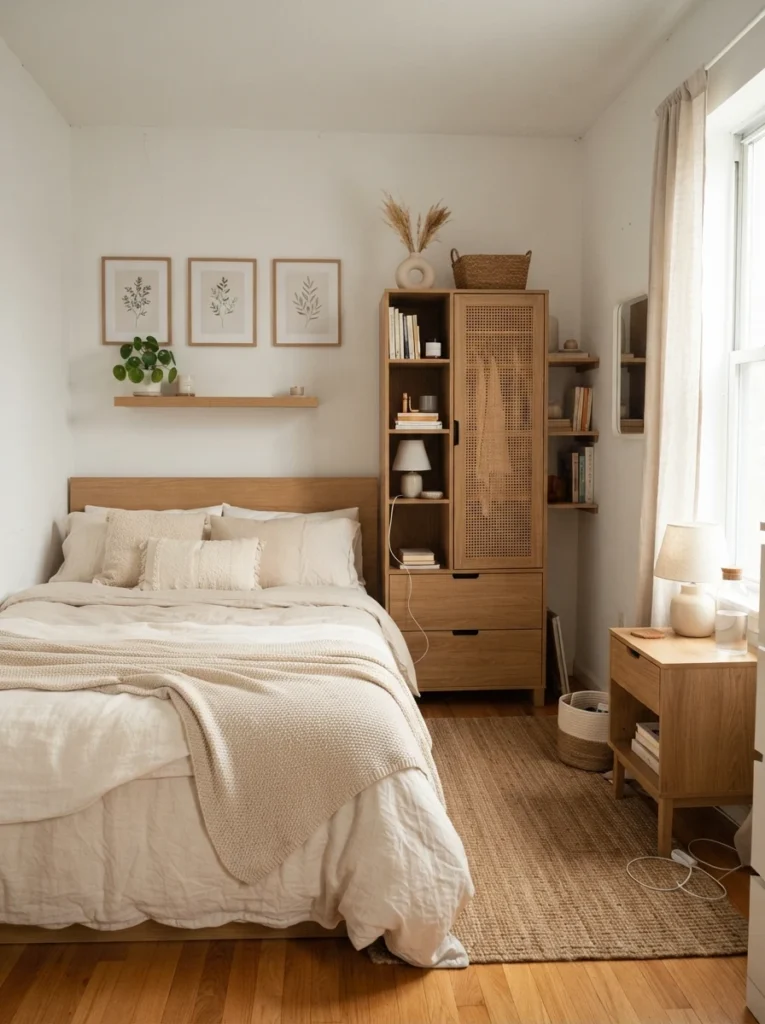
Wide dressers often dominate rental bedrooms because apartments rarely leave enough circulation space around them. Tall narrow storage pieces usually create better movement flow while visually making ceilings feel higher.
Vertical storage works psychologically because it pulls attention upward instead of outward. This creates a softer sense of spaciousness even when the room itself remains tiny.
The best setups still leave some empty wall space visible. Fully packed vertical storage can start feeling oppressive quickly.
7. Use Warm Neutrals Instead of Harsh White Everywhere
Many rentals already feel emotionally cold because of flat white walls, artificial lighting, and generic finishes. Adding even more bright white decor often increases that sterile feeling instead of making the room calmer.
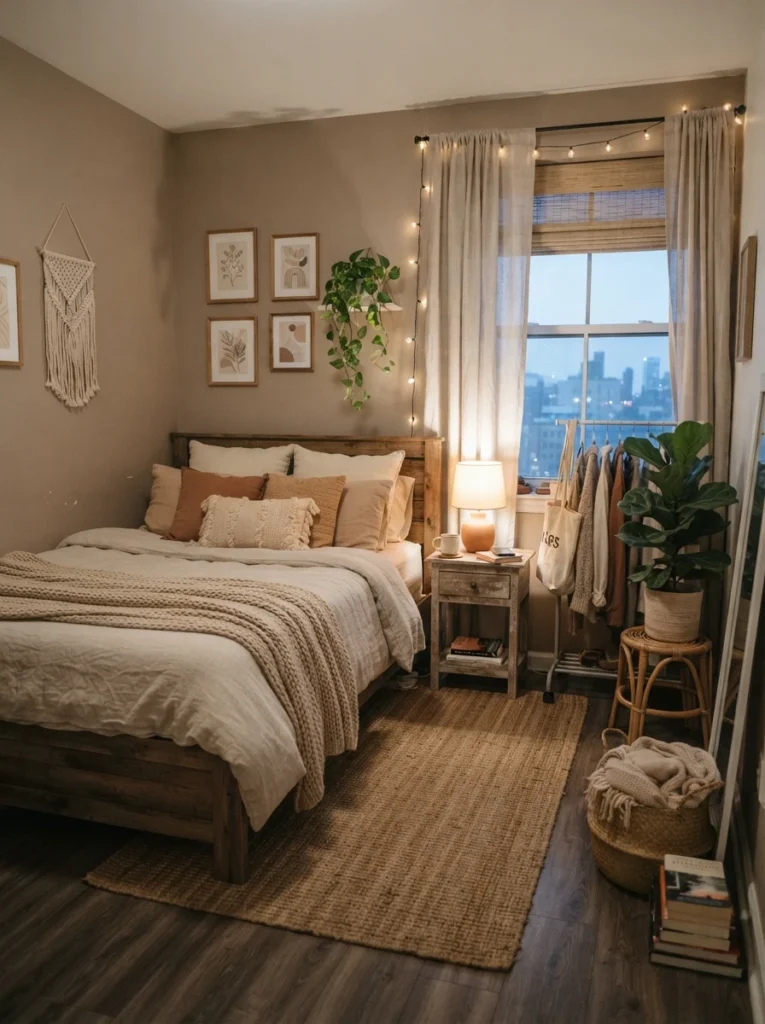
Warm beige, soft taupe, muted brown, and creamy textures soften harsh apartment interiors naturally. Cozy rooms usually rely more on texture layering than bold color statements.
A warm room often feels emotionally larger because the atmosphere becomes softer and less visually aggressive.
8. Use Mirrors to Reflect Light, Not Clutter
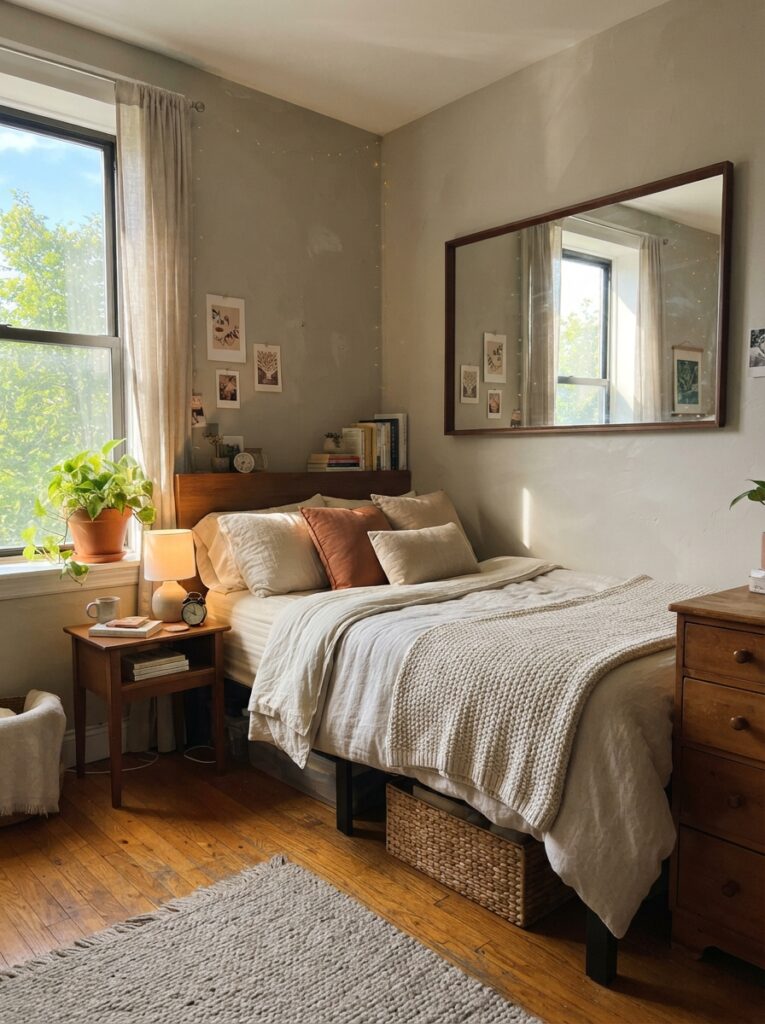
Mirrors are one of the oldest small-space tricks, but placement determines whether they help or hurt the room emotionally. Reflecting a messy laundry pile or overcrowded shelf doubles visual stress instantly.
Mirrors placed opposite windows or beside soft lighting create openness because they spread brightness deeper into the room. Thin-framed mirrors usually feel lighter visually than ornate heavy styles in compact rentals.
This subtle reflection effect helps tiny bedrooms feel less enclosed during both day and night.
9. Stop Filling Every Empty Corner
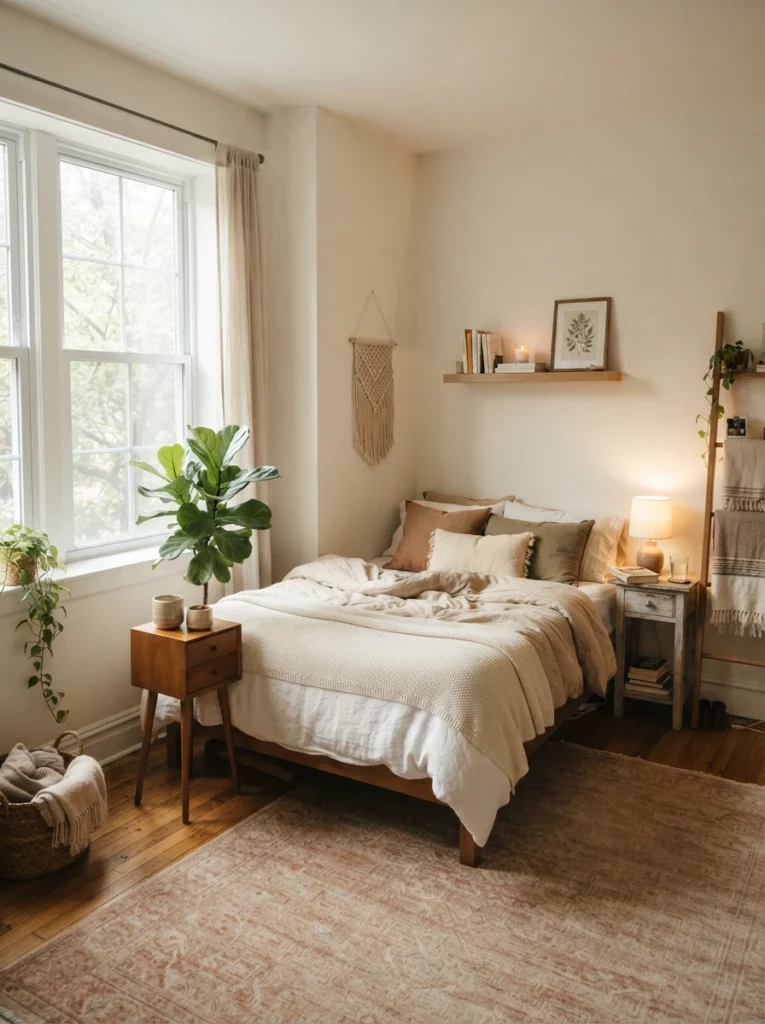
Small bedrooms often feel crowded because renters try to maximize every inch immediately. Empty corners start feeling like “wasted space,” so people add shelves, baskets, stools, or random furniture until the room loses visual breathing room entirely.
Sometimes the calmest design decision is leaving one area intentionally lighter. Open corners allow the eye to pause, which helps tiny bedrooms feel emotionally softer and less overstimulating.
Not every inch needs to work constantly.
10. Use One Statement Piece Instead of Too Many Small Decor Items
Tiny bedrooms become visually noisy quickly when every surface contains tiny decorative objects competing for attention. One larger statement piece often creates more impact while keeping the room calmer overall.
A large framed print, oversized knit blanket, textured headboard, or warm pendant light creates personality without overwhelming the layout. Smaller decor clusters tend to create visual fragmentation in compact rentals.
The room should feel cohesive, not overstimulating.
11. Add Soft Texture Instead of More Furniture
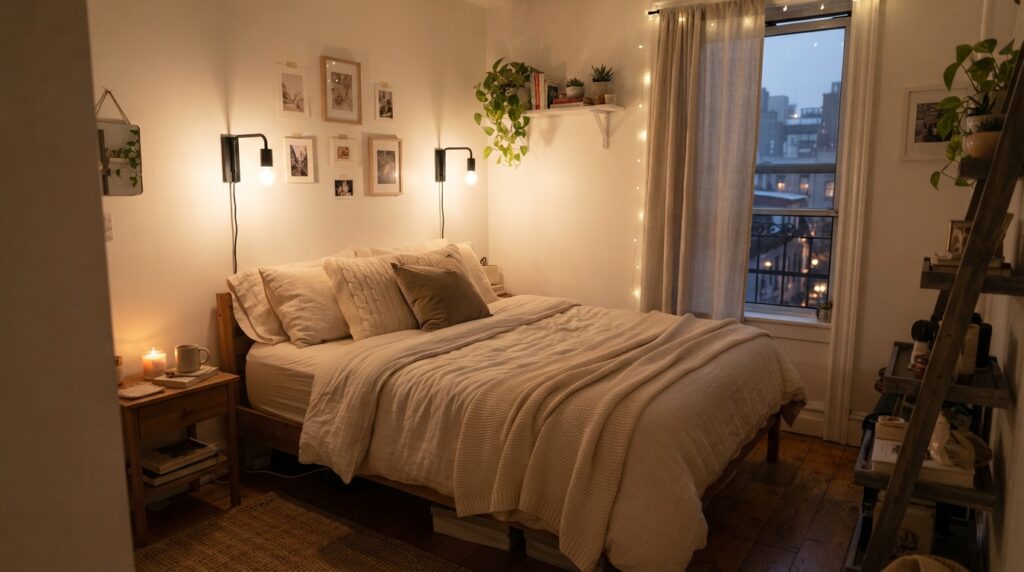
Many renters try to make tiny bedrooms feel cozy by adding more furniture, but the room usually needs softness more than extra objects. Texture changes the emotional atmosphere without physically shrinking the space.
Linen bedding, knit throws, woven baskets, and soft curtains create warmth because they reduce the hard visual edges that many rental apartments naturally have. Tiny rooms feel calmer when materials absorb harshness instead of reflecting it.
This is why minimalist hotel rooms still feel inviting. They rely heavily on layered texture even when the decor itself stays simple.
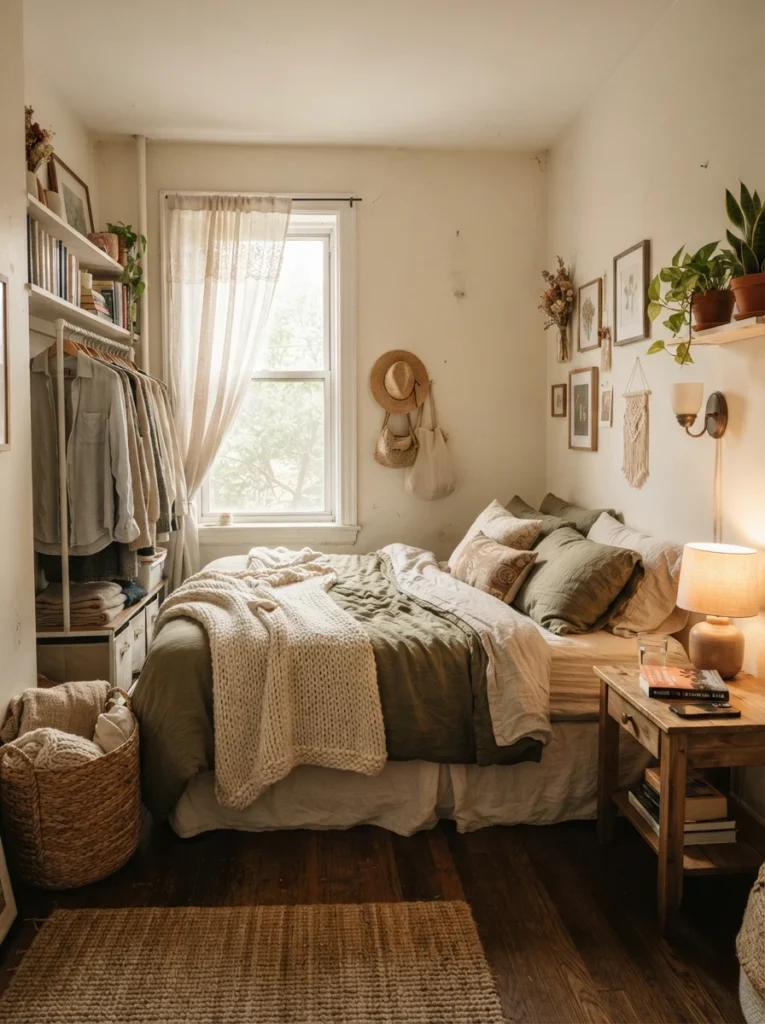
12. Use a Small Desk That Can Disappear Visually
Working from a bedroom becomes emotionally draining when the workspace dominates the room all day. Large office desks often make tiny apartments feel permanently “on,” which quietly affects relaxation and sleep.
Slim floating desks or compact wooden tables help because they visually disappear more easily after work hours. Pairing them with soft lighting instead of harsh task lamps also prevents the room from feeling overly corporate.
Bedrooms should still emotionally feel like bedrooms at night.
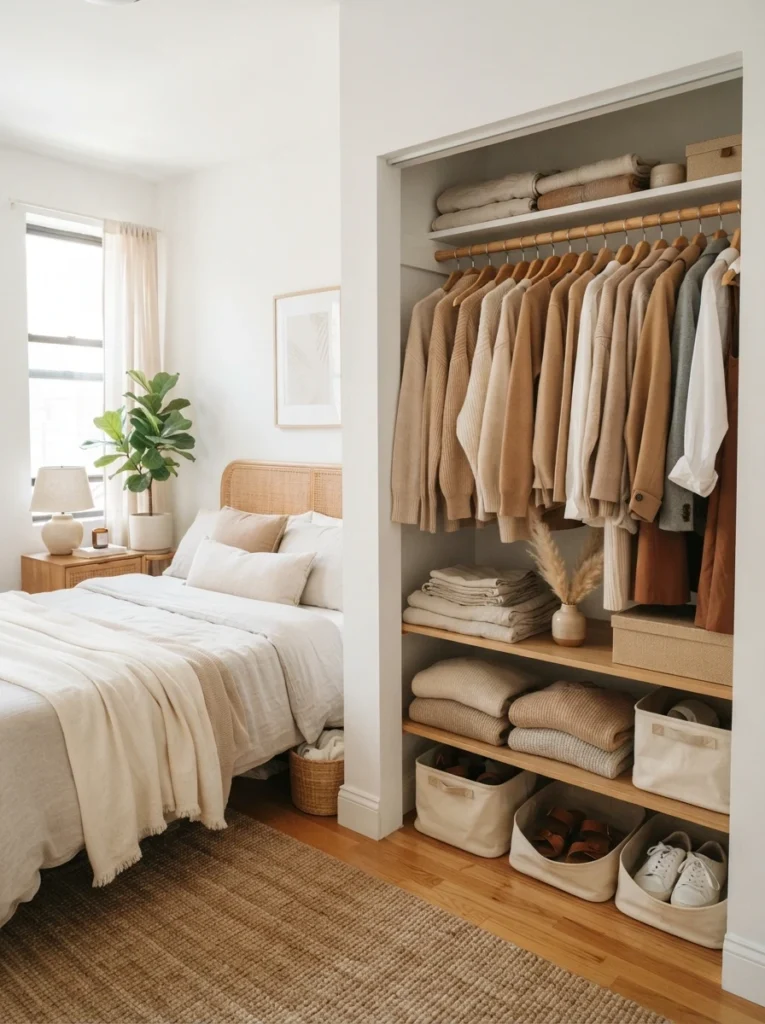
13. Use Matching Hangers to Reduce Closet Chaos
Open closets and exposed clothing racks instantly feel calmer when hangers visually match. Random colors and shapes create subtle visual clutter that makes even organized closets feel chaotic.
Wooden hangers or slim neutral velvet hangers create consistency, which helps the eye process the closet area more quietly. This sounds minor until you compare the emotional feel of a visually messy closet versus a balanced one.
Tiny bedrooms magnify visual inconsistency fast.
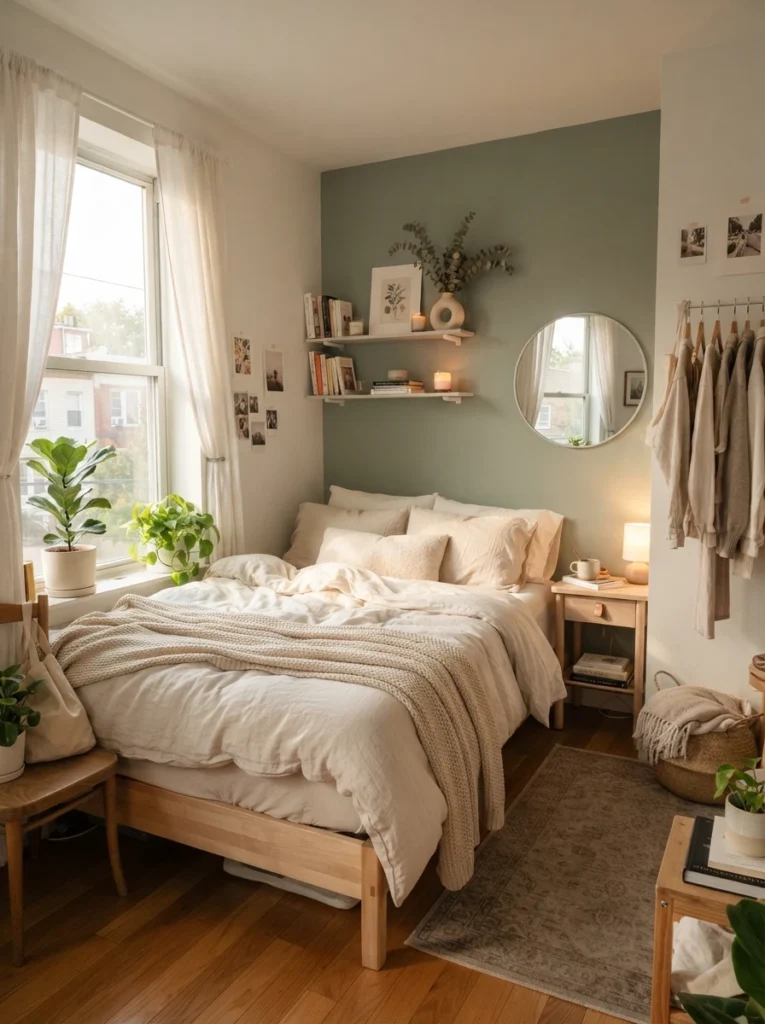
14. Place the Bed Where Morning Light Reaches It
Bedrooms feel emotionally different depending on how natural light moves through the room. Waking up beside soft morning light creates a calmer start to the day than waking in a dark corner surrounded by heavy furniture.
This does not mean every bed must sit directly under the window. It means allowing daylight to reach the sleeping area naturally instead of blocking it with wardrobes or shelving.
Soft natural light makes tiny bedrooms feel emotionally open even when square footage stays limited.
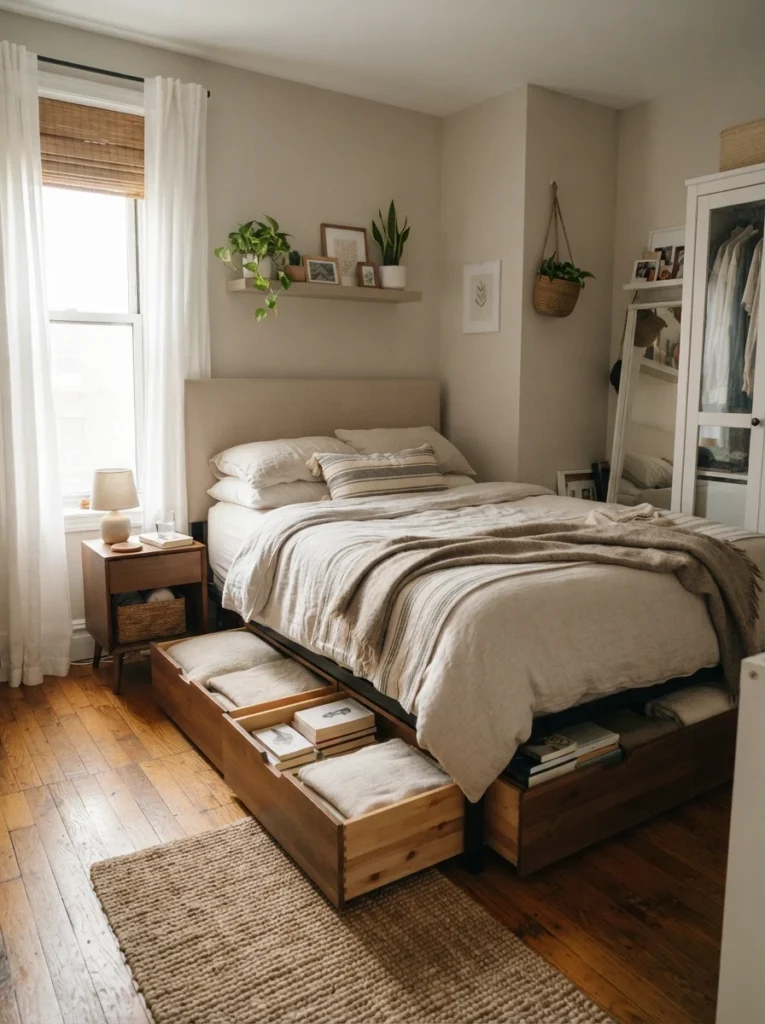
15. Use Under-Bed Storage That Looks Intentional
Under-bed storage often becomes hidden chaos because people throw random bins underneath and forget about them for months. Tiny bedrooms feel calmer when hidden storage still looks visually controlled.
Matching fabric bins, rolling wooden drawers, or woven containers work better because they blend into the room naturally. Clear plastic tubs often create visual harshness even when partially hidden.
Storage should reduce stress, not quietly remind you of unfinished clutter every time you sit on the bed.
Final Thoughts
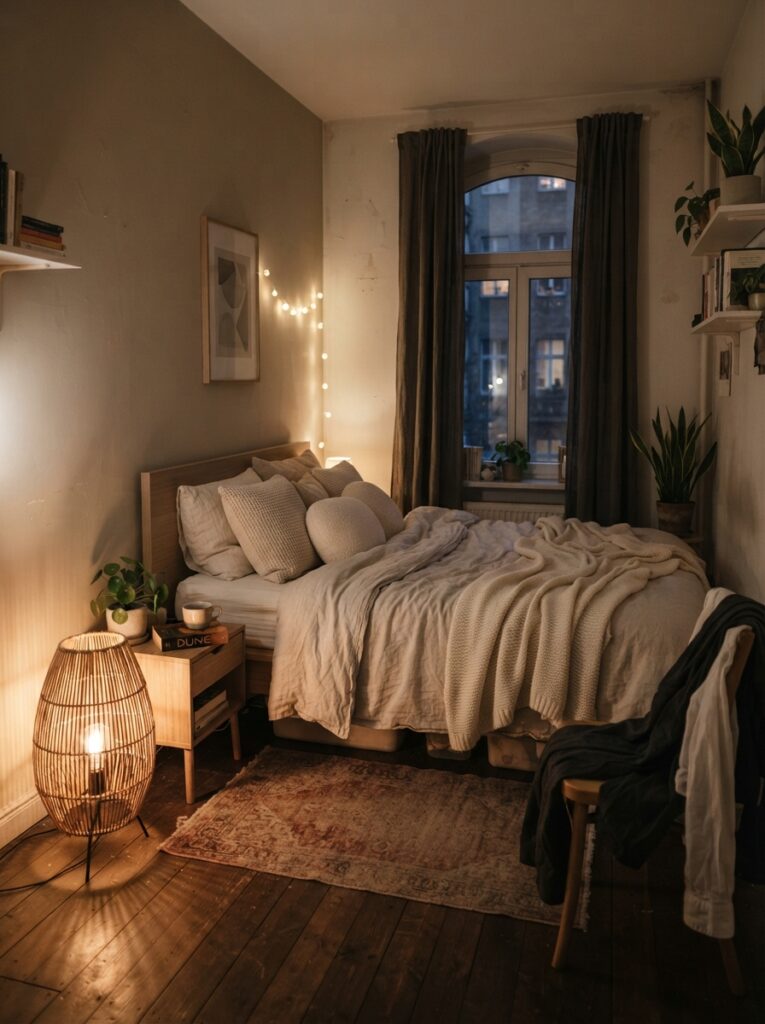
Tiny rental bedrooms become emotionally exhausting when every corner feels crowded, every surface collects clutter, and every layout decision ignores how people actually live day to day.
The calmest small bedrooms usually succeed because they simplify movement, soften lighting, reduce visual overload, and create emotional warmth without overfilling the room. Cozy apartments are rarely about perfection. They are about creating spaces that quietly support rest, comfort, and everyday life.
Even the smallest rental bedroom can feel calmer, softer, and more spacious when the room stops trying to impress and starts working with real human behavior instead.