
11 Under-Sink Cabinet Organization Ideas That Handle Leaks and Clutter
TL;DR: The cabinet under your kitchen sink deals with two problems most other cabinets don’t: plumbing that eats into usable space and the constant risk of moisture damage. A waterproof liner, a leak detector strip, and a few tiered or pull-out organizers built to work around the pipes can turn this into one of the most functional cabinets in the kitchen instead of the one everyone avoids opening.
Every kitchen has one cabinet that gets opened more than any other and organized less than any other, and for most people, that’s the one under the sink. Between the P-trap, the garbage disposal, and whatever supply lines run through it, the space rarely comes in a clean rectangle, which makes it tempting to just shove cleaning sprays and sponges in and shut the door. Add in the fact that this is also the cabinet most likely to get wet, and it’s easy to see why it turns into a mess faster than anywhere else in the kitchen.
Here are 11 under-sink organization ideas that work around the plumbing instead of fighting it, while also protecting the cabinet from the leaks that eventually happen no matter how careful you are.
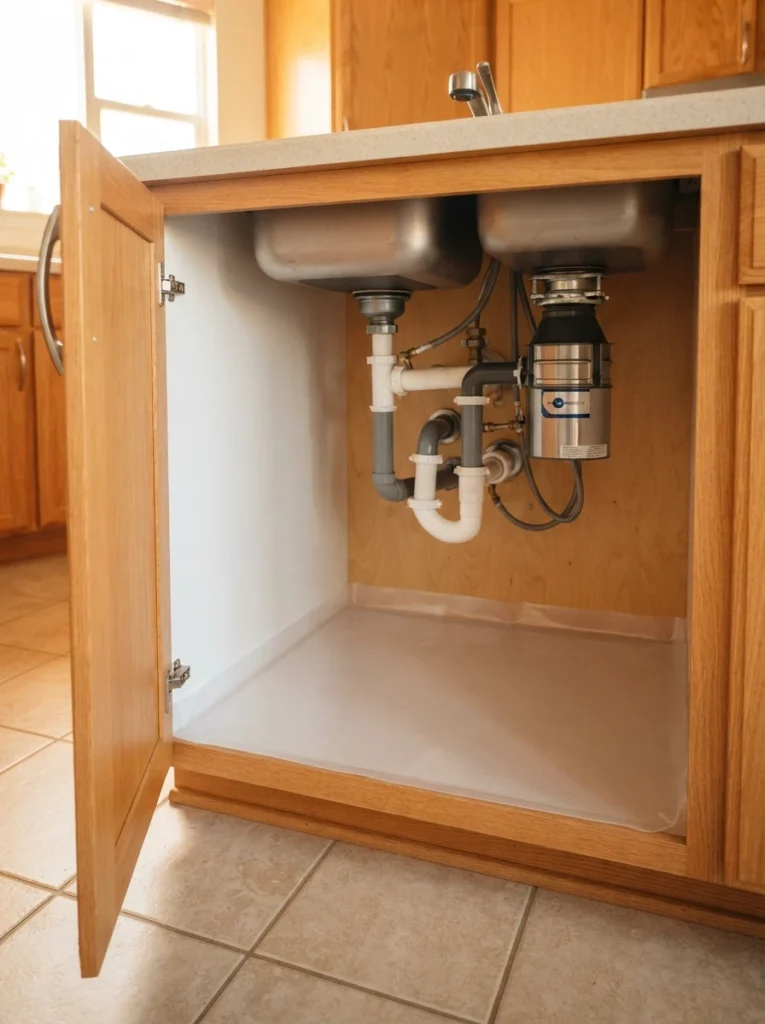
1. Line the Cabinet Floor Before You Organize Anything
Before adding a single bin or shelf, line the base of the cabinet with a waterproof liner or shelf liner rated for moisture. This step gets skipped constantly because it’s not visually satisfying, but it’s the one thing standing between a small drip and a warped cabinet floor that needs replacing.
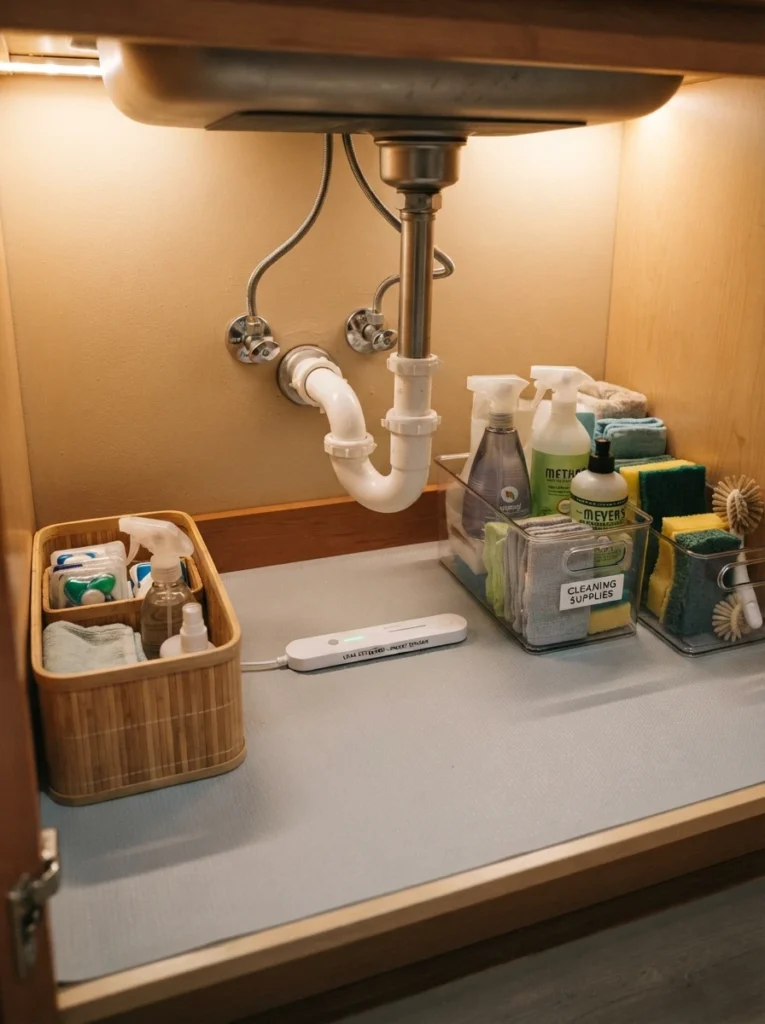
2. Add a Leak Detector Strip to the Cabinet Floor
A small battery-powered leak detector strip placed on the cabinet floor will alert you the moment moisture touches it, long before a slow drip turns into a mold problem or a ruined cabinet base. It’s a small, inexpensive add that most people never think to buy until after they’ve already had a leak.
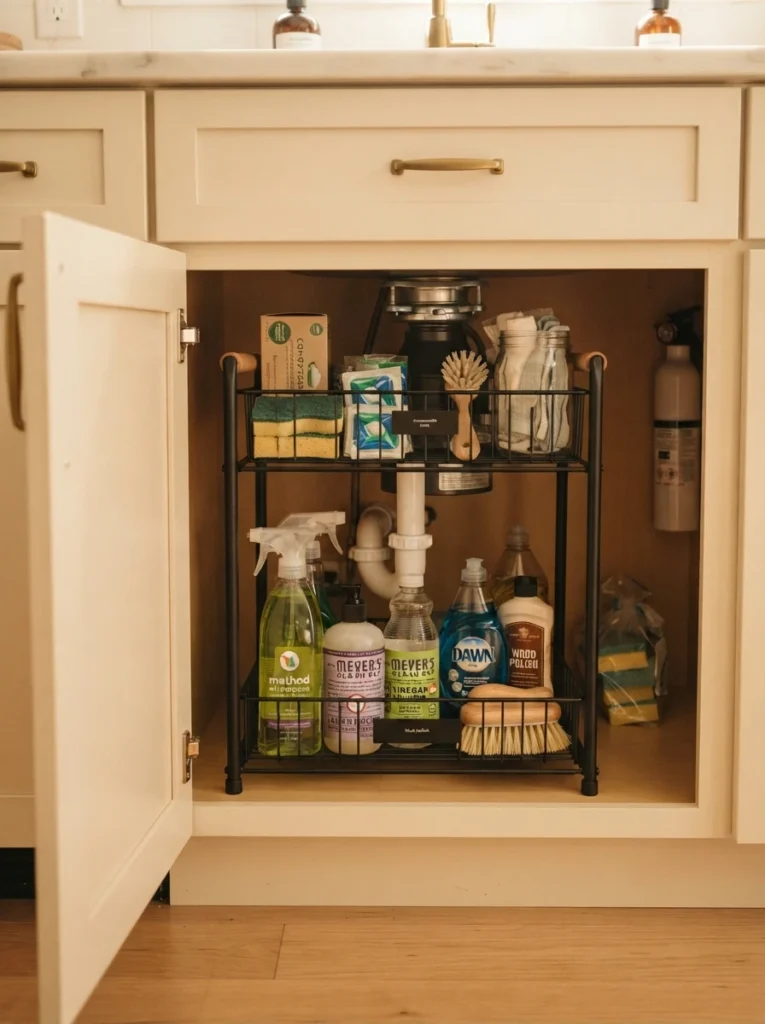
3. Use a Two-Tier Sliding Organizer Built to Fit Around the Pipe
Standard shelving doesn’t account for the pipe running through the middle of most under-sink cabinets, but a two-tier sliding organizer designed specifically for this space does. These units split around the plumbing and roughly double how much you can access without pulling everything out to reach the back.
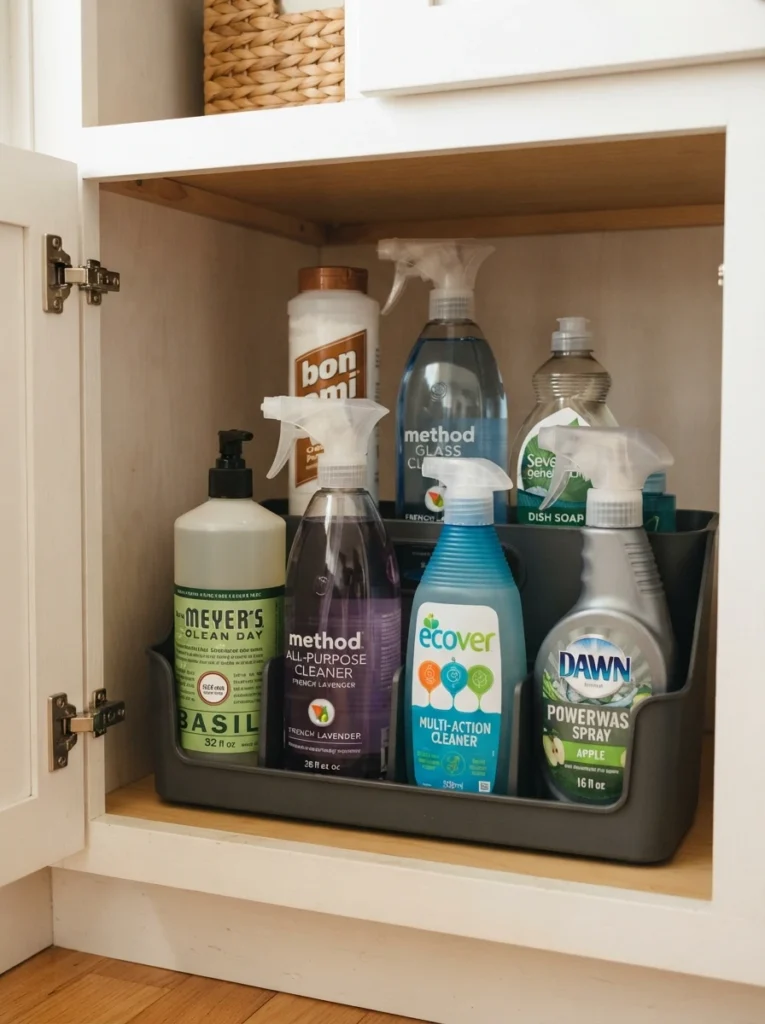
4. Store Bottles Upright in Divided Containers to Stop Leaks Before They Start
Cleaning bottles that tip over in a cramped cabinet are one of the most common causes of under-sink spills, and once one bottle leaks, everything around it usually gets ruined too. A divided container that keeps each bottle upright and separated prevents that domino effect and keeps labels facing out so you can actually find what you need.
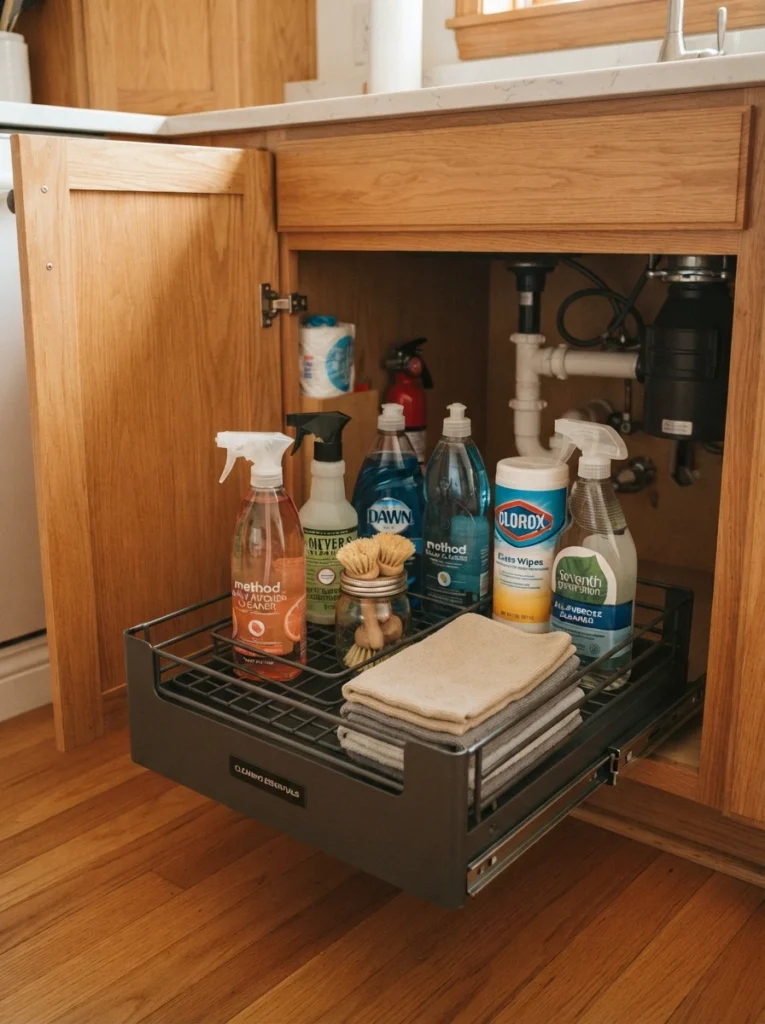
5. Install Pull-Out Drawers on Rails for Full Back-of-Cabinet Access
A pull-out drawer that slides forward on rails brings the entire back of the cabinet into view, which matters most in a space this deep and this easy to lose things in. Once installed, you’re no longer kneeling on the floor and reaching blind past the pipe to grab a bottle from the back corner.
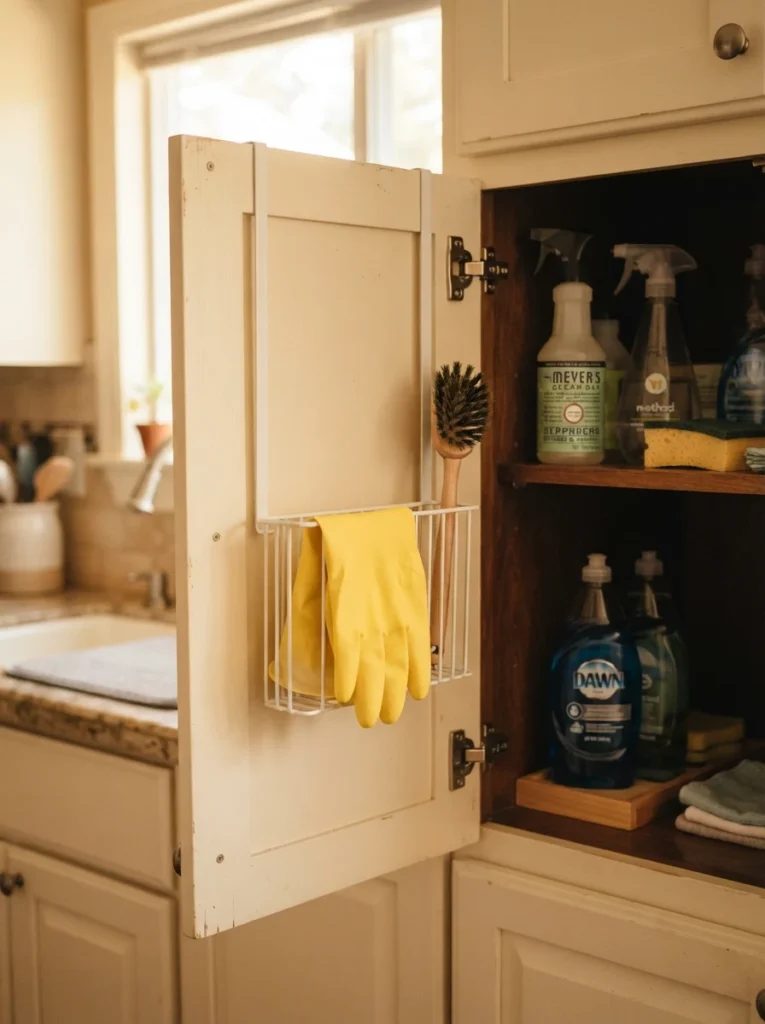
6. Hang a Caddy or Basket on the Inside of the Door
The inside of the cabinet door is prime, mostly unused real estate in almost every under-sink setup. A hanging caddy or a few adhesive hooks there can hold gloves, a scrub brush, or a small trash bag roll without competing for space with the bins on the cabinet floor.
7. Choose Moisture-Resistant Materials Over Fabric or Untreated Wood
Fabric bins and untreated wood organizers might look nice, but they absorb spills instead of shedding them, and in a cabinet this prone to moisture, that means mold risk over time. Stick to coated metal, plastic, or sealed bamboo, since all three wipe clean and hold up far longer under the sink than porous materials do.
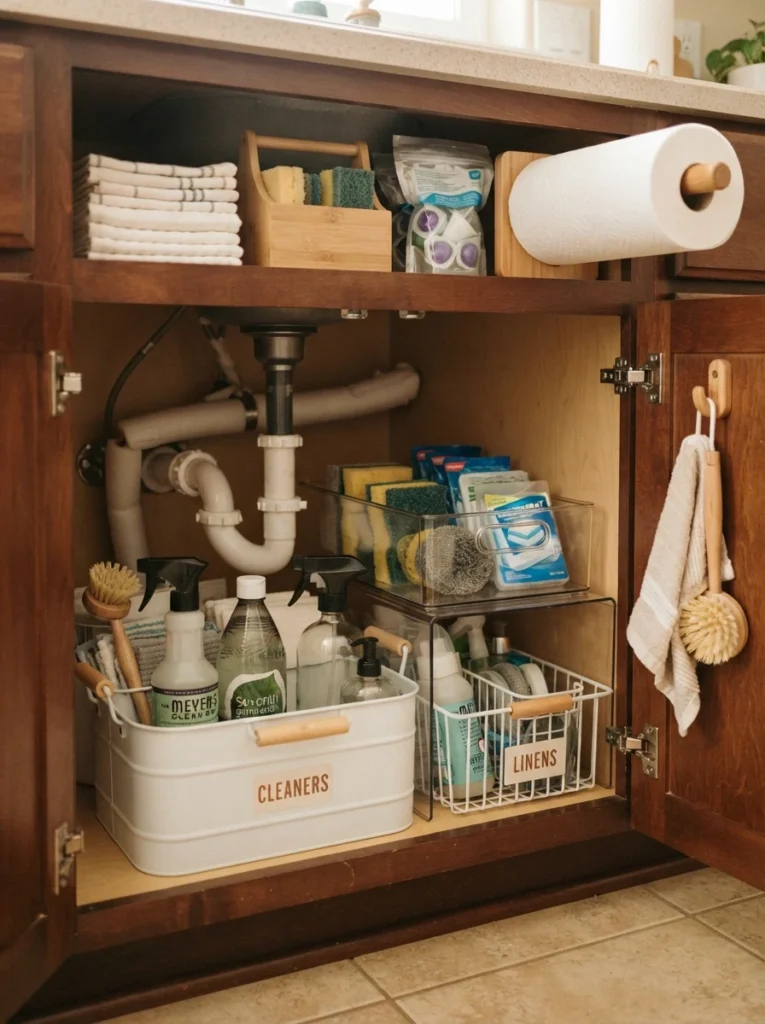
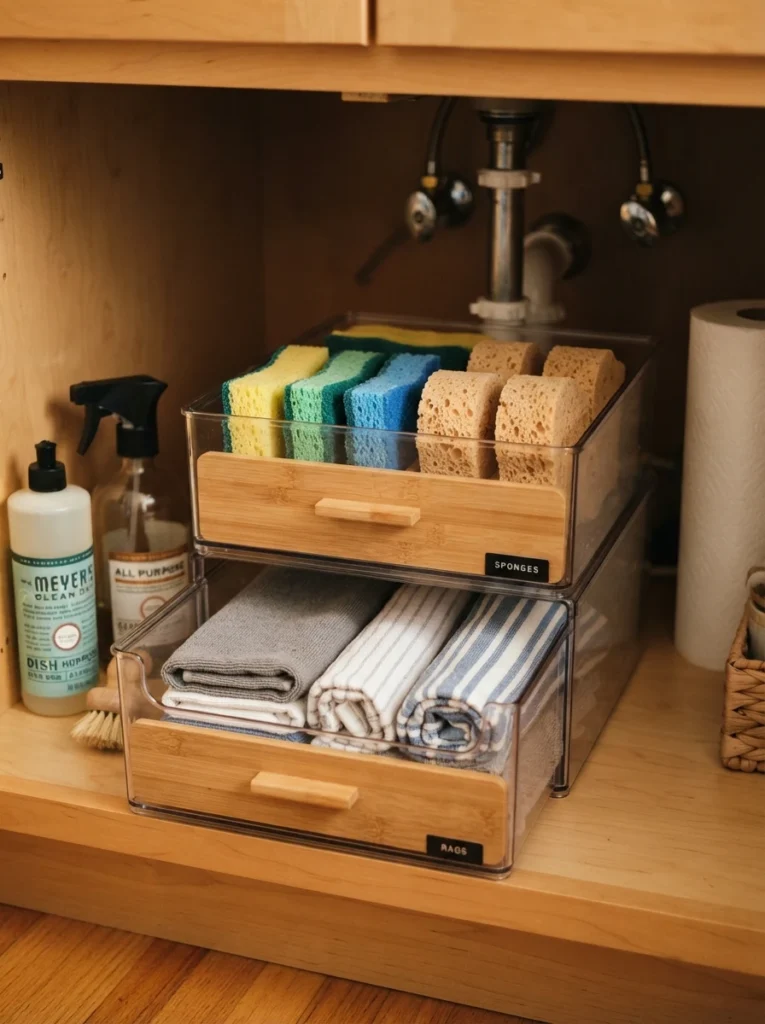
8. Reserve a Stackable Drawer Specifically for Sponges and Rags
Wet sponges and used rags need somewhere to sit that isn’t directly touching your dry cleaning supplies. A small stackable drawer with a solid or slatted bottom keeps them contained and lets them air out slightly instead of turning the whole cabinet floor damp.
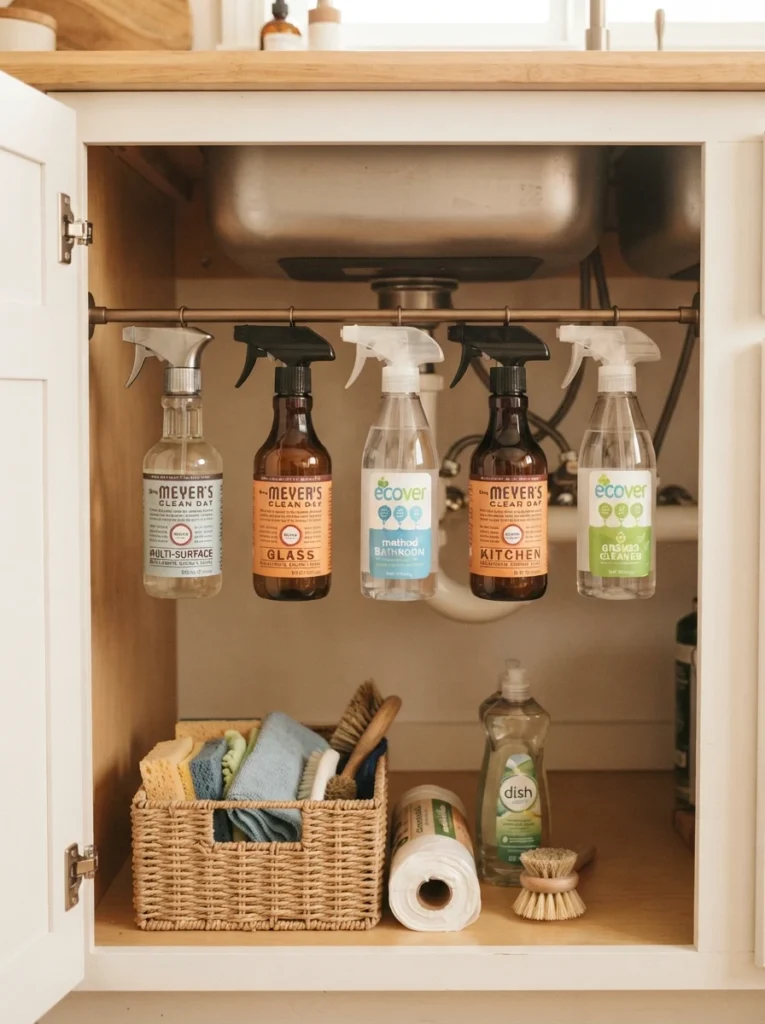
9. Add a Tension Rod to Hang Spray Bottles by Their Triggers
A tension rod installed a few inches below the sink basin gives you a spot to hang spray bottles by their trigger handles, which frees up the entire cabinet floor for bins and boxes. It’s one of the cheapest fixes on this list and takes about five minutes to install.
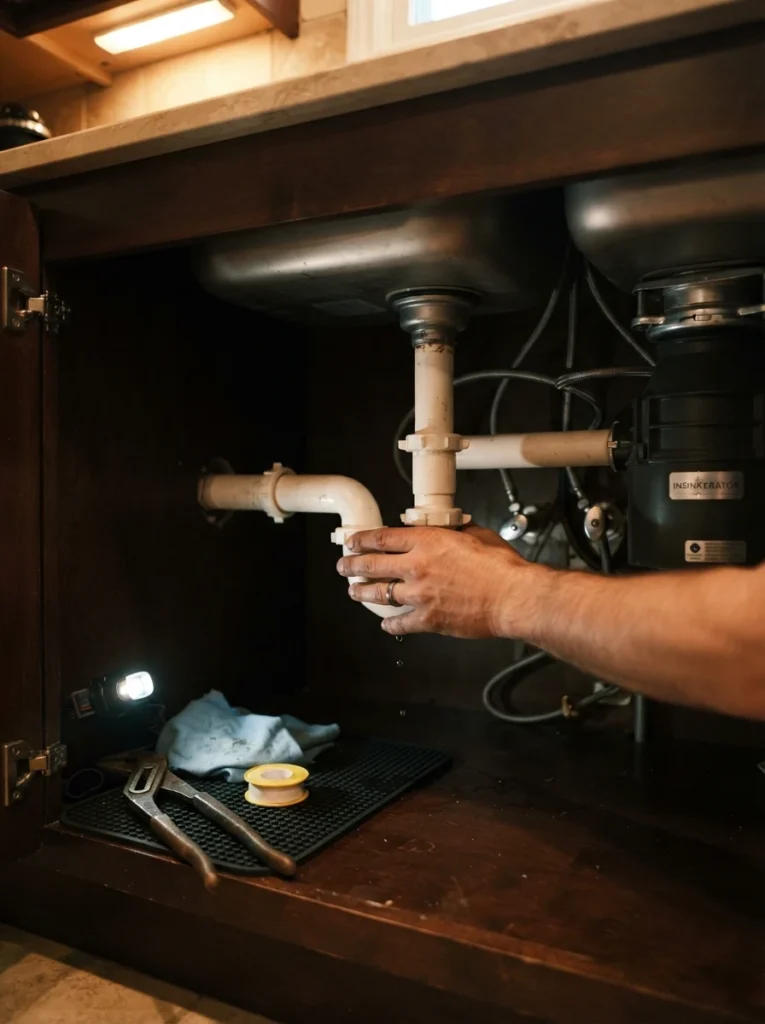
10. Check and Tighten Plumbing Connections Before You Organize
Before you spend money on bins and organizers, check the supply line and P-trap connections for slow drips or worn washers, since even the best storage system will get ruined by a leak that was there before you started. A few minutes with a wrench now can save you from redoing the whole cabinet in six months.
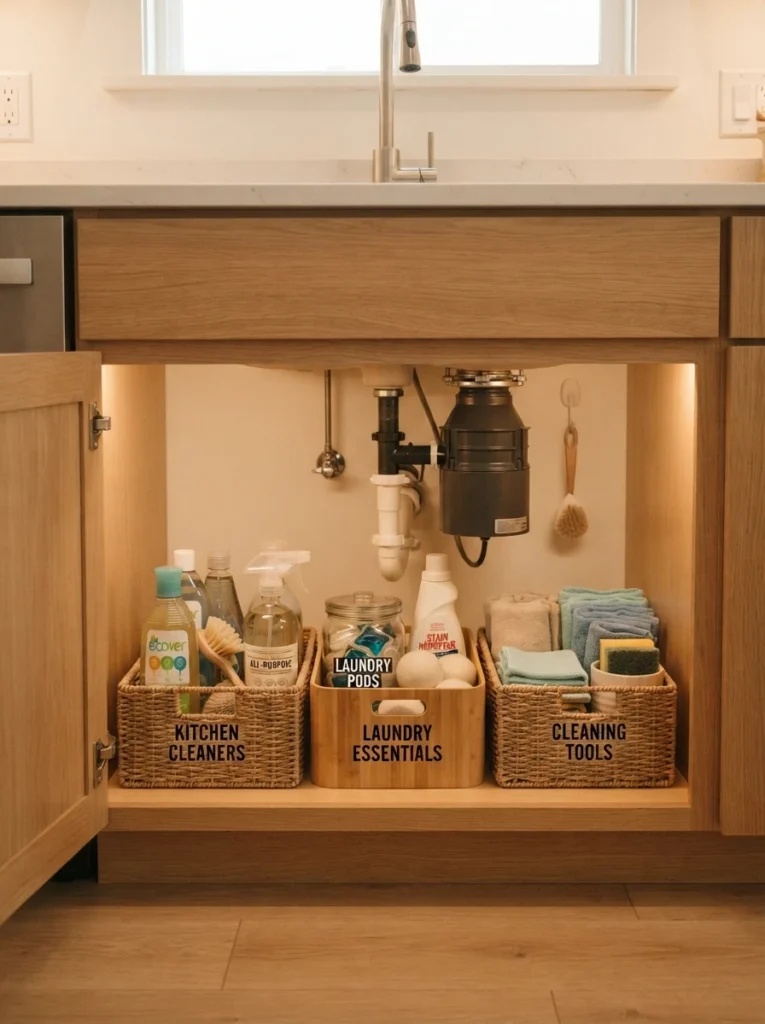
11. Keep the Cabinet Reserved for Everyday Essentials Only
Under-sink storage works best when it’s limited to what you actually reach for regularly, cleaning sprays, dish soap, trash bags, and dishwasher pods, rather than becoming a catch-all for anything that doesn’t have another home. The fewer categories of items competing for that awkward space, the easier the whole cabinet is to keep organized long term.
Most of the chaos under a kitchen sink comes down to two things: nobody planned around the plumbing, and nobody planned for the moisture. Fix both of those first with a liner, a leak detector, and materials that can handle getting wet, and whatever organizing system you add on top of that will actually hold up instead of turning back into a mess in a few months.