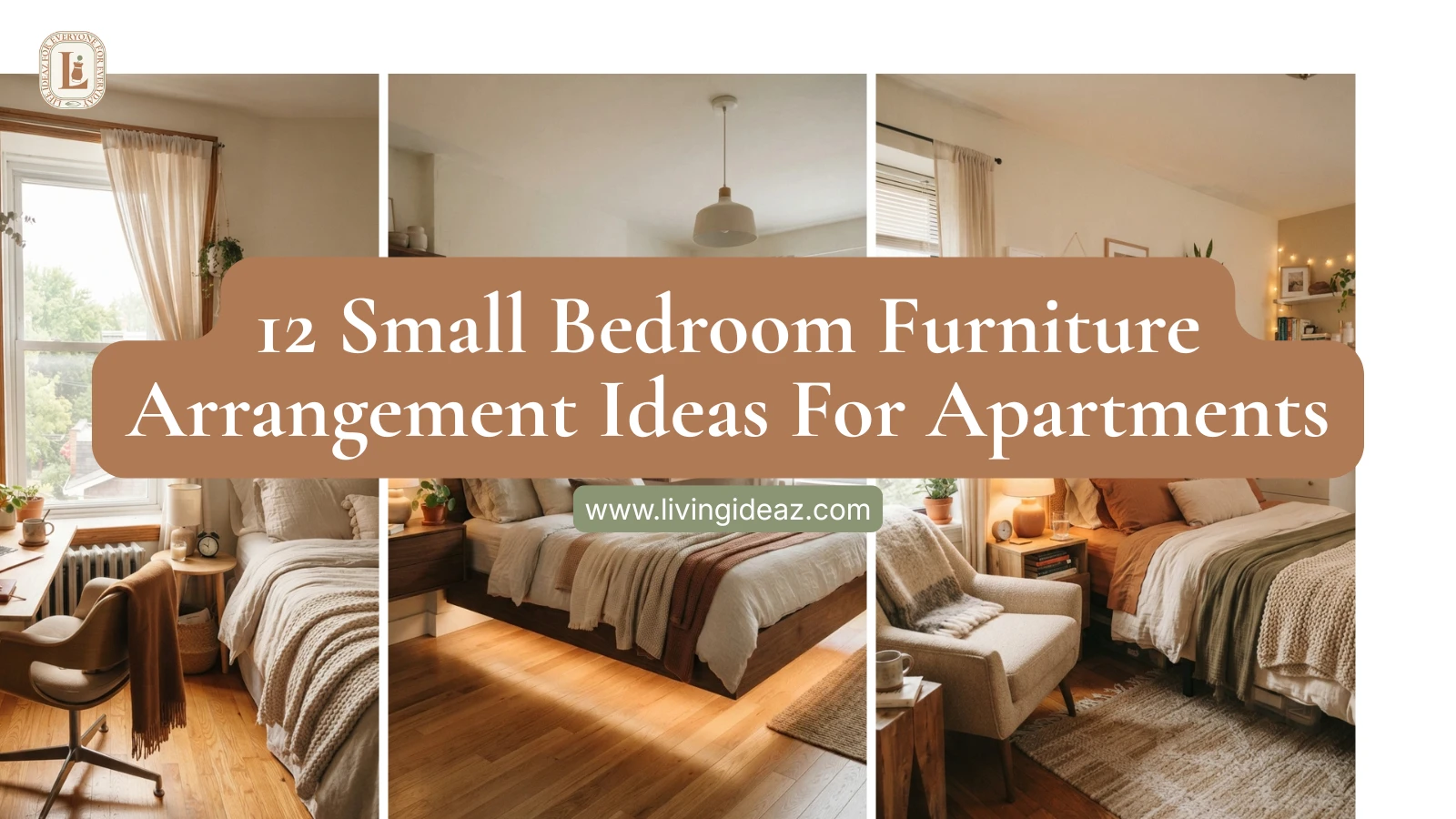
12 Small Bedroom Furniture Arrangement Ideas For Apartments
TL;DR
Apartment bedrooms often feel cramped not because they are too small, but because the furniture arrangement quietly works against movement, light, and emotional comfort. Oversized layouts, blocked pathways, and awkward furniture placement create low-level stress every single day. The best apartment bedroom arrangements improve flow, soften visual heaviness, and make tiny rooms feel calmer, brighter, and easier to live in realistically.
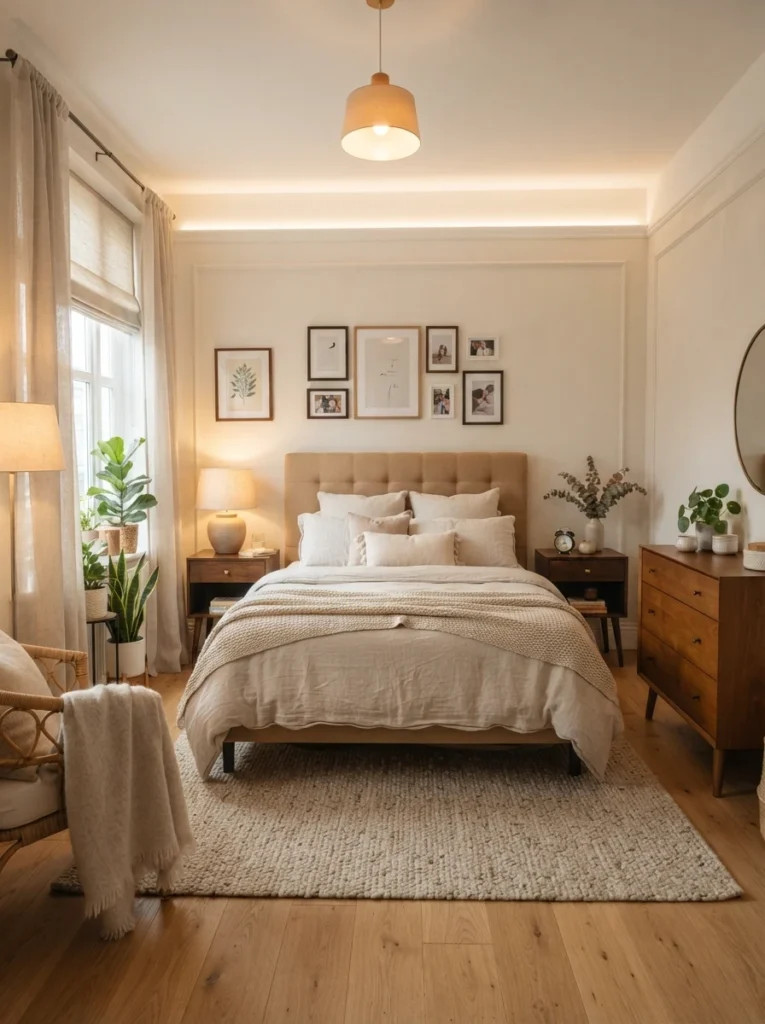
1. Center the Bed to Create Visual Balance
Many apartment bedrooms automatically push the bed awkwardly into one corner to “save space,” but this often makes the room feel temporary and visually chaotic instead of open.
Centering the bed whenever possible creates symmetry, which instantly helps tiny bedrooms feel calmer and more intentional emotionally. Even compact layouts usually feel more luxurious when the bed anchors the room properly.
Balanced layouts reduce visual tension naturally.
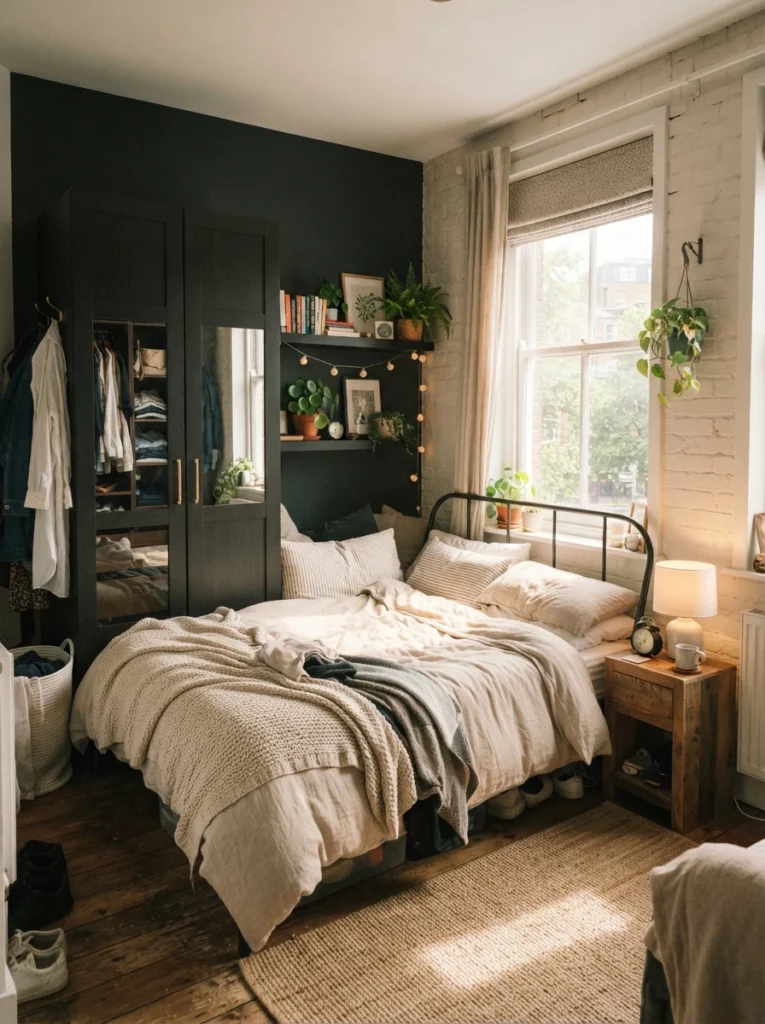
2. Place Large Furniture Along the Darkest Wall
Large wardrobes and dressers visually interrupt natural light when placed beside windows. Tiny apartment bedrooms usually feel calmer when heavier furniture sits along darker walls or corners instead.
This allows daylight to spread more naturally across open areas of the room, which creates softness and emotional openness throughout the space.
Better light flow instantly improves room atmosphere.
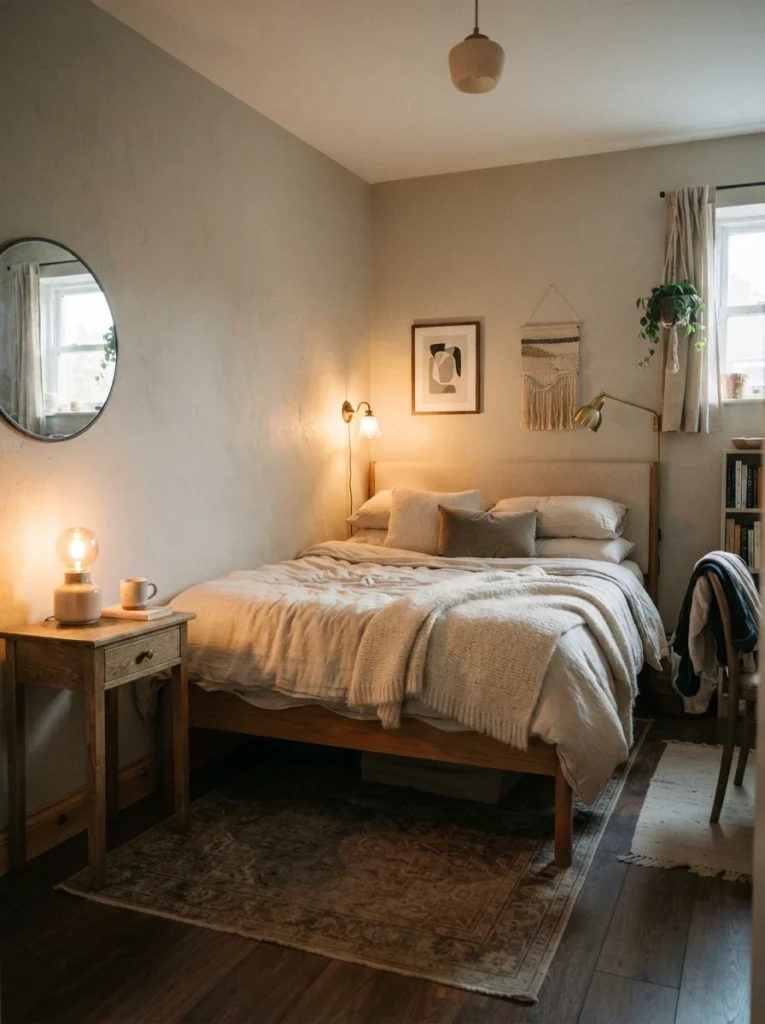
3. Float the Bed Slightly Away From the Wall
Completely flattening furniture against walls often creates awkward empty centers while making room edges feel overcrowded. Allowing a little breathing room around the bed creates softness and improves visual flow naturally.
Even a few inches of space can make apartment bedrooms feel more intentional emotionally. Luxury hotel rooms use this trick constantly because openness feels calmer than squeezing furniture tightly.
Breathing room changes perception.
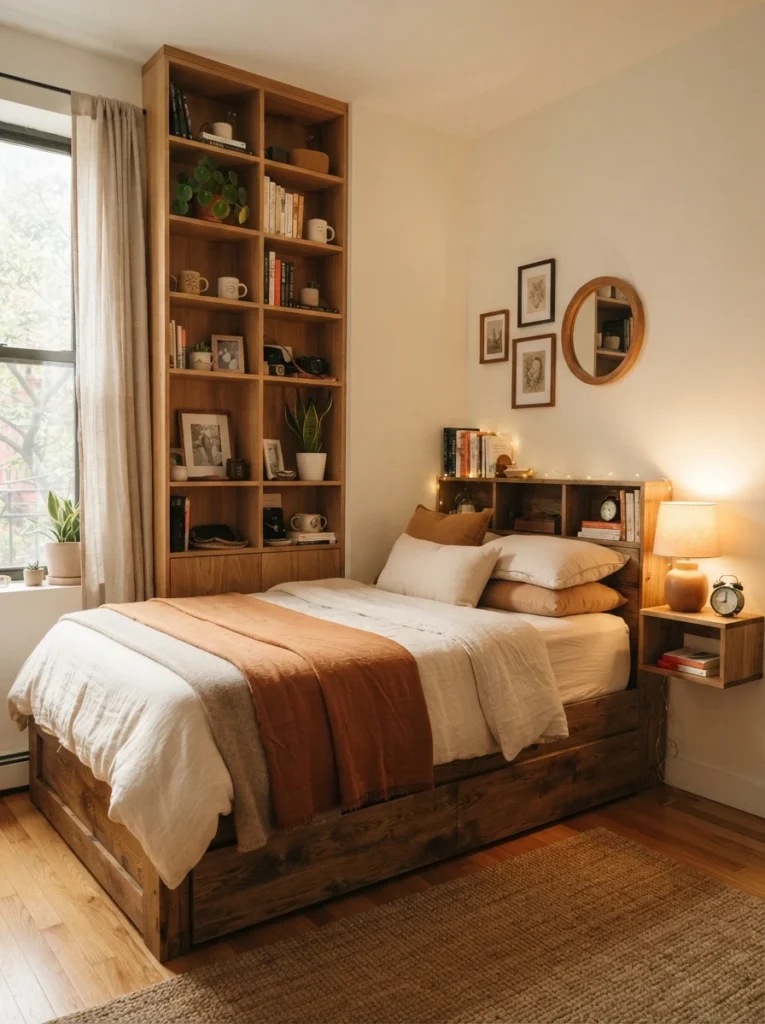
4. Use Vertical Storage Near Dead Corners
Apartment bedrooms often contain awkward corners that become clutter zones automatically. Tall narrow shelving or slim storage cabinets help use these spaces without interrupting movement flow heavily.
Vertical furniture also helps tiny rooms feel taller psychologically because the eye moves upward naturally instead of focusing on crowded floor space.
Better arrangements reduce visual pressure too.
5. Keep Walking Paths Clear Around the Bed
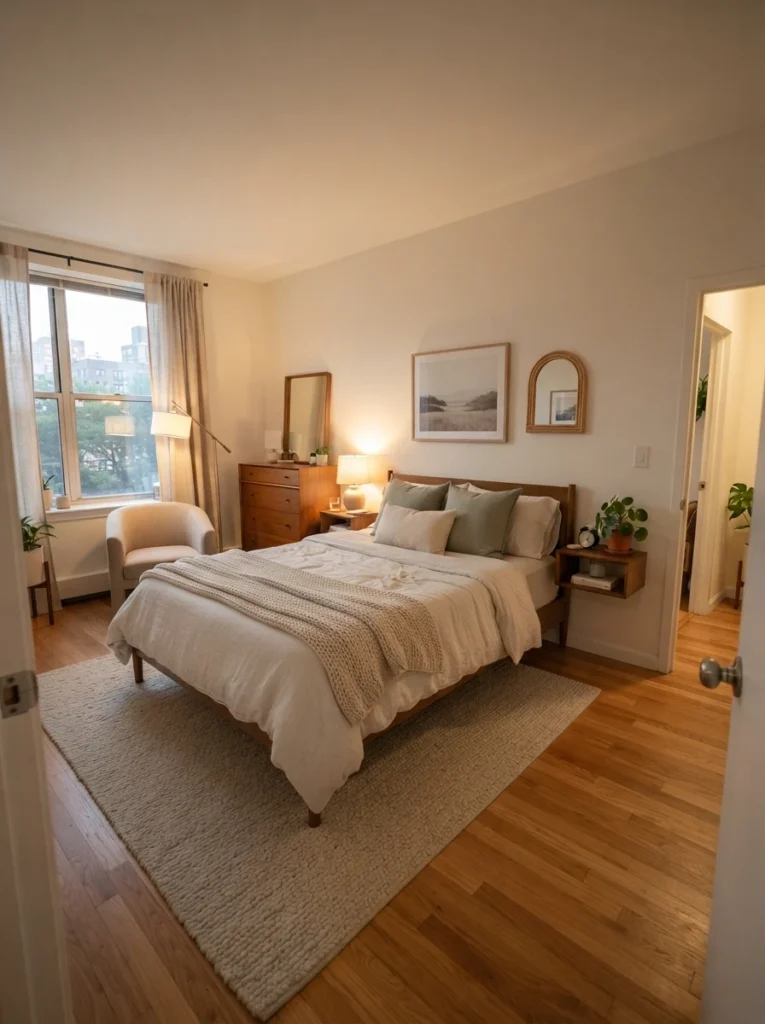
One hidden reason apartment bedrooms feel stressful is because movement constantly feels blocked. Stepping sideways between furniture or squeezing around nightstands quietly creates irritation every day.
Leaving cleaner pathways around the bed dramatically improves emotional comfort because movement starts feeling easier and more natural.
Smooth flow often feels more spacious than extra storage.
6. Position the Desk Near Natural Light
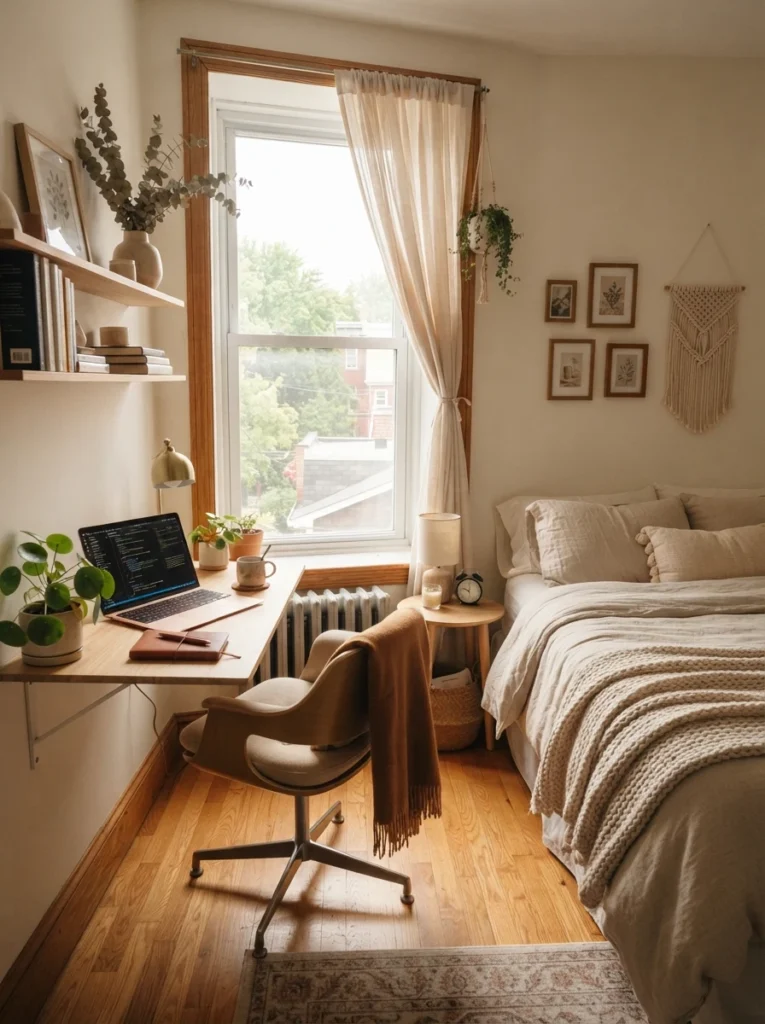
Apartment bedrooms that double as workspaces feel emotionally better when desks receive daylight instead of sitting in dark corners. Natural light softens work areas while helping the bedroom still feel connected to warmth and openness.
This setup also visually separates work and sleeping zones more naturally. Tiny multi-purpose bedrooms emotionally benefit from subtle layout distinction.
Light placement shapes mood constantly.
7. Use Floating Furniture to Reduce Floor Crowding
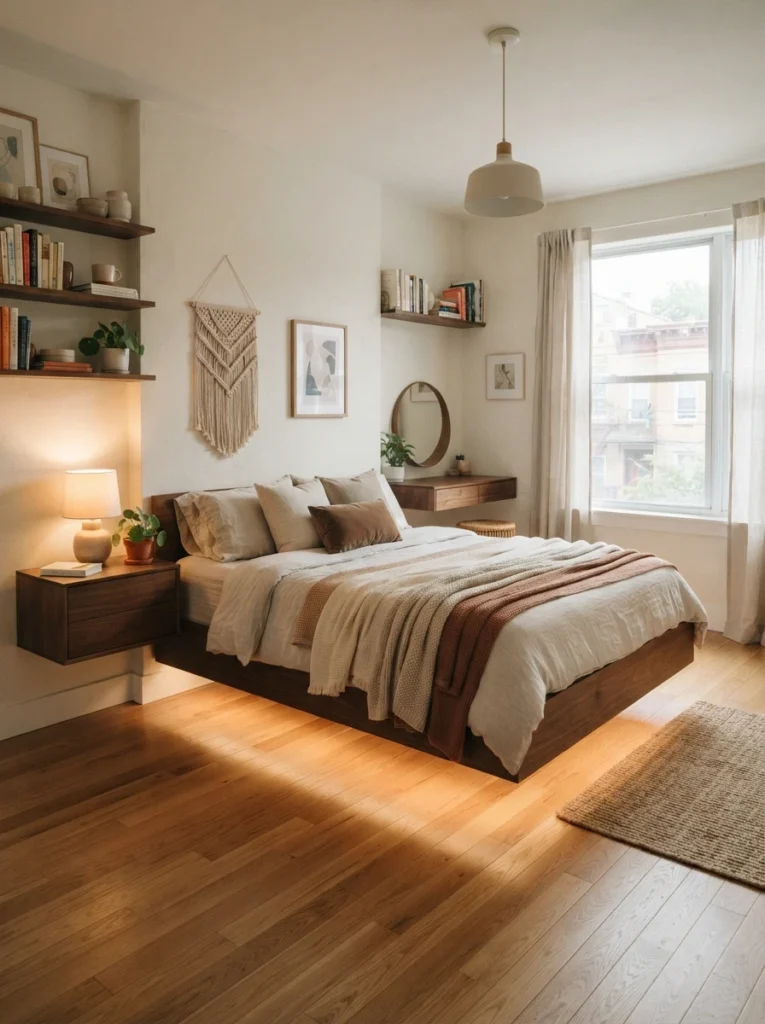
Floating shelves, wall-mounted desks, and floating nightstands visually lighten tiny apartment bedrooms because more flooring stays visible underneath.
Visible flooring creates openness psychologically. Rooms often feel significantly calmer when fewer objects touch the floor visually.
Tiny spaces emotionally respond strongly to openness.
8. Let One Side of the Room Feel Lighter
Apartment bedrooms often become visually unbalanced when furniture weight clusters heavily on one side. Large dressers, shelves, and dark furniture grouped together create visual heaviness quickly.
Leaving one side visually softer through lighter decor, open space, or lower furniture creates emotional balance that makes the room feel less cramped.
The eye needs moments of openness.
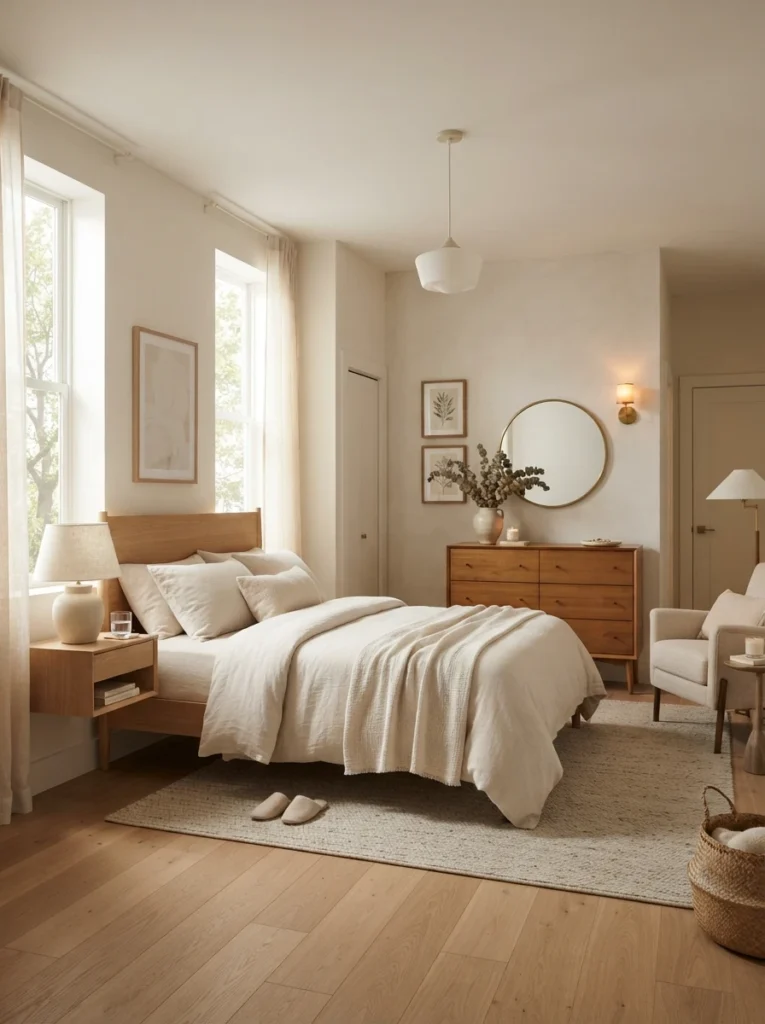
9. Avoid Blocking Windows With Tall Furniture
Natural light is one of the most powerful tools for making apartment bedrooms feel larger emotionally. Blocking windows with wardrobes or shelving units interrupts that effect immediately.
Keeping taller furniture away from windows allows light to travel further across the room, making compact bedrooms feel softer and more breathable naturally.
Sunlight visually expands rooms.
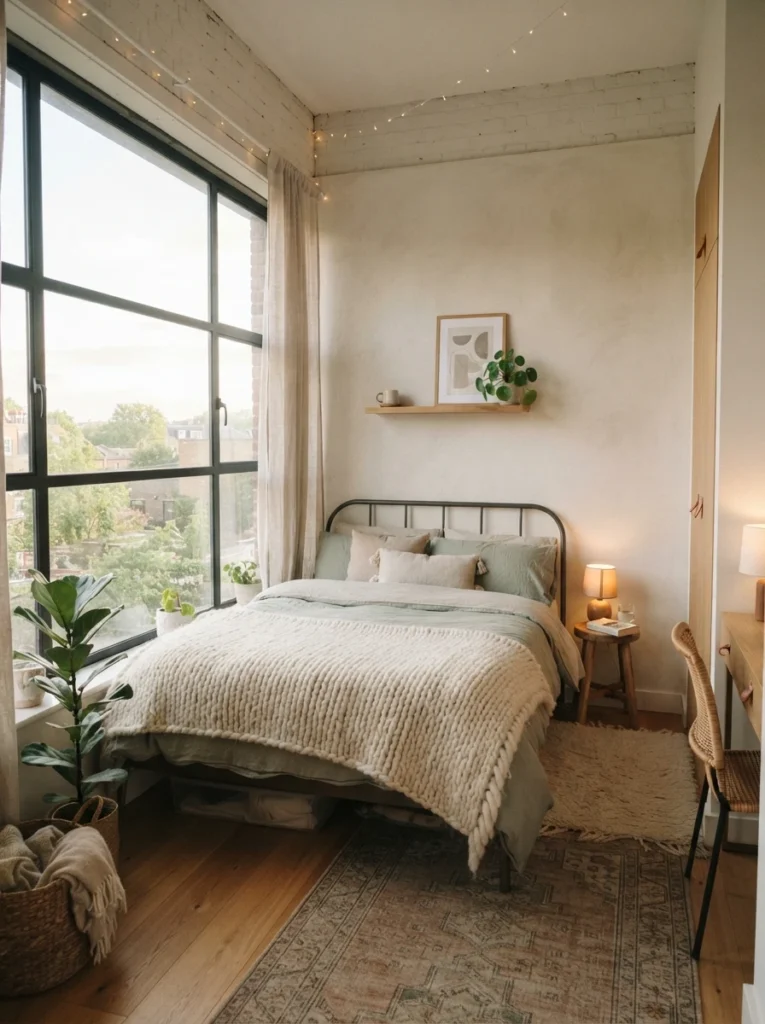
10. Use Smaller Nightstands in Tight Layouts
Oversized nightstands quietly consume movement space around the bed and make apartment bedrooms feel tighter emotionally. Slim nightstands or floating shelves usually create much better room flow.
Bedrooms feel calmer when bedside furniture stays visually lighter and less dominant. Cleaner spacing around the bed also improves nighttime comfort psychologically.
Smaller details shape room flow heavily.
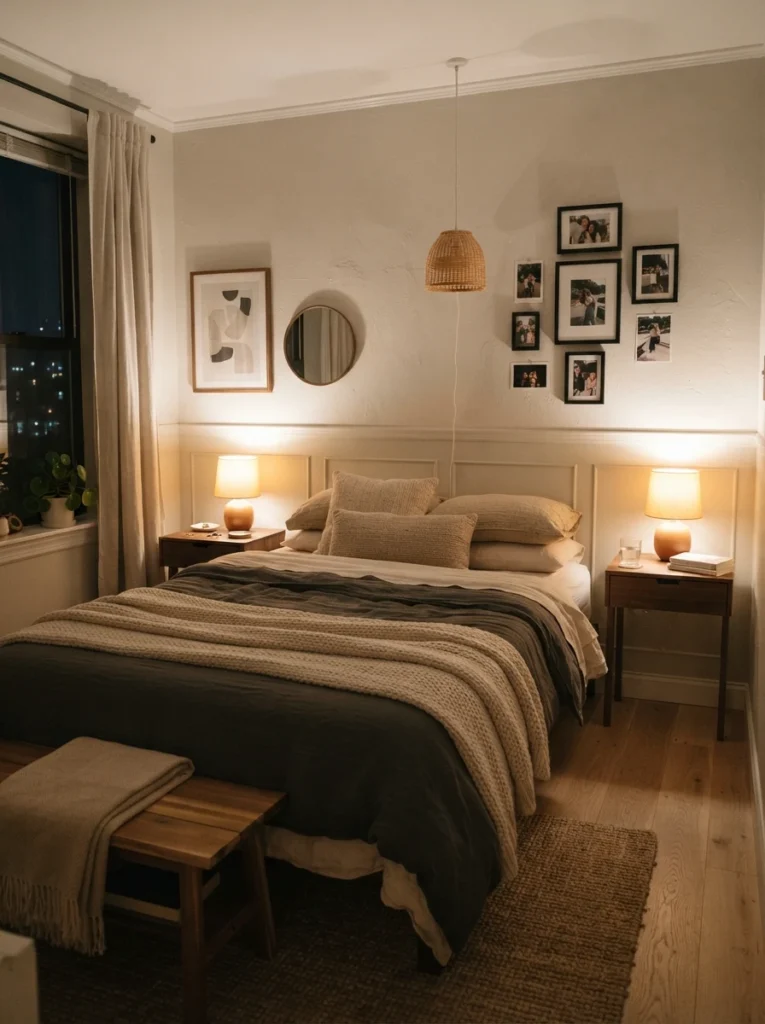
11. Angle Accent Furniture Slightly Instead of Keeping Everything Rigid
Perfectly flat furniture arrangements sometimes make tiny apartment bedrooms feel stiff and unnatural. Angling a chair slightly near a window or floating a small bench softly changes the emotional flow of the room.
This creates a more relaxed atmosphere because the layout starts feeling intentionally lived in instead of mechanically arranged.
Softness improves visual comfort too.
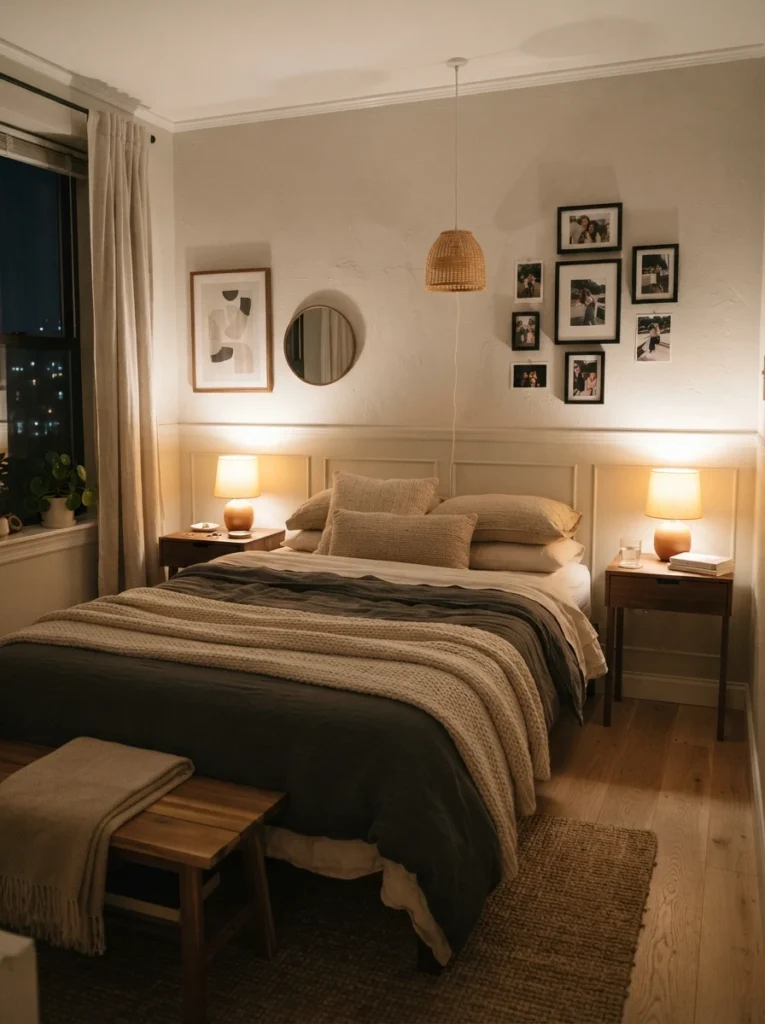
12. Arrange the Room Around Daily Life Instead of Perfect Symmetry
The best apartment bedroom layouts are not always perfectly symmetrical. They are the ones that quietly support real movement and routines every day.
Where bags get dropped, where clothes naturally gather, how sunlight moves, and how people walk through the room should shape the arrangement more than strict design rules alone.
Good layouts reduce friction instead of creating it.
Final Thoughts
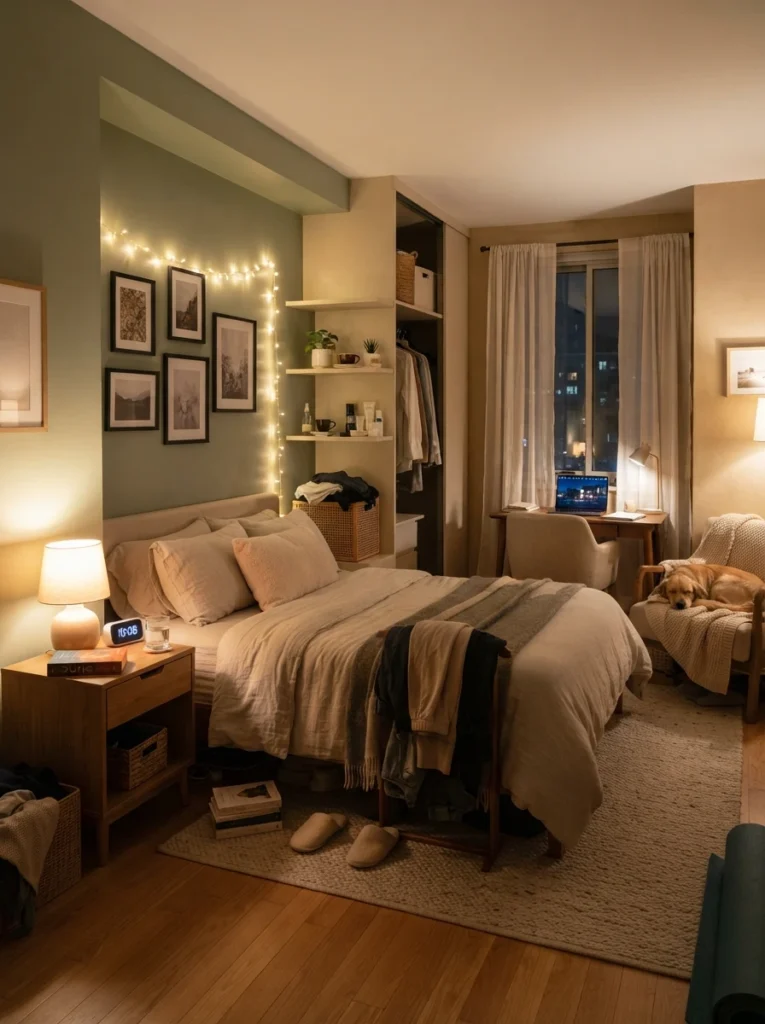
Small apartment bedroom arrangements work best when they improve movement, reduce visual pressure, and allow light and openness to flow naturally through the room.
The calmest layouts usually rely on better spacing, lighter furniture placement, cleaner pathways, and more intentional balance instead of simply fitting the maximum amount of furniture possible. Tiny bedrooms emotionally improve when the room starts supporting real life more gently.
A good bedroom arrangement should make the room feel easier to move through, easier to relax inside, and easier to emotionally breathe in every single day.