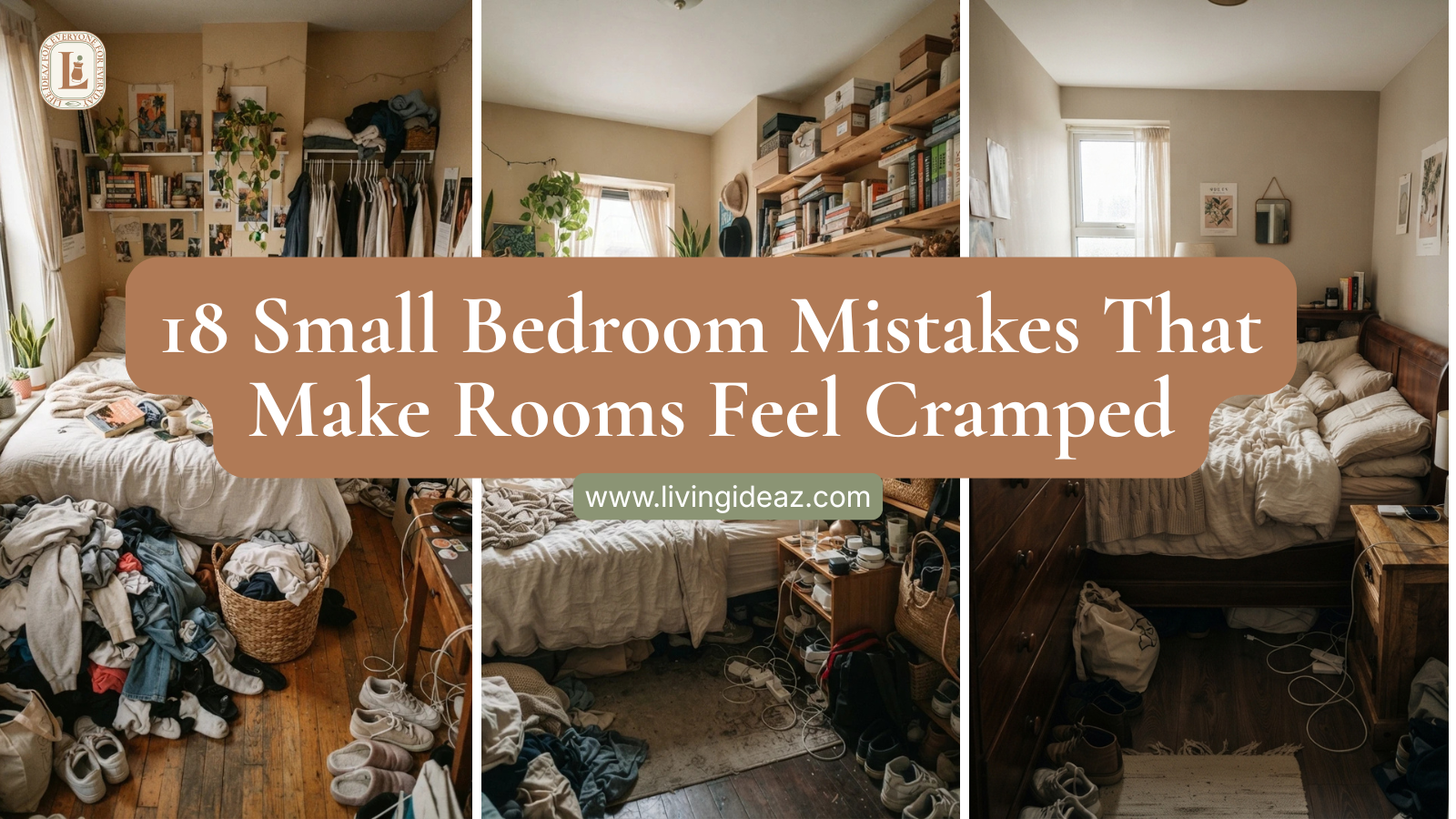
18 Small Bedroom Mistakes That Make Rooms Feel Cramped
TL;DR
Many small bedrooms do not actually suffer from lack of space. They suffer from visual pressure, poor layout choices, oversized furniture, and storage systems that quietly create stress over time. Tiny rooms feel cramped when movement becomes difficult, lighting feels harsh, and every surface competes for attention. These common small bedroom mistakes often make spaces feel smaller, heavier, and more mentally exhausting without people fully realizing why.
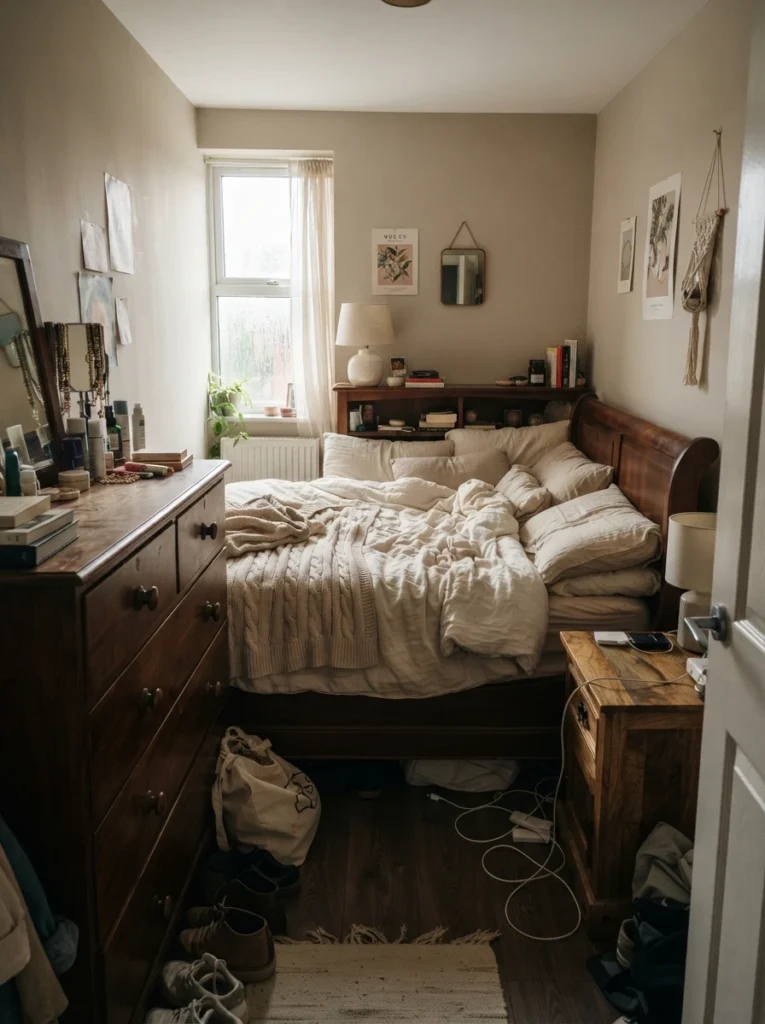
1. Using Oversized Furniture in a Tiny Room
One of the fastest ways to overwhelm a small bedroom is filling it with furniture scaled for larger homes. Oversized bed frames, deep dressers, bulky nightstands, and giant accent chairs quietly consume visual breathing room until movement itself starts feeling stressful.
Tiny rooms need furniture that allows the eye to travel naturally. Slim shapes, visible legs, and lighter proportions usually feel calmer emotionally because the room retains openness around the furniture instead of feeling swallowed by it.
A room should not feel like furniture barely squeezed inside a box.
2. Blocking Natural Light With Furniture
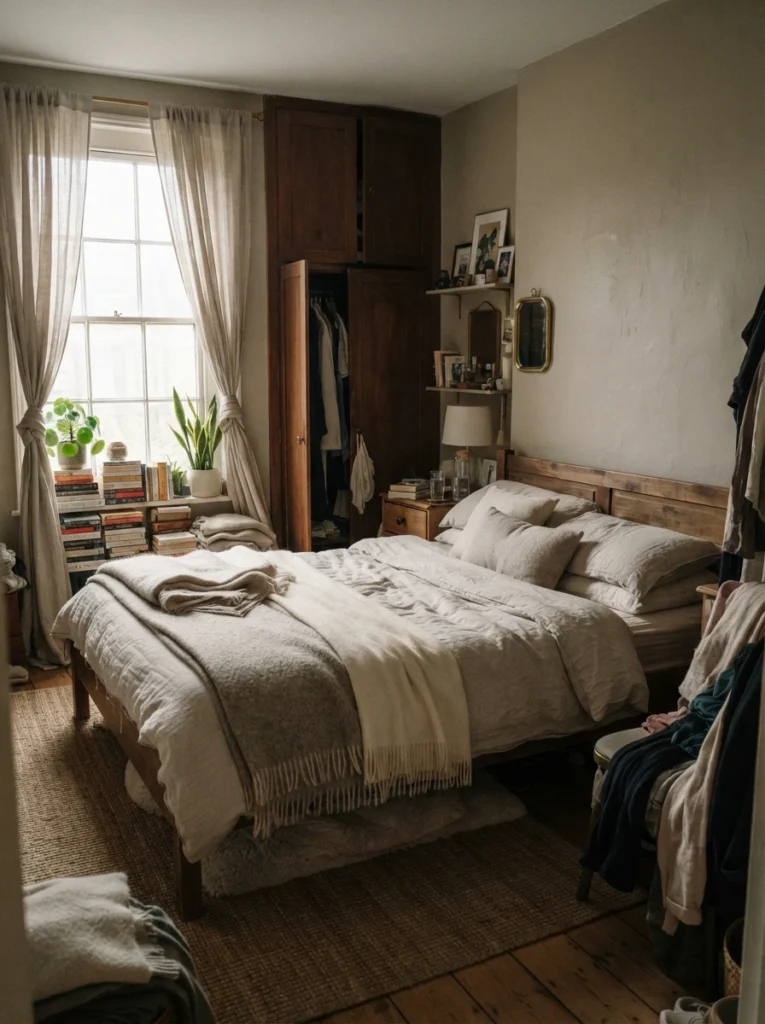
Many small bedrooms accidentally feel darker and tighter because tall furniture pieces interrupt windows and natural light flow. Light is one of the few things that visually expands a room without requiring physical space.
Large wardrobes beside windows often make apartments feel emotionally compressed during the day. Bedrooms instantly feel softer and more breathable when sunlight reaches multiple surfaces naturally.
Dark rooms usually feel smaller emotionally even when the measurements stay exactly the same.
3. Pushing Every Piece of Furniture Against the Wall
People often assume wall-hugging furniture automatically creates more space, but awkward layouts can actually feel more cramped when every object gets flattened outward mechanically.
Sometimes slightly floating the bed or angling a chair creates better movement flow and emotional balance. Perfectly lining furniture against every wall can create dead center space while making the room edges feel overcrowded.
Good layouts feel intentional, not desperate for space.
4. Using Too Many Tiny Decor Pieces
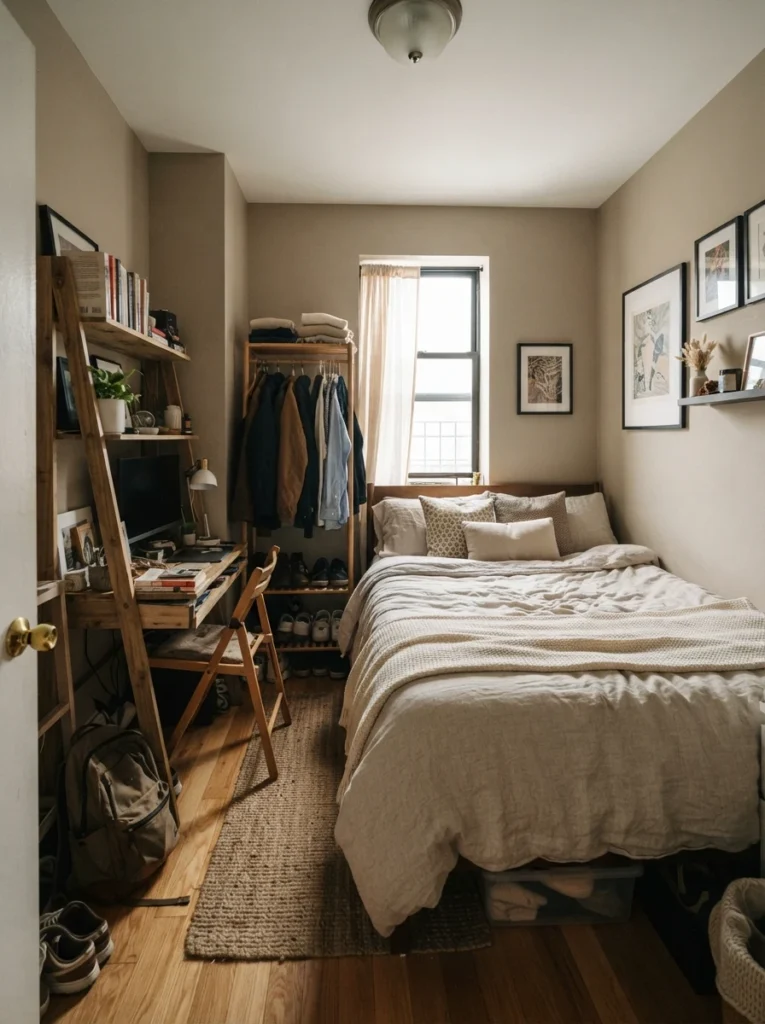
Small decorative clutter builds visual noise quickly in compact bedrooms. Tiny candles, miniature frames, scattered objects, and endless accessories force the eye to process too many details at once.
Larger simpler decor pieces usually create calmer visual flow because the room feels more cohesive instead of fragmented. Small rooms benefit from visual quiet more than decorative quantity.
Pinterest photos often hide how overstimulating tiny clutter feels in real life.
5. Keeping Open Shelving Completely Packed
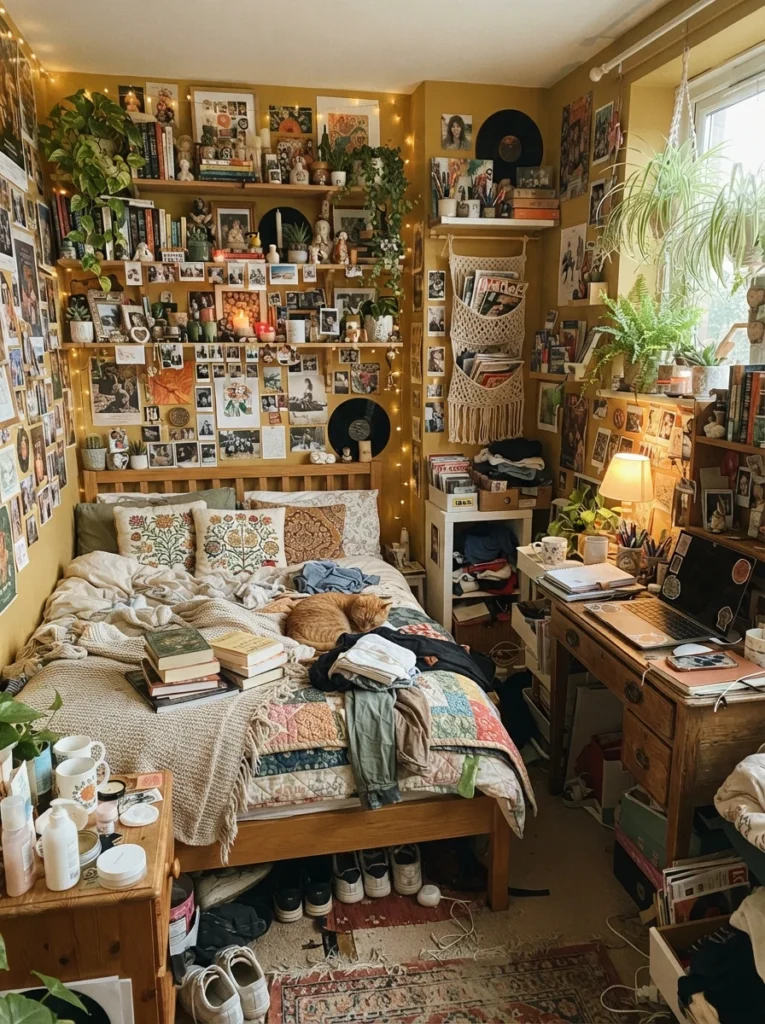
Open shelving becomes stressful when every inch fills with visible objects. Books, skincare, storage boxes, chargers, and random decor quickly create visual overload in small bedrooms where everything remains constantly visible.
Partially empty shelving feels calmer because the eye gets moments of rest between objects. Bedrooms emotionally benefit from breathing room more than maximum display space.
Visual density quietly affects stress levels.
6. Choosing Harsh Cool Lighting
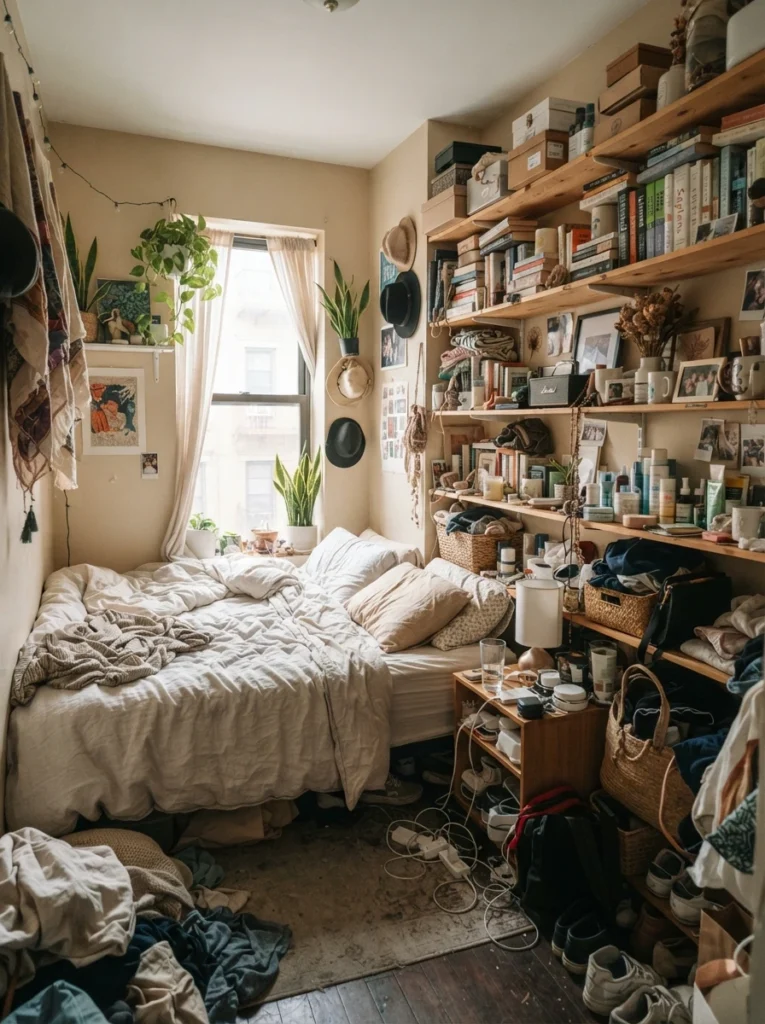
Cool white lighting exaggerates clutter, sharpens shadows, and makes tiny bedrooms feel emotionally colder. Many rental apartments already struggle with sterile lighting, so adding even brighter cool tones usually worsens the atmosphere.
Warm layered lighting softens edges and creates emotional comfort naturally. Bedrooms should feel calming at night, not visually aggressive.
Lighting changes emotional perception constantly.
7. Using Furniture That Is Too Dark and Heavy
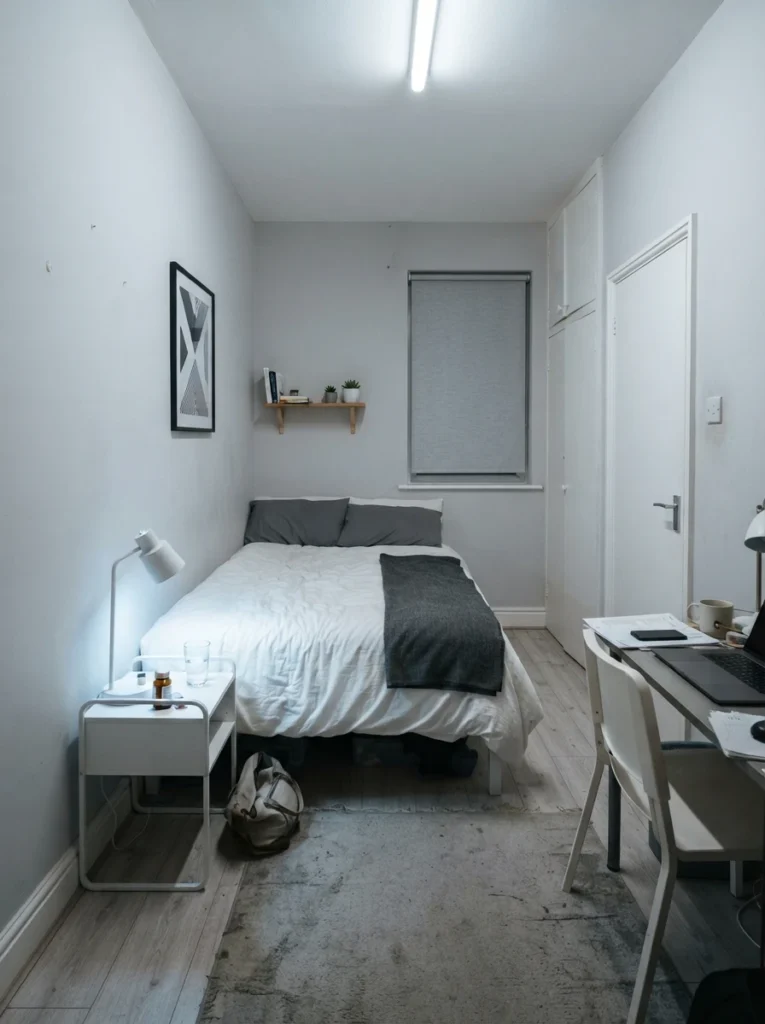
Dark bulky furniture absorbs visual light and often makes tiny bedrooms feel smaller emotionally, especially when paired with low ceilings or limited daylight.
This does not mean dark colors are forbidden. It means balance matters. One dark wood piece can feel grounding, while an entire room filled with heavy black furniture often feels visually compressed.
Tiny rooms usually respond better to lighter visual weight overall.
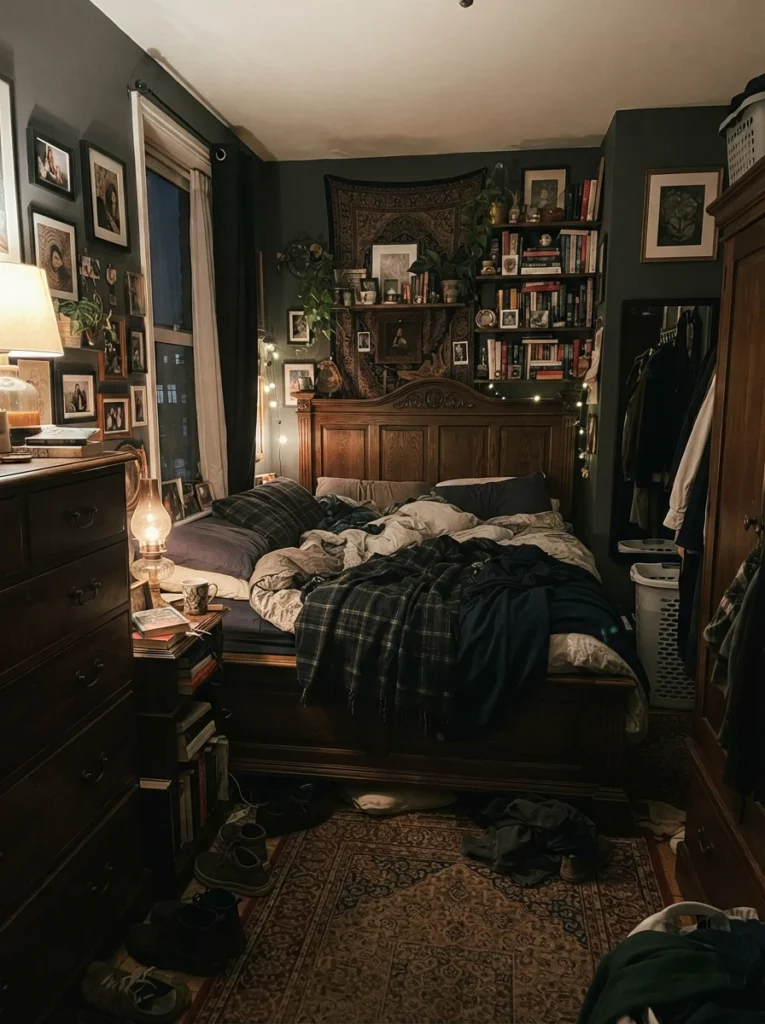
8. Ignoring Vertical Space Completely
Many small bedrooms stay cluttered because storage spreads horizontally across the floor instead of moving upward. Empty walls become wasted opportunities while bins and furniture crowd every walkway below.
Vertical shelves, hooks, and tall slim storage units free floor space and make rooms feel more functional emotionally. The eye naturally perceives upward movement as openness.
Floor clutter creates stress surprisingly fast.
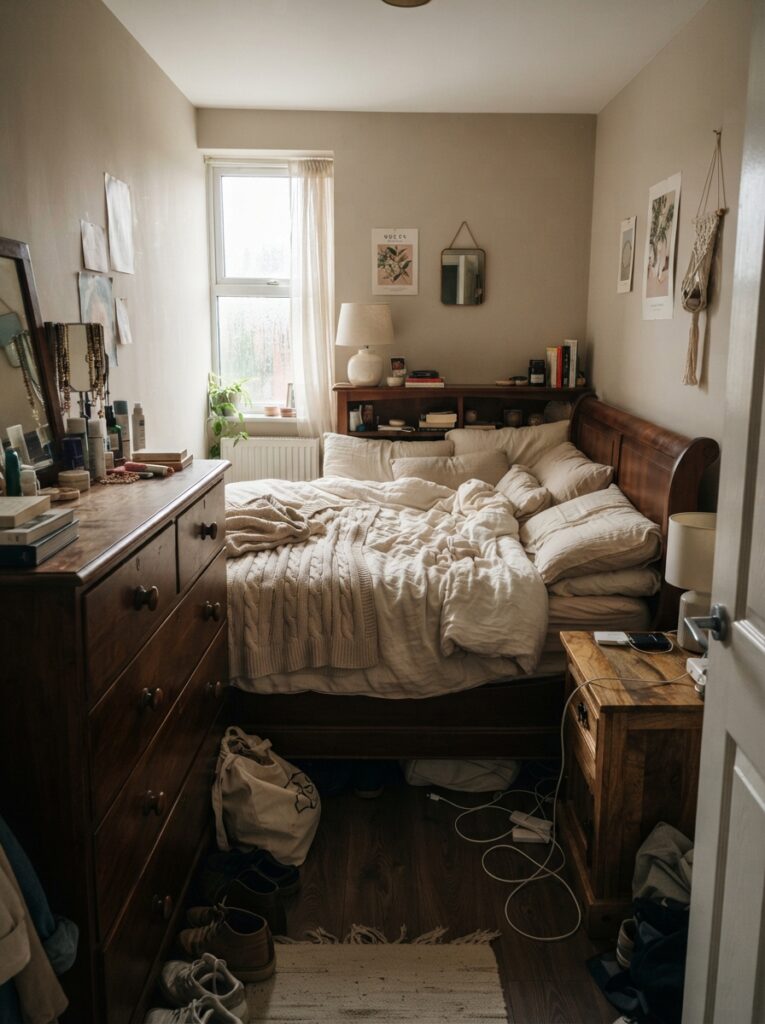
9. Letting Laundry Become Part of the Decor
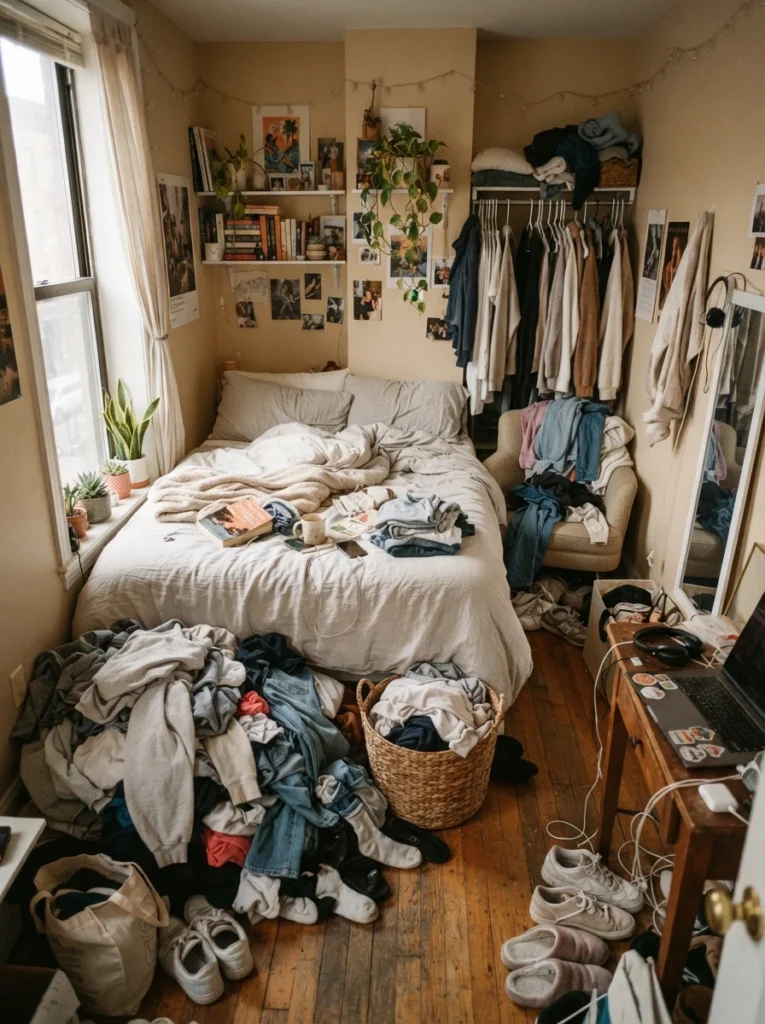
Laundry piles quietly transform tiny bedrooms into stressful environments because unfinished tasks remain visually visible all the time. Clothes on chairs, corners, and floors interrupt every calming element in the room.
A slim hamper, wall hooks, or dedicated clothing basket dramatically changes how the room feels emotionally. Controlled mess feels lighter than scattered mess.
Tiny bedrooms magnify visual disorder quickly.
Final Thoughts
Small bedrooms rarely feel cramped because of square footage alone. Most feel stressful because layouts, lighting, furniture scale, and visual clutter quietly work against emotional comfort every single day.
The calmest tiny bedrooms usually contain less visual noise, easier movement flow, softer lighting, and furniture chosen around real human behavior instead of maximum storage or trends. Tiny rooms emotionally improve when they stop trying to hold everything at once.
A bedroom should help the mind settle down, not constantly remind you how little space you have.