9 Small Bedroom Design Ideas That Reduce Visual Stress
TL;DR
Some small bedrooms feel exhausting even when they are technically clean. The problem is often visual stress. Too many exposed objects, harsh lighting, overcrowded layouts, sharp color contrasts, and constant visual noise quietly force the brain to stay alert instead of relaxed. These small bedroom design ideas focus on reducing overstimulation, softening the atmosphere, and helping tiny rooms feel mentally calmer without making them feel empty or lifeless.
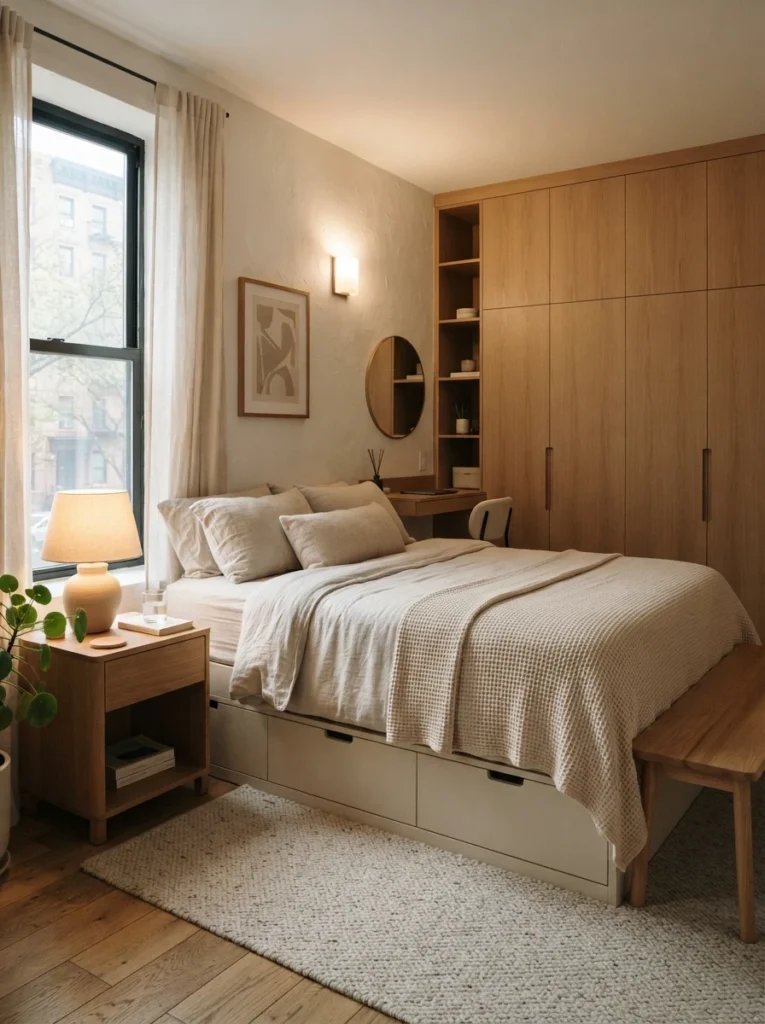
1. Reduce the Amount of Visible Stuff in the Room
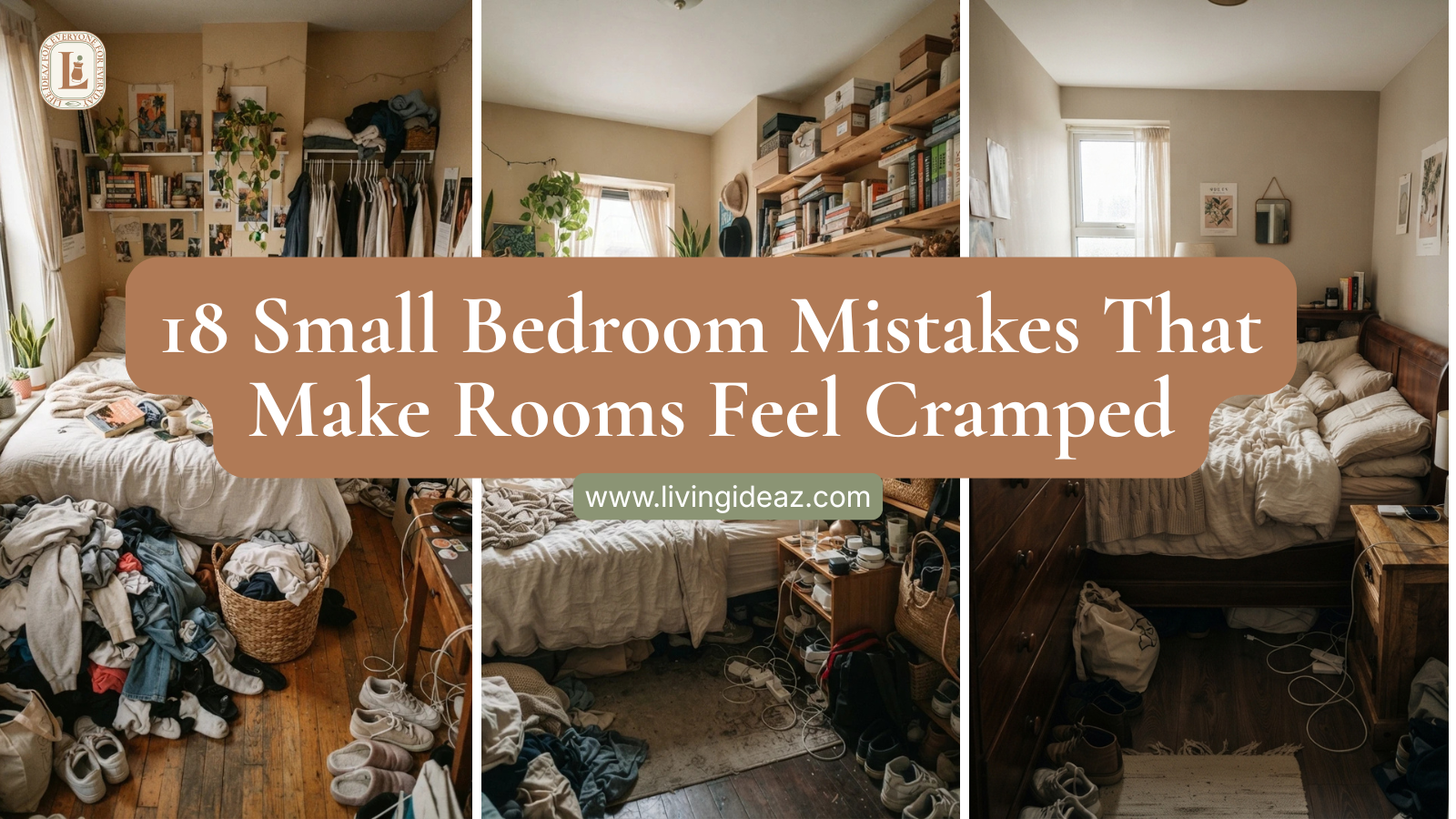
The brain constantly processes everything within sight. Open shelves packed with products, piles of clothing, tangled cables, and crowded surfaces quietly create low-level mental fatigue throughout the day.
Bedrooms feel calmer when fewer objects remain visually exposed. Closed storage, cleaner surfaces, woven baskets, and hidden organization systems reduce visual pressure because the eye experiences less unfinished information constantly.
Visual quietness creates emotional quietness too.
2. Use Softer Lighting Instead of Harsh Brightness
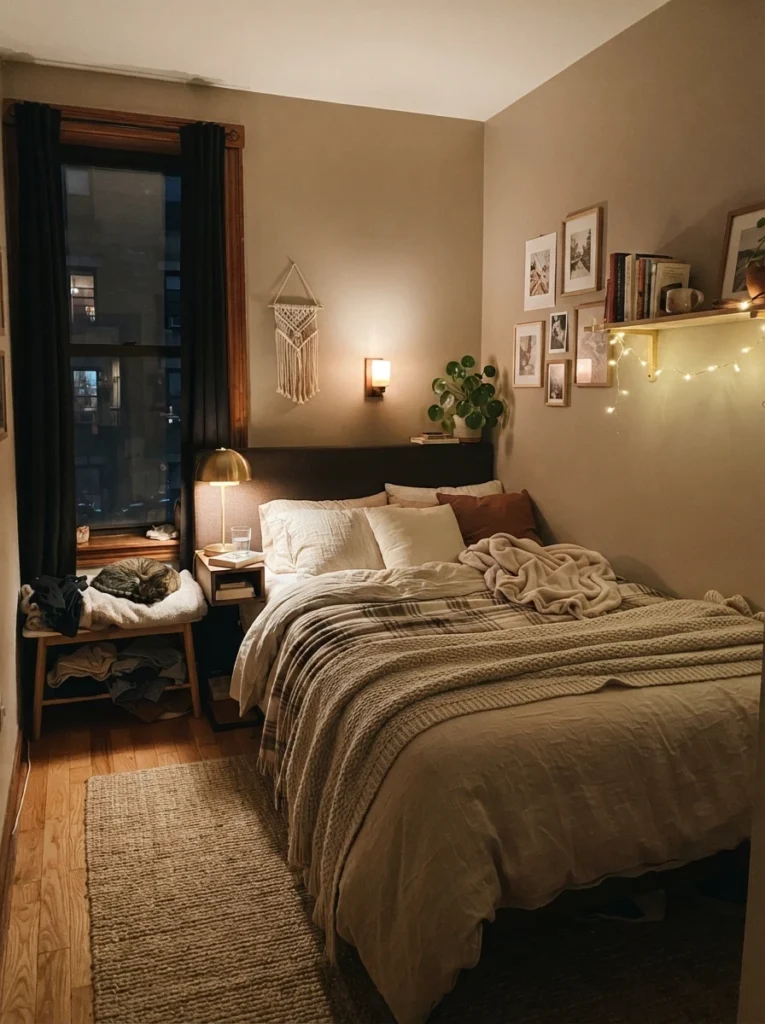
Bright white overhead lighting often makes small bedrooms feel emotionally exposed. It sharpens clutter, hardens shadows, and creates a colder atmosphere that keeps the nervous system more alert.
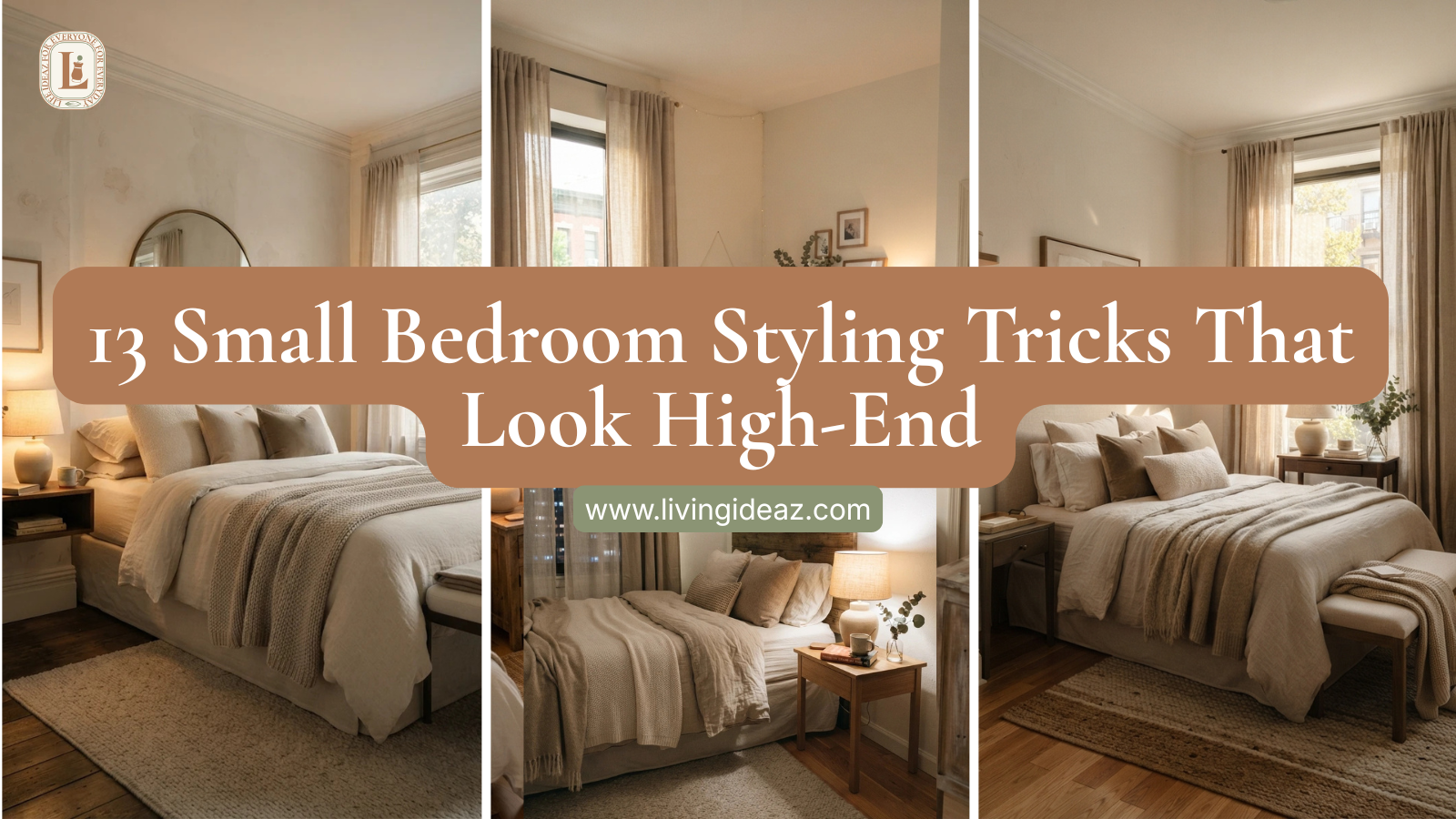
Warm layered lighting softens visual intensity naturally. Bedside lamps, warm LED glow, candles, and indirect lighting create gentler shadows that help the room feel safer and calmer emotionally.
Soft lighting reduces visual tension immediately.
3. Keep the Color Palette Emotionally Calm
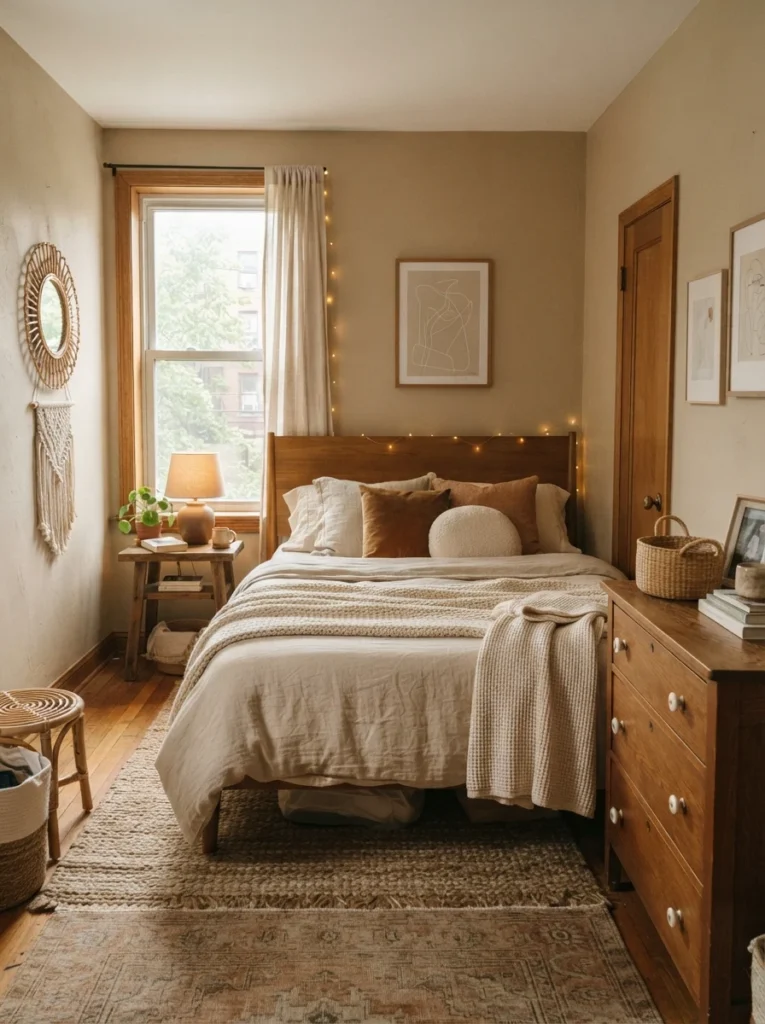
Tiny bedrooms often become visually overstimulating when too many strong colors compete for attention. Sharp contrast creates fragmentation that quietly increases mental noise.
Warm neutrals, muted earthy tones, soft greens, creamy whites, and layered natural textures help the eye move through the room more peacefully. Cohesive color palettes create smoother emotional flow.
Calmer colors often make small spaces feel mentally quieter too.
4. Stop Filling Every Wall With Decor
Many tiny bedrooms feel visually loud because every wall becomes a decoration opportunity. Multiple small frames, shelves, hanging decor, and busy wall arrangements create constant visual interruption.
Leaving some walls partially empty gives the eye moments to rest. Larger simpler decor pieces usually feel calmer emotionally than many tiny decorative details spread around the room.
Visual breathing room matters psychologically.
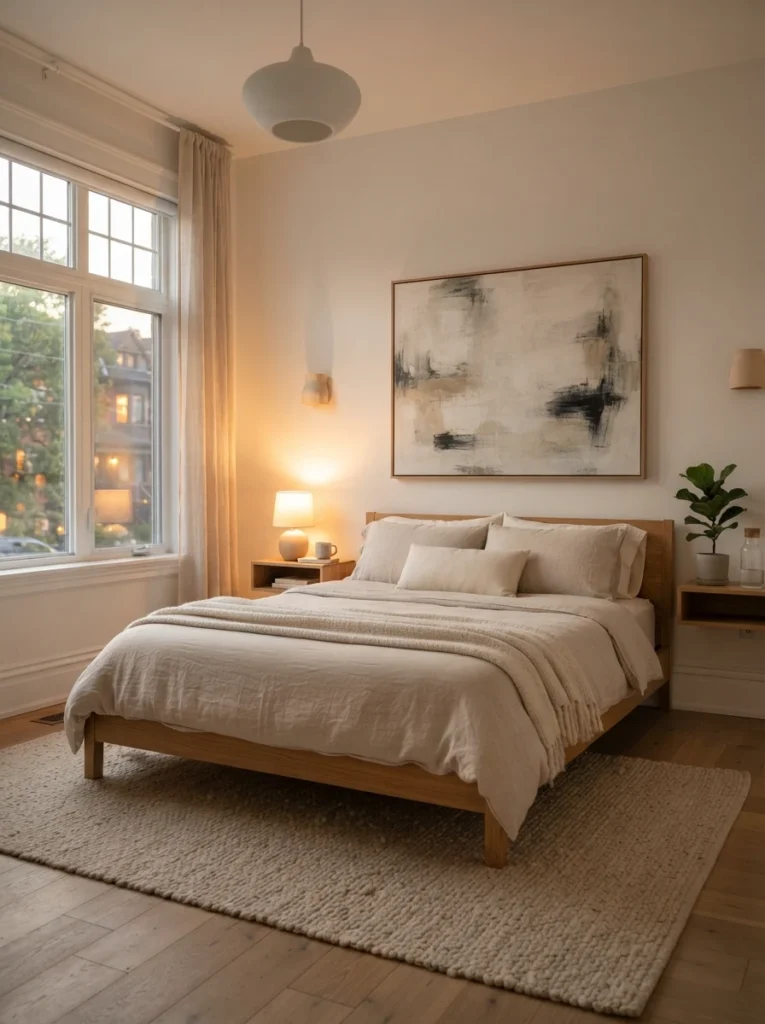
5. Use Furniture That Feels Visually Light
Heavy bulky furniture often makes tiny bedrooms feel emotionally compressed because large solid shapes dominate the room constantly.
Furniture with visible legs, slimmer frames, lighter wood tones, and softer proportions creates openness because more flooring and negative space remain visible underneath. Tiny rooms emotionally feel easier to breathe inside when furniture appears lighter visually.
Visual weight affects stress levels more than people realize.
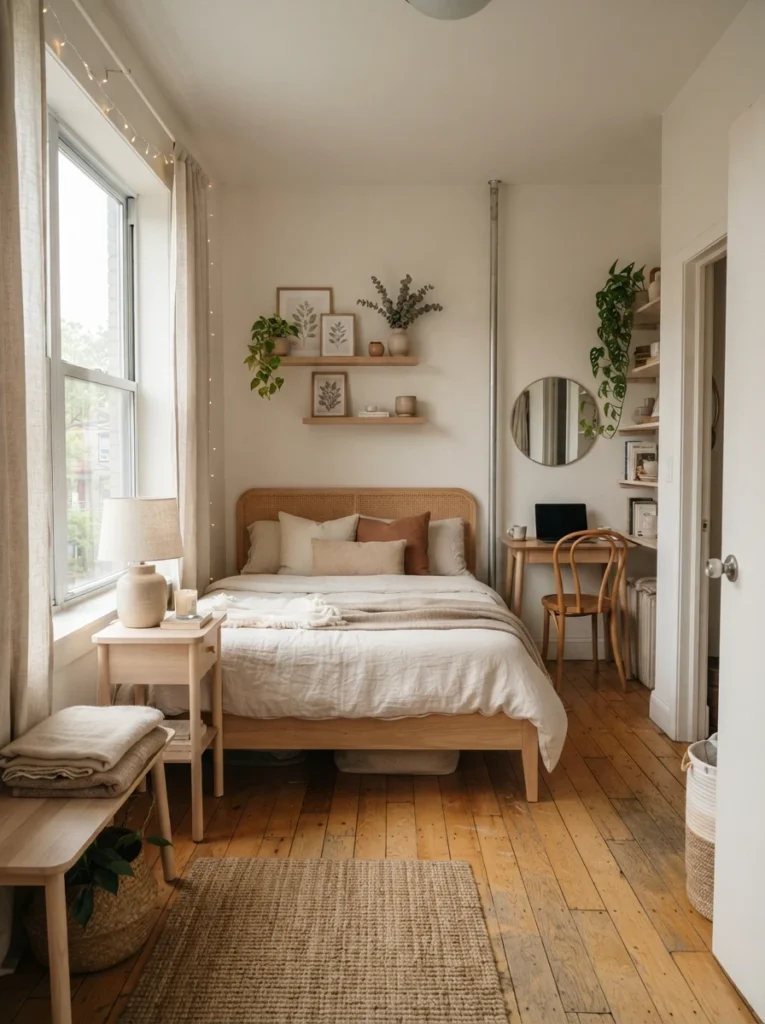
6. Create One Calm Visual Focal Point
Rooms feel chaotic when every object competes equally for attention. A calm focal point gives the eye somewhere intentional to settle naturally.
This could be softly layered bedding, oversized wall art, warm lighting behind the bed, or one cozy reading corner. Bedrooms emotionally feel calmer when visual hierarchy exists instead of constant scattered stimulation.
The eye needs direction to relax.
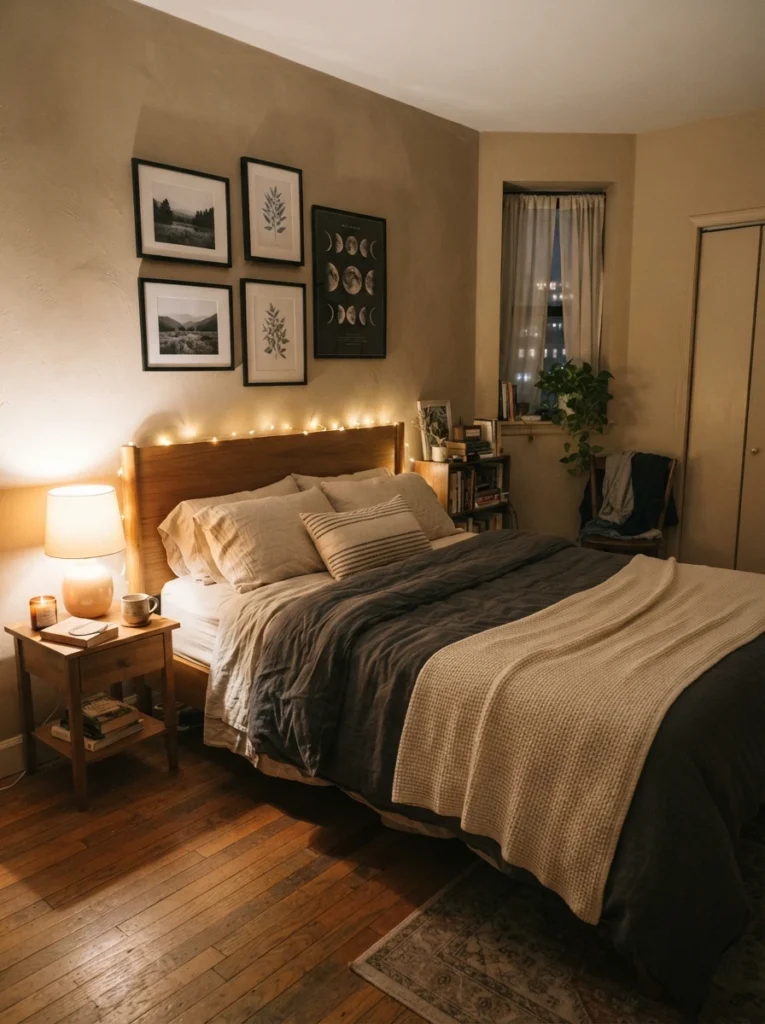
7. Keep Floor Space More Open
Visible floor space creates psychological openness because the eye can travel through the room more naturally. Laundry piles, storage bins, random shoes, and overcrowded furniture interrupt movement flow and increase visual pressure quickly.
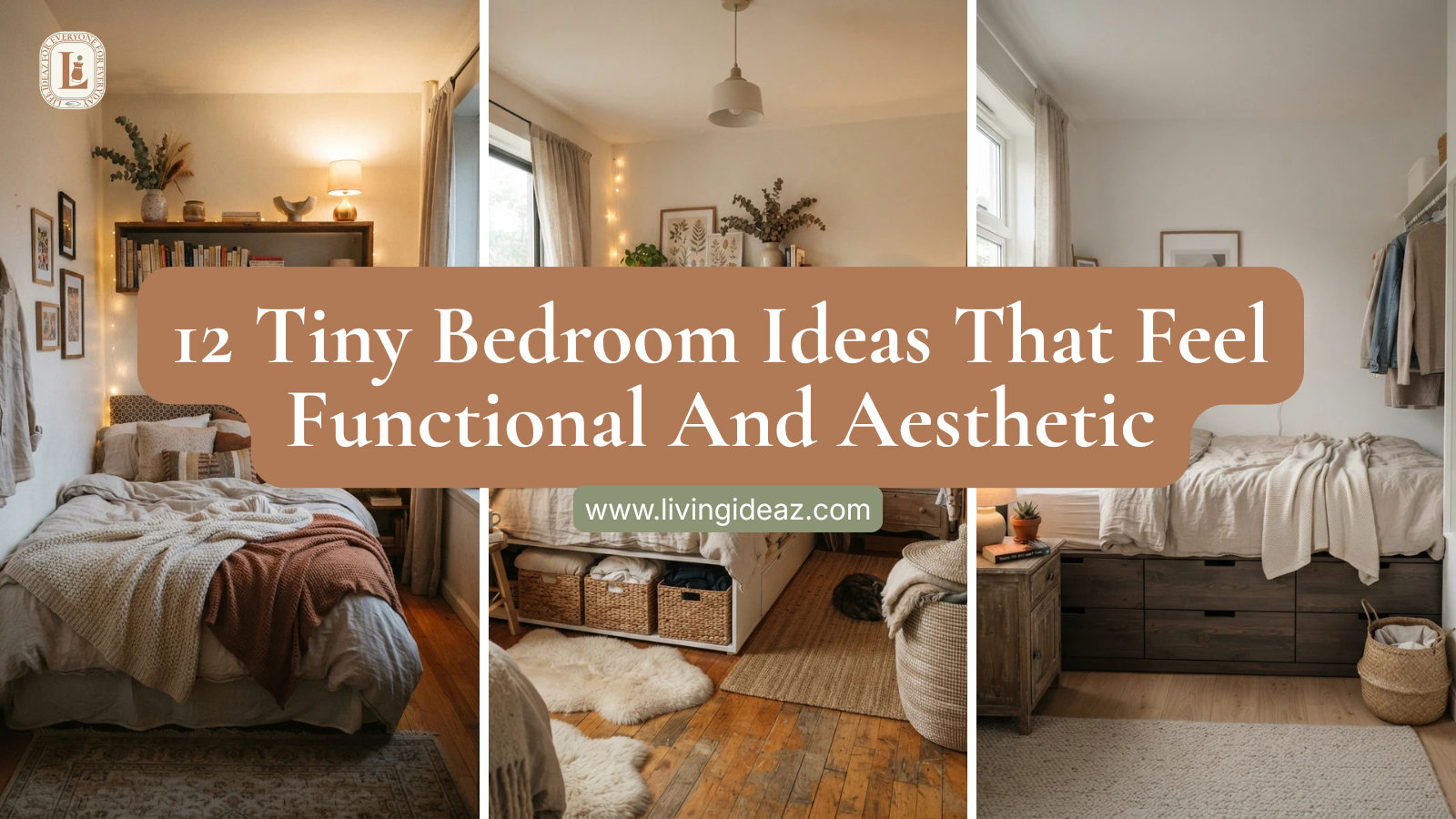
Wall hooks, under-bed storage, and vertical organization systems help free the floor while still keeping the room functional.
Open flooring quietly makes tiny bedrooms feel less mentally overwhelming.
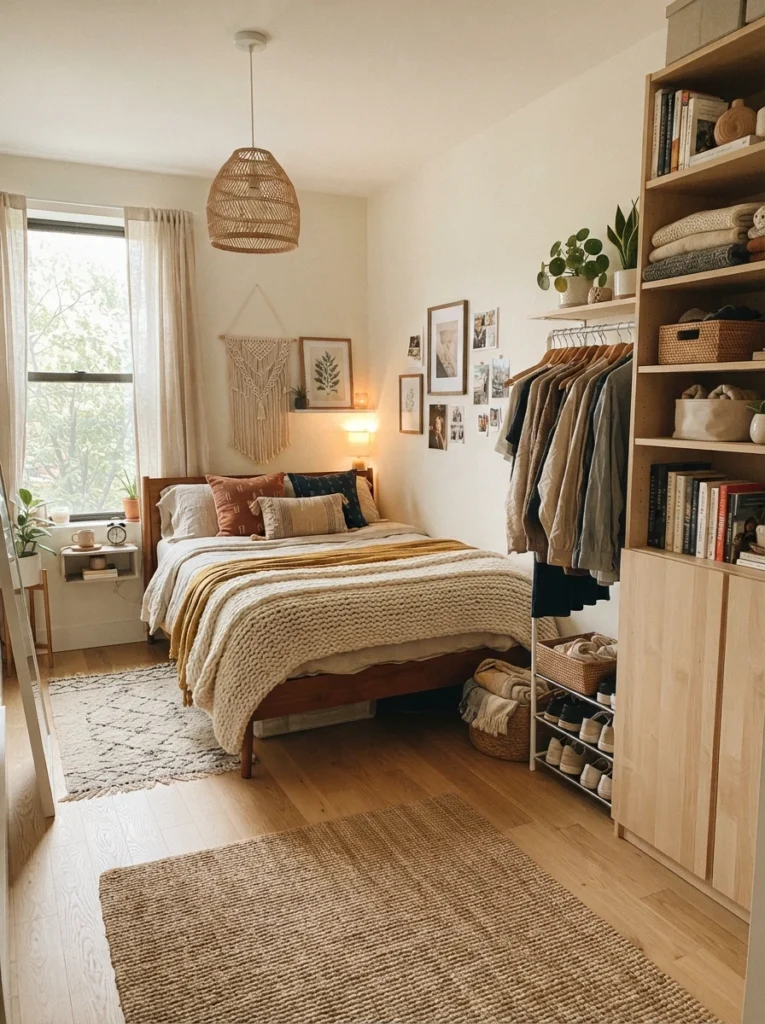
8. Use Texture Instead of Excess Decoration
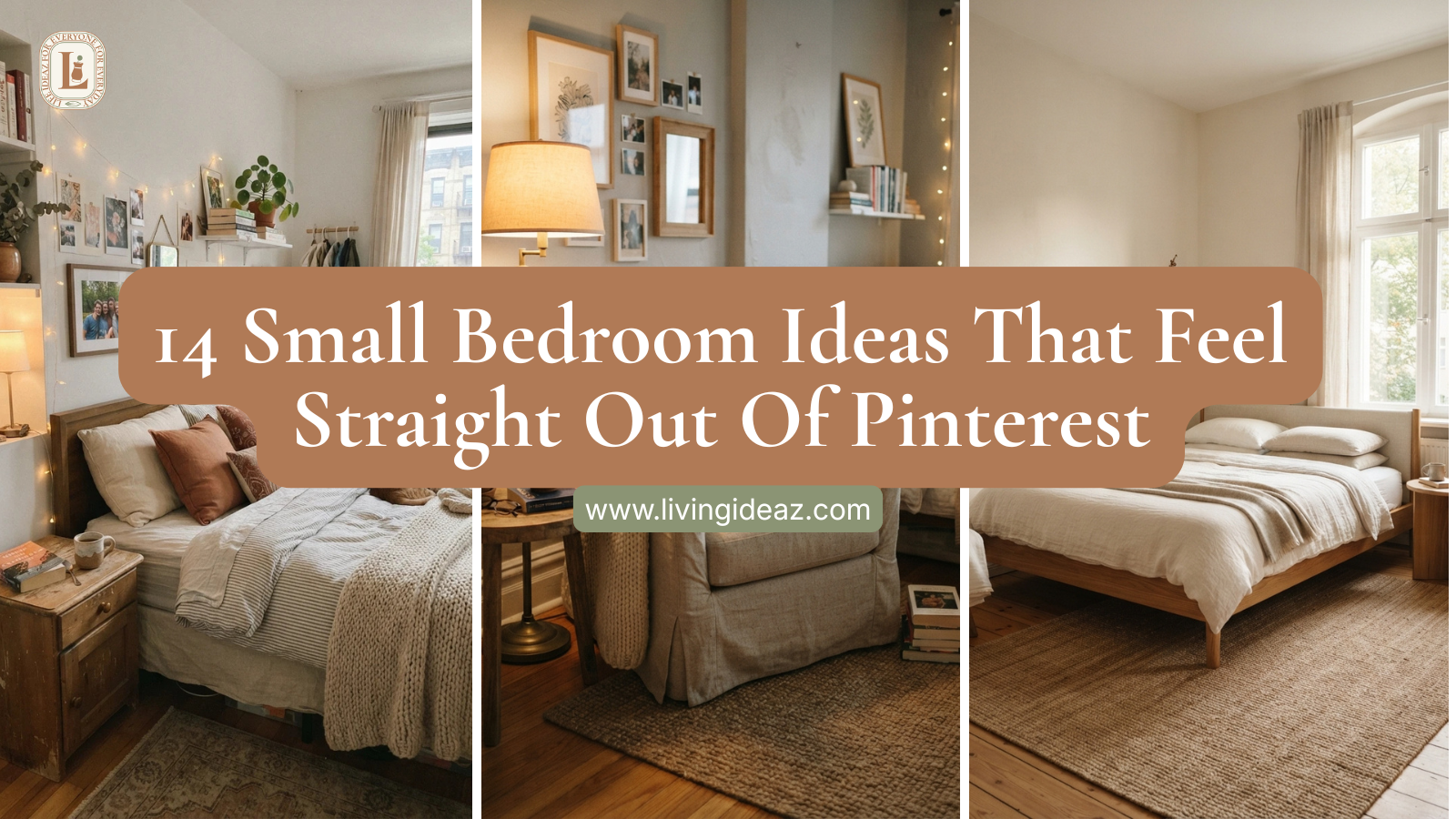
Rooms often feel calmer when texture creates depth instead of decorative clutter. Linen bedding, woven baskets, knit blankets, soft rugs, and natural wood tones add warmth without increasing visual noise.
This creates emotional richness while still keeping the room visually soft and simple. Tiny bedrooms emotionally benefit from subtle layering instead of overstimulation.
Soft textures calm the eye naturally.
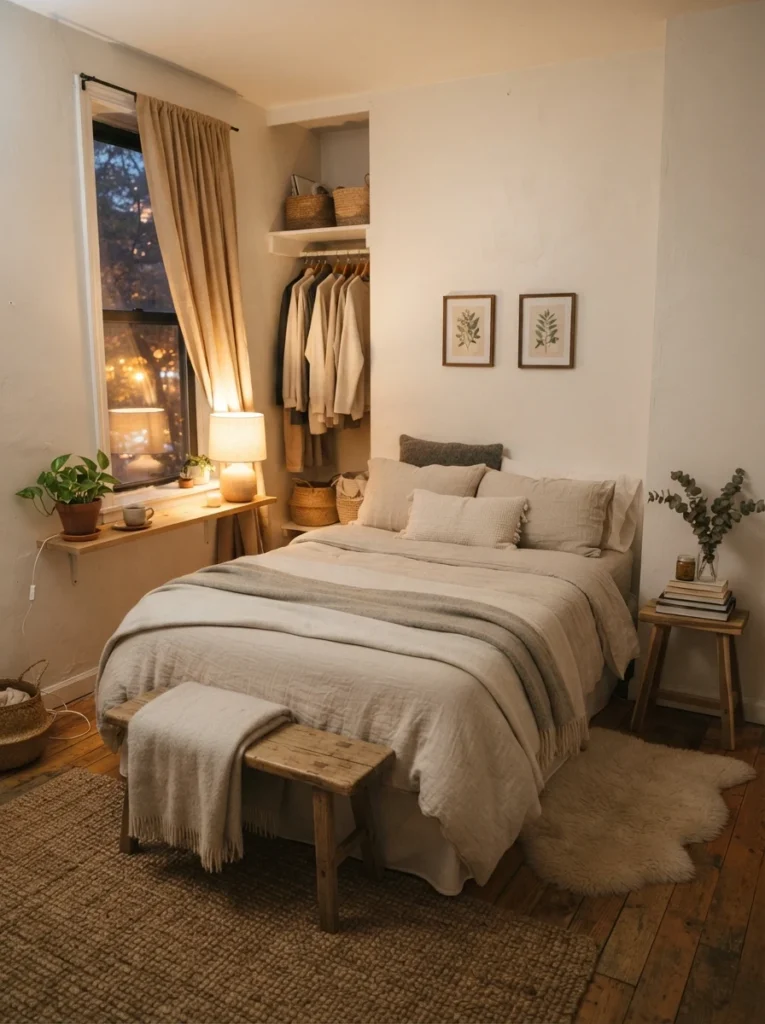
9. Design the Room Around Emotional Calm, Not Just Appearance
Some bedrooms look beautiful online but still feel mentally tiring in real life because every design choice screams for attention constantly. The calmest bedrooms usually reduce friction instead of increasing stimulation.
Cleaner layouts, softer lighting, controlled colors, hidden clutter, and easier movement create emotional relief because the room stops demanding constant mental processing.
A peaceful bedroom should help the nervous system slow down, not stay alert.
Final Thoughts
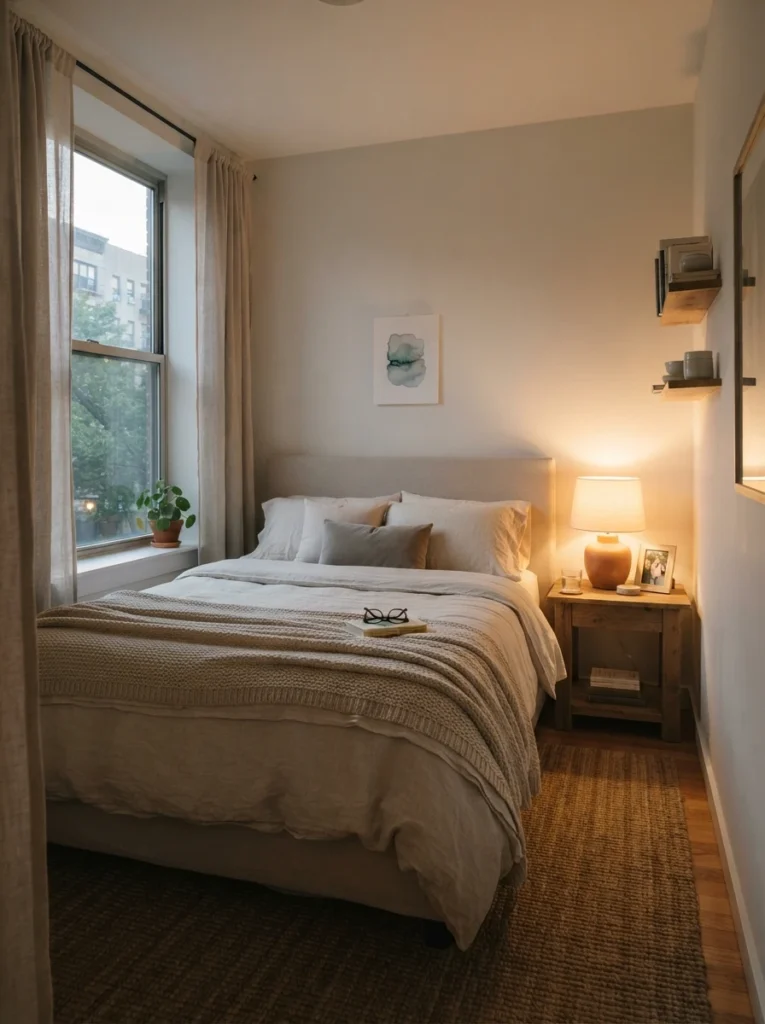
Visual stress builds slowly inside small bedrooms through clutter, harsh lighting, overcrowded decor, heavy furniture, and too much exposed information competing for attention at once.
The calmest tiny bedrooms are usually not the emptiest ones. They are the ones that soften visual pressure through lighting, texture, hidden storage, cohesive colors, and cleaner movement flow. When the eye finally gets space to rest, the mind often follows naturally.
A bedroom should not constantly demand attention. It should quietly help life feel lighter the moment you walk inside.