
19 Small Bedroom Layout Ideas For Awkward Room Shapes
Some awkward bedrooms feel impossible to decorate properly no matter how many times the furniture gets rearranged. The bed blocks movement, one corner feels unusable, natural light disappears behind bulky furniture, and the entire room somehow feels visually stressful even when it is technically clean.
Most people assume the room itself is the problem. In reality, awkward bedrooms usually feel frustrating because standard layouts stop working in unusual spaces.
Trying to force symmetry into narrow walls, sloped ceilings, strange corners, or off-center windows often creates even more visual tension.
The good news is that awkward bedrooms do not need perfect architecture to feel calm, functional, and beautiful. A smarter layout can completely change how a tiny room feels emotionally.
Better furniture placement, softer visual balance, cleaner movement flow, and intentional spacing often make awkward rooms feel surprisingly cozy and much easier to live in daily.
These ideas focus on improving flow, balance, comfort, and visual calm in difficult bedroom layouts without making the room feel crowded or chaotic.
Let’s get into the guide.
1. Use the Longest Wall for the Bed
In awkward rooms, the longest uninterrupted wall usually creates the calmest bed placement. This immediately helps the room feel more balanced because the bed anchors the layout instead of floating awkwardly between corners and windows.
Tiny bedrooms emotionally feel less chaotic when the bed placement feels intentional and visually grounded.
Strong anchoring creates calmness.
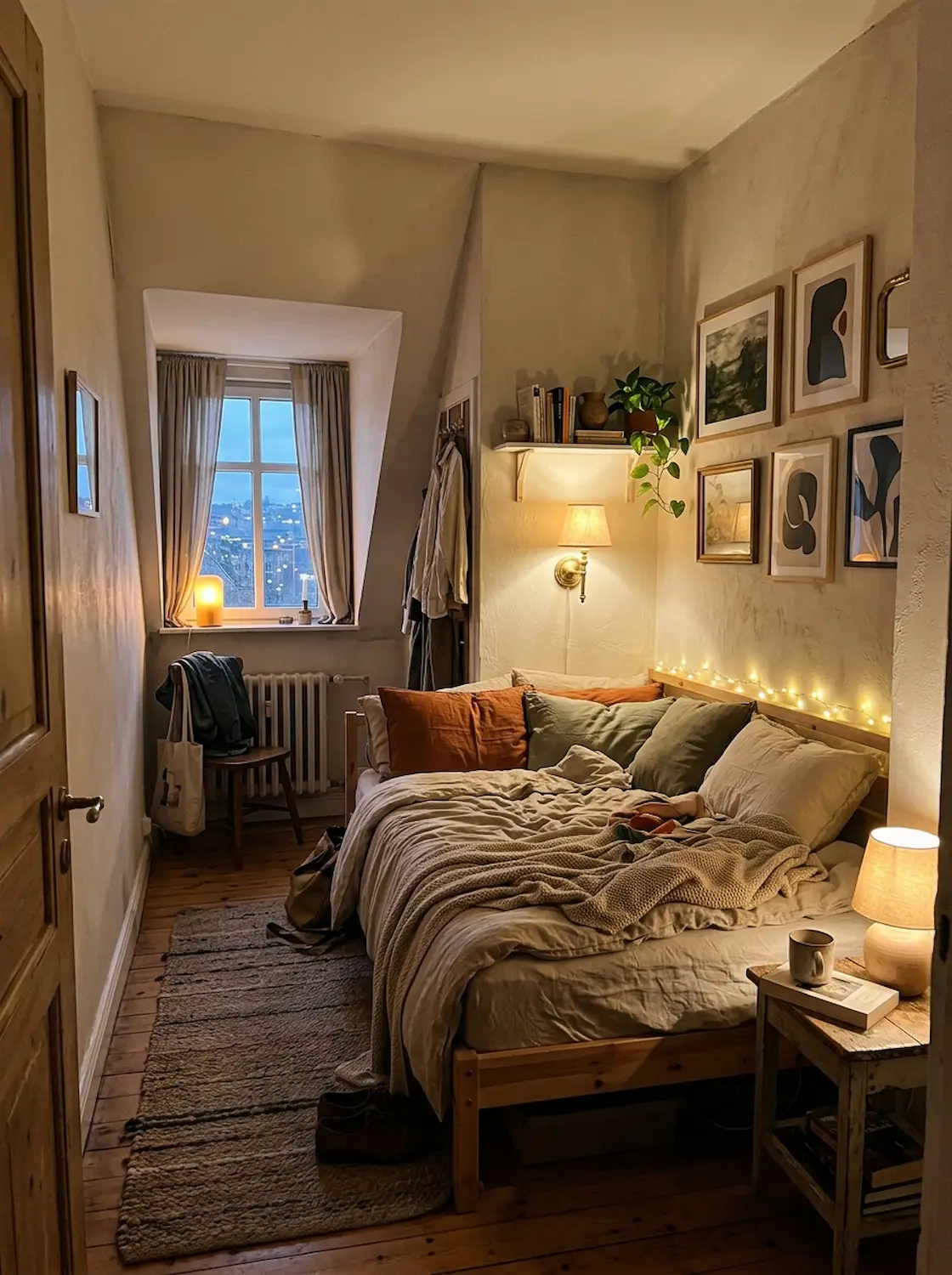
2. Float Furniture Away From Strange Angles
Trying to force every furniture piece tightly into unusual corners often exaggerates awkward architecture visually. Slightly floating furniture can soften the room and make strange angles feel less obvious emotionally.
Even small breathing gaps around furniture create more natural flow in difficult layouts.
Awkward rooms need softness, not rigidity.
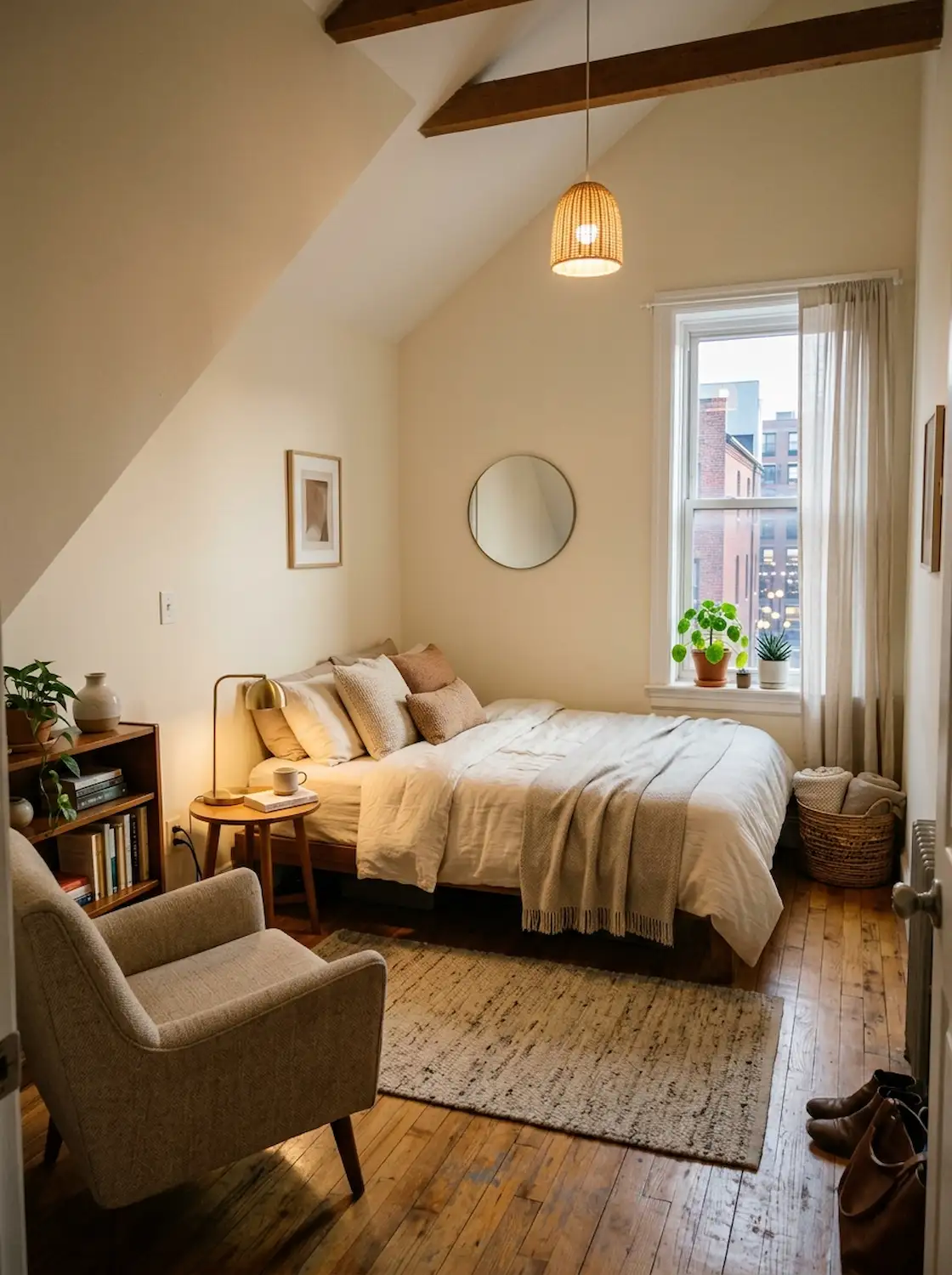
3. Use Corners for Soft Functional Zones
Awkward corners work beautifully when turned into intentional cozy zones instead of ignored dead spaces. A reading chair, woven basket storage, soft lamp, or tiny vanity can transform strange corners into emotionally useful areas.
Purpose reduces awkwardness naturally.
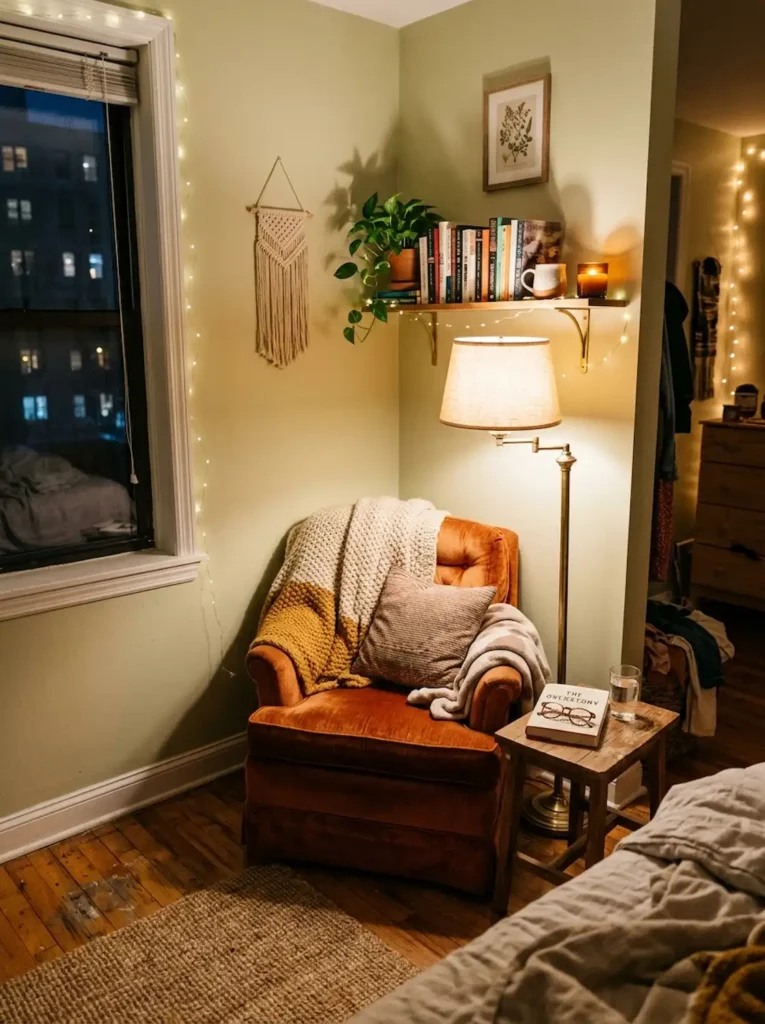
4. Keep Pathways More Open Than Normal
Awkward-shaped rooms already create visual tension naturally, so overcrowded movement flow makes the problem feel worse quickly. Clear pathways help tiny rooms feel calmer and easier to mentally process.
Smooth movement softens unusual layouts emotionally.
Easy flow creates comfort.
5. Use Vertical Storage in Tight Narrow Areas
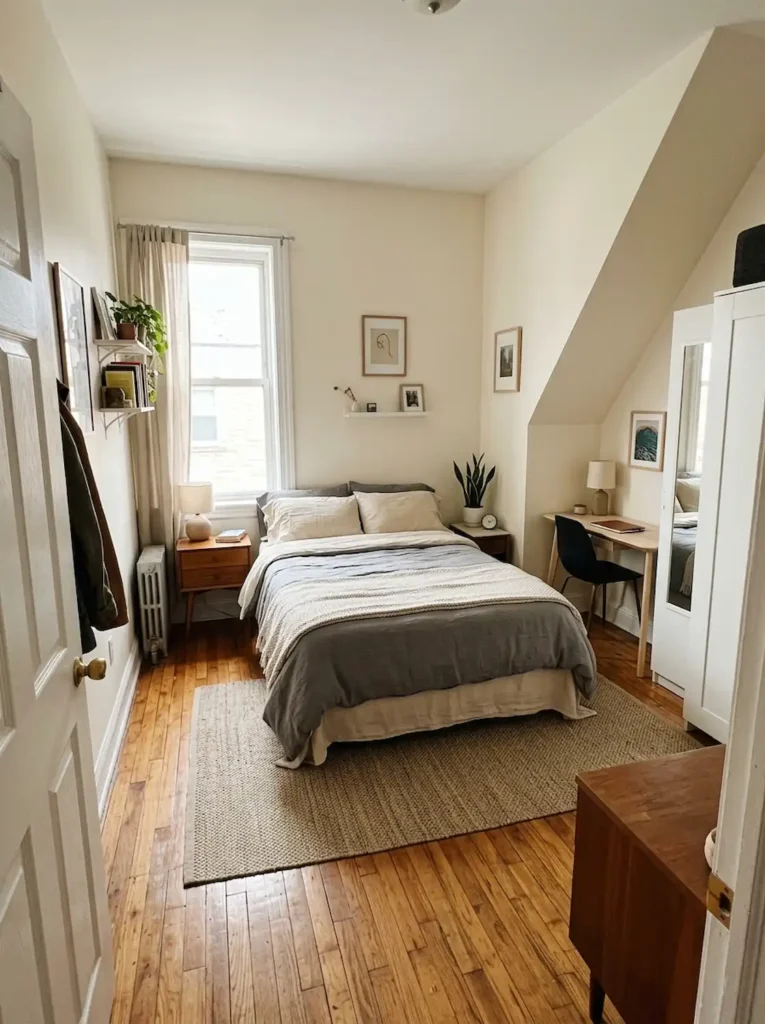
Narrow awkward rooms emotionally benefit from vertical storage because it preserves precious floor movement space. Tall slim shelving and narrow wardrobes create storage without making the room feel horizontally compressed.
Tiny awkward bedrooms usually need upward solutions more than wider furniture.
Height creates breathing room.
6. Place the Bed Off-Center if the Room Demands It
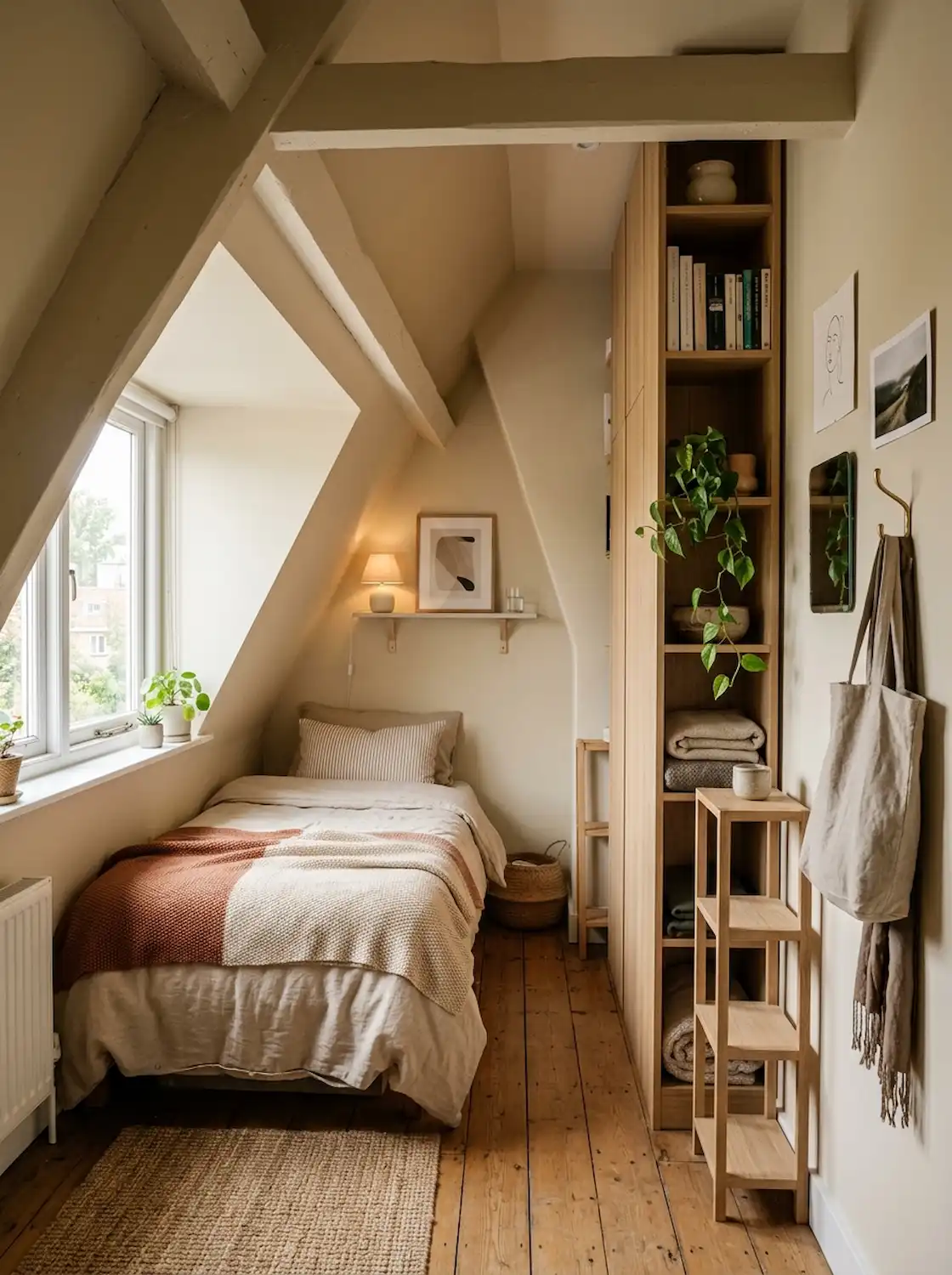
Many awkward rooms simply cannot support perfectly symmetrical layouts. Forcing symmetry often creates worse flow and tighter movement paths.
Sometimes slightly off-center bed placement creates smoother movement and calmer balance overall. Good awkward-room layouts prioritize comfort over perfection.
Function matters more than rigid design rules.
7. Use Low Furniture Beneath Slanted Ceilings
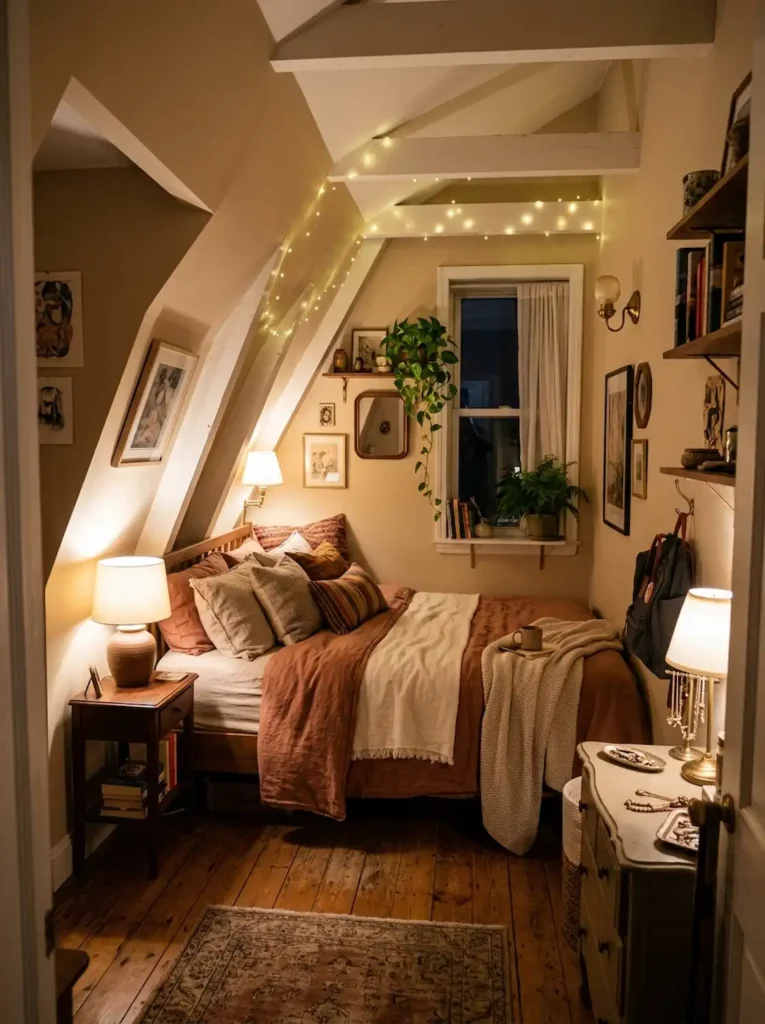
Sloped ceilings often create frustrating dead zones visually. Lower-profile furniture works beautifully underneath these areas because it respects the architecture instead of fighting it aggressively.
Low dressers, floor beds, benches, and open shelving help awkward ceilings feel intentional rather than restrictive.
Working with the room creates calmness.
8. Let Windows Stay Visually Open
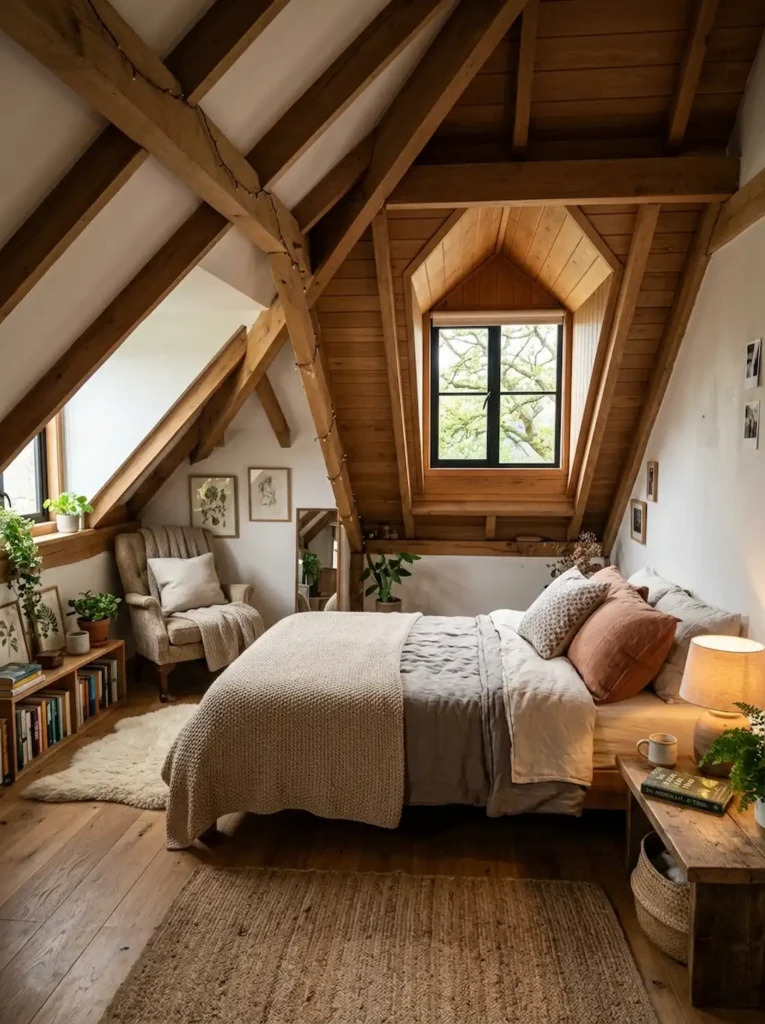
Awkward-shaped bedrooms often rely heavily on natural light to feel balanced emotionally. Blocking windows with wardrobes or oversized storage makes unusual layouts feel even heavier.
Keeping windows visually open helps daylight soften strange corners and uneven shapes naturally.
Light visually calms awkwardness.
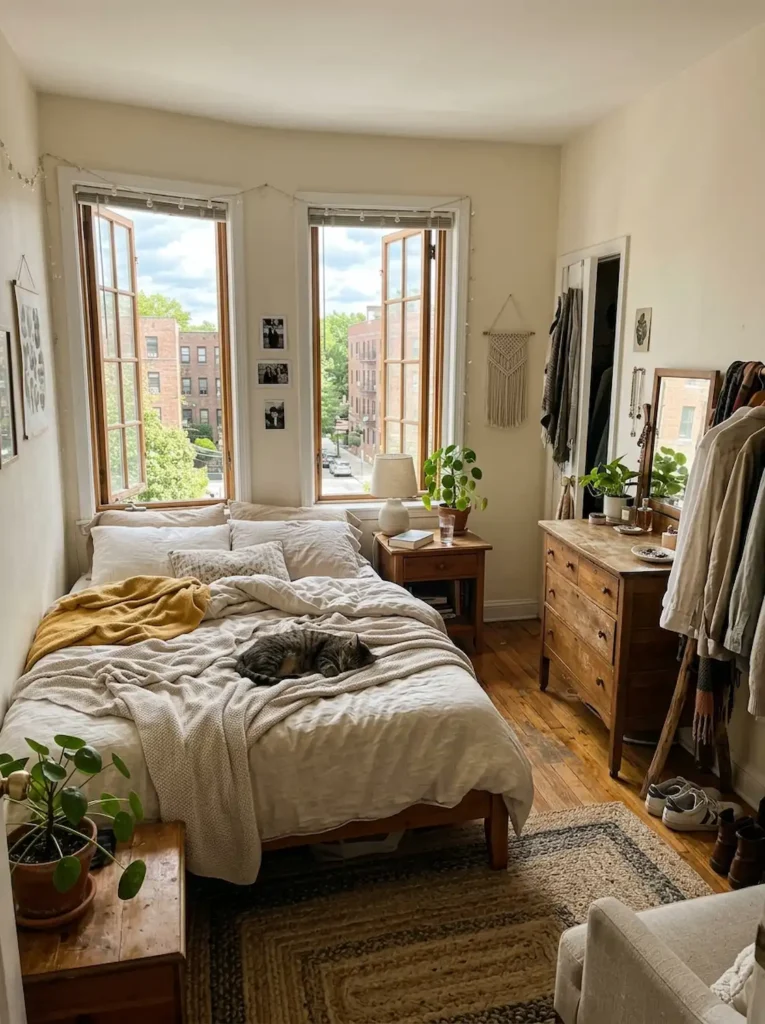
9. Use One Large Rug to Unify the Layout
Awkward rooms often feel fragmented because furniture sits at strange angles and uneven spacing interrupts visual flow. One larger rug helps visually connect the layout into one calmer cohesive zone.
This makes the room feel less broken apart emotionally.
Visual unity reduces chaos.
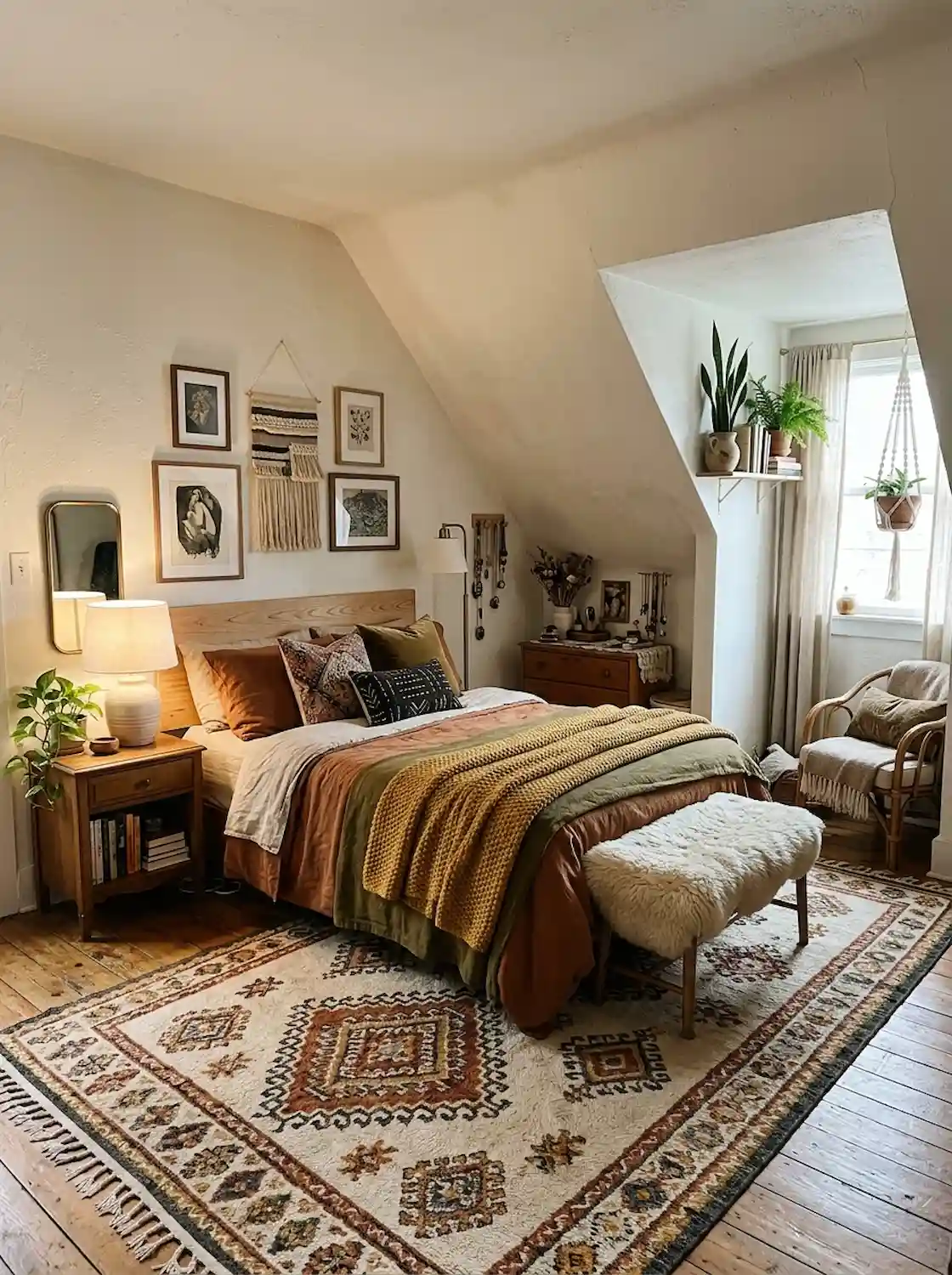
10. Turn Dead Space Into Hidden Storage
Tiny awkward gaps beside beds, beneath windows, or near slanted walls can become practical hidden storage instead of visual frustration.
Slim rolling drawers, baskets, or built-in shelving help difficult layouts feel smarter without overcrowding the room.
Good storage should feel integrated naturally.
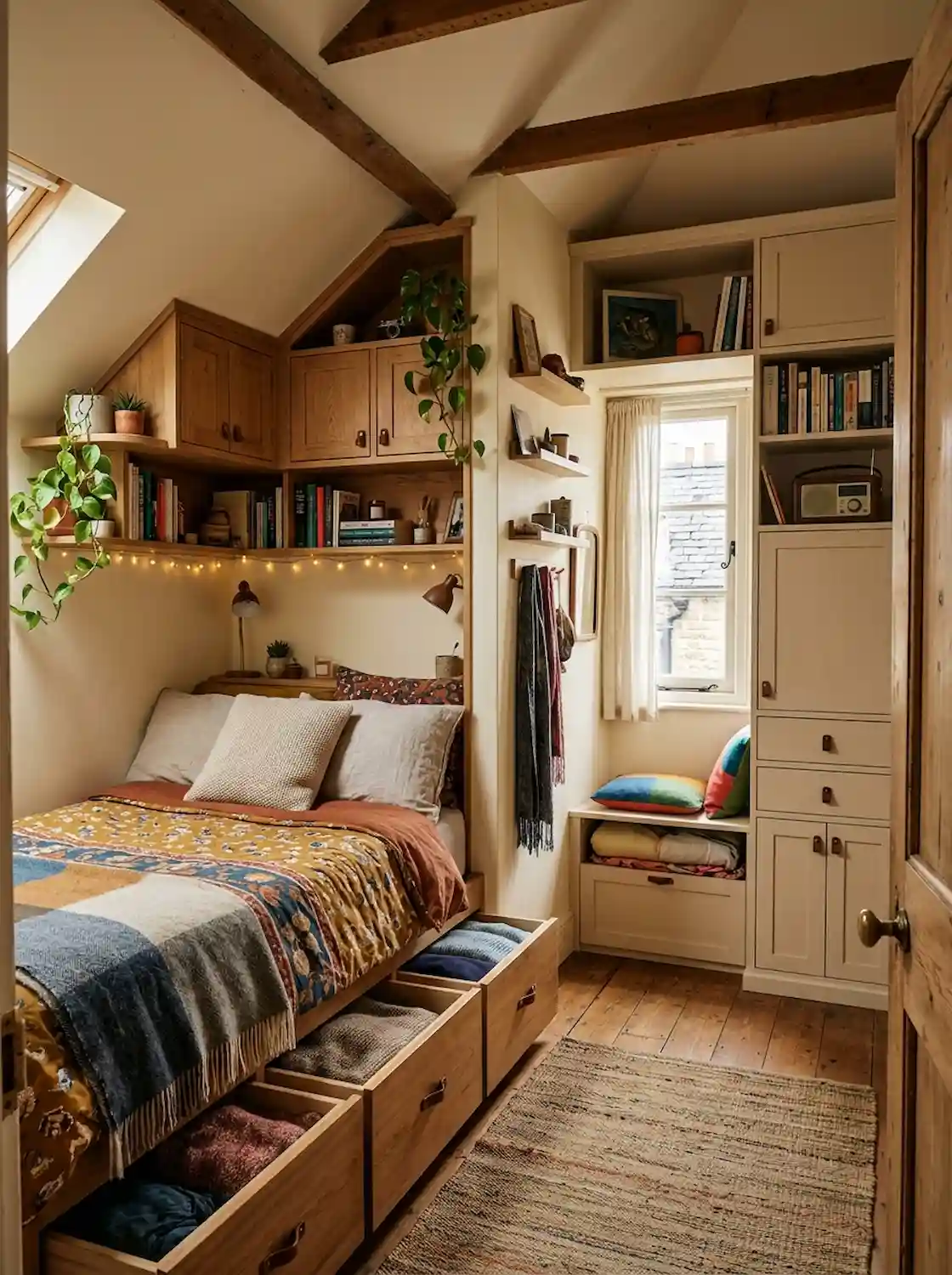
11. Avoid Oversized Furniture Completely
Awkward-shaped bedrooms become emotionally overwhelming fast when oversized furniture dominates already difficult layouts. Slim furniture proportions create flexibility and smoother flow naturally.
Compact rooms need furniture that visually cooperates with the architecture instead of overpowering it.
Lighter proportions reduce visual pressure.
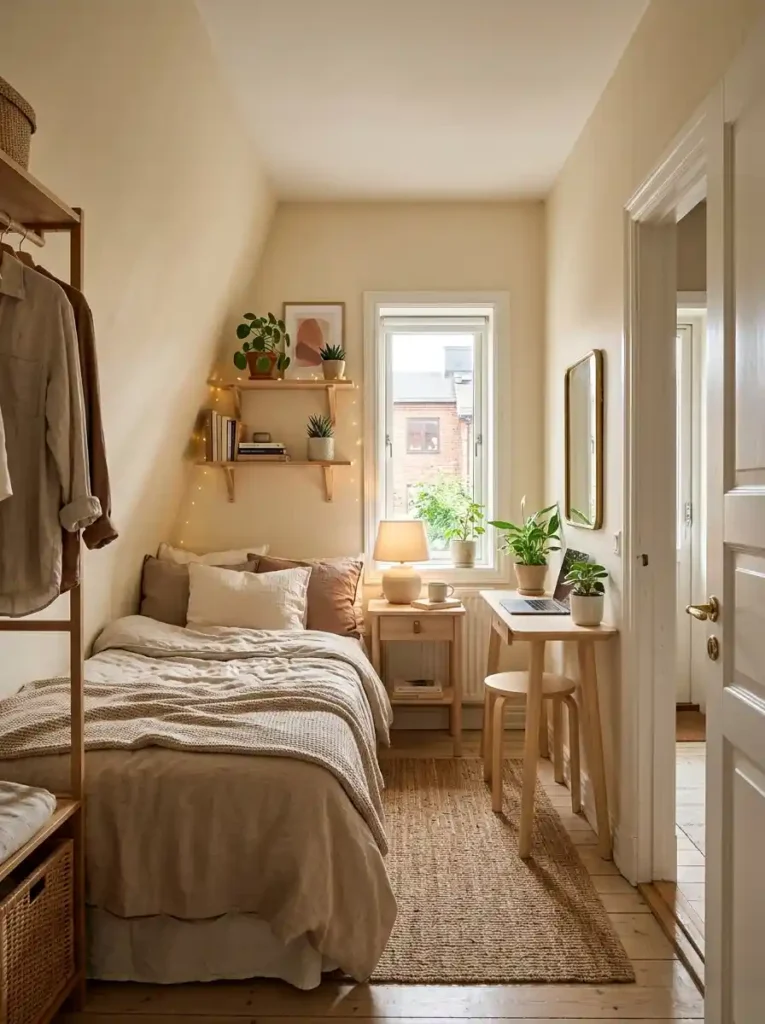
12. Use Lighting to Soften Uneven Areas
Strange corners and uneven walls often feel harsher under bright overhead lighting. Warm layered lighting helps soften awkward architecture by creating depth and emotional warmth instead.
Wall sconces, lamps, and soft LED glow visually smooth difficult spaces beautifully.
Lighting changes emotional perception constantly.
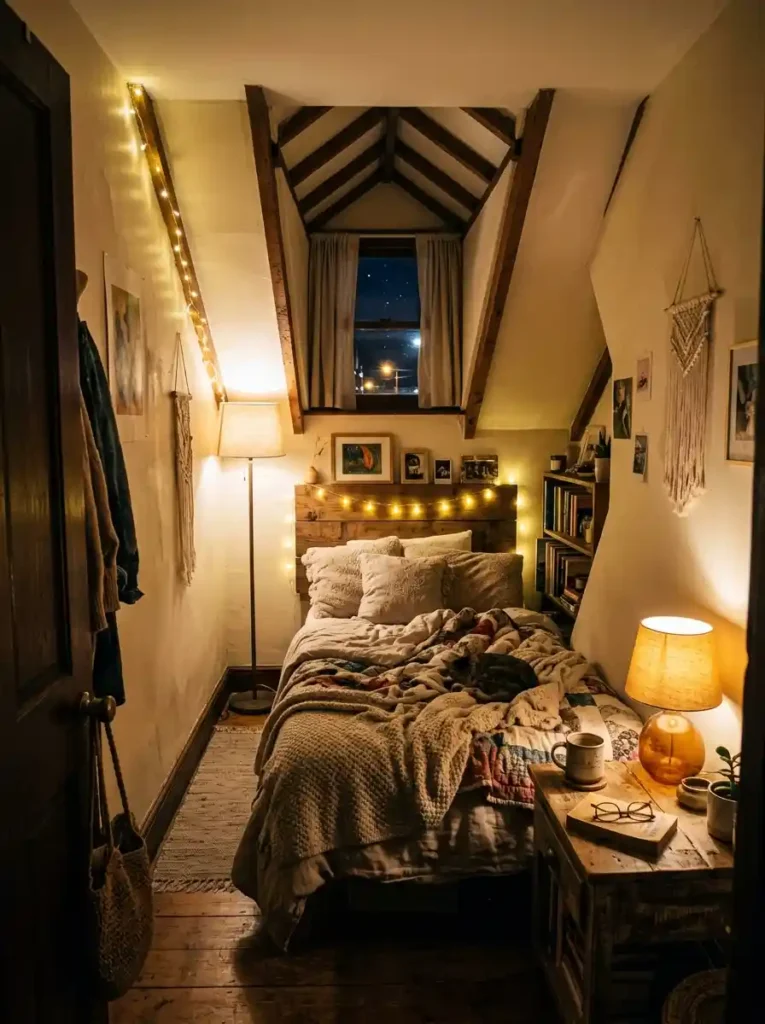
13. Create One Strong Visual Focal Point
Awkward rooms feel calmer when the eye has one intentional place to settle. A beautifully styled bed, oversized artwork, or cozy window corner helps distract from unusual room geometry naturally.
Without a focal point, the eye keeps noticing awkward layout problems repeatedly.
Focus creates emotional stability.
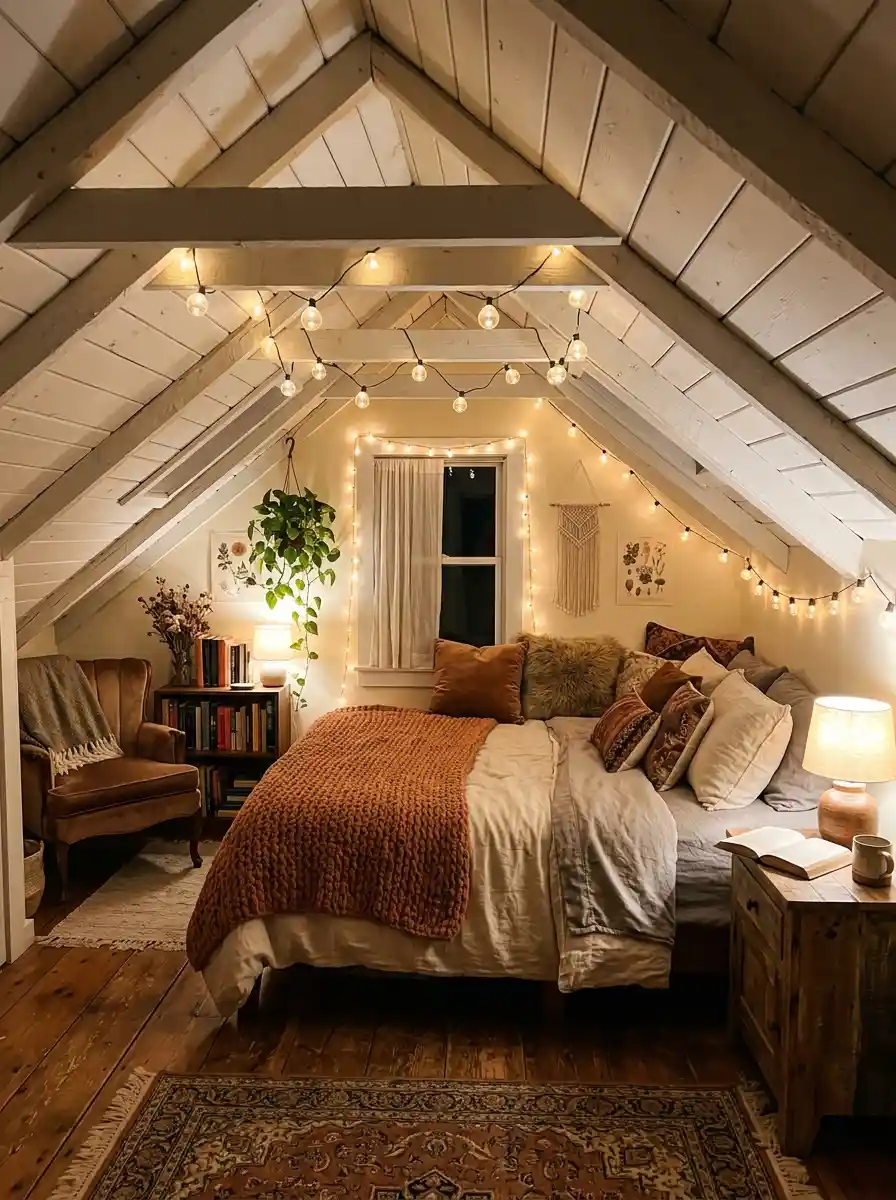
14. Use Open-Base Furniture to Reduce Heaviness
Furniture with visible legs and open lower space helps awkward bedrooms feel more breathable because the eye can continue traveling underneath furniture naturally.
Heavy solid furniture often exaggerates cramped architecture emotionally.
Visual openness creates calmness.
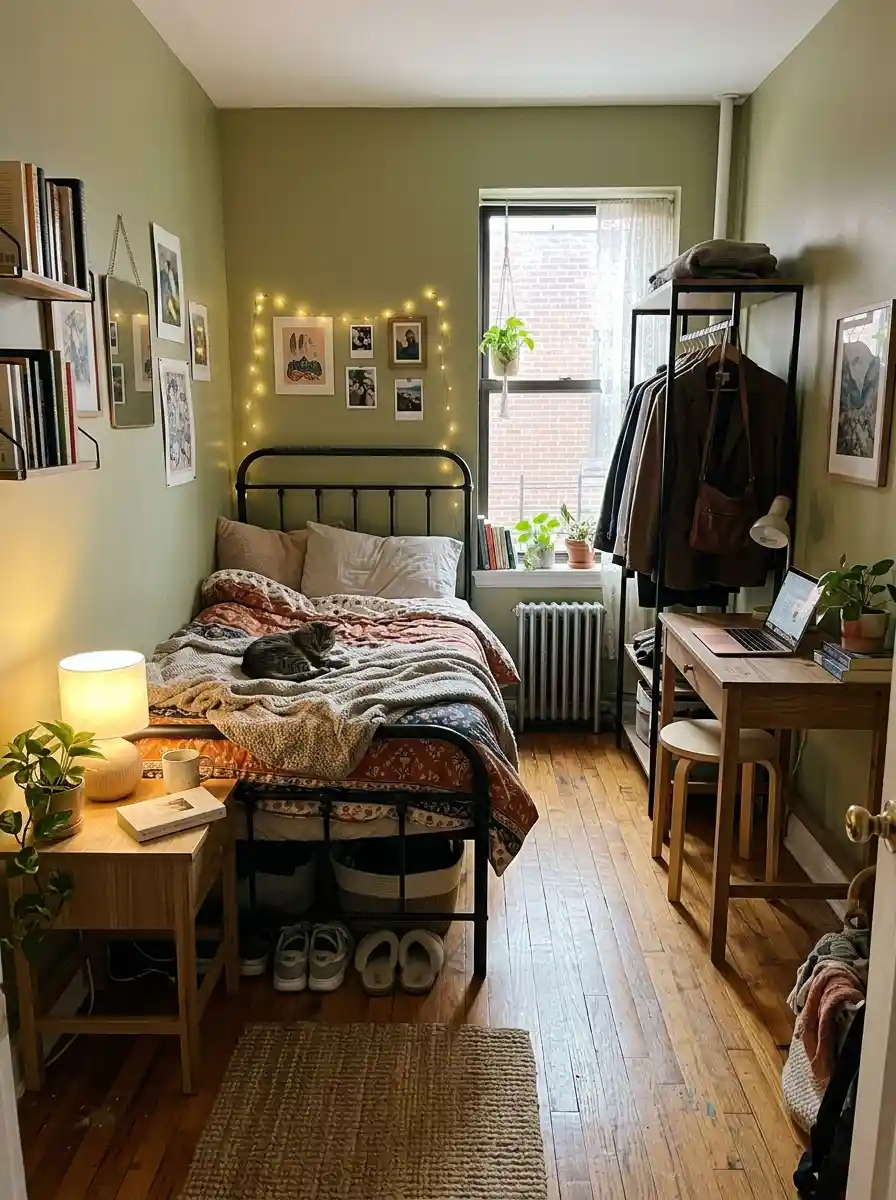
15. Balance Visual Weight Across the Room
Awkward rooms often feel emotionally uncomfortable because all the heavy furniture accidentally clusters on one side. Balancing wardrobes, beds, shelves, and decor across the room creates smoother visual flow.
The room starts feeling more stable emotionally.
Balance reduces tension naturally.
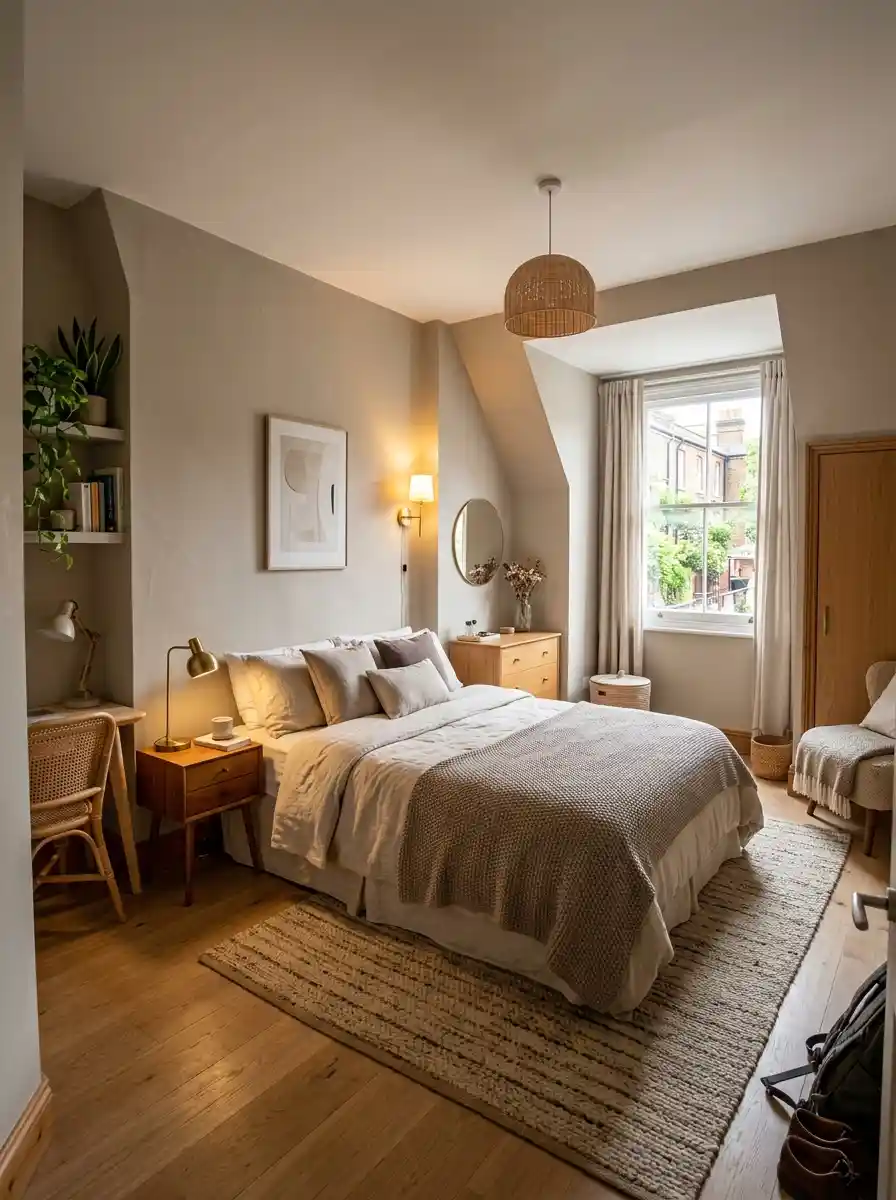
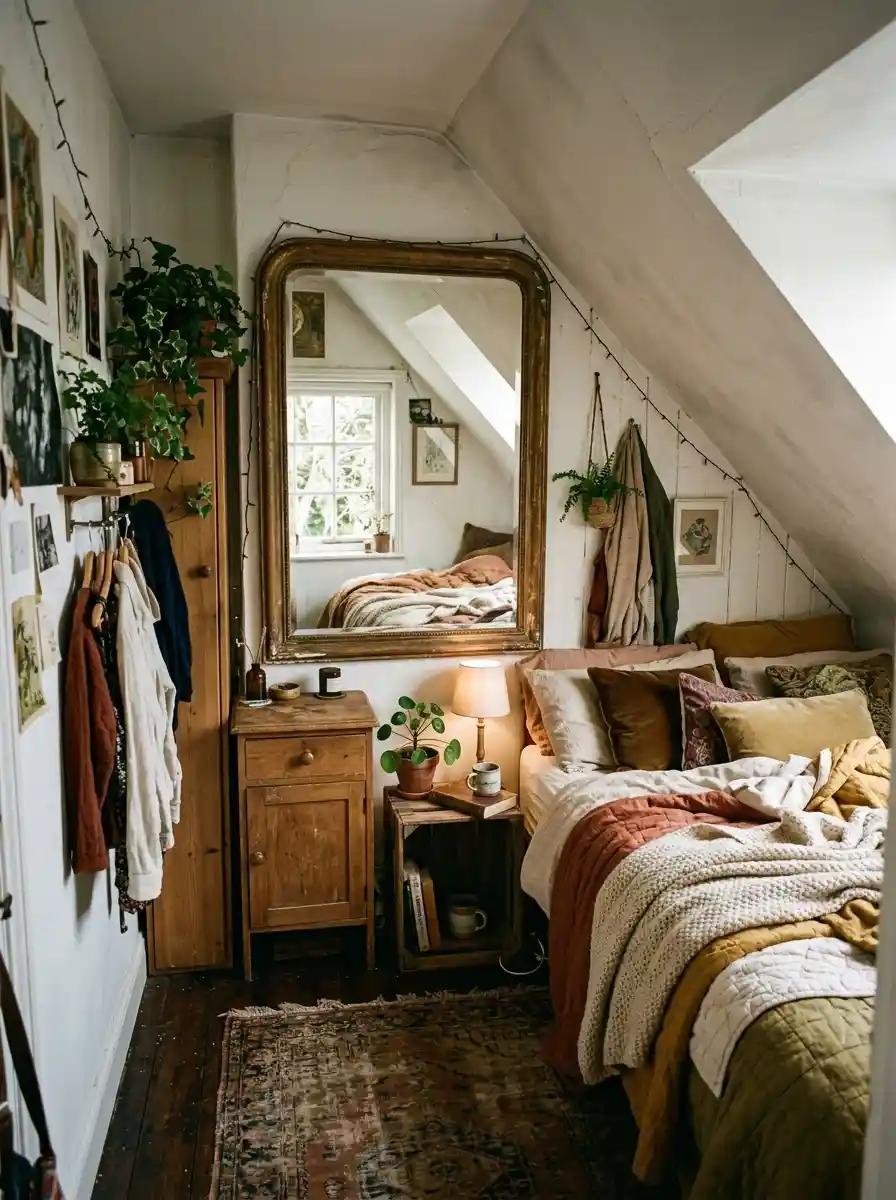
16. Use Mirrors to Expand Difficult Layouts
Mirrors help awkward bedrooms feel less boxed in because they reflect light and visually extend narrow or uneven areas naturally.
Large mirrors especially soften strange room shapes by creating visual depth that distracts from awkward architecture.
Reflection creates openness emotionally.
17. Leave Some Areas Intentionally Empty
One major awkward-room mistake is trying to “fix” every strange corner with furniture or decor. Empty space actually helps difficult layouts breathe emotionally.
Leaving certain areas visually lighter creates balance and prevents the room from feeling overcrowded.
Restraint improves awkward layouts dramatically.
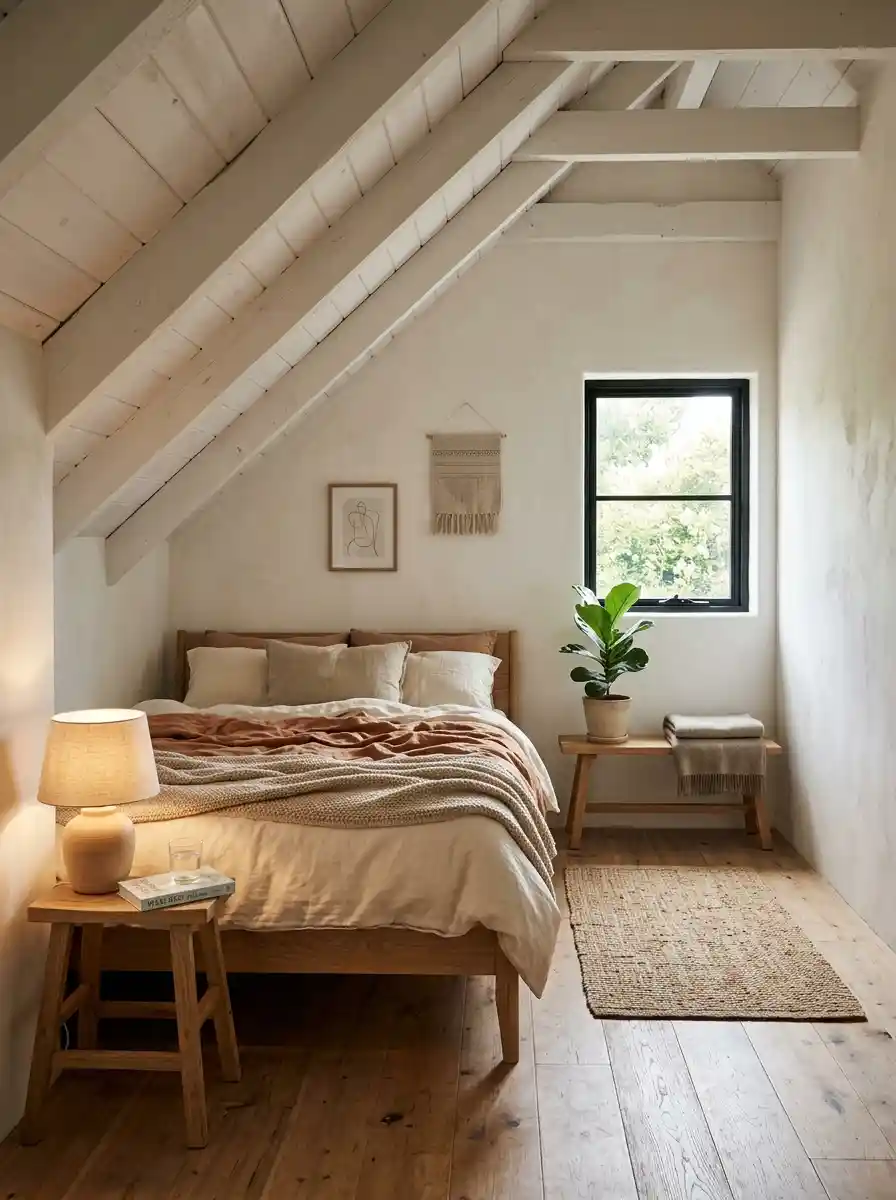
18. Work With the Architecture Instead of Hiding It
Odd windows, angled walls, alcoves, and sloped ceilings often feel less awkward when treated as part of the room’s personality instead of design flaws needing concealment.
Leaning into unique architectural details creates warmth and character naturally.
Acceptance often feels more stylish than forcing perfection.
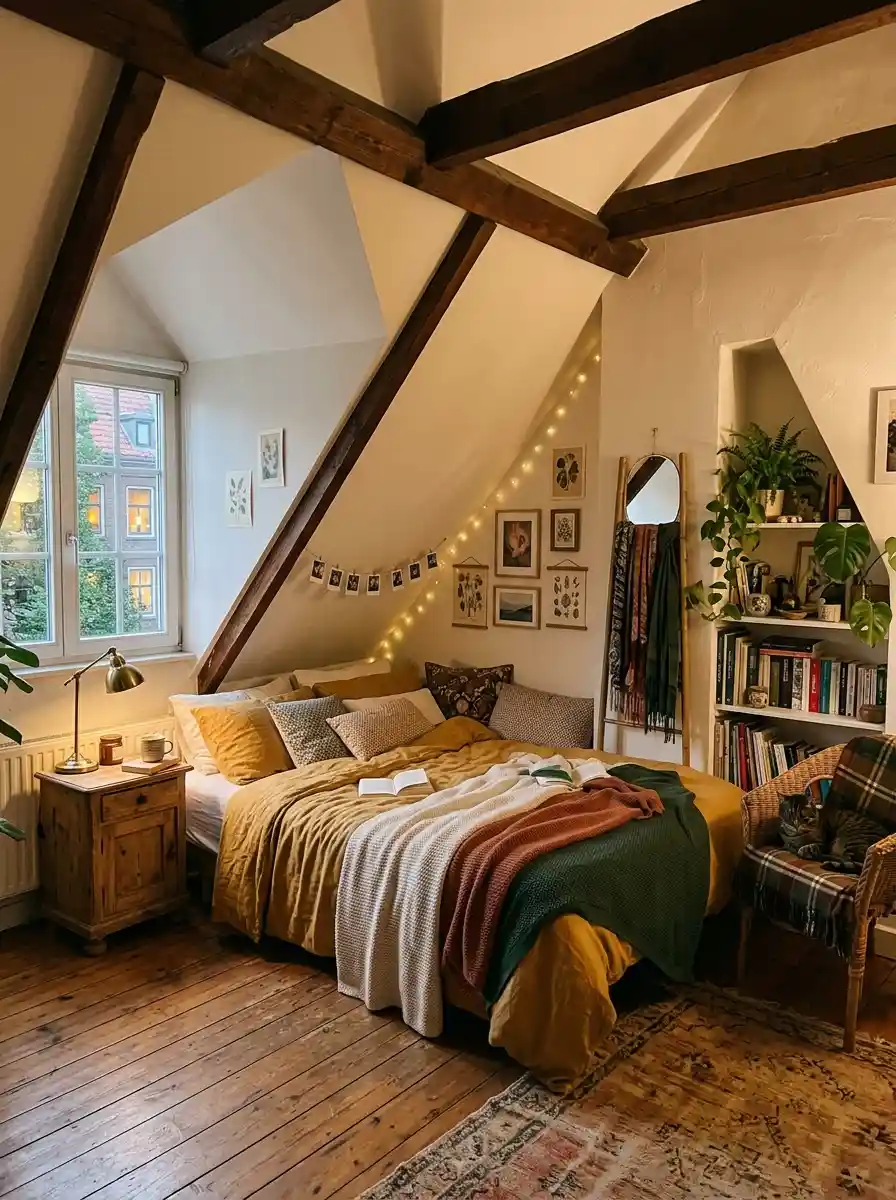
19. Prioritize Emotional Comfort Over Perfect Symmetry
Awkward rooms rarely become peaceful through strict layout rules alone. The best setups focus on smoother movement, calmer lighting, softer furniture placement, and emotional comfort instead of forcing ideal symmetry.
A room can still feel warm, beautiful, and deeply relaxing even when the architecture itself is imperfect.
Comfort matters more than perfect geometry.
Final Thoughts
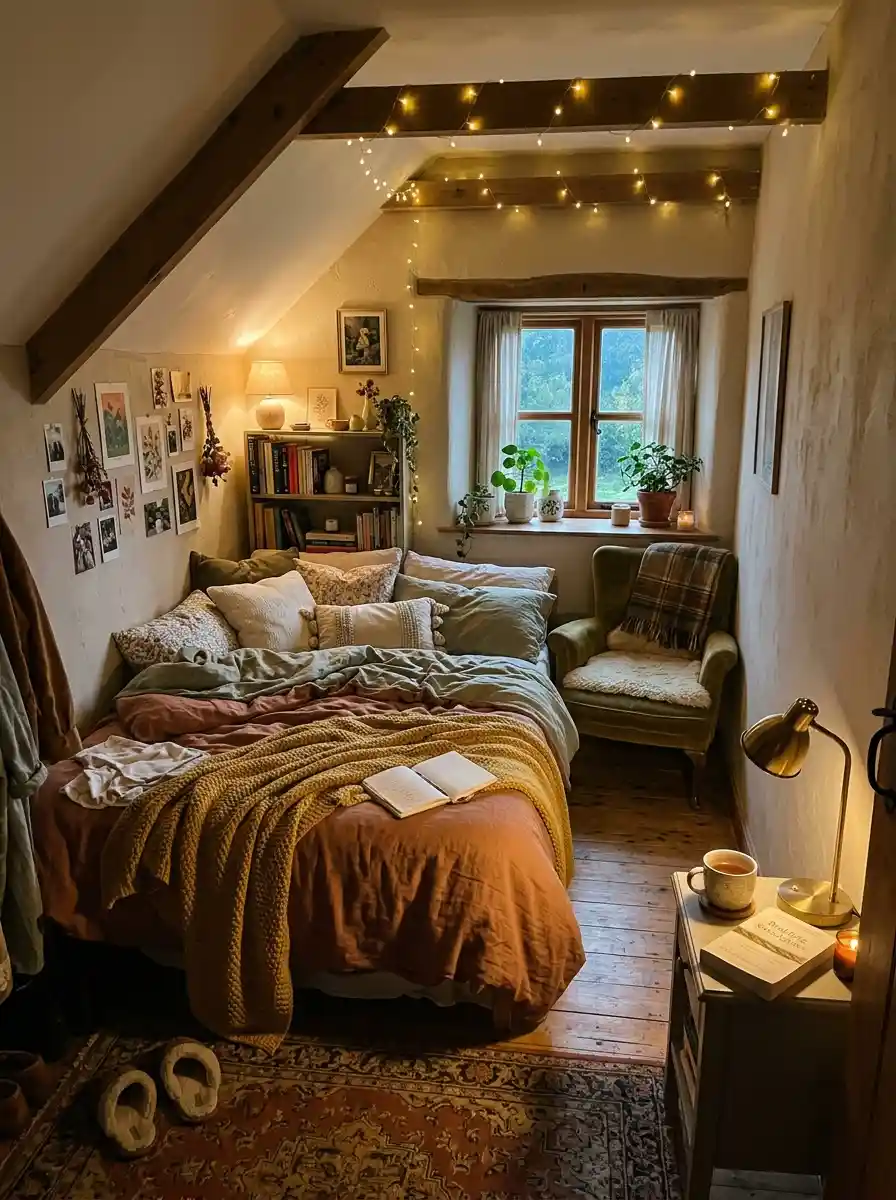
Awkward bedroom shapes become easier to live with when layouts stop fighting the architecture constantly. Better flow, lighter furniture, softer lighting, open pathways, and intentional balance help difficult rooms feel calmer emotionally.
The best awkward-room layouts are rarely the most perfect-looking ones. They are the ones that quietly reduce friction and make daily life feel easier inside unusual spaces.
A small awkward bedroom does not need perfect proportions to feel beautiful. It simply needs a layout that works gently with the room instead of against it.


One Comment