

9 Small Bedroom Ideas That Look Clean Without Feeling Empty
TL;DR
Many small bedrooms try so hard to look clean that they accidentally become emotionally cold. Blank walls, harsh lighting, and overly minimal setups often make rooms feel lifeless instead of calming. The best clean-looking bedrooms still feel warm, layered, and human. These small bedroom ideas focus on creating visual calm without removing the softness, personality, and comfort that make rooms emotionally inviting.
1. Use Texture to Replace Visual Clutter
One reason minimalist bedrooms sometimes feel empty is because everything becomes visually flat. Texture solves this quietly without adding unnecessary clutter.
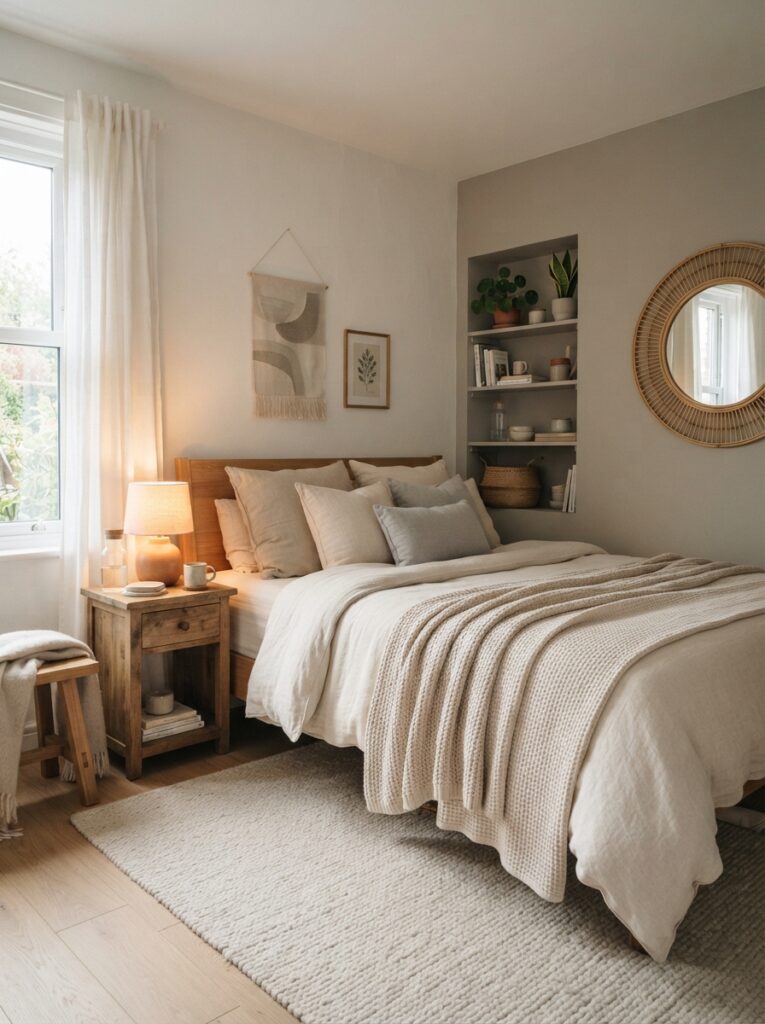
Linen bedding, woven baskets, knit blankets, soft rugs, and natural wood tones create depth while keeping the room visually calm. The eye experiences warmth and softness without needing endless decorative objects everywhere.
Clean bedrooms feel comforting when texture does the emotional work.
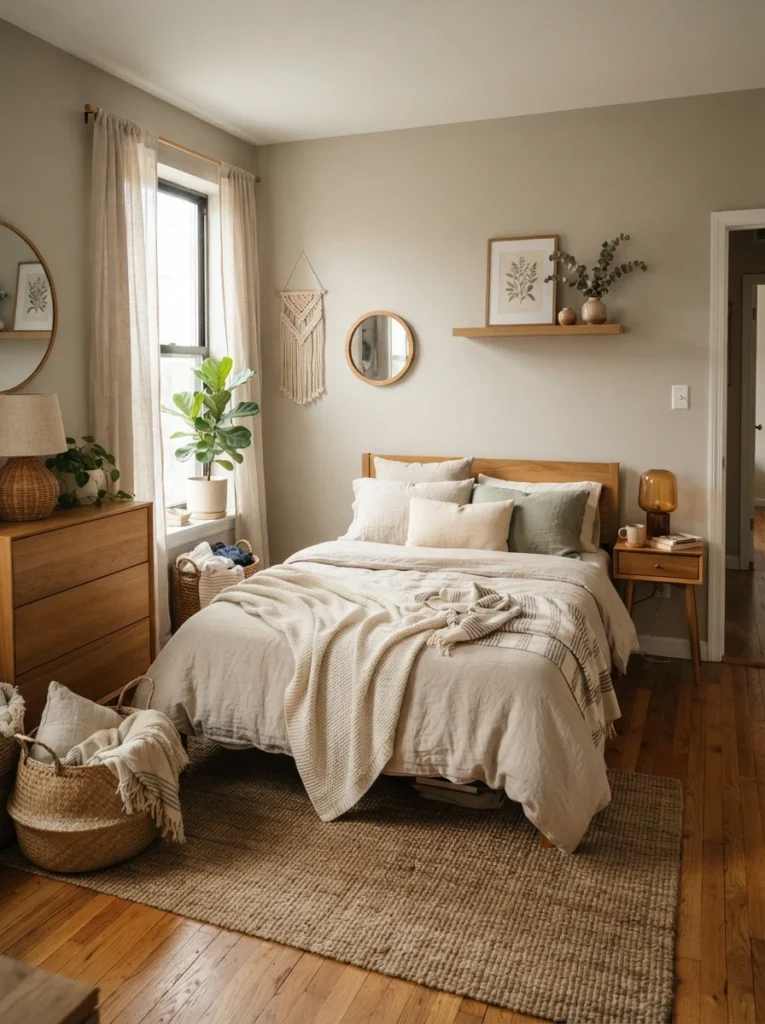
2. Keep Decor Intentional Instead of Removing Everything
Some small bedrooms feel sterile because people confuse “clean” with “empty.” Completely removing personality often makes spaces emotionally flat and uncomfortable to stay inside for long periods.
One framed print, ceramic vase, stacked books, or warm bedside candle usually creates enough emotional softness without cluttering the room visually. Tiny spaces emotionally respond better to intentional decoration than excessive decoration.
A little personality makes rooms feel alive.
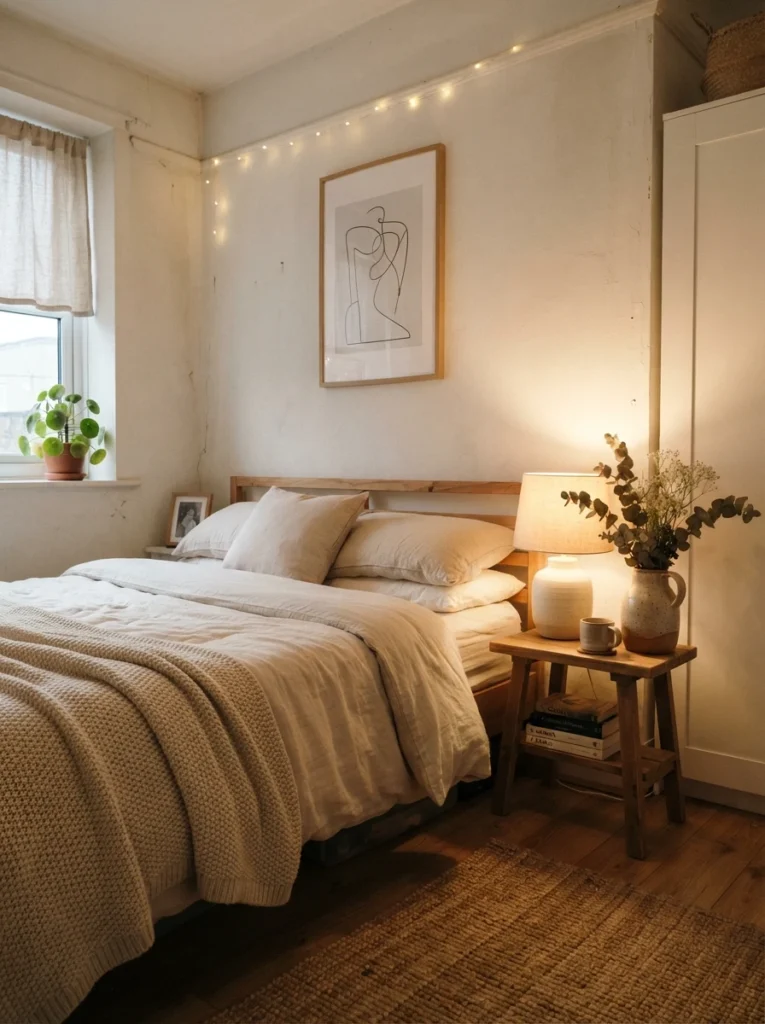
3. Use Warm Lighting Instead of Bright White Bulbs
Clean rooms instantly feel more welcoming when the lighting feels soft and warm instead of harsh and clinical. Bright cool bulbs exaggerate emptiness because every surface becomes visually sharper and colder.
Warm bedside lamps, dim ambient glow, and softer evening lighting create comfort while still maintaining visual cleanliness. This is why luxury hotels feel calming instead of sterile.
Lighting changes emotional perception constantly.
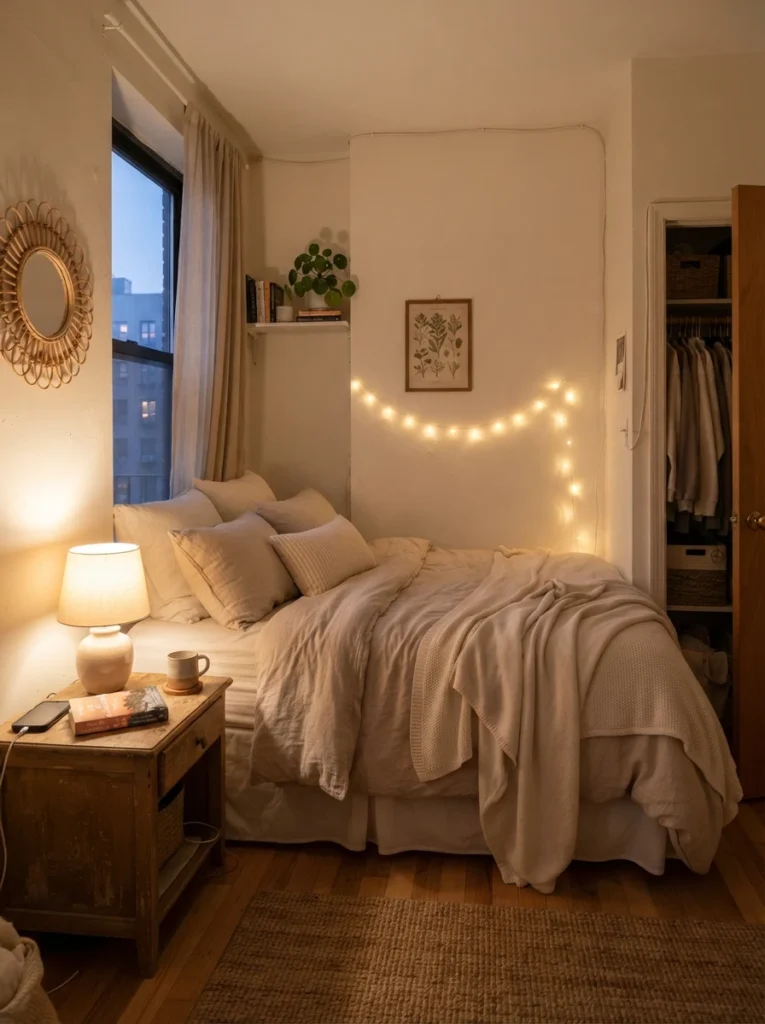
4. Leave Some Surfaces Partially Styled
Completely bare surfaces sometimes make bedrooms feel unfinished instead of peaceful. A partially styled dresser or nightstand creates balance because the room still feels human and lived in.
A folded blanket, small tray, soft lamp, or one personal object usually feels enough. The goal is reducing visual chaos, not eliminating warmth entirely.
Clean rooms should still feel emotionally touchable.
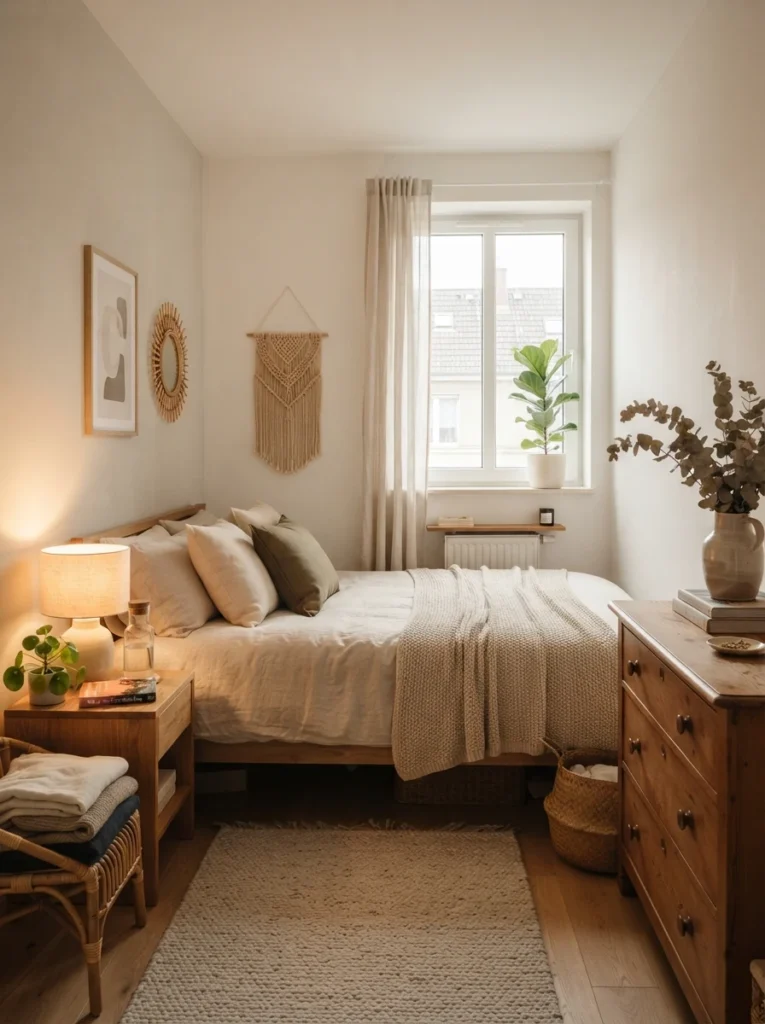
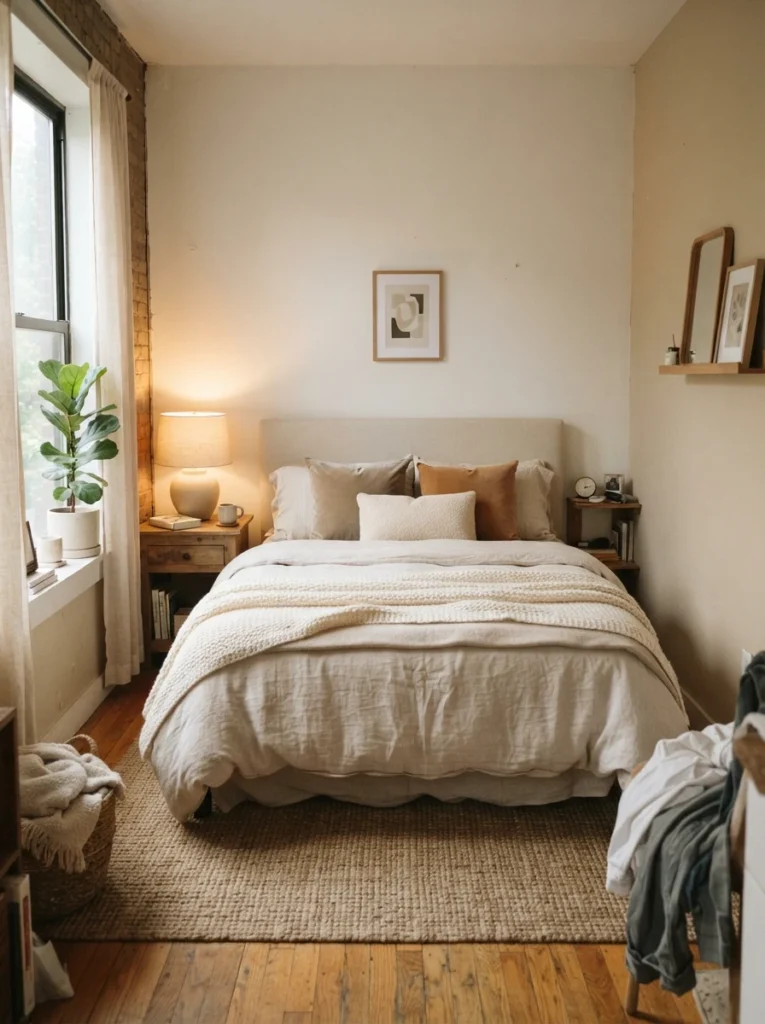
5. Layer Neutral Tones Instead of Using Pure White Everywhere
Pure white minimalist bedrooms often feel emotionally cold because there is no softness in the visual palette. Layering warmer neutrals creates calmness without making the room feel empty.
Cream, oatmeal, warm beige, soft taupe, muted clay, and light wood tones create visual richness while still maintaining a clean atmosphere. Tiny rooms usually feel more comforting when the colors blend gently together.
Warmth makes clean spaces feel alive.
6. Keep Storage Hidden but Accessible
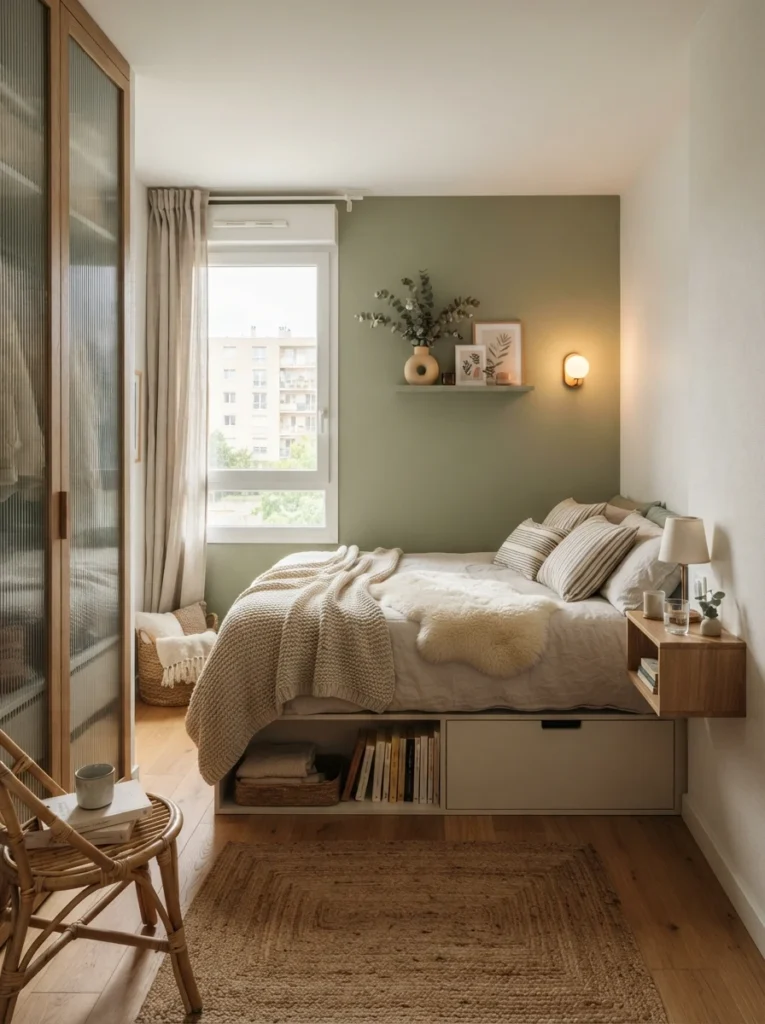
Visible clutter destroys clean aesthetics quickly, but overly complicated storage systems create frustration that eventually leads to mess building again.
Hidden but practical storage creates the best balance. Under-bed drawers, woven baskets, storage benches, and closed cabinets keep rooms visually calm while still supporting everyday life realistically.
Clean bedrooms should still function comfortably.
7. Add One Soft Focal Point
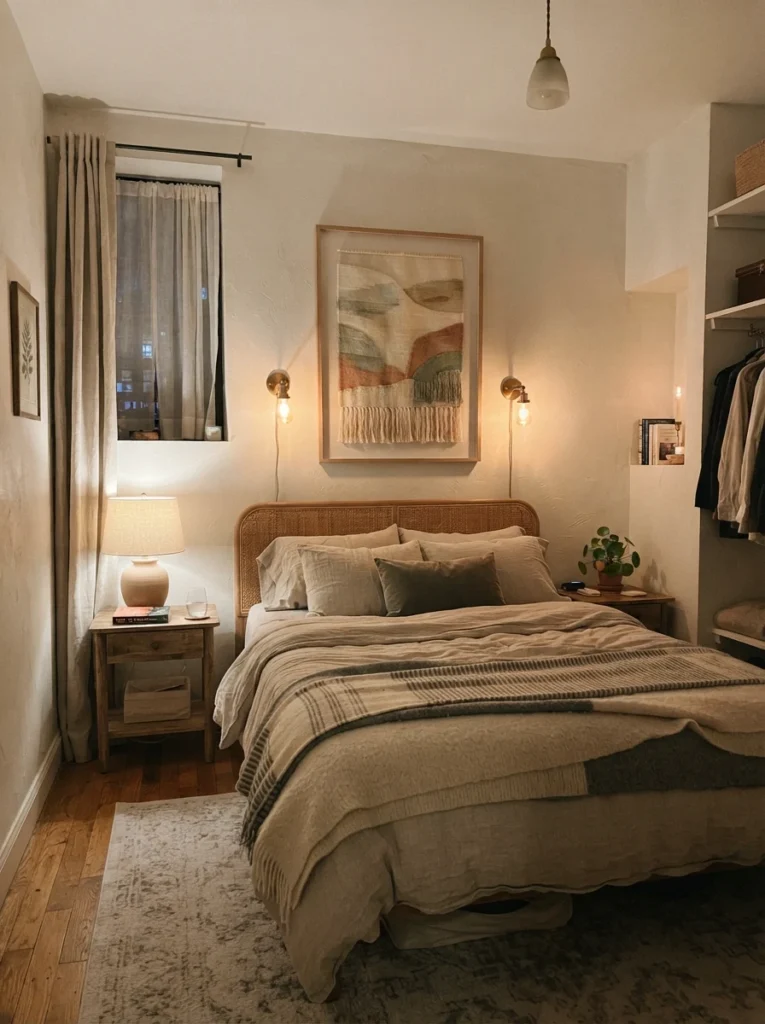
Bedrooms that feel too empty often lack emotional anchoring. One soft focal point helps the eye settle naturally while keeping the room visually balanced.
A textured headboard, oversized artwork, warm reading corner, or layered bed setup creates enough visual interest without overwhelming the room emotionally.
Tiny bedrooms benefit from quiet focal points instead of constant stimulation.
8. Let the Room Feel Slightly Lived In
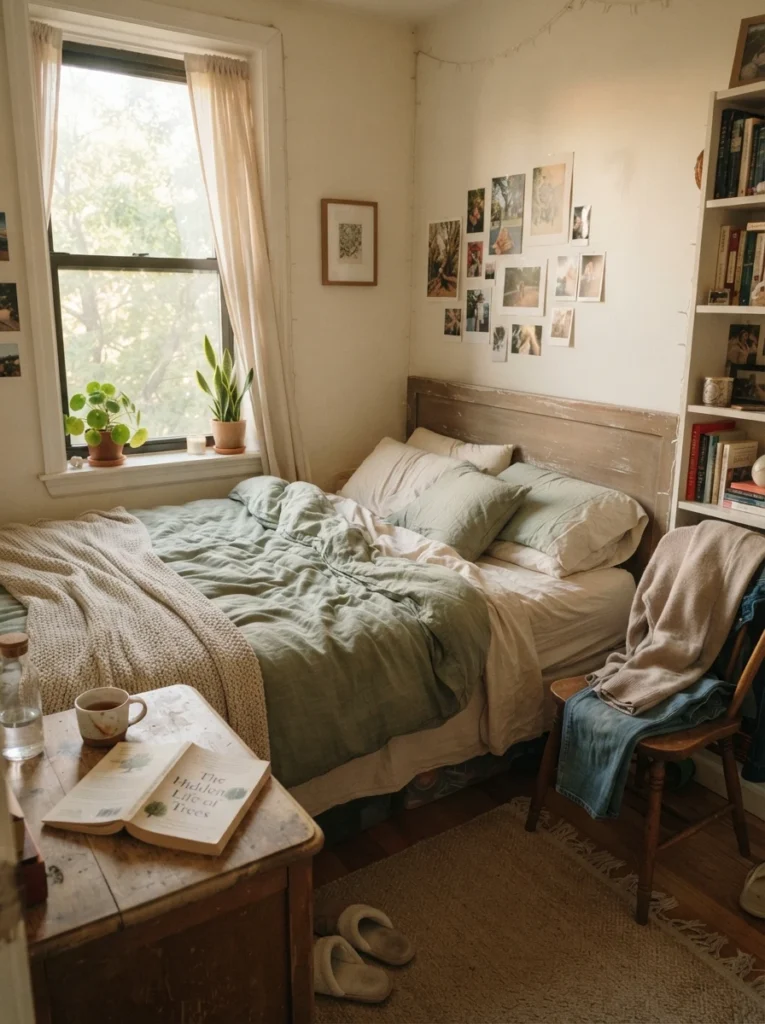
Perfectly untouched bedrooms often feel emotionally distant because nothing suggests actual comfort or daily life. Slightly relaxed bedding, a book beside the bed, or soft sunlight across wrinkled linen creates warmth naturally.
People emotionally connect more deeply with rooms that feel usable instead of staged for a catalog. Tiny bedrooms especially benefit from softer imperfection.
Clean should not mean emotionally lifeless.
9. Focus on Emotional Calm Instead of Perfection
The cleanest-looking bedrooms are usually the ones that reduce visual stress instead of chasing impossible perfection constantly. Softer lighting, hidden clutter, balanced textures, cleaner surfaces, and calm layouts create emotional quietness naturally.
A room can still feel warm, personal, and comforting while remaining visually simple. Tiny bedrooms emotionally improve when the space supports relaxation instead of demanding attention all the time.
True calm rarely feels empty.
Final Thoughts
Clean small bedrooms do not need to feel sterile or emotionally cold. The best spaces balance simplicity with warmth through texture, lighting, soft colors, and intentional styling that still feels human.
Tiny bedrooms become more comforting when visual clutter decreases but emotional softness remains. A room should feel peaceful enough to quiet the mind while still feeling warm enough to actually live inside comfortably.
A clean bedroom works best when it feels emotionally calming, not emotionally empty.