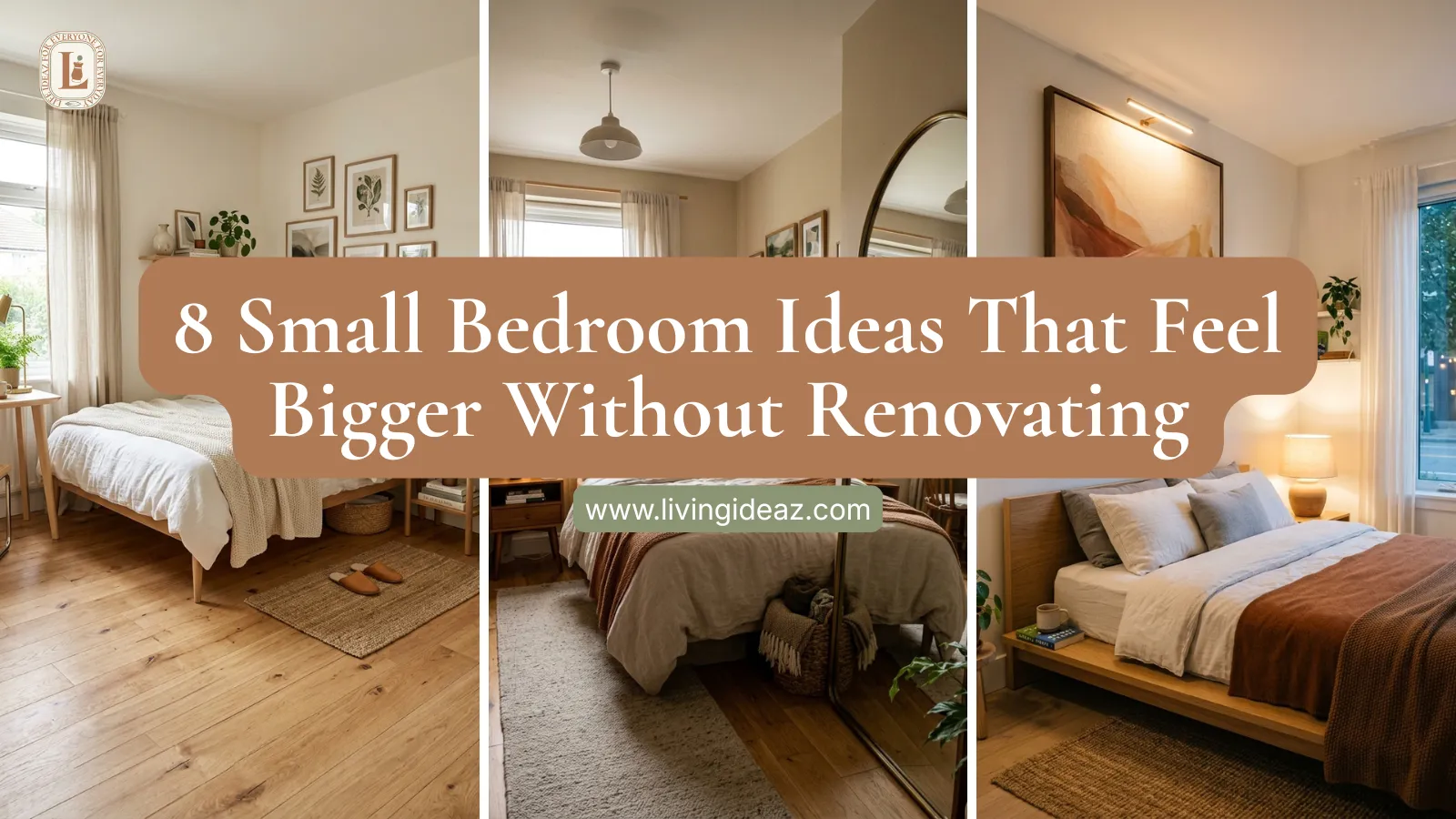
8 Small Bedroom Ideas That Feel Bigger Without Renovating
Some small bedrooms feel frustrating the moment you walk into them. The room feels cramped, the furniture looks heavier than it should, natural light somehow disappears too quickly, and even clean spaces can still feel visually overwhelming. Many people assume the only solution is knocking down walls, buying expensive furniture, or completely renovating the room.
But most tiny bedrooms are not actually suffering from a lack of square footage. The real problem is usually visual pressure. Bulky furniture, blocked light, overcrowded layouts, and poor spacing quietly make rooms feel smaller emotionally than they really are. In fact, Many compact bedrooms actually feel smaller because of subtle design habits and common small bedroom layout mistakes that create visual clutter people rarely notice.
The good news is that small bedrooms often respond dramatically to subtle changes. Better lighting, lighter furniture placement, cleaner surfaces, and more intentional visual flow can make compact rooms feel calmer, brighter, and significantly more spacious.
Even difficult layouts can feel more open with smarter furniture placement and better flow, especially in rooms with unusual proportions like these small bedroom layout ideas for awkward room shapes.
If your bedroom constantly feels tight or visually stressful, these ideas can help create the kind of openness that most people think only renovations can achieve.
These ideas focus on creating openness, softness, and calmer room flow without tearing down walls or spending thousands on remodeling.
1. Let More Floor Stay Visible
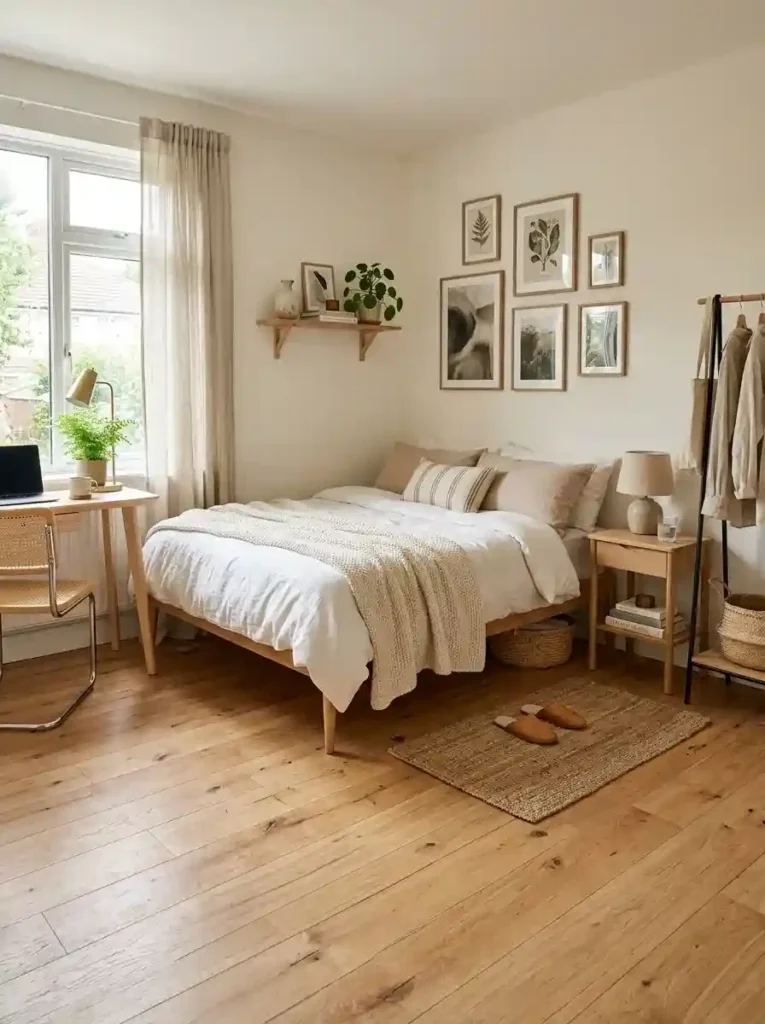
Tiny bedrooms instantly feel larger when more flooring remains visible. Heavy furniture bases, crowded corners, and oversized storage pieces visually block the room and make everything feel tighter emotionally.
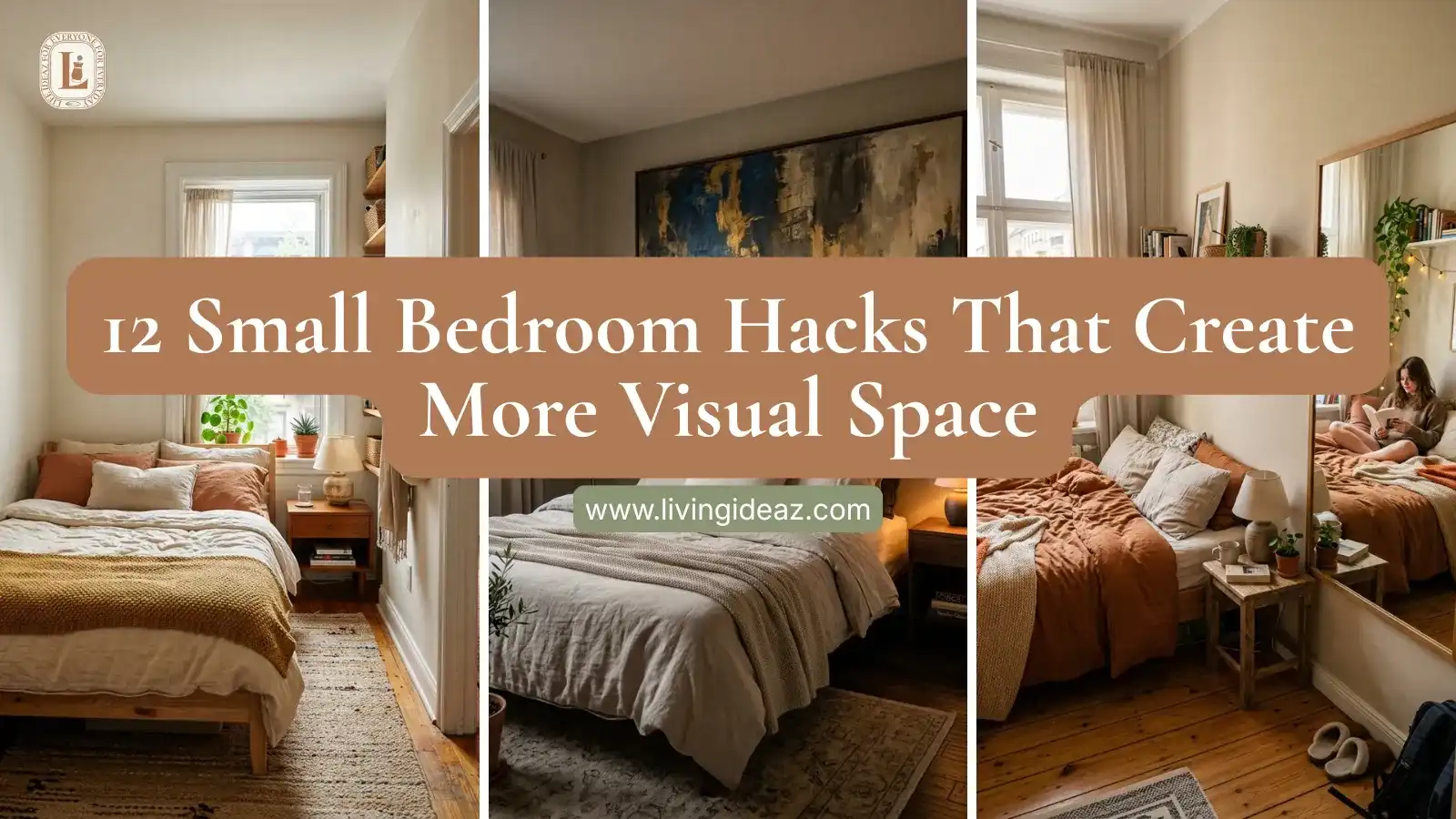
Beds with visible legs, floating nightstands, and slimmer furniture profiles create openness because the eye can continue traveling underneath furniture naturally. Even small changes in floor visibility can dramatically soften compact spaces.
Visible flooring creates psychological spaciousness.
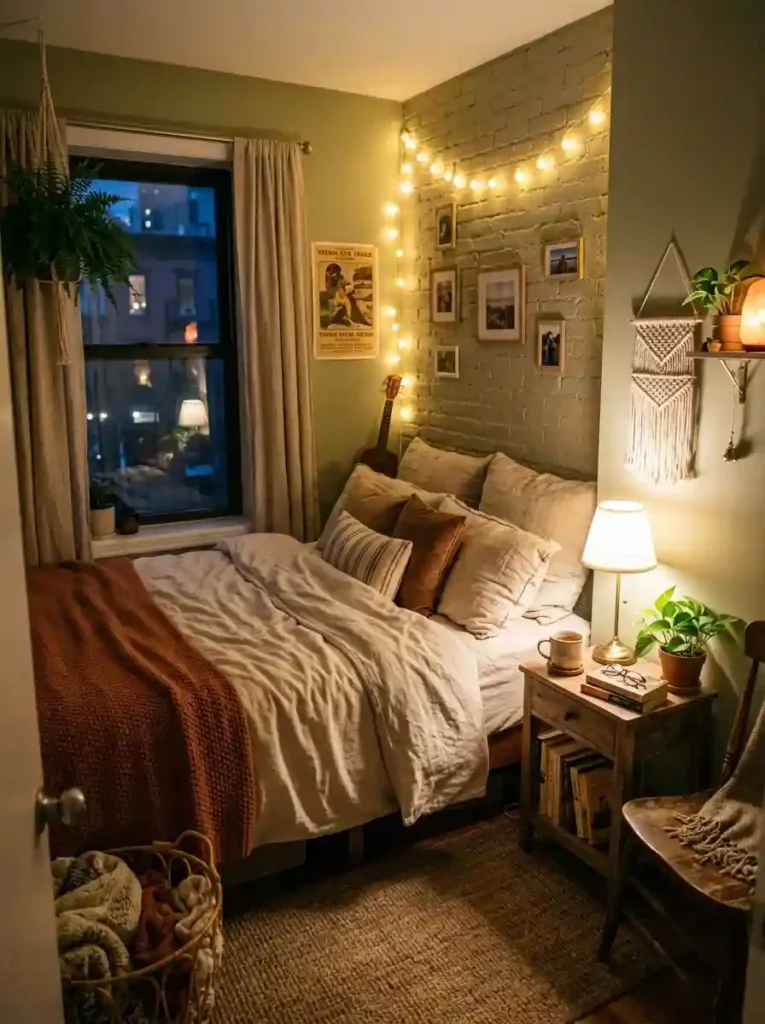
2. Replace Harsh Lighting With Softer Layered Light
Bright white ceiling lights flatten tiny bedrooms visually and exaggerate clutter immediately. Softer layered lighting creates emotional depth, which makes compact rooms feel warmer and more spacious at night.
Warm bedside lamps, wall sconces, soft LED glow, and indirect lighting create gentler shadows that help the room breathe visually instead of feeling boxed in.
Lighting changes spatial perception more than people realize.
3. Use One Large Mirror Instead of Multiple Small Decor Pieces
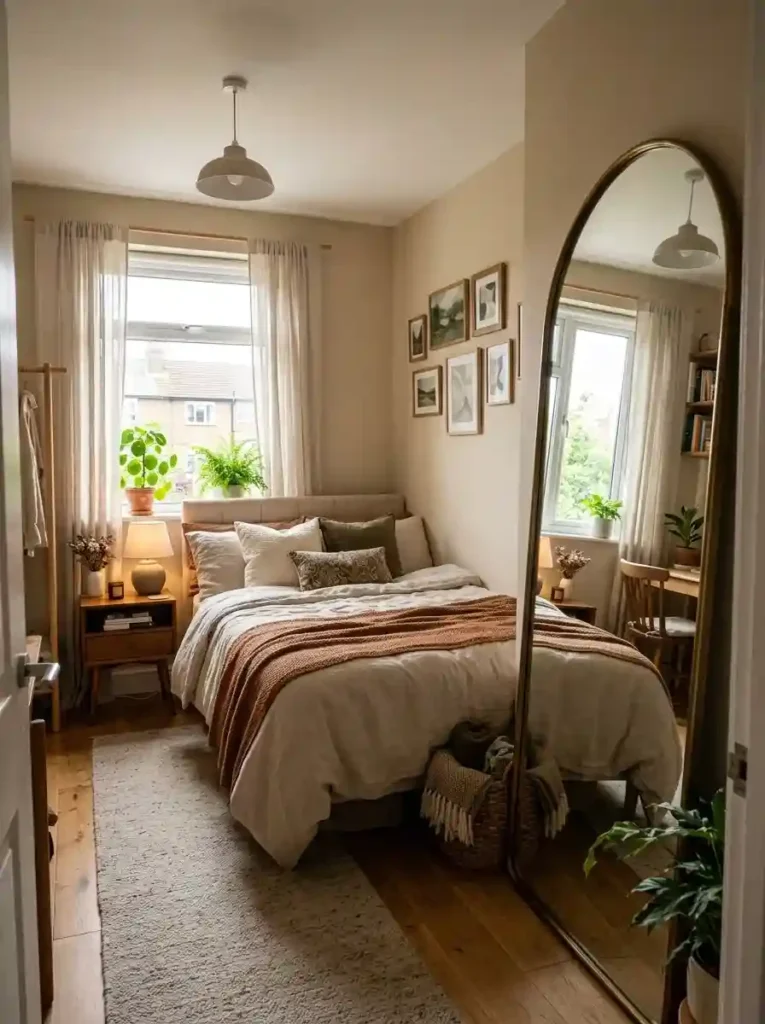
Many tiny bedrooms feel crowded because too many decorative objects compete visually for attention. One oversized mirror creates far more openness because it reflects light and expands visual depth naturally.
Placement matters though. Reflecting windows, clean bedding, or open floor space creates calm spaciousness, while reflecting clutter doubles visual stress instantly.
Good reflection creates emotional openness too.
4. Keep the Color Palette Soft and Cohesive
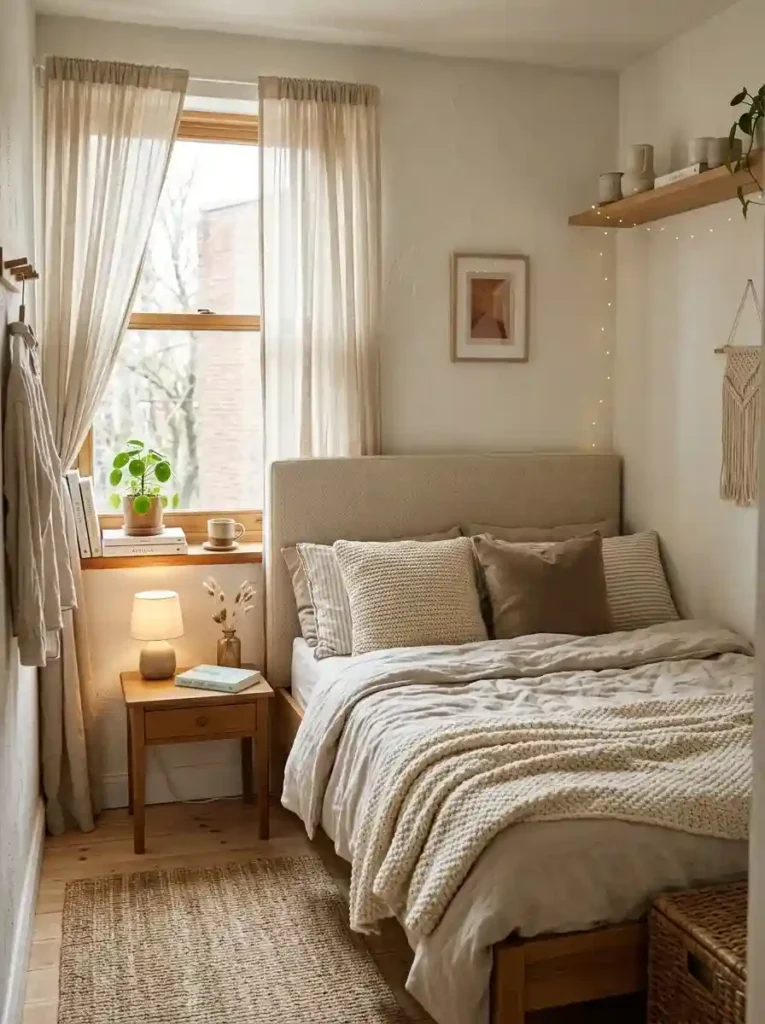
Sharp color contrast often makes tiny bedrooms feel visually fragmented because the eye constantly stops between competing shades. Softer palettes create smoother flow and emotional calm naturally.
Warm whites, muted earth tones, soft greige, creamy beige, and natural wood textures help rooms feel unified while still maintaining warmth and depth.
Visual softness makes spaces feel larger emotionally.
5. Stop Overcrowding the Walls
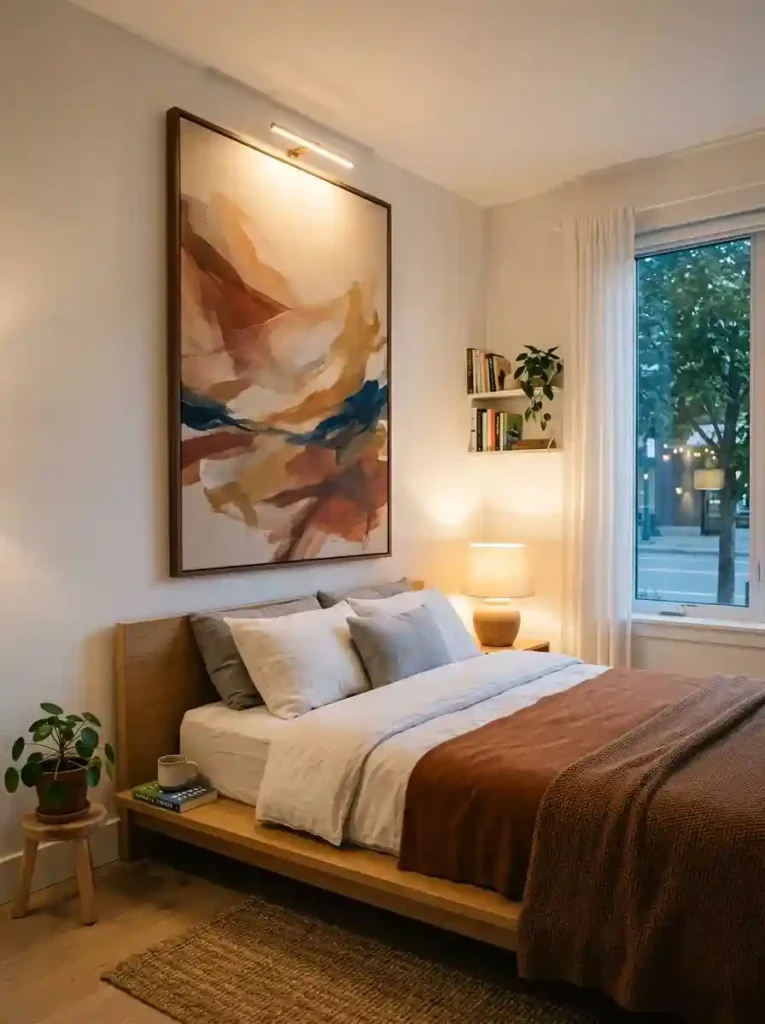
Tiny bedrooms often become visually exhausting because every wall gets filled with frames, shelves, hooks, or decor. Empty wall space actually helps rooms feel larger because the eye finally gets moments to rest.
One oversized artwork piece usually creates stronger impact than multiple small decorative objects scattered everywhere.
Visual breathing room matters psychologically.
6. Use Furniture That Looks Lighter Visually
Bulky dark furniture makes compact bedrooms feel emotionally compressed because large solid shapes dominate the room constantly. Lighter wood tones, slimmer furniture silhouettes, and open-base furniture create softness and openness naturally.
Even replacing one oversized dresser with a narrower taller unit can improve room flow dramatically.
Visual weight affects comfort constantly.
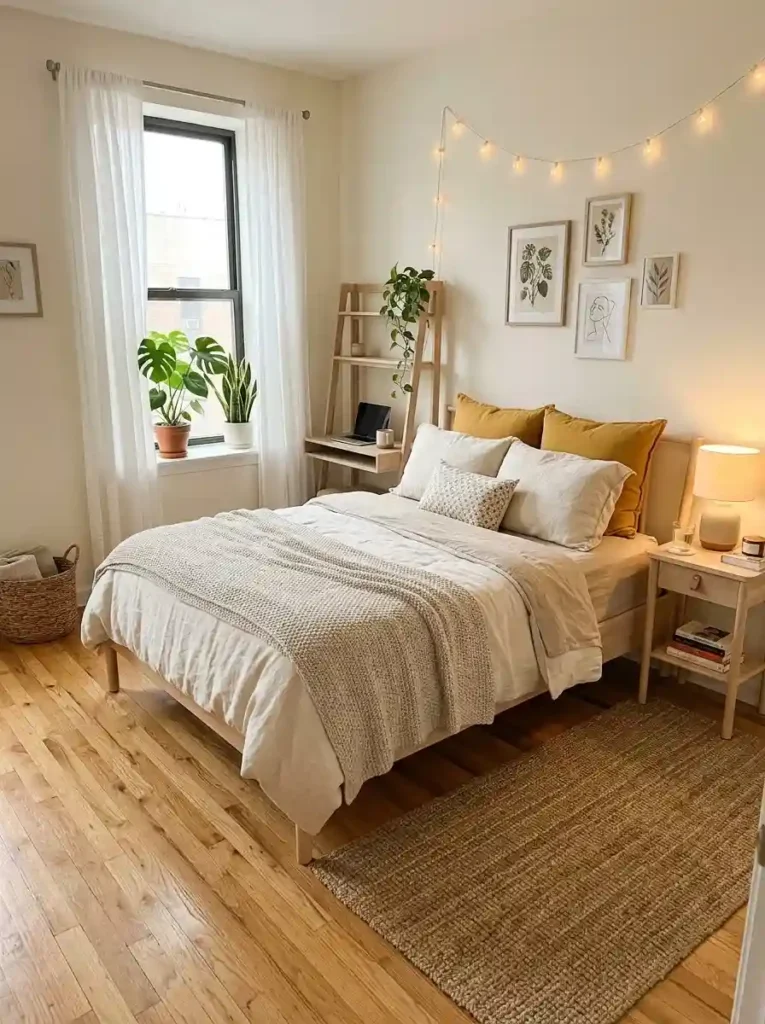
7. Hide Visual Clutter More Aggressively
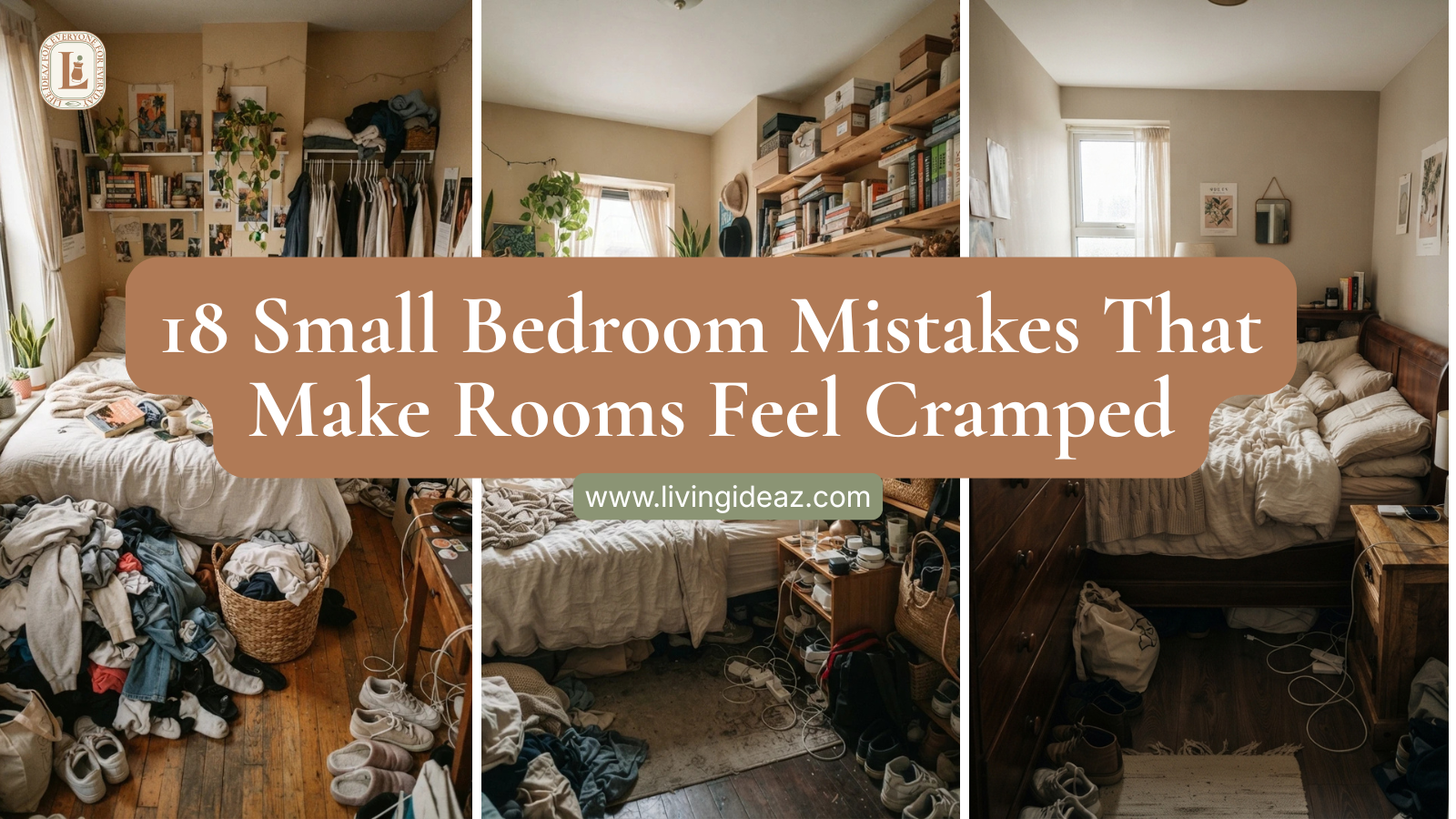
Tiny bedrooms start feeling smaller the moment clutter spreads across surfaces. Chargers, random laundry, skincare products, scattered papers, and exposed storage quietly create visual pressure that overwhelms the room emotionally.
Under-bed storage, woven baskets, hidden compartments, and cleaner surfaces reduce mental noise instantly because the eye processes less unfinished information.
Calm rooms usually contain less visible chaos.
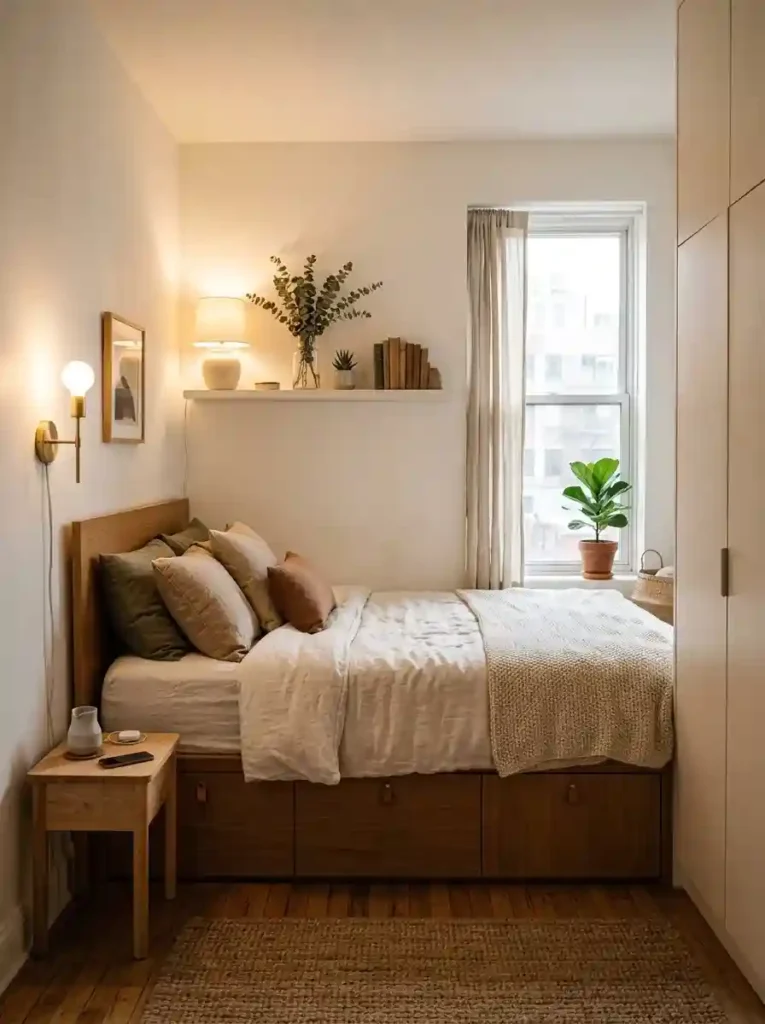
8. Create Emotional Openness Instead of Chasing Square Footage
The bedrooms that feel largest emotionally are usually the ones that reduce tension instead of maximizing every inch aggressively. Softer lighting, smoother movement flow, lighter layouts, hidden clutter, and cleaner visual balance help compact spaces feel calmer instantly.
A room can remain physically small while still emotionally feeling breathable, relaxing, and comfortable to exist inside every day.
Spaciousness is often psychological first.
Final Thoughts
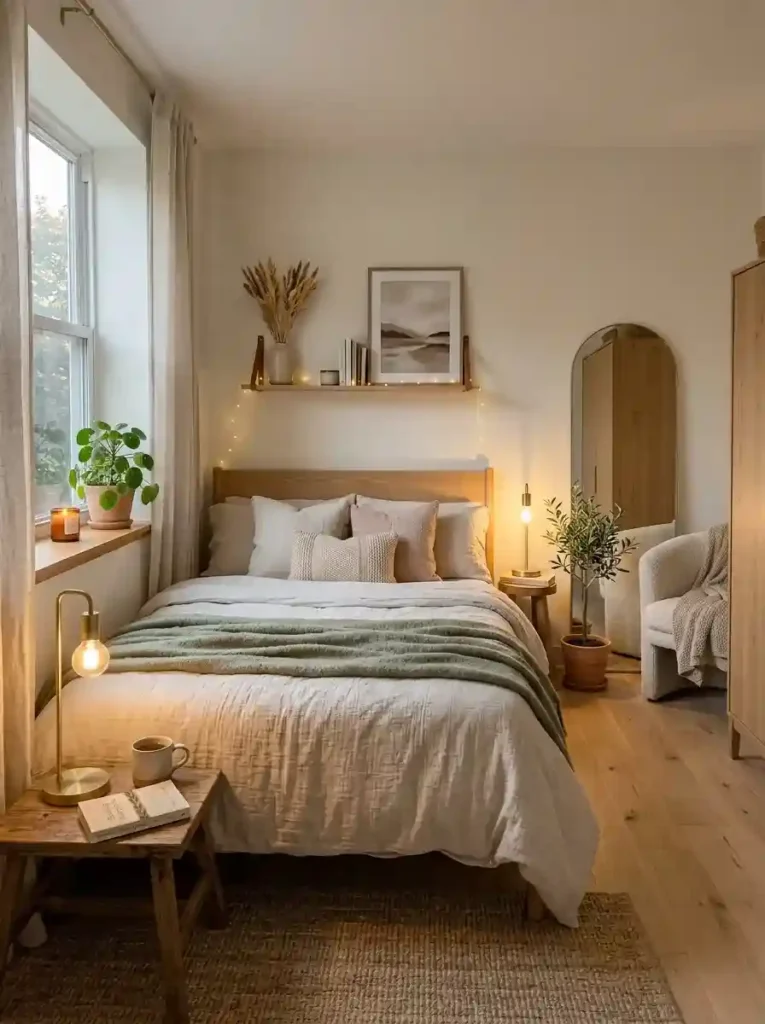
Small bedrooms rarely need major renovations to feel significantly better. Most simply need less visual pressure, better light flow, lighter furniture, and calmer layouts that allow the eye and mind to relax naturally.
The most spacious-feeling rooms are often the ones that feel emotionally softer instead of visually overloaded. Tiny bedrooms improve dramatically when the space stops fighting for attention and starts creating quiet breathing room instead.
A good bedroom should not only fit your furniture. It should help the entire room feel lighter the moment you walk inside.