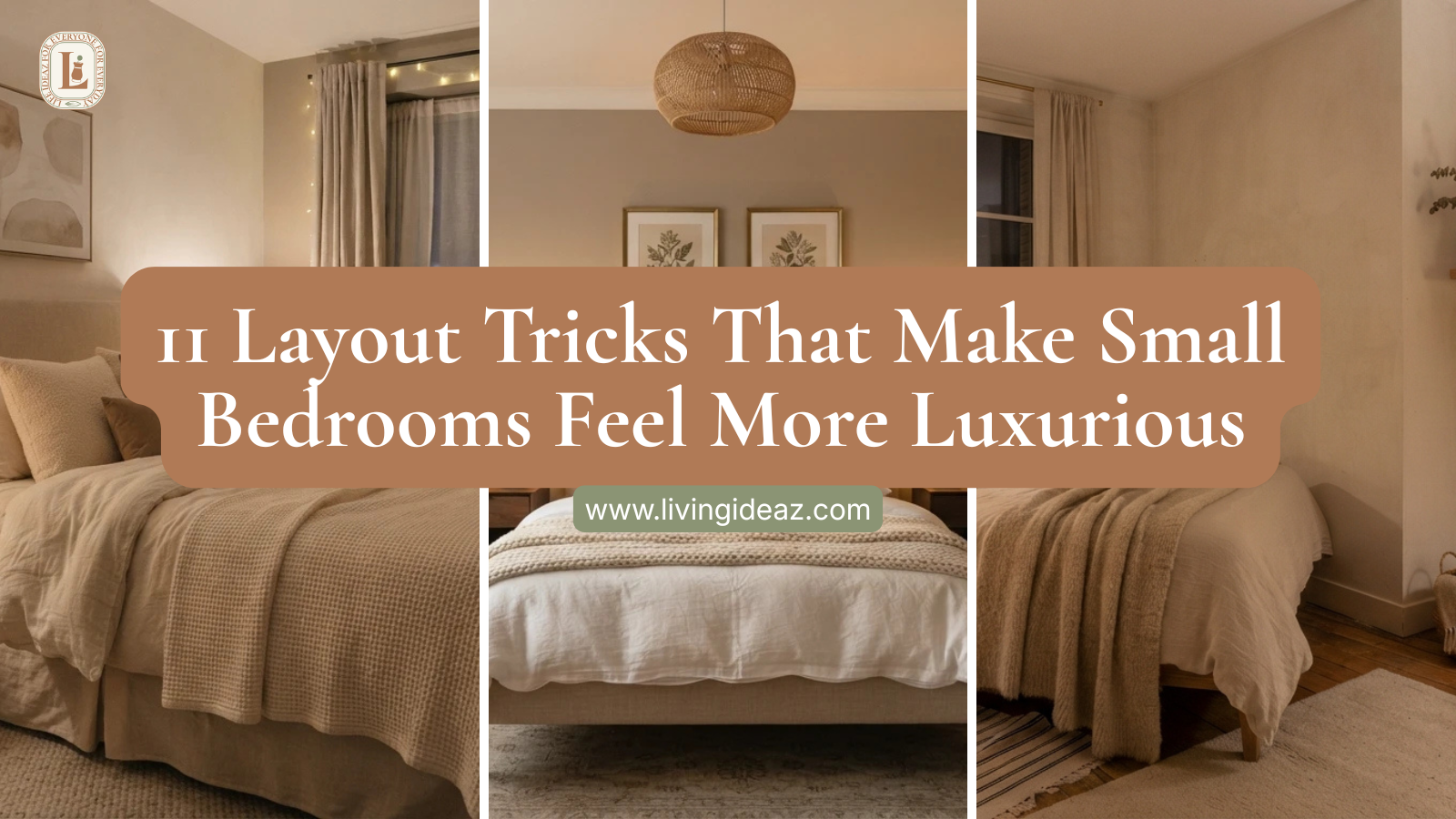
11 Layout Tricks That Make Small Bedrooms Feel More Luxurious
TL;DR
Luxury in small bedrooms rarely comes from square footage. It usually comes from layout decisions that create calm movement, visual openness, softer lighting flow, and emotional balance. Tiny bedrooms start feeling expensive when furniture placement stops fighting the room and begins supporting comfort naturally. These layout tricks focus on making compact bedrooms feel richer, calmer, and more elevated without requiring major renovations or oversized furniture.
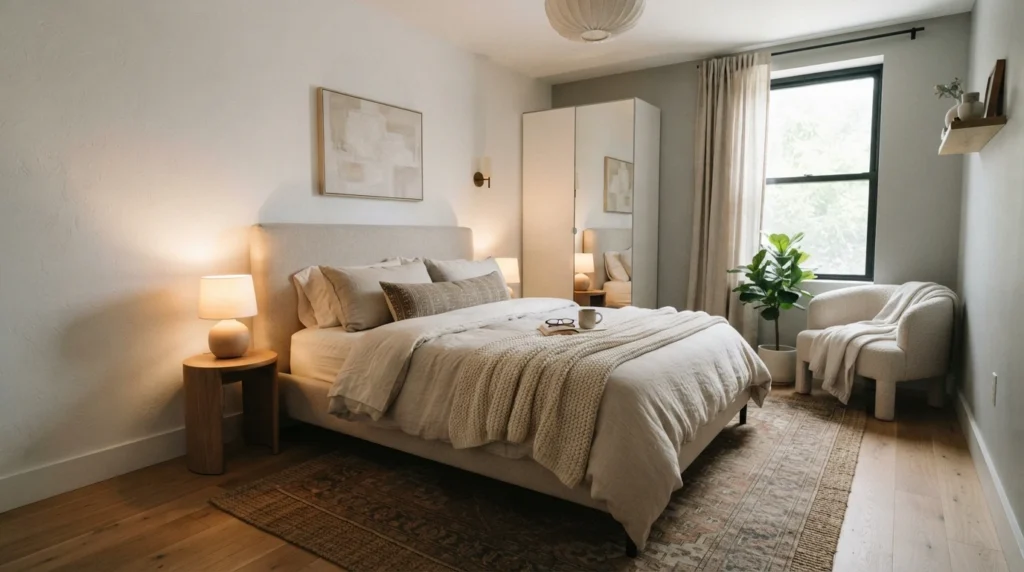
1. Pull the Bed Slightly Away From the Wall
Many tiny bedrooms instantly push the bed completely against one wall to “save space,” but this often makes the room feel cramped and emotionally unbalanced instead.
Even a few inches of breathing room around the bed creates softness and symmetry that feels more intentional. Luxury hotel rooms almost always allow visual space around the bed because it creates calm movement and better visual flow naturally.
Tiny bedrooms emotionally benefit from balanced spacing more than maximum squeezing.
2. Keep Walking Paths Clear and Uninterrupted
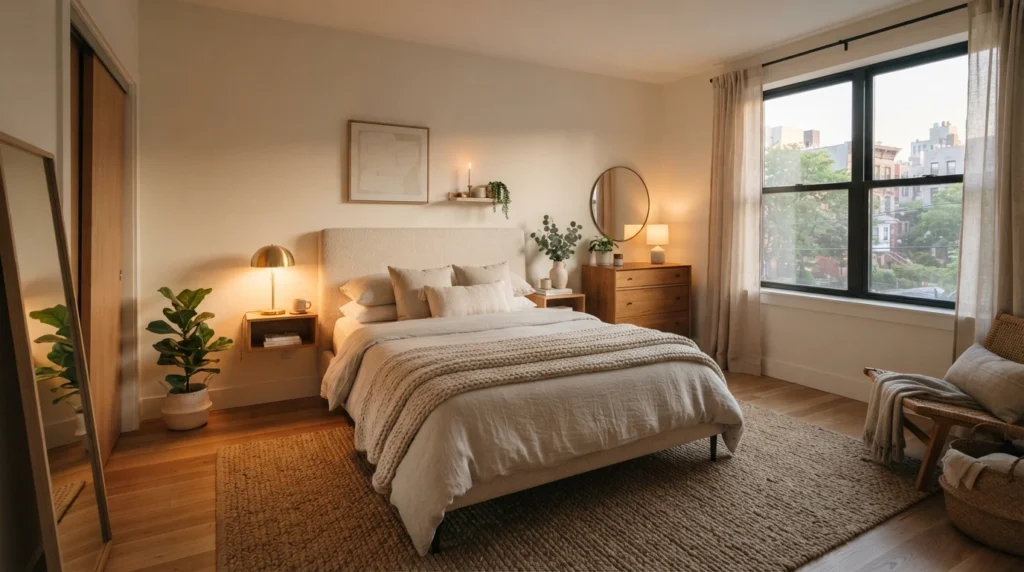
One hidden reason small bedrooms feel cheap is because movement constantly feels blocked. Stepping around baskets, squeezing between furniture, or bumping into corners creates low-level stress throughout the day.
Luxury spaces feel calm partly because movement feels effortless. Clear pathways immediately make compact bedrooms feel more breathable and emotionally relaxed.
Easy movement quietly feels expensive psychologically.
3. Center the Bed Whenever Possible
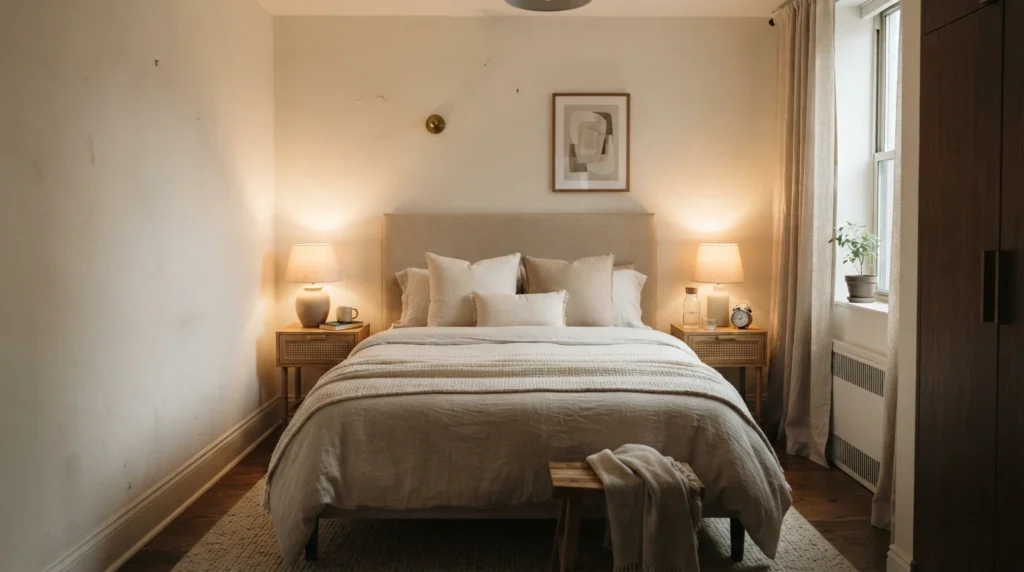
Beds placed awkwardly in corners often make tiny bedrooms feel temporary and visually chaotic. Centering the bed creates symmetry, which instantly makes rooms feel calmer and more high-end emotionally.
This does not require huge bedrooms either. Even compact layouts usually feel more luxurious when the bed visually anchors the room instead of looking squeezed into leftover space.
Symmetry creates visual confidence.
4. Float Furniture Instead of Pushing Everything Flat Against Walls
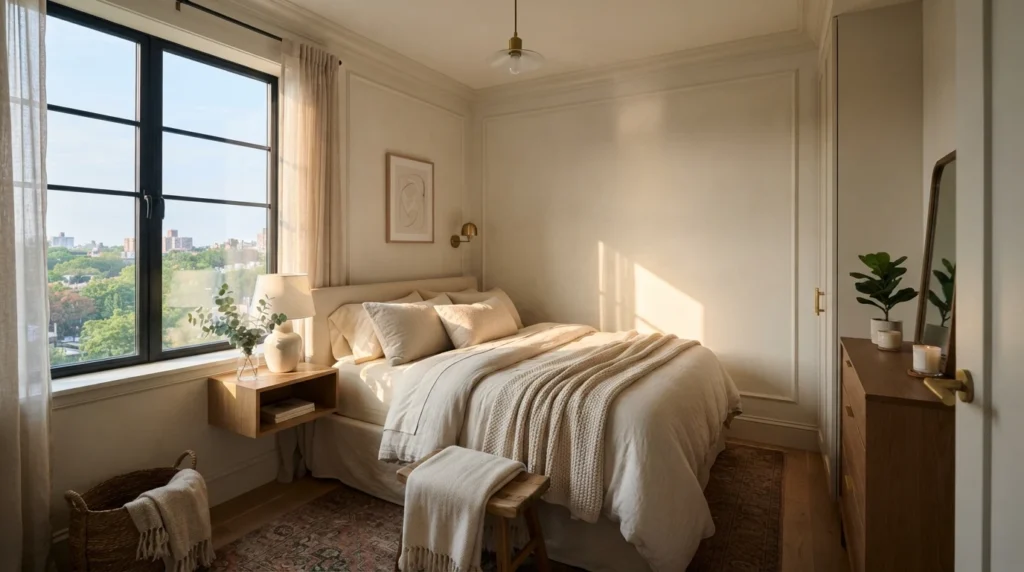
Many small bedrooms become visually awkward because every furniture piece gets flattened against walls mechanically. Floating certain pieces slightly creates softer depth and more intentional visual structure.
A bench at the foot of the bed or a small chair angled naturally near a window often makes layouts feel more elevated than rigid wall-to-wall arrangements.
Luxury rooms usually feel designed, not squeezed.
5. Let Natural Light Reach More Surfaces
Luxury bedrooms often feel brighter and more expansive because furniture placement allows natural light to travel across the room instead of being blocked immediately.
Tall dressers beside windows or shelving interrupting daylight create heaviness quickly in tiny spaces. Moving larger furniture toward darker walls helps sunlight soften more areas naturally.
Light flow changes emotional atmosphere constantly.
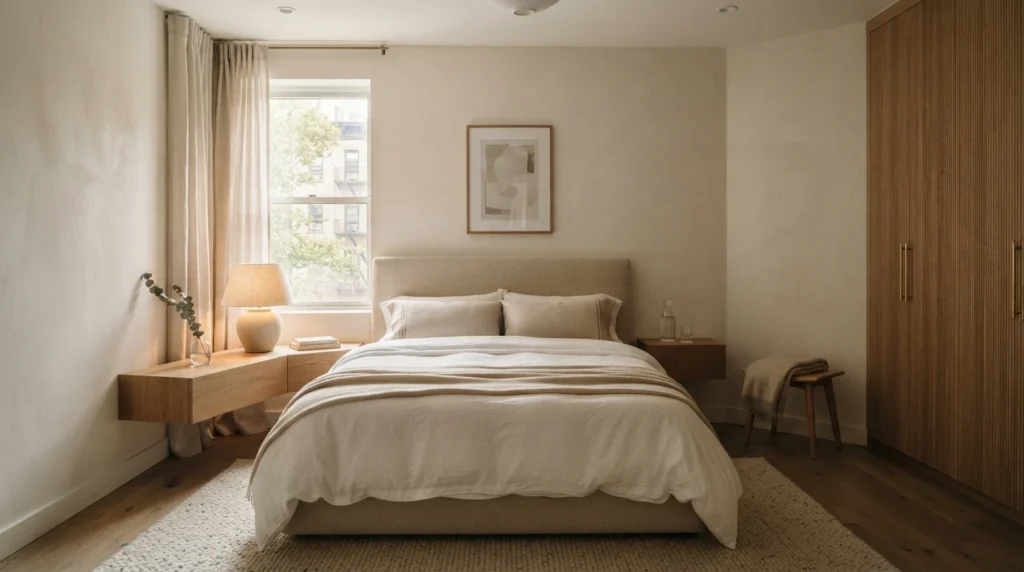
6. Use Fewer Furniture Pieces With Better Spacing
Luxury layouts usually rely on restraint. Too many furniture pieces packed tightly together make even beautiful bedrooms feel visually stressed.
Tiny bedrooms often feel more expensive when unnecessary chairs, storage units, and decorative furniture disappear completely. Better spacing between fewer pieces creates calmness and visual confidence.
Breathing room feels richer than overcrowding.
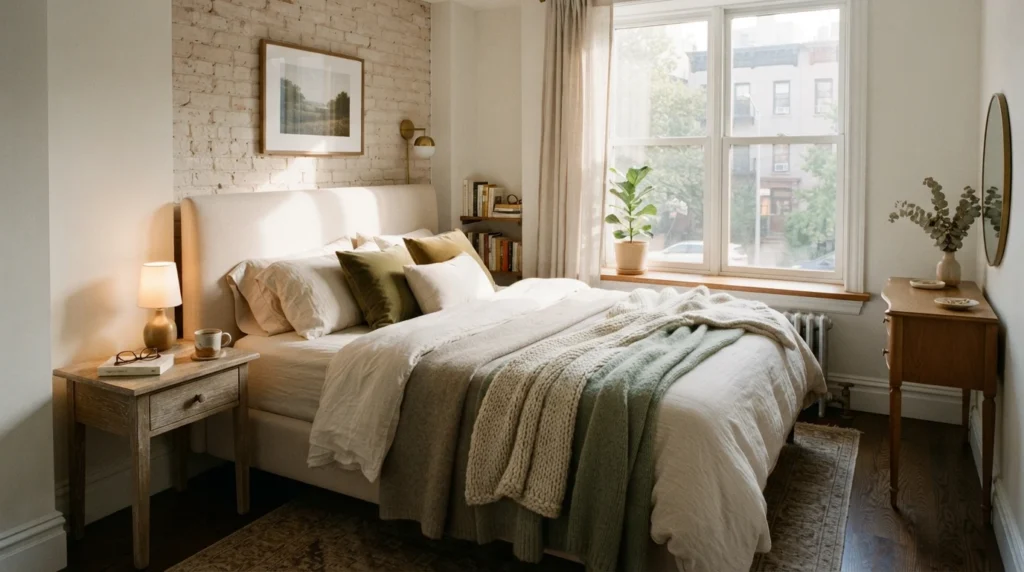
7. Place the Bed Where Morning Light Feels Softest
Bedrooms emotionally change depending on how natural light reaches the sleeping area. Waking beside soft morning sunlight creates warmth and comfort that instantly makes rooms feel more luxurious emotionally.
This does not mean blasting sunlight directly into the face every morning. It means positioning the bed where daylight naturally softens the atmosphere instead of being blocked completely by bulky furniture.
Luxury often feels like emotional comfort more than decoration.
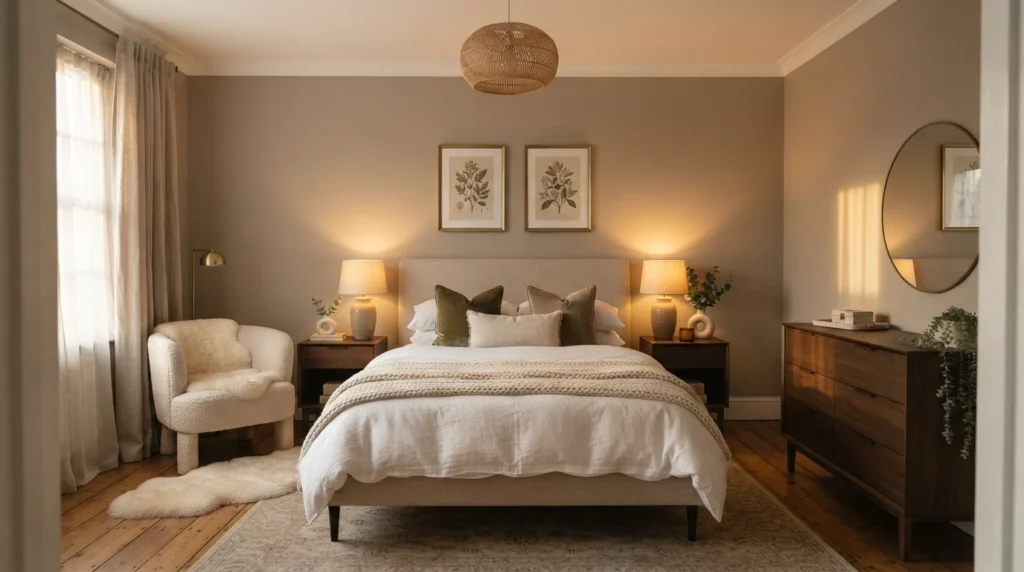
8. Keep Visual Weight Balanced Across the Room
Tiny bedrooms feel awkward when one side becomes visually heavy while the other side feels empty. Large dark wardrobes, crowded shelves, or oversized furniture clustered together create imbalance that quietly affects emotional comfort.
Luxury interiors usually distribute visual weight more evenly through symmetry, balanced decor, and cleaner layouts. The room starts feeling calmer because the eye moves more naturally.
Balance creates sophistication.
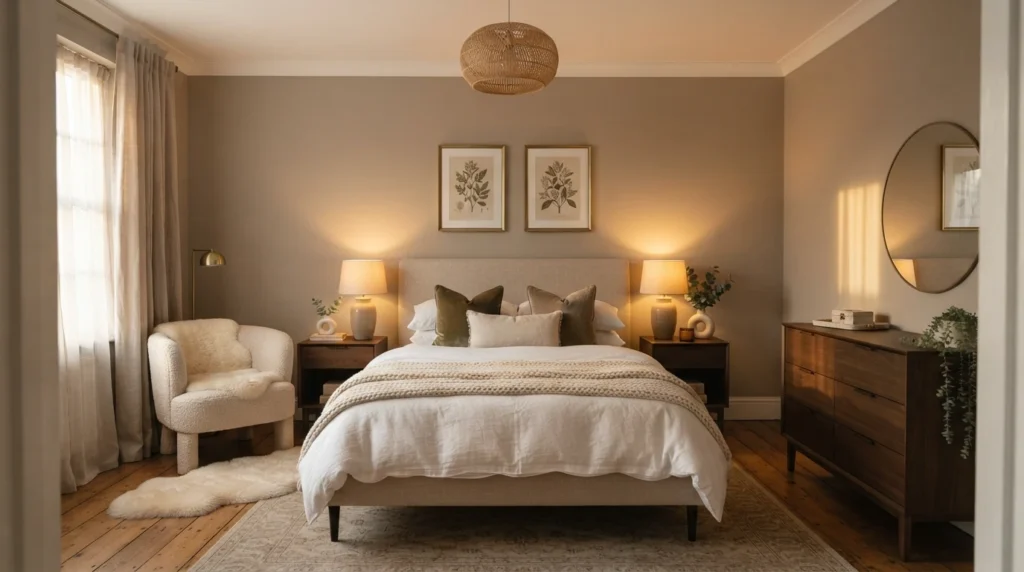
9. Use One Open Corner Instead of Filling Every Inch
Overfilling corners with storage and furniture often destroys the calm feeling luxury spaces naturally have. Leaving one area visually lighter creates breathing room that makes the whole bedroom feel softer emotionally.
This openness helps tiny bedrooms feel intentionally designed instead of aggressively optimized for storage. Luxury interiors rarely maximize every inch visually.
Calmness often comes from what is left out.
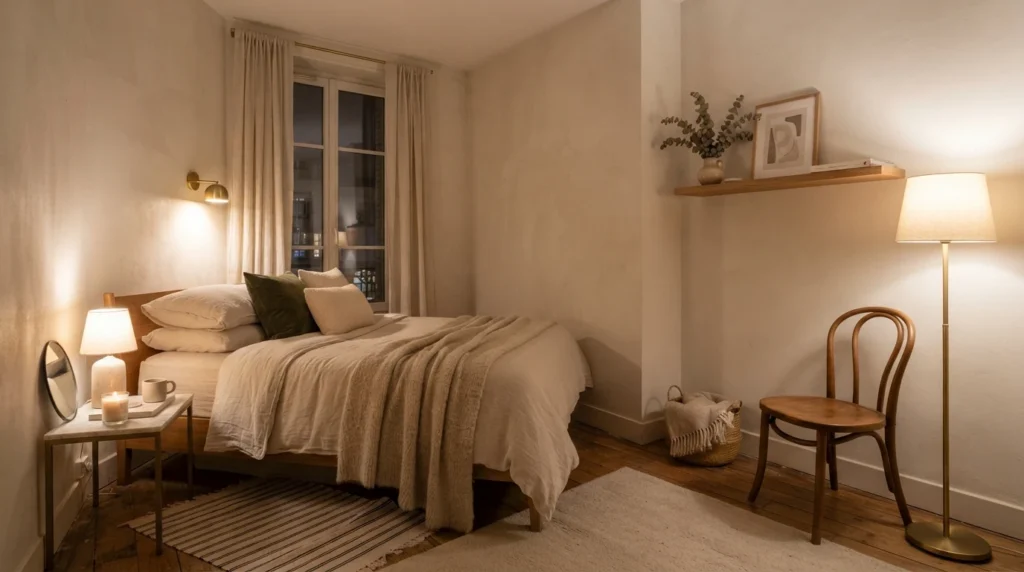
10. Keep the Bed Area Visually Calm
Luxury bedrooms almost always keep the immediate sleeping area softer and cleaner than the rest of the room. Overloaded nightstands, crowded wall decor, tangled chargers, and storage bins near the bed instantly create visual stress.
Simpler bedside styling creates emotional softness because the eye experiences less interruption around the room’s focal point.
The bed should visually feel like rest.
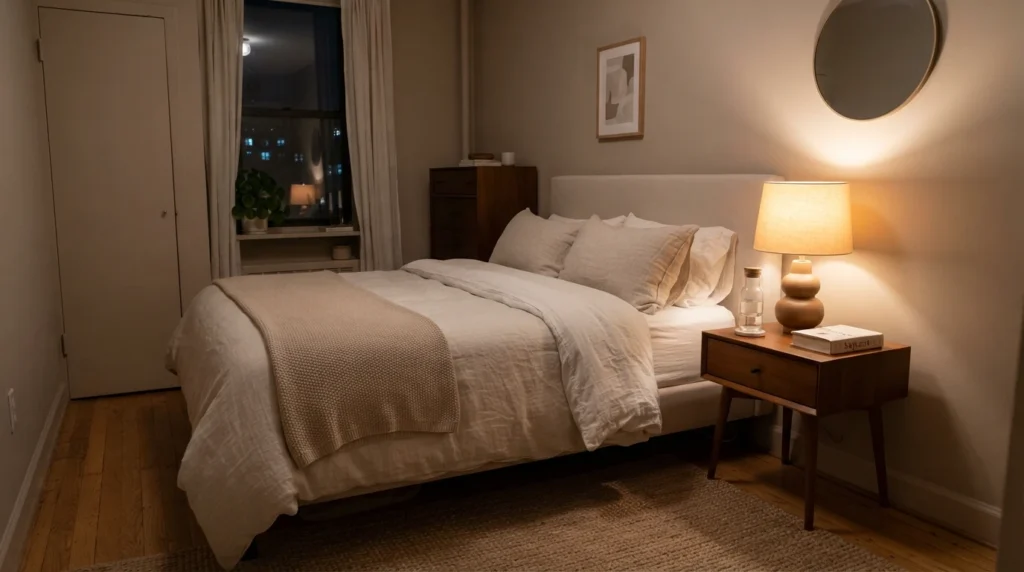
11. Design the Layout Around Emotional Comfort, Not Just Storage
One of the biggest mistakes in tiny bedrooms is designing purely around fitting more stuff. Luxury layouts prioritize emotional ease first. Easier movement. Softer light. Better balance. More breathing room.
A room can contain less storage and still feel significantly better to live in emotionally. Small bedrooms become luxurious when they stop feeling like packed containers and start feeling intentionally calming.
Luxury is often really just reduced visual stress.
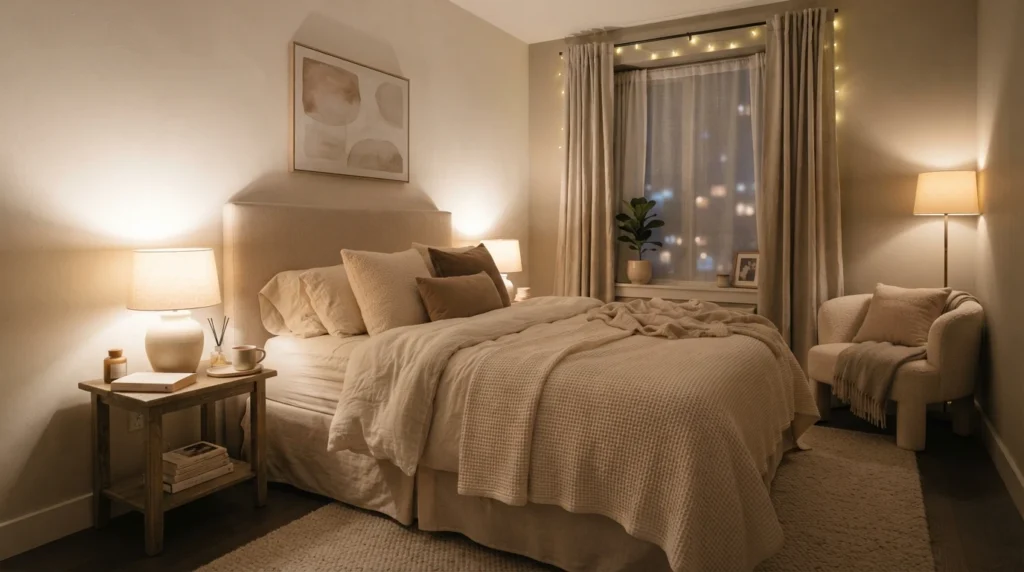
Final Thoughts
Small bedrooms feel luxurious when the layout creates calmness instead of pressure. Better spacing, cleaner movement flow, softer lighting placement, balanced furniture positioning, and intentional openness dramatically change how compact rooms emotionally feel.
Most luxury interiors are not actually filled with more things. They simply understand restraint, balance, softness, and comfort more deeply. Tiny bedrooms become richer emotionally when the layout supports relaxation instead of constant visual tension.
A luxurious bedroom should not only look beautiful. It should quietly make the entire room feel easier to breathe inside.