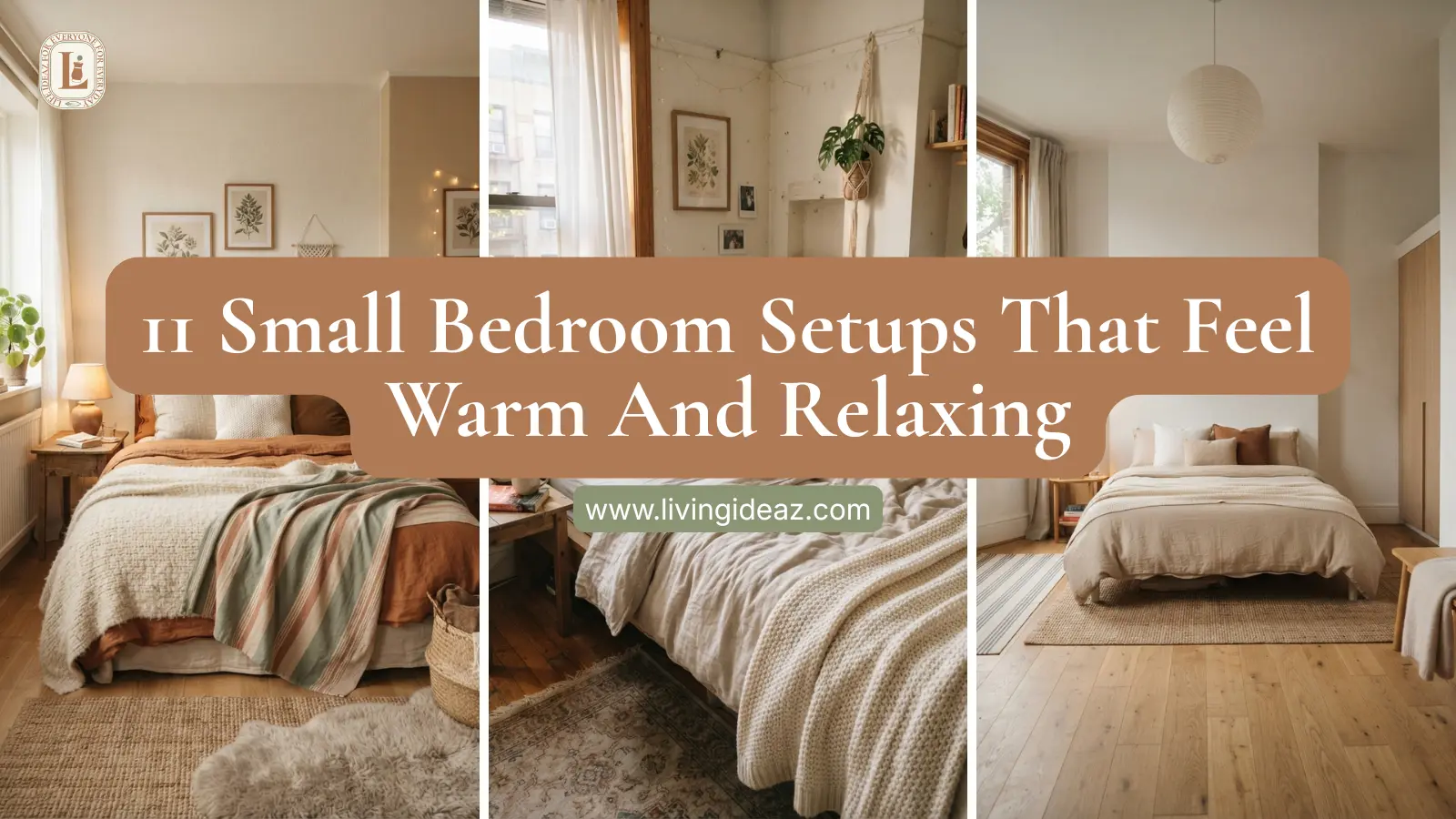
11 Small Bedroom Setups That Feel Warm And Relaxing
TL;DR
Some small bedrooms look beautiful online but still feel emotionally cold in real life. The warmest and most relaxing bedrooms are usually not the largest or most expensive ones. They simply understand softness, lighting, texture, and emotional comfort better. Tiny bedrooms become calming when the setup supports rest instead of overstimulation. These warm small bedroom setups focus on creating emotional softness, visual calm, and realistic comfort that makes people genuinely want to stay inside the room longer.
1. The Soft Neutral Layered Setup
One reason many tiny bedrooms feel stressful is because the room visually fights for attention constantly. Warm layered neutrals create emotional softness because colors blend gently instead of competing aggressively.
Cream bedding, oatmeal throws, warm beige curtains, soft wood textures, and muted lighting create a calming atmosphere naturally. Tiny rooms emotionally feel safer when visual contrast decreases slightly.
Warmth often begins with visual softness.
2. The Warm Lighting Setup
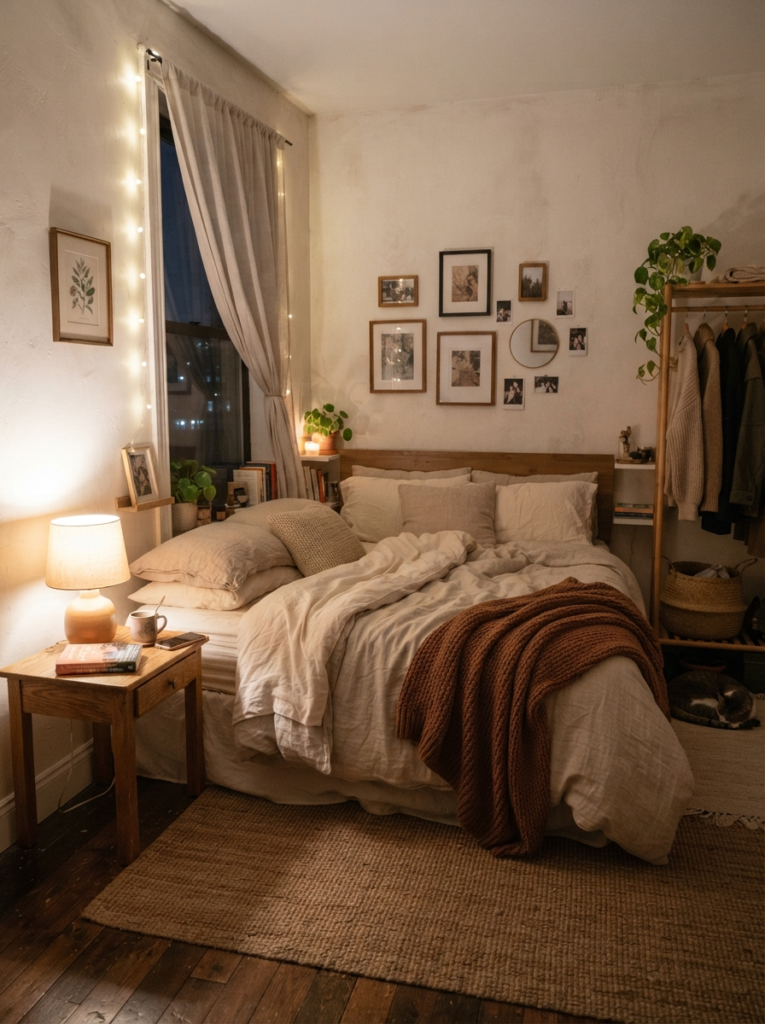
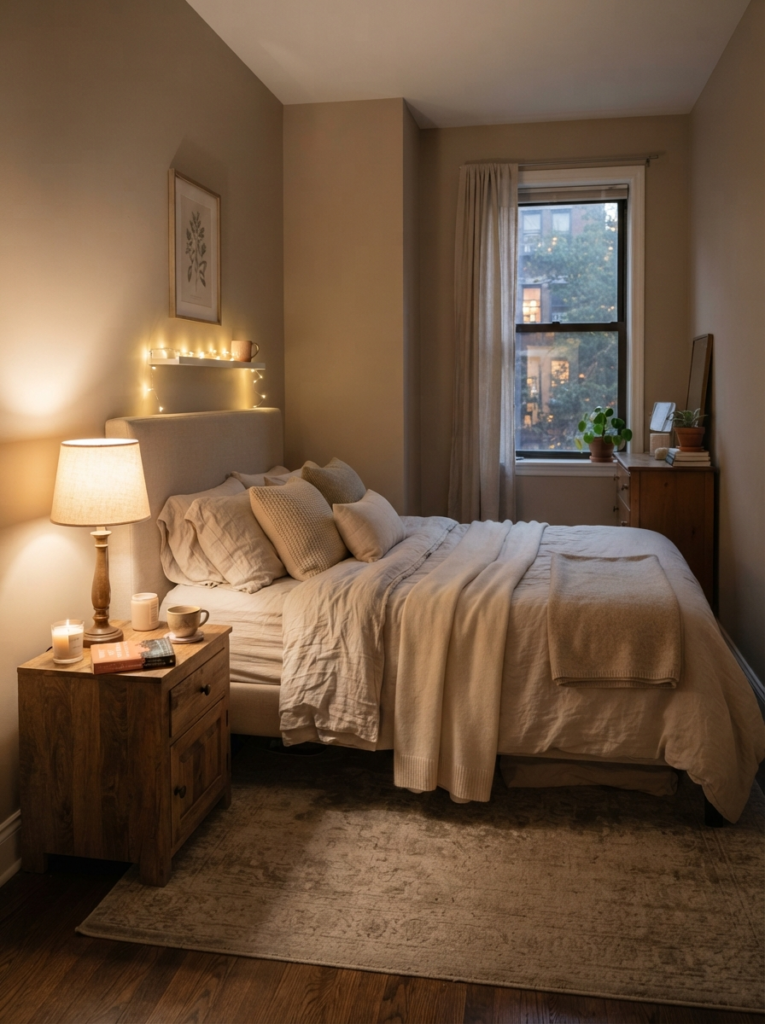
Relaxing bedrooms rarely rely on harsh ceiling lights alone. Warm layered lighting creates emotional comfort because softer shadows help the nervous system settle more naturally at night.
Bedside lamps, dim wall sconces, candles, fairy lights, and warm LED glow make tiny bedrooms feel more intimate and emotionally calming. This is why cozy hotel rooms usually feel better at night than many apartments.
Soft lighting changes mood instantly.
3. The Cozy Reading Corner Setup
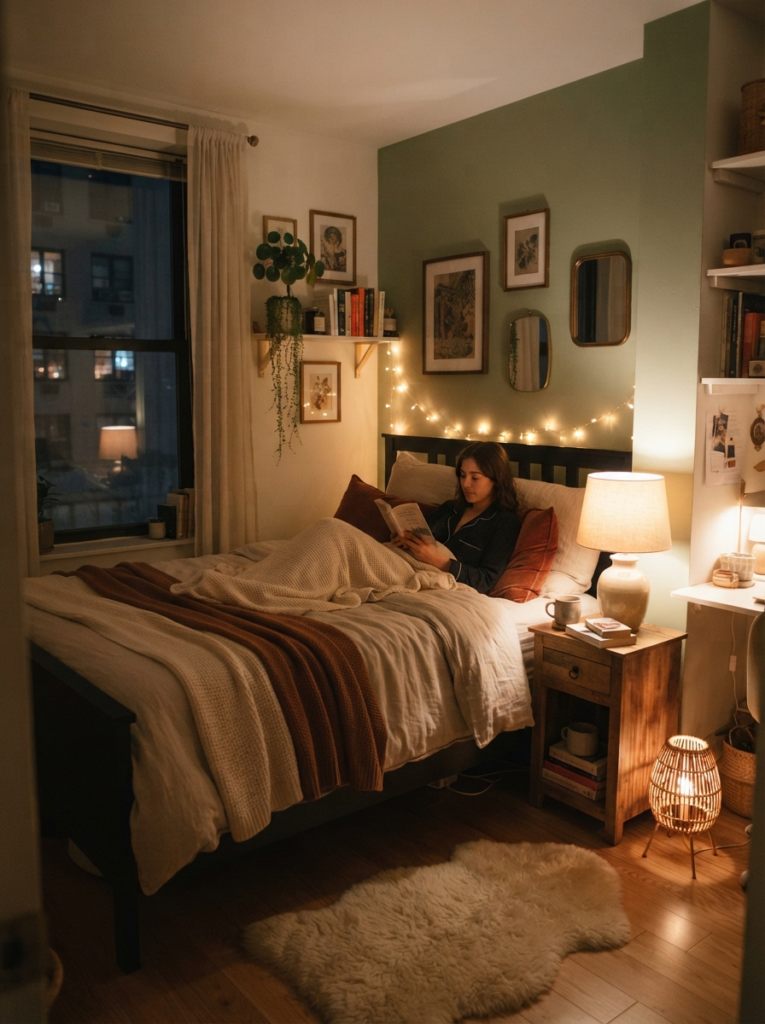
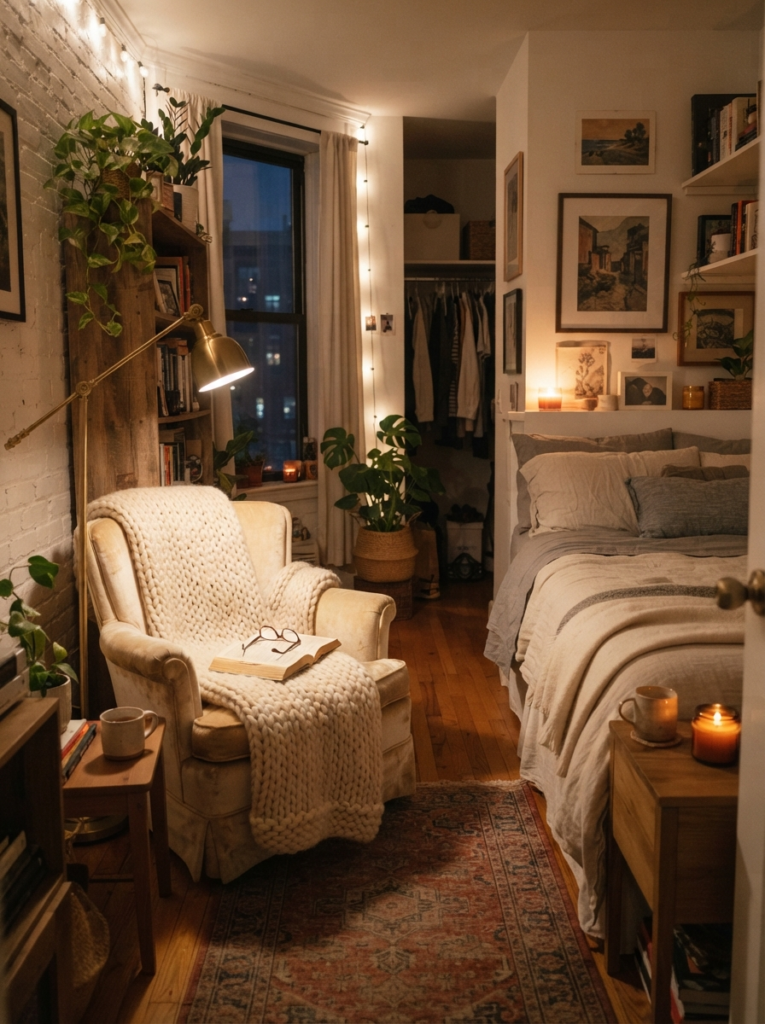
A tiny reading corner quietly changes how a bedroom emotionally feels. One soft chair, folded blanket, warm lamp, and small side table create a sense of comfort that makes the room feel lived in instead of purely functional.
Even compact bedrooms can usually support a tiny relaxation corner near a window or beside the bed. Warm spaces emotionally invite slower routines.
Comfort grows through small details.
4. The Minimal Visual Clutter Setup
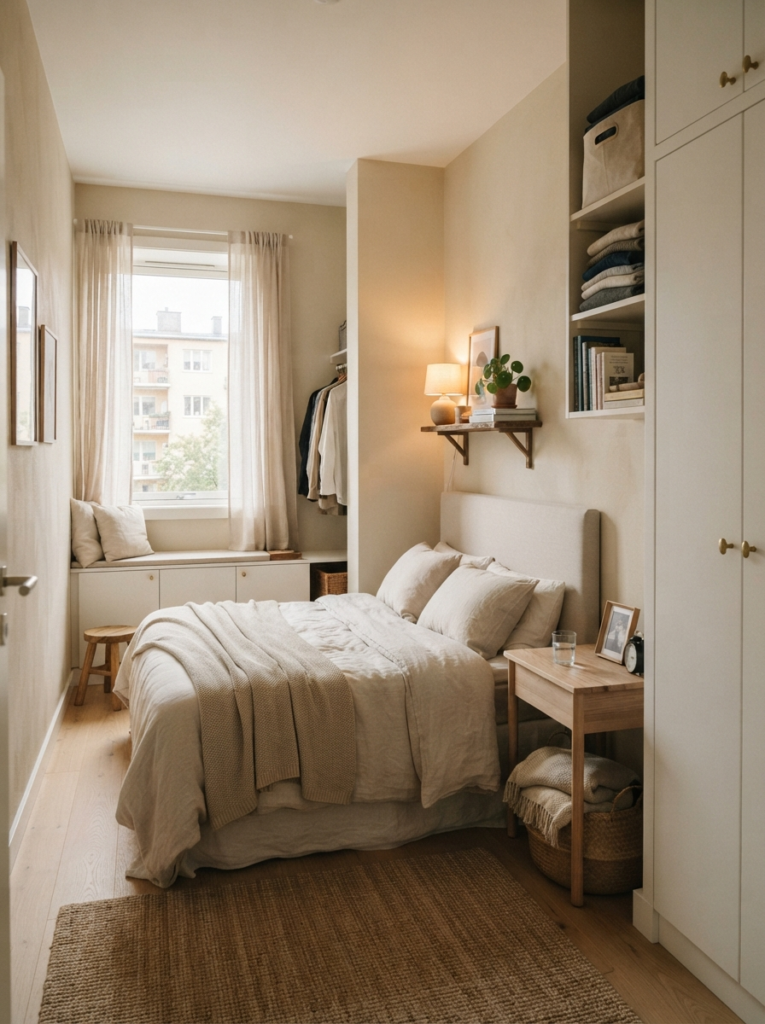
Warm relaxing bedrooms often contain less visible information. Tangled chargers, overflowing shelves, scattered laundry, and crowded surfaces quietly create mental noise that makes rooms feel emotionally heavier.
Hidden storage, cleaner surfaces, and calmer layouts reduce visual stress naturally. Tiny bedrooms emotionally soften when fewer objects constantly compete for attention.
Visual calm supports emotional calm.
5. The Soft Bedding-Focused Setup
In small bedrooms, the bed becomes the emotional center of the room automatically. Warm layered bedding instantly changes how the space feels emotionally.
Relaxed linen sheets, oversized pillows, textured throws, and soft blankets create a comforting atmosphere that makes the room feel emotionally safer and more inviting. Slightly imperfect bedding often feels warmer than rigidly styled setups.
Softness matters more than perfection.
6. The Warm Wood and Natural Texture Setup
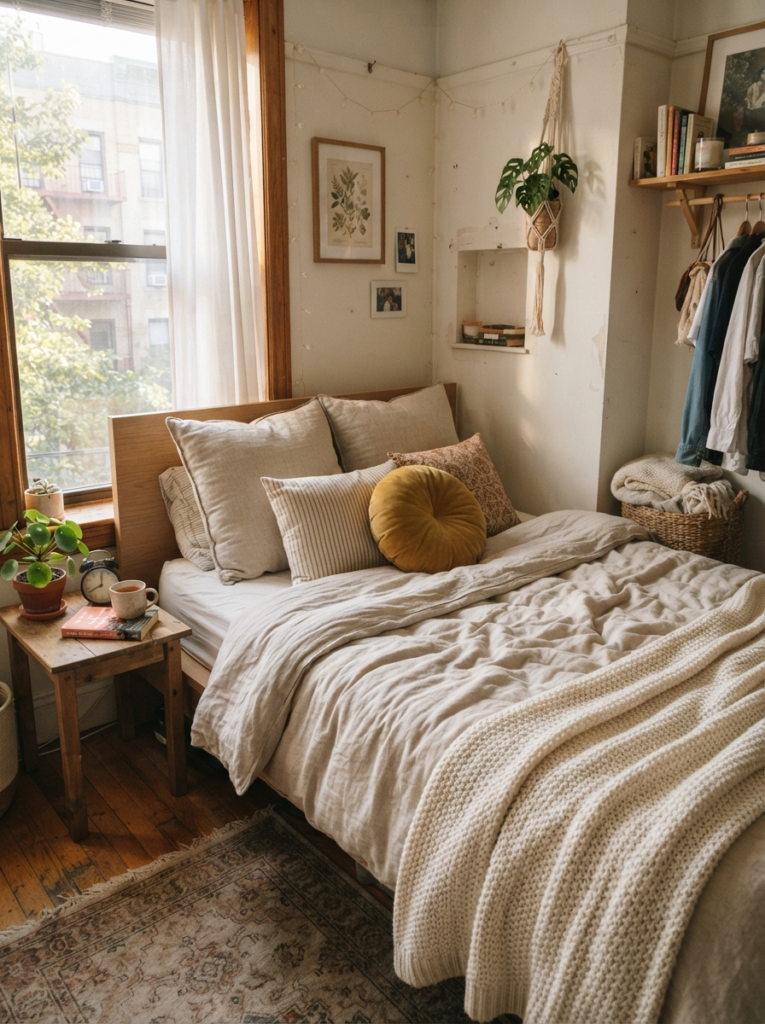
Natural materials create emotional grounding in small bedrooms because they soften the atmosphere without adding visual clutter. Oak furniture, woven baskets, cotton bedding, linen curtains, and matte ceramics create warmth quietly.
Synthetic glossy surfaces often feel colder emotionally in compact rooms. Warm textures help tiny bedrooms feel more breathable and comforting naturally.
Texture creates emotional richness.
7. The Window-Focused Relaxing Setup
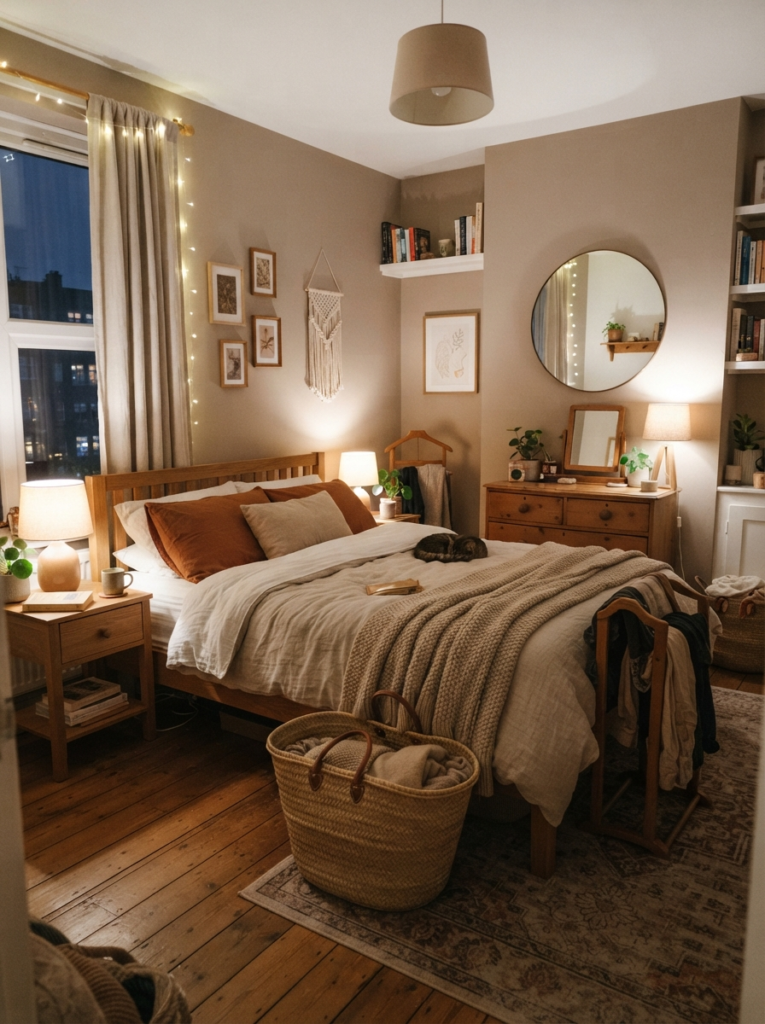
Bedrooms feel emotionally calmer when natural light becomes part of the atmosphere instead of being blocked heavily by furniture. Soft filtered daylight creates warmth during the day while helping tiny bedrooms feel more open emotionally.
Sheer curtains work especially beautifully because they diffuse light gently without making the room feel closed off.
Soft daylight changes the mood of tiny spaces constantly.
8. The Calm Nightstand Setup
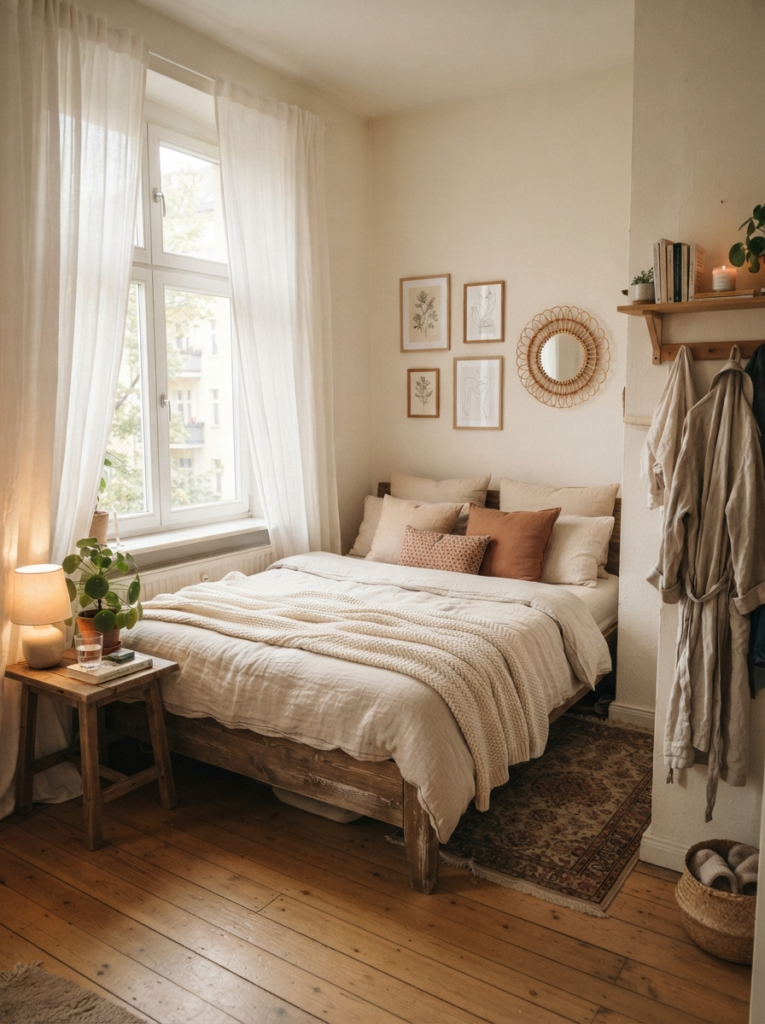
Overloaded bedside areas quietly create nighttime stress because the eye constantly processes unfinished visual clutter before sleep. Warm relaxing bedrooms usually keep nightstands simpler and softer.
A warm lamp, ceramic tray, one book, and cleaner surfaces often feel enough. Tiny bedrooms emotionally benefit from reduced visual noise around sleeping areas.
Calmness grows through restraint too.
9. The Open Breathing Room Setup
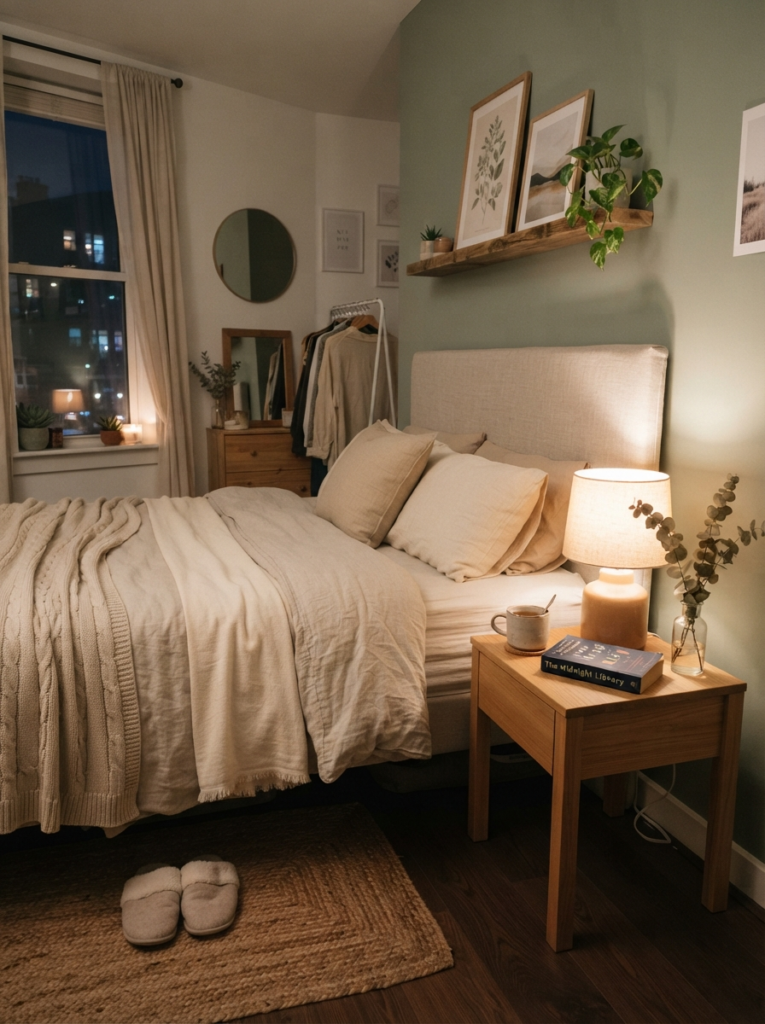
Many tiny bedrooms feel emotionally exhausting because every corner becomes packed with furniture or storage immediately. Warm relaxing spaces usually leave some openness intentionally.
Visible flooring, cleaner corners, and balanced spacing create emotional breathing room that helps compact bedrooms feel calmer and less overwhelming daily.
Openness often feels emotionally luxurious.
10. The Soft Earth-Tone Setup
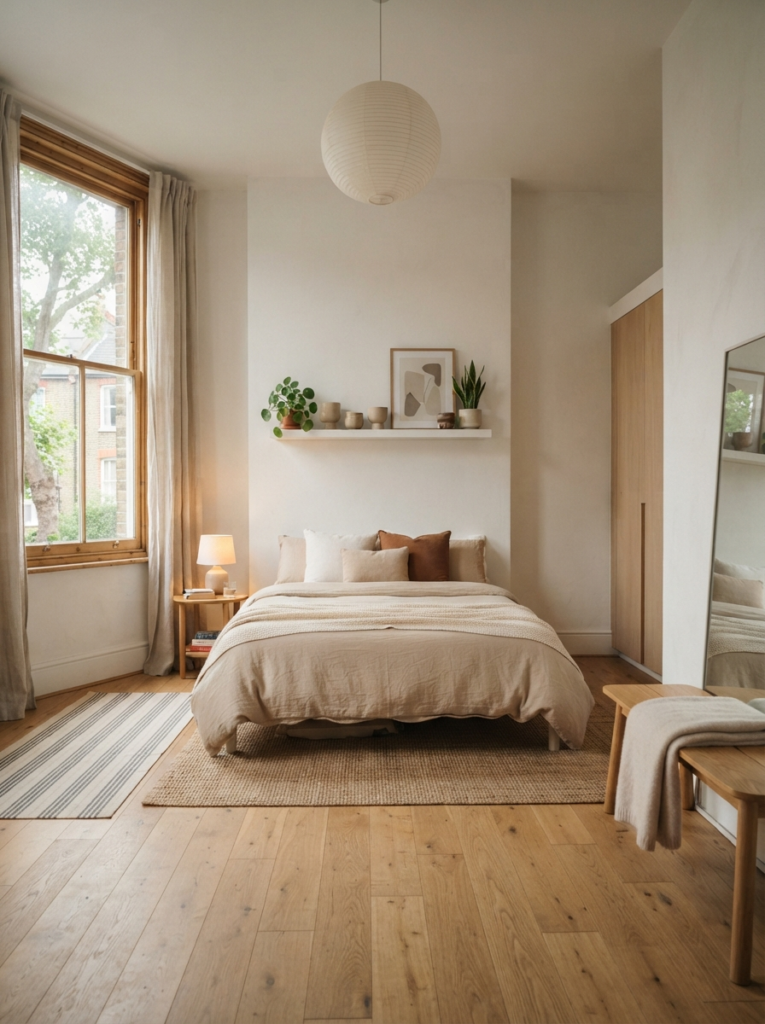
Earth tones naturally feel emotionally grounding because they connect visually to softness found in nature. Warm clay, muted olive, sandy beige, terracotta, and natural wood tones create relaxing atmospheres without feeling dull.
Tiny bedrooms emotionally respond strongly to grounded color palettes because softer tones reduce visual intensity naturally.
Warmth often comes from subtle color psychology.
11. The Emotionally Calm Setup
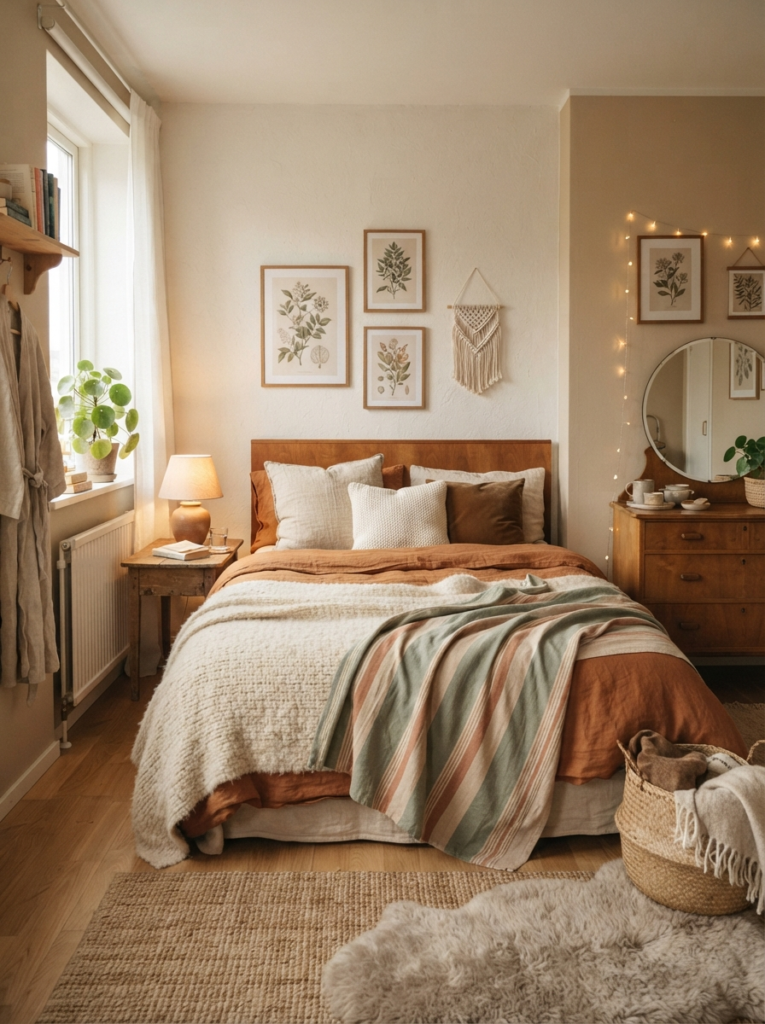
The warmest and most relaxing bedrooms are not always the trendiest ones online. They are the rooms that quietly make people feel emotionally lighter after stressful days.
Softer lighting, cleaner layouts, warm textures, balanced furniture placement, hidden clutter, and calming colors work together to reduce overstimulation naturally. Tiny bedrooms become comforting when the room finally supports rest emotionally instead of demanding constant attention.
Relaxation is usually designed through atmosphere, not decoration alone.
Final Thoughts
Warm relaxing bedrooms are less about perfection and more about emotional comfort. Tiny bedrooms become calmer when lighting softens, textures layer naturally, clutter reduces visually, and layouts stop feeling overcrowded or overstimulating.
The most comforting bedrooms are usually the ones that quietly support rest, softness, and emotional breathing room after exhausting days. Small spaces emotionally improve when they stop trying to impress constantly and start helping people genuinely relax instead.
A warm bedroom should not only look cozy. It should make the entire body feel calmer the moment you walk inside.