

14 Small Bedroom Layout Ideas With Better Bed Placement
TLDR: In a small bedroom, the bed isn’t just a piece of furniture — it’s the layout. Where you place it determines how much floor space you have, how light moves through the room, how easy movement feels, and how well you actually sleep. Most compact bedrooms fail not because they’re too small but because the bed is in the wrong position. These fourteen placement strategies fix the specific problems that make tiny rooms feel cramped, dark, or just perpetually off.
Bedroom layout advice tends to focus on what you add — more storage, better lighting, cleverer furniture. But in a small room, the single highest-leverage decision is where the bed sits. Get that wrong and nothing else works quite right. Get it right and the rest of the room tends to fall into place around it.
The bed is often the largest item in the room. It can set the tone for your design and emphasize other features, such as artwork or architectural details. That makes it both the biggest constraint and the biggest opportunity in any small bedroom layout.
Here’s what actually works.
1. Center the Bed on the Longest Wall
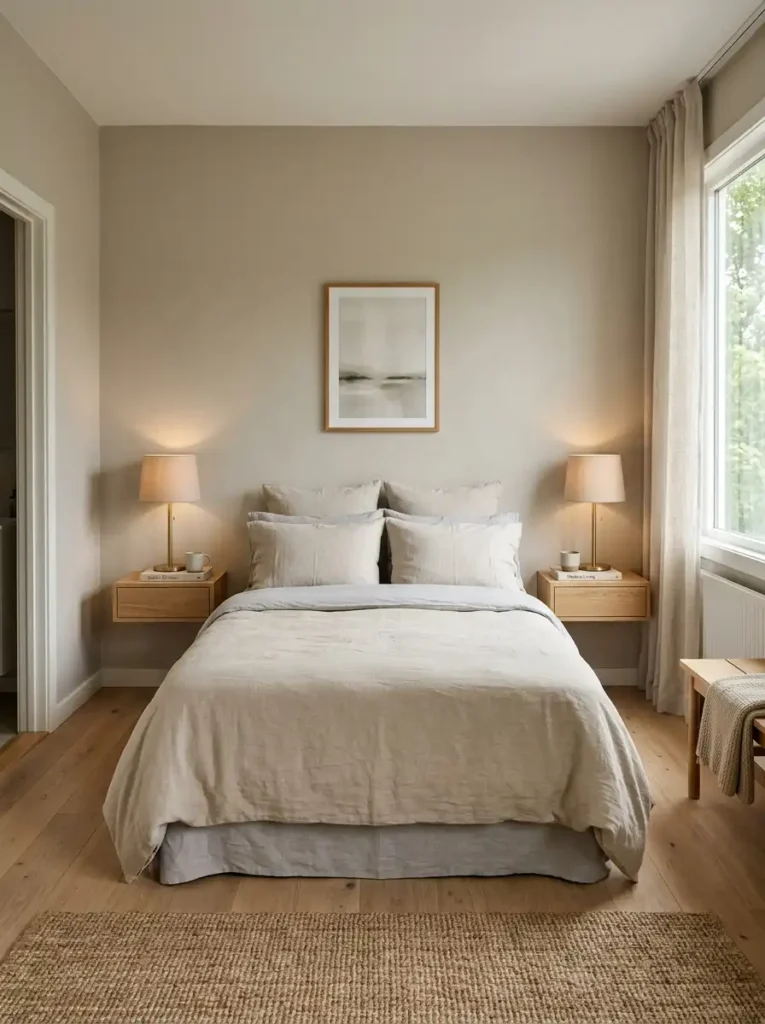
This is where most small bedroom layouts should start. Often, the best place to put your bed is along the longest wall. It’s a good idea to place your bed symmetrically to create a peaceful bedroom.
Centering the bed on the longest uninterrupted wall creates immediate balance — equal floor space on both sides, a natural focal point as you enter, and a layout that reads as intentional rather than squeezed. For a room around 10 by 11 feet, place a full- or queen-size bed along the longest wall, and use compact nightstands. Wall sconces are great for saving space.
The symmetry effect matters more than most people account for. A centered bed with matching lighting on each side is one of the most reliable ways to make a compact room feel settled and calm. It doesn’t require matching furniture — just roughly equal visual weight on both sides.
2. Keep the Headboard Against a Solid Wall, Not a Window
Placing the headboard against a window creates two problems that compound each other: it blocks natural light from spreading into the room during the day, and it removes the psychological sense of security that a solid wall behind the head provides at night.
Putting the head of the bed in front of a window is not in line with feng shui principles, or anyone else’s for that matter, because windows don’t offer the structural support of a wall (metaphorically and literally.) The headboard can also block natural light during the day — sort of a design no-no.
If wall space is genuinely limited and the window wall is the only option, this setup works great with low-profile beds or open-frame headboards that do not block natural light. Install quality bedroom essentials such as heavy curtains or blinds to help you control drafts and sunlight. A low-profile or no-headboard setup against a window is a workable compromise. A tall solid headboard blocking the only window is not.
3. Leave a Clear Path on at Least One Side
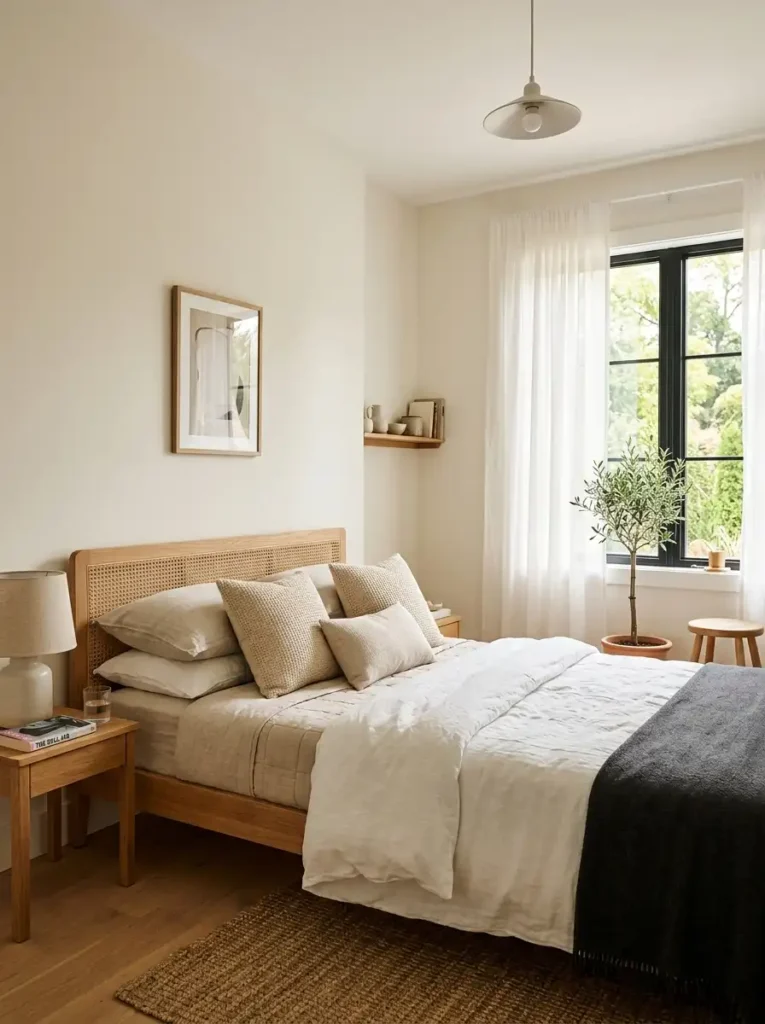
The minimum clearance standard for comfortable bedroom movement is 24 inches on at least one side of the bed — and ideally both. Below that, daily movement becomes a repeated small friction that the body registers as stress even when the mind doesn’t consciously notice it.
Smart bed placement makes the most of your room’s layout. It never obstructs other furniture or stands in the way of activities. When your bed placement frees up pathways, your room flows better. This reduces awkward spots and makes the entire space more functional.
In rooms too narrow for 24 inches on both sides, the priority order is: clear path on the side you use most (typically the side you get up from), then wall-mounted nightstands instead of floor-standing ones to avoid further reducing that clearance, then a slimmer bed frame to recover a few more inches.
4. Place the Bed Opposite the Door
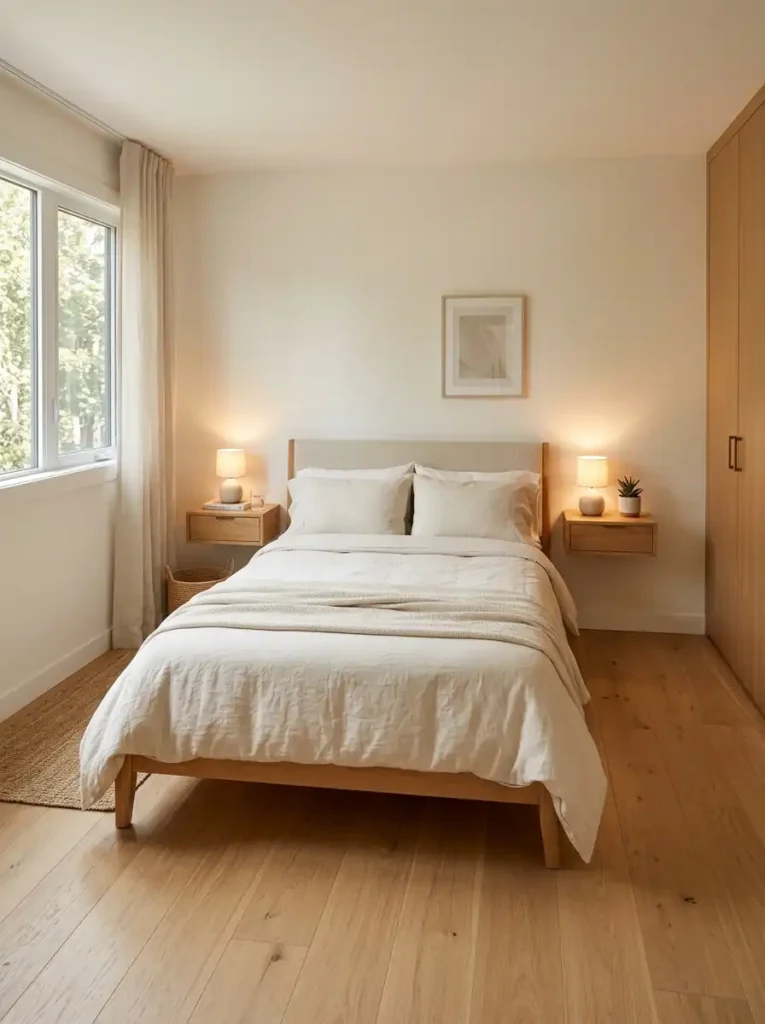
In a square room, typically place your bed against the wall opposite the door, with nightstands on either side. This is the layout that most naturally satisfies what feng shui practitioners call the command position — you can see the door clearly while lying in bed without being directly in line with it.
The practical effect is a room that feels visually organized the moment you enter. The bed becomes the clear focal point, attention settles naturally, and the room reads as purposefully arranged rather than functionally assembled. It also means the door swings freely without hitting any furniture — a basic requirement that keeping your bed away from doors so that they all open easily with plenty of room to maneuver is a “rule” everyone agrees with.
Don’t forget to consider ceiling elements. Whether you have beams or a vaulted ceiling, you might want to position your bed to draw attention to these beautiful details. It’s also a good idea to add practical elements to your floor plan. Mark where electrical plugs, heating vents, and door swings go. For example, if your door is 36 inches wide, you’ll need to allow for a three-foot swing to avoid furniture placement issues.
5. Float the Bed a Few Inches From the Wall
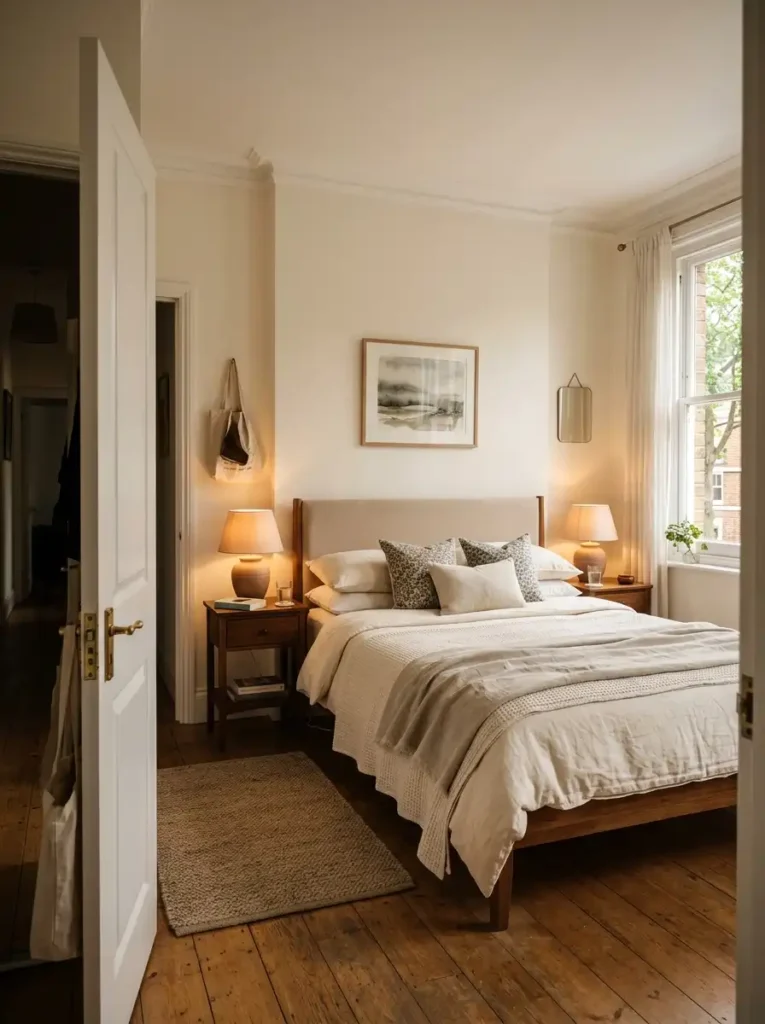
Pushing the bed flush against a side wall saves an inch or two of floor space while creating a layout that feels rigid and compressed. Allowing a small gap — even 3 to 4 inches — introduces visual breathing room that makes the room feel more intentionally designed.
This applies most importantly to the headboard wall and the side walls. A bed centered on the main wall with a few inches of air around it reads as settled and deliberate. The same bed shoved hard into a corner reads as a layout that ran out of options, regardless of how good the bedding looks.
The exception is when corner placement is genuinely the best solution for the room’s dimensions. In that case, lean into it fully rather than trying to split the difference with a partial float.
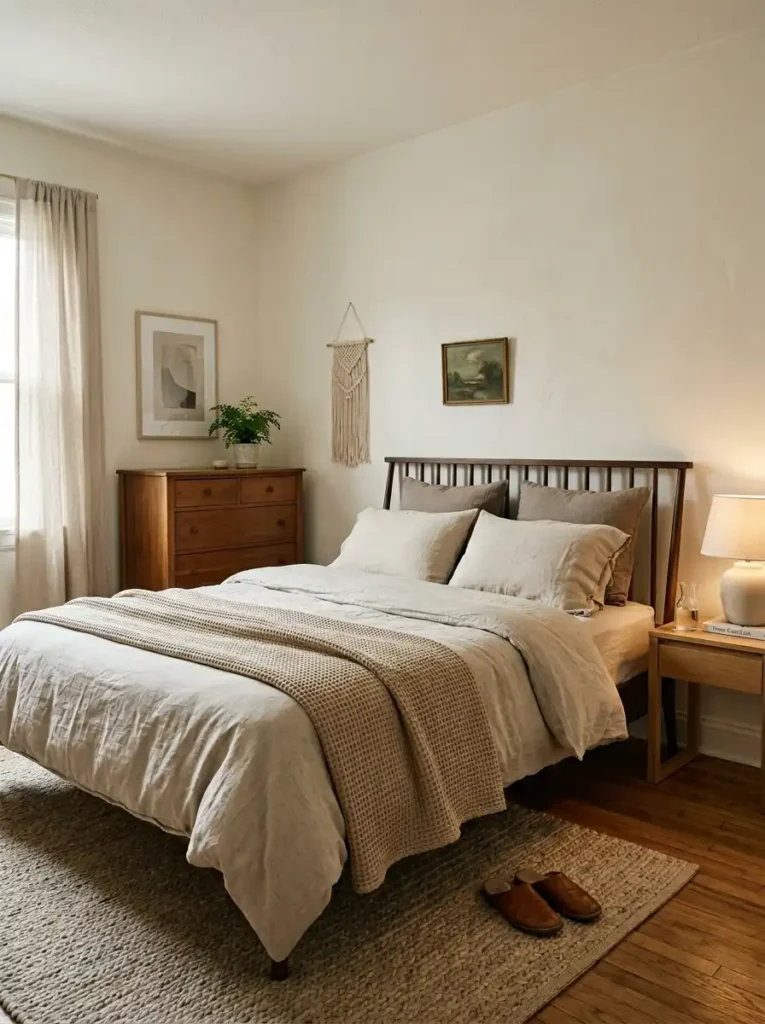
6. Position the Bed to Catch Morning Light Without Direct Glare
Natural light at the bedside in the morning isn’t just pleasant — it’s functionally useful. Light exposure in the first 30 to 60 minutes after waking helps reset the circadian rhythm and supports better sleep the following night, according to sleep research on light-based circadian cues.
The goal isn’t direct sunlight hitting the face at 6am. It’s positioning the bed so that morning light enters the room and reaches the sleeping area in a diffused form — through sheer curtains, around the edge of the window, or reflected off a light-colored wall. Position the bed so that air can flow from the window across your feet rather than your head — a useful orientation that also tends to capture morning light at a more comfortable angle.
Sheer curtains rather than blackout panels are the right choice for this setup. They allow diffused daylight in while managing direct exposure.
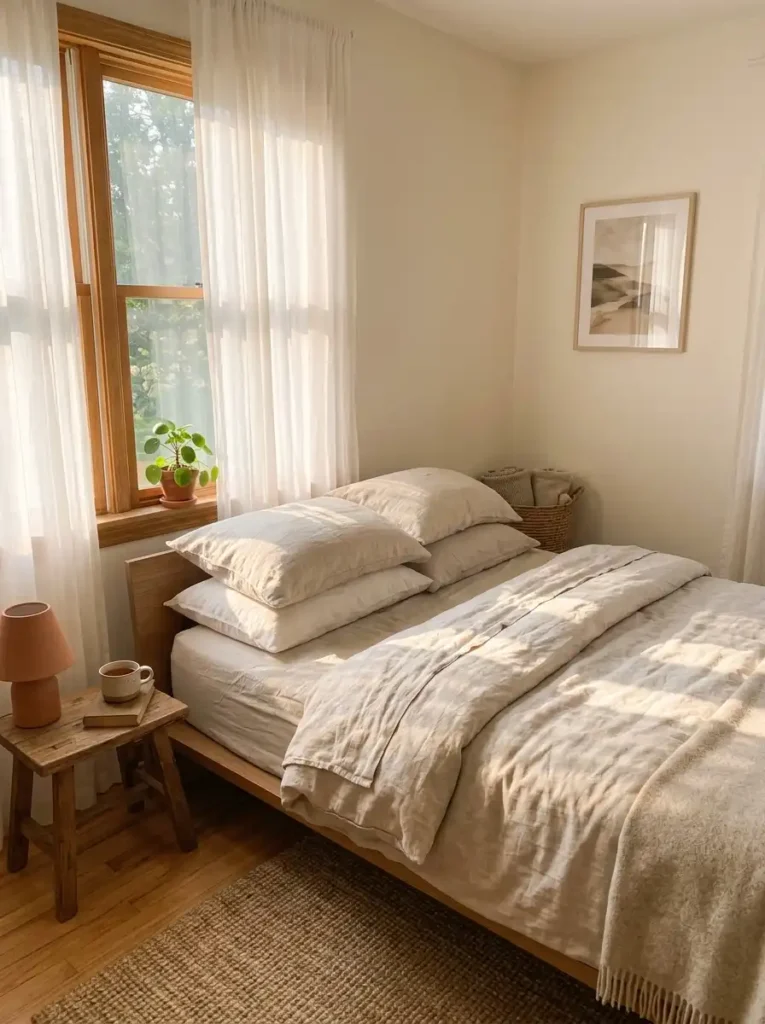
7. Keep the Wall Above the Bed Light and Uncluttered
Heavy shelving directly above the sleeping area creates a specific kind of visual discomfort — the sense that something substantial is suspended overhead while you rest. It’s a subtle effect, but it consistently makes sleeping areas feel less calm.
Keep the headboard low and uncluttered to avoid visually shrinking the room. A simple, unadorned headboard or no headboard at all works best to maintain the open, airy feeling.
This doesn’t mean the wall above the bed has to be empty. A single framed print, a soft textile panel, or minimal wall art works well. What to avoid is floating shelving loaded with books and objects, multiple frames competing for attention, or anything that adds visual weight directly over the sleeping zone. The area around the bed is where the eye lands first and last each day — it earns careful editing.
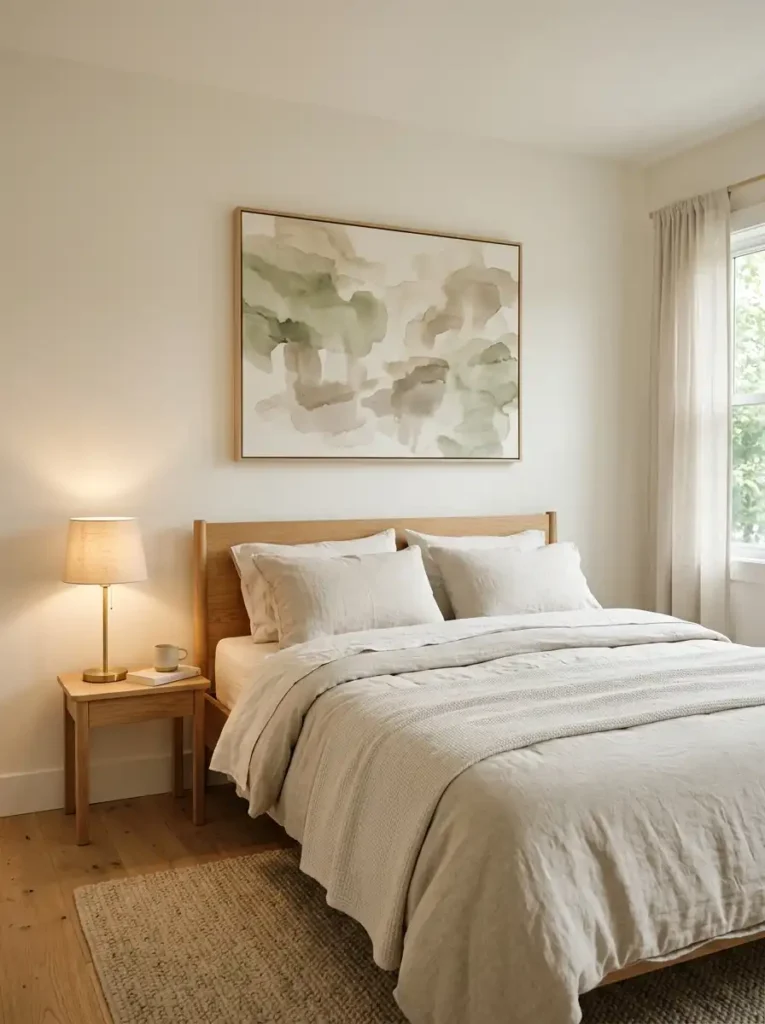
8. Use Corner Placement When the Room Genuinely Requires It
Corner bed placement gets an unfair reputation. When used in the right room, it’s genuinely effective — it opens up the center of the floor, creates a snug and private sleeping nook, and frees the opposite wall for storage or a workspace.
For those navigating smaller bedrooms or studio apartments, corner bed placement is one of the most effective bedroom furniture arrangement ideas for maximizing floor space. This layout tucks the bed snugly into a corner, transforming it into a cozy, intimate sleeping nook while opening up the center of the room.
A cozy corner provides the most efficient position for bed placement in a small bedroom, guest room, or a bedroom-home office combo layout. It creates a snug look and opens up the rest of the floor for other uses.
The key is follow-through: balance the look by keeping the rest of the room’s furniture minimal. A slim dresser or a wall-mounted desk on the opposite wall will prevent the space from feeling overwhelmed and keep the focus on your smart, space-saving bed. A corner bed that’s balanced by lighter furniture on the opposite side reads as a deliberate choice. One that’s surrounded by additional clutter reads as a space running out of options.
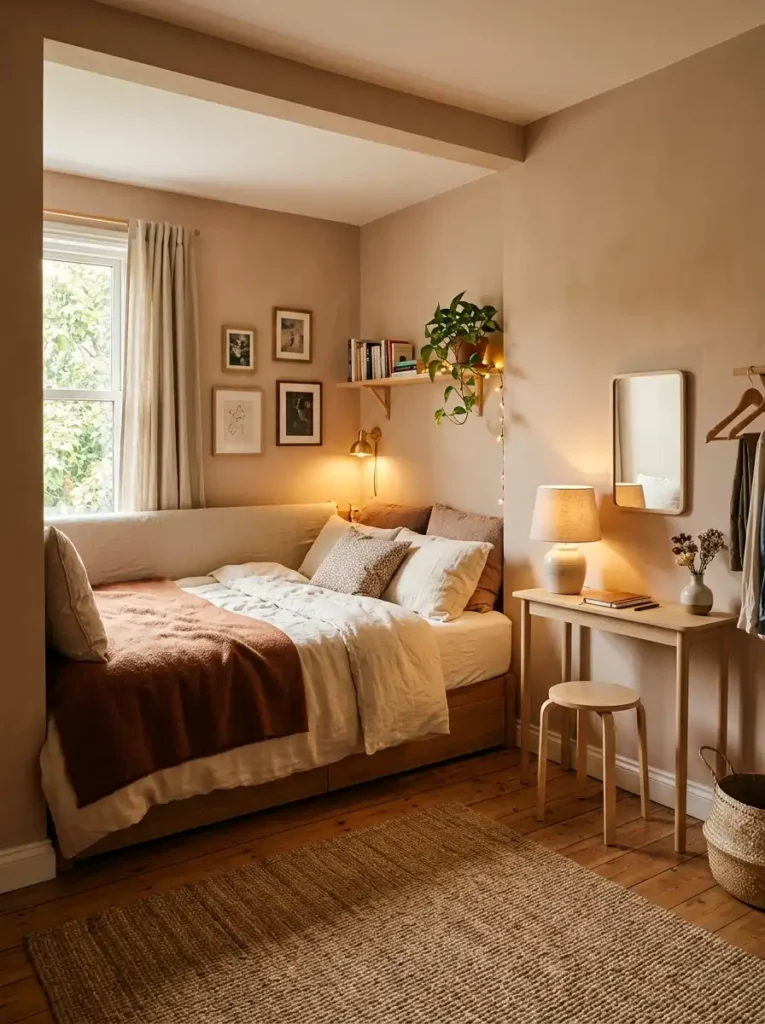
9. Separate the Bed From Visual Clutter Zones
Where the bed is placed relative to the rest of the room’s activity zones matters significantly for sleep quality. A bed positioned beside an overloaded desk, a visible pile of clothing, or storage that’s never fully organized keeps the visual environment stimulating in ways that work against rest.
Sleep researchers consistently flag visual complexity in the sleep environment as a contributor to delayed sleep onset — the brain continues processing a cluttered visual field even when you’re trying to wind down. The sleeping zone specifically benefits from being edited more strictly than the rest of the room.
In practical terms, this means keeping the storage-heavy side of the room separated from the sleeping side, even in a very small space. A simple layout principle: the wall you face from the bed should be as calm and uncluttered as possible. Desks, wardrobes, and storage pieces work better behind the sleeper or to the side rather than directly in the main sightline from the pillow.
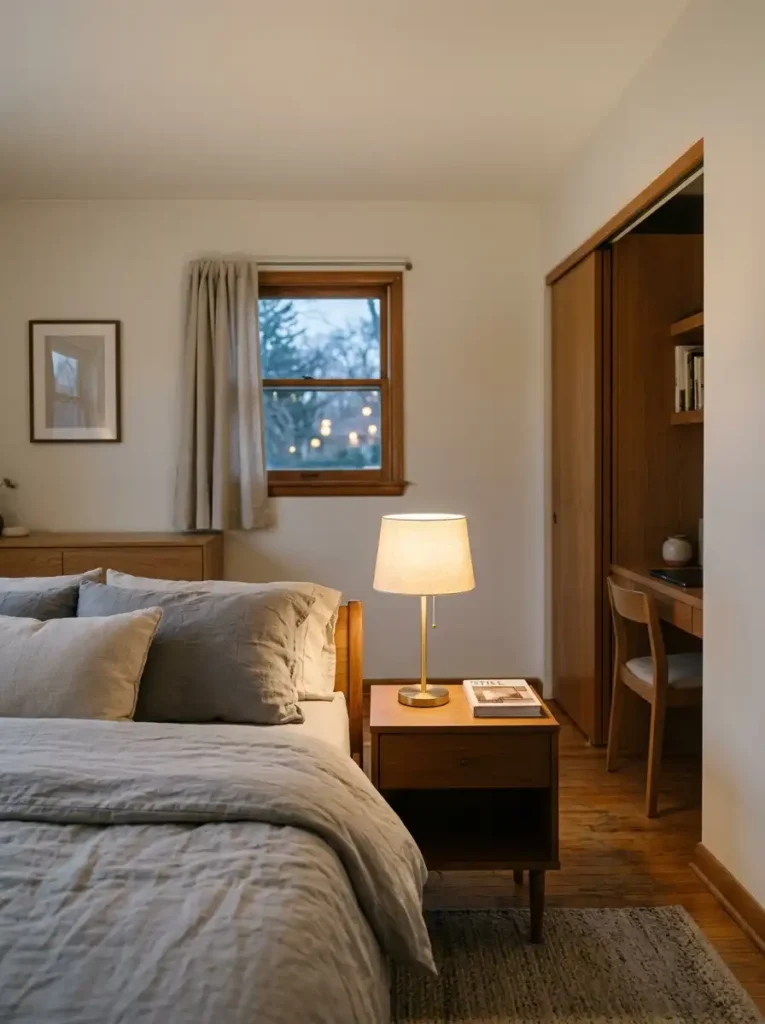
10. Align the Bed With the Room’s Longest Dimension
In a narrow or rectangular room, positioning the bed lengthwise along the longest dimension helps the room feel more proportional and less boxed-in. The eye follows the longest visual line available and the room reads as more spacious than its actual footprint.
This is particularly relevant in long narrow bedrooms where placing the bed across the width — which saves a few feet of length — creates a layout that visually compresses the room. Orienting it along the length uses the room’s natural geometry rather than fighting it.
The shape of the room matters. A square room offers easy symmetry. Typically, place your bed against the wall opposite the door, with nightstands on either side. A rectangular room generally wants the bed oriented along its length for the most comfortable proportion.
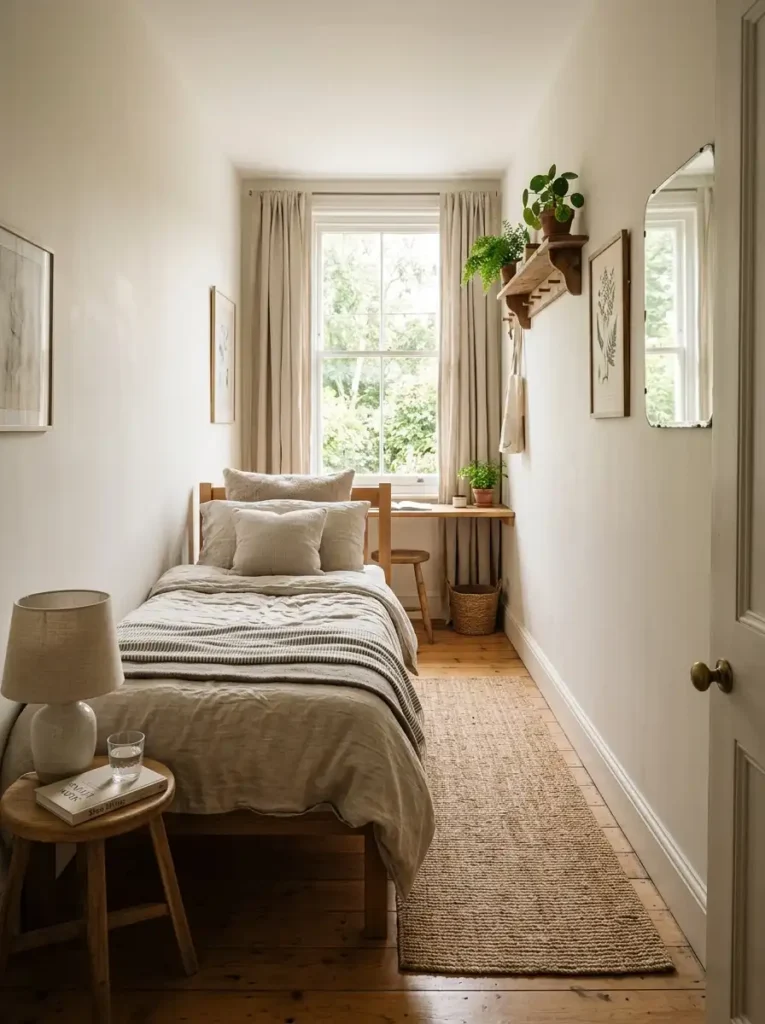
11. Choose a Low-Profile Bed Frame for Tight Rooms
Bed frame height affects how a room feels proportionally just as much as floor space does. A tall platform or high-profile frame in a small room raises the visual center of gravity, making the room feel denser and more enclosed.
For small bedrooms, installing wall sconces frees up bedside table space and frames the bed beautifully. Pairing that with a low-profile bed frame creates a horizontal visual line that leads the eye across the room rather than cutting it off vertically.
Low-profile beds typically sit 6 to 12 inches off the floor. This height range has two practical benefits beyond aesthetics: it creates usable under-bed storage space for drawers or vacuum bags, and it makes the ceiling feel proportionally higher — a perception effect that’s especially valuable in apartments with lower ceiling heights.
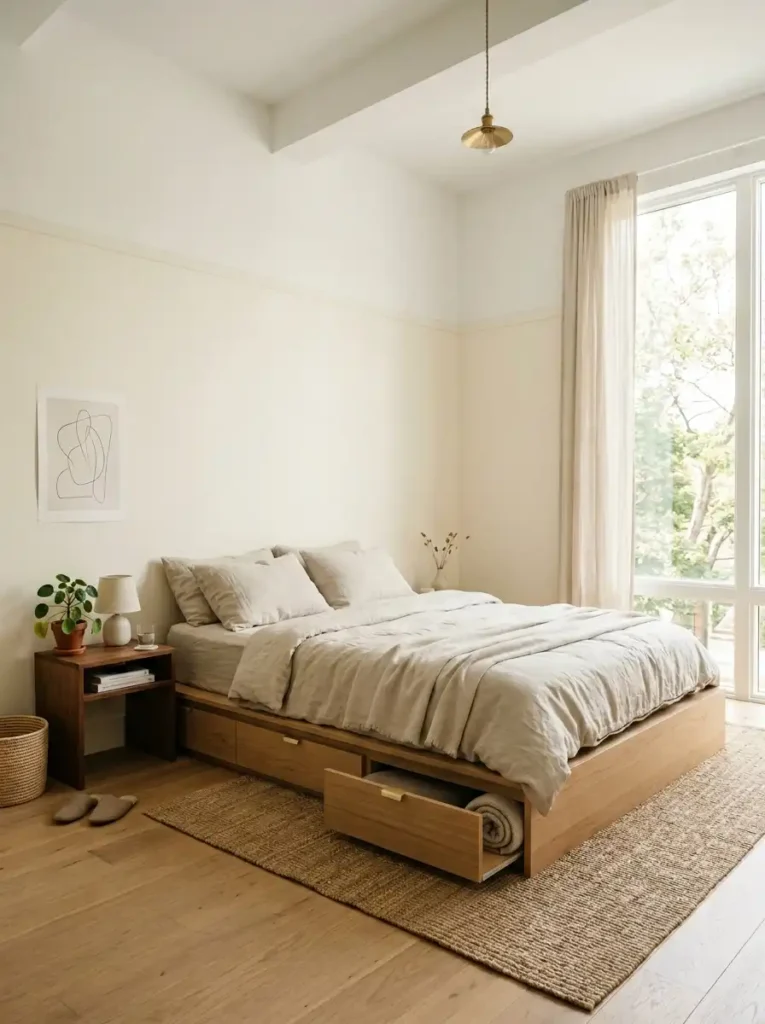
12. Position the Bed Near Warm Ambient Light Sources
At night, the position of the bed relative to the room’s light sources determines how the sleeping area feels after dark. A bed positioned under or directly in front of a bright overhead light sits in a flat, evenly lit environment that doesn’t support the psychological shift toward rest.
Forgo taking up precious bedside table space with lamps and install pendant lights or wall sconces instead. Hanging lights on the wall frames the bed beautifully and creates focused reading and task lighting.
The ideal arrangement is warm light sources at or below eye level positioned on either side of the bed — either wall sconces or bedside lamps — with the ceiling light either dimmed or switched off entirely in the hour before sleep. This creates a pool of warmth around the sleeping area with softer shadows elsewhere in the room, which is the lighting environment most associated with relaxation and easier sleep onset.
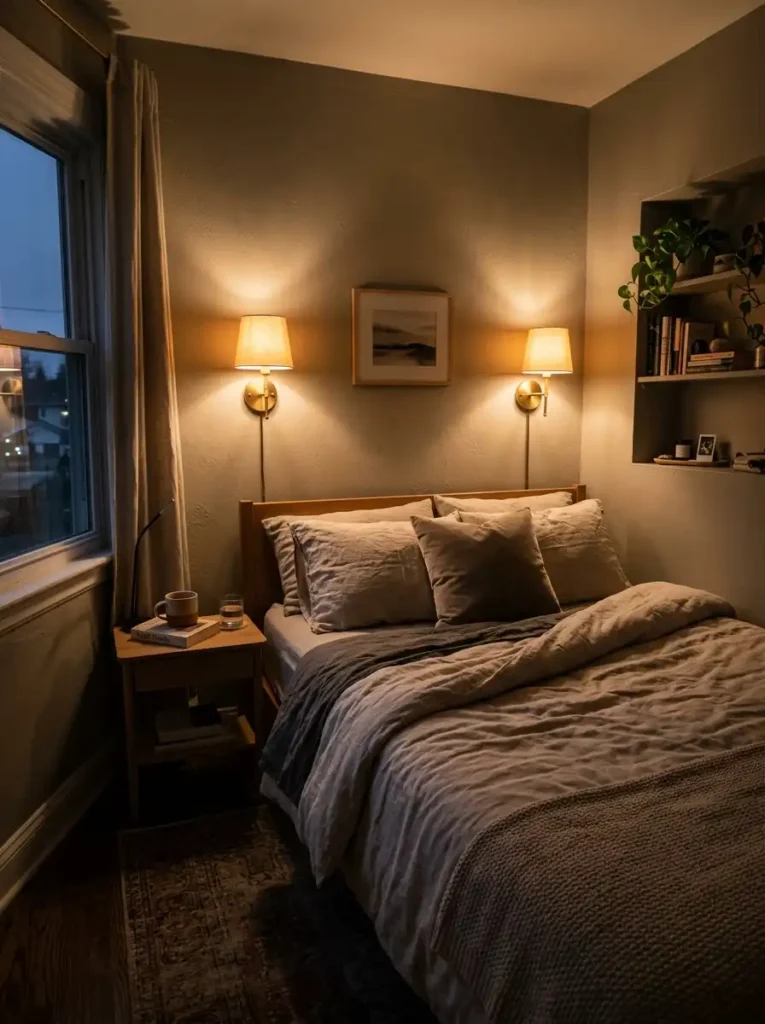
13. Balance Storage and Bed Placement Across the Room
One of the more common layout mistakes in small bedrooms is clustering the bed and all major storage pieces on the same side of the room. The result is a layout that’s heavy on one side and bare on the other — visually lopsided in a way that reads as unfinished rather than minimal.
Give yourself sufficient space to move around your bedroom easily. Allow doors and windows to be open from time to time so the space doesn’t become stagnant. Achieving that ease of movement often requires distributing furniture more evenly across the room’s footprint rather than stacking pieces together.
A practical approach: once the bed position is fixed, identify where the visual weight falls. If the bed and wardrobe are both on the same wall, move the wardrobe to the opposite or adjacent wall to balance the room’s weight distribution. Equal visual weight on both sides of the room creates the settled, composed quality that makes small bedrooms feel genuinely designed.
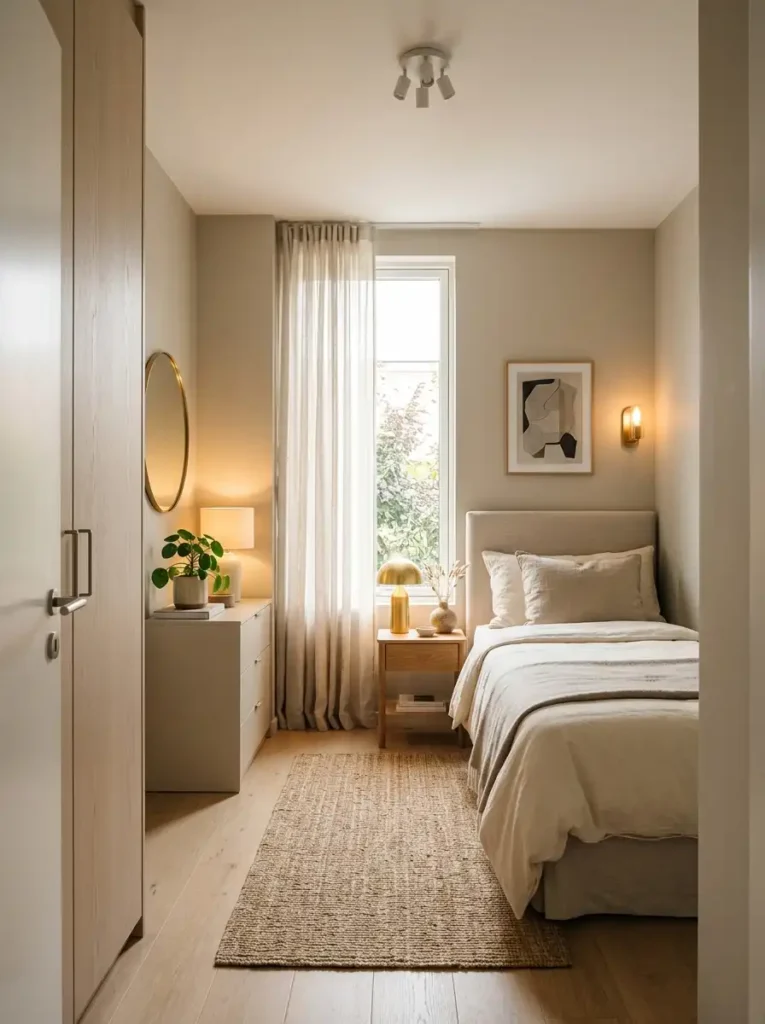
14. Design Bed Placement Around the Room’s Real Conditions
The mathematically optimal bed position and the practically correct one aren’t always the same. The right placement accounts for the room’s actual conditions — where the door swings, where the outlets are, which direction the light comes from, what the view from the pillow will be, and how movement through the room actually flows day to day.
It’s a good idea to add practical elements to your floor plan. Mark where electrical plugs, heating vents, and door swings go. These fixed elements constrain the layout in ways that no amount of aesthetic preference can override — a bed blocking a heating vent or requiring a 10-foot extension cord to reach the nearest outlet creates daily friction that erodes the quality of the space regardless of how well it photographs.
The most useful exercise before committing to a bed position is to stand in the room and walk through a normal day: getting up, making the bed, getting dressed, working at a desk, winding down at night. The placement that makes those routines feel most natural — not the one that maximizes storage or looks best in a plan view — is the right one.
Final Thoughts
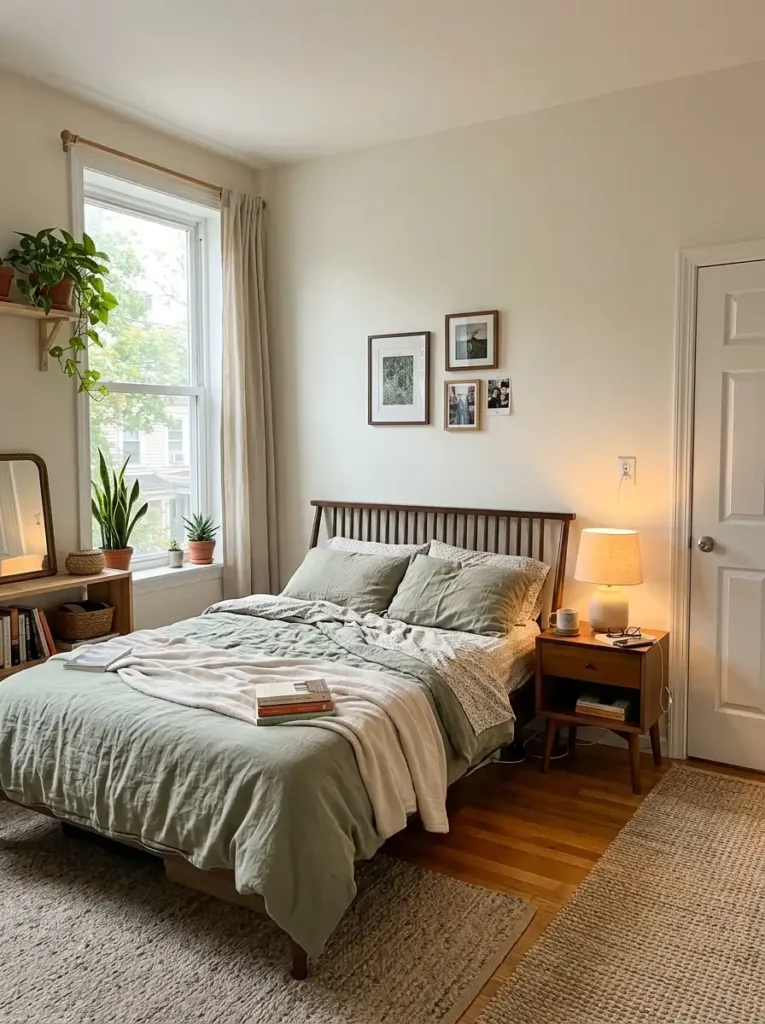
Bed placement is the one layout decision in a small bedroom that affects everything else — light distribution, movement flow, visual balance, storage options, and sleep quality. It’s worth treating as the primary decision rather than an afterthought.
Start with the fundamentals: maximize room space, support easy movement, and shape your room’s style and focus. Center the bed on the longest wall where possible, keep the headboard against a solid wall, maintain at least 24 inches of clearance on one side, and position the sleeping area so it stays visually calm and separated from the room’s busier zones.
The rest — lighting, storage, decor — layers on top of that foundation. Get the placement right first and the room has a chance to work. Get it wrong and the room will keep feeling slightly off no matter what else changes.