15 Small Bedroom Furniture Ideas For Better Room Flow
TL;DR
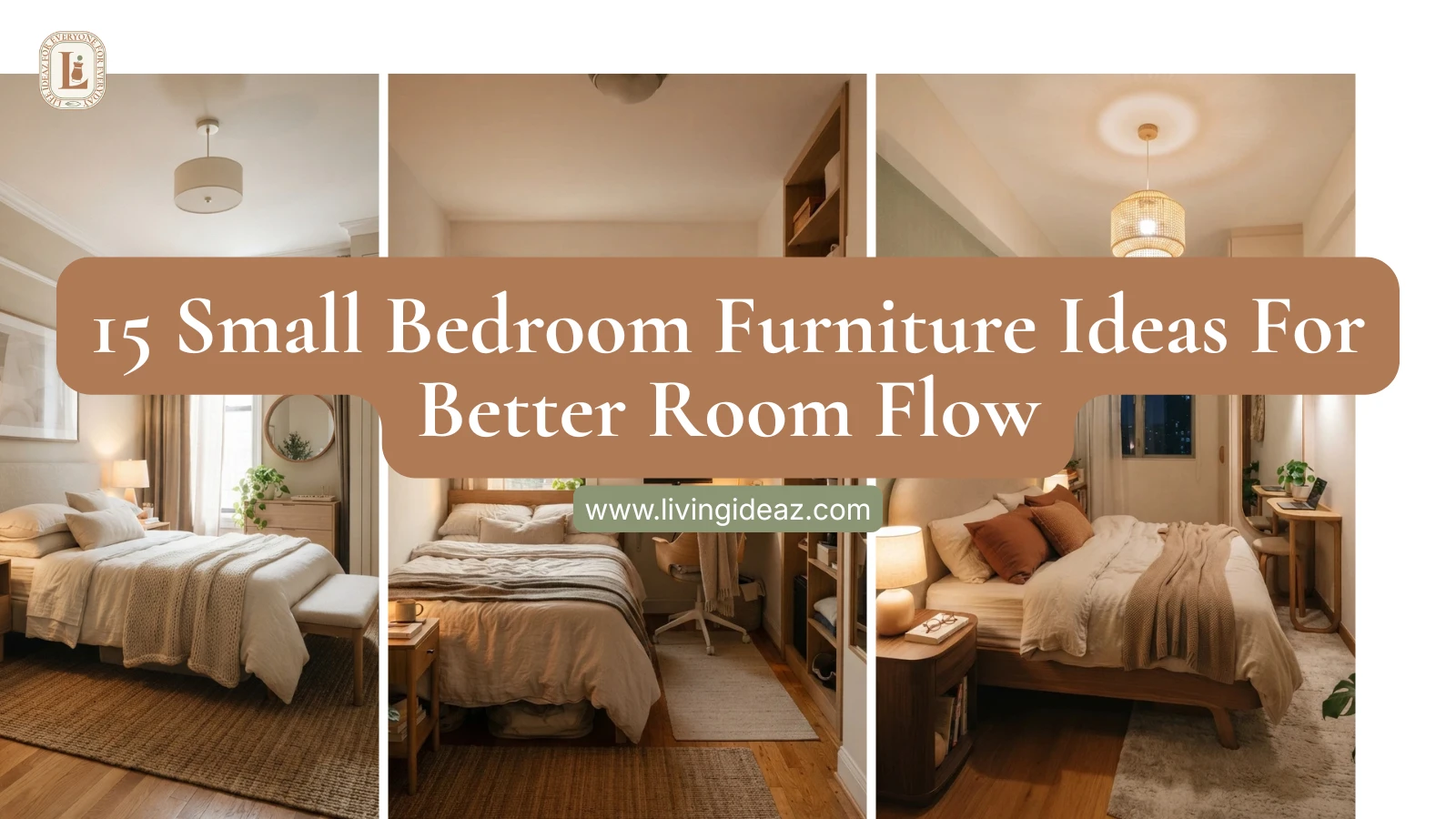
Many small bedrooms do not actually feel cramped because of size alone. They feel cramped because furniture interrupts movement constantly. Bulky pieces, awkward layouts, blocked pathways, and oversized storage quietly create friction that makes rooms feel stressful to exist inside every day. The best small bedroom furniture ideas improve room flow by creating easier movement, lighter visual weight, and calmer layouts without sacrificing comfort or practicality.
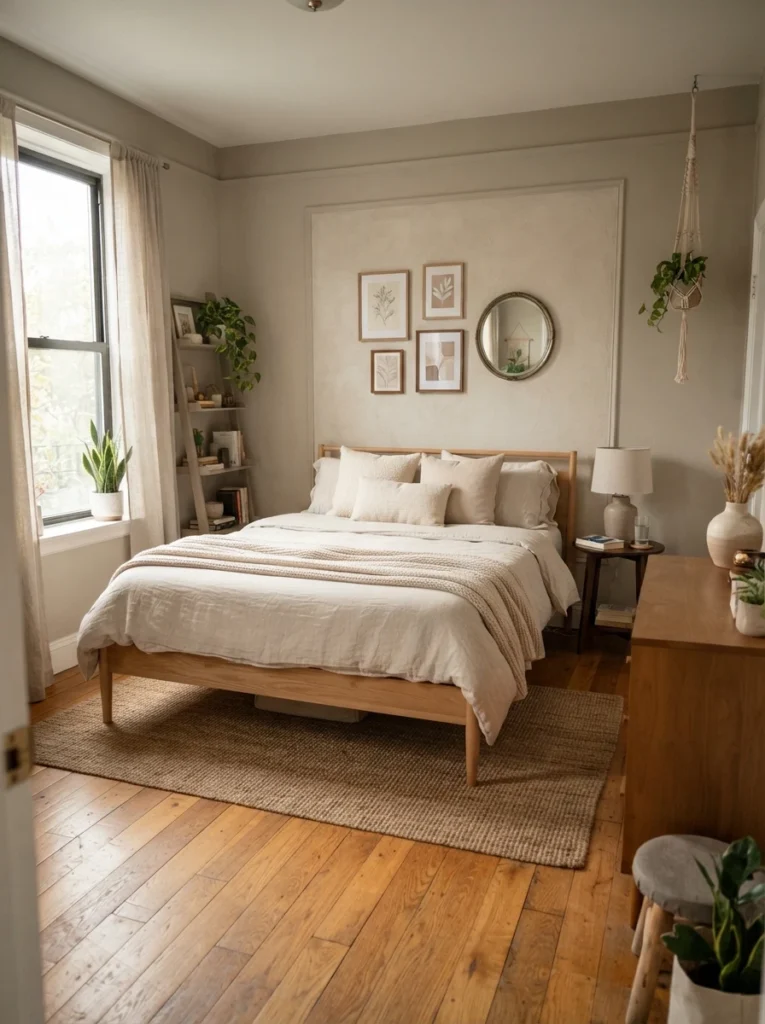
1. Choose Beds With Visible Legs Instead of Heavy Bases
Beds with thick solid bases often make tiny bedrooms feel visually heavy because they block floor visibility completely. Furniture with visible legs creates openness because the eye can continue traveling underneath the piece naturally.
This subtle openness makes compact bedrooms feel less boxed in emotionally. It also improves cleaning flow, which helps small rooms stay calmer and easier to maintain long term.
Tiny spaces emotionally benefit from lighter visual weight.
2. Use Floating Nightstands to Open Walking Space
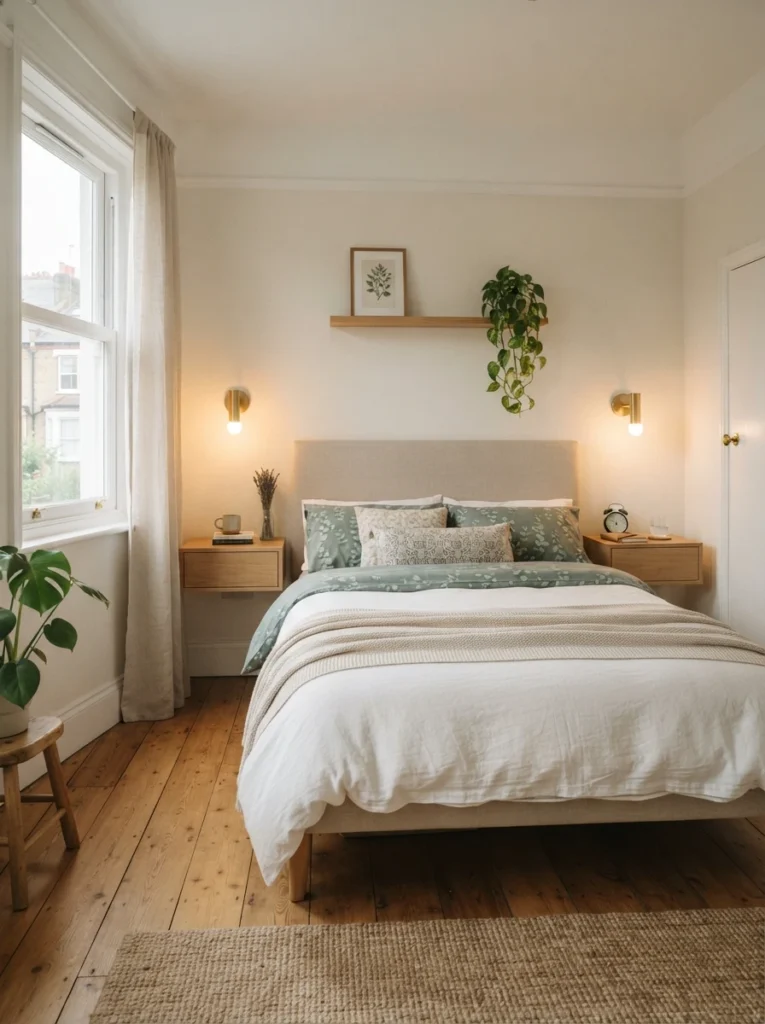
Traditional nightstands often consume more room than people realize, especially in apartments where bed spacing already feels tight. Floating nightstands create functionality while visually freeing up floor space underneath.
This helps movement feel smoother around the bed while making the room look less crowded emotionally. Smaller rooms feel calmer when more flooring remains visible naturally.
Open space improves flow instantly.
3. Replace Wide Dressers With Tall Vertical Storage
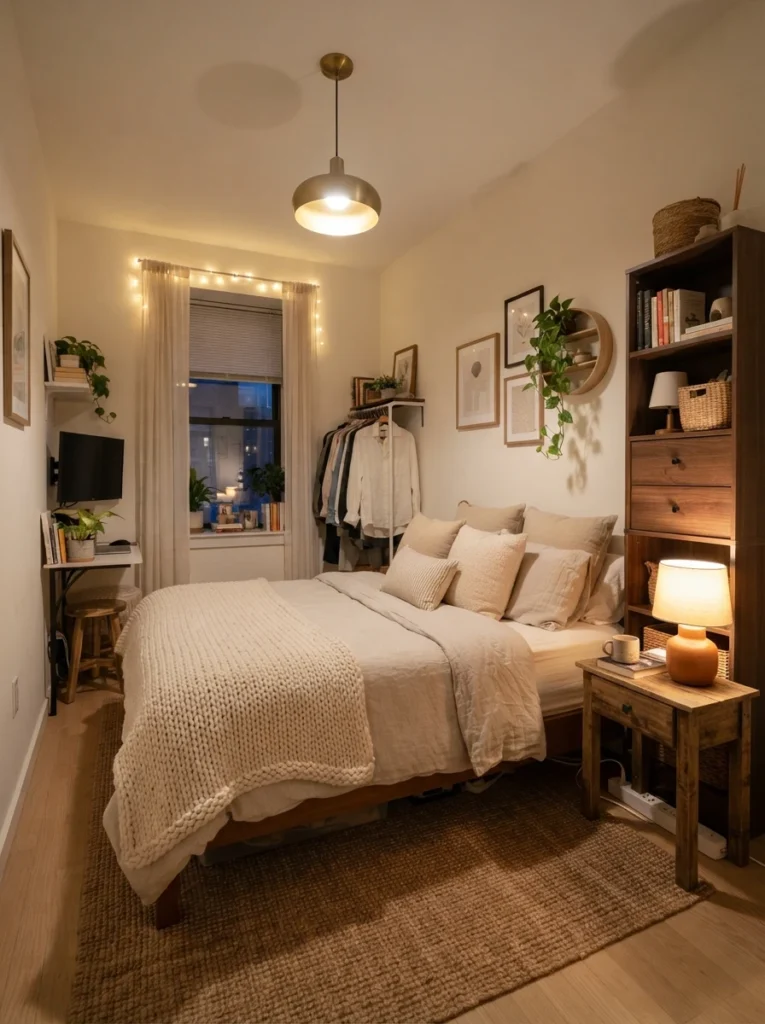
Wide dressers interrupt movement flow because they consume valuable horizontal space in already narrow rooms. Tall slim storage units usually work better emotionally because they free floor space while pulling the eye upward.
Vertical furniture also helps tiny bedrooms feel taller psychologically instead of compressed horizontally. Better room flow often comes from reducing furniture width more than furniture quantity.
Narrow pathways create stress surprisingly quickly.
4. Add a Slim Bench at the Foot of the Bed
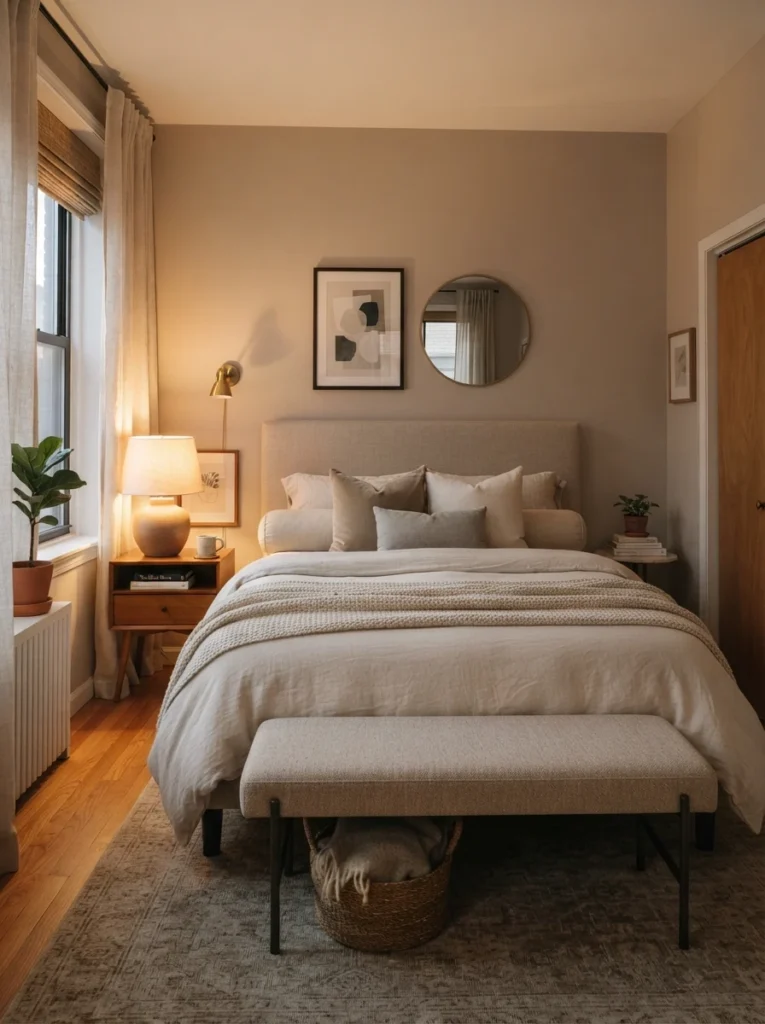
Tiny bedrooms still need functionality beyond sleeping. A slim bench at the foot of the bed creates a soft transition zone for clothing, books, or temporary seating without overcrowding movement paths.
This setup also makes the room feel more intentional and visually balanced. The key is proportion. Oversized benches usually make tiny rooms feel blocked instead of elevated.
Luxury layouts often use softer transitions between zones.
5. Use Furniture That Multitasks Quietly
Small bedrooms emotionally improve when fewer furniture pieces perform more functions. Storage ottomans, beds with drawers, foldable desks, and benches with hidden compartments reduce clutter without increasing visual density.
This creates smoother movement because fewer standalone objects compete for floor space constantly. Tiny rooms usually feel calmer when furniture works harder while visually saying less.
Good design quietly reduces friction.
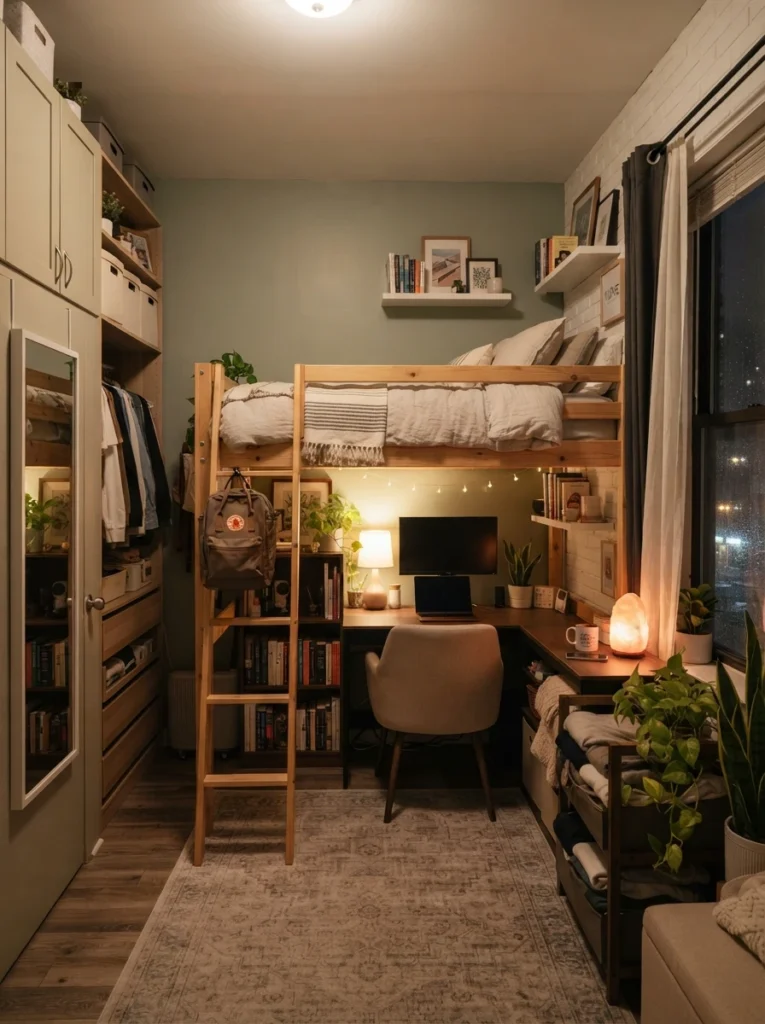
6. Keep Desk Setups Visually Lightweight
Heavy office desks often dominate tiny bedrooms emotionally because work furniture visually interrupts the softness of the room constantly. Slim desks or floating workstations help preserve better room flow.
This matters especially in apartments where bedrooms double as offices. Bedrooms feel less stressful when work setups visually disappear more easily after the day ends.
Lighter furniture supports emotional separation too.
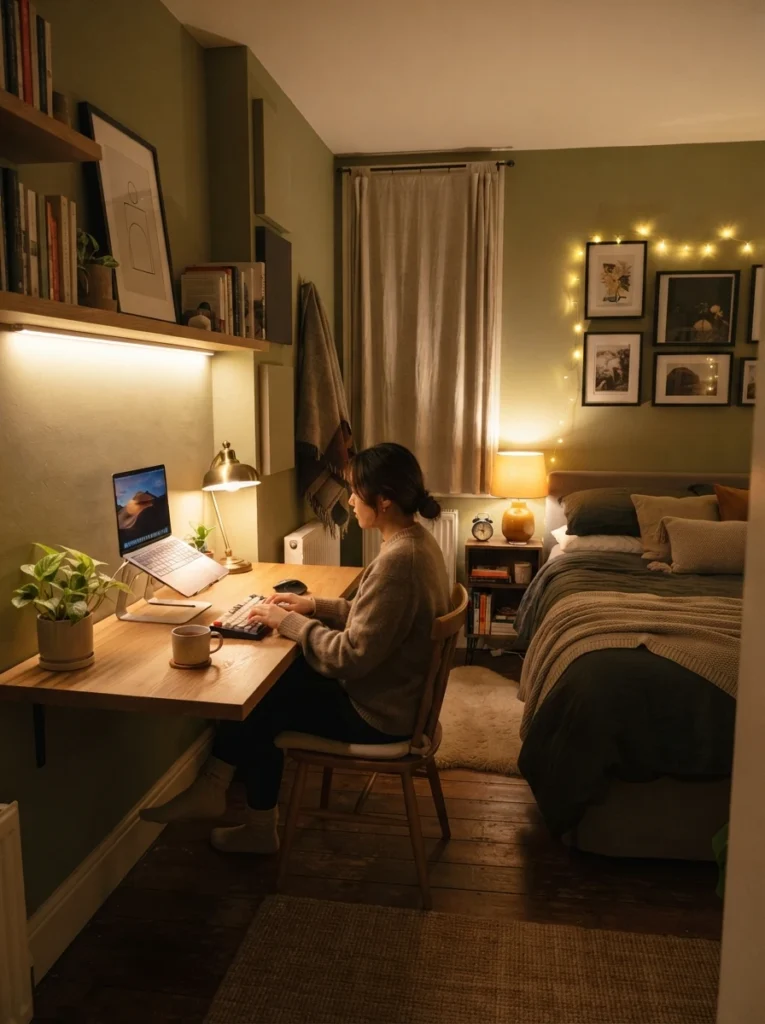
7. Avoid Furniture With Deep Bulky Dimensions
Deep furniture quietly consumes movement space fast in tiny bedrooms. Oversized armchairs, thick dressers, and bulky nightstands create narrow pathways that make rooms feel frustrating daily.
Slimmer furniture profiles usually improve comfort more than adding extra storage volume. Better flow often comes from easier movement rather than maximizing furniture capacity aggressively.
Smooth movement creates emotional openness.
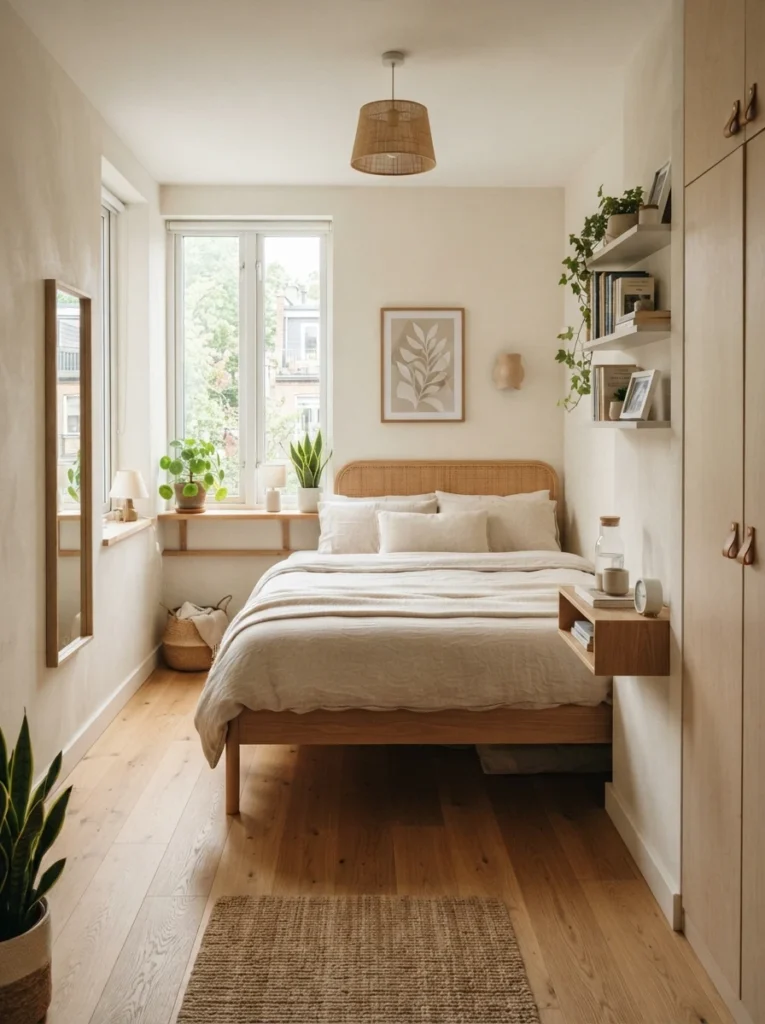
8. Use Open-Base Furniture to Create Airiness
Furniture pieces with open lower sections create lighter visual flow because they allow flooring and light to remain visible underneath. Closed heavy furniture tends to visually block rooms apart.
This is one reason Scandinavian and Japandi-inspired bedrooms often feel calmer emotionally. Open furniture creates softness without removing practicality completely.
Airiness changes how rooms emotionally feel.
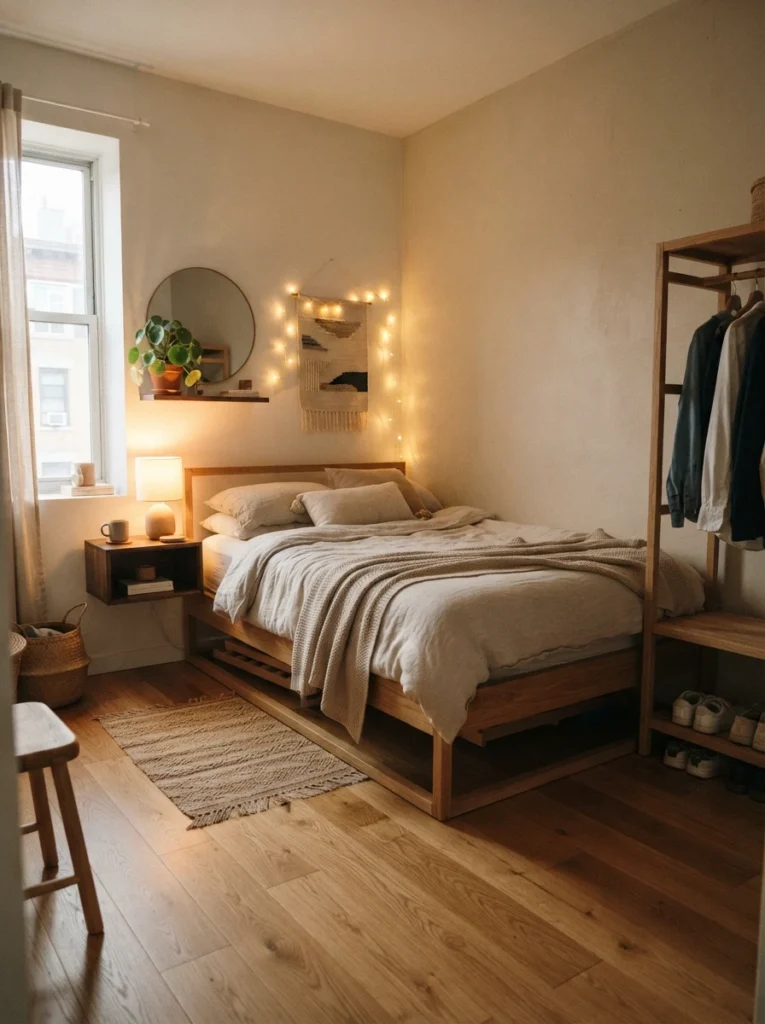
9. Position Larger Furniture Along Darker Walls
Large wardrobes and dressers feel less visually aggressive when placed against darker corners or less naturally lit walls. This allows brighter areas to remain visually open and breathable.
Tiny bedrooms emotionally feel calmer when heavy furniture stops interrupting natural light flow constantly. Better room flow is partly visual, not just physical.
The eye needs openness too.
10. Use Rounded Furniture Shapes in Tight Layouts
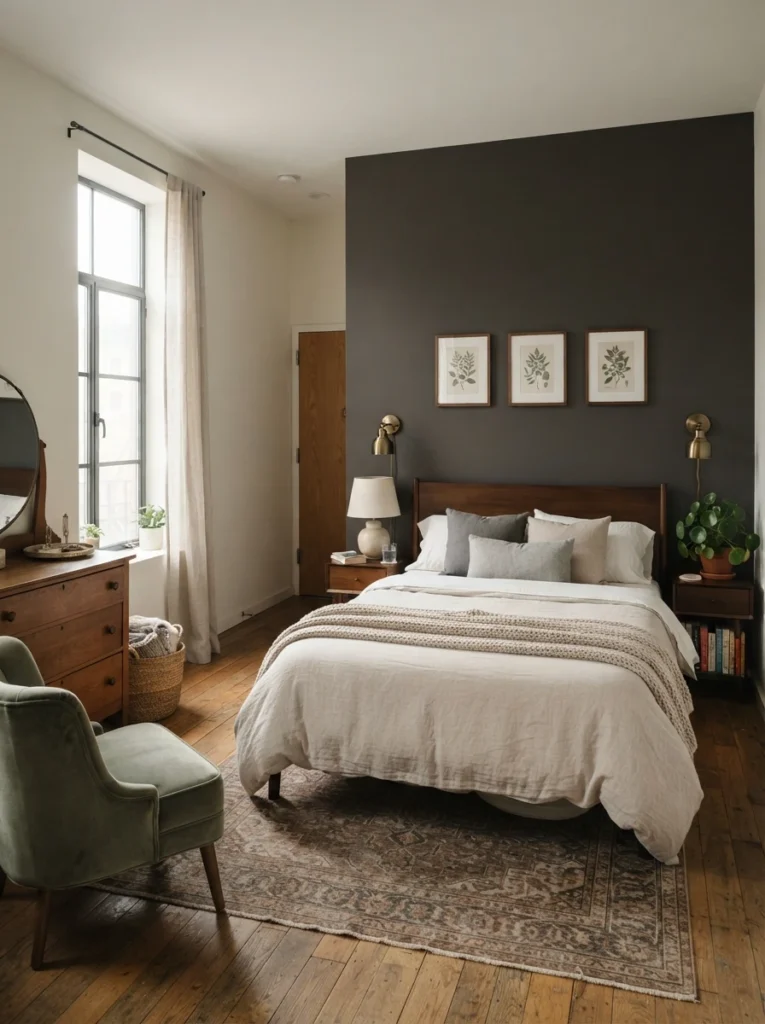
Sharp furniture corners create tension in compact spaces because movement paths already feel limited. Rounded edges soften the room visually while making physical movement feel easier and less restrictive.
Curved benches, round side tables, and softer silhouettes create flow that feels more relaxed emotionally. Tiny bedrooms benefit from gentler furniture geometry surprisingly strongly.
Soft shapes reduce visual pressure.
11. Keep Furniture Heights Balanced Across the Room
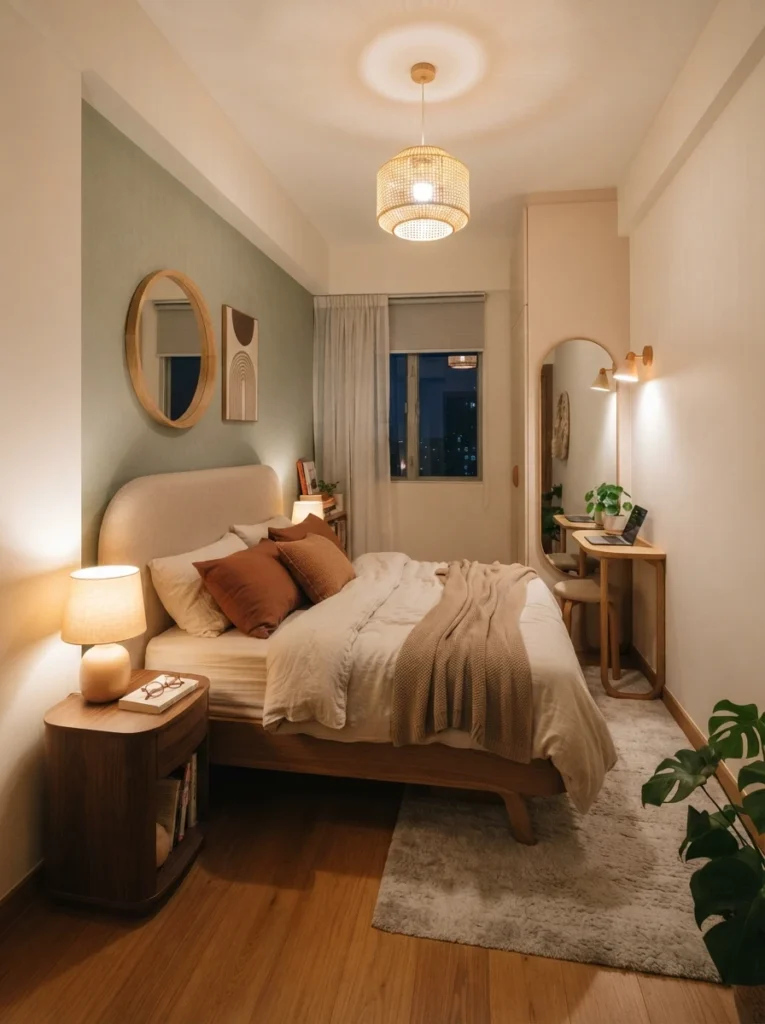
Tiny bedrooms often feel visually chaotic when furniture heights vary too aggressively. Extremely tall storage beside ultra-low furniture creates imbalance that interrupts visual flow constantly.
Rooms usually feel calmer when heights transition more smoothly across the space. Balanced furniture proportions create visual rhythm that feels softer emotionally.
Luxury interiors often rely heavily on visual balance.
12. Leave Enough Space Around the Bed to Move Comfortably
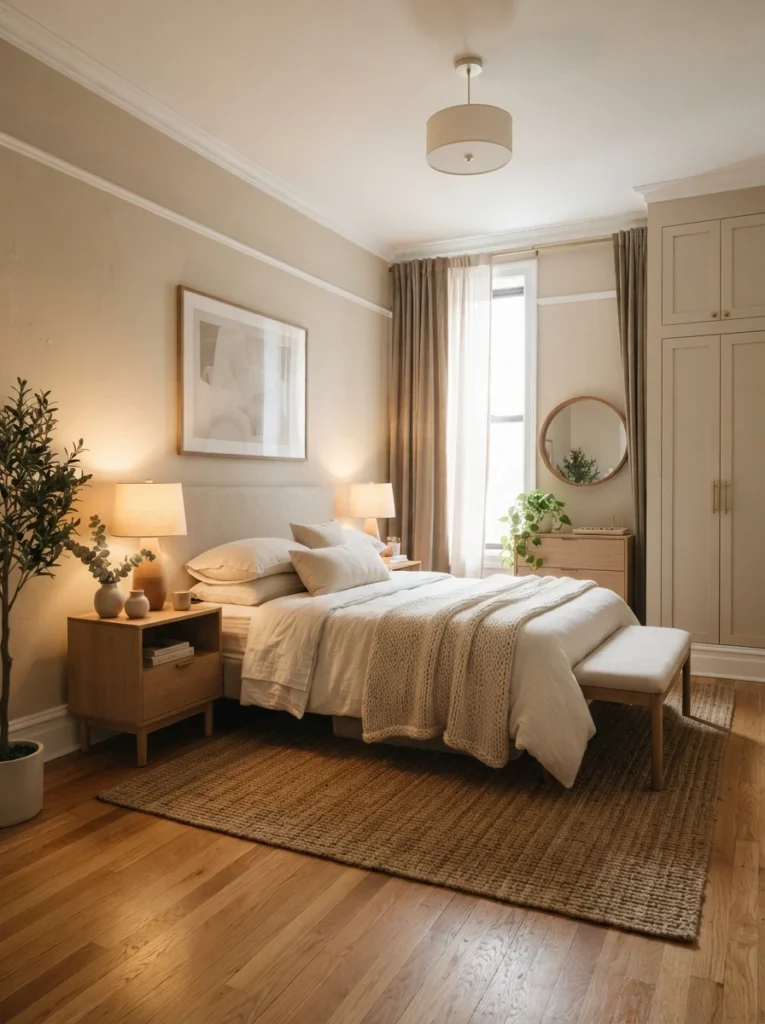
One major room-flow mistake is squeezing furniture so tightly around the bed that movement becomes awkward daily. Constantly sidestepping furniture creates low-level frustration that affects how the room emotionally feels.
Even modest breathing room around the bed dramatically improves comfort and visual openness. Tiny bedrooms feel more luxurious when movement feels intentional instead of cramped.
Ease feels expensive psychologically.
13. Use Wall-Mounted Storage to Reduce Floor Crowding
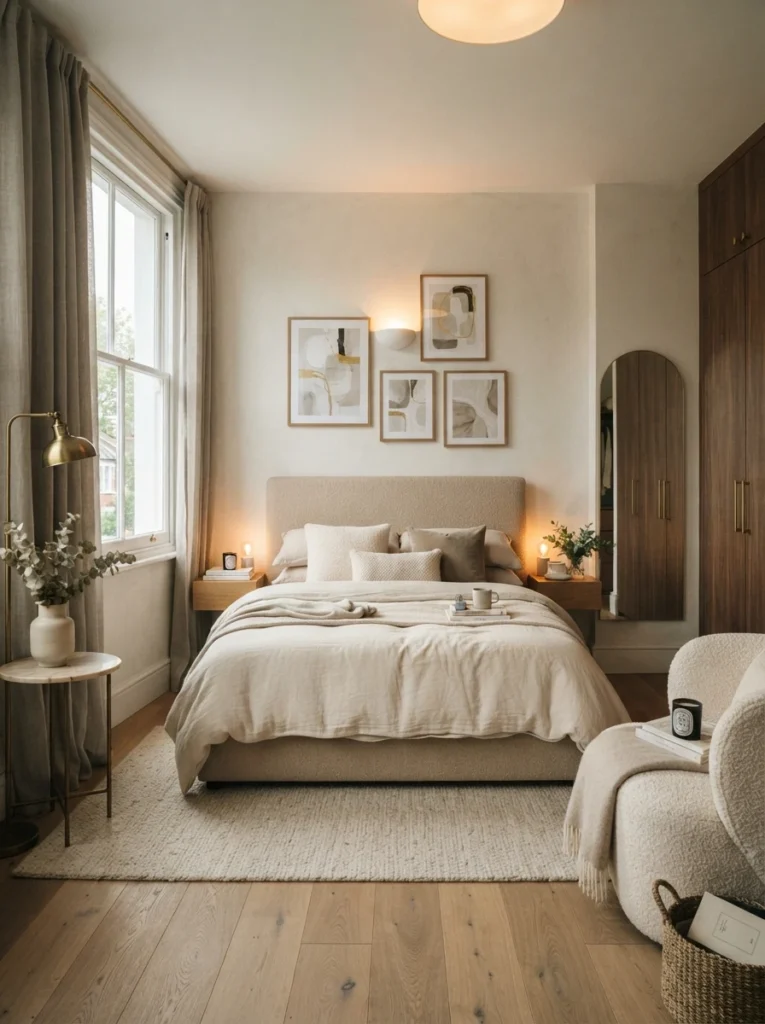
Floor-level storage builds visual heaviness quickly in compact bedrooms. Wall-mounted shelves, hooks, and floating cabinets help free floor visibility while still supporting organization.
This improves room flow because movement paths stay clearer emotionally and physically. Tiny bedrooms often feel bigger simply because less furniture touches the ground visually.
Visible flooring creates openness.
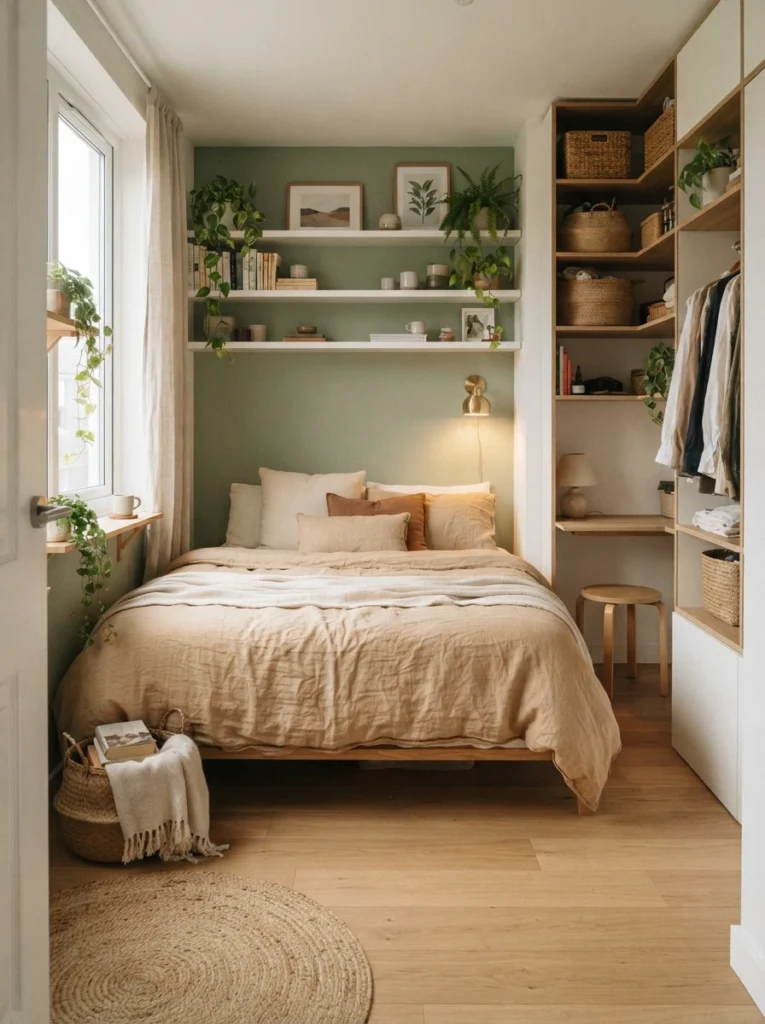
14. Let One Corner Stay Light and Open
Many small bedrooms lose flow because every corner becomes occupied by furniture immediately. One intentionally lighter corner creates breathing room that visually relaxes the layout.
This does not waste space emotionally. It softens the room and prevents the furniture arrangement from feeling overpacked and exhausting.
Calm flow usually comes from restraint too.
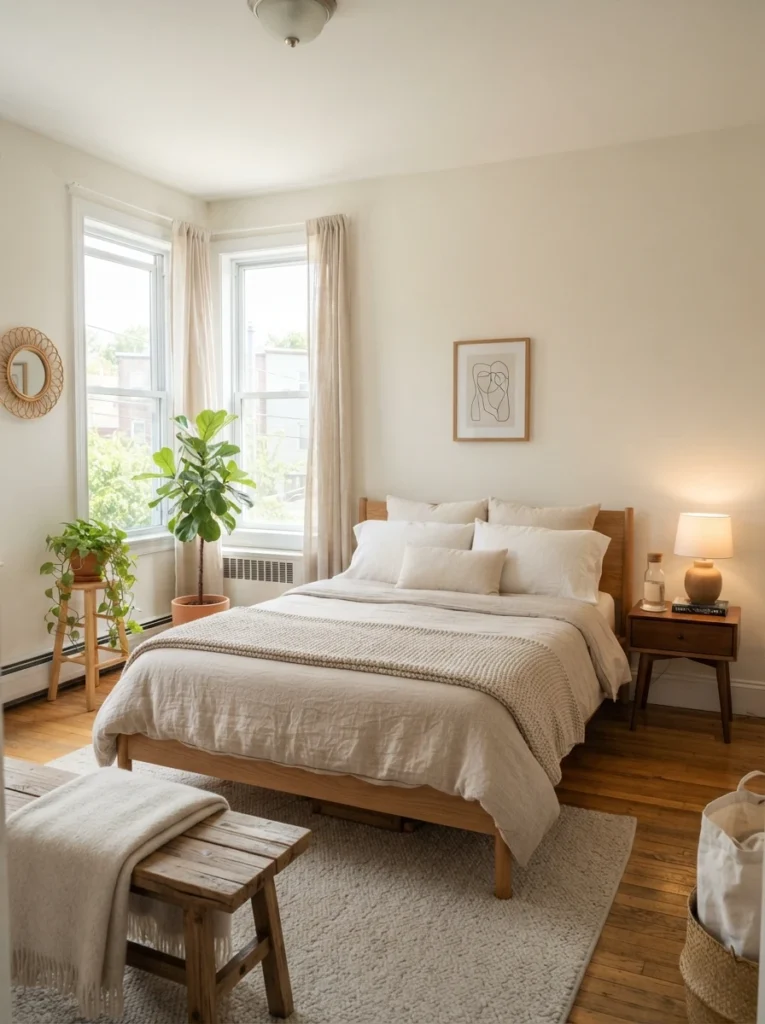
15. Build the Furniture Layout Around Real Daily Movement
The best room flow comes from understanding how people actually move inside bedrooms every day. Where shoes get removed. Where bags get dropped. How laundry moves. Where natural walking paths form.
Furniture should support those routines instead of constantly interrupting them. Tiny bedrooms emotionally improve when layouts reduce friction instead of demanding perfect behavior all the time.
Good room flow feels invisible because life moves naturally through it.
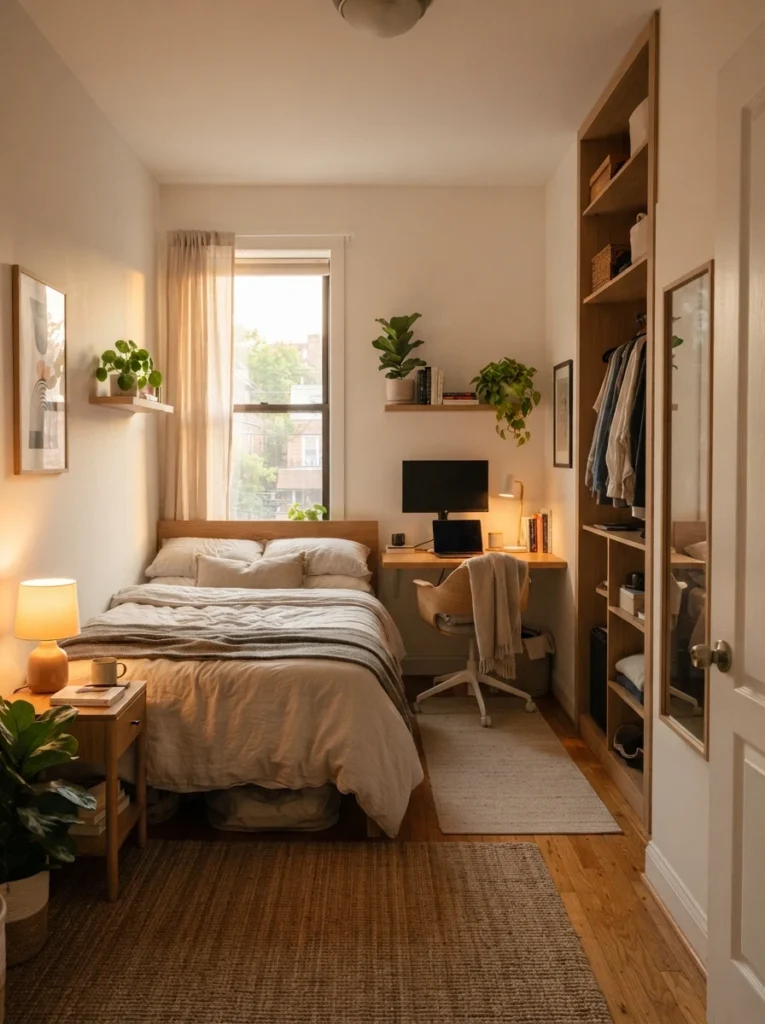
Final Thoughts
Small bedroom furniture layouts work best when they prioritize movement, openness, and emotional comfort instead of simply fitting the maximum amount of furniture possible.
Tiny bedrooms become calmer when furniture feels lighter visually, pathways remain smoother, and layouts stop creating unnecessary friction throughout the day. Better room flow often matters more emotionally than adding another storage cabinet or decorative piece.
A good bedroom layout should make the room feel easier to move through, easier to maintain, and easier to mentally relax inside every single day.