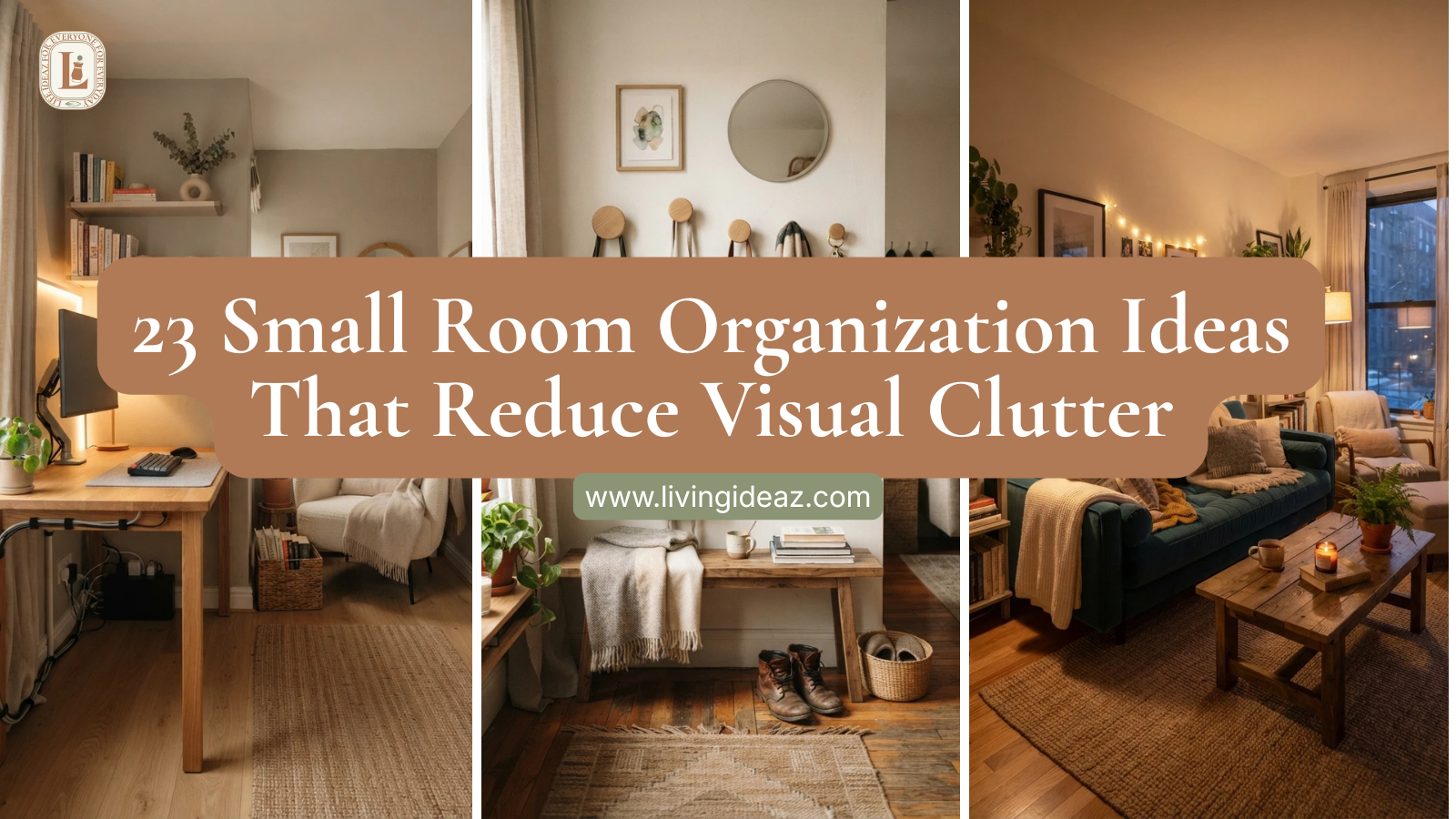
23 Small Room Organization Ideas That Reduce Visual Clutter
TL;DR
Most small rooms do not actually feel stressful because they contain too many things. They feel stressful because too many things stay visually exposed all at once. The brain keeps processing unfinished information constantly, which quietly creates mental fatigue. These small room organization ideas focus on reducing visual clutter, improving emotional calm, and creating realistic systems that work in everyday life instead of looking perfect for two hours after cleaning.
1. Hide the “In-Between” Items First
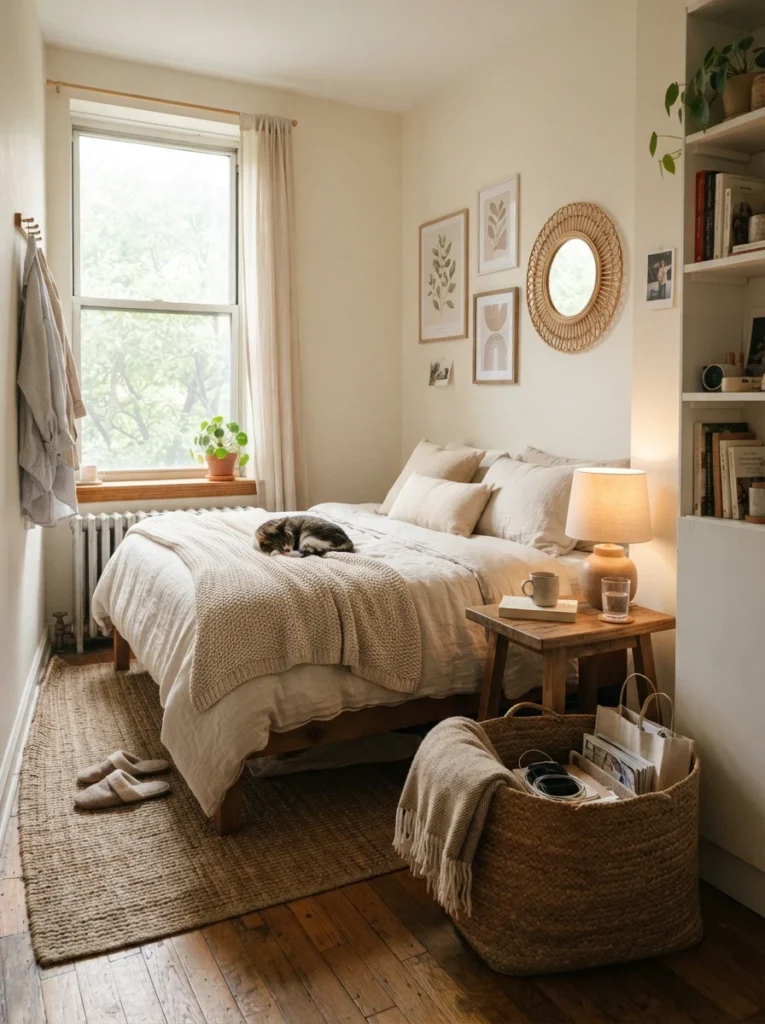
The hardest things to organize are not obvious trash or clearly useful belongings. It is the in-between items. Hoodies worn once, chargers still being used, unopened mail, half-read books, and random objects with no permanent home quietly create most visual clutter in small rooms.
Good organization systems recognize this reality instead of pretending people live perfectly. A woven basket, small drawer, or dedicated drop zone for these transitional items instantly reduces visual stress without demanding constant perfection.
Rooms usually feel calmer when daily mess stays contained instead of scattered.
2. Stop Using Open Storage for Everything
Open shelving photographs beautifully but behaves terribly in real life when every object becomes part of the room’s visual noise. Tiny rooms feel mentally crowded faster because the eye keeps processing every visible item repeatedly throughout the day.
Closed storage softens this effect immediately. Cabinets, baskets, fabric bins, and drawers reduce visual stimulation because clutter disappears from direct sightlines.
This is why hotel rooms feel calmer than many apartments despite often being smaller. They hide visual information aggressively.
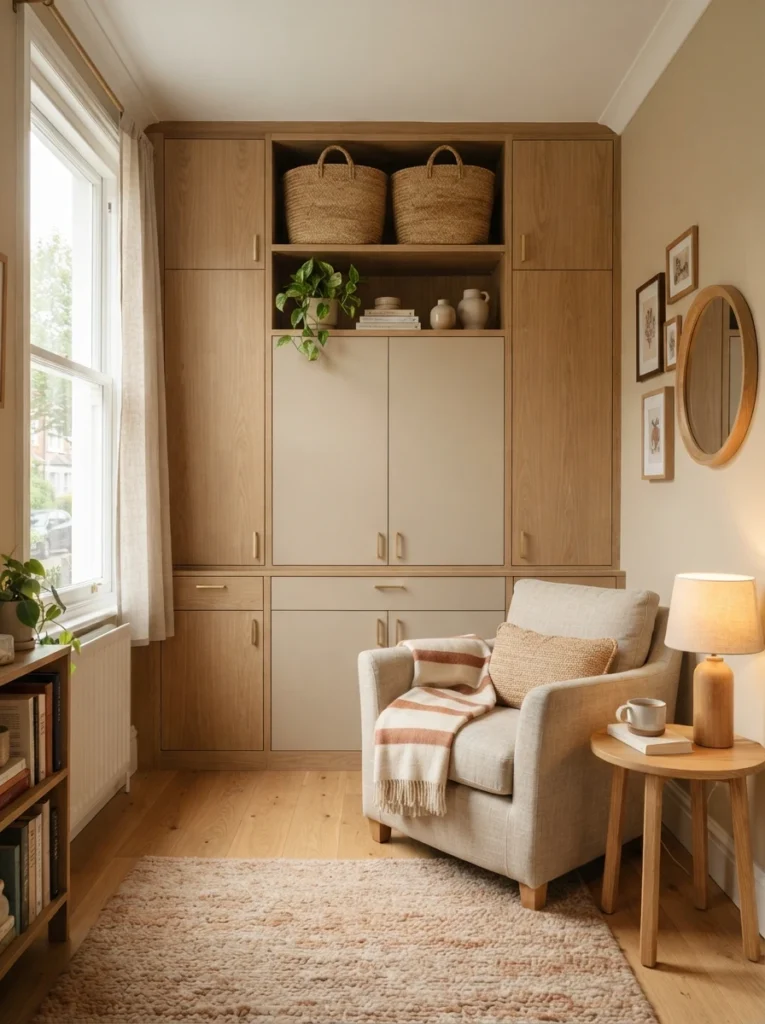
3. Organize by Frequency, Not by Category Alon
Many organization systems fail because they prioritize perfect categories instead of real daily behavior. Frequently used items should always remain easiest to access, even if that means bending traditional organization “rules.”
When daily-use objects require too much effort to reach, people naturally stop putting them away properly. That is usually how clutter begins rebuilding itself slowly around small rooms.
Convenience is one of the most overlooked parts of sustainable organization.
4. Use Matching Containers to Calm the Eye
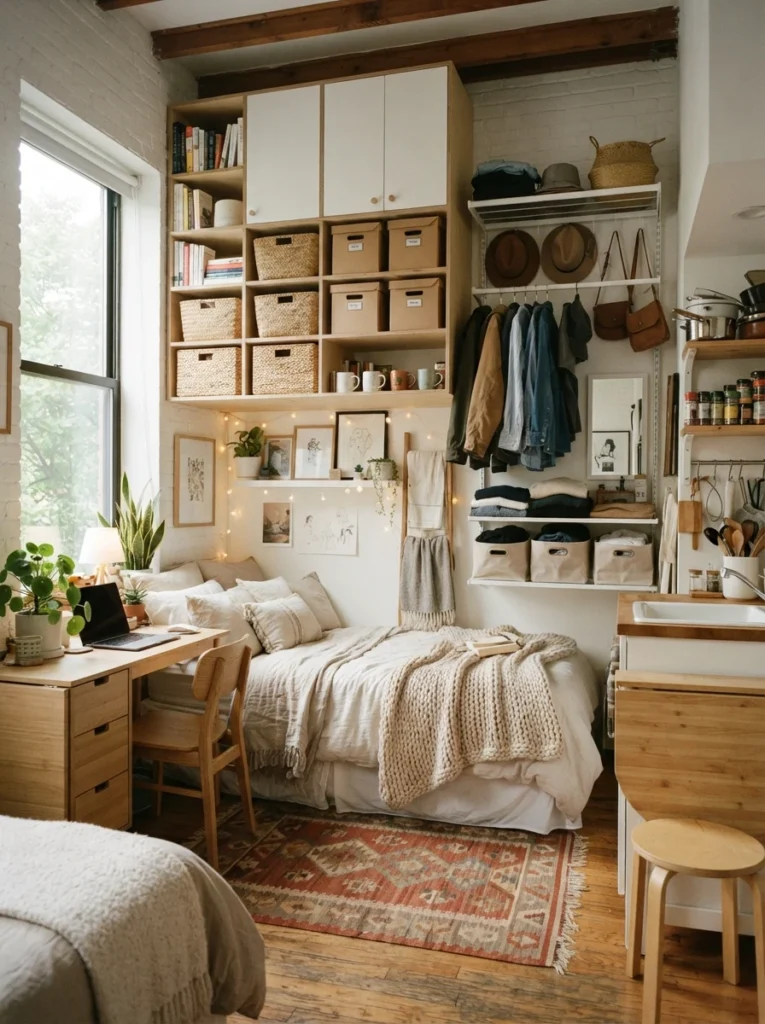
Visual inconsistency quietly creates mental noise. Random storage bins, mixed materials, and clashing colors make small rooms feel more chaotic even when everything is technically “organized.”
Matching baskets, containers, and boxes create visual rhythm that helps rooms feel softer emotionally. The eye processes uniformity faster and more calmly than scattered visual patterns.
This does not require expensive organization products either. Even simple neutral containers dramatically improve visual calm.
5. Leave Some Space Empty on Purpose
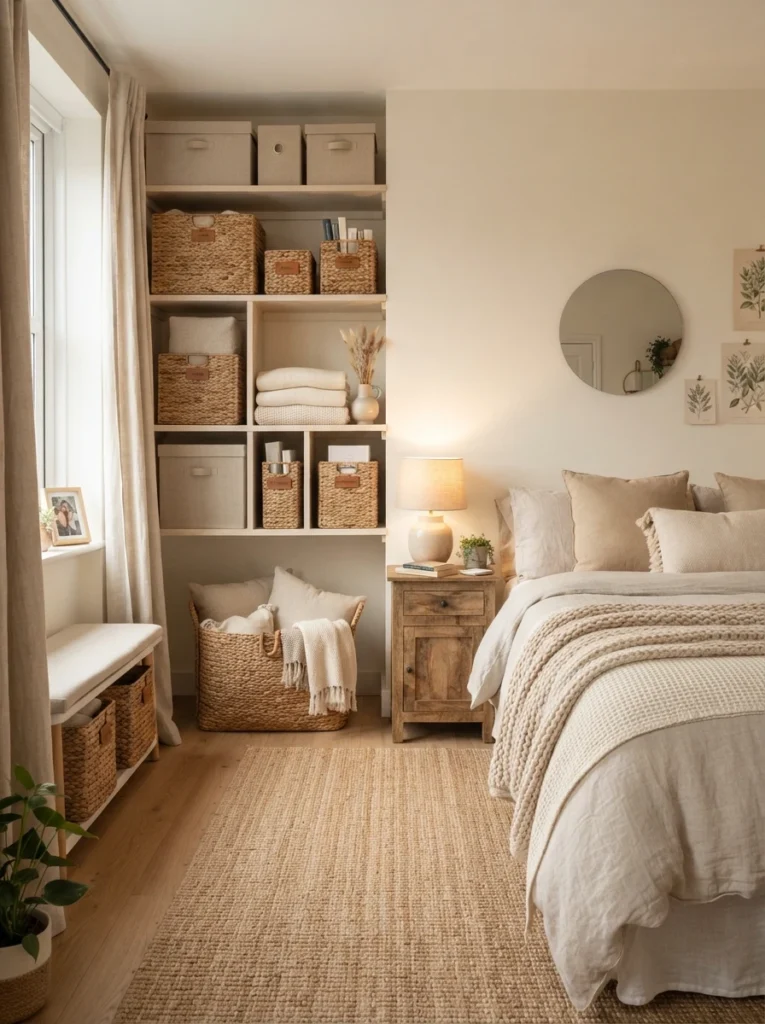
One major reason small rooms feel visually exhausting is because every shelf, wall, and corner becomes packed with objects. Empty space is not wasted space. It is visual breathing room.
Rooms feel emotionally lighter when the eye occasionally encounters calm surfaces instead of endless information. This is why minimalist hotel rooms often feel relaxing even when physically small.
A shelf that is only partially filled usually feels more organized than one packed completely edge to edge.
6. Create One “Catch-All” Zone Instead of Many
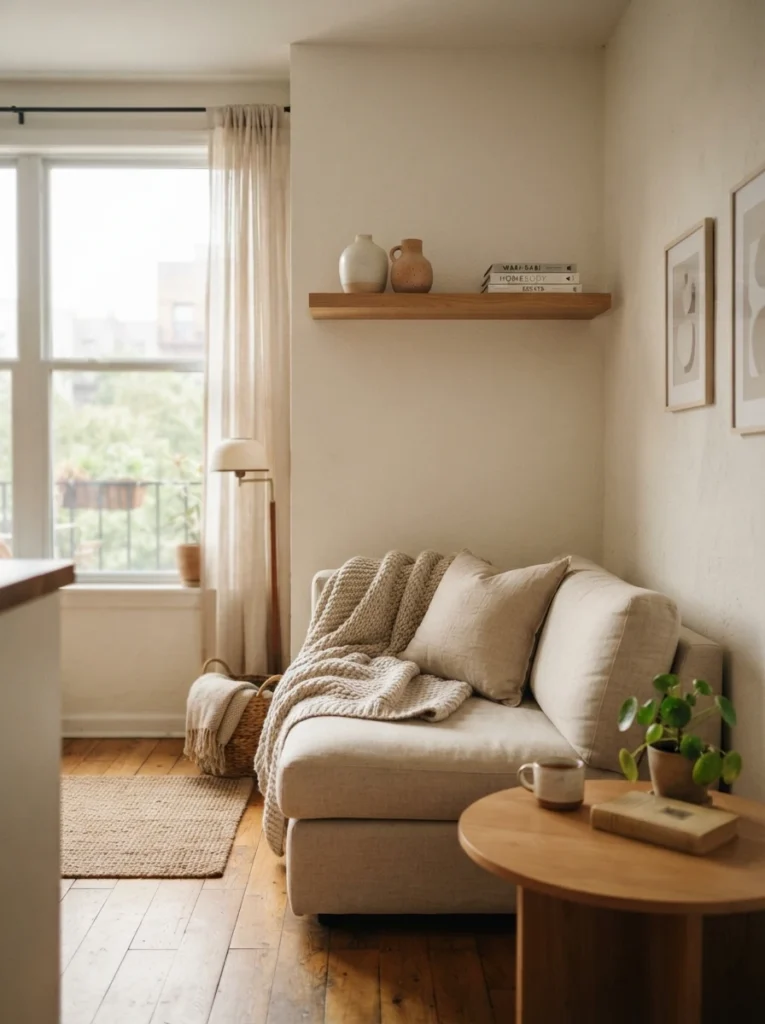
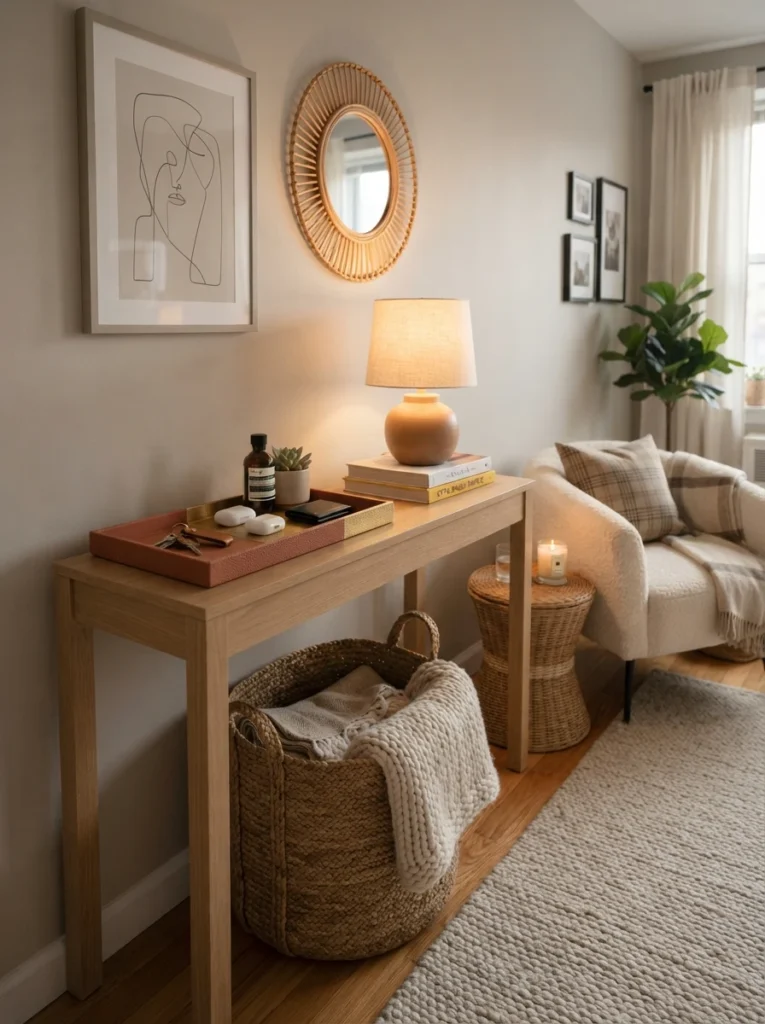
Most clutter spreads because there is nowhere specific for temporary mess to land. Keys, receipts, cables, lip balm, headphones, and random objects slowly migrate across every surface in the room.
A single controlled catch-all tray, drawer, or basket prevents clutter from multiplying visually. The goal is not eliminating mess completely. It is containing it intentionally.
Controlled clutter feels far less stressful than scattered clutter.
7. Keep the Floor More Open Than You Think
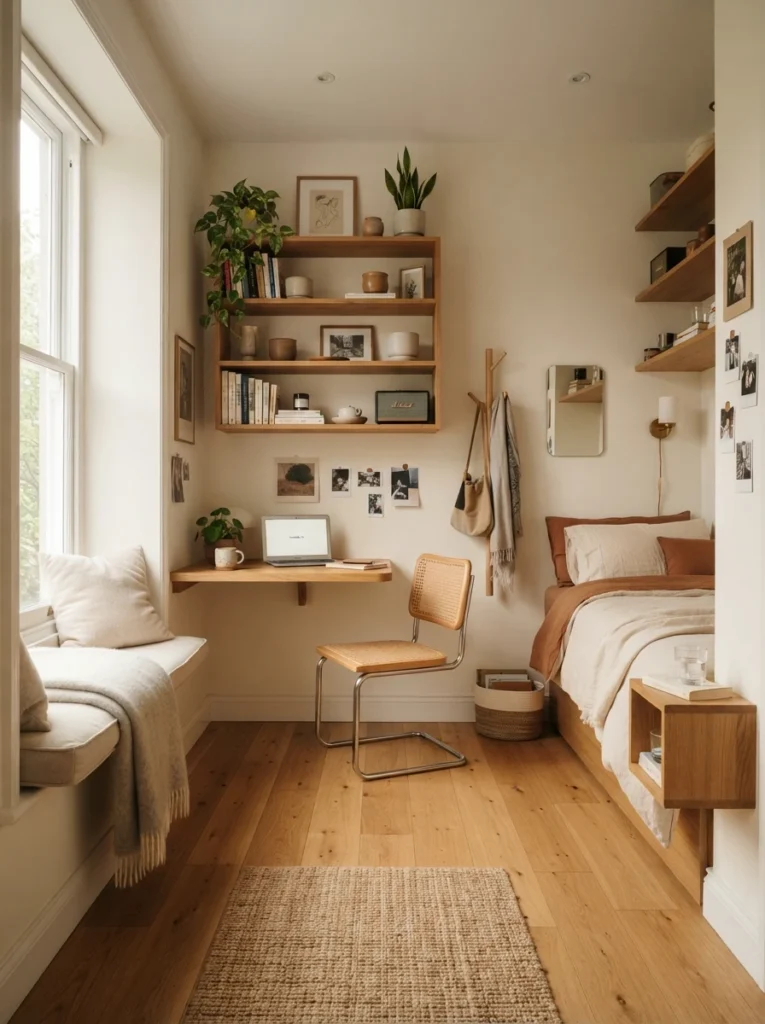
Tiny rooms instantly feel heavier when too many objects touch the floor visually. Laundry baskets, storage bins, stacks of books, and random containers create a crowded atmosphere even if the room is technically clean.
Lifting storage upward through shelves, hooks, or wall-mounted systems opens floor visibility and makes small rooms feel calmer psychologically. The eye reads openness through visible flooring surprisingly strongly.
Movement flow matters emotionally.
8. Use Warm Lighting to Reduce Visual Harshness
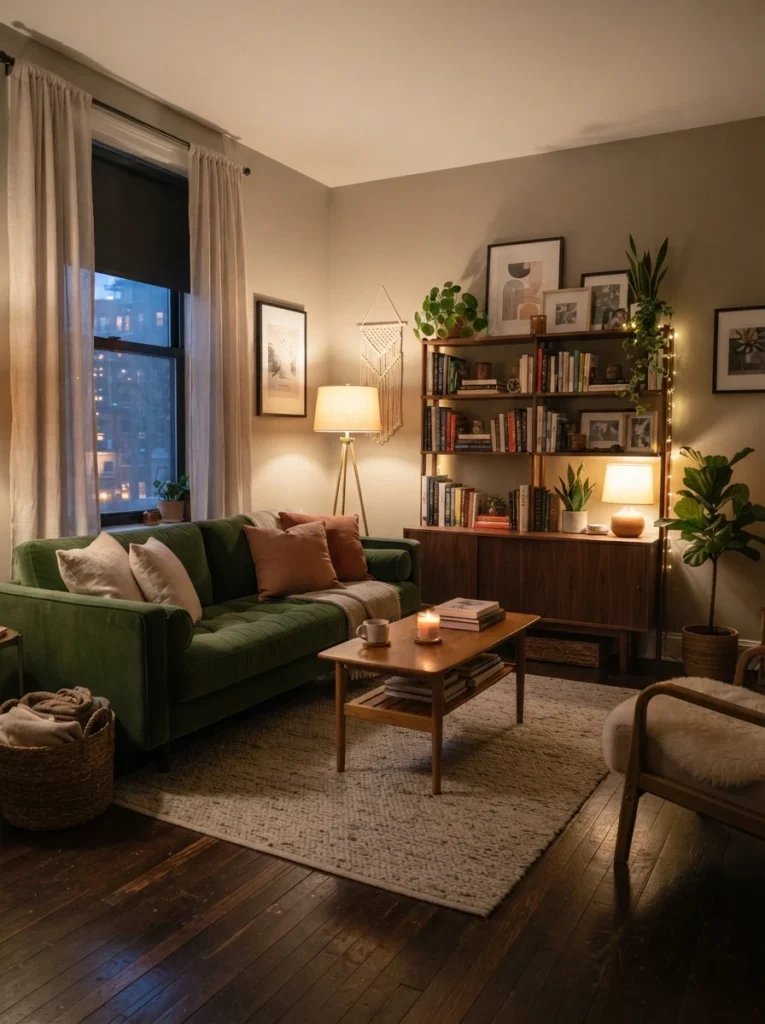
Bright cool lighting exaggerates clutter because it sharpens shadows and exposes every detail aggressively. Warm layered lighting softens visual intensity and helps small rooms feel emotionally calmer at night.
This does not mean organization becomes unnecessary. It means lighting dramatically changes how spaces emotionally feel even with the same amount of furniture and belongings.
Soft lighting creates atmosphere. Harsh lighting creates exposure.
9. Stop Buying Organizers Before Understanding the Problem
Many people buy containers before understanding what actually creates clutter in the room. This usually leads to beautiful storage products filled with random chaos three weeks later.
The better approach is observing behavior first. Where do clothes pile naturally? Which surfaces attract clutter constantly? What items never get put away?
Good organization solves behavioral friction, not just storage volume.
10. Use Vertical Storage in Dead Corners
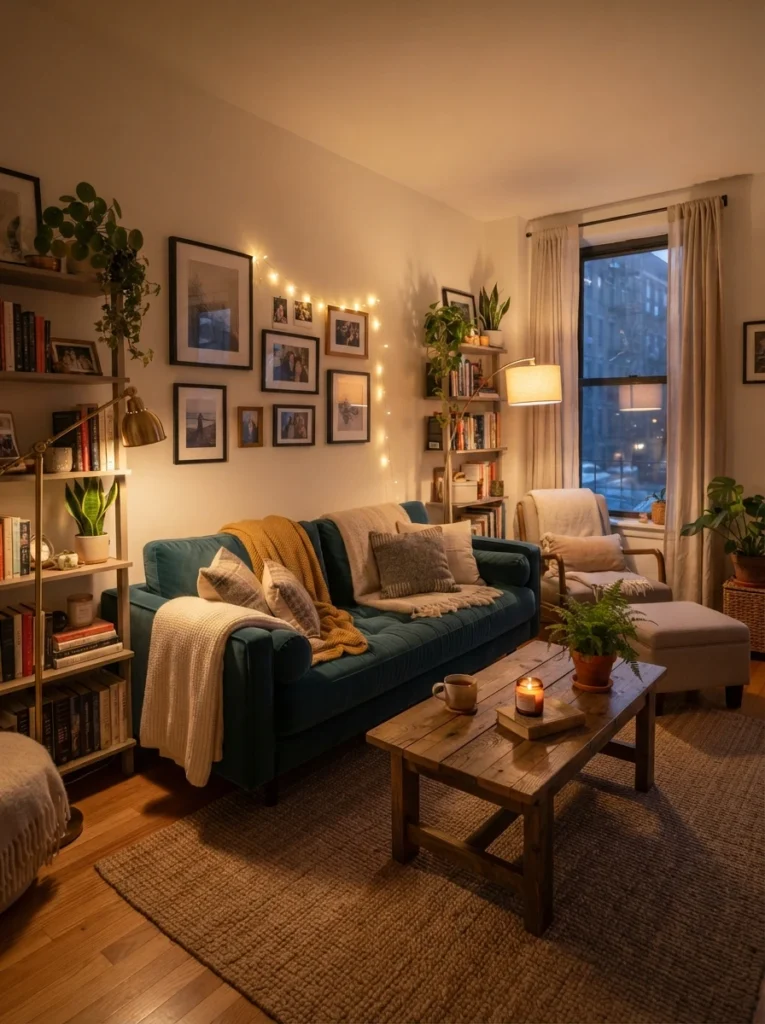
Corners often become clutter zones because standard furniture does not fit there naturally. Slim vertical shelving transforms these awkward spaces into functional storage without blocking movement flow.
This works especially well in apartments where every square foot matters emotionally and practically. Vertical storage also helps pull the eye upward, which subtly makes rooms feel taller and more open.
The trick is restraint. Overfilled shelving quickly recreates visual clutter.
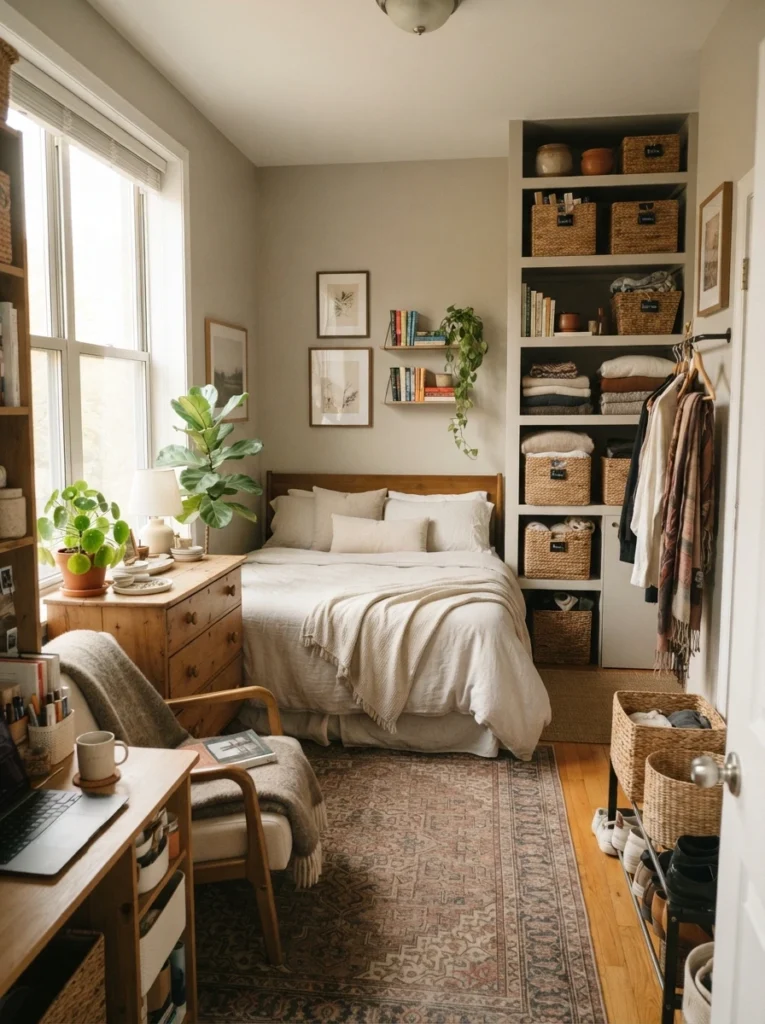
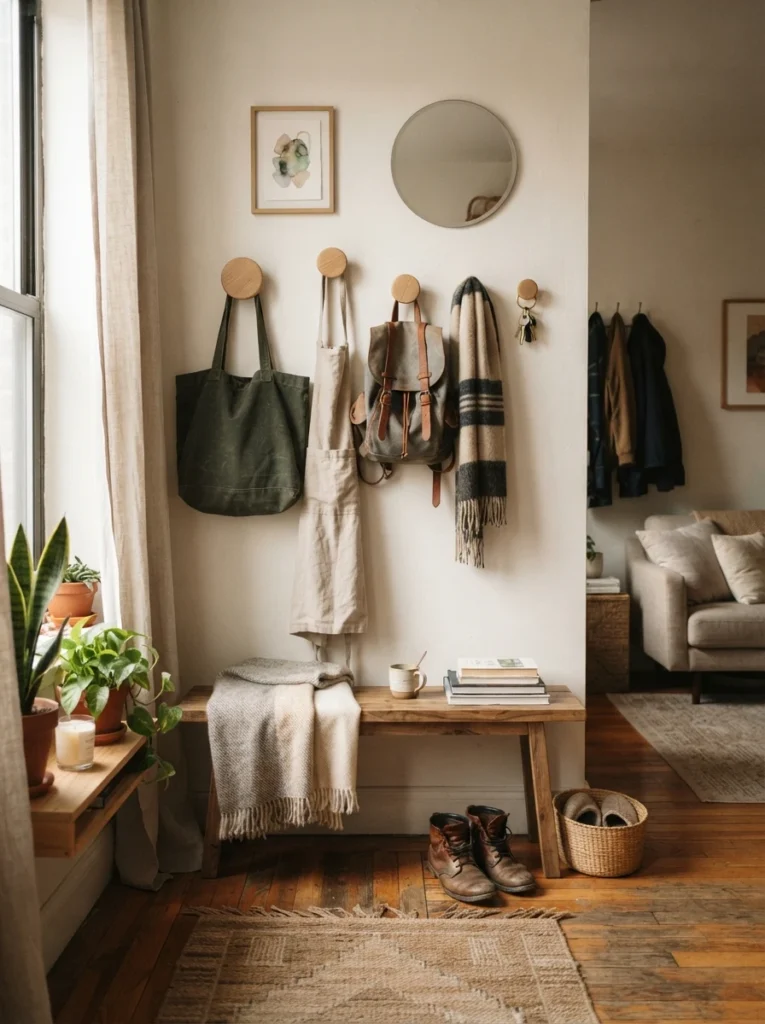
11. Use Hooks for the Things That Never Make It Back
Some objects almost never return neatly to drawers or closets. Hoodies, bags, headphones, towels, and jackets usually end up draped across chairs because daily routines move faster than perfect organization habits.
Wall hooks solve this by working with real behavior instead of against it. A few thoughtfully placed hooks create quick landing spots that reduce visual clutter before it spreads across the entire room.
The key is avoiding overload. Too many hanging items eventually create another layer of visual heaviness.
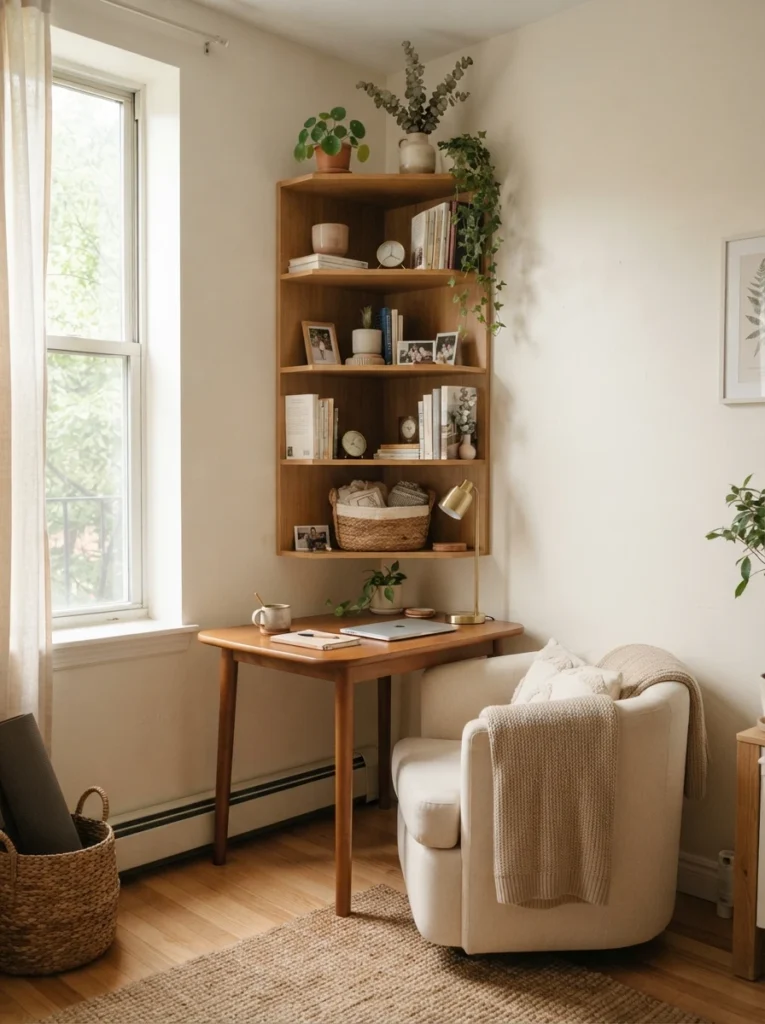
12. Hide Cables Before Buying More Decor
Visible cables quietly make small rooms feel unfinished no matter how aesthetic the furniture is. Extension cords, tangled chargers, and hanging wires create visual tension because the eye constantly notices interrupted lines and disorder.
Simple cable clips, hidden charging stations, or fabric cord covers instantly calm the room more than adding another decorative object usually does.
Sometimes organization matters more than decoration.
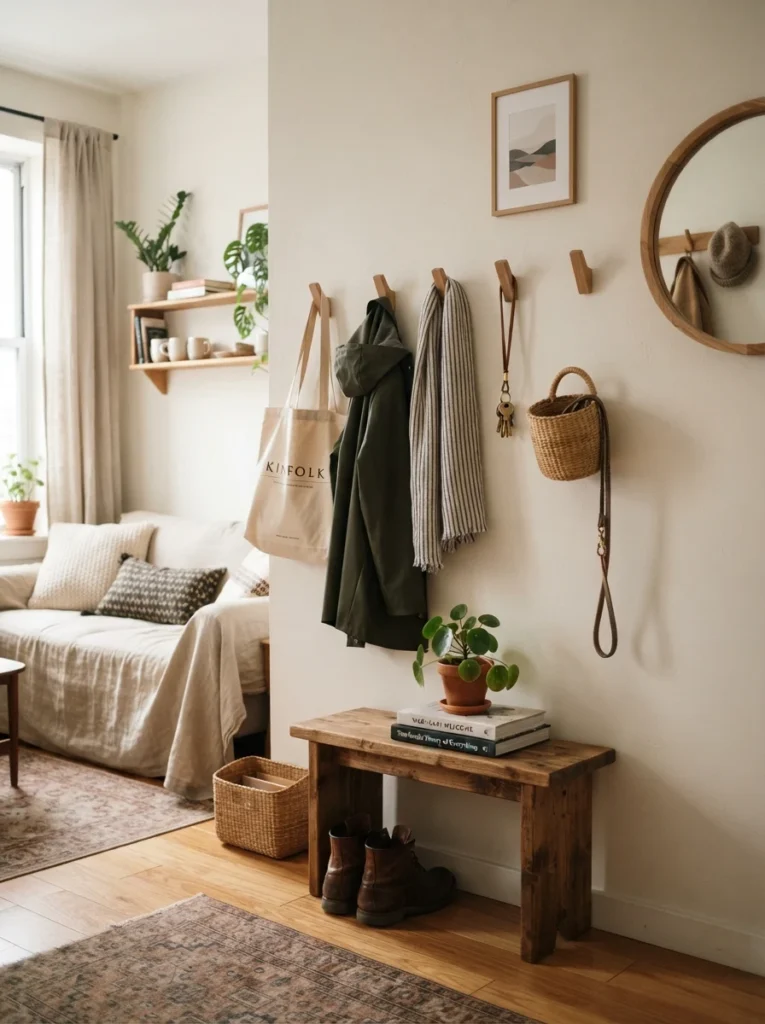
13. Store Similar Textures Together
Rooms often feel calmer when visual textures feel grouped intentionally instead of scattered randomly. Woven baskets near woven decor, wood tones near wood furniture, and soft fabrics layered together create visual consistency that reduces overstimulation.
Small spaces react strongly to texture imbalance because every surface remains visible simultaneously. Too many competing finishes make rooms feel busier than they actually are.
Visual organization matters as much as physical organization.
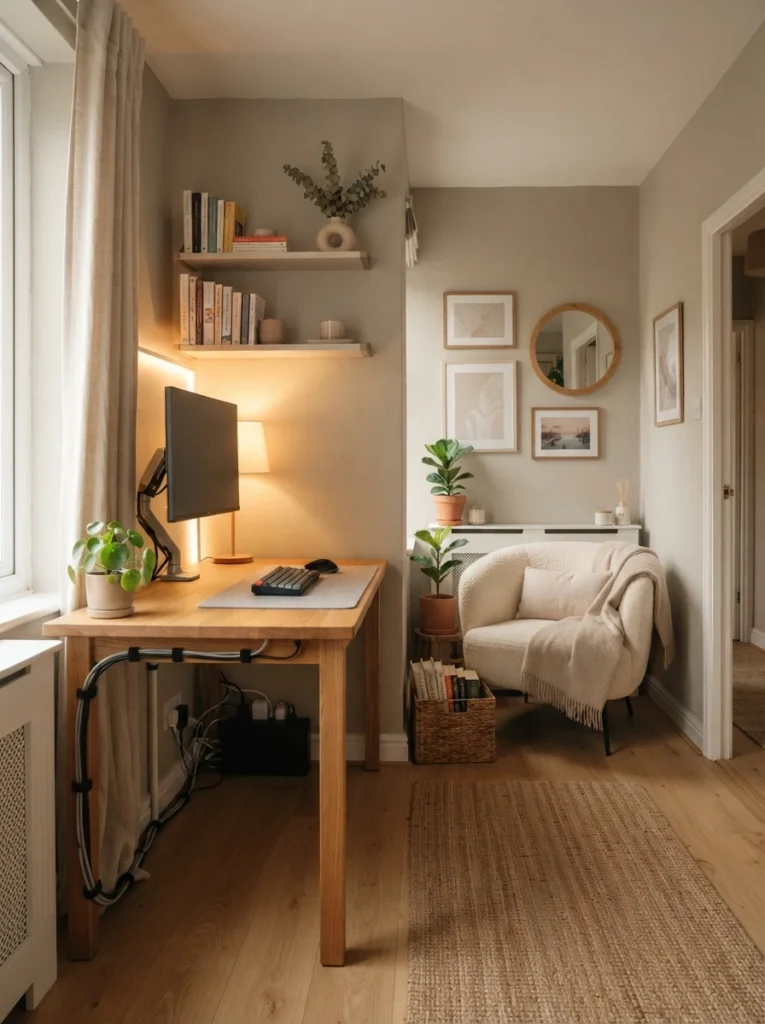
14. Stop Letting Chairs Become Storage Units
Every small room eventually develops “the chair.” The one slowly buried beneath jeans, hoodies, bags, blankets, and random clothing pieces that are not dirty enough for laundry but not clean enough for the closet.
This pile creates constant visual stress because unfinished decisions remain physically visible all the time. A designated basket, wall hooks, or slim valet stand prevents clutter from building around one forgotten corner.
Tiny rooms magnify unattended clutter quickly.
Final Thoughts
Small room organization is rarely about becoming perfectly minimalist or obsessively tidy. The real goal is reducing visual stress, simplifying routines, and creating systems that continue working during normal messy human life.
The calmest small rooms usually contain fewer exposed objects, softer lighting, easier movement flow, and organization systems built around reality instead of perfection. When spaces stop demanding constant maintenance and visual attention, they begin feeling emotionally lighter too.
A well-organized room should not feel rigid or sterile. It should quietly make daily life easier, softer, and less mentally exhausting.