
10 Utensil Drawer Ideas That Fit Every Size Kitchen
TL;DR: A good utensil drawer isn’t about owning the fanciest organizer, it’s about matching the tray to what you actually own and grouping like items together so nothing gets buried. Expandable dividers work for almost any drawer size, while custom compartments handle the odd-shaped tools a standard tray was never built for. Once everything has a defined slot, you stop digging past six spatulas to find the one you actually need.
The utensil drawer is one of the hardest working spots in the kitchen, and also one of the easiest to let slide into chaos. Whisks tangle with tongs, the garlic press ends up wedged under a stack of measuring spoons, and somehow there are always more rubber spatulas in there than any one household could possibly need. Unlike a junk drawer, this one gets opened constantly, sometimes mid-recipe with wet hands, so a system that actually works matters more here than almost anywhere else in the kitchen.
Here are 10 utensil drawer ideas that scale from a tiny apartment drawer to a full walk-in kitchen setup.
1. Measure the Drawer Before You Buy Any Organizer
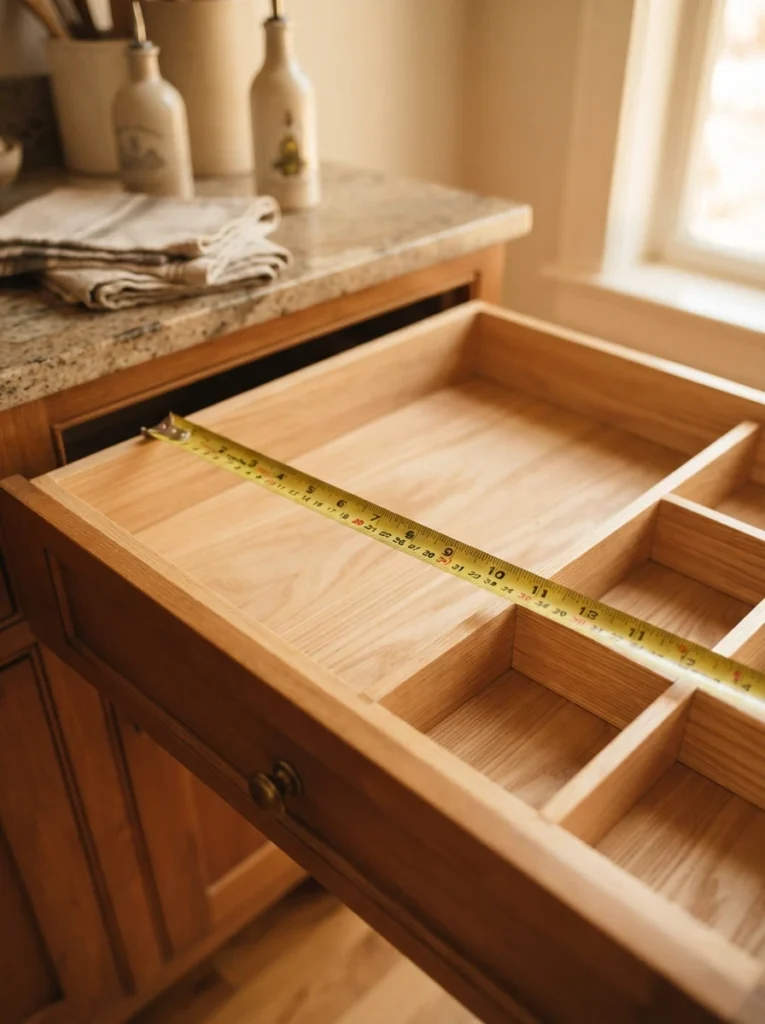
Before shopping for trays or dividers, measure the width, depth, and length of the actual drawer. A tray that’s an inch too wide won’t sit flat, and one that’s too shallow will let taller items like whisks or tongs stick up and jam the drawer when you try to close it.
2. Choose an Expandable Tray for an Odd-Sized Drawer
Not every drawer matches a standard tray size, especially in older kitchens or apartments with nonstandard cabinetry. An expandable divided tray adjusts to fit the exact width of your drawer, so you’re not left with a gap on one side or a tray that doesn’t fit at all.
3. Build Custom Compartments for Bulky or Odd-Shaped Tools
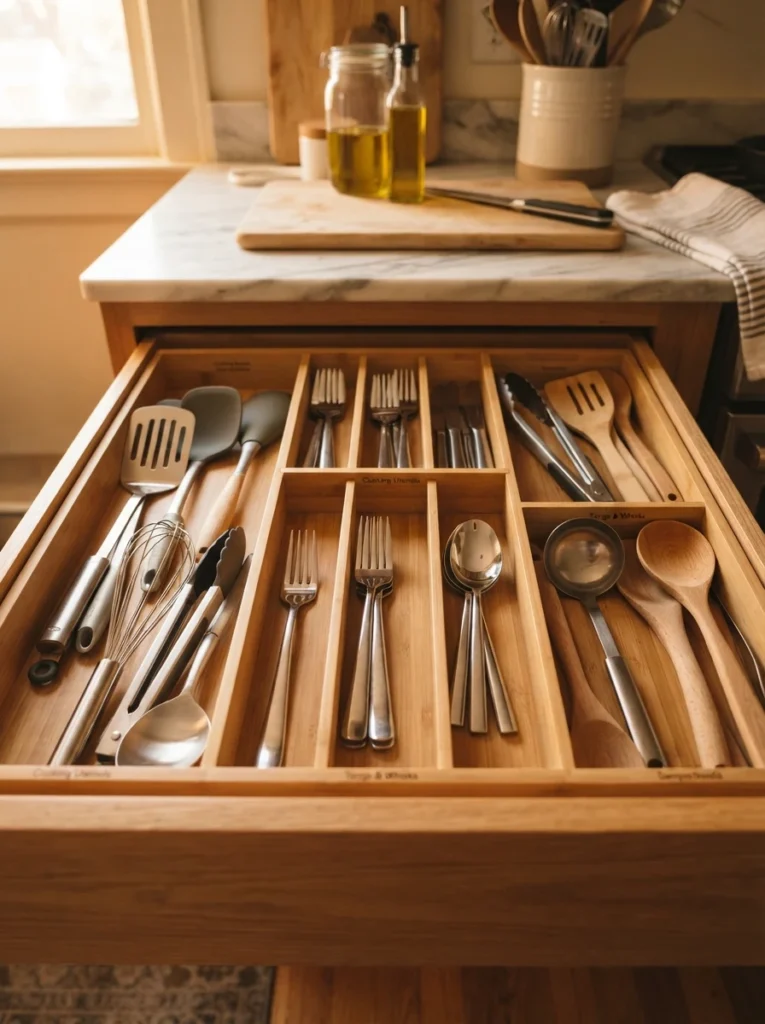
A rolling pin, a pizza cutter, or a meat thermometer rarely fits neatly into a preset tray slot. Expandable dividers that aren’t part of a fixed tray let you build a narrow compartment for the rolling pin and a wider one for hot pads, customizing the layout around your specific tools instead of forcing them to fit someone else’s design.
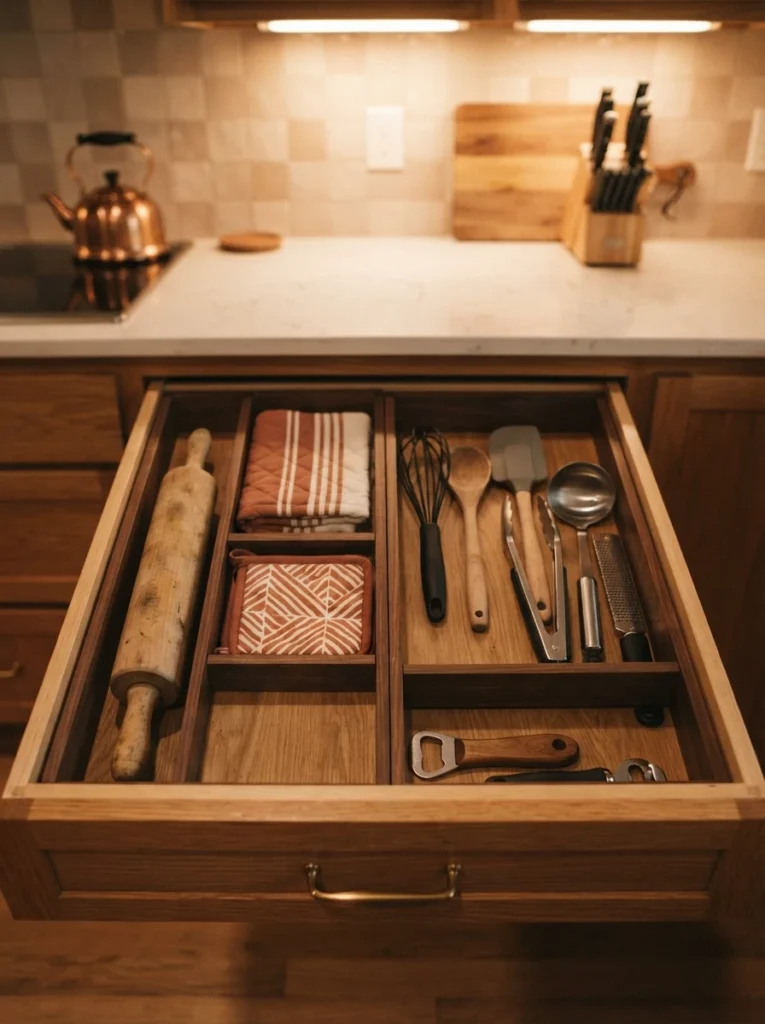
4. Group Utensils by How Often You Use Them
Keep your everyday tools, the spatula, the main serving spoon, the tongs you reach for constantly, in the most accessible front section of the drawer. Save the back or a separate compartment for specialty items like a melon baller or a turkey baster that only come out a few times a year.
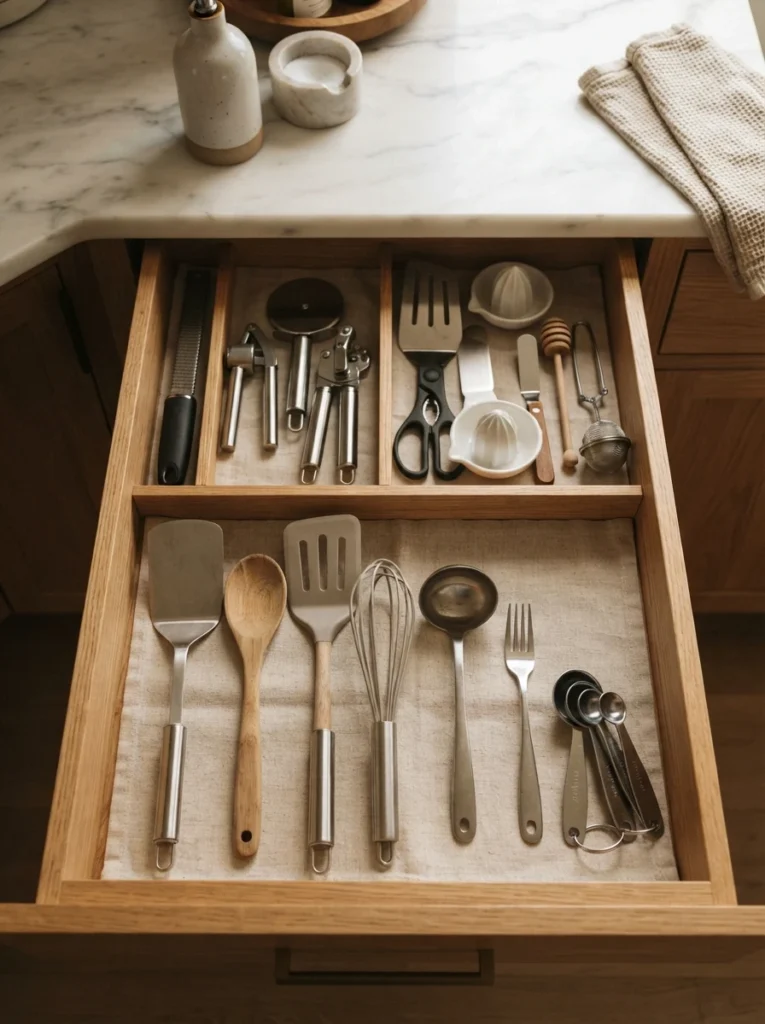
5. Separate Cooking Utensils From Serving Pieces
Cooking utensils like slotted spoons, ladles, and whisks tend to get used mid-recipe, while serving pieces like large forks and tongs usually come out at the table. Keeping these two categories in separate sections, or separate drawers if you have the space, cuts down on the mid-cook scramble of digging past dinner-party items for the tool you actually need right now.
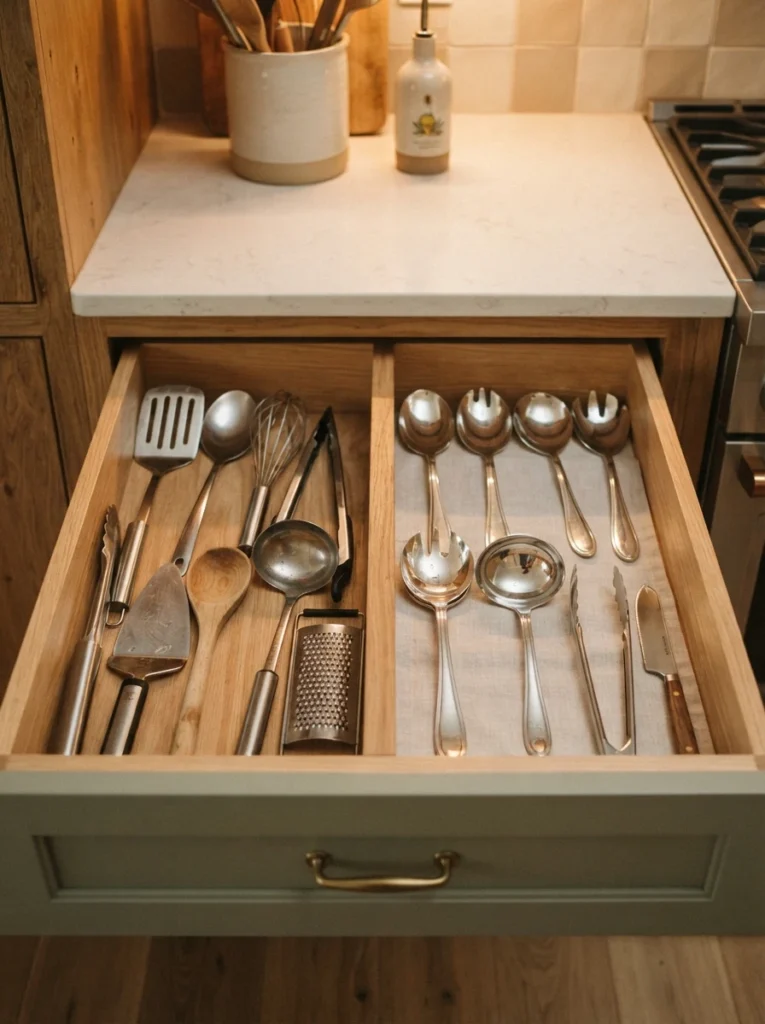
6. Use a Small Bin for Loose Gadgets
Garlic presses, can openers, and citrus juicers rarely lie flat in a slotted tray the way a spoon does. A small open bin within the drawer gives these oddly shaped gadgets a home without forcing them into a slot they don’t fit, and it’s far easier to search a small bin than the whole drawer.
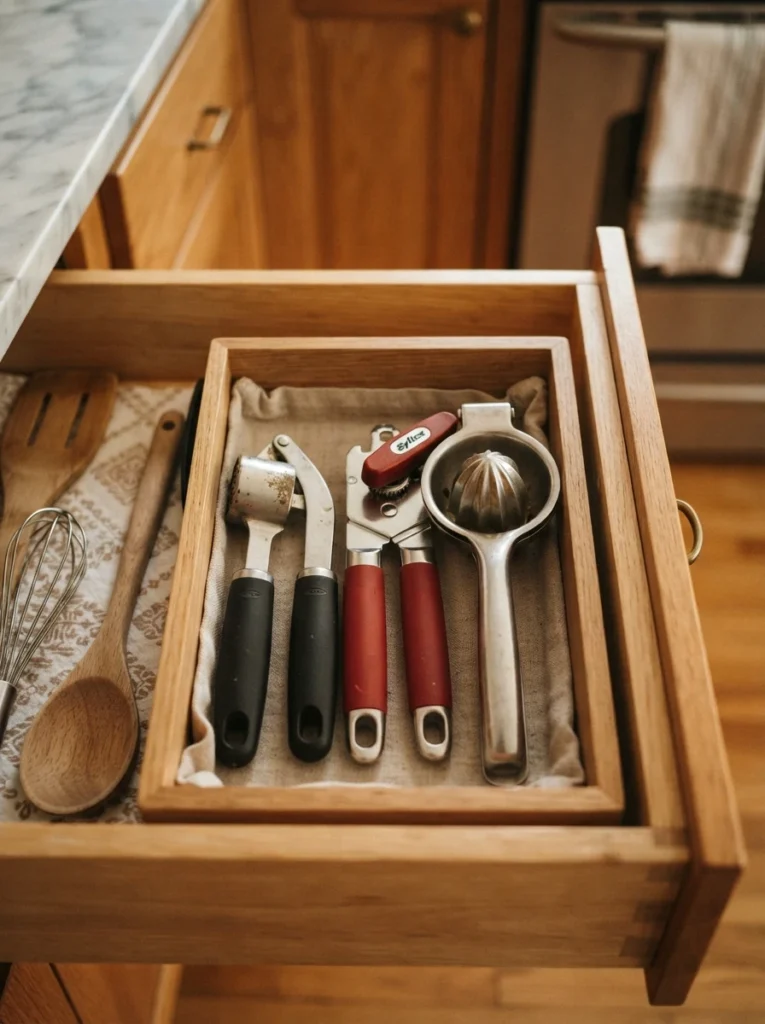
7. Store Measuring Cups and Spoons as a Nested Set
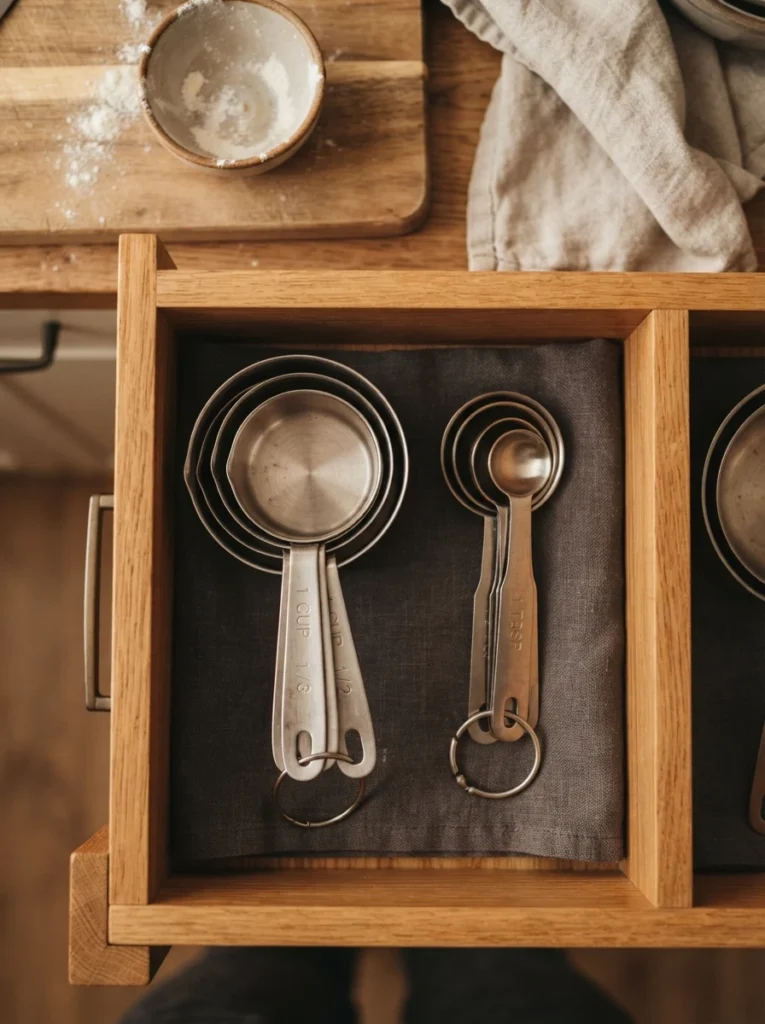
Loose measuring cups and spoons are notorious for scattering across a drawer and losing their matching set. Keep them nested together on a ring or clipped as a set in one dedicated slot, so grabbing “the measuring spoons” means grabbing one item instead of hunting for four.
8. Lay Steak Knives Flat Instead of Standing Them on Edge
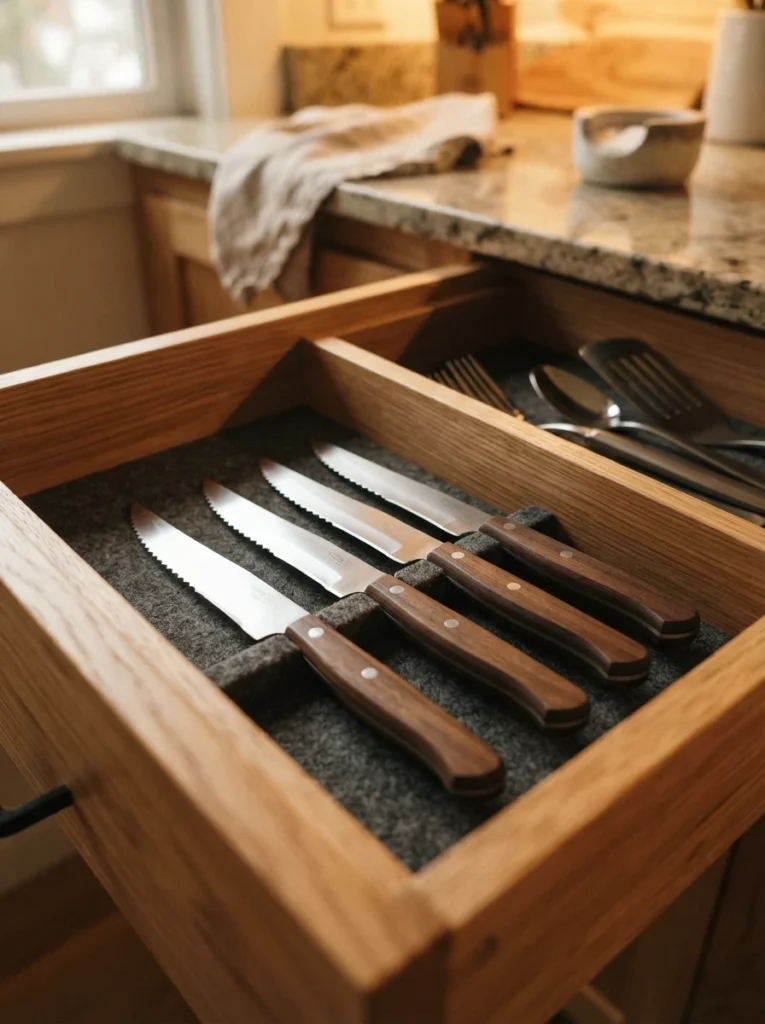
If your utensil drawer also holds steak knives, lay the blades flat rather than letting them rest on their edge against other items. This keeps the blades from dulling against metal tools and reduces the chance of nicking a hand while reaching in for a spoon.
9. Match Drawer Assignments to How You Move Through the Kitchen
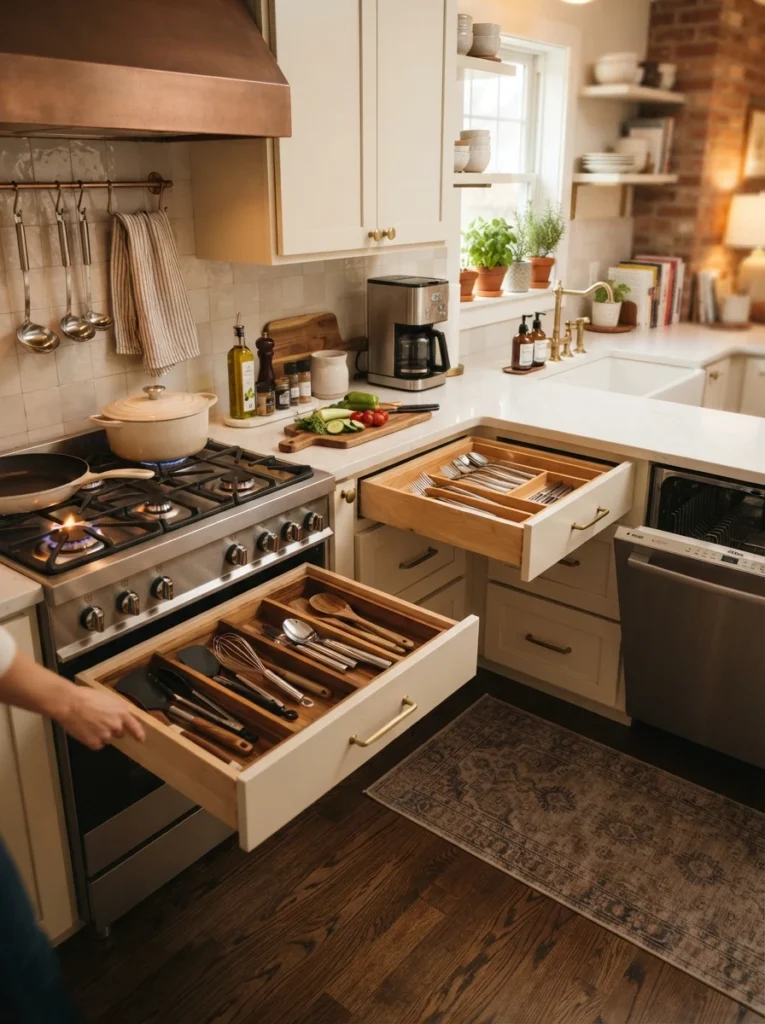
Think about your actual workflow before deciding where things live. Silverware works best in a drawer close to the dishwasher for easy unloading, while cooking utensils belong nearer the stove. A drawer that’s organized well but placed in an inconvenient spot still adds extra steps to every meal.
10. Only Keep What You Actually Use in the Drawer
Before organizing, pull out anything you haven’t reached for in the last year, the extra whisk, the single-use gadget from a cooking show you tried once. A utensil drawer stays organized far longer when it only holds tools that earn their spot, rather than every gadget you’ve collected over the years.
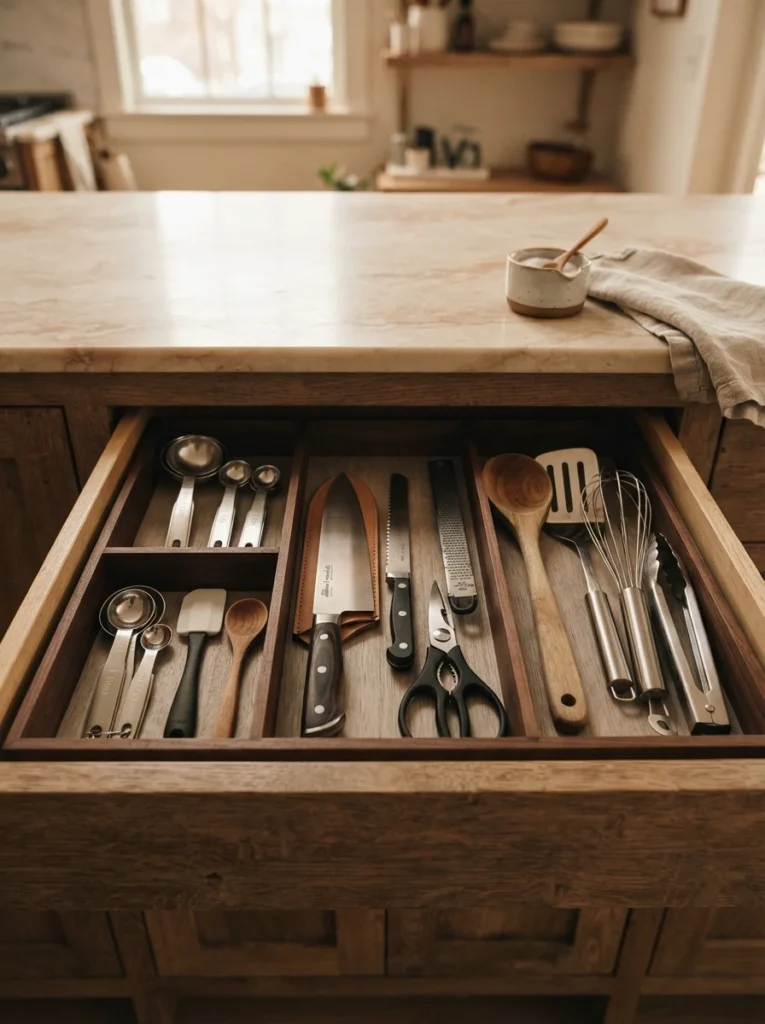
A cluttered utensil drawer usually isn’t a sign you own too much. It’s a sign the drawer was never actually sized or sorted for what’s really in it. Measure first, group by how you actually cook, and build custom compartments for anything that doesn’t fit a standard tray, and this drawer stops being the one you dread opening mid-recipe.