8 Knife and Cutting Board Drawer Storage Ideas
TL;DR: Storing knives loose in a drawer dulls the blades and risks a cut every time you reach past them for something else. An in-drawer knife block, sized to fit your specific drawer, keeps edges protected and hidden away, while a dedicated slot for cutting boards nearby keeps the two most-used prep tools within a single reach. The setup takes some measuring, but it solves both a safety problem and a dulling-blade problem at once.
Knives and cutting boards are two of the most-used tools in any kitchen, and also two of the most awkward to store well. A knife tossed loose into a drawer dulls fast from banging against other metal utensils, and it’s a real safety risk every time someone reaches in without looking. Cutting boards, meanwhile, are often too big and flat for a normal drawer or cabinet shelf, which is why so many end up leaning against a counter backsplash instead of actually being stored.
Here are 8 knife and cutting board drawer storage ideas that keep both tools protected, accessible, and out of the way at the same time.
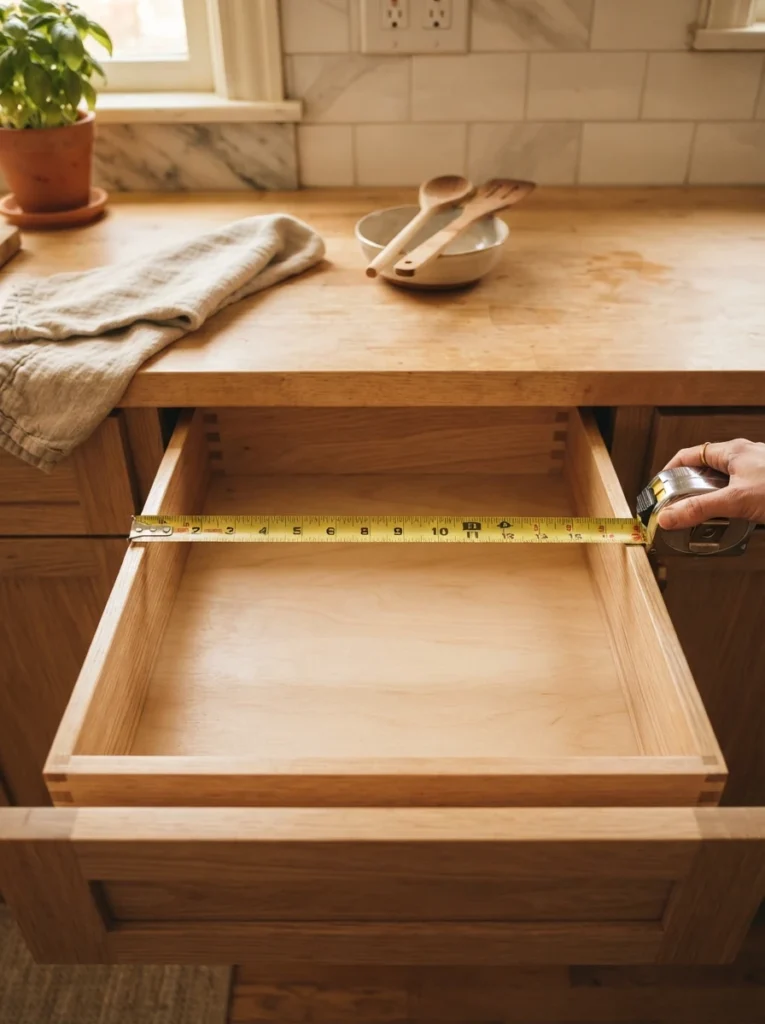
1. Measure Your Drawer Before Buying an In-Drawer Knife Block
In-drawer knife organizers come in specific dimensions, and a block that’s too large simply won’t fit, while one that’s too small wastes space you could be using. Check both the depth and width of the drawer, plus its interior height, before choosing a block, since some knives sit taller than a shallow drawer can accommodate.
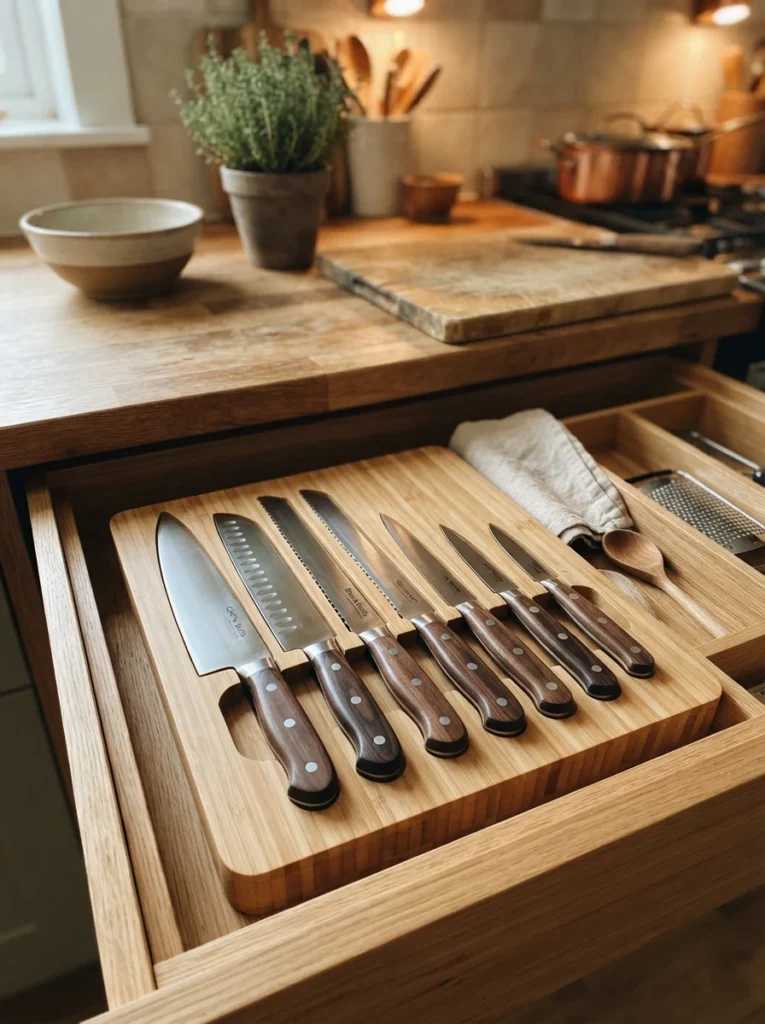
2. Choose a Bamboo or Wood Block Over Plastic
Bamboo and wood knife blocks tend to hold up longer than plastic versions and are gentler on blade edges when a knife slides in or out. They’re also easy to wipe clean with mild soap and water, and an occasional rub with food-grade mineral oil keeps the wood in good condition for years.
3. Look for a Double-Tier Block If You Have a Larger Collection
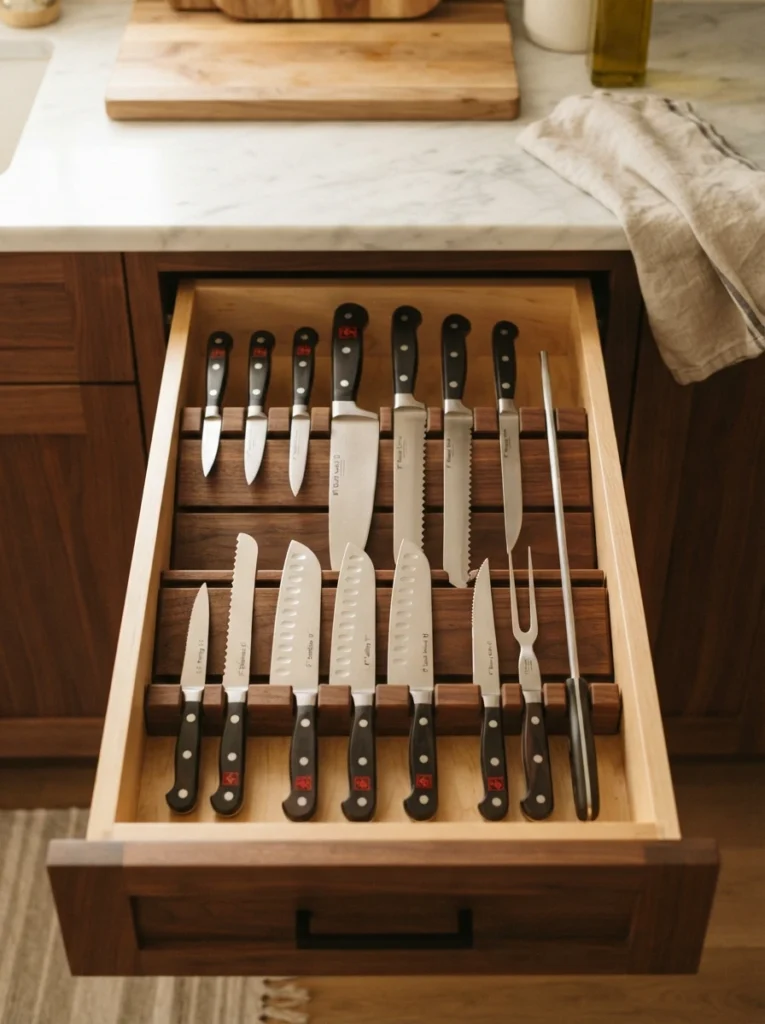
Some in-drawer knife organizers use two rows, front and back, to hold significantly more blades than a single-tier design in the same footprint. This works well for households with a larger knife collection, since it avoids needing a second drawer just for overflow.
![A double-tier in-drawer knife block holding knives in two rows, front and back, warm kitchen lighting, vertical Pinterest photography, warm high-capacity styling.]
4. Store Knives Blade-In, Not Blade-Up
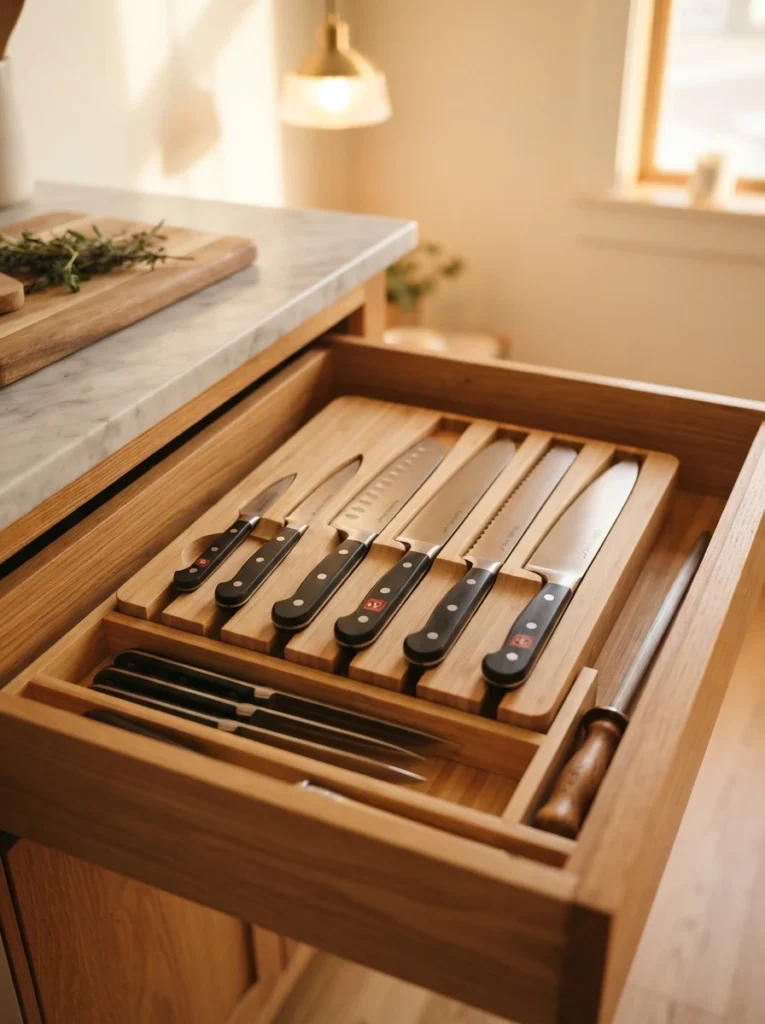
Whatever style of in-drawer block you choose, make sure knives sit with the blade fully seated into its slot rather than resting loosely with the edge exposed upward. This single detail is what actually prevents the accidental cuts that make people nervous about drawer storage in the first place.
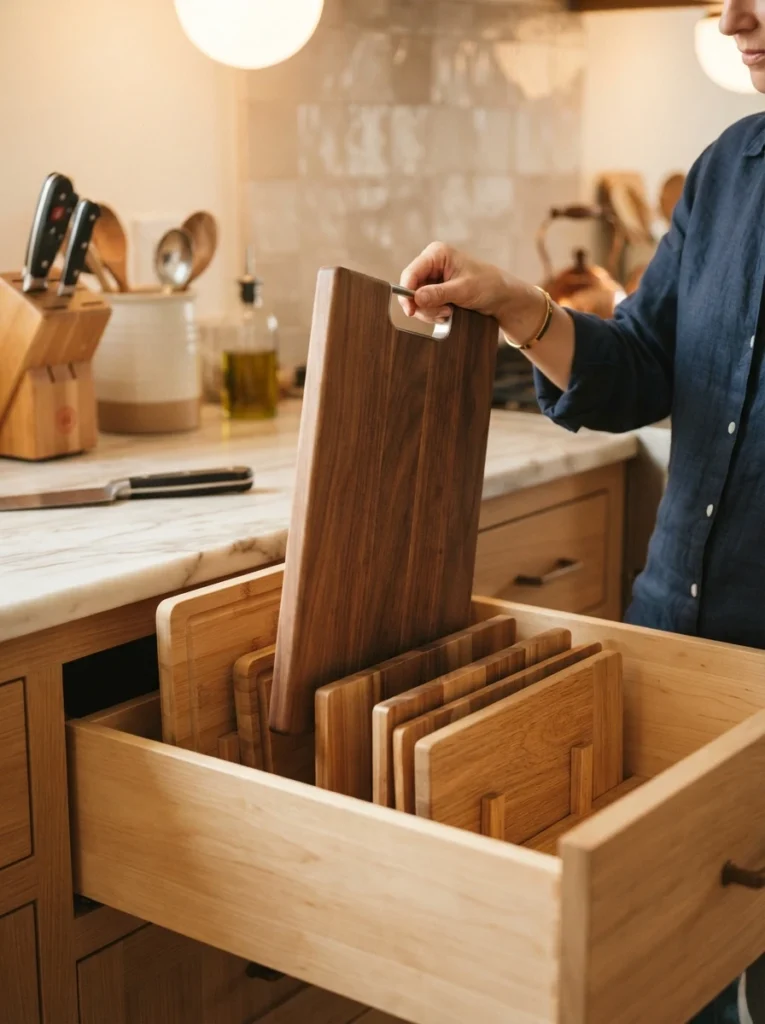
5. Reserve a Wide, Shallow Drawer Specifically for Cutting Boards
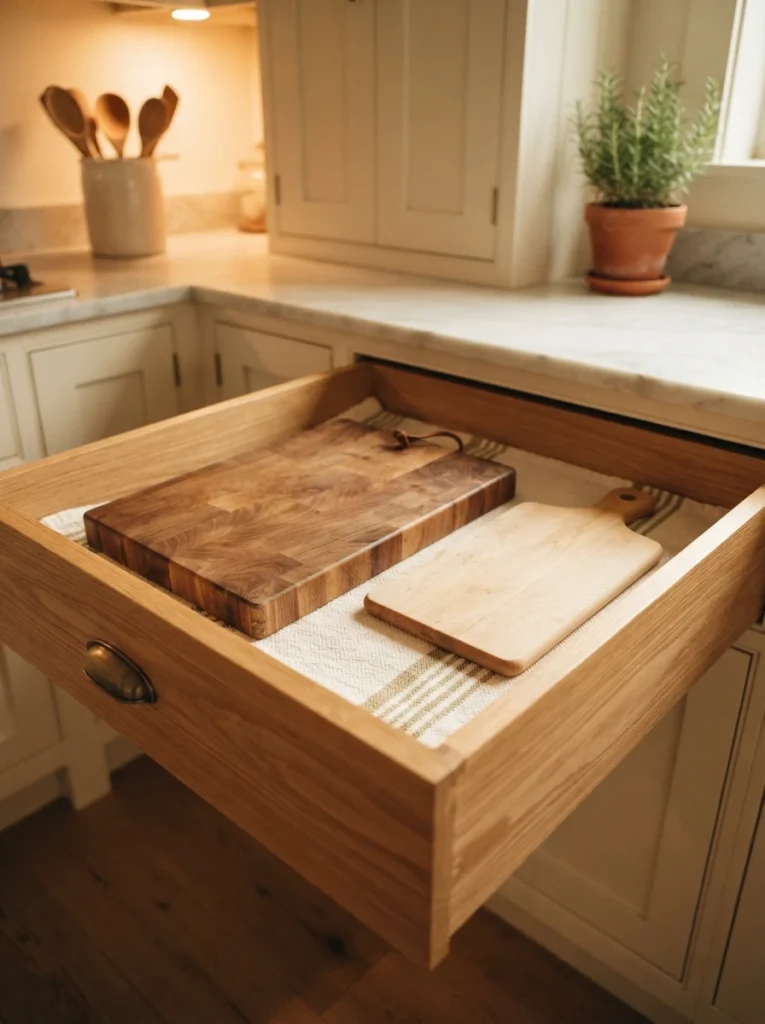
Cutting boards need a wide, shallow space rather than a deep one, since they’re meant to lie flat rather than stack upright in most standard drawers. If you have a wide, shallow drawer near the prep area, dedicating it to boards alone keeps them from warping under other stacked kitchen items.
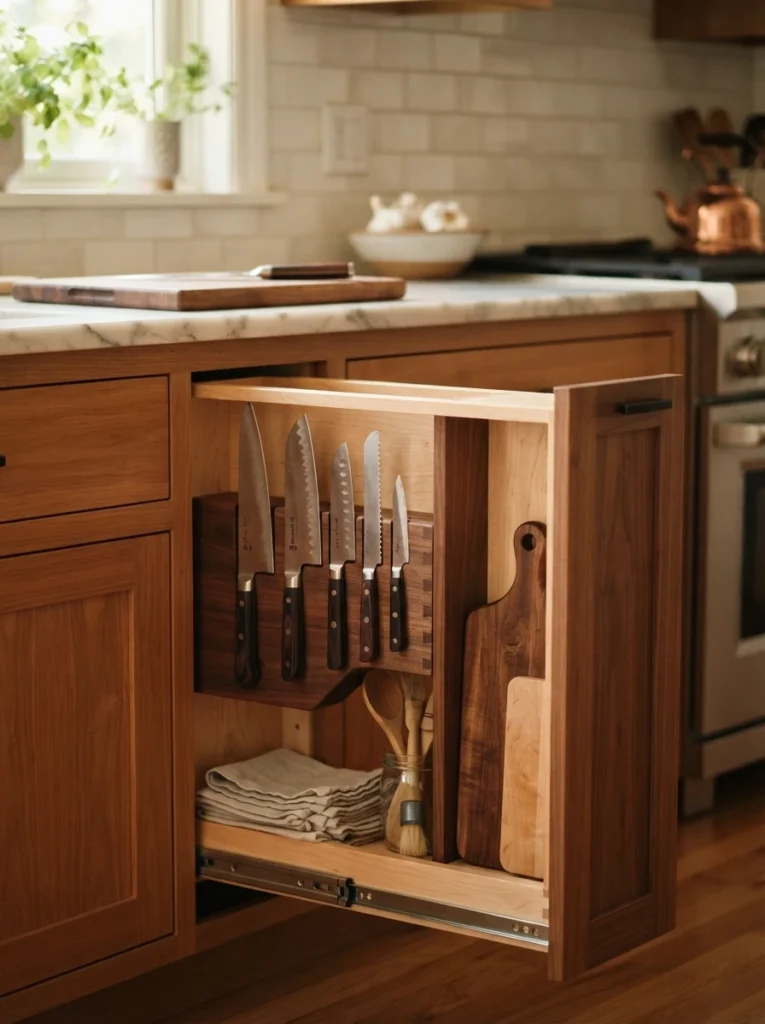
6. Combine Knives and Cutting Boards in One Pullout System
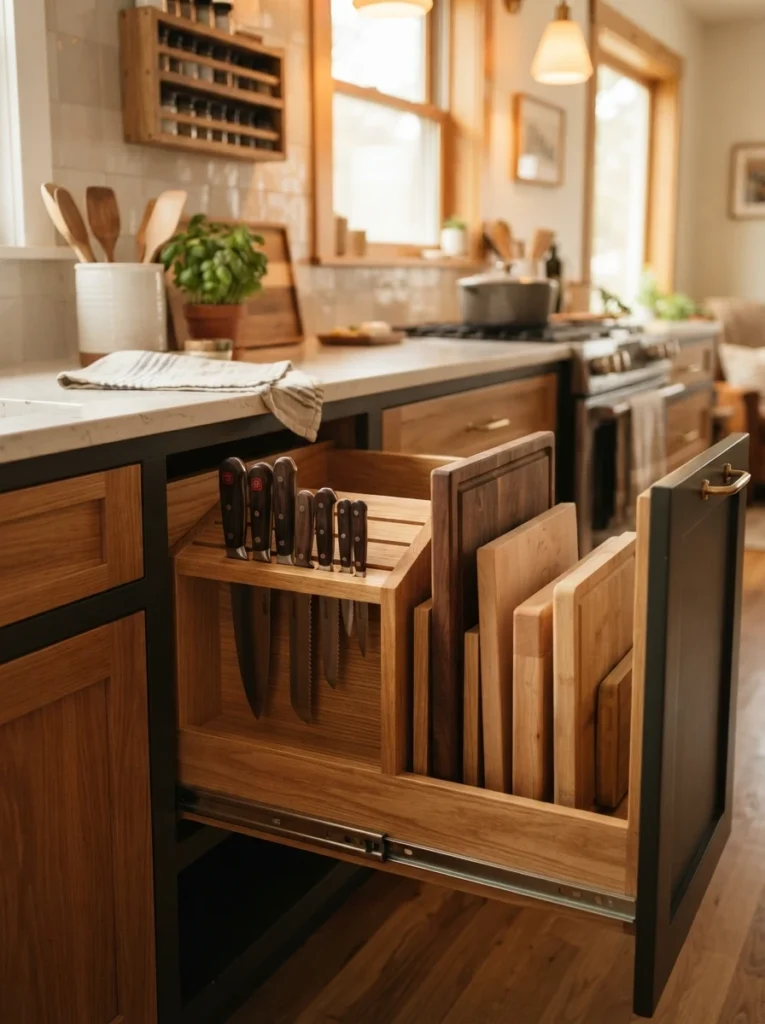
A combination drawer system with a built-in knife organizer alongside vertical slots for cutting boards keeps both tools in a single reach, which matters most for anyone who preps constantly. These systems are typically installed as a pullout, so they slide out fully rather than requiring you to dig toward the back.
7. Leave Room at the Back for Removing Larger Boards
If you’re building or installing a custom insert, don’t extend the organizer all the way to the very back of the drawer, especially if a countertop overhang limits how far the drawer can open. Leaving a bit of clearance at the rear makes it much easier to actually lift out a larger cutting board without wrestling it free.
8. Repurpose an Existing Narrow Drawer Instead of Buying New
If you already have a narrow pullout drawer that’s underused, like a spice drawer with more capacity than you actually need, it can often be converted into knife and cutting board storage instead of buying an entirely new unit. This is a practical option for anyone renovating a kitchen with drawers that were built for one purpose but could just as easily serve another.
Knives and cutting boards get used constantly, which is exactly why they deserve a storage spot that’s actually built for them rather than whatever gap happens to be left over. A properly fitted in-drawer block protects the blades, a dedicated flat space protects the boards, and keeping both together near the prep area means neither one adds an extra step to getting dinner started.