14 Kitchen Drawer Organization Ideas for a Junk Drawer Reset
TL;DR: A junk drawer isn’t a lost cause, it’s just a drawer that never got assigned real categories. Emptying it completely, measuring before you buy dividers, and giving every item a specific spot turns a drawer you dread opening into one you can actually find things in. The trick is treating it like any other organized space instead of a place where things go to disappear.
Every kitchen has one. You open it looking for a pen and find three dead batteries, a takeout menu from a restaurant that closed two years ago, and a single AA battery with no idea where its pair went. The junk drawer earns its name honestly, but the truth is it doesn’t have to stay that way. Most junk drawers aren’t overflowing because there’s too much stuff. They’re overflowing because nothing in there was ever given an actual category or a defined spot.
Here are 14 kitchen drawer organization ideas that turn a chaotic catch-all into a drawer that actually works for you.
1. Empty the Drawer Completely Before You Touch Anything
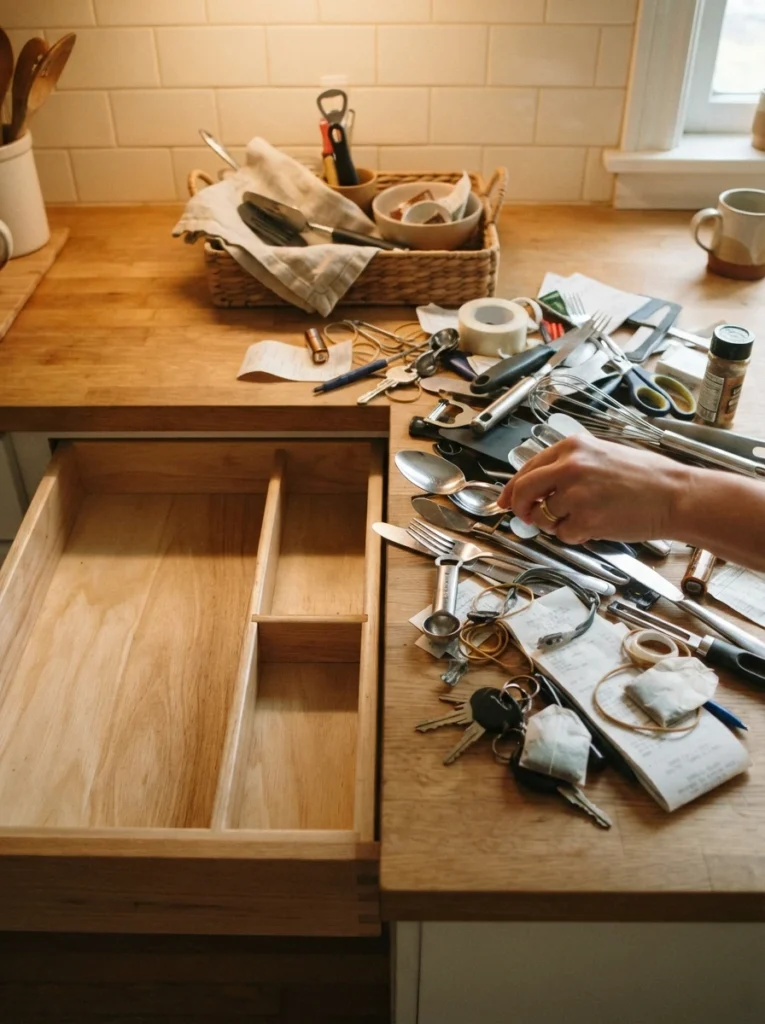
You can’t organize what you can’t see, and a junk drawer is impossible to sort through while it’s still crammed shut. Dump everything onto the counter or table so you’re working with a clean, empty drawer and a full view of what you’re actually dealing with.
2. Measure the Drawer Before Buying Any Organizer
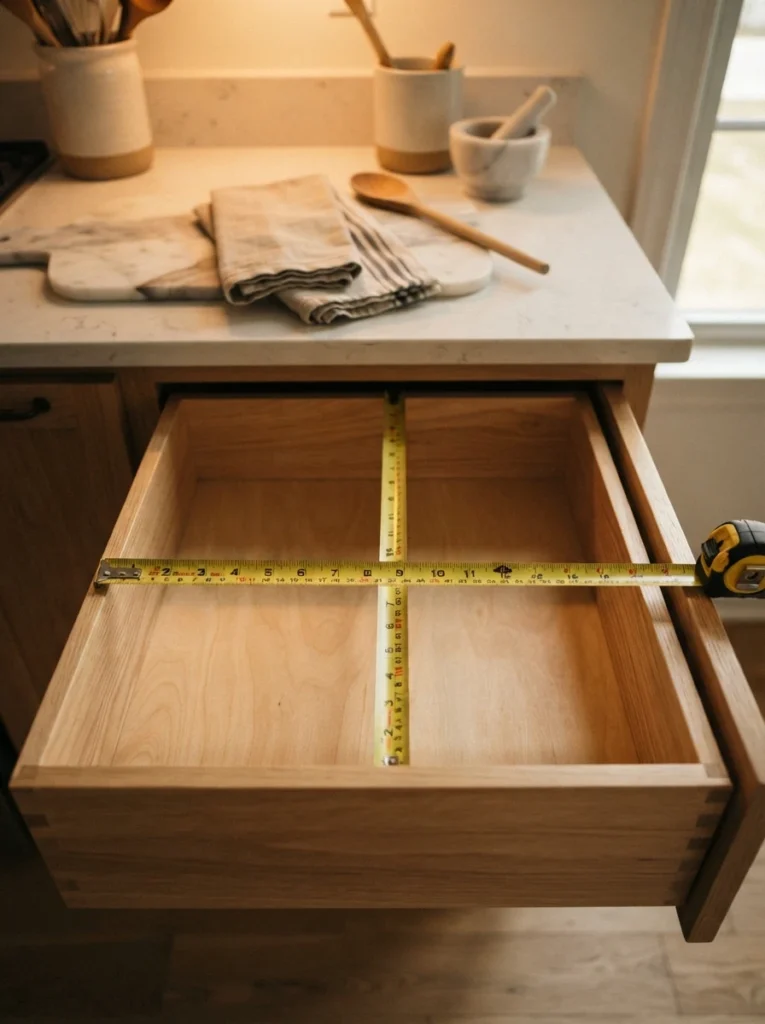
It’s tempting to grab the first drawer organizer you see, but a few extra minutes with a tape measure saves you from returning a set of dividers that don’t fit. Measuring the width, depth, and height first tells you whether you need an expandable tray, a modular bin system, or something stackable.
3. Test Everything Before Deciding What Goes Back
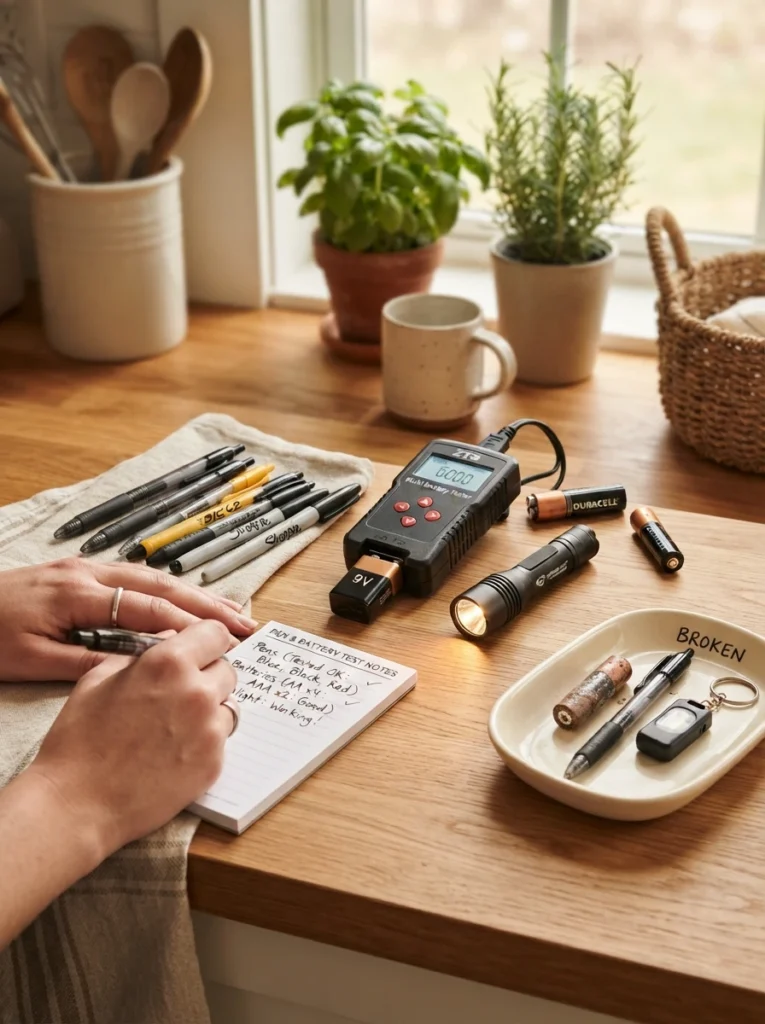
Once everything is out on the counter, test it. Click every pen, check every battery, flip on every flashlight. It’s common to find that a third or more of what’s been living in a junk drawer for years doesn’t actually work anymore and was never going to get used again.
4. Sort Everything Into Real Categories
Instead of thinking of it as one messy pile, split what’s left into actual categories: office supplies, tools, charging cords, spare batteries, takeout menus. Giving items a category is what separates an organized “really useful stuff” drawer from a true junk drawer, even if the categories all end up living in the same drawer.
5. Use an Ice Cube Tray or Muffin Tin for Tiny Items
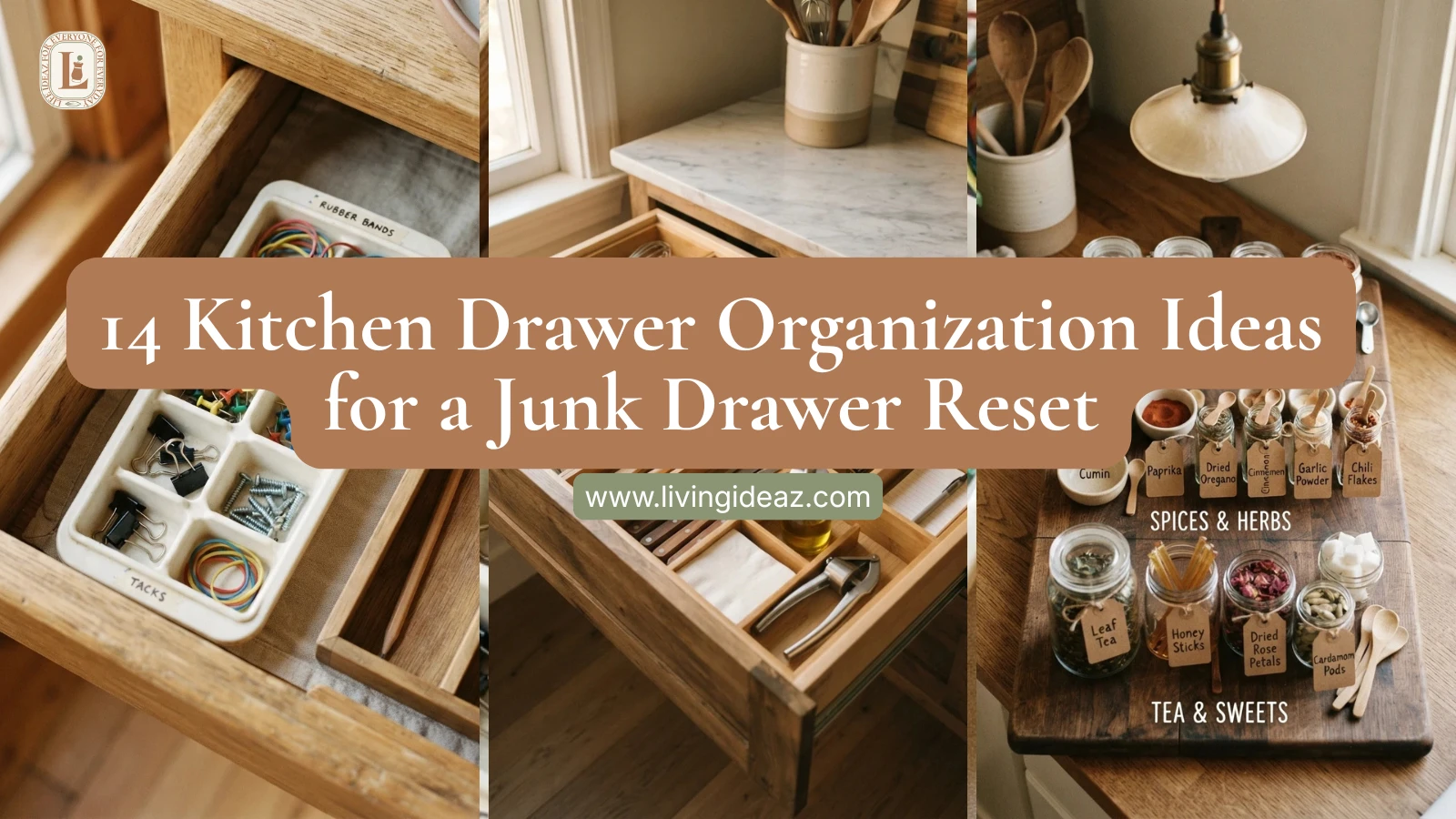
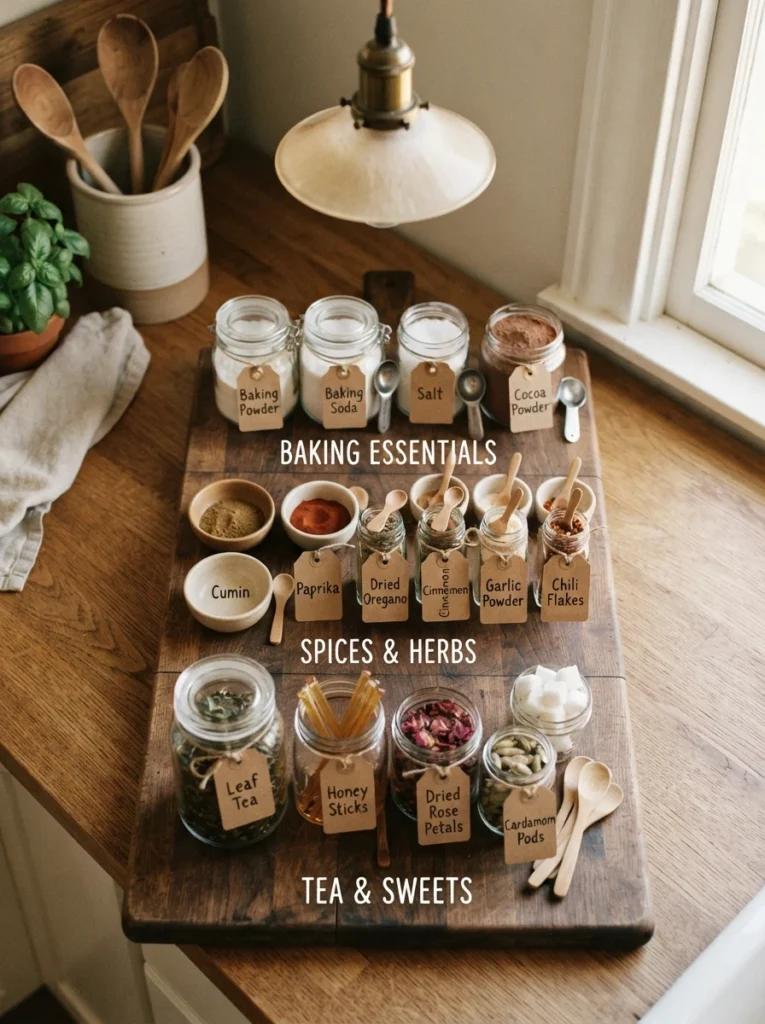
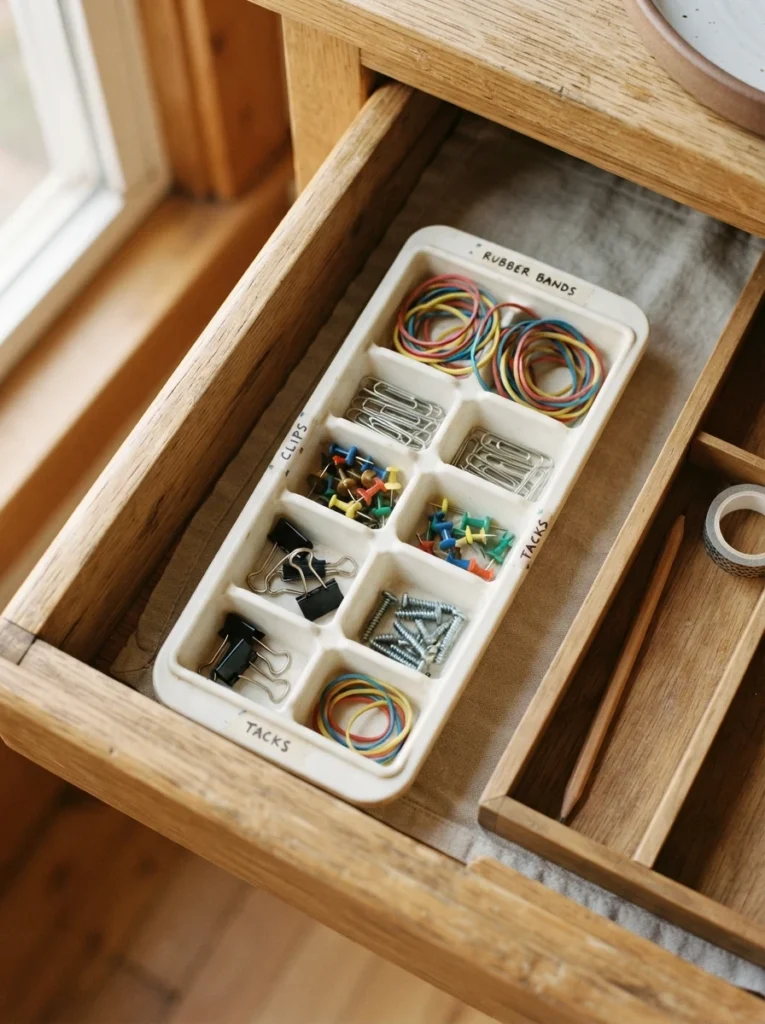
Rubber bands, thumbtacks, paper clips, and loose screws are the items most likely to end up as a tangled mess at the bottom of the drawer. An old ice cube tray or muffin tin, the kind you’d otherwise toss, gives each small category its own compartment without costing anything extra.
6. Add a Drawer Liner to Protect the Wood
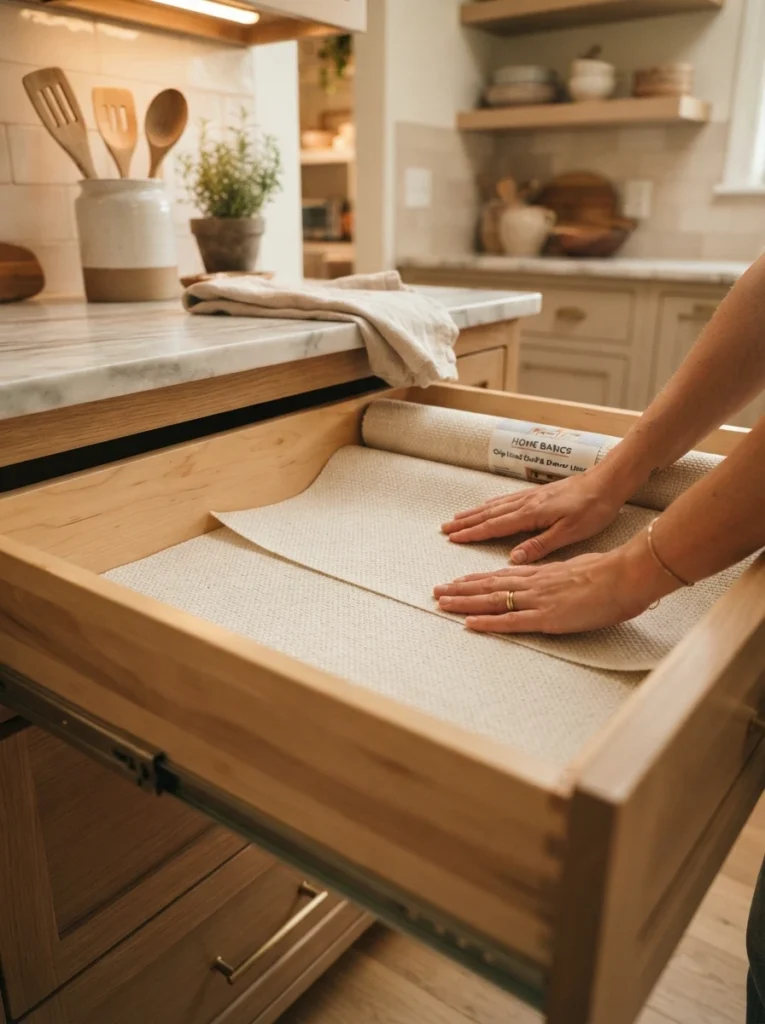
A basic drawer liner protects the actual wood or laminate underneath from scratches, spills, and the slow wear of small metal objects sliding around every time the drawer opens. It’s a small step, but it’s the difference between a drawer that looks worn out in a year and one that still looks decent after five.
7. Choose Adjustable or Modular Dividers Over Fixed Trays
A fixed plastic tray with preset slots only works if your items happen to match those slot sizes exactly, which they rarely do. Adjustable or modular dividers let you set your own compartment widths, and you can reconfigure them later as what you’re storing in the drawer changes.
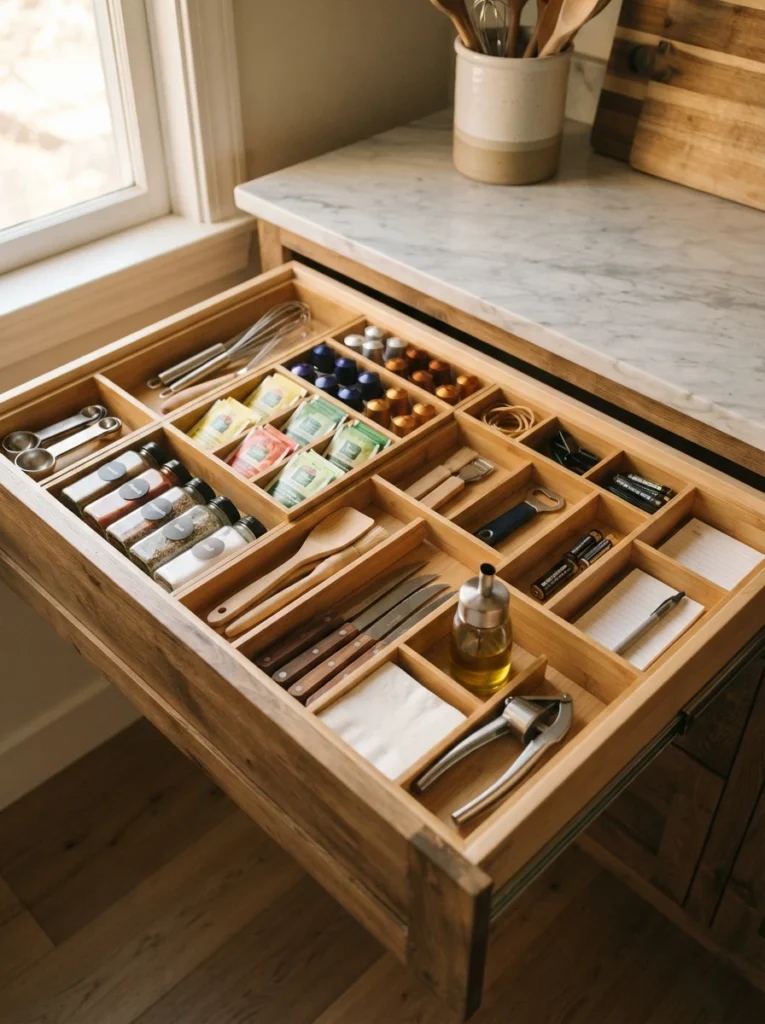
8. Turn a Section Into a Mini Charging Station
If cords and chargers are a recurring problem in your drawer, dedicate one section specifically to them instead of letting them tangle with everything else. Coiling each cord and securing it with a small tie or clip keeps this one habit from undoing the rest of your organizing work.
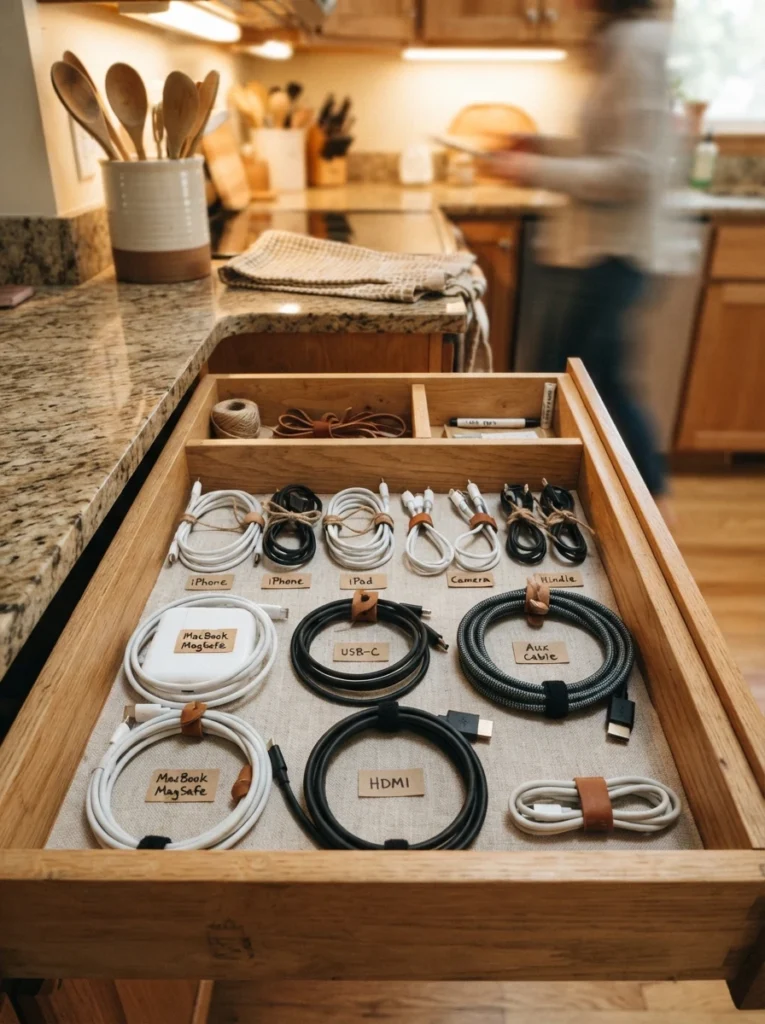
9. Reserve a Spot for Emergency Essentials
A flashlight, spare batteries, and maybe a lighter earn a permanent place in a kitchen drawer because they’re genuinely useful during a power outage or an unexpected need, not because they’re junk. Keeping this small emergency kit organized within the drawer means you’re not digging through clutter the one time you actually need it fast.
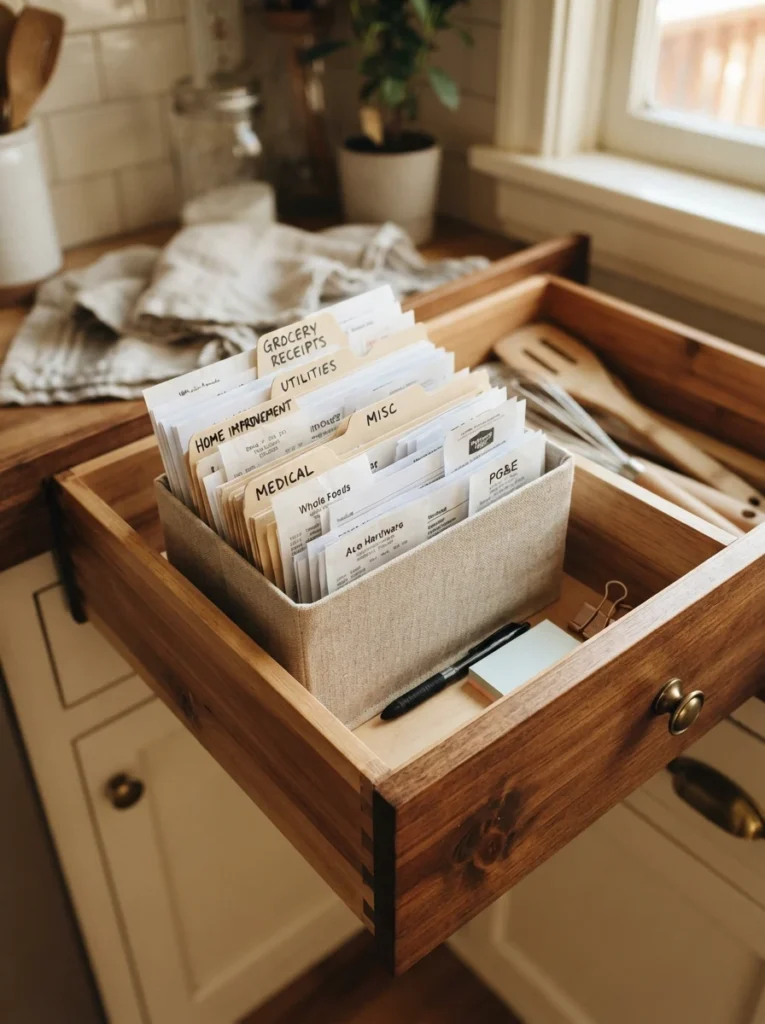
10. Don’t Let Paperwork Pile Up Loose
Receipts, old mail, and school forms tend to drift into junk drawers because there’s nowhere else obvious to put them in the moment. Sort anything worth keeping into a small file folder or envelope, and shred or recycle the rest so paper stops eating up compartment space meant for actual tools.
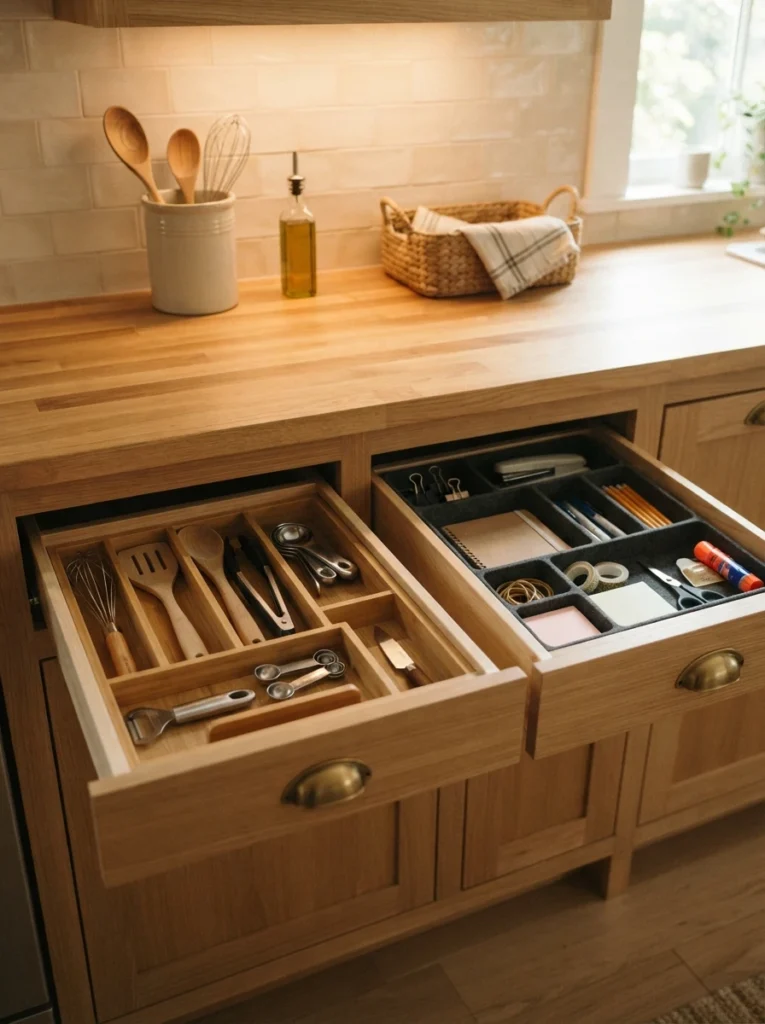
11. Consider Having More Than One Small-Stuff Drawer
A single catch-all drawer is often not enough for an entire household’s small items, and overstuffing one drawer is exactly what turns it back into chaos. If you have the space, splitting into two drawers, one for household tools and one for office-type supplies, keeps either one from getting overwhelmed.
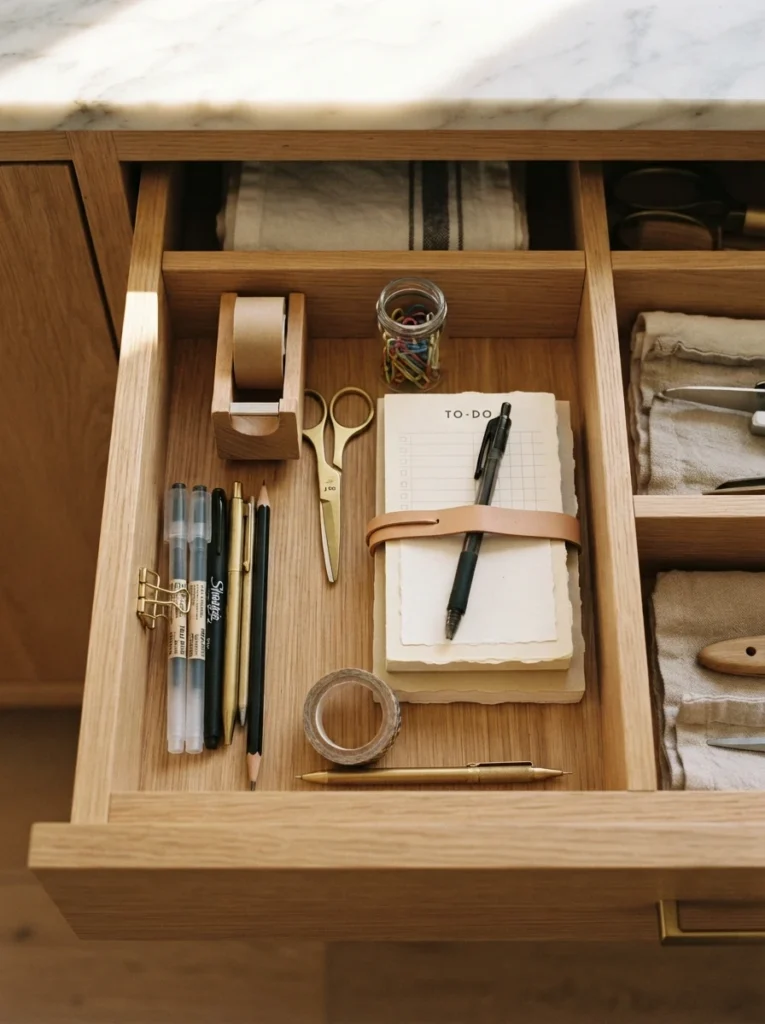
12. Group Like Items Together, Even Within a Category
Within a single category, like office supplies, group similar items closer together, pens with pens, tape with tape, notepads with notepads, rather than scattering them across the whole compartment. This small extra step of grouping makes items easier to spot at a glance instead of requiring a search every time.
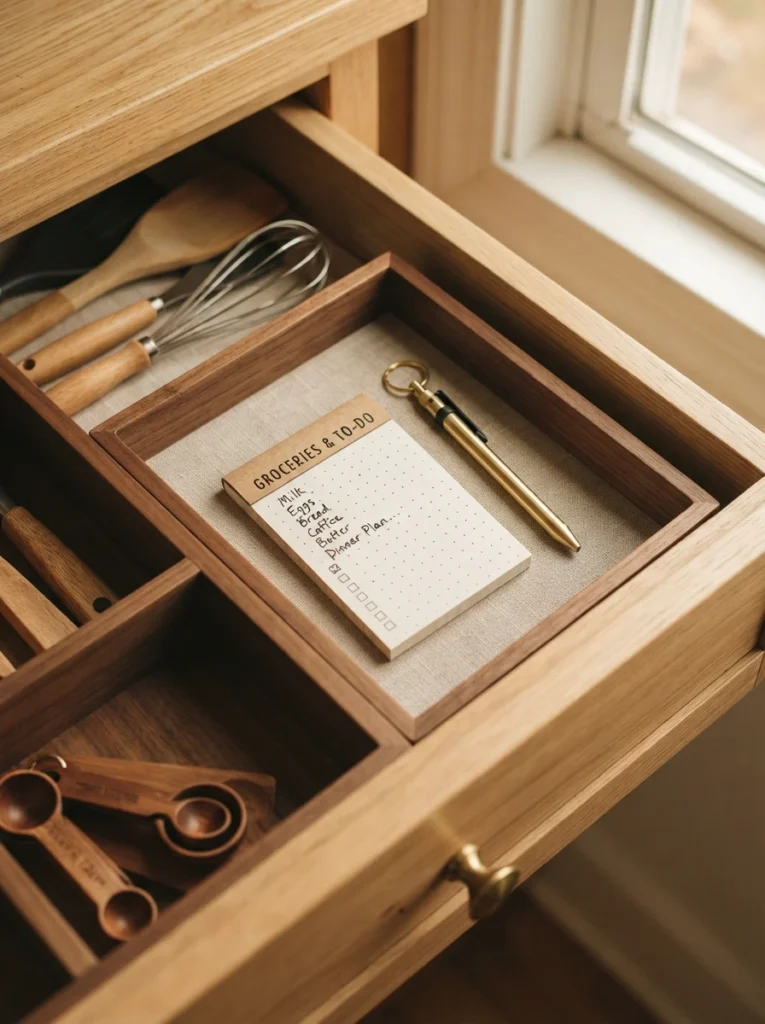
13. Keep a Small Notepad and Pen in the Same Spot Every Time
If you use this drawer to jot down quick notes or grocery lists, dedicate one small, consistent spot to a notepad and a working pen. Consistency here matters more than the exact organizer you use, since knowing exactly where to reach saves more time than any perfectly labeled bin.
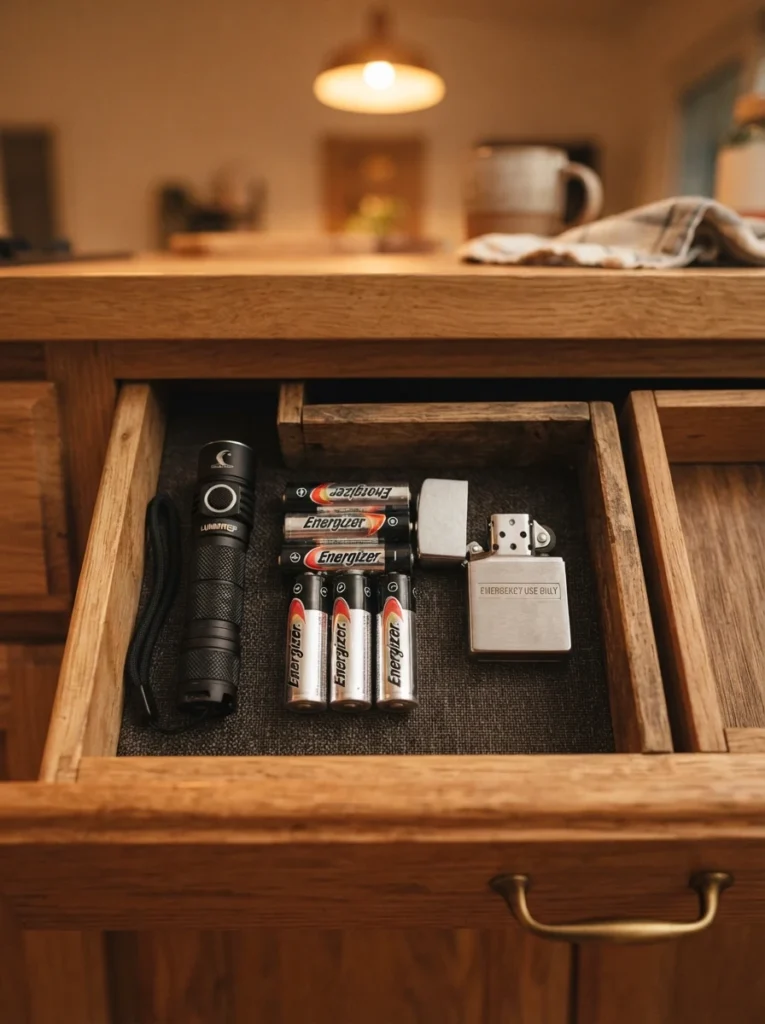
14. Do a Quick Reset Every Few Months
Even a perfectly organized drawer drifts back toward clutter after a few months of daily use. Set a recurring reminder to spend five minutes tossing what’s accumulated, wiping down the liner, and returning anything that’s drifted from its assigned spot back to where it belongs.
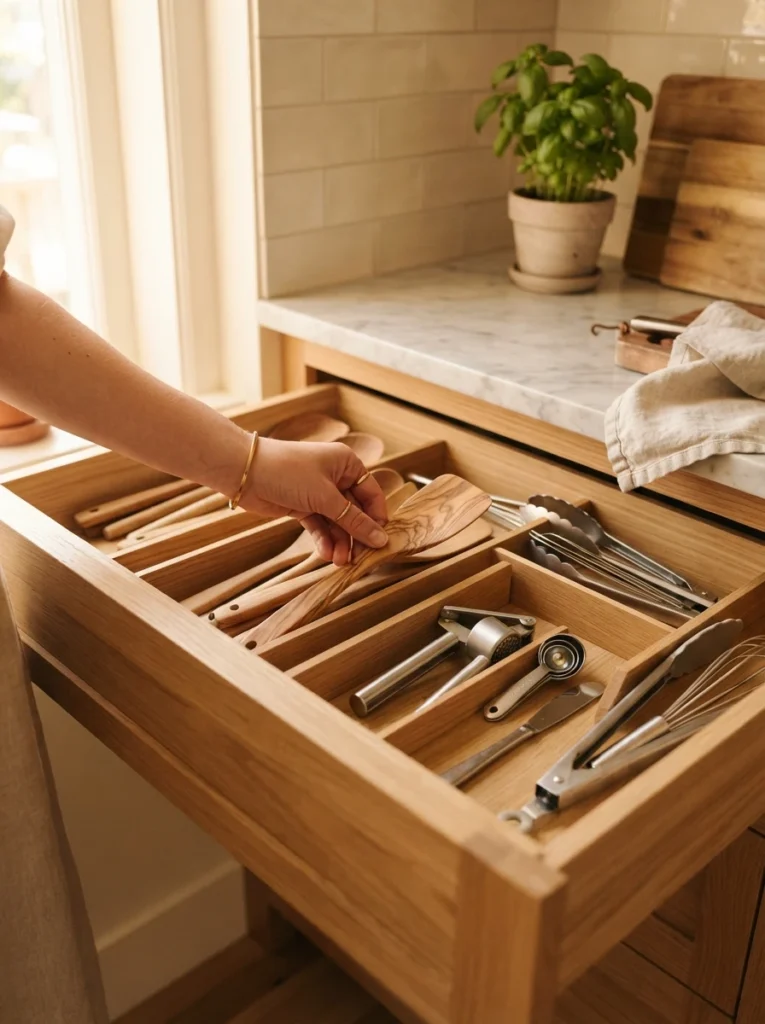
The word “junk” is really the only thing standing between this drawer and a genuinely useful one. Once everything inside has an actual category and a defined spot, it stops being a place where things disappear and starts being the drawer you reach for on purpose, because you already know exactly what’s in it and where.