17 Under-Bed Storage Ideas That Actually Stay Organized
TL;DR
Under-bed storage sounds smart until it turns into a hidden graveyard of tangled chargers, random clothes, forgotten boxes, and things nobody wants to deal with anymore. The best under-bed storage ideas are not just about fitting more stuff underneath the bed. They are about creating systems that stay functional, visually calm, easy to access, and realistic for everyday life in small bedrooms and apartments.
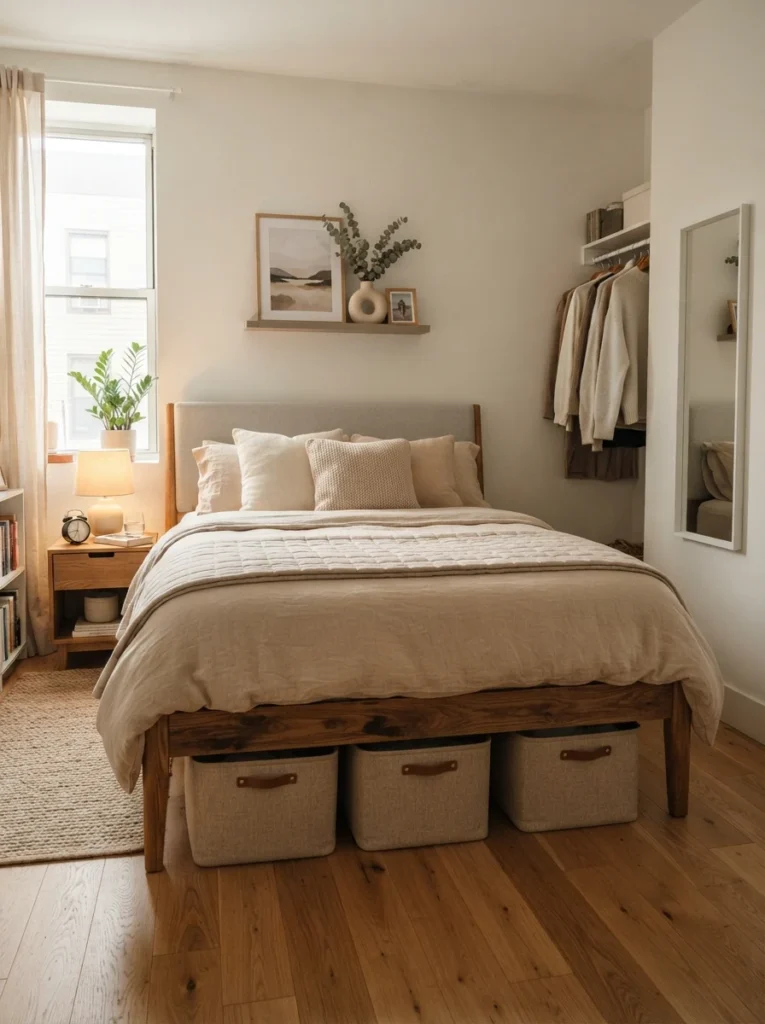
1. Use Matching Fabric Bins Instead of Random Plastic Tubs
One reason under-bed storage quickly becomes chaotic is visual inconsistency. Random clear bins, cardboard boxes, and leftover containers create the feeling of hidden clutter even when technically organized.
Matching fabric bins soften the space emotionally because they visually blend together instead of competing for attention. Soft-sided containers also slide more easily in tight apartment bedrooms where floor clearance is limited.
The calmer the system looks, the more likely people are to maintain it long term. Visual stress quietly affects organization habits more than most people realize.
2. Store Items by Category, Not by Random Empty Space
Many under-bed systems fail because people shove items wherever they physically fit instead of organizing by purpose. Months later, finding one sweater suddenly requires pulling out five unrelated containers.
Keeping categories separated creates less mental friction. One bin for off-season clothing, another for bedding, another for shoes. Simple systems survive longer because they require less energy to maintain during busy weeks.
Organization that feels annoying eventually stops working. That part matters.
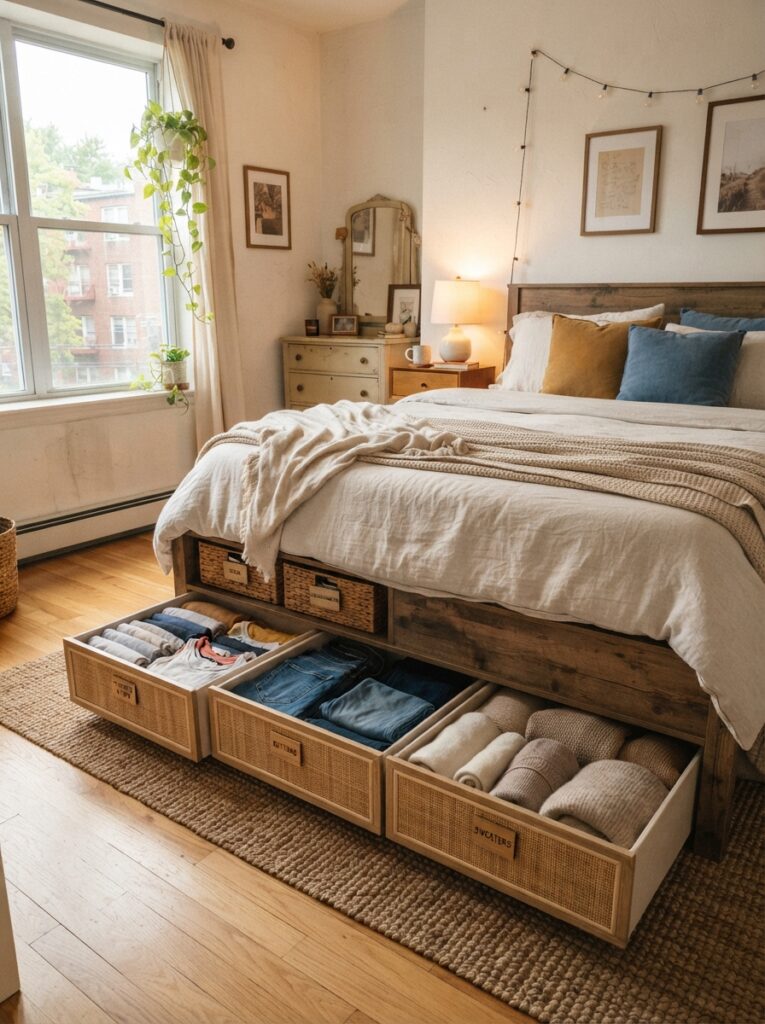
3. Use Rolling Drawers for Everyday Access
Heavy containers become frustrating quickly in tiny bedrooms where movement space already feels limited. Rolling storage drawers solve this because they reduce physical effort and make the system easier to use consistently.
This works especially well for people living in apartments with limited closet space. Daily-use clothing, extra blankets, or workout gear become accessible without turning the room upside down every time something is needed.
Ease matters more than perfect aesthetics when building storage systems that last.
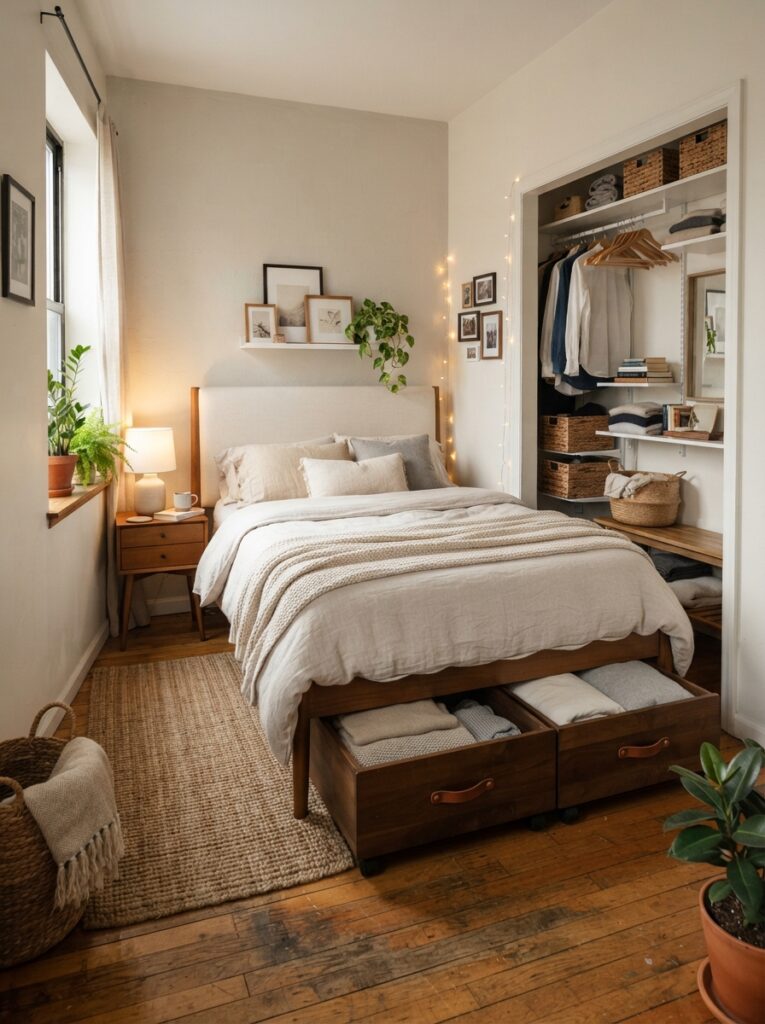
4. Avoid Storing Random “Someday” Items Under the Bed
Under-bed storage often becomes dangerous territory for emotional clutter. Old cords, forgotten decor, unused bags, and “maybe someday” items slowly accumulate because the space feels hidden enough to ignore.
The problem is psychological. Hidden clutter still creates mental weight, especially when people subconsciously know the mess exists underneath them constantly.
The calmest bedrooms usually store useful items under the bed, not emotional leftovers people avoid dealing with.
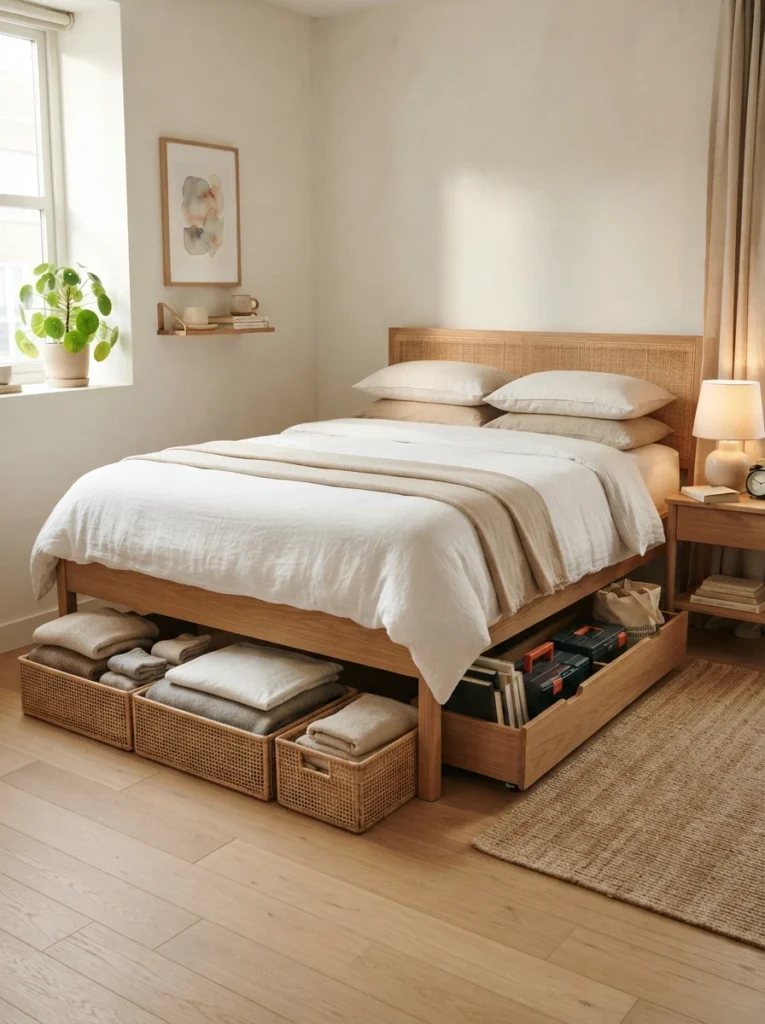
5. Use Vacuum Bags for Seasonal Bedding and Jackets
Winter blankets and thick jackets quietly consume enormous amounts of storage space in small apartments. Vacuum-sealed bags compress bulky fabrics dramatically without requiring extra furniture.
This works particularly well beneath platform beds where vertical clearance remains limited. The key is moderation though. Overstuffed vacuum bags can become difficult to slide out and reorganize later.
Keeping only true seasonal items underneath prevents the space from becoming emotionally overwhelming.
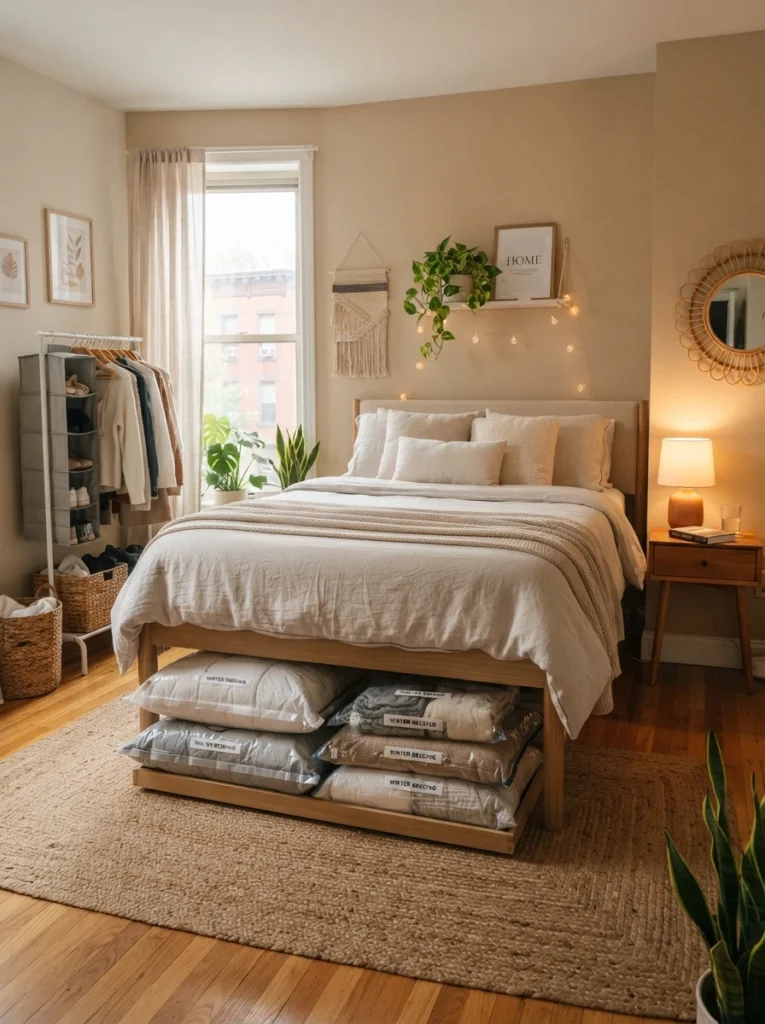
6. Label Containers Even if You Think You’ll Remember
People almost never remember what they stored six months later. Especially in apartments where multiple storage systems overlap constantly. Tiny labels quietly reduce frustration because they eliminate unnecessary searching.
This matters more in shared spaces or small rooms where pulling everything out creates instant visual chaos. A simple labeled system helps bedrooms stay calmer during rushed mornings and seasonal changes.
The easier a system feels, the longer it survives real life.
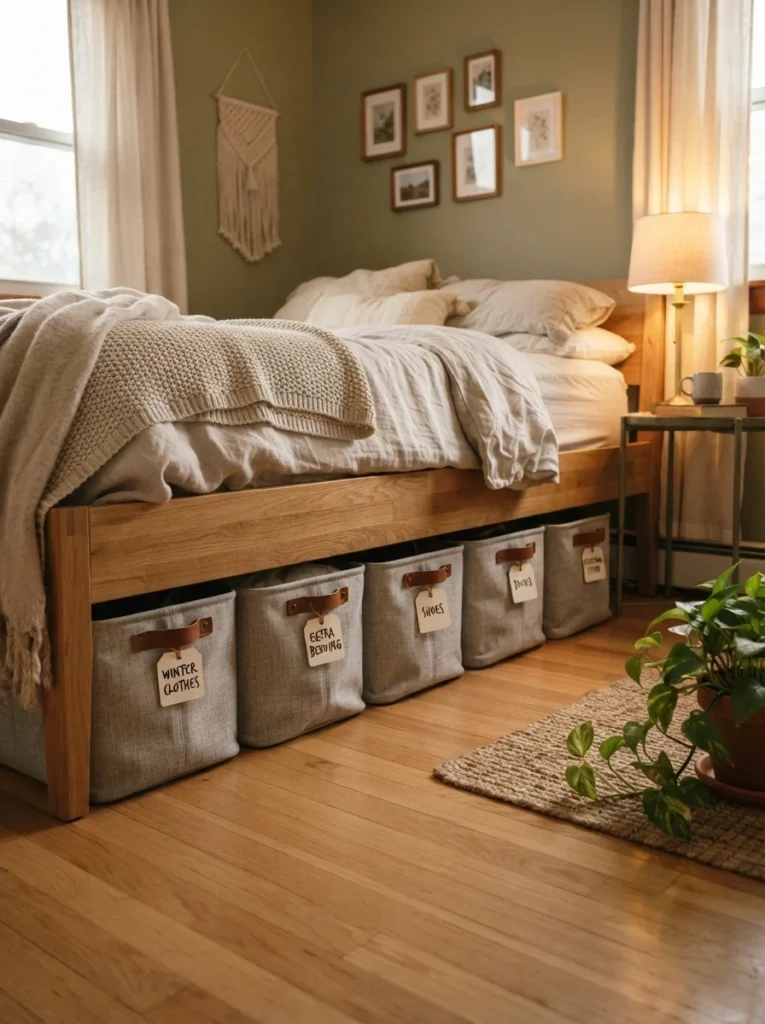
7. Keep Daily Essentials Out of Under-Bed Storage
Under-bed storage works best for medium-frequency items, not things used every single day. If socks, chargers, skincare, or daily basics live underneath the bed, the system quickly becomes exhausting to maintain.
People naturally abandon inconvenient systems over time. Daily-use items should remain easy to grab without kneeling, lifting, or pulling drawers repeatedly.
Good organization supports routines instead of slowing them down.
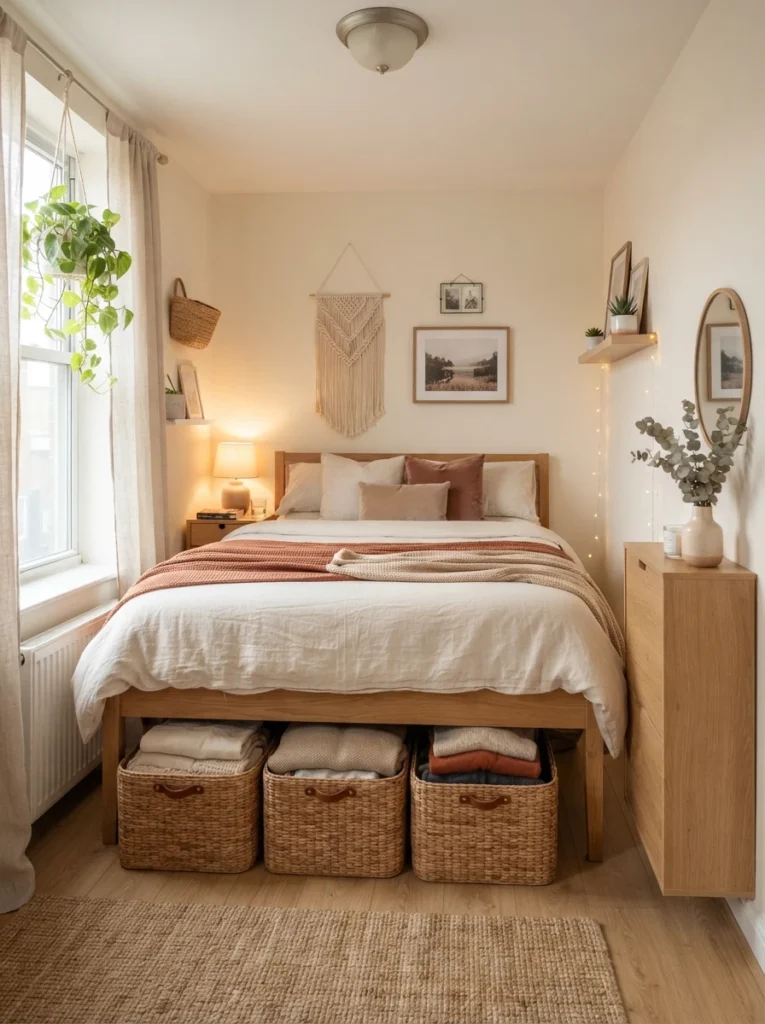
8. Choose Low Visual Contrast for a Calmer Look
Bright colorful containers or transparent bins often create visual tension beneath beds, especially in cozy neutral bedrooms. Soft earth tones, beige fabrics, muted grays, and natural textures usually create a more calming effect.
Tiny bedrooms feel emotionally quieter when storage blends into the environment instead of aggressively standing out. Bedrooms already contain enough visual stimulation through furniture, textiles, and lighting.
Storage should support calm, not compete with it.
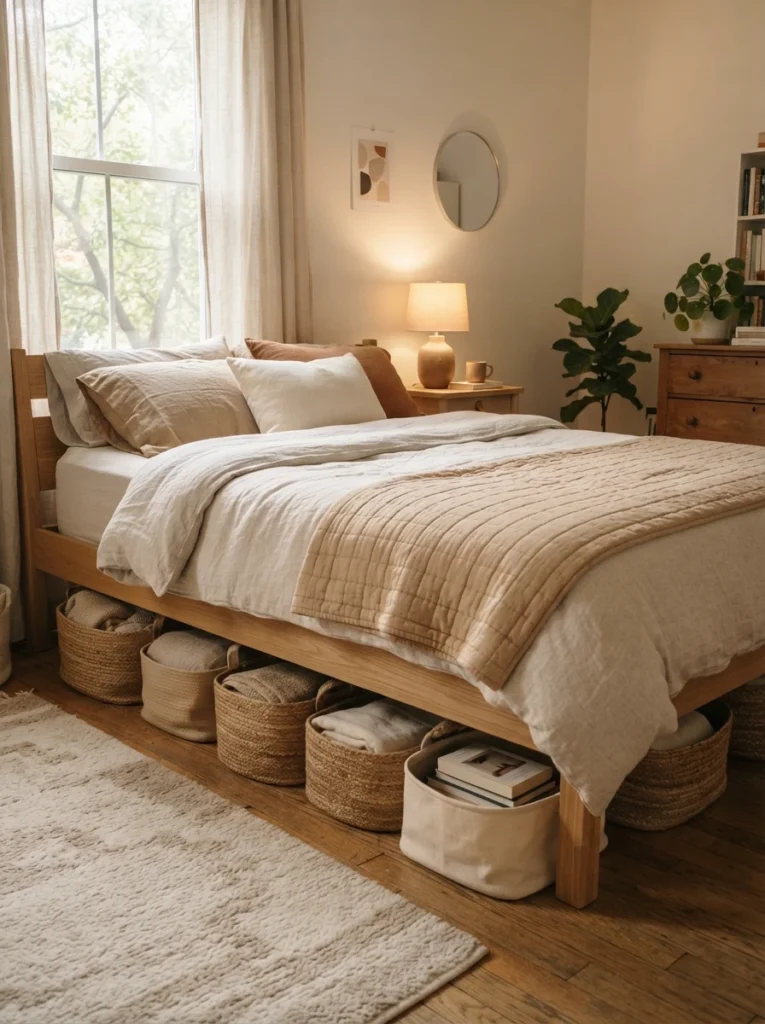
9. Use Bed Risers Only if the Room Can Handle It
Bed risers technically create more storage space, but they can also make small bedrooms feel awkwardly elevated and visually heavy if used carelessly. Tiny apartments with low ceilings often feel more cramped when beds sit too high.
This solution works best when paired with lighter bedding, slim furniture, and softer colors that visually balance the added height. Otherwise the bed starts dominating the room aggressively.
More storage is not always worth worse visual flow.
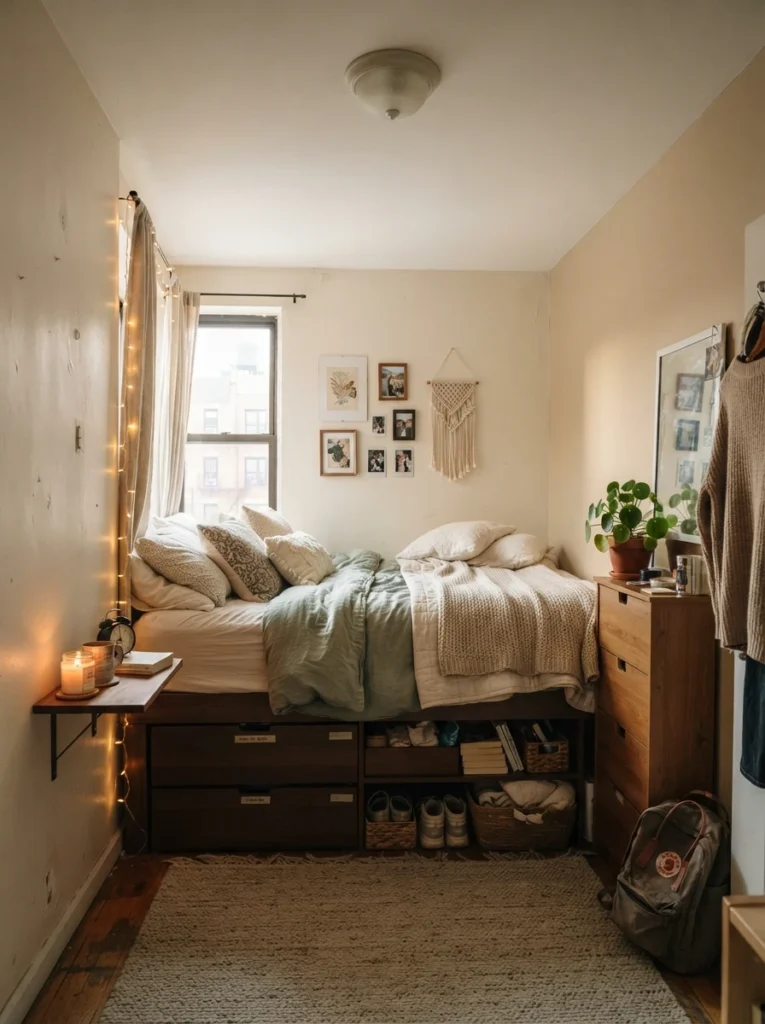
10. Use Dividers Inside Large Storage Drawers
Large storage drawers become messy quickly because objects slide together over time. Dividers quietly solve this by creating small zones that prevent visual and physical chaos from building underneath the bed.
This works especially well for accessories, folded clothing, cables, or smaller seasonal items. Tiny systems inside bigger systems usually stay organized longer because everything has clearer boundaries.
Without boundaries, storage slowly turns into “future me will deal with this later.”
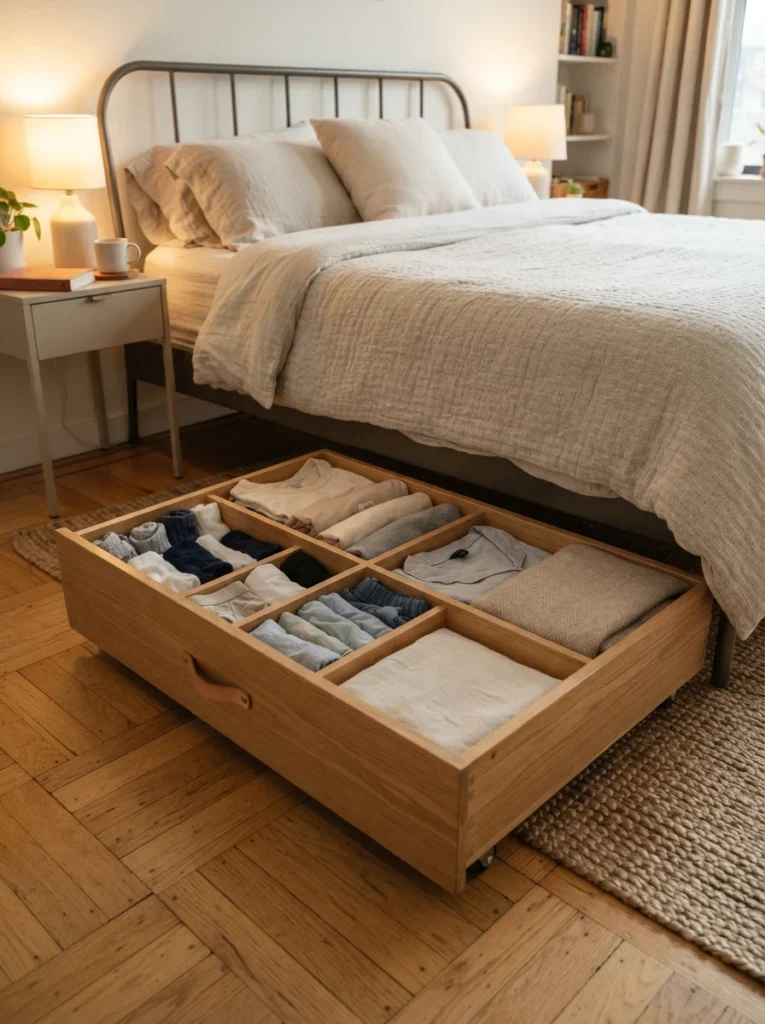
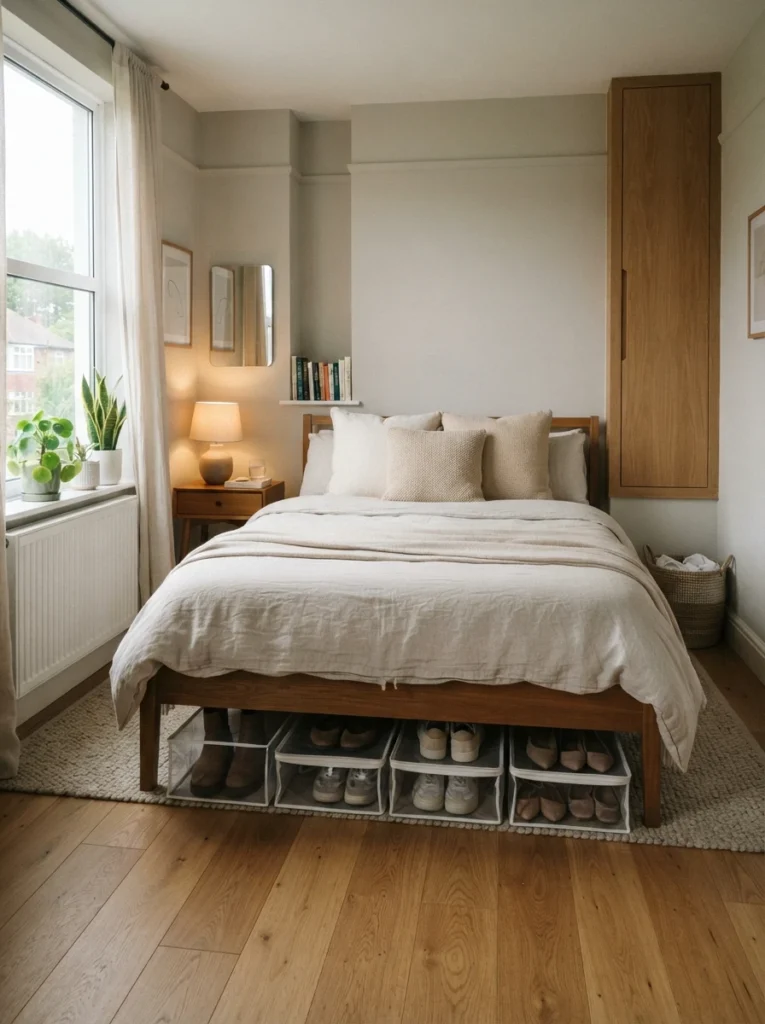
11. Store Shoes in Dust-Protected Containers
Shoes shoved loosely underneath beds quickly make bedrooms feel dirtier emotionally, even when the room itself is technically clean. Dust buildup, mismatched pairs, and scattered footwear create visual disorder surprisingly fast in tiny apartments.
Low-profile shoe containers or soft zippered organizers help because they contain visual mess while keeping shoes accessible. Clear front panels work better than fully transparent bins because they still reduce visual overload.
Bedrooms usually feel calmer when floor-related clutter stays controlled and partially hidden.
12. Avoid Overstuffing the Space Completely
One of the biggest under-bed storage mistakes is filling every inch until drawers barely close and containers become impossible to move. Overpacked storage systems create friction, and friction is usually what destroys organization habits long term.
Leaving a little breathing room underneath the bed makes cleaning easier and prevents the storage zone from feeling emotionally overwhelming. Tiny bedrooms already contain enough visual pressure without hidden chaos spilling outward constantly.
Calm systems are usually slightly underfilled, not maximized aggressively.
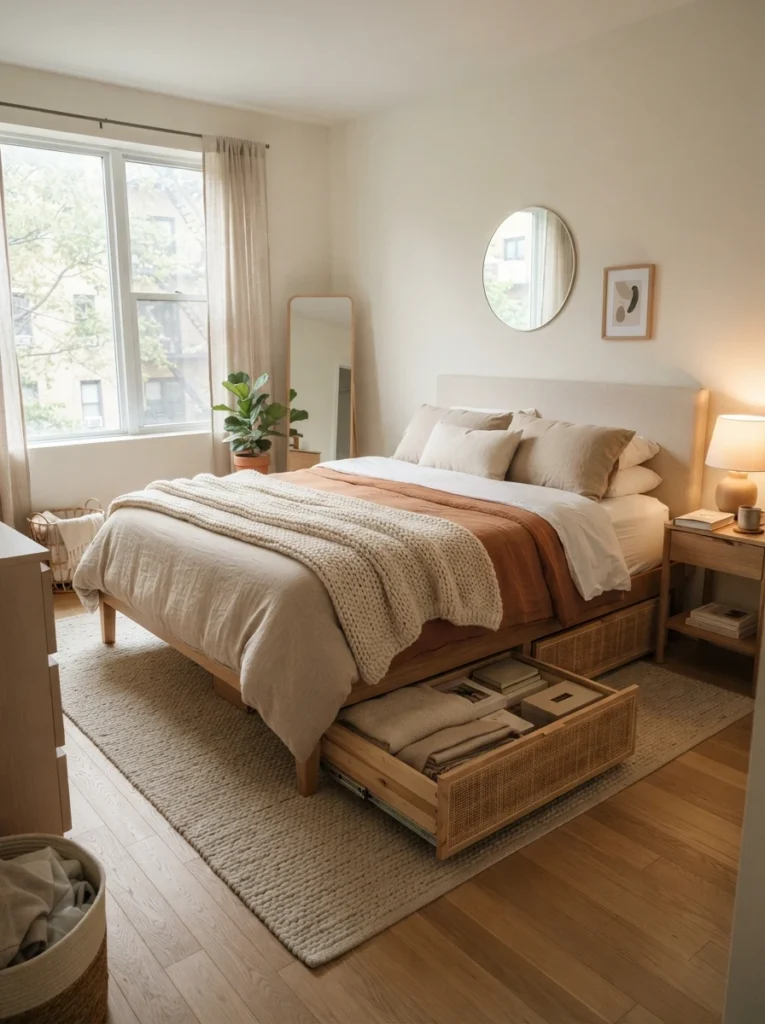
13. Use Flat Storage for Important Documents or Keepsakes
Under-bed storage works surprisingly well for flat items people rarely need daily but still want protected nearby. Important papers, old photographs, sketchbooks, or sentimental keepsakes often fit naturally into slim low-profile storage cases.
This prevents drawers and closets from becoming overcrowded with awkward flat objects that never stack properly elsewhere. The key is intentionality. Sentimental storage should still feel organized, not emotionally abandoned.
Hidden does not automatically mean peaceful.
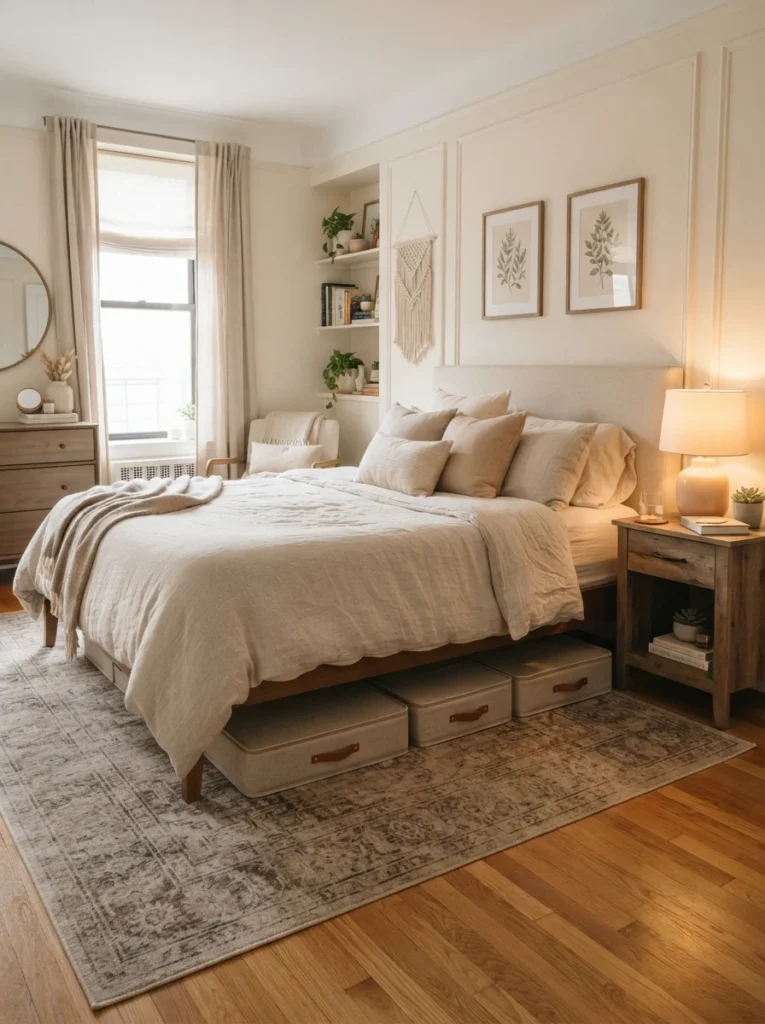
14. Choose Beds With Enough Clearance From the Start
Some under-bed systems fail simply because the bed frame itself was never designed for realistic storage use. Tiny low frames may look aesthetic online but become frustrating in actual apartments where storage matters daily.
Beds with moderate clearance create easier cleaning access and smoother storage flow without visually overwhelming the room. A balanced height usually works better than extreme low or overly elevated setups.
Function matters more in small apartments than purely trend-driven furniture choices.
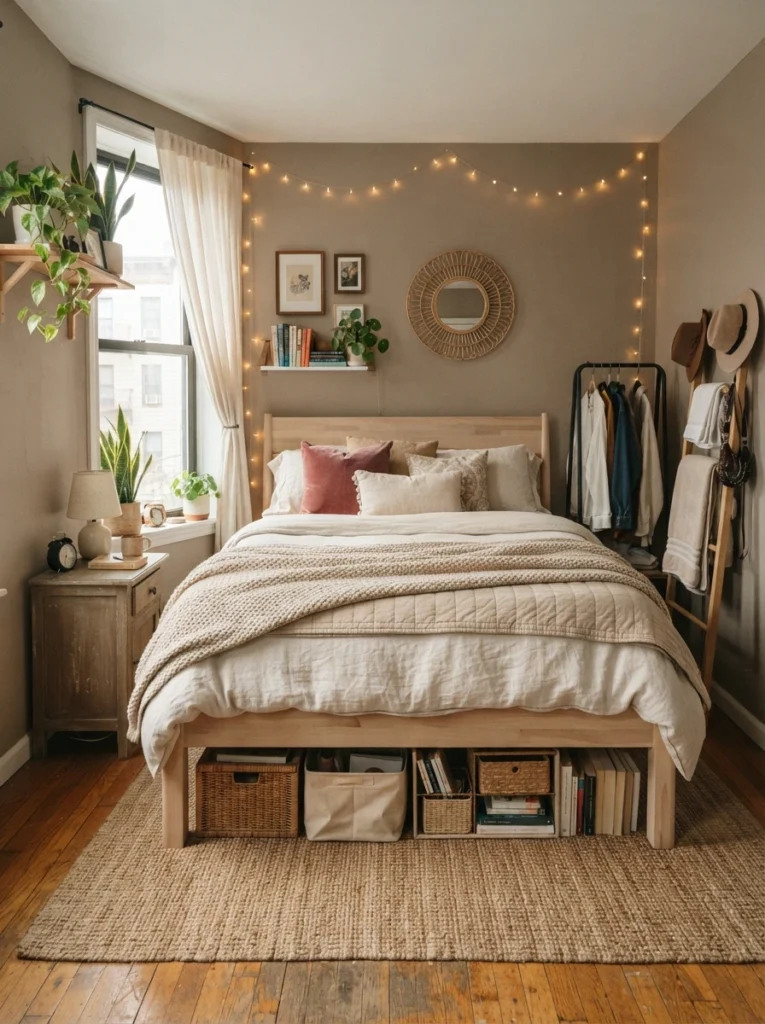
15. Rotate Items Every Few Months
Under-bed storage quietly becomes chaotic when forgotten for too long. Seasonal rotations help because they force people to reassess what actually deserves space underneath the bed.
This prevents the area from turning into permanent hidden clutter. Winter blankets, coats, summer clothing, and occasional-use items should shift naturally throughout the year instead of piling endlessly.
The calmer the rotation system feels, the easier the room stays emotionally manageable long term.
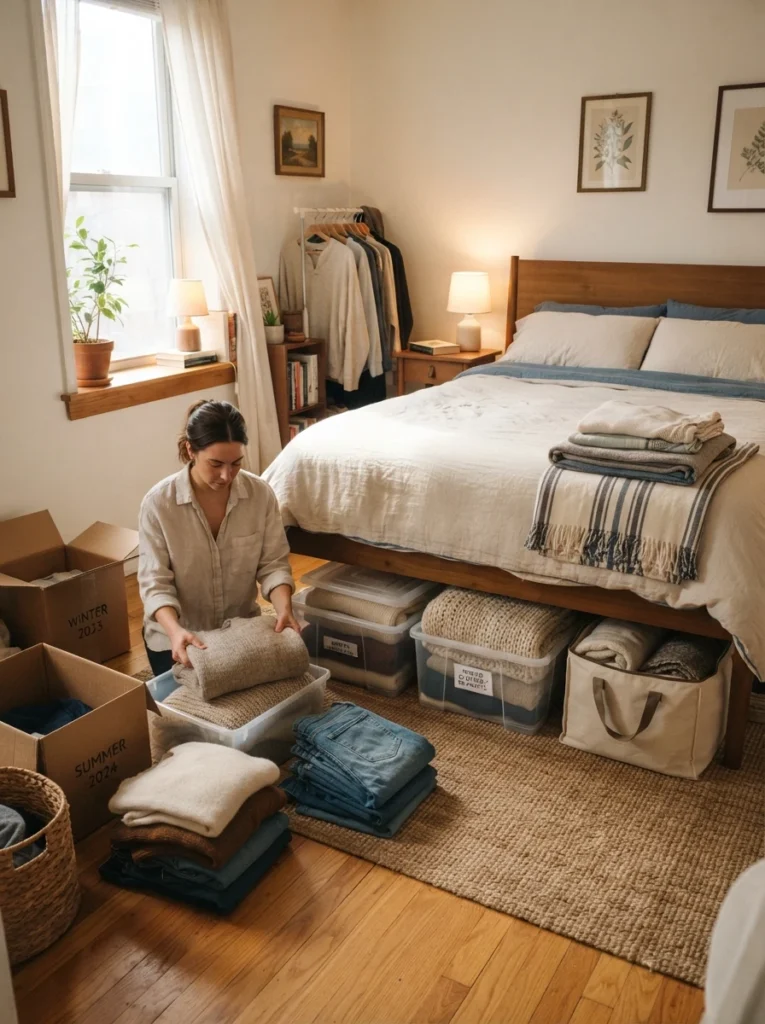
16. Use Soft Lighting to Make Storage Areas Feel Cleaner
Bedrooms with harsh overhead lighting often make hidden storage zones feel visually stressful because every shadow and object appears sharper and more chaotic. Softer ambient lighting changes how storage areas emotionally feel.
Warm bedside lamps or low evening lighting help bedrooms feel calmer overall, even when practical storage systems remain visible. This is why cozy hotel rooms often feel cleaner than bright apartments despite containing similar furniture density.
Lighting shapes emotional perception constantly.
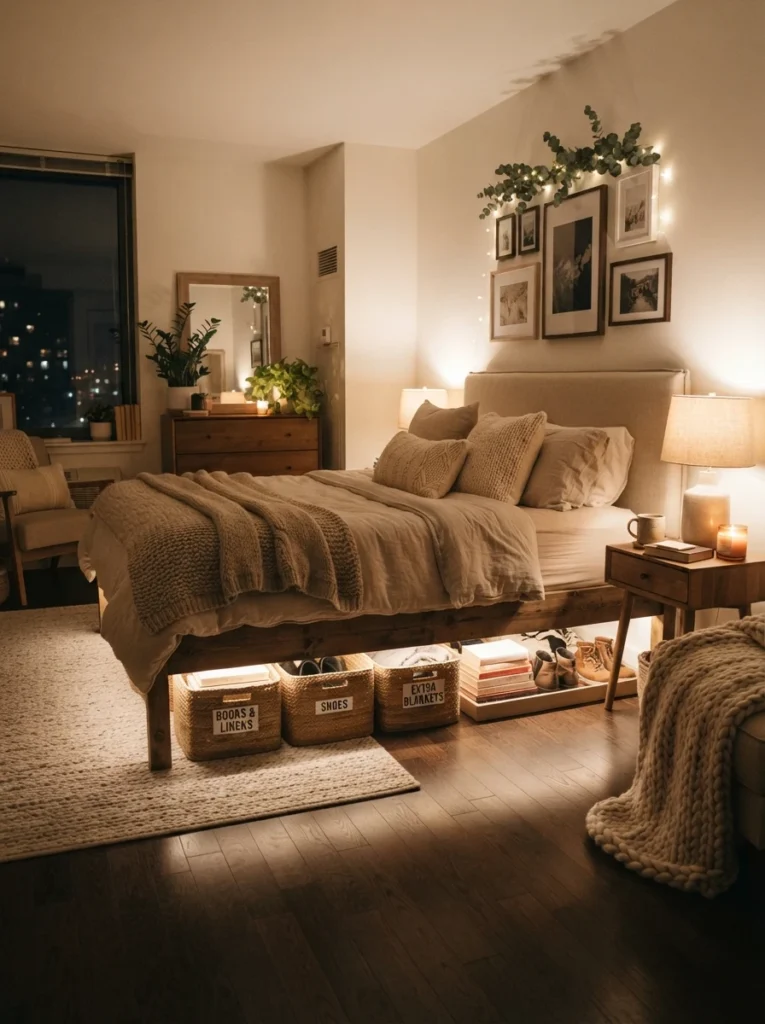
17. Build a System You Can Maintain When Tired
The best under-bed storage ideas are not the most aesthetic ones online. They are the systems people can realistically maintain during stressful weeks, rushed mornings, and mentally exhausting days.
If a storage setup requires too much folding, lifting, sorting, or effort, it eventually collapses into hidden clutter. Real organization should reduce friction, not create another unrealistic standard to fail at constantly.
Tiny bedrooms feel calm when systems quietly support real life instead of demanding perfection all the time.
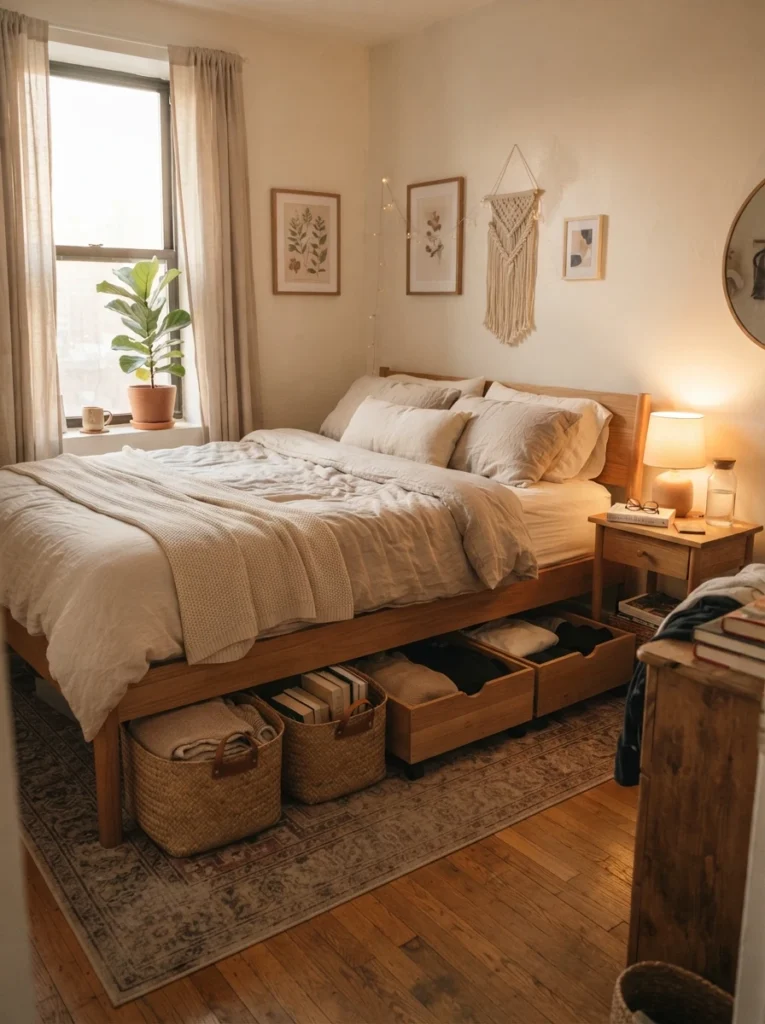
Final Thoughts
Under-bed storage can either quietly support a calm bedroom or secretly become another source of visual and mental stress. The difference usually comes down to simplicity, accessibility, and emotional realism.
The best systems are not necessarily the ones that hold the most items. They are the ones people can actually maintain consistently without turning organization into another exhausting task. Tiny bedrooms already ask a lot from limited space.
A good under-bed storage setup should make the room feel lighter, calmer, and easier to live in. Not like clutter has simply been pushed somewhere less visible.