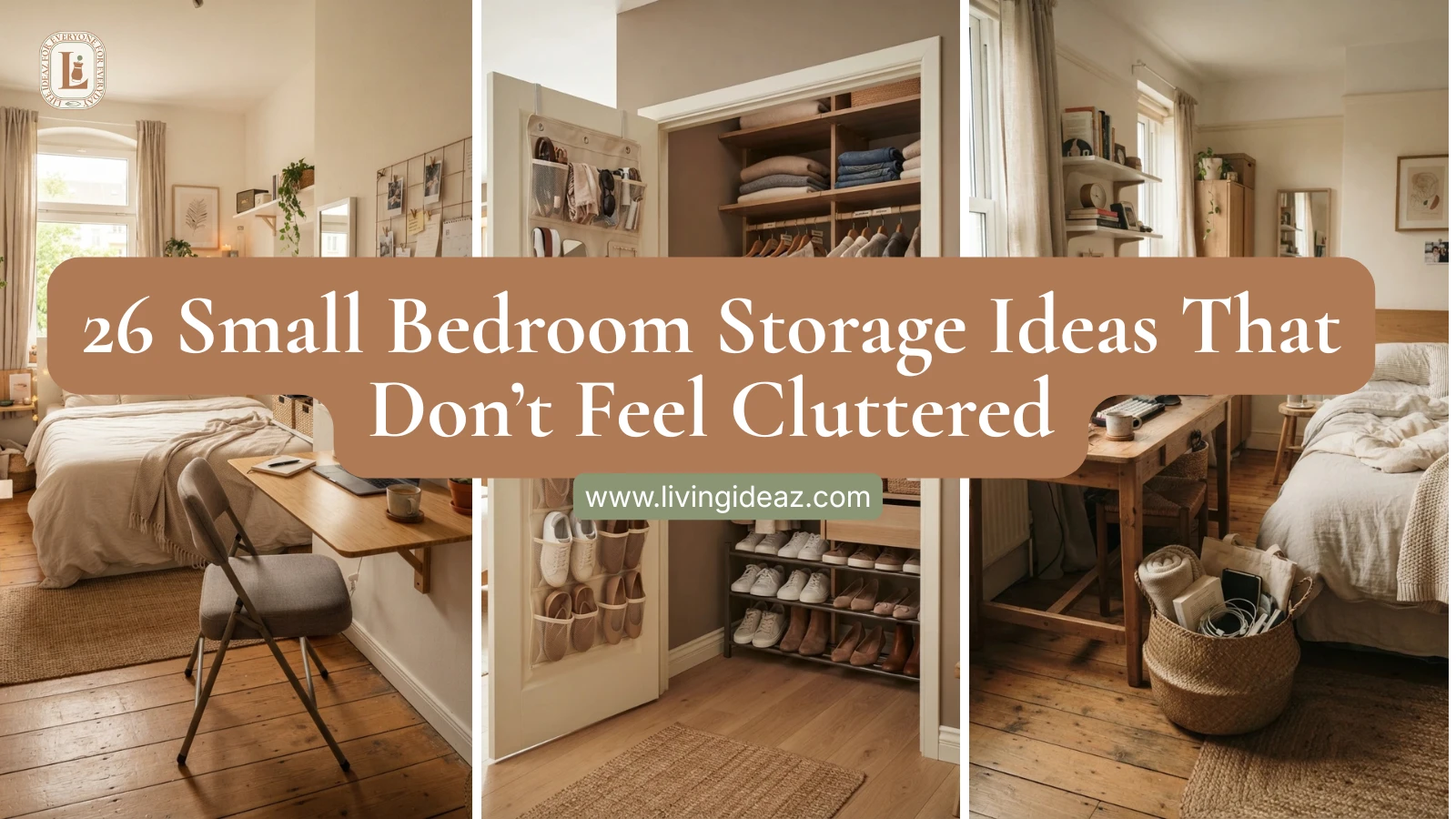
26 Small Bedroom Storage Ideas That Don’t Feel Cluttered
TL;DR
Small bedrooms rarely feel stressful because they are physically tiny. Most feel overwhelming because too many things compete for visual attention at once. The right storage ideas do not just “add more space.” They reduce visual noise, improve movement, and make daily routines feel calmer. These small bedroom storage ideas focus on realistic layouts, renter-friendly solutions, hidden storage, and cozy organization that actually works in real life.
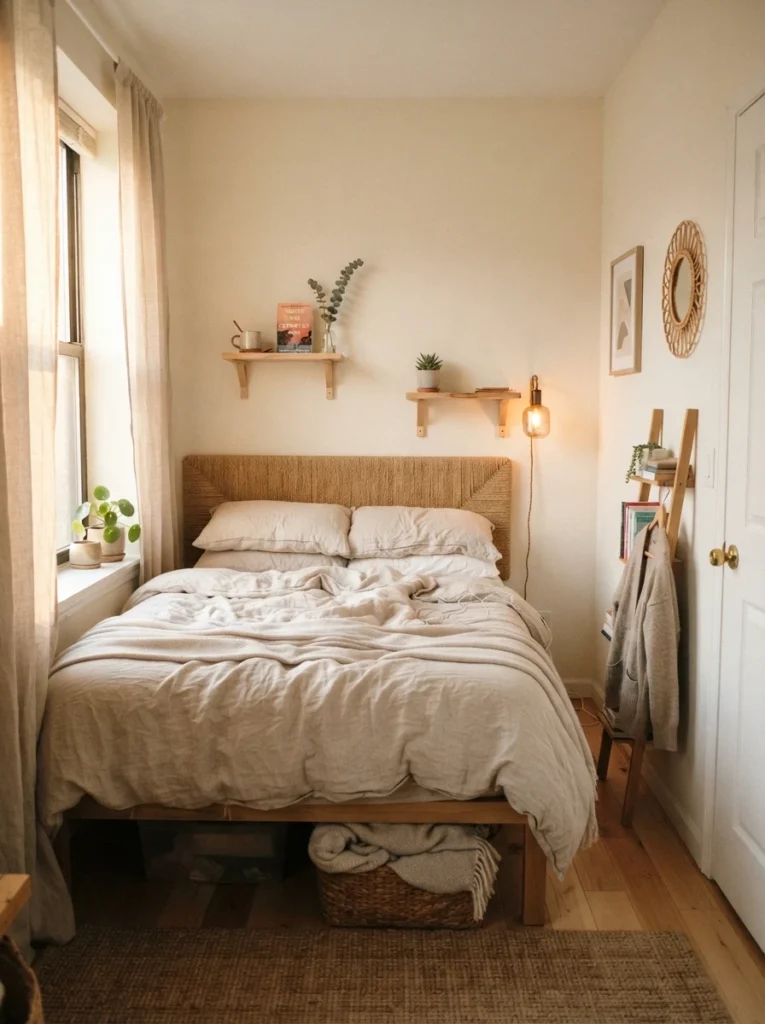
1. Use Vertical Wall Storage Above the Bed
One of the biggest mistakes in small bedrooms is leaving the upper half of the room completely unused while cramming everything near floor level. That imbalance quietly makes the room feel heavier and tighter. Vertical wall storage shifts visual weight upward, which naturally helps the room breathe a little more.
Slim floating shelves above the bed work especially well in apartments where closet space barely exists. They give books, candles, framed prints, or folded baskets a home without eating precious walking space. The trick is keeping styling minimal. Too many small objects instantly turn useful storage into visual clutter.
A long wooden shelf with hidden brackets usually feels calmer than multiple tiny shelves scattered randomly across the wall. Hotel rooms use this kind of visual simplicity constantly because it helps spaces feel mentally quieter.
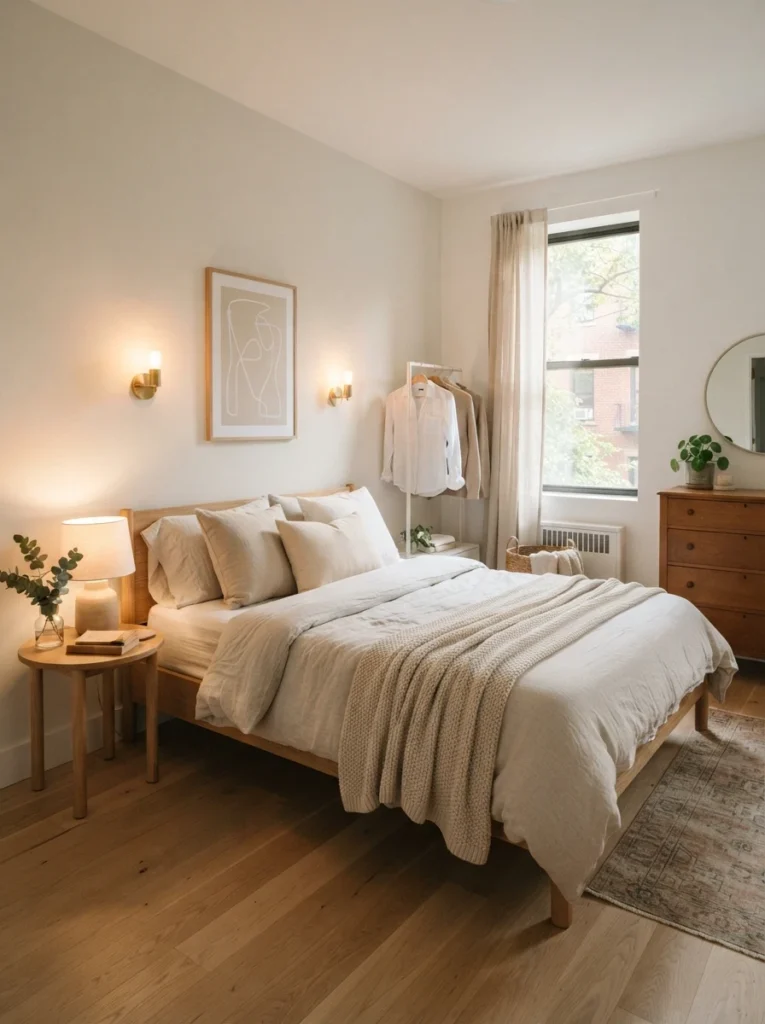
2. Replace Bulky Nightstands With Floating Shelves
Traditional nightstands are often too visually heavy for tiny bedrooms. Especially the chunky square ones that interrupt walking flow and collect random clutter within three days. Floating shelves create breathing room underneath, which immediately makes cramped bedrooms feel less boxed in.
This works particularly well beside beds pushed against walls in studio apartments. Even a single floating shelf can hold the essentials: phone charger, small lamp, water glass, and one or two personal items. The room starts feeling intentional instead of overcrowded.
Another hidden benefit is cleaning. Small bedrooms become dusty fast, and furniture with open floor space underneath is much easier to vacuum around. That sounds minor until you live in a tiny room for six months.
3. Try Under-Bed Storage That Stays Invisible
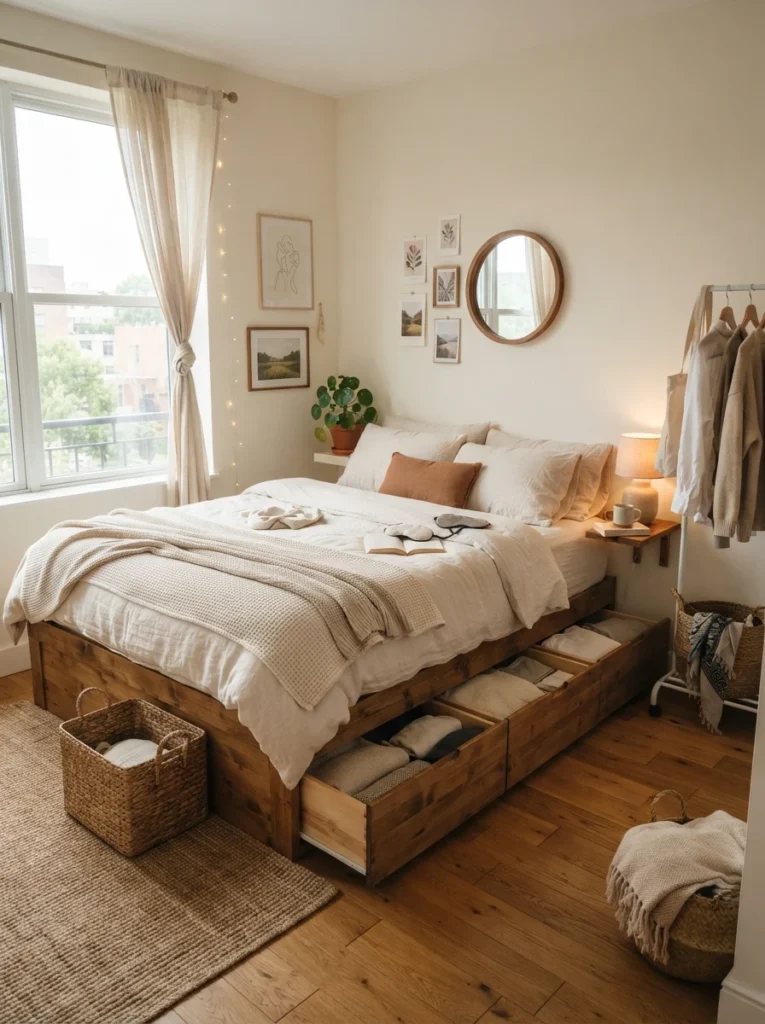
Under-bed storage can either save a small room or make it feel like hidden chaos lives beneath the mattress. Clear plastic bins packed with random items often create the psychological feeling of unfinished mess, even when technically organized.
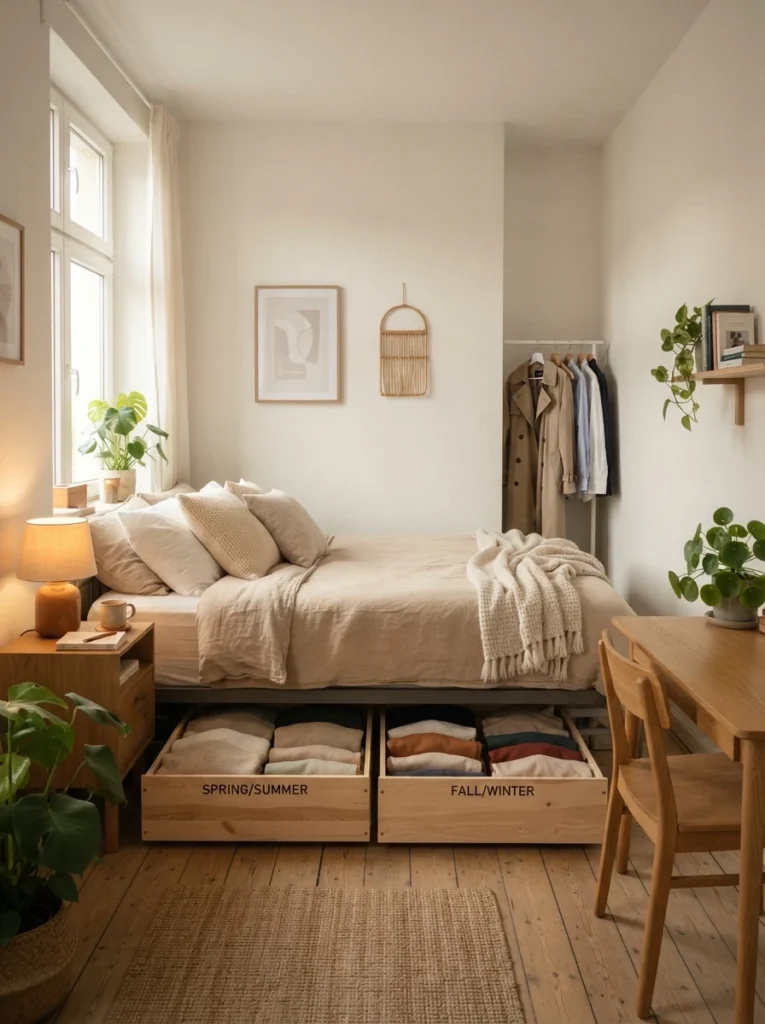
The best under-bed storage systems visually disappear. Fabric rolling bins, low wooden drawers, or matching woven containers tend to feel calmer because they blend into the room instead of screaming for attention every time you walk in.
This setup works especially well for off-season clothes, extra bedding, and shoes that normally pile into corners. The key is accessibility. If storage becomes annoying to reach, people stop using it properly and the room slowly returns to chaos.
4. Use a Storage Bench Under the Window
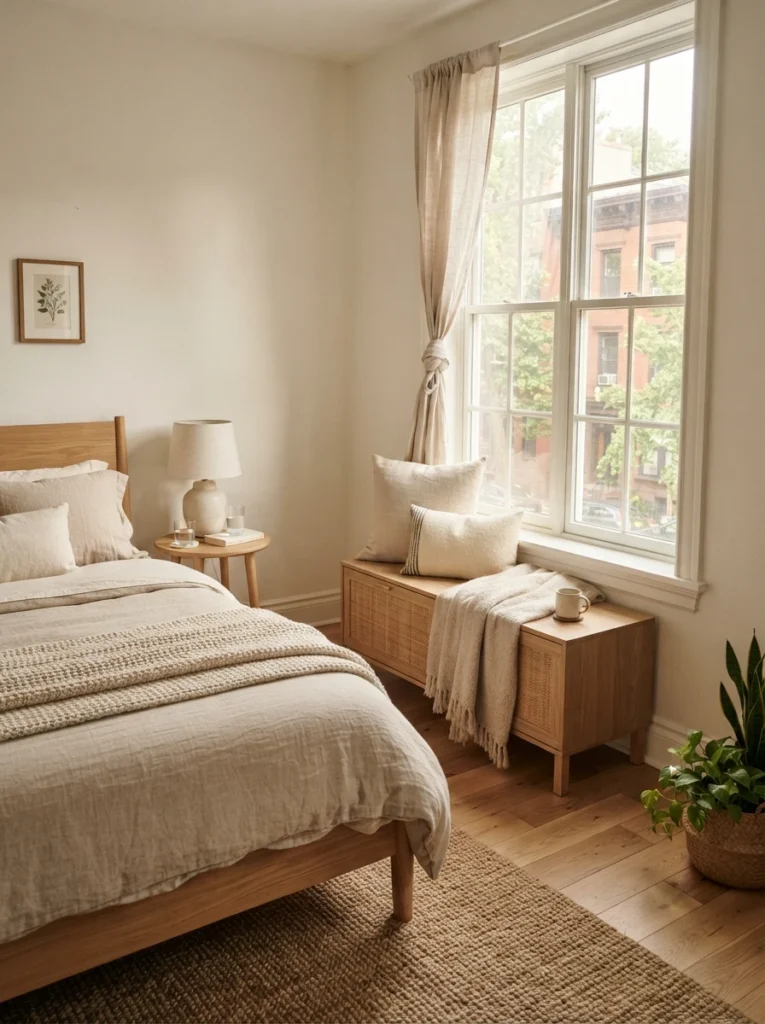
The awkward space beneath bedroom windows usually becomes wasted space or a random pile of clothes nobody planned to leave there. A slim storage bench fixes both problems at once by creating hidden storage and visual structure.
In smaller rooms, furniture that serves multiple purposes matters more than decorative furniture that only looks good in photos. A bench can store blankets, extra pillows, seasonal clothes, or even gym wear while also functioning as seating.
Soft textured cushions on top make the room feel warmer without introducing visual chaos. That balance matters. Some storage furniture technically adds organization but visually makes rooms feel busier and more stressful.
5. Add Narrow Dressers Instead of Wide Ones
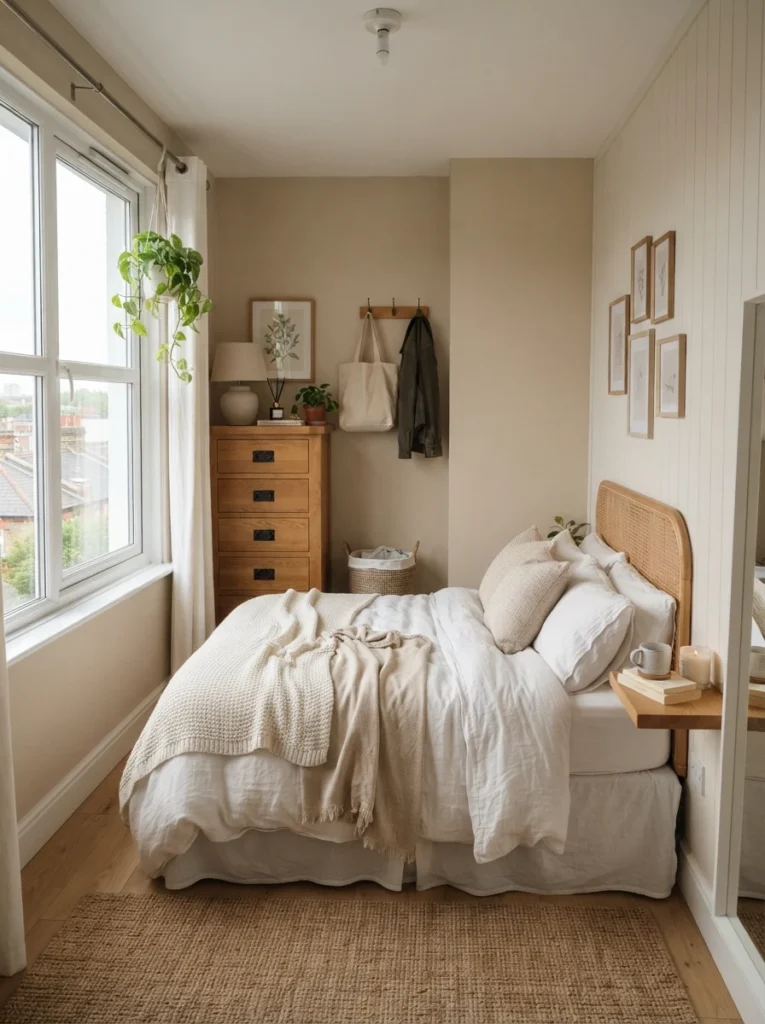
Wide dressers are one of the fastest ways to destroy movement flow in a small bedroom. They may technically store more, but they often make rooms feel compressed because they dominate horizontal space.
Tall narrow dressers work differently. They pull the eye upward instead of sideways, which creates the illusion of more openness. This is the same reason vertical mirrors and floor-to-ceiling curtains make small spaces feel taller.
Another advantage is flexibility. Narrow storage pieces fit into dead corners beside closets or awkward wall gaps where wide furniture would completely block circulation.
6. Hide Everyday Mess Inside Woven Baskets
Open storage looks beautiful online until real life enters the room. Chargers, socks, random papers, skincare products, and half-used notebooks quickly turn exposed shelving into visual overload. Woven baskets soften that chaos because they hide irregular objects while still feeling warm and decorative.
Bedrooms feel calmer when the eye cannot instantly process every single object in the room. That is why closed storage psychologically feels less stressful than open shelving packed with visible items.
Textured woven baskets also help small bedrooms avoid the cold “plastic storage bin” look that many organization systems accidentally create.
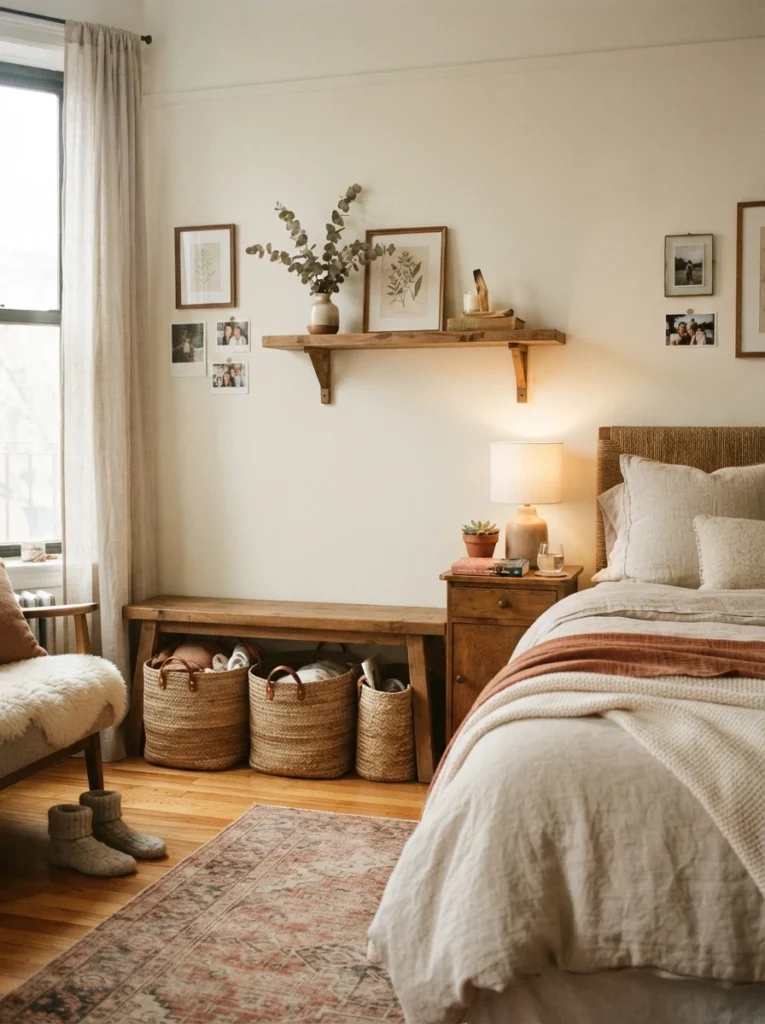
7. Use Wall Hooks Instead of a Chair Full of Clothes
Almost every small bedroom eventually develops “the chair.” The one holding hoodies, jeans, bags, and clothes that are not dirty enough for laundry but not clean enough for the closet. That pile quietly makes rooms feel messy all the time.
Wall hooks solve this surprisingly well because they give transitional clothing a designated home without consuming floor space. Wooden pegs or matte black hooks feel cleaner visually than overstuffed coat racks.
The placement matters though. Hooks near the entry side of the room usually work better than hooks directly beside the bed, where hanging clothes can start feeling visually overwhelming while trying to relax.
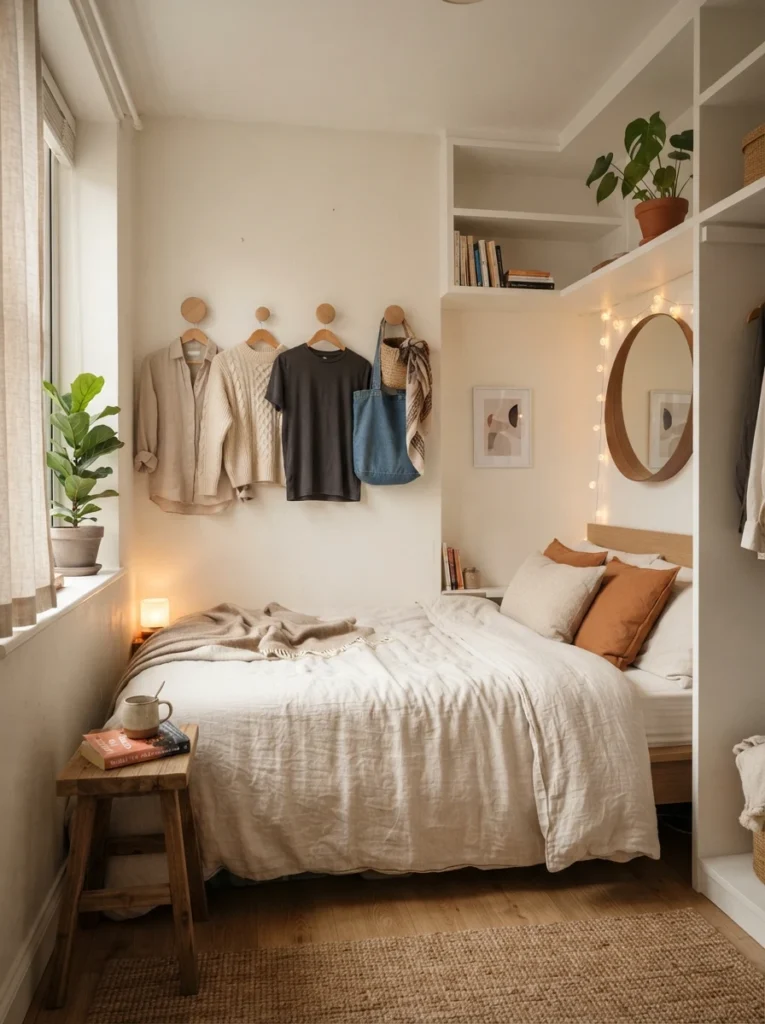
8. Choose Beds With Built-In Storage Drawers
Some bed frames waste an unbelievable amount of usable storage space underneath. In tiny bedrooms, that hidden volume matters. Beds with integrated drawers quietly eliminate the need for extra storage furniture, which instantly improves walking space.
This works especially well in apartments where closets are shallow or nearly nonexistent. Instead of squeezing another cabinet into the room, the bed itself becomes part of the organization system.
The best designs keep drawer fronts visually simple. Overly detailed storage beds can make small bedrooms feel bulky and heavy instead of calm and functional.
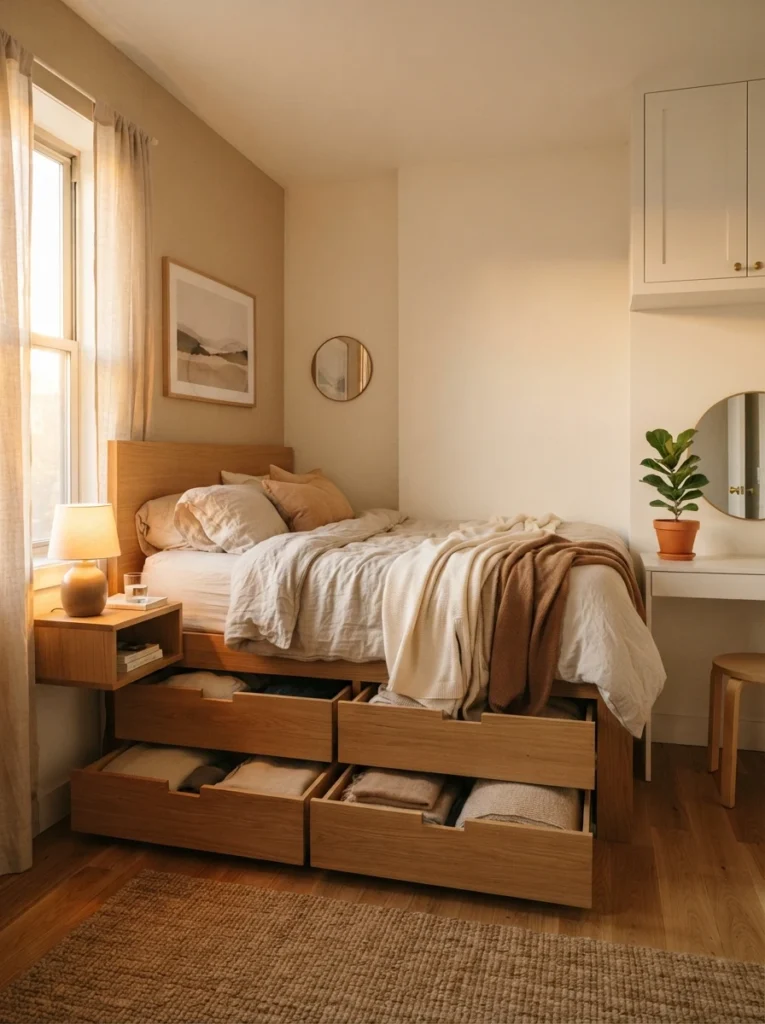
9. Use Matching Storage Containers Instead of Random Bins
One hidden reason small bedrooms feel chaotic is inconsistency. Random plastic containers, mismatched boxes, and leftover baskets create visual fragmentation, even when everything is technically organized. The brain keeps processing every shape, color, and texture separately, which quietly makes the room feel mentally noisy.
Matching storage containers create visual calm because they reduce decision fatigue. This is why organized hotel closets and boutique interiors feel instantly cleaner. Uniformity helps the eye relax instead of constantly scanning for visual information.
Soft neutral containers usually work better in tiny rooms than bright colors or transparent plastic. Clear bins often expose clutter instead of reducing it, especially when packed with miscellaneous everyday items.
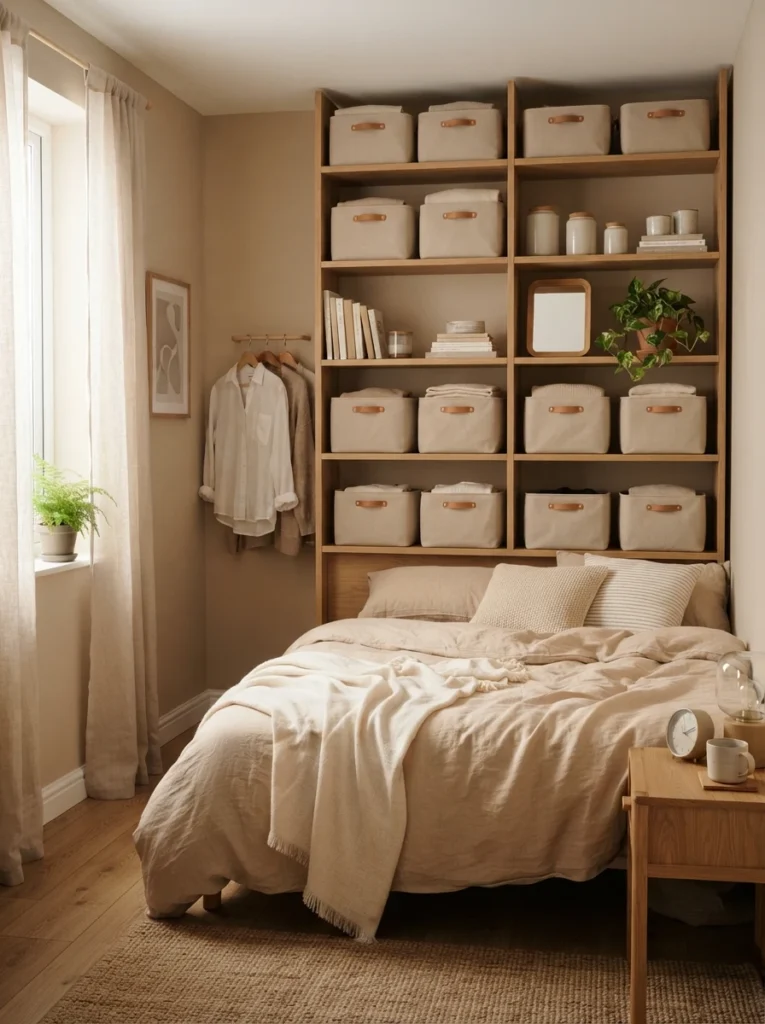
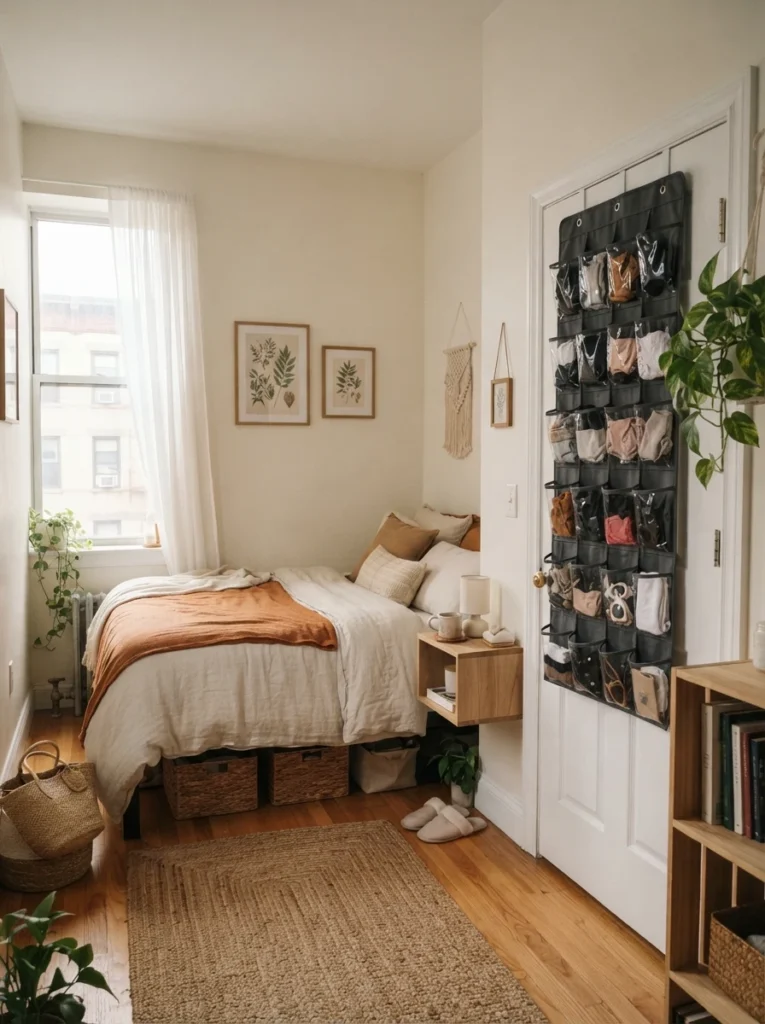
10. Turn the Back of the Door Into Hidden Storage
The back of a bedroom door is one of the most ignored storage zones in small apartments. Most people leave it completely empty while struggling to fit essentials elsewhere. Slim over-the-door organizers can hold accessories, scarves, skincare, cleaning supplies, or even folded clothing without making the room feel more crowded.
The reason this works so well psychologically is because it keeps functional items hidden from direct sightlines. Bedrooms feel calmer when storage blends into the background instead of dominating the visual field.
The mistake many people make is overloading door storage until it bulges outward awkwardly. Once it becomes visually bulky, the room starts feeling chaotic again.
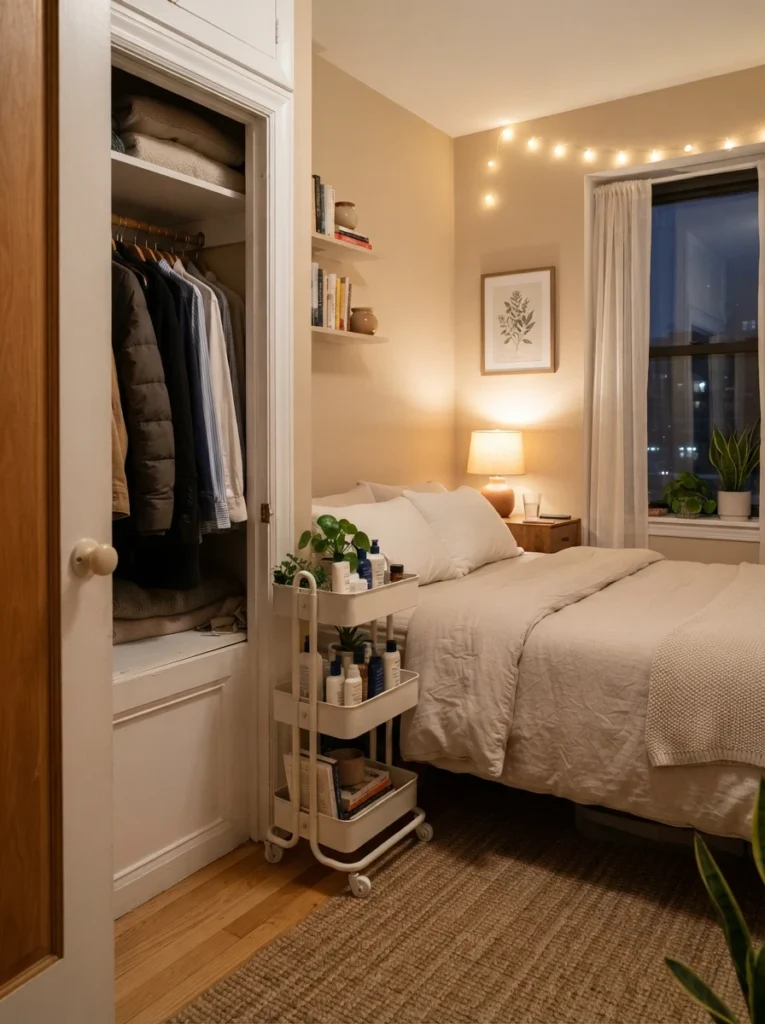
11. Add a Slim Rolling Cart Beside the Closet
Some bedrooms simply do not have enough built-in storage, especially older apartments with tiny closets and awkward layouts. A narrow rolling cart beside the closet can quietly hold everyday essentials without permanently consuming space.
This works especially well for skincare products, folded basics, chargers, hair tools, or accessories that normally scatter across dressers and desks. The mobility matters more than people realize. Being able to move storage around makes tiny bedrooms feel more adaptable and less trapped.
Metal carts can sometimes feel visually cold, so adding soft baskets or linen liners helps the setup feel warmer and more integrated into the room.
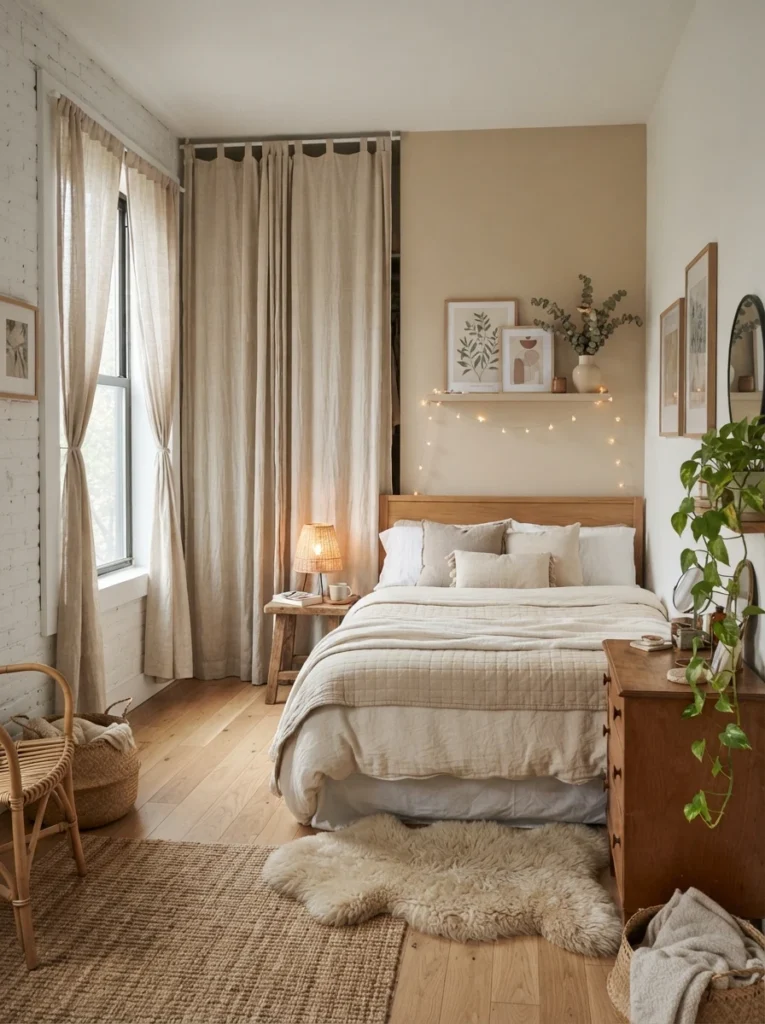
12. Use Floor-to-Ceiling Curtains to Hide Storage Areas
Open storage zones often create low-level stress because the eye constantly notices unfinished visual details. A simple curtain panel can completely soften that effect while making a room feel taller at the same time.
Floor-to-ceiling curtains are especially useful in studio apartments where clothing racks, shelving units, or stacked storage become visually overwhelming. Soft fabric creates visual separation without the heaviness of large cabinets or room dividers.
Lighter fabrics usually work best in tiny bedrooms because thick dark curtains can visually absorb space and make rooms feel smaller. Linen textures tend to create the softest atmosphere.
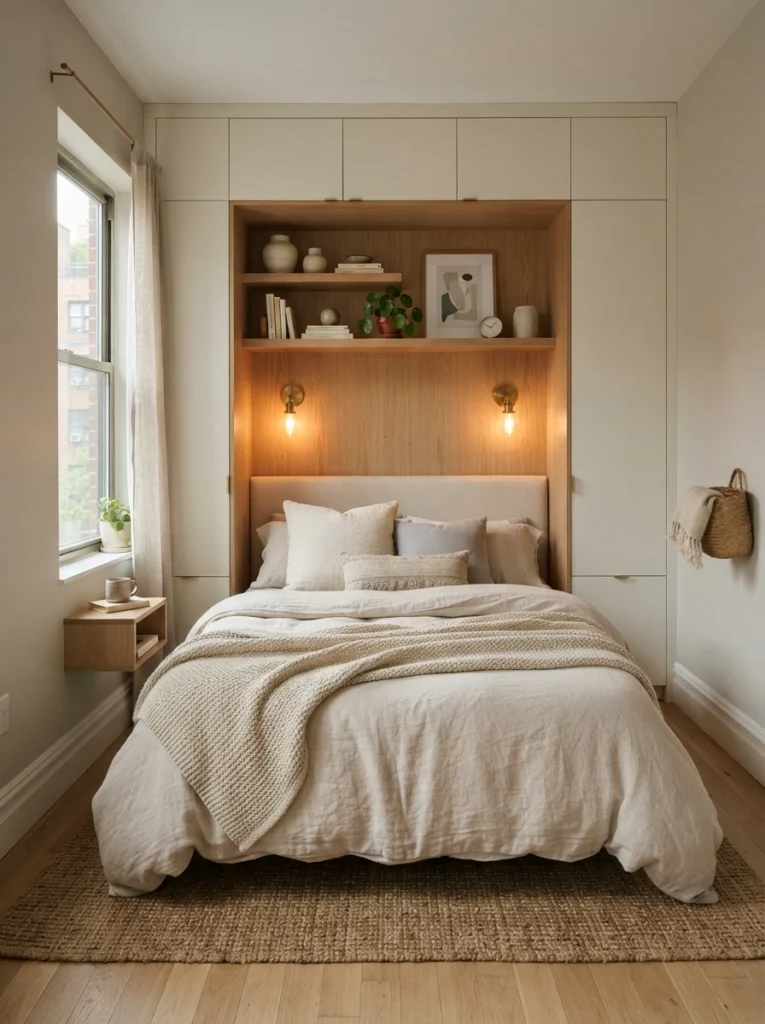
13. Create a Mini Storage Zone Around the Headboard
The area around the headboard is often wasted visually. Instead of treating the bed as a standalone object, small bedrooms work better when the surrounding wall becomes part of the storage system.
Wall sconces, slim shelves, hanging organizers, and narrow cabinets around the bed can replace multiple pieces of furniture elsewhere in the room. This creates a more intentional layout while reducing clutter spread across different corners.
The key is balance. Too much storage directly around the bed starts feeling mentally crowded, especially before sleep. Bedrooms should still feel visually restful even when highly functional.
14. Store Seasonal Clothes Somewhere Else
One reason tiny bedrooms feel impossible to organize is because people try to store every season inside the same limited space all year long. Heavy winter blankets, coats, boots, and thick sweaters quietly consume enormous storage volume even during warm months.
Vacuum-sealed bags under the bed or storage containers placed in less-used areas instantly free up breathing room. Small bedrooms feel calmer when only current daily-life items remain visible and accessible.
This is also why luxury hotel rooms feel relaxing. They only expose what is necessary in the moment instead of visually overwhelming guests with excess belongings.
15. Use Mirrors to Reduce Visual Heaviness
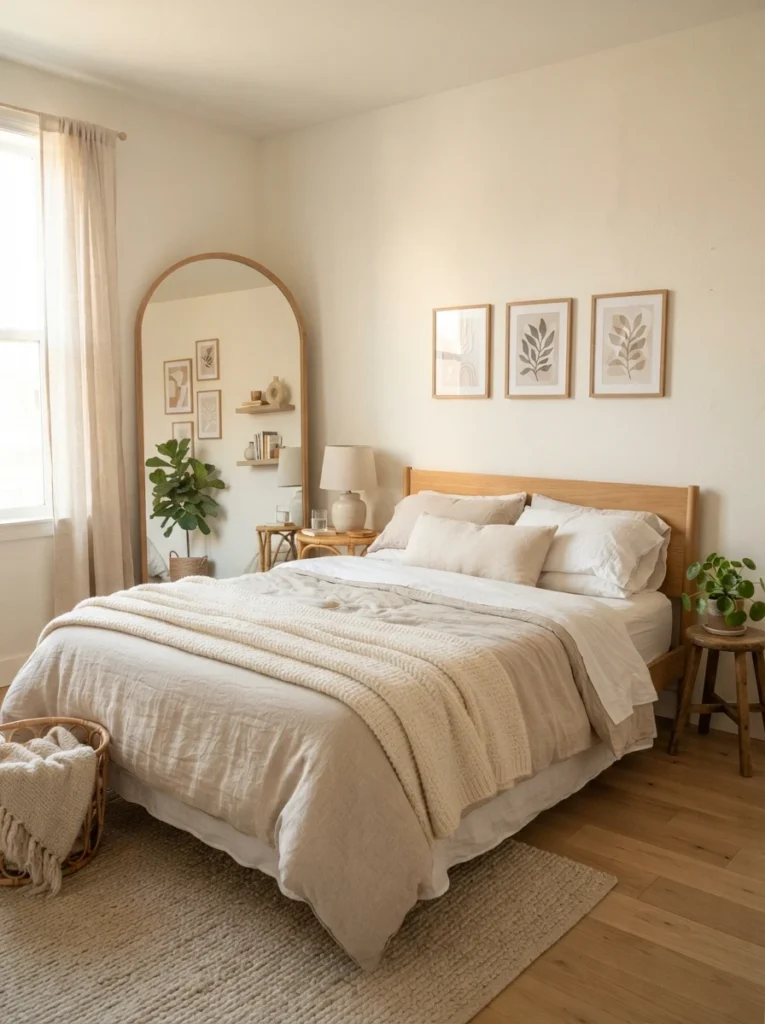
Mirrors cannot physically create storage, but they dramatically change how crowded a small bedroom feels. Rooms with too many dark surfaces and heavy furniture often feel visually compressed because light has nowhere to travel.
A large mirror near natural light reflects brightness across the room and softens visual density. This works particularly well beside dressers or opposite windows in narrow bedrooms.
The placement matters more than the mirror itself. Mirrors reflecting clutter usually double the feeling of chaos instead of helping the room feel bigger.
16. Stop Overdecorating Every Surface
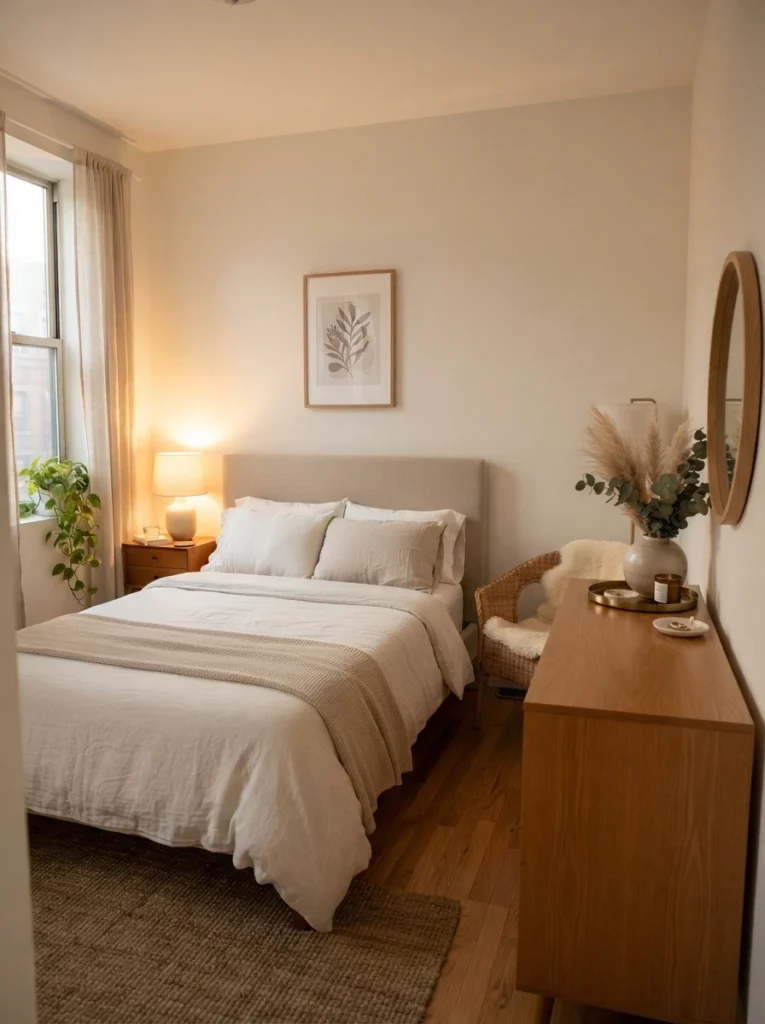
One hidden reason small bedrooms feel stressful is because every flat surface becomes a display area. Candles, skincare, books, trays, framed art, jewelry, plants, and random decor slowly accumulate until the room loses visual breathing space.
Pinterest photos often hide this reality by styling rooms for cameras instead of daily life. Real bedrooms need empty space too. Empty surfaces help the mind relax because the eye has fewer things competing for attention.
This does not mean bedrooms should feel cold or empty. It means decor should feel intentional instead of crowded.
17. Use Corner Shelving in Dead Spaces
Bedroom corners often become awkward dumping zones because standard furniture rarely fits them properly. Shoes pile there, laundry baskets migrate there, and suddenly the room starts feeling unfinished no matter how clean everything else is.
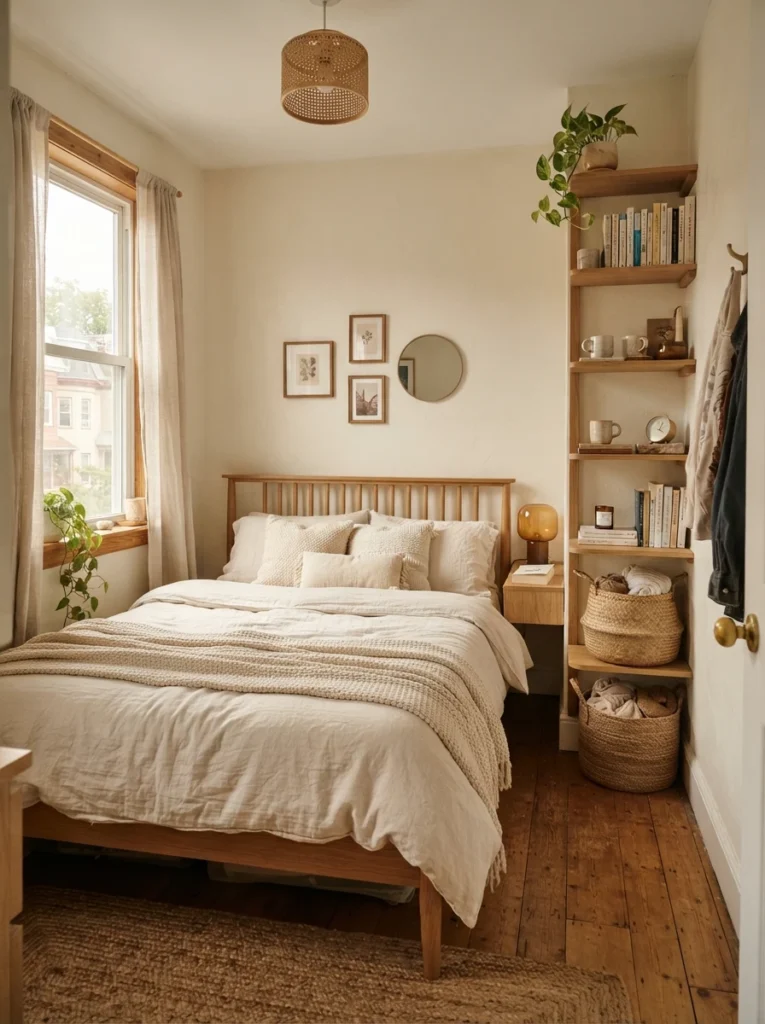
Slim corner shelving helps convert forgotten space into functional storage without interrupting movement flow. This works especially well for books, folded linens, small plants, or decorative baskets that soften visual emptiness without overwhelming the room.
The important detail is scale. Oversized corner units can accidentally make tiny bedrooms feel tighter. Light open shelving usually feels less visually heavy than chunky cabinets.
18. Add Soft Lighting Instead of More Decor
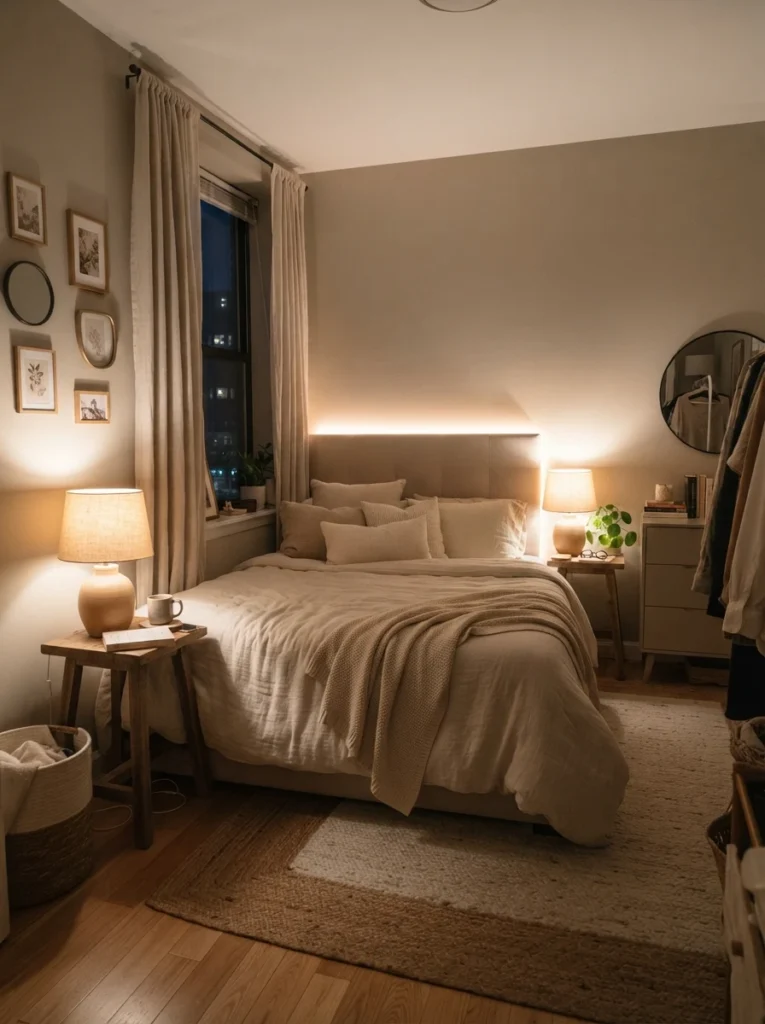
Many people try to make small bedrooms feel cozy by adding more objects, but warmth usually comes from lighting, not clutter. Soft layered lighting changes how a room feels emotionally without consuming any physical space.
Table lamps, wall sconces, and warm LED strips behind headboards create depth and softness that harsh ceiling lights never achieve. Hotel rooms understand this extremely well. They rarely rely on one bright overhead light because it makes spaces feel flat and emotionally cold.
Bedrooms with softer lighting often appear cleaner too because shadows reduce visual harshness and help clutter feel less aggressive.
19. Use a Peg Rail for Everyday Essentials
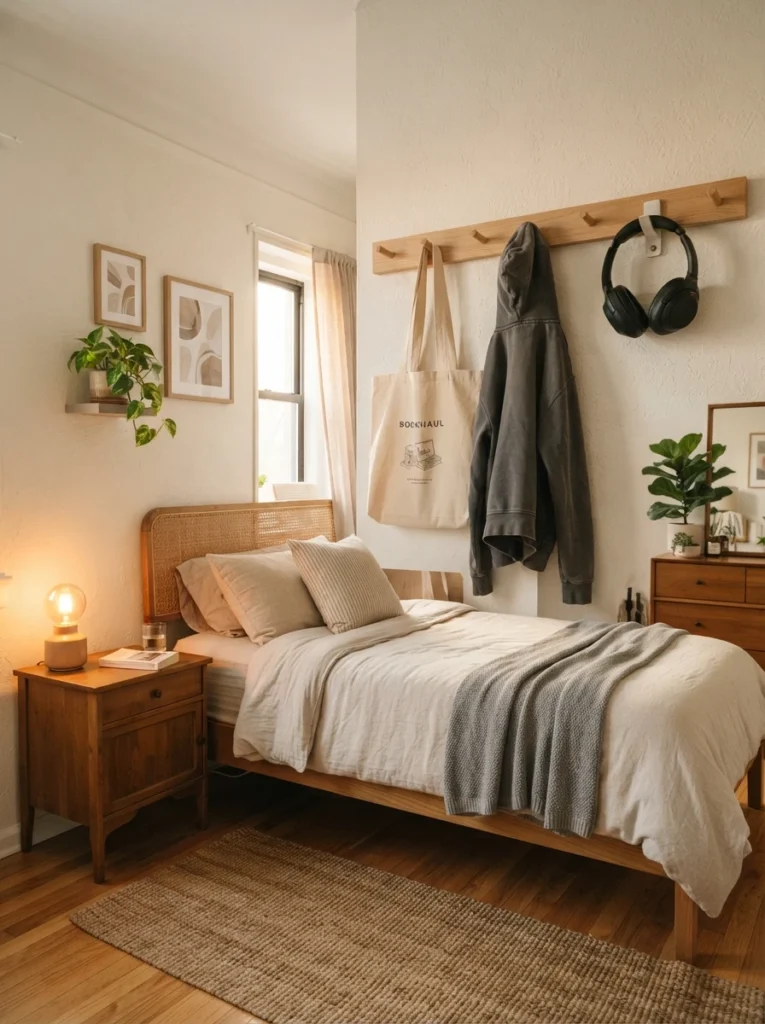
Traditional storage systems sometimes fail simply because they are inconvenient. When people are tired, they usually toss bags, hoodies, or headphones onto the nearest surface instead of carefully organizing them inside drawers.
A simple wooden peg rail makes daily-use items easier to access while keeping them visually controlled. It creates a designated drop zone without needing extra furniture, which is especially valuable in tiny bedrooms where floor space disappears quickly.
The best peg rails look intentionally styled instead of overloaded. Once every hook is crowded, the room immediately starts feeling visually chaotic again.
20. Keep Open Shelving Only Half Full
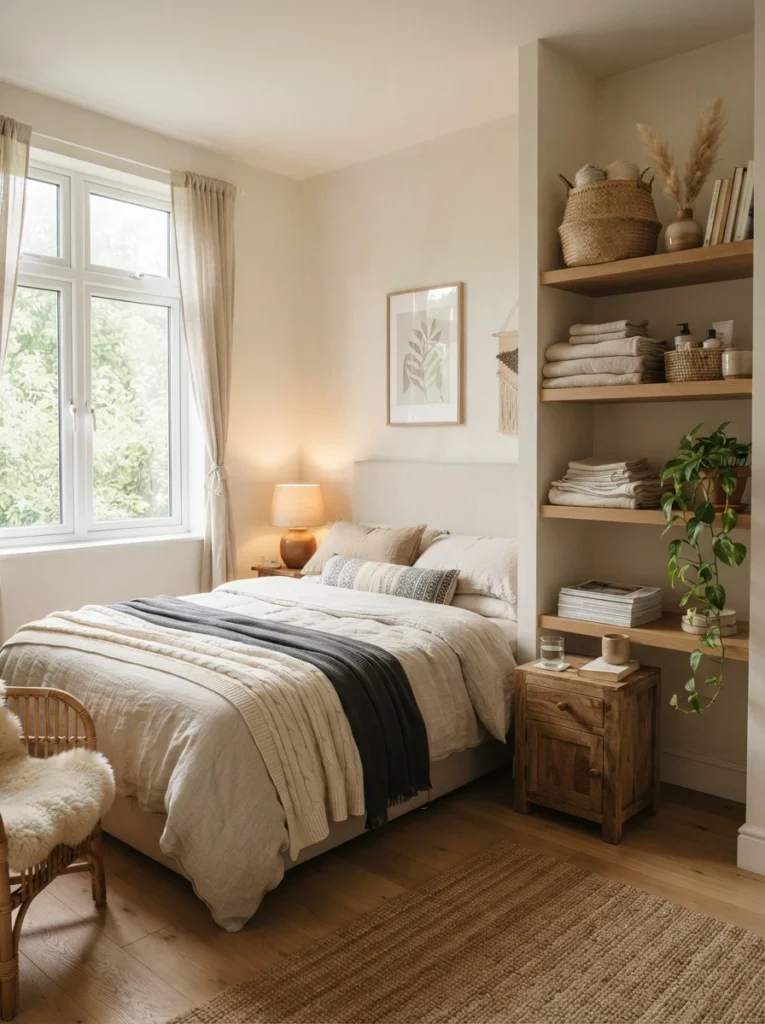
Open shelving looks beautiful in theory but stressful in real life when every inch becomes packed. One of the simplest ways to make storage feel calmer is leaving intentional empty space between objects.
Half-full shelving gives the eye room to rest. Bedrooms instantly feel lighter when shelves contain grouped items instead of visual overload. This is why luxury boutiques and styled interiors never overcrowd displays even when they have plenty of products.
A few folded linens, one framed print, and two woven baskets usually feel better than twenty tiny decorative objects fighting for attention.
21. Use Slim Wall Sconces Instead of Table Lamps
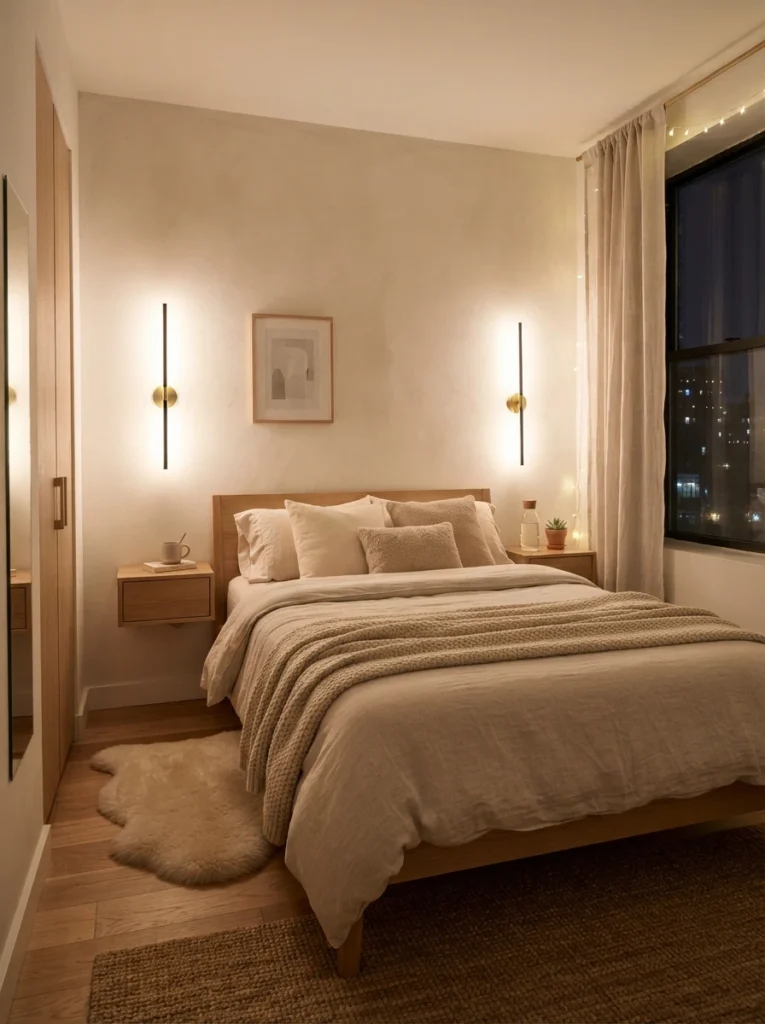
Table lamps quietly consume more space than people realize in tiny bedrooms. Small nightstands already struggle to hold essentials, and bulky lamps often create unnecessary visual crowding beside the bed.
Wall sconces free up surface space while making bedrooms feel more intentional and layered. Adjustable sconces are especially practical for readers or people working from bed in compact apartments.
The visual difference matters too. Wall-mounted lighting keeps furniture surfaces cleaner, which subconsciously makes the room feel more organized and breathable.
22. Turn Closet Doors Into Functional Storage
Closet interiors are often disorganized, but the doors themselves usually stay completely empty. Hooks, hanging organizers, or slim mounted racks can hold accessories and smaller essentials without affecting the room’s main layout.
This works particularly well for jewelry, scarves, belts, small bags, or even folded basics. Hidden organization systems reduce visible clutter, which helps bedrooms feel calmer emotionally even when storage capacity stays the same.
The goal is reducing visual exposure, not simply hiding random mess behind doors.
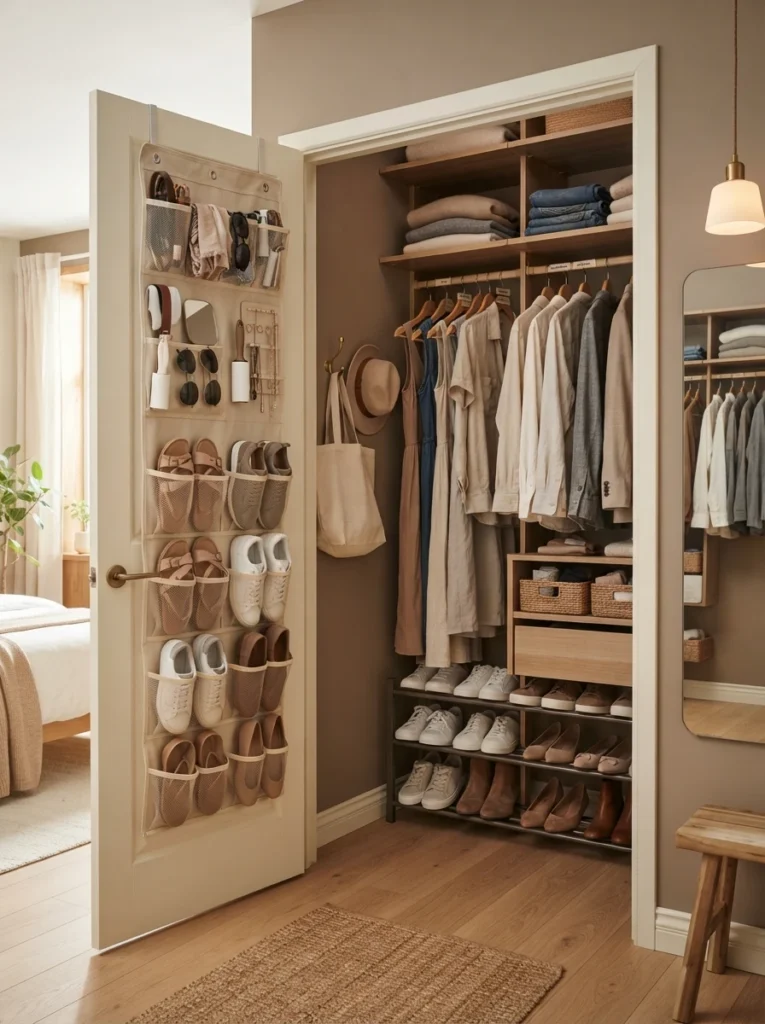
23. Use Low-Profile Furniture That Shows More Floor
Furniture that sits directly on the floor often makes tiny bedrooms feel visually heavy because it blocks sightlines and hides floor space. Low-profile furniture with visible legs creates openness by allowing more light and flooring to remain visible.
This subtle change dramatically affects how spacious a room feels psychologically. Even a few inches of visible flooring can make cramped bedrooms appear lighter and less compressed.
Mid-century-inspired furniture styles work particularly well because they naturally prioritize slimmer shapes and elevated frames.
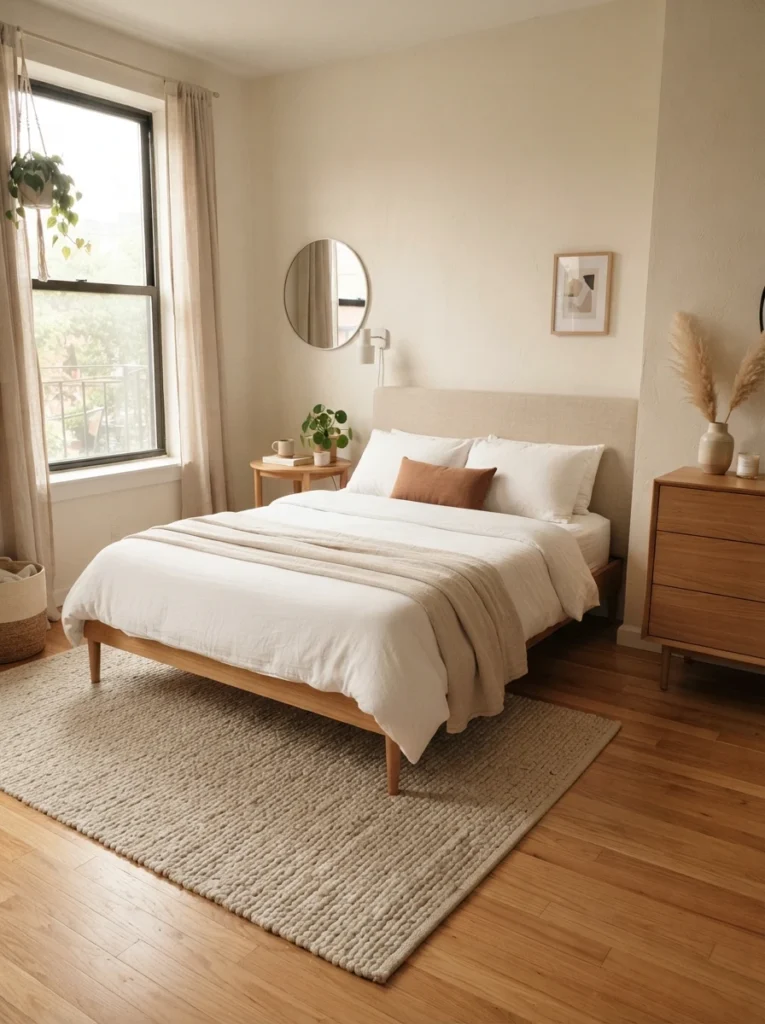
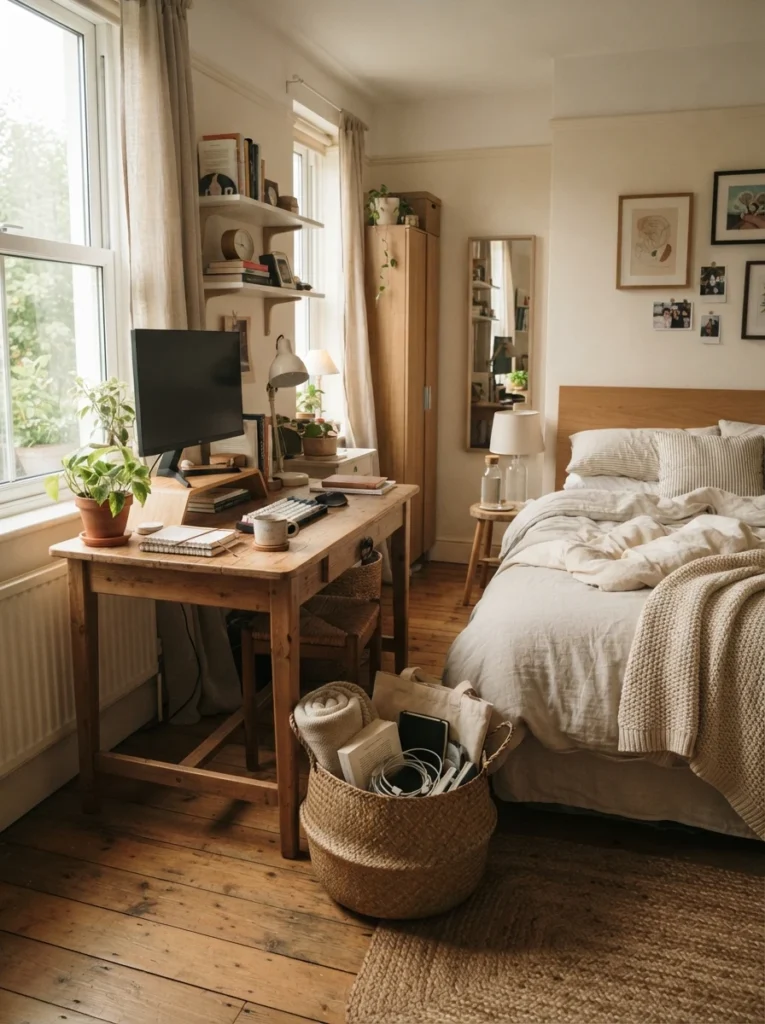
24. Create One Dedicated “Mess Zone”
Perfect organization systems fail because real people are not perfectly organized every day. Tiny bedrooms become stressful when there is nowhere for temporary mess to exist naturally.
A single woven basket, drawer, or storage cube designated for “daily overflow” prevents clutter from spreading across the entire room. Chargers, notebooks, random receipts, and half-finished tasks stay contained instead of visually invading every surface.
This works because controlled clutter feels psychologically lighter than scattered clutter.
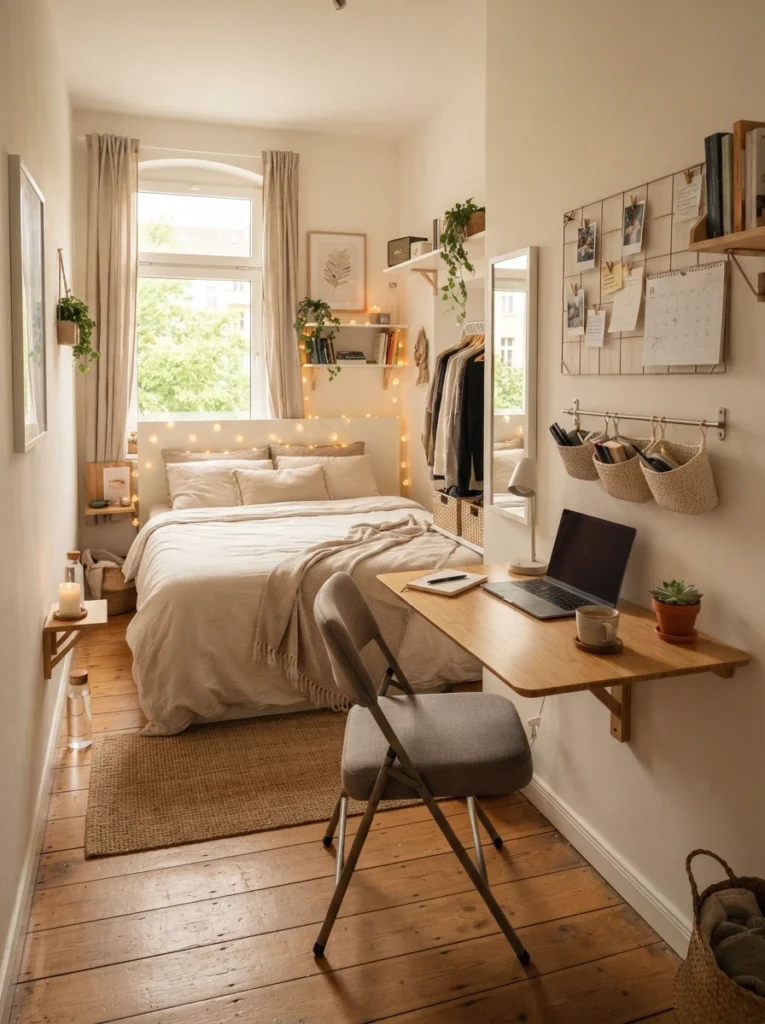
25. Use Foldable Furniture in Multi-Use Bedrooms
Small bedrooms often function as sleeping spaces, offices, dressing rooms, and relaxation zones simultaneously. Furniture that folds away helps rooms adapt throughout the day instead of feeling permanently crowded.
Foldable desks, collapsible laundry hampers, and nesting tables work especially well in studio apartments where flexibility matters constantly. Spaces feel calmer when furniture appears only when needed instead of permanently occupying valuable floor area.
The key is choosing pieces that still feel aesthetically warm. Some foldable furniture looks overly temporary or cold, which can make bedrooms feel less cozy emotionally.
26. Prioritize Visual Calm Over Maximum Storage
One of the biggest small-bedroom mistakes is trying to maximize every possible inch of storage. Technically, more storage sounds helpful. Emotionally, overfilled rooms often feel suffocating no matter how organized they are.
A calm bedroom usually contains less visible stuff, fewer bulky furniture pieces, softer lighting, and more intentional spacing. The goal is not turning your room into a storage unit disguised as a bedroom.
The most relaxing small bedrooms balance practicality with visual breathing room. That balance is what makes spaces feel peaceful instead of constantly overstimulating.
Final Thoughts
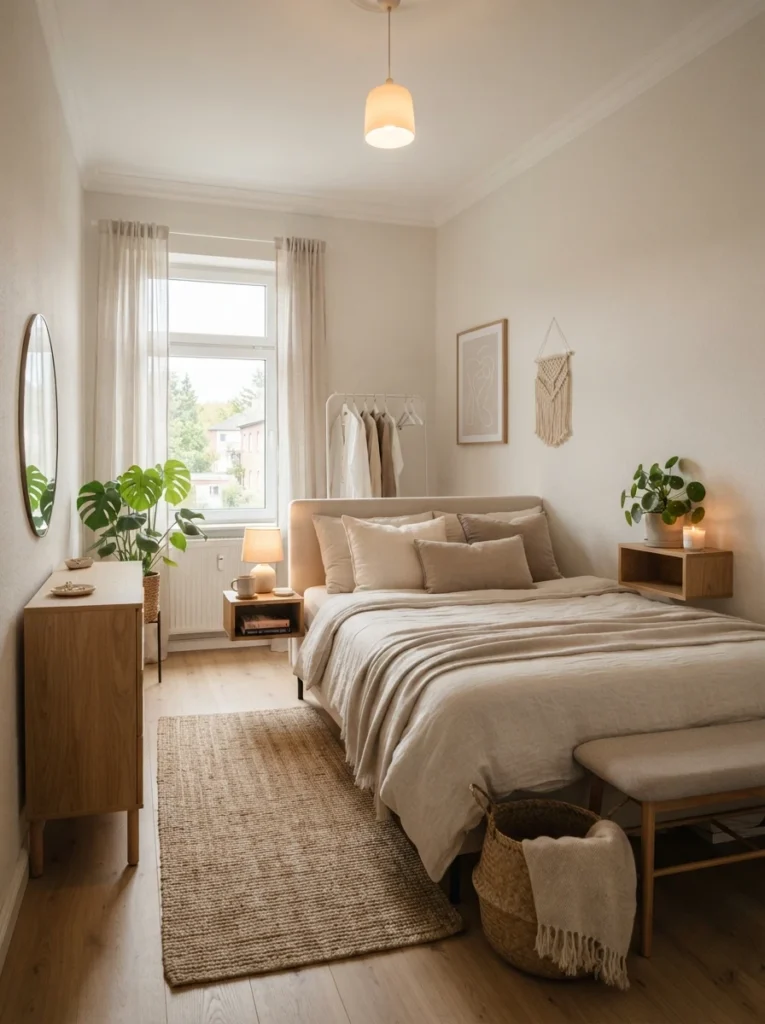
Small bedrooms do not need to feel chaotic, cramped, or emotionally exhausting. Most of the stress comes from visual overload, awkward furniture choices, poor storage flow, and layouts that ignore how people actually live day to day.
The best small bedroom storage ideas are not necessarily the ones that hold the most stuff. They are the ones that make the room easier to move through, easier to clean, easier to relax in, and visually calmer to exist inside.
A bedroom should not feel like a constant reminder of unfinished tasks and hidden clutter. Even tiny spaces can feel soft, functional, cozy, and emotionally lighter when storage works with the room instead of fighting against it.