

21 Cozy Small Bedroom Ideas That Feel Calm and Relaxing
TL;DR
A cozy small bedroom is not about stuffing a room with soft blankets and trendy decor. The calmest bedrooms usually feel emotionally safe because they reduce visual stress, soften lighting, improve layout flow, and create a sense of quiet separation from daily chaos. These cozy small bedroom ideas focus on warmth, realism, comfort, and practical atmosphere without making tiny spaces feel crowded.
1. Use Warm Layered Lighting Instead of One Bright Ceiling Light
Many small bedrooms feel emotionally cold because the lighting is too harsh and flat. One bright overhead light exposes every corner equally, which often makes cramped rooms feel more stressful and visually aggressive at night.
Layered lighting changes the mood instantly. A warm bedside lamp, soft wall sconces, and subtle ambient lighting create pockets of softness that help the brain relax. Hotels rely heavily on this approach because softer light naturally slows the nervous system down.
Warm bulbs around 2700K usually create the calmest atmosphere. Cool white lighting often makes bedrooms feel more like office spaces than restful environments.
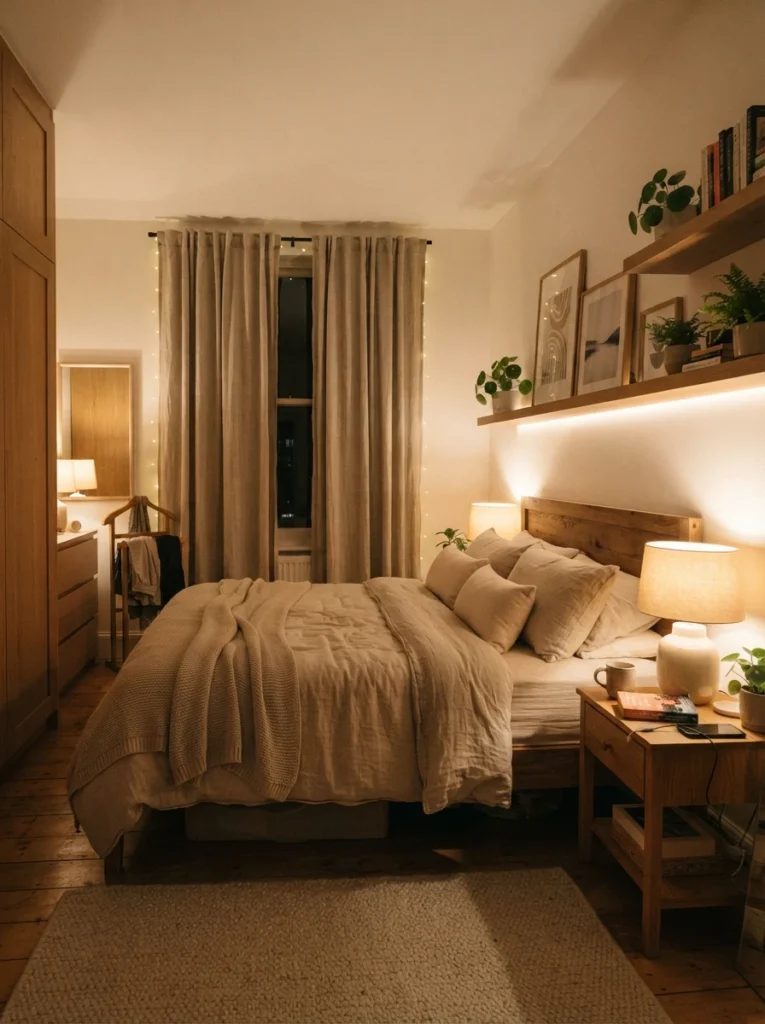
2. Choose Bedding That Looks Soft Even During the Day
Perfectly stiff bedding often looks visually cold in small bedrooms. Slightly relaxed linen textures, layered blankets, and soft neutral fabrics create warmth because they feel lived-in instead of staged.
This matters more in tiny rooms because the bed usually becomes the visual center of the entire space. If the bedding feels harsh or overly polished, the whole room can unintentionally feel emotionally distant.
Soft cream, warm white, muted taupe, and earthy tones tend to create calmer energy than overly bright whites or intense colors. Texture matters more than expensive materials.
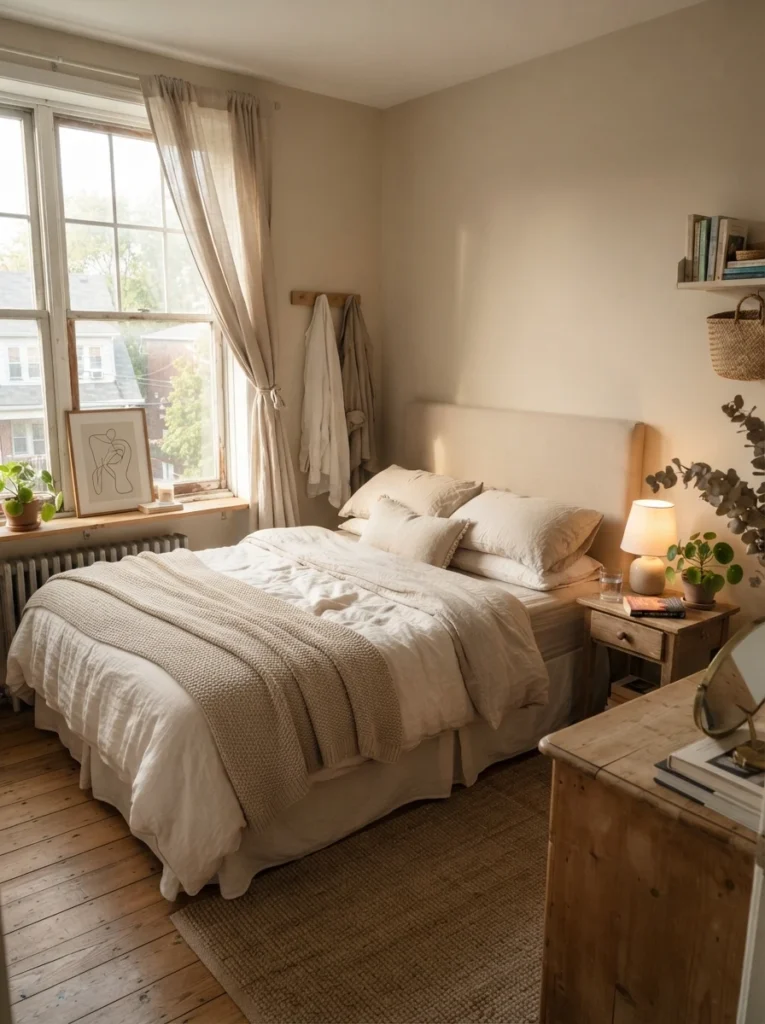
3. Keep Furniture Lower to the Ground
Low-profile furniture quietly makes small bedrooms feel calmer because it opens visual space above eye level. Rooms feel less cramped when heavy furniture does not dominate the entire vertical field.
This is one reason Japanese-inspired interiors often feel peaceful even in tiny spaces. Lower beds and slim furniture create more visual breathing room, which reduces mental heaviness inside compact rooms.
Bulky tall furniture can unintentionally make ceilings feel lower and spaces feel compressed. In small bedrooms, visual weight matters almost as much as actual square footage.
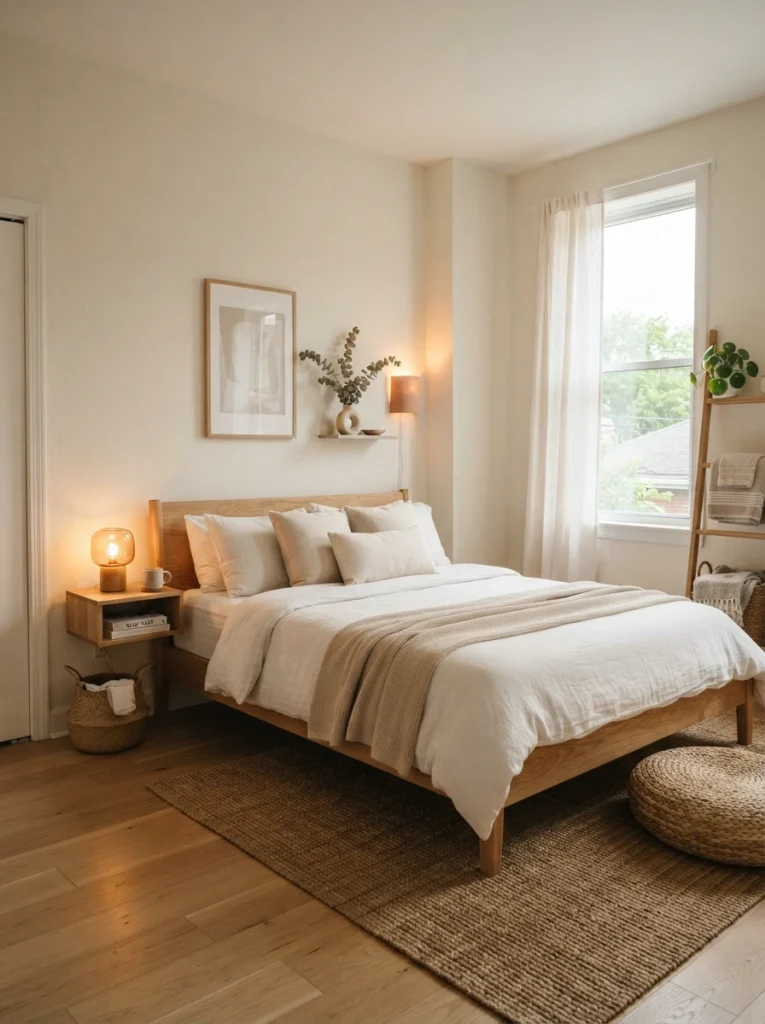
4. Add Curtains That Touch the Floor
Short curtains often make windows look visually disconnected, especially in small apartments. Floor-length curtains create softness and vertical flow that helps rooms feel taller and more finished emotionally.
Linen curtains work especially well because they filter natural light gently instead of blocking it aggressively. The soft shadows they create during the morning and evening make bedrooms feel calmer almost immediately.
One mistake people make is choosing curtains that are too dark and heavy. Thick dark panels can visually shrink already small rooms unless balanced carefully with lighter surroundings.
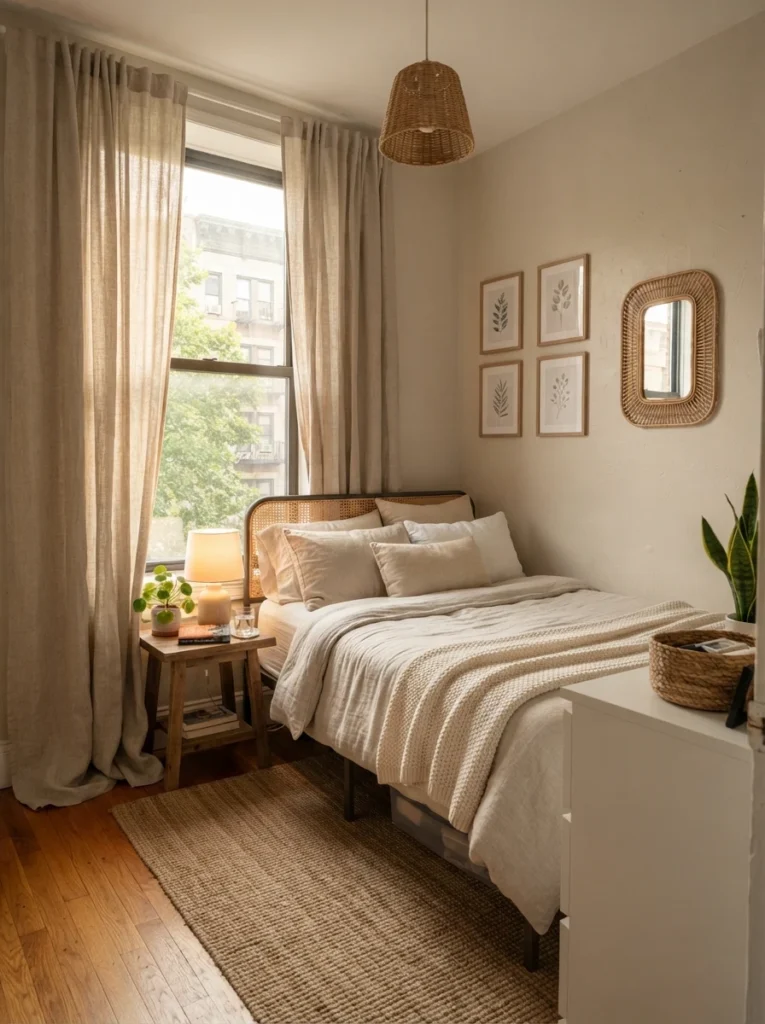
5. Use One Calm Color Palette Throughout the Room
Small bedrooms often feel chaotic because too many competing colors fight for attention. Warm neutrals, earthy tones, muted greens, soft browns, and creamy whites create visual continuity that helps the room feel emotionally quieter.
This does not mean everything must match perfectly. The goal is softness and harmony, not sterile uniformity. Bedrooms usually feel more relaxing when colors gently blend instead of sharply contrasting.
Even clutter appears less stressful when it exists inside a calmer palette. That subtle psychological effect makes a surprisingly big difference in tiny spaces.
6. Let Empty Space Exist
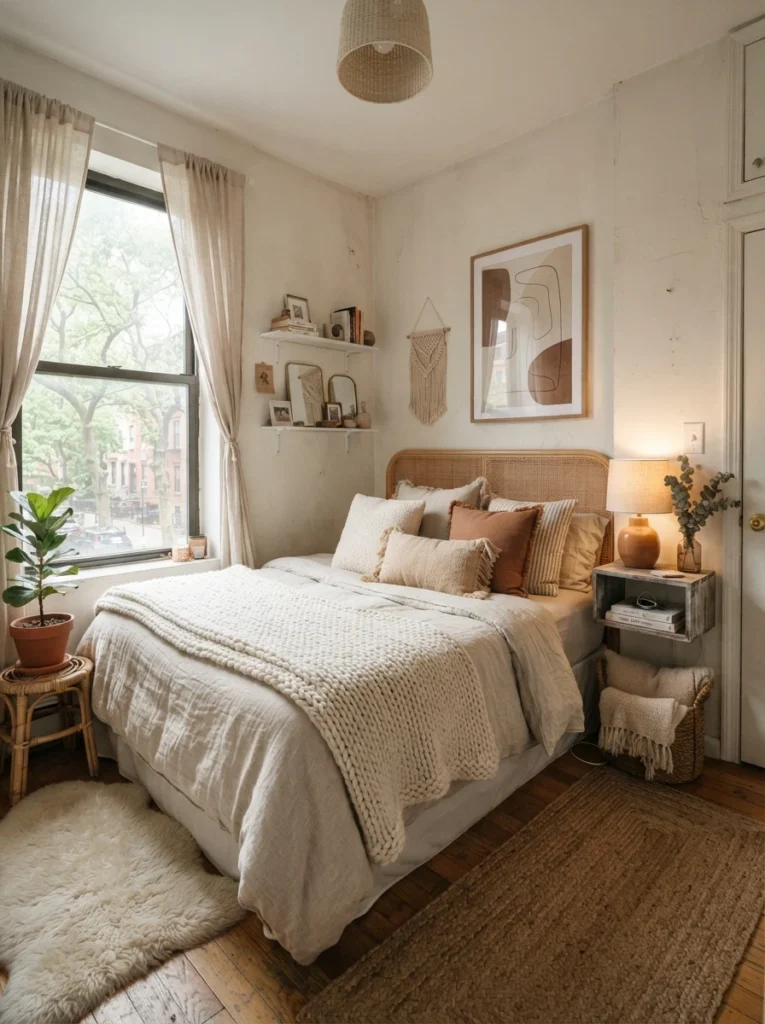
One reason some Pinterest bedrooms feel strangely stressful is because every wall, shelf, and surface is fully decorated. Tiny rooms need visual breathing room or they start feeling emotionally crowded.
Empty corners, partially clear shelves, and open wall space help the eye rest. That sense of openness creates calm far more effectively than constantly adding more decor items.
Minimalism is not the goal here. Intentional spacing is. Cozy rooms still need moments of visual silence.
7. Use Warm Wood Tones to Soften the Room
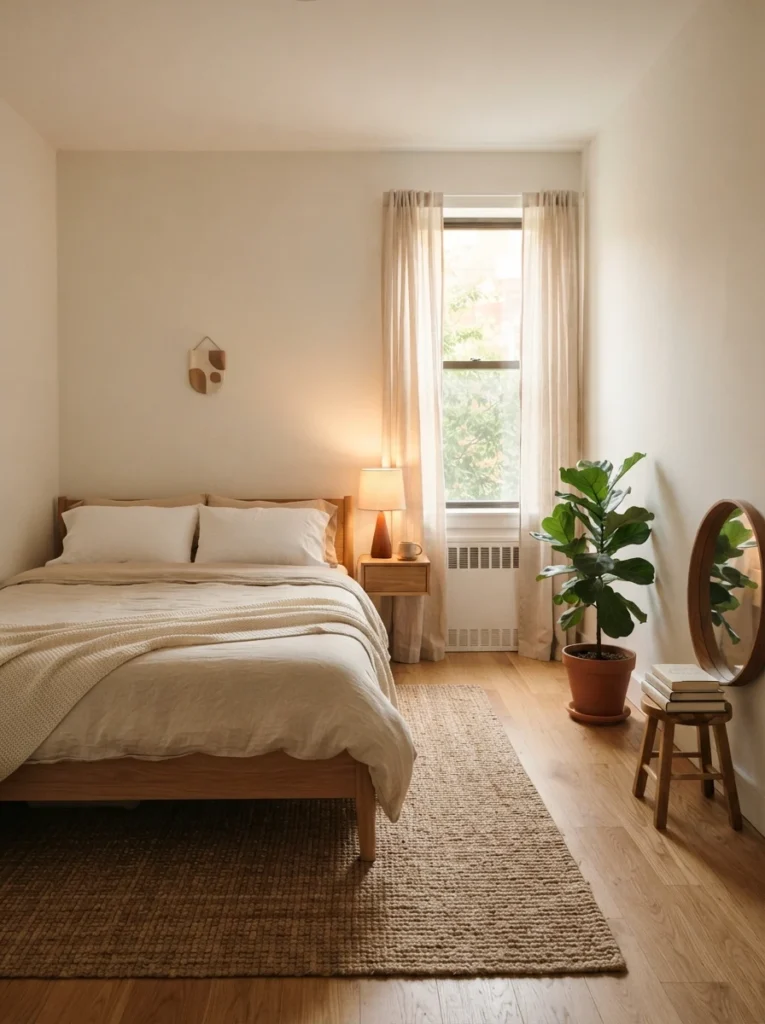
Cold gray furniture often makes small bedrooms feel emotionally flat over time. Warm wood tones add softness because natural materials psychologically feel more grounding and comforting.
Oak finishes, walnut textures, and warm wood accents create depth without overwhelming tiny spaces. Even one wooden nightstand or bench can soften the atmosphere dramatically.
This is especially important in apartments with white walls and cooler lighting, where rooms can otherwise start feeling sterile very quickly.
8. Keep Nightstands Visually Light
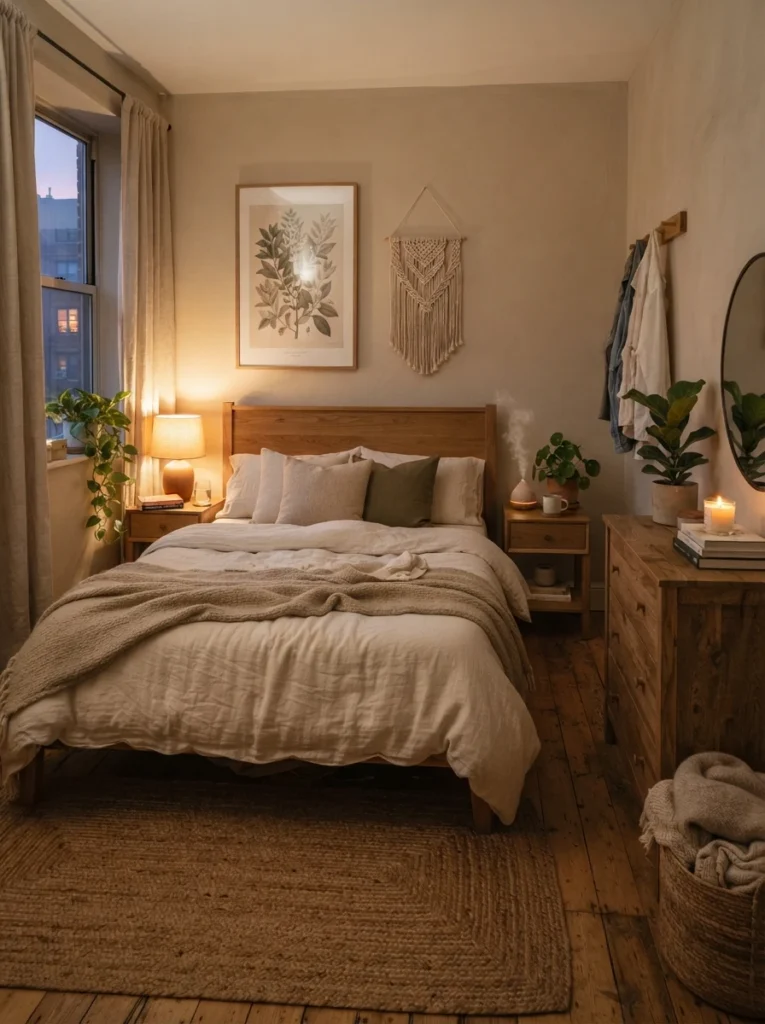
Heavy nightstands can make small bedrooms feel boxed in beside the bed. Slim tables, floating shelves, or narrow nightstands create openness while still providing practical function.
Bedrooms feel calmer when furniture allows light and flooring to remain visible underneath. Even tiny visual gaps help compact rooms breathe more naturally.
The goal is not removing functionality. It is reducing unnecessary visual heaviness.
9. Add a Small Reading Corner if Possible
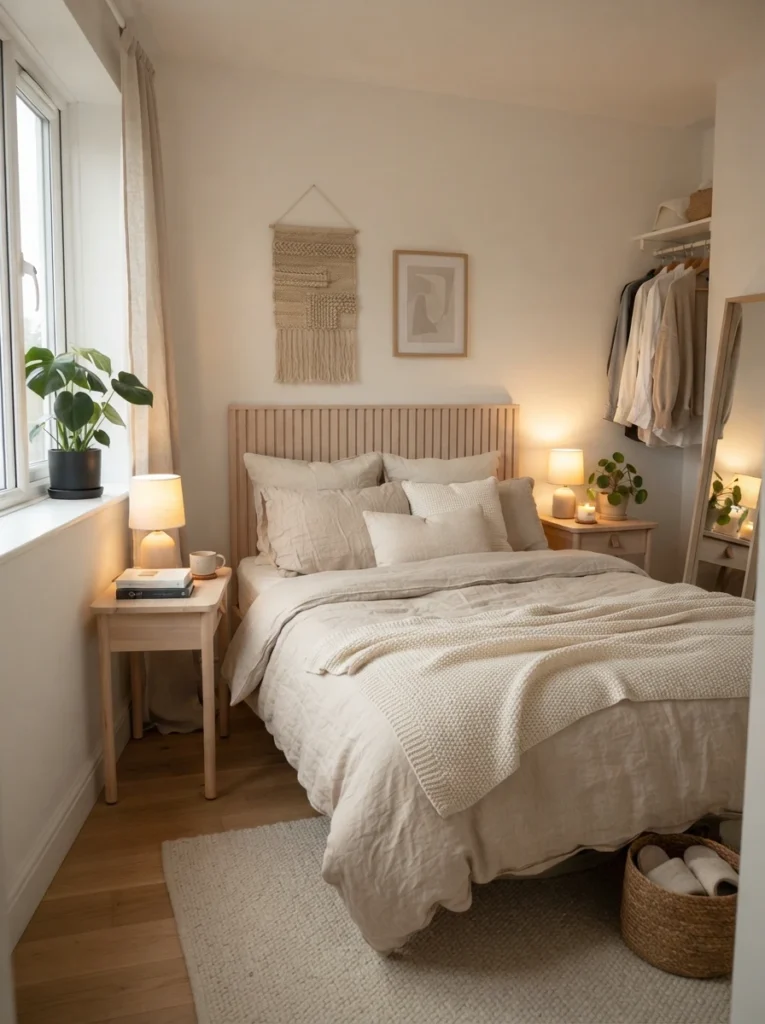
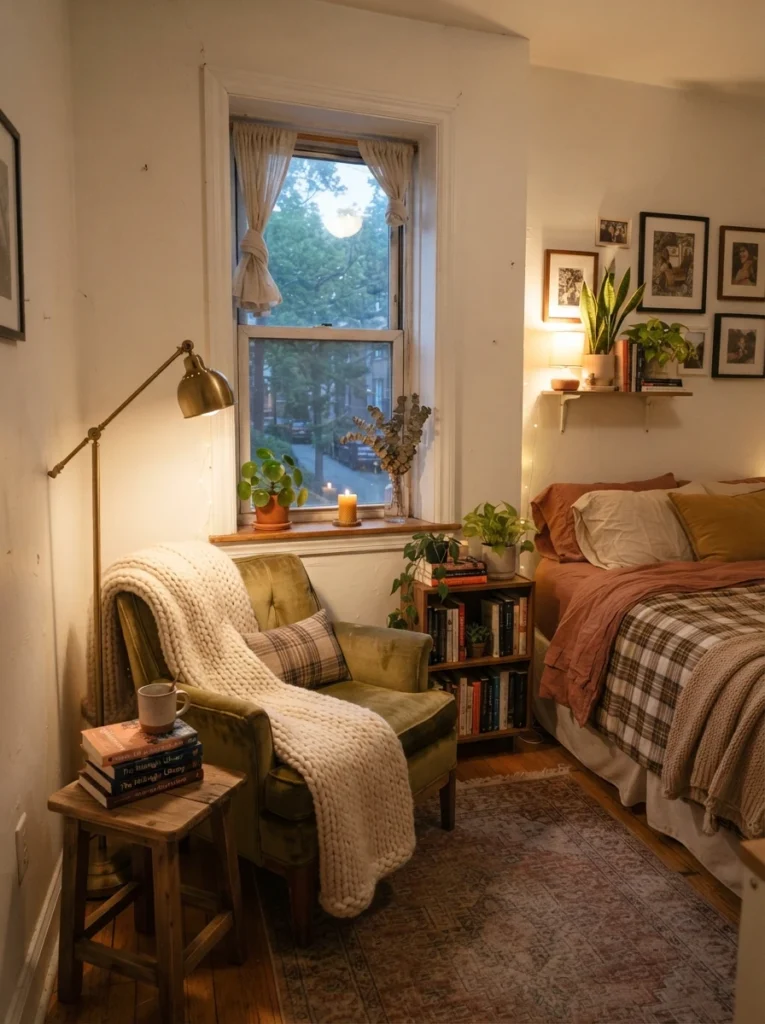
Even in tiny bedrooms, a small chair near a window or corner can create emotional separation between “sleep space” and “life space.” That distinction helps bedrooms feel more intentional and calming psychologically.
The chair does not need to be large. Oversized accent chairs often overwhelm small apartments. A slim upholstered chair with soft textures usually works better visually and practically.
A small lamp and folded blanket nearby instantly make the room feel more personal and comforting.
10. Hide Most Everyday Clutter
Clutter affects small bedrooms emotionally faster because there is nowhere for visual chaos to escape. Chargers, unfolded laundry, skincare products, and random objects quickly dominate the atmosphere.
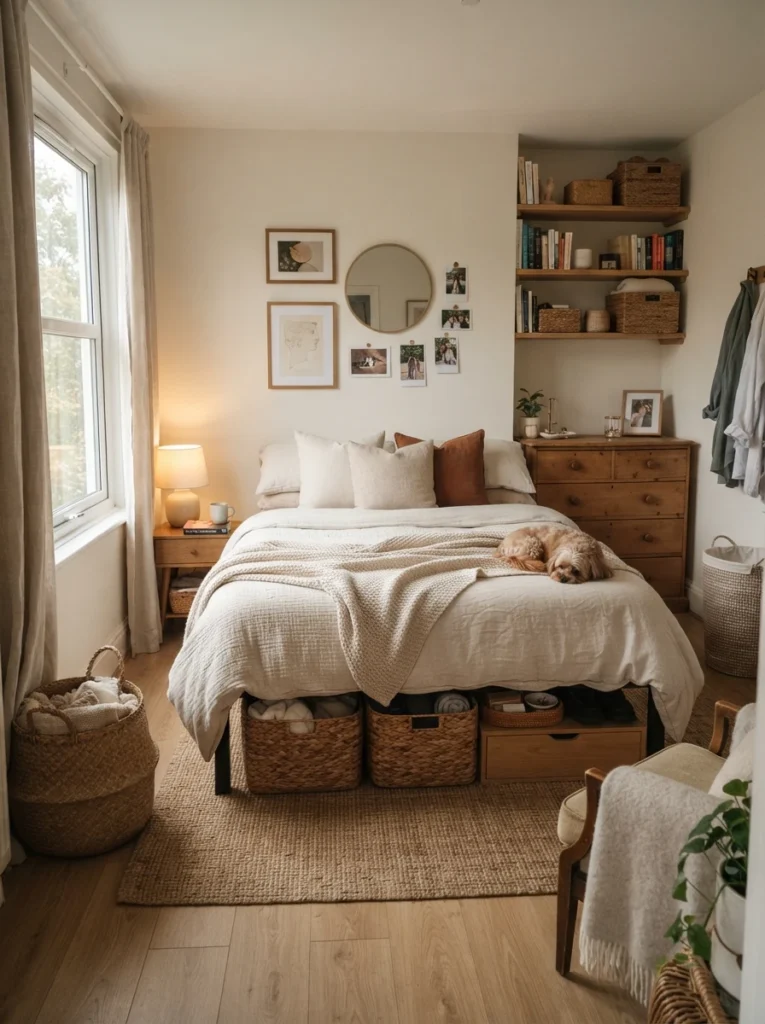
The calmest cozy bedrooms usually contain less visible clutter than people realize. Woven baskets, hidden drawers, under-bed storage, and closed cabinets help create emotional softness because the eye processes fewer competing details.
A cozy room should feel restful, not visually noisy.
11. Use Soft Rugs to Reduce Visual Harshness
Bare floors can make small bedrooms feel colder and louder emotionally, especially in apartments with hard laminate or tile flooring. A soft rug immediately changes how the room feels because it visually absorbs harshness and creates warmth underfoot.
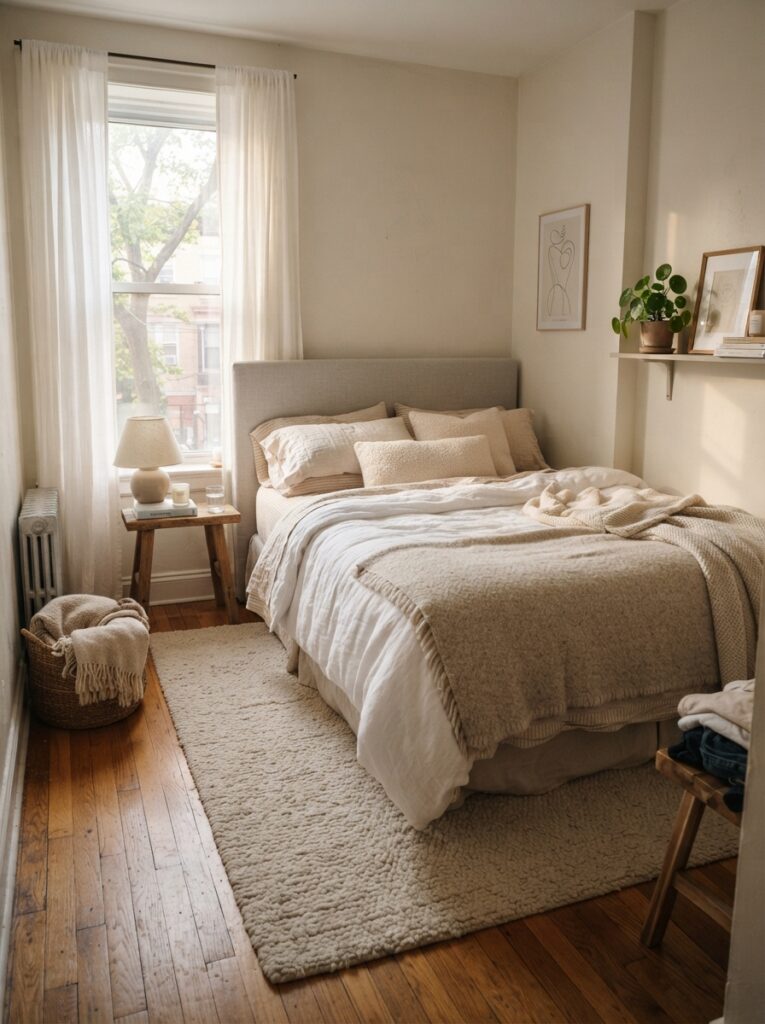
Large rugs usually work better than tiny accent rugs in compact bedrooms. Small rugs often make layouts feel fragmented, while larger rugs visually connect furniture and soften the entire room at once.
Muted textures and low-contrast patterns tend to create the calmest effect. Busy prints can quietly increase visual stress without people realizing why.
12. Choose Decor That Feels Personal Instead of Trendy
Some bedrooms look aesthetically impressive online but emotionally empty in real life. Cozy rooms usually contain small personal touches that create familiarity and comfort rather than aggressively following trends.
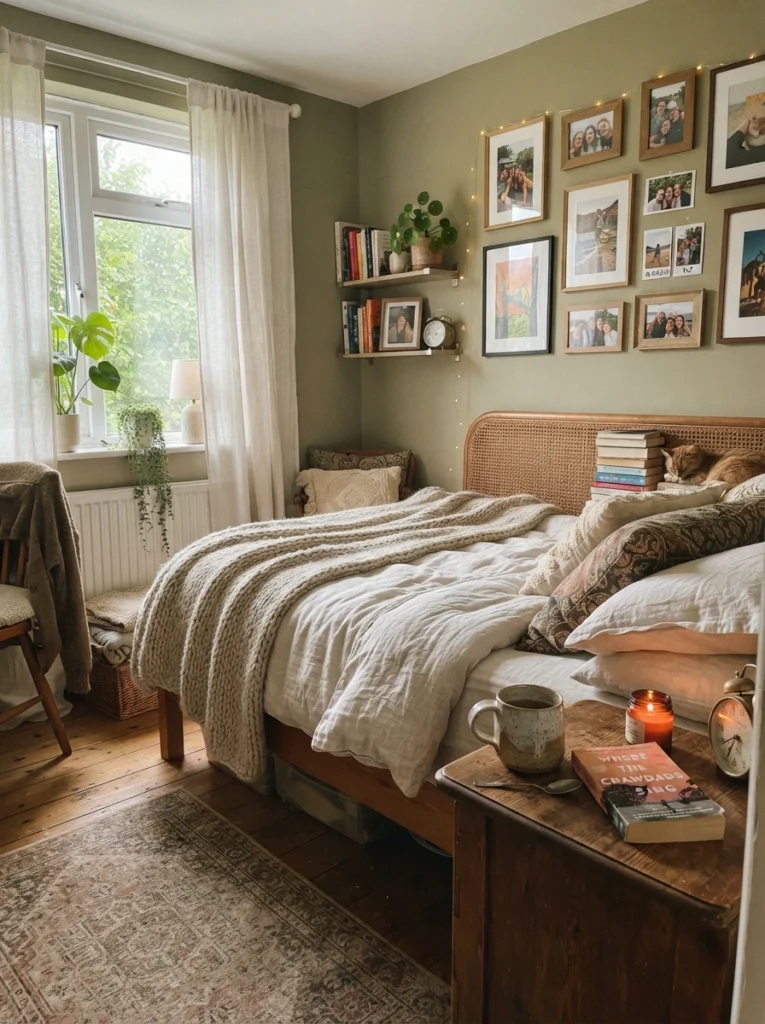
A framed photo, favorite book stack, ceramic mug on the nightstand, or soft throw collected during travel often creates more warmth than expensive decorative objects bought purely for appearance.
The room should feel emotionally lived in, not styled for a furniture showroom.
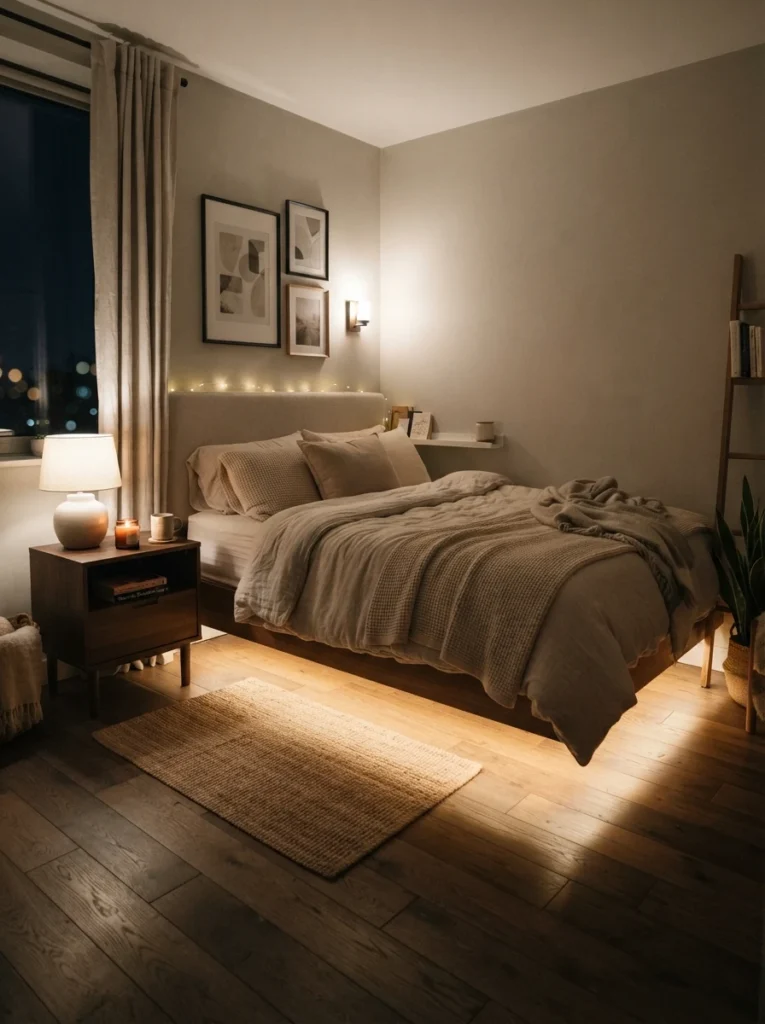
13. Add Warm Ambient Lighting Near the Floor
Most people focus all bedroom lighting near eye level, but low ambient lighting creates a surprisingly calming atmosphere in tiny rooms. Soft floor lighting gently expands depth and makes spaces feel less visually flat at night.
LED strips beneath beds, low lamps near corners, or soft lighting behind furniture create subtle shadows that help rooms feel layered instead of boxed in.
This works especially well in apartments where harsh ceiling lights create an overly bright and exposed feeling after dark.
14. Keep Wall Art Larger but Simpler
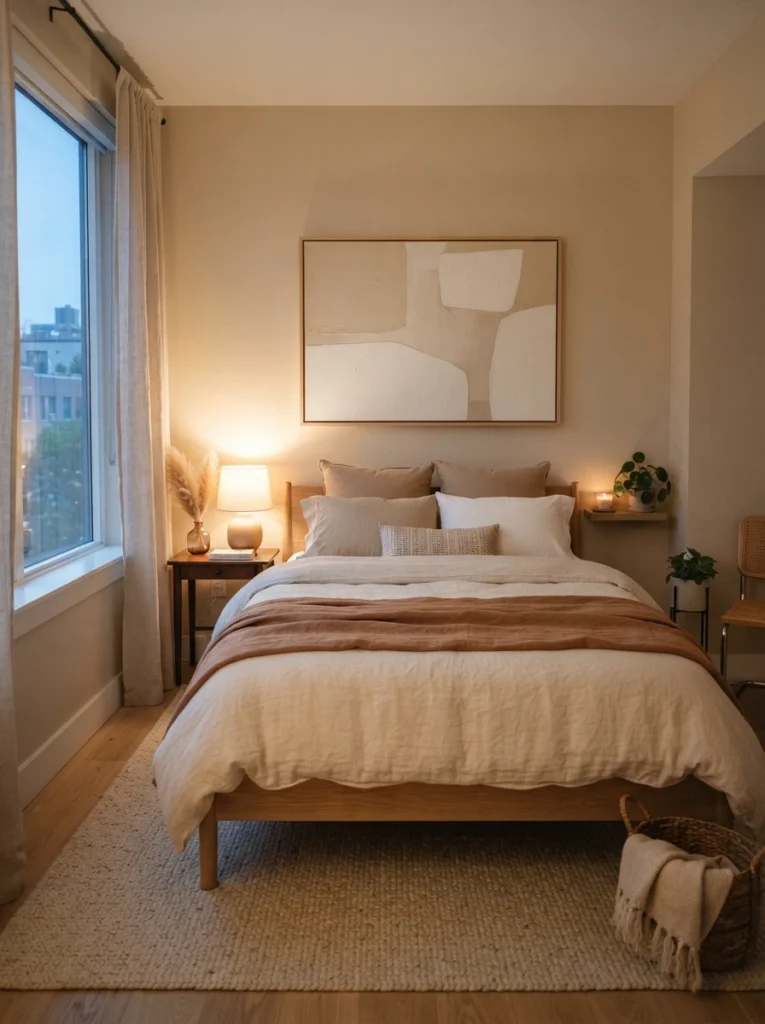
One common small-bedroom mistake is filling walls with dozens of tiny decor pieces. Small scattered frames often create visual busyness that makes rooms feel more crowded.
Larger artwork with calmer compositions usually feels more peaceful because the eye processes fewer separate objects. Soft abstract prints, muted photography, or simple line art tend to work especially well in cozy bedrooms.
The goal is visual softness, not decoration overload.
Final Thoughts
A cozy small bedroom is rarely about expensive furniture or perfectly matching decor. The calmest rooms usually succeed because they reduce visual stress, soften lighting, improve emotional warmth, and make daily routines feel gentler.
Tiny bedrooms become exhausting when every surface feels busy, every light feels harsh, and every corner reminds you of unfinished clutter. Small changes like softer lighting, calmer textures, hidden storage, and intentional spacing can completely shift the emotional atmosphere.
The goal is not creating a Pinterest-perfect bedroom that looks untouched all the time. The goal is creating a room that feels emotionally safe, visually calm, and genuinely comforting to return to at the end of the day.