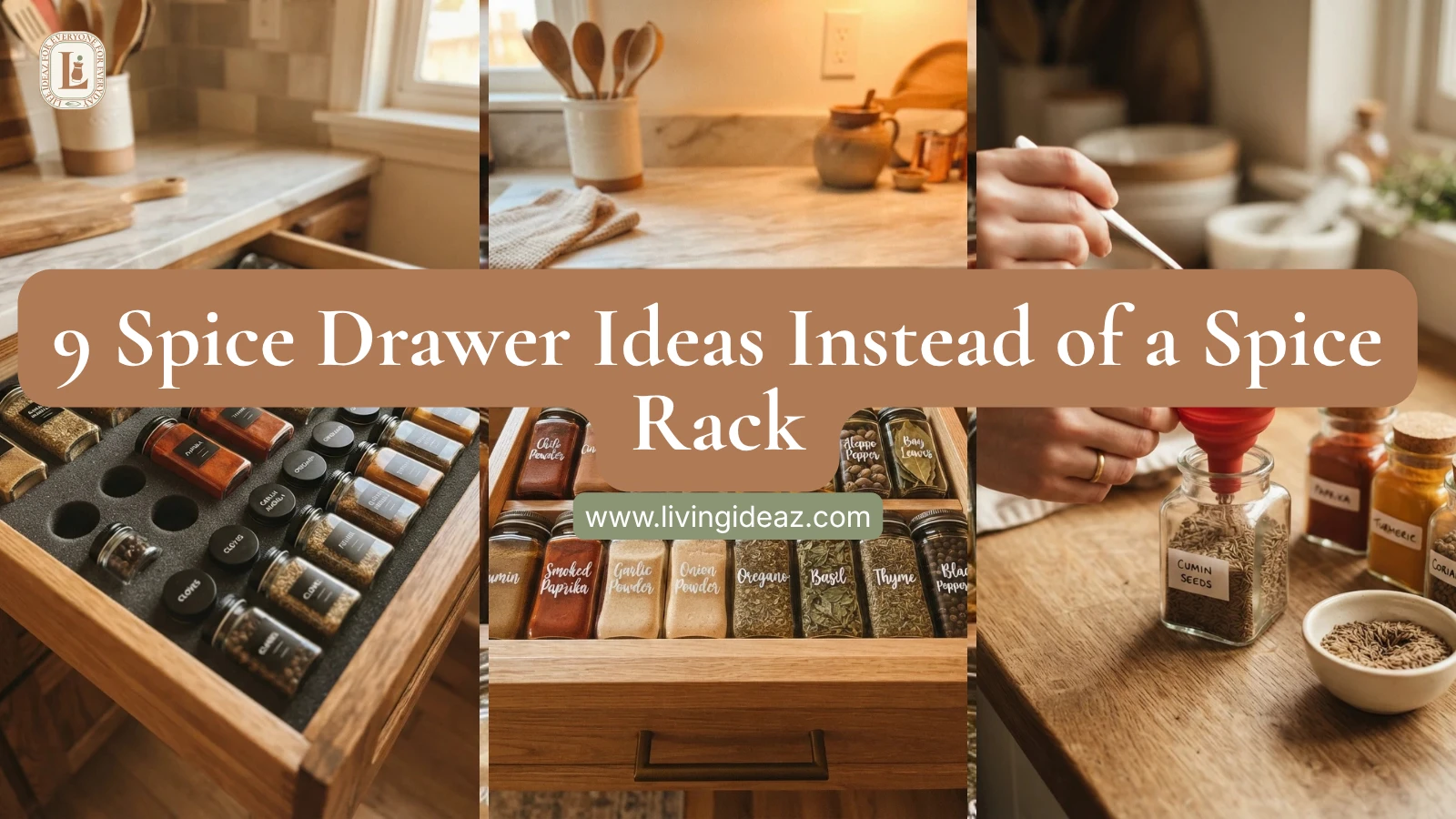
9 Spice Drawer Ideas Instead of a Spice Rack
TL;DR: A spice drawer solves the two biggest complaints people have with wall racks and cabinet shelves: spices getting knocked over and spices getting lost behind each other. Laying jars flat in a drawer means every label is visible at once, no reaching or shuffling required. A few square jars, a tiered insert, and labels on the lids are usually all it takes to set one up.
Spice racks look great in photos, but in daily use they come with a few recurring annoyances. Wall-mounted racks take up space you might want for something else, spinning carousels hog counter room, and anything stored front-to-back on a cabinet shelf inevitably means the spice you actually need is hiding behind three others. A spice drawer sidesteps all of it, since everything lies flat, face-up, and fully visible the second you open it.
Here are 9 spice drawer ideas for setting one up, whether you’re starting from scratch or converting an existing drawer.
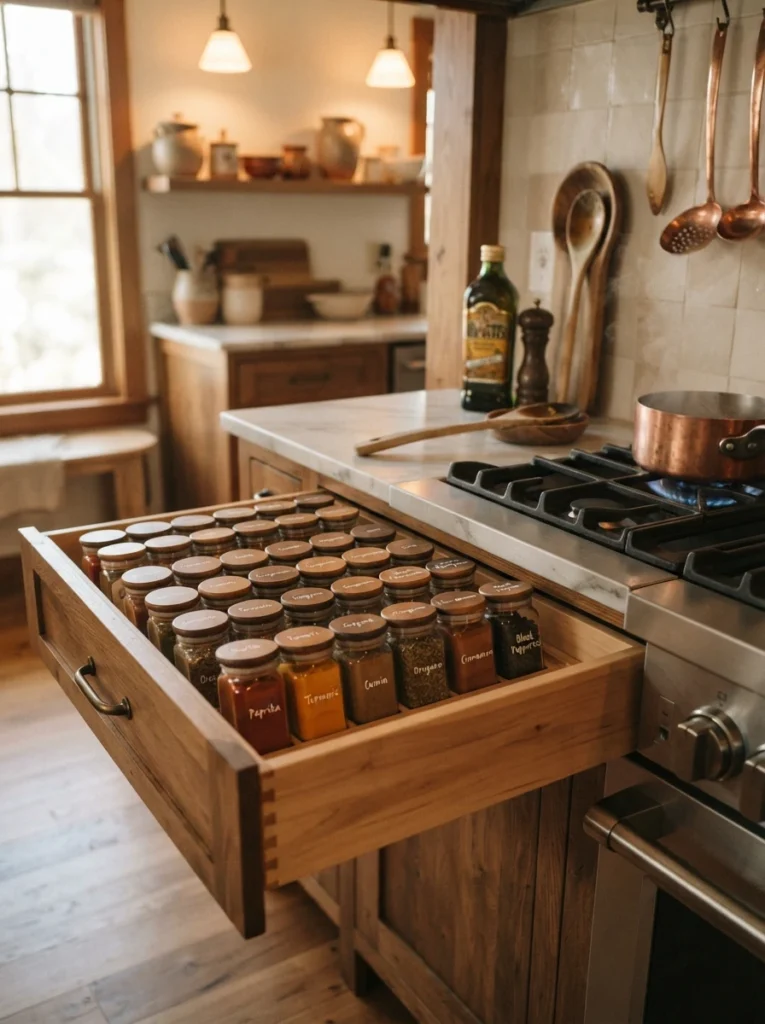
1. Pick a Drawer Near the Stove for Easy Access
Location matters as much as the organizing system itself. A drawer close to where you actually cook keeps spices within reach mid-recipe, rather than requiring a walk across the kitchen every time a dish needs seasoning.
2. Choose Square or Rectangular Jars Over Round Ones
Round spice jars roll around every time the drawer opens or closes, which gets old fast and risks cracked glass. Square or rectangular jars sit still and also nest together more efficiently, so you fit more spices into the same drawer footprint.
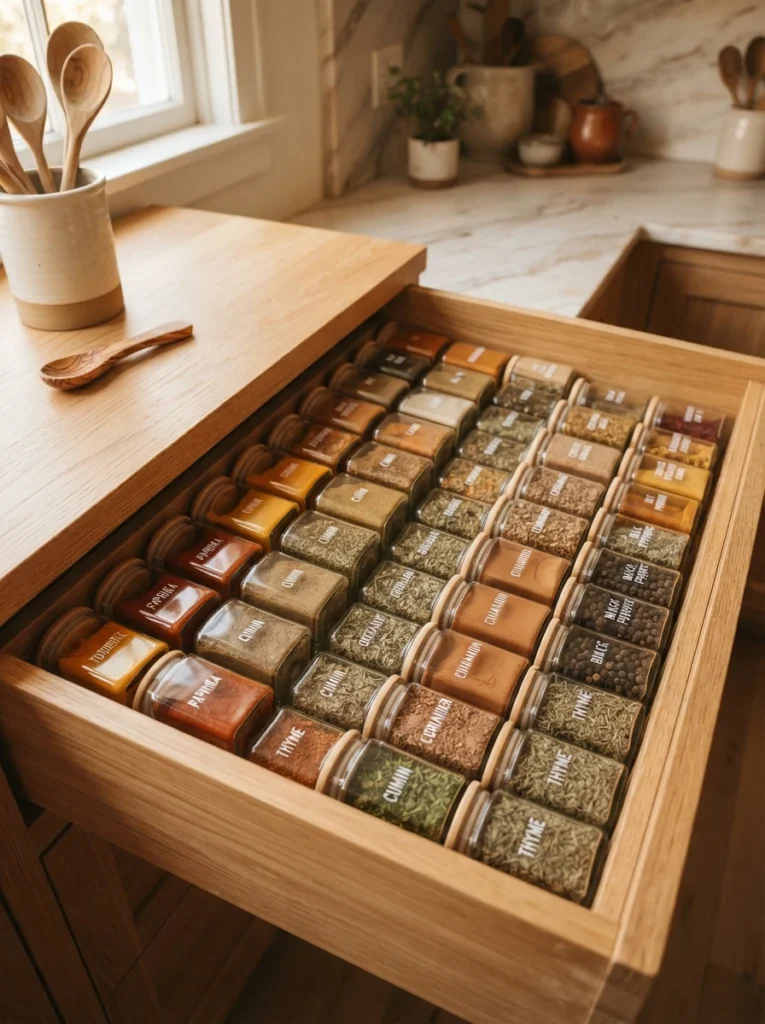
3. Use a Tiered Insert for Multiple Rows
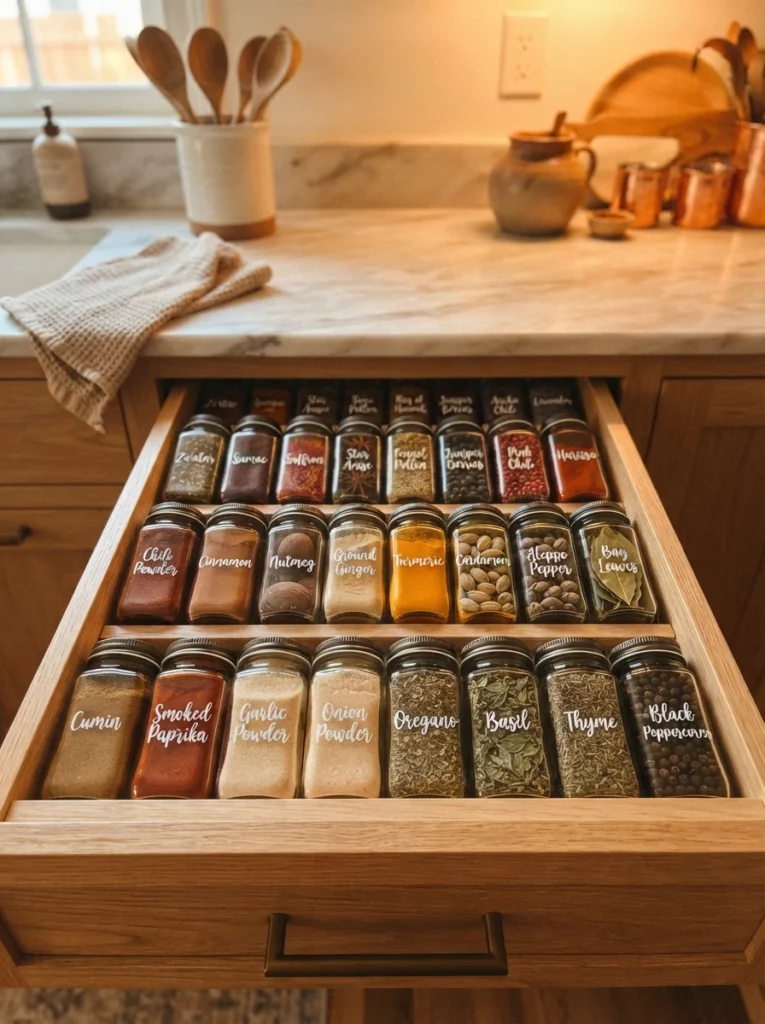
A tiered spice insert angles each row slightly higher than the one behind it, so every jar’s label stays visible even from several rows deep. This is especially useful for anyone with a larger spice collection, since a flat single layer alone won’t fit more than a dozen or so jars.
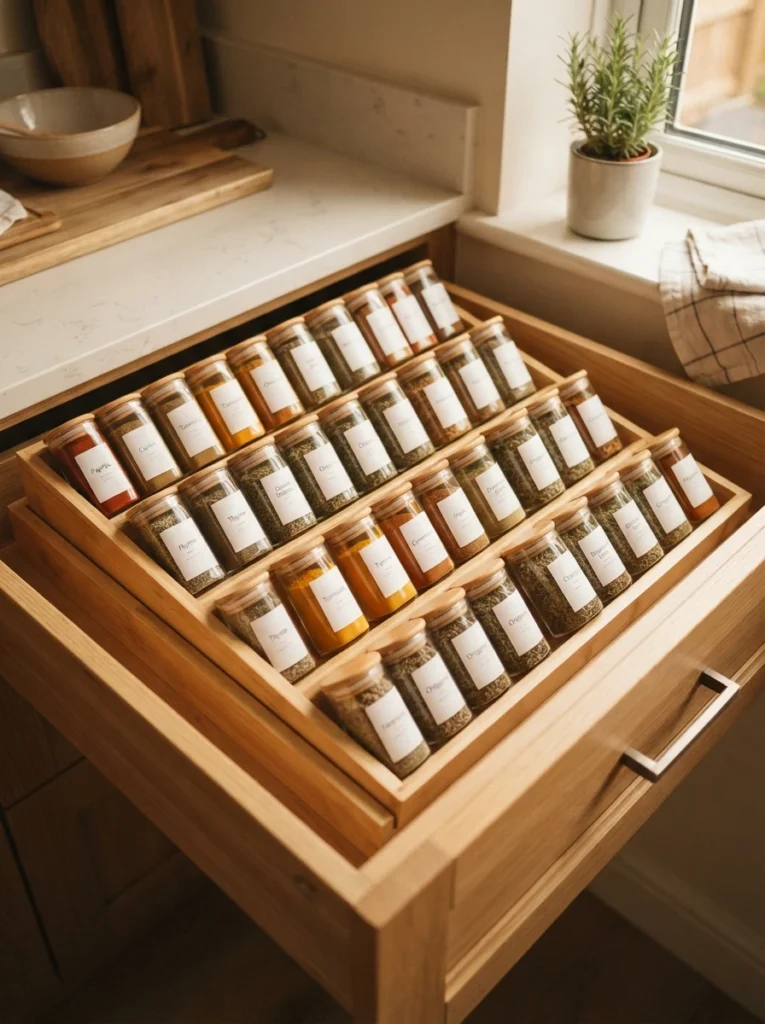
4. Build a Simple Foam Insert for an Exact Custom Fit
If a pre-made tray doesn’t match your drawer’s dimensions or your jars’ odd sizes, a foam board insert cut and folded to size can hold jars securely without requiring any carpentry. It’s a low-cost fix that works even for a large, mixed collection of jar shapes.
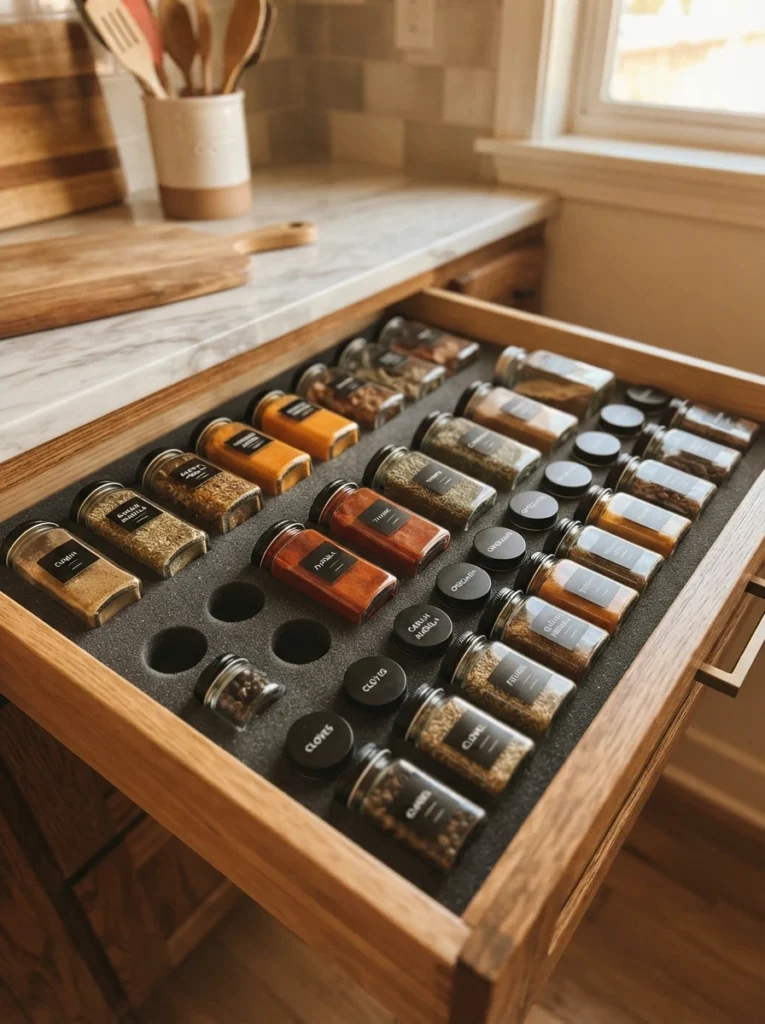
5. Label the Lids So Everything Reads Face-Up
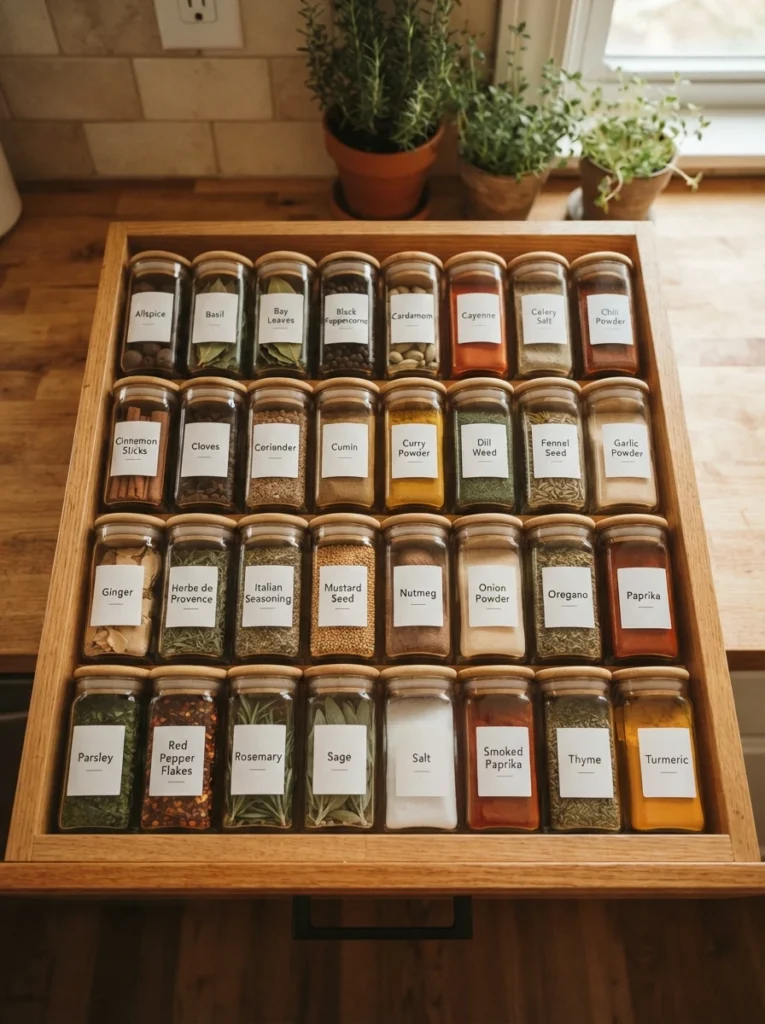
Since jars lie flat in a drawer, the lid becomes the visible surface instead of the side label most jars ship with. Printed or chalk-marker labels on the lid mean every spice is instantly identifiable the moment you open the drawer, without needing to pick anything up.
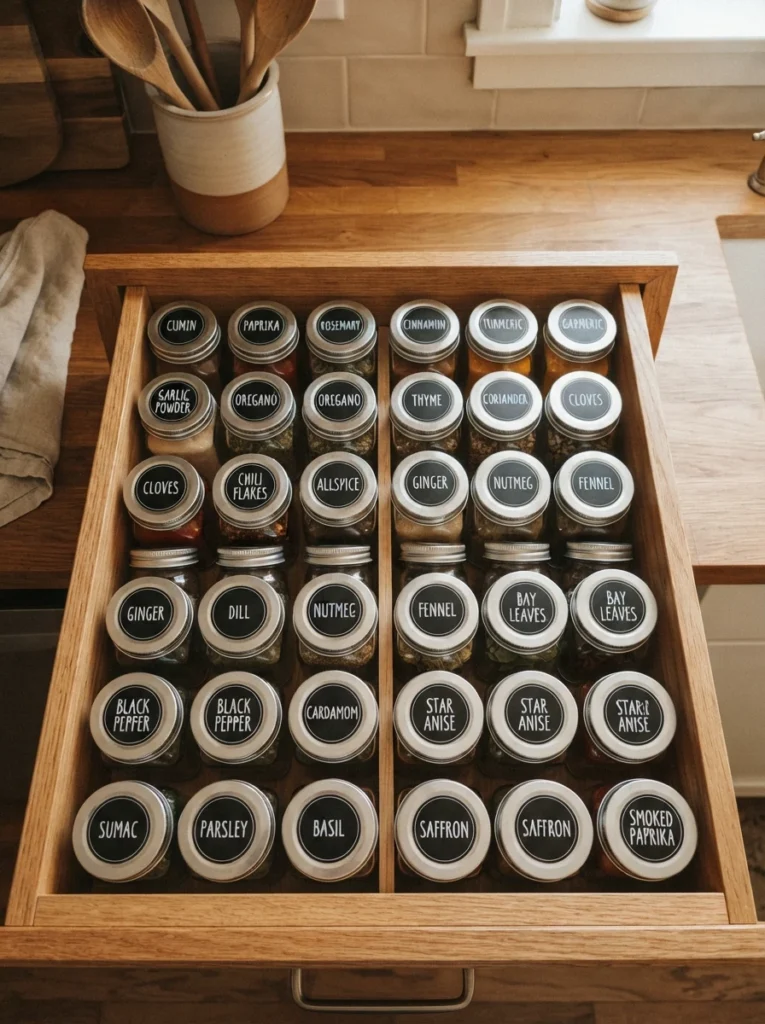
6. Reserve the Front Rows for Your Most-Used Spices
Not every spice gets equal use, so it makes sense to give your most-reached-for seasonings, salt, pepper, garlic powder, the most accessible spot at the front of the drawer. Less common spices can sit further back, since you’re not digging past them daily anyway.
7. Sort Alphabetically for a Larger Collection
Once a spice collection grows past a dozen or so jars, alphabetical order becomes the fastest way to find anything at a glance, especially for less frequently used spices you might not remember the exact placement of. It’s a small system, but it removes the need to scan the entire drawer every single time.
8. Use a Funnel When Transferring Bulk Spices to Jars
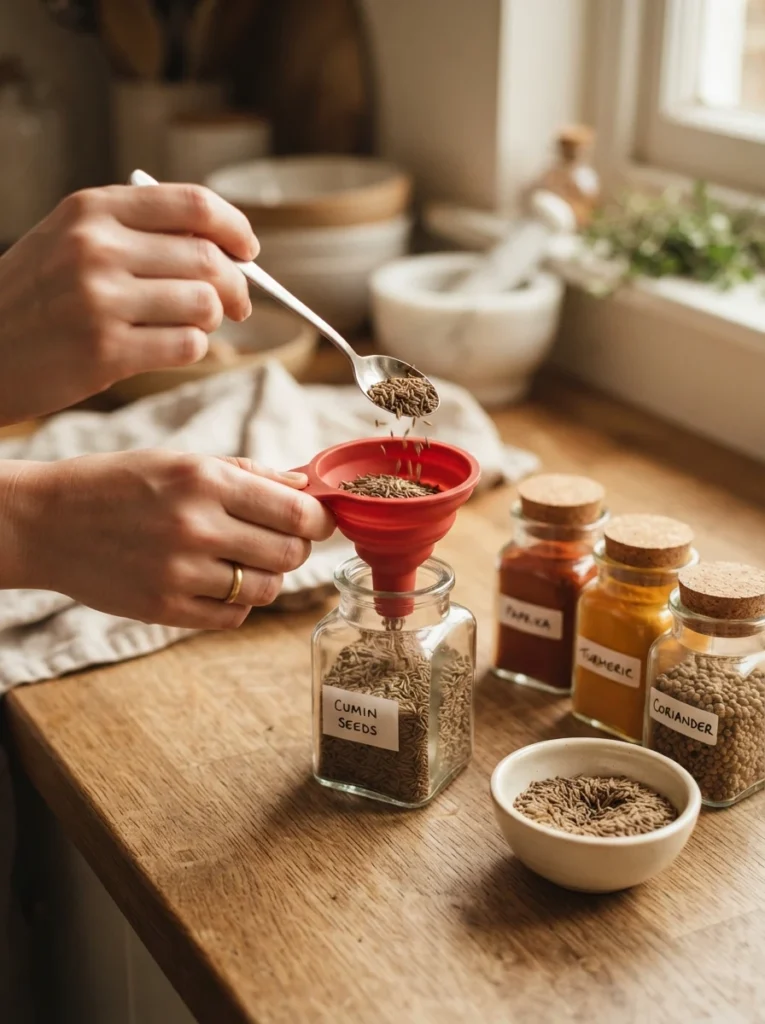
Switching from store-bought spice containers to matching jars looks great, but pouring loose spices without a funnel usually means half of it ends up on the counter. A small collapsible silicone funnel makes the transfer clean and mess-free, and it folds flat enough to store right in the drawer.
9. Consider a Sliding Pull-Out Insert for a Cabinet Instead
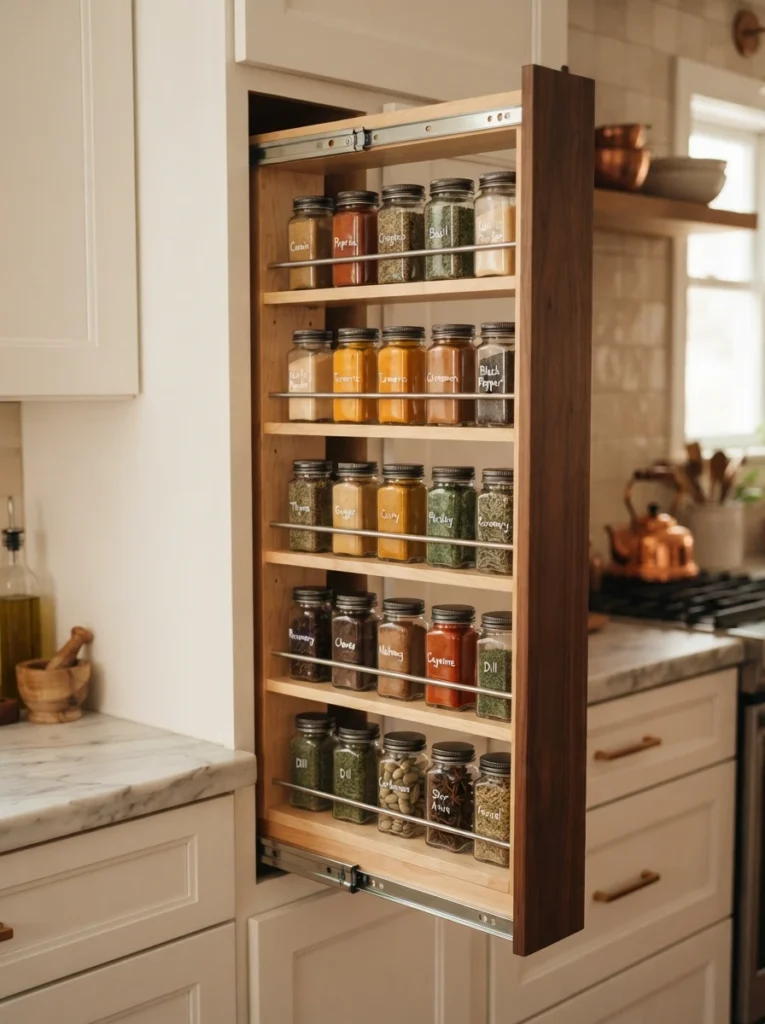
If a drawer isn’t available near your stove but a narrow cabinet is, a sliding pull-out spice rack installed inside the cabinet gives you a similar flat, visible layout without needing to convert an actual drawer. These are especially useful for narrow, awkward cabinet gaps that aren’t good for much else.
A spice drawer isn’t really about looking pretty when you open it, though the uniform rows of labeled jars usually end up looking pretty anyway. It’s about being able to see and grab exactly what you need in the middle of cooking, without knocking over three other jars or digging through a cabinet shelf. Once it’s set up, it’s one of the lowest-maintenance systems in the whole kitchen.