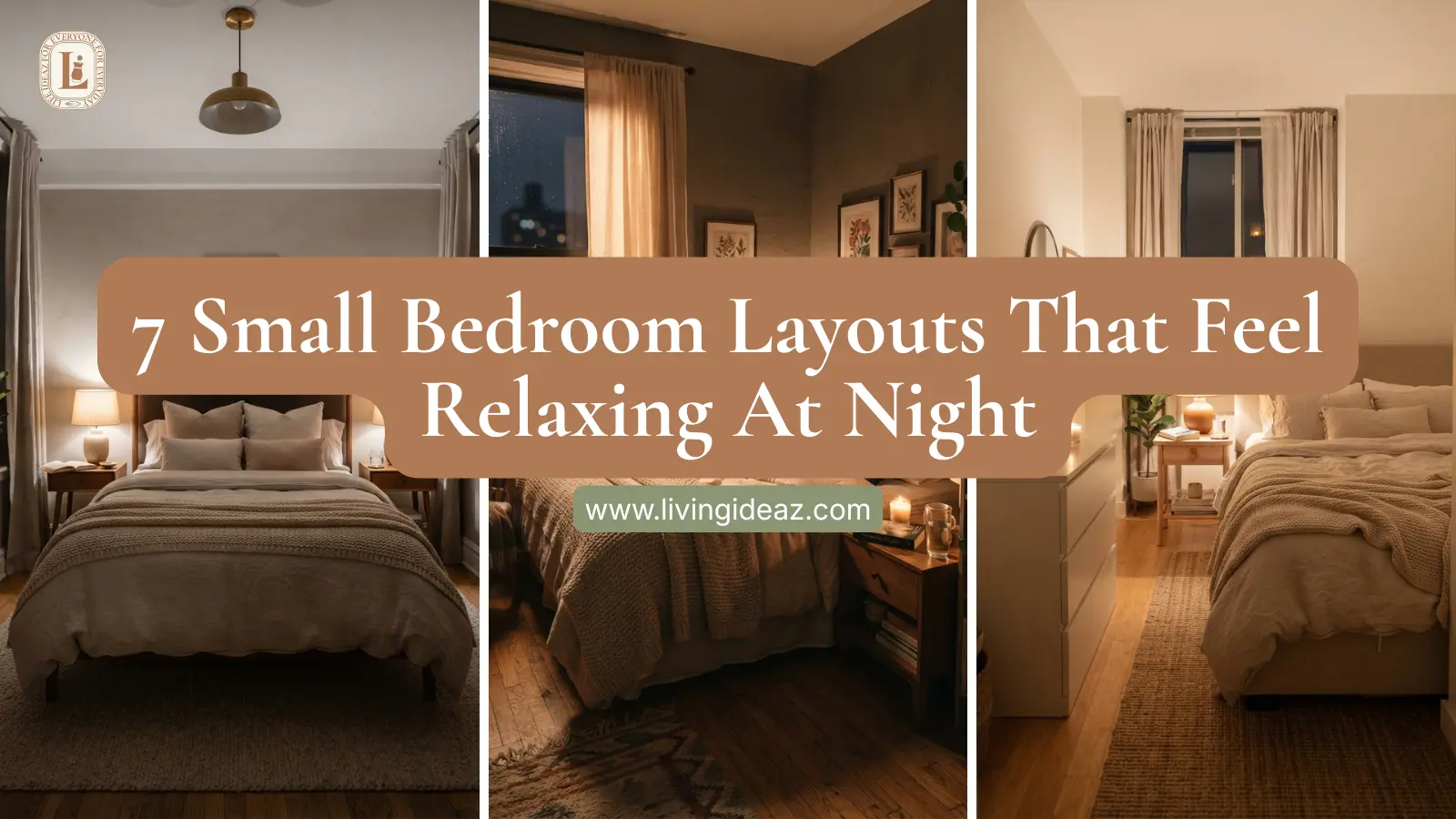
7 Small Bedroom Layouts That Feel Relaxing At Night
TL;DR
Some small bedrooms feel strangely stressful after dark even when they look fine during the daytime. Harsh lighting, crowded layouts, blocked movement, and visual clutter quietly keep the nervous system alert instead of relaxed. The best nighttime bedroom layouts create softness, emotional calm, easier movement, and warm lighting flow that help tiny rooms feel quieter mentally at the end of long days. These relaxing small bedroom layouts focus on making compact spaces feel emotionally safer and more restful at night.
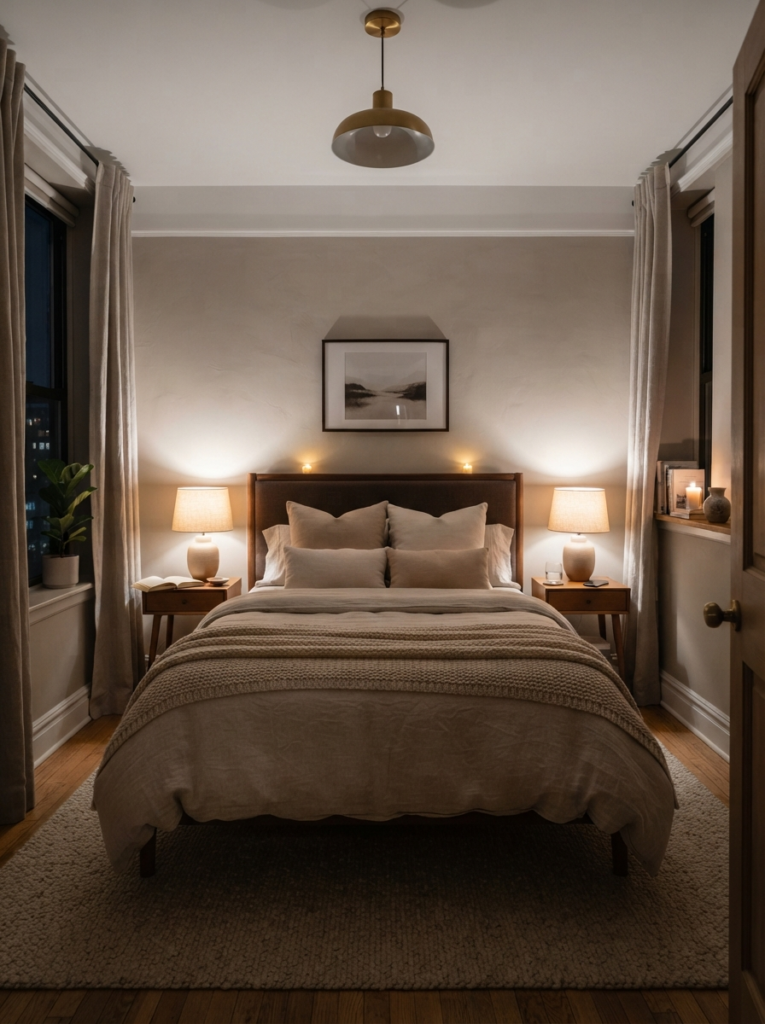
1. The Soft Symmetry Layout
Symmetrical layouts naturally feel calming because the eye processes balance more comfortably at night. Centering the bed with matching nightstands or balanced lighting on both sides creates emotional stability that makes tiny bedrooms feel softer instantly.
This layout works especially well in apartments where rooms already feel visually busy during the daytime. Symmetry reduces nighttime mental clutter because the room feels visually organized without needing excessive decoration.
Balanced spaces often feel emotionally quieter.
2. The Open Pathway Layout
Bedrooms feel surprisingly stressful when movement becomes awkward after dark. Tight furniture spacing, blocked pathways, and cluttered walking areas create subtle nighttime tension because the room feels physically restrictive.
Layouts with clear open walking paths instantly feel more relaxing emotionally. Tiny bedrooms especially benefit from smoother movement around the bed because nighttime routines start feeling calmer and less frustrating.
Easy movement quietly reduces stress.
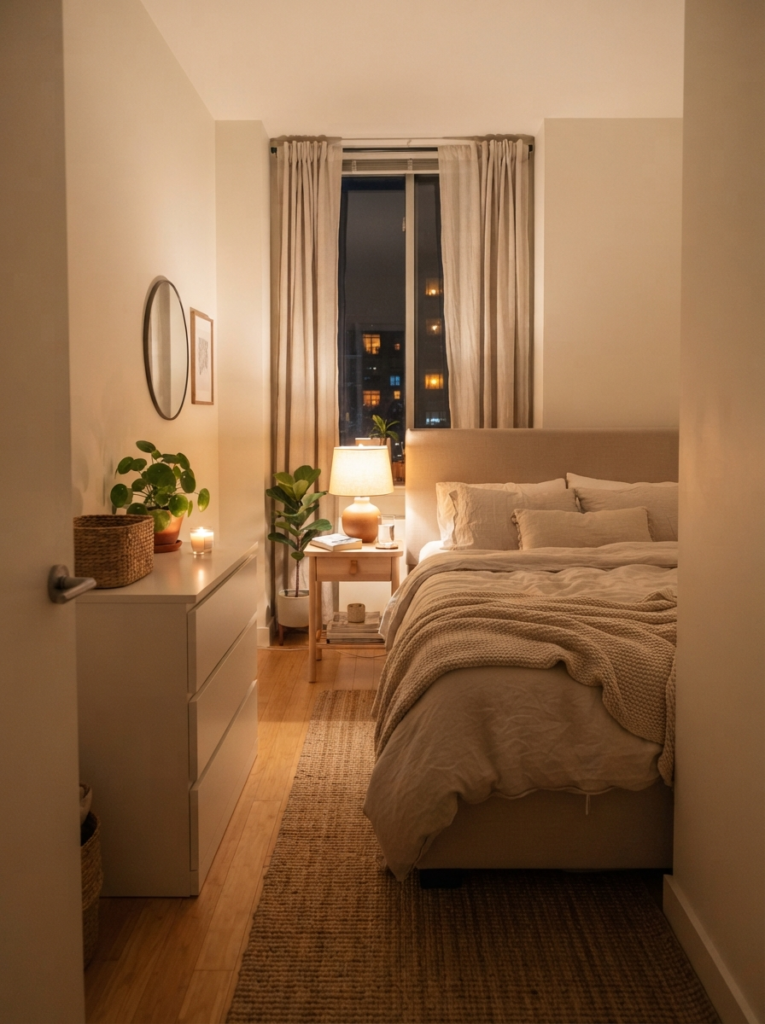
3. The Warm Lighting Corner Layout
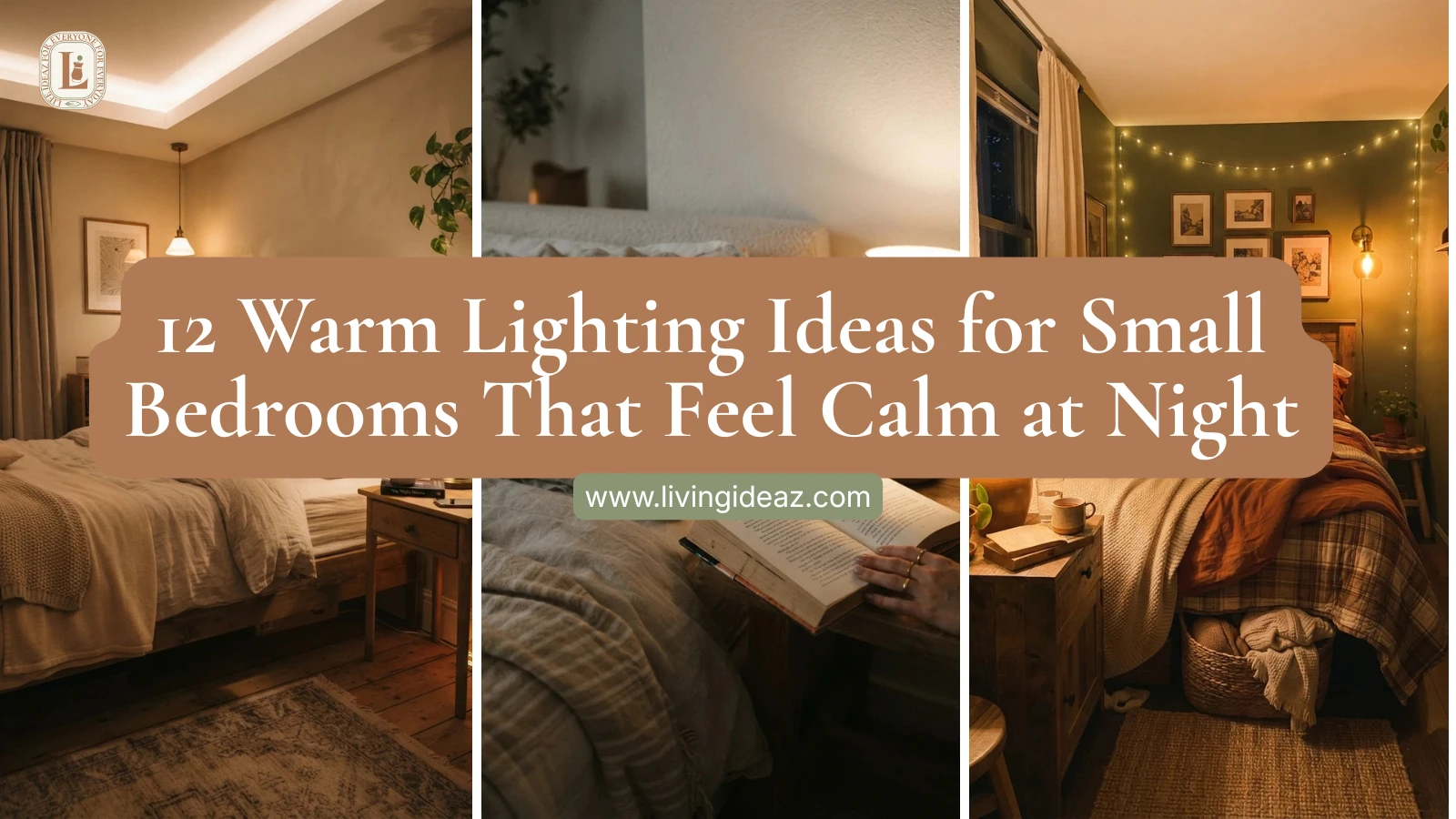
One warm softly lit corner can emotionally transform an entire small bedroom at night. A reading chair, bedside lamp, folded blanket, or dim ambient light creates a visual anchor that makes the room feel emotionally safe and comforting.
This works because the brain naturally relaxes more easily in layered warm lighting than harsh overhead brightness. Tiny bedrooms feel especially cozy when the lighting creates gentle shadows instead of flattening the room visually.
Softness matters at night.
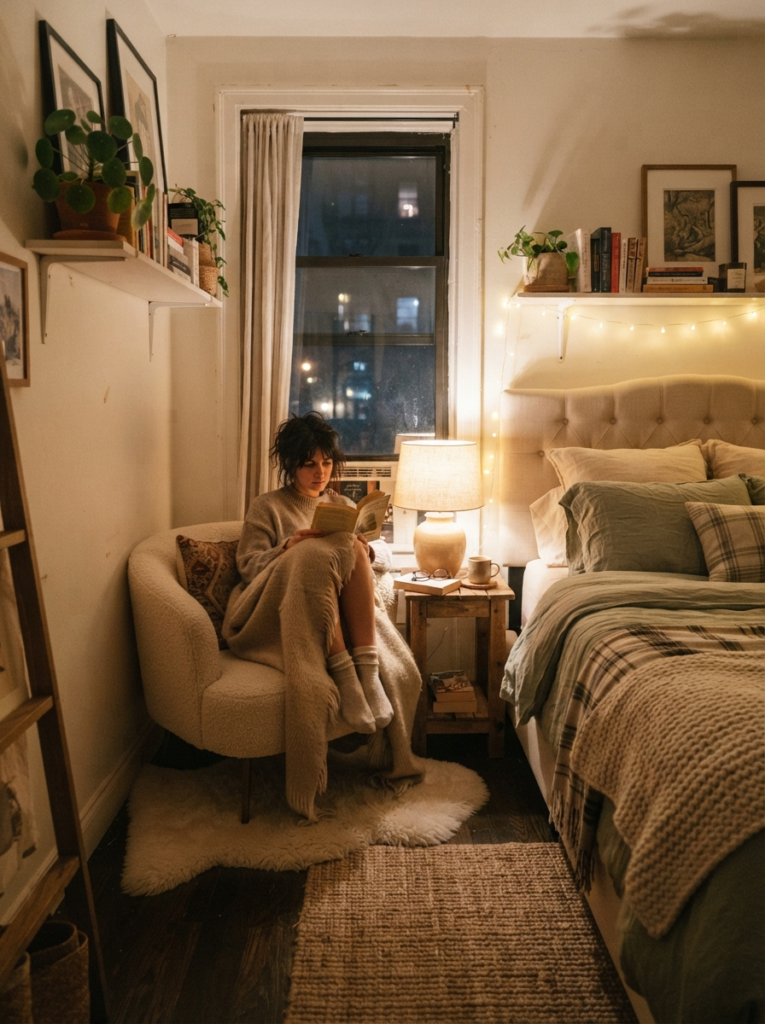
4. The Minimal Visual Noise Layout
Bedrooms feel more restful at night when fewer objects compete for attention visually. Overloaded shelves, exposed storage, tangled chargers, and crowded surfaces quietly create mental stimulation even when people stop consciously noticing them.
A calmer nighttime layout keeps visible clutter softer and more controlled around the sleeping area. Tiny bedrooms emotionally benefit from cleaner sightlines and simpler visual structure after dark.
The eye needs quietness to relax.
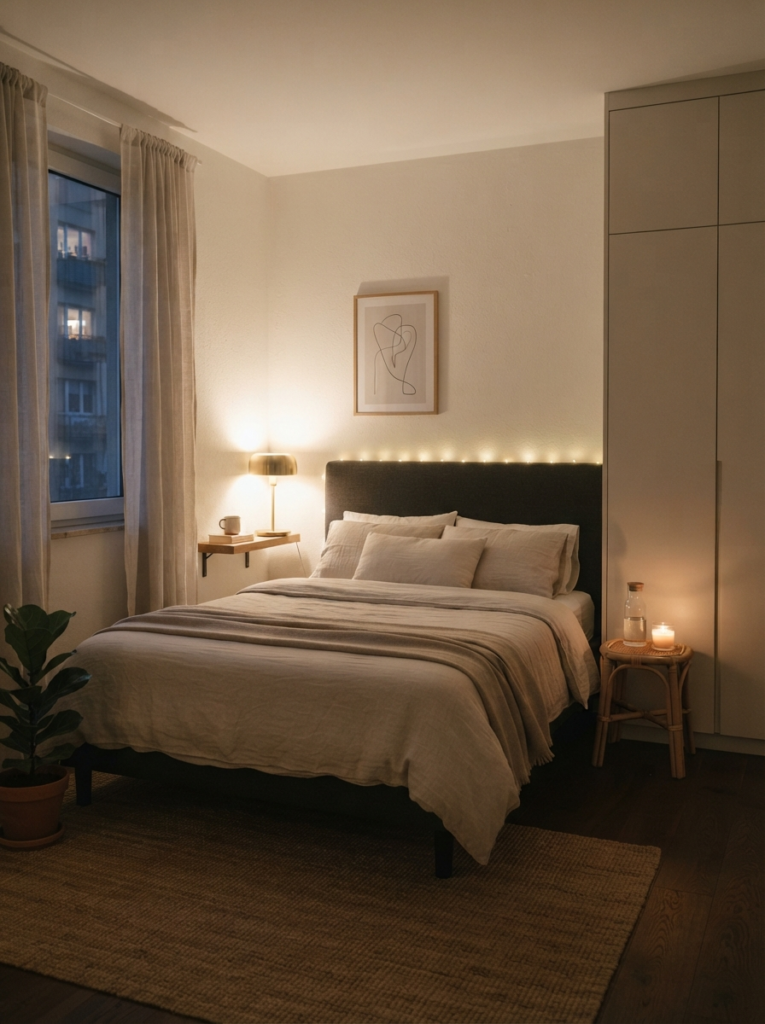
5. The Window-Focused Layout
Positioning the bed near softer nighttime window light often creates a calming emotional atmosphere naturally. Moonlight, filtered city glow, or evening shadows near windows create depth that makes tiny bedrooms feel softer emotionally.
This layout works best when windows remain visually open and not blocked heavily by furniture. Light movement and softer darkness create a peaceful nighttime rhythm inside compact spaces.
Night atmosphere shapes emotional comfort too.
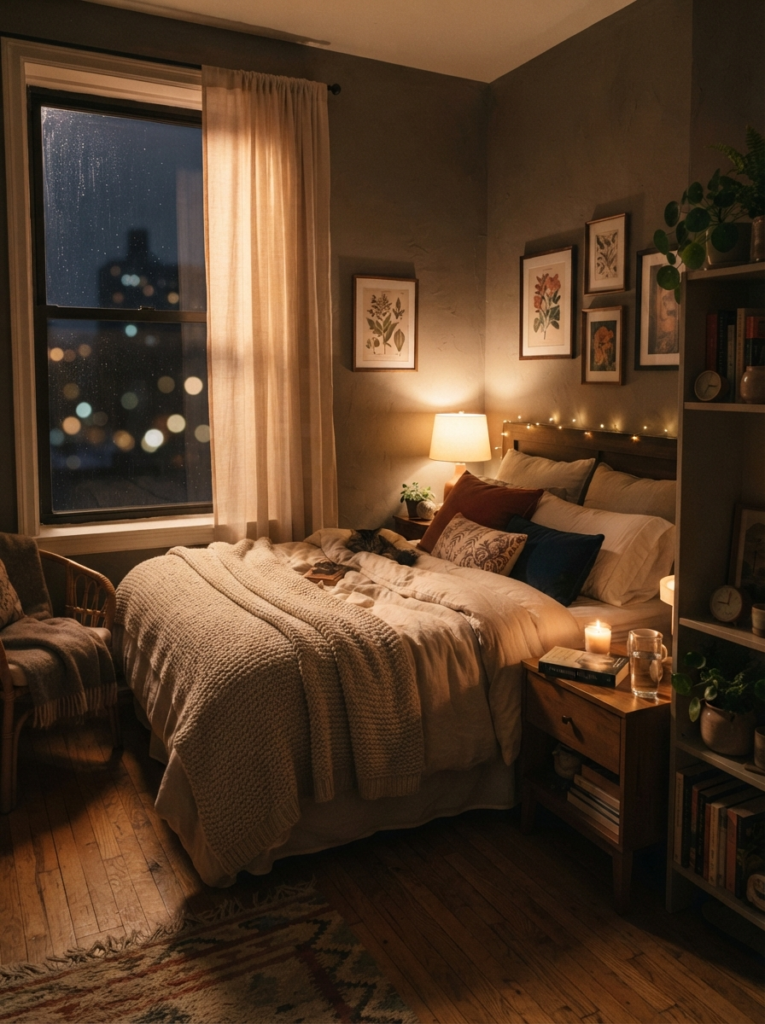
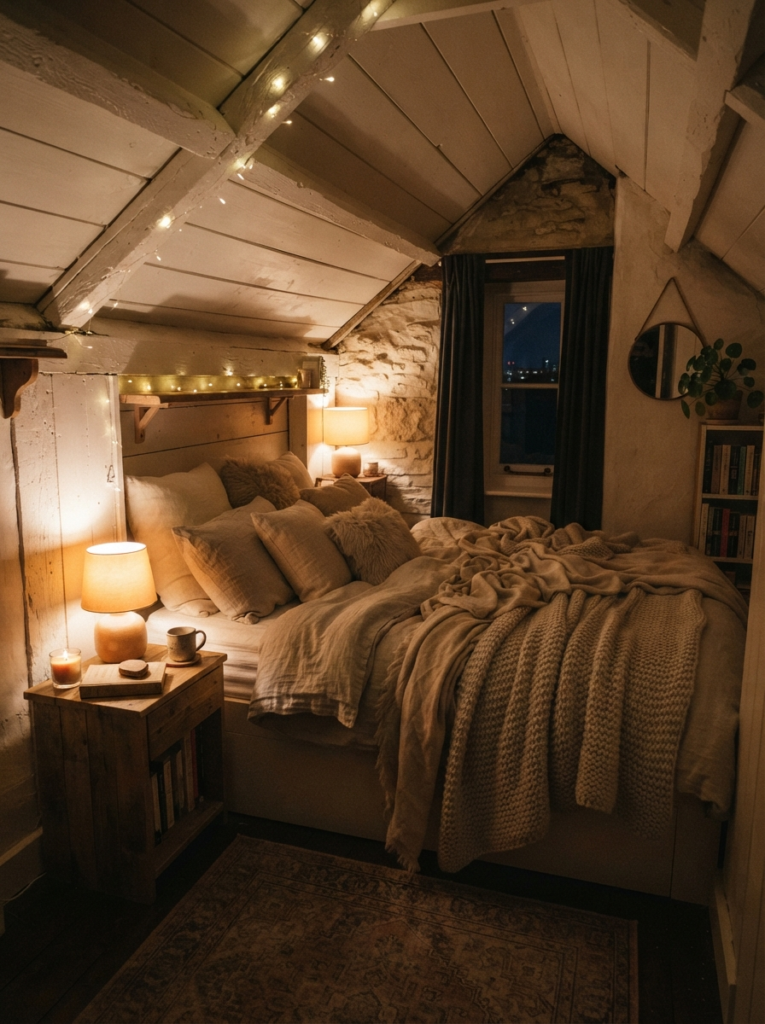
6. The Cozy Cocoon Layout
Some tiny bedrooms feel most relaxing when the sleeping area feels emotionally enclosed and protected slightly. Softer bedding layers, warm side lighting, textured blankets, and closer furniture spacing around the bed create a cocoon-like atmosphere that feels comforting at night.
This works especially well for people who emotionally relax better in warmer, softer, more intimate spaces instead of overly open minimalist rooms.
Comfort often feels psychological first.
7. The Calm Functional Layout
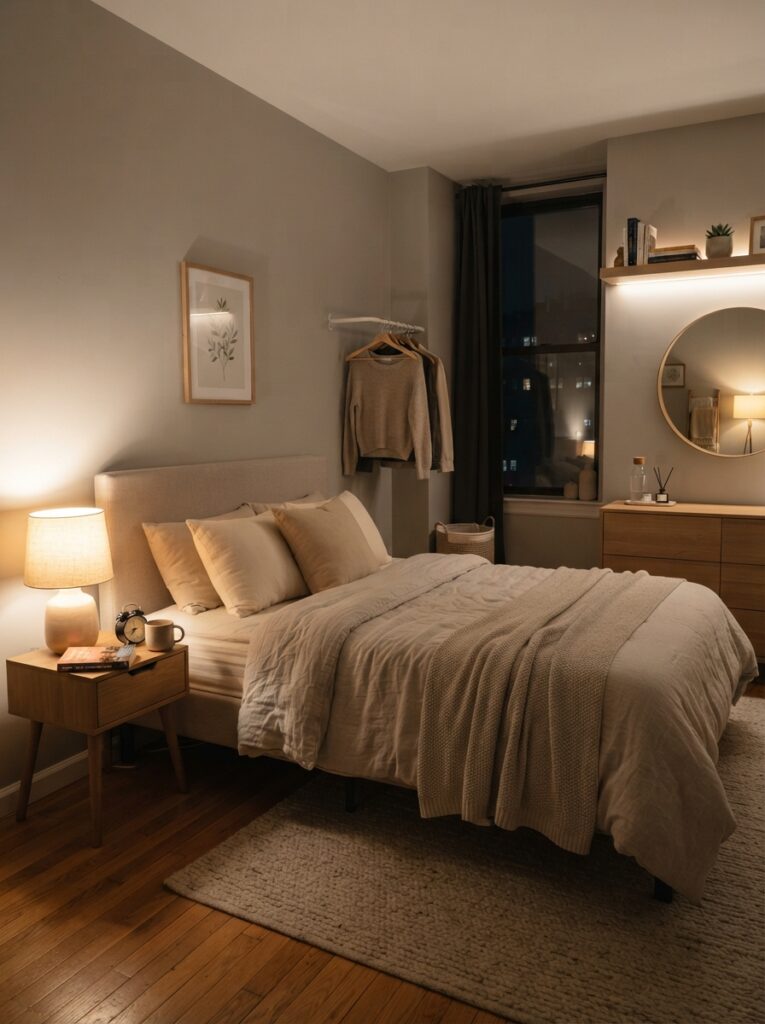
The most relaxing nighttime bedrooms are often the ones that simply reduce friction before sleep. Easy charger access, softer lighting controls, cleaner surfaces, practical storage, and smoother movement paths quietly make nighttime routines feel calmer and less mentally exhausting.
Tiny bedrooms emotionally improve when the room supports winding down naturally instead of creating small daily frustrations repeatedly.
Good layouts reduce stimulation before sleep.
Final Thoughts
Relaxing nighttime bedroom layouts are less about decoration and more about emotional atmosphere. Softer lighting, cleaner movement flow, reduced visual noise, balanced furniture placement, and calmer textures help tiny rooms feel emotionally safer after dark.
The best nighttime layouts support rest by reducing overstimulation instead of constantly demanding attention. Small bedrooms become more comforting when the room finally starts helping the mind slow down naturally at the end of the day.
A relaxing bedroom should not only look cozy at night. It should quietly make the entire room feel emotionally softer the moment the lights dim.