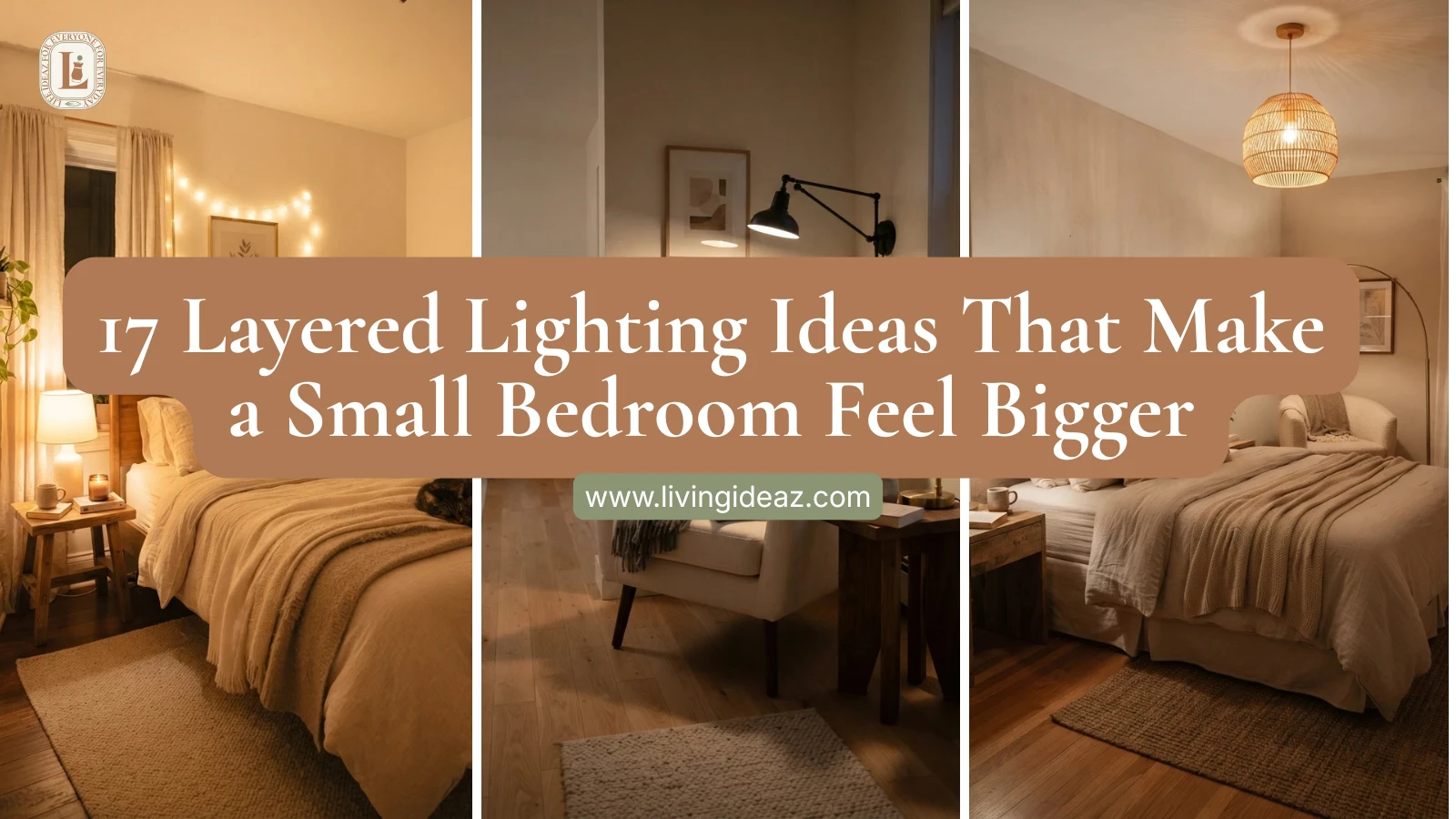
17 Layered Lighting Ideas That Make a Small Bedroom Feel Bigger
TL;DR: A single ceiling light casts hard shadows that make a small bedroom feel boxed in. Layering ambient, task, and accent lighting spreads light evenly, softens corners, and draws the eye outward and upward, which is exactly what tricks a small room into feeling more open. None of it requires knocking down a wall.
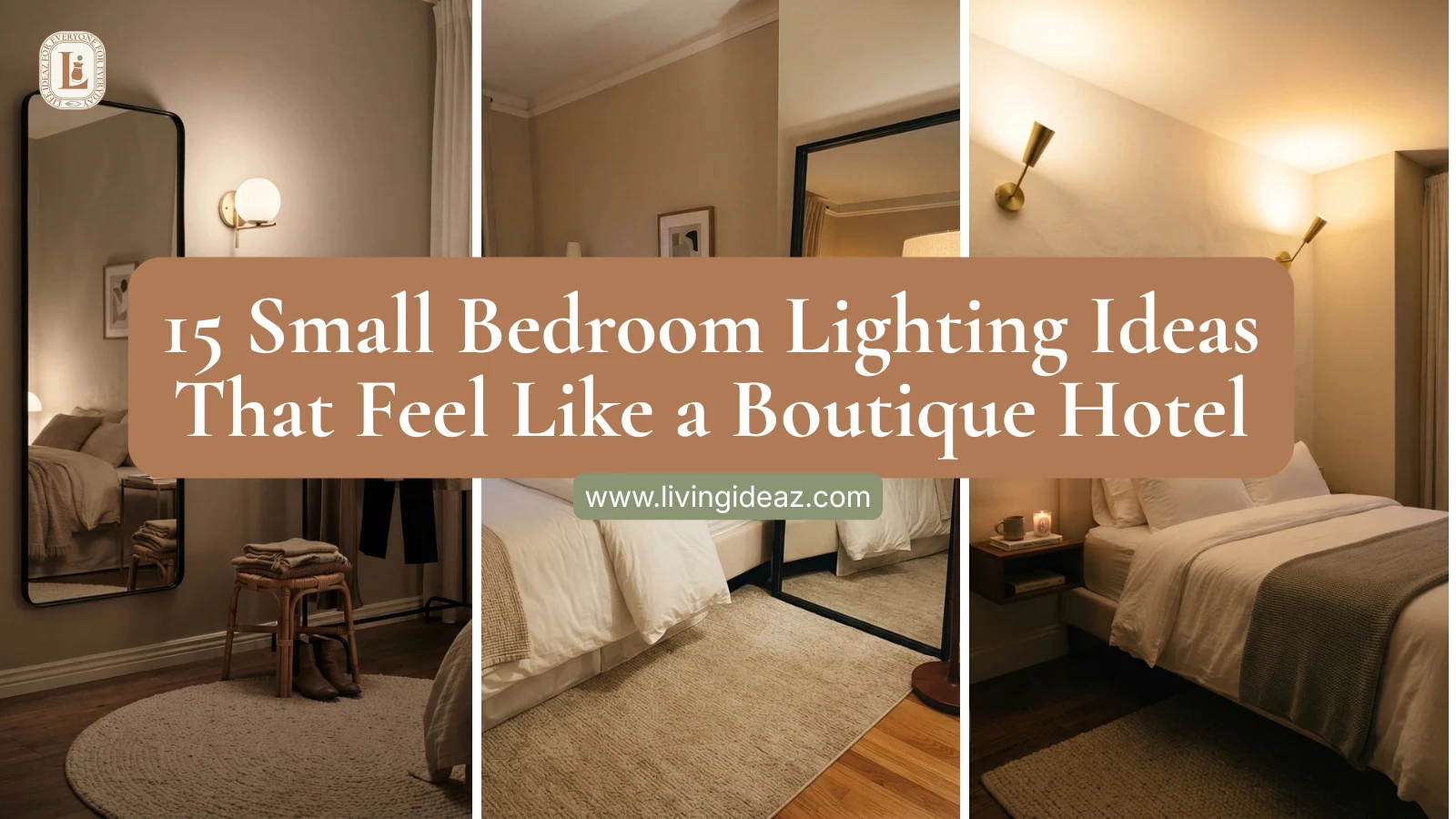
A room filled with soft, even light tends to feel more open because your eyes can move through it without hitting a hard shadow or a dark corner. That’s really the whole secret behind every trick on this list. A single bright bulb creates contrast, and contrast is what makes a small room feel small. Spread that same amount of light across a few sources instead, and the room reads bigger without a single piece of furniture moving.
Here are 17 layered lighting ideas built specifically around that principle.
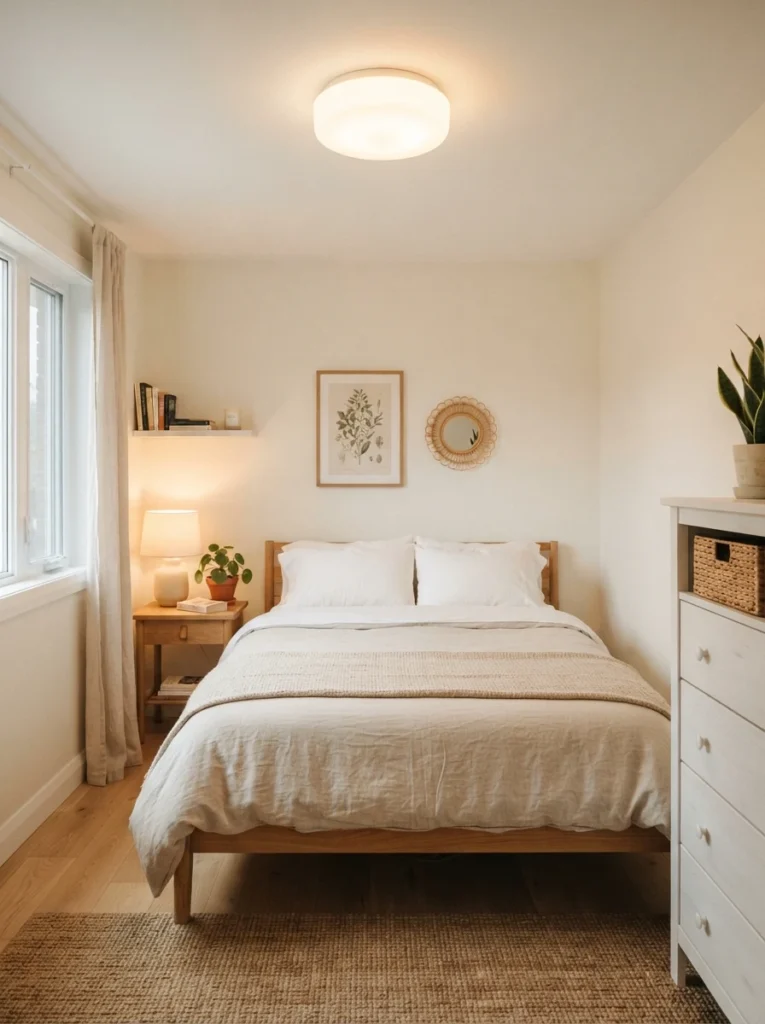
1. Diffuse Your Ceiling Light Instead of Leaving It Bare
Instead of relying on a single high-output fixture, layer or diffuse your ceiling light to avoid harsh contrasts. Soft, ambient light expands the feeling of openness and makes the ceiling appear taller than it actually is.
Swap a bare bulb for a frosted globe or a fabric drum shade, and the whole room immediately reads calmer and more open.
2. Mount Wall Sconces to Stretch the Room’s Width
Wall sconces draw the eye outward by bringing light to the sides of the room rather than just the center, and when mounted at the right height, they create a visual frame that stretches the perceived width of the space.
Place a pair on the widest wall in the room rather than centering everything around the bed alone.
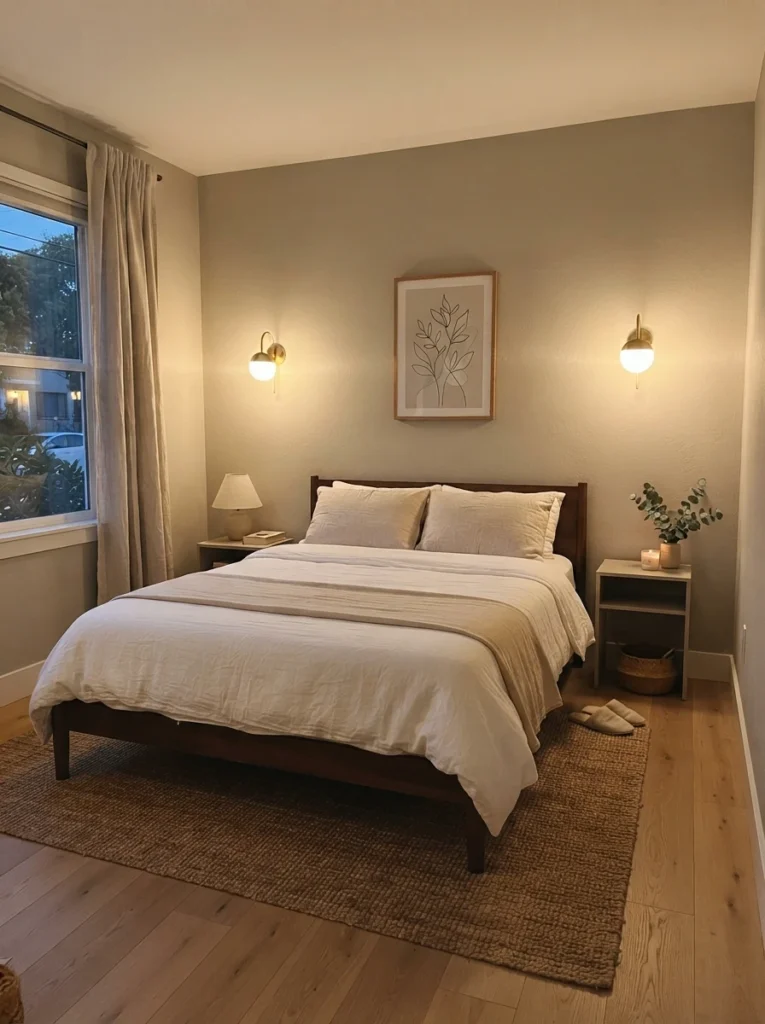
3. Spread Light Evenly Instead of Concentrating It in One Spot
When light is concentrated in one part of a room, it creates stark contrasts that make the space feel broken up and off-balance. Spreading light evenly through a mix of sources smooths those transitions and makes the room feel unified.
Walk your room at night and note any spot that goes fully dark. That’s your next fixture placement.
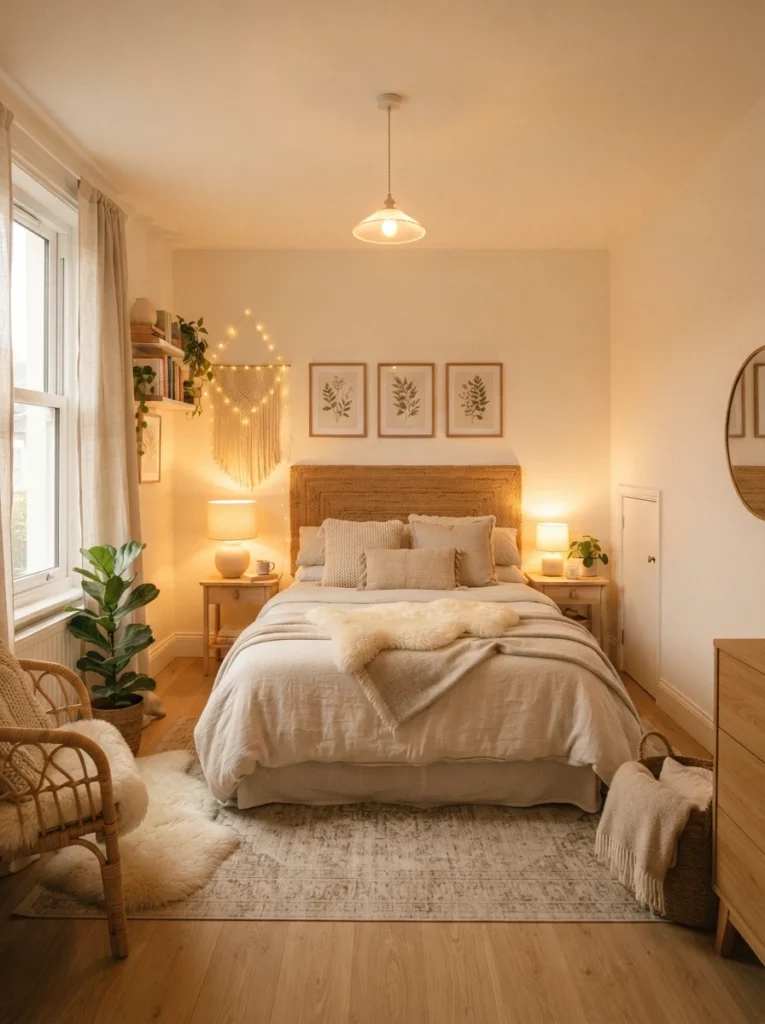
4. Use Uplighting Floor Lamps to Draw the Eye Upward
Uplighting directs light toward the ceiling, creating an upward flow that makes the room feel taller by drawing the eye up. A floor lamp with an upward-facing shade in a corner does this instantly.
Pair it with a lighter ceiling color for the strongest bounce-back effect.
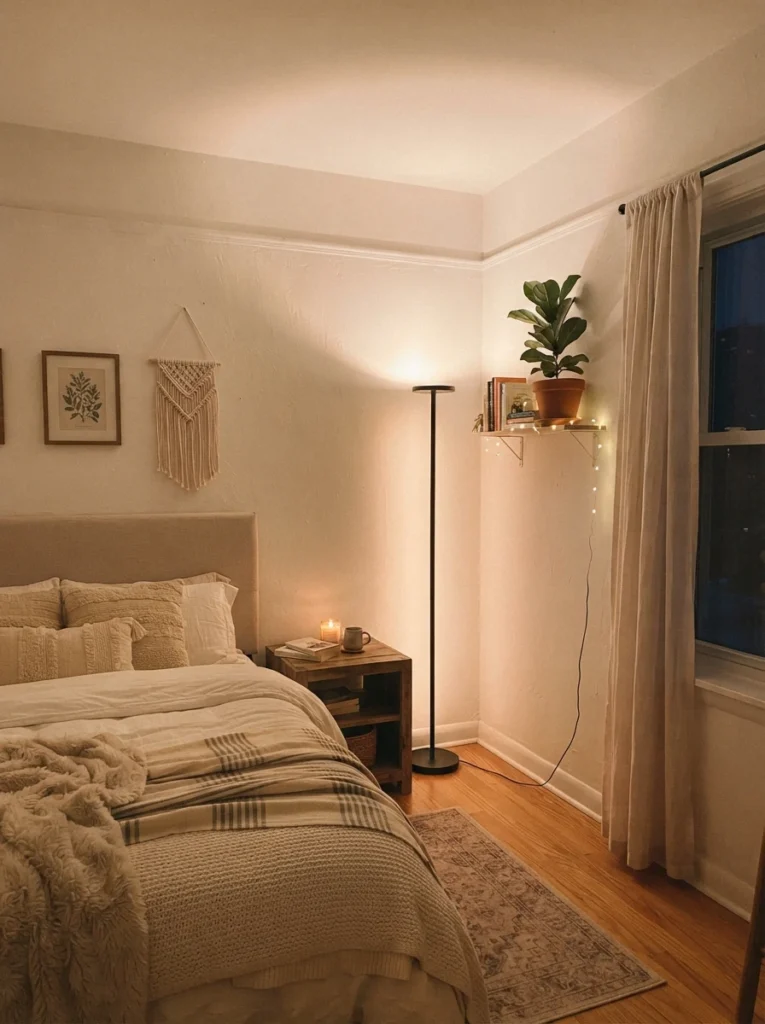
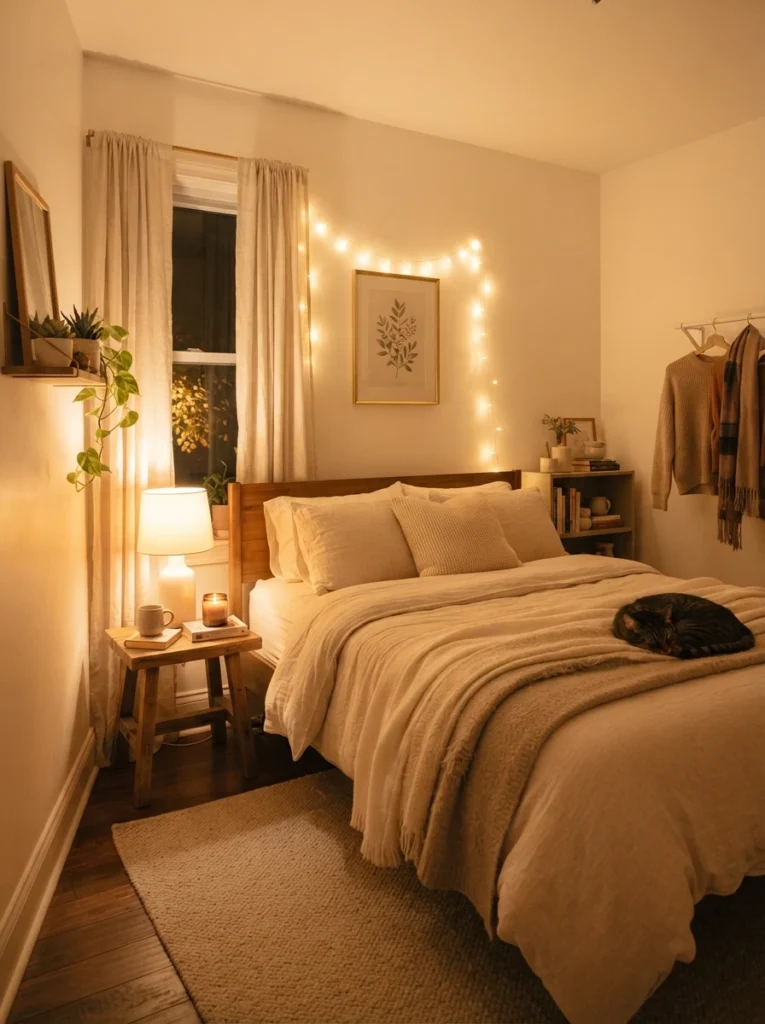
5. Run LED Strips Along the Top of the Walls
Installing LED strip lights along the top of the walls or near the ceiling gives the room a soft, ambient glow that visually expands the space upward, tricking the eye into thinking the ceiling sits higher than it does.
Keep the strips warm-toned and hidden behind crown molding or a shelf edge so only the glow is visible.
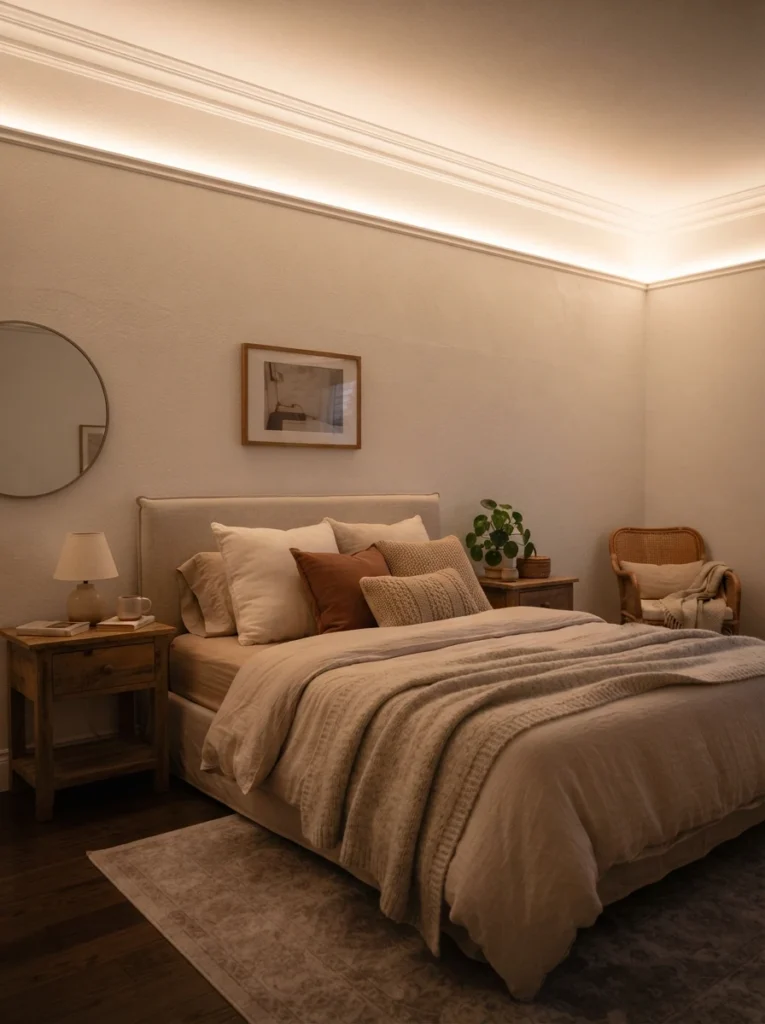
6. Wash the Walls With Soft, Even Light
Wall wash lighting spreads a soft, even glow directly across the wall surface itself, which smooths out texture and shadow rather than spotlighting a single point. This is especially effective on the wall directly behind or beside the bed.
A simple uplight or wide-beam sconce aimed at the wall achieves this without any special equipment.
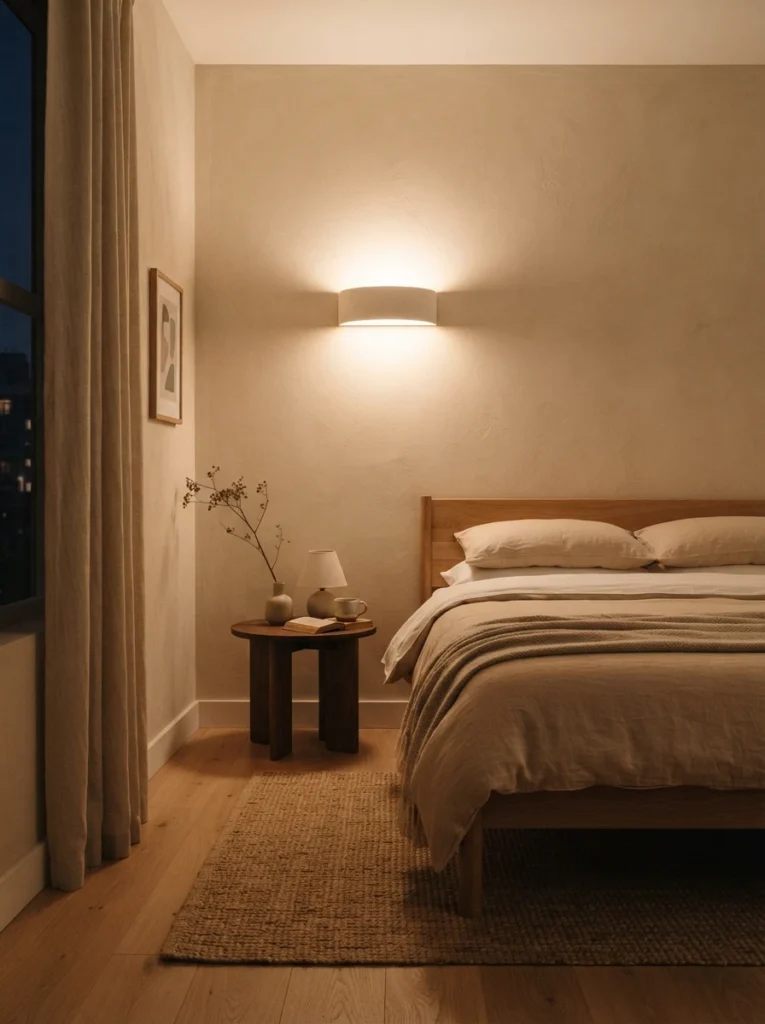
7. Keep Every Fixture Slim and Streamlined
Bulky lamp bases and thick shades interrupt sightlines and make a compact room feel more crowded than it actually is. Look for slimmer bases and shades that maintain an open feel, especially for anything sitting on a nightstand or dresser.
This matters more in a small room than it would anywhere else in the house.
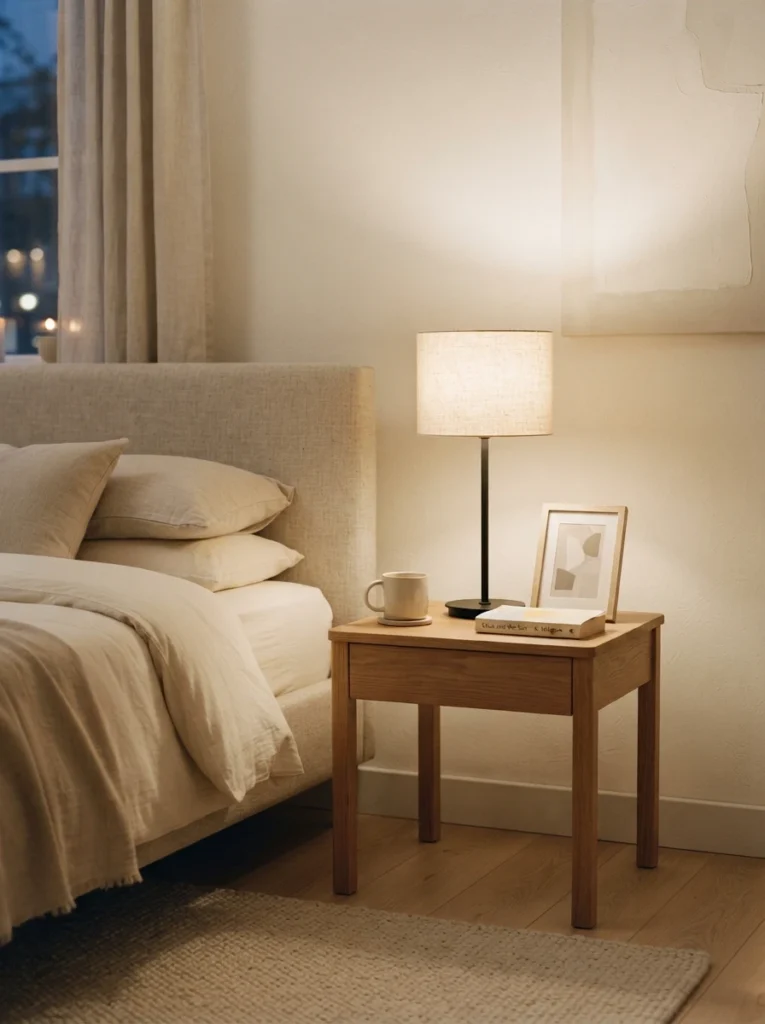
8. Add Accent Lighting to Keep the Eye Moving
Accent lighting is the secret weapon for opening up a cramped space. Wall washers, picture lights, and LED strips can highlight artwork or a bookshelf, filling a dim corner and keeping the eye moving instead of stopping on a shadow.
Pick one feature in the room, a piece of art, a shelf, a headboard, and give it its own small accent light.
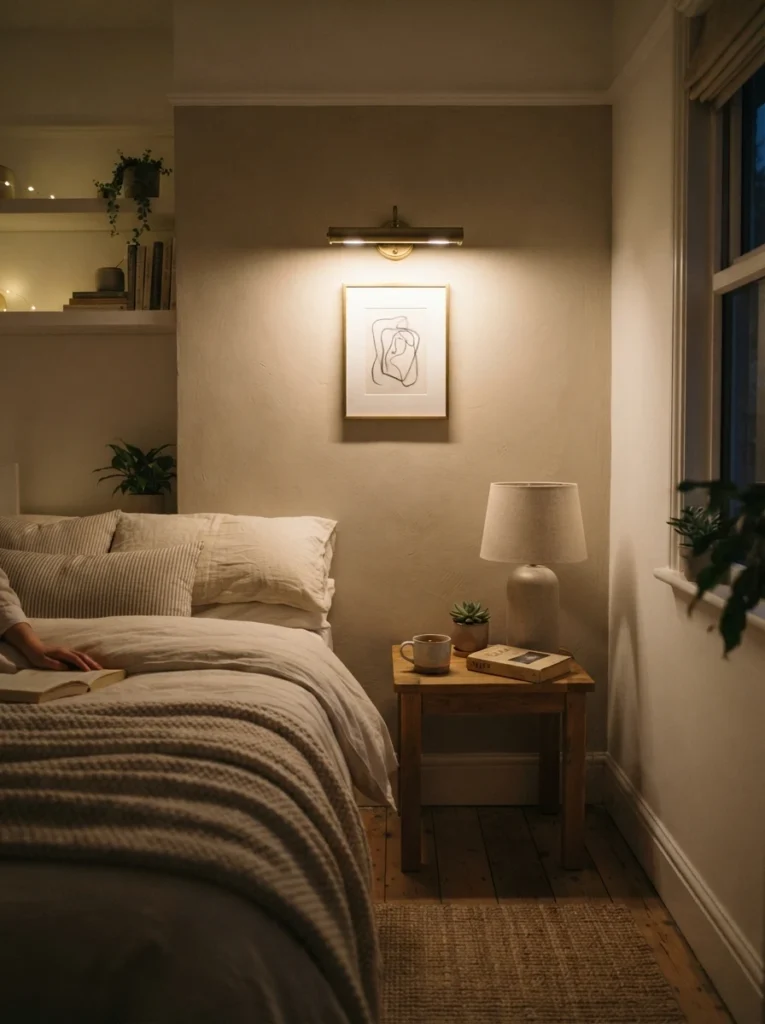
9. Pair a Mirror With Your Brightest Light Source
Strategically placing a mirror opposite a window or lamp can double the impact of that light and visually expand the space. This remains one of the cheapest, highest-impact tricks on this entire list.
Lean a full-length mirror across from your floor lamp or nearest window for the biggest visual payoff.
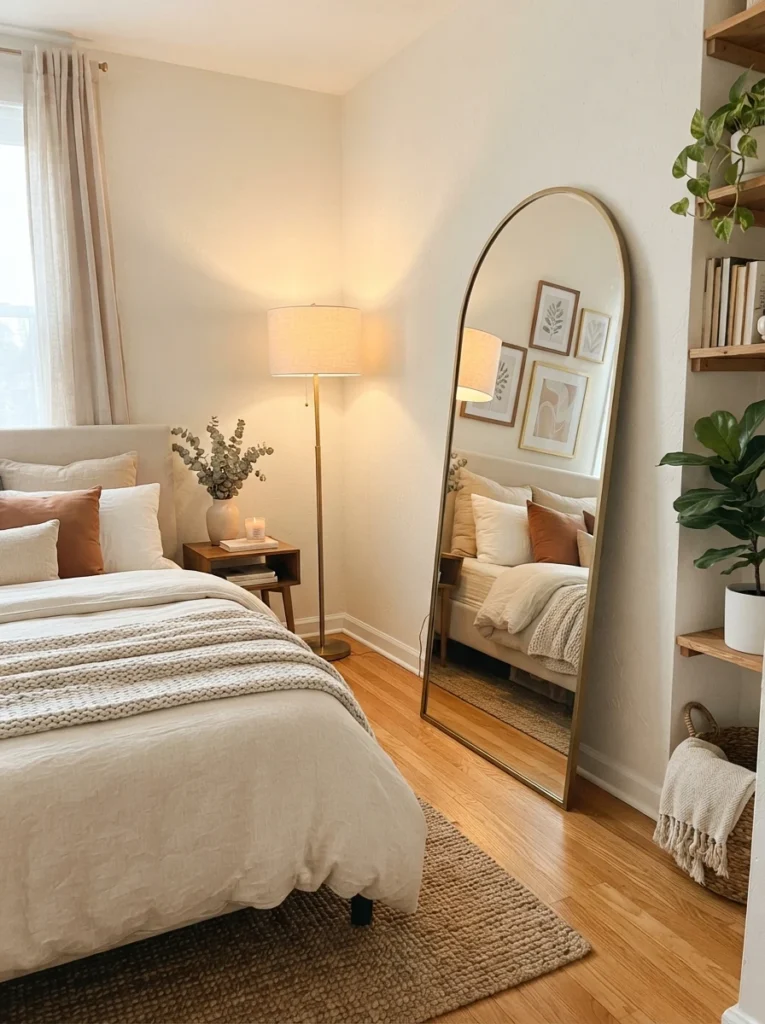
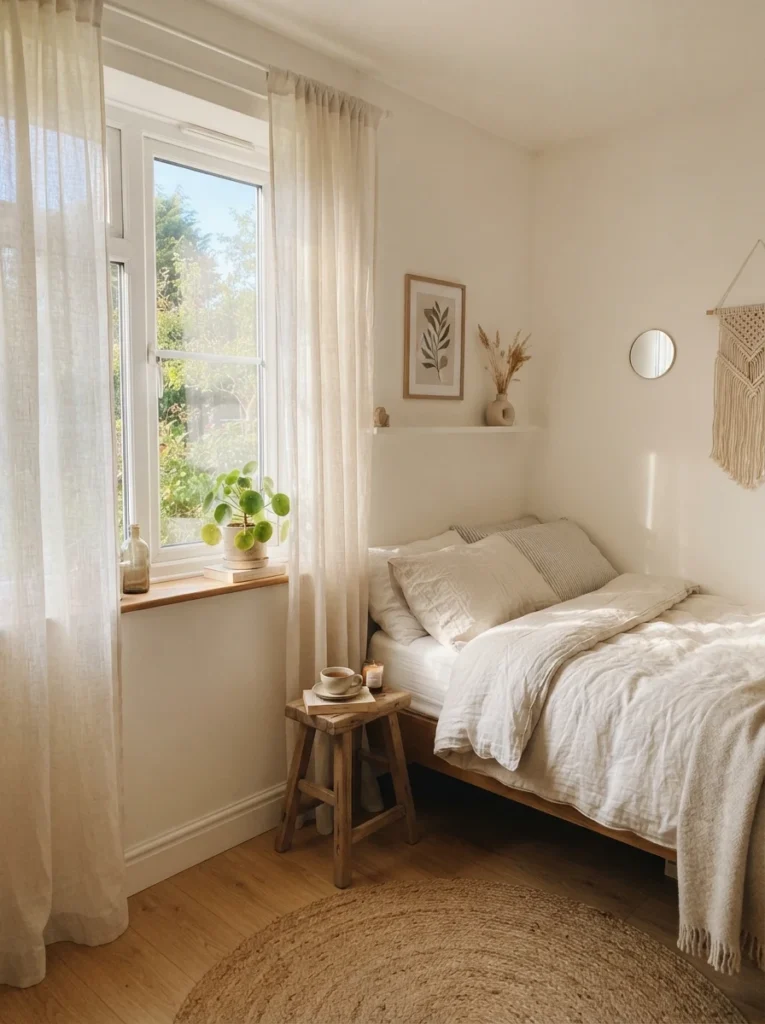
10. Let Sheer Curtains Maximize Natural Light During the Day
Keeping windows free of heavy, dark curtains and opting for sheer or light-colored drapes lets in maximum daylight, which makes the room feel larger well before you even turn on a single lamp.
Save your heavier curtains, if you want them, for layering in at night rather than blocking daylight hours.
11. Keep Every Bulb the Same Warm Tone
Warm white lighting around 2700K to 3000K casts a gentle glow that softens edges and helps blend shadows more smoothly, which makes corners feel less defined and the whole room read larger. Mixing warm and cool bulbs in the same room undoes this effect immediately.
Check every fixture in the room, including any in an attached closet, and make sure they all match.
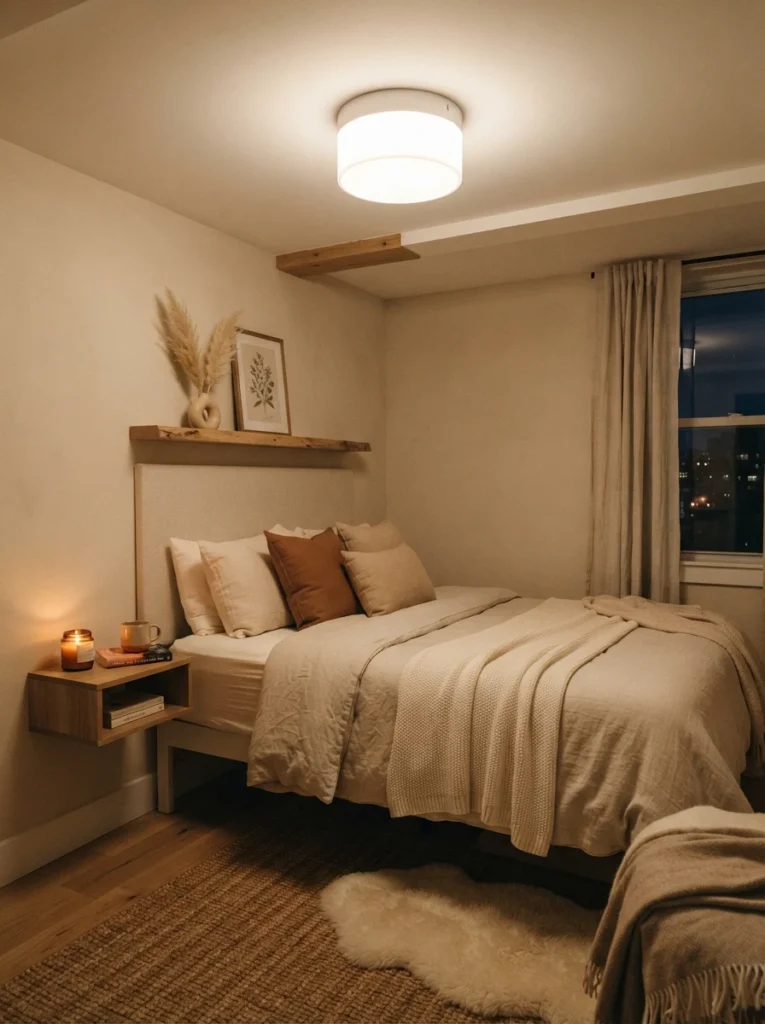
12. Choose Flush or Semi-Flush Mounts for Low Ceilings
Flush mount and semi-flush mount ceiling lights are often the best choice for rooms with lower ceilings because they provide ample ambient light without taking up visual space the way a hanging pendant would.
Save pendants for rooms with more vertical clearance, and default to flush mounts anywhere the ceiling feels close.
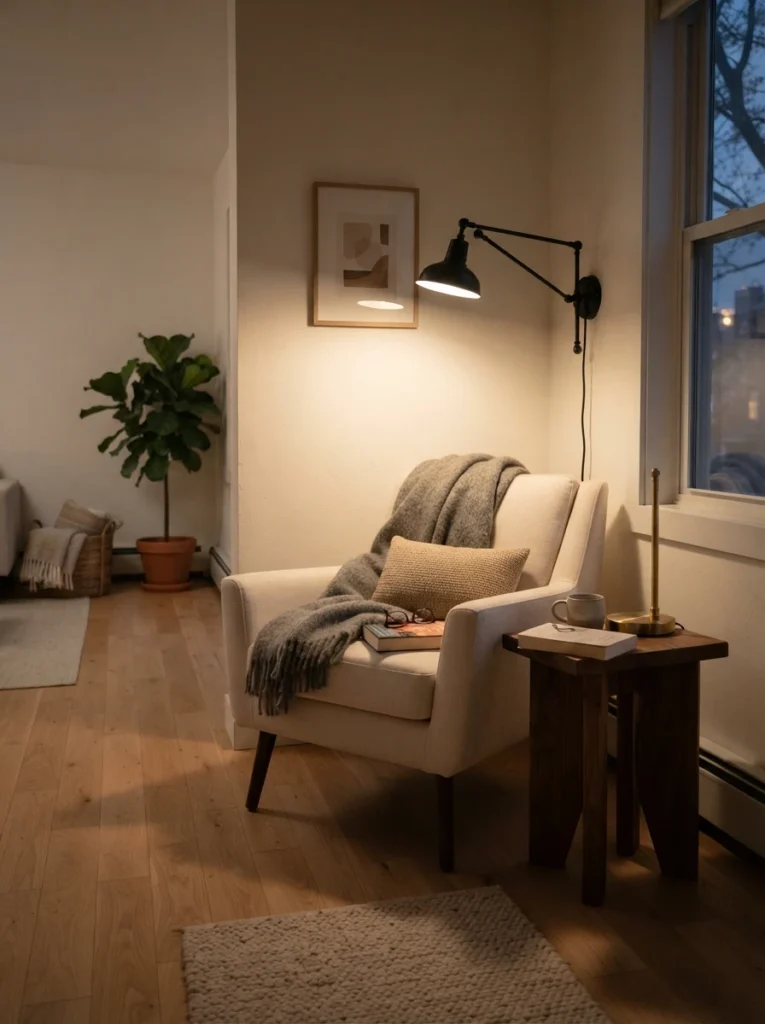
13. Add Task Lighting Without Crowding the Room
Task lighting for reading or dressing enhances the sense of space by drawing attention to specific areas of the room, as long as it’s placed without encroaching on the open feel. A small desk lamp or a swing-arm sconce does this without adding floor clutter.
Choose wall-mounted or clamp-style task lights over anything with a large freestanding base.
14. Light Vertical Lines and Textures to Add Height
Lighting up vertical lines or interesting textures, like a paneled wall or a tall bookshelf, adds visual interest without adding clutter, and even a small accent light here can make the room feel more dynamic and expansive.
A single uplight aimed at a textured accent wall does more for the sense of height than most people expect.
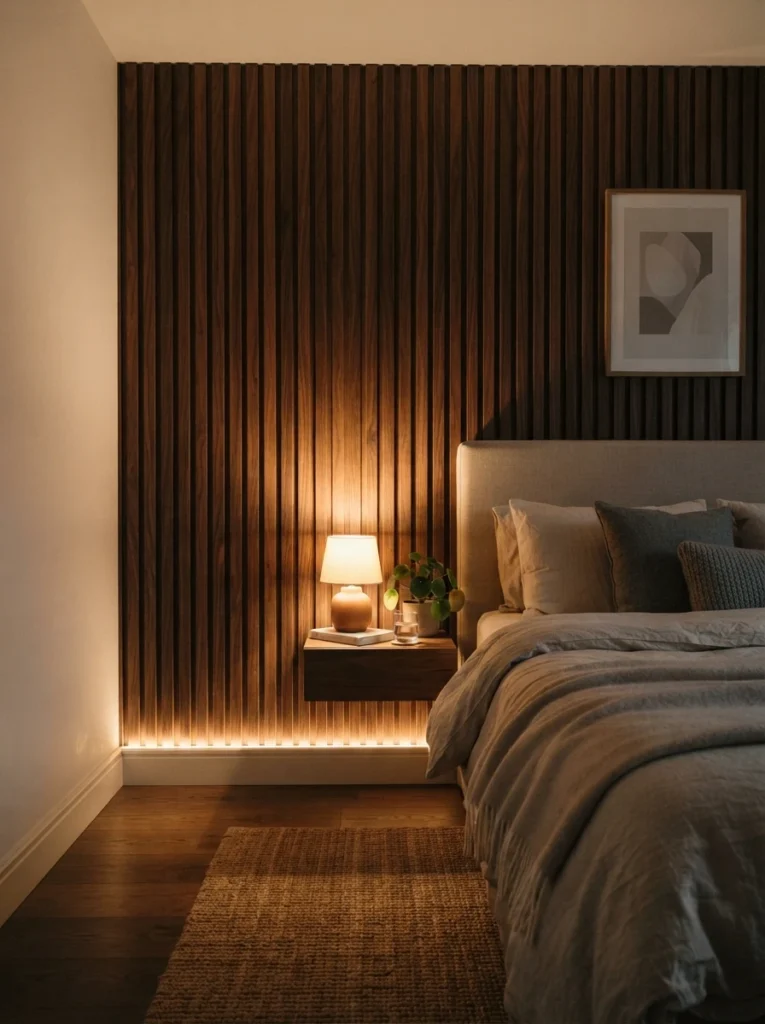
15. Aim for 3 to 5 Light Sources Total
A good rule of thumb is to have 3 to 5 light sources in a room, something like a main ceiling light, a floor lamp, a table lamp, and a small accent piece. This mix gives you the flexibility to actually layer light instead of relying on one dominant source.
Count what you currently have running in your bedroom right now. Most small rooms are sitting at just one or two.
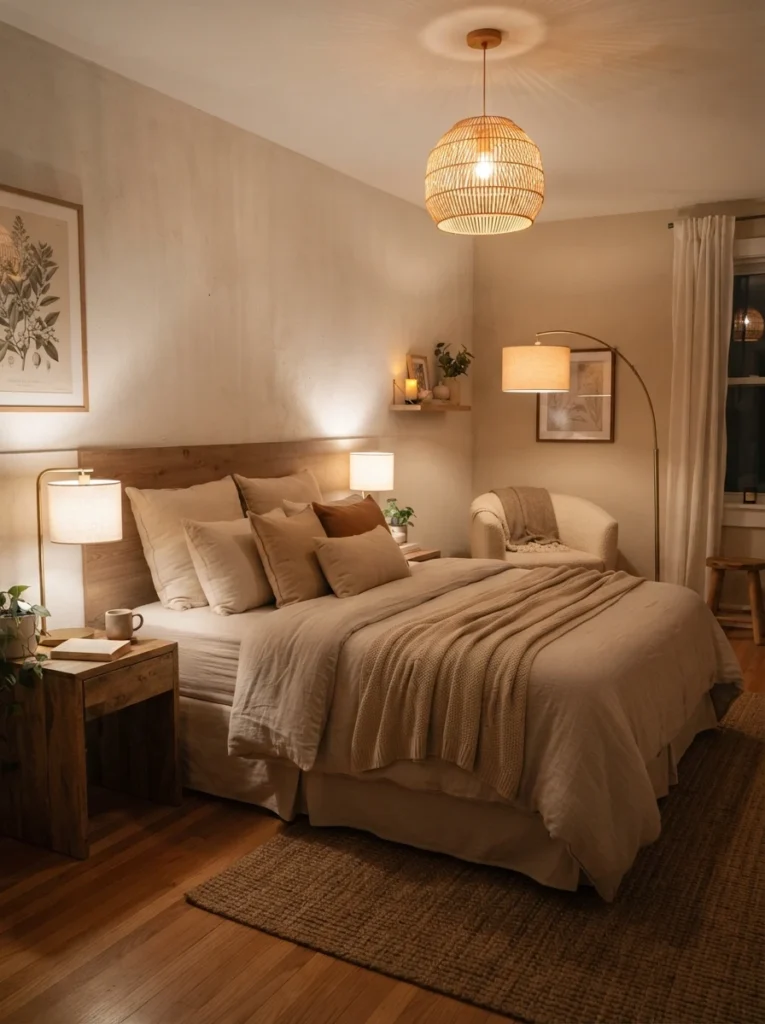
16. Add a Grounding Glow Under Furniture
A soft toe-kick or under-furniture LED, like a strip tucked beneath a bed frame or dresser, adds a subtle grounding glow that makes furniture appear to float slightly above the floor. This small detail adds depth without taking up any additional space.
It’s a detail borrowed from kitchen design, but it works just as well under a bed frame.
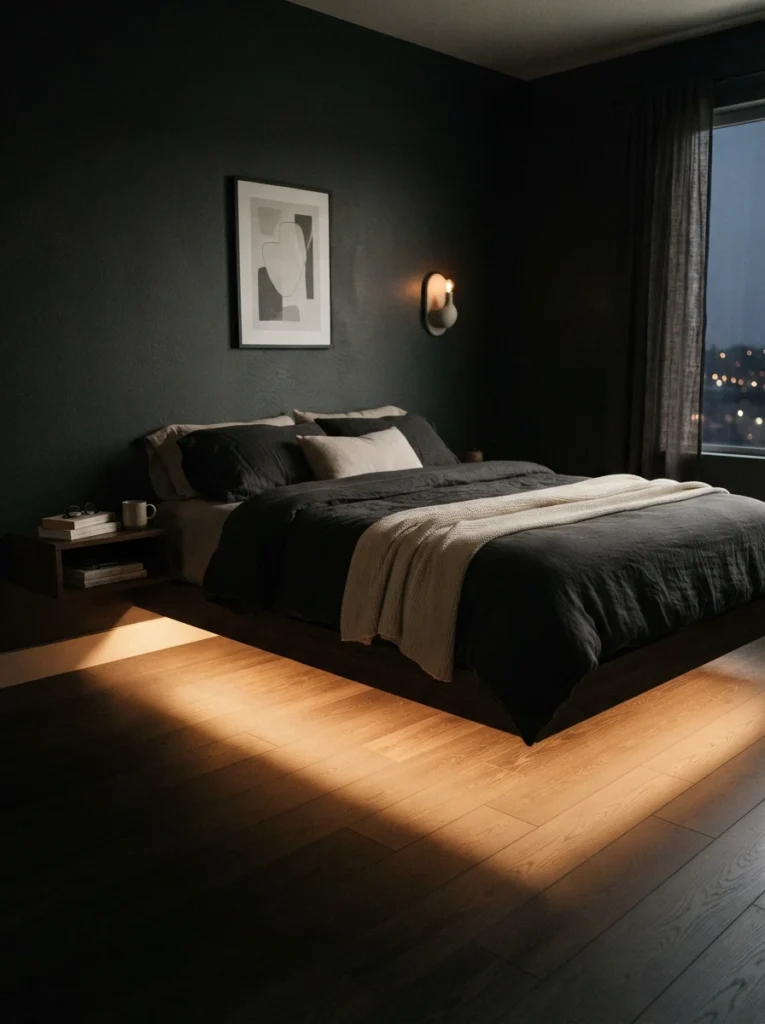
17. Make Accent Lighting Brighter Than Your Ambient Layer
Accent lighting should be noticeably brighter than the ambient level in the same area to create real contrast and visual depth, rather than blending in and disappearing into the rest of the room’s glow.
If your accent light isn’t actually standing out, it’s not doing its job of adding dimension to the space.
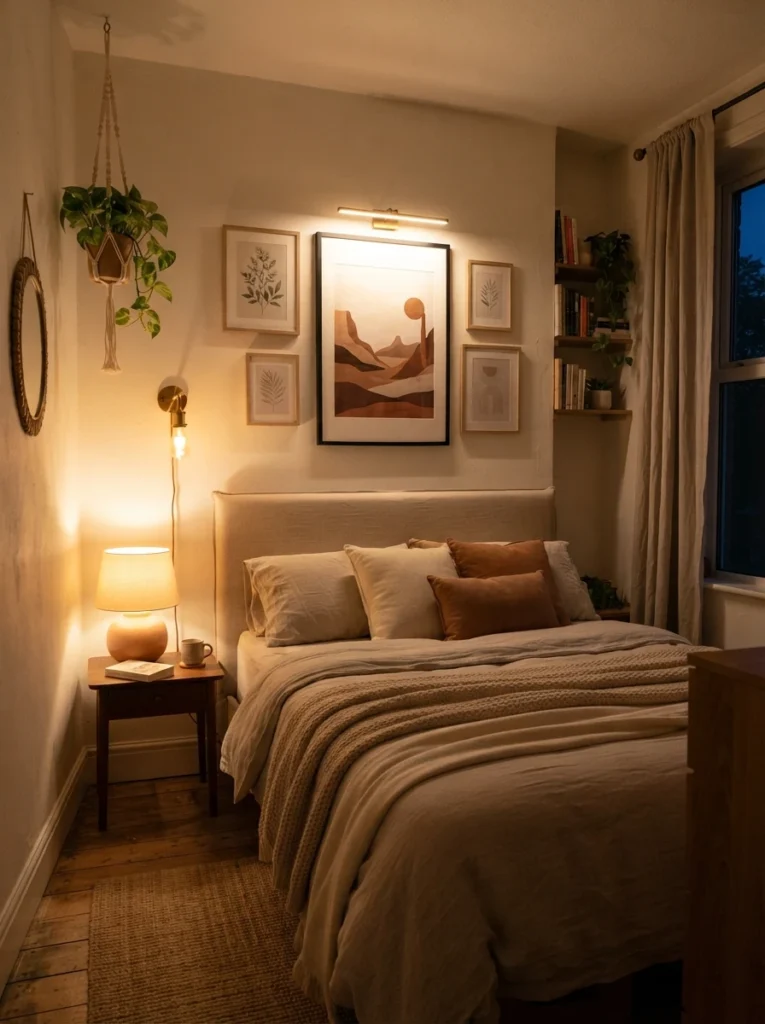
None of these seventeen ideas ask you to move a wall or add square footage. Start with the two that cost nothing, spreading your existing light more evenly and adding a mirror across from your brightest source, then build outward with sconces, accent lights, and a consistent warm tone. Layered right, a small bedroom can genuinely read bigger than it measures.