10 Pantry Labeling Ideas That Make Grocery Runs Easier
TL;DR: Labels do more than make a pantry look nice on camera. A good system tells you at a glance what you already own, what’s about to expire, and exactly where something goes once it’s put away, which cuts down on duplicate purchases and forgotten food. Waterproof stickers, a consistent font, and dated labels on anything perishable are usually enough to make a real difference in how your grocery runs go.
A pantry can be perfectly sorted into categories and still fall apart within a week if nothing’s actually labeled. Labels are what keep a system running on autopilot, since they remind everyone in the house exactly where something belongs instead of relying on memory. They also change how you shop, because a quick glance at labeled shelves tells you what you’re low on and what’s already sitting there, unopened, waiting to be used.
Here are 10 pantry labeling ideas that make both restocking and grocery shopping noticeably easier.
1. Sort and Categorize Before You Label Anything
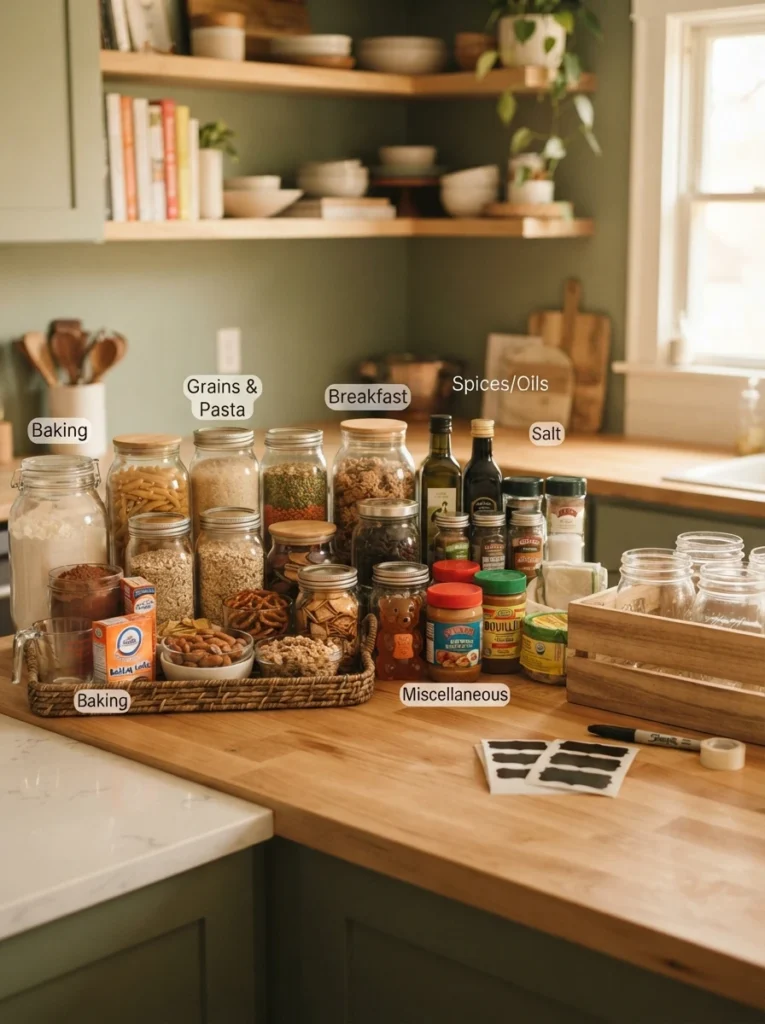
Labels only work if the categories behind them are already sorted. Group everything into clear categories first, baking, snacks, grains, canned goods, so that when you sit down to actually make labels, you’re working from a system rather than guessing at categories as you go.
2. Choose Waterproof, Removable Stickers for Containers
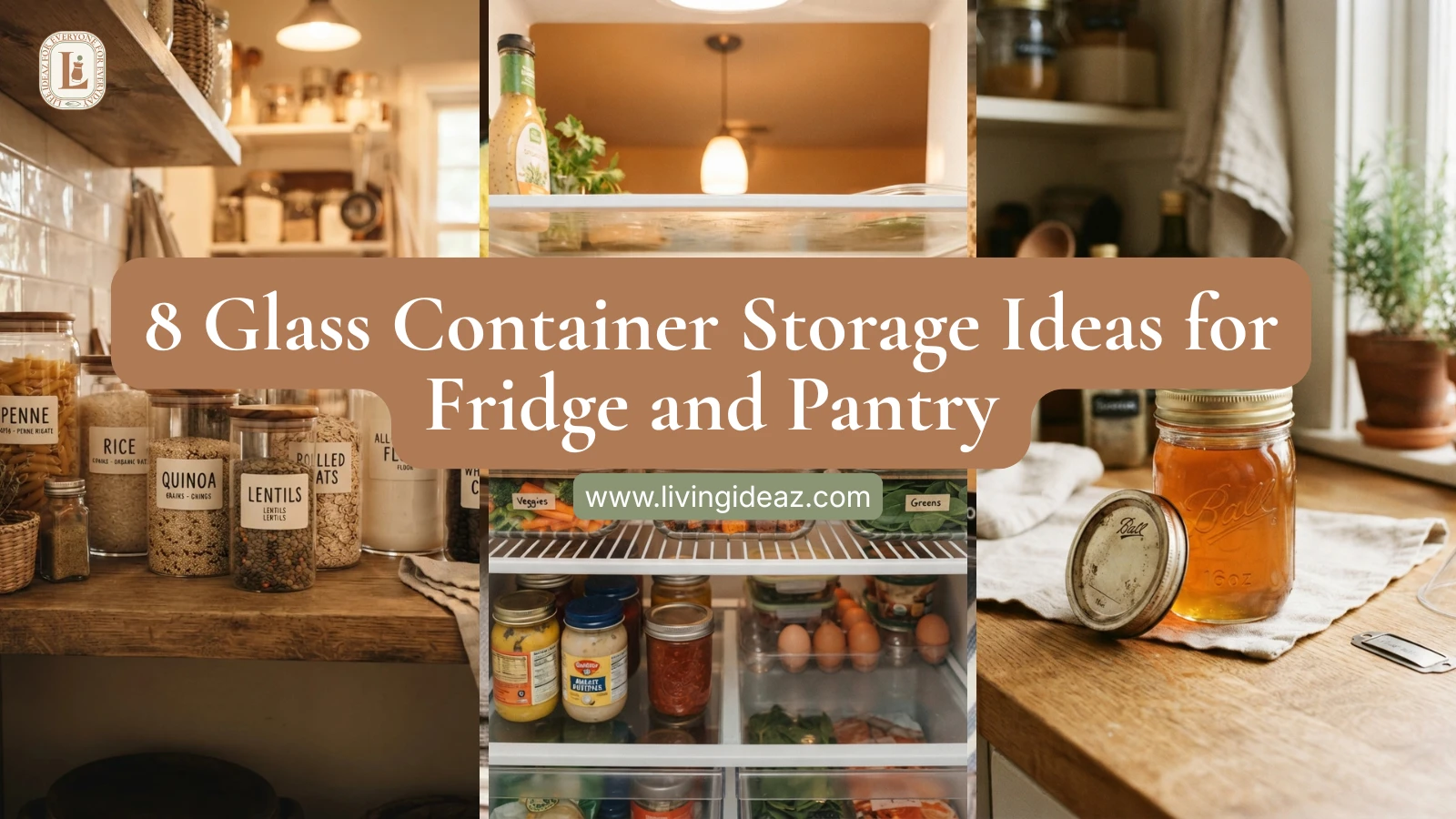
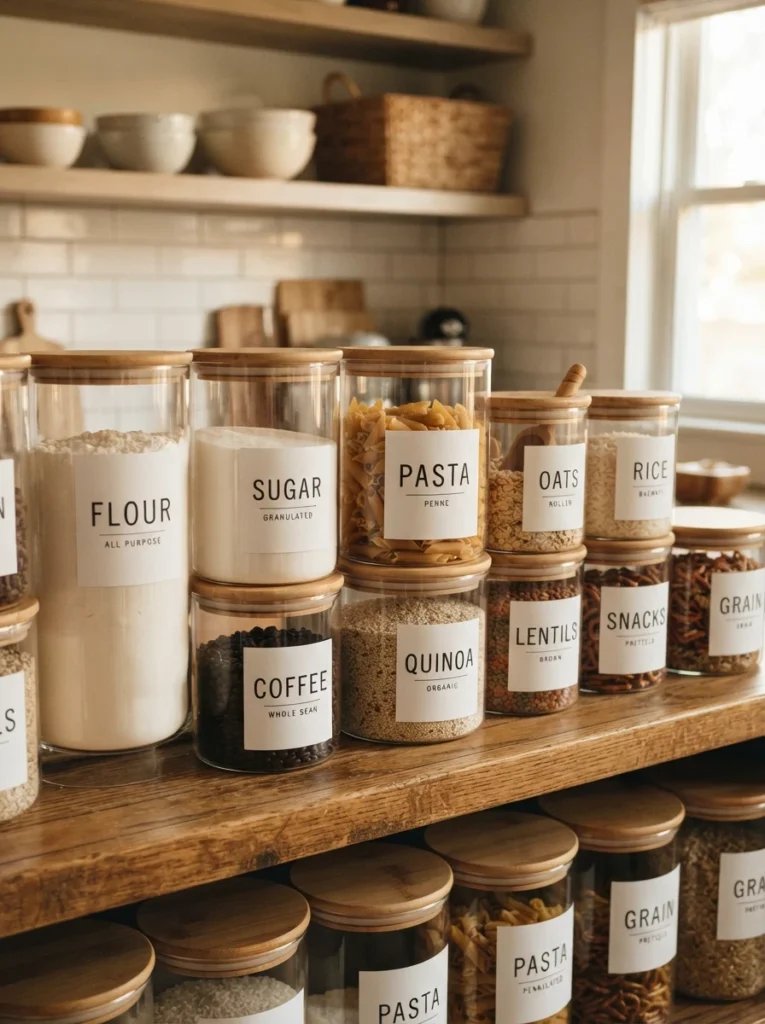
Labels on food containers deal with condensation, spills, and regular handling, so a basic paper label won’t hold up long. Waterproof vinyl stickers that also peel off cleanly let you update labels as needed without leaving a sticky residue behind on glass or plastic.
3. Label the Shelf, Not Just the Container
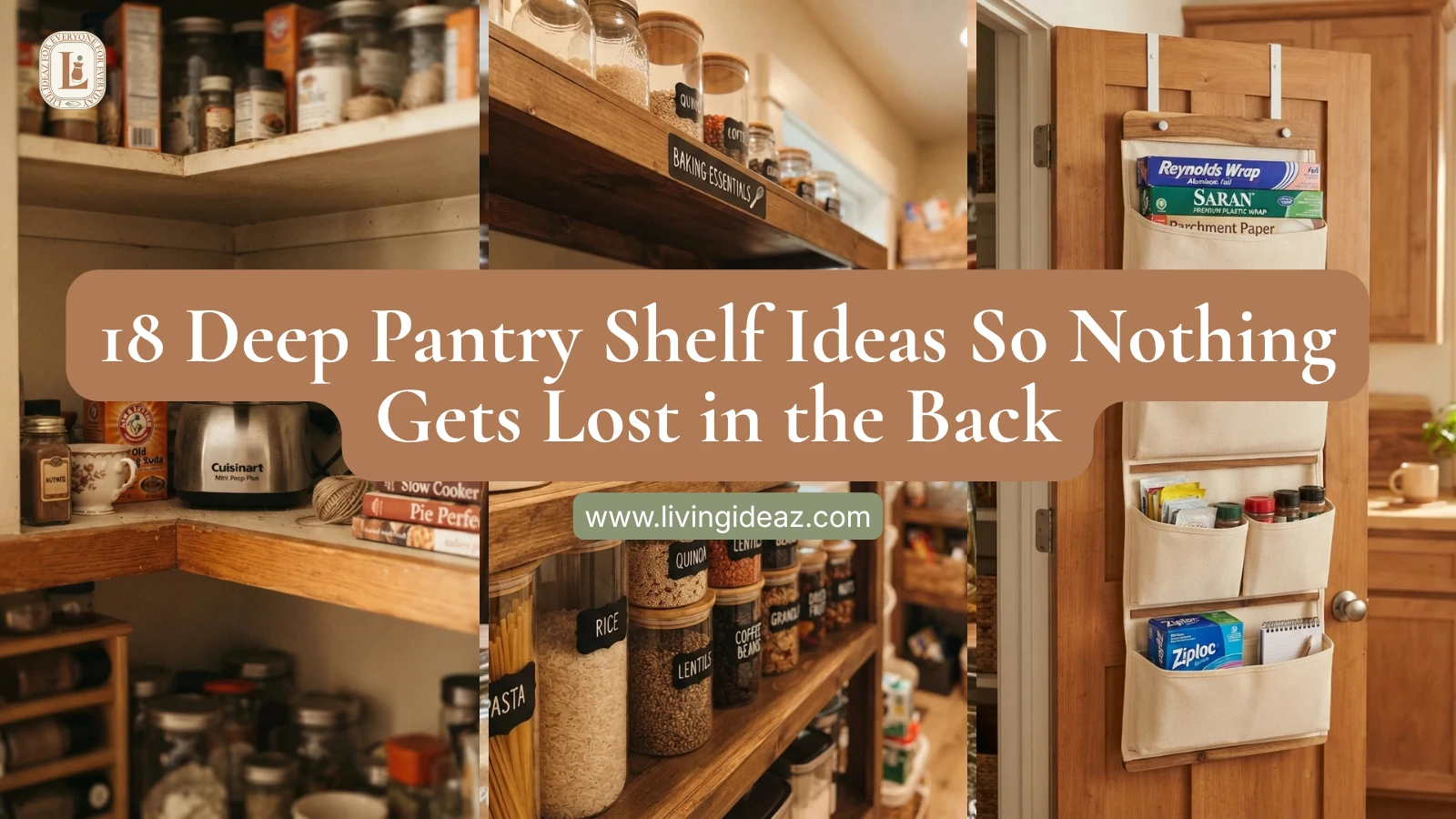
A label on the container helps only until that container gets moved or swapped. Labeling the shelf itself means every item has a home to return to, so anyone putting away groceries knows exactly where something belongs even if they’ve never organized that pantry before.
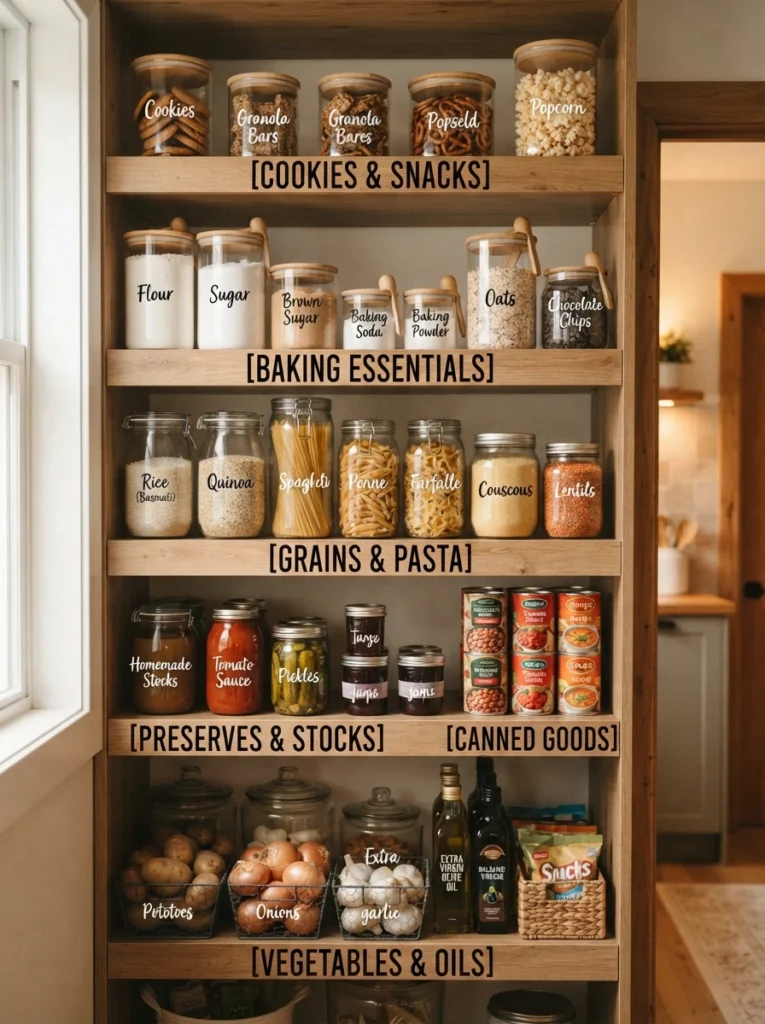
4. Add Expiration Dates to Anything Perishable
A label that only says “flour” tells you what’s inside but not how long it’s been there. Adding a simple date, either when it was purchased or transferred into the container, gives you the information you actually need to rotate stock and use things up before they go stale.
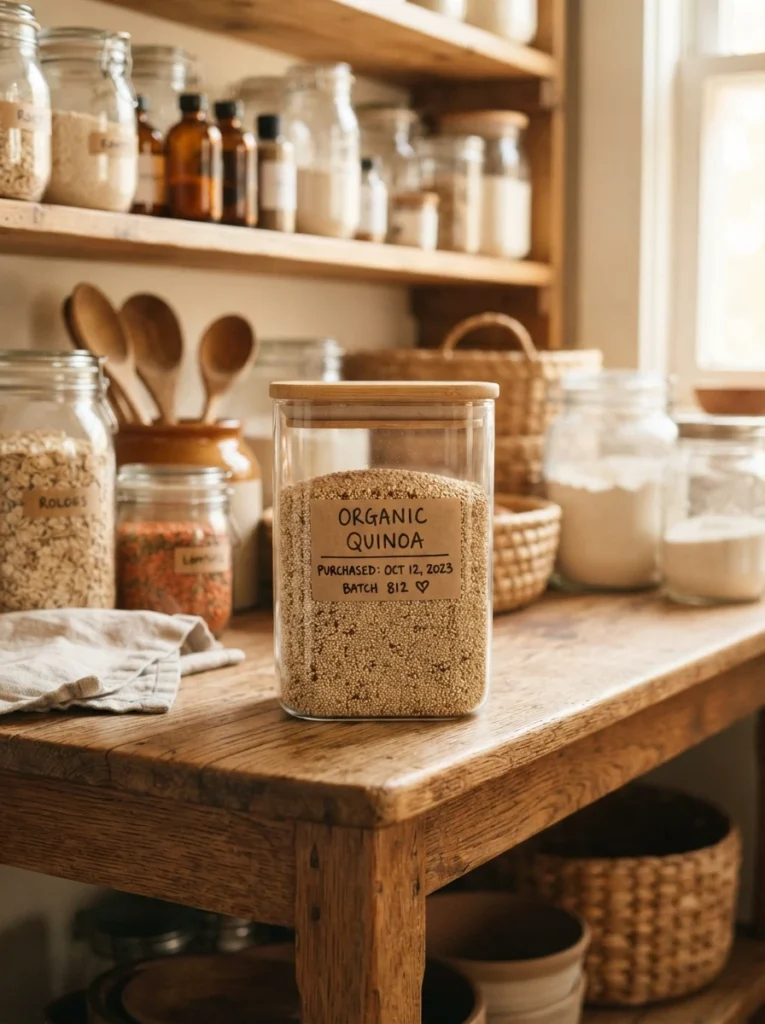
5. Use One Consistent Font and Style Throughout
Mixing handwritten labels with printed ones, or switching fonts between shelves, makes a pantry harder to scan quickly even if every single label is accurate. Sticking to one font and one label style throughout keeps the whole pantry easy to read at a glance, which matters more for function than most people expect.
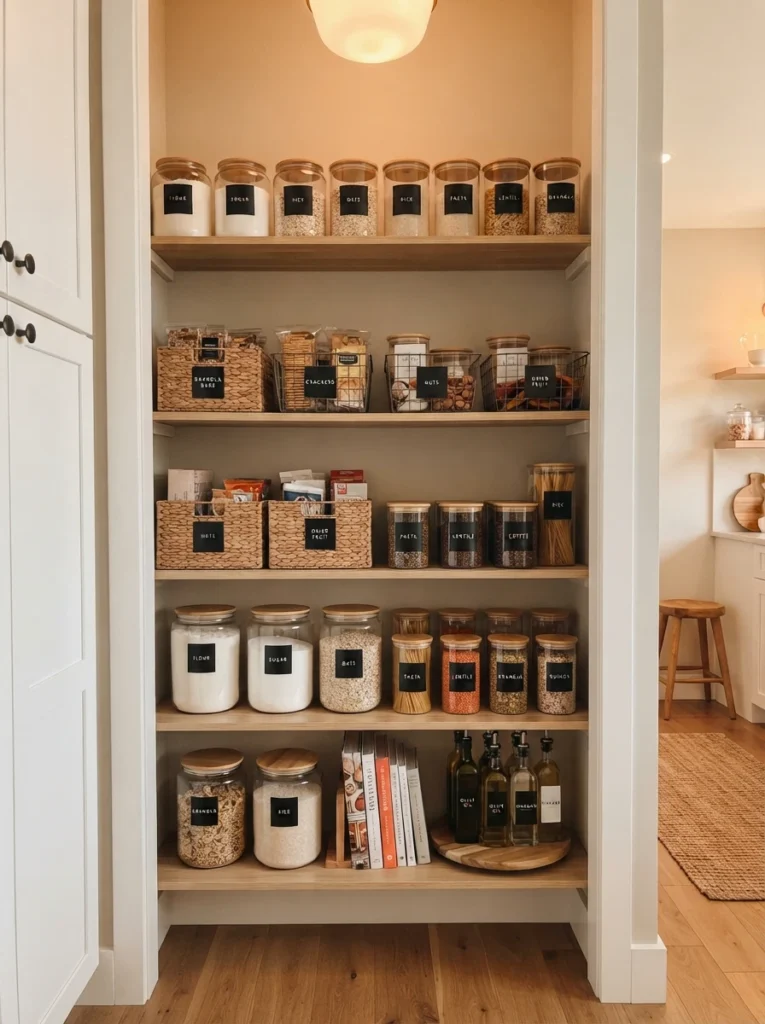
6. Try Magnetic Labels for Metal Bins or a Steel Backsplash
If your pantry uses metal bins or has a magnetic wall strip, magnetic labels let you reposition contents instantly without sticky residue or wasted stickers. This works especially well for households where the exact grocery rotation changes from month to month.
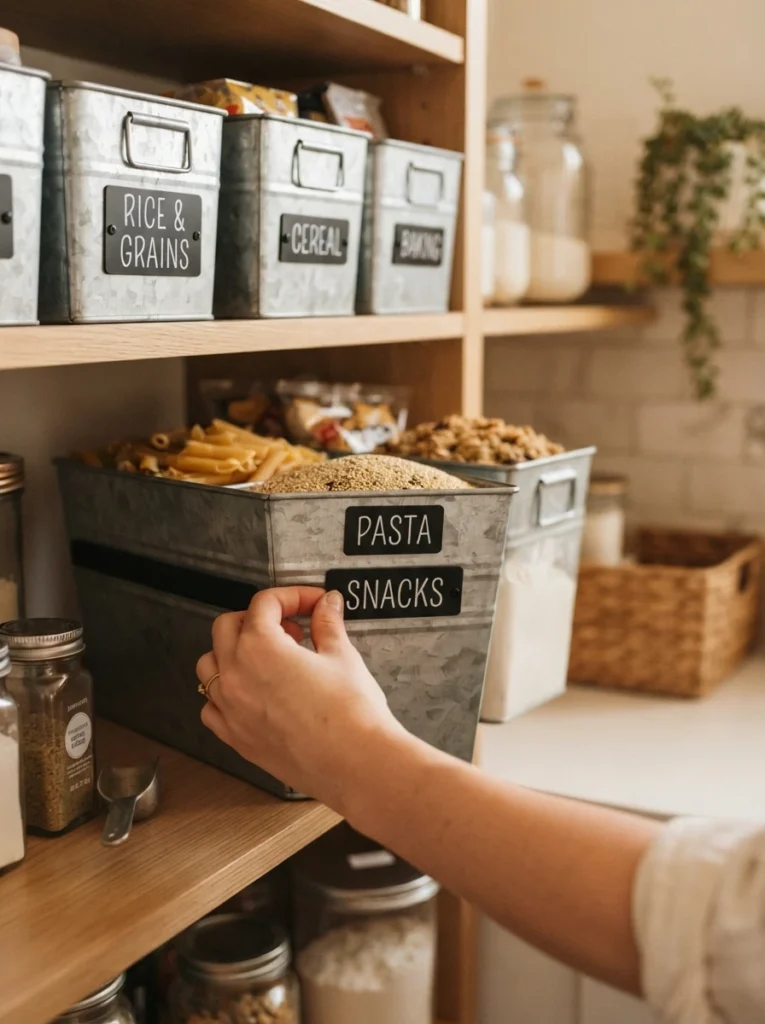
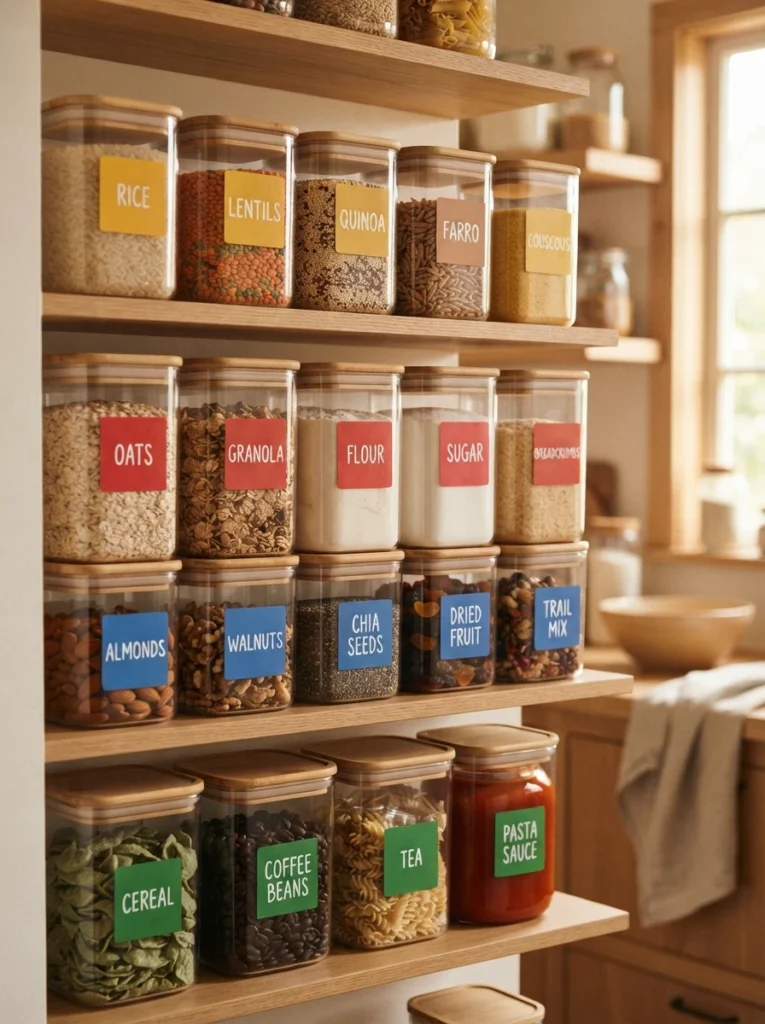
7. Color-Code Categories for an Even Faster Glance
Assigning a specific color to each category, green for snacks, blue for baking, for example, adds a second layer of visual sorting on top of the text itself. This is especially useful for younger kids who may not read fluently yet but can still match a color to where something belongs.
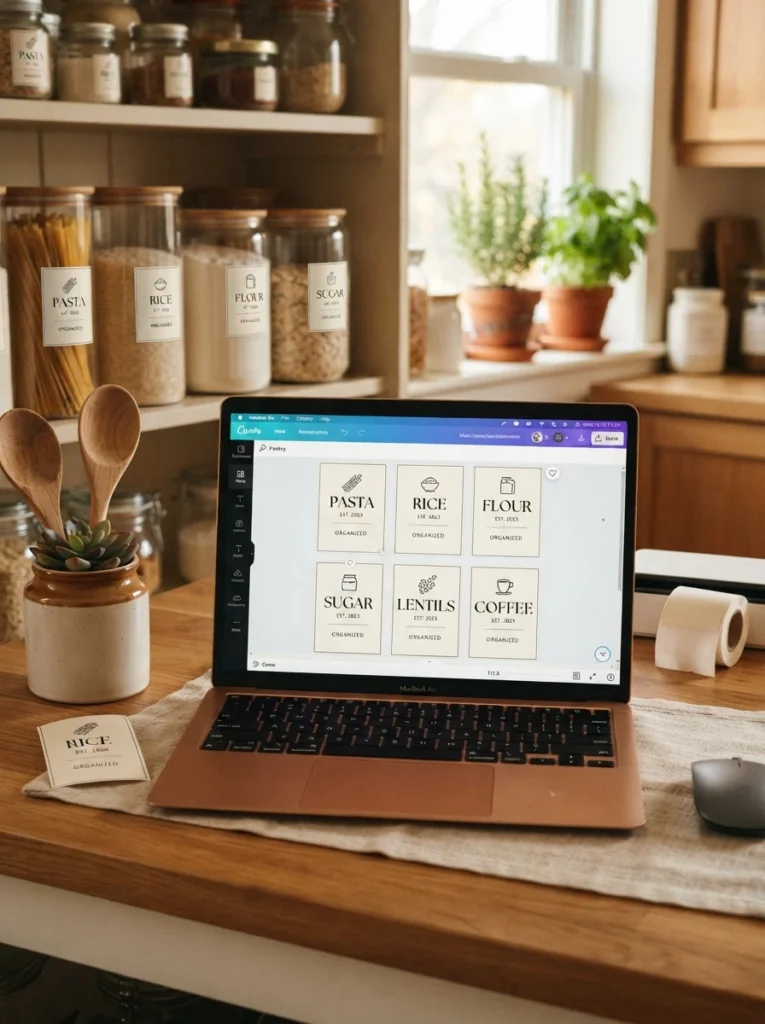
8. Keep a Label Template Ready for Whenever Needs Change
Preferences shift, a kid outgrows one snack and moves onto another, so keeping your label design saved and ready to reprint means updating the system takes minutes instead of becoming its own project. A saved digital template removes the friction that usually stops people from keeping labels current.
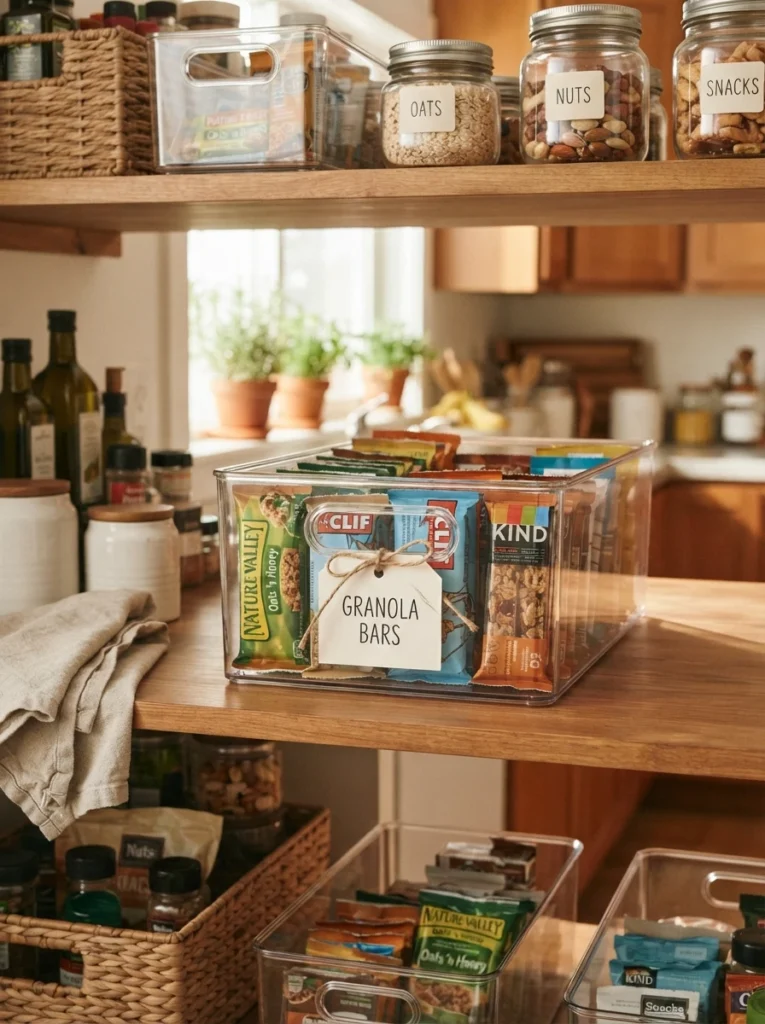
9. Label Bins by Contents, Not Just by General Category
A bin labeled simply “snacks” still requires opening it to see what’s actually inside. Labeling more specifically, “granola bars” instead of just “snacks”, saves that extra step and makes restocking faster, since you know exactly what to look for on your next grocery trip.
10. Do a Quick Label Check Before Every Grocery Trip
Before heading to the store, a fast glance at labeled shelves tells you exactly what’s running low and what you already have plenty of. This habit alone can meaningfully cut down on duplicate purchases and wasted grocery spending, since you’re shopping from actual information instead of memory or guesswork.

A labeling system doesn’t need to be elaborate to make a real difference. What matters is that it’s consistent, specific, and actually maintained, since a label that’s out of date is nearly as unhelpful as no label at all. Once it’s dialed in, restocking gets faster, grocery trips get more accurate, and a lot less food ends up forgotten behind something else on the shelf.