18 Deep Pantry Shelf Ideas So Nothing Gets Lost in the Back
TL;DR: Deep pantry shelves look like a storage win until half of what’s on them disappears behind whatever’s stacked in front. Pull-out drawers, deep bins, and stepped can risers all solve the same core problem, bringing the back of the shelf forward instead of leaving it as permanent dead space. Once nothing can hide, you stop buying duplicates of things you already own and start actually using what’s back there.
Deep pantry shelves seem like a gift when you first move in, since there’s clearly room for everything. The catch shows up a few months later, when you reach for the olive oil and realize you already own two bottles because the first one got buried behind a wall of snack boxes months ago. Depth isn’t actually the enemy here. The problem is treating a deep shelf like a shallow one, stacking things front to back until the rear third becomes a place where food goes to be forgotten.
Here are 18 deep pantry shelf ideas that bring the back of every shelf into full view.
1. Install Pull-Out Shelving for the Deepest Shelves
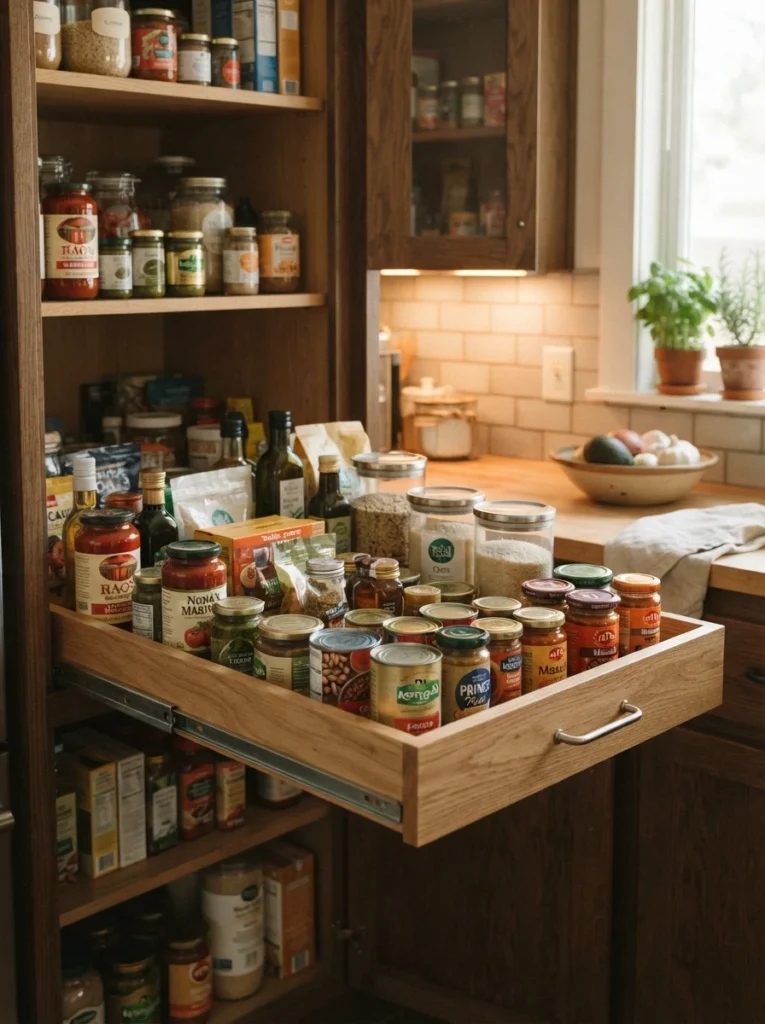
Pull-out shelves slide forward on rails, bringing the entire depth of the shelf into view instead of requiring you to reach or kneel toward the back. Professional organizers consistently point to this as the single biggest upgrade for a genuinely deep pantry shelf, since it eliminates the blind zone almost entirely.
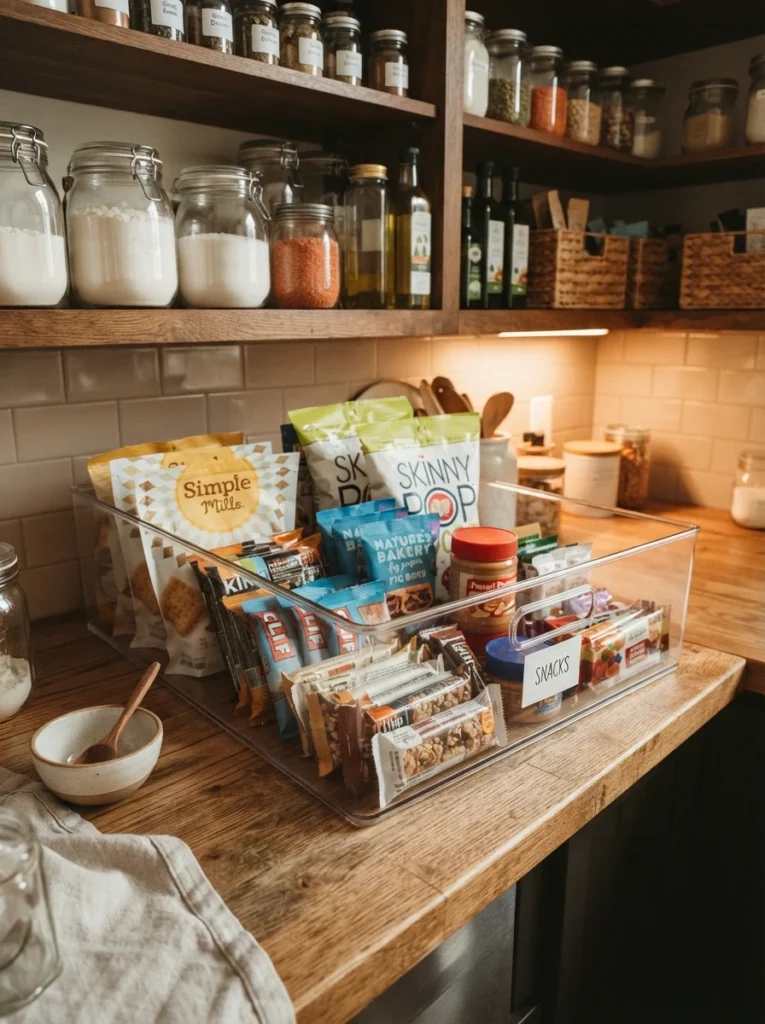
2. Use Deep Bins as a Drawer Substitute
If a full pull-out system isn’t in the budget, a deep clear bin can function like a built-in drawer instead. Pull the whole bin forward onto the counter to access everything grouped inside, then slide it back once you’re done, no reaching into the dark required.
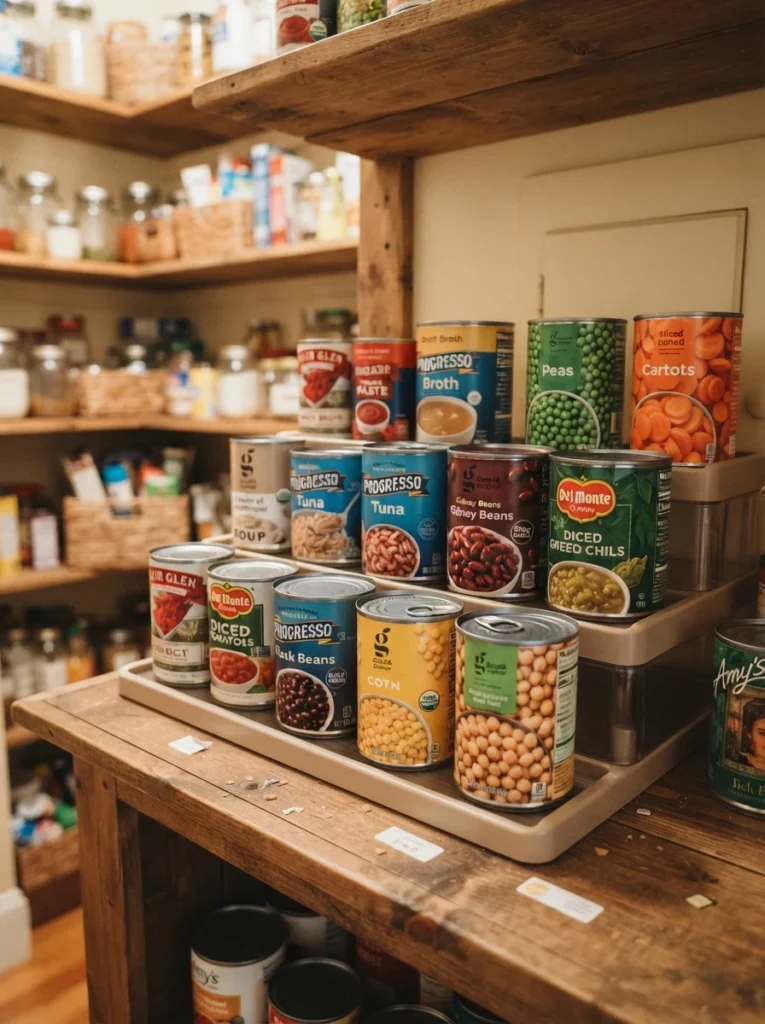
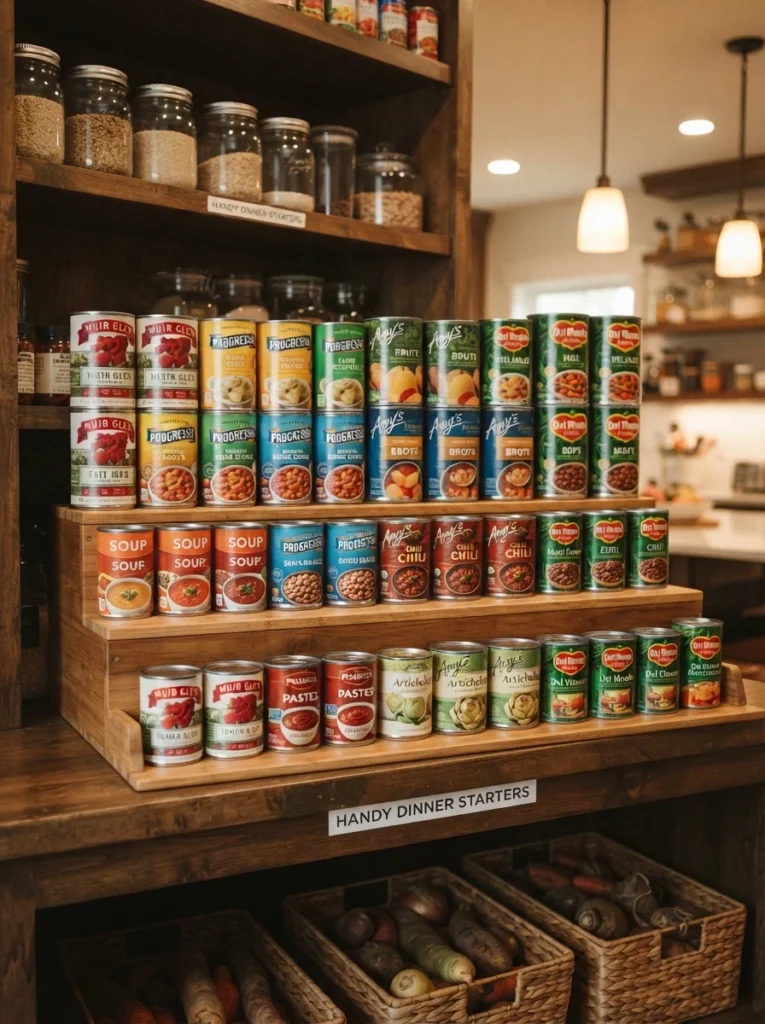
3. Add Stepped Can Risers So Nothing Hides Behind Anything Else
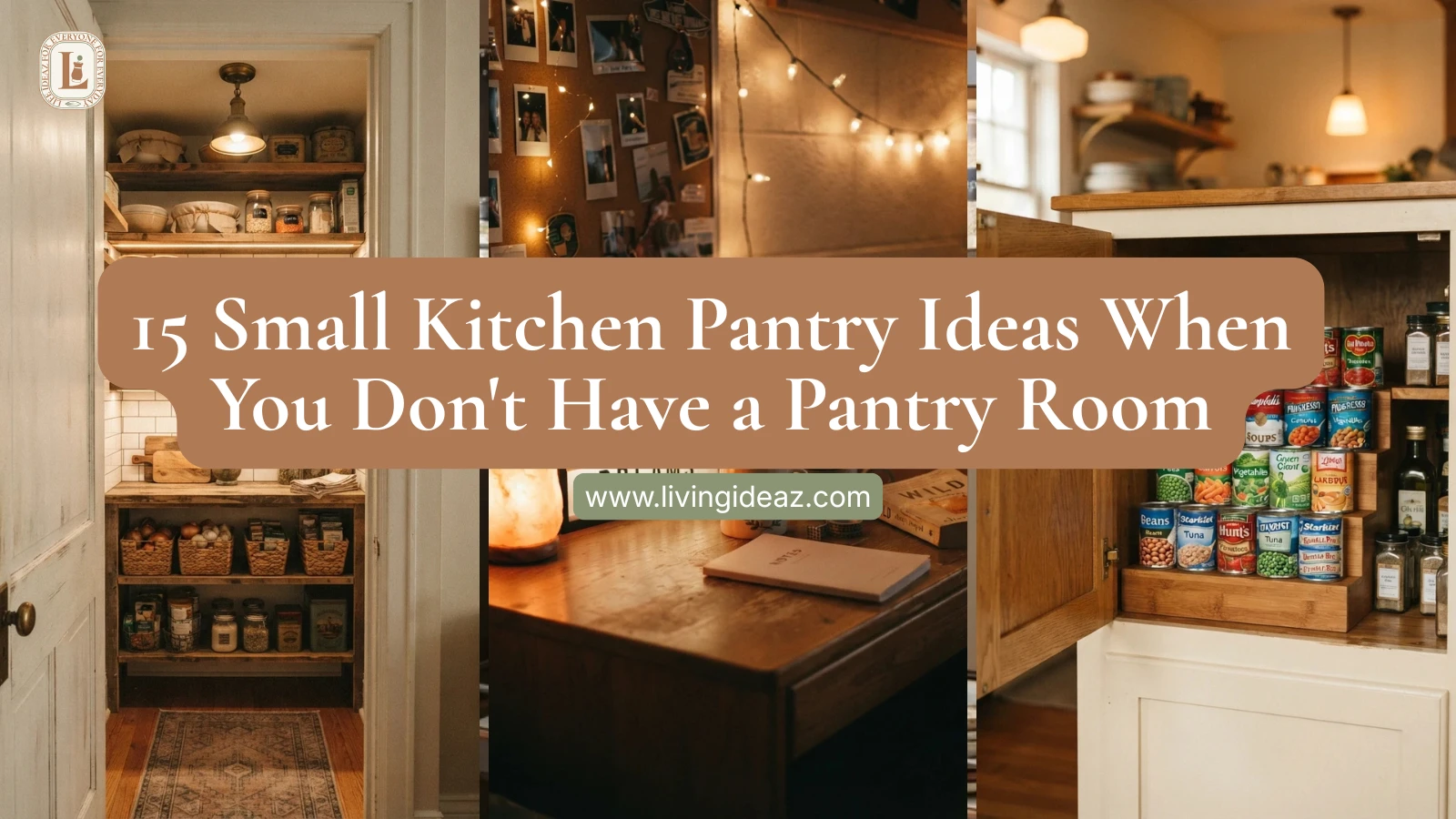
A stepped or tiered can riser lifts items in the back higher than items in the front, so every label stays visible instead of blocked by whatever’s closer to the shelf edge. This works especially well for canned goods, where a whole row can otherwise disappear behind a single tall box.
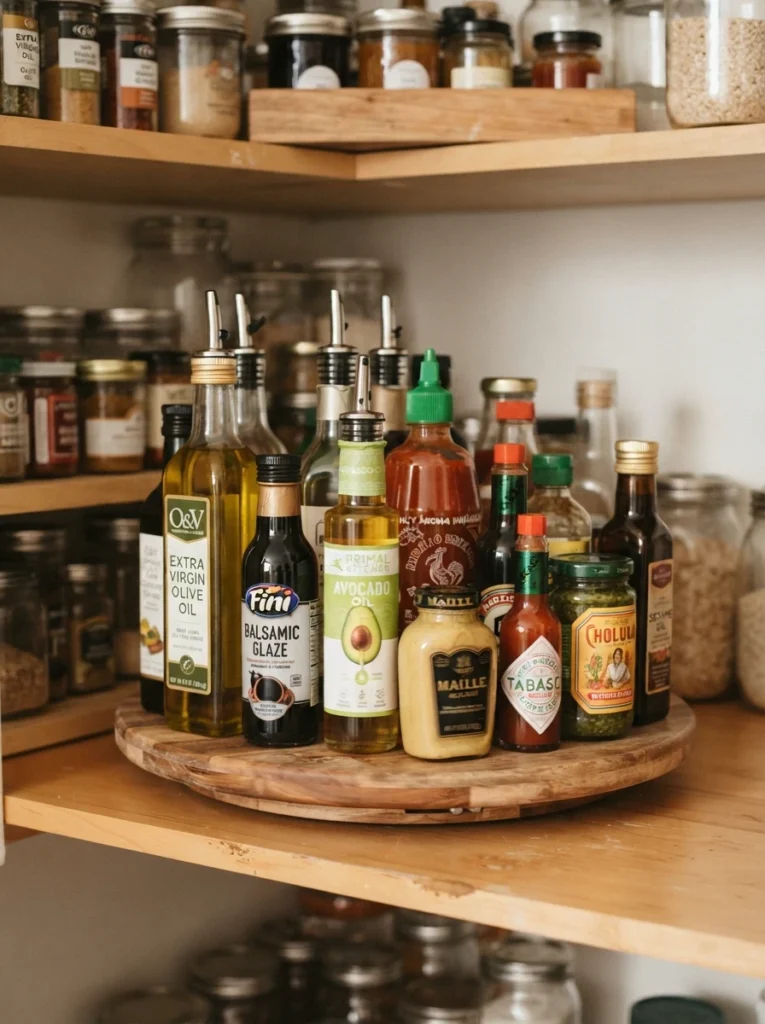
4. Use a Turntable for Oils, Sauces, and Condiments
A turntable placed toward the back of a deep shelf lets you spin items into view instead of reaching past everything in front to grab what’s behind. It works particularly well for bottles and jars, which slide smoothly and don’t tip the way boxes might.
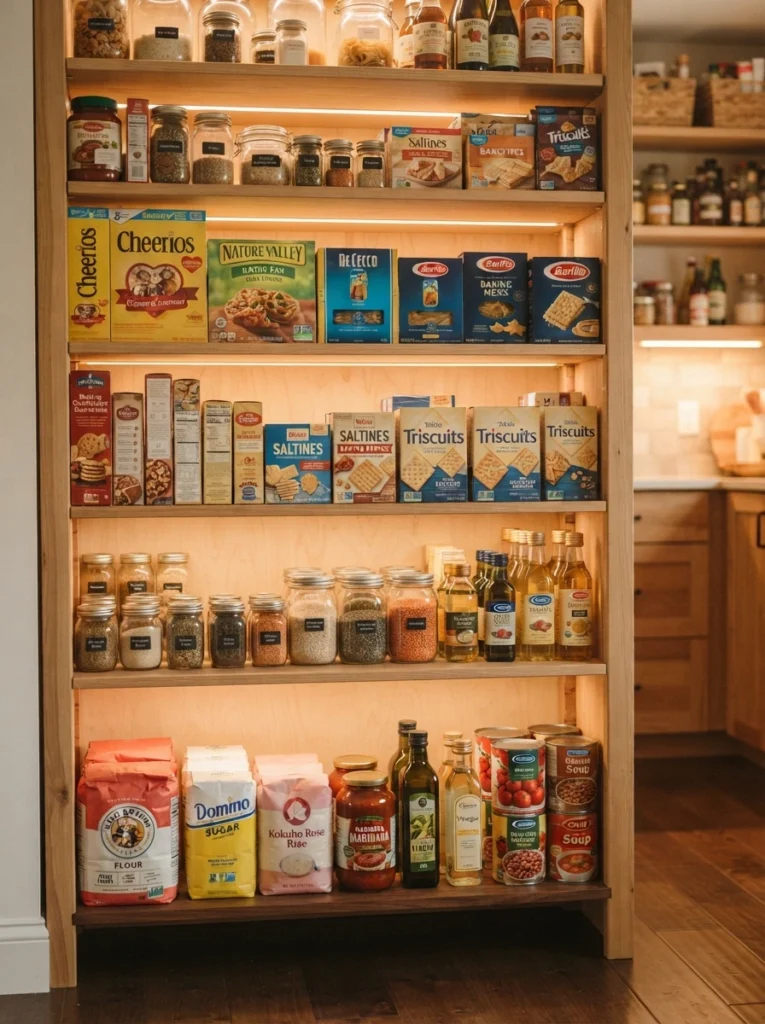
5. Place Heavy Items on Lower Shelves, Light Items Up High
Following basic weight logic, keep bulk bags of flour, large jugs, and heavy canned goods on lower shelves, while lighter boxed goods go higher up. This isn’t just about safety, it also makes physical sense given how much easier it is to lift a light item overhead than a heavy one.
6. Store Anything That Might Leak on the Lowest Shelf
Bottles or containers with any risk of leaking, oils, syrups, sauces, belong on the bottom shelf rather than anywhere above other food. If a leak does happen, it drips onto the pantry floor instead of ruining whatever’s stored on the shelves below it.
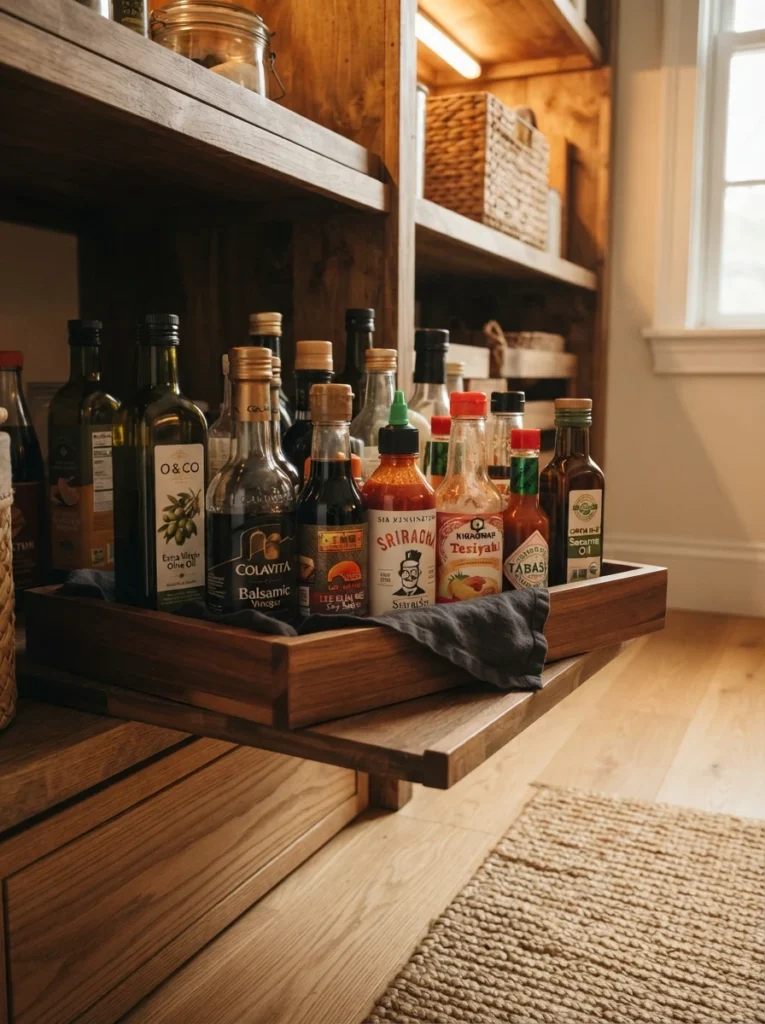
7. Keep Your Most-Used Items at the Front of Every Shelf
Whatever you reach for constantly, snacks, coffee, cereal, deserves the most accessible spot at the front of a deep shelf. Save the back two-thirds of the shelf for backstock and items you restock less frequently, since those don’t need to be grabbed on a daily basis.
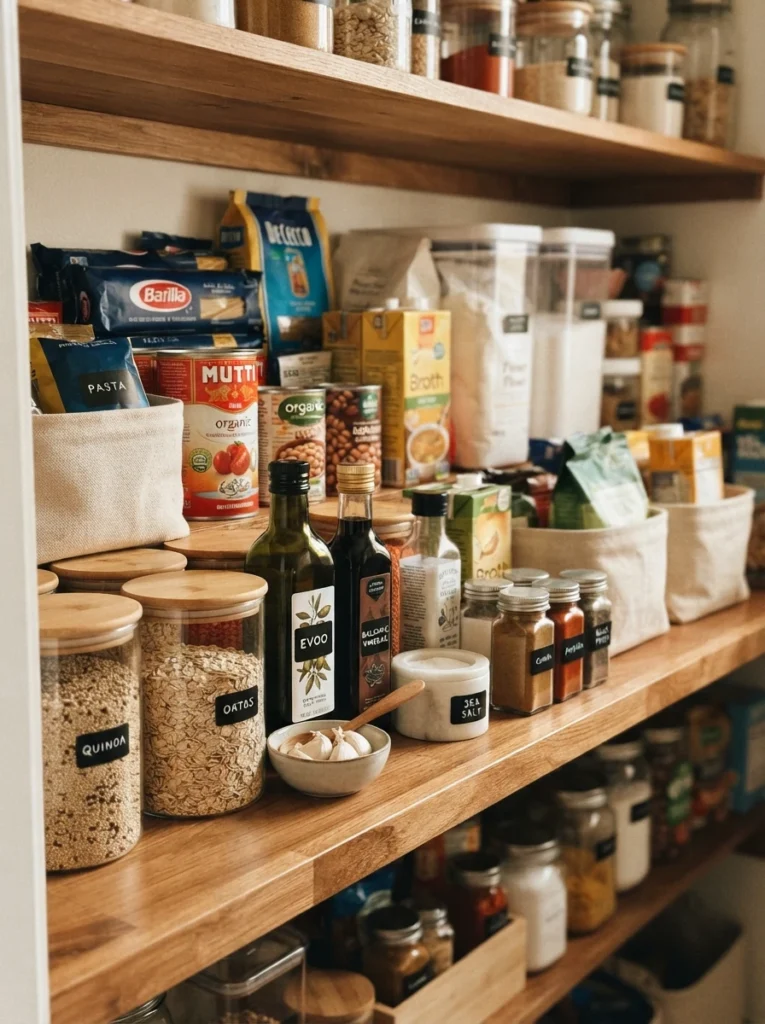
8. Add Extra Shelves to Shrink the Effective Depth of Each One
If your pantry allows for adjustable or additional shelves, adding more of them at closer intervals effectively shrinks how deep each individual shelf needs to be. More, shallower shelves often organize a deep pantry better than fewer, deeper ones, since each shelf only needs to hold one or two rows instead of four.
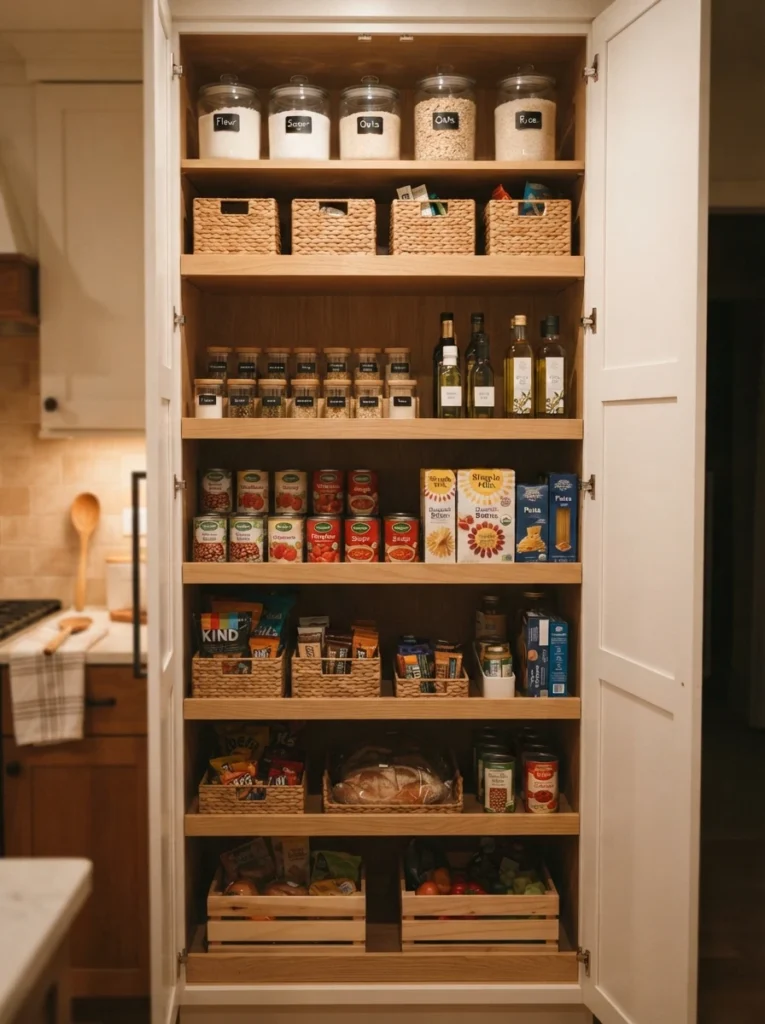
9. Use Wood or Wire Bins That Extend the Full Depth of the Shelf
Bins sized to match the shelf’s actual depth, rather than a standard size that leaves gaps, let you use the full shelf without losing anything to unused space behind a too-short bin. Custom or made-to-fit bins are worth the extra measuring time for this reason alone.
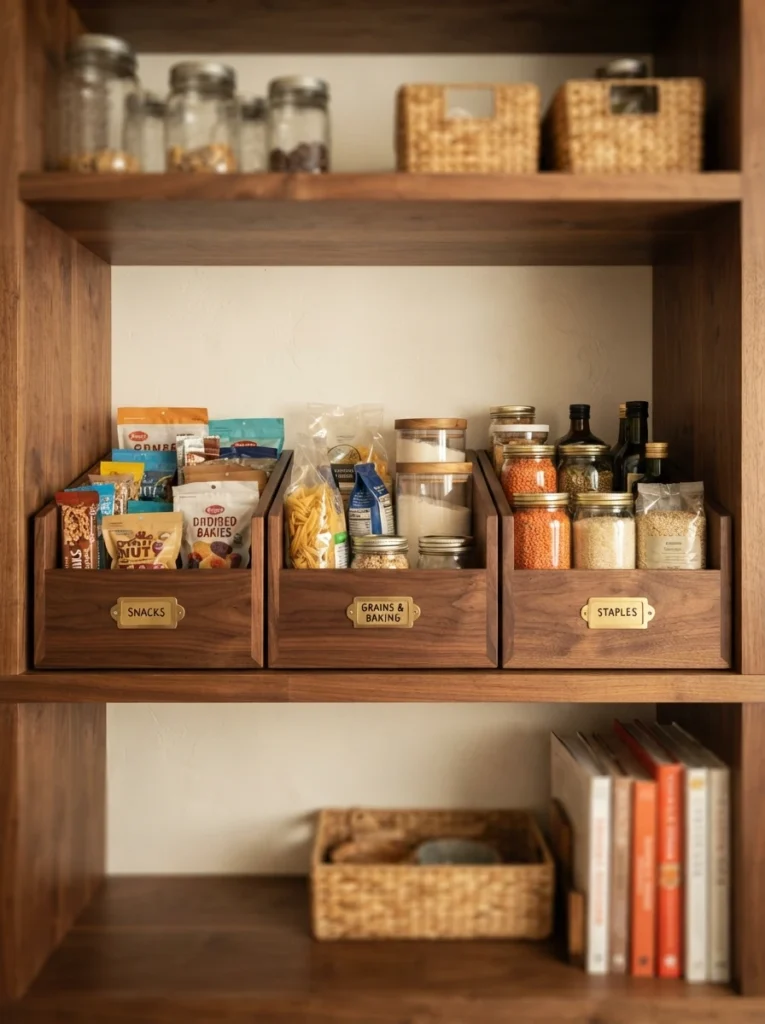
10. Label Both the Container and the Shelf Itself
In a deep pantry, it’s easy for something to get shuffled slightly out of place during restocking, so labeling both the bin and the shelf beneath it keeps items returning to the correct spot every time. This becomes especially important the deeper and less visible a shelf is.
11. Do a Full Grocery Restock Before You Organize
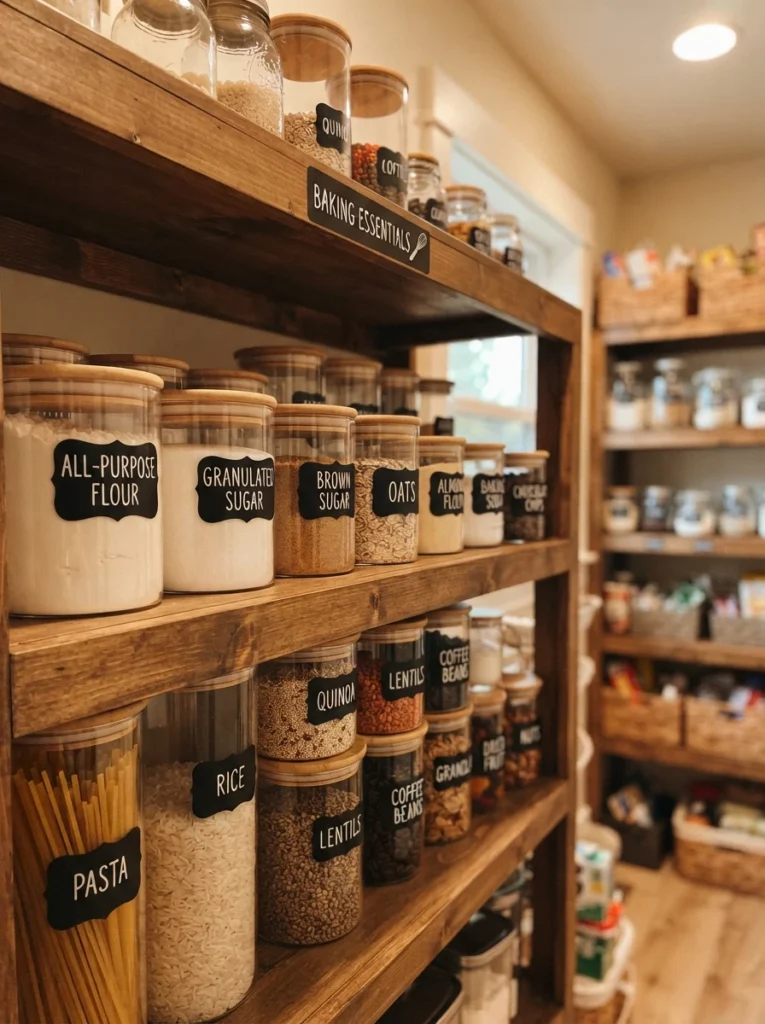
Organizing a half-empty pantry means you’re planning around gaps that will disappear the moment you go grocery shopping again. Doing a full restock first, then organizing around what a genuinely full pantry looks like, means the system you build will actually hold up under real conditions.
12. Group Small Items Into Labeled Bins Instead of Storing Them Loose
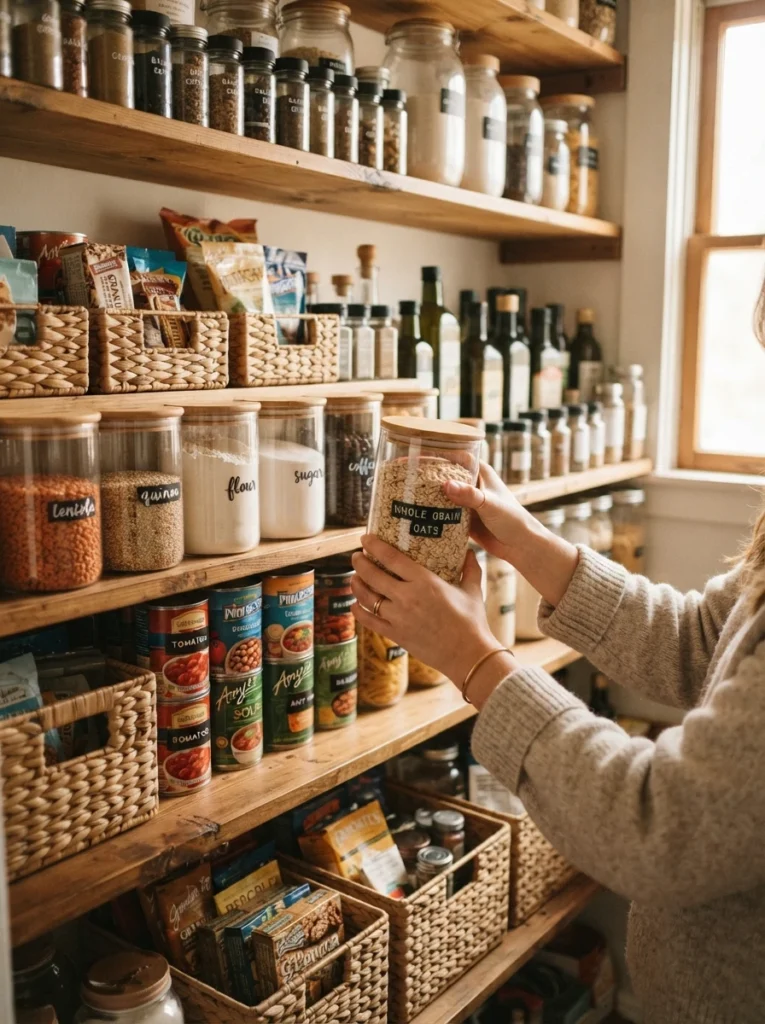
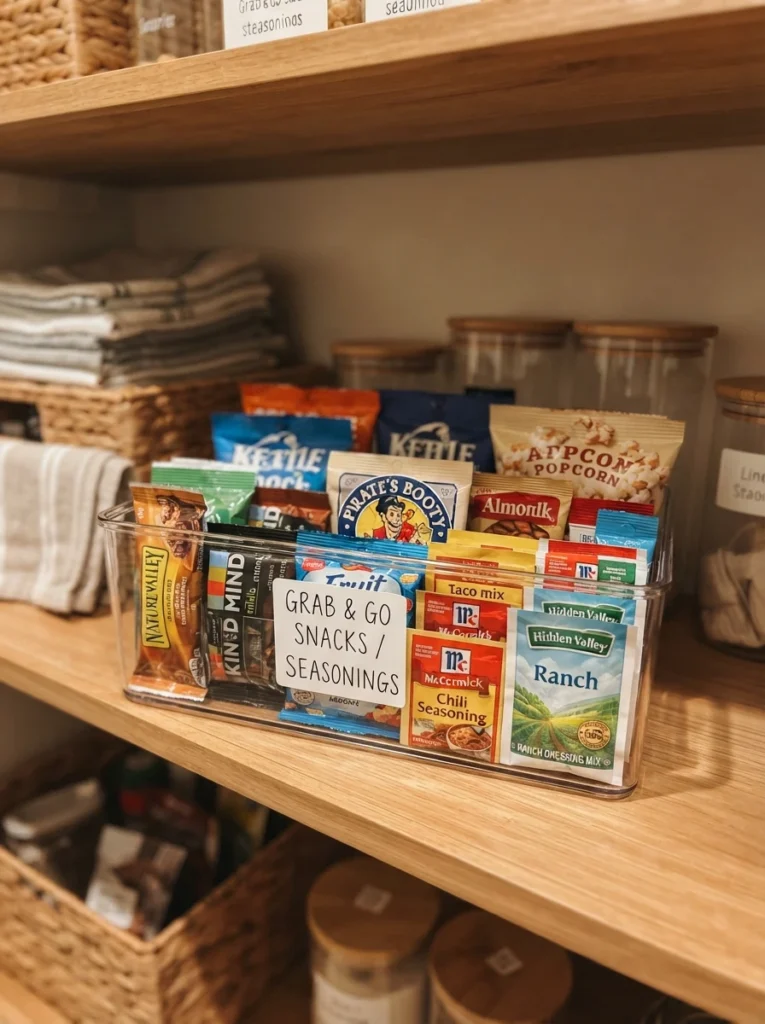
Small items like snack packets, seasoning packs, and granola bars are the most likely things to get lost entirely on a deep shelf, since they’re easy to slide behind something larger. A labeled bin keeps these small items grouped and pullable as one unit instead of scattering across the shelf’s depth.
13. Reserve the Very Back of the Top Shelf for Rarely Used Appliances
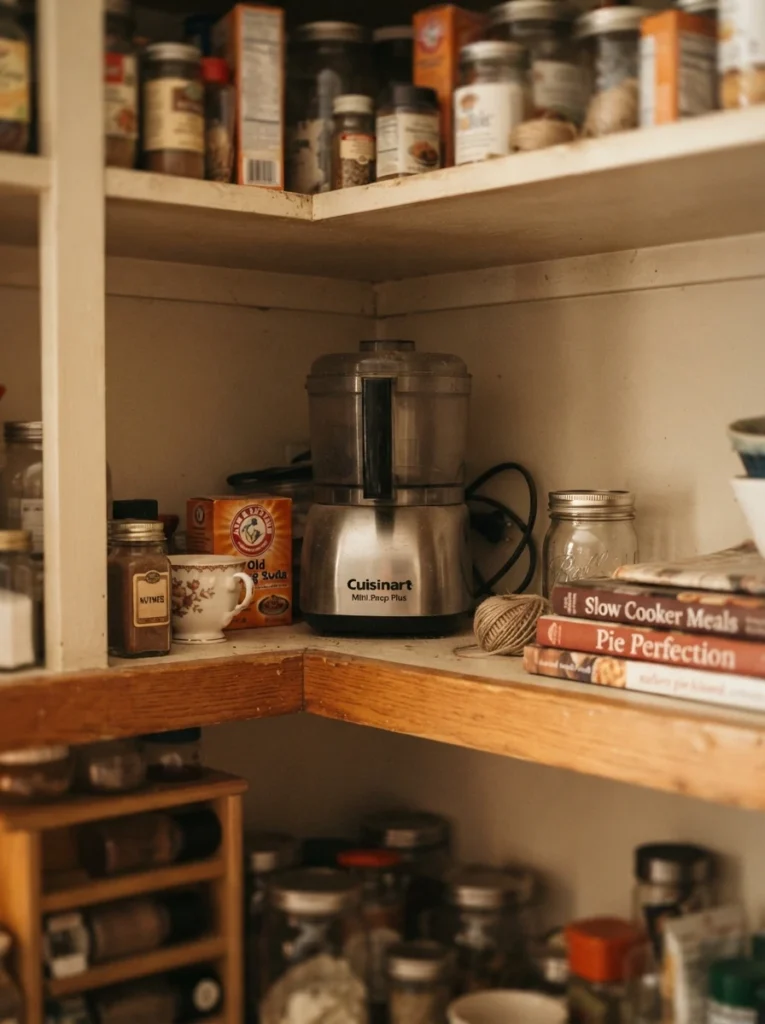
The hardest-to-reach spot in a deep pantry, the back of the top shelf, is actually the ideal home for small appliances you only use occasionally, since the effort of retrieving them matches how rarely you need to. This keeps prime, easy-to-reach shelf space free for things you use weekly instead.
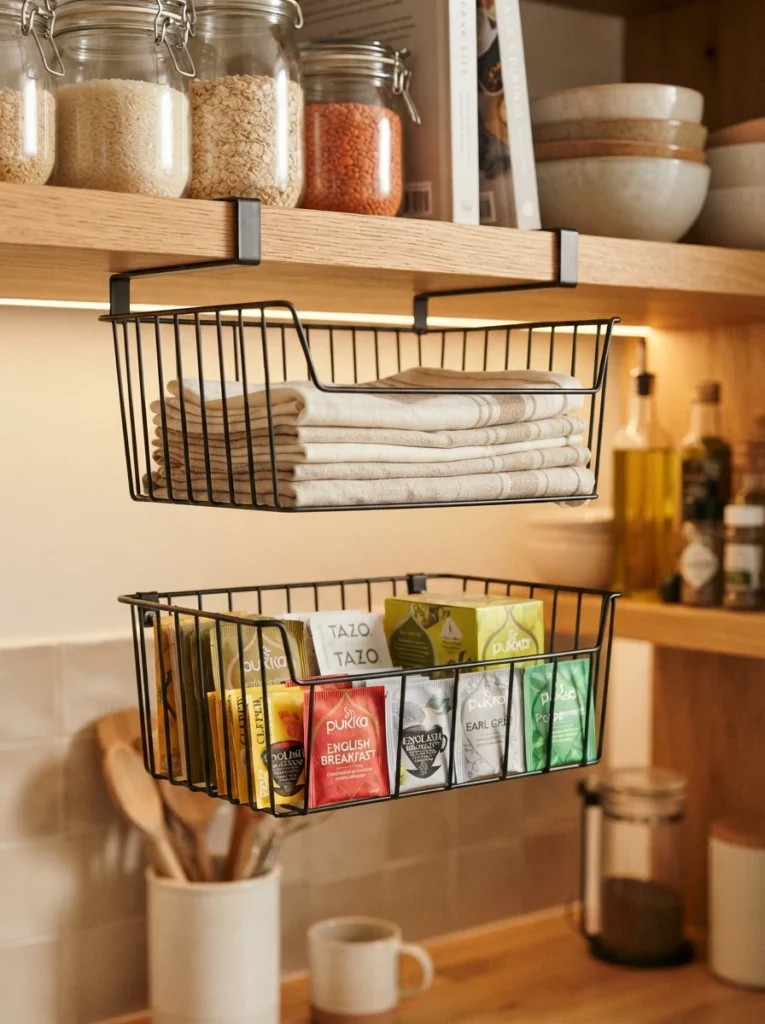
14. Add Under-Shelf Baskets for Extra Vertical Capacity
Wire baskets that clip underneath an existing shelf claim otherwise wasted vertical space between shelves without requiring any new shelving installation. They work well for lightweight items like napkins, tea bags, or small spice packets that don’t need a full shelf of their own.
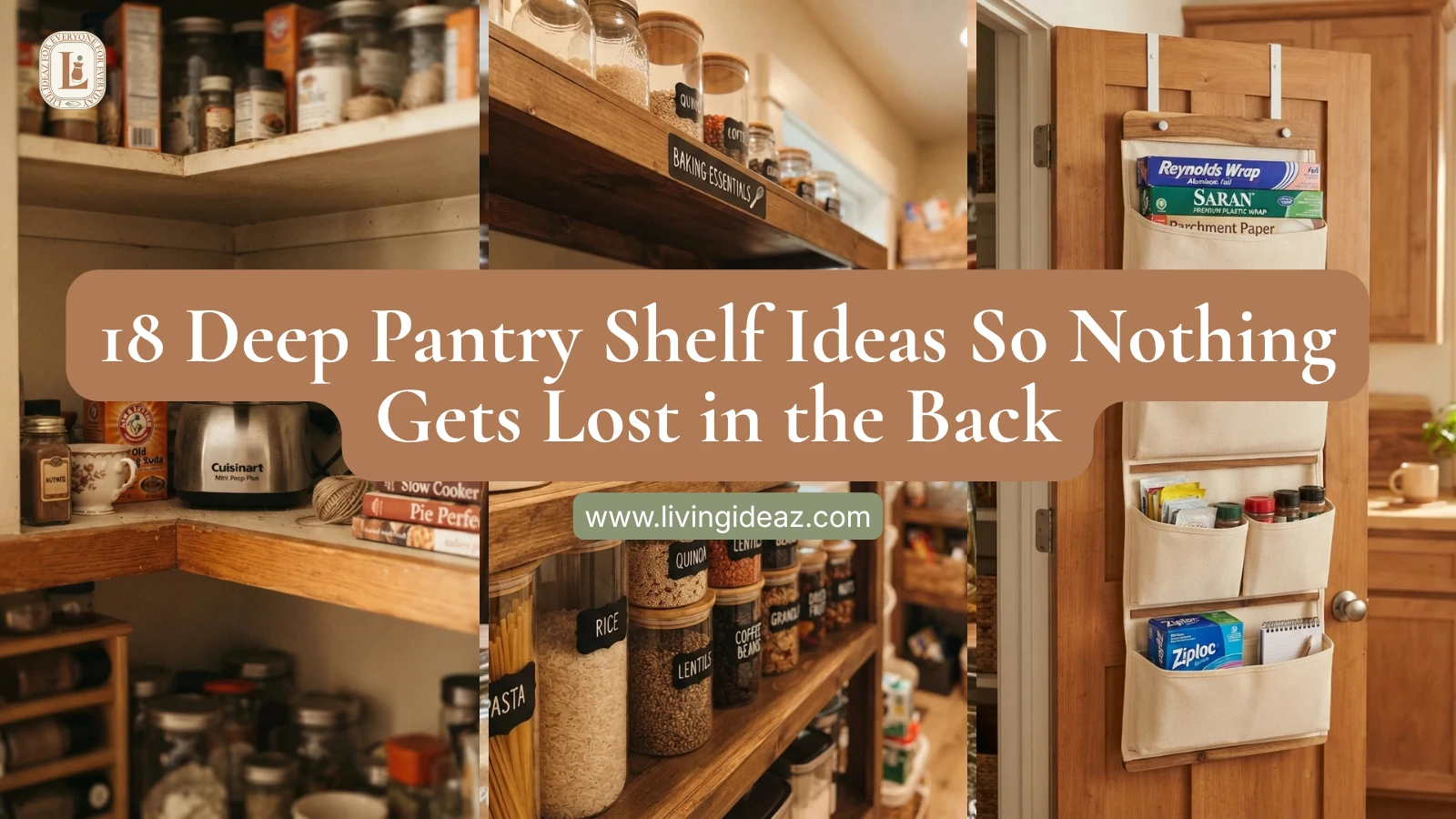
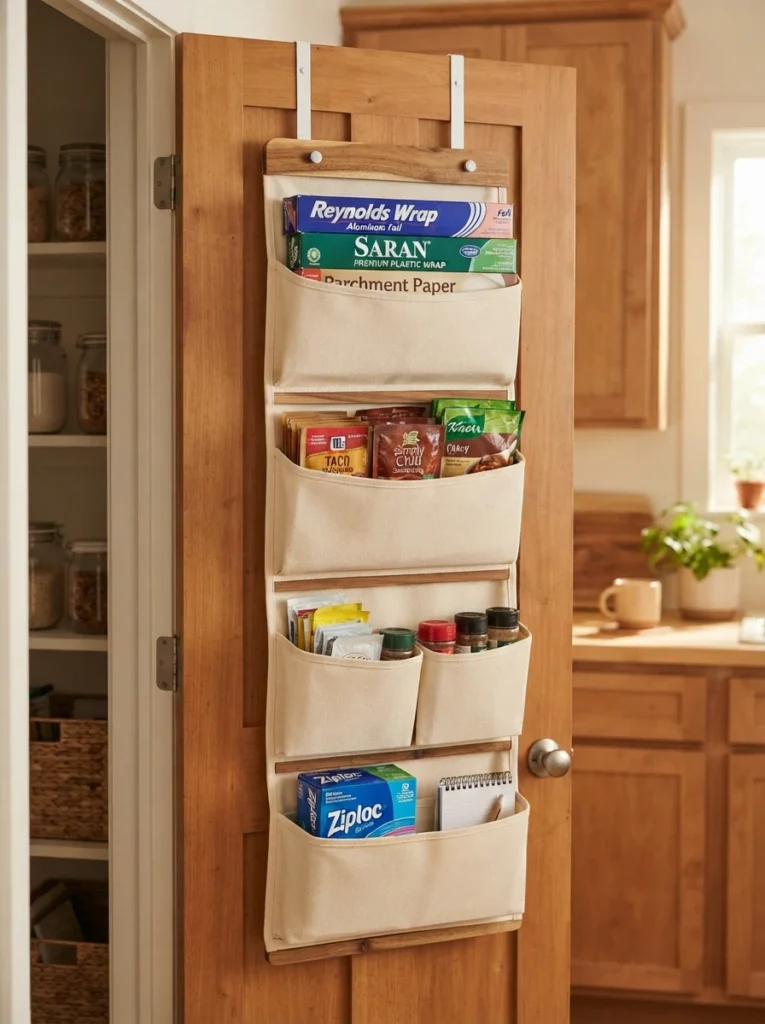
15. Use the Pantry Door for Items That Would Otherwise Get Buried
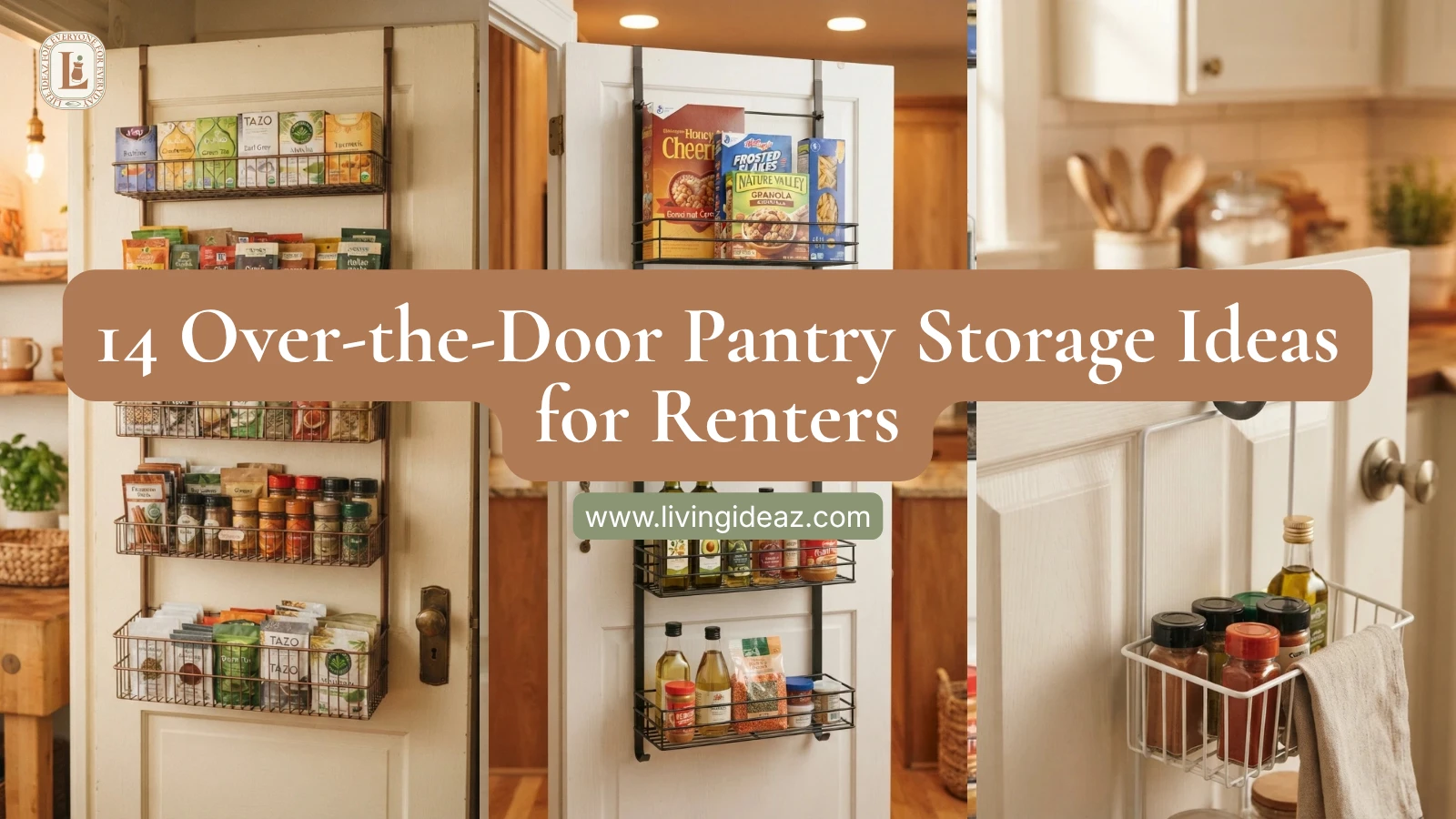
A hanging organizer or rack mounted on the back of the pantry door holds small, easy-to-lose items like foil, plastic wrap, or seasoning packets in a completely visible spot. This pulls a meaningful category of items entirely off the deep shelves and onto a surface that’s never hard to see.
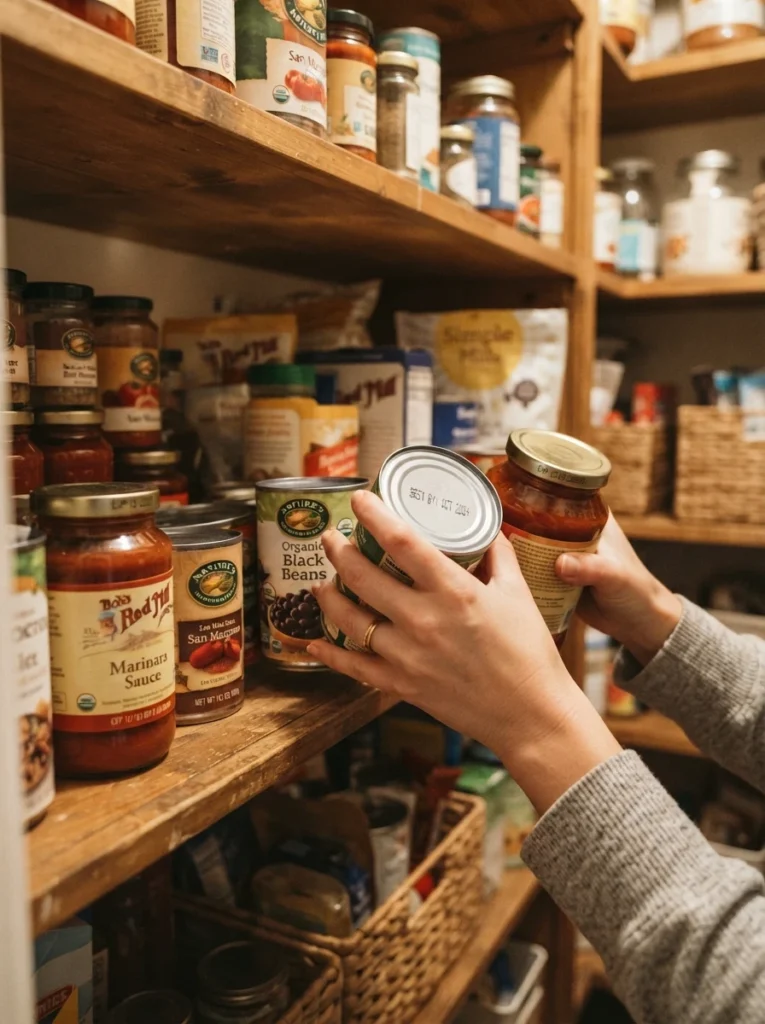
16. Purge Expired Items Regularly Since They’re the Easiest to Lose
A deep shelf hides expired food more effectively than any other kitchen storage spot, which makes regular purging even more important here than elsewhere. A quick check every few months catches what’s quietly gone bad in the back before it takes up space you could be using for something else.
17. Keep the System Minimal Rather Than Overbuying to Fill Space
Deep shelves can create the temptation to overbuy just because there’s room, but a pantry that’s only storing what you’ll realistically use stays far easier to organize long-term. Buying to fill space works against the very system you’re trying to build.
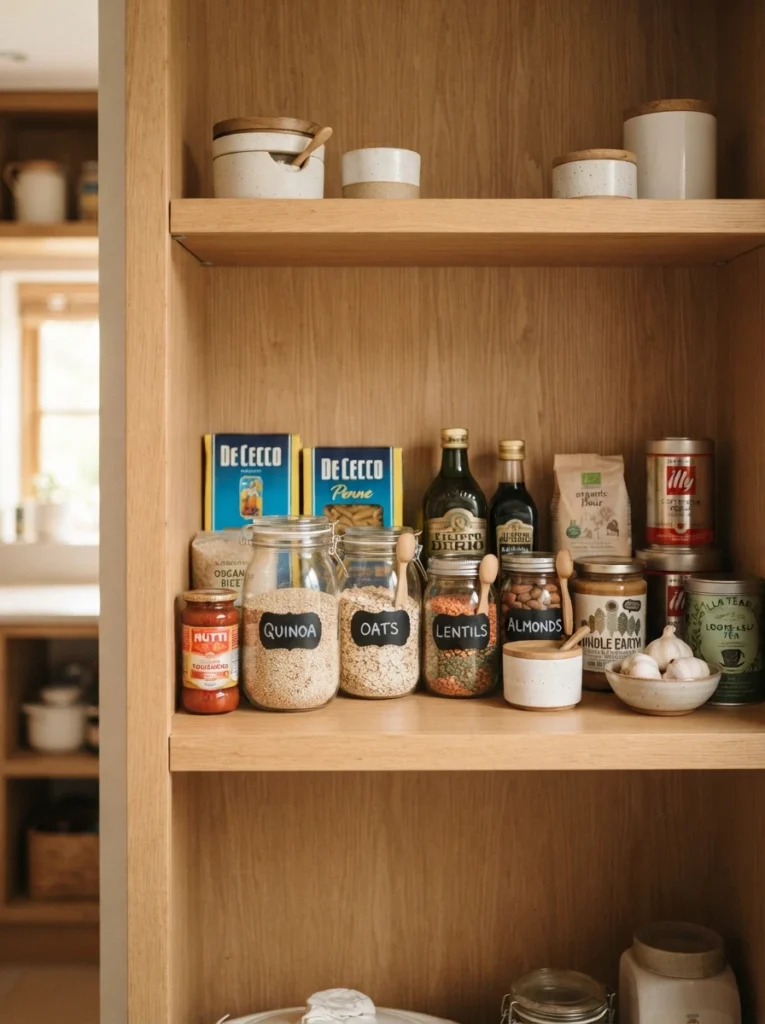
18. Arrange Cans in Rainbow or Size Order for Instant Visual Scanning
Once cans are elevated on risers where every label shows, arranging them by size or even color gives you an at-a-glance inventory the moment you open the pantry door. It’s a small finishing touch, but it makes spotting a gap in your stock almost instant.
A deep pantry shelf isn’t a design flaw, it’s just a space that needs a different set of tools than a shallow one. Pull-out systems, risers, and bins all work toward the same goal: making sure nothing sits far enough back to be forgotten. Once that’s solved, the extra depth stops being a liability and starts being exactly the storage advantage it looked like on move-in day.