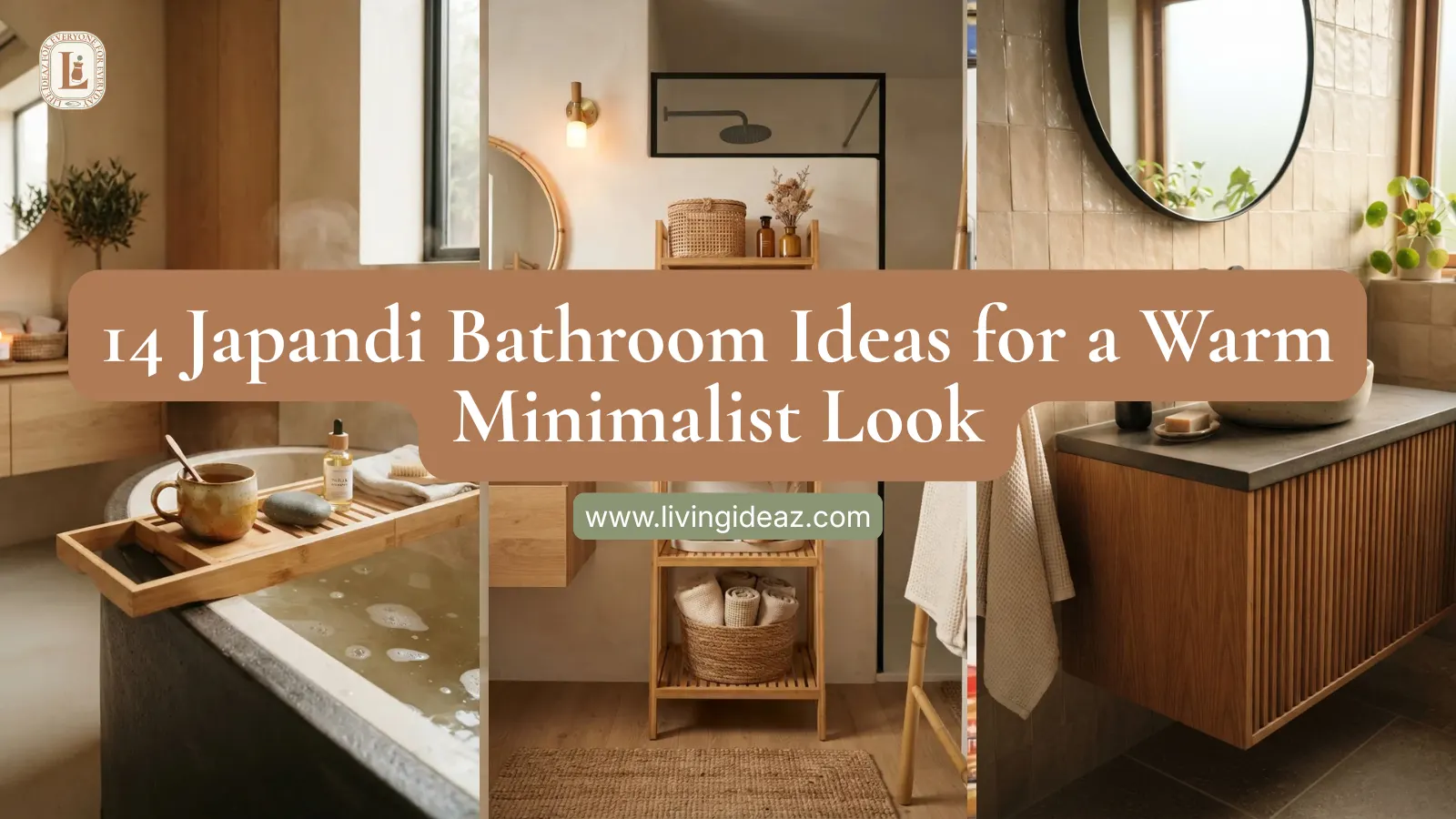
14 Japandi Bathroom Ideas for a Warm Minimalist Look
TL;DR: Japandi bathroom design blends Japanese wabi-sabi, the acceptance of natural imperfection, with Scandinavian warmth, resulting in a room that’s minimal without ever feeling clinical. Warm wood, matte stone, and a deep ofuro-style soaking tub carry most of the visual weight, while textured plaster walls and preserved moss panels add the tactile richness that separates Japandi from plain minimalism. The goal is a bathroom that feels like a genuine spa retreat rather than an empty, purely functional room.
Japandi sits in an interesting middle ground between two design philosophies that could easily pull against each other. Minimalism, on its own, often strips a room down purely for function and visual simplicity, which can tip into feeling cold or clinical. Japandi keeps that same restraint but layers in warmth, natural materials, and the wabi-sabi embrace of imperfection and natural aging, so the result feels more like a spa retreat than an empty showroom. It’s a style built specifically to age well, since it never leans on a trend that will feel dated in a few years.
Here are 14 Japandi bathroom ideas for bringing that warm, minimalist calm into your own space.
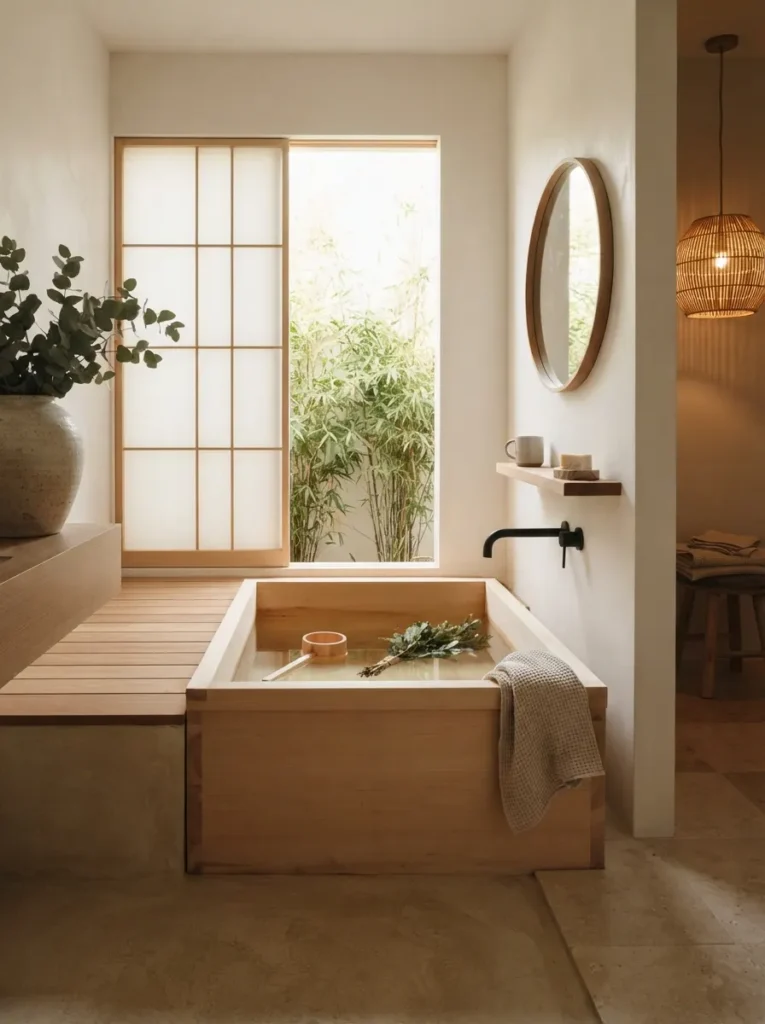
1. Choose an Ofuro-Inspired Deep Soaking Tub
The Japanese ofuro tub sits deeper than a standard Western bath, designed for soaking upright rather than lying flat, and it’s become the centerpiece of the most talked-about Japandi bathrooms heading into 2026. Look for at least 50 centimeters of internal depth and a minimalist exterior with no fussy detailing, available now in stone resin, concrete composite, or cedar without needing an actual import.
2. Use Wabi-Sabi Plaster Walls for Textured Imperfection
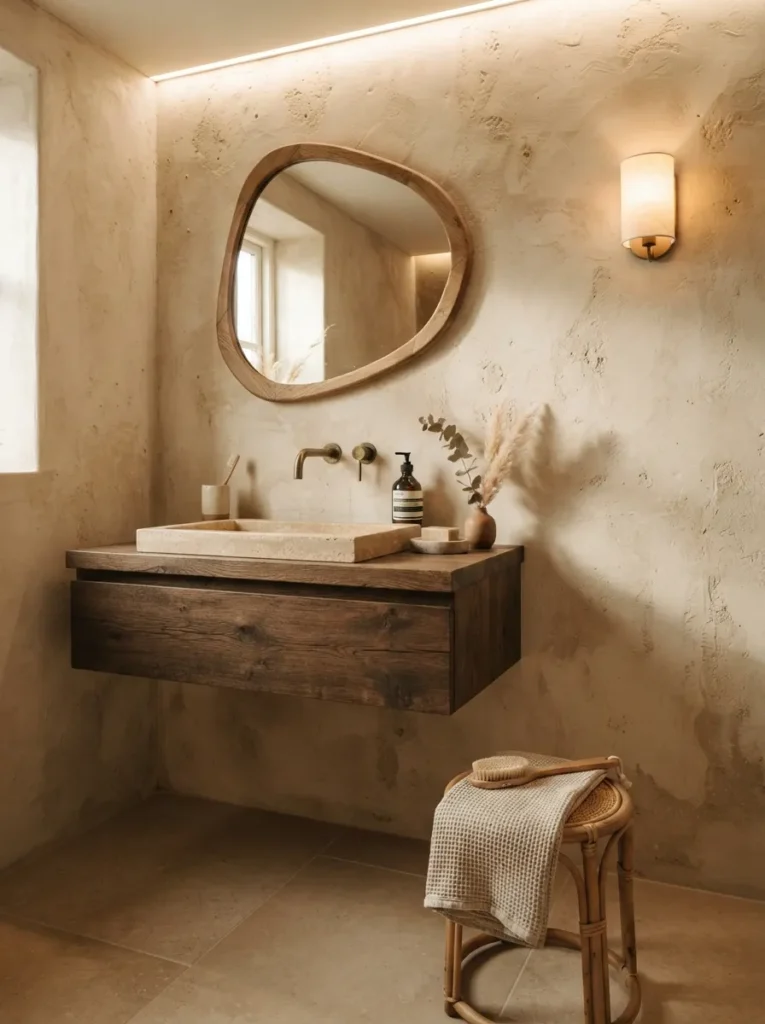
Textured plaster walls, left slightly imperfect and irregular rather than perfectly smooth, are one of the biggest trends defining Japandi bathrooms right now. This wabi-sabi approach embraces natural variation instead of hiding it, giving the walls a handmade quality that flat paint simply can’t replicate.
3. Add Fluted Glass Shower Screens
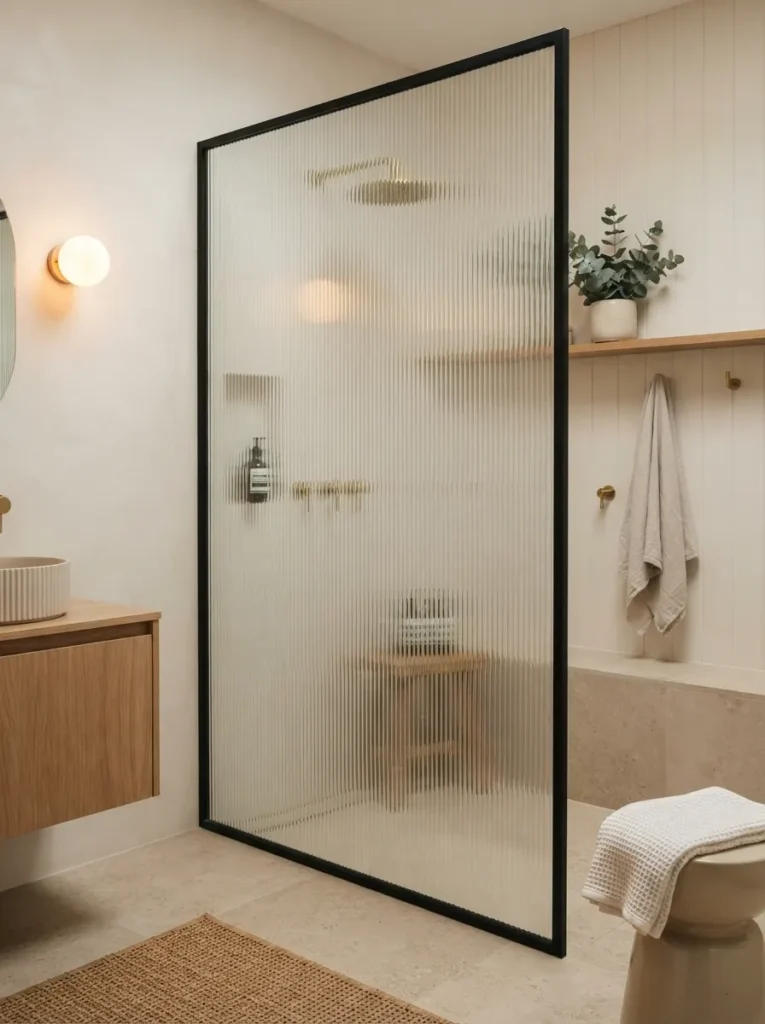
Fluted, ribbed glass on a shower screen softens the sightline into the shower while still keeping the space feeling open and light-filled, unlike a fully opaque door. It’s a subtle textural detail that’s become one of the signature elements separating a Japandi shower from a plain frameless one.
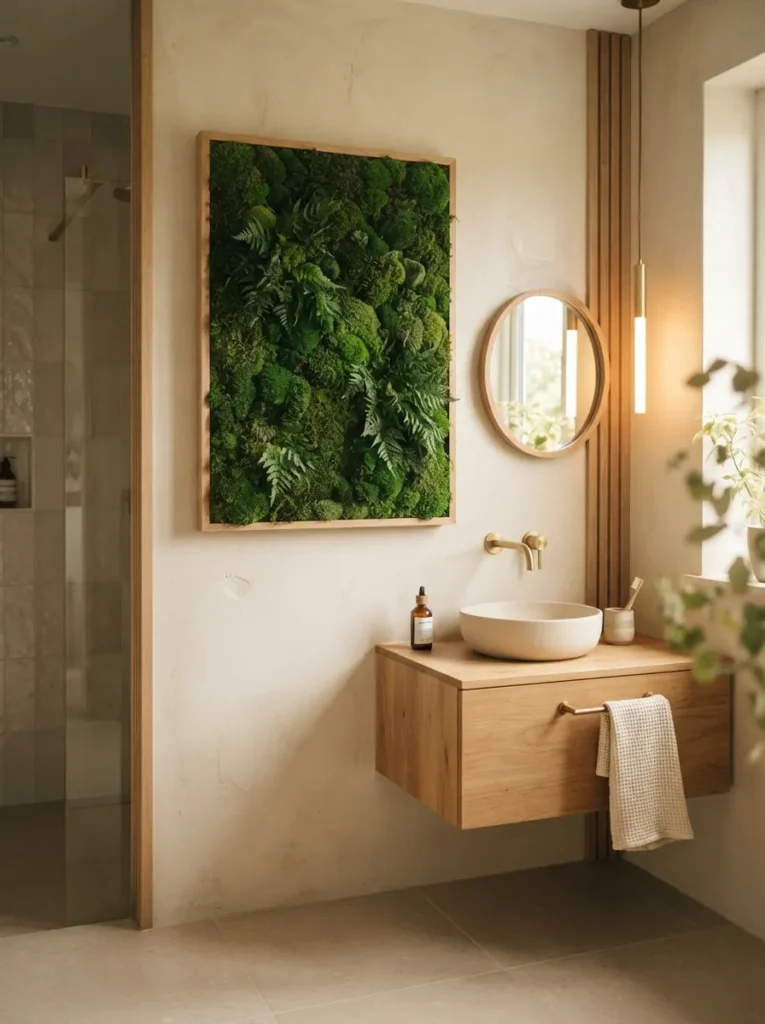
4. Install Preserved Moss Panels for Zero-Maintenance Greenery
Preserved moss panels bring genuine natural texture and a connection to nature into the bathroom without requiring any light or watering at all, which makes them ideal for a windowless or low-light room. They’re increasingly popular in Japandi design specifically because they deliver the organic, living quality of a plant with none of the upkeep.
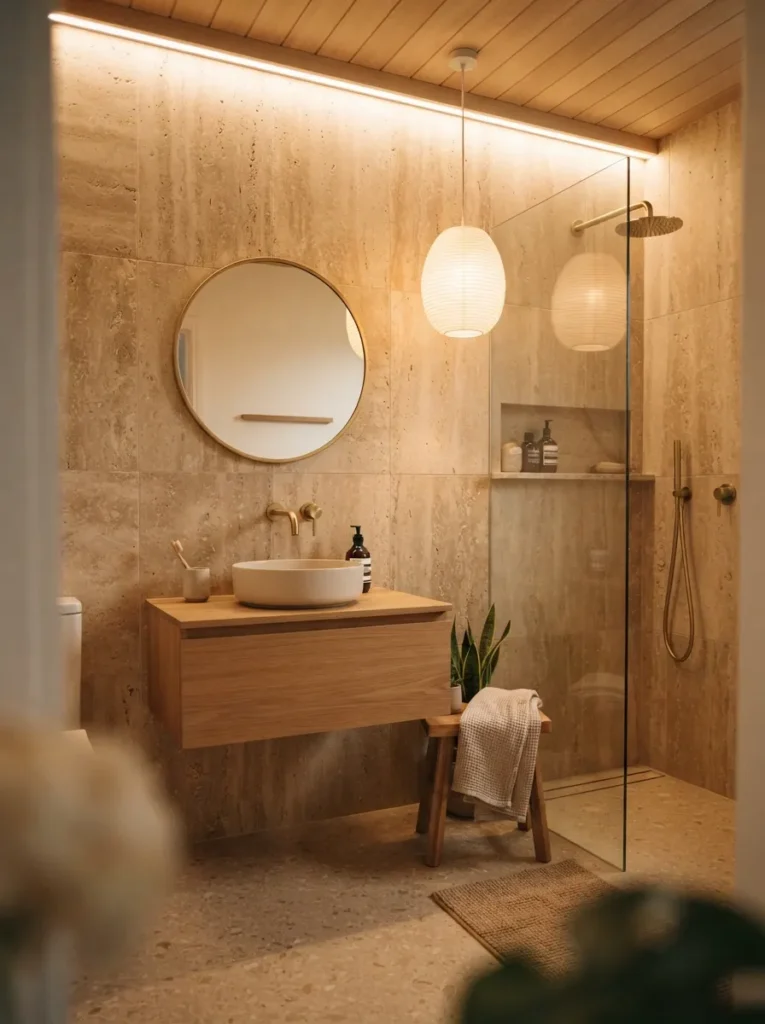
5. Wrap Walls in Tactile Stone Tile Floor-to-Ceiling
Running a tactile, textured stone tile from floor to ceiling rather than stopping partway up the wall creates an immersive, almost cave-like calm that’s central to the more dramatic side of current Japandi design. The emphasis is on surfaces that feel as interesting to the touch as they look, moving beyond flat, purely visual materials.
6. Pair Warm Wood Cabinetry With Matte Stone Surfaces
Warm-toned woods like oak and walnut paired with matte stone such as marble or travertine strike the exact balance Japandi is built around, the coolness of stone softened by the warmth of natural wood grain. This pairing shows up consistently across nearly every well-executed Japandi bathroom, regardless of the room’s overall size or budget.
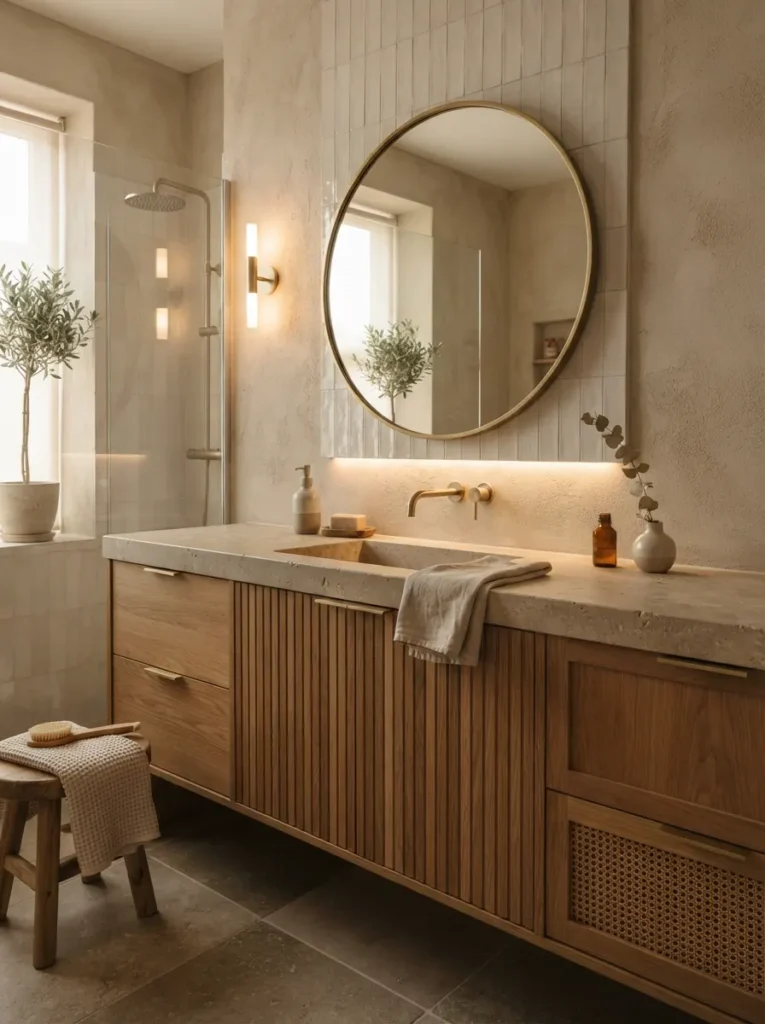
7. Choose a Light Wood Floating Vanity
A floating vanity in light wood sets the tone for the whole room immediately, softening the space while keeping the floor line clear and open. It’s one of the most frequently repeated details across current Japandi bathroom design, since it delivers both the material warmth and the spatial openness the style depends on.
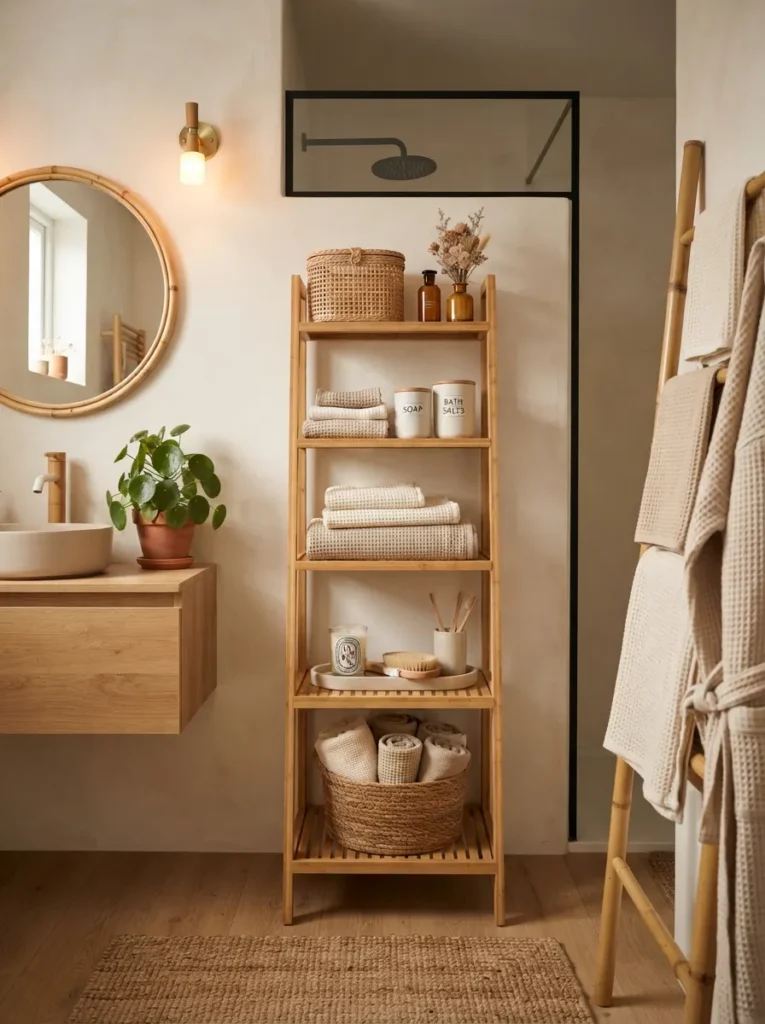
8. Use Bamboo or Rattan for Small Accessories and Shelving
Bamboo and rattan bring natural fiber texture into smaller details, a shelving unit, a bath tray, a small stool, without requiring a larger material commitment. These accents work especially well in a small Japandi bathroom, where even a modest bamboo shelving piece can noticeably shift the room’s overall feel.
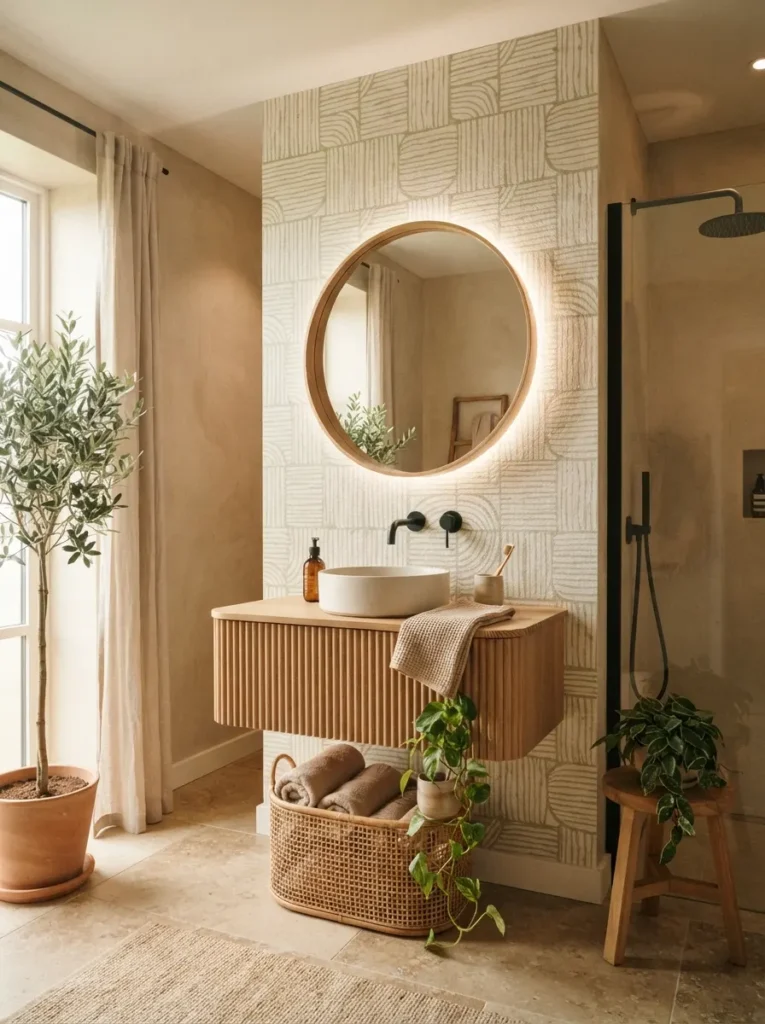
9. Add One Nature-Inspired Accent Wall, Sparingly
A single accent wall using a soft geometric pattern or a nature-inspired print can add detail without pulling the room away from its minimalist foundation, as long as it’s kept to one wall and paired with otherwise soft, grounded colors. Restraint is what keeps the accent reading as intentional rather than decorative clutter.
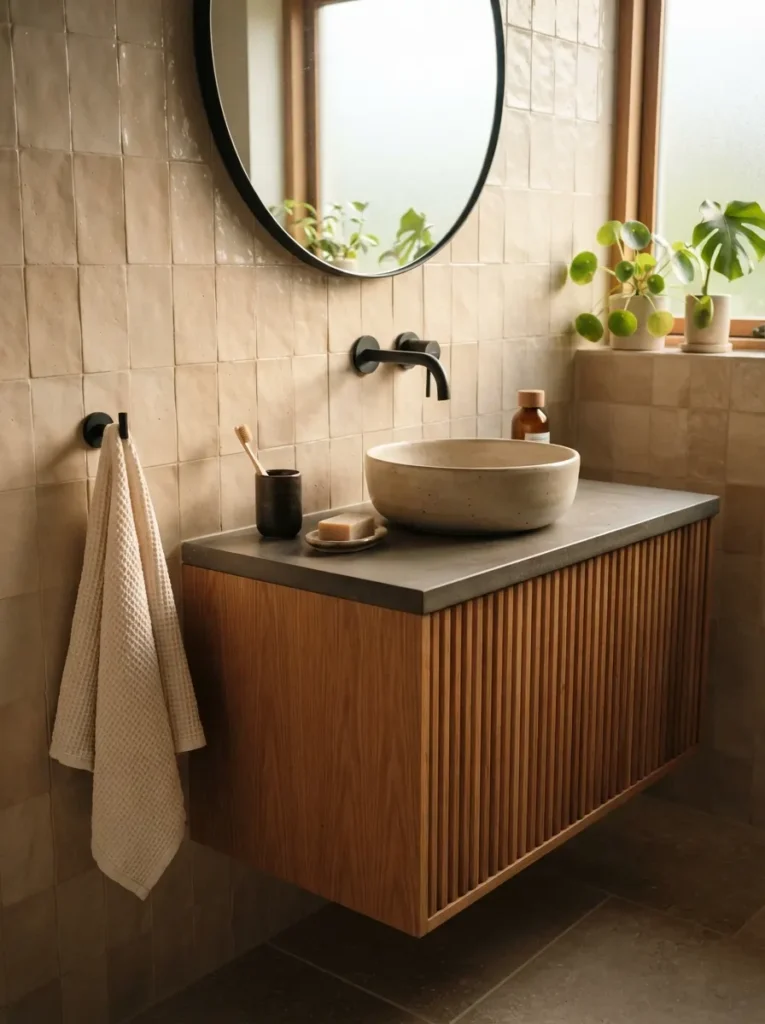
10. Choose Muted Matte Fixtures Like Brushed Metal or Matte Black
Faucets, showerheads, and hardware in a muted matte finish, brushed metal or matte black, follow the same minimalist design approach as the rest of a Japandi bathroom, function paired with a sleek, understated look. Avoiding anything glossy or overly ornate keeps the hardware from pulling focus away from the room’s natural materials.
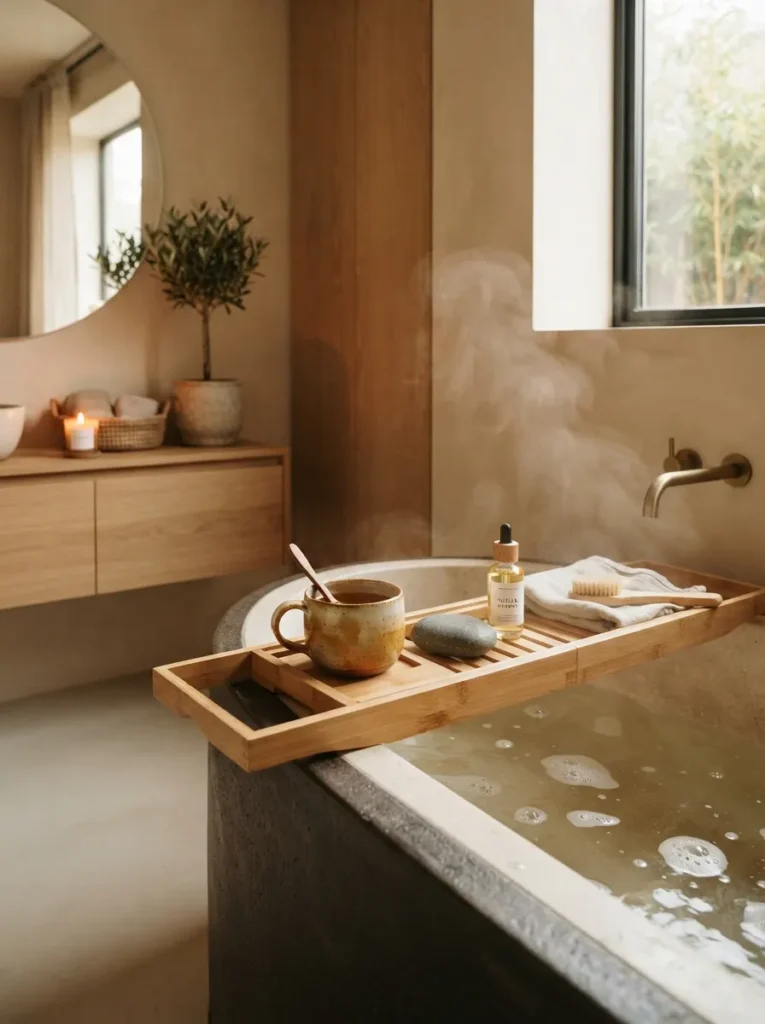
11. Add a Bamboo or Timber Bath Tray for Ritual Bathing
A simple bamboo or timber tray placed across the tub turns a soak into a genuine ritual rather than a rushed wash, holding a small ceramic cup, a smooth stone, or a few drops of essential oil rather than anything elaborate. This detail leans directly into the ofuro-inspired, phone-free bathing culture that’s shaping a lot of current Japandi design.
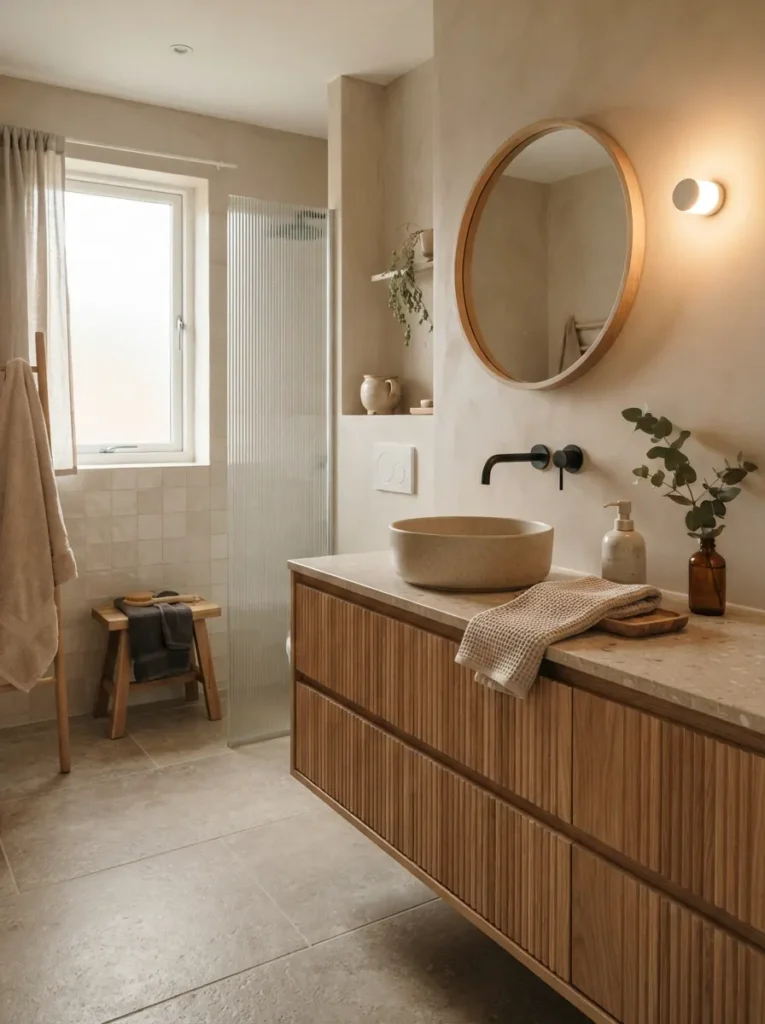
12. Layer Warm Neutrals: Beige, Taupe, Soft Gray
Sticking to warm whites, beige, taupe, and soft gray, rather than anything stark or heavily saturated, keeps a Japandi bathroom feeling calm and grounded without tipping into the coldness that pure minimalism can sometimes fall into. These tones also age gracefully, since they were never tied to a single passing trend to begin with.
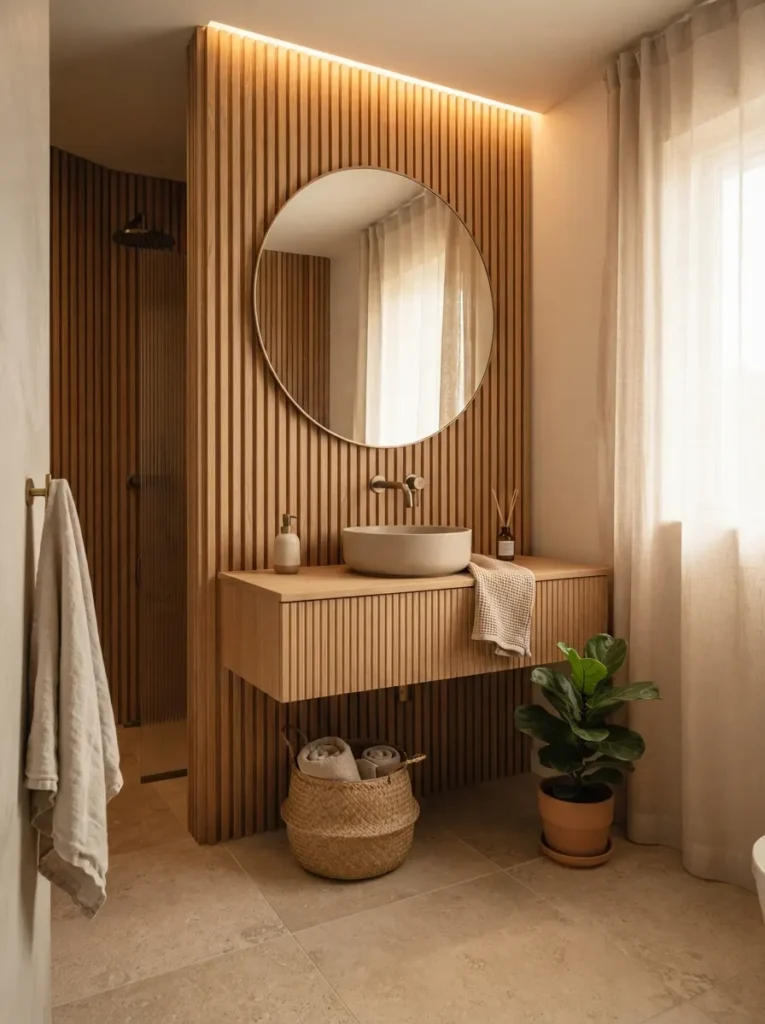
13. Add Slatted Wood Paneling for Texture and Dimension
Slatted wood paneling on a wall or vanity front adds real texture and dimension while keeping the overall look clean and linear, avoiding anything ornate. It’s a detail that photographs beautifully thanks to the shadow lines the slats create, but it also holds up well in person, adding genuine tactile interest to what might otherwise be a flat surface.
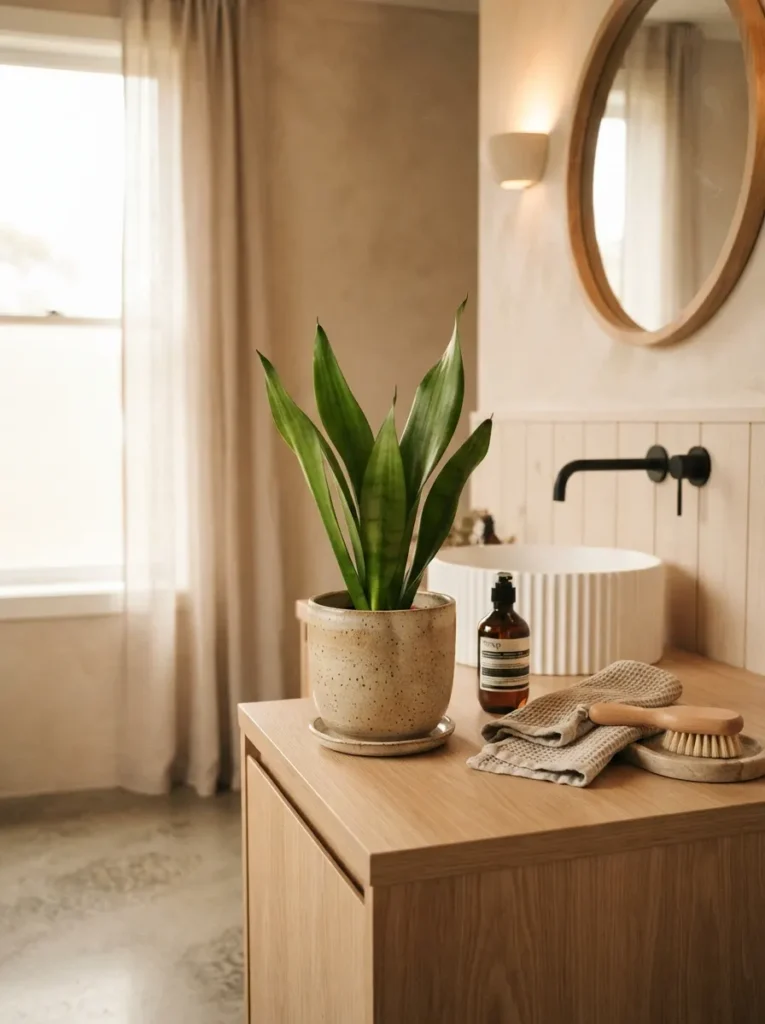
14. Choose Low-Maintenance Japandi-Friendly Plants
If preserved moss isn’t the direction you want to go, plants like snake plants, pothos, and peace lilies all handle bathroom humidity and lower light well, staying consistent with the low-maintenance philosophy Japandi design leans on throughout. A single well-placed plant, rather than several scattered ones, keeps the styling in line with the room’s overall restraint.
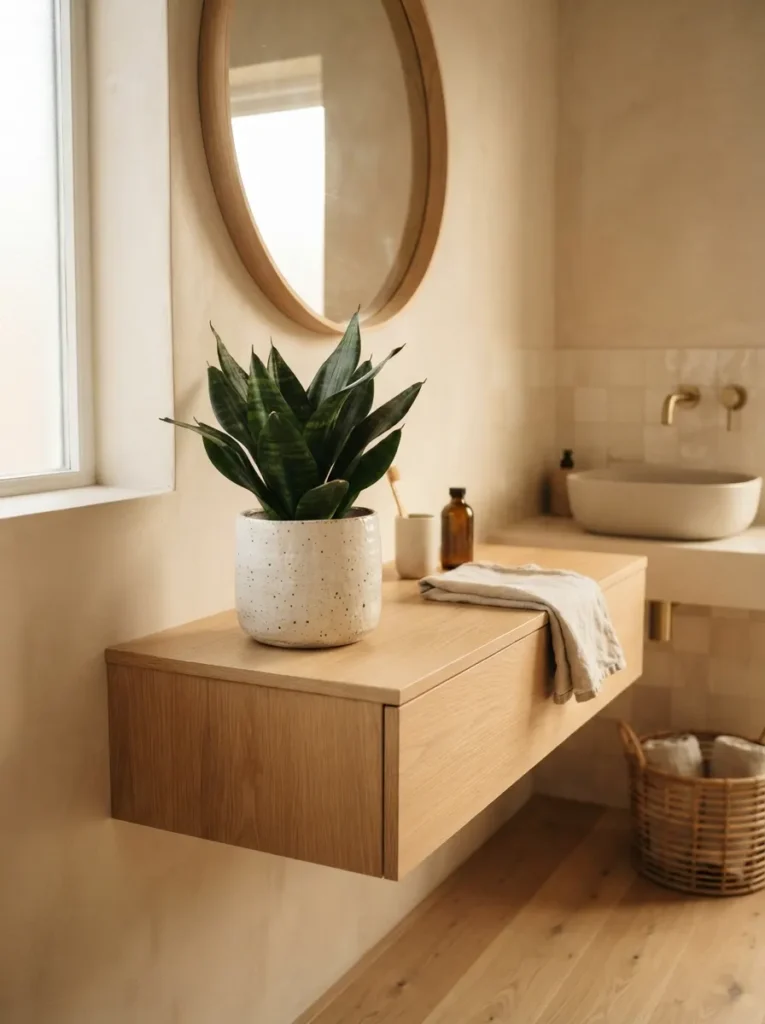
Japandi succeeds where plain minimalism sometimes falls short because it never asks you to give up warmth in exchange for simplicity. A deep soaking tub, a textured plaster wall, warm wood against cool stone, each choice adds tactile richness without adding visual noise. The result is a bathroom that feels genuinely restorative to spend time in, not just clean and empty.