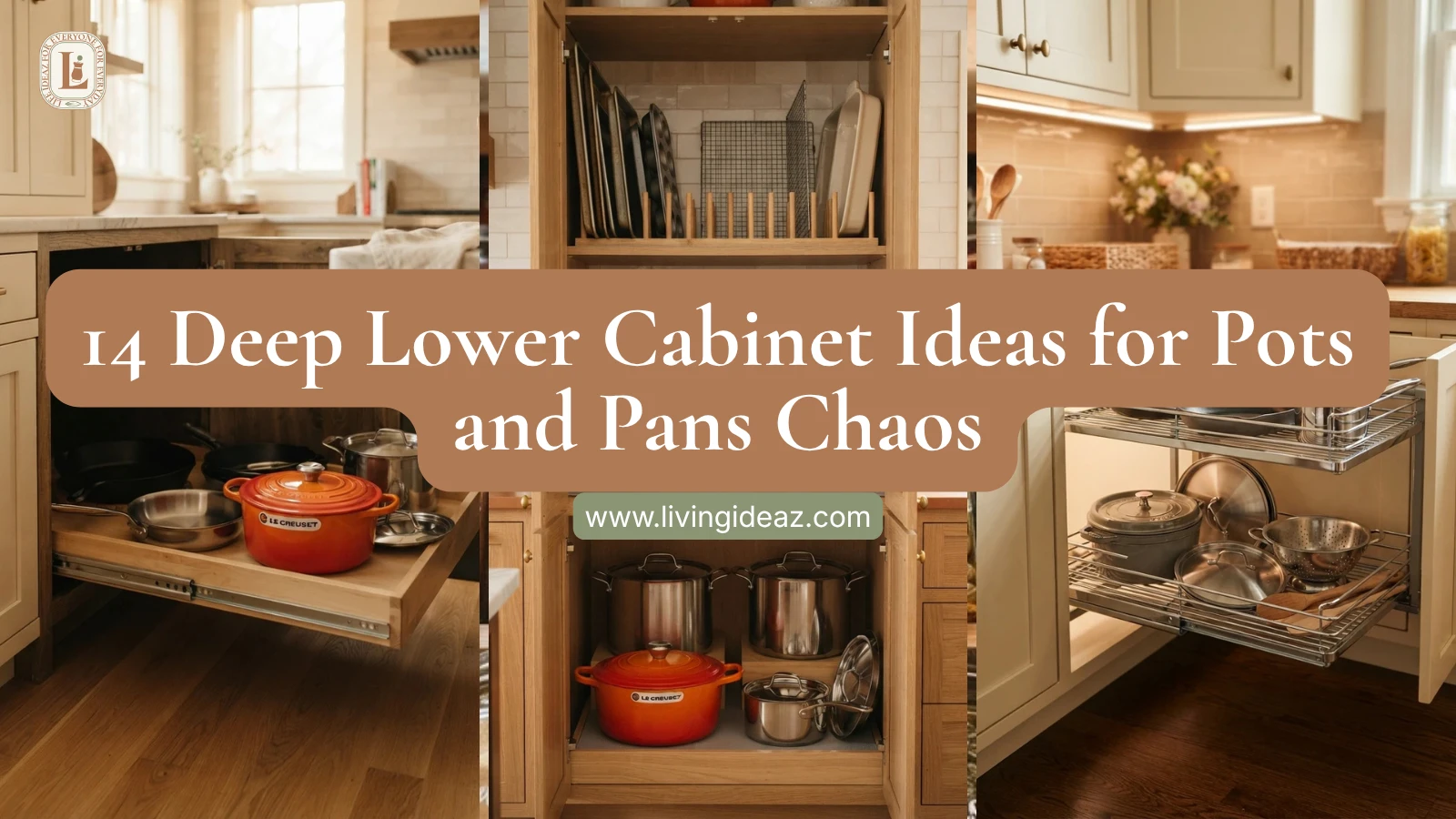
14 Deep Lower Cabinet Ideas for Pots and Pans Chaos
TL;DR: A deep lower cabinet can hold an entire cookware collection, but only if it’s organized by function instead of stacked into one leaning pile. Vertical dividers keep pans upright and separate, sliding shelves bring the back of the cabinet within reach, and storing lids apart from pots stops the daily dig for a matching one. The depth that makes this cabinet frustrating is the same depth that makes it useful once it’s set up right.
Deep lower cabinets promise a lot of storage, and they deliver it, but usually in the form of a leaning tower of pots with mismatched lids wedged in wherever they happen to fit. Every time you need the pan on the bottom, the whole stack has to come out first. The depth itself isn’t the problem. It’s that most people organize a deep cabinet the same way they’d organize a shallow one, by stacking, when the space actually calls for a completely different approach.
Here are 14 deep lower cabinet ideas that turn pot and pan chaos into something you can actually find without unstacking half the cabinet.
1. Empty the Cabinet and Sort by What You Actually Use
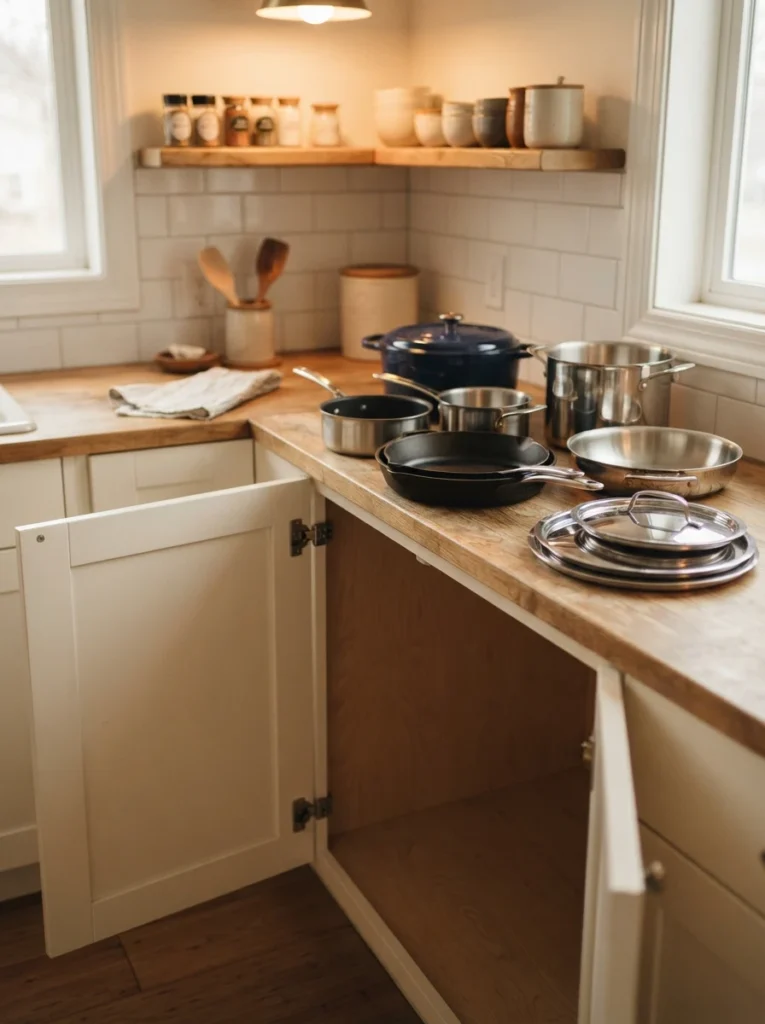
Before installing anything, pull every pot, pan, and lid out and sort them by how often you reach for each one. This step alone usually reveals duplicate pieces or rarely used cookware that doesn’t need to live in your most convenient cabinet at all.
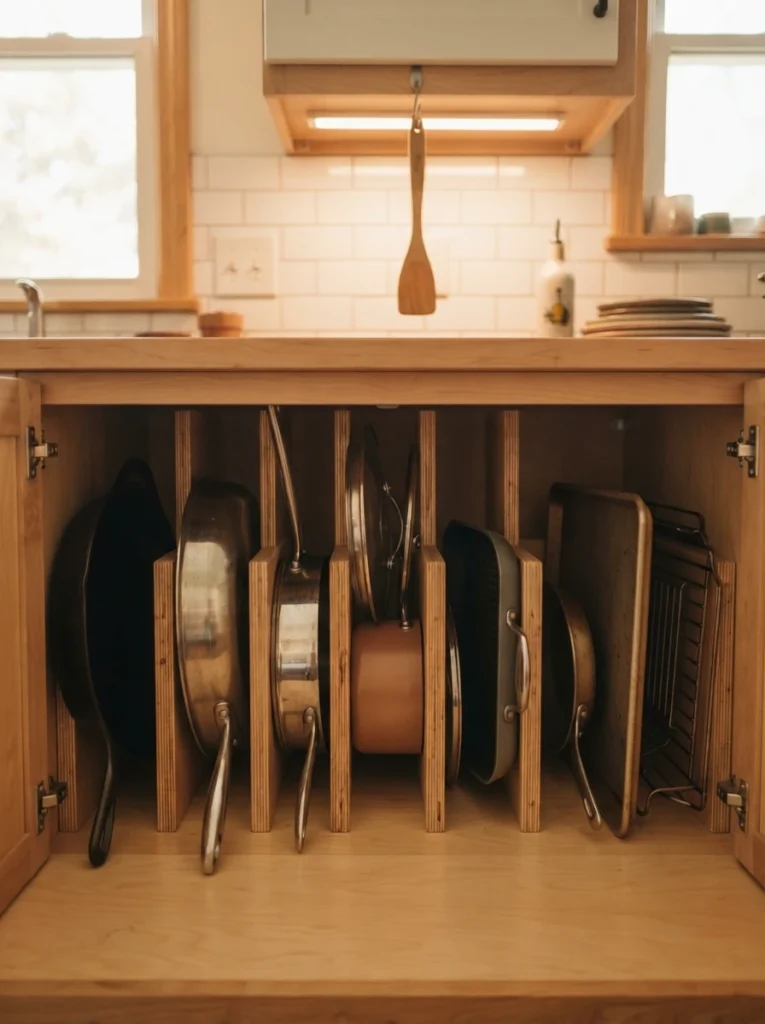
2. Use Vertical Dividers So Pans
tand Upright
Pans stacked flat on top of each other scratch against one another and force you to lift several out just to reach the bottom one. Vertical dividers let each pan stand on its edge instead, so every piece is visible and removable without disturbing the rest.
3. Store Lids Separately From the Pots They Belong To
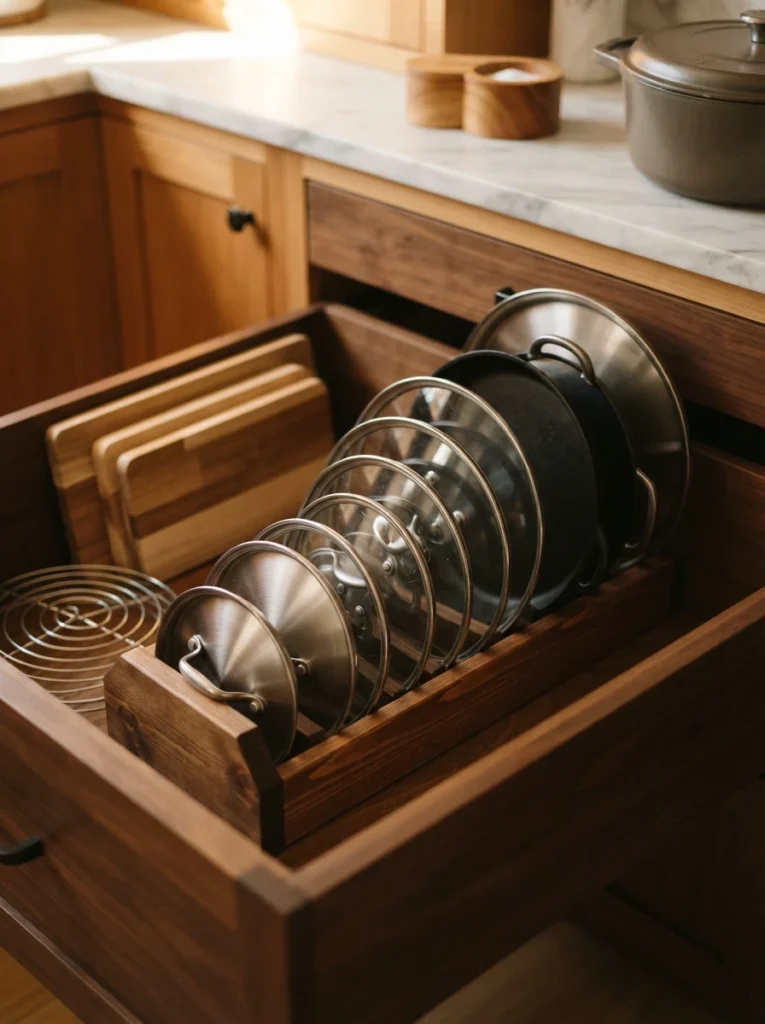
Digging through a pile of mismatched lids to find the one that fits is one of the most common cabinet frustrations there is. Keeping lids in their own vertical slot, either an angled roll-out tray or a simple divider lane, means you’re never hunting through pots just to find a matching top.
4. Install a Sliding Shelf to Reach the Back Half of the Cabinet
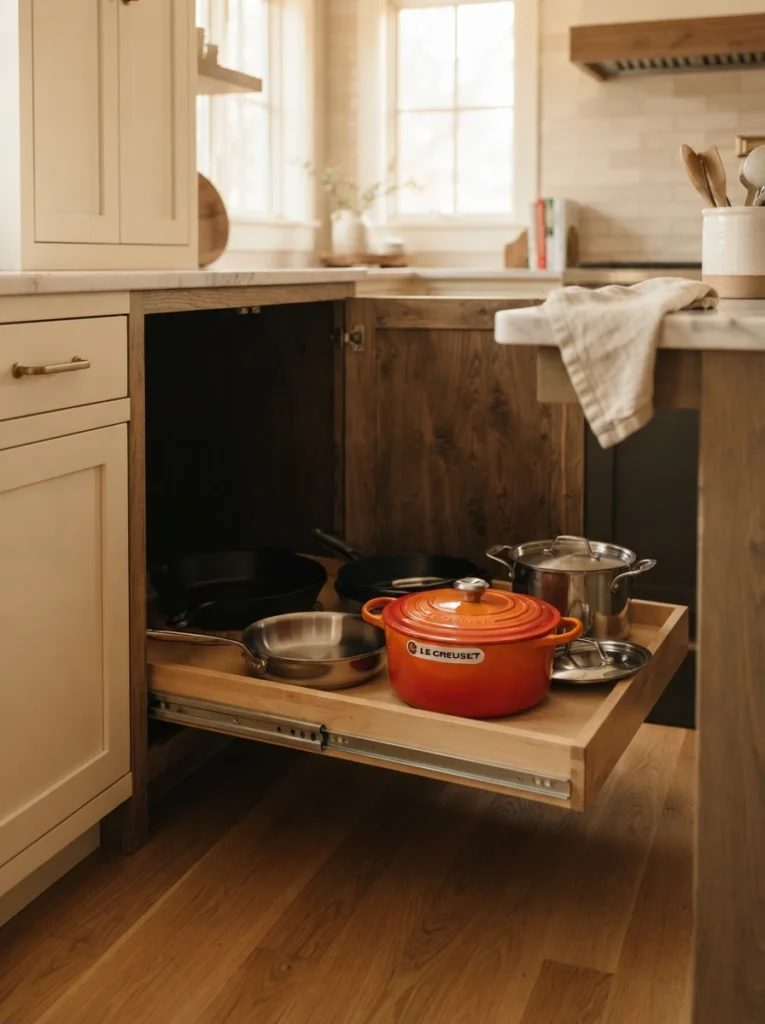
A deep cabinet’s biggest weakness is the dead zone at the very back that requires crouching and reaching blind. A sliding shelf pulls that entire section forward on rails, so nothing at the back stays permanently out of sight the way it does on a fixed shelf.
5. Choose Deep Drawers Over Doors for Heavy Cookware
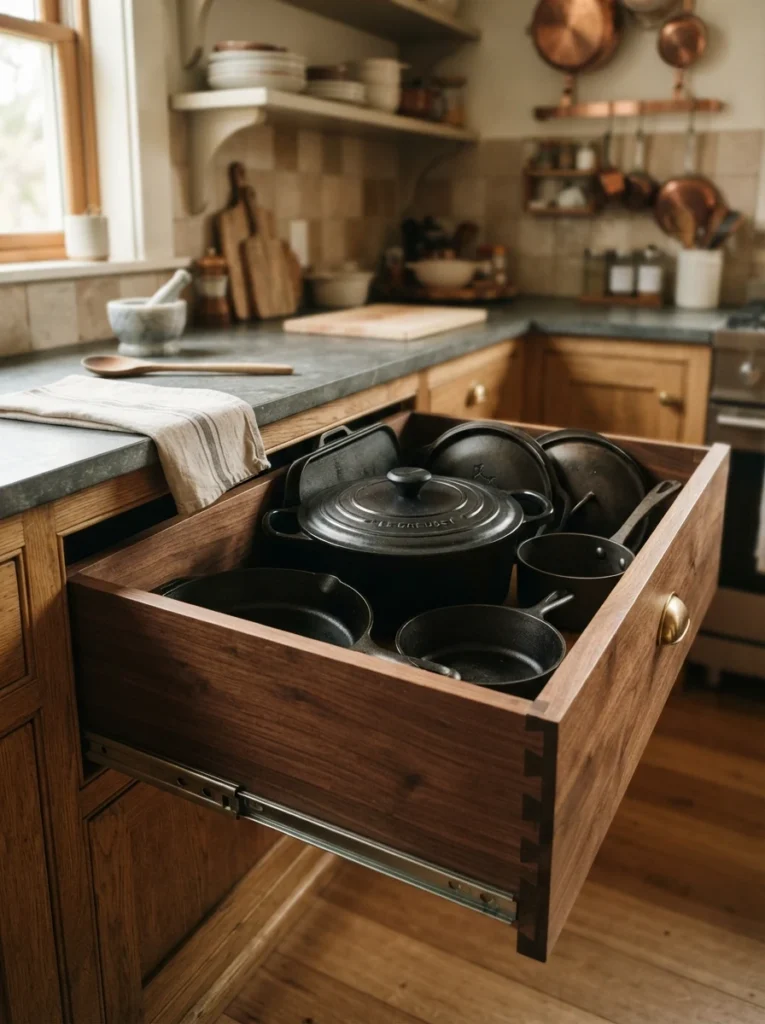
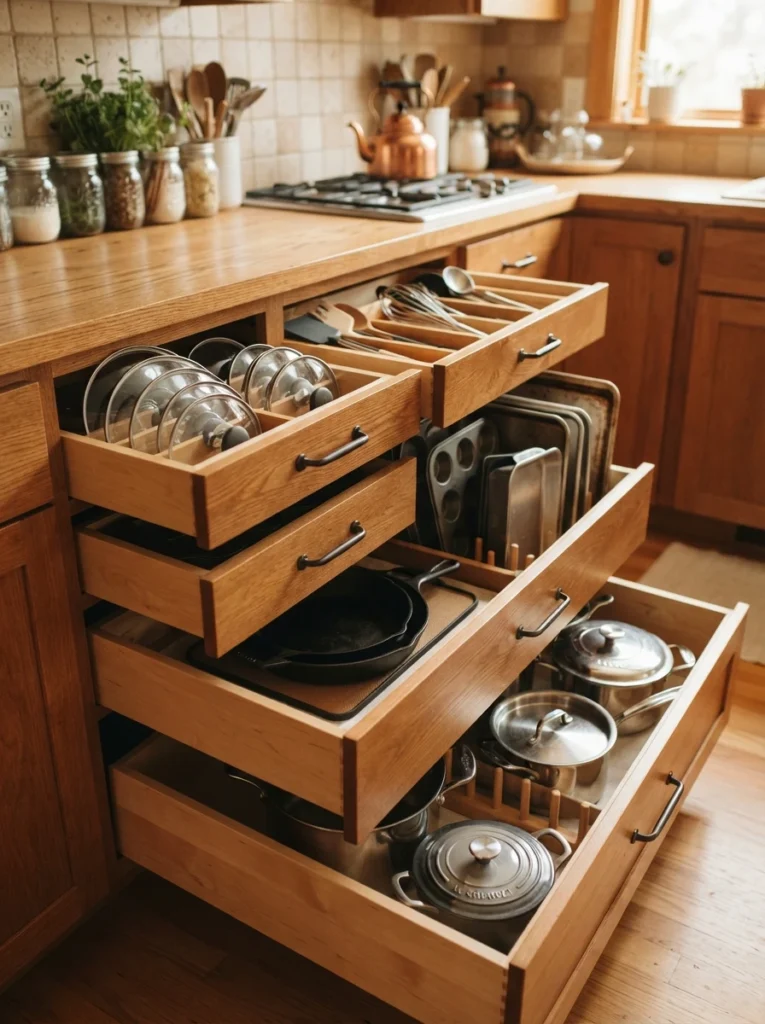
If you’re in a position to choose, deep drawers generally outperform traditional cabinet doors for heavy items like cast iron and Dutch ovens, since the drawer’s high sides keep everything contained and a single pull brings the whole load into reach. Roll-out trays offer similar accessibility but typically hold less weight than a true dovetailed drawer.
6. Divide the Cabinet Into Zones by Cookware Type
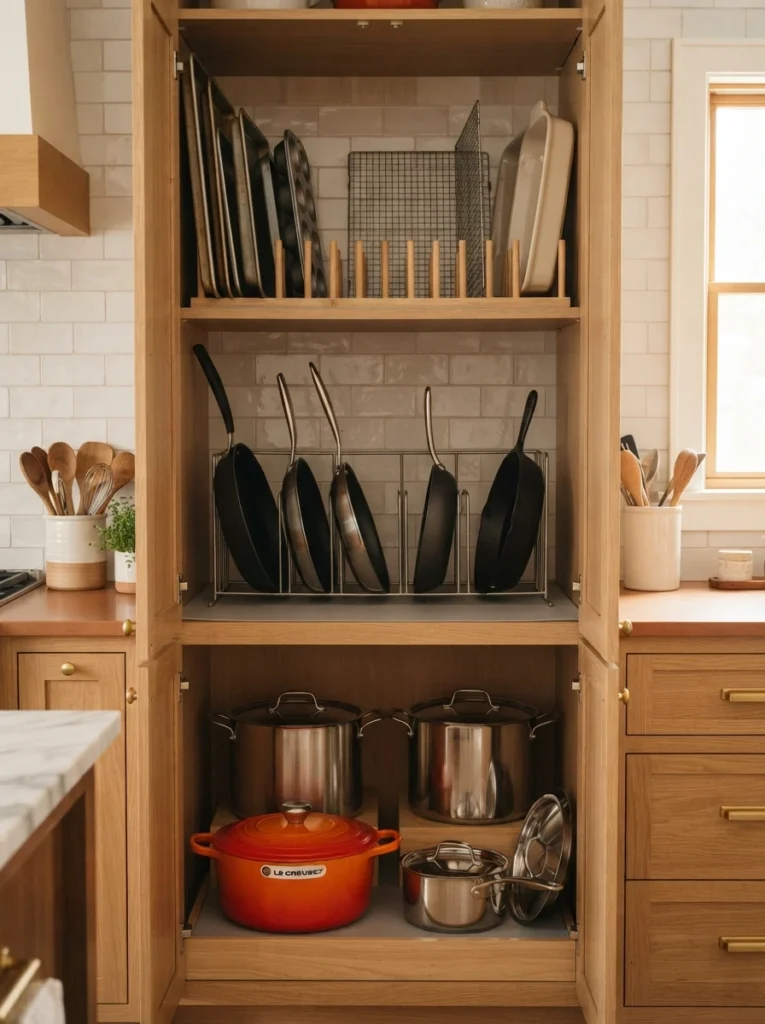
Rather than treating the whole cabinet as one undifferentiated space, split it into zones: stock pots in one section, frying pans in another, baking sheets in a third. Defined zones stay stable even during a busy cooking session, since everything has a specific lane instead of getting shuffled wherever there’s an open gap.
7. Use a Half Shelf to Add a Second Storage Level
Many deep lower cabinets come with, or can be fitted with, a half shelf partway up, which adds a second usable tier without blocking full-height items below it. This is a simple way to separate baking dishes or smaller pans from the taller stockpots stored underneath.
8. Install a Pull-Out Blind Corner Organizer if the Cabinet Wraps a Corner
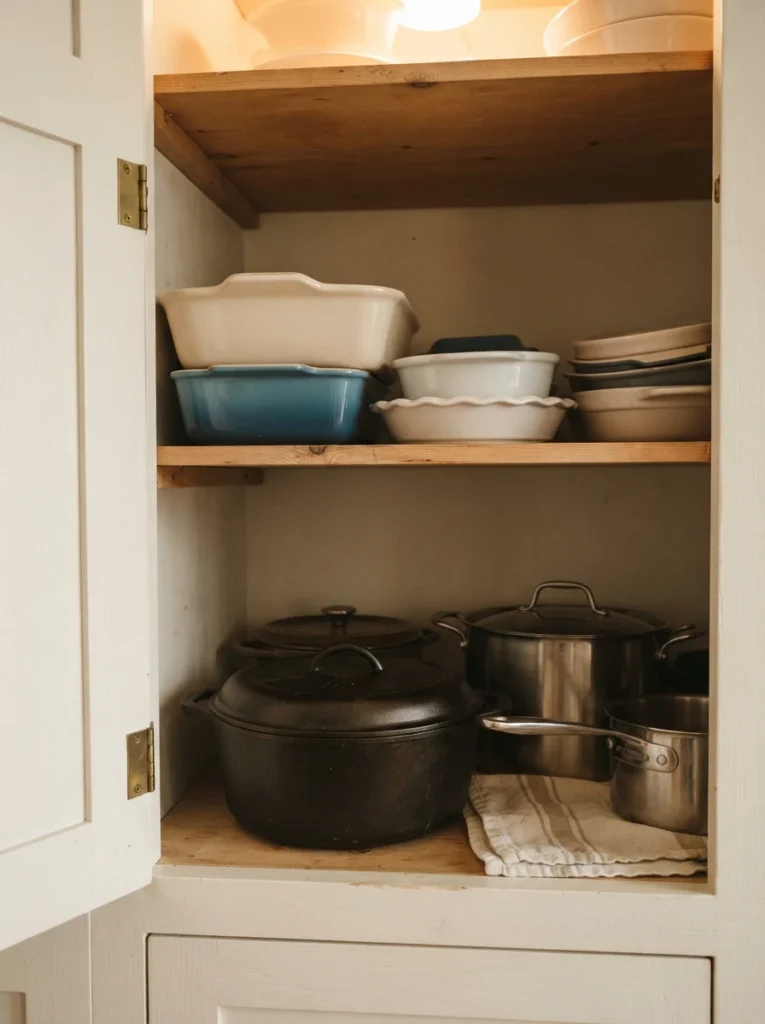
When a deep lower cabinet also wraps around a corner, a specialized pull-out blind corner organizer reclaims that space instead of leaving it as unreachable dead storage. Measure carefully before buying, since these organizers are shaped specifically to fit the corner’s unique footprint.
9. Use Expandable Dividers That Adjust as Your Collection Changes
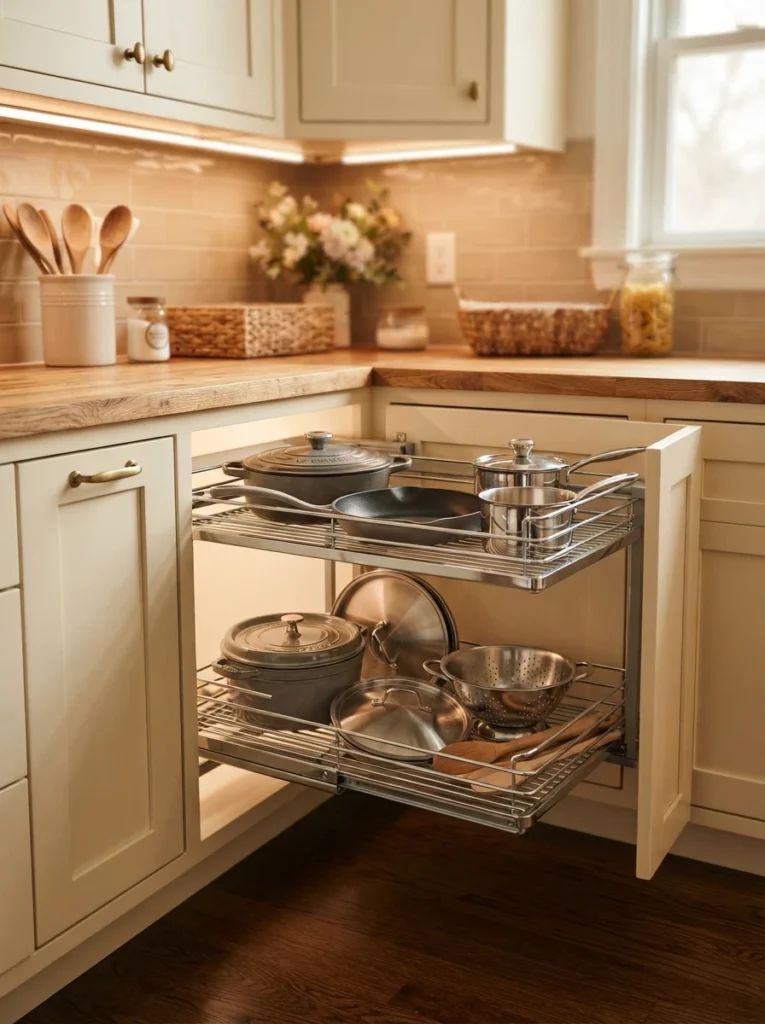
Fixed-slot organizers only work if your cookware happens to match the preset sizes, which it often doesn’t. Expandable dividers with adjustable U-shaped sections stretch to fit whatever combination of pots, pans, and lids you actually own, and they can be reconfigured later if your collection changes.
![Expandable adjustable dividers inside a deep cabinet holding a mixed set of pots, pans, and lids, warm kitchen lighting, vertical Pinterest photography, warm adjustable styling.]
10. Add a Peg Board Organizer Custom-Made for Your Drawer
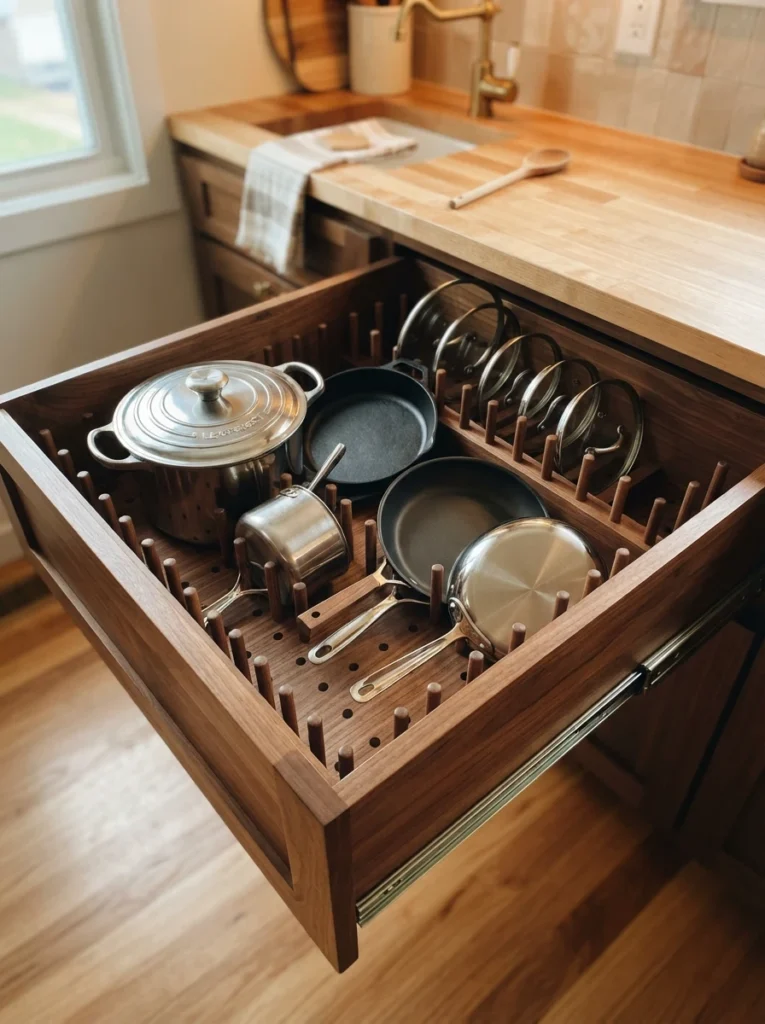
Deep drawers flanking a stove are ideal for pots and pans, and a peg board organizer built to the exact dimensions of that specific drawer keeps everything from sliding around during use. Several companies now custom-make these boards on request, which solves the problem of standard-size organizers not quite fitting an unusual drawer.
11. Store Rarely Used Items Furthest From the Front
Not every piece of cookware earns a spot in the most convenient part of the cabinet. Push specialty pans and rarely used bakeware toward the back or bottom, and reserve the front, most accessible section for the pots and pans you reach for on a near-daily basis.
12. Line Shelves With a Water-Resistant Liner Before Organizing
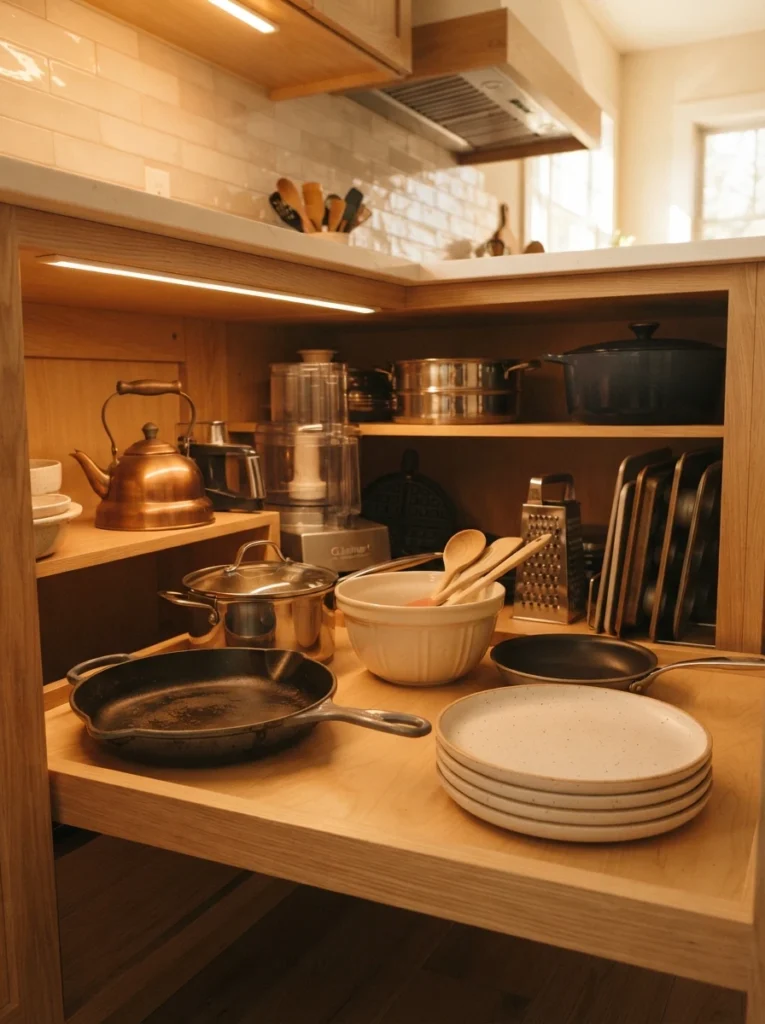
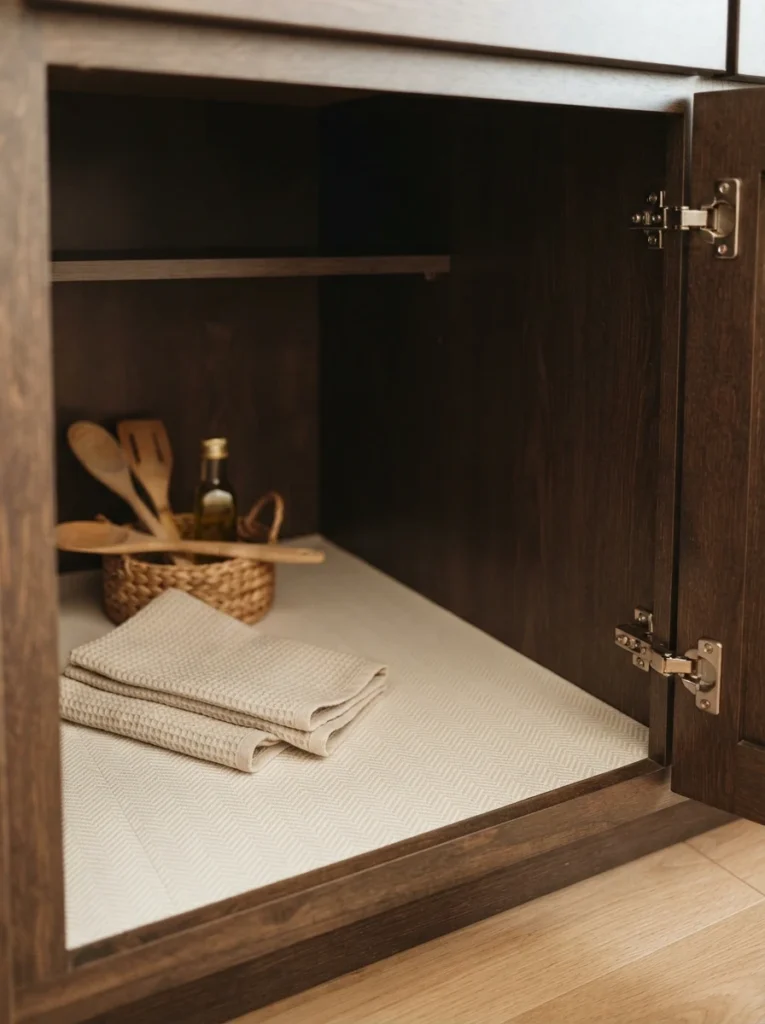
A heavy-duty, water-resistant shelf liner protects the cabinet floor from scratches caused by heavy cookware sliding in and out repeatedly. It also makes cleanup far easier, since spills and grease wipe off the liner instead of soaking into bare wood.
13. Group Cookware by Frequency Across Multiple Drawers if You Have Them
If your kitchen has more than one deep drawer available, sort by both shape and how often you use each piece, stock pots in one, saucepans in another, frying pans in a shallower drawer nearby. Splitting the collection this way keeps any single drawer from becoming overcrowded and easier to search.
14. Consider Moving Some Cookware to Upper Cabinets
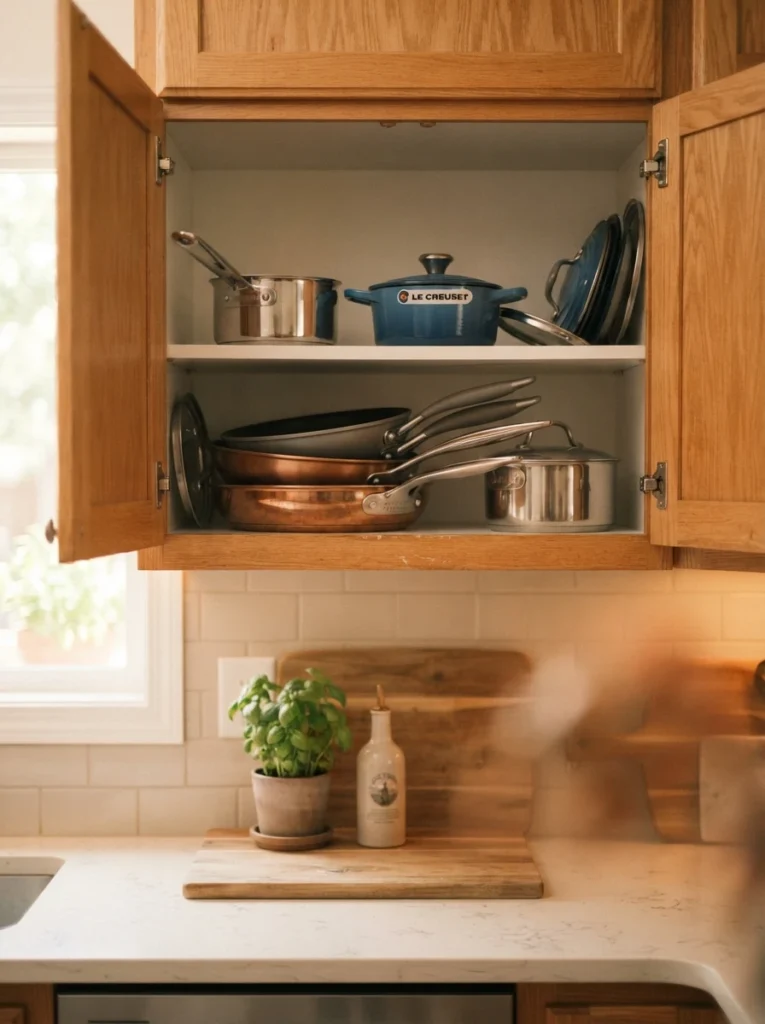
Upper cabinets are typically shallower than lower ones, but they can still hold smaller pots and pans, especially ones you reach for daily and would rather not bend down for. Shifting even a few pieces upward can meaningfully reduce the load on an overcrowded lower cabinet.
A deep lower cabinet isn’t working against you, it just needs a system built for its depth rather than one borrowed from a shallow shelf. Once pans stand upright, lids get their own lane, and everything is grouped by how often you actually reach for it, this becomes one of the most efficient storage spots in the whole kitchen instead of the one everyone dreads opening.