
16 Corner Cabinet Organisation Ideas That End the Lazy Susan Struggle
TL;DR: A standard lazy susan solves part of the corner cabinet problem, but it also leaves dead zones behind the spinning tray where things go to disappear. Pull-out trays, corner drawers, and blind corner systems give you full access to the space instead of just a slice of it, and even a few smaller swaps, like a lipped Super Susan or a stepped riser, can make a stock lazy susan work better without replacing the whole cabinet.
Corner cabinets promise a lot of storage and deliver a lot of frustration. The classic rotating lazy susan was supposed to fix that, and for smaller items like spices, it mostly does. But once you’re storing pots, appliances, or anything with a handle, that same spinning tray starts catching on itself, and whatever sits behind the pole becomes almost impossible to reach without pulling half the cabinet out first.
Here are 16 corner cabinet organization ideas, from simple lazy susan upgrades to full pull-out systems, that actually make that wasted corner work for you.
1. Upgrade to a Lipped Super Susan Tray
A standard flat lazy susan lets jars slide right off the edge the moment you spin it too fast. A Super Susan with a raised lip around the edge keeps everything in place while you turn it, which matters most in kidney-shaped or half-moon cabinets where the tray already has an odd footprint to work with.
![![A kidney-shaped lazy susan tray with a raised lip edge inside a corner kitchen cabinet, jars and spice bottles neatly arranged, cabinet door open, warm kitchen lighting, vertical Pinterest photography, warm practical styling.]](https://livingideaz.com/wp-content/uploads/2026/08/Lazy_susan_inside_kitchen_cabinet_202608211552-765x1024.webp)
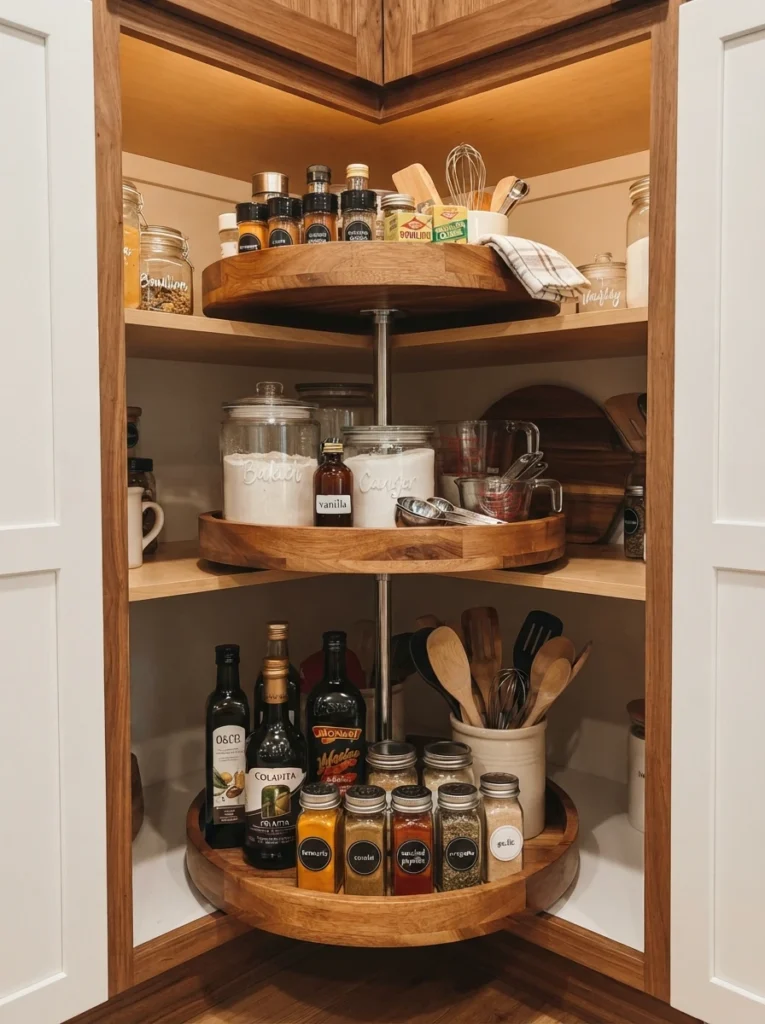
2. Stack Two or Three Wood Super Susans Instead of One
Independent wood Super Susans sit on their own shelf rather than attaching to a central pole, so you can stack two or three at different heights inside the same cabinet. This gives you more usable tiers than a single large lazy susan and lets you match each tier’s height to what you’re actually storing there.
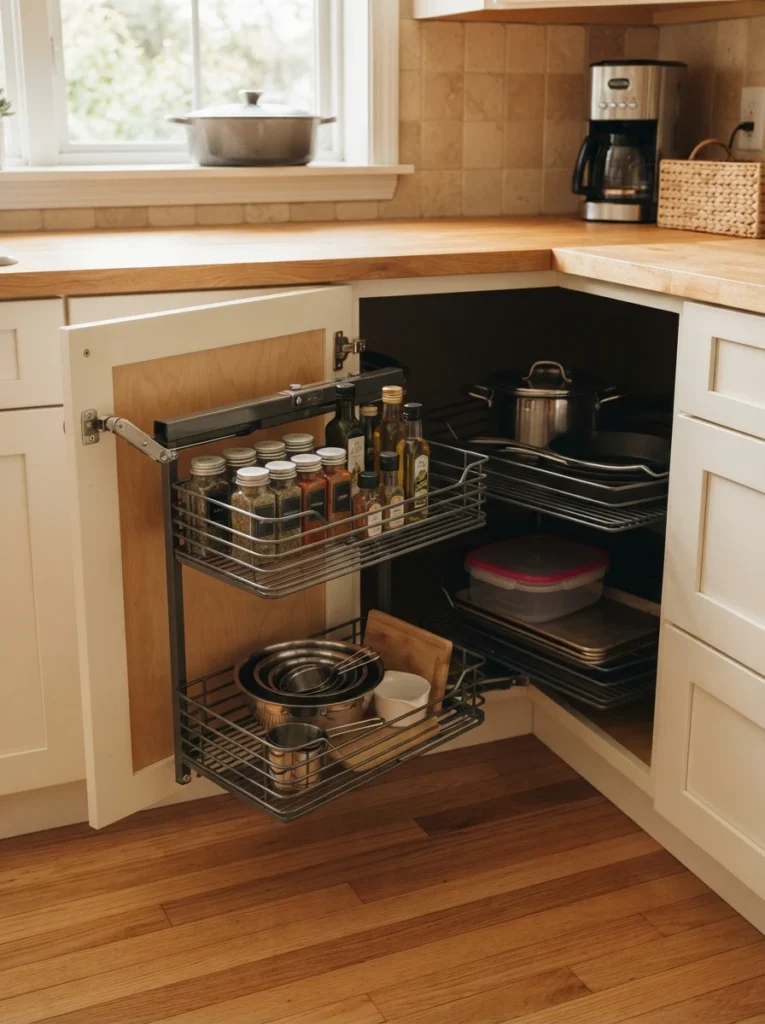
3. Install a Blind Corner Pull-Out System
Blind corners, where one cabinet section hides behind another with only a single door for access, are the hardest spot in any kitchen to organize. A pull-out system with rails and baskets solves this by sliding the front basket out and to the side while pulling the rear basket forward into full view, so nothing stays permanently out of reach.
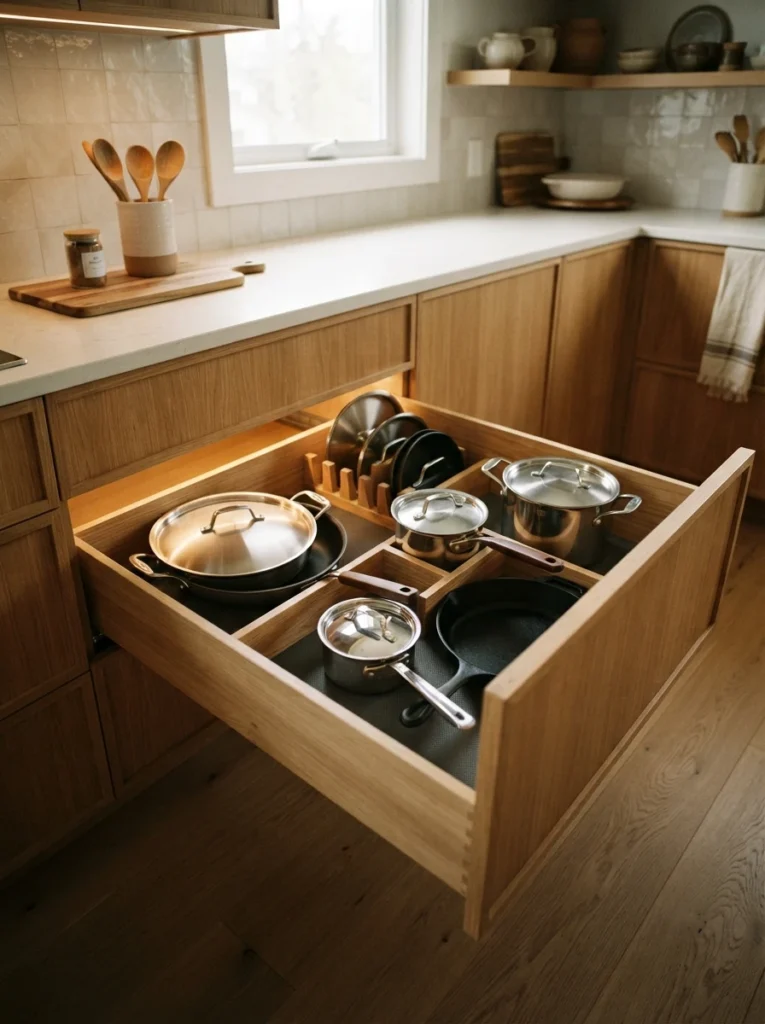
4. Switch to Diagonal Corner Drawers
Corner drawers pull out diagonally instead of swinging or spinning, and that angled design gives you a surprisingly deep, fully visible storage area with zero blind spots. They’re one of the more popular lazy susan replacements in newer kitchen builds, since the whole drawer comes to you instead of you reaching into the cabinet.
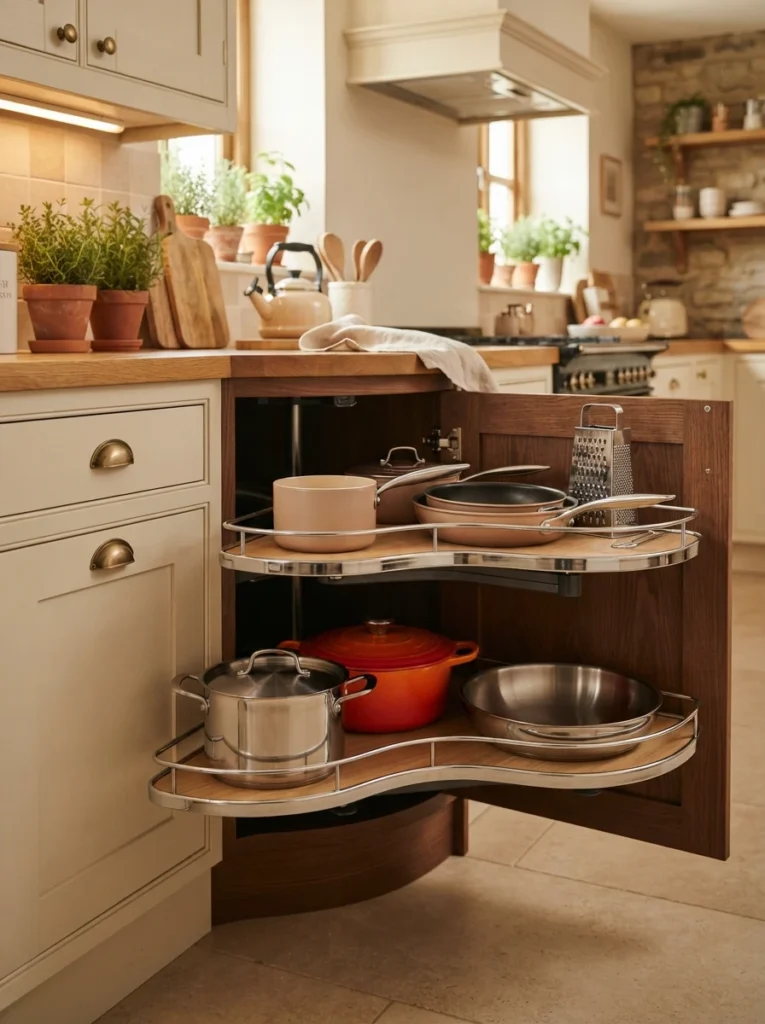
5. Add a LeMans Corner Pull-Out for Independent Shelves
LeMans-style pull-outs use two curved shelves that glide independently, so you can access the front shelf without disturbing whatever’s stored on the one behind it. This design works especially well for pots and pans that would otherwise nest awkwardly on a single rotating tray.
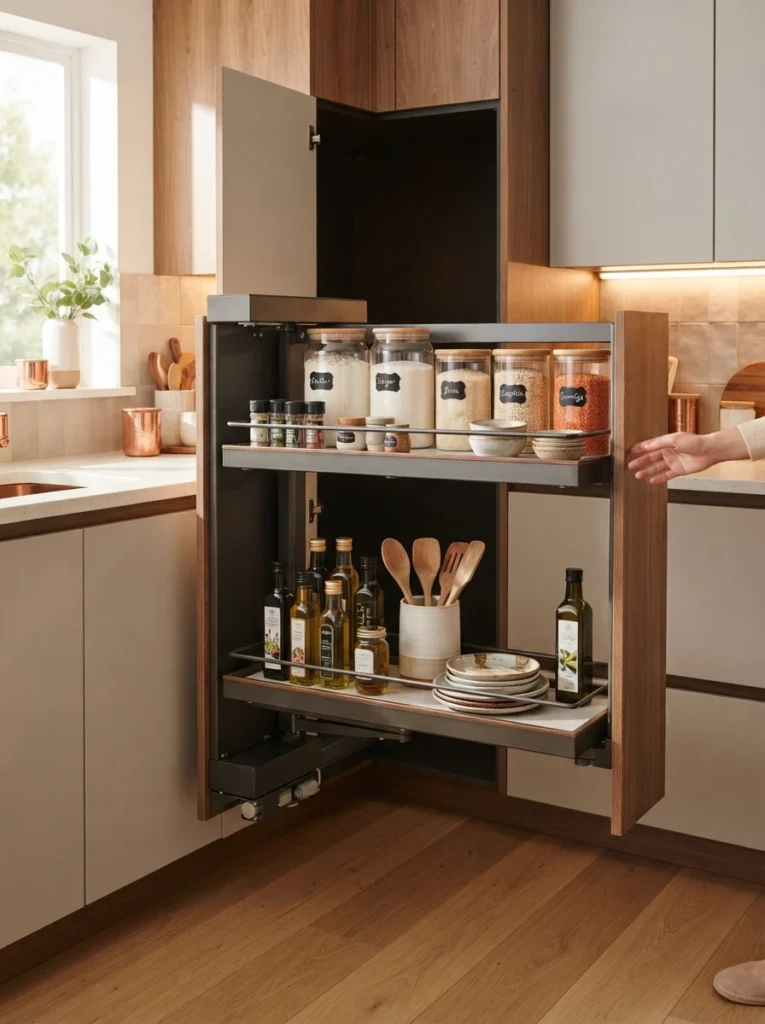
6. Use a Swing-Out Pantry Organizer for Tall Cabinets
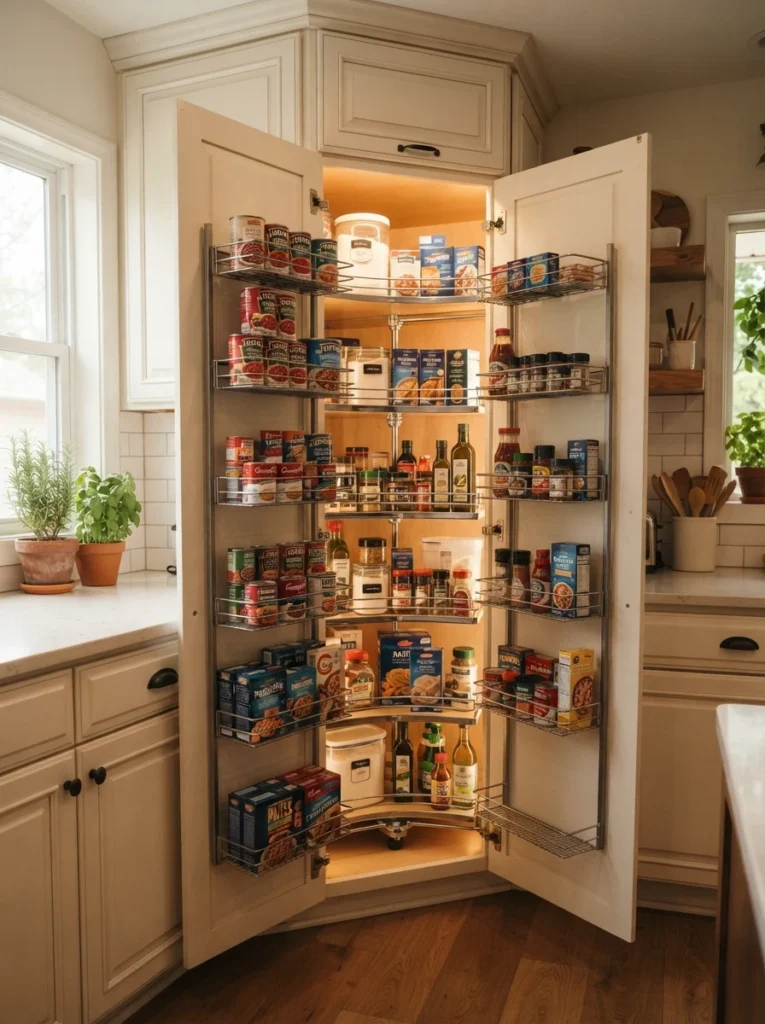
If your corner cabinet runs floor to ceiling, a swing-out organizer with attached storage compartments turns that height into a mini pantry. The door swings open and the shelving comes with it, so you get full visibility of every shelf instead of just the front-facing one.
7. Choose an Easy Reach Base Cabinet With a Bi-Fold Door
Easy Reach cabinets use a wide bi-fold door instead of the usual single panel, opening up a much bigger view into the corner. Rather than spinning or sliding anything, the fixed shelving is simply easier to see and reach because the opening itself is larger.
8. Add Adjustable Height Shelves Before Buying Any Accessory
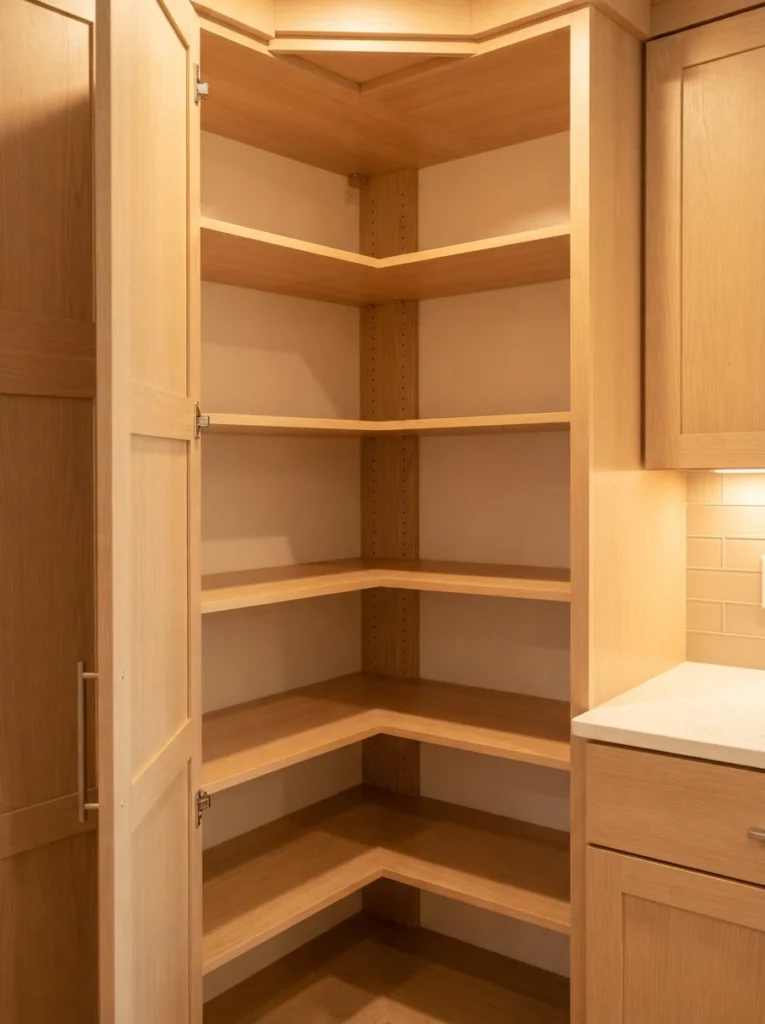
Most corner base cabinets ship with a single fixed shelf, which wastes a lot of vertical space above whatever you’ve stored there. Before adding a lazy susan or pull-out system, check whether your cabinet allows extra adjustable shelves, since this alone can roughly double your usable storage for the cost of a couple of shelf pins.
9. Reserve the Corner for Pots, Pans, and Bulky Cookware
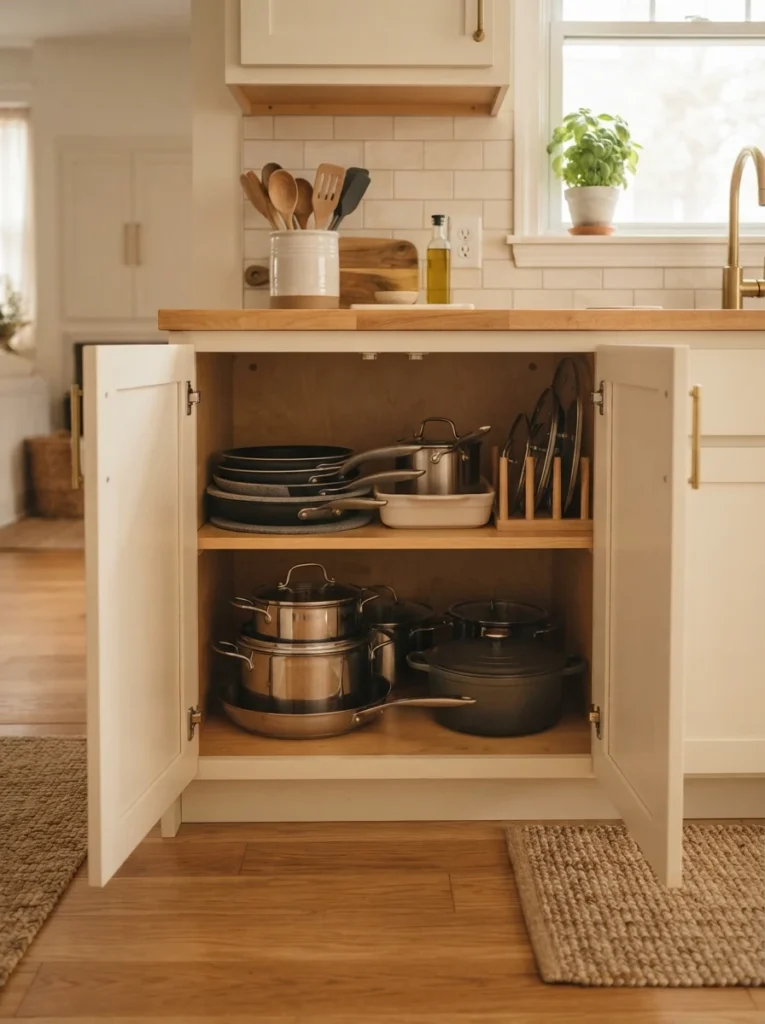
Corner cabinets are naturally deep, which makes them a poor fit for small items that get lost in the back but a great fit for bulky cookware you only need to identify by shape. Dedicate the corner to your largest pots, stockpots, and lids, and let smaller drawers elsewhere handle anything petite.
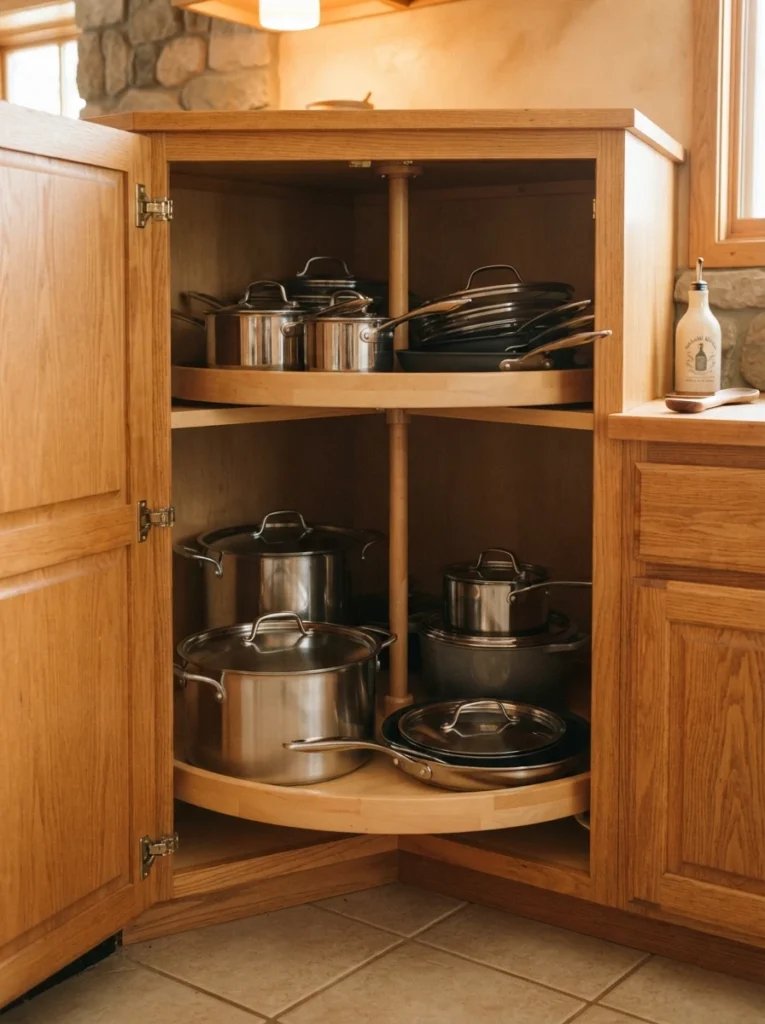
10. Use a Motorized Shelf for Frequent, Heavy Access
For a corner cabinet you open several times a day, a motorized pull-out shelf removes the physical effort of spinning or sliding anything yourself. It’s a bigger investment than a manual system, but for households that cook constantly, the reduced strain on shoulders and knees can be worth it.
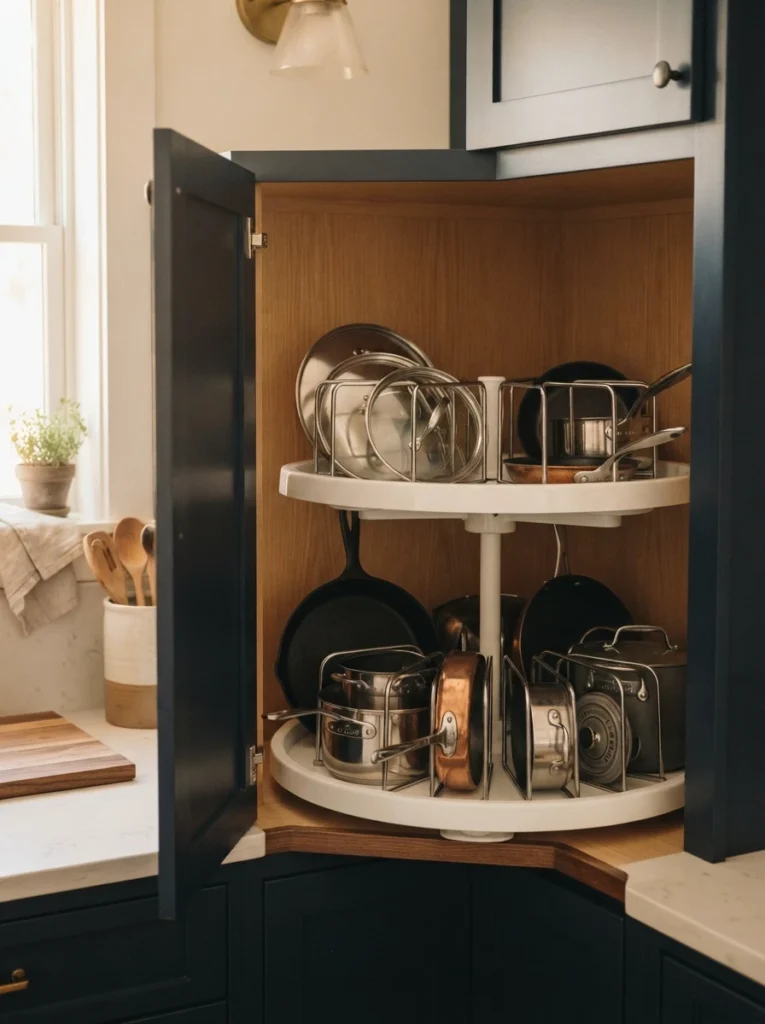
11. Install a Spinning Pot and Pan Organizer
Rather than a general-purpose lazy susan, a dedicated pot and pan organizer with sturdy dividers keeps cookware from sliding into a pile every time you spin it. This is a smaller, cheaper fix than replacing the whole cabinet system if pots are your main frustration.
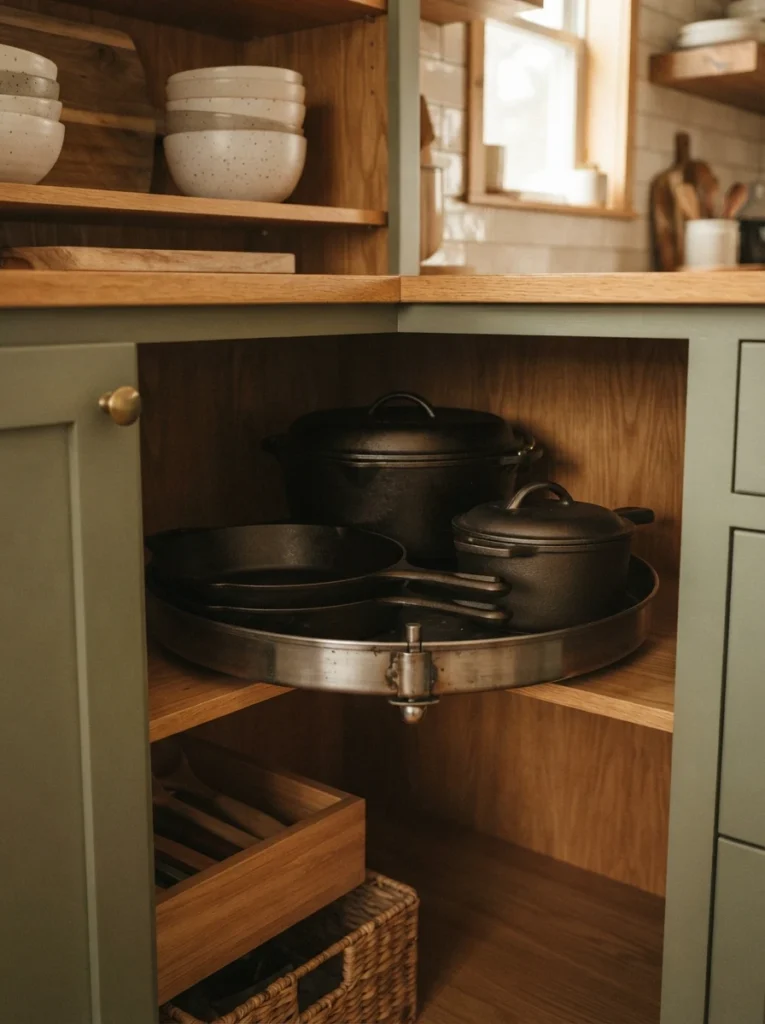
12. Check the Weight Rating Before You Buy Any Tray
Standard plastic lazy susans typically hold 20 to 30 pounds, while heavier wood or steel-basket systems are often rated for 50 to 75 pounds. If you’re storing cast iron or a stand mixer in that corner, checking the weight rating first will save you from a tray that sags or cracks within a year.
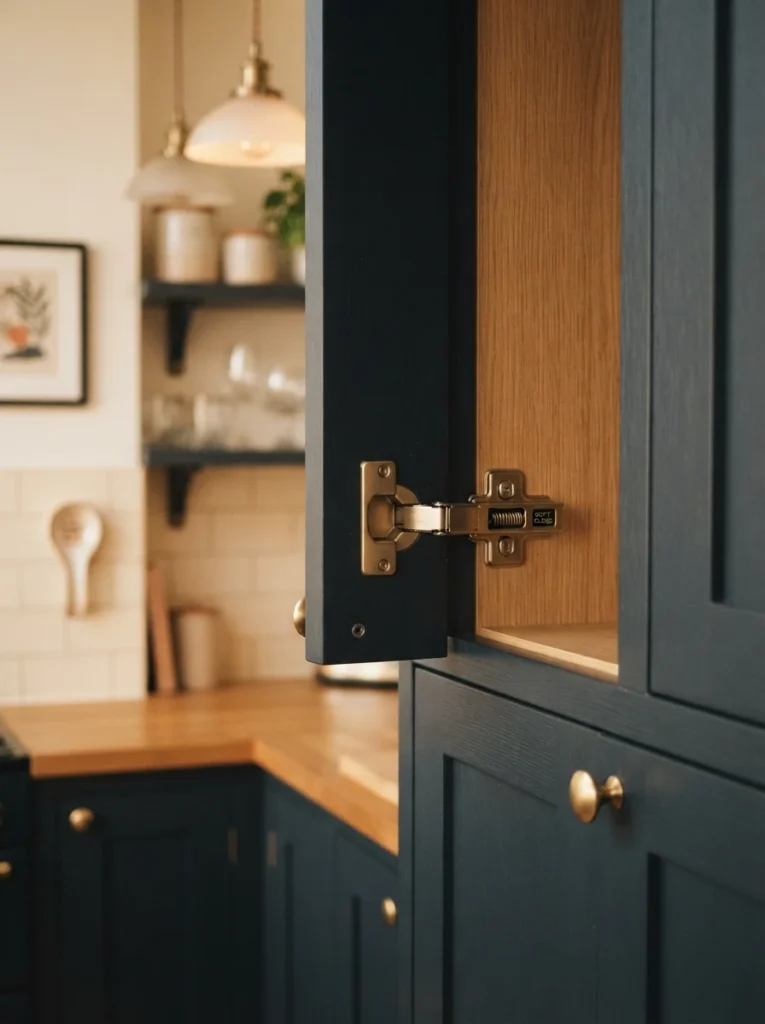
13. Choose Soft-Close Hardware for High-Traffic Corners
A corner cabinet in daily use takes a lot of wear from opening, spinning, and closing multiple times a day. Soft-close hinges and slides reduce the slamming that eventually loosens hardware, which matters more here than in a cabinet you open once a week.
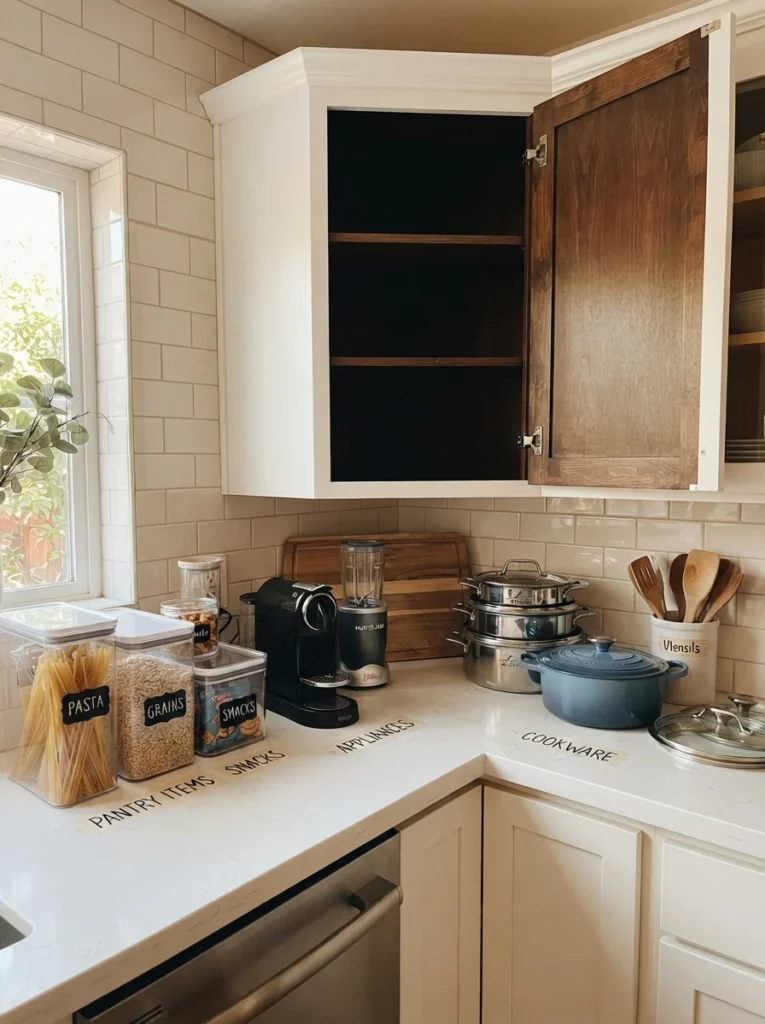
14. Group Items by Category Before You Organize the Space
Before installing any new hardware, pull everything out of the corner cabinet and sort it into categories, cookware, small appliances, backstock pantry items, so you know what you’re actually organizing for. A corner drawer built for pots won’t serve you well if the cabinet is really being used to store small appliances.
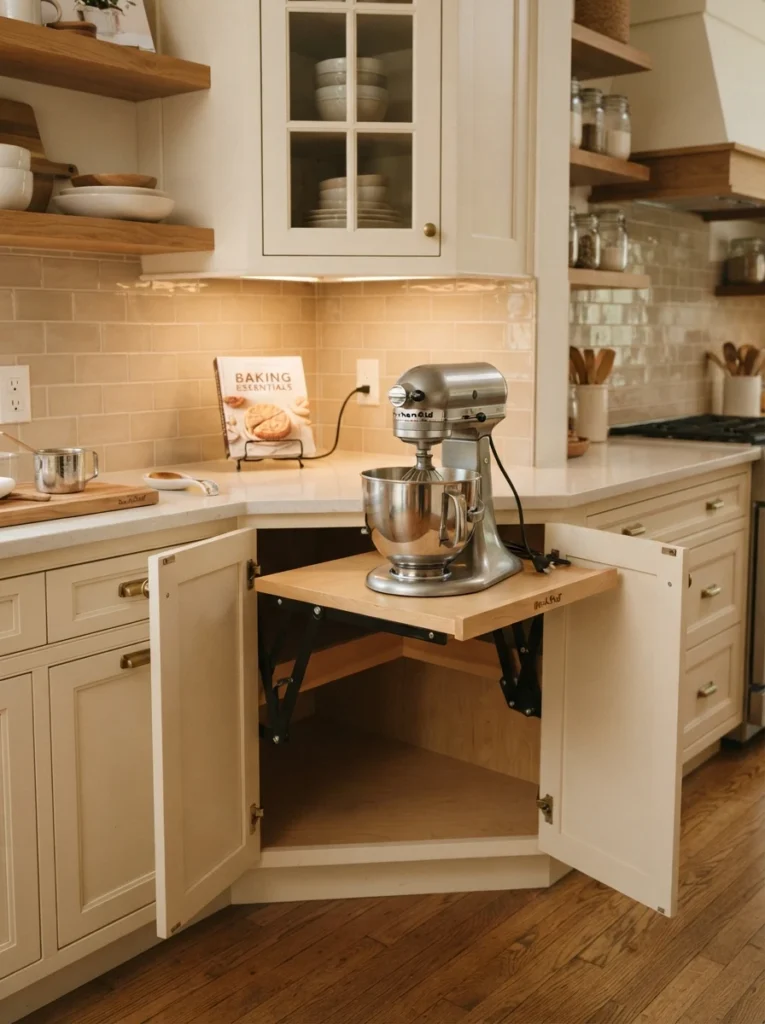
15. Use the Corner for a Built-In Appliance Instead of Storage
If your corner cabinet is deep enough, converting it to house a built-in appliance, like a stand mixer on a fold-out shelf, clears counter space elsewhere while still making use of an awkward footprint. This works best for appliances you use often enough that hiding them away completely would be inconvenient.
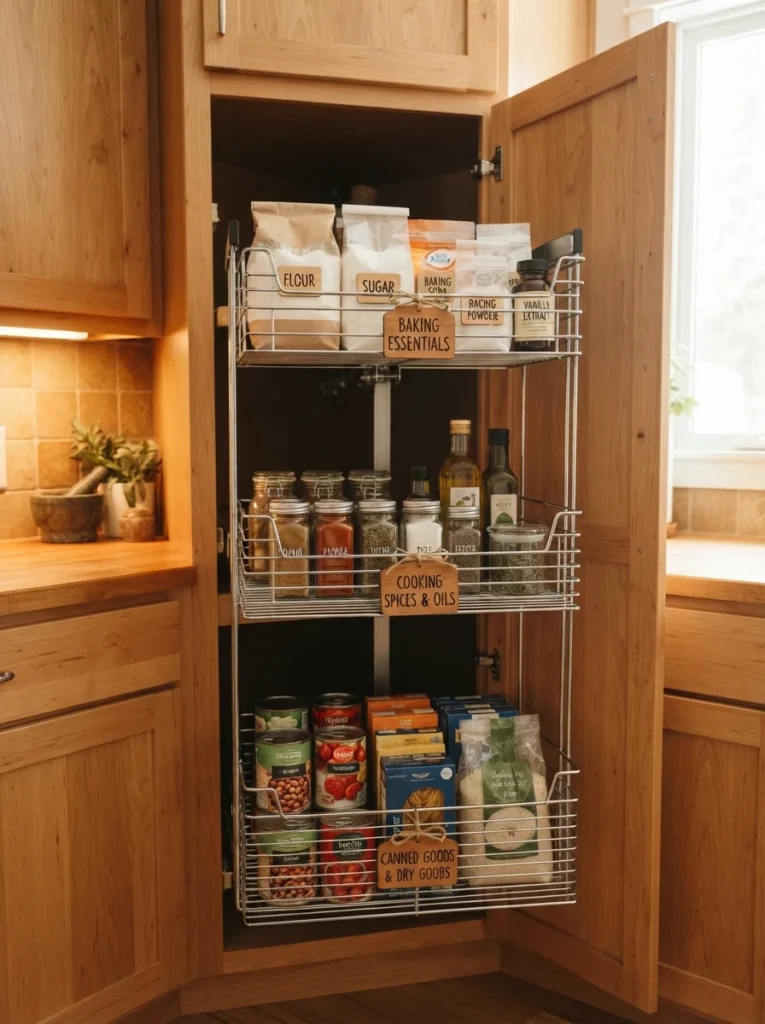
16. Label Baskets and Bins Inside the Corner System
Even a well-designed pull-out or drawer system gets messy again if nothing inside it has a defined spot. Labeling individual baskets or bins keeps the corner from sliding back into a catch-all, especially in households where more than one person is putting things away.
The right fix for a corner cabinet depends less on which product looks nicest and more on what you’re actually trying to store there. If it’s spices and small jars, a lipped Super Susan is usually enough. If it’s pots, pans, and anything bulky, a corner drawer or blind pull-out system will save you far more frustration than another spinning tray ever could.