9 Small Bedroom Lighting Ideas for Rooms With No Overhead Light
TL;DR: No ceiling fixture doesn’t mean you’re stuck with one sad lamp on a nightstand. A tall floor lamp, a few plug-in sconces, and some warm 2700K bulbs can do what an overhead light never could: layered, cozy light that actually makes a small bedroom feel bigger. Every idea below is renter-friendly, so no drilling, no electrician, and no landlord drama.
If you’ve ever moved into an apartment and flipped a light switch that controlled… nothing, you already know the panic. A lot of older buildings and budget-built rentals just skip the overhead fixture in bedrooms entirely, and you’re left standing in the dark holding your phone flashlight wondering how you’re supposed to live like this.
Here’s the good news. Designers who specialize in fixing exactly this problem agree on something: floor lamps are the starting point, not the whole solution. You need light coming from a few different heights and directions to replace what a ceiling fixture would’ve given you. Once you layer it right, most people can’t even tell there’s no overhead light in the room.
Here are 9 small bedroom lighting ideas that work with zero wiring and zero holes in the wall.
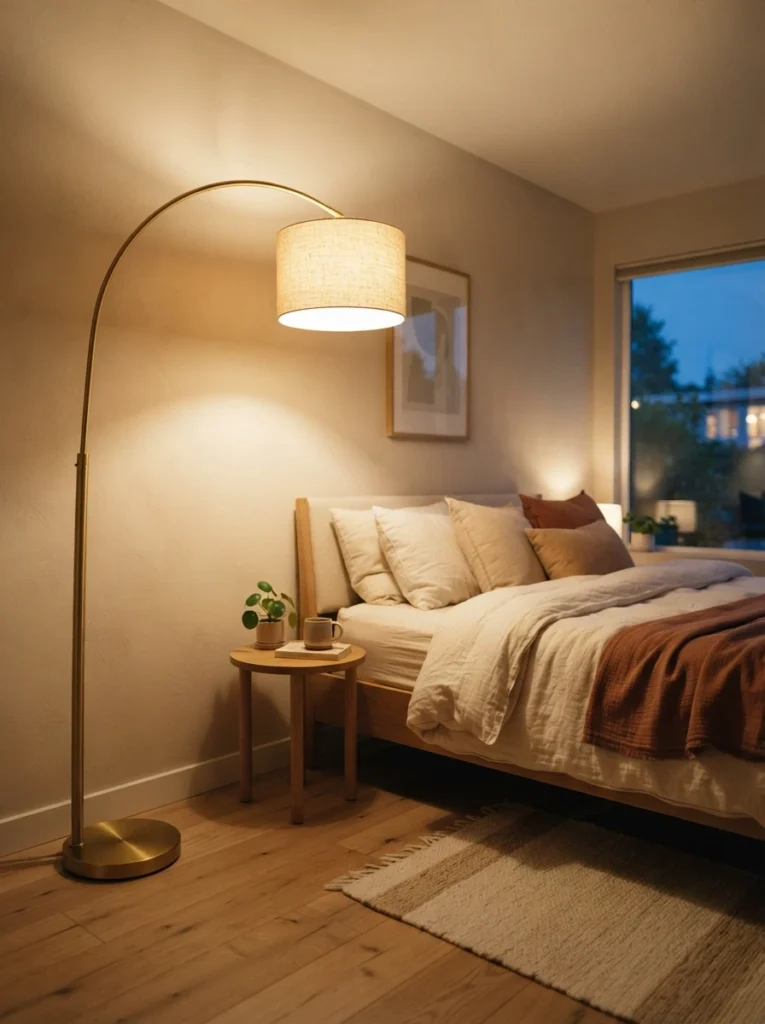
1. Start With a Tall Arched or Torchiere Floor Lamp
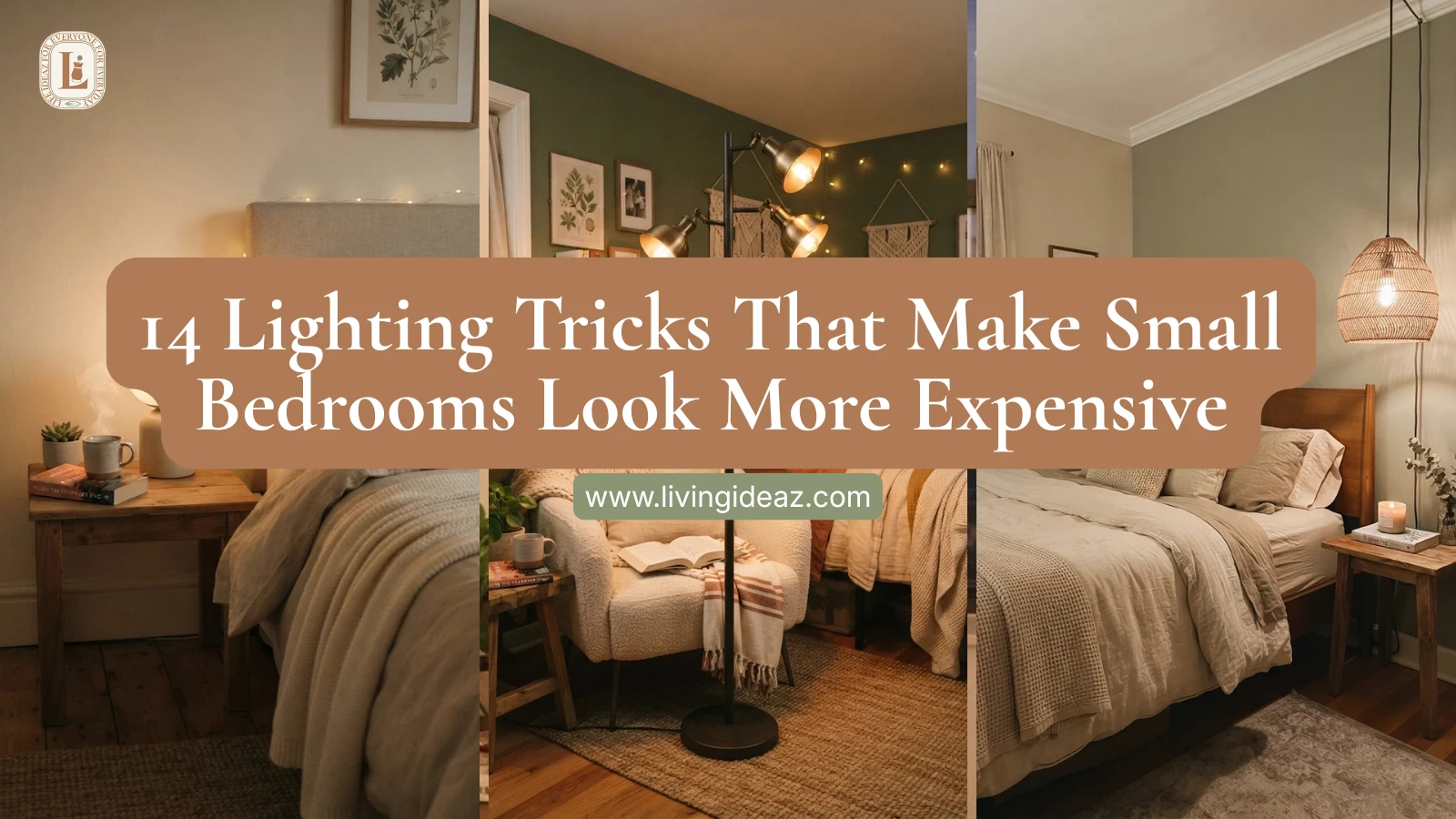
This is your anchor piece, and it does the heaviest lifting in the whole room. A tall floor lamp with an arched or torchiere-style shade throws light upward and outward, which is the closest thing you’ll get to the spread of an actual ceiling light. Designers who work on dark rentals almost always start here first before adding anything else.
Look for a shade that diffuses the light instead of pointing it straight down. A globe top or an upward-facing torchiere reads much softer than a lamp with an open bottom shade. Place it in a corner so the light bounces off two walls at once instead of just one.
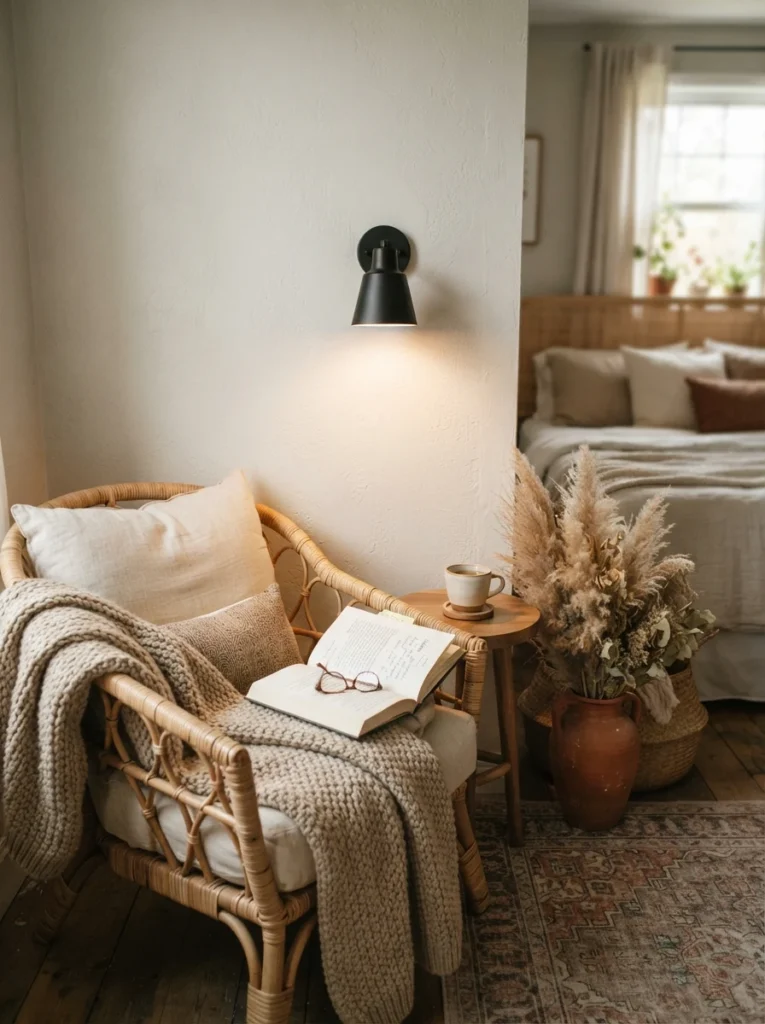
2. Add Plug-In Wall Sconces Where a Ceiling Light Would’ve Gone
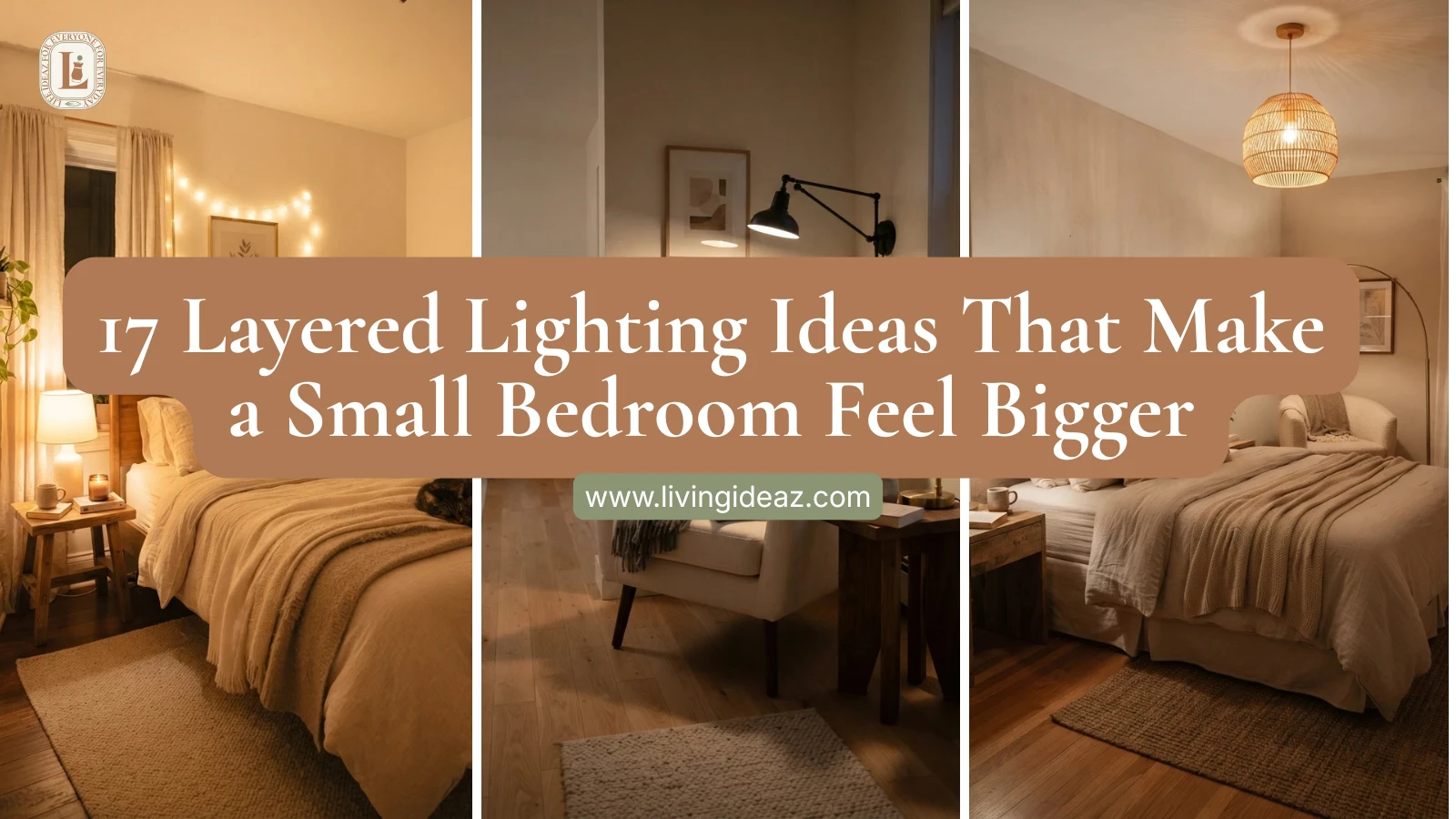
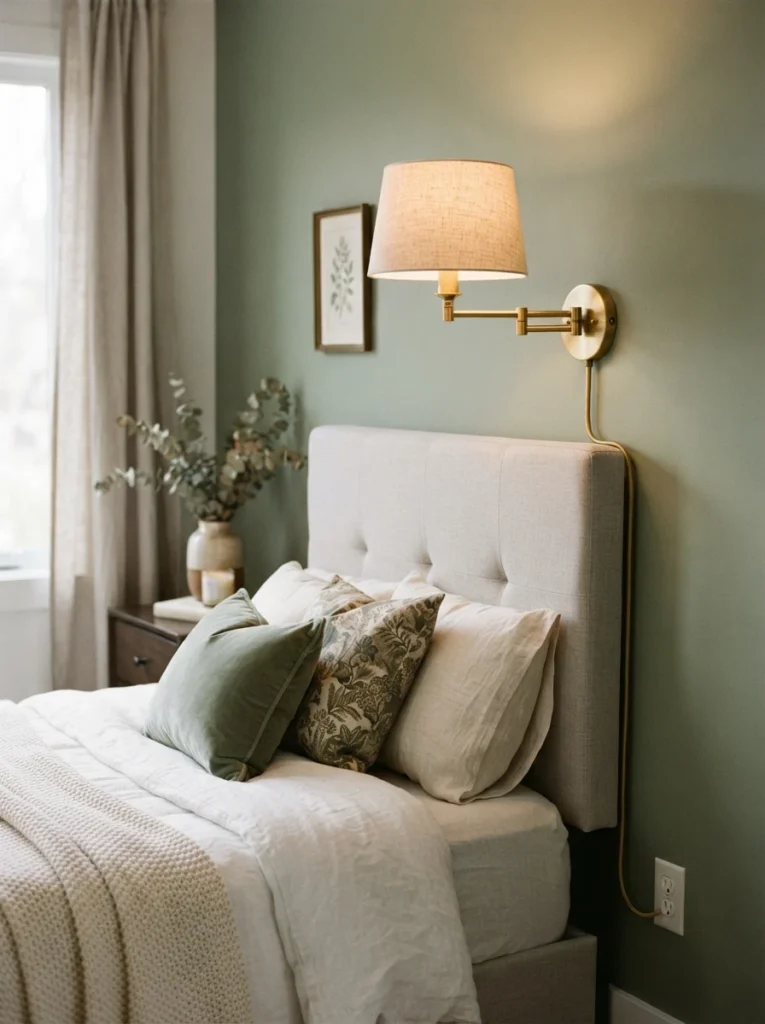
Plug-in sconces are the closest renter-friendly swap for a real overhead fixture. They mount with removable adhesive strips or a couple of tiny screws, and the cord tucks behind a cord cover so it disappears into the wall instead of dangling across your wallpaper. <cite index=”17-1″>People often mistake them for built-in electrical work because they look properly finished once installed.</cite>
Hang two on either side of the bed for a hotel-style symmetry, or space them evenly along one wall to mimic the glow of a ceiling light bouncing down. This is one of the easiest upgrades on this list because it takes about ten minutes and zero tools beyond a level.
3. Layer In Battery-Powered, Rechargeable Sconces
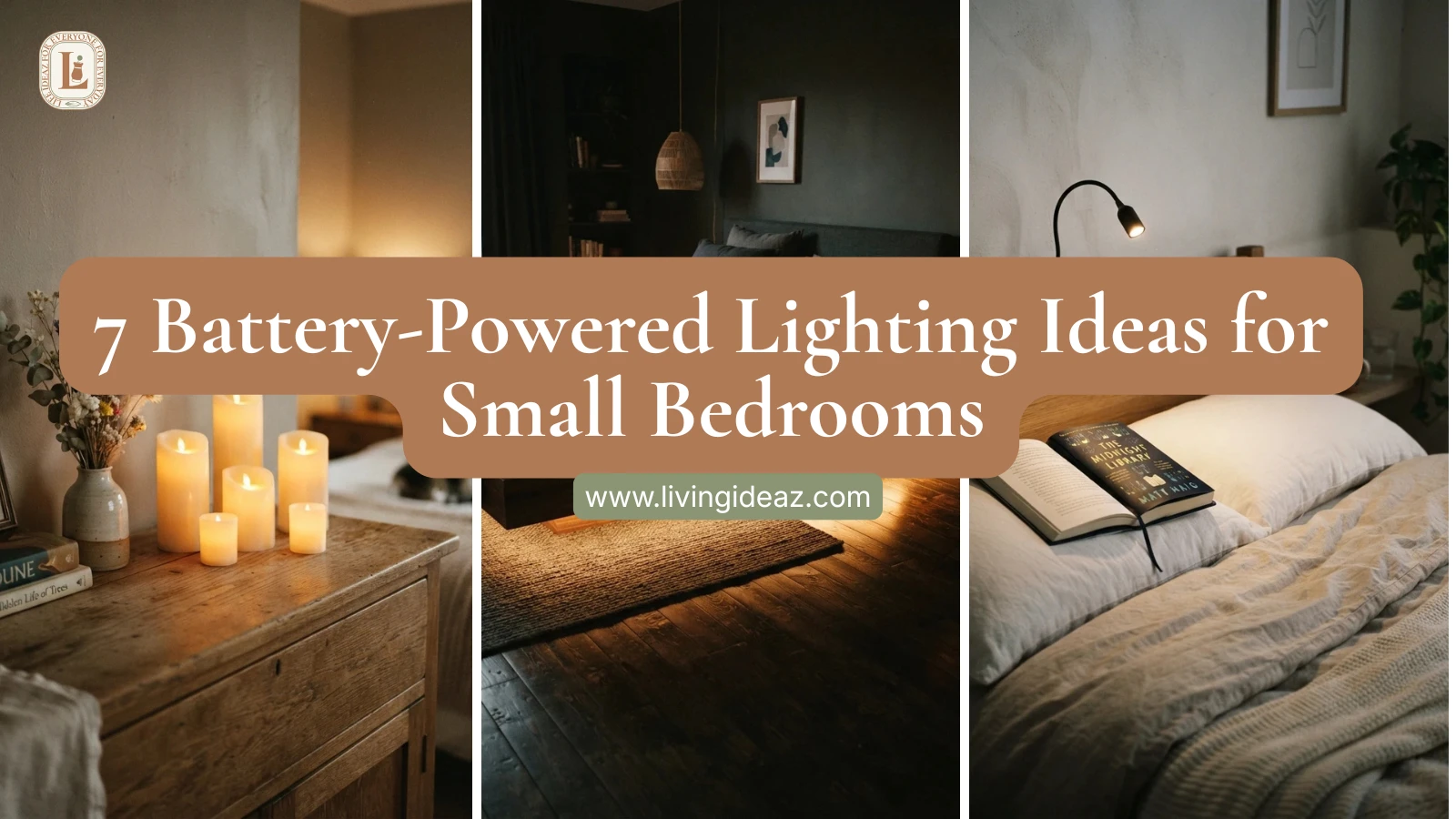
If you don’t even want to deal with a visible cord, rechargeable LED sconces solve that too. <cite index=”20-1″>Designers recommend battery-powered lamps and renter-friendly sconces specifically because floor lamps alone aren’t a complete lighting solution on their own.</cite> These little fixtures charge like a phone, then mount anywhere on a wall or shelf with no outlet nearby needed at all.
They’re perfect for the side of the room farthest from your outlets, like above a reading chair or beside a closet door where you’d never normally get light. Most last several days on a single charge, so you’re not constantly pulling them down to plug in.
4. Slide LED Strip Lights Under the Bed Frame
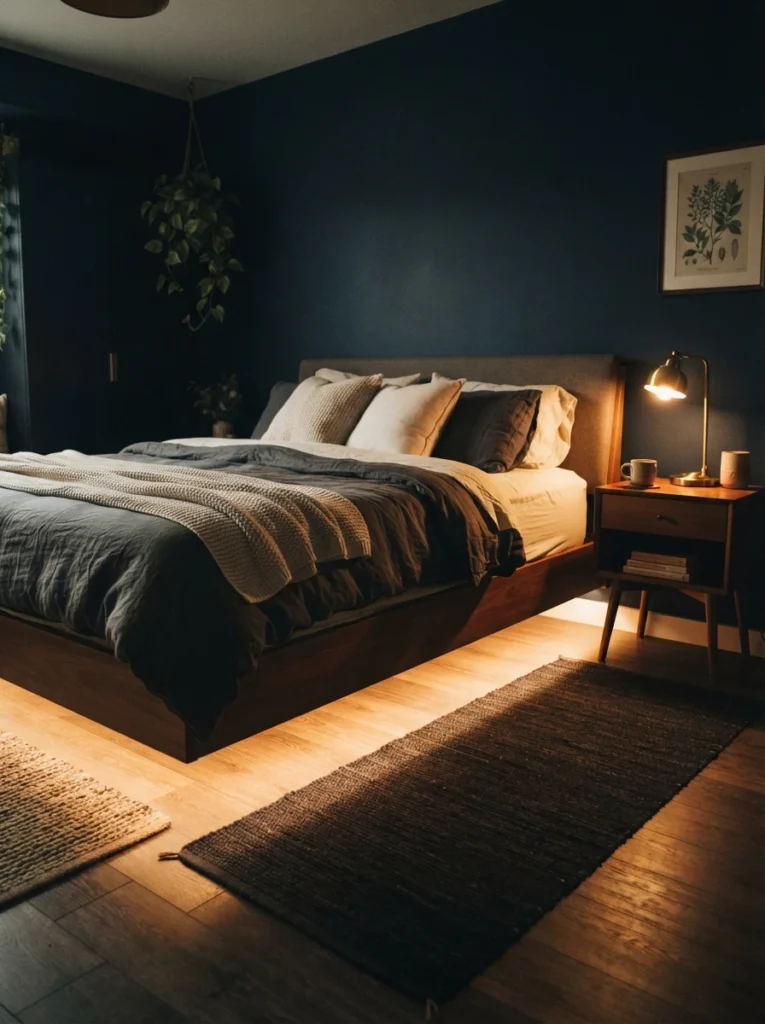
This one solves two problems at once. It gives you a soft, low glow for nighttime navigation so you’re not blinding yourself with a phone flashlight at 2am, and it makes the whole bed look like it’s floating, which is a surprisingly big deal in a small room. <cite index=”19-1″>Under-bed LED strips illuminate the floor space around the bed, making it easier to move around the room without switching on a brighter light.</cite>
Stick to warm white strips (2700K to 3000K) instead of the cool blue-white ones. Warm strips read cozy, cool ones read like a hospital hallway, and in a small space that difference is very noticeable.
5. Use Uplighting to Bounce Light Off the Ceiling
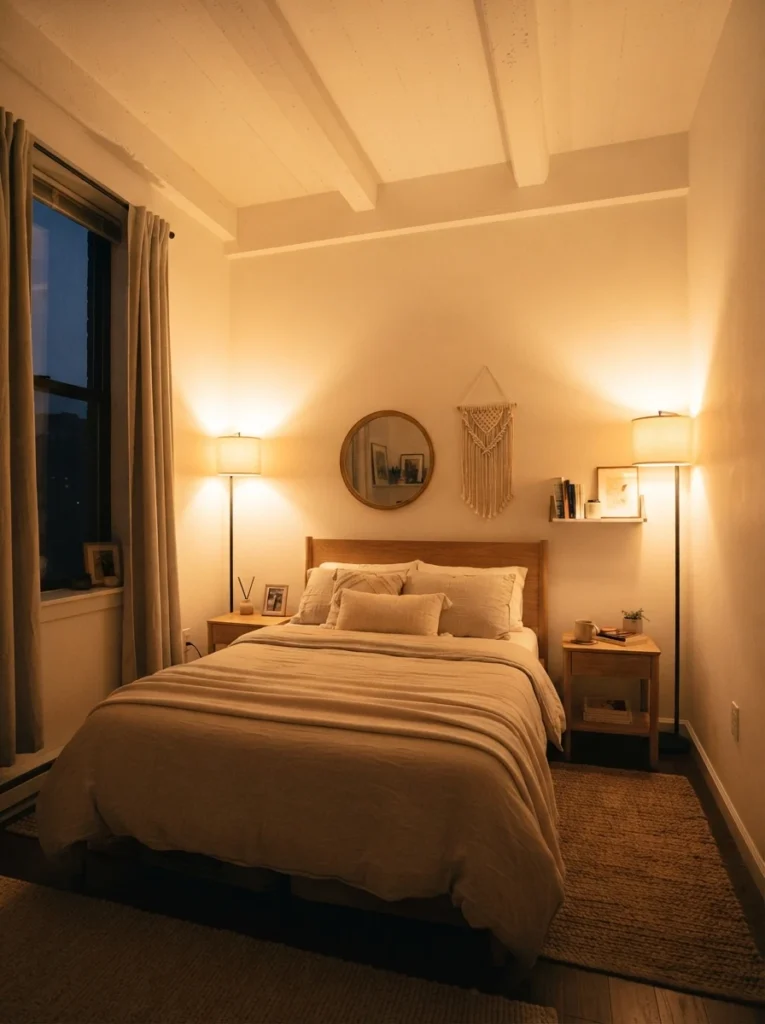
Here’s a trick a lot of people miss: light doesn’t have to come from the ceiling to look like it’s coming from the ceiling. <cite index=”20-1″>Positioning an upward-pointing light fixture at two ends of the room, evenly spaced, lets the light reflect off the ceiling itself, mimicking the effect of a real ceiling light and making the room feel taller.</cite>
A pair of uplighting floor lamps or wall-mounted uplights on opposite sides of the room does this well. The trick works best on lighter ceiling colors, so if your ceiling is painted white or off-white, you’ll get the most bounce.
6. Put a Mirror Directly Across From Your Main Light Source
This costs nothing extra if you already own a mirror, and it makes a genuinely visible difference. <cite index=”22-1″>Placing a mirror directly across from your main light source bounces that light back into the room, and adding uplighting from a floor or wall fixture pushes light toward the ceiling to make the space feel taller.</cite>
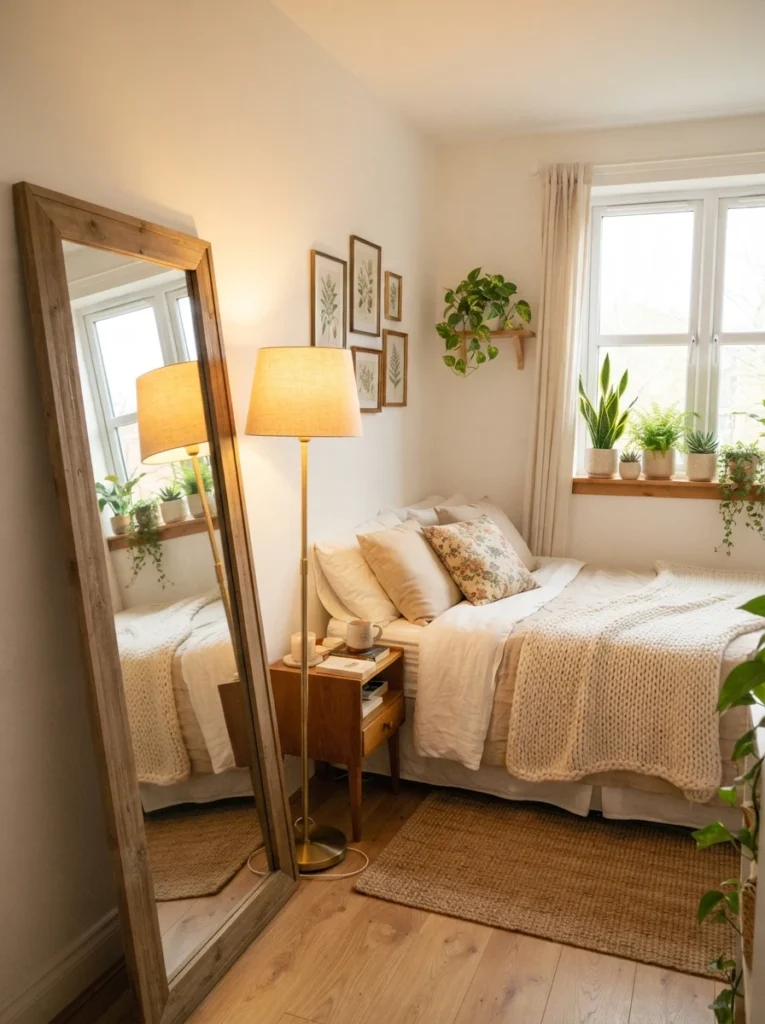
A full-length mirror leaning against the wall opposite your floor lamp does double duty: it doubles your usable light and makes the room look wider than it is. Two wins from one object you probably already have.
7. Try a Backlit Headboard or Wall Panel
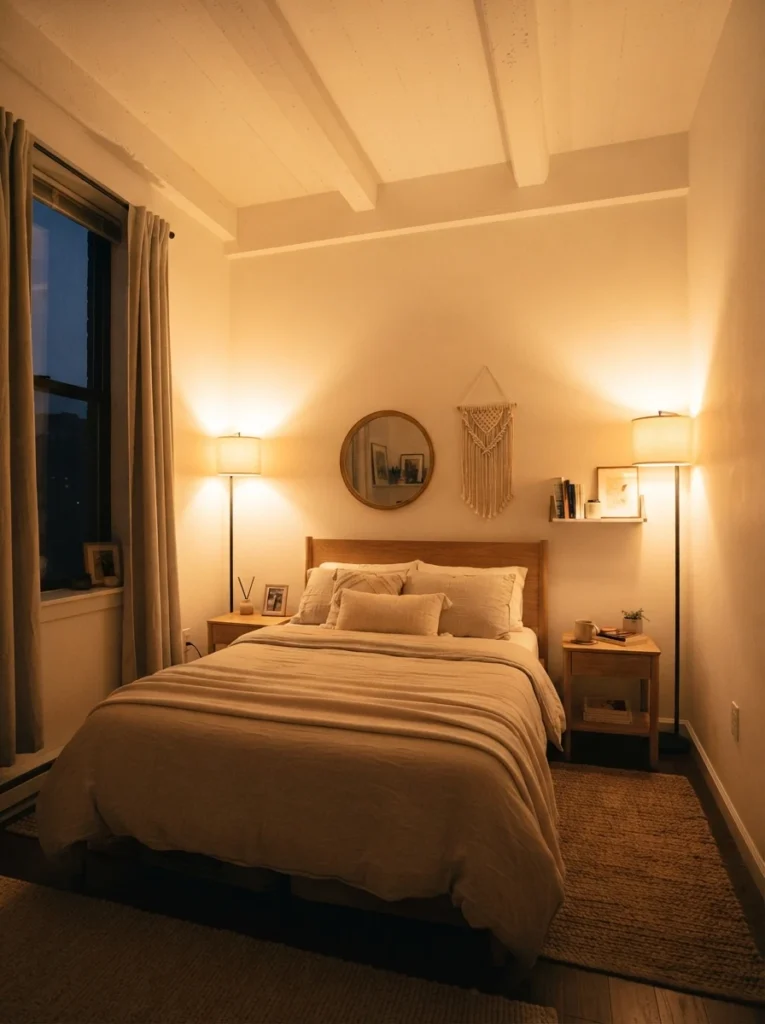
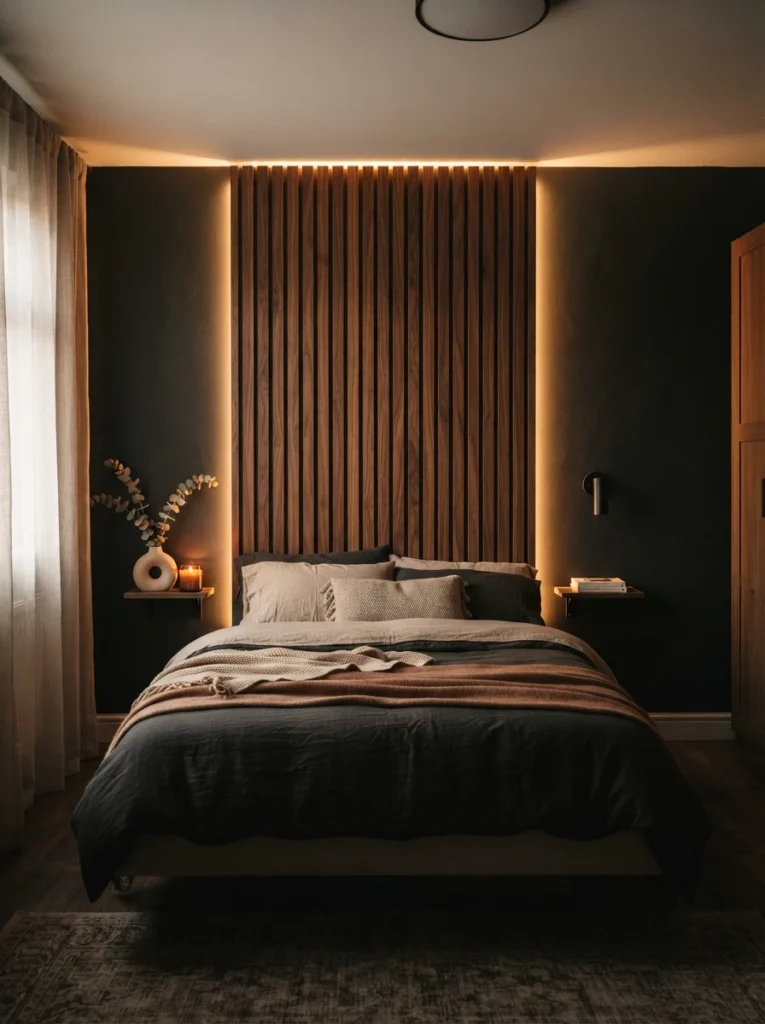
This one leans more design-forward, but it’s become a genuine Pinterest favorite because it doubles as both lighting and a statement wall. <cite index=”19-1″>Backlit panels or art installations behind the bed can act as a striking focal point while elevating the ambiance of the whole room.</cite>
You can DIY this with an adhesive LED strip run along the back edge of a headboard or a piece of wall paneling, hidden so you only see the glow and not the light source itself. It reads expensive, but it’s one of the cheaper projects on this list.
8. Add a Salt Lamp or Ceramic Mood Light to a Dresser
Not every light source needs to be functional task lighting. A small salt lamp or textured ceramic lamp on your dresser adds a warm, low-level glow that fills in the gaps your other fixtures miss. <cite index=”19-1″>Salt lamps and similar mood lighting options emit a soft, warm glow that promotes a sense of calmness, which works well for a relaxing sleep environment.</cite>
Keep it plugged in and left on low in the evening as your wind-down light instead of your bright floor lamp. It’s a small addition, but it’s the kind of detail that makes a room feel finished rather than just lit.
9. Put Your Floor Lamp on a Smart Plug
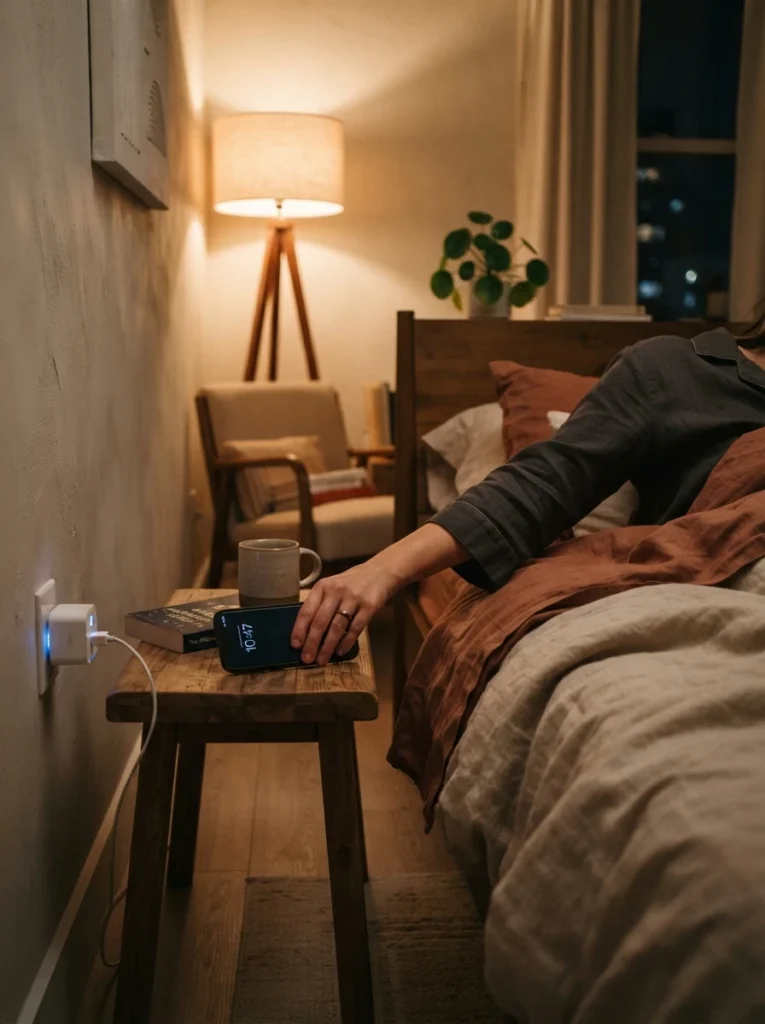
The last piece of the puzzle is convenience. Without a wall switch controlling an overhead light, you’re stuck getting up to turn lamps on and off manually, which gets old fast. A smart plug fixes that instantly, letting you control your main floor lamp by voice or app from bed.
It’s a small five-dollar fix that makes the whole no-overhead-light setup feel intentional instead of like a workaround. Once you can say “turn on bedroom light” from under the covers, you stop noticing there was ever a problem to begin with.
A room with no overhead light isn’t a design flaw you have to live with. It’s actually an excuse to build lighting that’s warmer and more layered than a single bright bulb in the ceiling ever would’ve given you. Start with the floor lamp, add sconces where you’d normally look up for light, and let the smaller pieces like mirrors and mood lamps fill in the rest.