
13 Small Bedroom Furniture Ideas That Reduce Clutter
TL;DR
Small bedrooms rarely feel messy because people own too much. Most feel cluttered because furniture fails to support real daily life properly. Clothes pile onto chairs, chargers spread across surfaces, and random storage bins slowly take over the room because there is nowhere intentional for everyday mess to go. The best small bedroom furniture ideas reduce clutter by quietly hiding chaos, improving room flow, and making organization easier to maintain realistically.
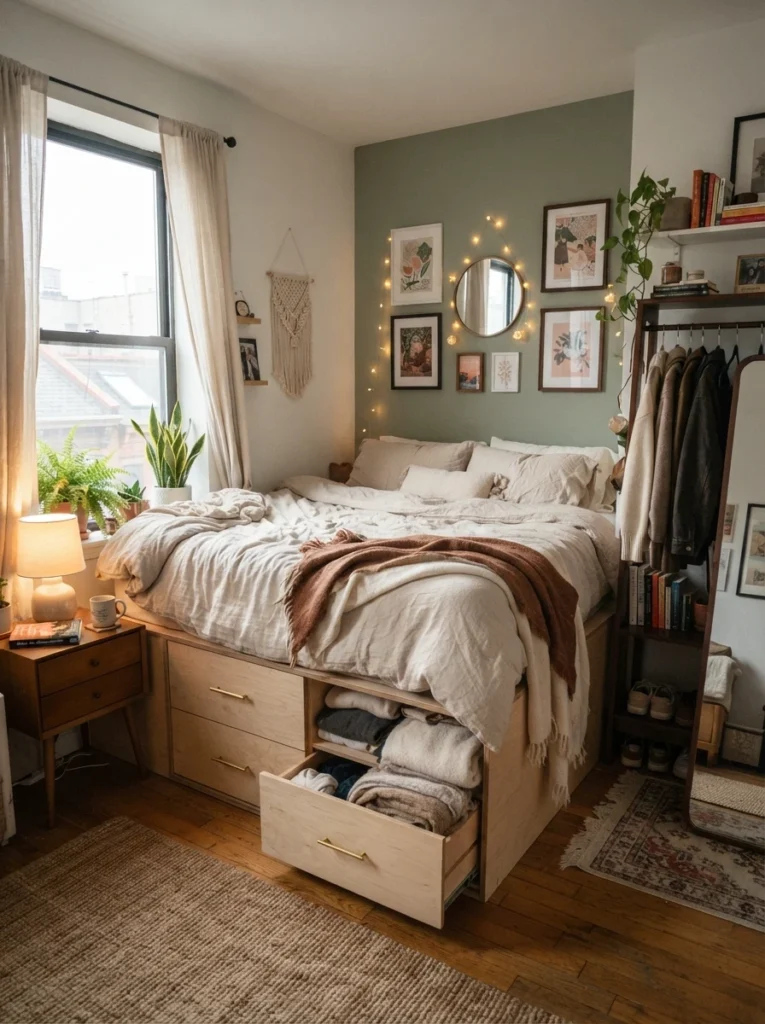
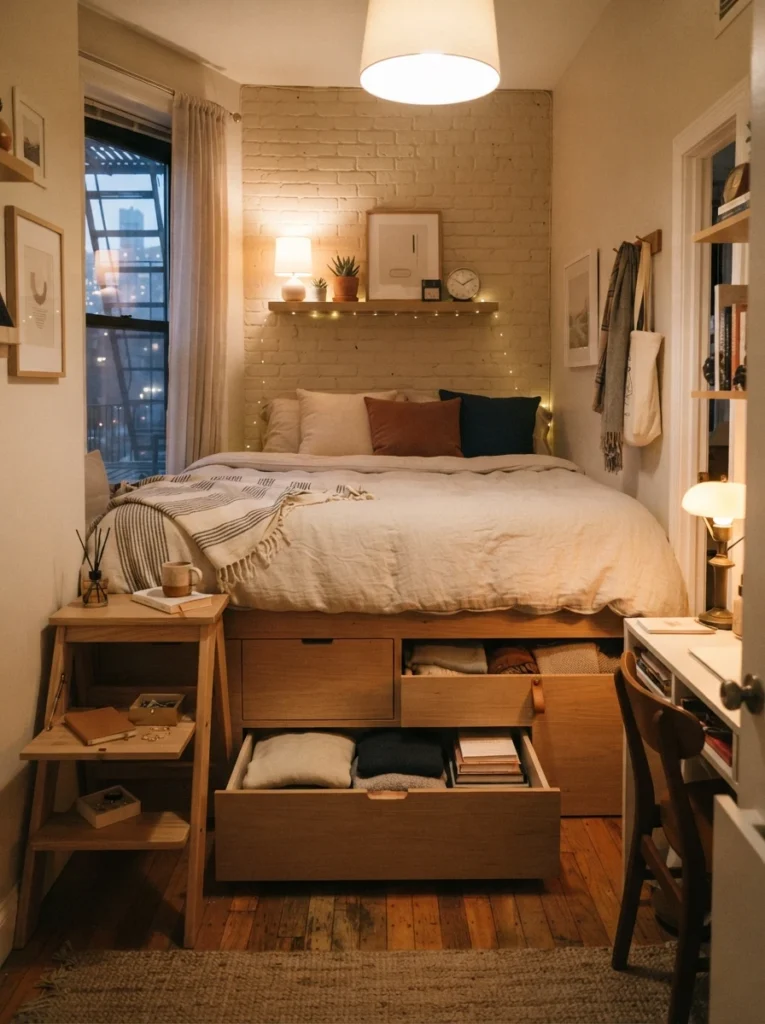
1. Choose a Bed With Built-In Storage Drawers
In tiny bedrooms, the bed already dominates the room visually and physically. Using that space for hidden storage instantly reduces the need for extra cabinets, random bins, and overcrowded closets.
Storage drawers underneath the bed work especially well for seasonal clothing, extra bedding, and medium-use items that still need easy access. Hidden storage helps rooms feel calmer because fewer objects stay visible constantly.
Good furniture quietly absorbs clutter instead of adding more visual weight.
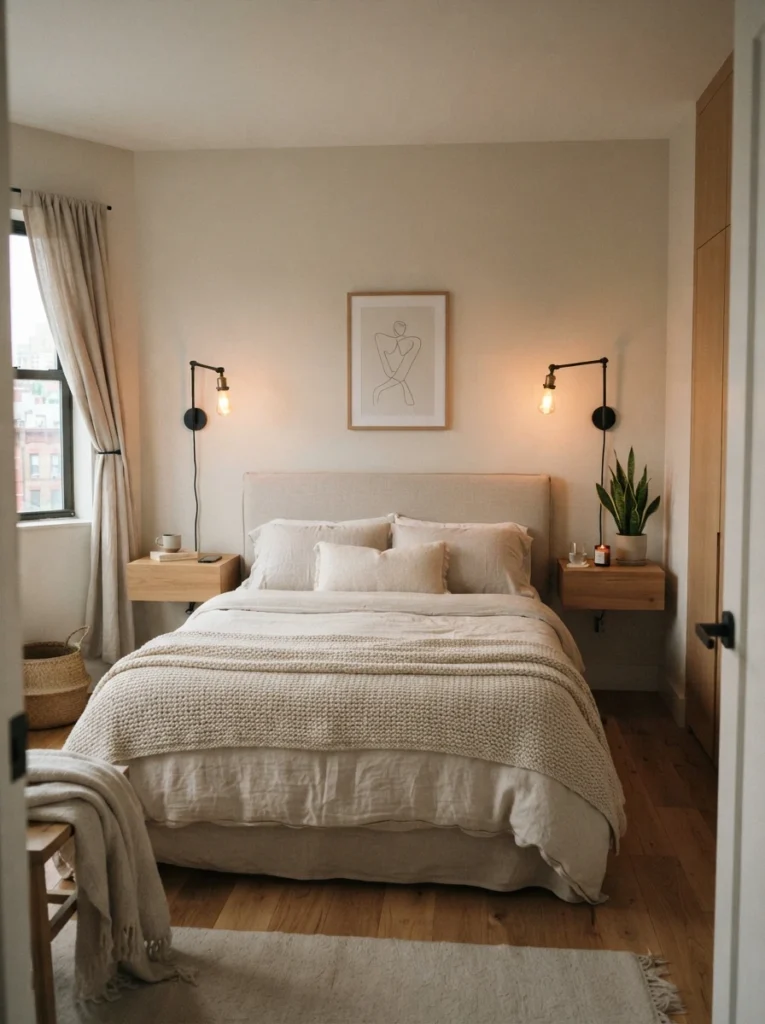
2. Use Floating Nightstands Instead of Bulky Tables
Traditional nightstands often collect clutter because they become catch-all surfaces for random objects. Floating nightstands visually reduce heaviness while encouraging simpler organization naturally.
Because the floor remains visible underneath, tiny bedrooms also feel more open emotionally. Pairing them with wall sconces instead of table lamps keeps surfaces cleaner and movement smoother around the bed.
Less furniture touching the floor creates visual relief.
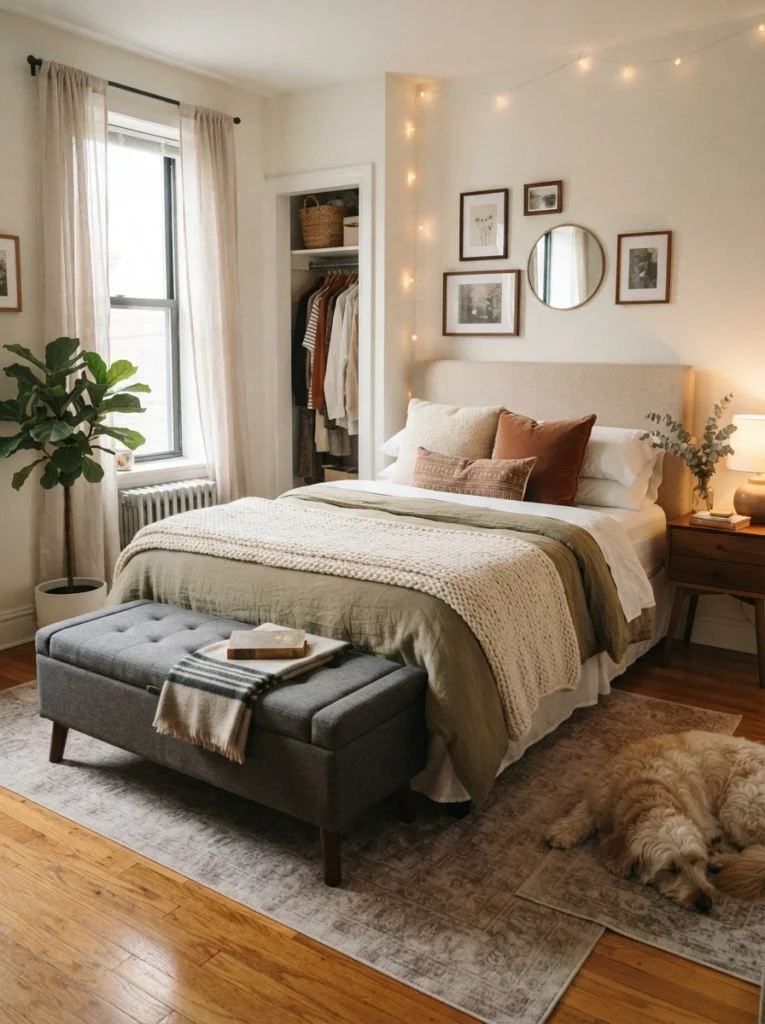
3. Add a Storage Bench at the Foot of the Bed
A storage bench quietly solves multiple clutter problems at once. It creates hidden space for blankets, extra pillows, seasonal clothing, or miscellaneous bedroom items while also making the room feel more complete visually.
Tiny bedrooms benefit most from furniture that combines function without increasing chaos. Soft upholstered benches work especially well because they add warmth instead of making the room feel overly practical.
Storage should still feel cozy.
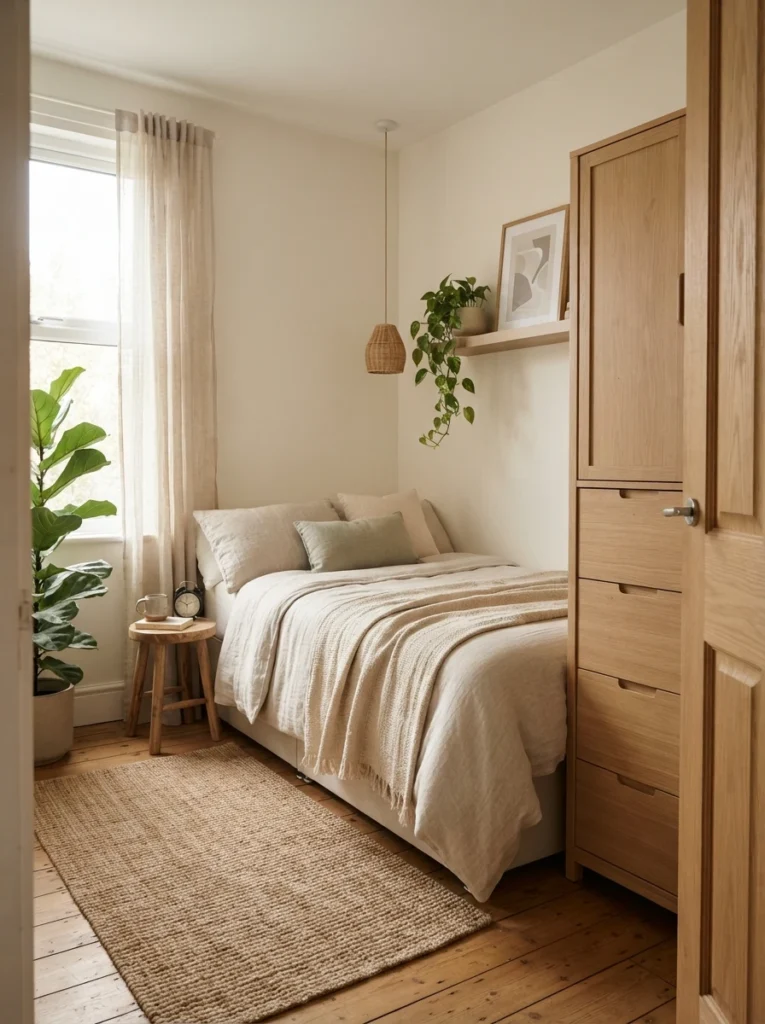
4. Use Vertical Storage Instead of Wide Furniture
Wide dressers often consume too much floor space in compact bedrooms, making movement feel tighter and more stressful daily. Tall slim storage units usually reduce clutter more effectively because they use upward space instead of blocking horizontal flow.
Vertical furniture also helps tiny bedrooms feel taller psychologically. Better storage often comes from smarter proportions rather than simply adding more furniture pieces.
Open floor space creates emotional calm.
5. Choose Furniture With Hidden Compartments
Tiny bedrooms emotionally improve when clutter disappears visually instead of constantly staying exposed. Beds with lift-up storage, ottomans with hidden compartments, and side tables with concealed drawers reduce visual noise significantly.
This helps rooms feel calmer because fewer everyday objects compete for attention. Hidden storage quietly supports organization without making the room feel storage-heavy.
Invisible function often feels more luxurious too.
6. Replace Open Shelving With Closed Storage
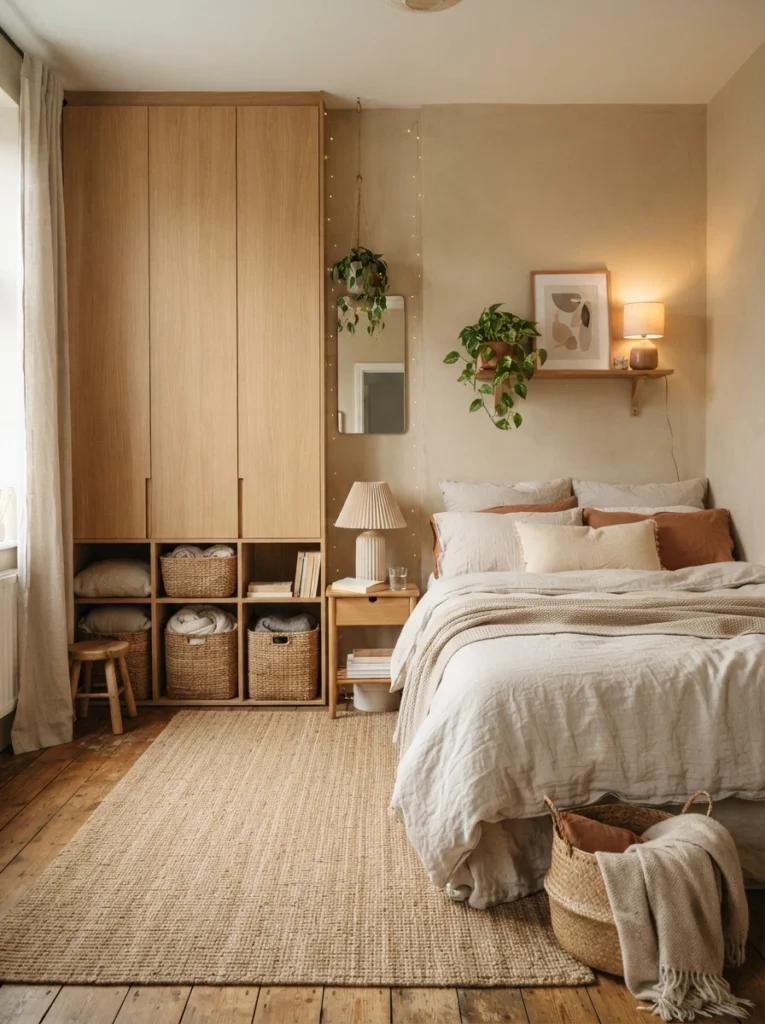
Open shelving often starts looking chaotic because real life rarely stays perfectly styled. Books, skincare products, chargers, random containers, and miscellaneous clutter slowly build visual stress over time.
Closed cabinets or woven baskets reduce this pressure because clutter visually disappears. Tiny bedrooms emotionally relax when the eye processes fewer exposed objects constantly.
Calm rooms usually contain less visible information.
7. Use Slim Desks That Blend Into the Room
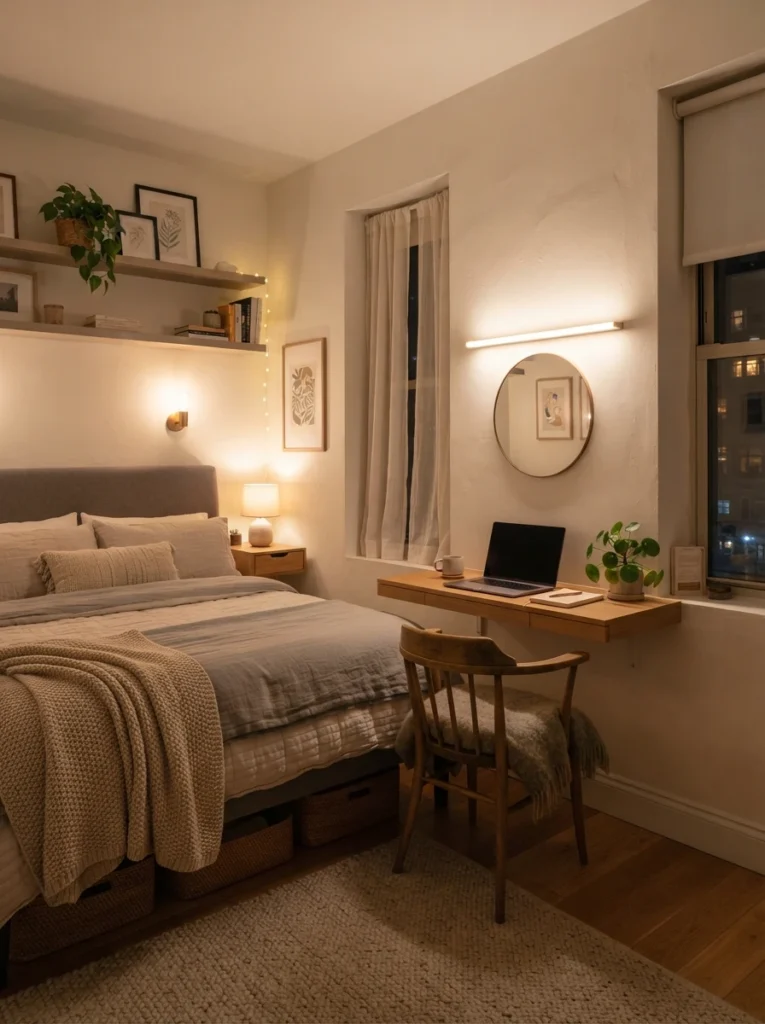
Large office desks often dominate small bedrooms visually and create additional clutter zones automatically. Slim desks or floating workstations reduce visual heaviness while still supporting productivity.
This matters especially in apartments where bedrooms double as offices. Cleaner work setups help rooms emotionally transition back into restful spaces after work hours end.
Furniture should support calmness too.
8. Add Wall Hooks for Everyday Clothing
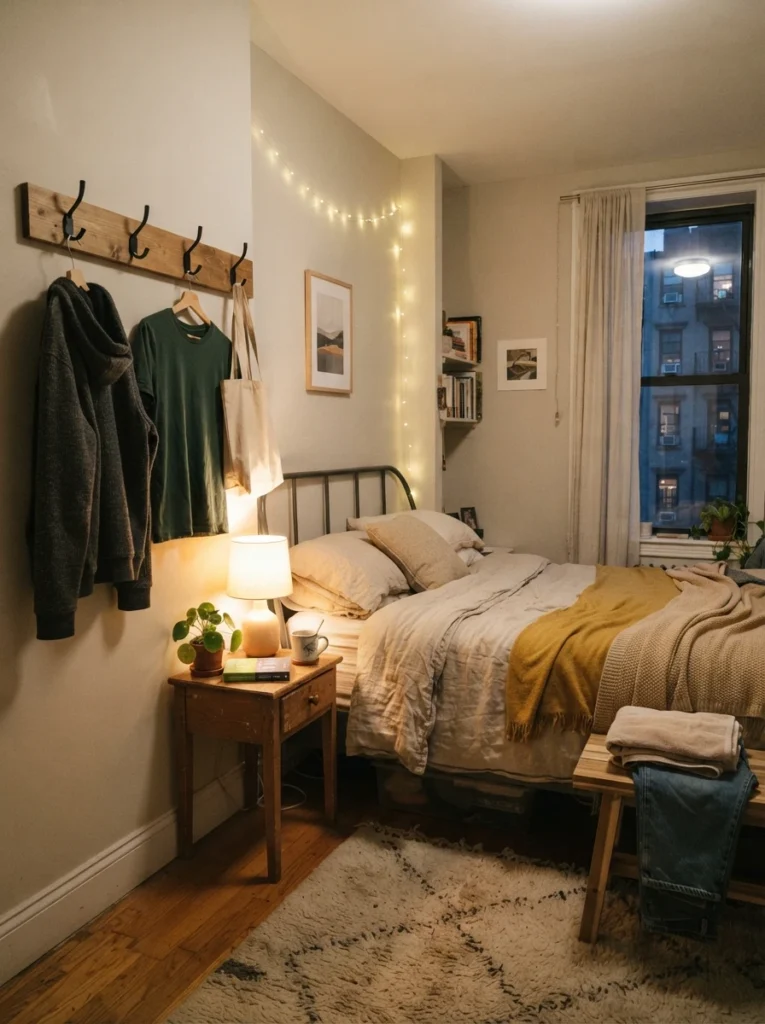
One hidden clutter problem in small bedrooms is transitional clothing. Hoodies, jackets, jeans, and bags rarely return directly to closets, so chairs slowly become storage piles.
Minimal wall hooks solve this realistically because they support actual human routines while keeping clutter visually contained. Hooks near the room entrance work especially well for daily-use items.
Controlled clutter feels far calmer than scattered clutter.
9. Choose Furniture With Open Lower Space
Furniture that sits heavily on the floor often makes tiny bedrooms feel visually crowded. Open-base furniture creates airiness because flooring and light continue moving underneath naturally.
This subtle openness reduces visual clutter emotionally even when the amount of furniture remains the same. Tiny bedrooms respond strongly to visible flooring and cleaner sightlines.
Visual breathing room matters.
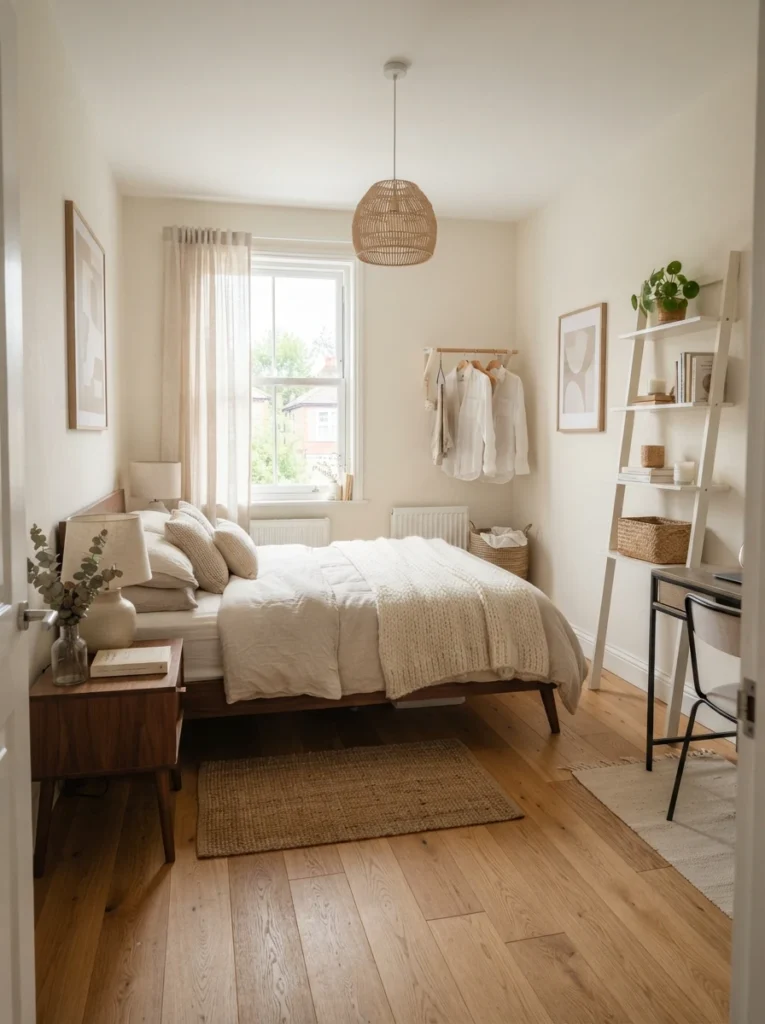
10. Use One Larger Dresser Instead of Many Small Storage Pieces
Multiple tiny storage units often create more visual clutter because every piece competes separately for attention. One well-proportioned dresser usually feels calmer and more intentional than several scattered organizers around the room.
Tiny bedrooms emotionally benefit from simpler visual structure. Fewer larger furniture pieces often create more calm than many smaller fragmented ones.
Visual unity reduces mental noise.
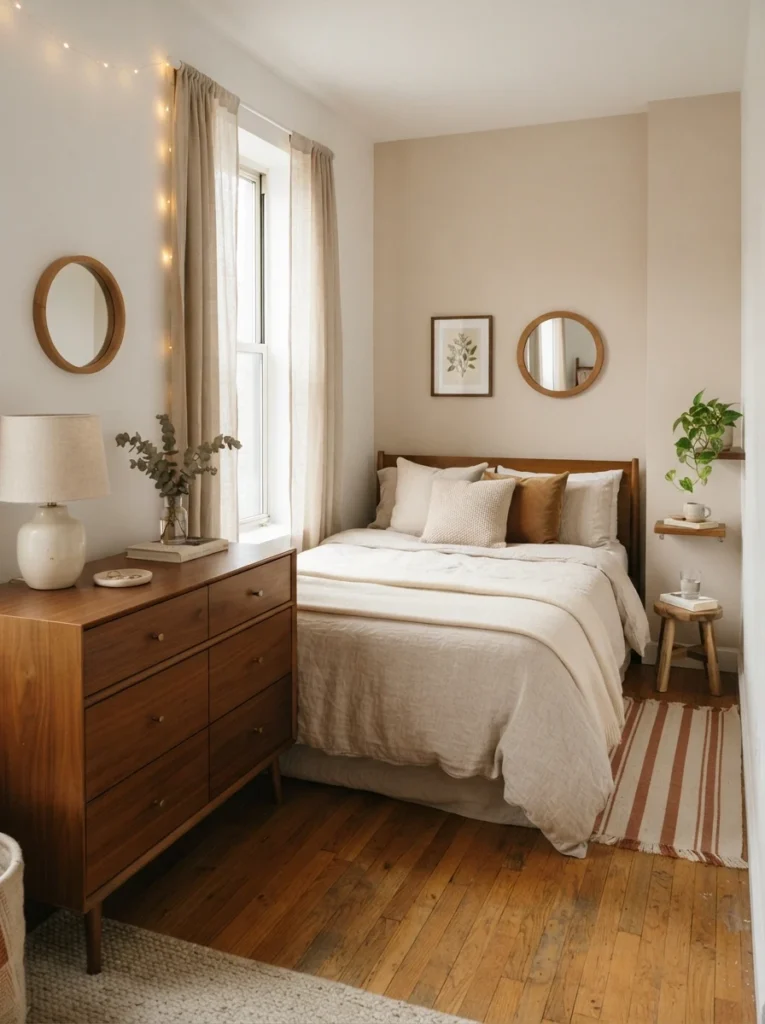
11. Add a Narrow Rolling Cart for Flexible Storage
Rolling carts work beautifully in tiny bedrooms because they create adaptable storage without permanently interrupting room flow. They can hold books, skincare, office supplies, or bedside essentials while remaining easy to reposition.
Slim carts especially help awkward apartment layouts where fixed furniture quickly creates movement problems. Flexible furniture supports changing routines naturally.
Mobility creates practicality.
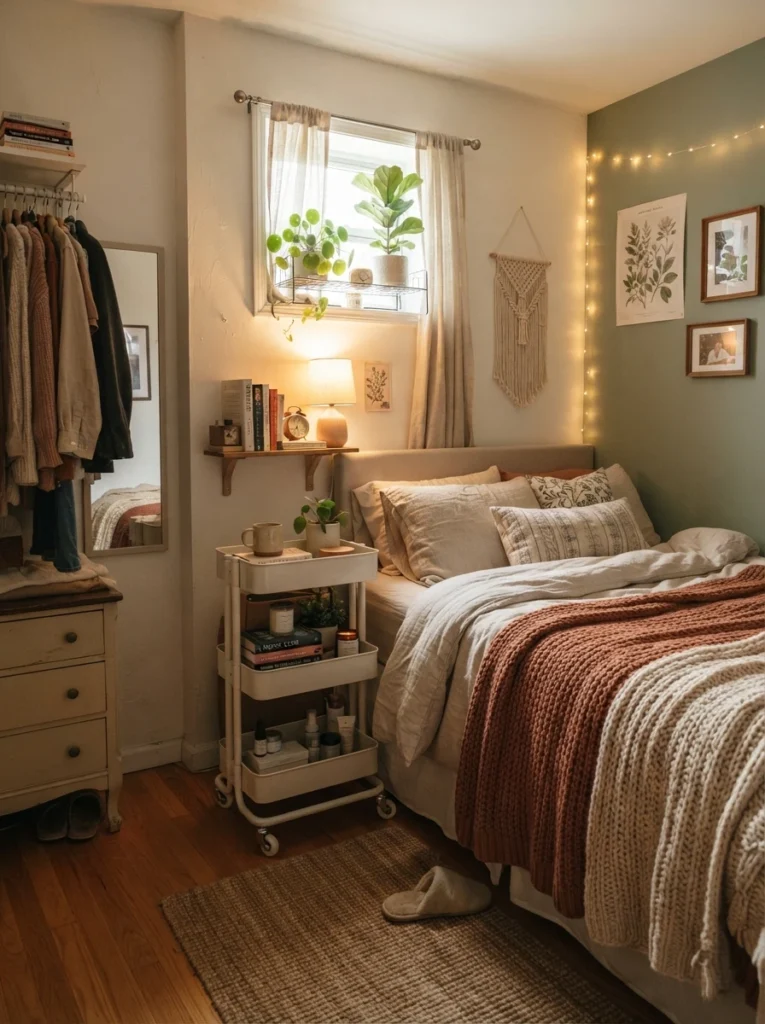
12. Keep Furniture Proportions Softer and Lighter
Heavy dark furniture often exaggerates clutter because the room starts feeling visually compressed. Slim silhouettes, lighter wood tones, and furniture with softer edges help compact bedrooms feel calmer emotionally.
This does not mean removing warmth completely. It means reducing visual heaviness so the room feels breathable instead of overloaded.
Lightness improves emotional comfort too.
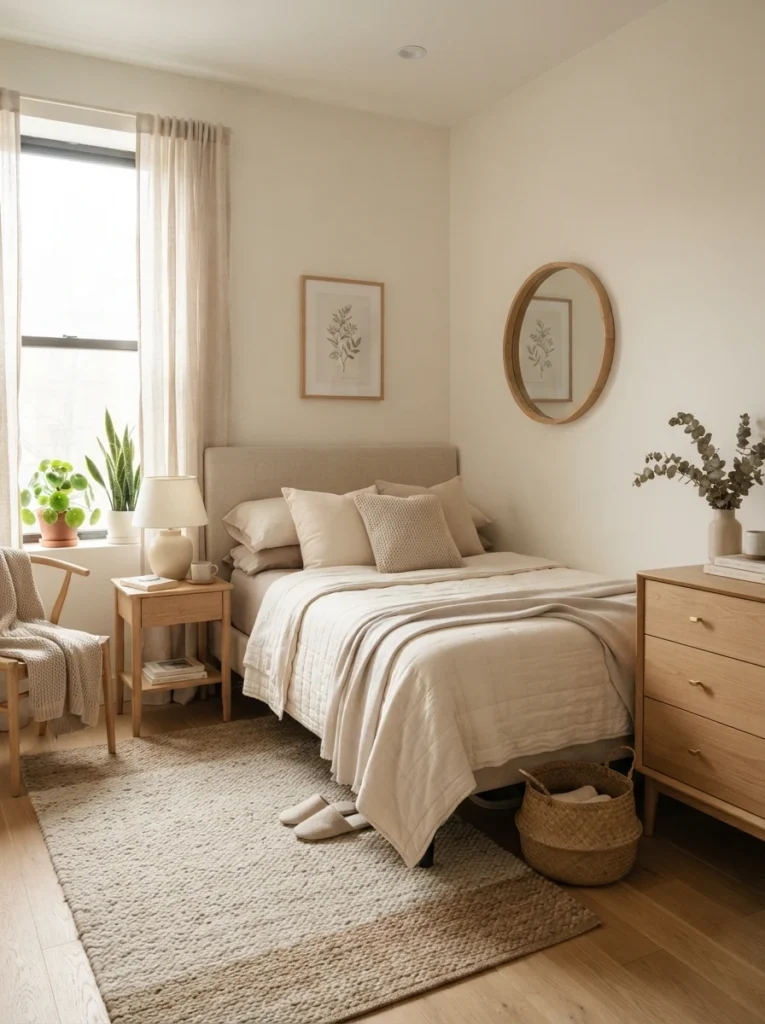
13. Design Furniture Around Real Human Behavior
The best clutter-reducing furniture supports real life instead of idealized perfection. Furniture should anticipate where bags get dropped, where laundry gathers, where devices charge, and how people naturally move through the room daily.
When furniture aligns with real behavior, organization becomes easier to maintain without constant effort. Tiny bedrooms feel calmer because the room starts working with the person instead of fighting them.
Good design quietly reduces friction.
Final Thoughts
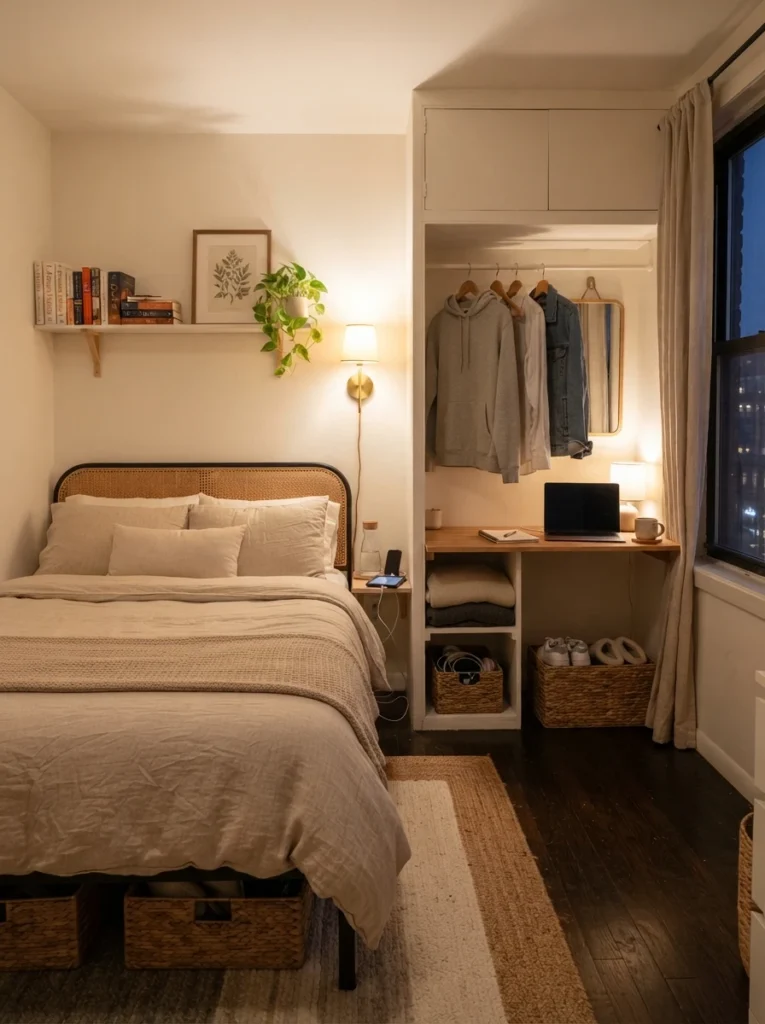
Clutter in tiny bedrooms usually builds because furniture fails to support everyday life realistically. The best furniture pieces quietly simplify routines, reduce visual overload, improve movement flow, and create hidden organization without making the room feel emotionally cold.
Small bedrooms become calmer when furniture absorbs chaos instead of adding to it. Better storage, lighter visual weight, cleaner surfaces, and smarter layouts help compact spaces feel softer, easier to maintain, and significantly less stressful to exist inside every day.
A good bedroom should not constantly remind you of unfinished mess. It should quietly make life feel easier the moment you walk inside.