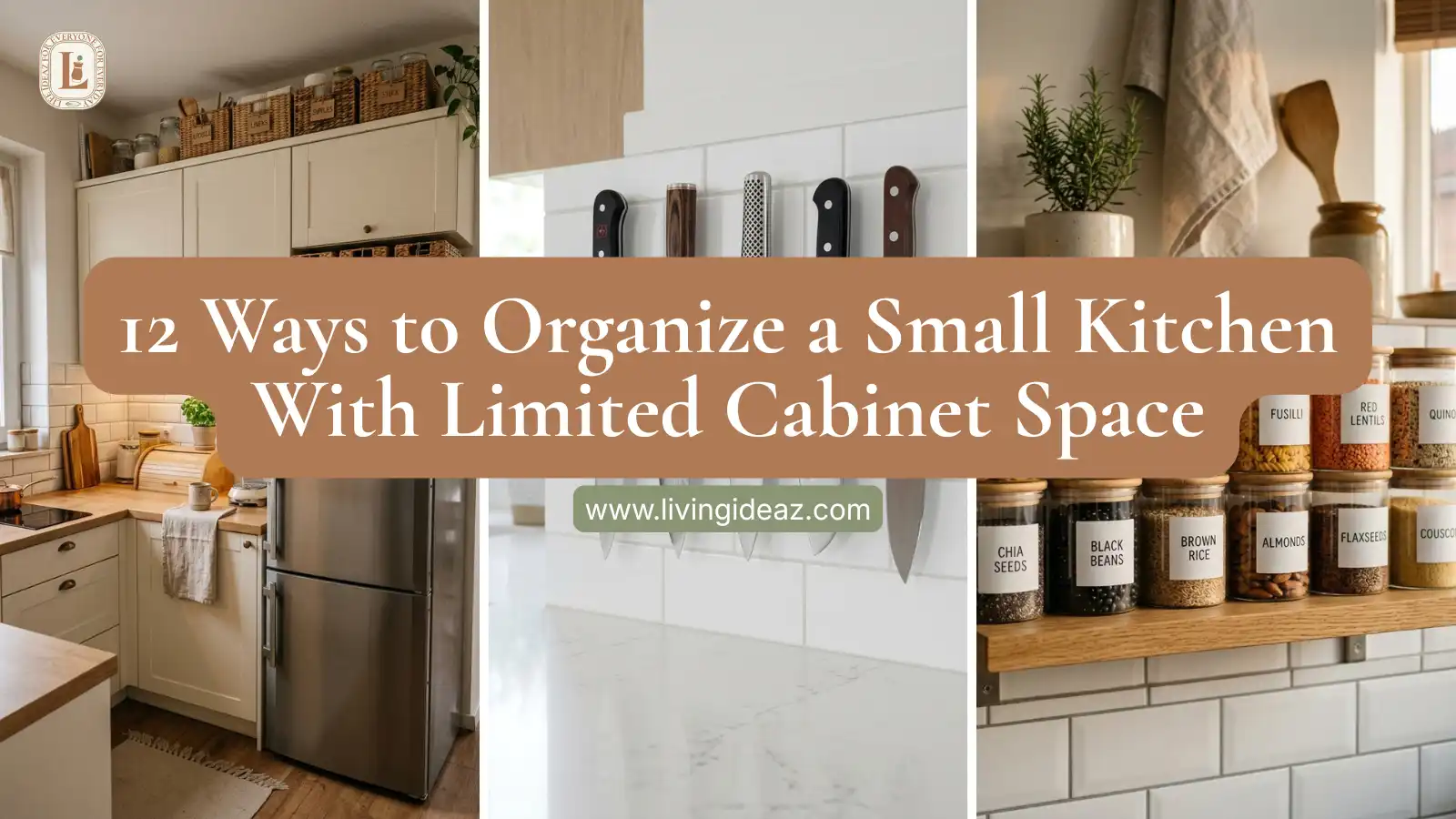
12 Ways to Organize a Small Kitchen With Limited Cabinet Space
TLDR: A small kitchen with not enough cabinet space doesn’t have to feel like a daily battle. The fix isn’t a renovation — it’s rethinking how you use what you already have. From vertical wall space to the backs of cabinet doors, there’s more storage hiding in plain sight than most people realize. These 12 practical ideas will help you reclaim your kitchen without spending a lot.
Running out of cabinet space in a small kitchen is one of the most common frustrations for apartment dwellers and small home owners alike. You clean, you reorganize, and somehow it still feels like everything is crammed in and nothing has a real home.
Here’s the thing though — the problem usually isn’t that you have too much stuff (well, sometimes it is). Most of the time, it’s that the space isn’t being used the right way.
Small kitchens have a surprising amount of untapped storage potential. The walls, the backs of doors, the insides of drawers, the space above the fridge — all of it is usable. You just need to know where to look.
These 12 ideas are practical, mostly renter-friendly, and won’t require you to gut your kitchen to make them work.
1. Start With a Serious Purge Before Buying Anything
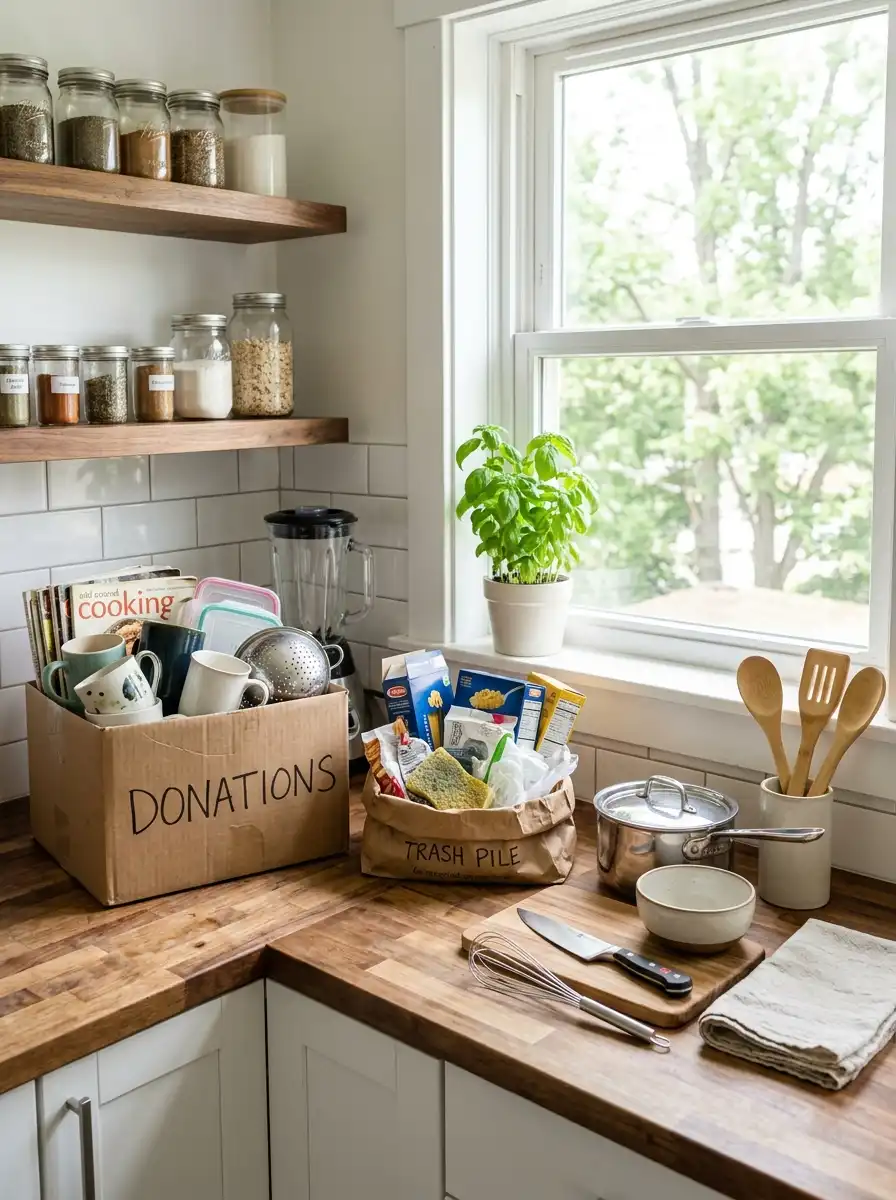
Before you add a single bin or shelf, take everything out of your cabinets and be honest about what you actually use.
That mandoline slicer you’ve used twice? The four mismatched lids with no containers? The novelty mug collection taking up a full shelf? These things are eating your storage space.
A good rule of thumb: if you haven’t touched it in six months, it probably doesn’t deserve prime cabinet real estate. Donate, toss, or relocate it. Decluttering first means you’re organizing what you truly need — not just reshuffling clutter into a tidier-looking mess.
Less stuff always beats more organizers.
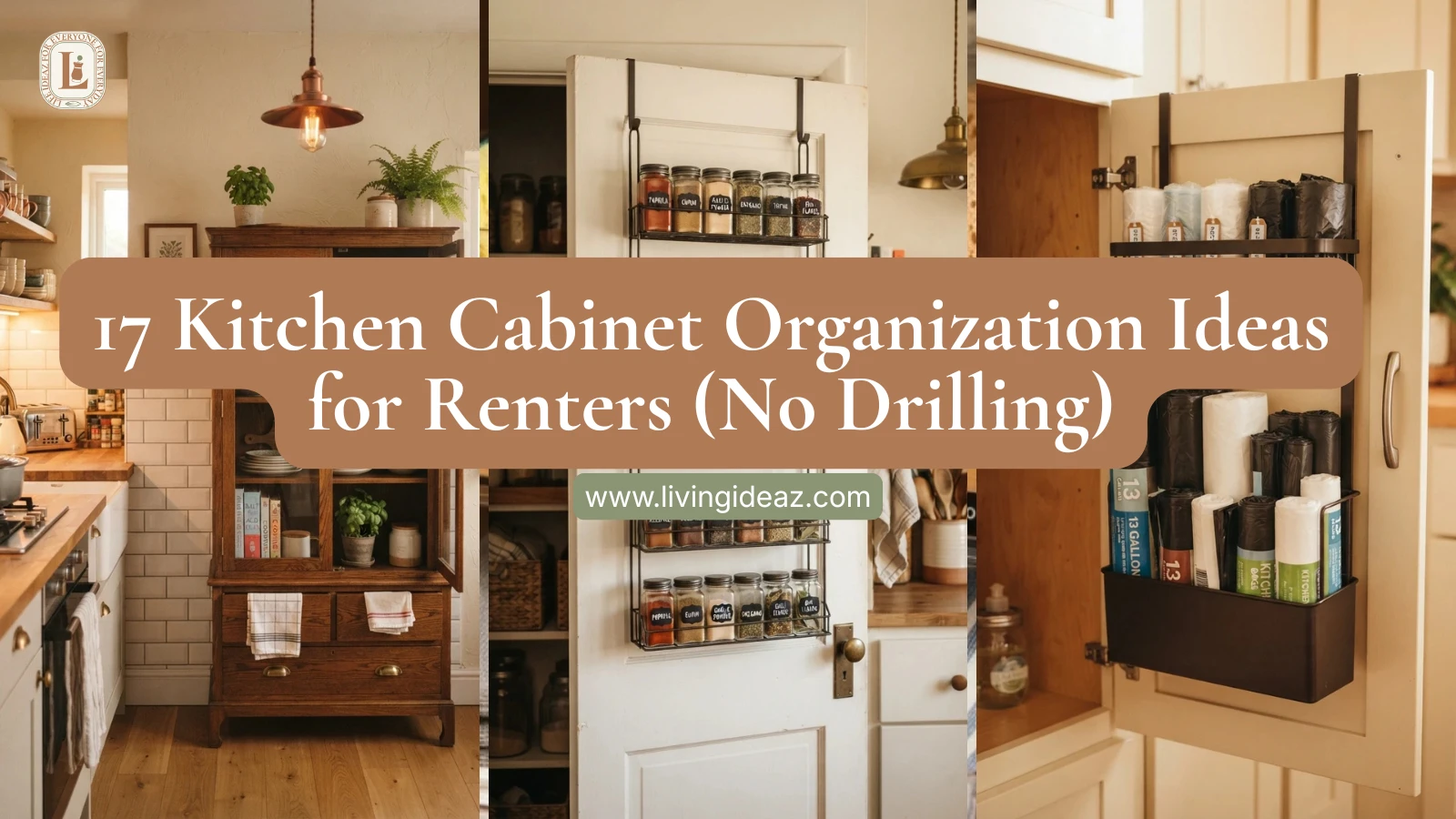
2. Use the Backs of Cabinet Doors
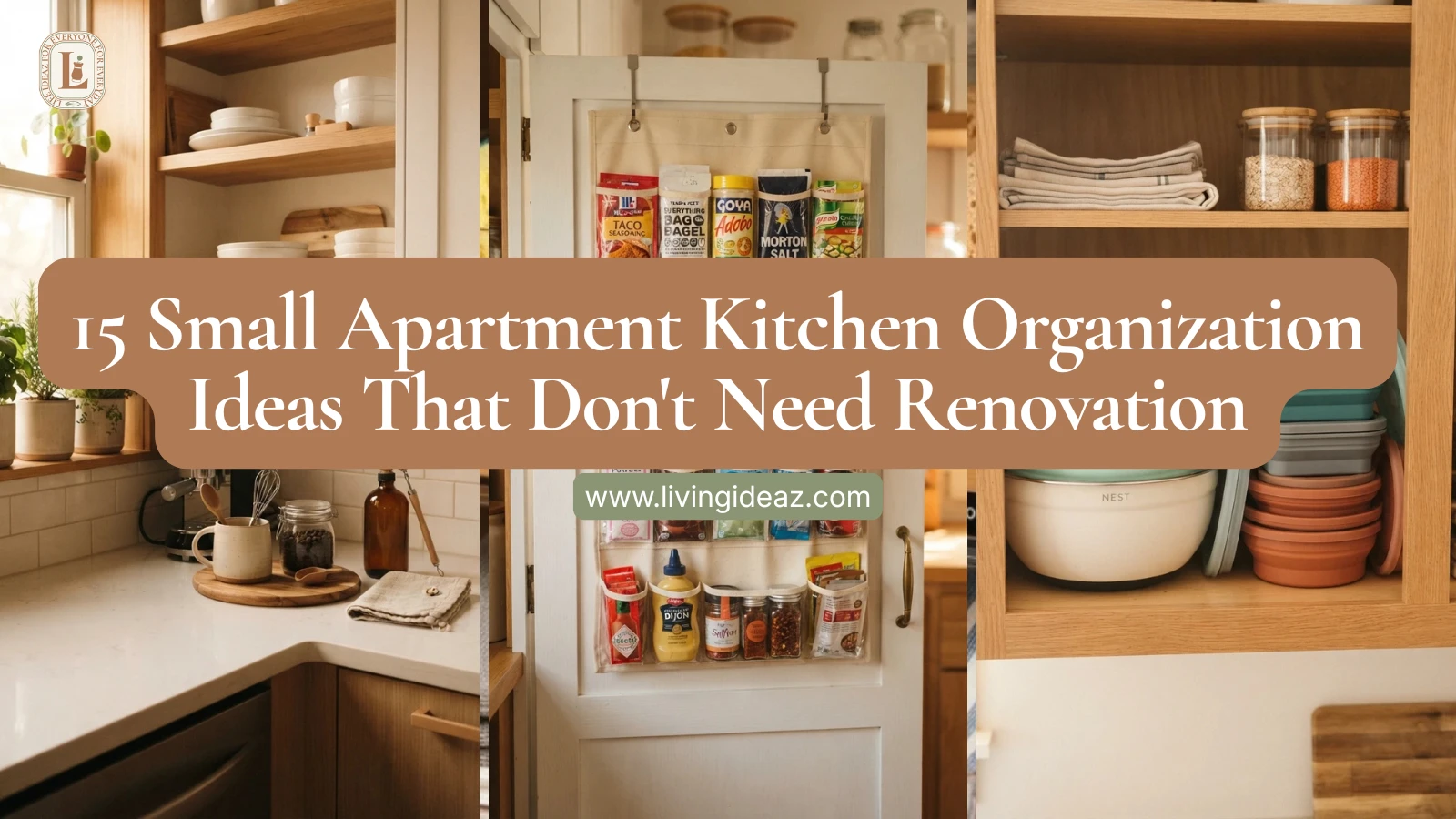
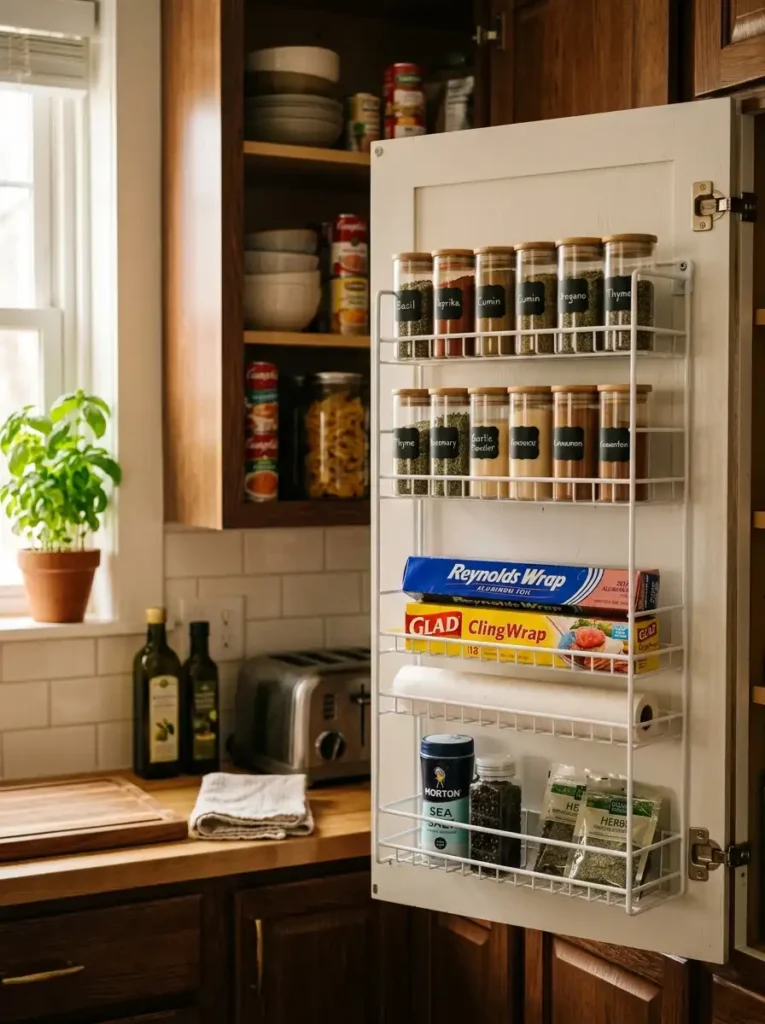
Cabinet doors are one of the most overlooked storage surfaces in any kitchen. The back of each door is essentially a free shelf you’ve never touched.
You can hang over-the-door organizers for spices, foil, plastic wrap, and cleaning supplies. Tension-mounted racks or adhesive hooks work well for renters who can’t drill. For a more permanent fix, a few screws and a wire rack can double the storage capacity of a single cabinet door instantly.
This works especially well inside the cabinet under the sink — a notoriously awkward space where a small hanging rack on the door can hold sponges, dish soap refills, and brushes.
Hidden doors hide hidden storage too.
3. Add a Second Shelf Inside Cabinets With Stackable Risers
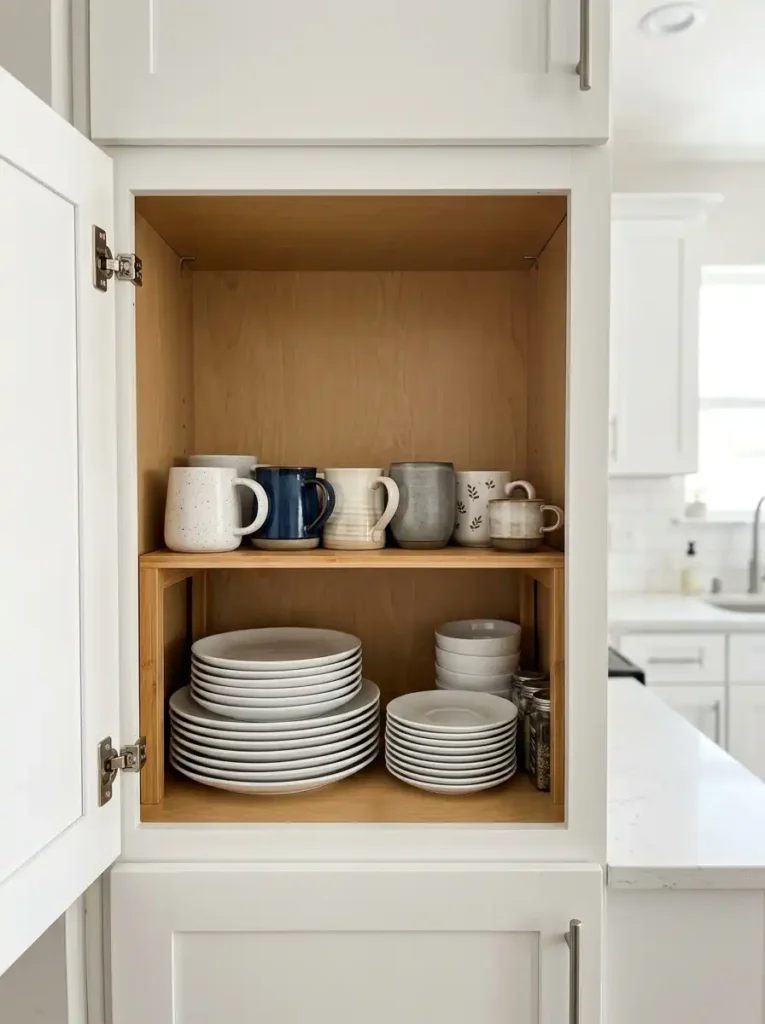
Most kitchen cabinets have one fixed shelf, which means you’re either stacking things precariously or wasting the vertical space between shelves entirely.
Stackable shelf risers or under-shelf baskets solve this without any tools. You slide a basket under an existing shelf and suddenly you have a second layer of storage beneath it. These are great for storing plates upright, holding mugs, or keeping spice jars accessible without digging through rows of bottles.
Cabinet risers work the same way inside — place one on the shelf to create a tiered setup where shorter items sit on top and taller ones stand next to it. Most people are shocked by how much space this opens up.
Two levels always beat one.
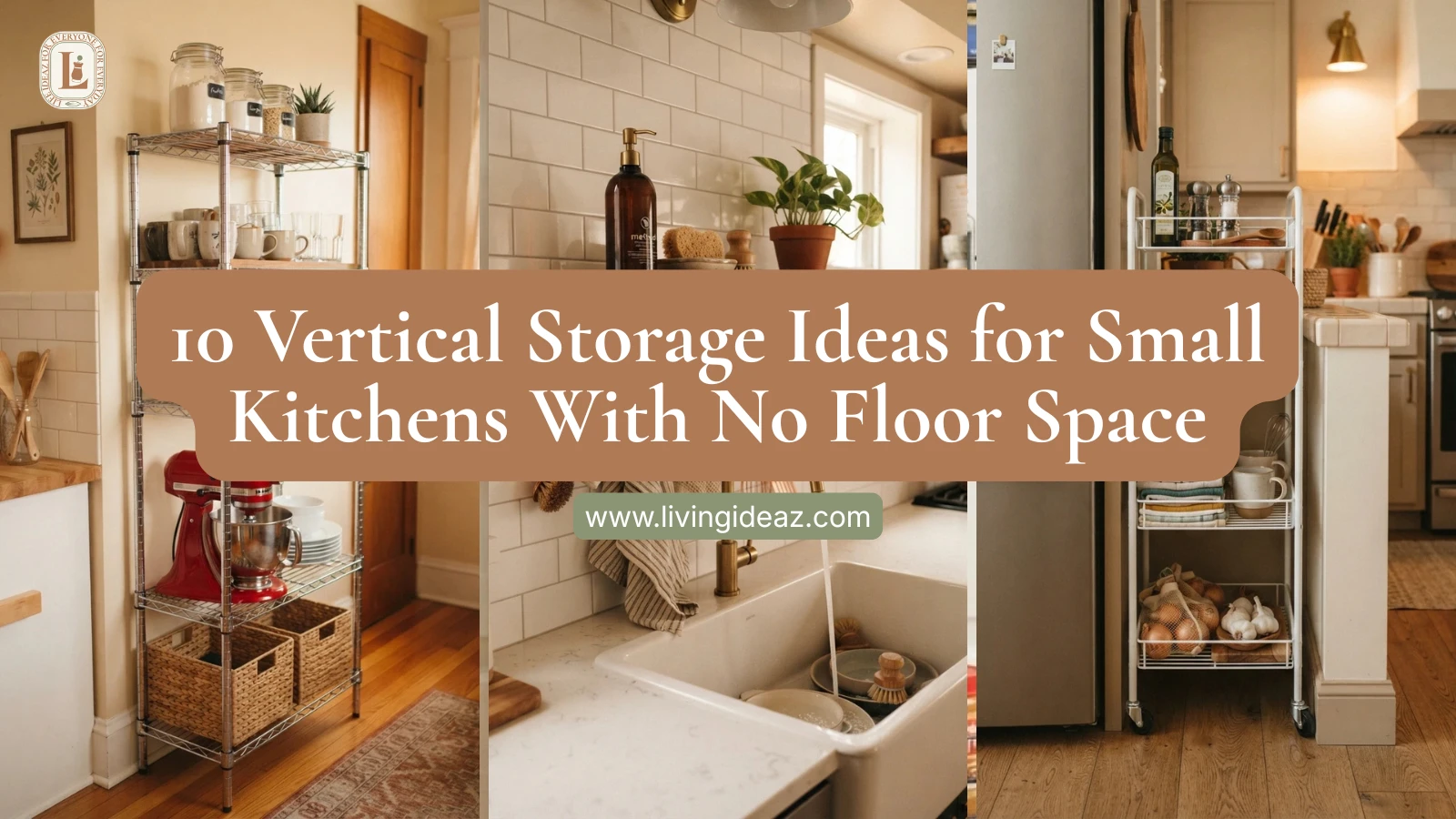
4. Go Vertical With Floating Shelves
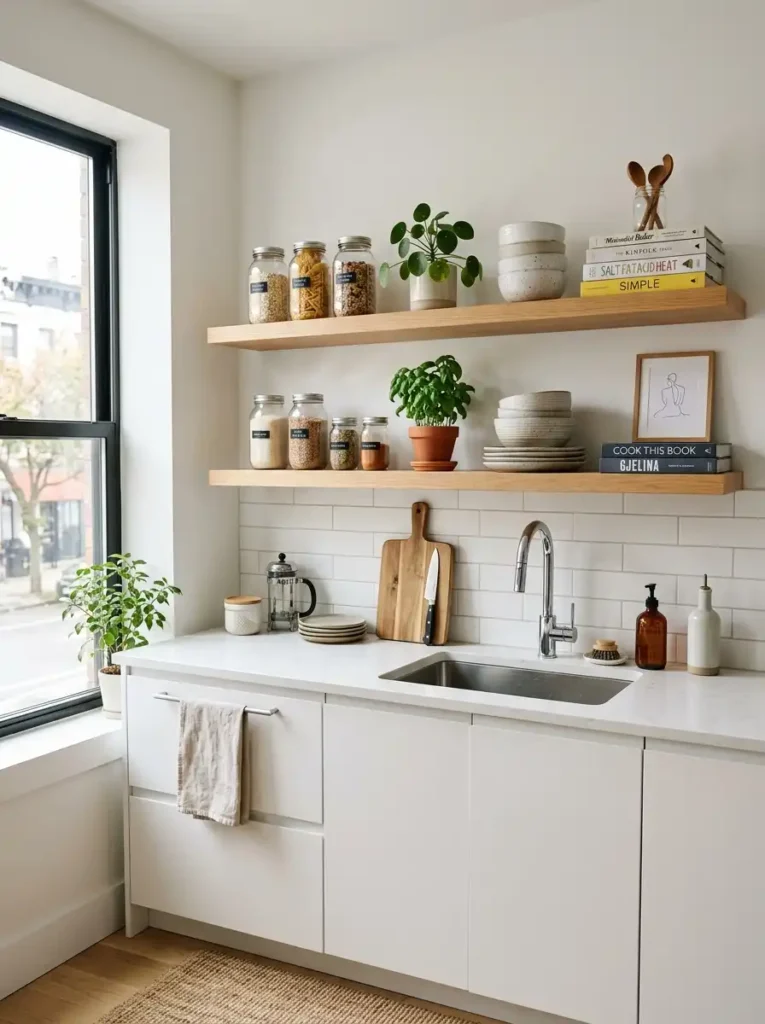
When you’re out of cabinet space, your walls are the next best option. Floating shelves above the counter, above the fridge, or along a blank kitchen wall add real storage without consuming a single inch of floor space.
According to professional organizers, walls are one of the most underused storage surfaces in small kitchens. You can display glassware, store cookbooks, line up mason jars for dry goods, or keep small appliances that don’t fit in cabinets.
The visual benefit is real too. Open shelving makes kitchens feel bigger rather than more enclosed, which is exactly what a small kitchen needs.
Walls work harder than most people let them.
5. Use Tension Rods to Create Dividers Inside Cabinets and Drawers
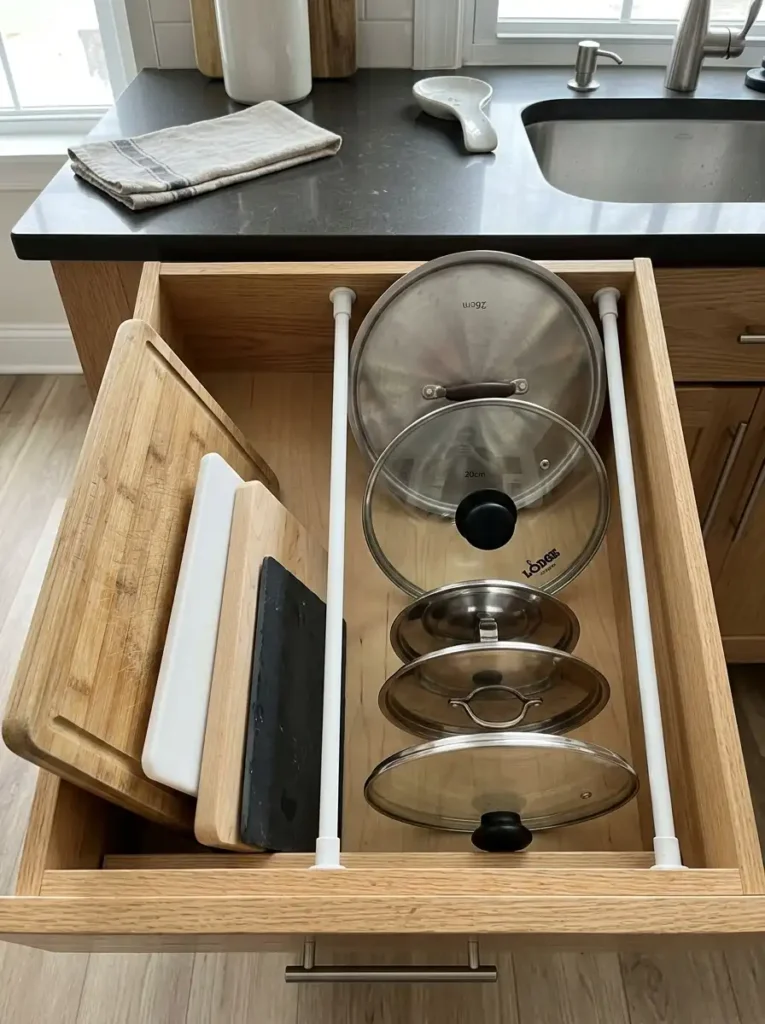
Tension rods aren’t just for curtains. Inside a deep cabinet or large drawer, they work as instant dividers that keep cutting boards, baking sheets, pan lids, and flat trays standing upright instead of stacked in a sliding pile.
The beauty of this is cost. A tension rod costs almost nothing, takes five seconds to install, and requires zero tools or drilling. It’s one of the most budget-friendly organization hacks that professional organizers still recommend regularly.
Inside a drawer, tension rods can also section off zones for different utensil categories, keeping things from migrating into one big jumbled pile every time the drawer opens.
Cheap solutions often work better than expensive ones.
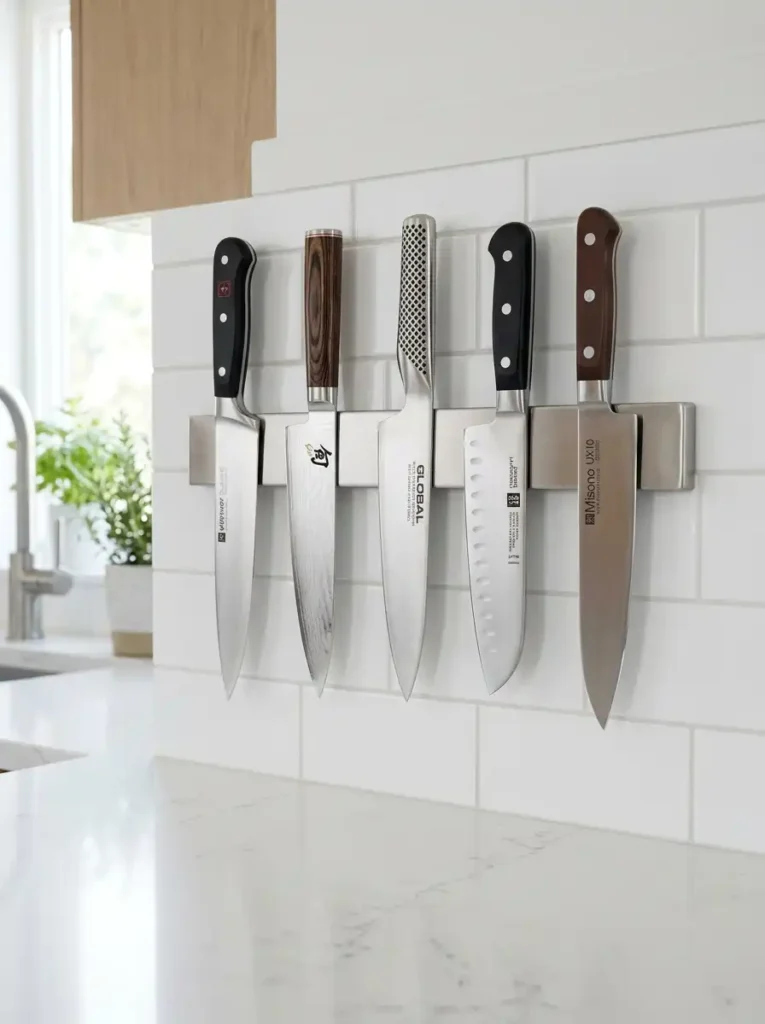
6. Hang a Magnetic Knife Strip Instead of Using a Knife Block
Knife blocks are bulky. On a small kitchen counter, they consume a surprising amount of surface space for a single-purpose item.
A magnetic knife strip mounted on the wall or backsplash keeps your knives accessible, safely stored, and completely off the counter. It takes up zero counter real estate, keeps blades sharper longer since they’re not rubbing against a wooden block, and honestly looks much cleaner visually.
Most magnetic strips mount with just two screws and hold five to seven knives comfortably. For renters, removable adhesive mounting options also exist and work well for lighter knife sets.
Counter space is too valuable for blocks.
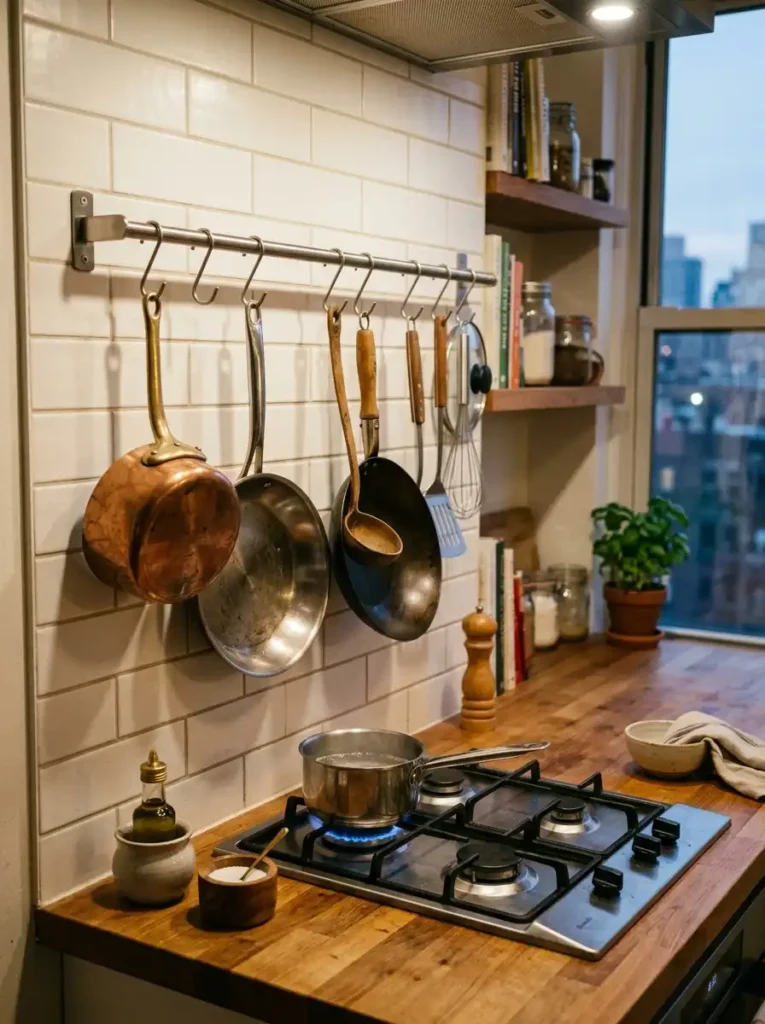
7. Mount a Wall Rail System for Utensils and Cookware
A wall-mounted rail with S-hooks above or beside the stove keeps your most-used pots, pans, ladles, and spatulas off the counter and out of cramped drawers.
This is especially practical in small kitchens where drawer space is limited and cabinet space is already maxed out. When cooking tools have a visible home on the wall, they’re easier to grab, easier to put back, and take zero cabinet space.
Rails also look intentional and styled rather than cluttered, which matters in a kitchen you spend real time in every day.
The stove wall is prime real estate.
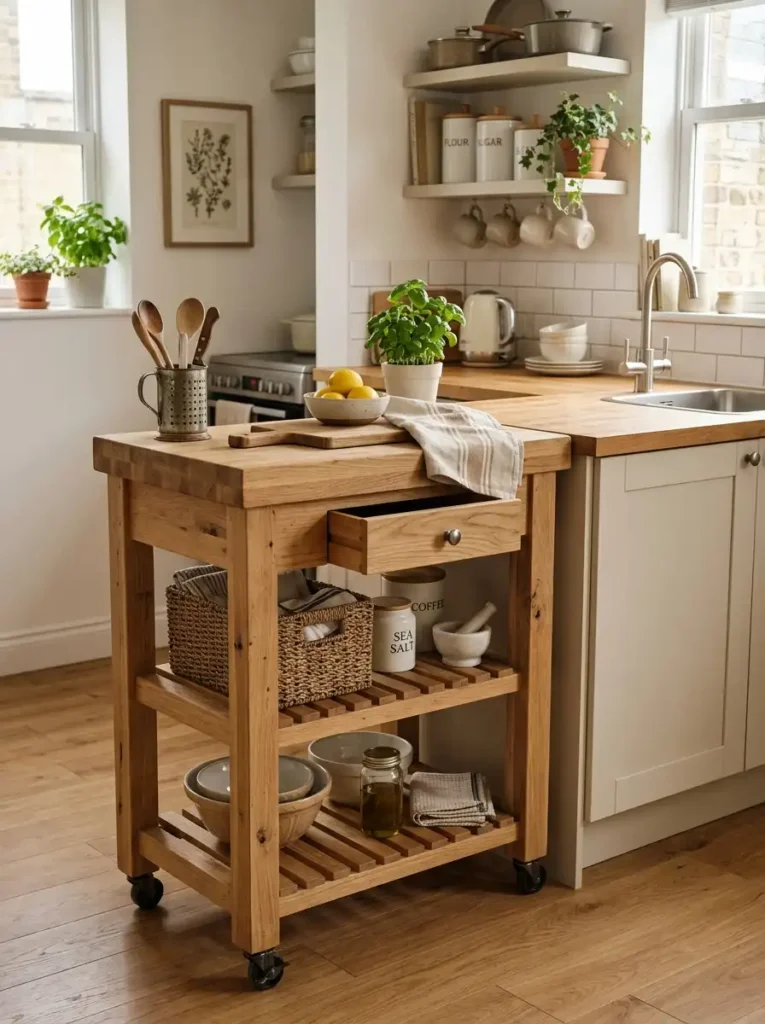
8. Add a Rolling Kitchen Cart for Instant Counter and Storage Space
A rolling kitchen cart is one of the most flexible investments you can make in a small kitchen. It gives you extra counter prep space, additional shelving underneath, and the ability to move it wherever you need it most.
When you’re cooking, roll it next to the stove. When guests are over, use it as a serving station. When it’s not needed, tuck it into a corner or against a wall. Some carts even include drawers and cabinets, making them essentially portable cabinet space.
This is a particularly good solution for renters who can’t modify the kitchen permanently but still need more functional workspace and storage.
Mobility solves problems that fixed furniture can’t.
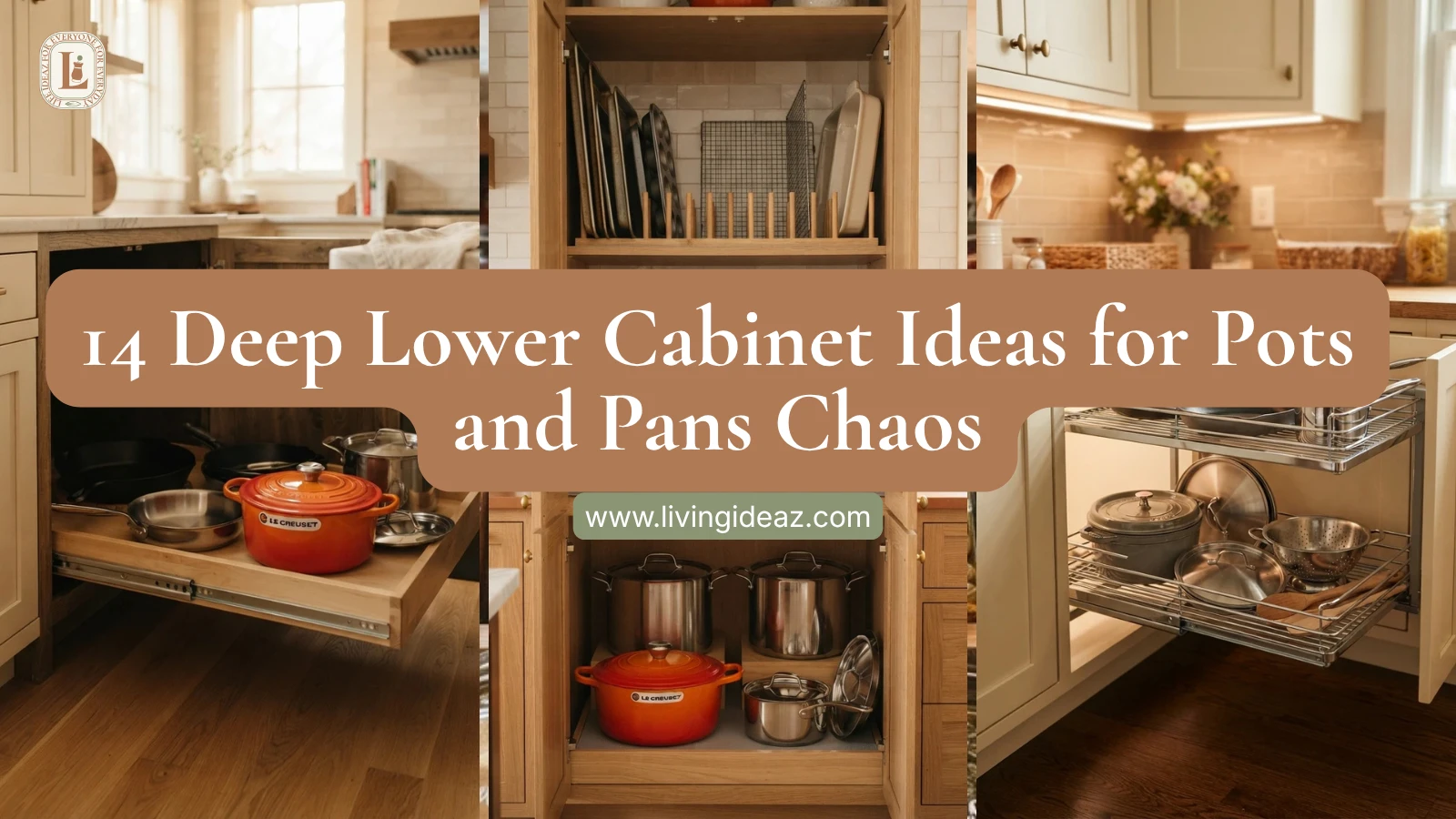
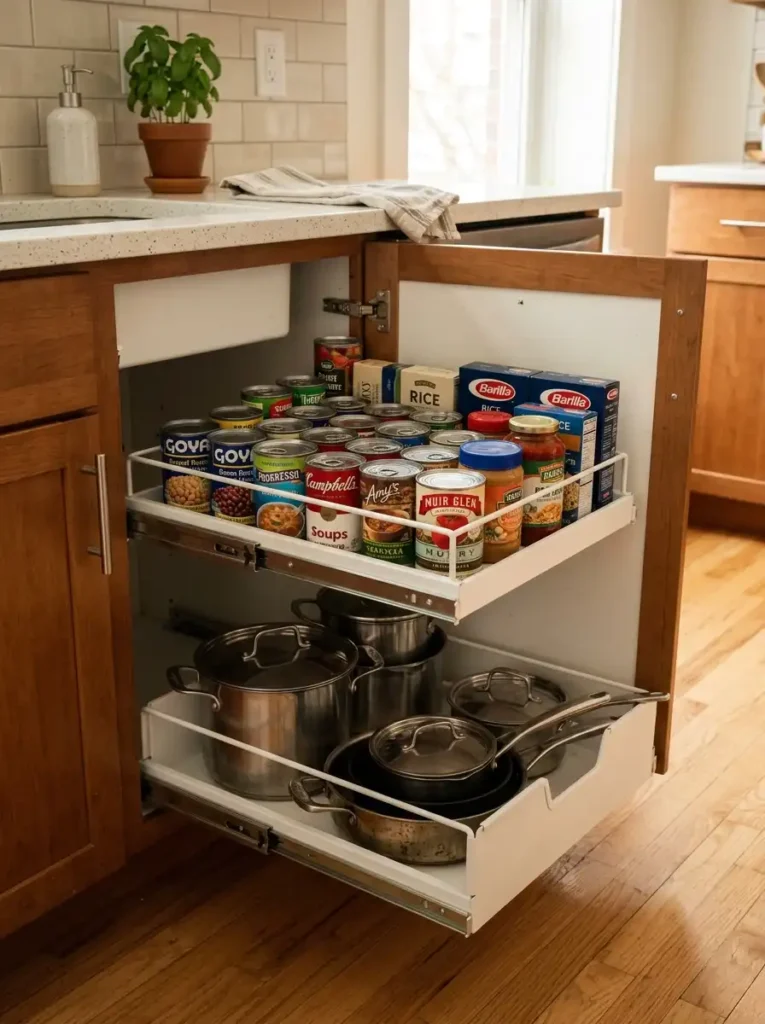
9. Organize Deep Cabinets With Pull-Out Bins
Deep lower cabinets are frustrating. You put something in the back and basically never see it again until you’re crouching on the floor pulling out half the shelf just to find it.
Pull-out bins or slide-out shelves completely fix this. You pull the bin toward you, grab what you need from the back, and slide it back in. This works especially well for pots, cleaning supplies under the sink, canned goods, and pantry staples that tend to disappear into cabinet depths.
If you can’t install built-in pull-out shelves, standalone pull-out cabinet organizers are available online and drop right into existing cabinets without tools.
The back of a cabinet shouldn’t be a black hole.
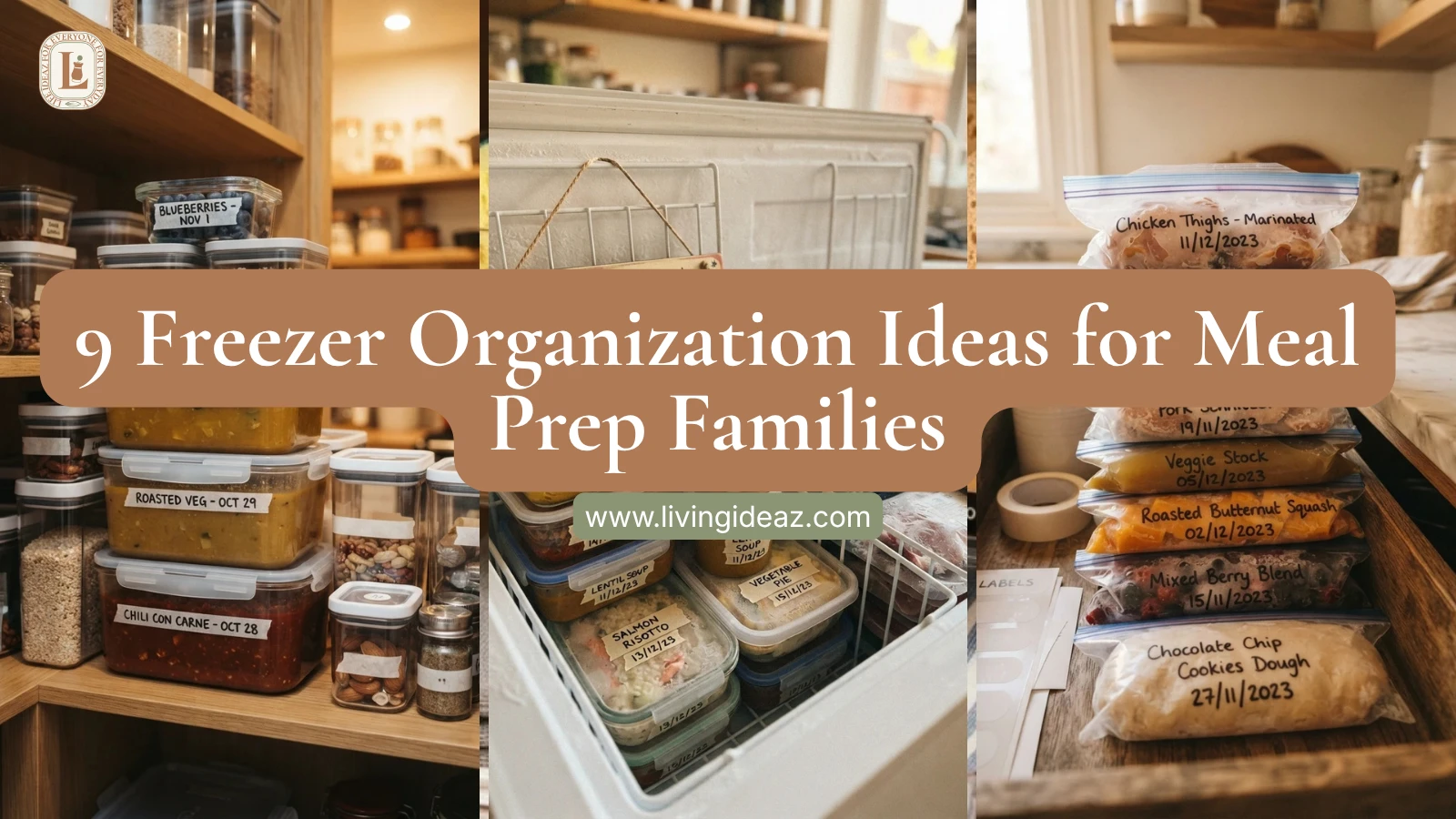
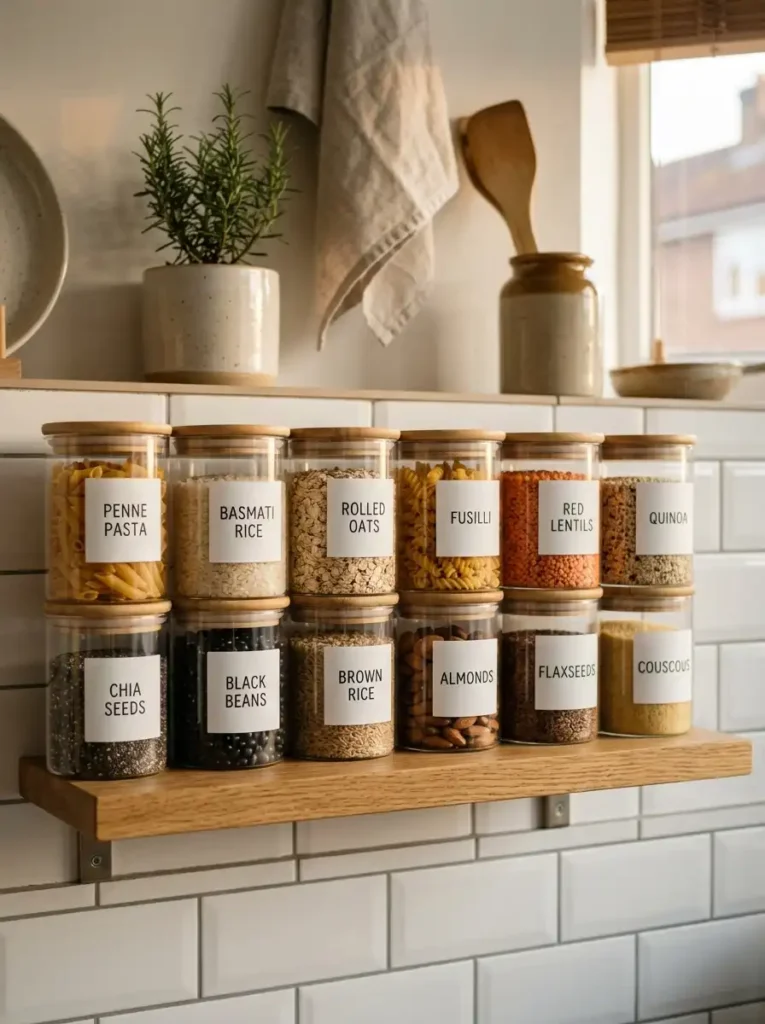
10. Decant Pantry Items Into Clear Uniform Containers
Bulky cereal boxes, half-opened pasta bags, and mismatched food packaging consume far more cabinet space than the food inside them actually requires.
Decanting dry goods into clear, airtight containers immediately compresses how much space your pantry items take up. Uniform containers also stack cleanly, which means you can fit significantly more into the same cabinet footprint.
Beyond storage efficiency, clear containers let you see what you have at a glance, which reduces the habit of buying duplicates at the grocery store. Studies in consumer behavior research consistently show that visible, organized pantry items reduce food waste and unnecessary purchases.
Clear containers make every shelf work harder.
11. Create a Lazy Susan Corner or Turntable System
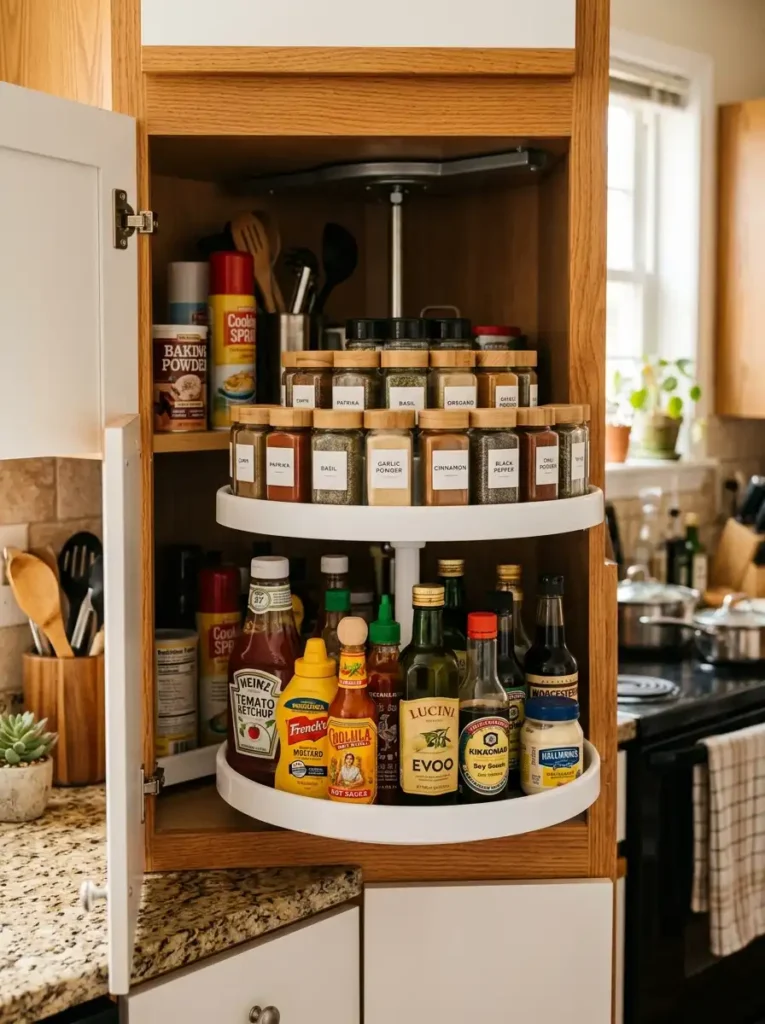
Corner cabinets and deep upper shelves share the same problem — things get pushed to the back and forgotten. A lazy Susan turntable solves this by making every item in a circular radius accessible with a single spin.
These work brilliantly inside corner cabinets for pots and pans, inside upper cabinets for spices and oils, and even on countertops for condiments or cooking essentials you reach for daily. The spinning motion means nothing ever gets permanently buried behind something else.
Lazy Susans are one of those simple tools that professional organizers recommend almost universally for small kitchens because the payoff relative to cost and effort is significant.
Spinning beats stacking every time.
12. Use the Space Above the Fridge and Cabinets
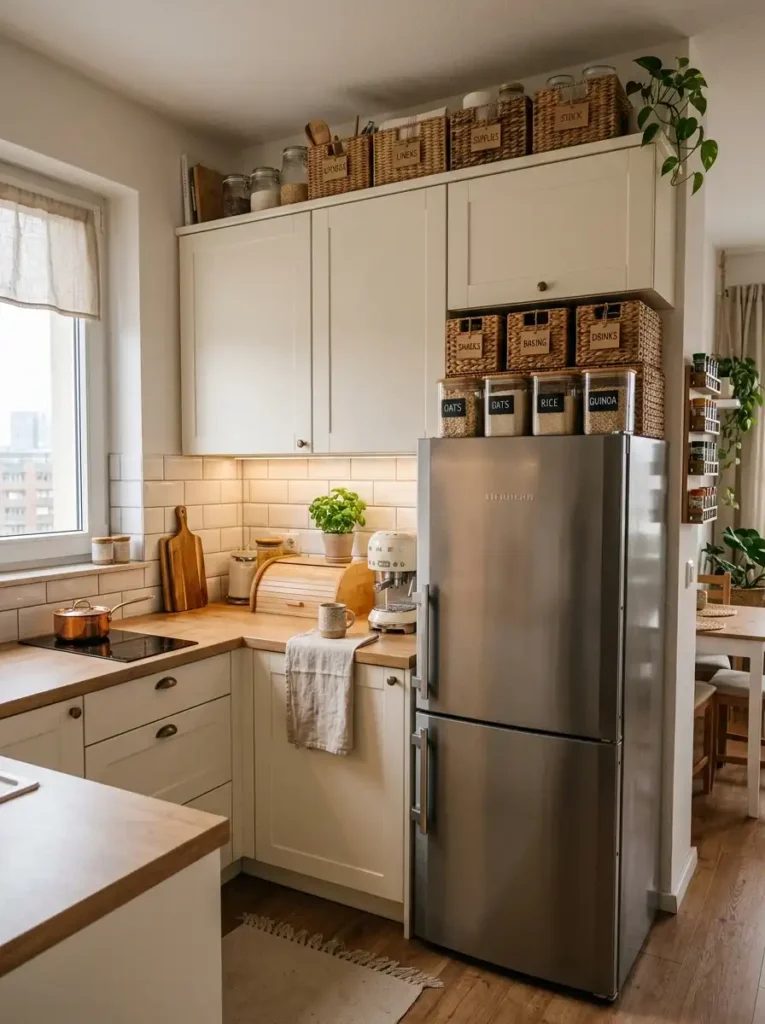
Most people completely ignore the space between the top of the cabinets and the ceiling, and the surface on top of the refrigerator. Both are genuinely usable storage zones.
The area above the fridge is ideal for storing bulky items you don’t need every day — a stand mixer, a large serving bowl, a blender, or extra appliances that would otherwise crowd your cabinets. Above open cabinets, decorative baskets or bins can store seasonal cookware, extra paper goods, or overflow pantry items while looking intentional rather than chaotic.
The key is keeping the items up there light, organized into labeled containers, and not so heavy that retrieval becomes a hazard.
Eye level isn’t the only level that counts.
Final Thoughts
A small kitchen with limited cabinet space doesn’t need a renovation to feel functional and calm. It needs a smarter approach to the space that already exists.
Start with a purge, then look at your walls, your doors, your drawers, and your dead zones. Every overlooked surface has potential. Every awkward corner has a solution.
The kitchens that feel the most organized aren’t usually the ones with the most cabinet space. They’re the ones where every inch has been thought about intentionally — and where cooking feels easy instead of like a daily obstacle course.
Small doesn’t have to mean cramped. It just means you have to be a little smarter about it.