15 Minimalist Small Bedroom Ideas That Still Feel Cozy
TL;DR
Many minimalist bedrooms accidentally feel emotionally cold because they remove warmth along with clutter. The calmest small minimalist bedrooms are not empty or sterile. They feel soft, breathable, visually quiet, and emotionally safe. These minimalist small bedroom ideas focus on reducing visual stress while still keeping tiny rooms warm, personal, and genuinely comfortable to live in every day.
1. Use Fewer Furniture Pieces, But Make Them Better
Tiny bedrooms become overwhelming when too many small furniture pieces compete for attention at once. A minimalist room usually feels calmer because every object has enough visual space around it to breathe.
This does not mean buying expensive designer furniture. It means choosing fewer pieces that quietly serve the room well. One slim nightstand often feels calmer than multiple tiny storage tables squeezed awkwardly beside the bed.
Minimalism works best when the room stops feeling crowded emotionally.
2. Keep the Color Palette Soft and Warm
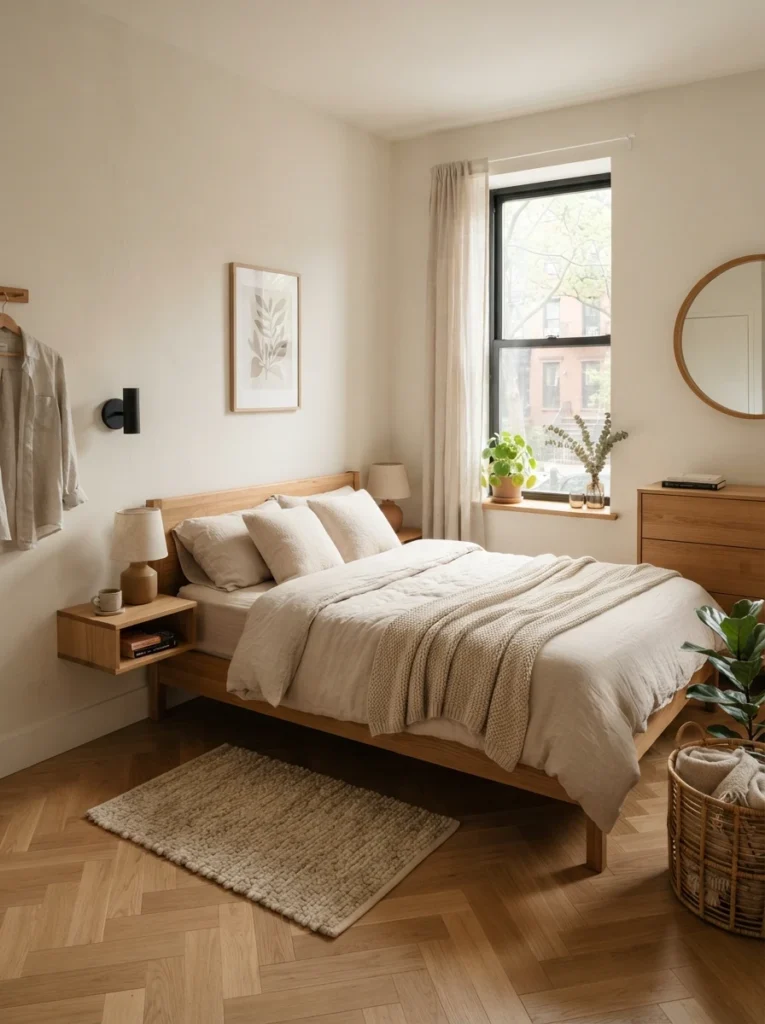
Cold minimalist rooms often feel uncomfortable because the palette becomes too harsh. Bright white walls, black furniture, and sharp contrast can make small bedrooms feel emotionally distant instead of calming.
Warm neutrals create softness without creating clutter. Cream, oatmeal, muted taupe, soft clay, and warm wood tones usually feel far more inviting in compact bedrooms.
Tiny spaces emotionally respond strongly to warmth.
3. Let Empty Space Become Part of the Design
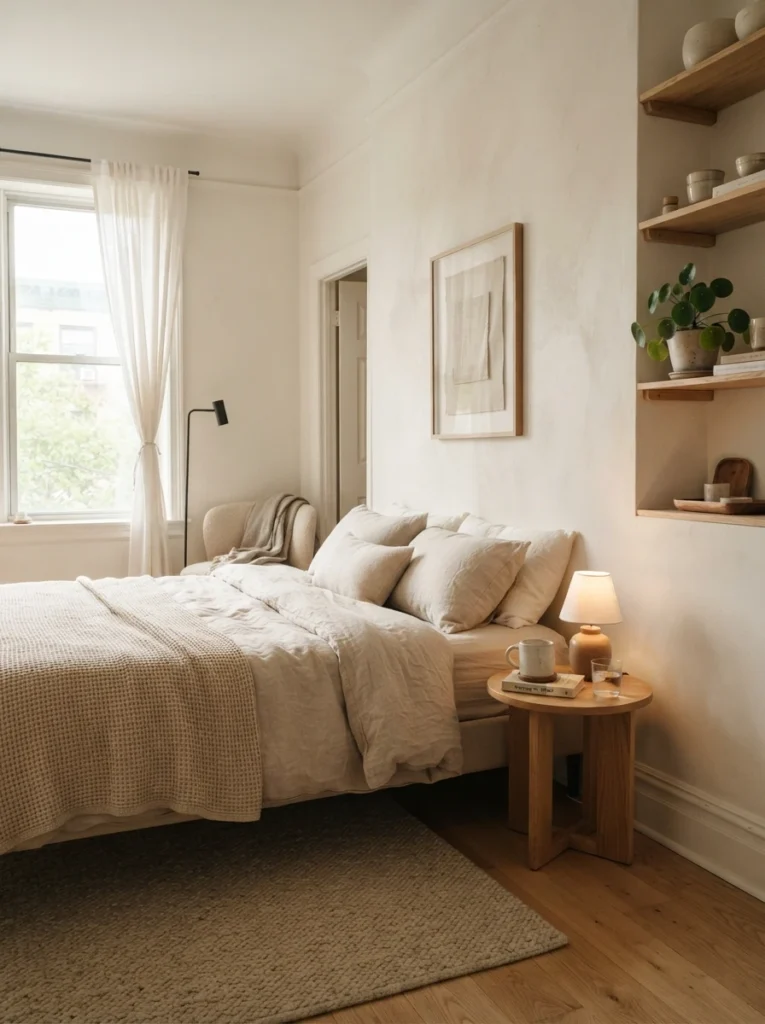
Many people feel uncomfortable leaving visual emptiness in small rooms because they assume every wall and corner should “do something.” But minimalist bedrooms feel calming partly because they allow space to exist without constant visual pressure.
Empty wall sections, partially open shelves, and uncluttered surfaces give the eye places to rest. This reduces overstimulation naturally, especially in tiny apartments where visual information builds quickly.
Breathing room is part of the atmosphere.
4. Choose Texture Over Decoration
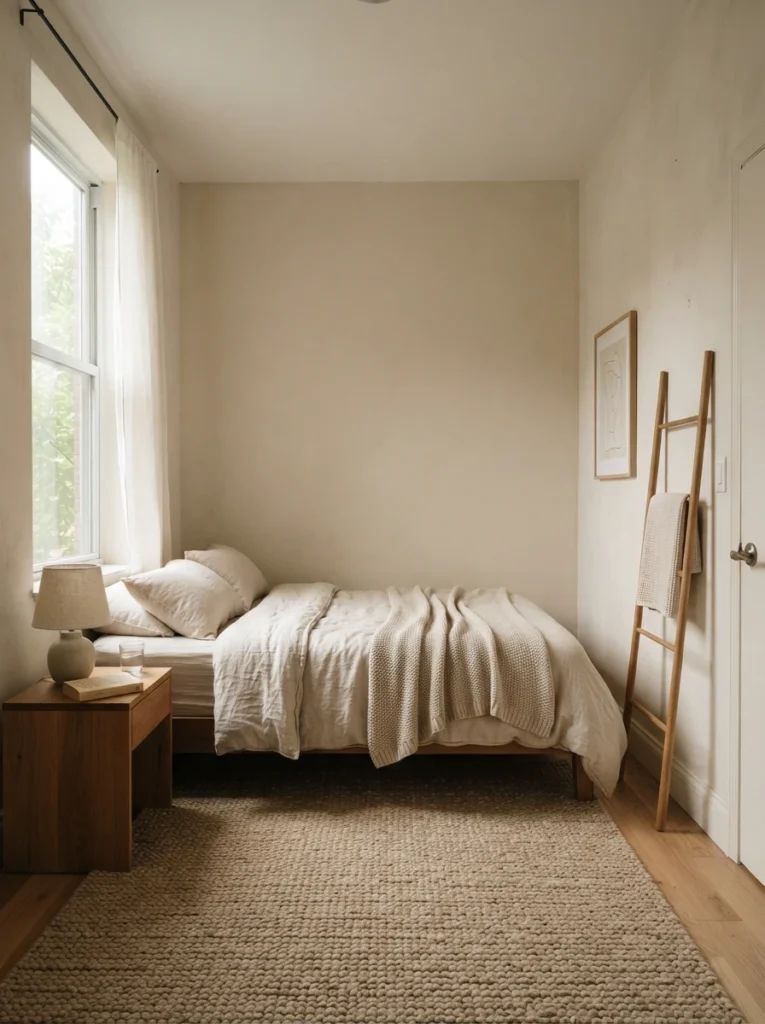
Minimalist bedrooms often fail emotionally when they remove all personality along with clutter. Texture solves this beautifully because it creates warmth without increasing visual noise.
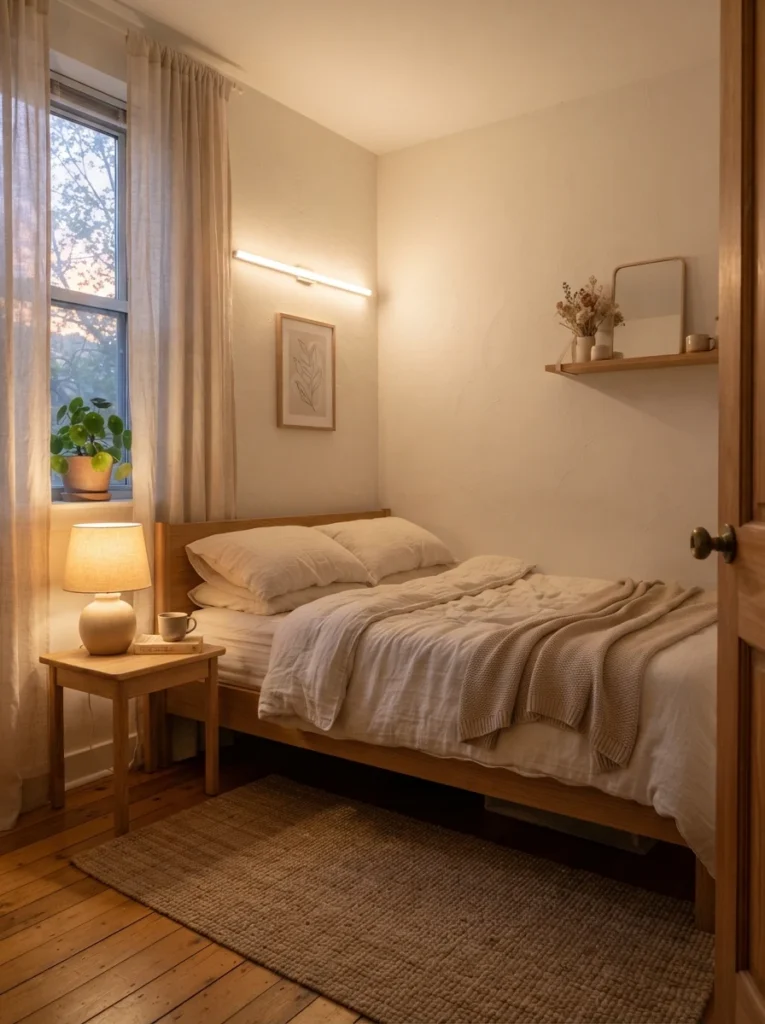
Linen bedding, woven baskets, knit blankets, soft rugs, and natural wood tones add emotional softness while still keeping the room visually quiet. Cozy minimalism usually depends more on texture layering than decorative objects.
Warmth should feel subtle, not crowded.
5. Keep Nightstands Extremely Simple
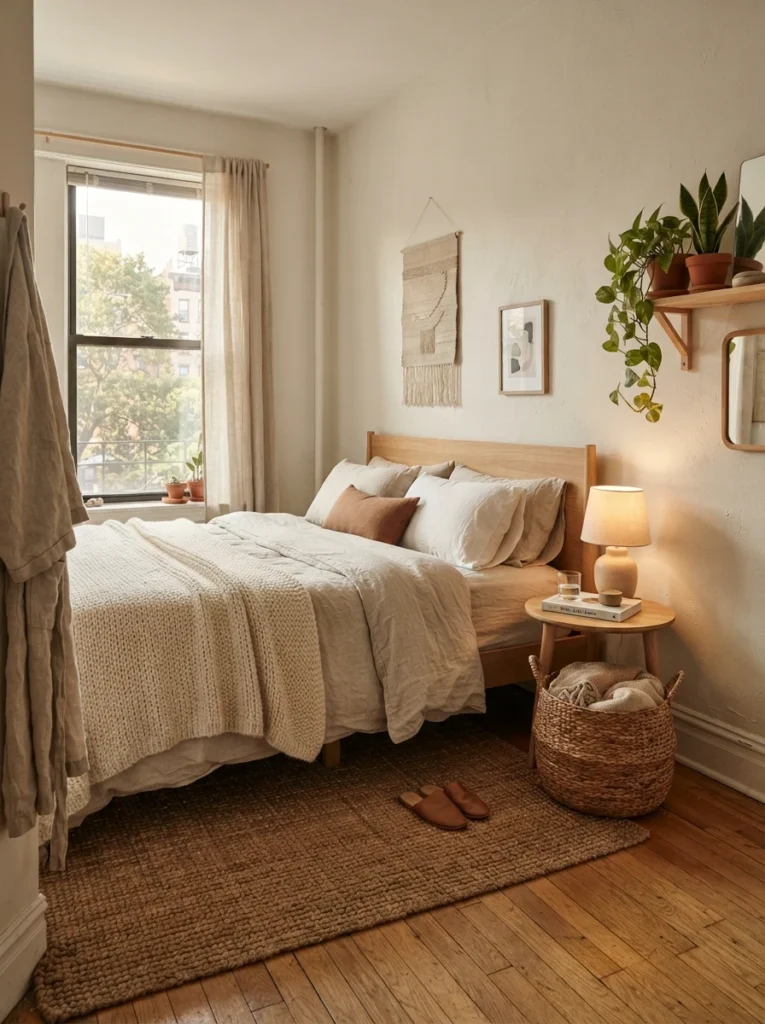
Overloaded nightstands instantly break the calm feeling minimalist bedrooms try to create. Chargers, random skincare, receipts, candles, books, and tangled cables quickly create visual stress in tiny rooms.
A soft lamp, one book, and maybe a ceramic tray for essentials usually feels enough. Minimalist bedrooms emotionally benefit from fewer visible decisions and less unfinished visual information.
The calmer the bedside area feels, the calmer the room often feels too.
6. Use Hidden Storage Instead of Open Shelving
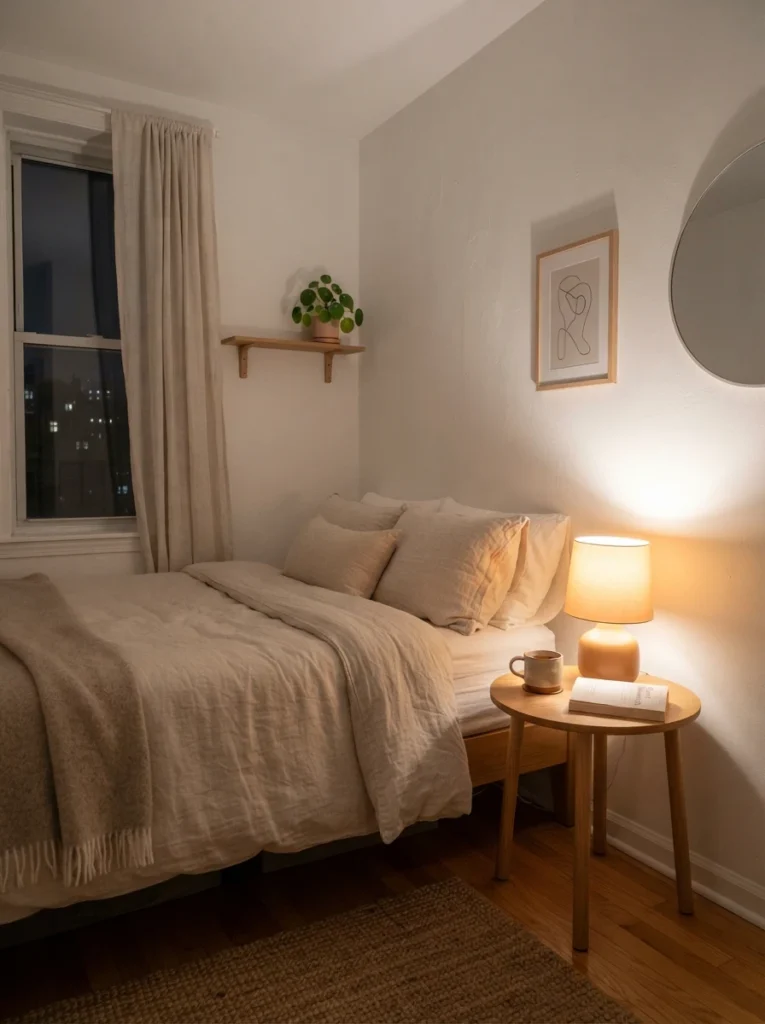
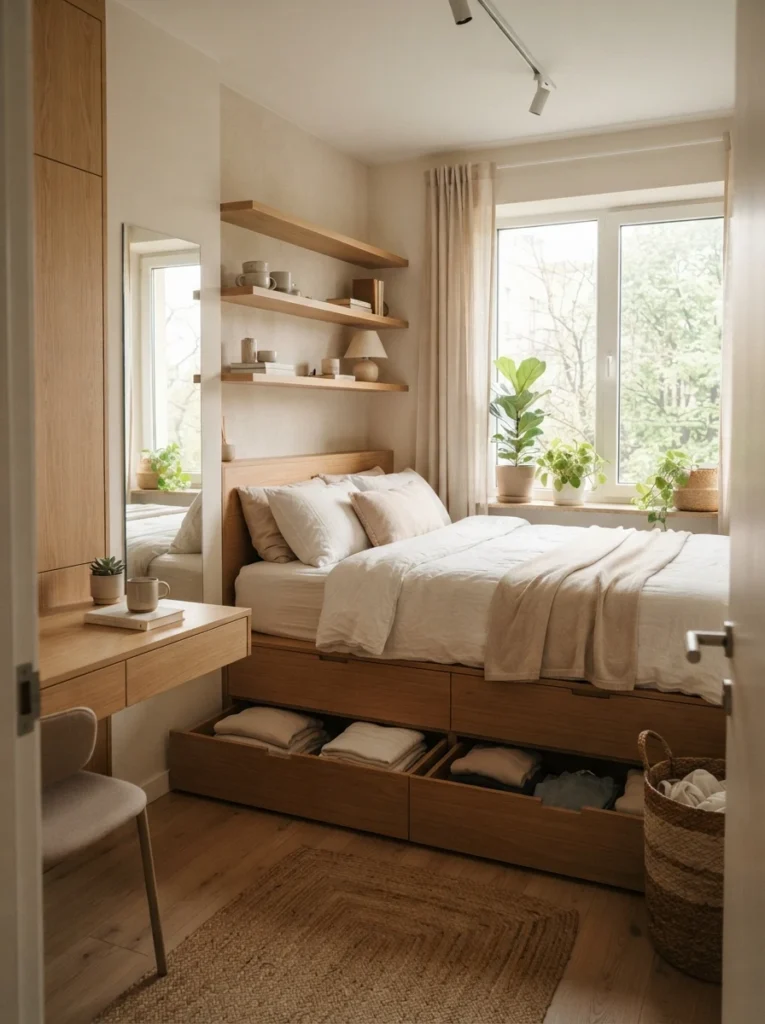
Open shelving easily turns into visual clutter in real life, especially inside tiny bedrooms where every object stays visible constantly. Hidden storage keeps rooms emotionally quieter because fewer items compete for attention.
Beds with drawers, woven storage baskets, closed cabinets, and slim storage benches help maintain calm without sacrificing practicality. Minimalism becomes easier when storage systems disappear visually.
Invisible organization creates softness.
7. Add Warm Lighting Instead of More Decor
Many minimalist rooms feel cold simply because the lighting feels harsh and flat. Soft warm lighting creates emotional comfort without adding physical clutter.
A linen lamp shade, warm bedside light, or subtle ambient glow changes the atmosphere more effectively than another decorative object usually does. Cozy minimalism relies heavily on lighting softness.
Warm light makes tiny rooms feel emotionally safer.
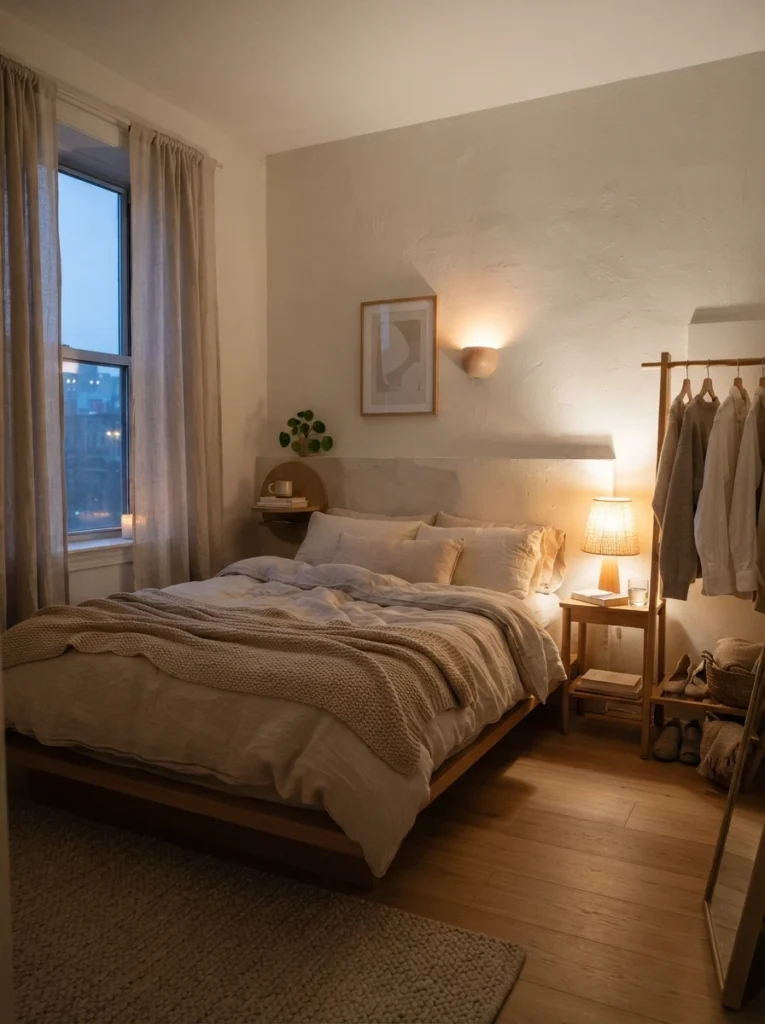
8. Avoid Furniture That Feels Too Heavy
Bulky furniture quickly overwhelms minimalist bedrooms because there are fewer surrounding objects to visually balance the weight. Slim shapes and lighter proportions usually work better emotionally in tiny spaces.
Furniture with visible legs creates openness because more flooring remains visible underneath. This subtle detail makes compact rooms feel calmer and more breathable psychologically.
Visual weight changes everything in small bedrooms.
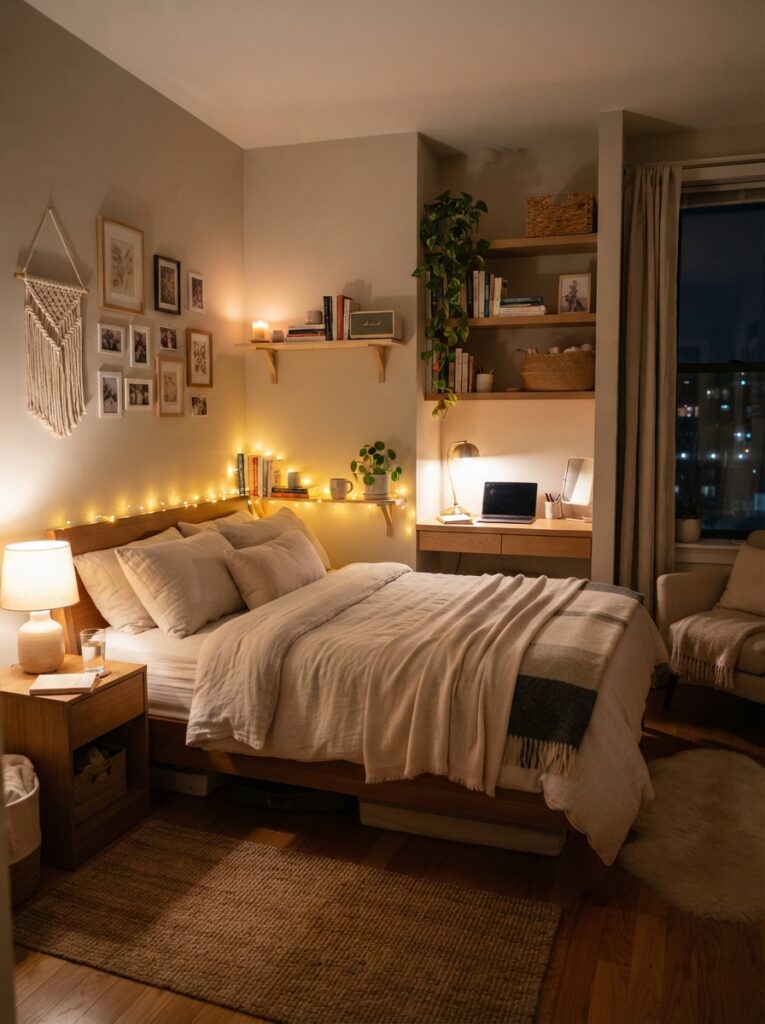
9. Let the Bed Feel Relaxed, Not Perfectly Styled
Some minimalist bedrooms accidentally feel emotionally stiff because the bedding looks too staged and untouched. Perfectly flattened duvets and rigid pillow arrangements often remove warmth instead of creating calm.
A slightly relaxed linen duvet, softly folded throw blanket, or naturally textured bedding usually feels far more comforting. Cozy minimalism should still feel human and livable, not like a furniture showroom nobody can actually relax inside.
Soft imperfection creates emotional warmth.
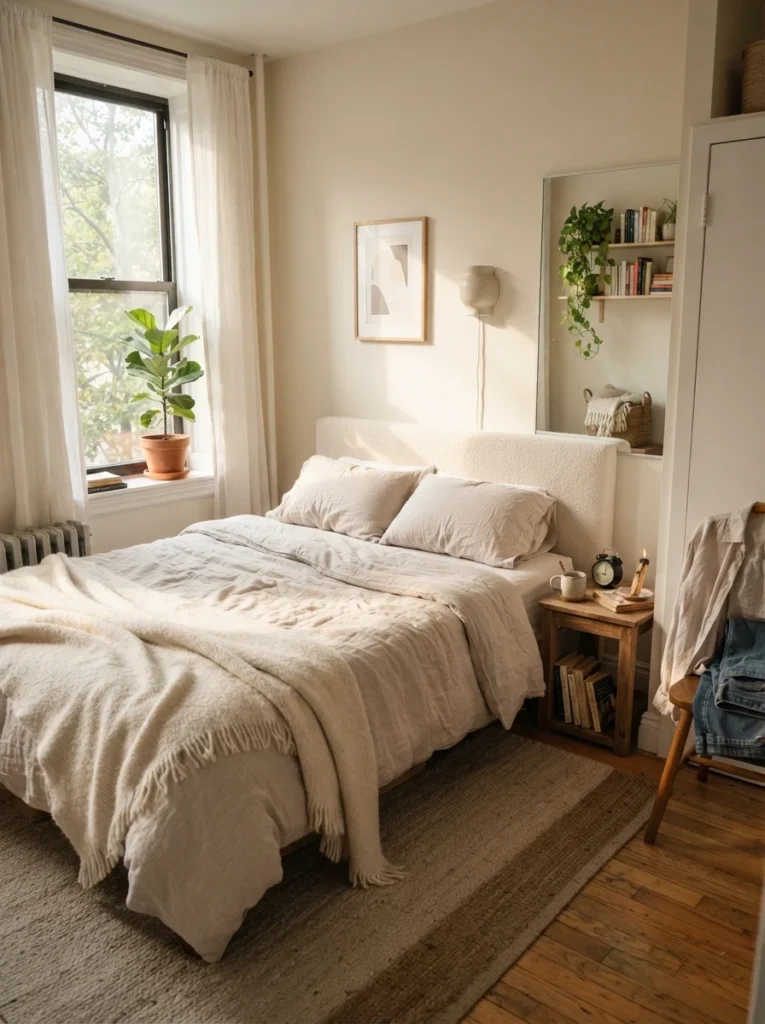
10. Keep Decor Larger but Simpler
Tiny decorative clutter becomes especially noticeable inside minimalist bedrooms because the room already contains fewer objects overall. One larger framed print or oversized ceramic vase usually feels calmer than dozens of tiny accessories spread everywhere.
The eye processes bigger simpler shapes more peacefully. Minimalism works emotionally when visual interruptions become fewer and softer.
Less visual fragmentation means less mental noise.
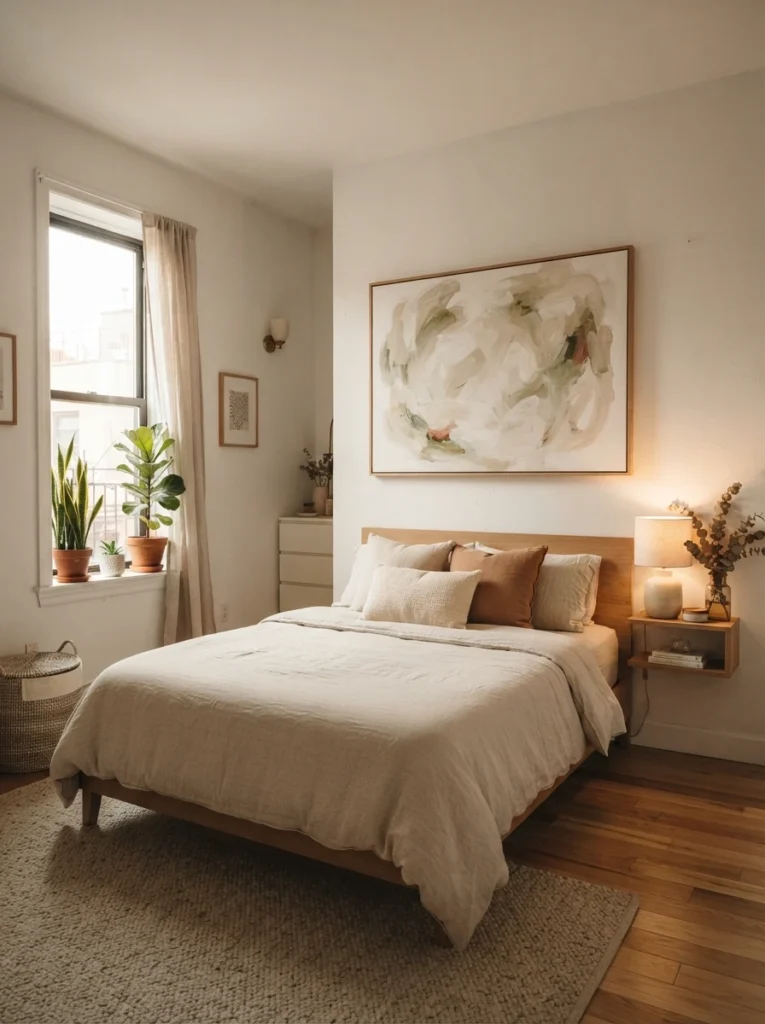
11. Use Natural Materials Whenever Possible
Natural textures instantly soften minimalist spaces because they introduce warmth without visual chaos. Wood, linen, cotton, woven fibers, and matte ceramics feel emotionally grounding compared to glossy synthetic surfaces.
This is why Scandinavian and Japandi-inspired bedrooms often feel calming despite minimal decoration. The warmth comes from texture and material honesty rather than decorative excess.
Natural materials help minimalist rooms feel emotionally alive.
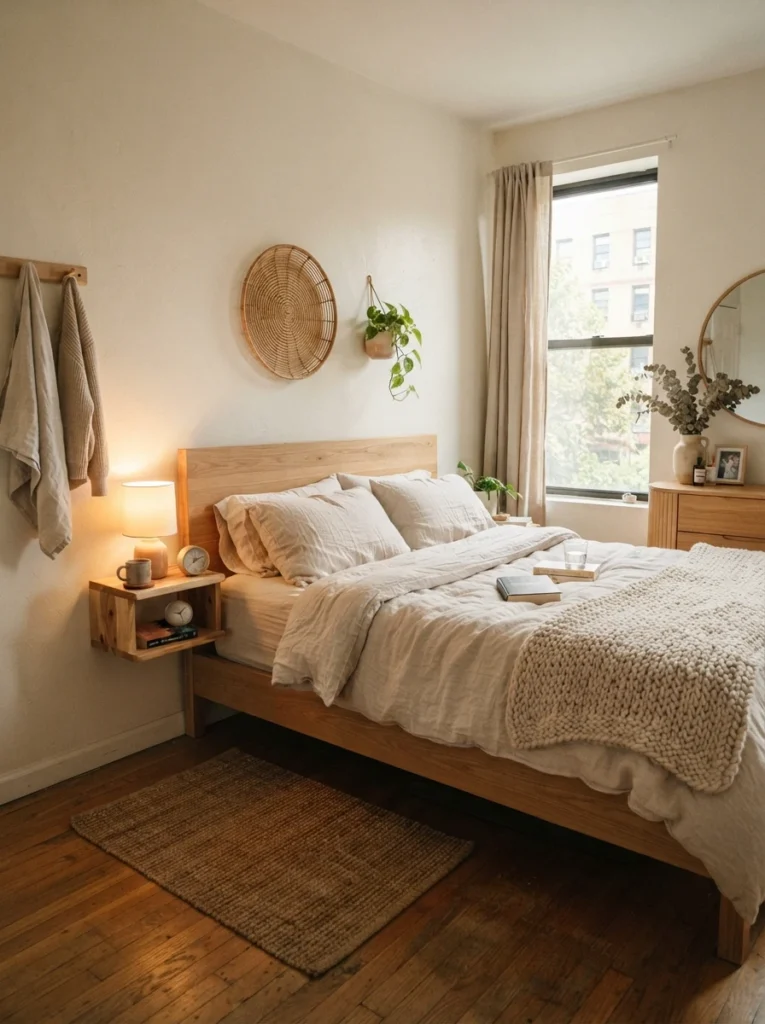
12. Reduce Visible Technology Around the Bed
Visible electronics quietly increase visual stress in tiny bedrooms. Tangled chargers, glowing screens, oversized gaming setups, and cluttered cables interrupt the emotional softness minimalist spaces try to create.
Simple cable management, hidden charging areas, and cleaner bedside surfaces make a huge emotional difference. Bedrooms usually feel calmer when technology visually fades into the background instead of dominating the room.
Visual quiet supports mental quiet.
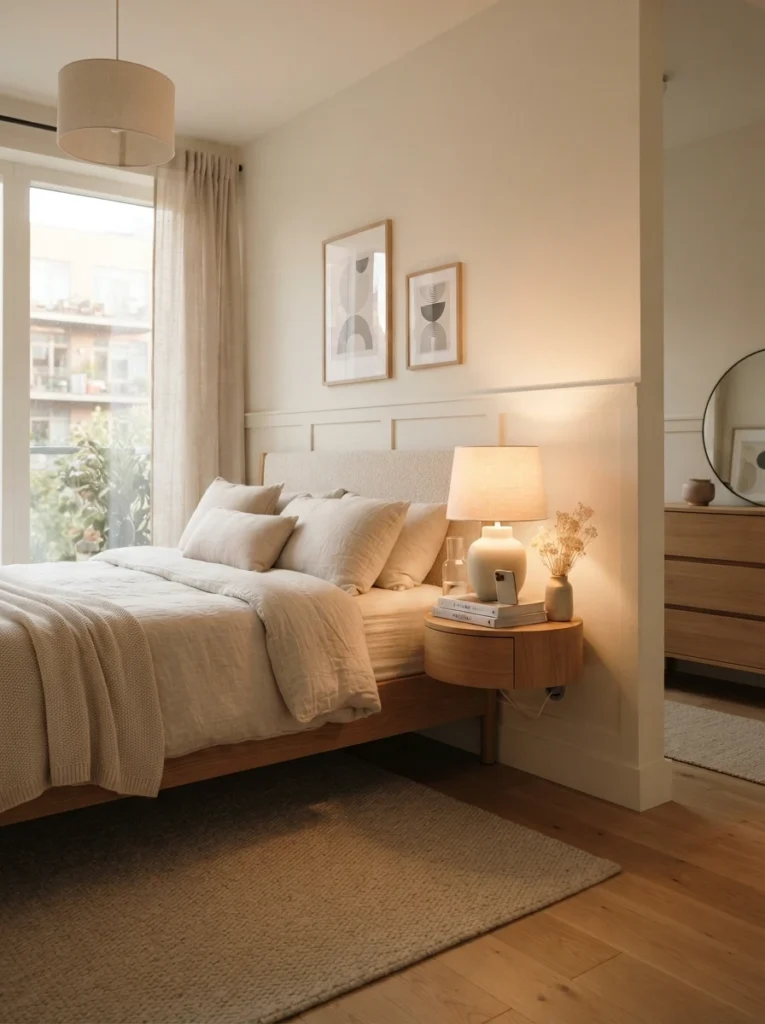
13. Add One Cozy Corner Instead of Filling the Whole Room
Minimalist bedrooms do not need endless decor to feel warm. Sometimes one intentional cozy corner creates enough emotional softness for the entire space.
A soft chair, warm lamp, folded blanket, and small side table near a window can create a calming visual anchor without overcrowding the room. Tiny apartments benefit from focused warmth instead of constant decoration everywhere.
One meaningful corner feels calmer than ten scattered accents.
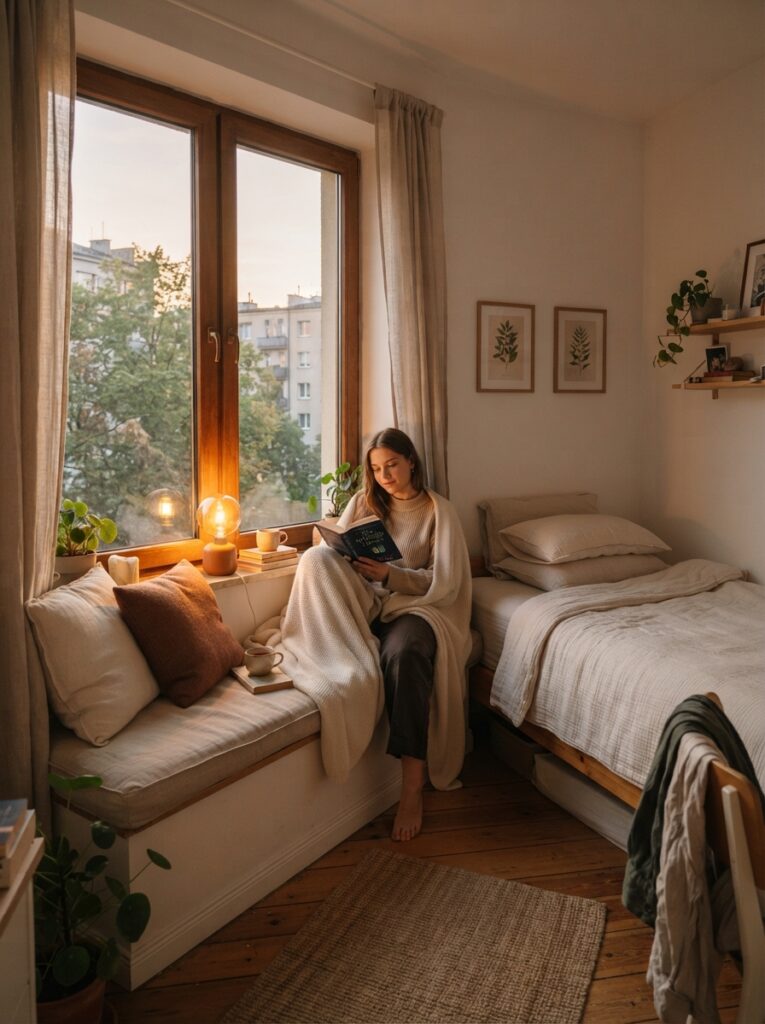
14. Stop Organizing Things You Do Not Actually Use
Many minimalist bedrooms still feel cluttered because storage systems contain unnecessary objects people rarely touch anymore. Minimalism becomes emotionally calming when rooms stop carrying so much unused visual and mental weight.
Unused decor, old clothing, tangled cords, and “just in case” items quietly consume energy even when hidden inside drawers. Tiny rooms feel softer when belongings become more intentional overall.
Less unnecessary ownership creates more breathing room emotionally.
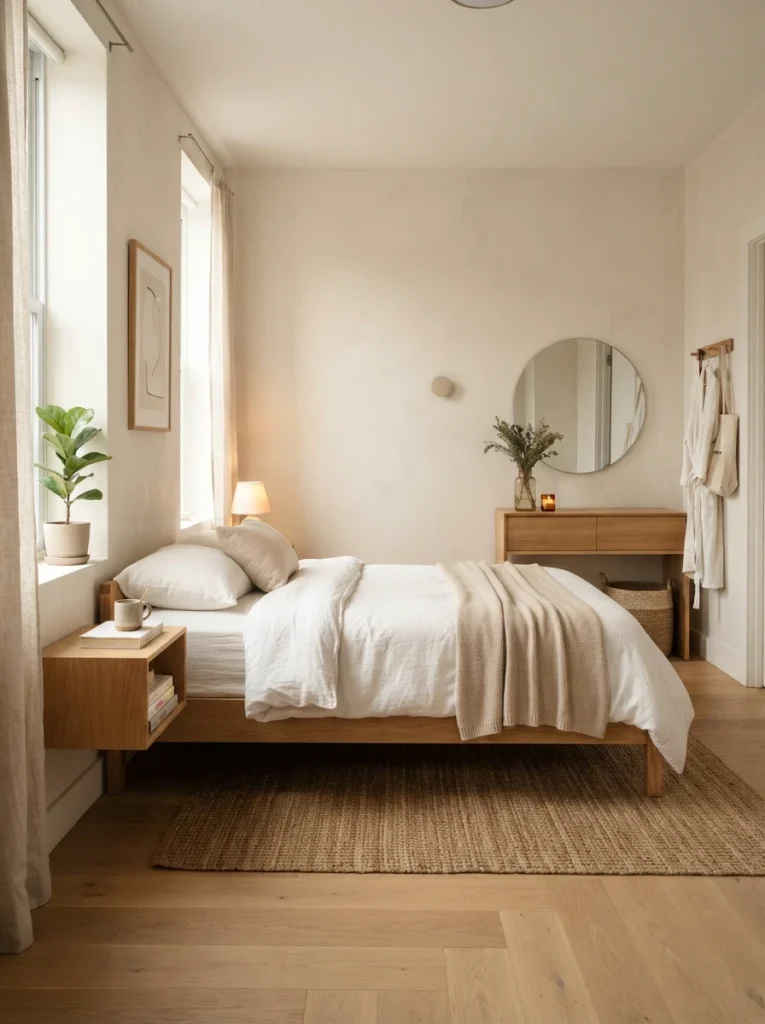
15. Focus on Emotional Calm Instead of Aesthetic Perfection
The best minimalist small bedrooms are not the emptiest ones online. They are the ones that quietly make people feel calmer when they walk into the room after exhausting days.
Soft lighting, manageable storage, warm textures, clear surfaces, and easier movement matter far more emotionally than perfectly styled minimalism. Tiny bedrooms should support rest instead of becoming another performance of perfection.
Minimalism works best when the room finally feels lighter emotionally, not just visually cleaner.
Final Thoughts
Minimalist small bedrooms do not need to feel cold, empty, or emotionally distant. The calmest minimalist spaces usually succeed because they remove visual pressure while still keeping warmth, texture, softness, and real human comfort intact.
Tiny rooms feel emotionally lighter when clutter decreases, lighting softens, and furniture stops fighting for attention constantly. Cozy minimalism is not about owning almost nothing. It is about creating a room that feels breathable, manageable, restful, and genuinely comforting to exist inside every day.
A bedroom should not only look calm. It should help you actually feel calmer too.