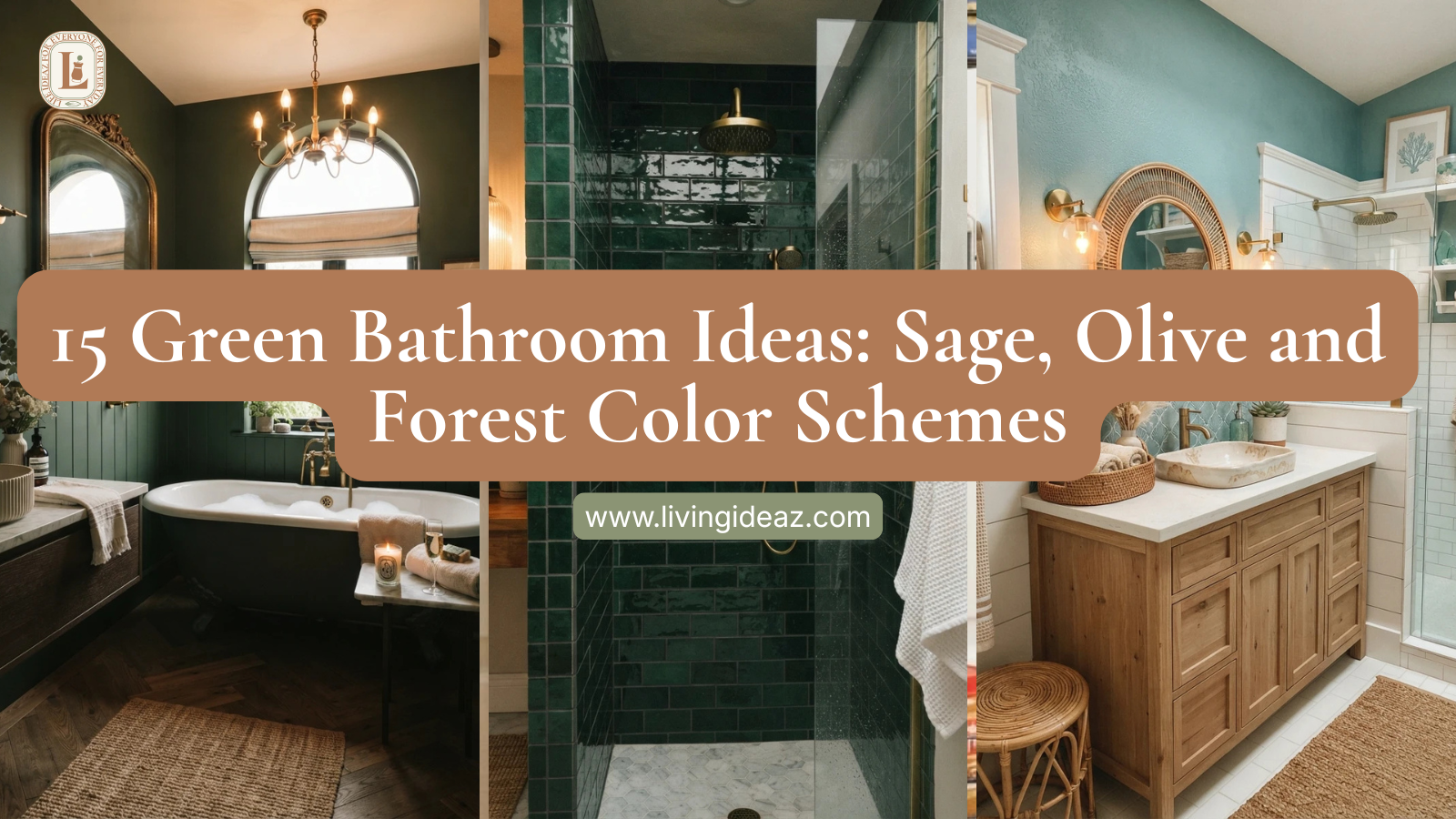
15 Green Bathroom Ideas: Sage, Olive and Forest Color Schemes
TL;DR: Green has become one of the most reliable colors in bathroom design for 2026, largely because it behaves more like a neutral than a bold statement color, sage pairs with brass and white oak, olive grounds a modern earthy palette, and deep forest or emerald tones add real drama in smaller doses. The undertone you choose, gray-sage versus warm olive, and the wood you pair it with matter more than the shade name on the paint chip. Used thoughtfully, green is also one of the most forgiving colors available for a wet room, since it reads calm in daylight and rich under warm evening light alike.
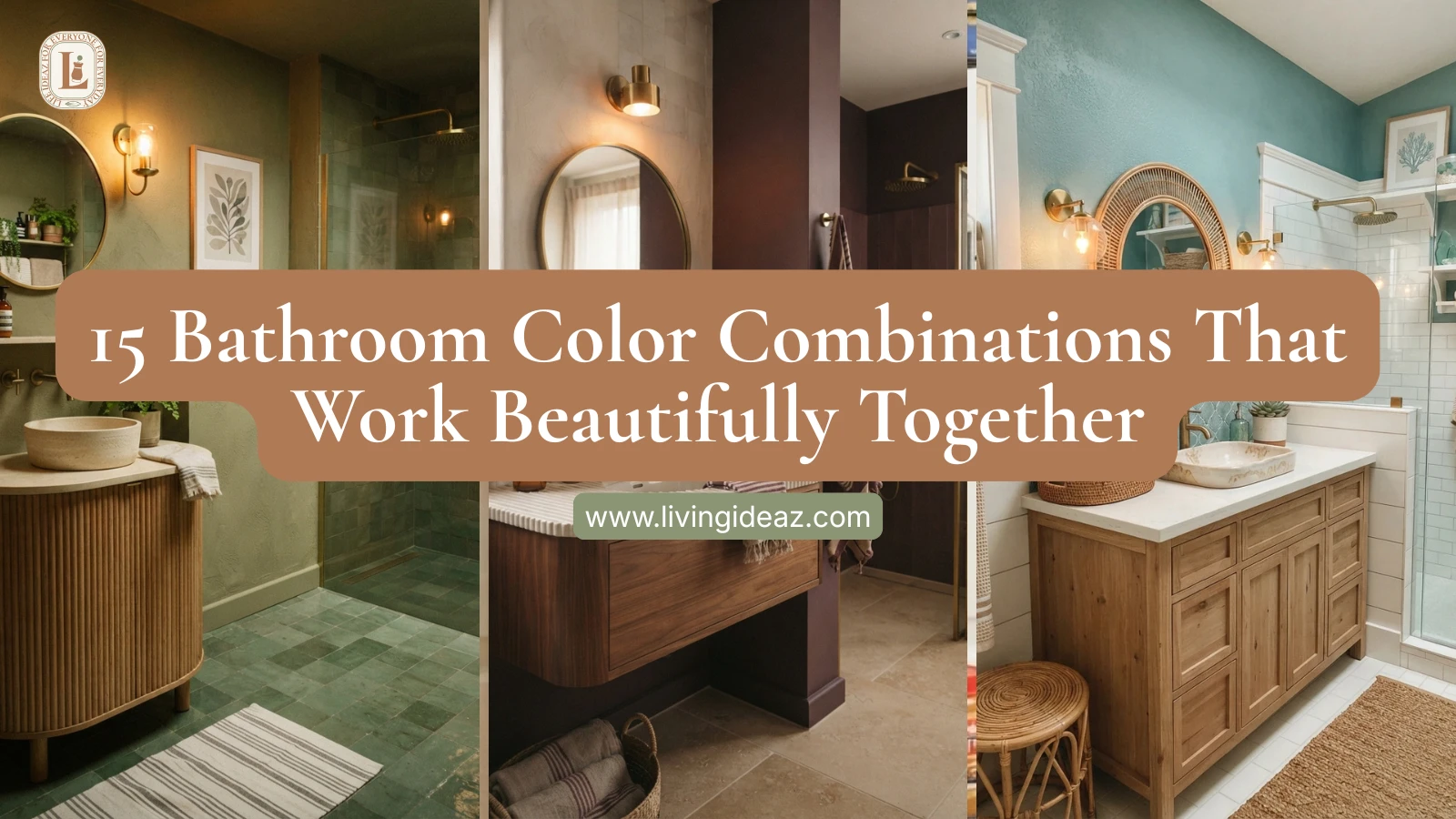
Green has quietly become one of the defining bathroom colors of 2026, and it’s easy to see why once you actually see it applied rather than just swatched on a chip. In a small windowless powder room, a smoky gray-green over the wainscot can look like a gamble in the store and read like a jewel box once brass sconces and tile are added back in. In a full primary bathroom, sage green functions almost like a neutral, layering naturally with wood, stone, and linen rather than competing with them. The key across every version of this trend is picking the right undertone and pairing it with materials that actually complement it, rather than just picking “green” and hoping it works.
Here are 15 green bathroom ideas across sage, olive, and forest palettes.
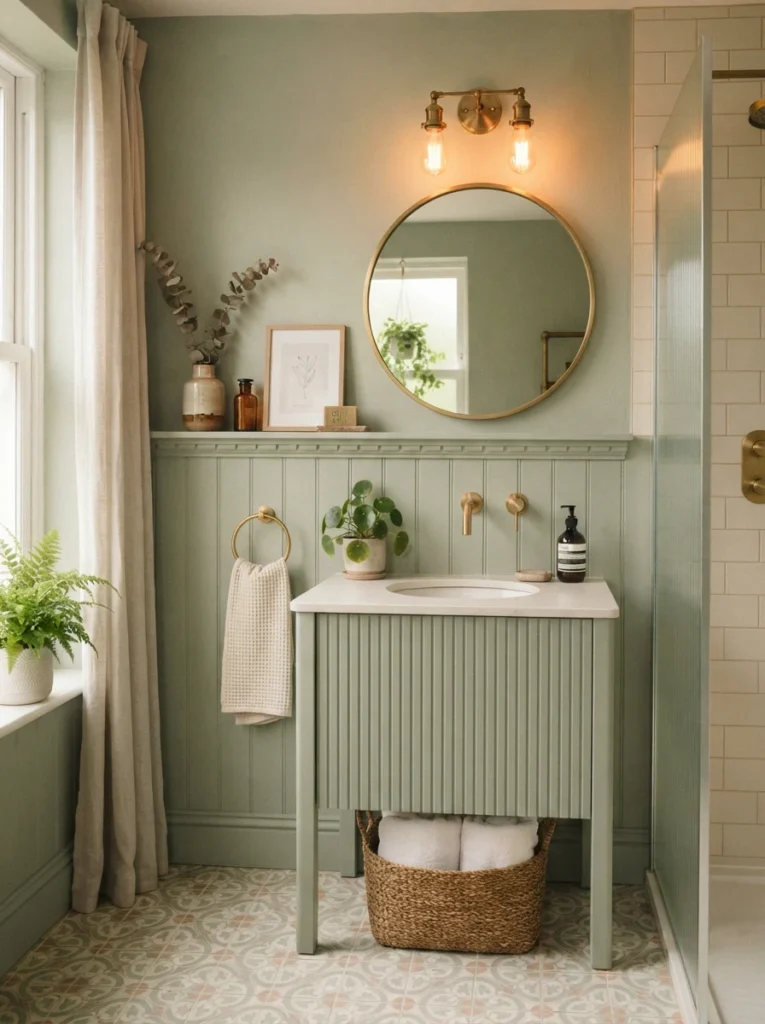
1. Choose Sage Green as a Flexible “New Neutral”
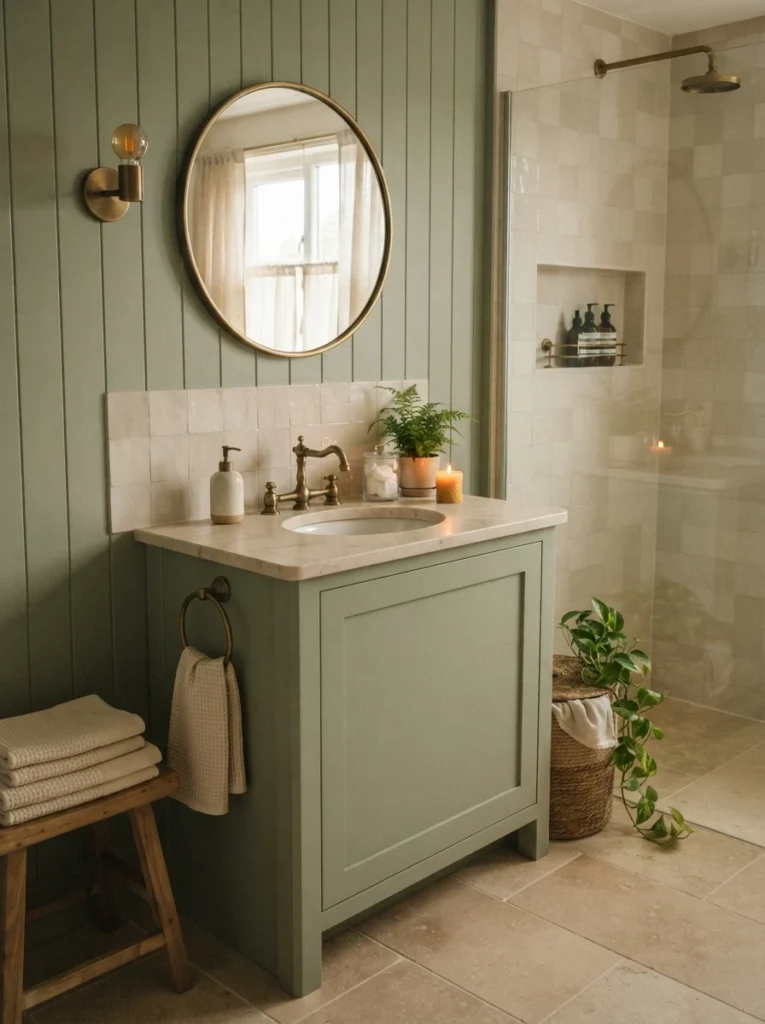
Sage green has earned a reputation as the new neutral in bathroom design because it adds warmth and personality without overwhelming the room the way a bolder color would. It’s soft enough to keep a small bathroom feeling airy rather than closed in, while still giving a plain white space real character.
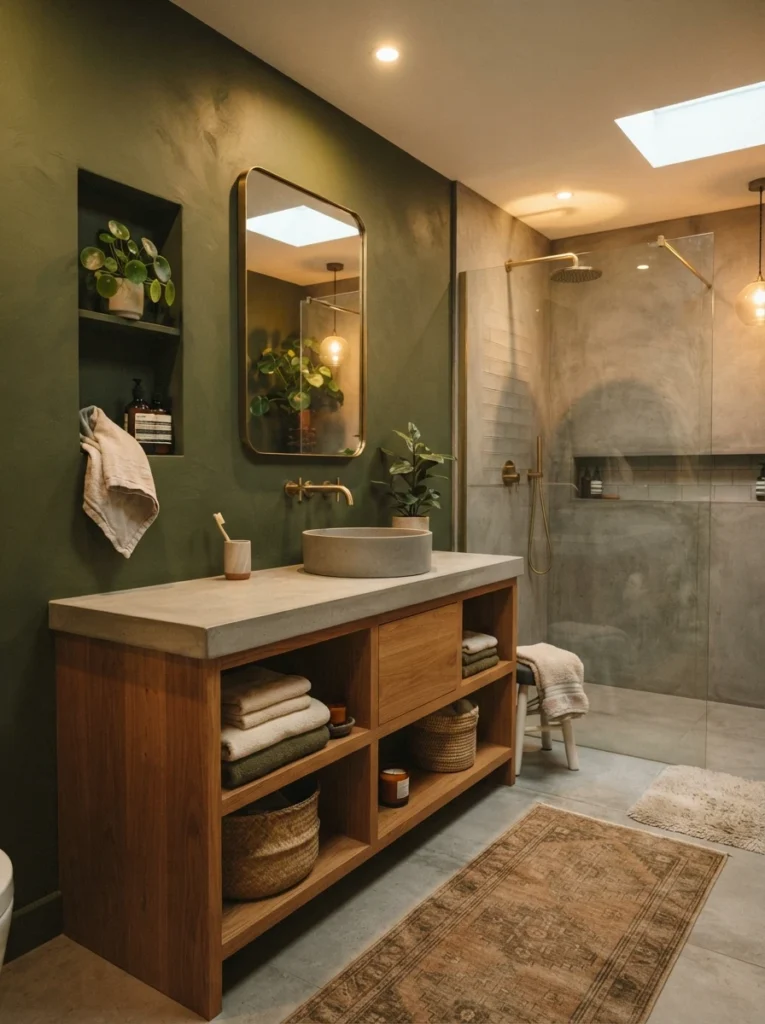
2. Pair Olive or Pea Green With Grays and Browns for a Modern Earthy Look
For a more contemporary, grounded feel, olive or pea green paired with grays and browns creates an earthy yet current vibe, especially alongside concrete slab countertops, a wooden vanity, and rich green walls. This combination leans further into modern minimalism than the softer, more classic sage pairing does.
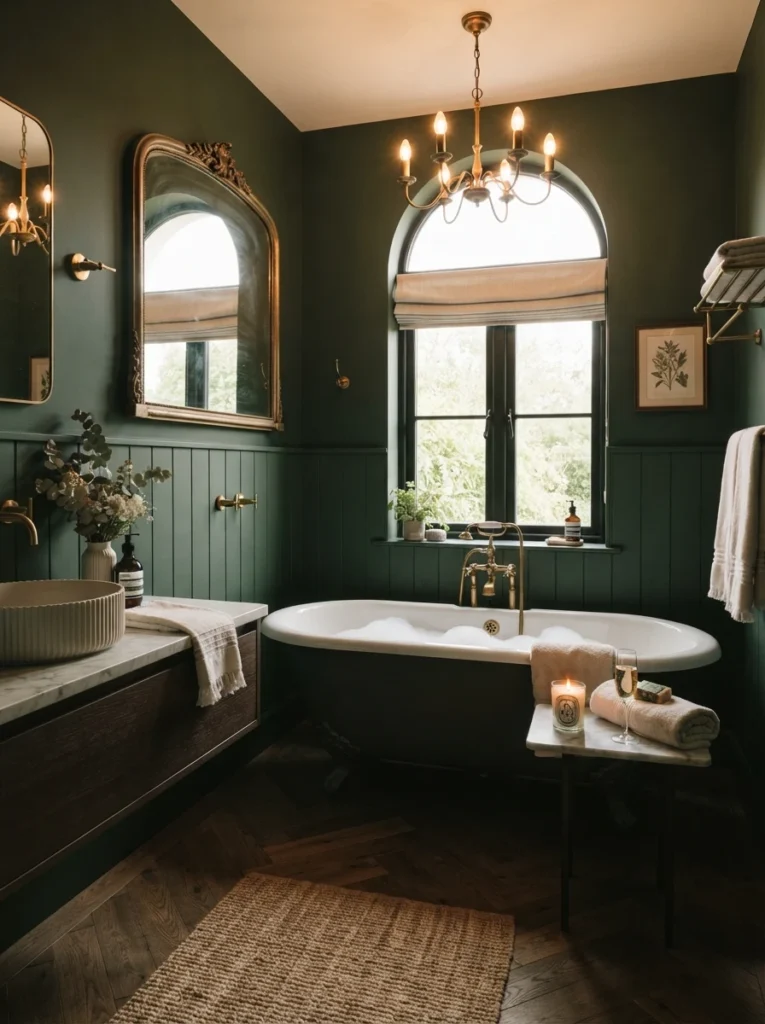
3. Go Deep Hunter or Forest Green for Elegant Sophistication
A dark hunter or forest green brings genuine elegance and sophistication to a bathroom, and it pairs especially well with softer accent colors like pink or yellow for contrast. This deeper tone works best in a room with either good natural light or a deliberate, moodier styling approach, since it can feel heavy in a dim, poorly lit space.
![A deep hunter green bathroom, elegant and sophisticated, paired with soft accent colors, warm bathroom lighting, vertical Pinterest photography, warm forest-green styling.]
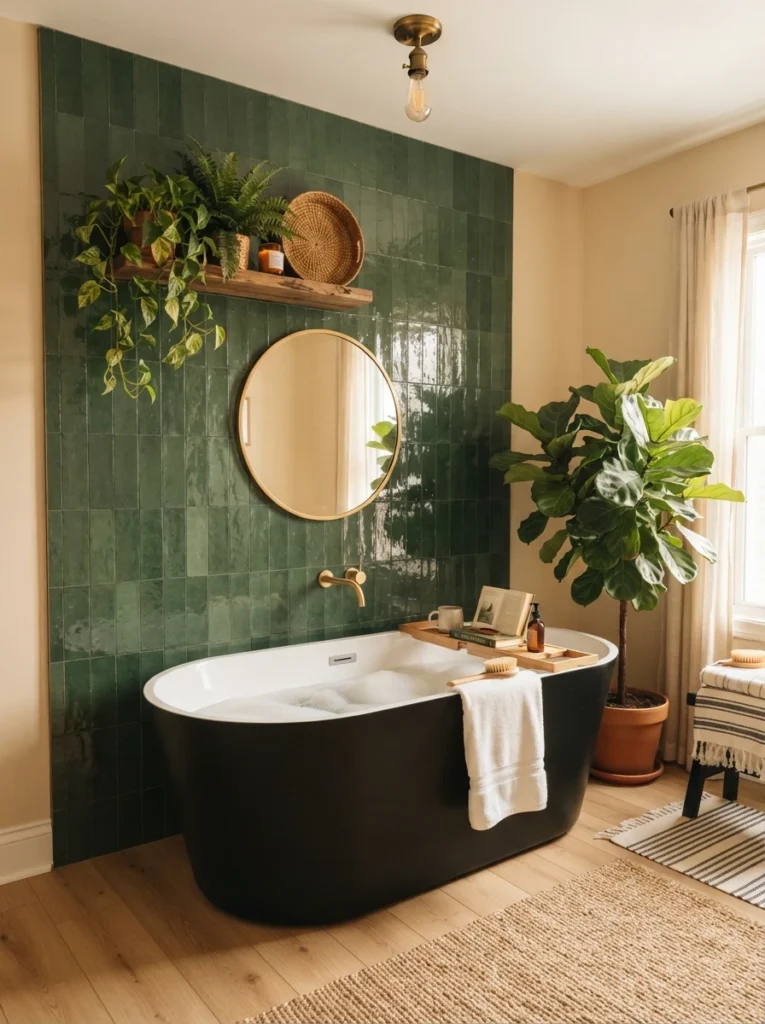
4. Use a Green Tile Accent Wall Behind the Tub
A forest green tile accent wall positioned behind a freestanding tub creates an instant focal point while letting you use a bold, saturated green without tiling the entire room. This approach is more budget-friendly than a full installation, and if the color ever feels dated, only one wall needs replacing rather than the whole room.
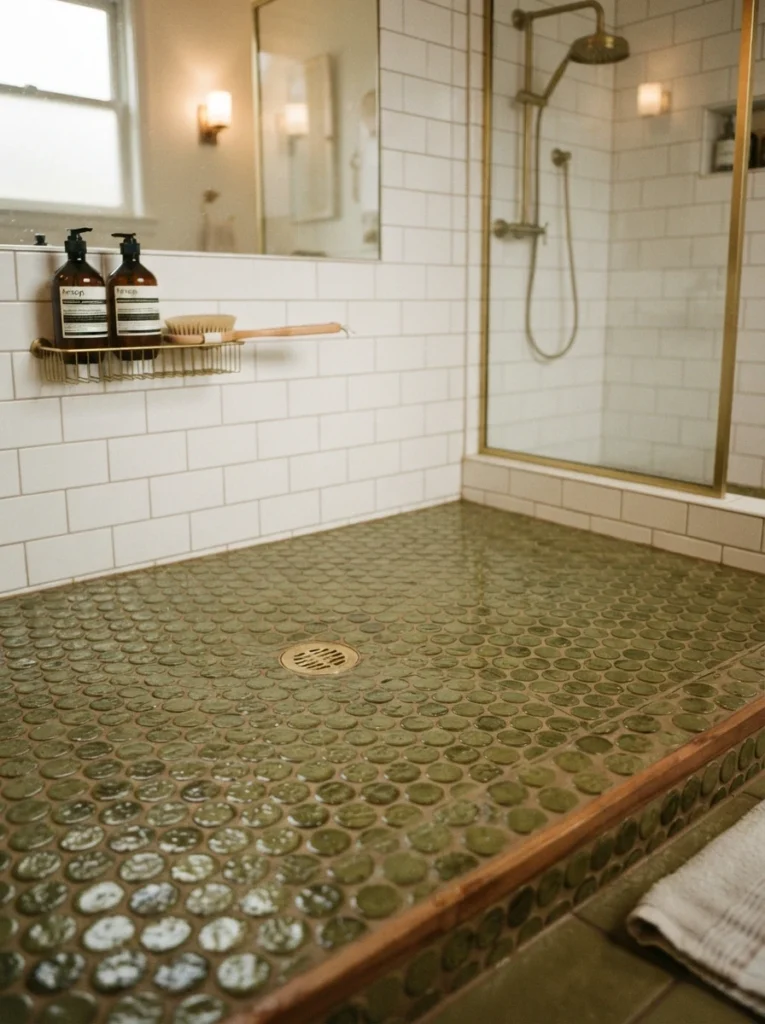
5. Add Olive Penny Tiles to the Shower Floor for Grip and Vintage Charm
Small round olive penny tiles on a shower floor provide genuinely useful grip underfoot while adding a vintage feel that’s trending heavily in 2026. The muted olive tone feels earthy and grounding, offering both function and charm in a spot that’s often purely utilitarian.
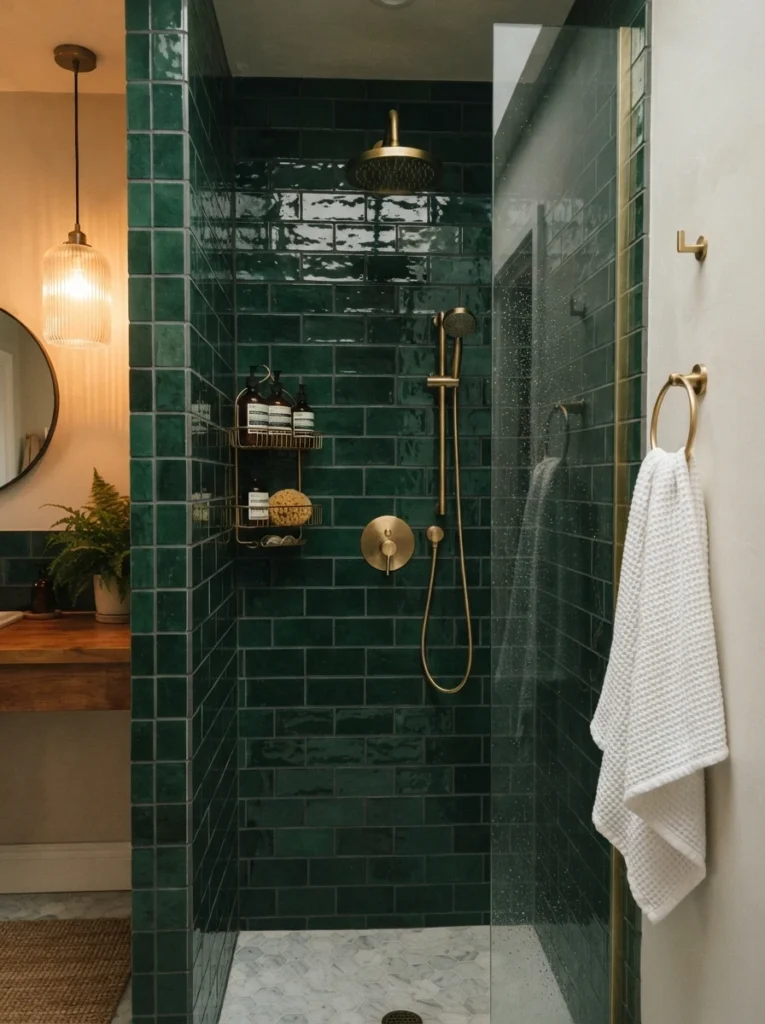
6. Choose a Dark Emerald Subway Tile for Instant Drama
A dark emerald subway tile shower creates immediate drama without tipping into overwhelming, since the classic subway layout keeps the overall look grounded even as the rich green adds depth and sophistication. This combination works especially well in bathrooms with ample natural light, where the tile’s color can really breathe.
7. Pair Sage Green With Brushed Brass Hardware
Brushed brass hardware softens sage green beautifully, while the green in turn keeps the brass from feeling overly shiny or formal, together creating the soft luxury-hotel feeling that’s defining a lot of current bathroom design. Brushed brass specifically tends to read as softer and more timeless than a more reflective, polished gold finish.
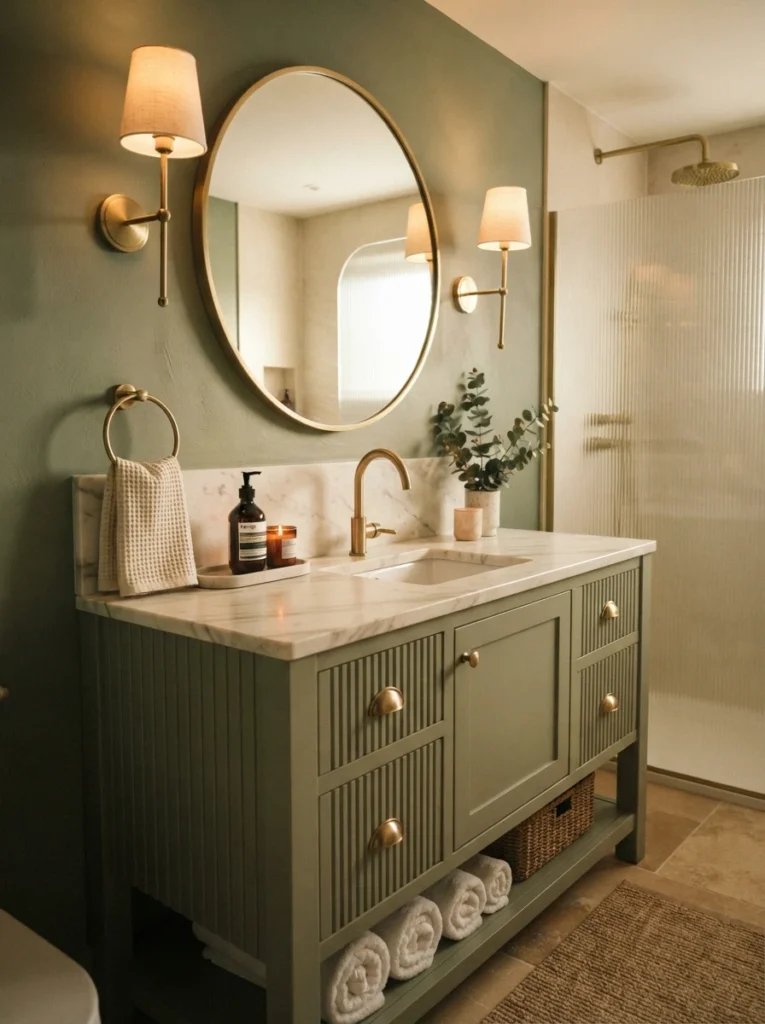
8. Match Wood Undertones Carefully to Avoid Clashing With Green
Sage green’s subtle gray undertone can clash badly with warm, orange-toned woods like golden oak, so choosing cooler-toned woods like white oak, ash, or walnut instead keeps the whole palette cohesive. This kind of careful undertone matching is what separates a green bathroom that looks intentional from one that feels slightly off without anyone being able to say exactly why.
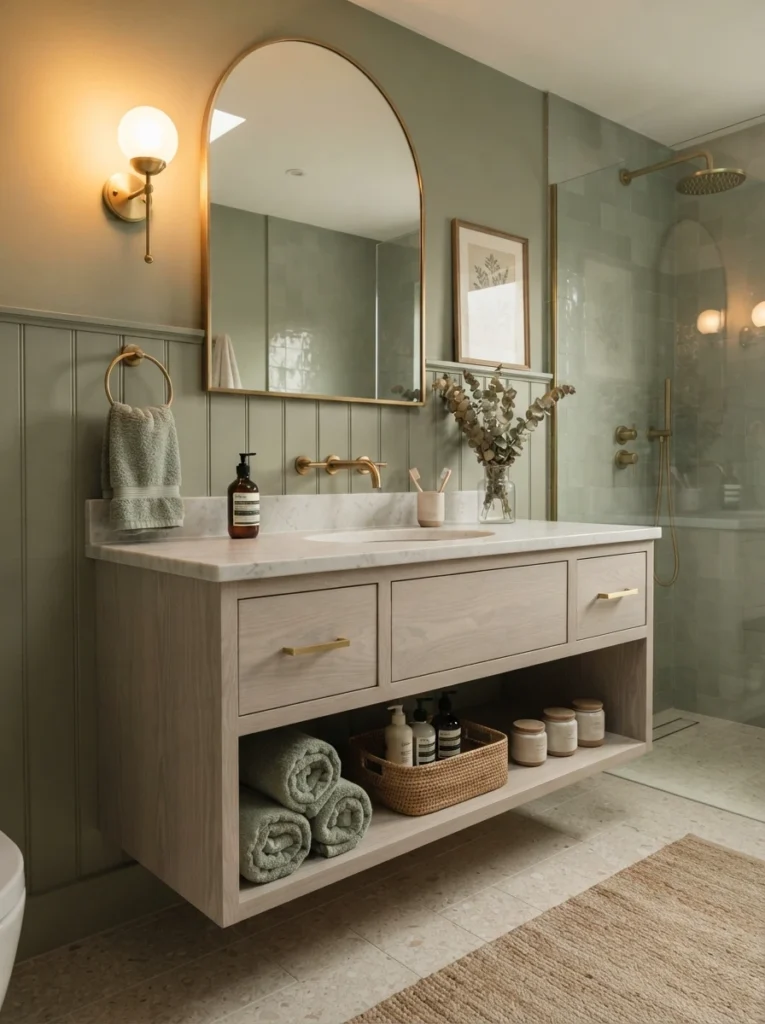
9. Use Light to Mid Sage for a Full Room, Save Deep Green for Accents
Light to mid sage tones, generally in the 40 to 60 LRV range, flatter a full small bathroom without making it feel closed in, while much deeper blackened greens under 20 LRV work better confined to a single vanity wall, a powder room, or below a chair rail. Matching the depth of green to how much of the room it’s actually covering keeps the color from overwhelming a daily-use space.
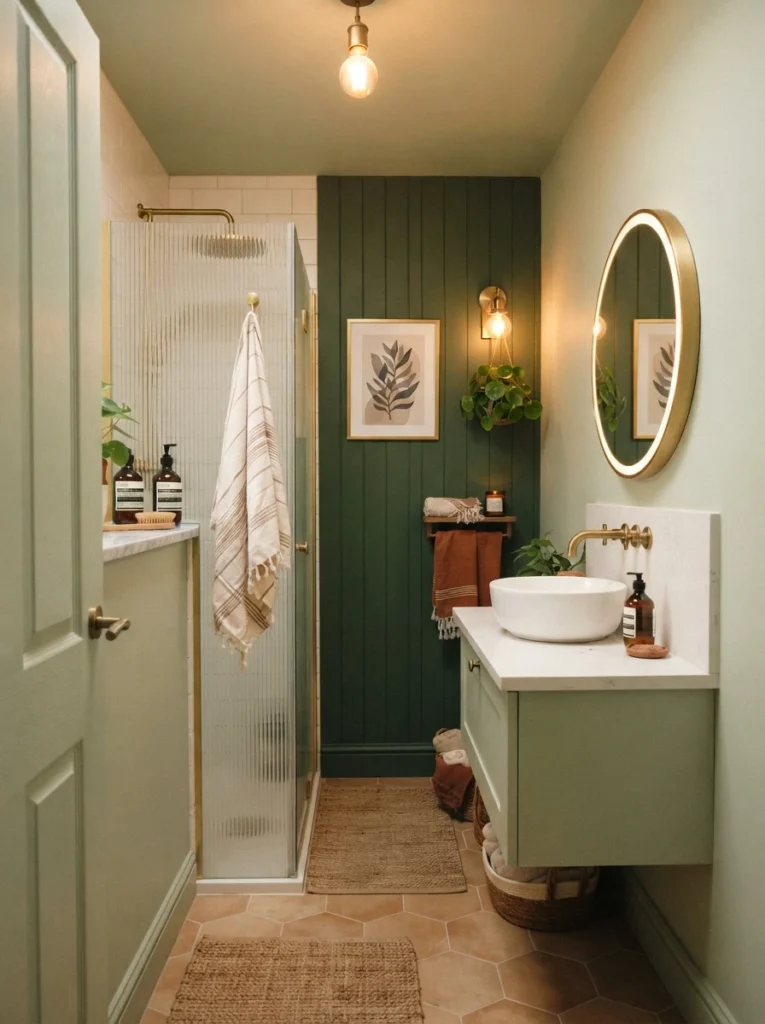
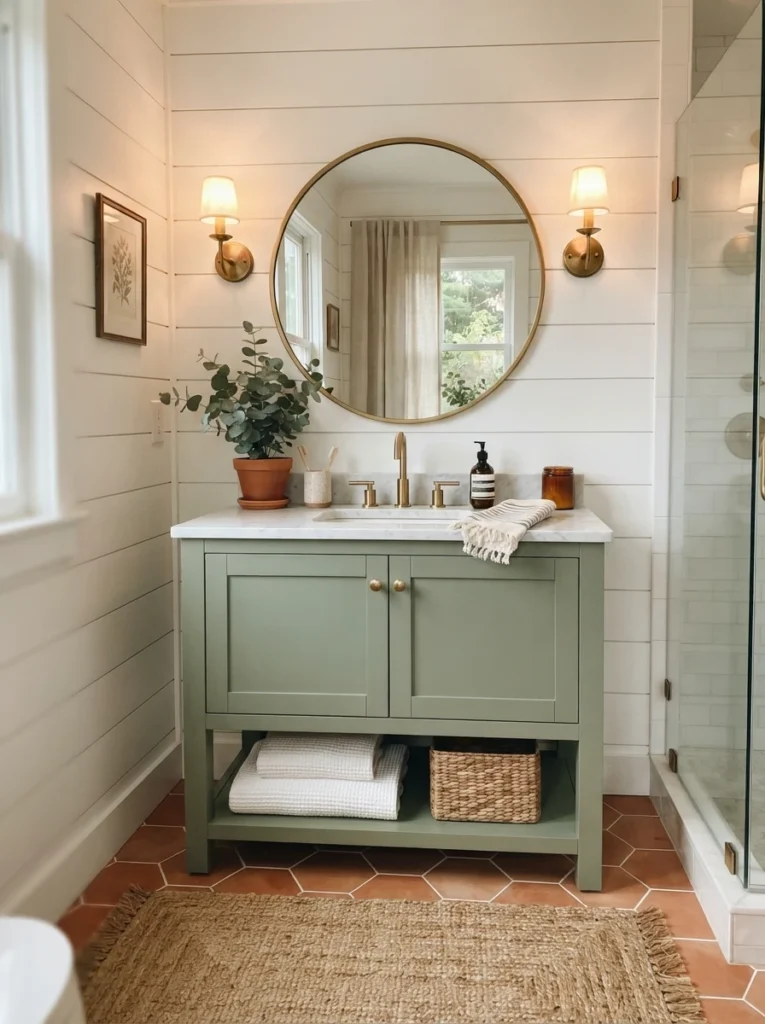
10. Let a Sage or Gray-Green Vanity Do the Color Work Under White Walls
Painting or choosing a sage or gray-green vanity while keeping the surrounding walls white delivers a custom, designed look without committing the entire room to color. It’s one of the lowest-risk ways to introduce green into a rental-friendly or resale-minded bathroom, since repainting just the vanity is a far smaller undertaking than a whole room.
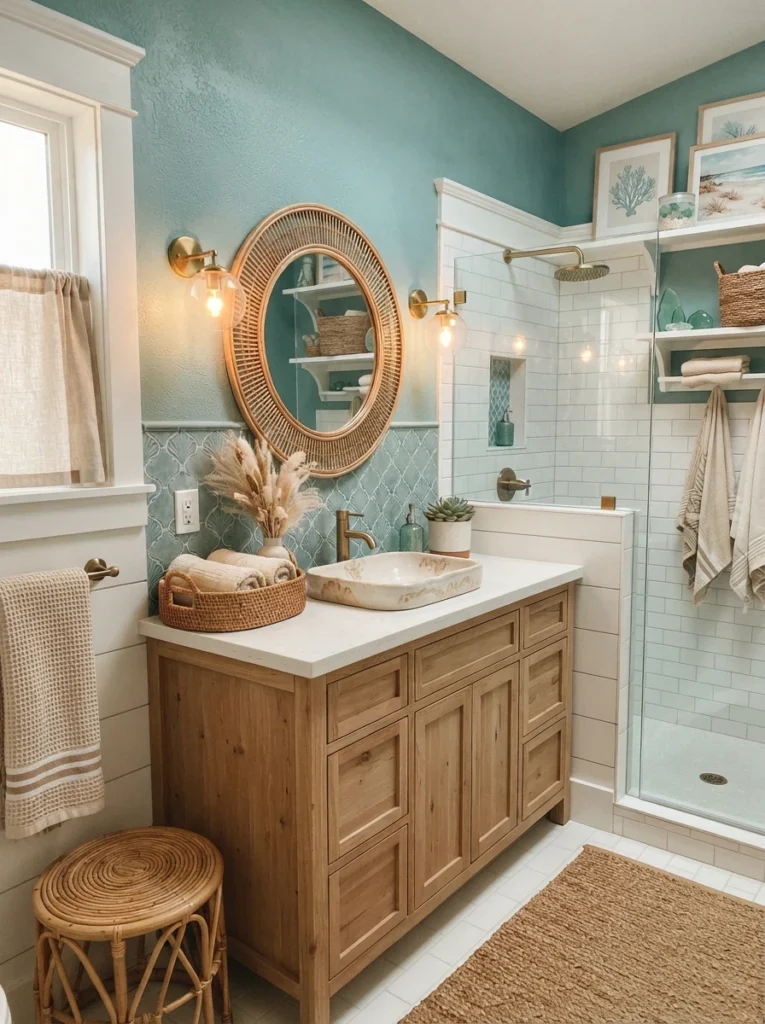
11. Try a Blue-Green for a Coastal, Sea-Glass Feel
A green that leans gently toward blue reads like sea glass and suits a beachy or coastal-styled bathroom particularly well. Keeping the trim bright white and adding natural rattan or jute accents reinforces that coastal feeling without needing to introduce any additional colors.
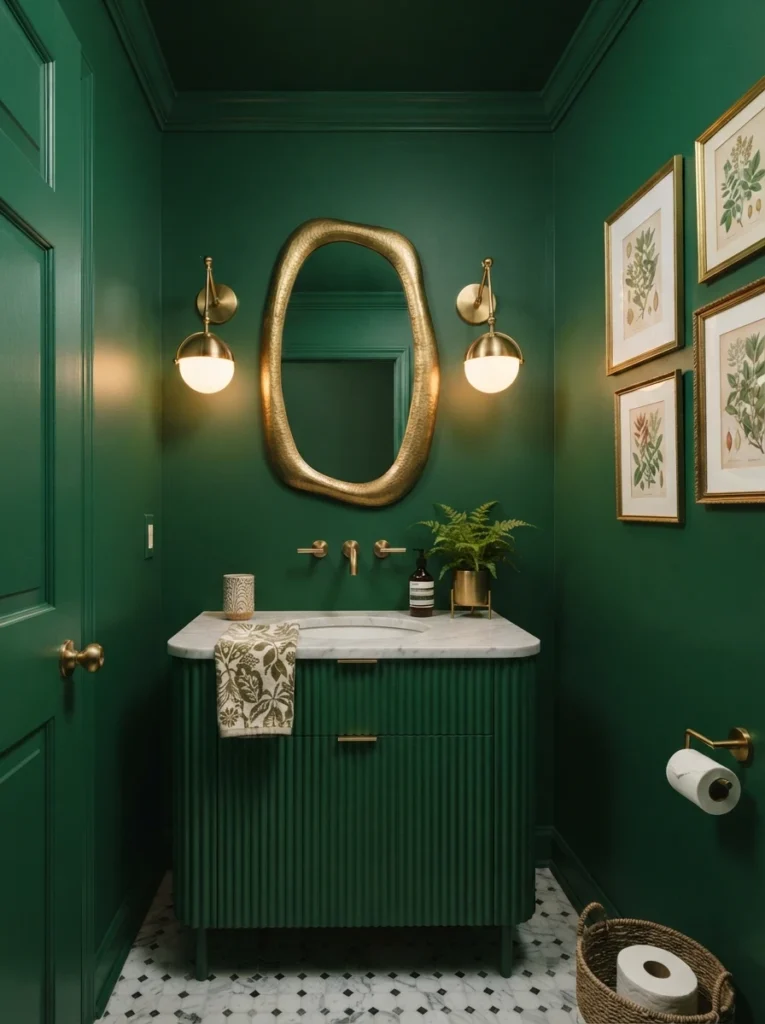
12. Take a Bigger Color Risk in a Powder Room
Since nobody actually showers in a powder room, it’s the lowest-stakes place in the house to commit to a bolder, fully saturated green wrapped across all four walls. Brass hardware and a statement mirror finish off the look, turning a small guest bathroom into a genuine surprise for visitors.
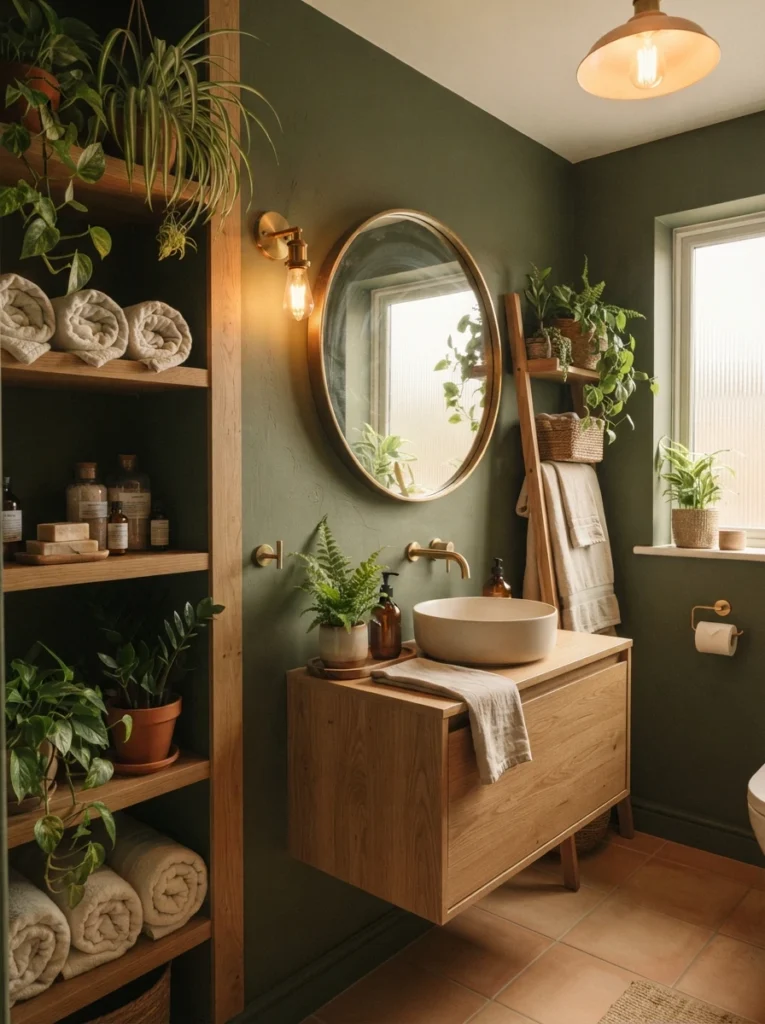
13. Layer Green With Plants, Wood, and Linen So It Reads as a Neutral
Green works best when treated like a neutral rather than a standalone statement color, layered in alongside wood tones, linen textiles, and real or faux plants to create a space that feels grounded and lived-in. This layering approach is what keeps a green bathroom feeling serene rather than like a single loud design choice.
14. Use Green in a Room With Good Natural Light to Let the Tone Shift
Green tones shift beautifully throughout the day in a bathroom with good natural light, reading as cooler and more mint-like in the morning and warming toward olive in the afternoon. A room with a skylight or a good-sized window is the ideal candidate for a richer, more saturated green, since the daylight change becomes part of the room’s daily character.
![A green bathroom with natural light shifting the tone throughout the day, skylight or window visible, warm bathroom lighting, vertical Pinterest photography, warm daylight-shifting styling.]
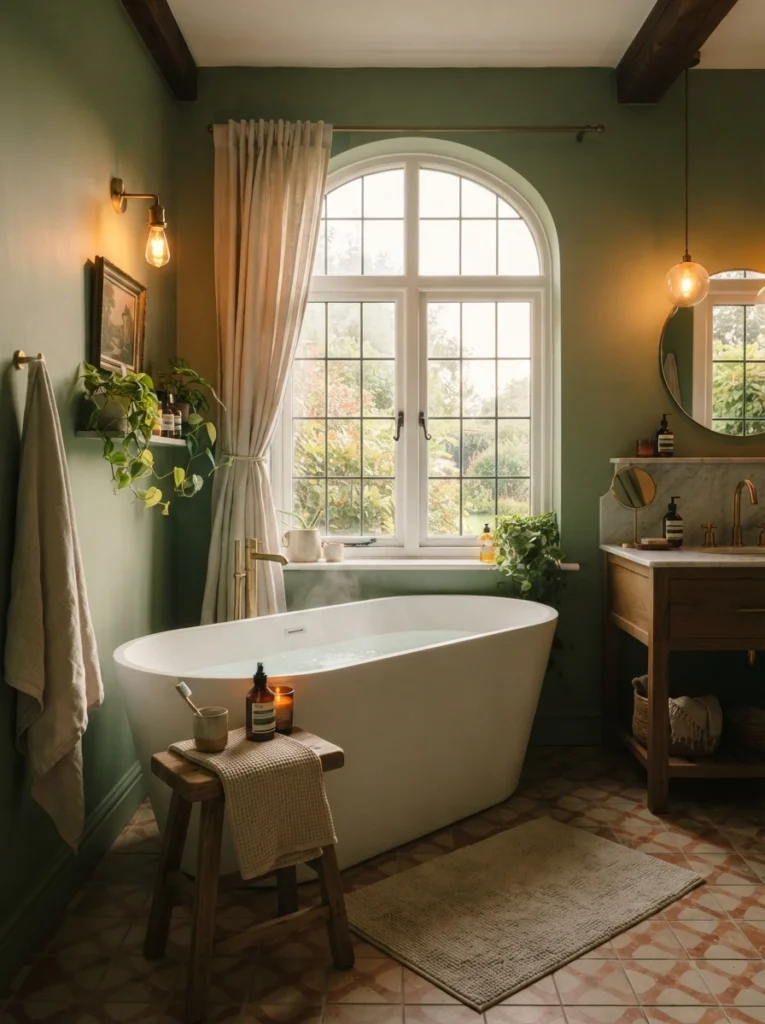
15. Keep the Rest of the Palette Simple, Cream, Stone, and One Metal Finish
The most successful green bathrooms tend to stay within one softer, earthy palette, cream, beige, oak, stone, and a single muted green, layered together naturally rather than introducing several competing colors around the green itself. Sticking to one metal finish throughout, rather than mixing several, keeps the whole room reading as calm and cohesive instead of visually busy.
Green earns its place as one of the most versatile bathroom colors available because it can flex from a nearly neutral sage to a dramatic forest accent depending on how much of it you use and where. Get the undertone and wood pairing right, keep the rest of the palette simple, and green becomes one of the most forgiving, long-lasting choices you can make in a room that has to work through years of steam, water, and daily use.