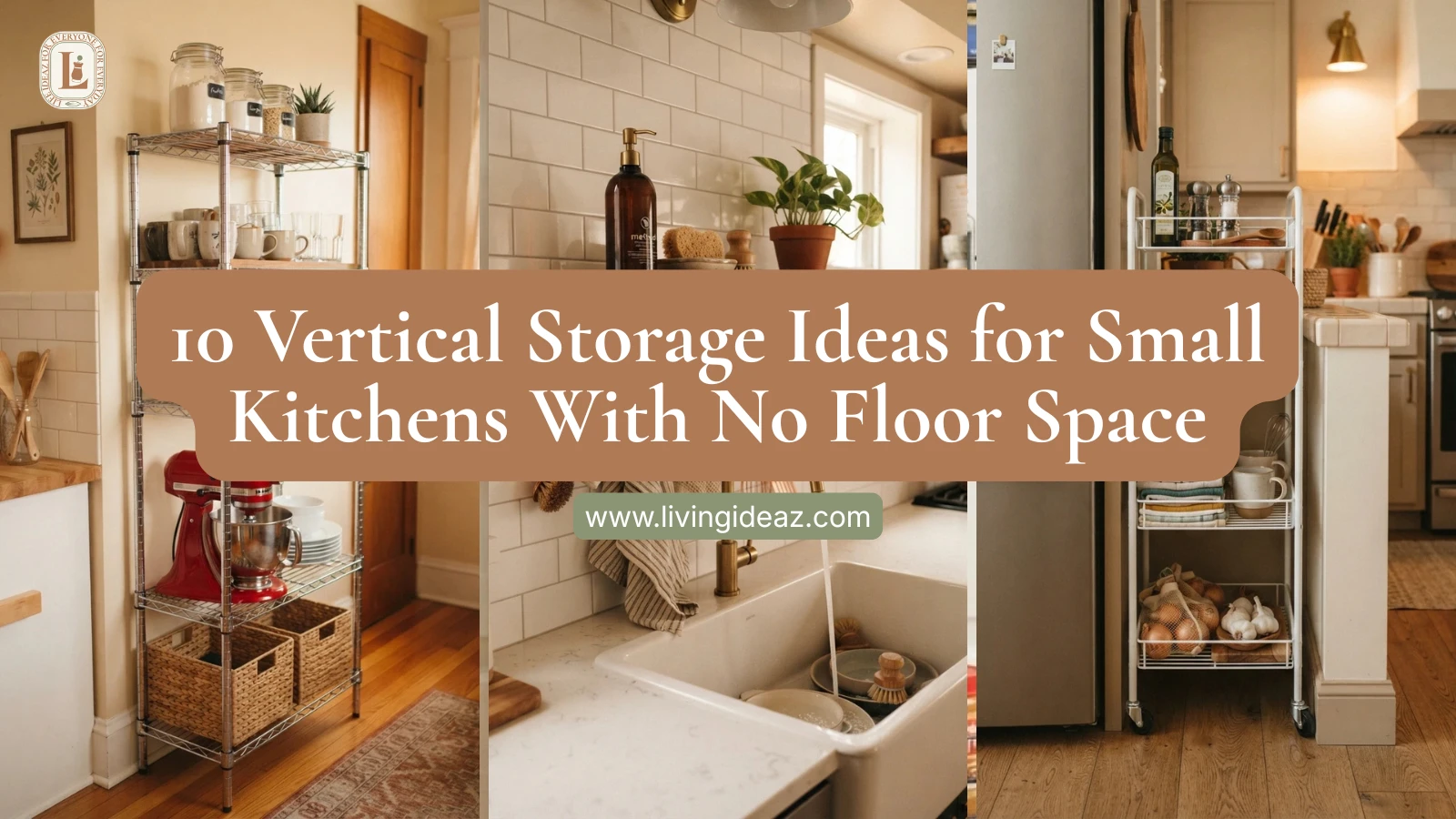
10 Vertical Storage Ideas for Small Kitchens With No Floor Space
TL;DR: When a small kitchen has no room left on the floor, the wall and ceiling become the only real growth opportunities. Floating shelves, hanging pot racks, and floor-to-ceiling cabinets all trade horizontal square footage for vertical inches, and there’s usually more of that available than people realize. A tall, narrow kitchen can end up with more usable storage than a wider one, simply because it’s using a dimension most kitchens leave completely untouched.
Once every cabinet and drawer in a small kitchen is full, the instinct is to assume you’re out of options. But most kitchens still have an entire dimension sitting unused, straight up. Walls between the counter and ceiling, the space above upper cabinets, even the area over a sink or window, all represent storage that doesn’t require a single square foot of floor space to claim. Going vertical isn’t a workaround for a small kitchen, it’s often the single biggest source of untapped capacity in one.
Here are 10 vertical storage ideas for a small kitchen that genuinely has nowhere left to expand outward.
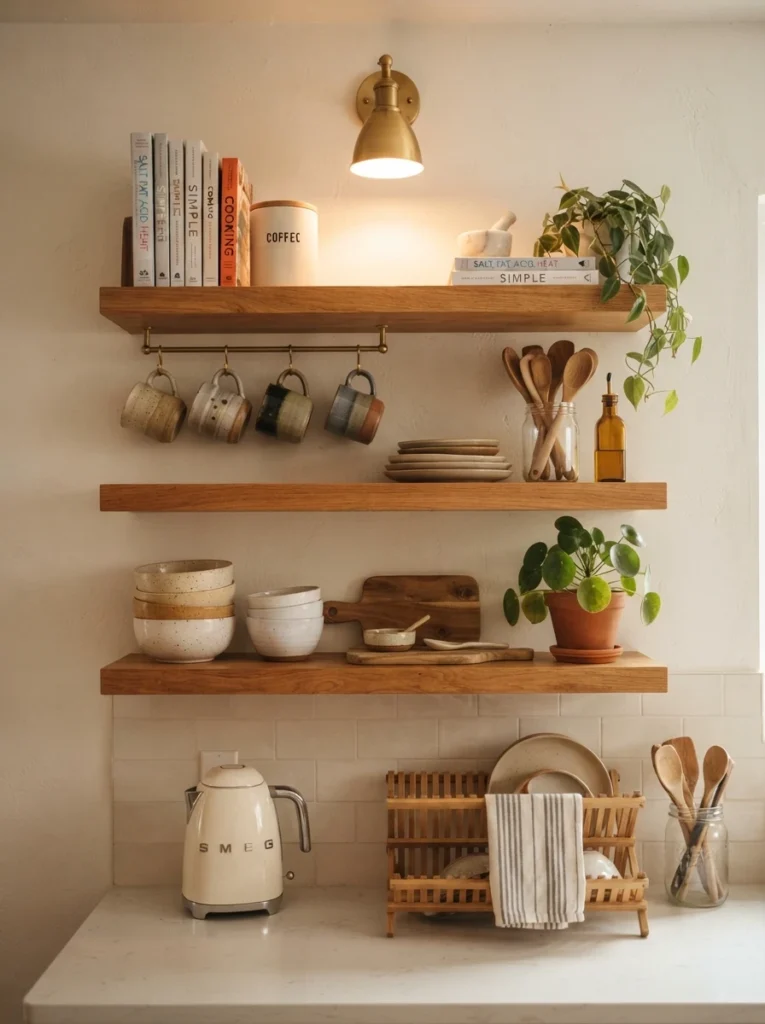
1. Install Floating Shelves on Any Blank Wall
A floating shelf claims wall space without needing any floor footprint at all, which makes it one of the most efficient storage additions a small kitchen can get. Mounted between the counter and eye level, floating shelves work especially well for items you reach for daily, since nothing needs to be dug out from behind a cabinet door.
2. Hang a Pot Rack From the Ceiling or a Wall Bracket
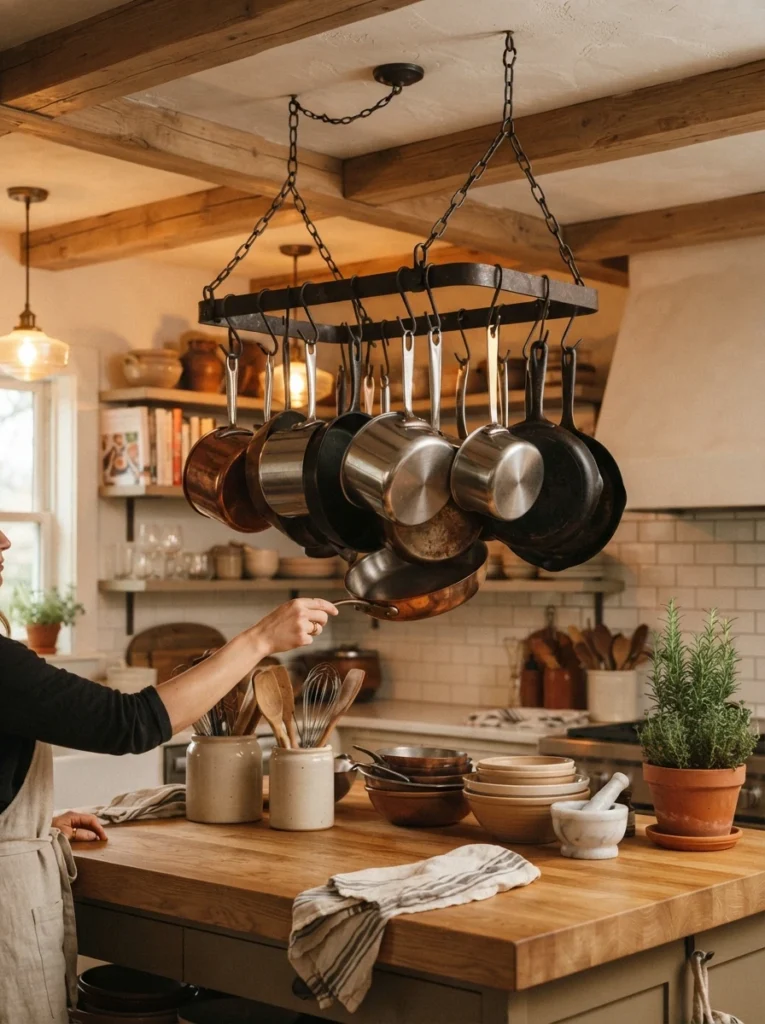
Pots and pans are some of the bulkiest, most awkward items to store in cabinets, and they’re also some of the easiest to move to a hanging rack instead. A ceiling-mounted or wall-bracket pot rack frees up an entire section of lower cabinet space while keeping cookware fully visible and within reach.
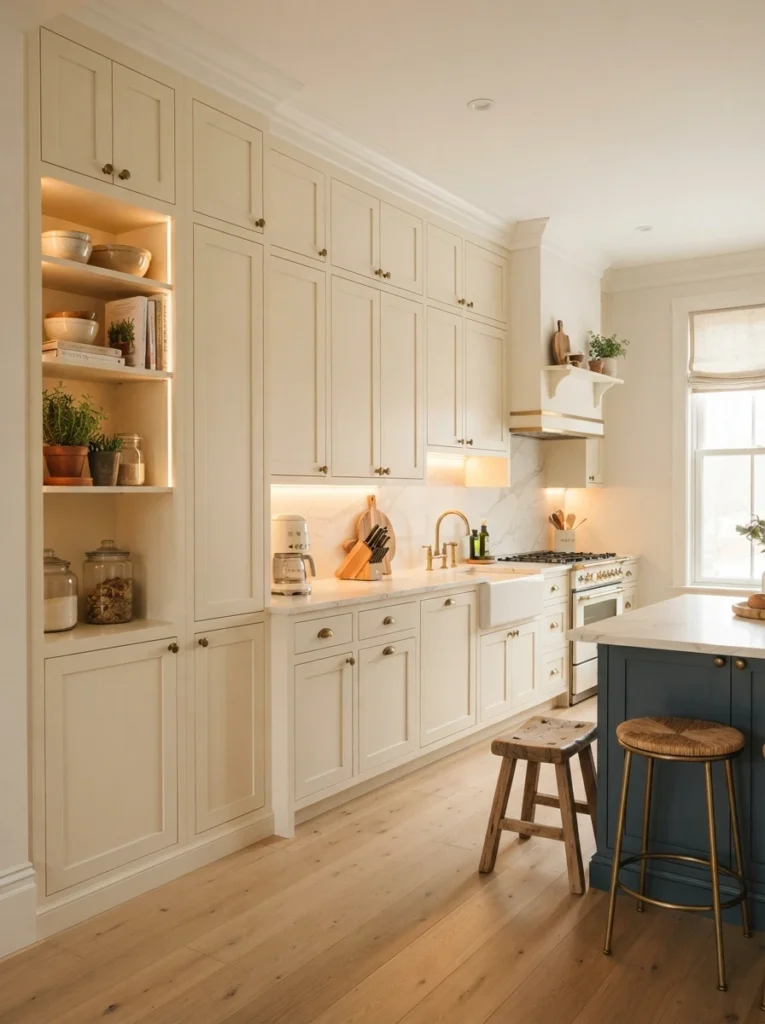
3. Take Cabinets All the Way to the Ceiling
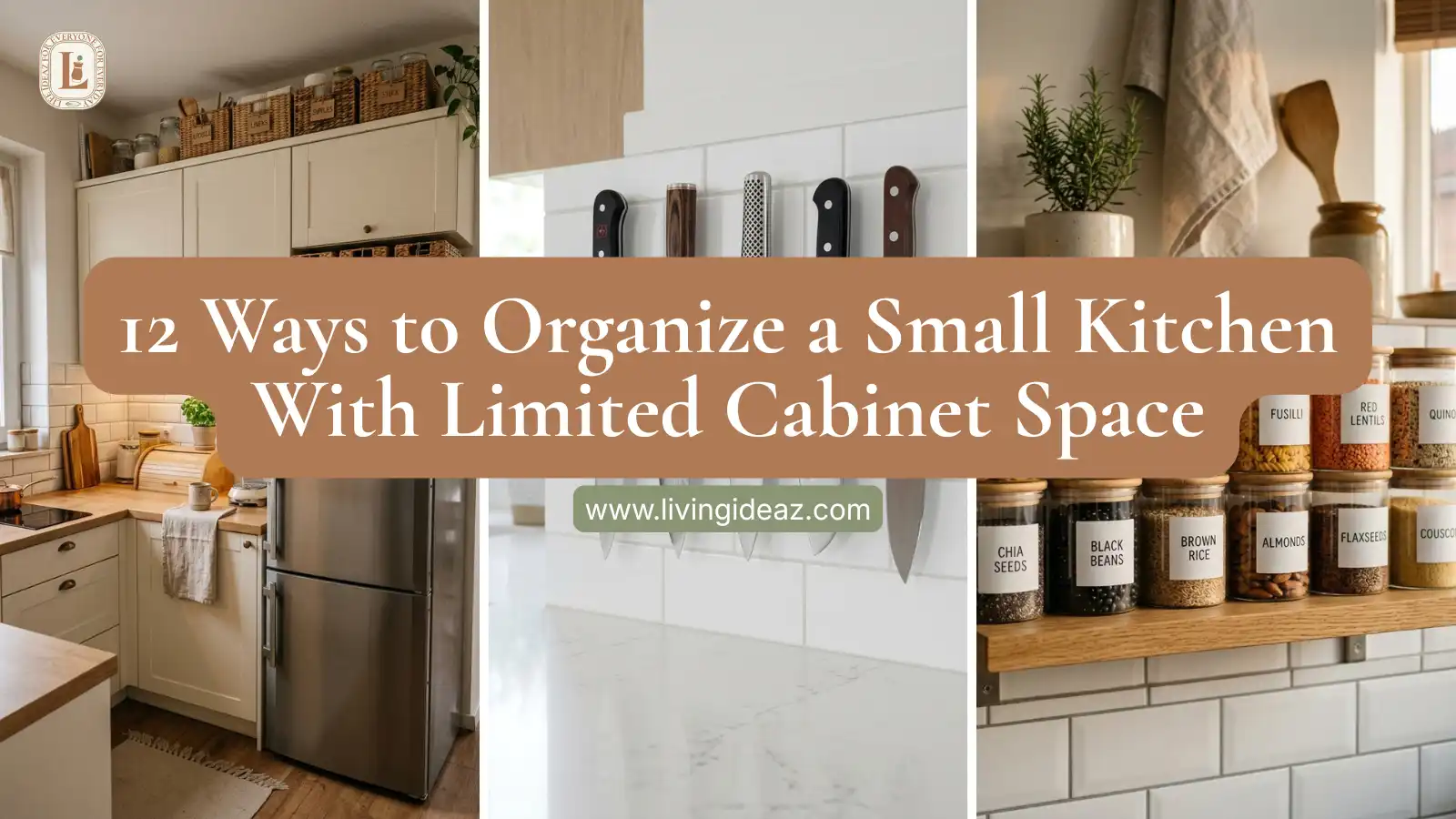
Standard upper cabinets often stop well short of the ceiling, leaving a strip of dead space above them that never gets used. Extending cabinetry the full height of the wall can add well over a foot of additional storage around the entire kitchen’s perimeter without taking up any more floor space than the cabinets already occupy.
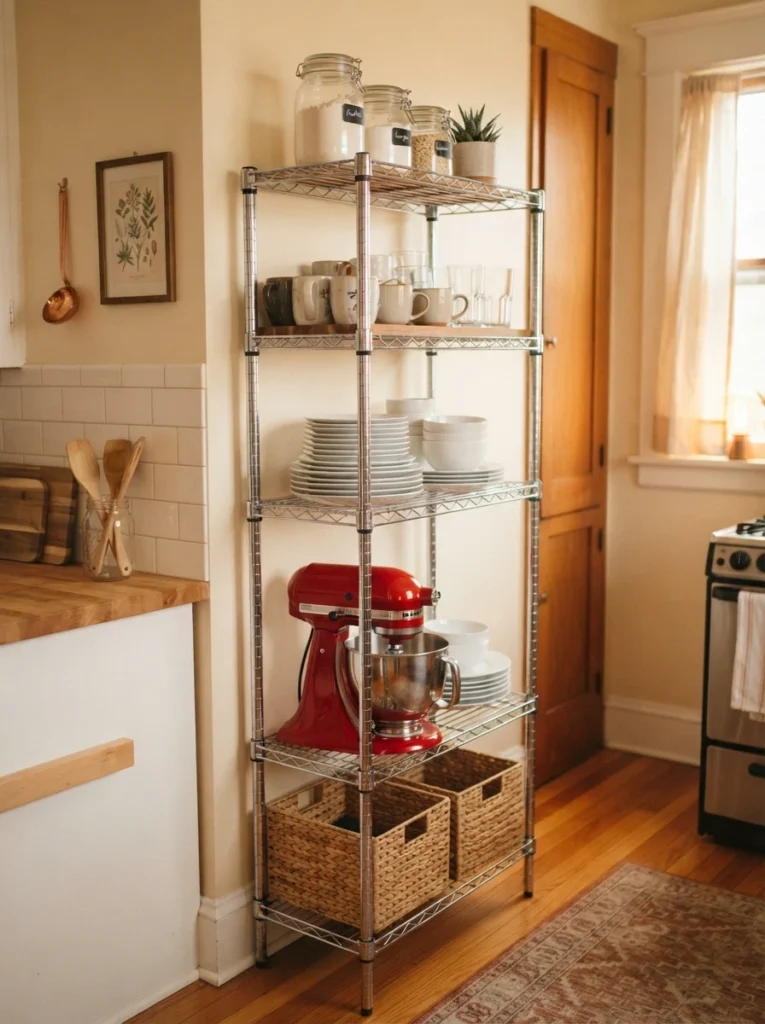
4. Use a Tall, Narrow Wire Shelving Unit for Bulky Appliances
A bulky stand mixer or a similarly awkward appliance doesn’t need to live on the counter just because it’s heavy. A tall, narrow wire shelving unit can hold it, along with extra dinnerware or bulk pantry goods, using a footprint no wider than the appliance itself.
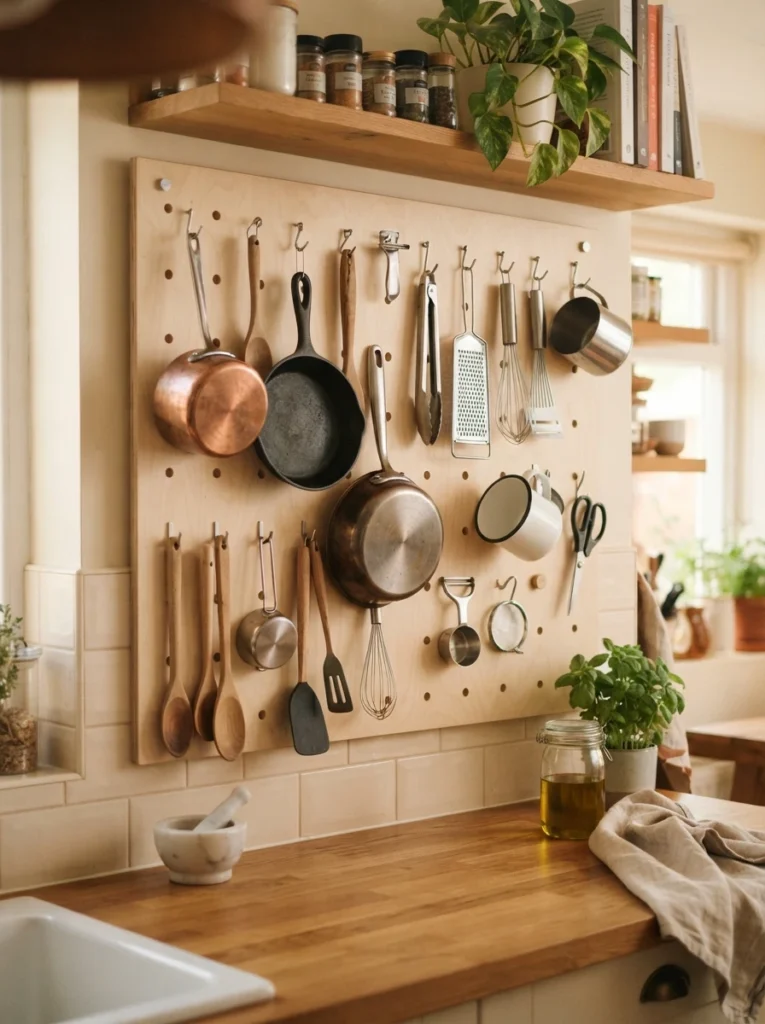
5. Mount a Pegboard for Fully Customizable Vertical Storage
A pegboard turns an entire wall into flexible, rearrangeable storage, since hooks and small shelves can move around any time your needs change. Utensils, spatulas, and even small pans can all hang here, and because nothing is fixed in place, the layout can evolve as your kitchen tools change over time.
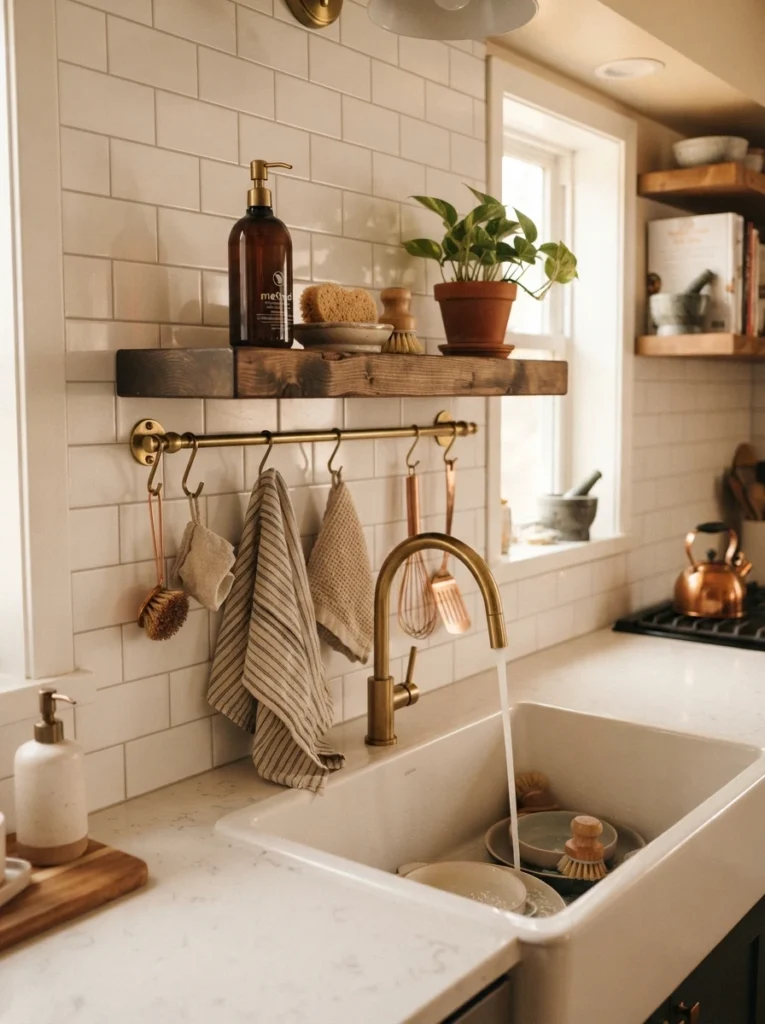
6. Add a Shelf or Hanging Bar Above the Sink
The wall space above a kitchen sink is almost always empty, despite sitting at a height that’s easy to reach. A small shelf or a hanging bar with a few hooks there can hold soap, a sponge, or a small towel, without taking up an inch of counter on either side of the sink.
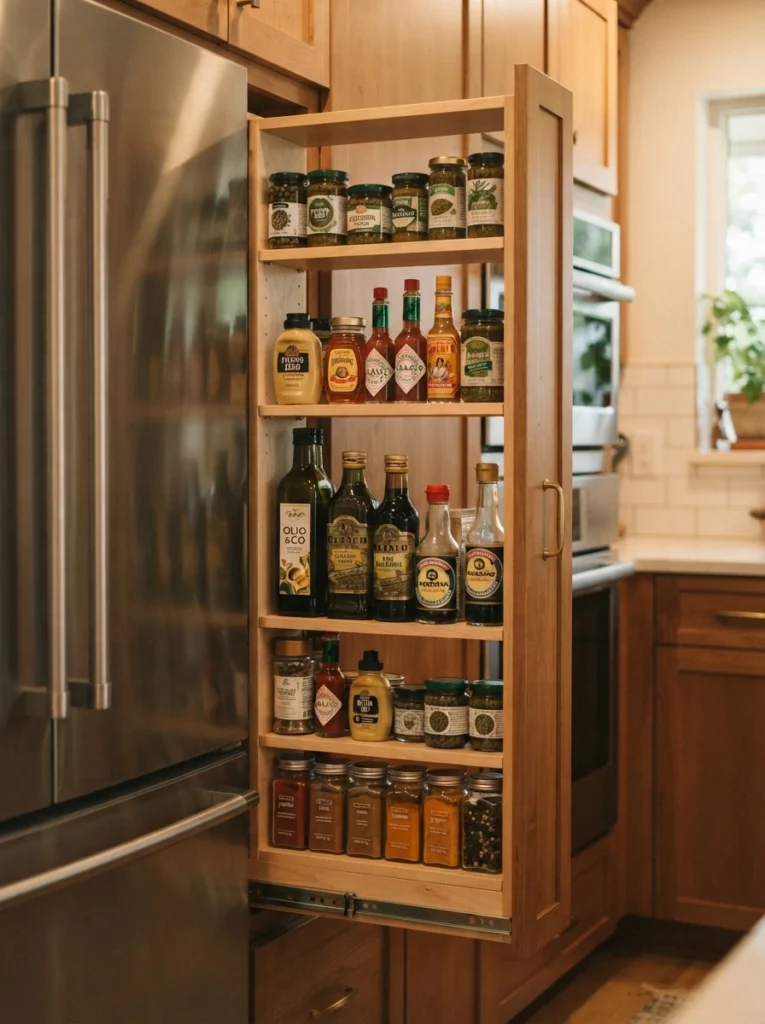
7. Store Bottles and Jars on Narrow, Deep-Enough Shelving
A shelf doesn’t need much depth to hold a single row of bottles or jars, and a narrow vertical unit tucked into a gap between appliances or cabinets can hold a surprising amount without ever competing for floor space. Just deep enough for one row keeps everything visible instead of stacking two rows deep and losing track of what’s behind.
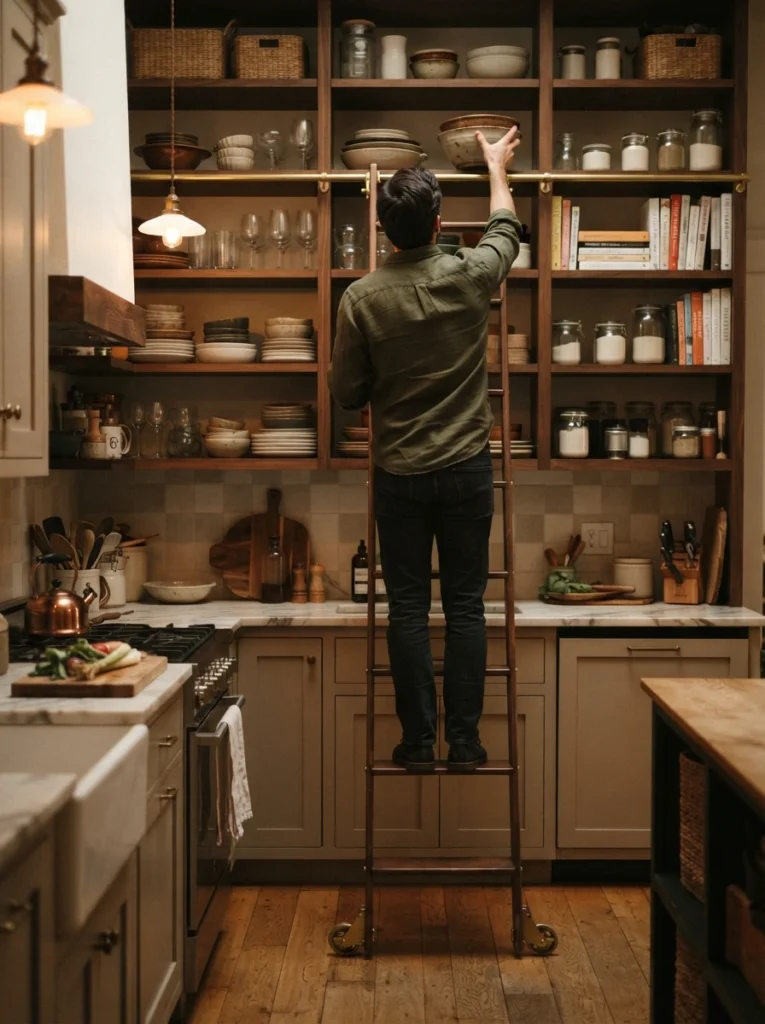
8. Use a Rolling Ladder for Genuinely High Storage
Storing rarely used items on very high shelves only works if you can actually reach them safely. A small rolling library ladder solves that problem directly, letting you make full use of tall vertical storage that would otherwise sit unused simply because it felt out of reach.
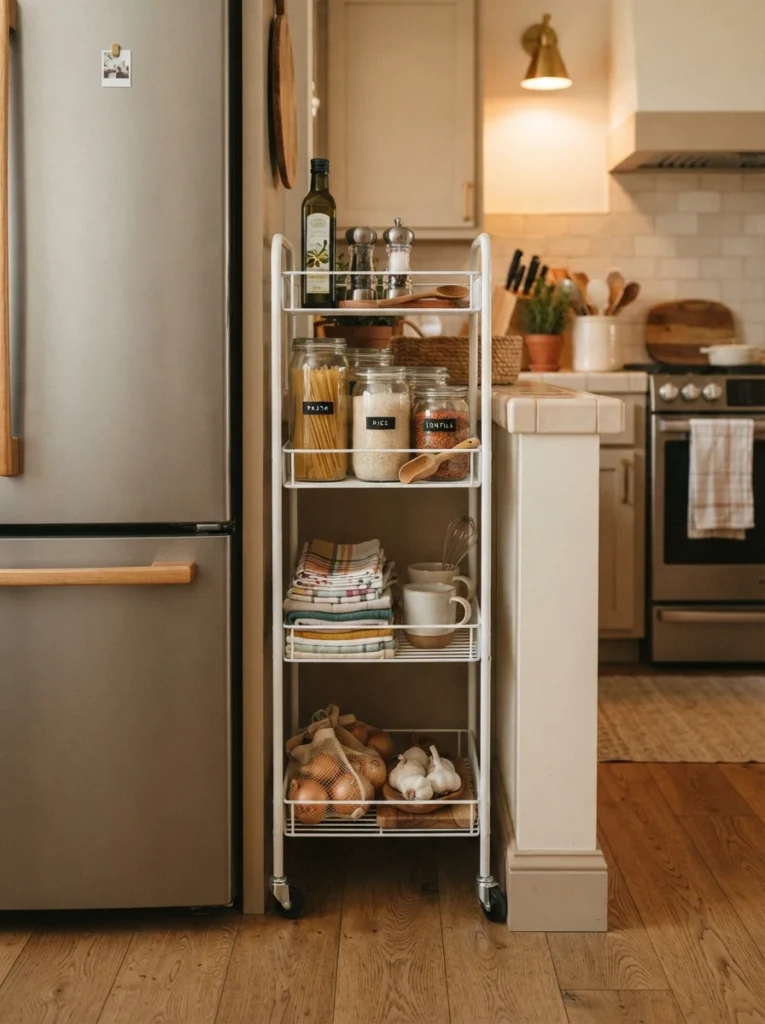
9. Use a Slim Rolling Cart to Fill Vertical Gaps Between Appliances
Narrow gaps between a fridge and a wall, or between two appliances, often go completely unused simply because nothing standard fits there. A slim rolling cart, sized specifically for that gap, can slide in and provide several tiers of storage in a space that would otherwise be wasted entirely.
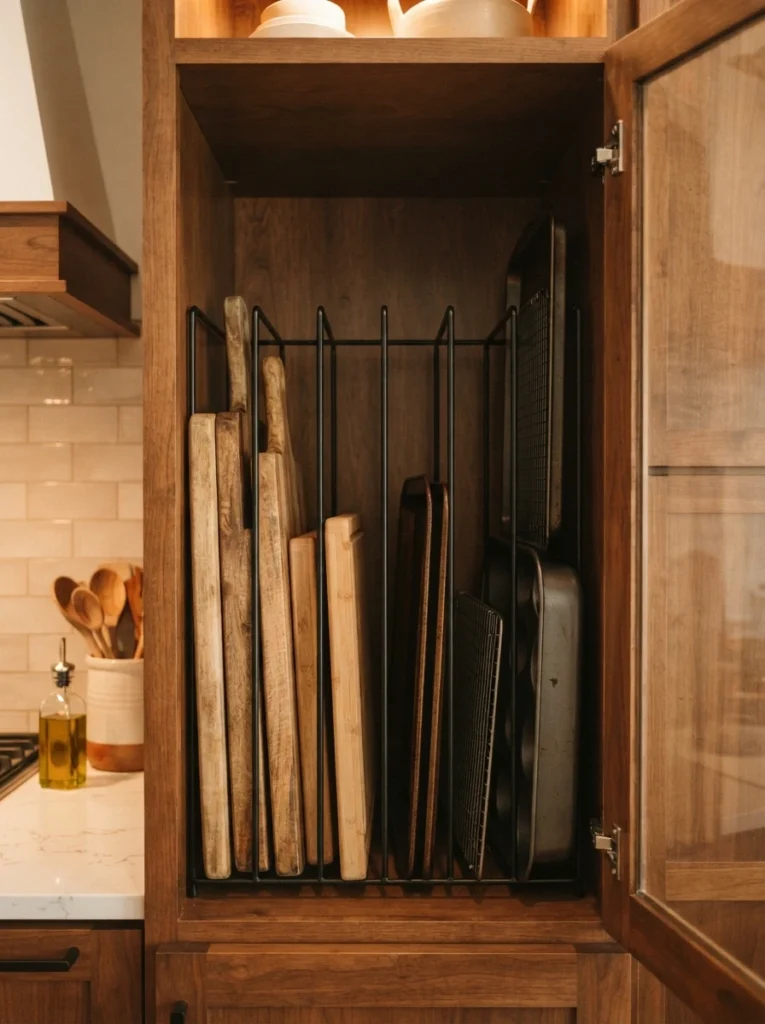
10. Store Cutting Boards and Trays Vertically Instead of Stacking Them
Flat items like cutting boards, baking sheets, and trays waste vertical shelf space when stacked flat, since you can only ever reach the top one easily. Storing them standing upright in a vertical slot, even a simple wire divider, means every piece is visible and grabbable without moving the rest.
Floor space in a small kitchen is a fixed number, but wall and ceiling space rarely gets used to its actual limit. Once shelves, racks, and cabinets start climbing toward the ceiling instead of spreading across the counter, a kitchen that felt completely maxed out often turns out to have plenty of room left, just in a direction most people never think to look.