13 Kitchen Organization Ideas for Rentals With No Extra Storage
TL;DR: When a rental kitchen genuinely has nowhere left to put anything, the fix usually involves borrowing space that isn’t technically “kitchen” at all, the sides of cabinets, the top of the stove, a neighboring room, or the door itself. None of it requires permission or permanence. Once you start counting every surface instead of just the obvious ones, a kitchen that felt impossible to organize usually has more room than it first appeared to.
Some rentals don’t just have small kitchens, they have kitchens with almost no storage at all. One shallow cabinet, a fridge with no freezer drawer to speak of, and a single stretch of counter that’s already spoken for by the stove. When you’ve already tried the usual tricks and there’s still nowhere to put things, the answer isn’t necessarily buying more bins. It’s noticing the surfaces you haven’t counted as storage yet, because in a kitchen this tight, almost every one of them can hold something.
Here are 13 kitchen organization ideas for rentals where extra storage genuinely doesn’t exist.
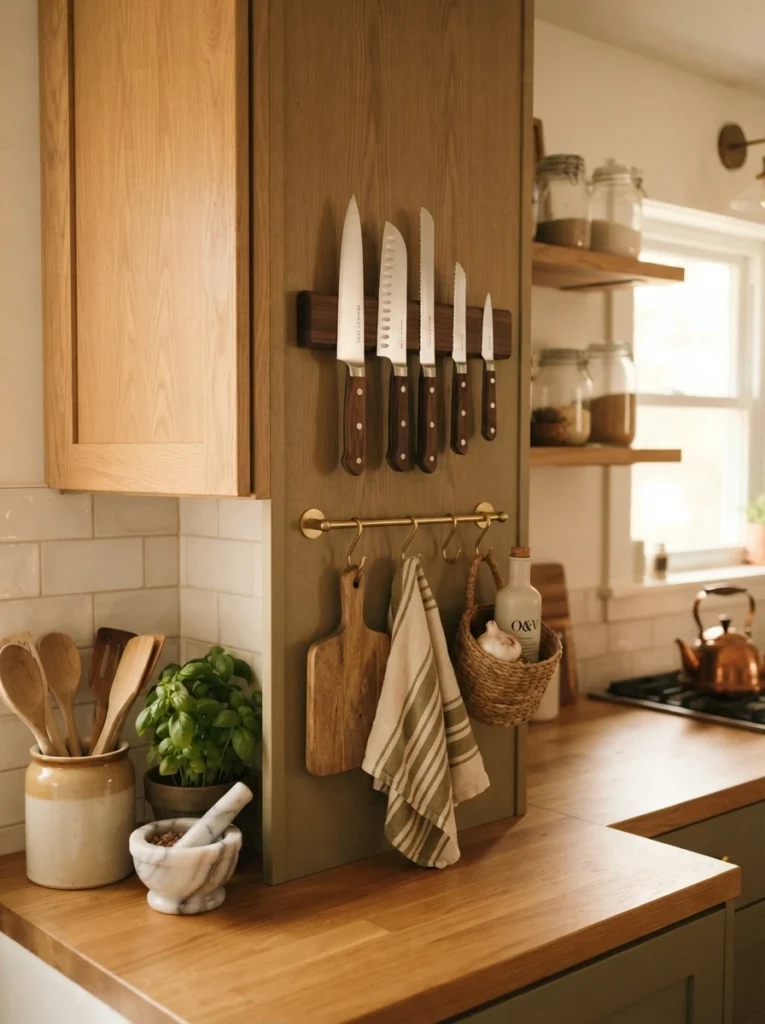
1. Use the Sides of Your Cabinets
The exposed side of a cabinet, especially at the end of a run, is a surface most people never think to use. A magnetic knife strip or a few adhesive hooks mounted there can hold tools and utensils without touching a single shelf or counter inch.
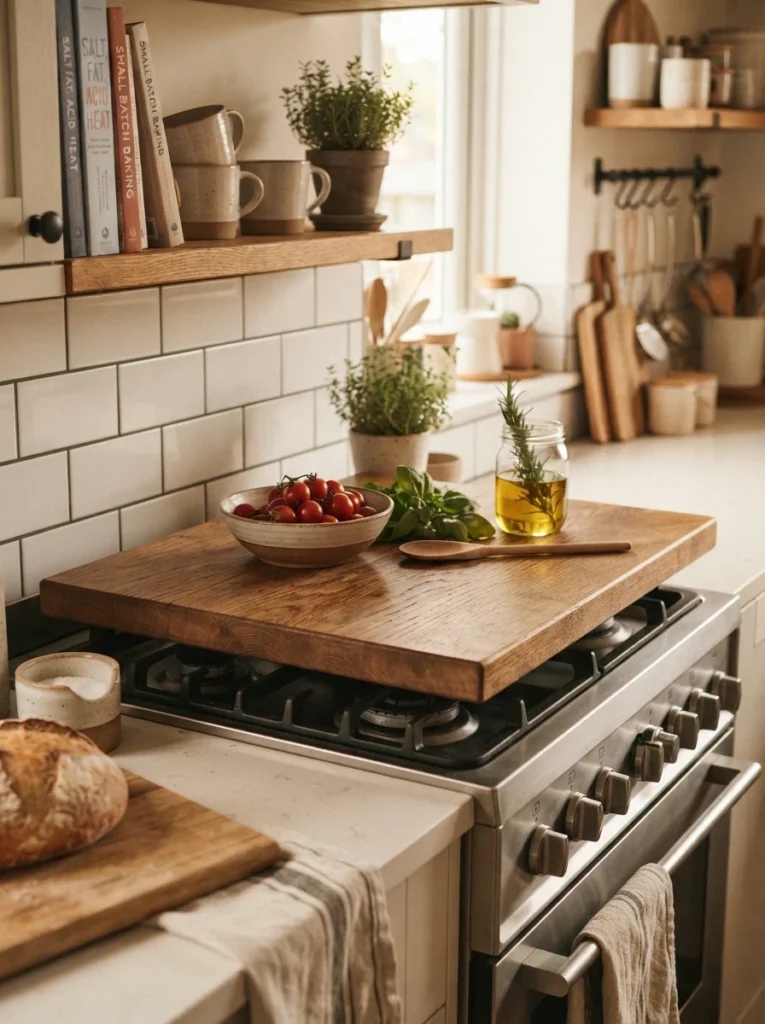
2. Add a Cutting Board Shelf Over the Stove When It’s Off
A sturdy piece of wood or a fitted cutting board placed over the stovetop when it’s not in use creates an instant extra surface for prep or temporary storage. It’s not something you’d do while actually cooking, but for the hours the stove sits idle, it adds real usable space.
3. Bring In a Small Freestanding Island if Floor Space Allows
Even a compact rolling island adds both storage and prep surface to a kitchen that has neither to spare. Since it’s freestanding, it can be pushed against a wall most of the time and pulled out only when you actually need the extra space.
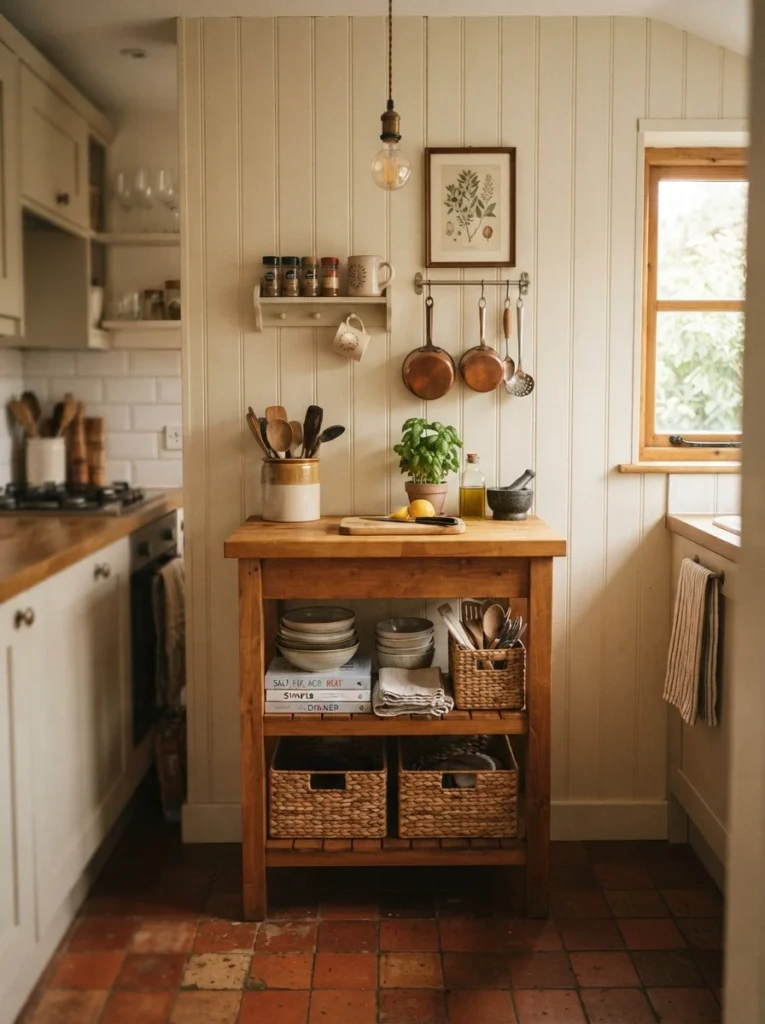
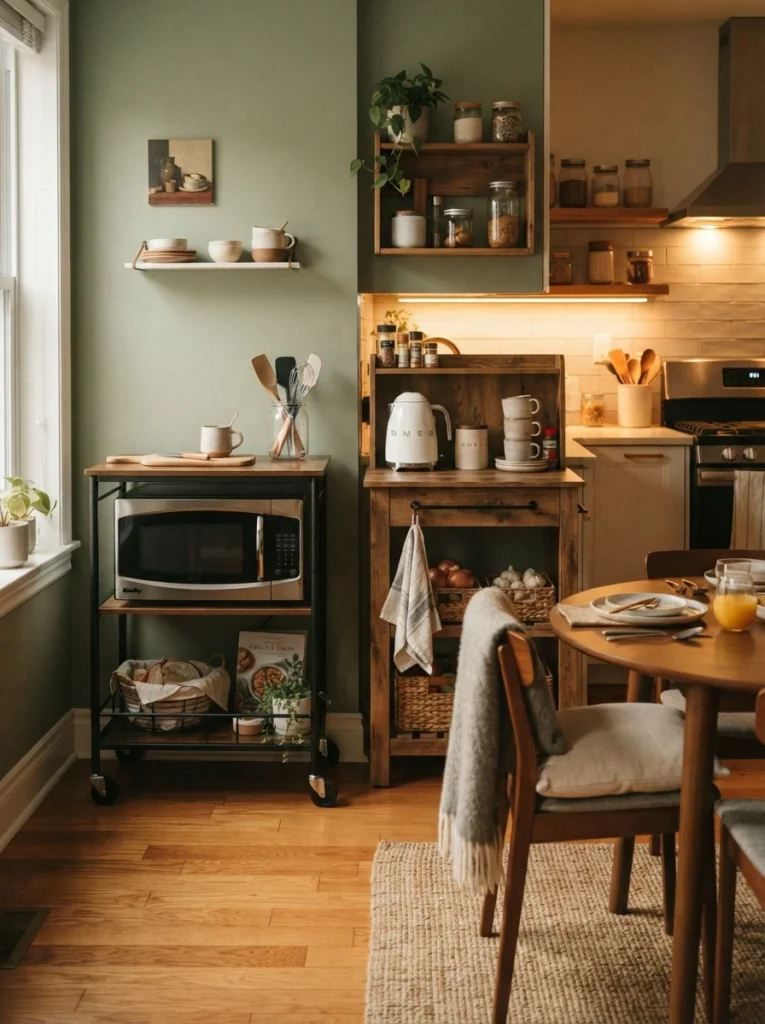
4. Treat a Neighboring Room as an Extension of the Kitchen
If a dining area or hallway sits right next to the kitchen, that space can absorb some of the overflow, a rolling cart, a microwave stand, or even a small coffee station. The fridge needs to stay in the kitchen for convenience, but plenty of other kitchen functions can spill just slightly beyond the room’s actual boundary.
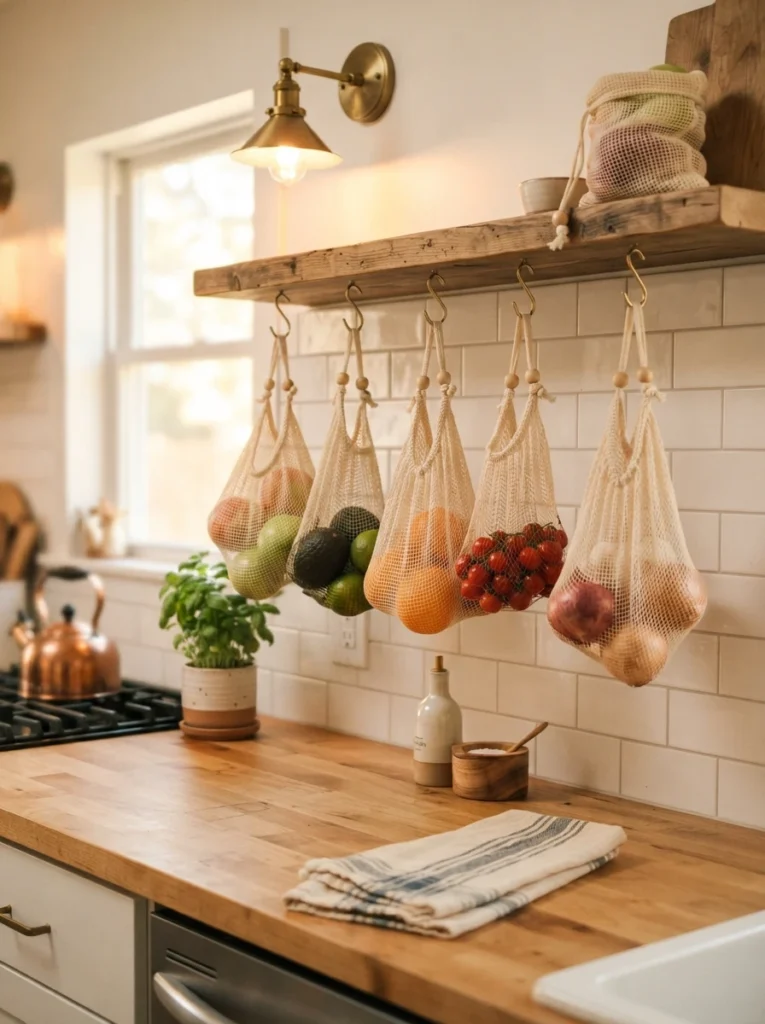
5. Hang Produce in Mesh or Net Bags Instead of Using a Bowl
A countertop fruit bowl takes up real surface space that a storage-starved kitchen can’t spare. Mesh produce bags hung at eye level keep fruits and vegetables visible and ventilated while completely clearing the counter they’d otherwise sit on.
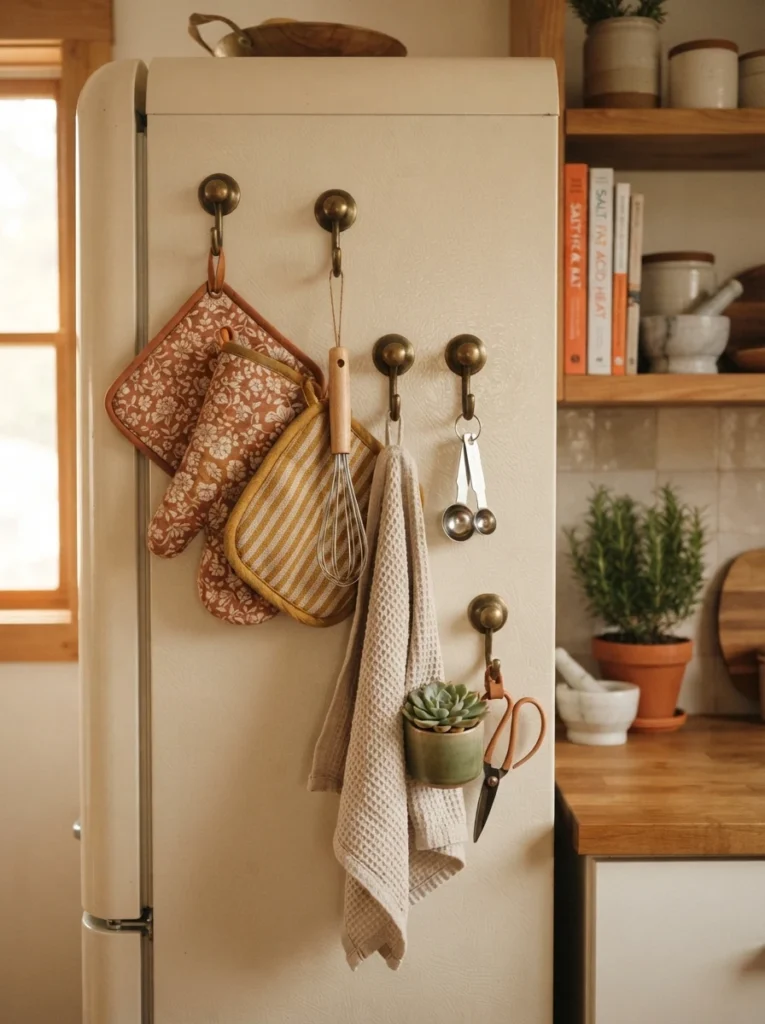
6. Use Magnetic Hooks on the Side of the Refrigerator
The side of a refrigerator is a large metal surface that goes almost entirely unused in most kitchens. Magnetic hooks there can hold potholders, small utensils, or a paper towel roll, adding genuine storage without needing a single inch of shelf or cabinet.
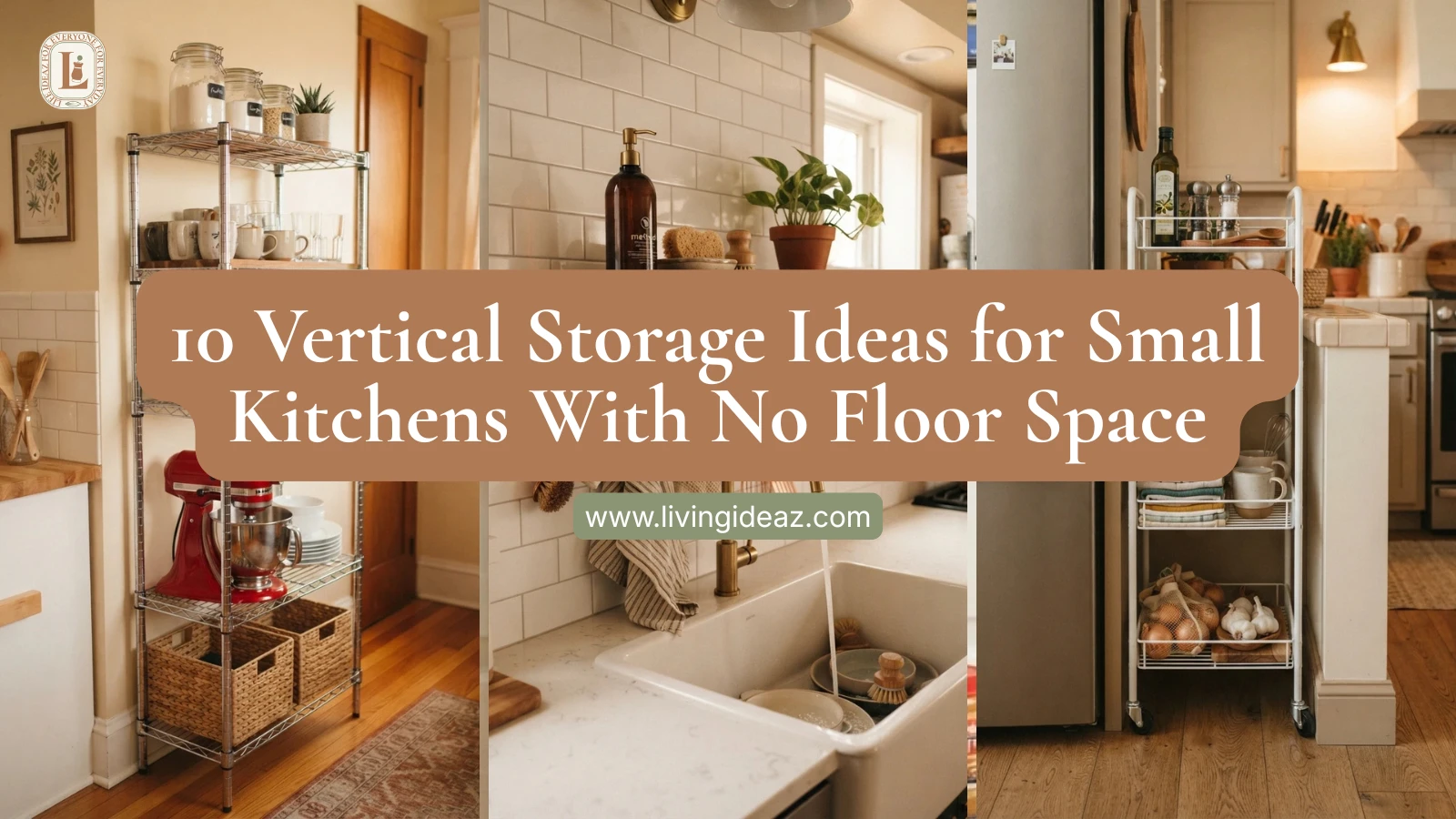
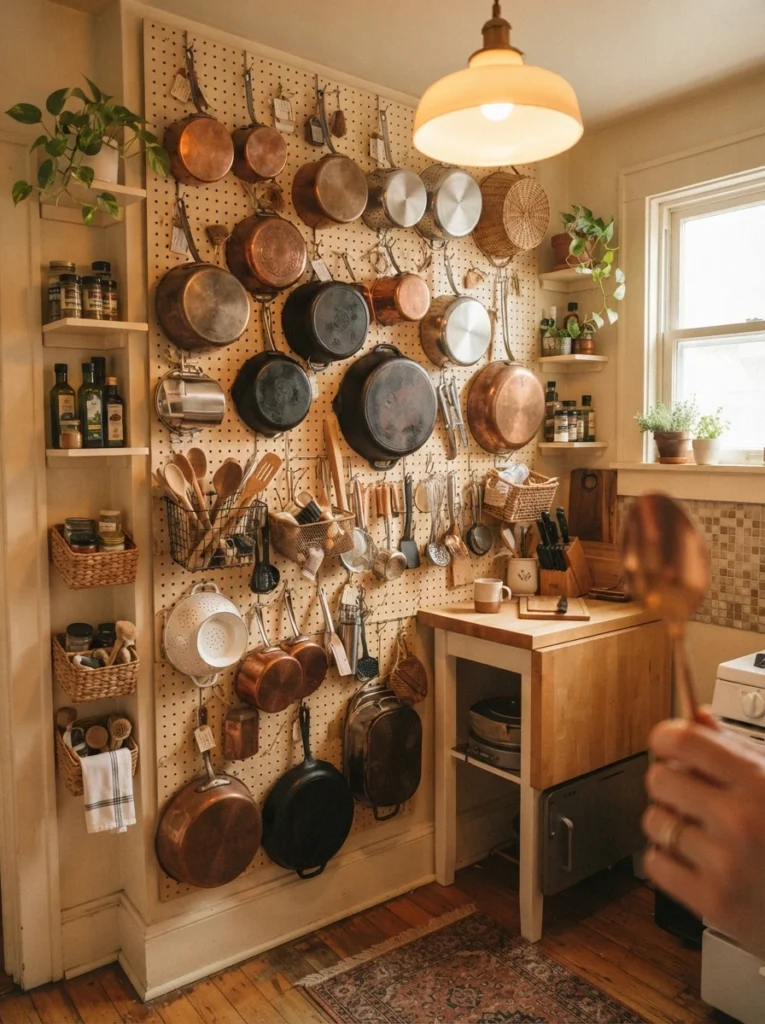
7. Go Vertical With a Full Pegboard Wall if You Have One Blank Wall
A single blank wall, even a narrow one, can become the kitchen’s primary storage system once it’s covered edge to edge with a pegboard. Pots, pans, utensils, and small baskets can all hang from the same surface, which matters enormously in a kitchen with no other options left.
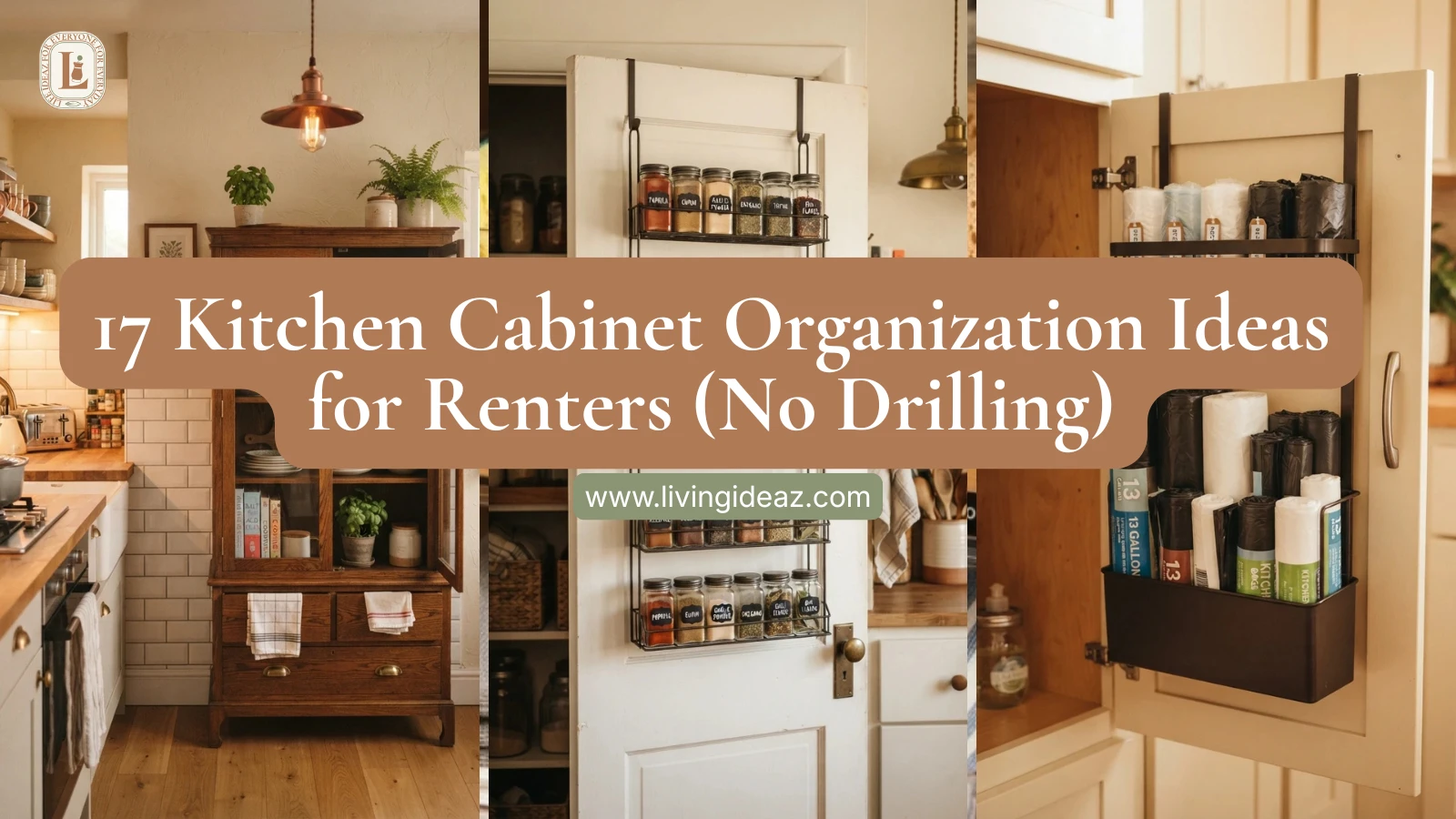
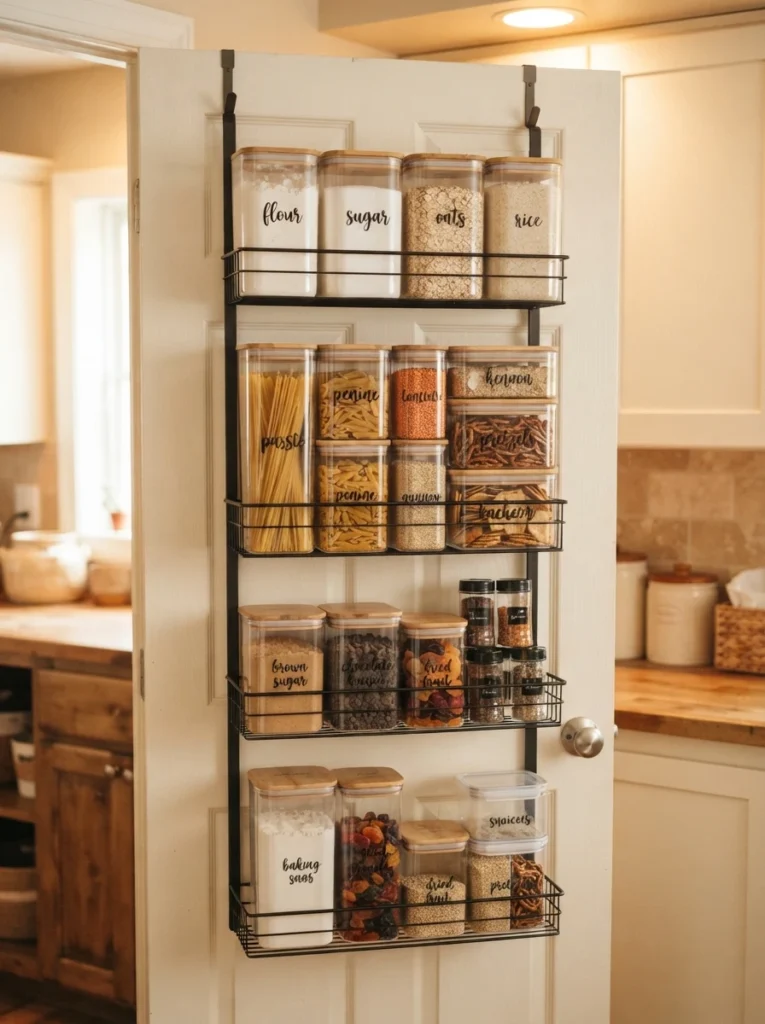
8. Use the Back of the Kitchen Door for Bulk Storage
If your kitchen has an actual door, even a doorless open-plan kitchen sometimes has a nearby utility or pantry door, an over-the-door organizer there can hold large containers of food that have nowhere else to go. It’s one of the few surfaces in a storage-starved kitchen that’s usually still completely empty.
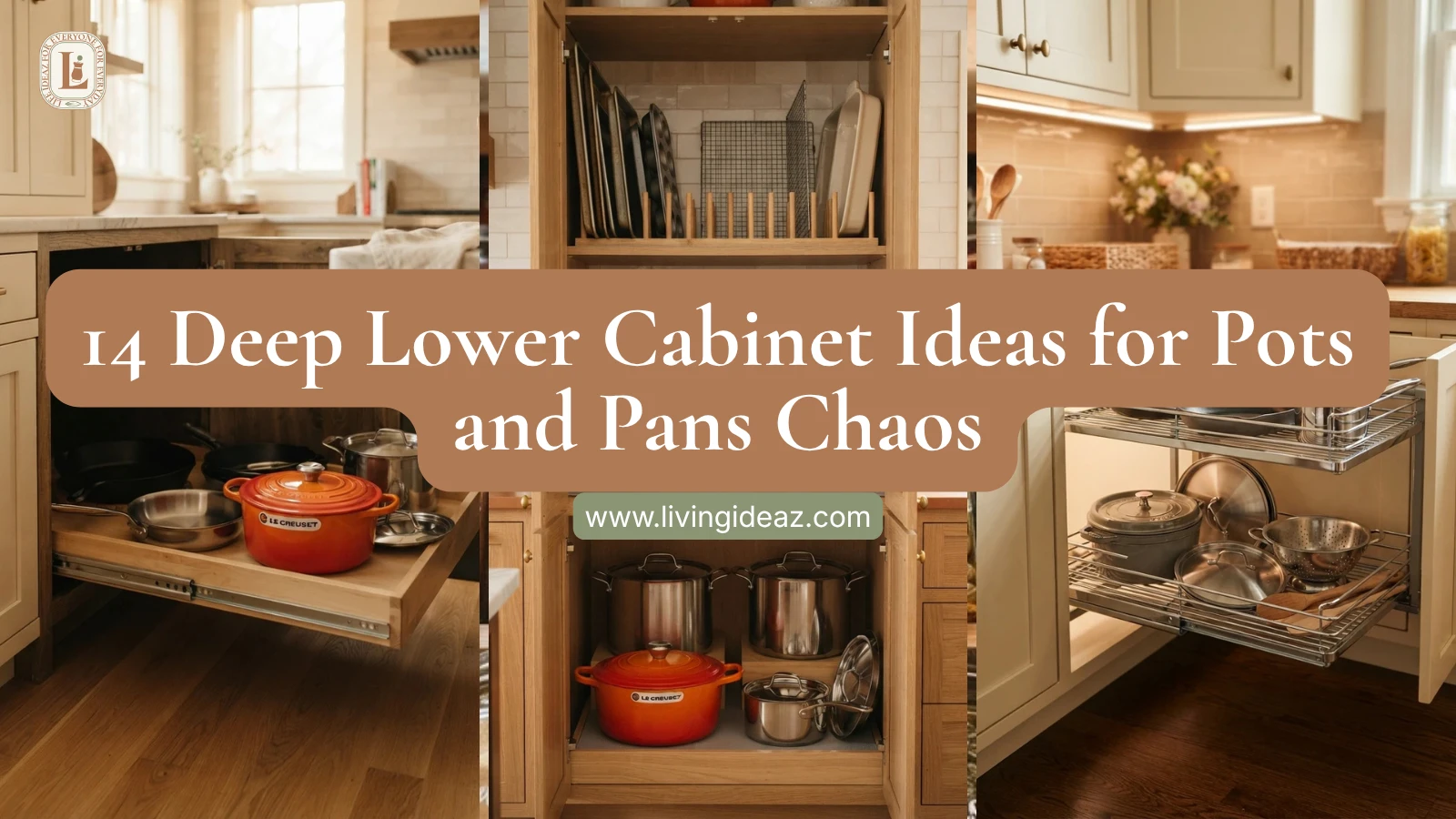
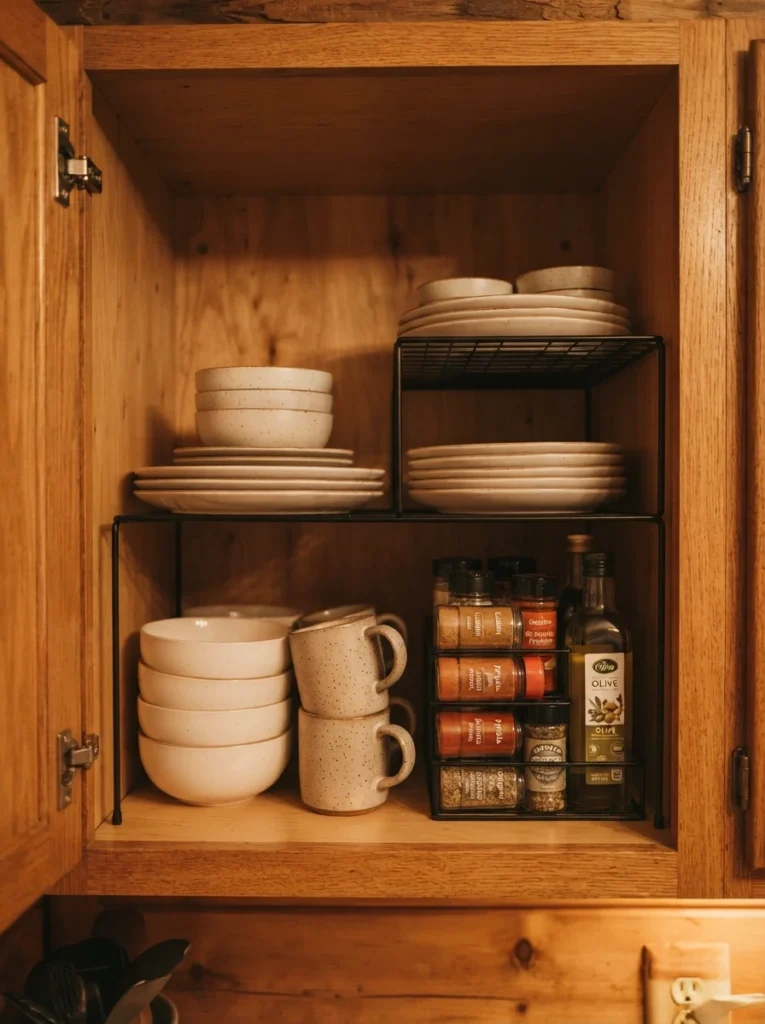
9. Add Wire Shelf Risers Inside Every Existing Cabinet
Most rental kitchens have deep, tall shelves that waste vertical space above shorter items. Wire or bamboo risers roughly double what a single shelf can hold, and since they’re freestanding, they need no installation and travel with you when you move.
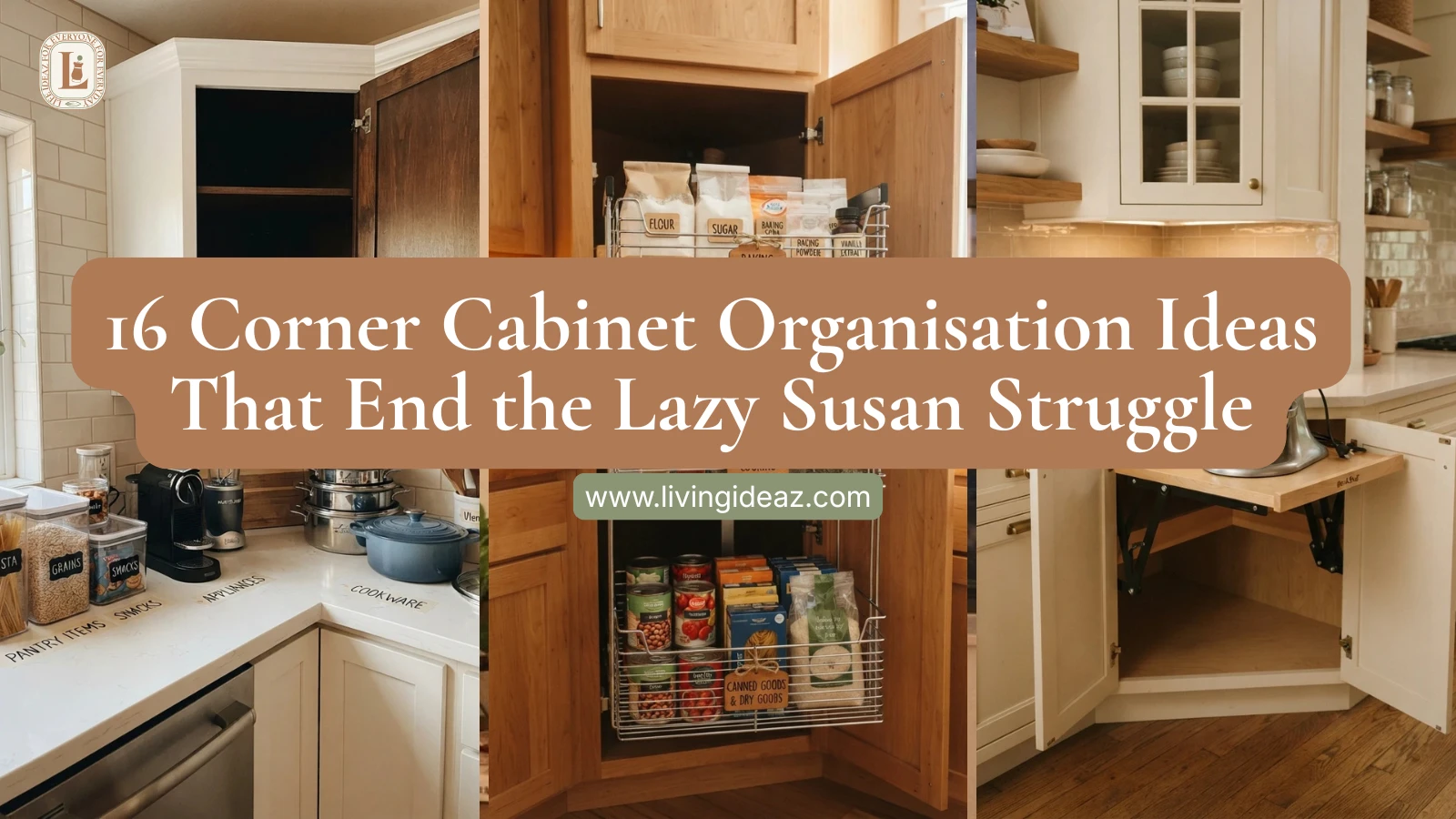
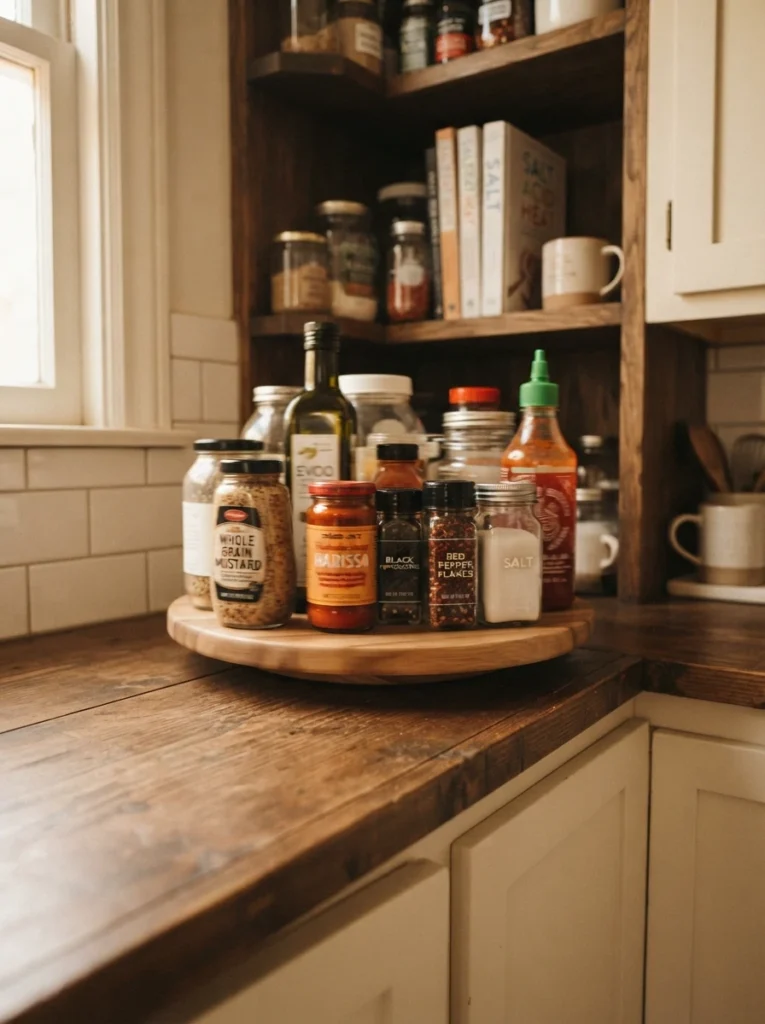
10. Use a Lazy Susan for Any Shelf Too Deep to Access Fully
A shelf you genuinely can’t reach the back of isn’t really usable storage at all, no matter how much room it has. A freestanding lazy susan reclaims that dead zone by letting you spin the entire shelf’s contents into view instead of losing anything to the back.
11. Choose Foldable and Collapsible Tools Over Fixed Ones
A collapsible drying rack, a foldable colander, or stackable mixing bowls that nest into one another take up a fraction of the space their rigid counterparts would. In a kitchen with genuinely no room to spare, choosing collapsible versions of everyday tools adds up to real, meaningful space saved.
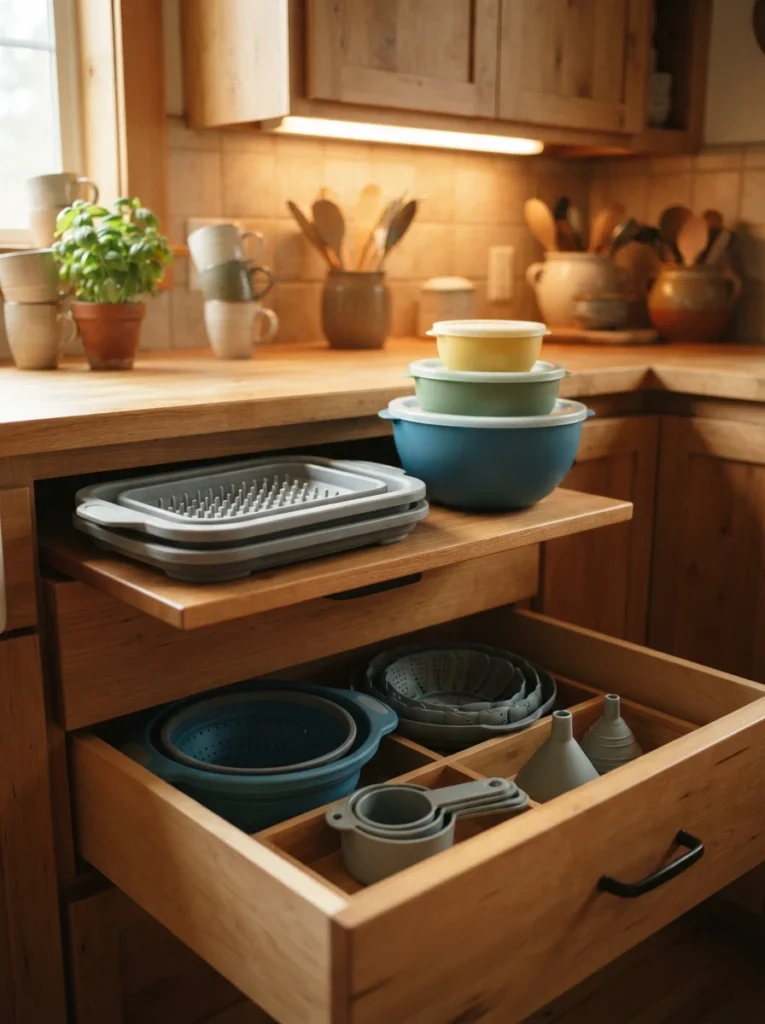
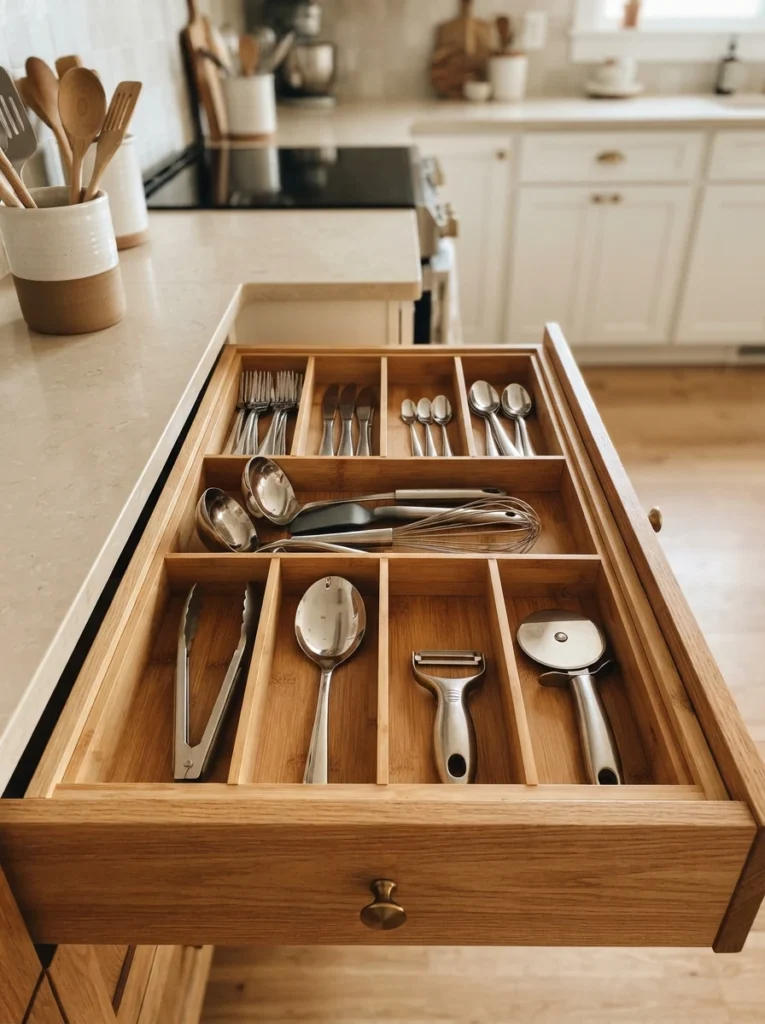
12. Use Compact Drawer Dividers if You Have Even One Drawer
A single kitchen drawer, no matter how small, can be organized far more efficiently with foldable or adjustable dividers than left as a loose pile of utensils. Getting the most out of the one drawer you do have matters more in a kitchen where there’s no second drawer to fall back on.
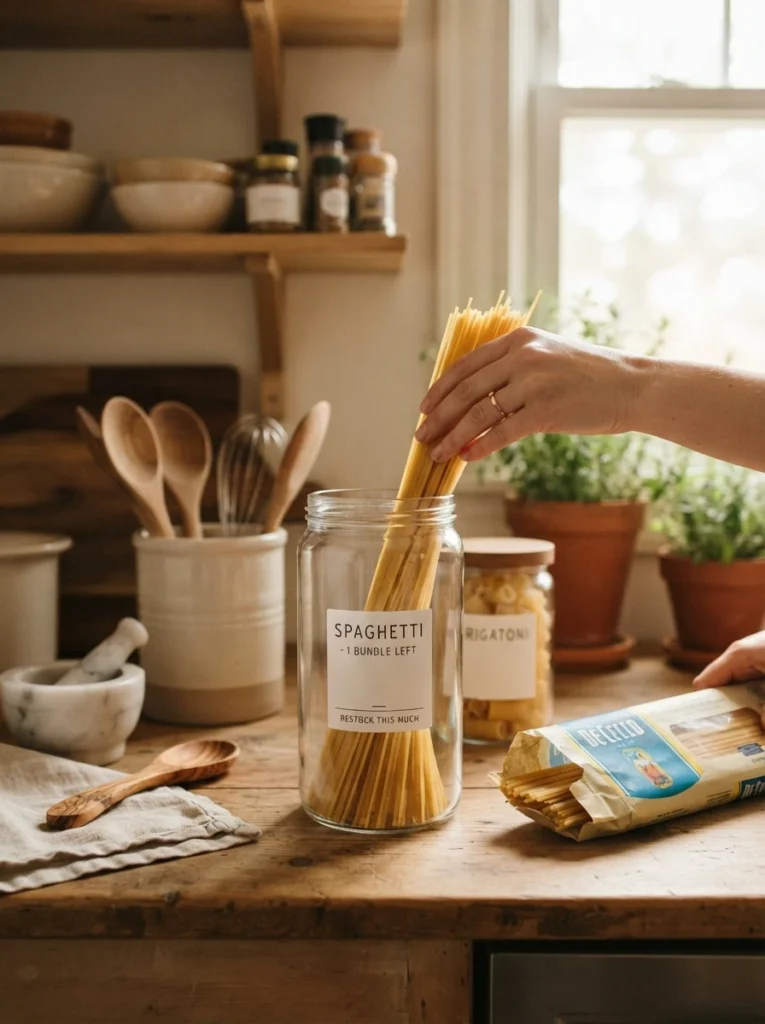
13. Apply the Container Method to Prevent Overbuying
Rather than buying groceries and hoping they’ll fit somewhere, the container method means letting the size of your existing storage dictate how much you buy in the first place. If a bin holds a certain amount of pasta, that’s the amount you restock to, not more, which naturally keeps a storage-starved kitchen from overflowing before it even gets organized.
A kitchen with almost no built-in storage isn’t actually out of options, it just requires looking past the shelves and drawers that were never going to be enough in the first place. Cabinet sides, refrigerator surfaces, neighboring rooms, and the tops of appliances all count once you start treating them as real storage instead of dead space, and none of it puts your deposit at risk.