9 Canned Goods Organization Ideas for Easy Rotation
TL;DR: Canned goods are shelf-stable enough to sit forgotten for years, which is exactly why they need a rotation system more than almost anything else in the pantry. A gravity-fed rack or a simple FIFO habit, new cans go behind old ones, keeps stock moving instead of sitting untouched until the label fades. Add risers or a turntable for deep shelves, and you’ll actually use what you buy instead of rebuying it by accident.
Canned goods are some of the easiest pantry items to forget about, precisely because they don’t spoil the way fresh food does. A can of beans pushed to the back of a shelf can sit there for years without any obvious sign of trouble, which is exactly how people end up with three cans of the same thing and no memory of buying any of them. The fix isn’t complicated. It’s building a system where the oldest can is always the easiest one to reach.
Here are 9 canned goods organization ideas built around keeping stock rotating instead of forgotten.
1. Use the FIFO Method Every Time You Restock
First in, first out means new cans always go behind the older ones rather than wherever there happens to be an open gap. This single habit is the foundation of every other idea on this list, and it costs nothing beyond a few extra seconds each time you put groceries away.
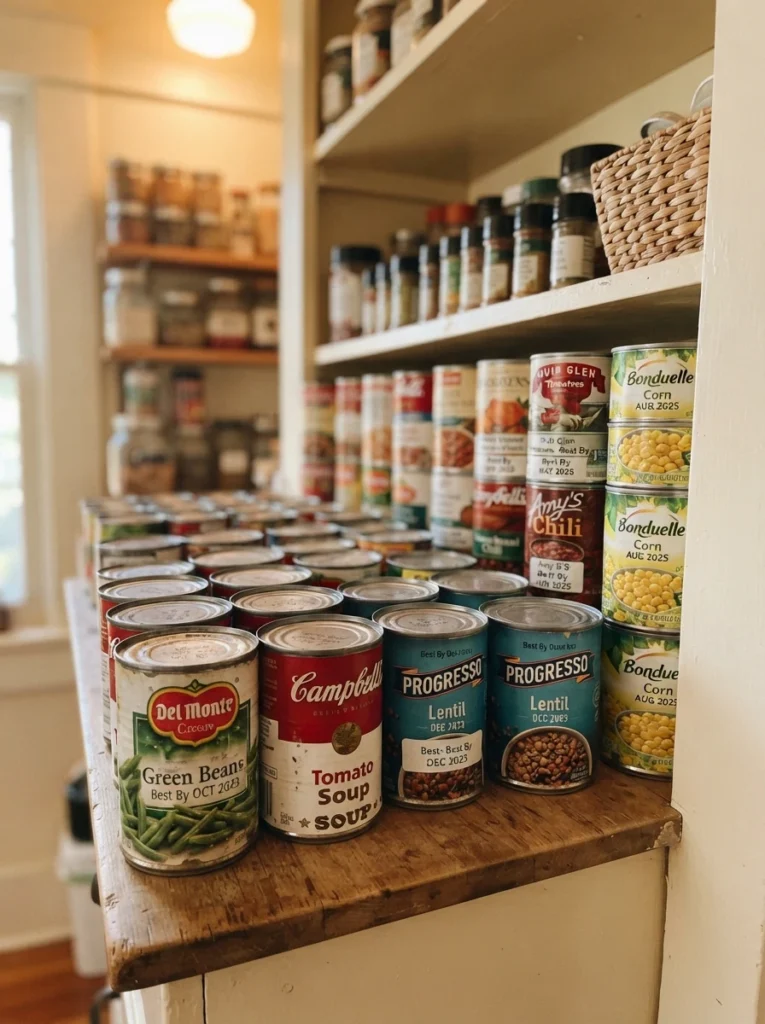
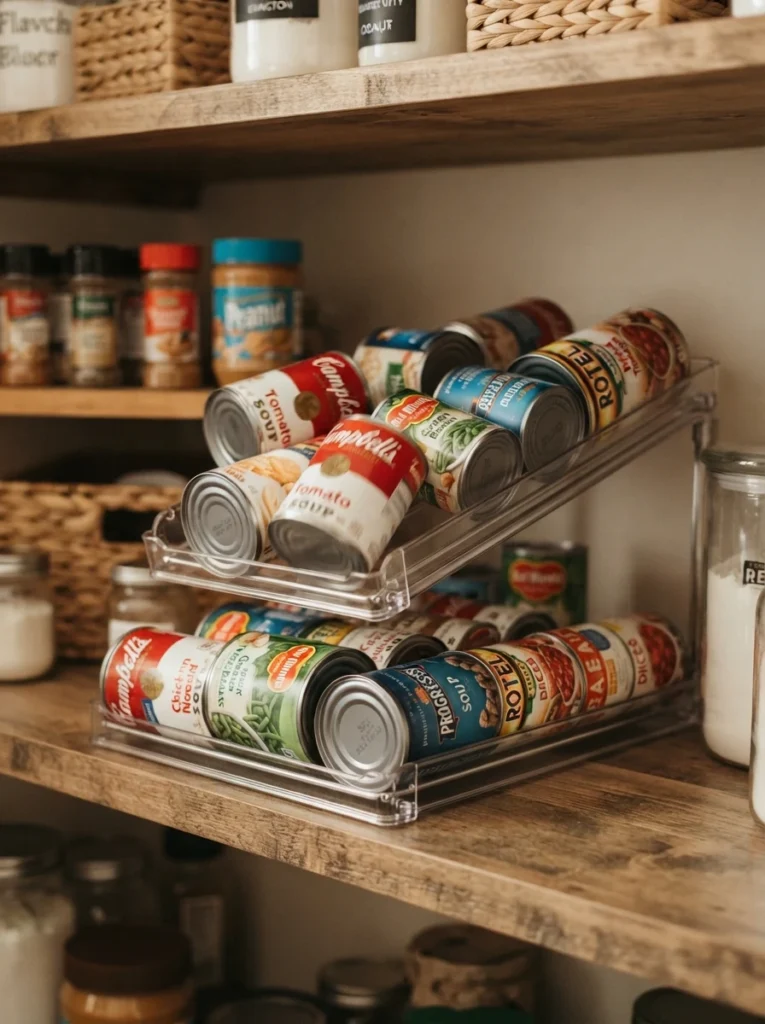
2. Install a Gravity-Fed Can Dispenser Rack
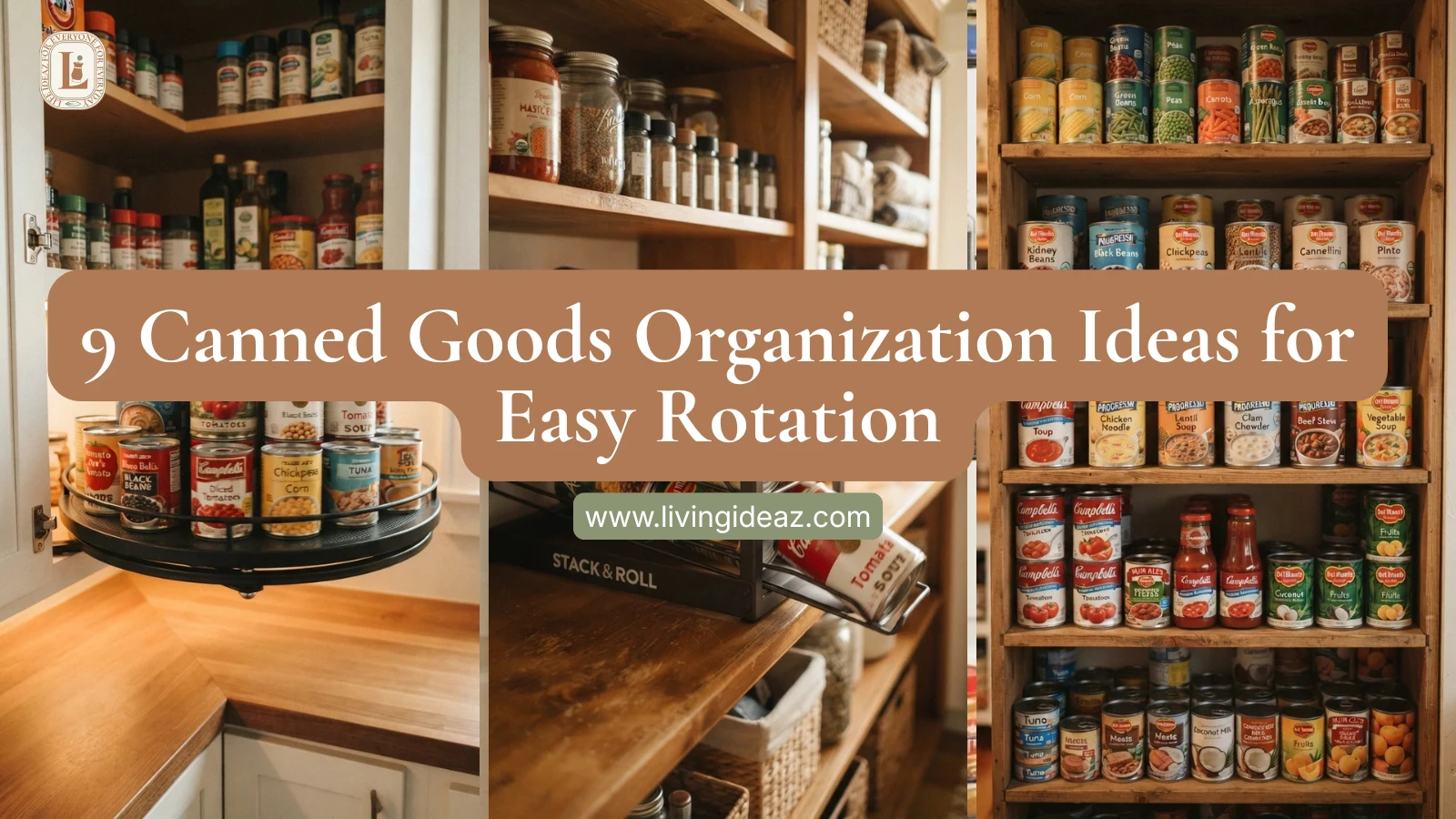
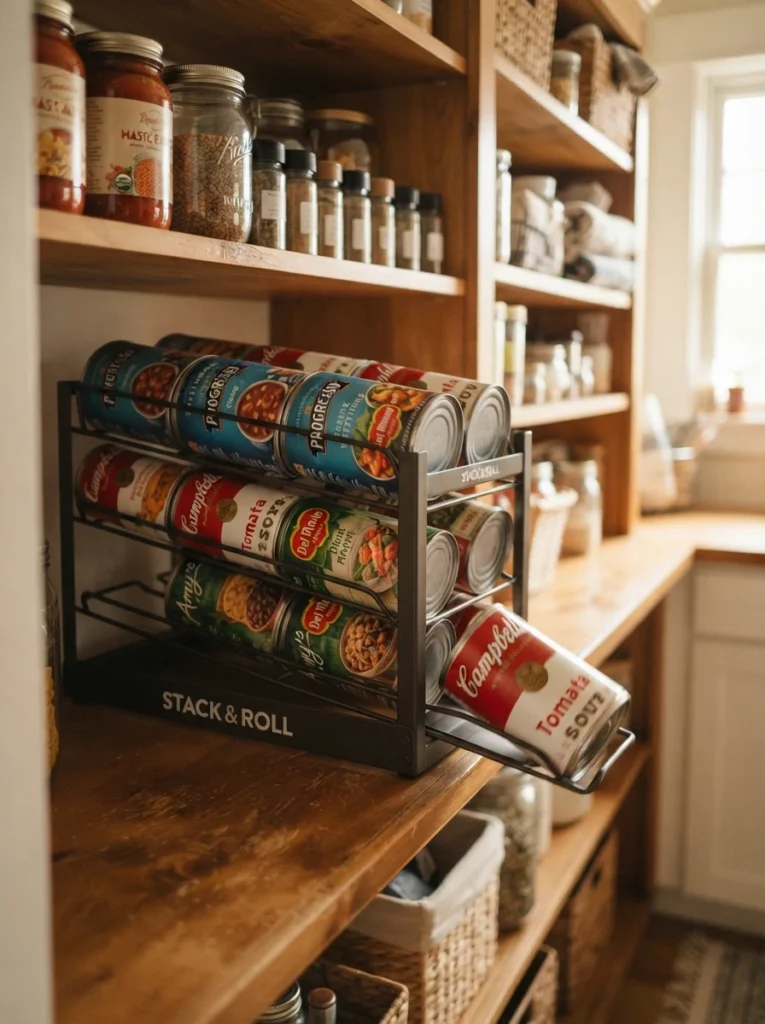
A gravity-fed rack holds cans on a slight incline, so when you take one from the front, the rest roll forward automatically to take its place. This turns FIFO rotation into something that happens on its own, rather than something you have to remember to do manually every time.
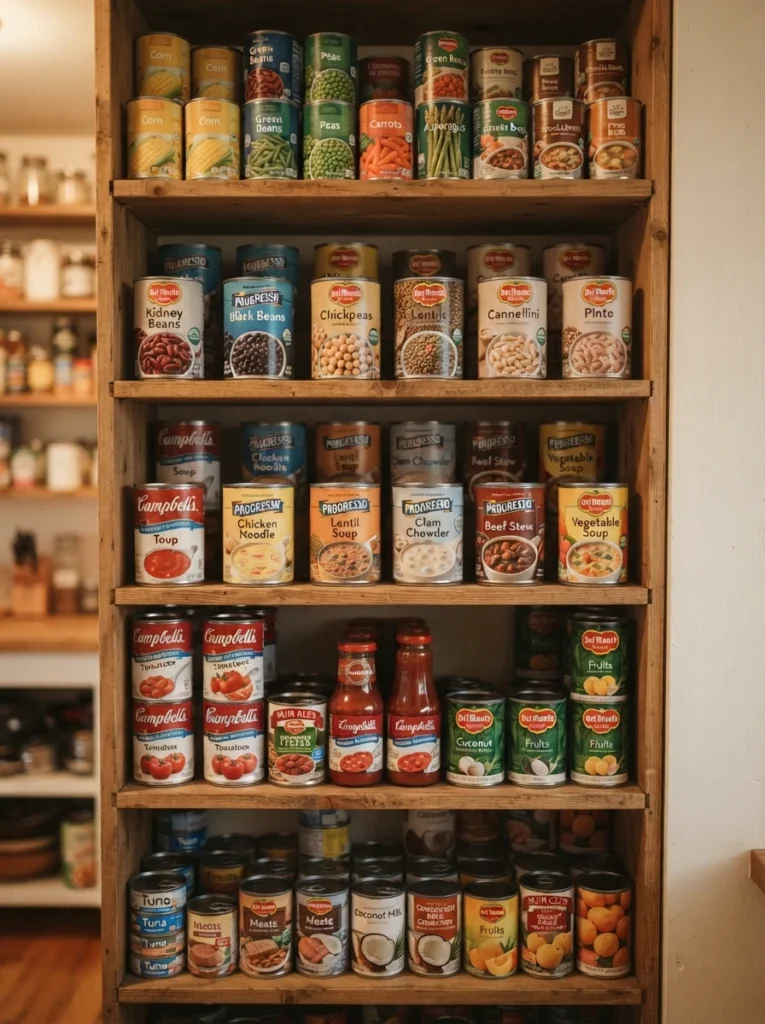
3. Add Tiered Risers for Deep Shelves
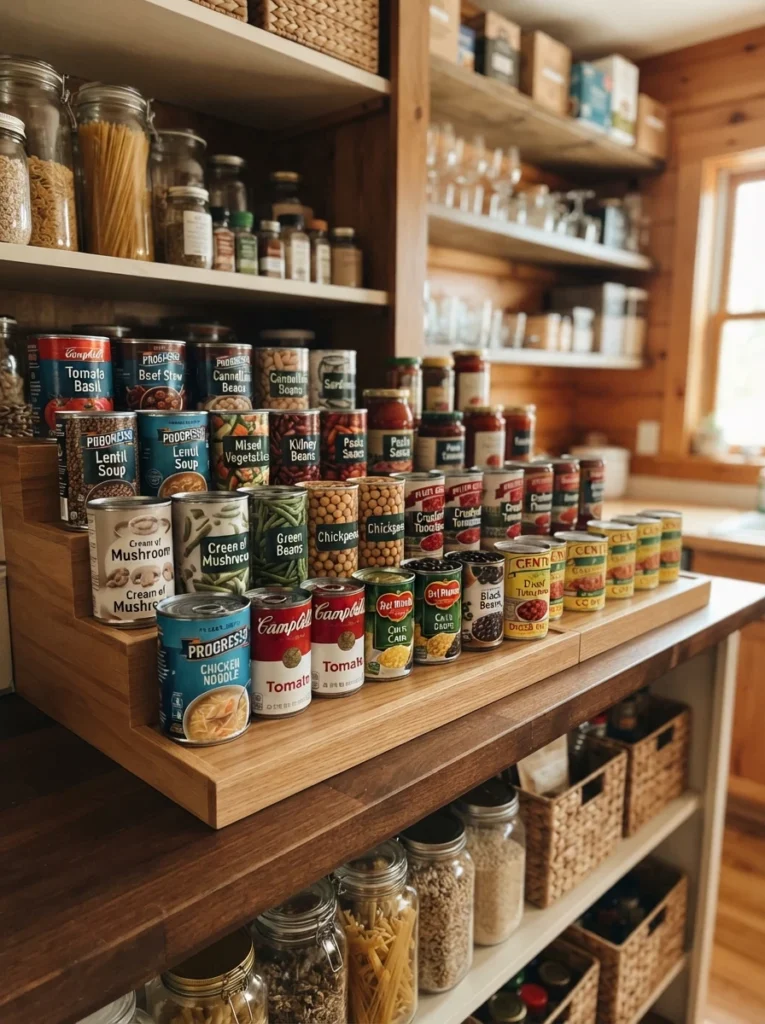
On a deep shelf, cans in the back row disappear behind whatever’s in front, which defeats the whole point of a rotation system. Step-style risers lift the back row higher than the front, so every can’s label stays visible no matter how far back it sits.
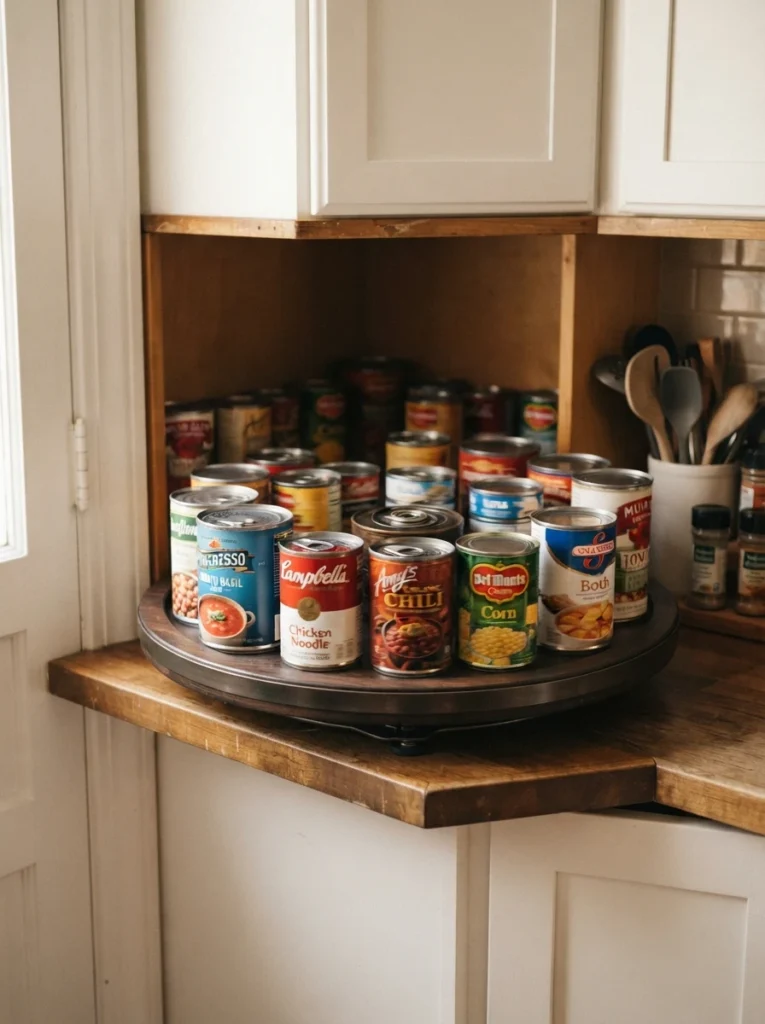
4. Use a Heavy-Duty Turntable for Corner Storage
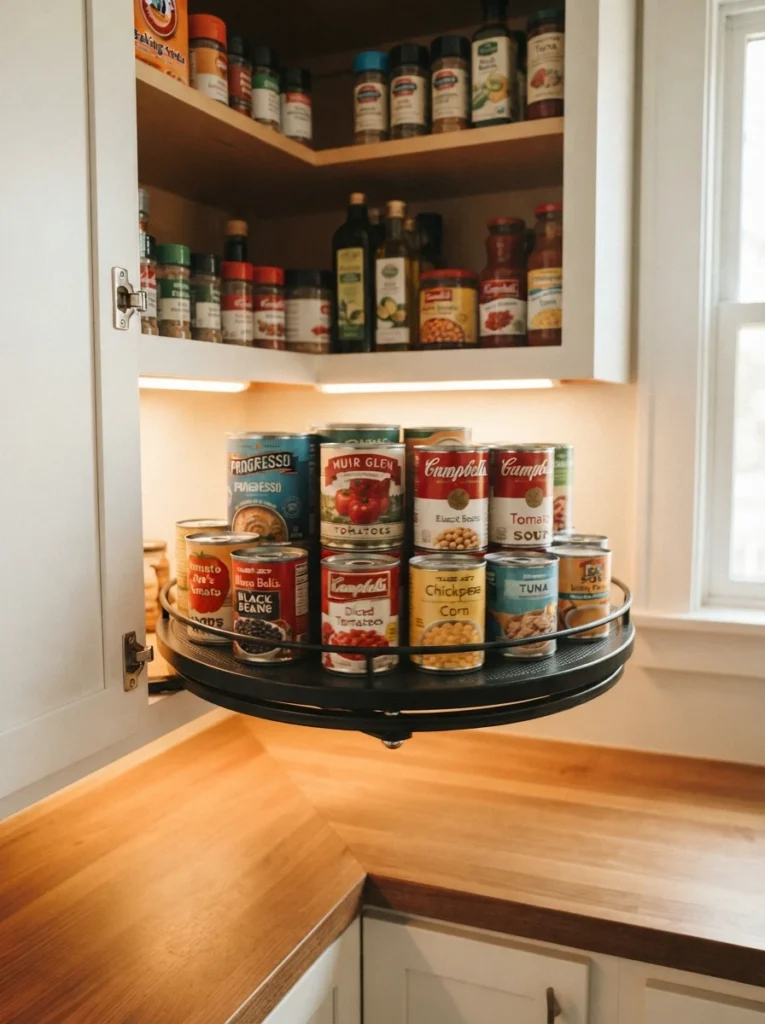
Corner cabinets are already awkward, and cans add weight that a flimsy turntable can’t always handle. A heavy-duty lazy susan built specifically to hold canned goods lets you spin the whole collection into view instead of reaching blind into an unreachable corner.
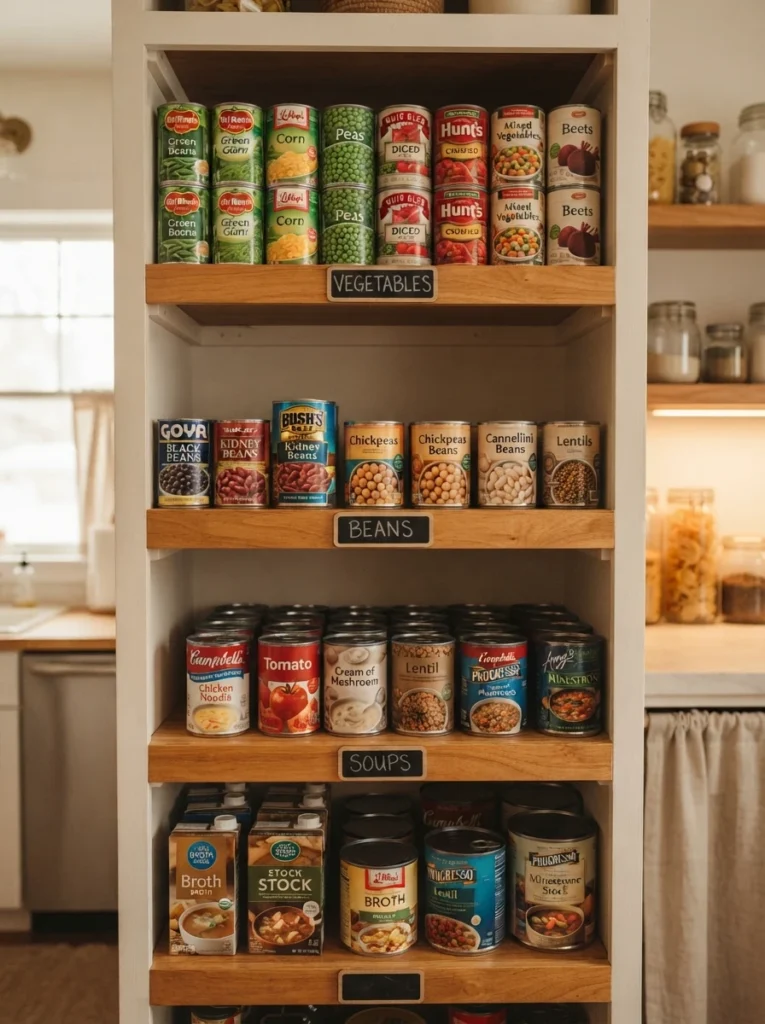
5. Group Cans by Category Before Worrying About Rotation
Before setting up any rotation system, sort cans into categories, vegetables, beans, soups, tomatoes, so rotation happens within a logical group instead of across a completely mixed shelf. This also makes it much faster to see exactly how many of something you actually have on hand.
6. Set a Quarterly Reminder to Check the Full Inventory
Even a good rotation system benefits from a periodic manual check. A quarterly reminder to scan through the full canned goods collection catches anything that’s slipped out of order and gives you a chance to pull anything dented, bulging, or otherwise compromised before it becomes a problem.
7. Discard Any Dented, Bulging, or Rusted Cans Immediately
A dented or bulging can may have a compromised seal, which can allow bacteria in even if the can looks otherwise fine from the outside. Rather than waiting for the next inventory check, pull and discard any can showing these signs the moment you notice it.
8. Plan Meals Around Your Oldest Cans First
A rotation system only works if the oldest cans actually get used, not just moved to a more visible spot. Building a meal or two each week around whatever’s oldest in the rotation, a can of tomatoes that’s been sitting a while, for example, closes the loop between organizing and actually using what you have.
9. Only Buy What You’ll Realistically Use Before the Next Trip
Bulk-buying canned goods can seem efficient, but stock that outpaces how quickly you actually cook through it just becomes more inventory to manage and more risk of forgotten cans. Matching your purchases to your actual usage rate keeps the whole rotation system manageable instead of constantly growing.
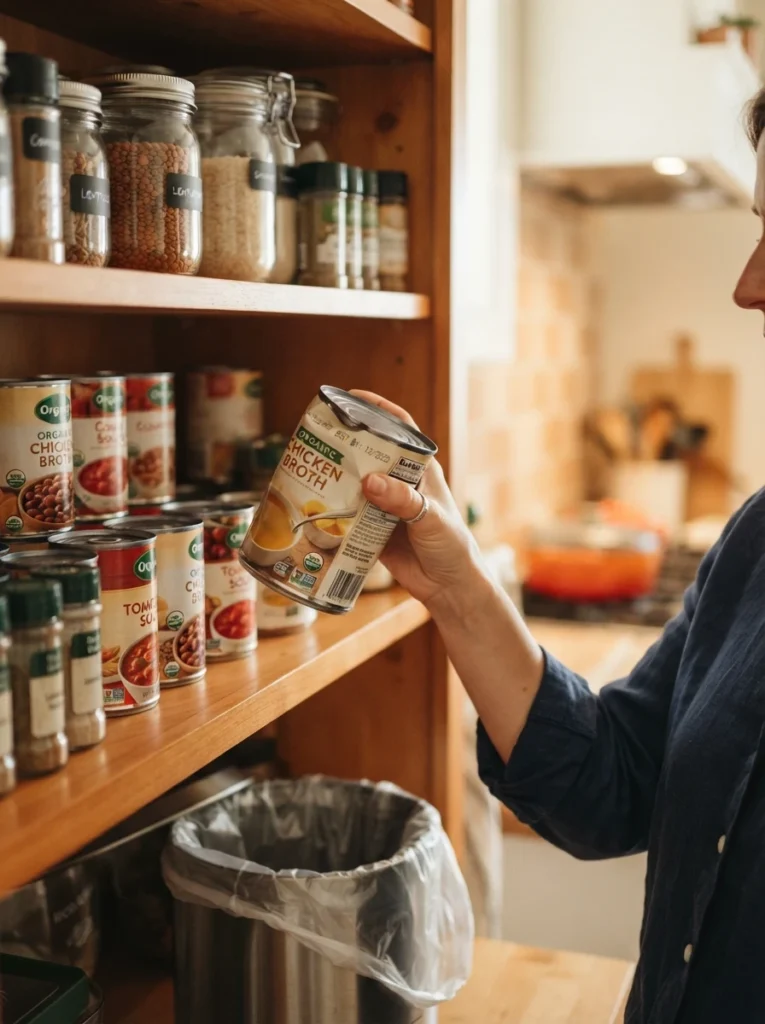
None of this requires an elaborate system to actually work. A little bit of FIFO discipline, some risers or a rack to make the back of the shelf visible, and a periodic check to catch anything that slipped through covers almost everything. Once it’s in place, canned goods stop being the thing that quietly expires in the back of the pantry and start being exactly what they’re meant to be, a reliable, ready-to-use backup for whatever you’re cooking that week.