
14 Over-the-Door Pantry Storage Ideas for Renters
TL;DR: The back of a pantry door is one of the most underused storage surfaces in the whole kitchen, and an over-the-door organizer can add the equivalent of one or two full shelves without a single screw. Hook-style racks rest on the top edge of the door and hold everything from spice packets to canned goods, and every option here comes off clean at move-out. The only real trick is measuring your door’s clearance before you buy.
Most people walk past the back of their pantry door a dozen times a day without registering it as storage at all. It’s just the thing that swings open and closed, maybe holding a stray apron nobody’s worn in years. But that flat surface represents several square feet of completely unused space in a room where every inch usually matters, and unlike wall shelving or built-in racks, almost every over-the-door option requires zero tools and zero damage to install.
Here are 14 over-the-door pantry storage ideas built specifically with renters and no-drill kitchens in mind.
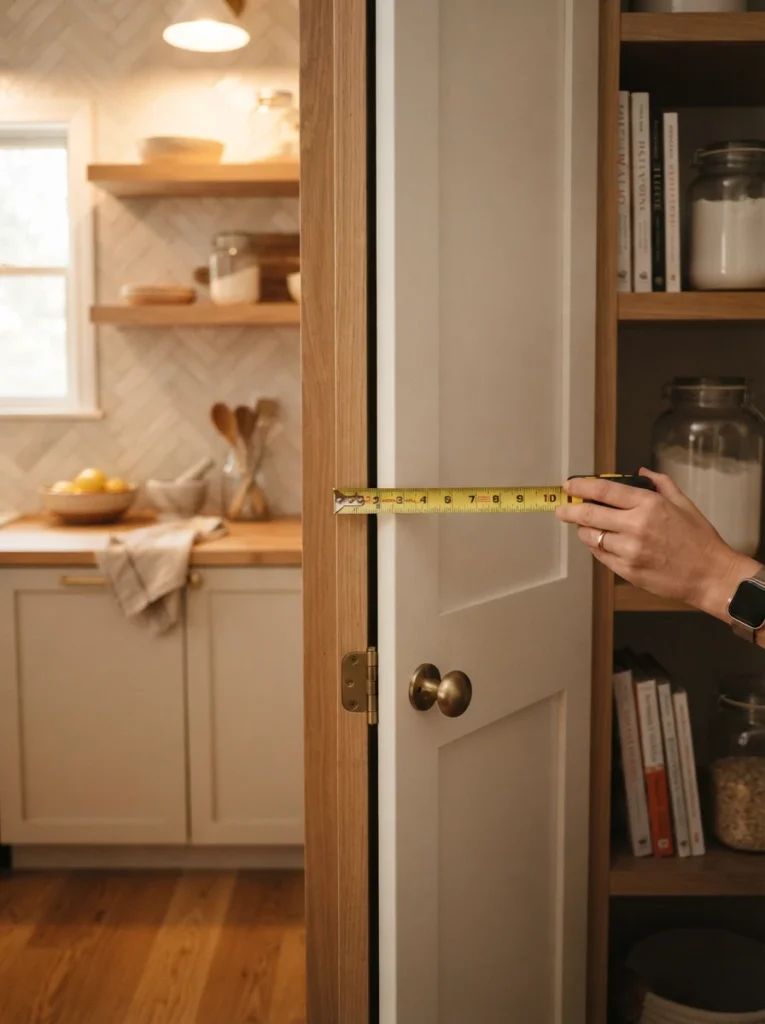
1. Measure Your Door’s Clearance Gap Before Buying Anything
Most over-the-door racks need roughly 5 to 6 inches of depth to close properly, so measuring the gap between your pantry door and the nearest shelf or wall first will save you from returning a rack that won’t close. If your clearance is under that, look for slimmer profile organizers instead of full multi-tier racks.
2. Choose Hook-Style Mounting Over Anything Screwed In
Hook-style organizers rest their weight on the top edge of the door itself rather than requiring any screws or adhesive. This distributes the load safely and means the entire rack lifts off clean when you move, leaving the door exactly as it was.
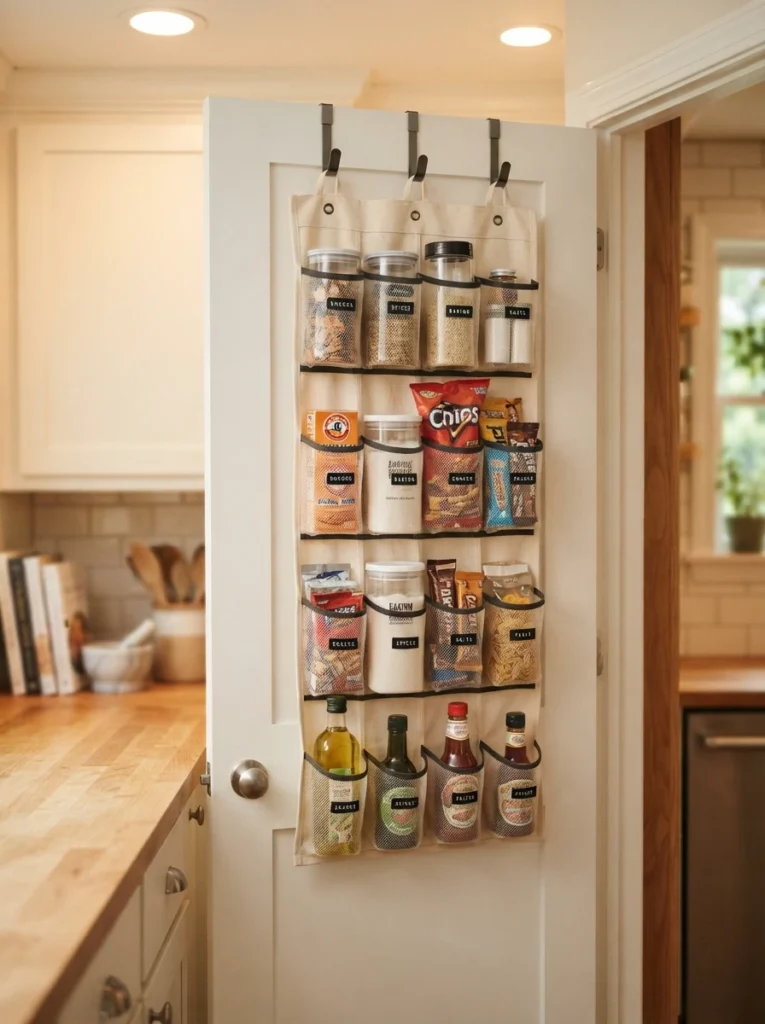
3. Look for Rubber or Foam-Coated Hooks to Protect the Door Finish
Bare metal hooks can scratch or dent a door’s paint or finish over time, especially with repeated opening and closing. Hooks coated in rubber or foam pads prevent that wear, which matters most in a rental where the door’s condition affects your deposit.
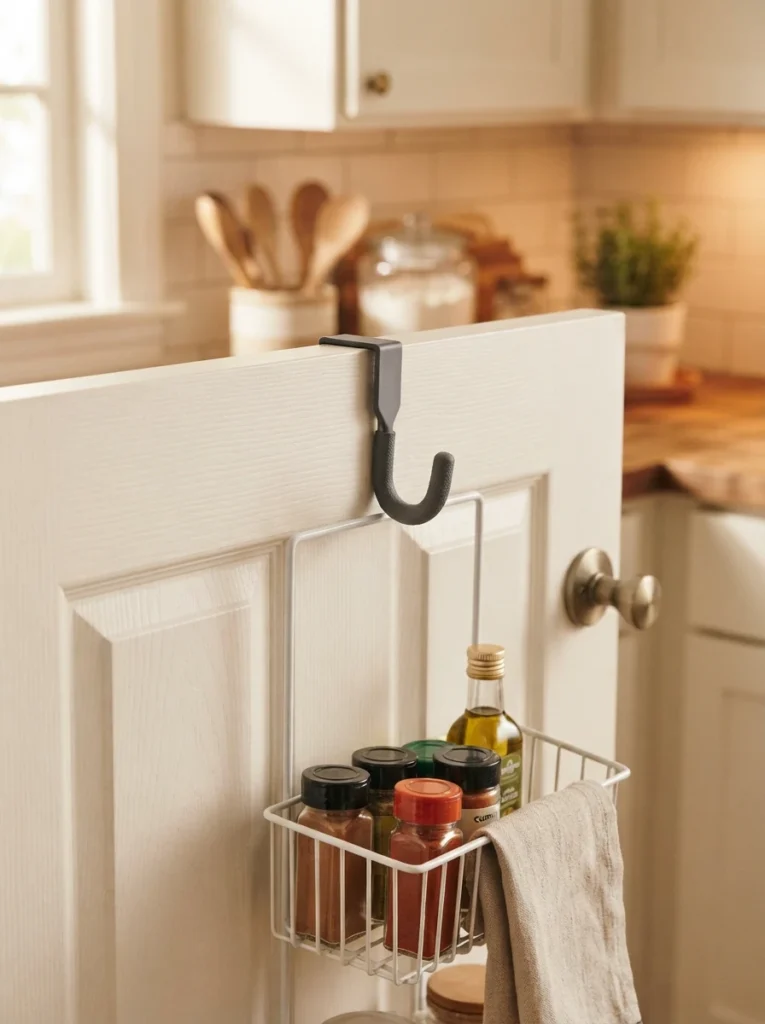
4. Use Adjustable Tiers to Fit Both Tall and Short Items
A rack with fixed shelf spacing works fine until you try to fit a tall cereal box on a tier built for spice jars. Adjustable basket spacing lets you customize each tier’s height, so a single organizer can handle a real mix of pantry item sizes instead of forcing everything into one uniform slot.
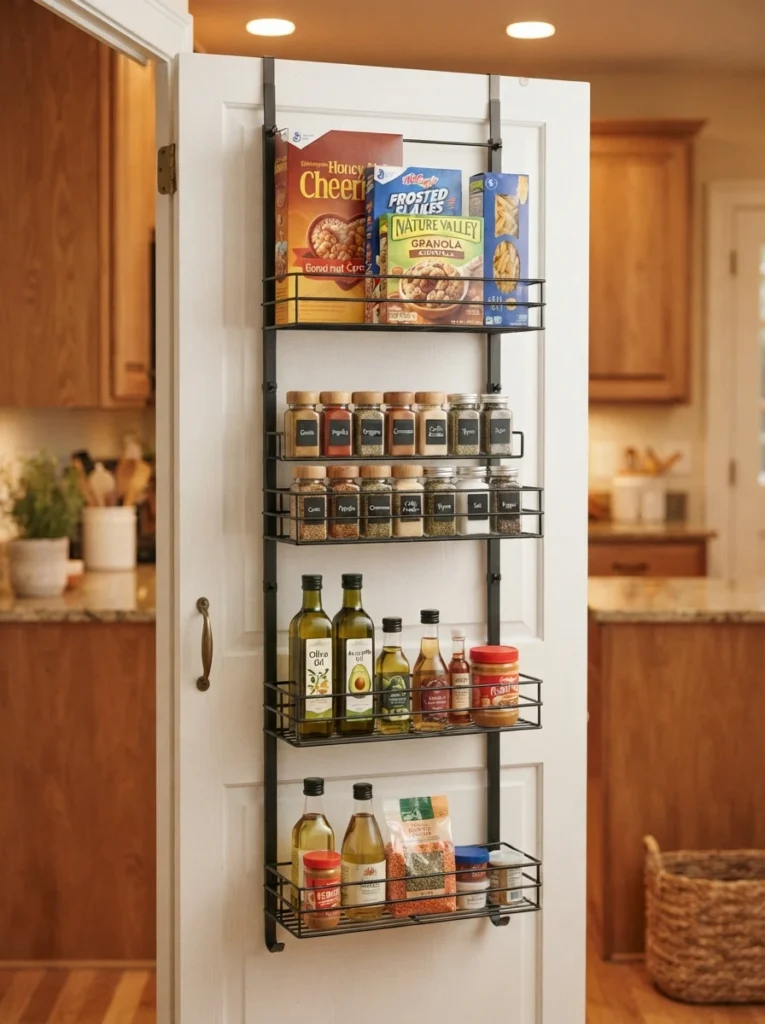
5. Reserve the Top Tiers for Lightweight, Frequently Used Items
Most over-the-door racks hold a modest weight limit per tier, generally a few pounds each, so save the top rows for lighter, frequently grabbed items like spice packets, tea boxes, or foil rolls. This keeps the rack stable and easy to use without straining the hooks at the top.
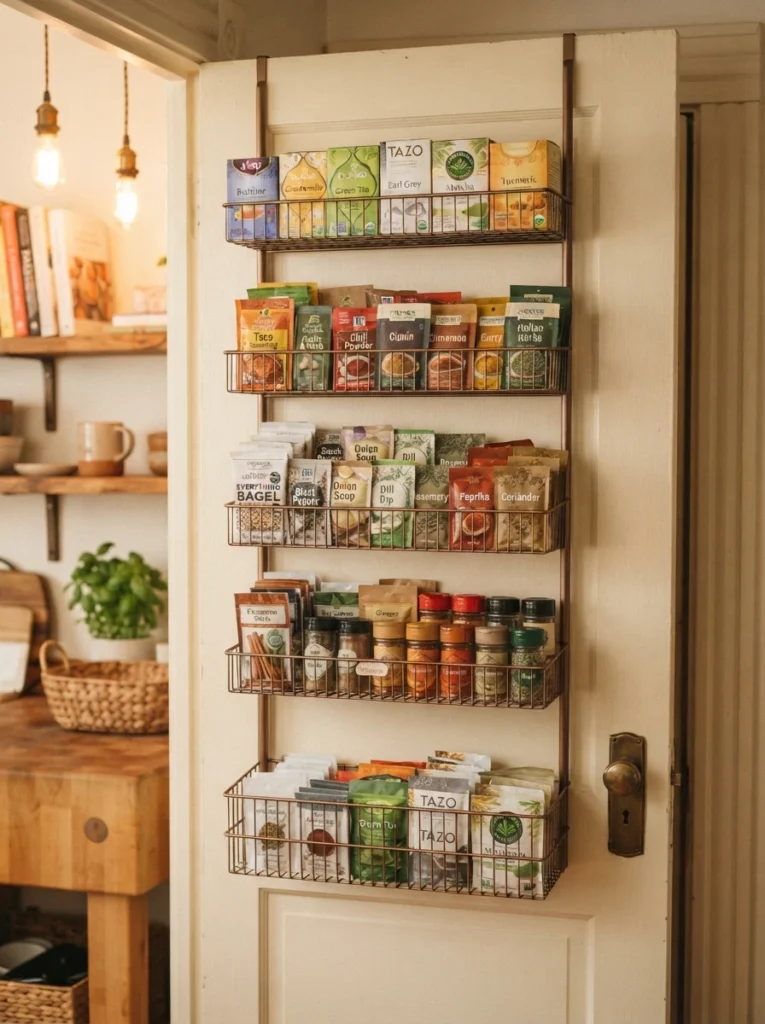
6. Use Lower Tiers for Slightly Heavier Canned Goods
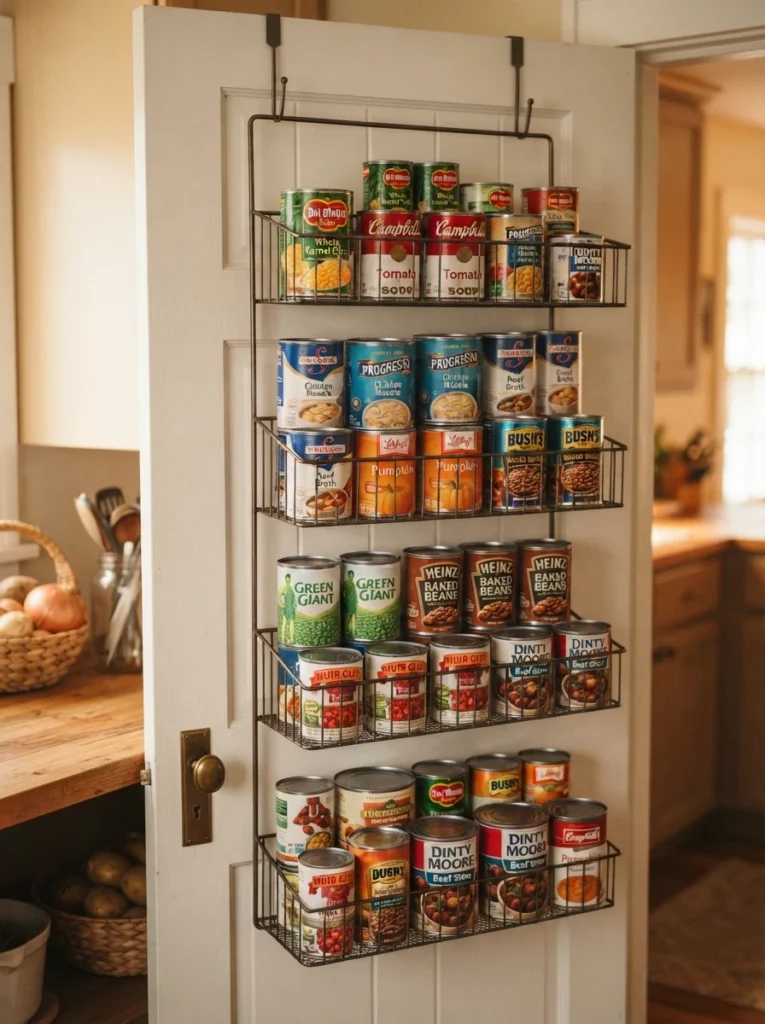
The lower tiers of a door rack, closer to the ground and to the door’s hinge support, can generally handle a bit more weight than the top rows. This is the better spot for canned goods or heavier jars, as long as you stay within the rack’s total listed weight capacity.
7. Try a DIY Version With Dollar Store Baskets
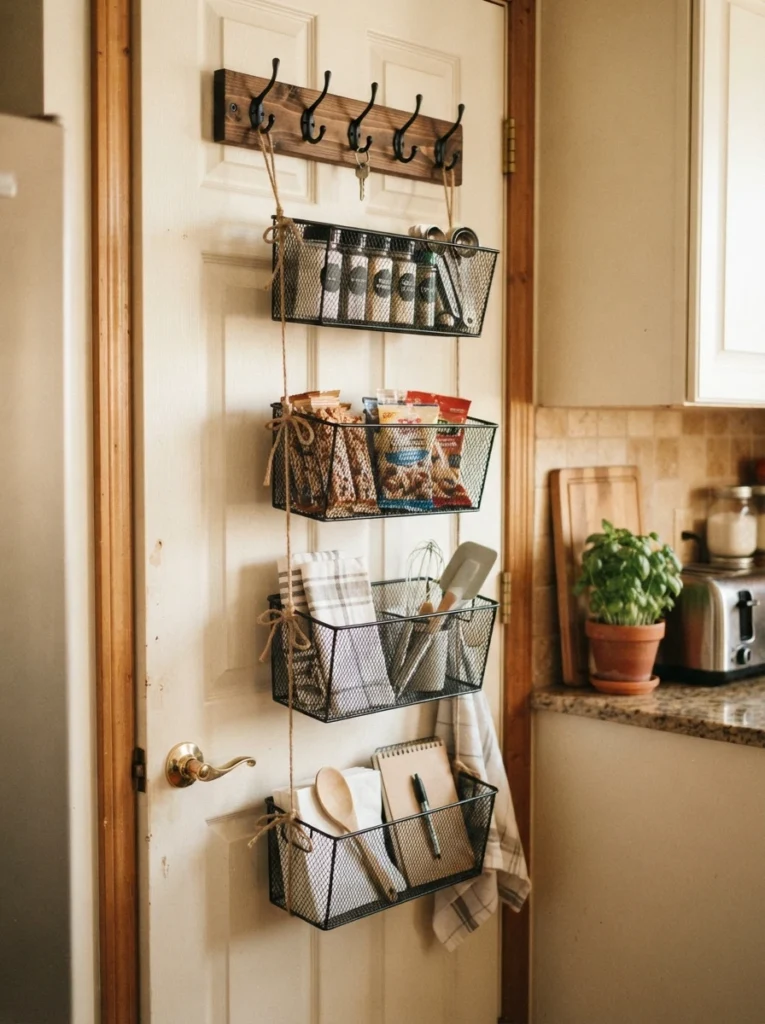
If you’d rather build your own instead of buying a pre-made rack, small wire or plastic baskets from a dollar store can be zip-tied or clipped to an over-the-door hook frame for a fraction of the cost. It won’t look identical to a retail version, but it solves the exact same storage problem.
8. Dedicate One Rack Entirely to Snacks Kids Can Reach
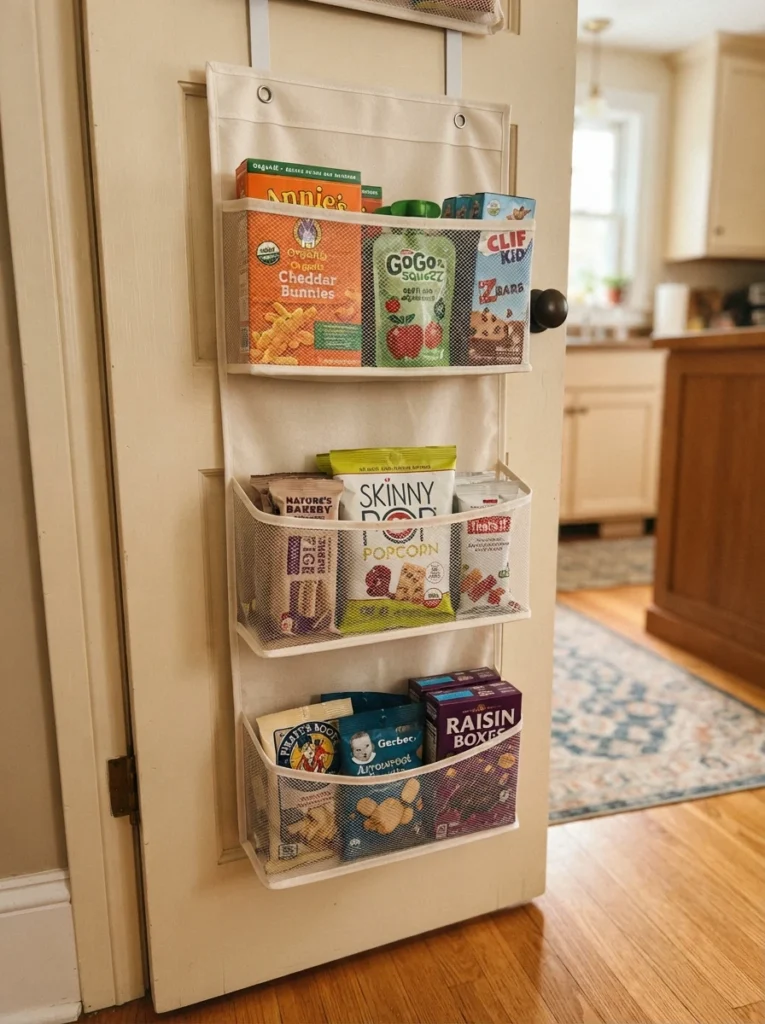
If the organizer hangs low enough, dedicating a section to kid-accessible snacks means less supervision needed during the after-school scramble for something to eat. It also keeps snack packaging contained to one visible spot instead of scattered across regular shelves.
9. Use a Narrower Two-Shelf Version for Shallow Pantry Doors
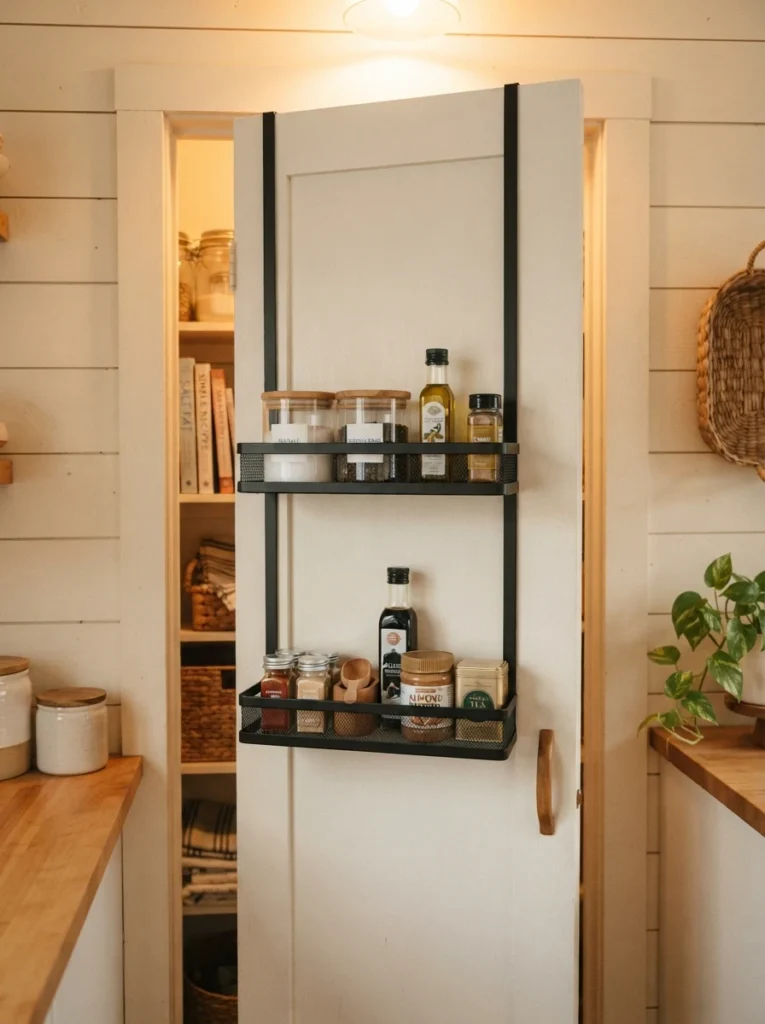
Not every pantry door has room for a full multi-tier rack, especially in older or smaller layouts. A simpler organizer with just one or two fixed wire shelves takes up far less depth while still adding meaningfully more storage than a bare door.
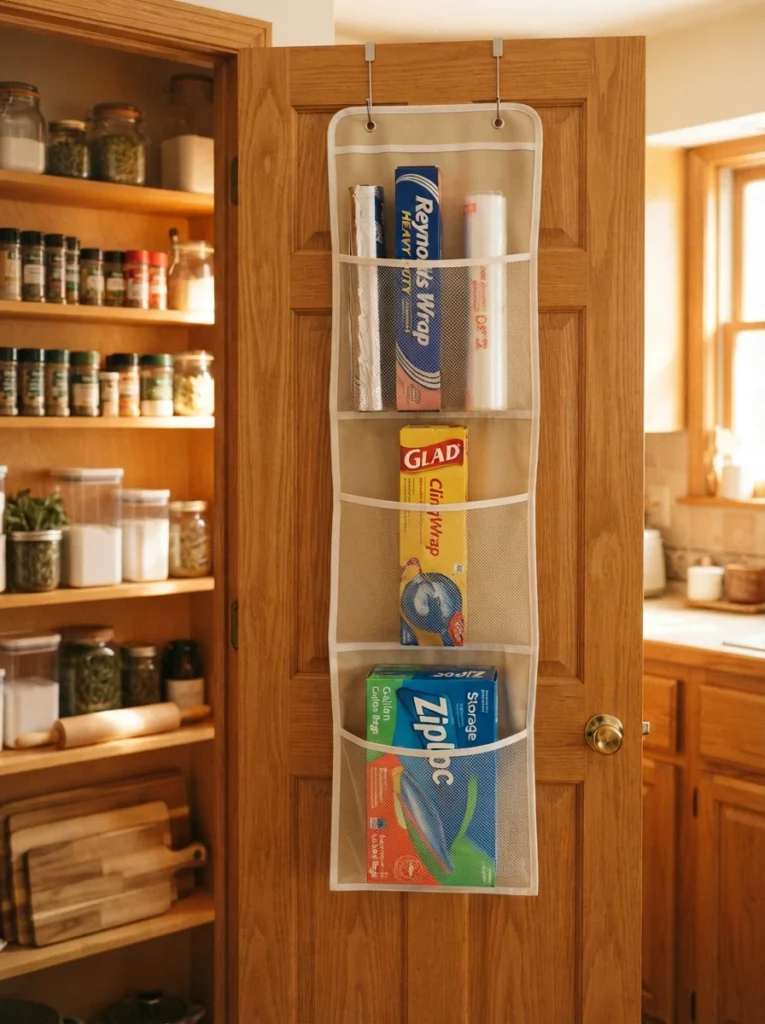
10. Store Foil, Wrap, and Bags Vertically in a Slim Pocket Organizer
Rolls of foil, plastic wrap, and sandwich bags are awkward to stack on a regular shelf but fit neatly into a slim, pocketed door organizer designed for vertical storage. This clears a surprising amount of shelf space that these bulky rolls would otherwise occupy.
11. Repurpose a Clear Shoe Organizer for Small Pantry Items
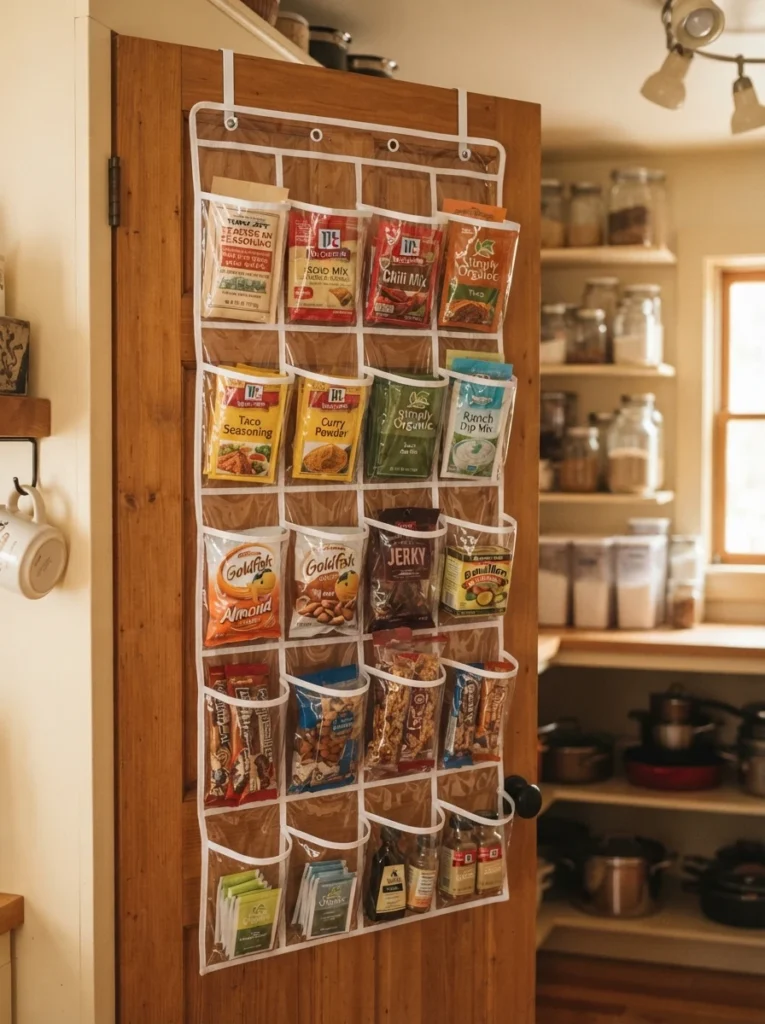
An over-the-door shoe organizer with clear vinyl pockets, usually intended for a closet, works just as well hung on a pantry door for small items like seasoning packets, snack bars, or spice jars. The individual pockets keep everything visible and separated without needing a dedicated pantry product at all.
12. Check the Total Weight Capacity Before Loading It Up
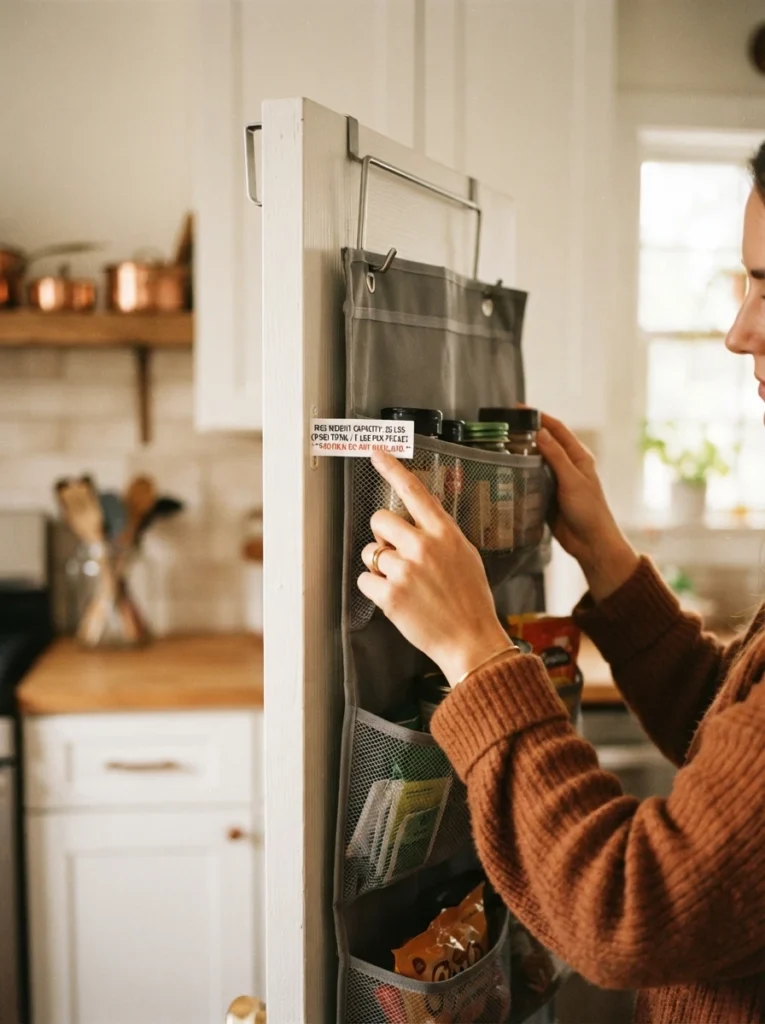
Most door racks list both a per-tier weight limit and a total capacity for the whole unit, and it’s easy to exceed that total even if each individual tier looks fine. Checking both numbers before fully loading the rack prevents the hooks from bending or the whole thing pulling away from the door.
13. Use It to Free Up Interior Shelves for Bulkier Items
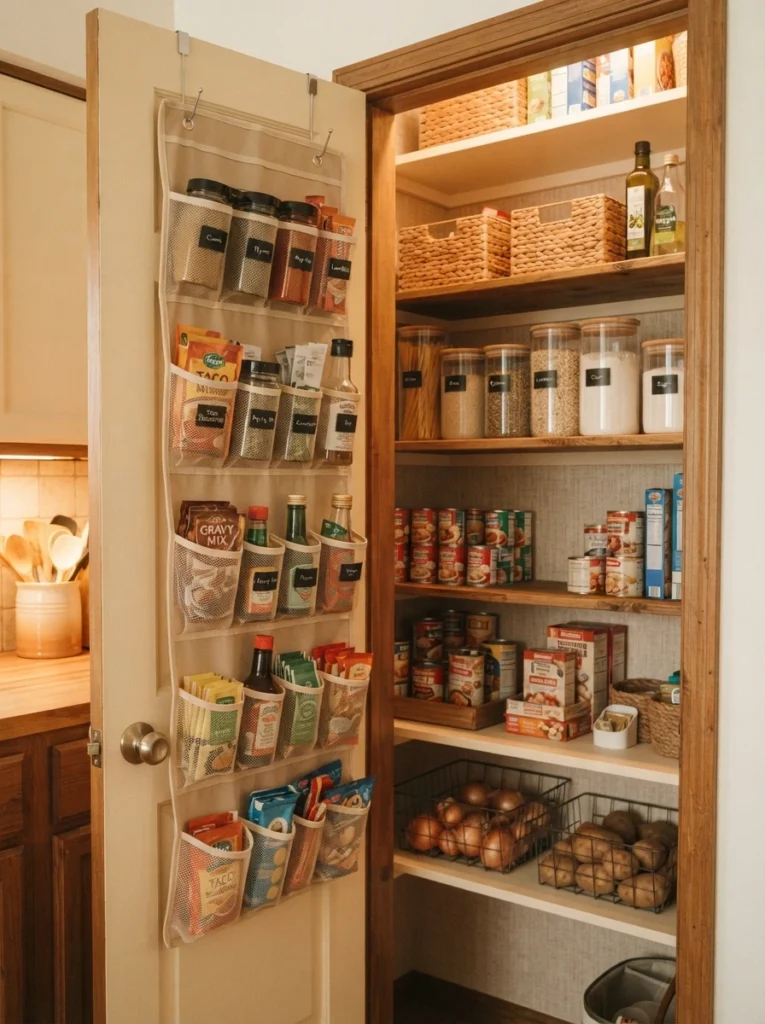
The real value of a door organizer isn’t just the extra storage itself, it’s what that storage frees up elsewhere. Moving lightweight, frequently used items to the door lets your actual pantry shelves hold bulkier goods, appliances, or backstock that wouldn’t work well hanging on a door.
14. Combine With Freestanding Shelf Risers for a Full No-Drill System
An over-the-door rack and a set of freestanding shelf risers on your existing shelves work well together, since one adds a whole new storage surface and the other doubles the capacity of what’s already there. Used together, a completely bare pantry can be transformed into a fully organized one in an afternoon, with nothing permanently installed.
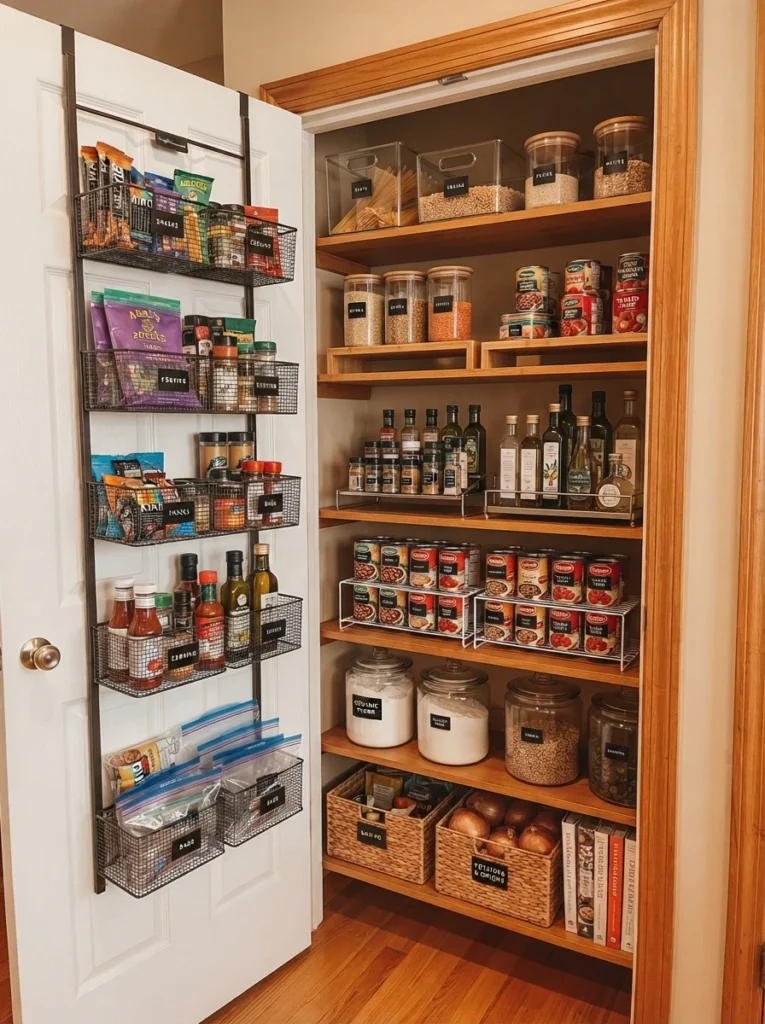
The back of a pantry door is easy to overlook precisely because it’s always in motion, swinging open and shut without anyone thinking of it as real storage. Once it’s holding even a fraction of what used to crowd the shelves, though, the difference shows up everywhere else in the pantry too, more breathing room, easier scanning, and nothing lost behind anything else.