
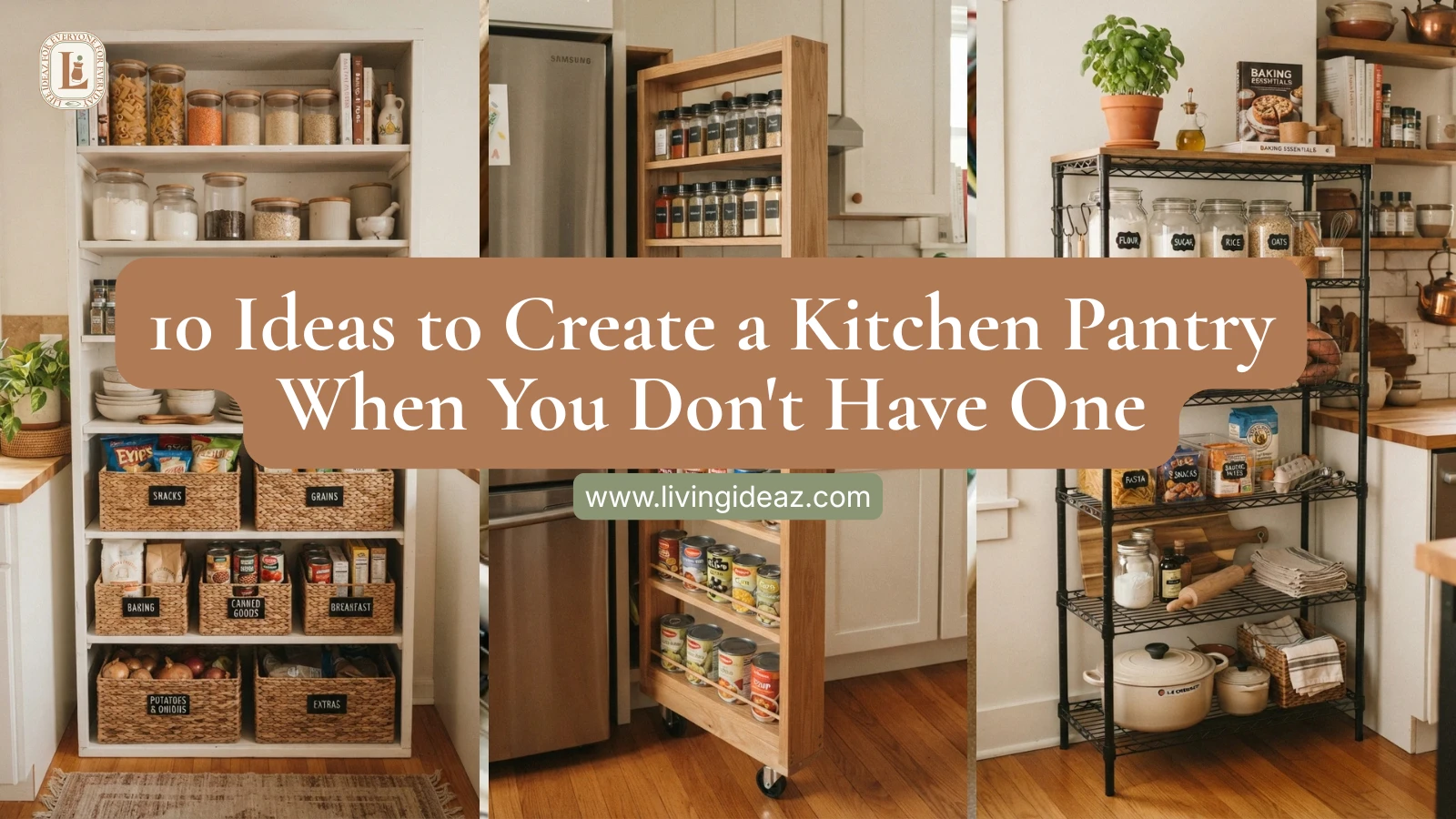
10 Ideas to Create a Kitchen Pantry When You Don’t Have One
TL;DR: Living without a built-in kitchen pantry doesn’t mean you’re condemned to cluttered countertops or overflowing cabinets. By claiming underutilized vertical space, repurposing standalone furniture like freestanding armoires, or converting an adjacent closet, you can create a high-capacity pantry system from scratch without a major kitchen renovate.
Not having a pantry is one of the most frustrating kitchen limitations. When every box of cereal, jar of sauce, and backup bag of flour has to compete with your dinnerware and cookware for cabinet space, chaos takes over quickly. But you don’t need a dedicated closet or a room full of built-in shelving to have a functional, organized food storage system.
Here are 10 DIY ideas to create a high-functioning kitchen pantry out of thin air, no matter how small your kitchen layout is.
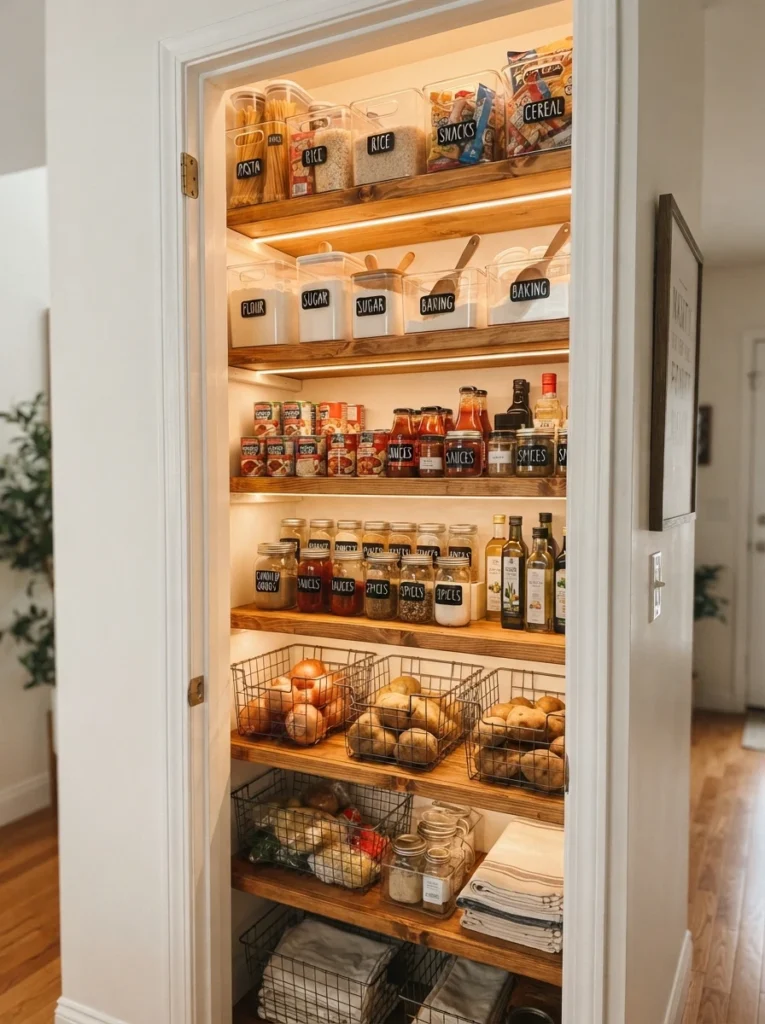
1. Convert an Adjacent Hallway or Utility Closet into a Dedicated Pantry
If your kitchen lacks a pantry, look just beyond its perimeter. A nearby hallway coat closet, broom closet, or utility nook can easily be repurposed into a full-capacity food storage center. Swap out basic hanging rods for adjustable wood or wire shelving, add door-mounted organizers, and install LED puck lights to turn an unused closet into your primary pantry.
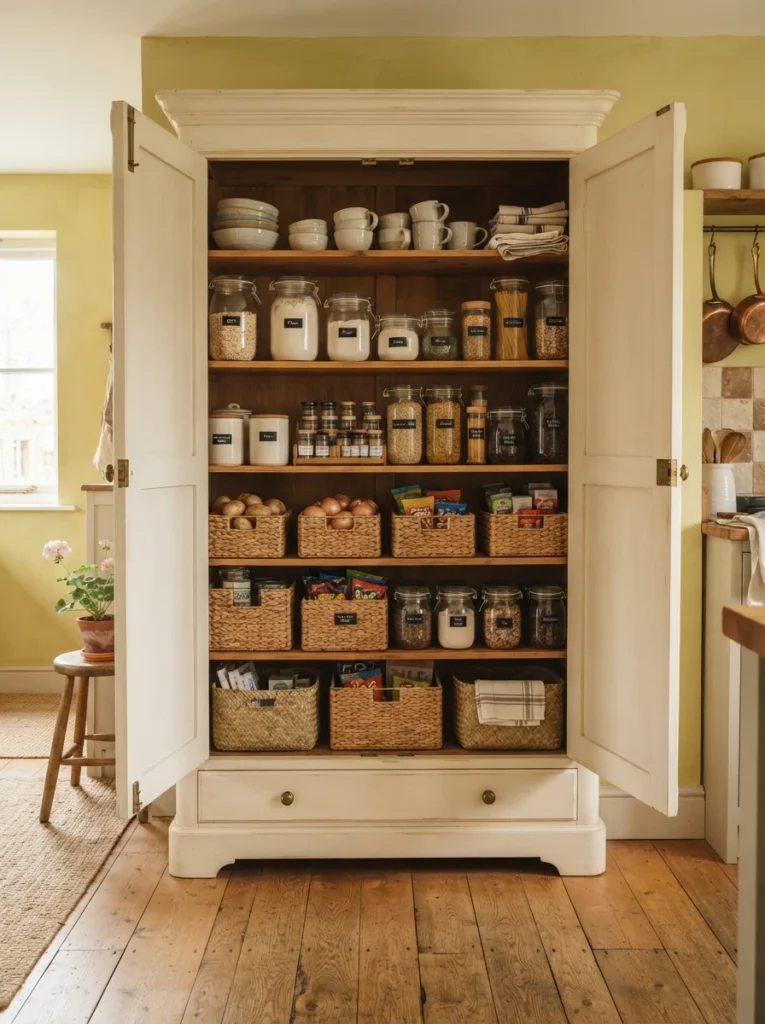
2. Bring in a Freestanding Wardrobe or Armoire
A freestanding cabinet or repurposed wooden armoire is the single fastest way to add a hidden, high-volume pantry to a kitchen. Place it against an open wall or at the end of a cabinet run. Customize the interior with extra shelves, pull-out wire baskets, or door-mounted spice racks to match your exact storage needs while keeping food behind closed doors.
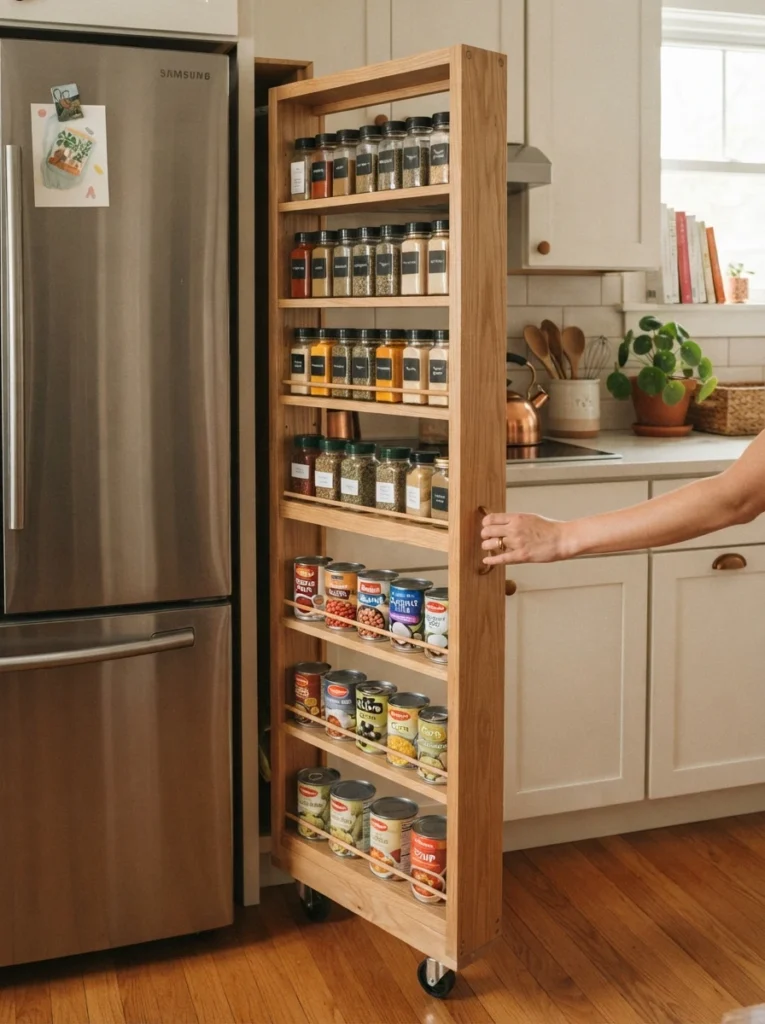
3. Build Out the Side of Your Fridge with a Slim Rolling Cart
The narrow 4 to 6-inch gap between your refrigerator and the wall or lower cabinets is usually wasted space. A slim, slide-out rolling pantry rack fits perfectly into this gap, giving you multiple vertical tiers for spices, canned goods, oils, and slender boxes. It keeps items accessible while taking up zero floor footprint.
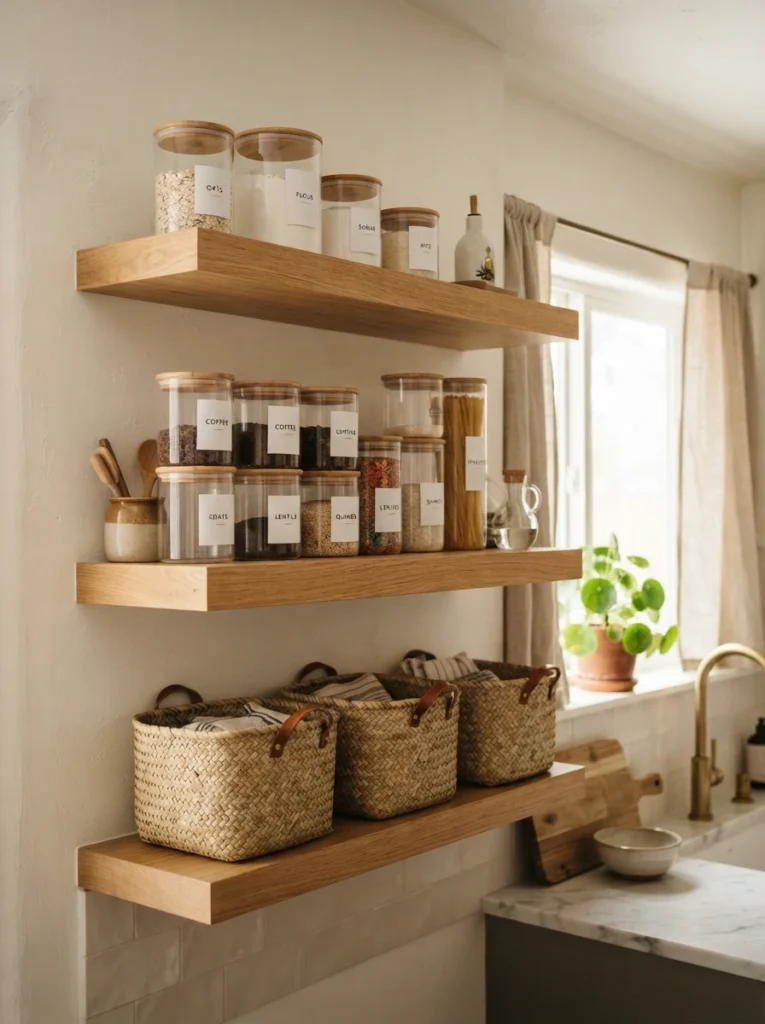
4. Hang Wall-Mounted Shelving on Open Vertical Space
Turn empty wall space into a stylish open pantry by installing vertical shelving units. Heavy-duty floating shelves or wall-mounted track systems allow you to stack ingredients, decanted dry goods, and storage baskets floor-to-ceiling. Keeping items stored in uniform glass jars keeps open-shelf storage looking clean rather than cluttered.
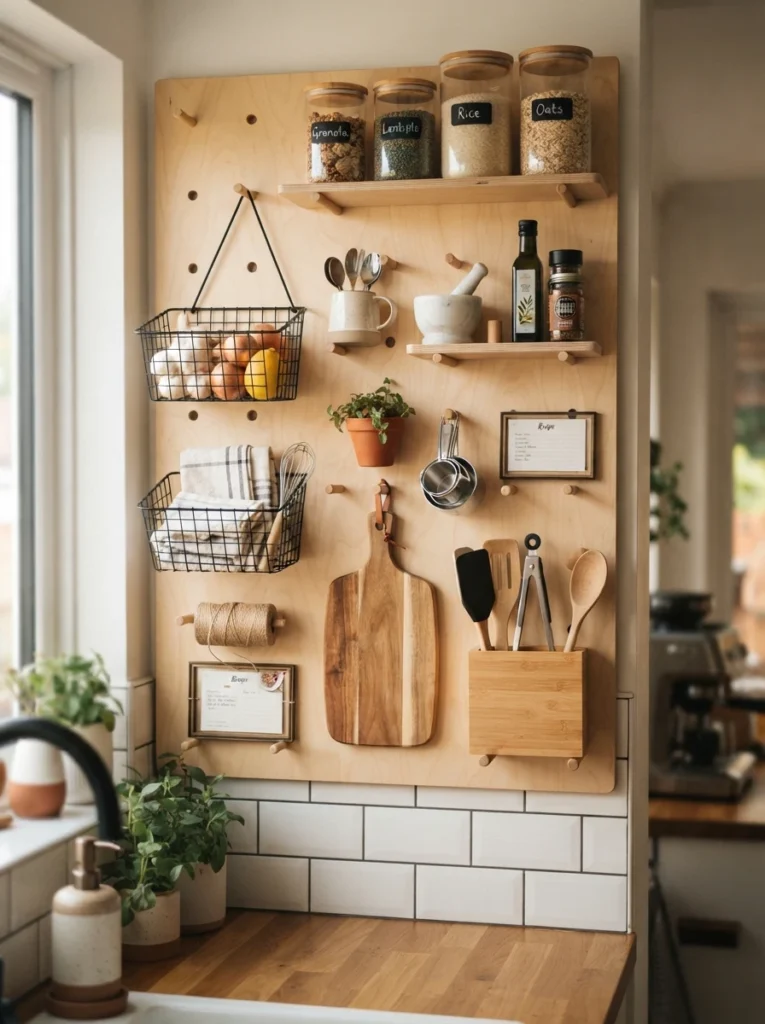
5. Install a Pegboard System for Modular Wall Storage
A heavy-duty metal or wood pegboard turned into a pantry wall offers ultimate flexibility. By adding custom hooks, small hanging wire baskets, and shallow wooden ledge shelves, you can hang everything from bagged snacks and spice jars to dry-goods baskets. As your storage needs change, you can reconfigure the entire setup in minutes.
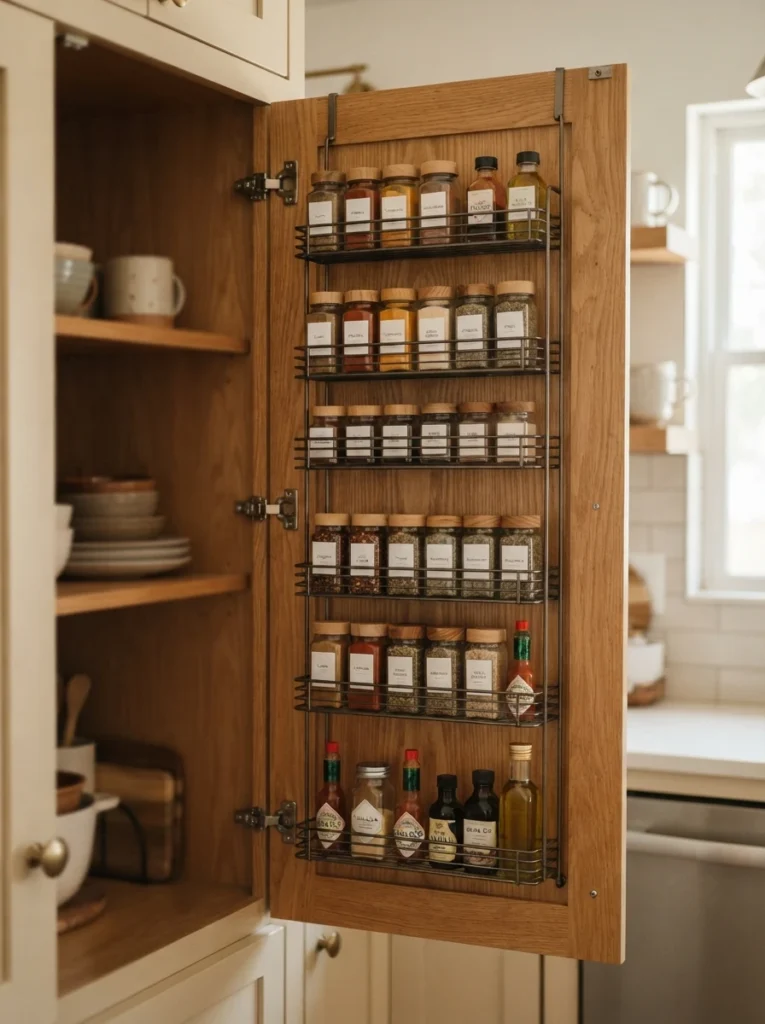
6. Add Door-Mounted Rack Systems to Existing Cabinet Doors
If you can’t add new furniture, make your existing cabinet doors work twice as hard. Heavy-duty over-the-door or screw-in rack systems instantly turn the inside of tall cabinet doors into vertical storage for foil boxes, spices, jars, and small packaged items, reclaiming wasted depth inside the cabinet.
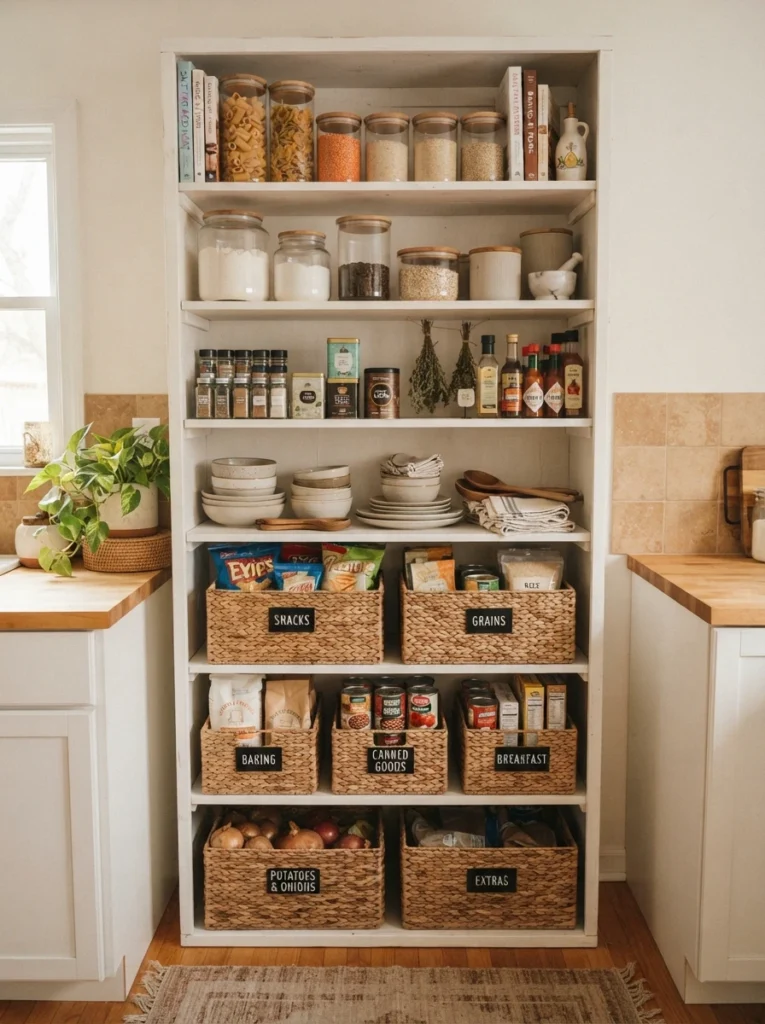
7. Repurpose an Unused Bookcase with Bins and Baskets
An inexpensive, tall bookshelf can easily morph into a stylish open pantry. Space out the shelves to accommodate cereal boxes and tall bottles, then line the lower levels with matching fabric or woven baskets to hide visually messy items like snack bags and backstock groceries.
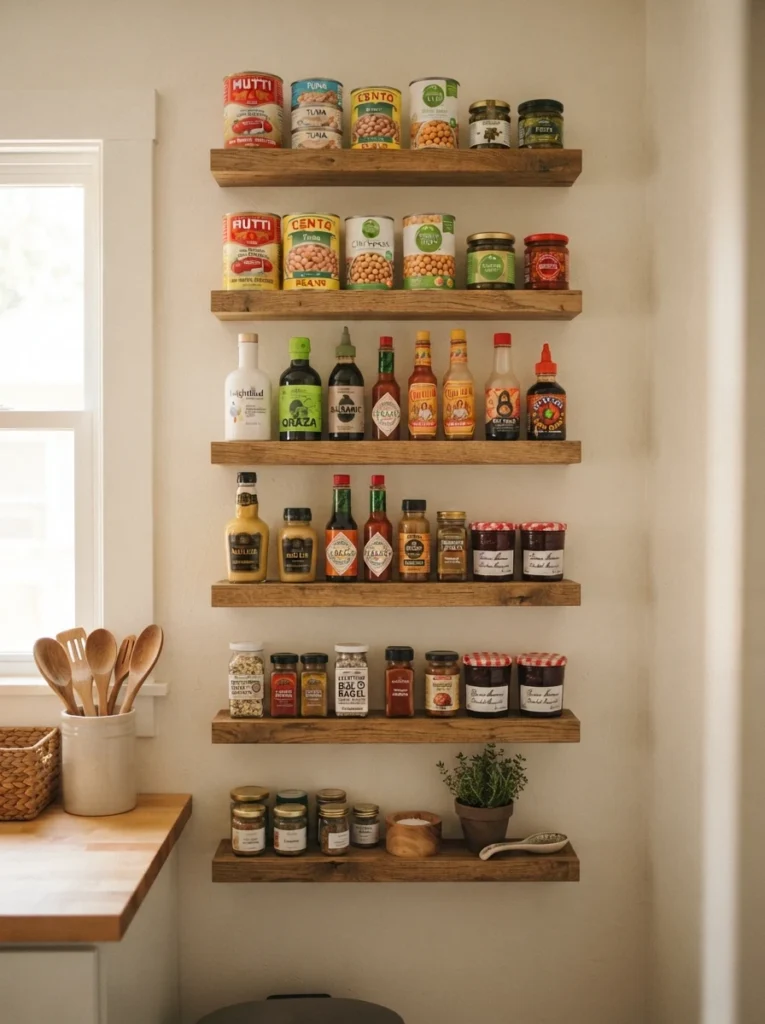
8. Mount Shallow Spice Racks Across Empty Wall Nooks
Deep shelves aren’t always necessary for effective food storage. Shallow wall-mounted ledge shelves—just 3 to 4 inches deep—can be installed behind a door, along an entryway wall, or in a shallow kitchen nook. They are ideal for storing canned goods, jars, and boxed items in a single layer so nothing gets lost in the back.
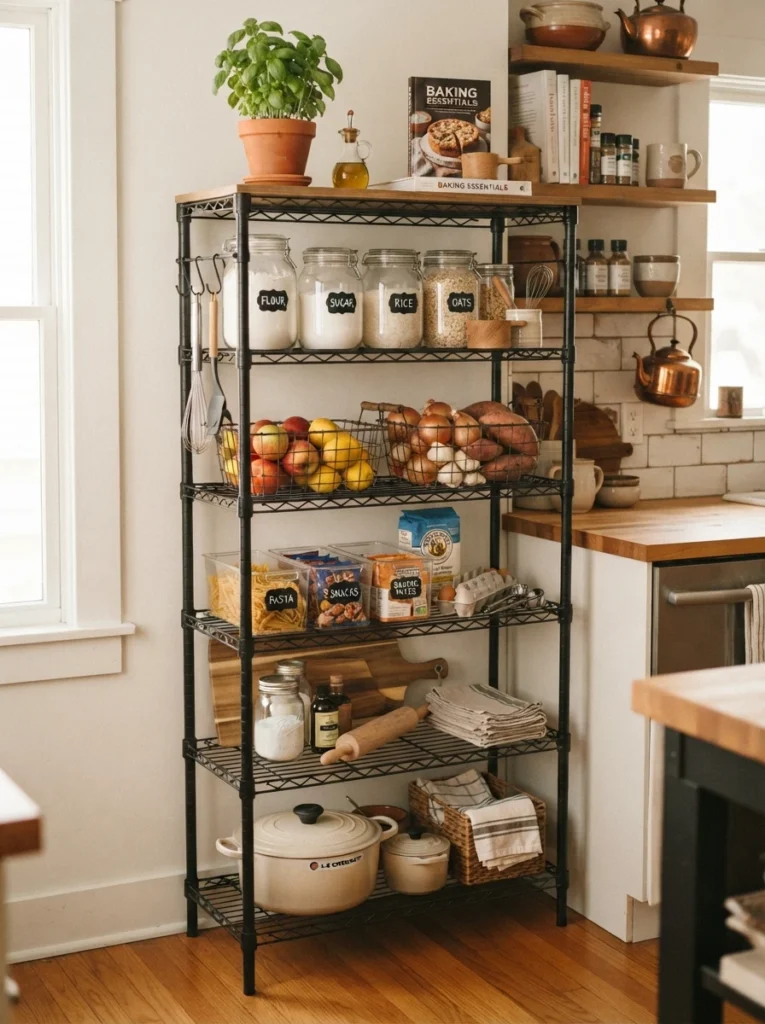
9. Utilize an Open Kitchen Cart or Baker’s Rack
A multi-tiered baker’s rack or rolling utility cart acts as an instant micro-pantry for daily essentials. Reserve top tiers for baking ingredients or a coffee station, and use lower tiers equipped with wire baskets to store potatoes, onions, bread, and heavy kitchen staples.
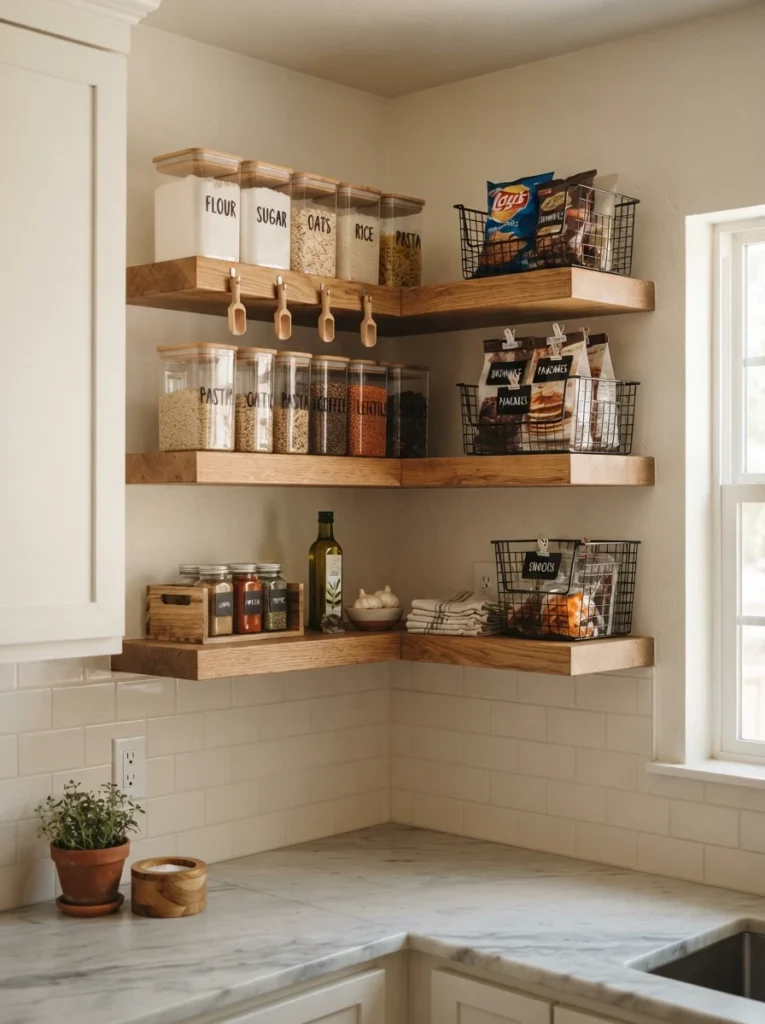
10. Transform a Nearby Corner into a Built-In Corner Unit
Corners are frequently underutilized in kitchens without pantries. Installing L-shaped open shelves or a corner cabinet unit maximizes awkward architectural dead space, turning a neglected corner into a high-capacity, central storage hub for all your food supplies.
Creating a functional pantry is simply about reclaiming unused space and establishing clear categories for your food items. Whether you choose a quick weekend DIY wall project or bring in a dedicated piece of furniture, giving your groceries their own defined home instantly makes your kitchen easier to use and far less chaotic.