15 Small Kitchen Pantry Ideas When You Don’t Have a Pantry Room
TL;DR: No pantry room doesn’t mean no pantry system. Open wall shelving, a freestanding cabinet, or even a repurposed wardrobe can hold as much as a small built-in pantry once you stack vertically instead of spreading out. Pair that with stackable airtight containers and a labeling habit, and a kitchen with zero extra square footage can still stay organized and easy to shop from.
A dedicated pantry room is one of those features that sounds standard until you move into a place that doesn’t have one. Older apartments, small city kitchens, and plenty of newer builds skip it entirely, and you’re left stacking pasta boxes wherever they fit. The good news is that a pantry isn’t really a room. It’s a system, and you can build that system into a wall, a cabinet, or even a closet three rooms away from your stove.
Here are 15 small kitchen pantry ideas for when your kitchen never came with a pantry to begin with.
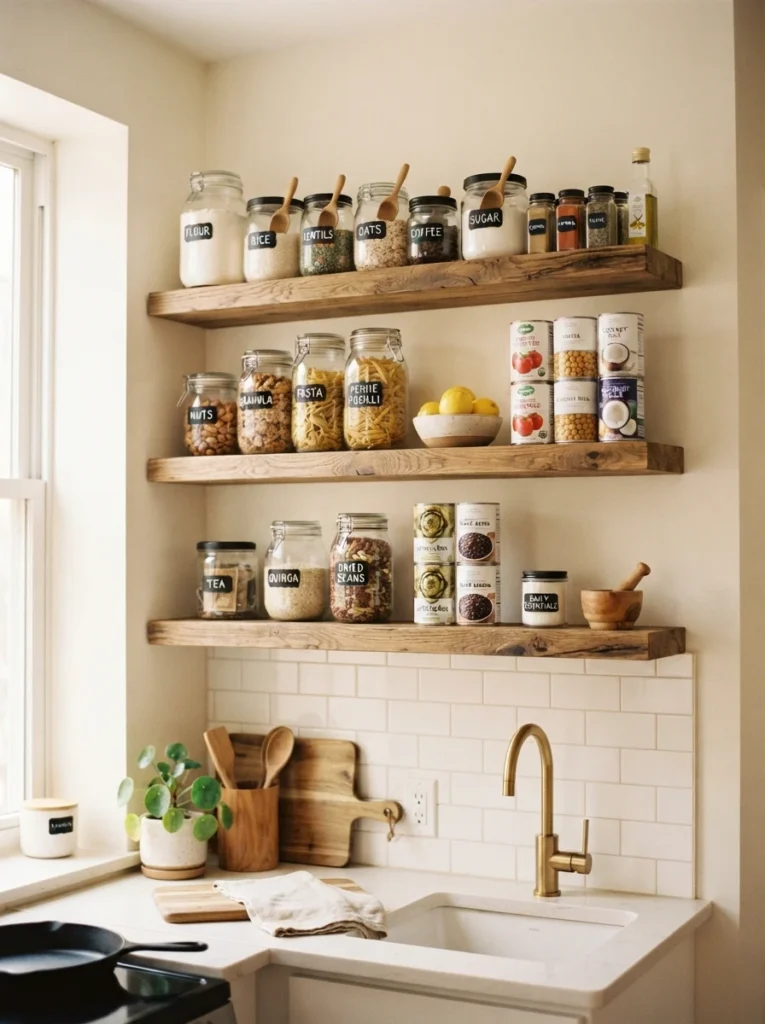
1. Turn an Open Wall Into Vertical Shelving
Any blank stretch of wall in or near the kitchen can become a vertical pantry once you install a few floating shelves. Designers working with kitchens under 70 square feet lean on this trick constantly, since it adds real storage without touching the floor plan at all. Group jars and boxes by height so the shelf line reads as intentional, not improvised.
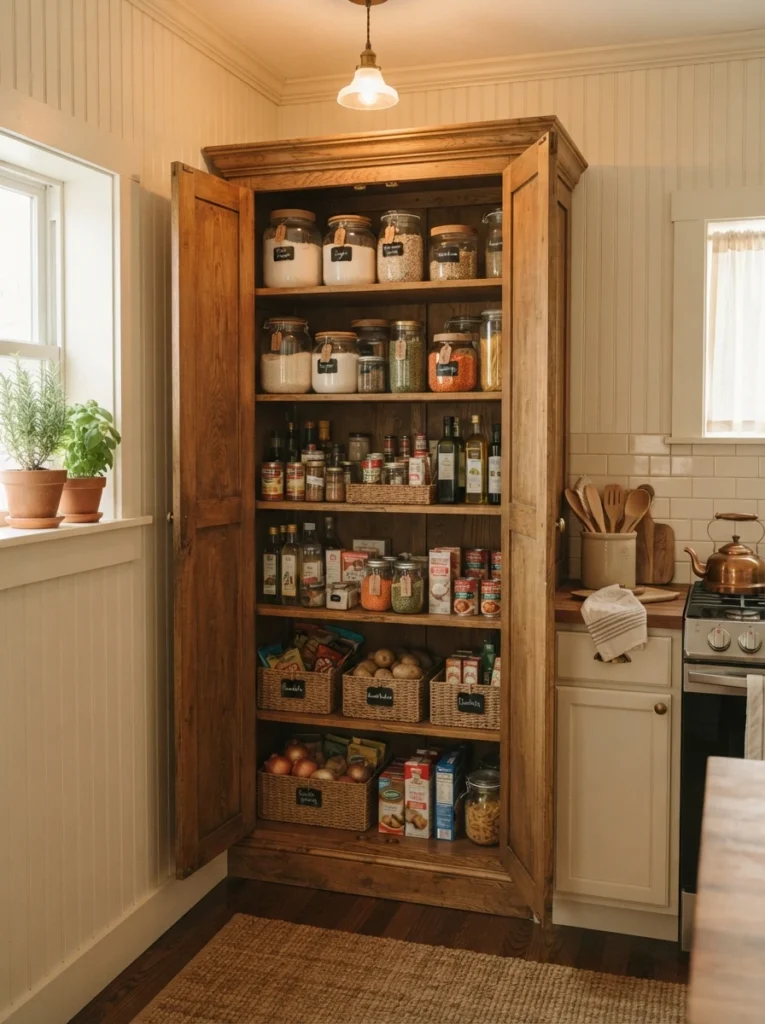
2. Use a Freestanding Cabinet or Hutch as a Stand-In Pantry
A tall freestanding cabinet, even a secondhand one, can hold nearly as much as a small built-in pantry once the shelves are adjusted to your can and box heights. This works especially well for renters, since nothing needs to be drilled into the wall and the whole piece moves with you.
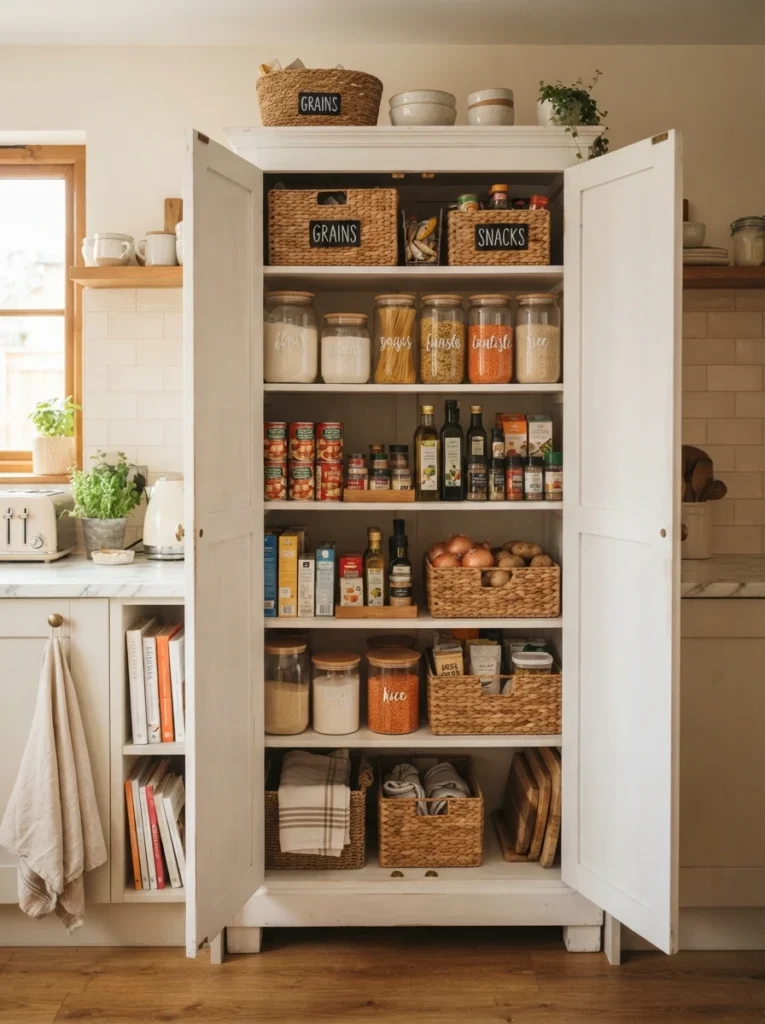
3. Repurpose a Wardrobe for Bulk Storage
A basic wardrobe, the kind built for a bedroom closet, adapts surprisingly well into kitchen storage. The adjustable shelving, drawers, and door baskets that come standard on most flat-pack wardrobes are already built for exactly the mix of cans, boxes, and small appliances a pantry needs to hold.
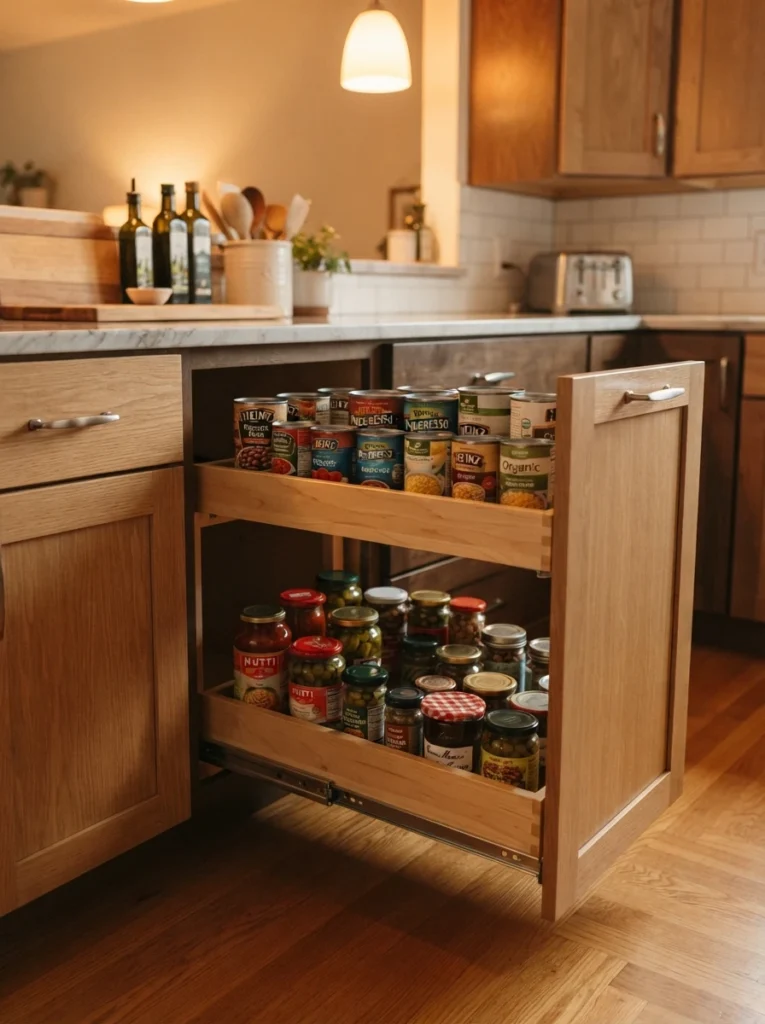
4. Add Pull-Out Bins Inside Existing Base Cabinets
If you already have base cabinets but they’re just deep, dark holes where cans go to disappear, pull-out bins fix that instantly. Sliding the bin out gives you a full view of everything inside instead of digging past the front row to find what’s stacked behind it.
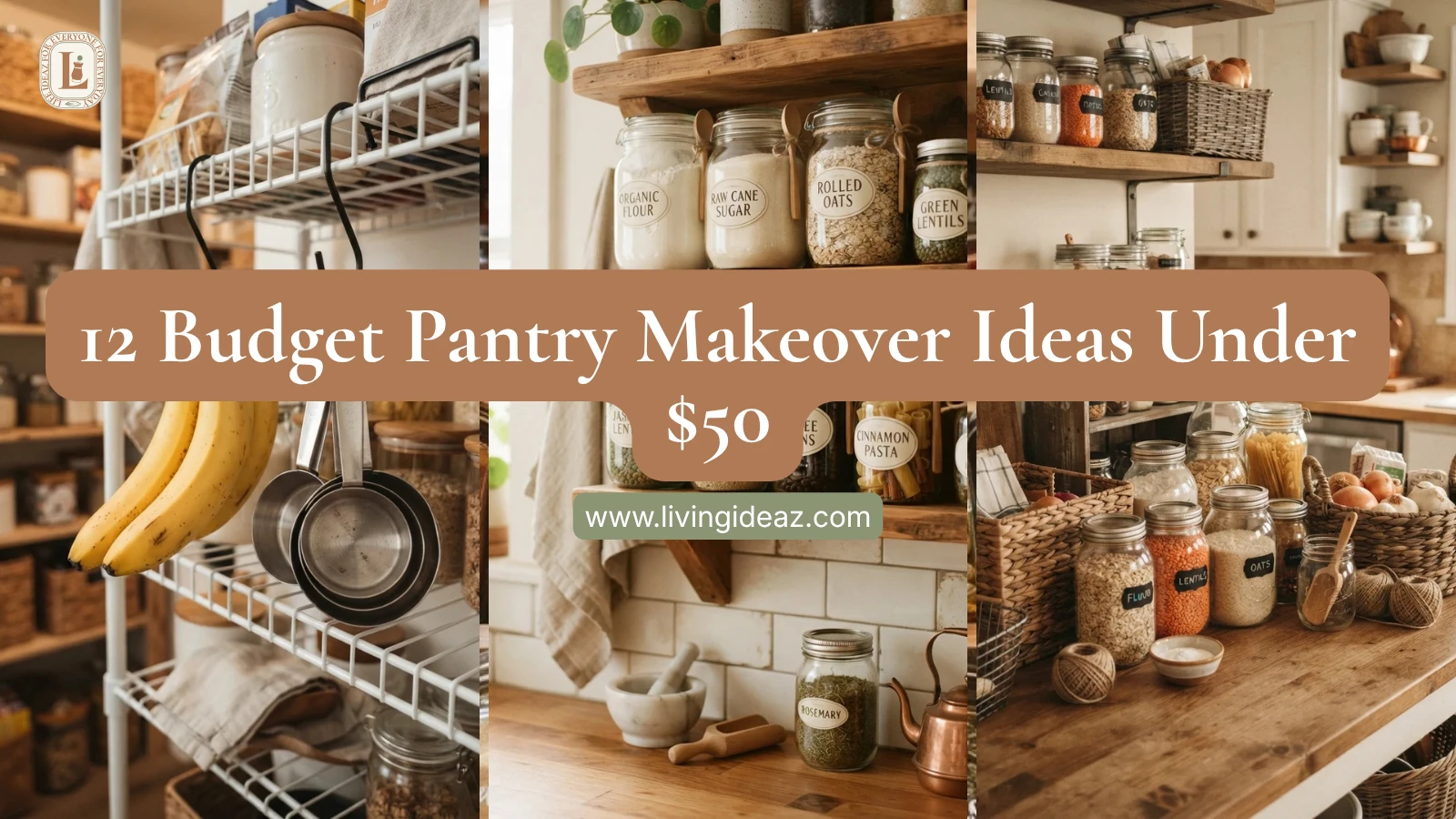
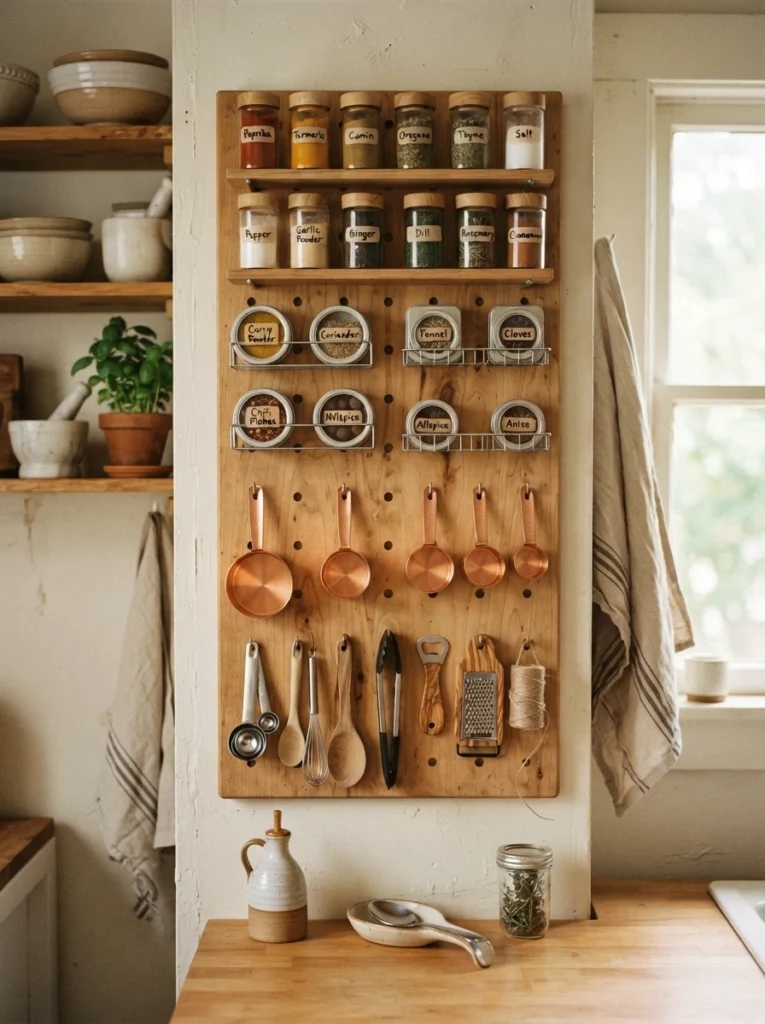
5. Mount a Pegboard for Cans, Spices, and Small Jars
Pegboards aren’t just a garage tool. Mounted inside a cabinet door or on an open wall, a pegboard with small shelf pegs can hold spice jars, canned goods, or measuring cups in a layout you can rearrange any time your storage needs change.
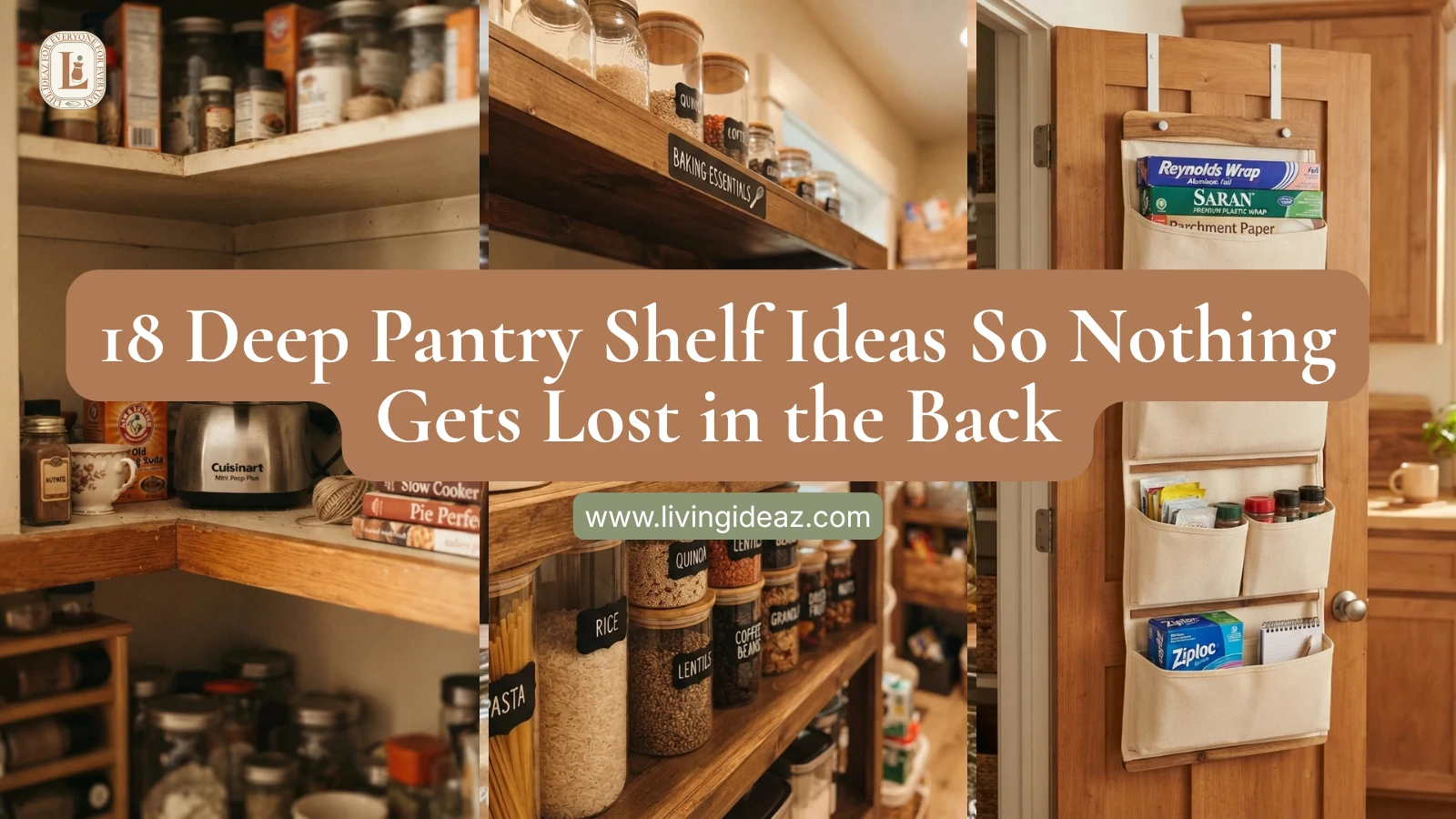
6. Install Door-Mounted Racks on Cabinet Doors
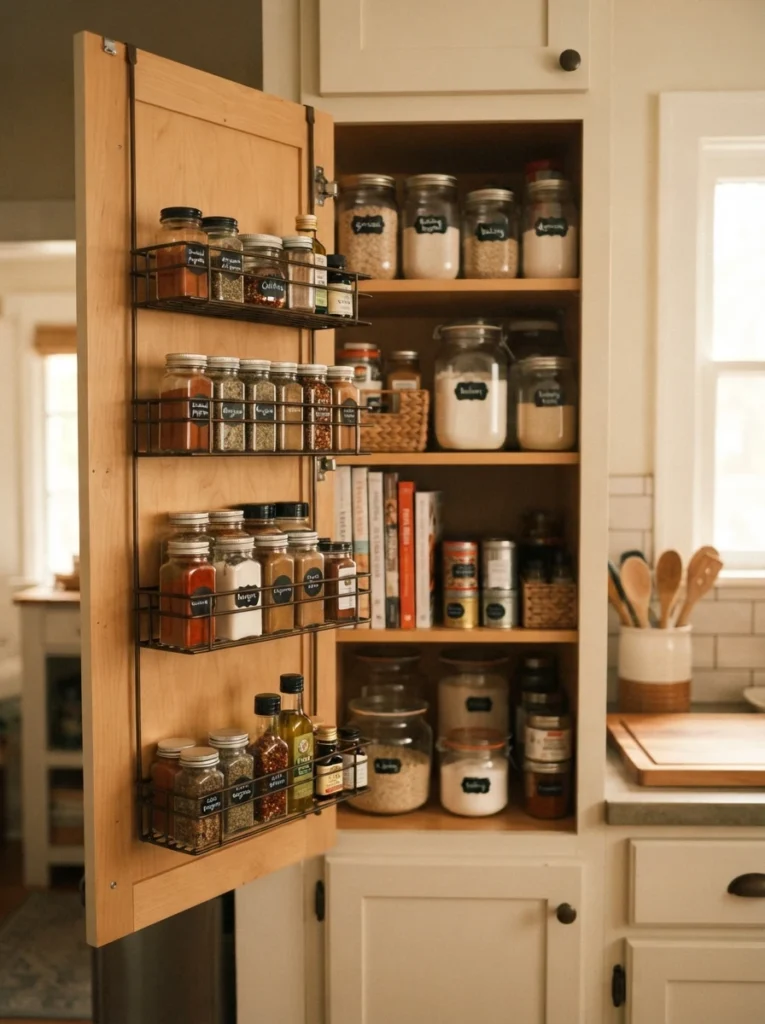
The back of a cabinet door is often the most wasted real estate in a small kitchen. A shallow wire or acrylic rack mounted there can hold spice bottles, foil boxes, or tortilla packs without taking up a single inch of shelf space behind it.
7. Use Tiered Hanging Baskets Instead of Counter Space
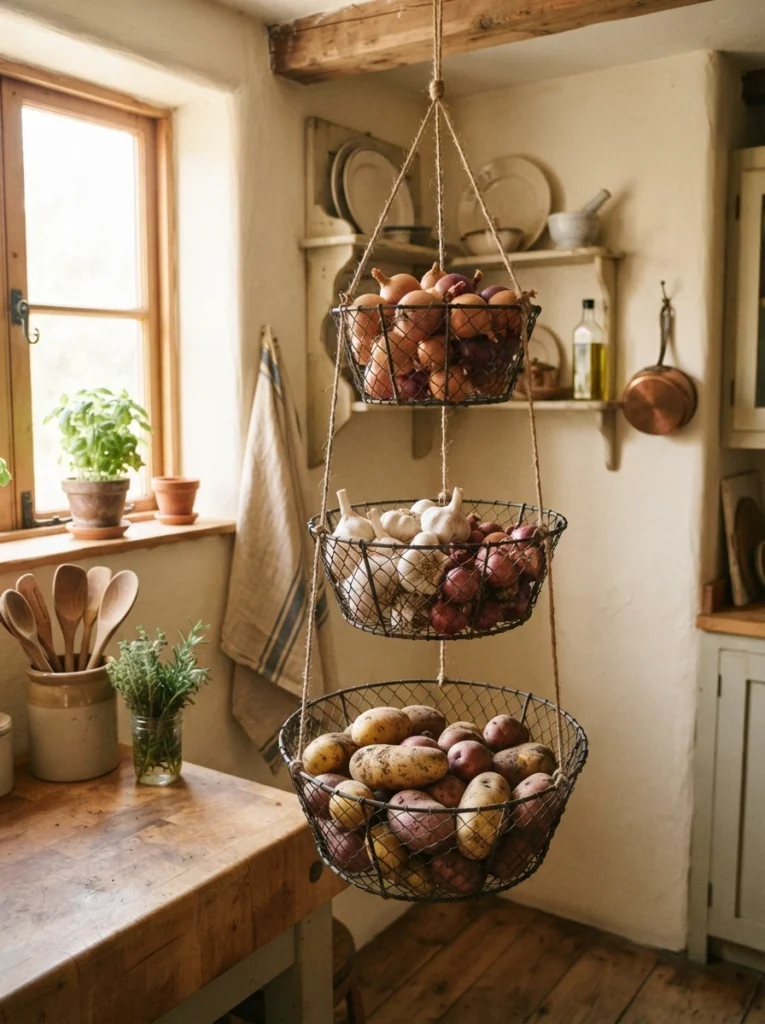
Produce like onions, potatoes, and garlic doesn’t need refrigeration, but it does need to stay out of direct light and off a counter you need for prep. Tiered hanging baskets solve both problems at once, keeping produce ventilated and visible while it hangs above the workspace instead of sitting on it.
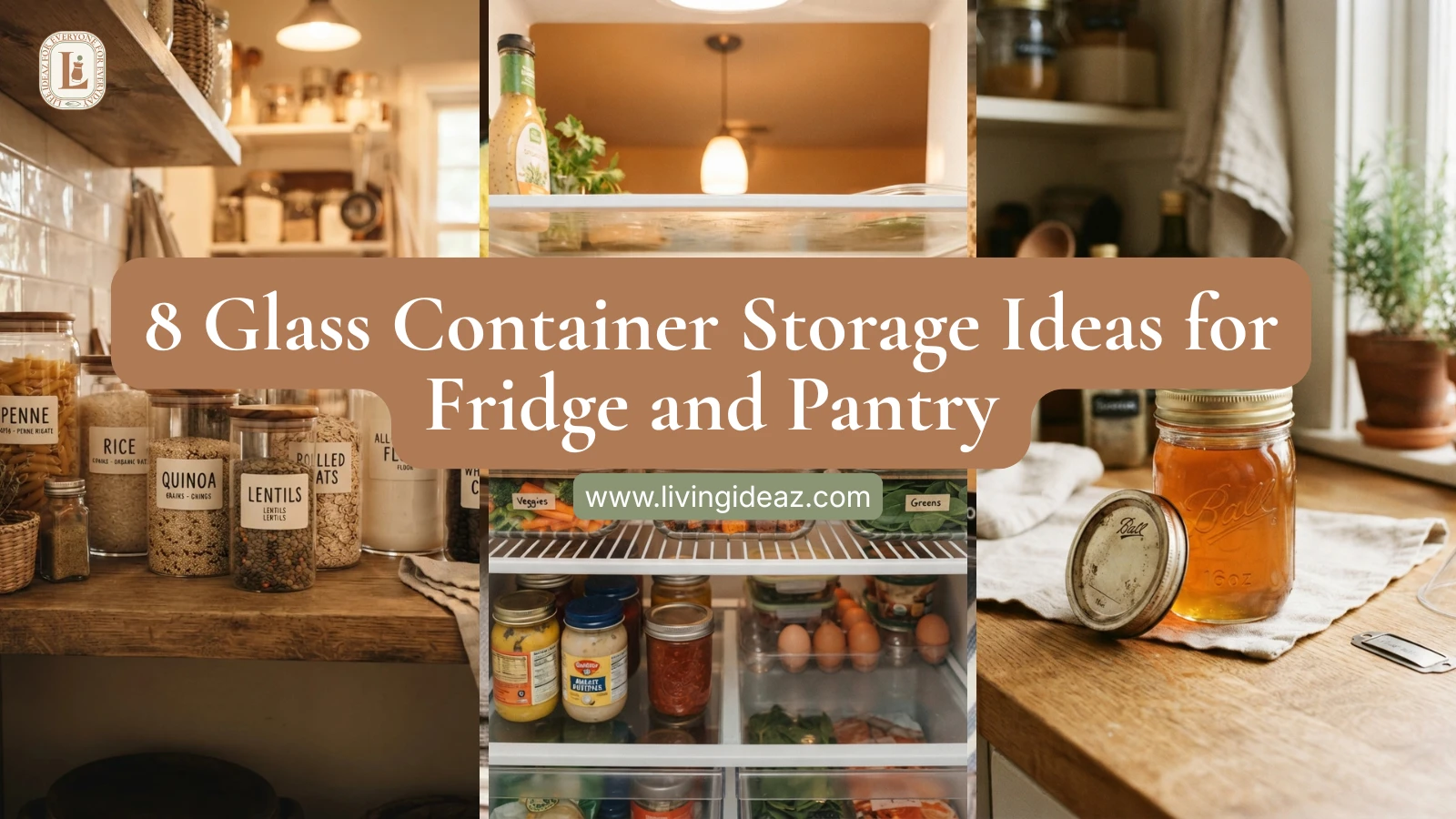
8. Store Bulk Dry Goods in Stackable Airtight Containers
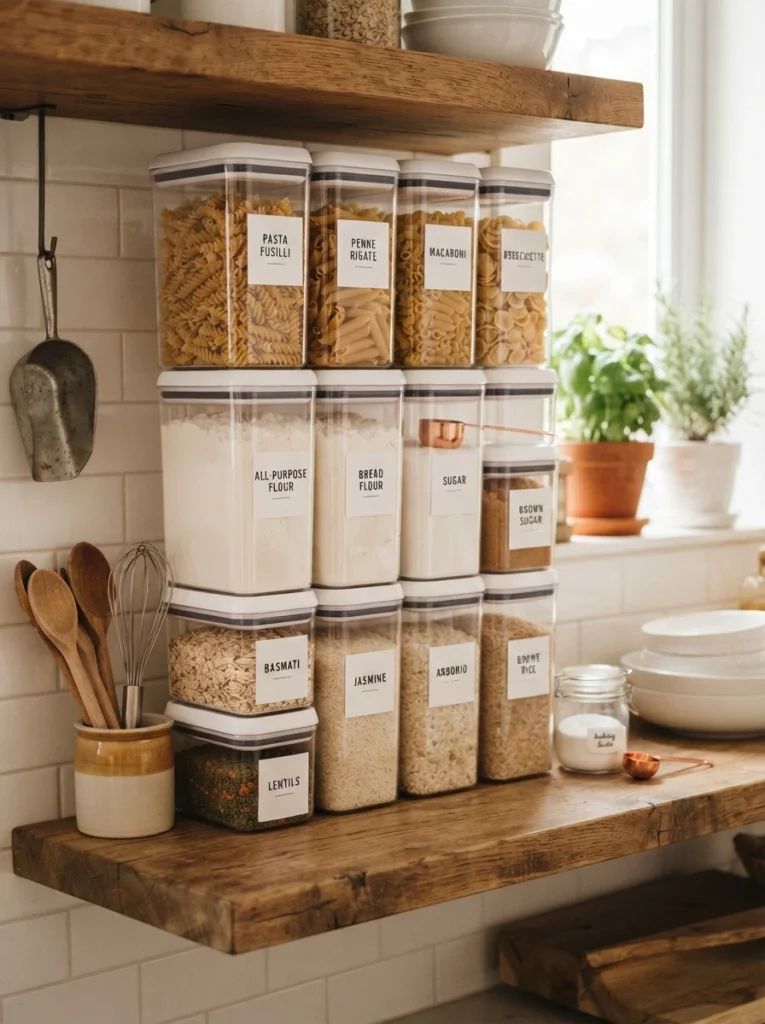
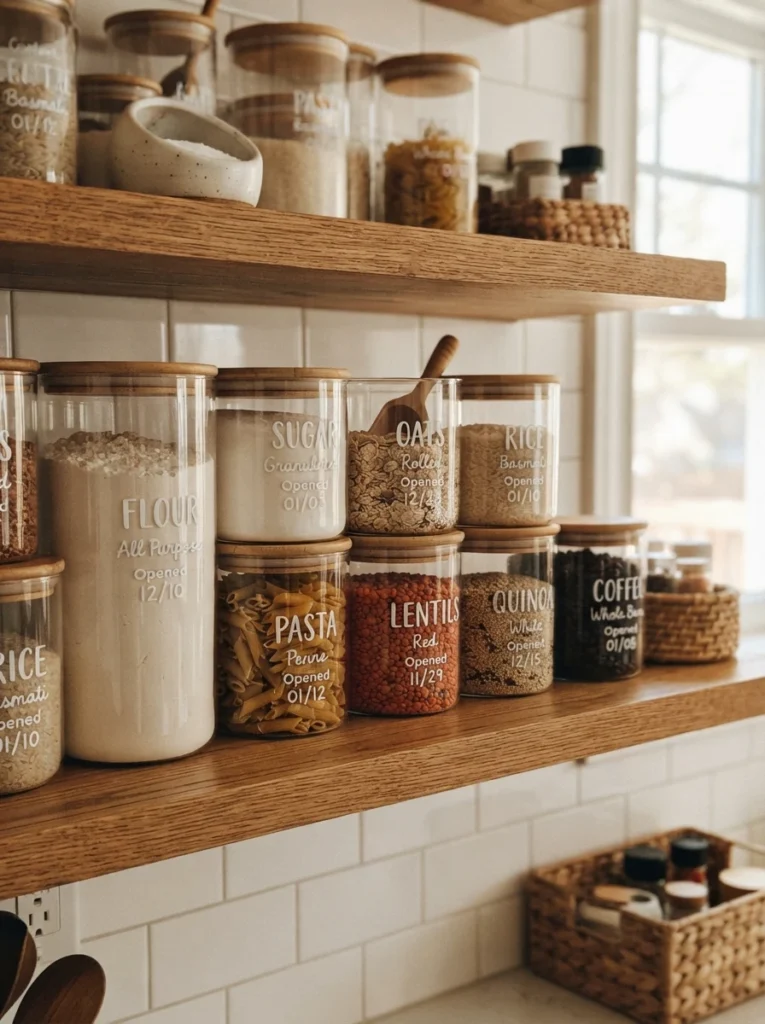
Flour, rice, and pasta stay fresh far longer in airtight containers than in their original bags, since most dry goods go stale from exposure to air rather than from simply aging. Square or rectangular containers also stack cleanly, which matters more in a small kitchen than a round jar that wastes corner space.
9. Claim the Top of Your Cabinets for Rarely Used Items
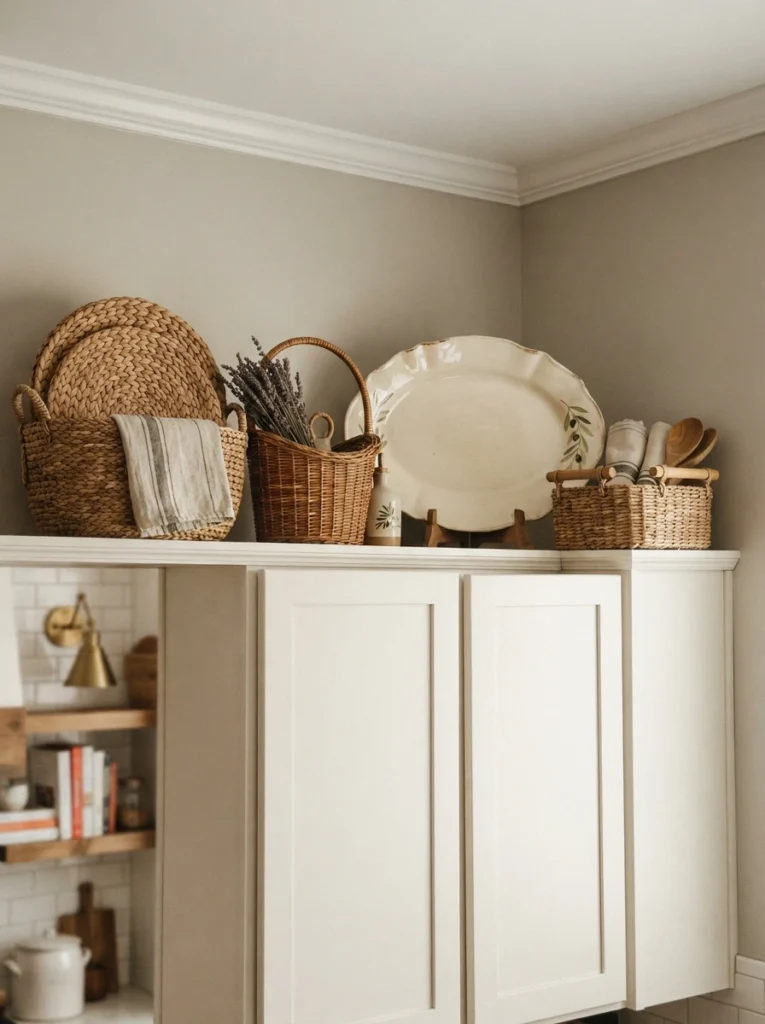
The gap above standard upper cabinets is prime storage for anything you only reach for a few times a year, like a holiday roasting pan or a big serving bowl. Keeping that space for occasional-use items frees up your everyday shelves for what you actually cook with each week.
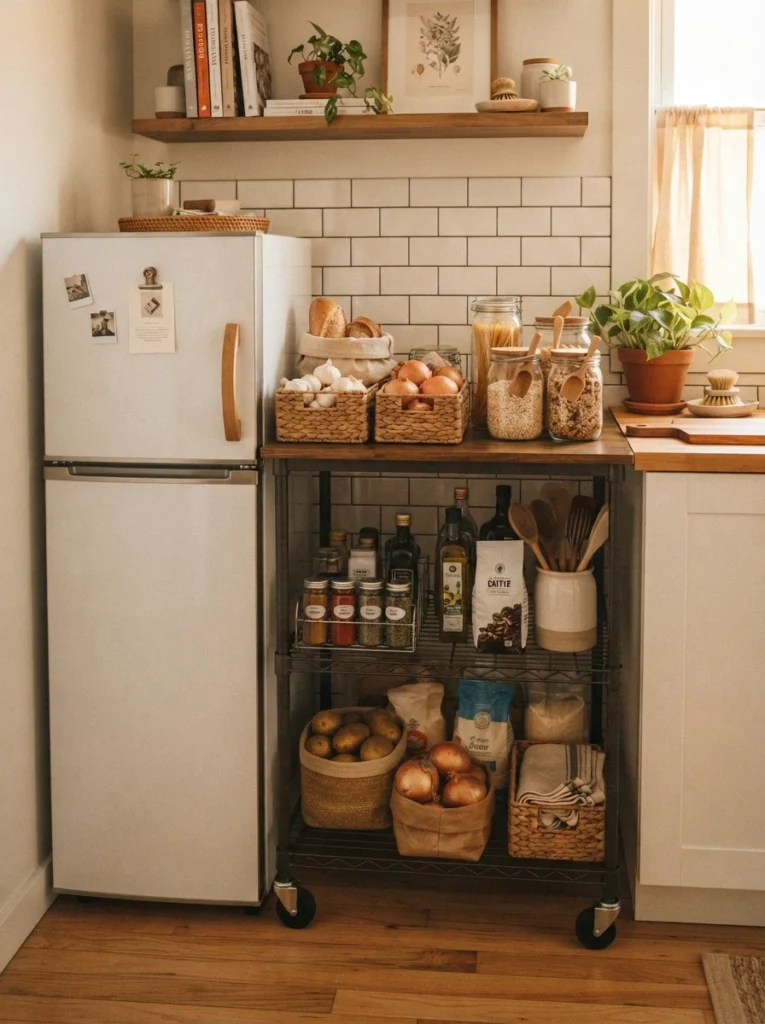
10. Use a Rolling Kitchen Cart as a Mobile Pantry
A rolling cart with a few open shelves gives you pantry storage that can move wherever you need it, tucked beside the fridge most days and pulled out for easier access on cooking days. It’s one of the few pantry solutions that works in a kitchen too small for any fixed furniture at all.
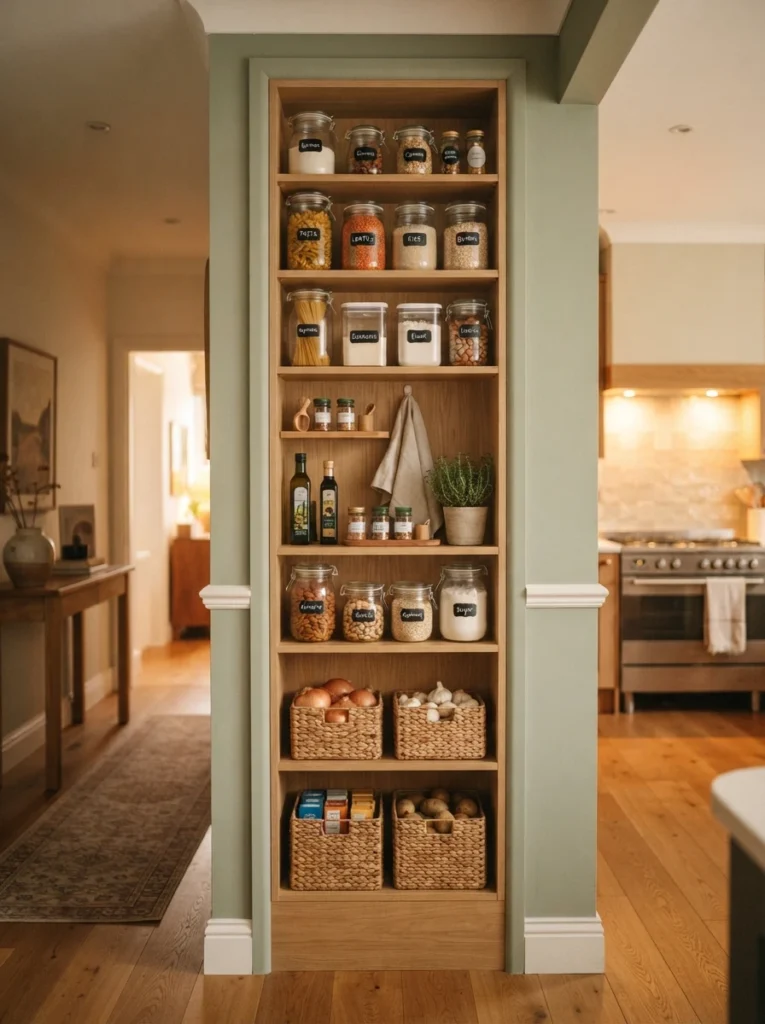
11. Build a Mini Pantry Into a Hallway or Entryway Nook
If your kitchen backs onto a hallway or entryway, a shallow niche there can hold a slim shelving unit dedicated entirely to food storage. This keeps bulk items organized without crowding the actual cooking space, and it works especially well in older homes where hallways tend to be wider than modern layouts allow.
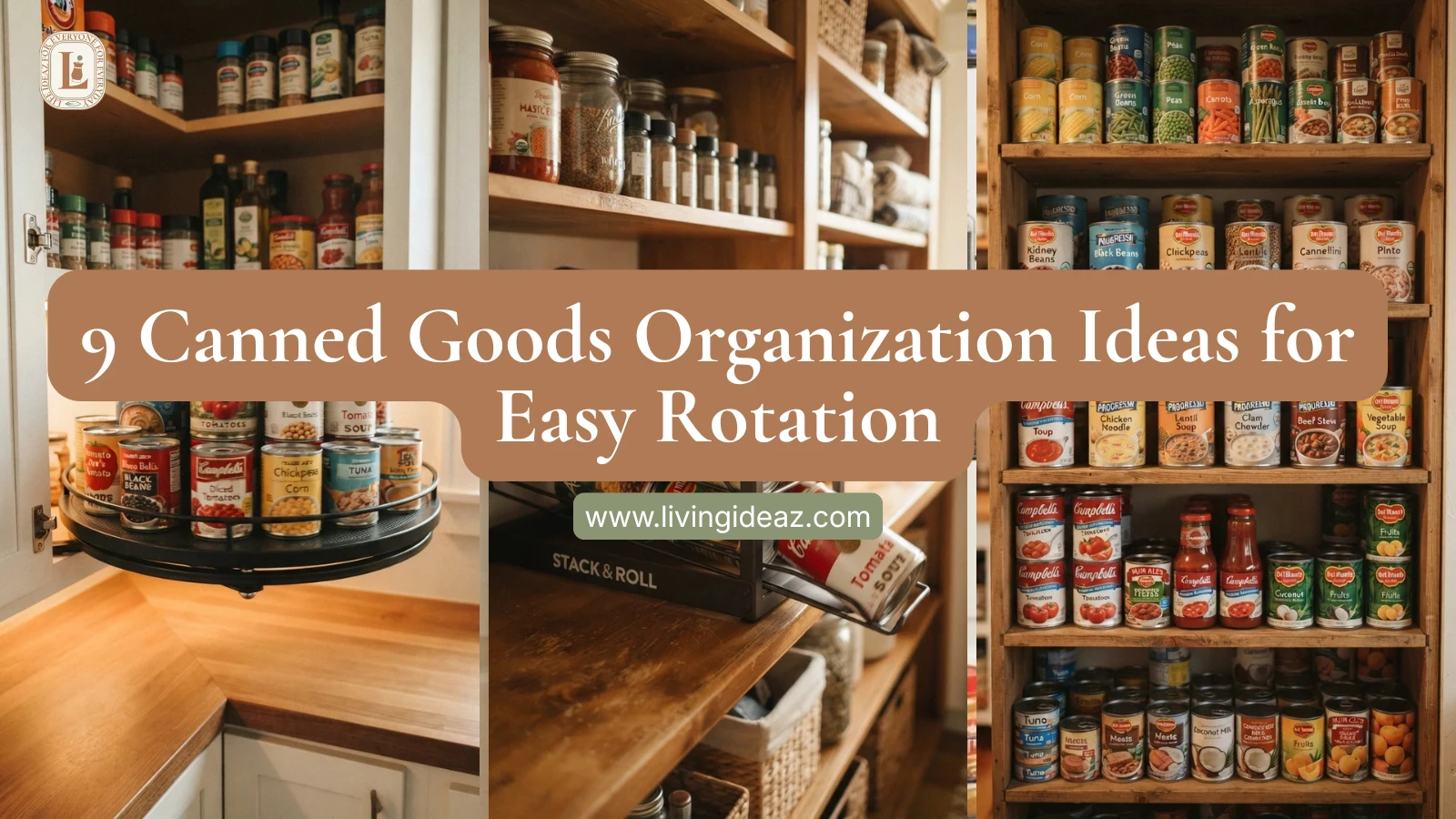
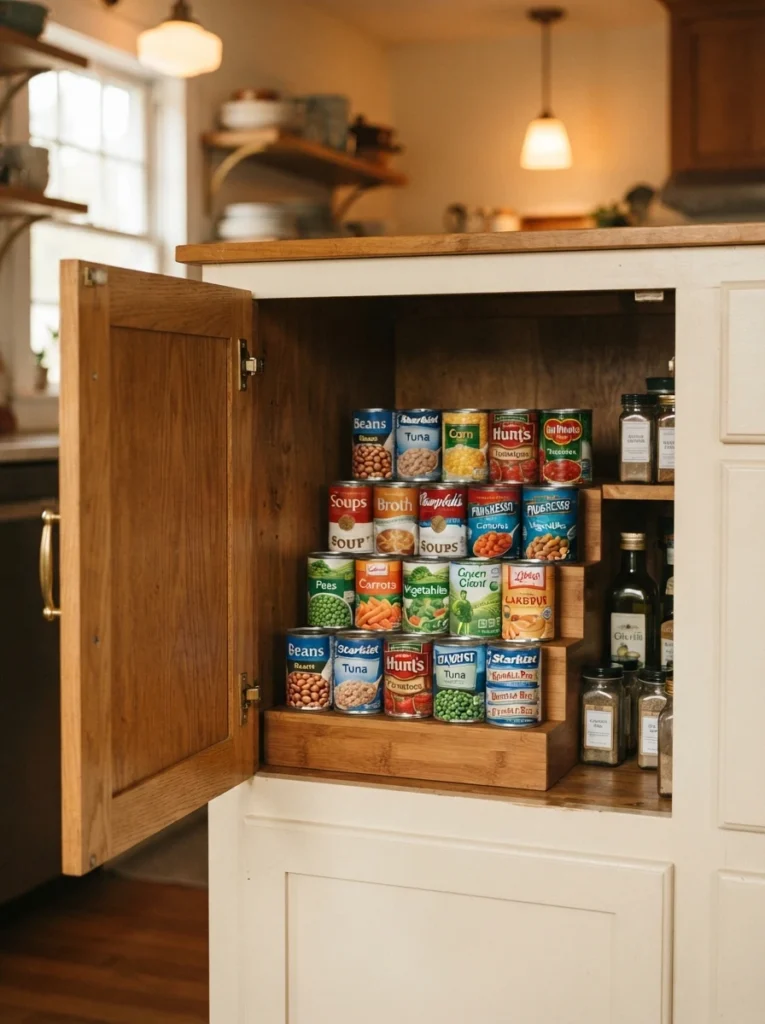
12. Add a Riser Shelf Inside Cabinets to Double Vertical Space
Most cabinet shelves are spaced for tall items, which wastes the empty air above anything shorter, like canned goods or spice jars. A stepped riser shelf uses that dead space by adding a second tier, so labels stay visible instead of getting buried behind a taller box.
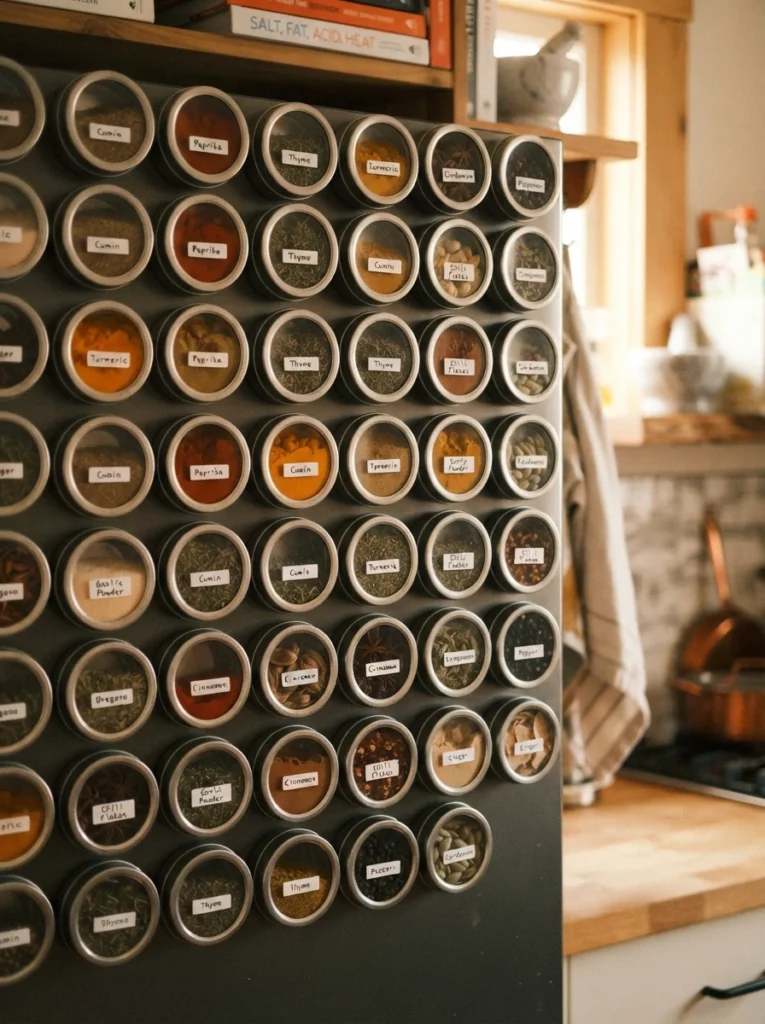
13. Use Magnetic Spice Tins on the Fridge or a Steel Panel
If your kitchen has any exposed metal surface, the side of the fridge, a steel backsplash panel, magnetic spice tins turn it into free storage that doesn’t touch your cabinets or counters at all. It’s a small trick, but for a kitchen with almost no built-in storage, every inch reclaimed counts.
14. Convert a Nearby Closet Into a Butler’s Pantry
A hallway or linen closet close to the kitchen can be repurposed entirely into food storage with a few added shelves. This works best when the closet sits within a few steps of the fridge, since a pantry that’s inconvenient to reach tends to get used less and less over time.
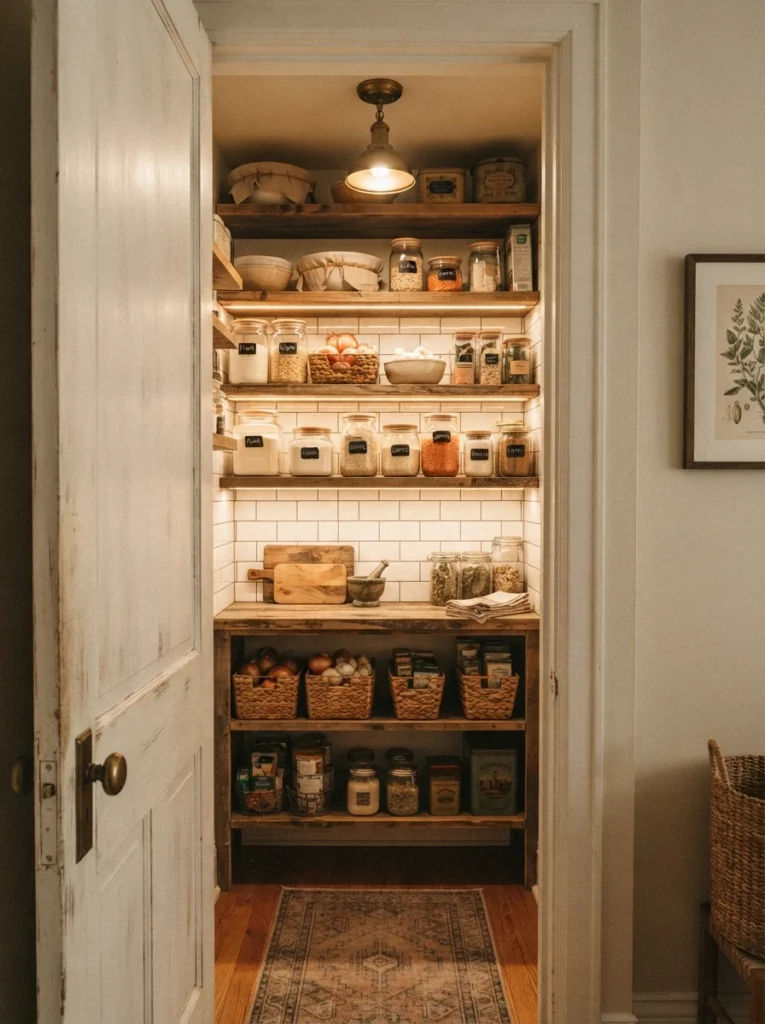
15. Label Everything With Contents and Dates to Cut Food Waste
A no-pantry kitchen relies more heavily on spread-out storage, which makes it easier to forget what you already have and buy duplicates. Labeling containers with both contents and the date they were stored is a simple habit that cuts down on waste and makes restocking faster, since you can see at a glance what actually needs replacing.
None of these ideas require a renovation, and most of them can be set up in a weekend. Start with whichever spot in your kitchen is currently the most chaotic, whether that’s a junk drawer full of loose spice packets or a counter buried under bags of dry goods, and build outward from there. A pantry room is nice to have, but it was never actually the thing keeping your kitchen organized.