
10 Small Bedroom Lighting Ideas for Better Sleep and Wind-Down Routines
TL;DR: Good sleep lighting isn’t just about warm bulbs, it’s about using light as a signal your brain learns to recognize. Dim in stages, switch from ambient to task lighting during your routine, and turn everything off completely once you’re in bed. A consistent lighting sequence trains your body to wind down faster over time.
A consistent bedtime routine works because it signals to your brain that it’s time to transition from being awake to asleep. Lighting is one of the strongest signals you have, stronger than most people realize, because your circadian rhythm responds directly to how much light you’re exposed to and what color it is. The trick isn’t just picking the right bulb, it’s using your lighting in a deliberate sequence each night.
Here are 10 small bedroom lighting ideas built around an actual wind-down routine, not just a bulb swap.
1. Set a Wind-Down Alarm and Start Dimming Early
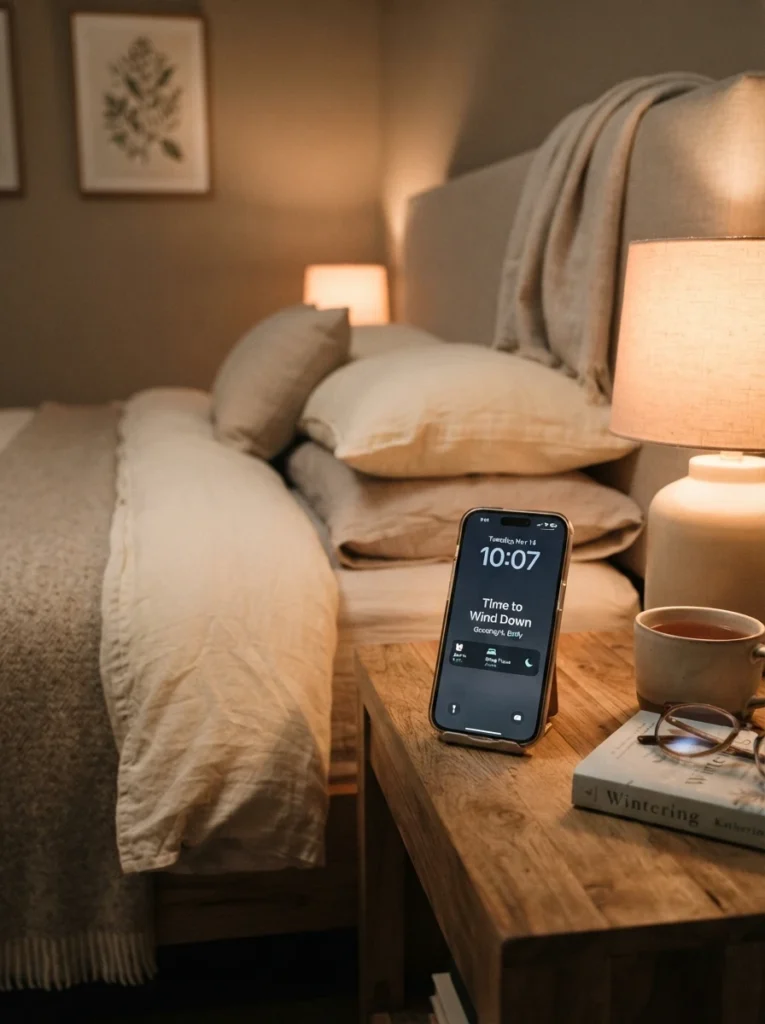
Your wind-down routine should start at least 30 minutes before bed, and setting an alarm to remind you is genuinely one of the most effective tricks for sticking to it. If you want to be asleep by 10pm, set a reminder for 9:30pm to start lowering the lights around your bedroom.
This single habit does more for consistency than any specific fixture on this list.
2. Switch From Ambient to Task Lighting During Your Routine
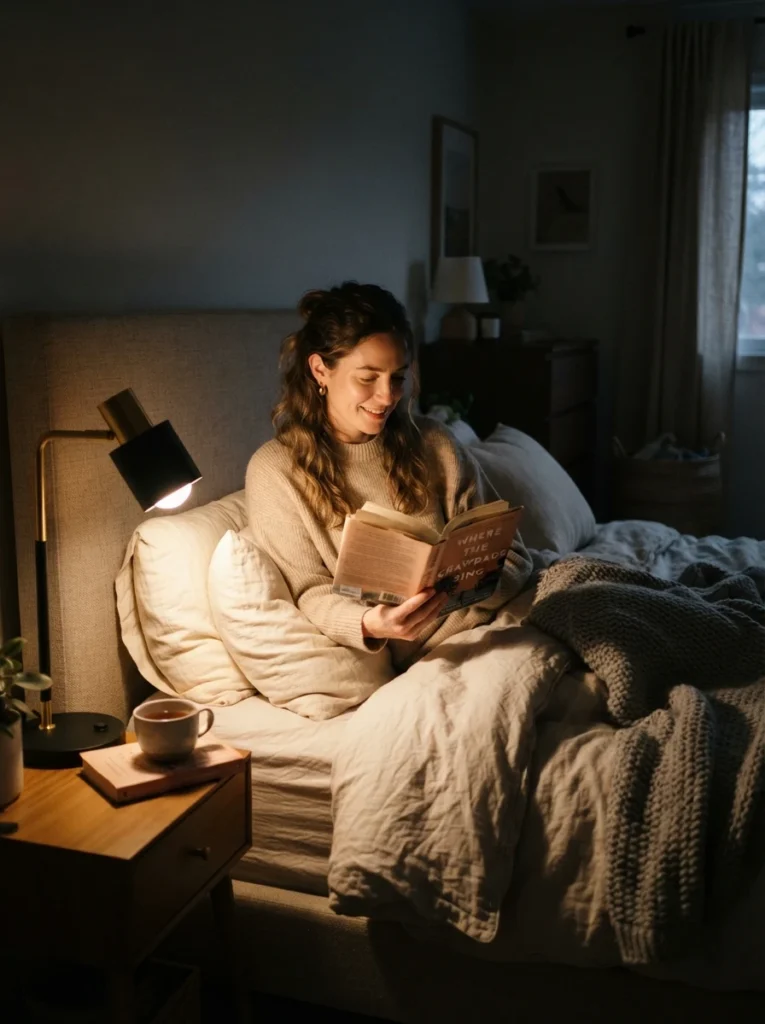
Once your wind-down begins, turn off any ambient lights, like ceiling fixtures or bright lamps, and switch to task or accent lighting for whatever you’re doing, reading, journaling, or getting ready for bed. Layered lighting makes this easy since you’re just switching which layer is active, not fumbling for a single switch.
This keeps the room dim enough to start cueing sleep while still giving you enough light to function.
3. Switch to Amber or Red Bulbs for the Final Stretch
Look for bulbs with a dimmer or timer option, or better yet, use red or amber bulbs specifically, since they’re far less likely to interfere with melatonin production than standard warm white. Save this bulb for the final 15 to 20 minutes before you actually get into bed.
This is a distinct light source from your regular lamp, and treating it that way helps your brain associate it specifically with sleep.
4. Do a Quick Light Check Before You Get Into Bed
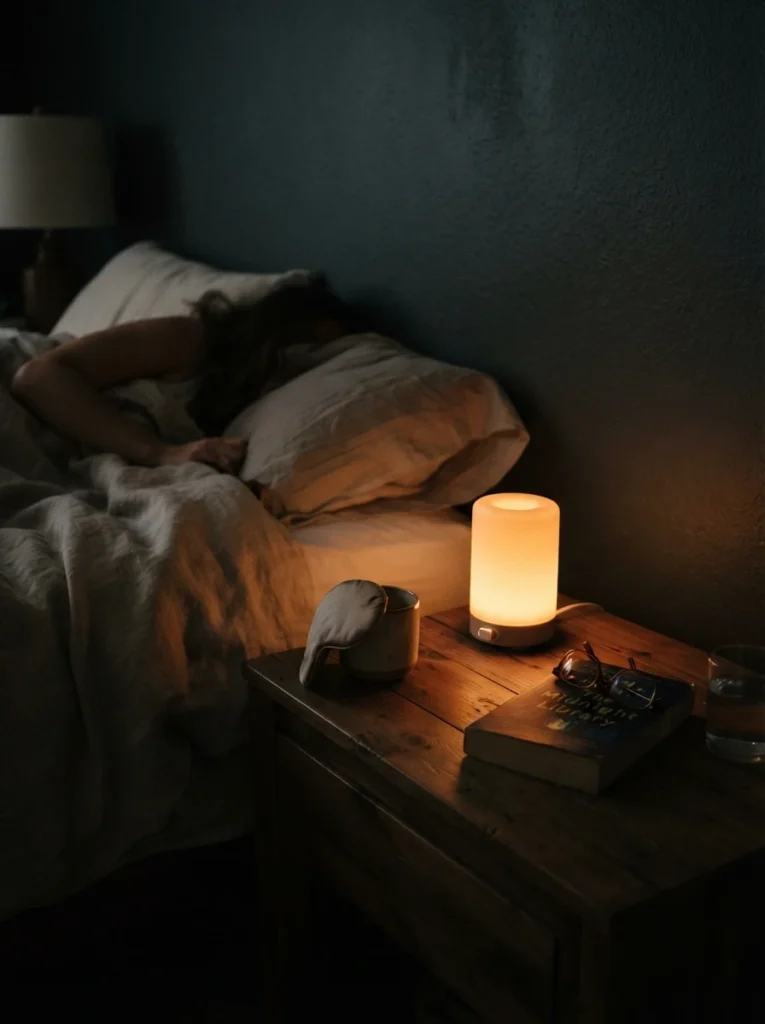
Turn off or cover any small lights that might disturb your sleep, and if you use an alarm clock, choose one with a dimmable display or place it somewhere it won’t shine directly at you. Glowing chargers, power strips, and standby lights are easy to miss but genuinely add up over a full night.
Make this the last step of your routine, right before you actually lie down.
5. Choose a Dimmable or Amber Alarm Clock
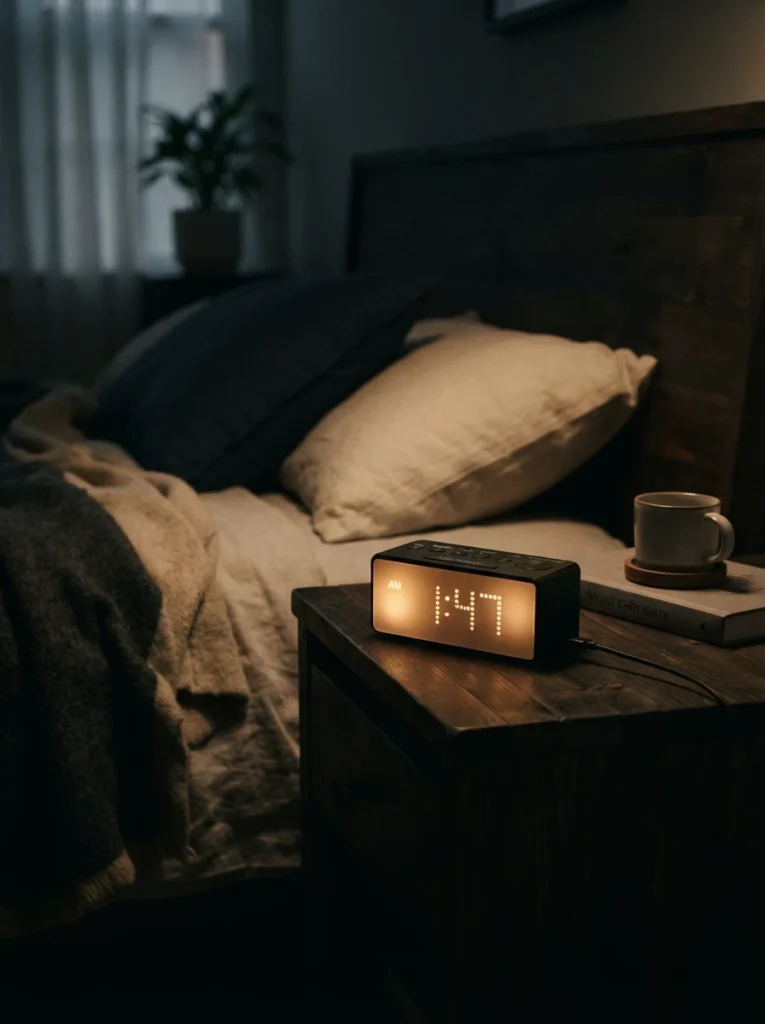
A standard alarm clock display can be surprisingly bright for a dark room, and even a small point of light close to your face can interfere with sleep quality. A dimmable display, or one with an amber-toned readout, solves this without you having to unplug or cover it every night.
Position it slightly angled away from your pillow for an extra buffer.
6. Pair Your Lighting Ritual With a Second Sense
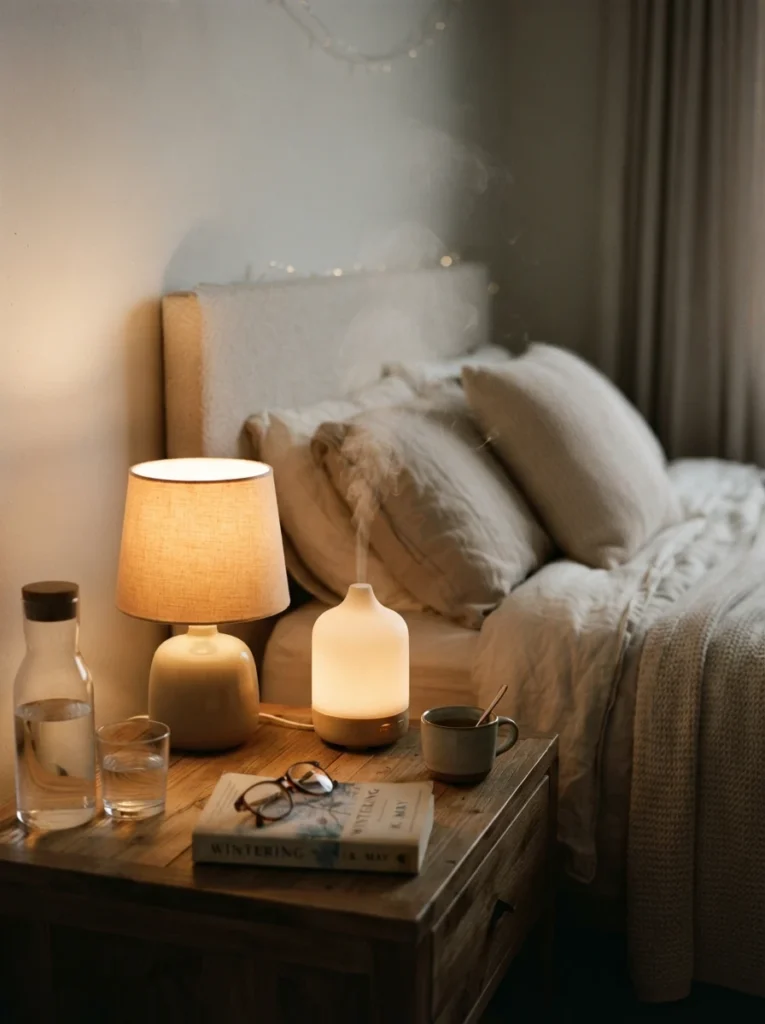
A calming bedtime ritual works best when it engages more than one sense at once. Light a scented candle or run a diffuser near your dimmed lamp during the last part of your routine, so the warm glow and the scent become linked together as one combined cue.
Lavender and chamomile scents are common pairings, but the specific scent matters less than the consistency of pairing it with the same dim lighting each night.
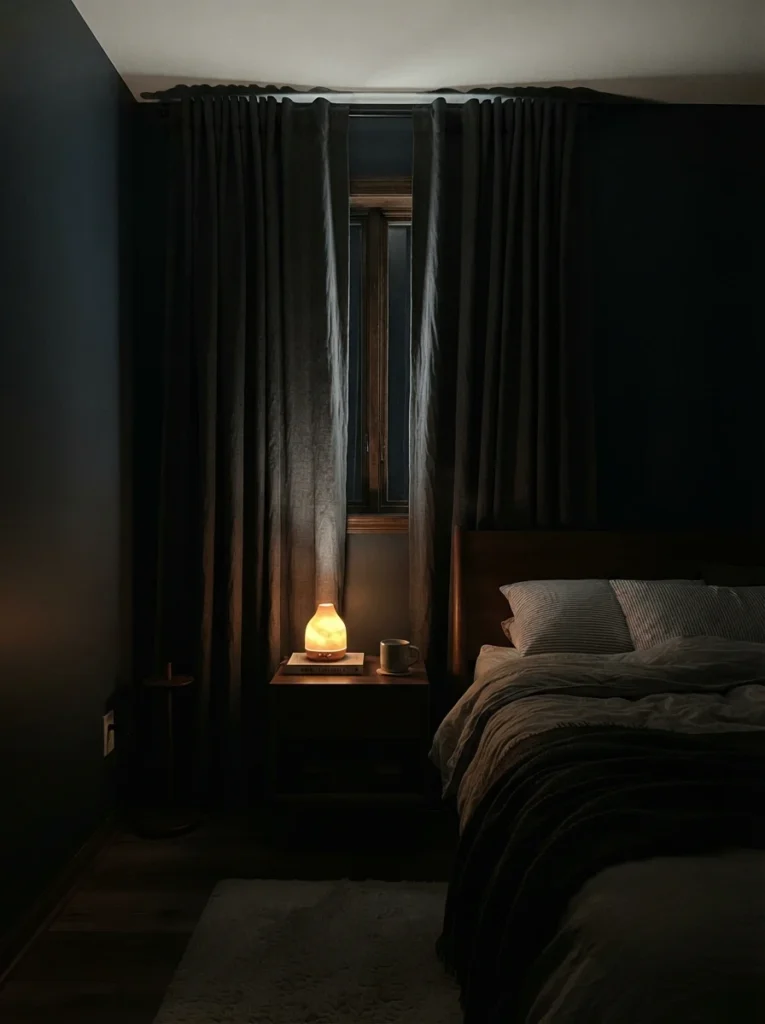
7. Use Blackout Curtains to Protect the Dark Once Lights Are Off
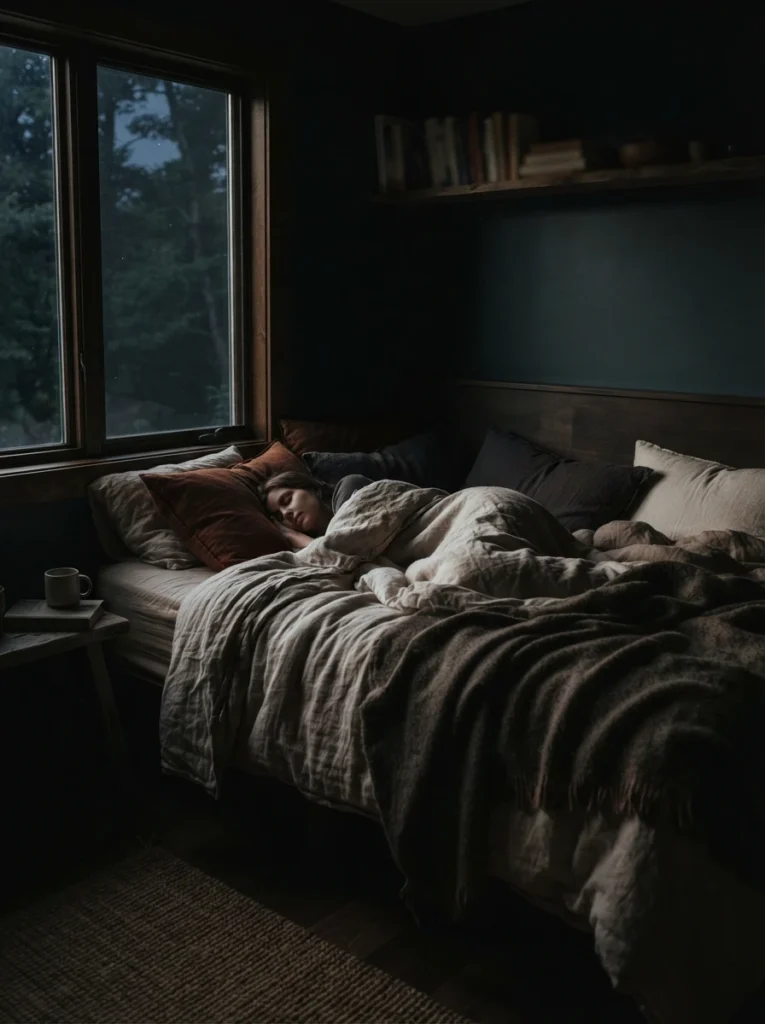
Darkness is melatonin’s best friend, and even small amounts of light streaming in from outside can suppress it once your lamps are finally off. Blackout curtains protect all the lighting work you did earlier in your routine from getting undone by a streetlight or early sunrise.
Pair them with a sheer layer you can use during the day, so you’re not stuck in a dark room from morning until night.
8. Match Your Lighting to a Three-Stage Wind-Down
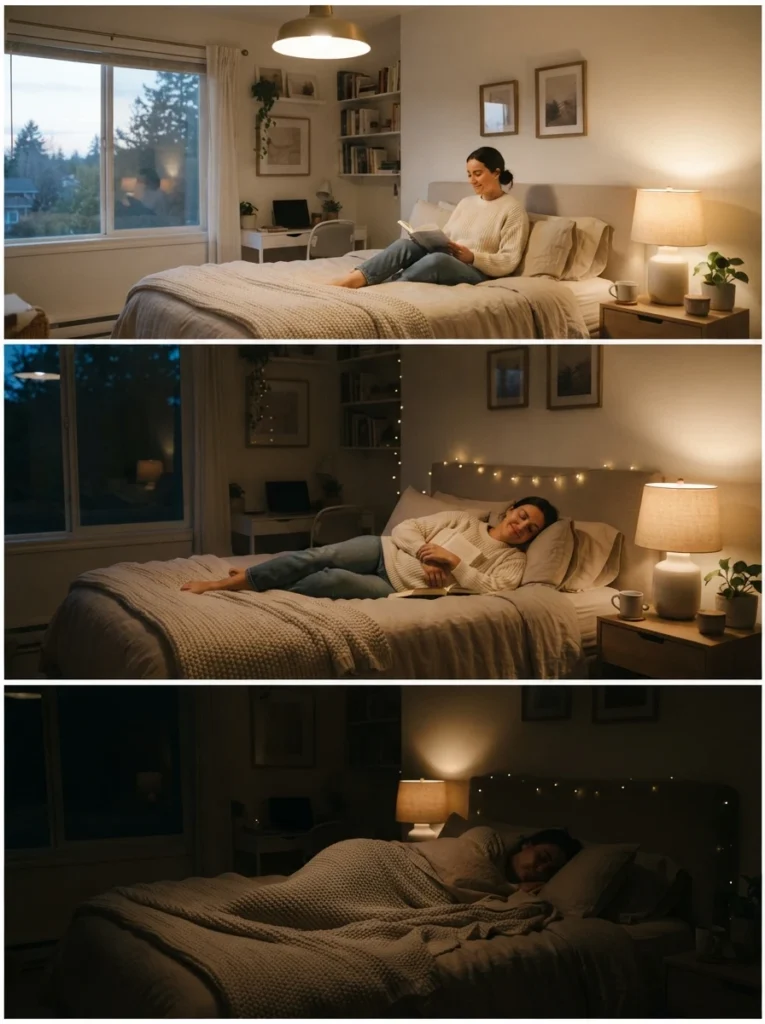
One approach used by sleep coaches breaks the hour before bed into three 20-minute segments: tasks and tidying, hygiene like a shower or skincare, and finally relaxation or meditation. Matching your lighting to each stage, brighter task light for tidying, warm lamp light for hygiene, near-dark for the final stretch, makes the transition between stages feel natural instead of abrupt.
You don’t need three different fixtures, just three settings on the ones you already have.
9. Pick One “Final Light” You Always Turn Off Last
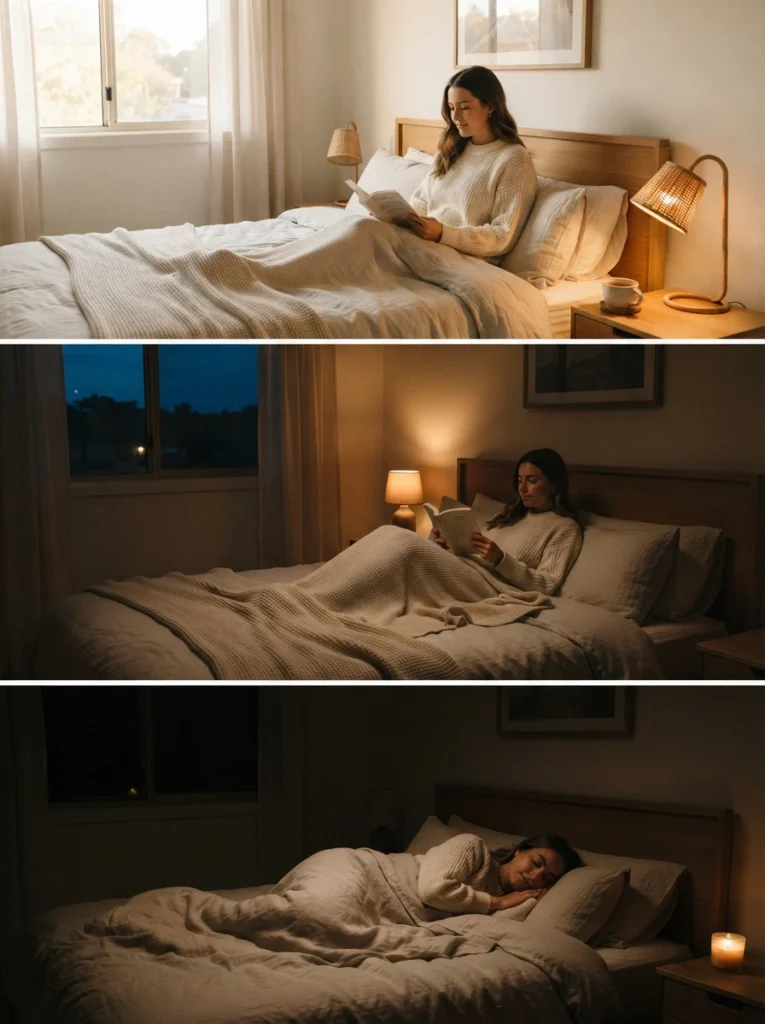
Give your routine a consistent ending by choosing one specific lamp or light that’s always the last thing you switch off before settling in. Over time, that single action becomes a strong psychological cue on its own, separate from whatever else happened during your routine that night.
It doesn’t need to be anything special, just consistent, night after night.
10. Turn Everything Off Completely Once You’re in Bed
Once your routine is finished, make your way to the bedroom if you’re not already there and turn off all remaining lights, including anything you left on for the walk over. A fully dark room, once you’re actually ready to sleep, gives your body the clearest possible signal that the day is done.
If you need a light for late-night bathroom trips, keep it separate and motion-activated rather than left glowing all night.
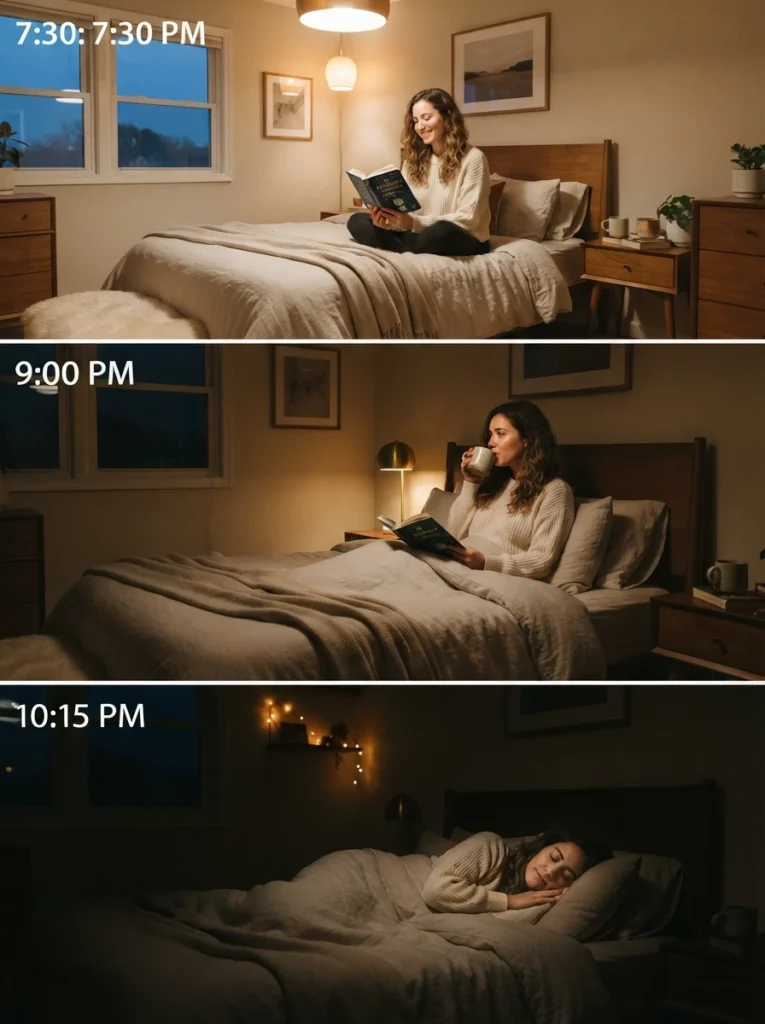
None of these ten ideas require new fixtures if you already have a lamp and a dimmer. What actually makes a difference is doing the same sequence every night, bright to dim to dark, until your brain starts recognizing the pattern before you even feel tired. That consistency is what turns a lighting setup into an actual sleep routine.