
12 Kitchen Counter Organization Ideas to Keep Surfaces Clear
TL;DR: Clear countertops rarely happen by accident, they happen because every item that used to live on the counter got reassigned somewhere else, like a wall hook, a cabinet, or an appliance garage. The goal isn’t a completely bare counter, since a coffee maker you use daily has earned its spot. It’s making sure nothing sits out just because it never got a real home.
Kitchen counters collect clutter faster than almost any other surface in the house. Mail lands there on the way through the door, a gadget gets used once and never makes it back to its cabinet, and slowly the workspace you actually need for chopping and prepping shrinks down to a single open patch. The fix isn’t necessarily buying more storage. It’s usually deciding, item by item, whether something actually earns a permanent spot on the counter or whether it’s just been sitting there out of habit.
Here are 12 kitchen counter organization ideas that clear space without making the kitchen feel stripped down or unlived-in.
1. Set a Rule for What’s Actually Allowed to Stay Out
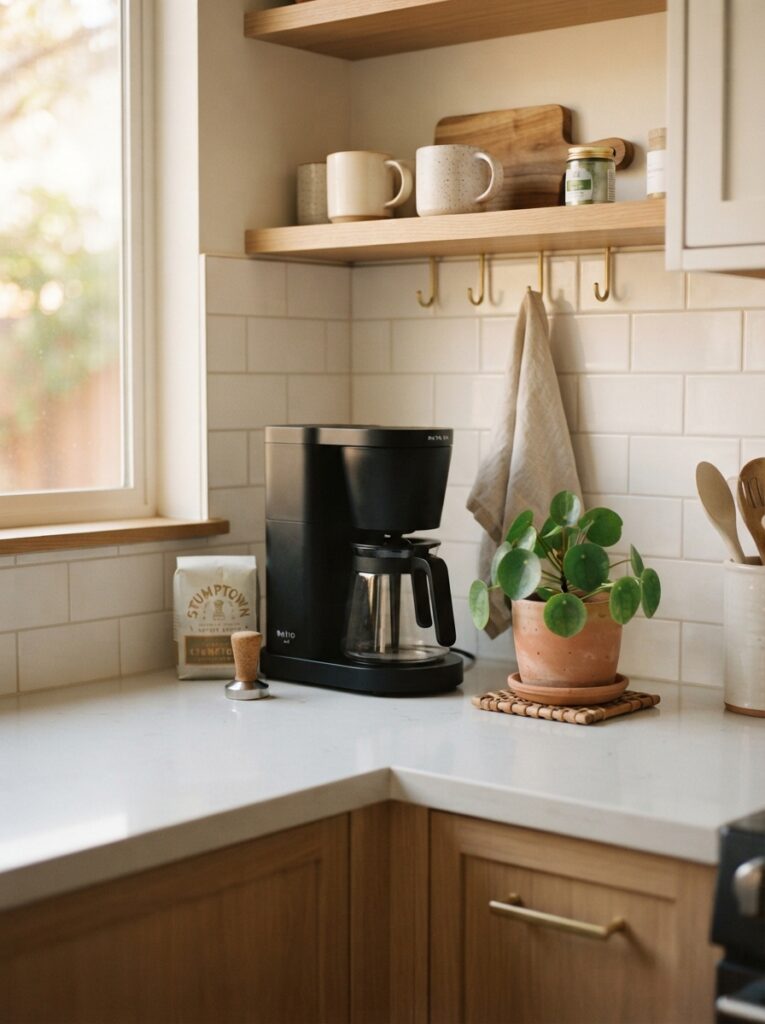
Before organizing anything, decide on a personal rule for what earns permanent counter space, generally daily-use appliances and maybe one or two decorative pieces. Everything else, mail, pantry staples, oil bottles, gets a designated spot elsewhere, which makes future clutter easier to catch and redirect before it piles up.
2. Move Rarely Used Appliances Into an Appliance Garage or Cabinet
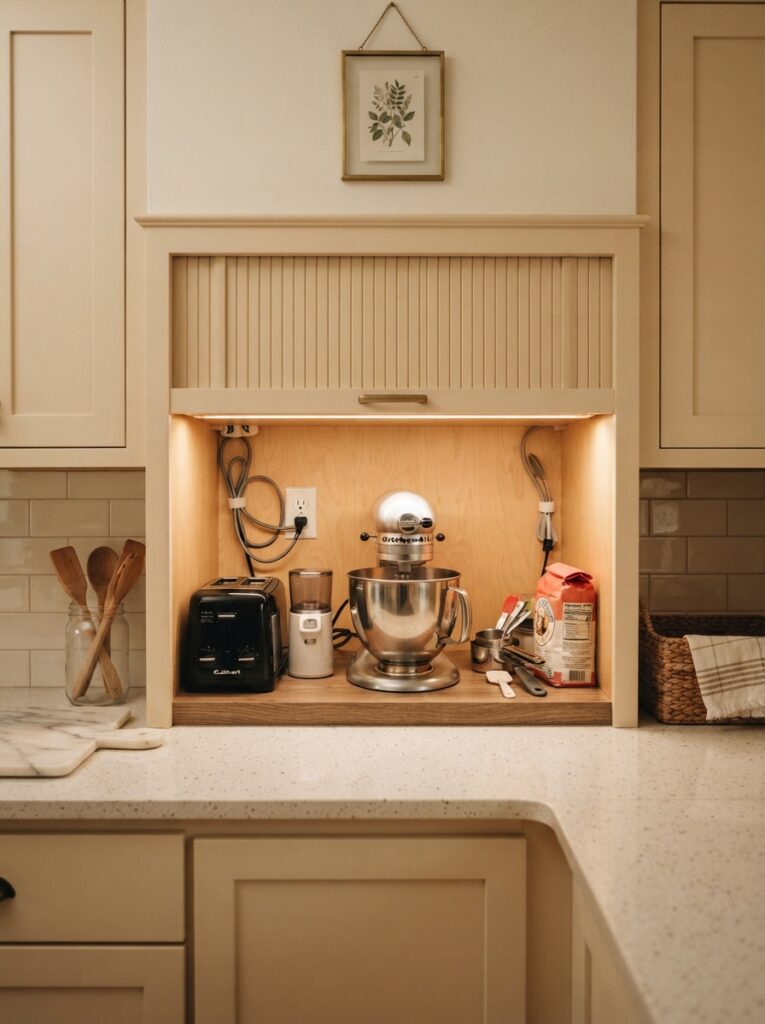
A stand mixer or waffle iron that comes out twice a year doesn’t need to live on the counter year-round. An appliance garage, or simply a designated cabinet shelf, keeps these accessible without letting them eat up prime counter real estate every single day.
![A cabinet appliance garage with a tambour door open, showing a stand mixer and other appliances stored inside, warm kitchen lighting, vertical Pinterest photography, warm hidden-storage styling.]
3. Add Adhesive Hooks Near the Sink for Everyday Tools
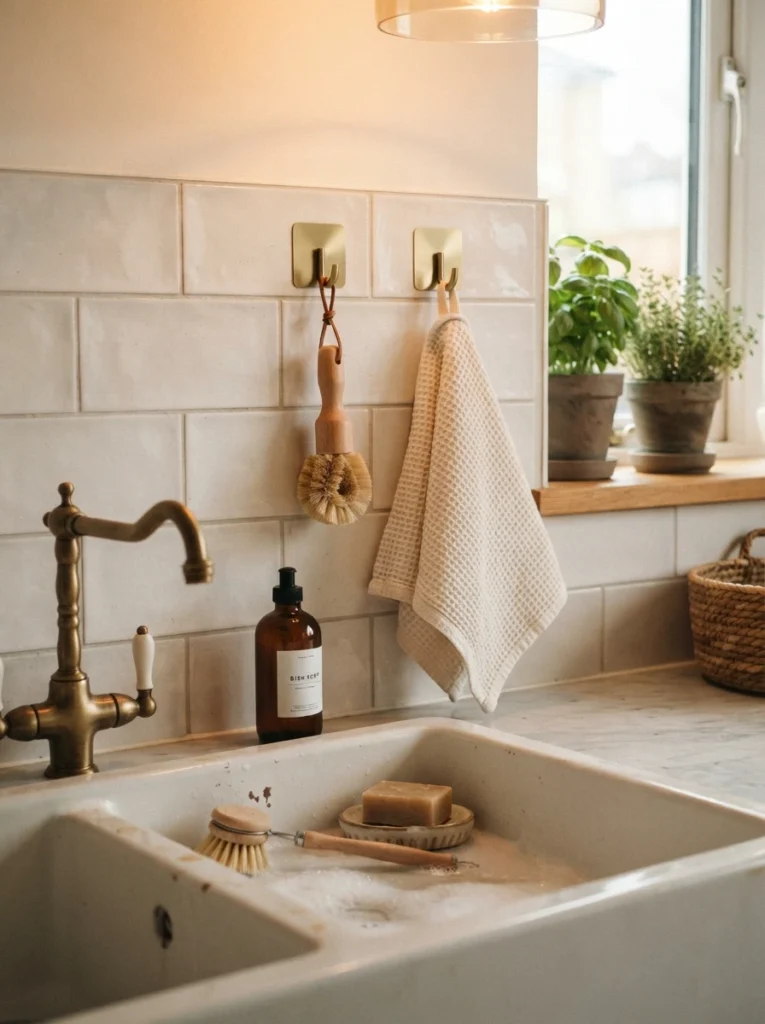
A dish scrubber and towel sitting loose on the counter next to the sink take up more visual space than they should. A few removable adhesive hooks mounted on the backsplash right above the sink move these items off the surface entirely while keeping them exactly as accessible.
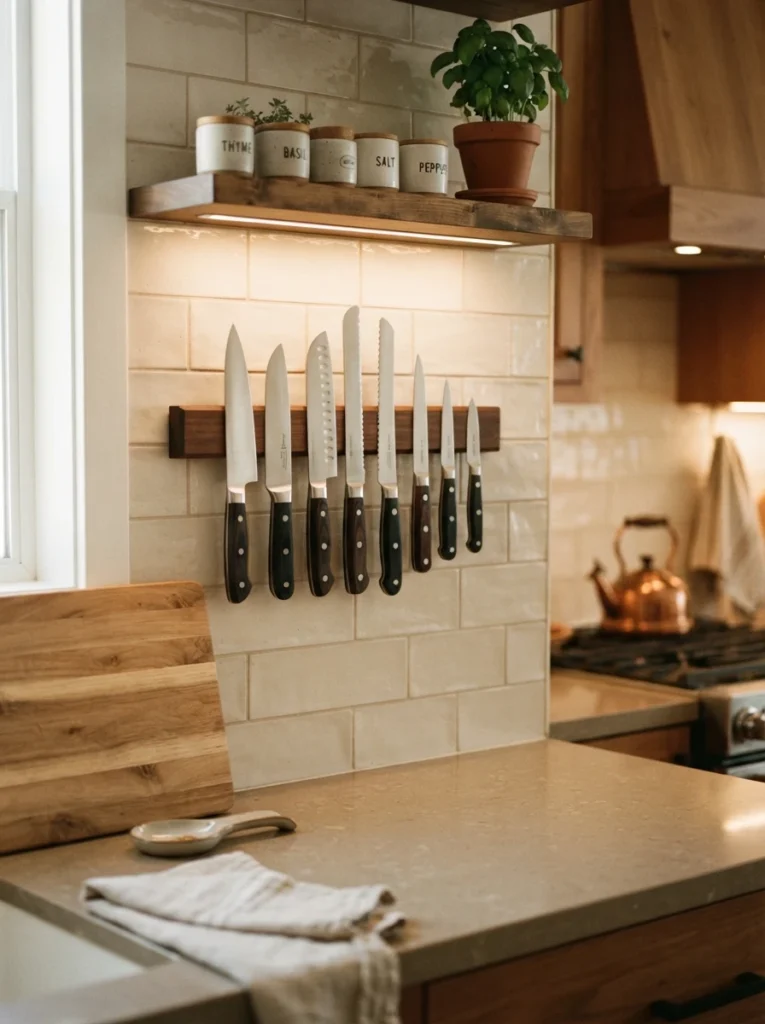
4. Swap a Bulky Knife Block for a Magnetic Strip
A knife block takes up a fixed chunk of counter space and, according to several kitchen hygiene studies, ranks among the germiest objects in a typical kitchen due to trapped moisture and food debris. A magnetic strip mounted on the wall holds the same knives vertically, freeing up the counter and letting the blades air dry instead of sitting damp inside a block.
5. Use a Wall-Mounted Rail for Frequently Used Utensils
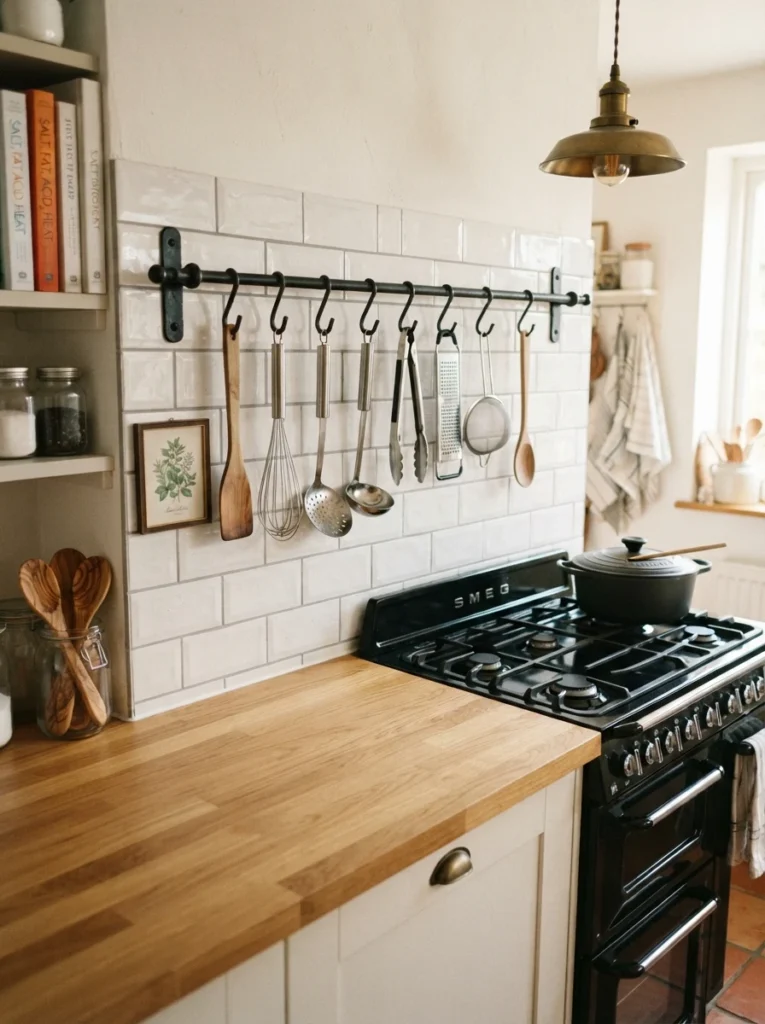
An iron or wood rail mounted near the stove gives your most-used spatulas, whisks, and tongs a spot within arm’s reach without needing a countertop crock. This clears an entire utensil holder off the surface while keeping tools just as accessible mid-cook.
6. Install a Pegboard for Flexible, Rearrangeable Storage
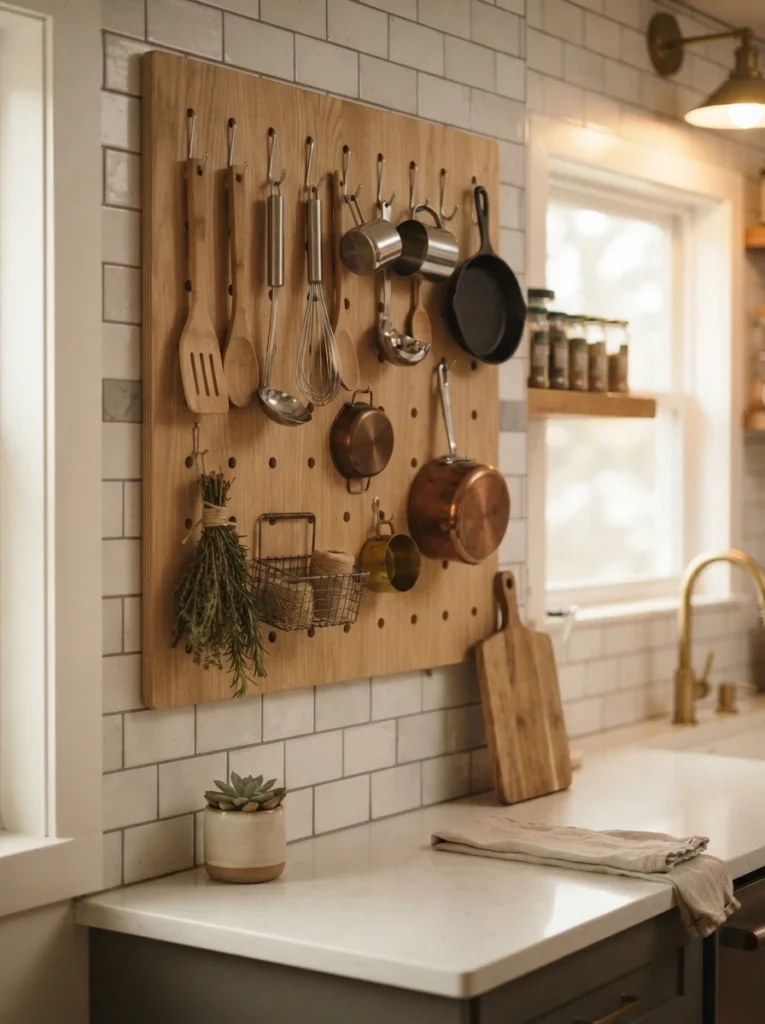
A pegboard mounted on an open wall section can hold anything from utensils to small pots to a paper towel holder, and because the layout isn’t fixed, you can rearrange it any time your storage needs shift. It’s one of the more flexible ways to pull daily items off the counter without committing to permanent shelving.
7. Give Bread, Fruit, and Snacks a Dedicated Container
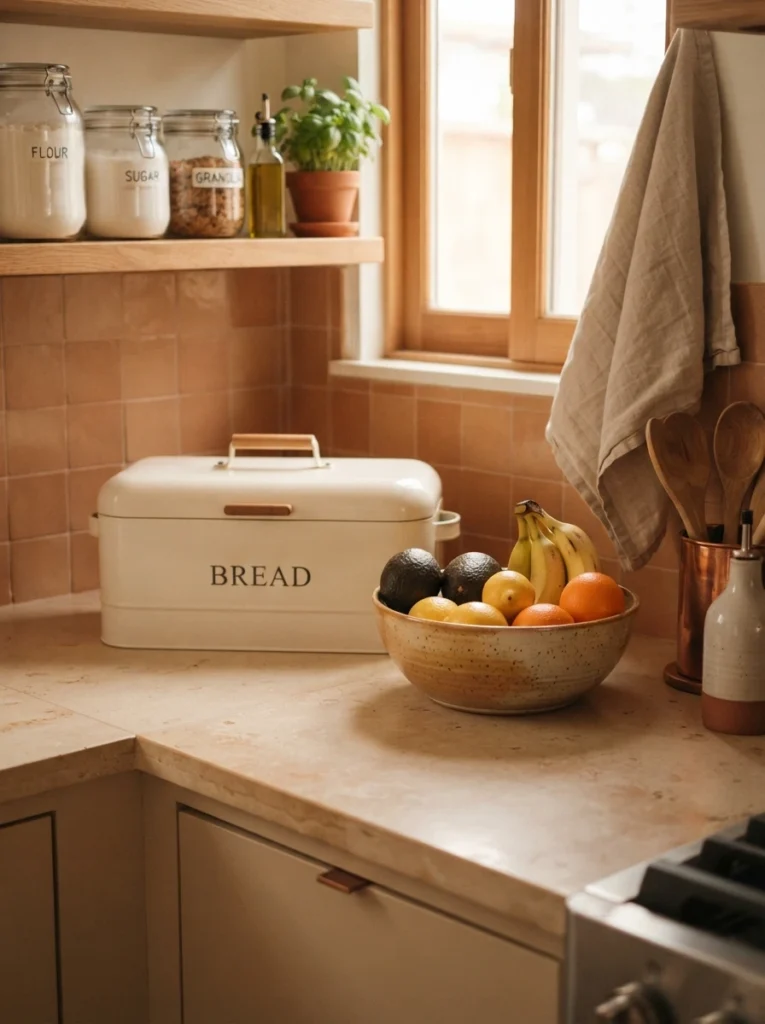
Loose bread bags, bananas, and snack boxes tend to sprawl across a counter because they don’t have one specific spot to land. A single covered bread box or a designated fruit bowl gives these everyday food items a contained home, so they read as intentional rather than as clutter.
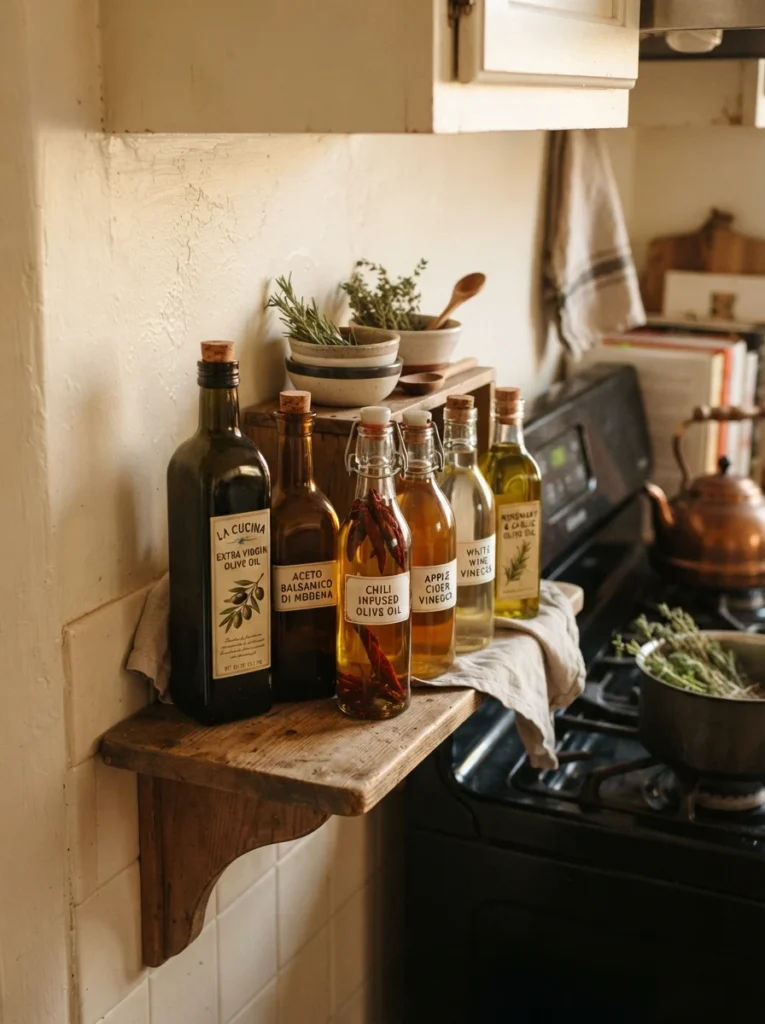
8. Store Pantry Staples Like Oil in a Cool, Dark Cabinet Instead
Olive oil and other staples left out on the counter aren’t just clutter, they’re also exposed to light and heat, which speeds up spoilage over time. Moving these into a cool, dark cabinet near the stove keeps them just as handy while actually preserving their quality longer.
9. Create a Small, Defined Mail and Paper Landing Zone
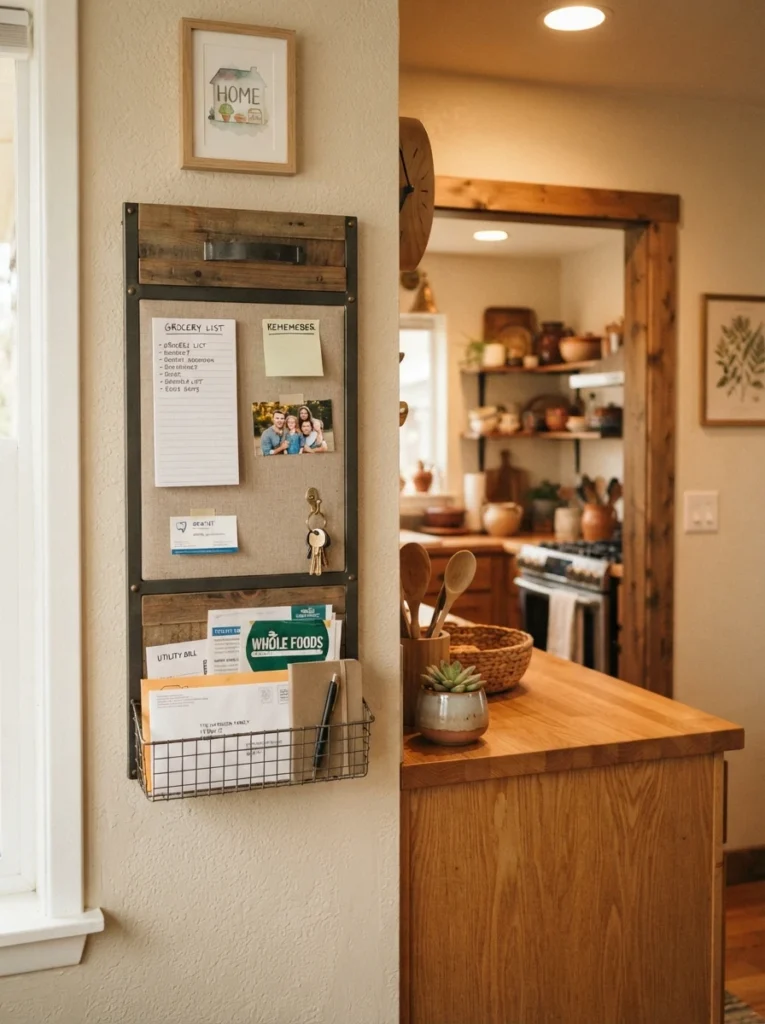
Mail and loose paperwork drift onto kitchen counters because there’s rarely a designated spot for them elsewhere near the entryway. A small tray or wall-mounted memo board contains this paper clutter to one contained area instead of letting it spread across the whole counter.
10. Use Vertical Stacking Vessels to Cut Down on Footprint
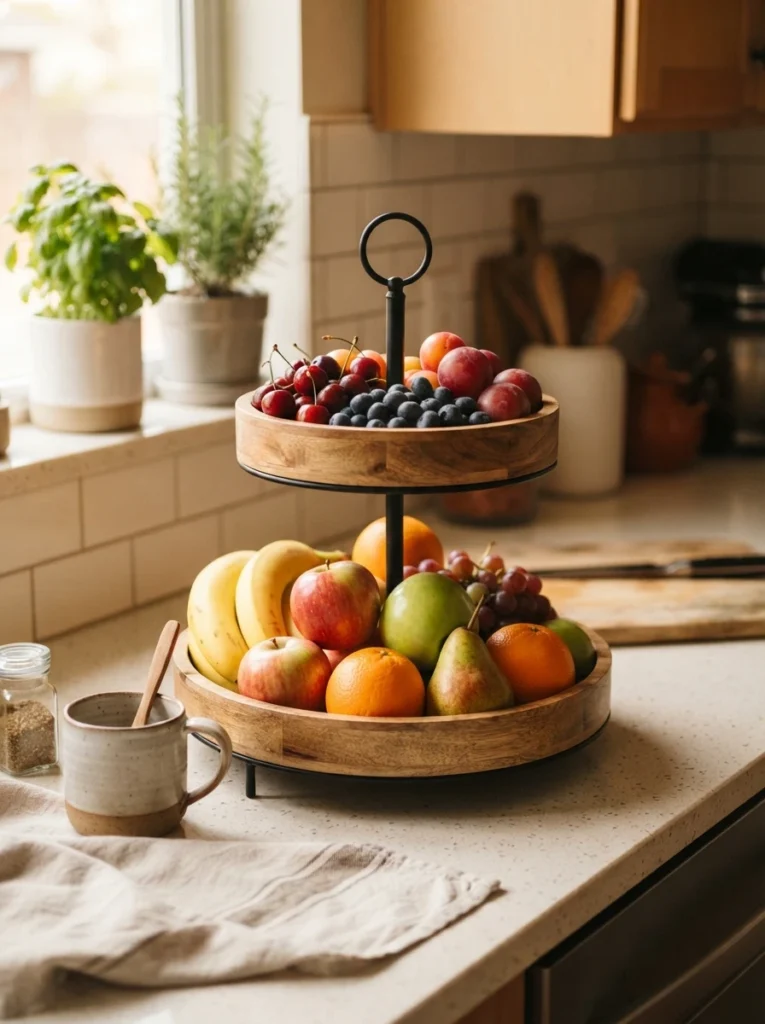
When counter space is genuinely tight, choose storage that stacks vertically instead of spreading horizontally. A two-tiered fruit bowl or a stacked canister set holds the same amount as two separate items while taking up the footprint of one.
11. Set Up a Small Mise en Place Zone Before You Cook
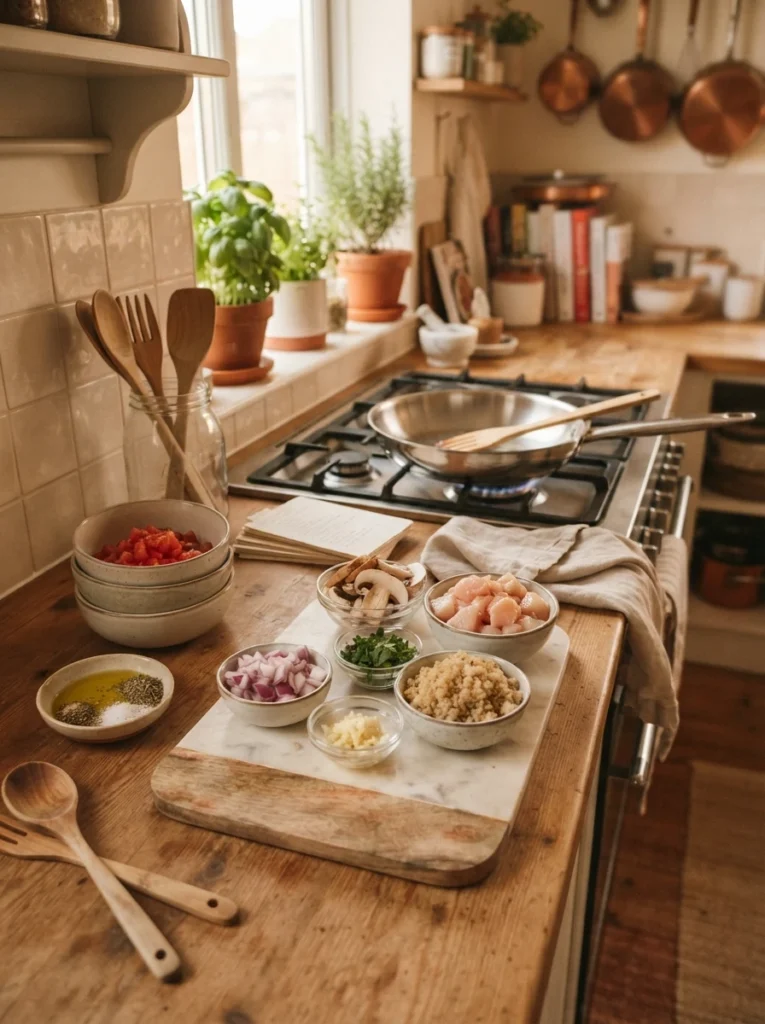
Professional cooks clear their workspace before starting by prepping and grouping ingredients ahead of time, a habit known as mise en place. Adopting a smaller version of this at home, clearing one zone before you start cooking and cleaning it as you go, keeps a single meal from spreading clutter across the entire counter.
12. Give Every Item a Designated Home, Not Just a Temporary Spot
The real key to a lasting clear counter is making sure every single item in the kitchen has one specific, designated place it returns to after use. When there’s no ambiguity about where something belongs, anyone in the household can put it away correctly without needing instructions every time.
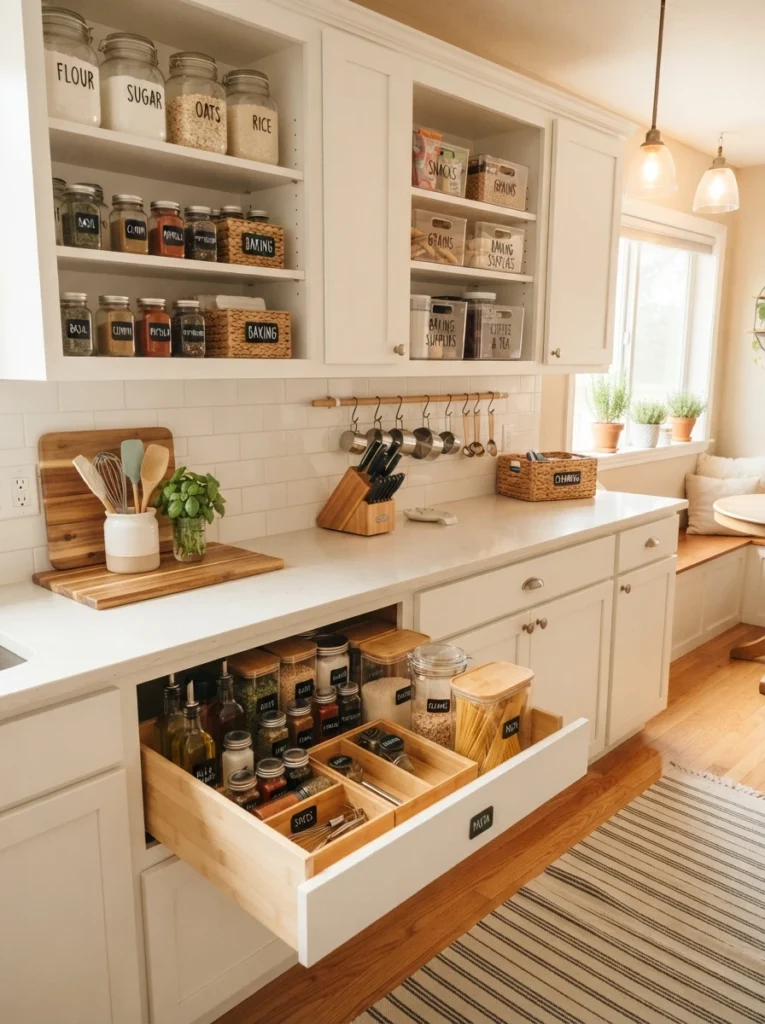
A completely empty counter isn’t really the goal, and it’s not even realistic for most working kitchens. What actually keeps a counter looking clear is making sure everything sitting on it earned its spot through daily use, while everything else has a real home to go back to. Once that’s true, the clutter that creeps back in becomes a lot easier to catch and redirect before it takes over again.