
12 Warm Lighting Ideas for Small Bedrooms That Feel Calm at Night
TL;DR: Calm bedroom lighting comes down to three things: warm color temperature at 2700K or below, dimmable fixtures you actually use, and diffused light instead of exposed bulbs. Layer a few small warm sources instead of relying on one bright ceiling light, and a small bedroom will feel noticeably more restful within a week.
Bedroom lighting isn’t just an aesthetic choice; it’s genuinely a biological one. Cool, bright light in the evening suppresses melatonin production, which makes it harder to fall asleep, while warm, dim light signals to your brain that it’s time to rest. In a small bedroom especially, the wrong lighting doesn’t just look off; it actively works against a good night’s sleep.
Here are 12 warm lighting ideas built specifically around that science, not just the aesthetic.
1. Set 2700K as Your Baseline for Every Bulb
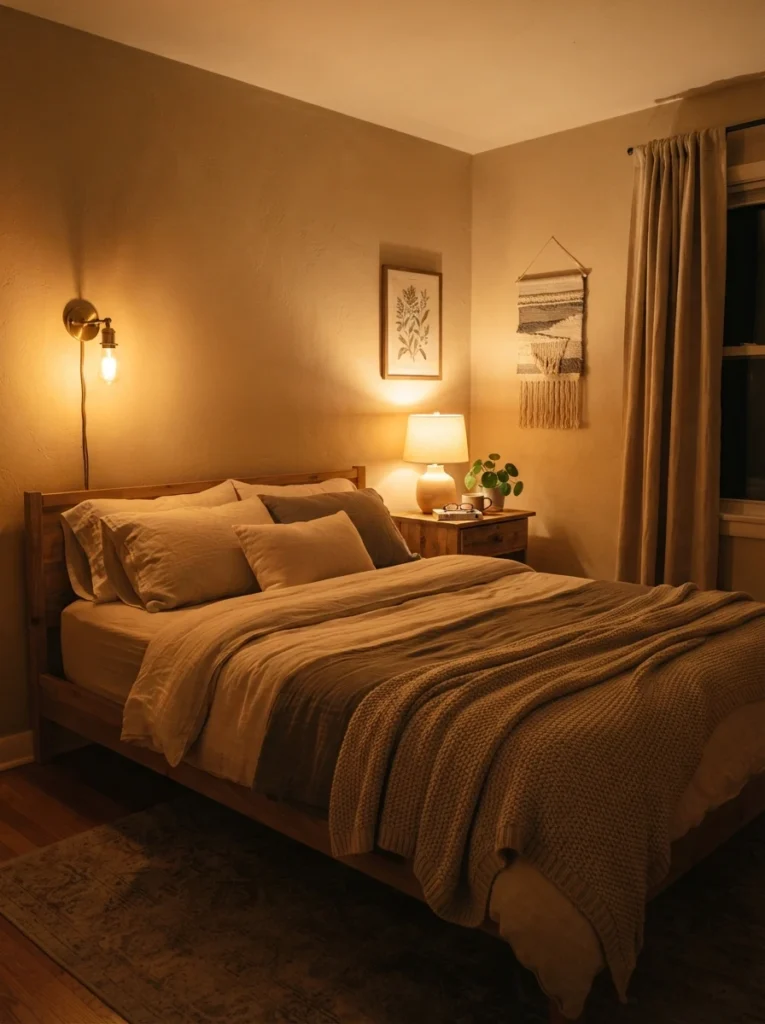
For most bedrooms, a color temperature in the 2700K to 3000K range is the sweet spot, since at 2700K light takes on a soft, incandescent-like warmth that reads as cozy and easy on the eyes come evening. Check every bulb in your room, lamps, sconces, and overhead, and get them all matching before changing anything else.
Anything creeping toward 4000K and above belongs in a kitchen or office, not a room you’re trying to sleep in.
2. Add an Amber or Red Night Light for the Final Hour
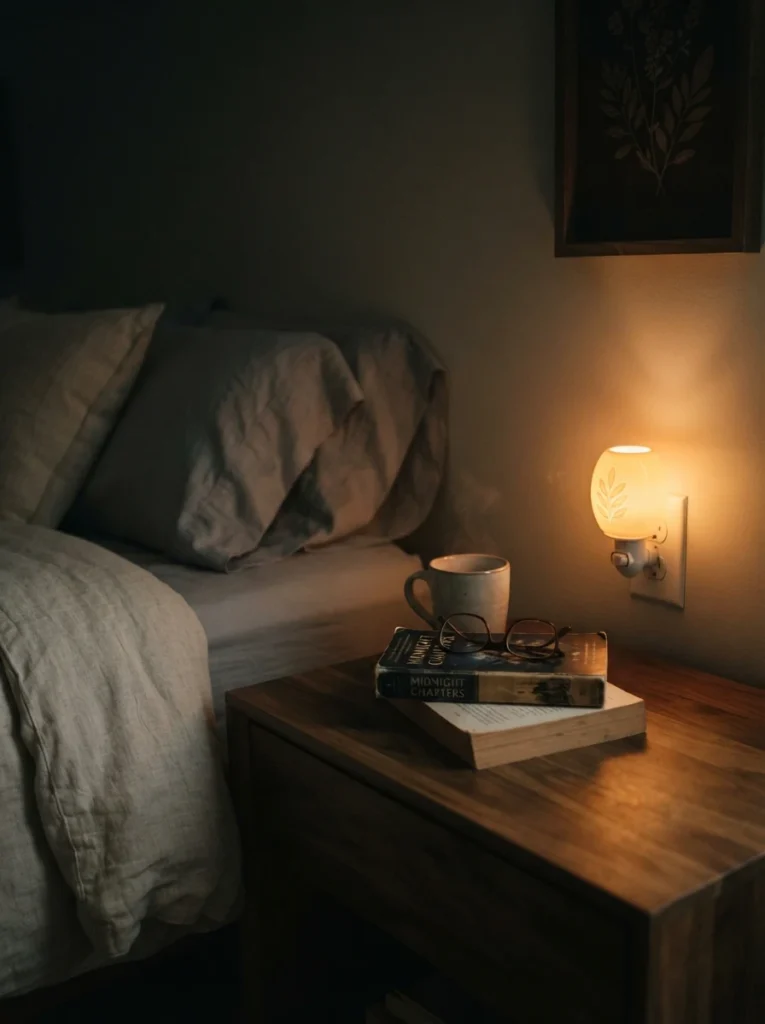
Studies show red light around the 620 to 700 nanometer wavelength is the visible light color least likely to interfere with sleep, since its long wavelengths help promote relaxation rather than alertness. A small amber or red bulb used specifically in the hour before bed gives you light to move around by without fighting your own melatonin.
Keep this light separate from your main lamps so it’s easy to switch to as your actual wind-down signal.
3. Put Every Fixture on a Dimmer and Use It
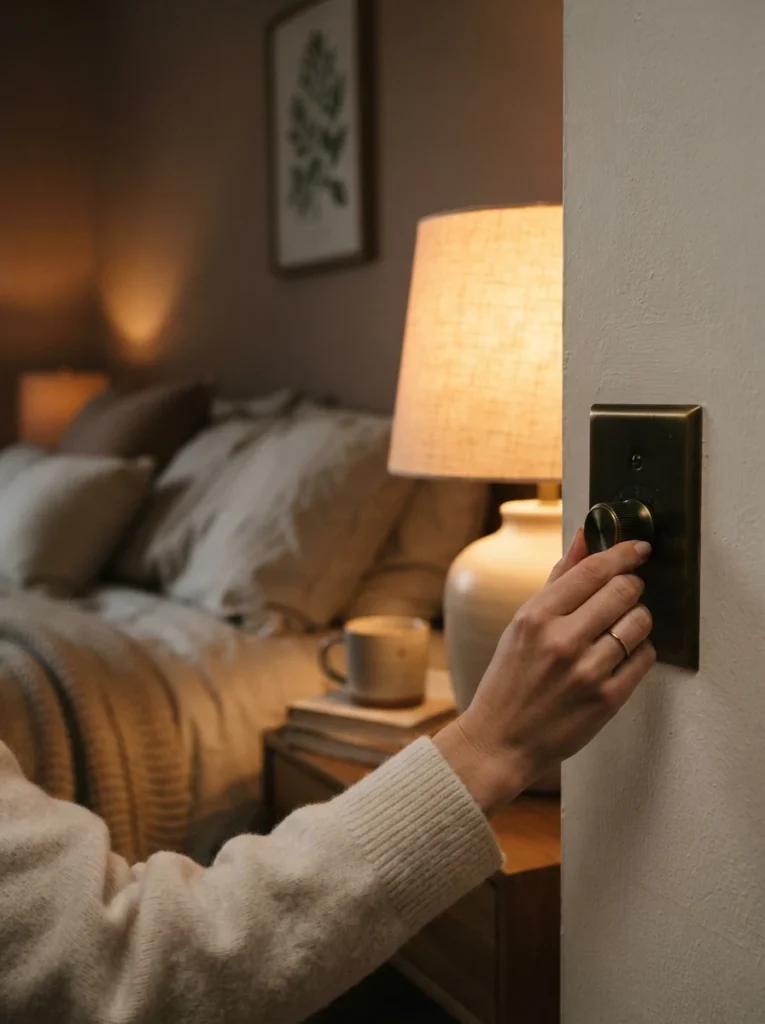
Sleep researchers recommend dimming and warming bedroom lighting for at least 60 minutes before your intended sleep time, since light close to your face, like a bedside lamp, actually has more impact on melatonin than overhead ambient light at the same brightness. A dimmer only helps if you’re actually using it as part of a nightly routine.
Start lowering the lights an hour before bed, not right as you’re climbing under the covers.
4. Diffuse Every Bulb, Never Leave One Exposed
Calming bedroom lighting comes from indirect or diffused illumination, which means avoiding exposed bulbs and harsh overhead fixtures entirely. A fabric shade, frosted glass, or globe cover softens even a slightly-too-bright bulb into something genuinely restful.
If you can see the filament or the bare bulb from your bed, that’s the first thing to fix on this whole list.
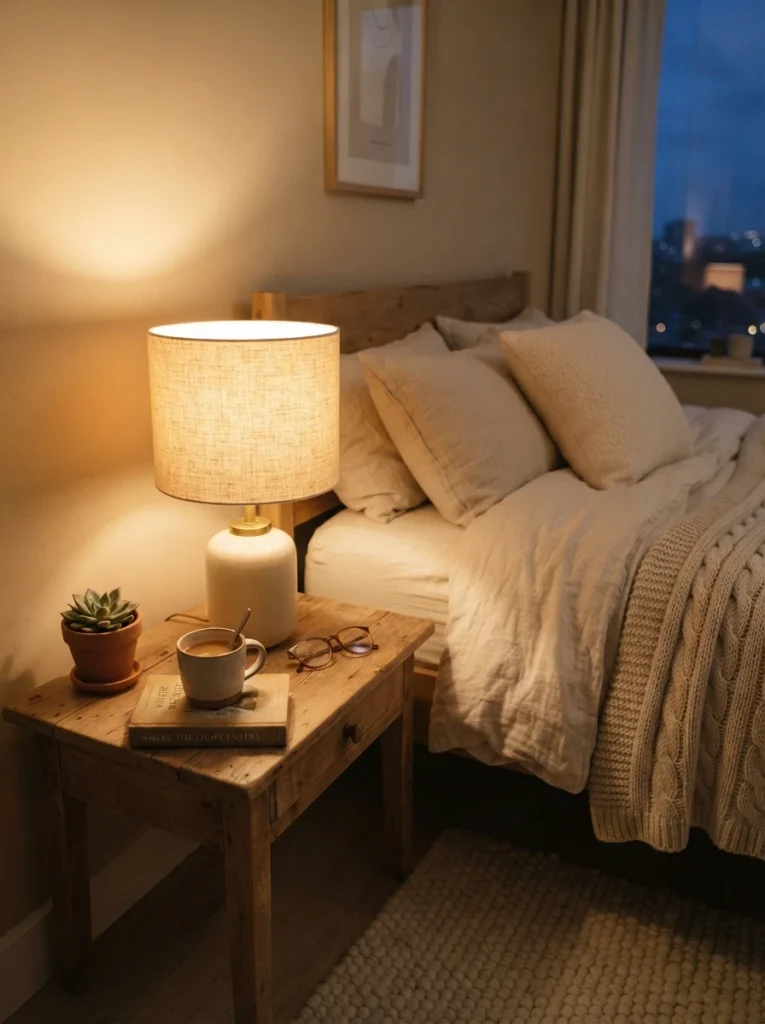
5. Layer Ambient, Task, and Accent Instead of One Bright Source
Layered low light from multiple sources genuinely feels calmer than a single bright source dimmed down, so aim for at least two or three separate zones: general ambient light, a bedside lamp for reading, and a small accent or night light. Each one should be controllable on its own, not tied to a single switch.
This is the difference between a room that just looks dim and one that actually feels calm.
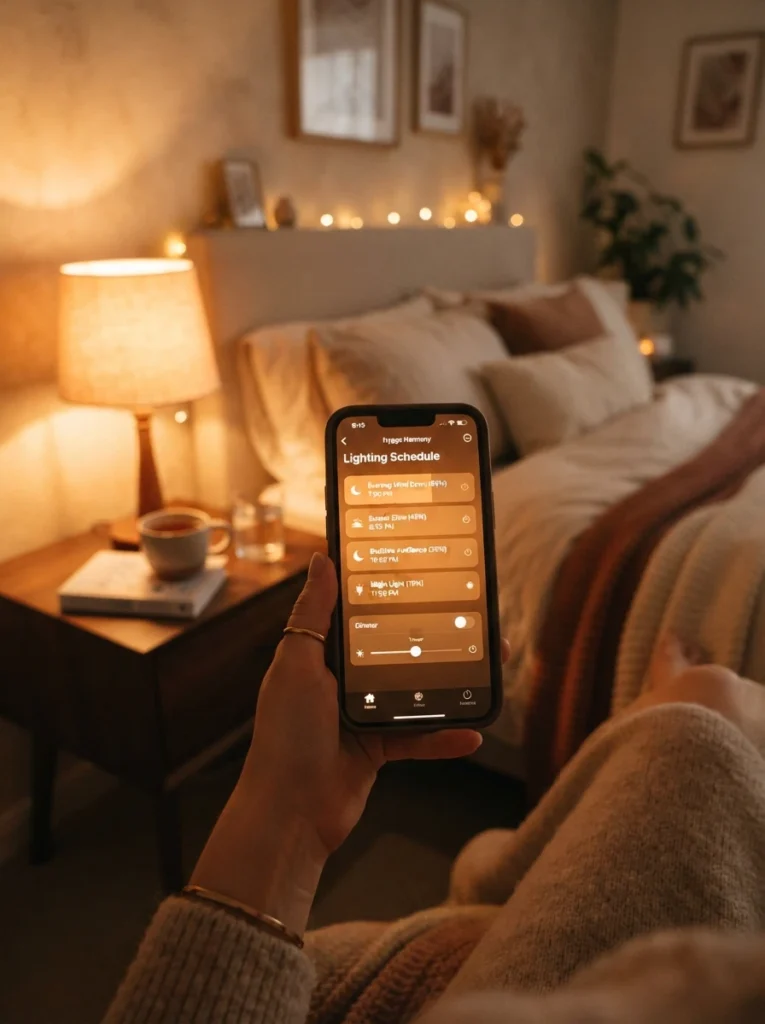
6. Let Smart Bulbs Auto-Warm as the Evening Goes On
If your lighting is smart-enabled, set it to slowly shift into warmer hues around the same time each night rather than relying on yourself to remember. This turns your wind-down lighting into a background routine instead of one more thing you have to actively manage before bed.
Even a basic smart bulb schedule set to warm and dim by 9pm makes a noticeable difference over time.
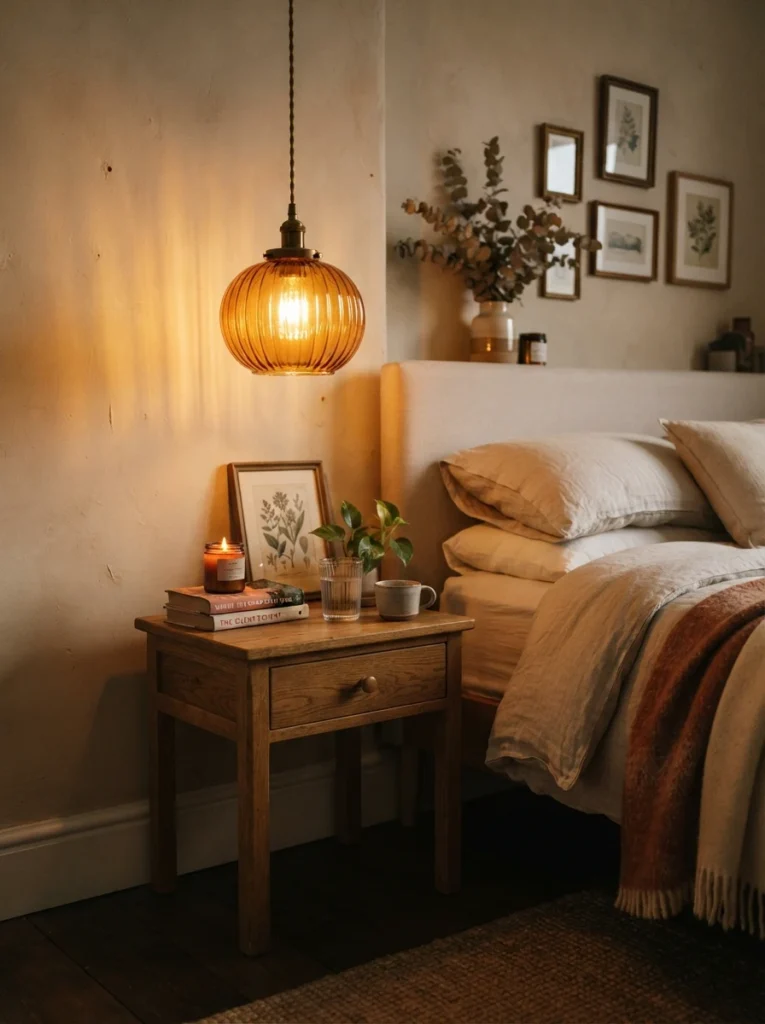
7. Choose Amber or Mocha Glass Fixtures for Built-In Warmth
The color of the fixture itself, not just the bulb, affects how warm the light reads, and amber glass bulbs or mocha glass pendants provide a noticeably warmer glow than clear glass. This gives you a cozier baseline even before you touch a dimmer or swap a bulb.
Look for these when you’re shopping for a new bedside lamp or pendant rather than defaulting to clear glass.
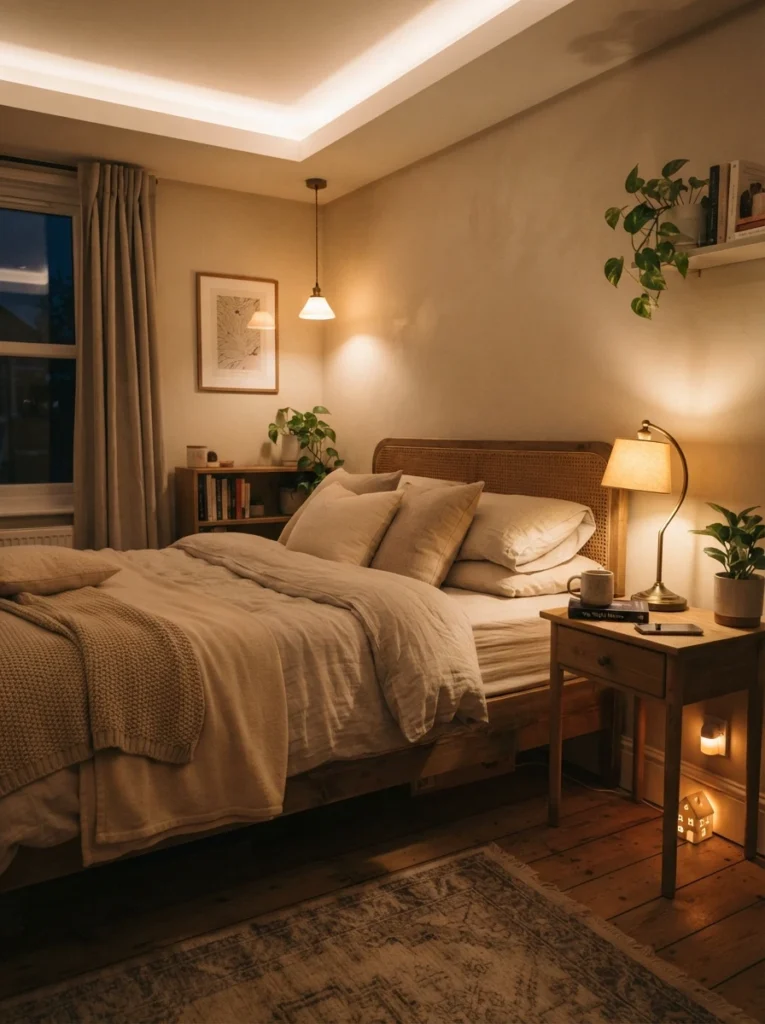
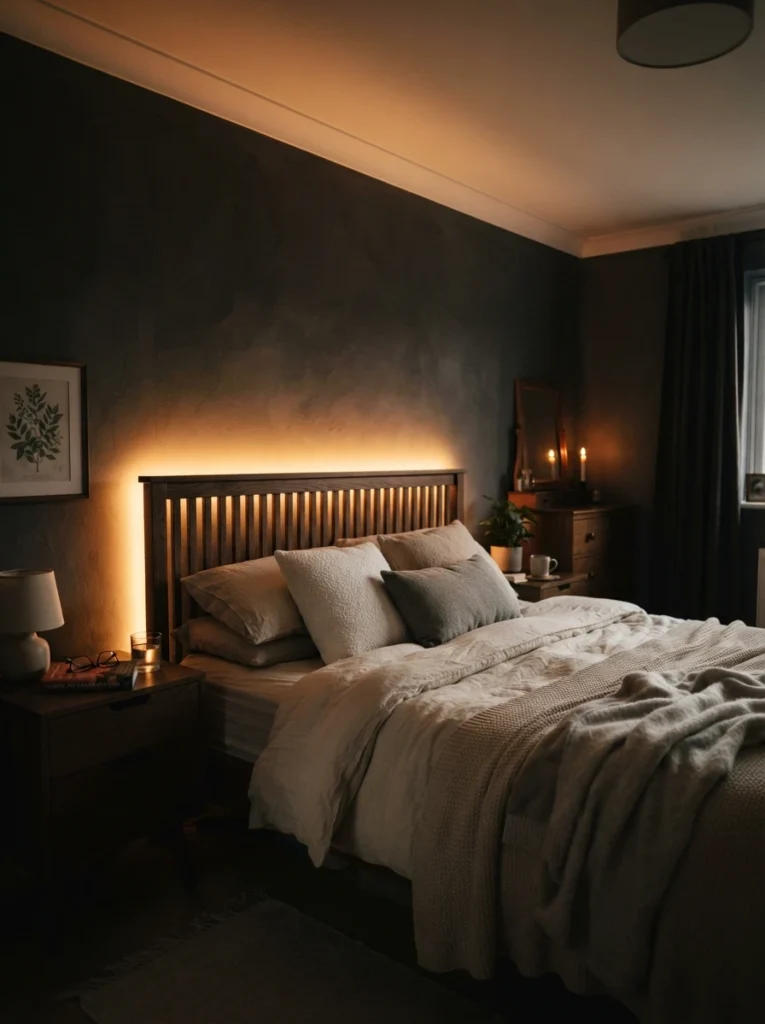
8. Add Warm LED Strips as a Secondary Ambient Layer
Light strips, wall sconces, and recessed lights are all popular ways to add ambient warmth to a bedroom, and choosing warm white or amber strips specifically over cool white makes a real difference in how relaxing the effect actually feels. Tuck them behind a headboard, under a shelf, or along a baseboard for a soft secondary glow.
This layer isn’t meant to light the room, it’s meant to fill in the gaps your main lamp misses.
9. Keep Your Main Reading Light Close to Your Face
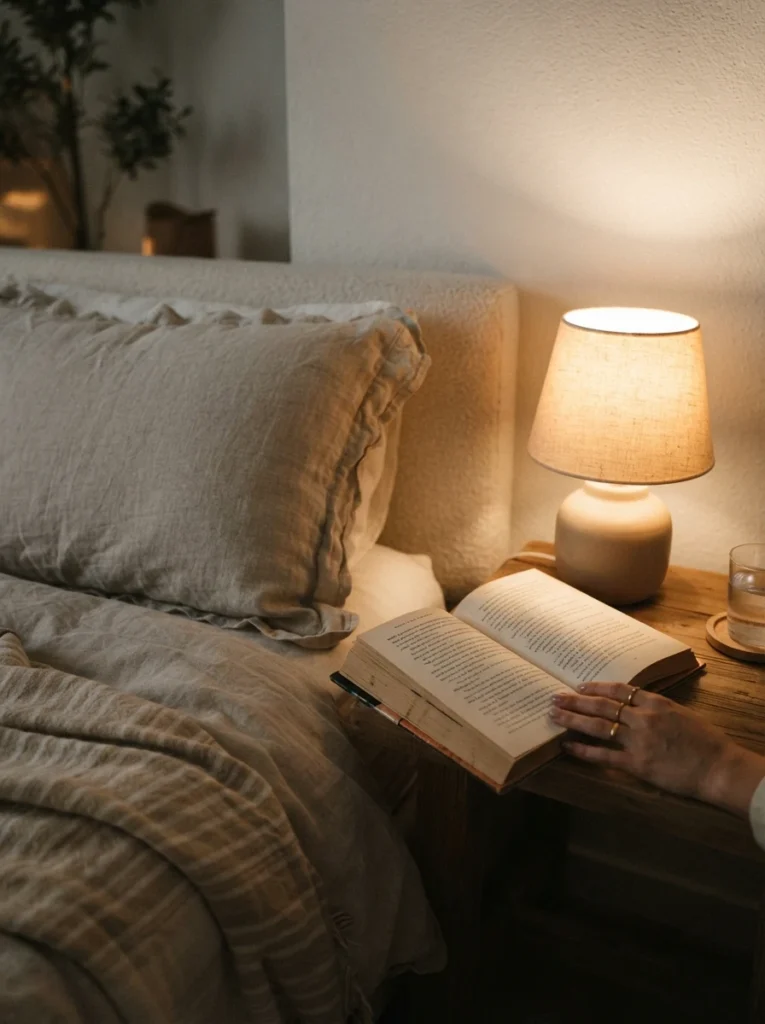
Light close to your face, like a bedside reading lamp, has more melatonin impact than overhead ambient light at the same brightness, which means your bedside lamp choice matters more than your ceiling fixture does. Prioritize getting this one light source right before worrying about anything overhead.
A dimmable, warm-toned bedside lamp does more for your sleep than a fully renovated ceiling fixture ever will.
10. Charge Devices Outside the Bedroom
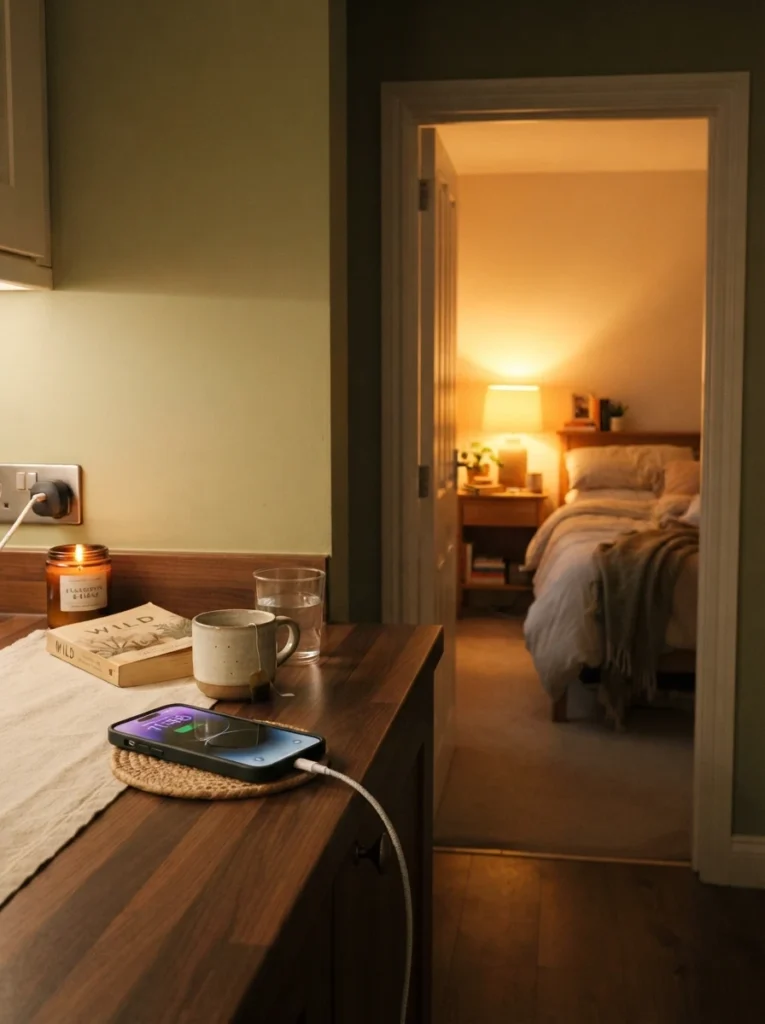
Blue light at night can suppress melatonin secretion for roughly twice as long as warm light does, and phone and tablet screens are one of the most common sources of that blue light in a bedroom. Charging devices in another room removes the temptation to scroll and cuts out a light source your warm lamps can’t compete with.
If that’s not realistic, at minimum keep the charging spot away from your direct line of sight while you’re trying to wind down.
11. Give the Room a Dedicated Night-Light Layer
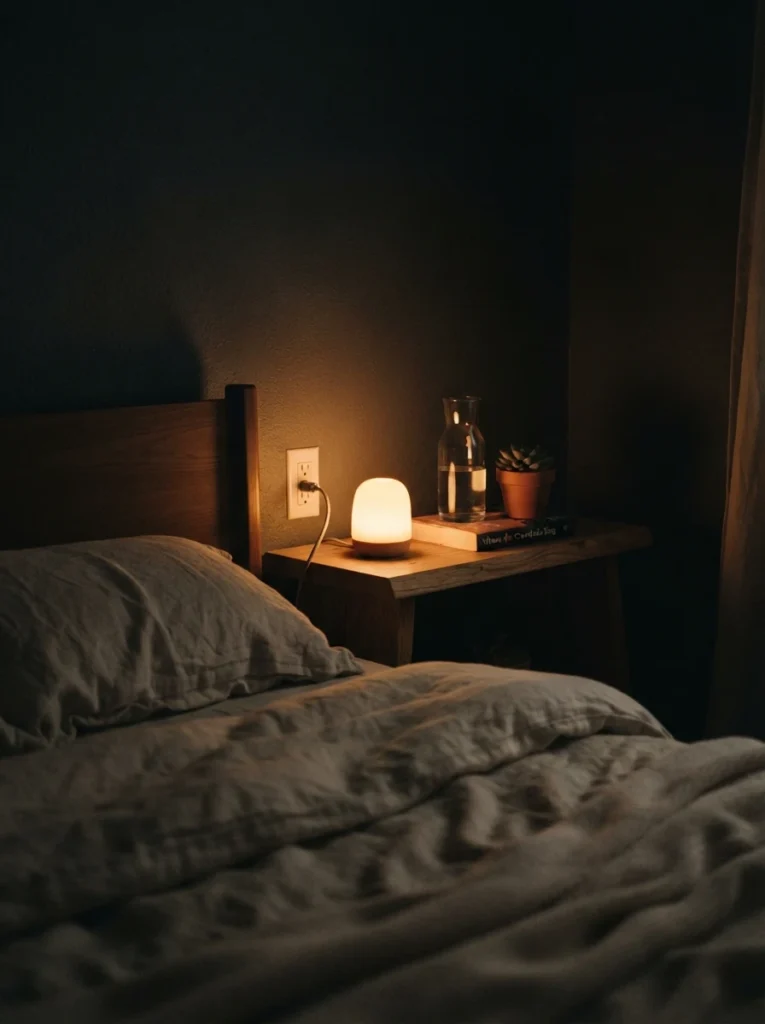
A true wind-down setup includes a night or mood layer that operates completely separately from your main bedroom lighting, typically a warm amber or red bulb used only in that final hour before sleep. This is different from just dimming your regular lamp, it’s a distinct light source your brain learns to associate specifically with bedtime.
Over time, switching to this light becomes its own cue that it’s time to sleep, almost like a lighting-based bedtime ritual.
12. Avoid Anything Above 3000K in the Room Entirely
Cool lights above 4000K are better suited to busy spaces like kitchens, bathrooms, and workspaces, not a room built around rest. Even a single 4000K bulb left in an overhead fixture can undercut every other warm light source you’ve added to the room.
Do a quick audit of every bulb in the space, including closets and attached bathrooms, since stray cool light tends to hide in the spots you check last.
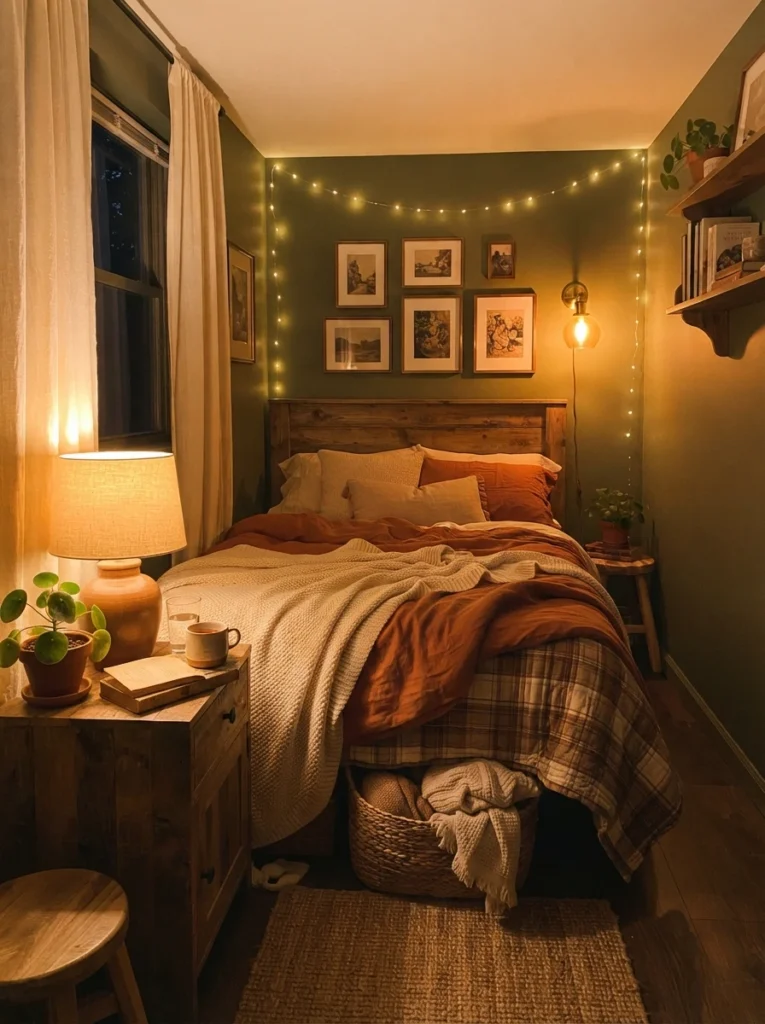
None of these twelve ideas require new furniture or a renovation. Start by checking the Kelvin rating on the bulbs you already own, add a dimmer to your main bedside lamp, and layer in one small amber night light for the hour before bed. That combination alone does more for how calm a small bedroom feels than almost anything else on this list.