13 Small Bedroom Styling Tricks That Look High-End
TL;DR
High-end bedrooms rarely feel luxurious because they contain expensive furniture alone. Most feel elevated because they understand visual balance, texture layering, lighting softness, and restraint better than ordinary rooms. Tiny bedrooms especially start looking richer when clutter decreases, materials feel intentional, and styling creates emotional calm instead of visual overload. These small bedroom styling tricks focus on making compact spaces feel warmer, softer, and visually expensive without requiring unrealistic budgets.
1. Use Larger Decor Pieces Instead of Tiny Accessories
One major difference between cheap-looking bedrooms and high-end bedrooms is visual fragmentation. Tiny frames, miniature decor objects, scattered candles, and endless little accessories create visual noise quickly inside compact spaces.
Luxury interiors usually rely on fewer stronger focal points. One oversized artwork piece, large mirror, textured headboard, or dramatic lamp often creates far more sophistication than multiple small decorative objects fighting for attention.
Tiny bedrooms emotionally benefit from cleaner visual hierarchy.
2. Layer Bedding Like a Boutique Hotel
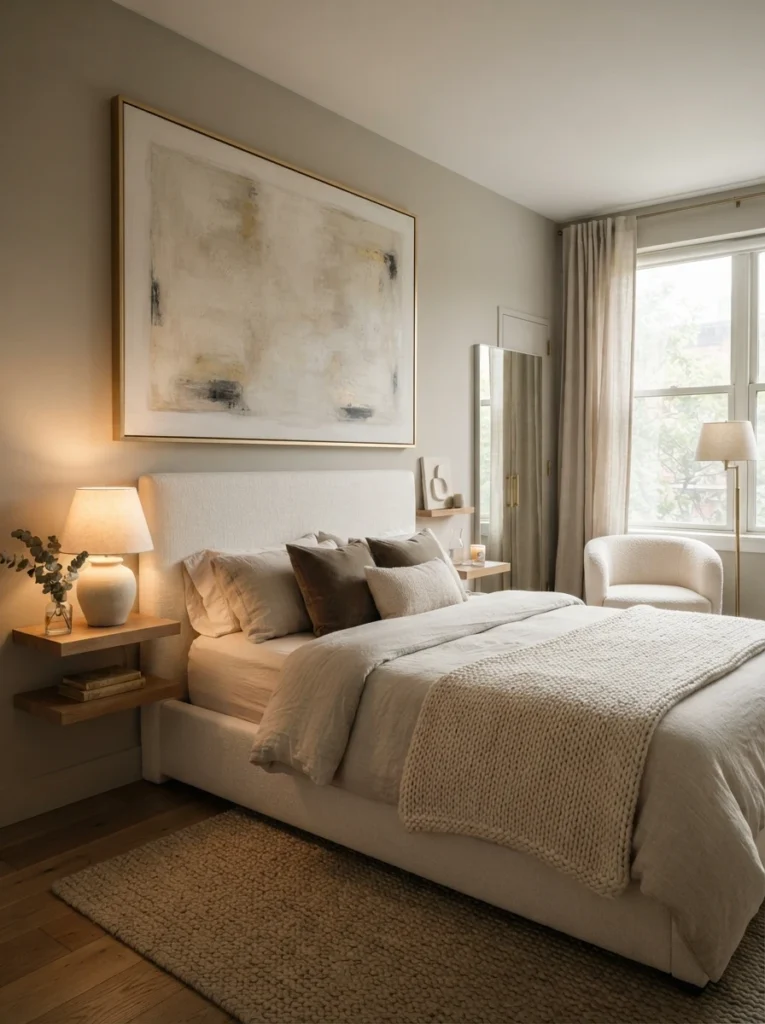
Flat bedding instantly makes bedrooms feel unfinished and emotionally cold. High-end bedrooms usually layer textures carefully through oversized duvets, soft linen sheets, extra pillows, knit throws, and subtle fabric variation.
The key is softness, not stiffness. Slightly relaxed bedding often feels more luxurious than perfectly rigid arrangements because it creates warmth and emotional comfort naturally.
In tiny bedrooms, the bed dominates visually. Styling it well changes the entire room instantly.
3. Keep the Color Palette Soft and Controlled
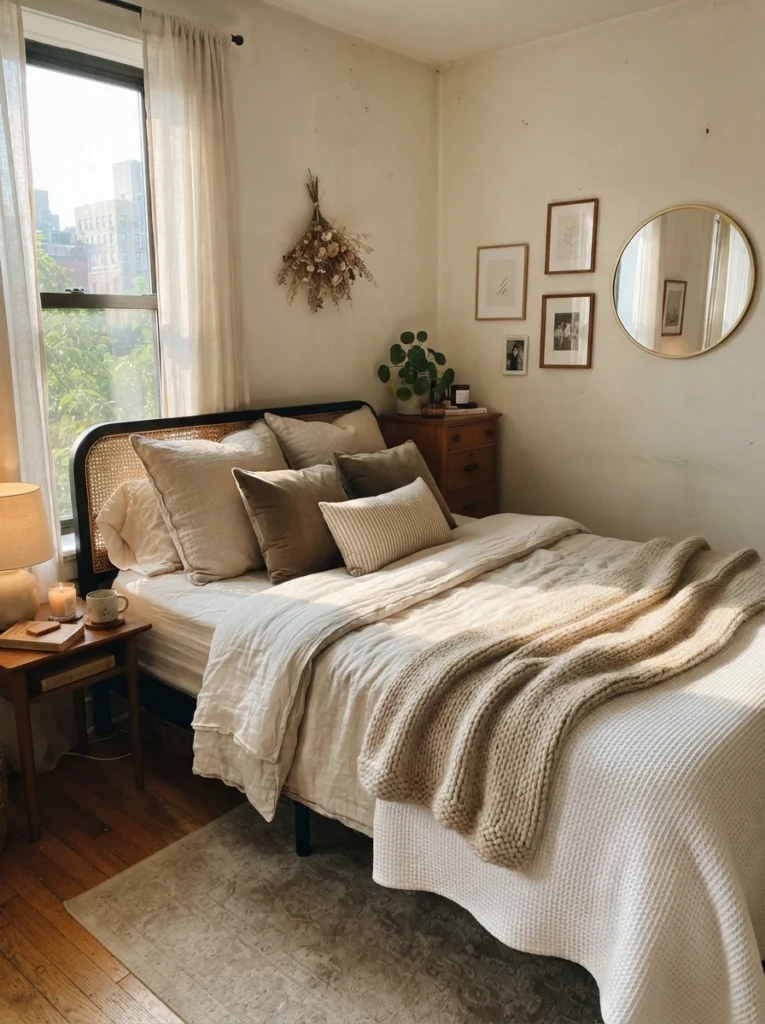
Rooms feel expensive when colors flow together naturally instead of competing aggressively. Tiny bedrooms especially become visually chaotic when too many bold shades interrupt the atmosphere constantly.
Warm neutrals, earthy browns, muted taupes, creamy whites, and soft olive tones create emotional richness while still keeping the room calming. Controlled palettes help compact spaces feel intentional instead of overcrowded.
Visual softness often feels more luxurious than visual intensity.
4. Hide Everyday Clutter Completely
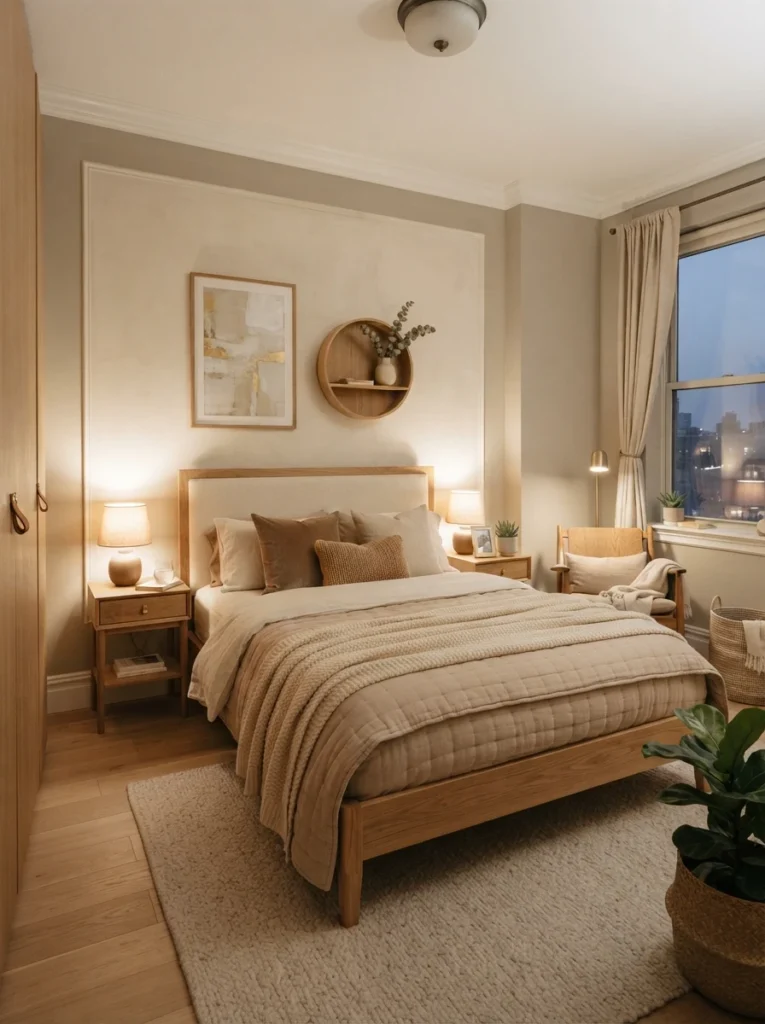
Nothing destroys a high-end atmosphere faster than visible life clutter everywhere. Chargers, laundry piles, tangled cables, skincare products, water bottles, and random packaging instantly make rooms feel visually stressful.
Luxury spaces usually contain less visible information. Hidden storage, cable organization, woven baskets, and cleaner surfaces create emotional calm because the eye experiences fewer interruptions.
High-end styling is often really just controlled visual simplicity.
5. Use Warm Layered Lighting Instead of Bright Overhead Light
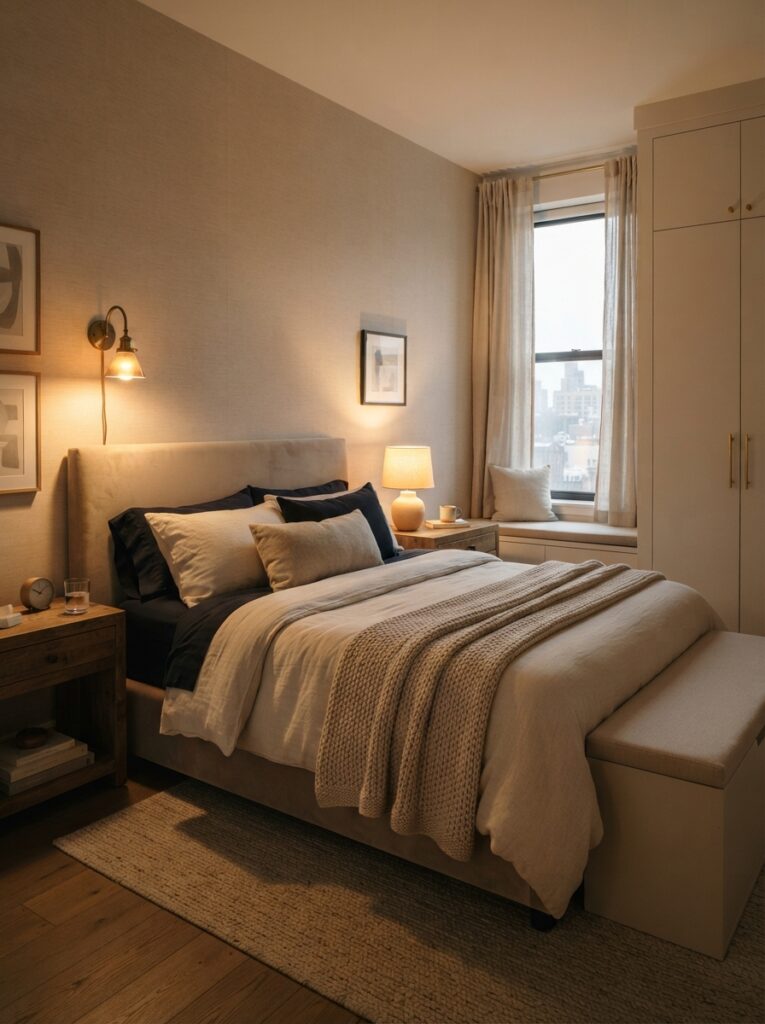
Harsh ceiling lights flatten bedrooms visually and remove emotional depth almost instantly. High-end bedrooms usually rely on softer layered lighting instead of flooding the room with brightness.
Warm bedside lamps, wall sconces, hidden LED glow, and dim ambient light create shadows and atmosphere that feel emotionally comforting. This is one reason luxury hotels feel calmer at night than most apartments.
Lighting shapes emotional perception more than expensive decor.
6. Mix Textures Instead of Patterns
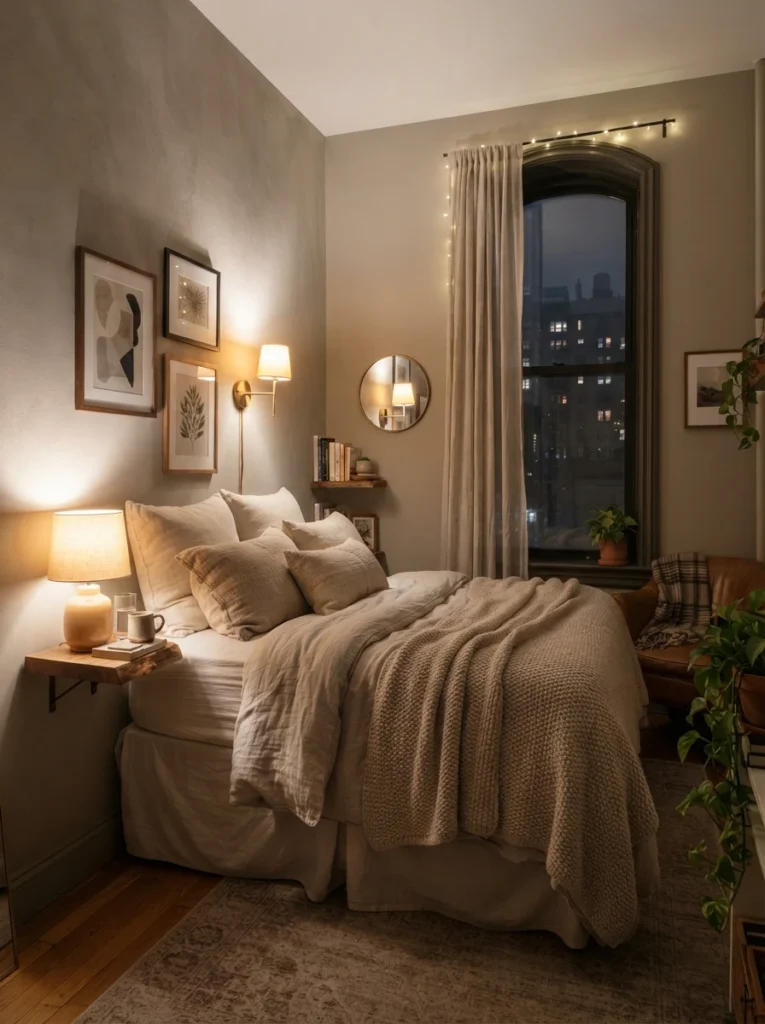
Cheap-looking bedrooms often overload patterns while expensive-looking bedrooms rely more heavily on texture variation. Linen, velvet, woven fibers, wood grain, soft rugs, matte ceramics, and cotton layering create visual richness quietly.
Textures feel calmer because they add depth without overwhelming the eye emotionally. Tiny bedrooms usually look more elevated when texture does the work instead of loud prints and excessive decoration.
Subtlety creates sophistication.
7. Let Some Space Stay Empty
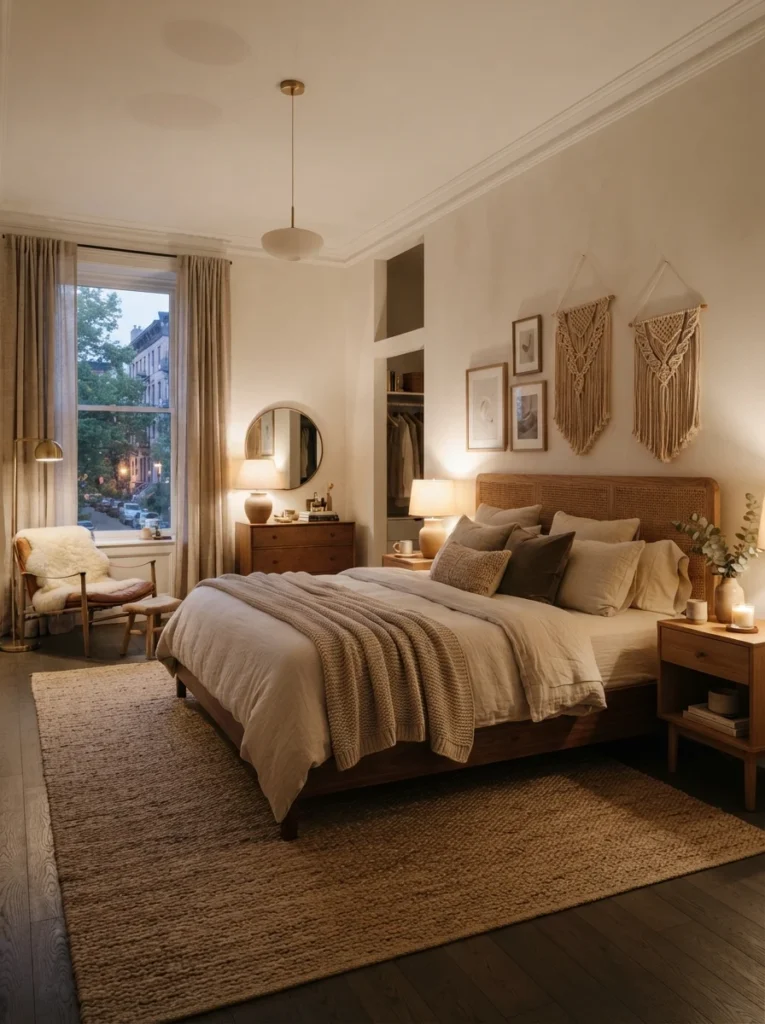
Many small bedrooms accidentally look cheaper because every shelf, wall, and corner becomes packed with decor or storage immediately. Expensive interiors usually allow objects breathing room.
Open space around furniture and partially styled surfaces create visual calm because the room no longer feels desperate to maximize every inch. Tiny bedrooms emotionally benefit from restraint more than over-optimization.
Breathing room feels luxurious psychologically.
8. Use Floor-Length Curtains Even in Tiny Rooms
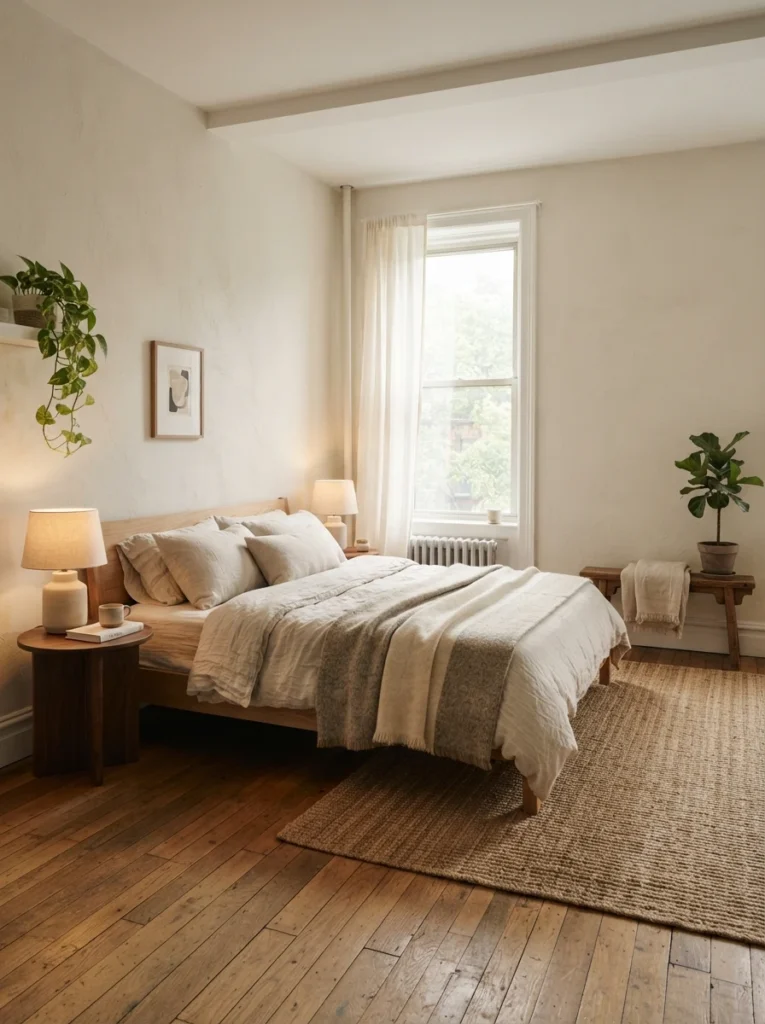
Short curtains visually cut rooms apart and often make ceilings feel lower than they actually are. Floor-length curtains create vertical softness that instantly makes tiny bedrooms feel more elegant.
Linen curtains work especially beautifully because they diffuse daylight gently while adding natural texture. This soft flowing effect creates warmth and visual height simultaneously.
Tiny rooms emotionally respond strongly to vertical flow.
9. Keep Nightstands Styled Very Simply
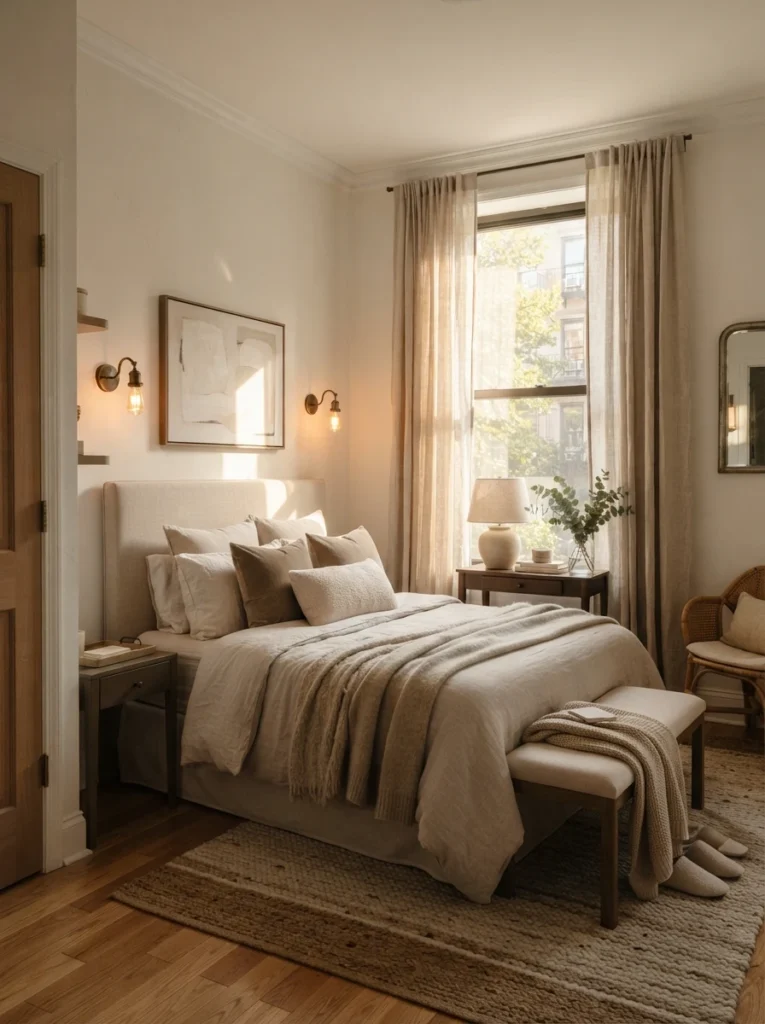
Overloaded nightstands create instant visual stress because tiny bedrooms magnify clutter aggressively. Expensive-looking rooms usually keep bedside styling extremely controlled.
A soft lamp, one ceramic tray, a single book, or folded linen detail often feels enough. Cleaner bedside areas help the entire room feel emotionally calmer and visually richer.
Sophisticated styling usually feels restrained, not crowded.
10. Add One Dark Accent for Contrast
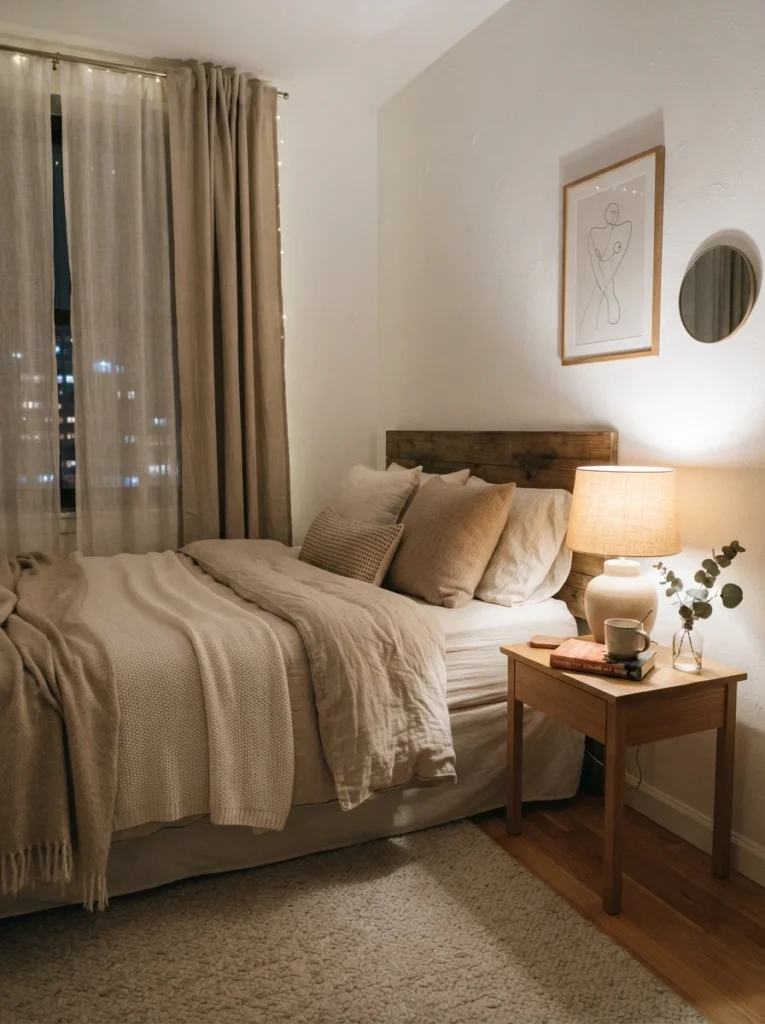
Tiny bedrooms filled entirely with pale colors sometimes lose visual depth. One darker accent piece often grounds the room and creates contrast that feels more intentional and elevated.
A dark wood nightstand, black framed artwork, charcoal pillow, or deeper lamp base creates sophistication without overwhelming the softness of the overall palette.
Luxury spaces often balance softness with grounding contrast carefully.
11. Use Mirrors to Reflect Light and Calmness
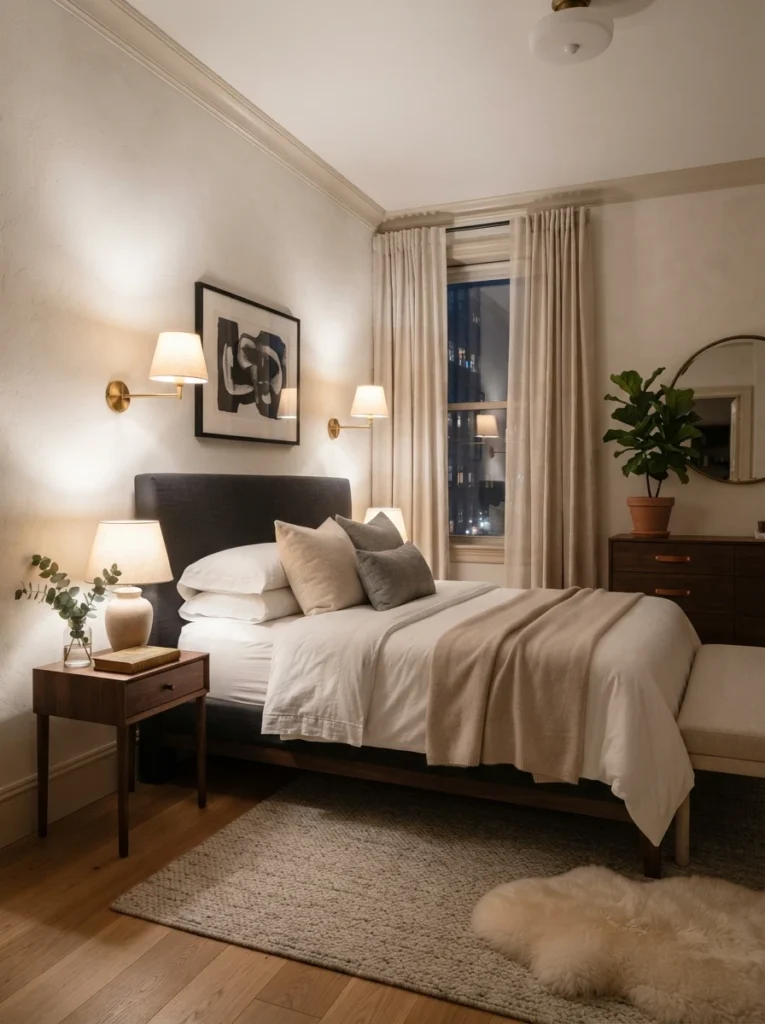
Mirrors help tiny bedrooms feel more luxurious because they spread softness and brightness across the room naturally. But placement matters emotionally.
Reflecting clean bedding, warm lighting, or soft curtains creates openness. Reflecting clutter doubles visual stress immediately. High-end styling often comes down to controlling what the eye repeatedly notices.
Calm reflections create calmer rooms.
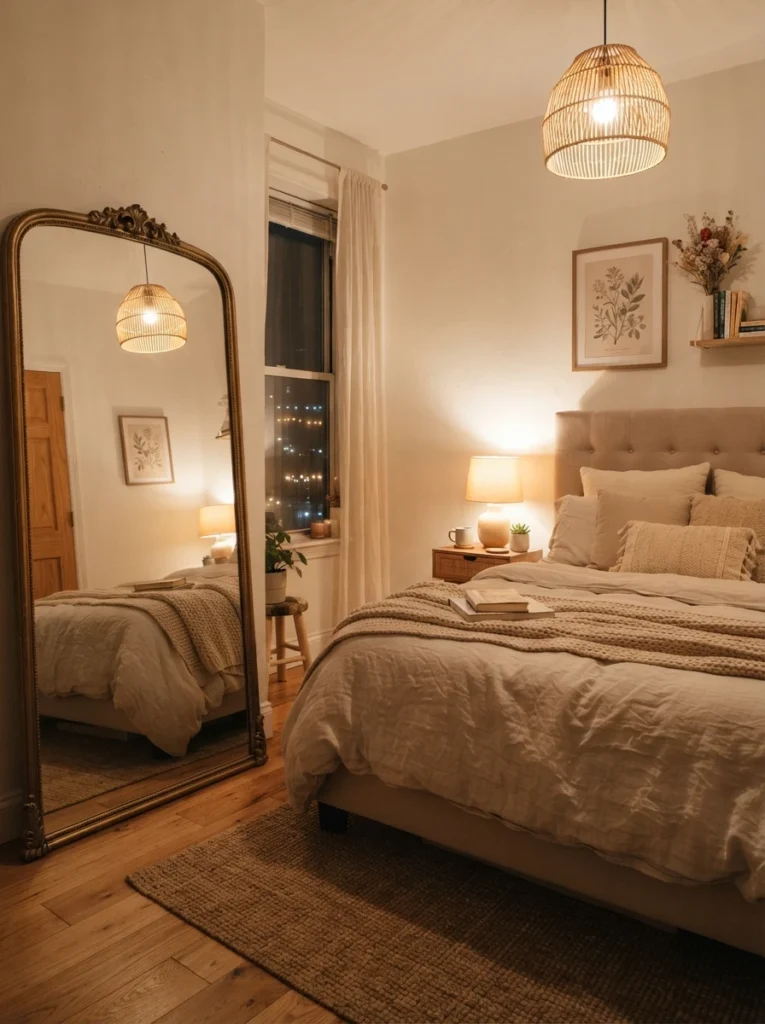
12. Style the Room Around Emotion, Not Trends
Some bedrooms look trendy online but emotionally exhausting in real life because every design choice screams for attention constantly. High-end rooms usually feel calmer because they prioritize emotional comfort over trend overload.
Soft textures, warm light, visual breathing room, and controlled styling create timeless comfort naturally. Tiny bedrooms emotionally improve when the atmosphere supports relaxation instead of visual stimulation.
Quiet confidence feels more luxurious than trend-chasing.
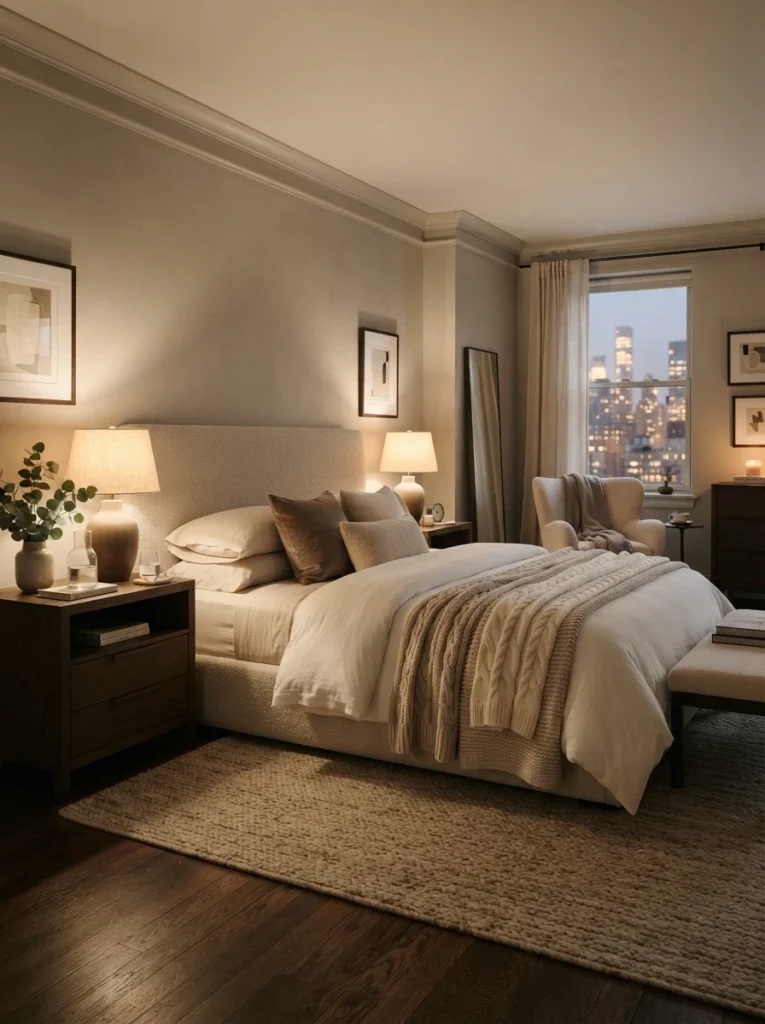
13. Make the Room Feel Calm Before It Feels Decorative
The biggest styling difference between ordinary bedrooms and luxurious-feeling bedrooms is emotional atmosphere. Expensive spaces usually feel quieter visually because fewer things compete aggressively for attention.
Soft lighting, hidden clutter, intentional spacing, controlled colors, and layered textures create emotional calm that naturally reads as sophisticated. Tiny bedrooms especially become more elevated when the room stops trying too hard.
Luxury often feels like visual peace.
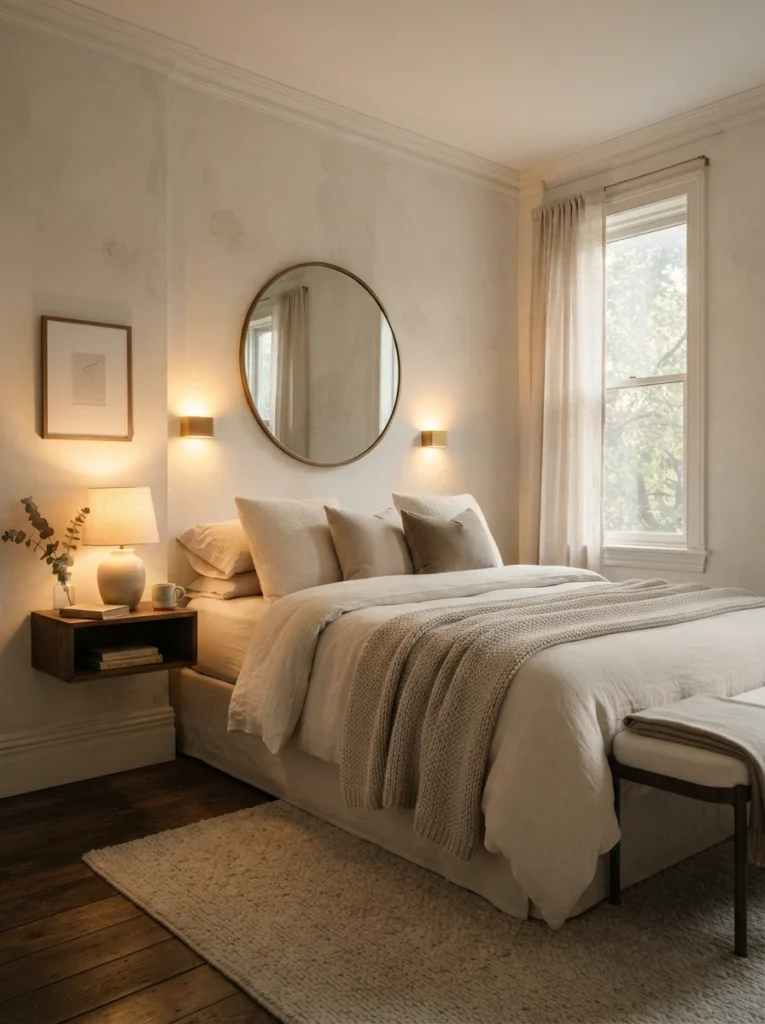
Final Thoughts
High-end bedroom styling is rarely about spending the most money. Most luxurious-feeling rooms simply understand softness, balance, lighting, texture, and visual restraint more deeply than ordinary spaces.
Tiny bedrooms actually have an advantage because small thoughtful changes feel dramatically more noticeable. Better bedding, softer lighting, cleaner surfaces, warmer textures, and calmer layouts can completely shift how a compact room emotionally feels.
A bedroom looks expensive when it feels peaceful, intentional, and emotionally comforting the moment someone walks inside.