
13 Small Bedroom Tricks That Make Rooms Feel Less Chaotic
TL;DR
Small bedrooms rarely feel stressful because of size alone. Most feel overwhelming because the room constantly throws visual information at the brain without giving it space to rest. Crowded surfaces, harsh lighting, awkward layouts, exposed clutter, and too many competing objects quietly create mental fatigue over time. These small bedroom tricks focus on reducing visual chaos, calming the atmosphere, and helping tiny rooms feel emotionally lighter without needing a full makeover.
1. Keep More Surfaces Empty Than Decorated
One hidden reason tiny bedrooms feel chaotic is because every visible surface becomes filled automatically. Dressers collect skincare products, desks collect random papers, and nightstands slowly disappear under chargers, candles, receipts, and half-used water glasses.
The eye constantly processes all of this unfinished visual information. Leaving parts of surfaces intentionally empty creates breathing room that immediately softens the atmosphere emotionally.
Calm rooms usually contain less visible interruption overall.
2. Hide the “Ugly Functional Stuff” Aggressively
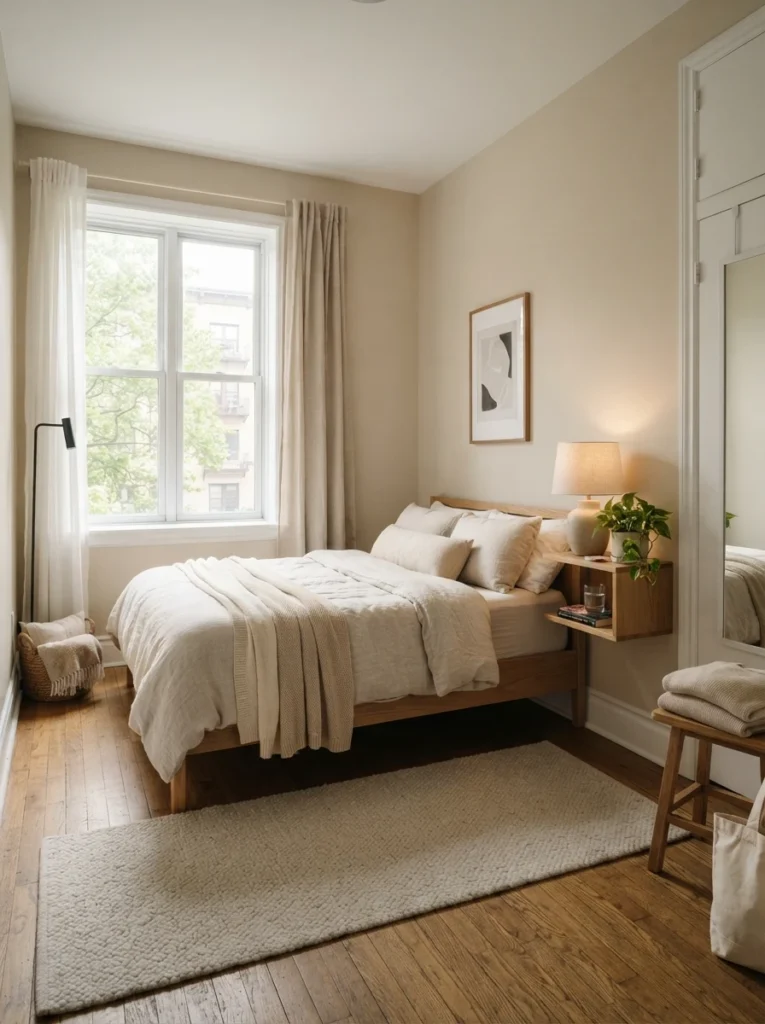
Tiny bedrooms become visually exhausting when practical clutter stays exposed constantly. Chargers, tangled extension cords, laundry baskets, extra packaging, random cables, and overflowing bins quietly make rooms feel mentally noisy.
Pinterest-perfect rooms look calming partly because the functional mess stays hidden. Woven baskets, under-bed storage, cable organizers, and closed drawers dramatically reduce visual stress.
The less the eye has to process repeatedly, the calmer the room feels emotionally.
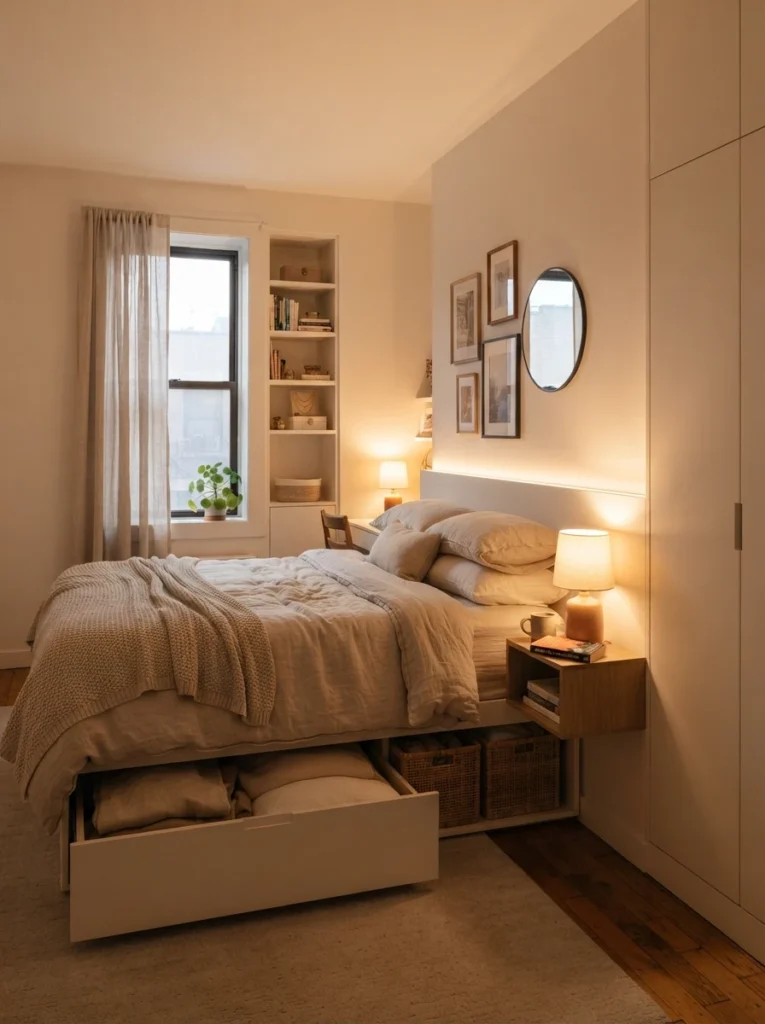
3. Stop Using Tiny Decor Everywhere
Small decorative clutter creates visual fragmentation surprisingly fast in compact rooms. Mini frames, tiny candles, small trinkets, and scattered accessories force the eye to jump constantly from object to object.
Larger simpler decor pieces usually feel calmer because the room gains visual structure instead of visual noise. One oversized print often creates more beauty than twenty tiny decorative items spread around awkwardly.
Tiny bedrooms emotionally benefit from simplicity.
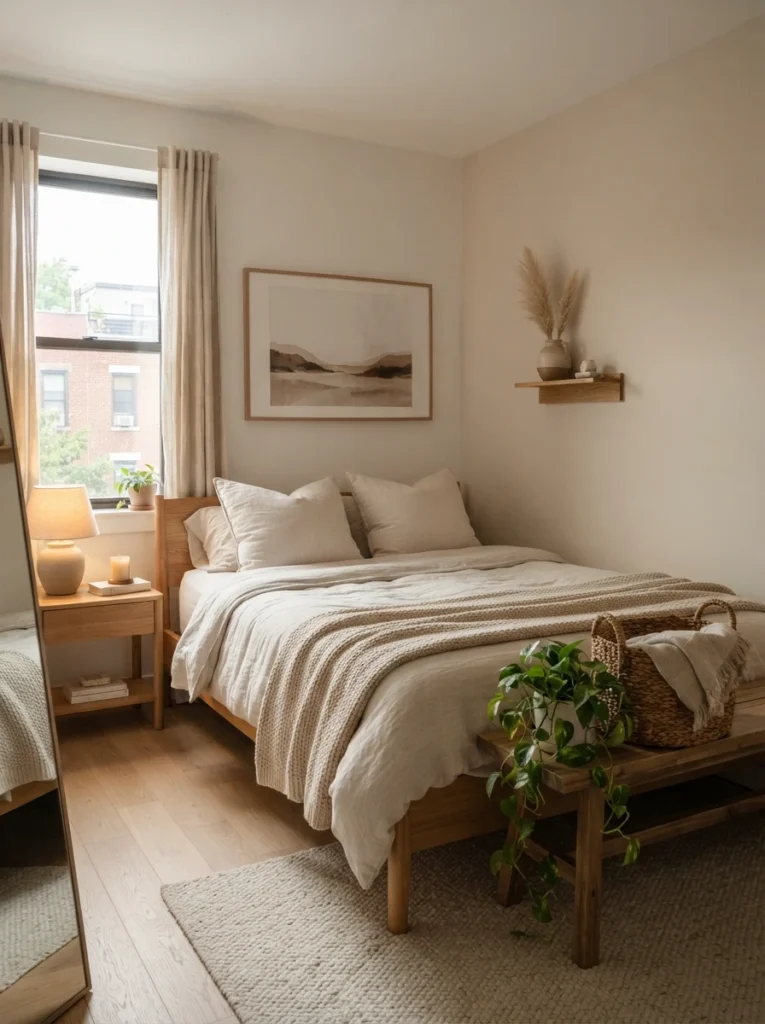
4. Use Warm Lighting Instead of Bright White Bulbs
Harsh cool lighting exaggerates visual chaos because it sharpens every shadow, surface, and clutter pile aggressively. Warm layered lighting softens the room emotionally and makes tiny spaces feel calmer almost instantly.
This is why cozy hotels and Pinterest bedrooms rarely rely on bright white ceiling bulbs alone. Warm bedside lamps and softer ambient lighting create visual gentleness that reduces overstimulation naturally.
Softness matters psychologically.
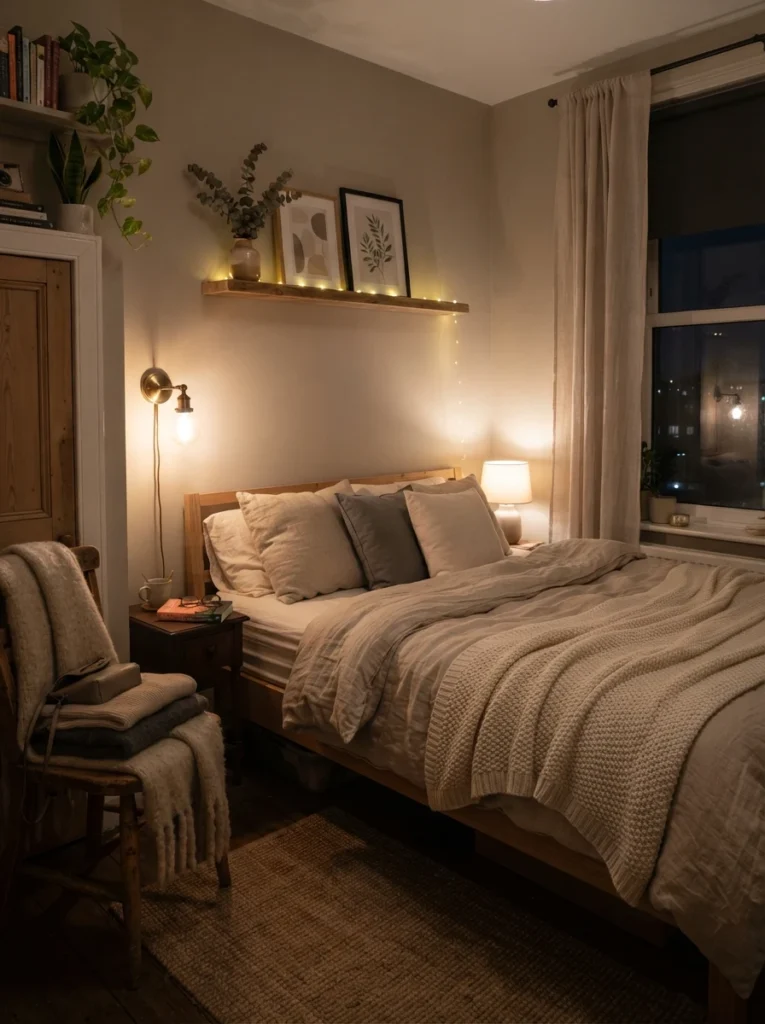
5. Reduce Open Storage Wherever Possible
Open shelving often starts looking chaotic in real life because everyday objects rarely stay perfectly styled. Skincare bottles, books, random containers, and chargers slowly build visual pressure in small bedrooms where everything remains visible constantly.
Closed storage softens this effect immediately because clutter visually disappears. Tiny rooms emotionally relax when fewer objects demand attention all day.
Hidden storage creates visual silence.
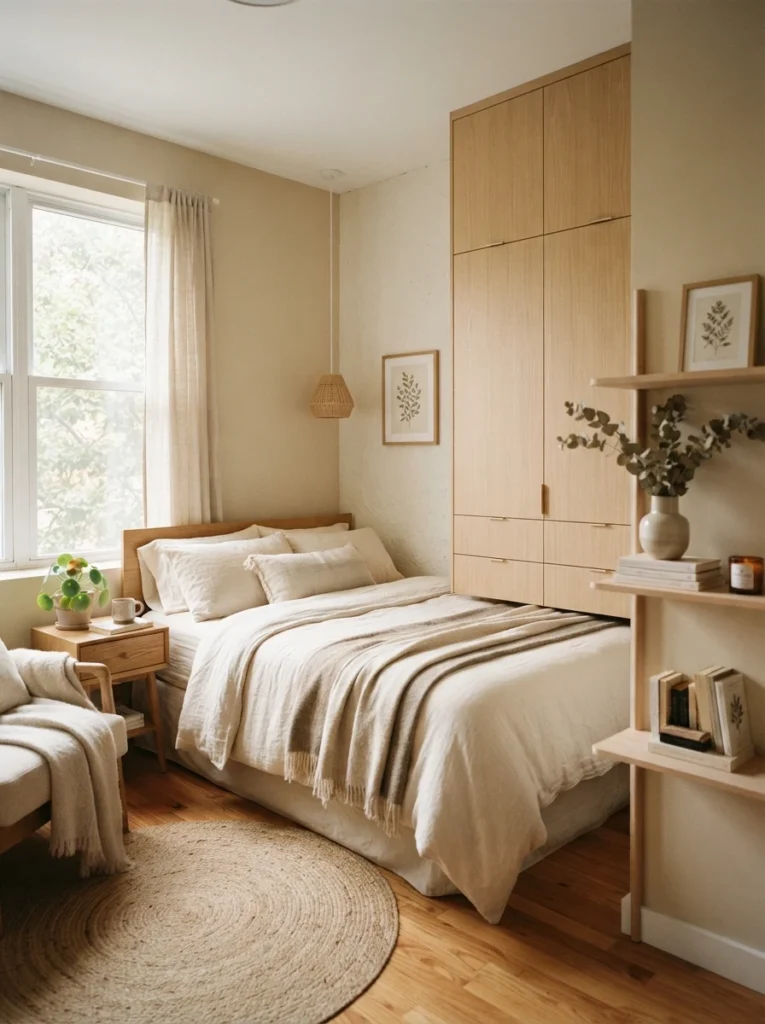
6. Let the Room Have Some Empty Corners
Many small bedrooms feel overwhelming because every corner gets packed with furniture, bins, shelves, or decor. Empty corners actually help rooms feel calmer because the eye experiences moments of openness instead of constant occupation.
This does not mean wasting space completely. It means understanding that visual breathing room affects emotional comfort more than maximizing every square inch aggressively.
Sometimes less furniture creates more peace.
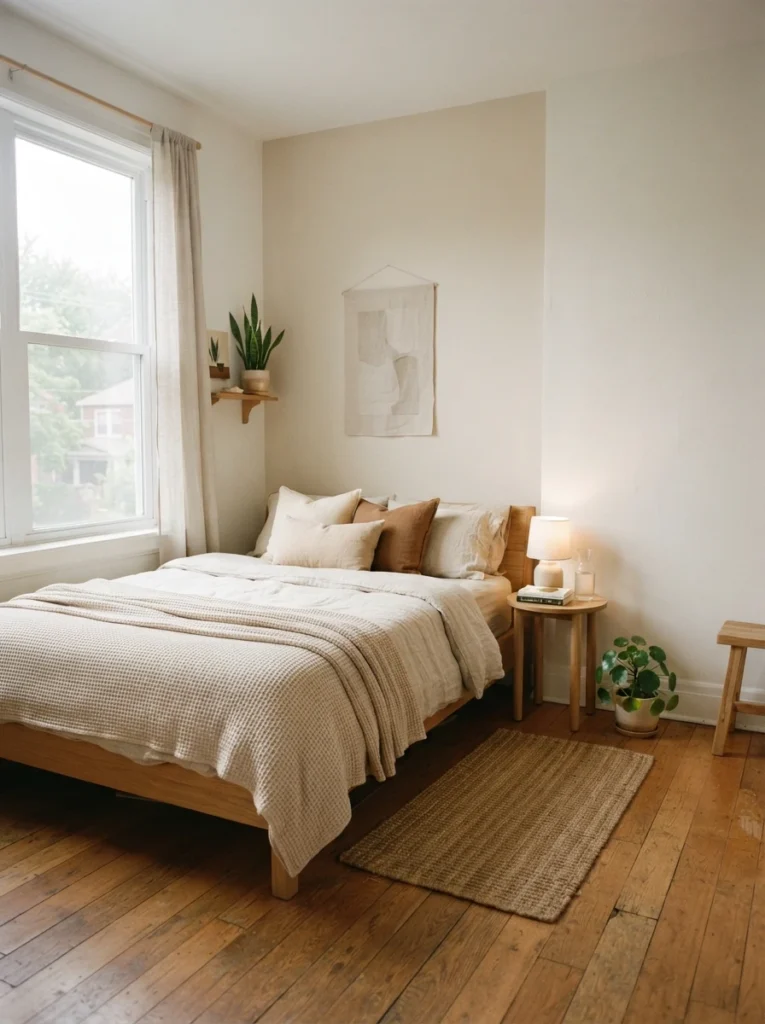
7. Use Matching Storage Containers
Visual inconsistency quietly creates mental noise. Random plastic tubs, mixed baskets, colorful bins, and mismatched organizers make tiny bedrooms feel more chaotic even when technically organized.
Matching storage systems create rhythm and visual calm because the brain processes them more smoothly. Soft neutral baskets or fabric bins usually feel especially calming in small rooms.
Consistency reduces visual friction.
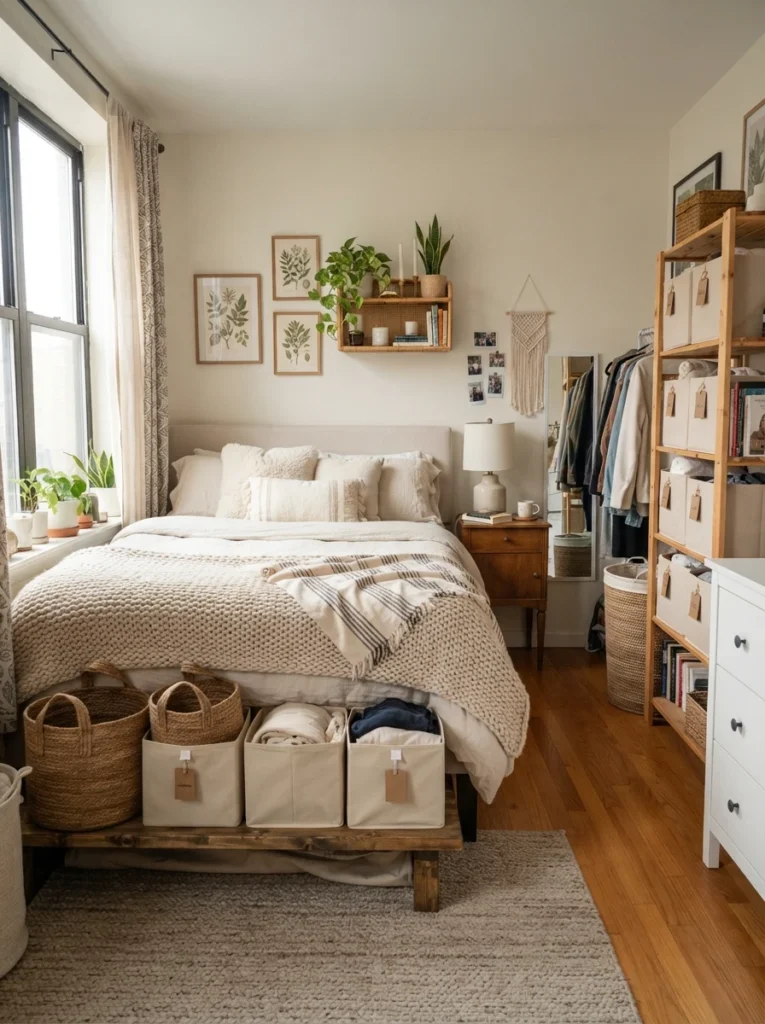
8. Keep Furniture From Blocking Natural Light
Dark corners and interrupted daylight often make small bedrooms feel heavier emotionally. Large wardrobes or shelving units blocking windows prevent light from moving naturally through the room.
Even slight improvements in natural light flow make compact spaces feel softer and more breathable psychologically. Tiny rooms emotionally expand when sunlight reaches more surfaces naturally.
Light flow affects mood constantly.
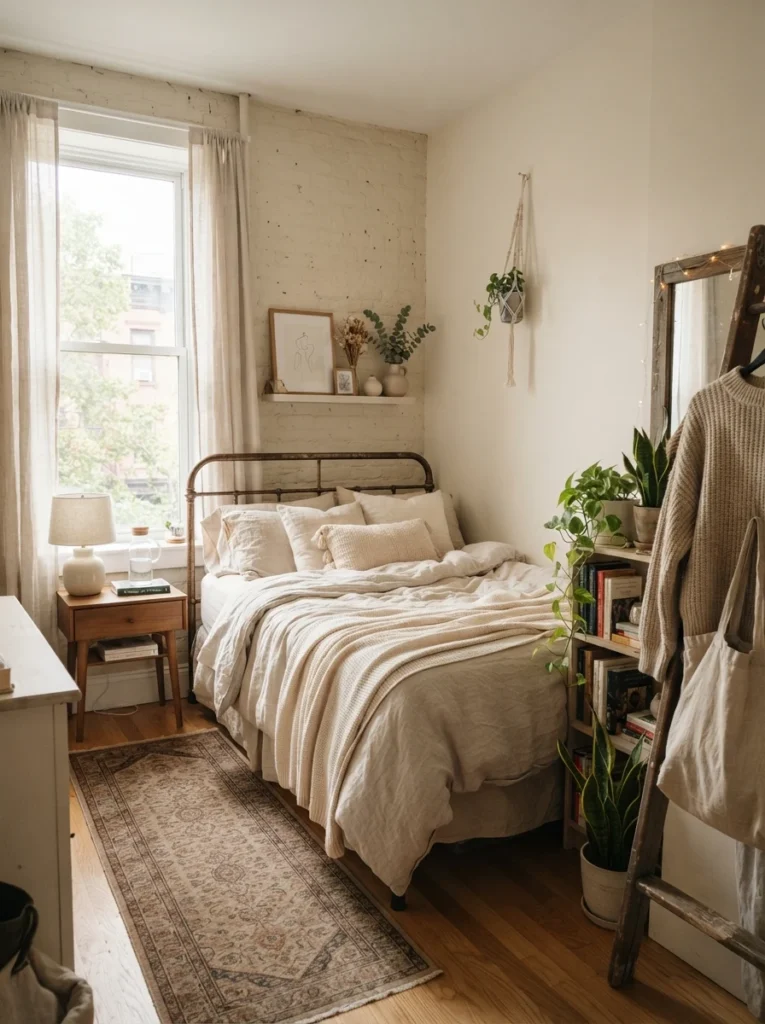
9. Reduce Visual Contrast Across the Room
Rooms with too many competing colors, finishes, or patterns often feel mentally busy because the eye never settles comfortably. Tiny bedrooms usually feel calmer when colors blend softly instead of sharply contrasting.
Warm neutrals, soft earth tones, natural wood textures, and cohesive materials create visual flow that helps rooms feel emotionally quieter.
The room starts feeling smoother instead of fragmented.
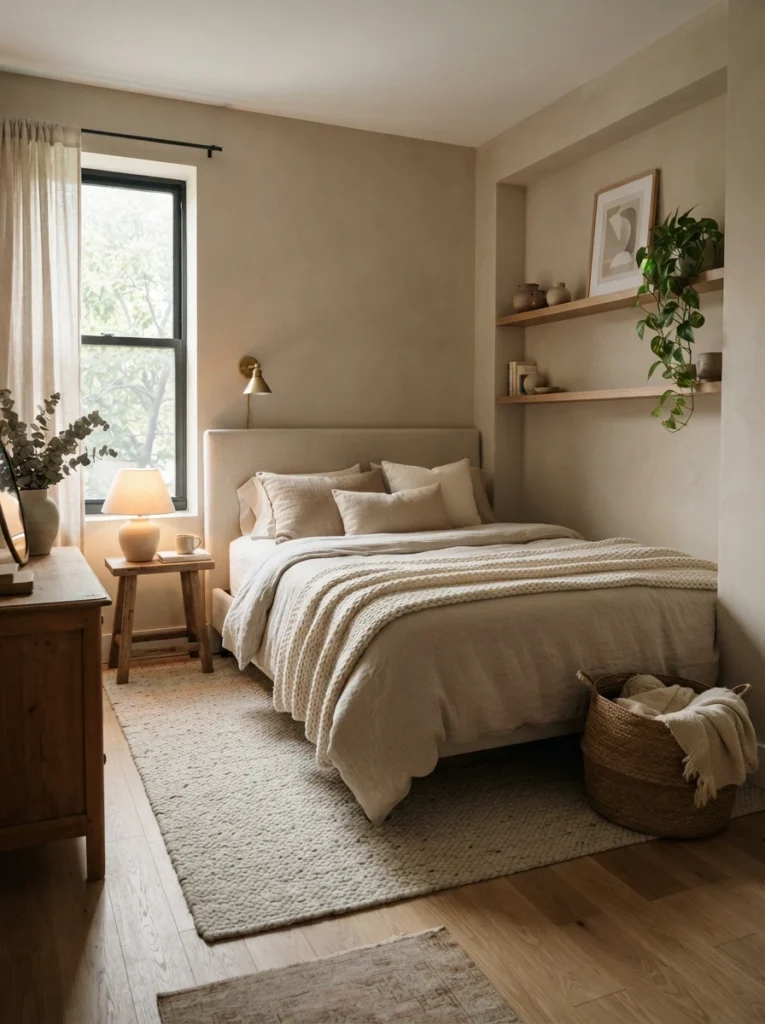
10. Keep the Floor More Visible
Visible floor space creates psychological openness in tiny bedrooms. Laundry piles, stacked bins, random shoes, and crowded furniture legs interrupt movement flow and make the room feel tighter emotionally.
Wall hooks, under-bed storage, floating furniture, and vertical organization help free visual floor space naturally. The eye reads openness through visible flooring surprisingly strongly.
Movement flow affects emotional comfort too.
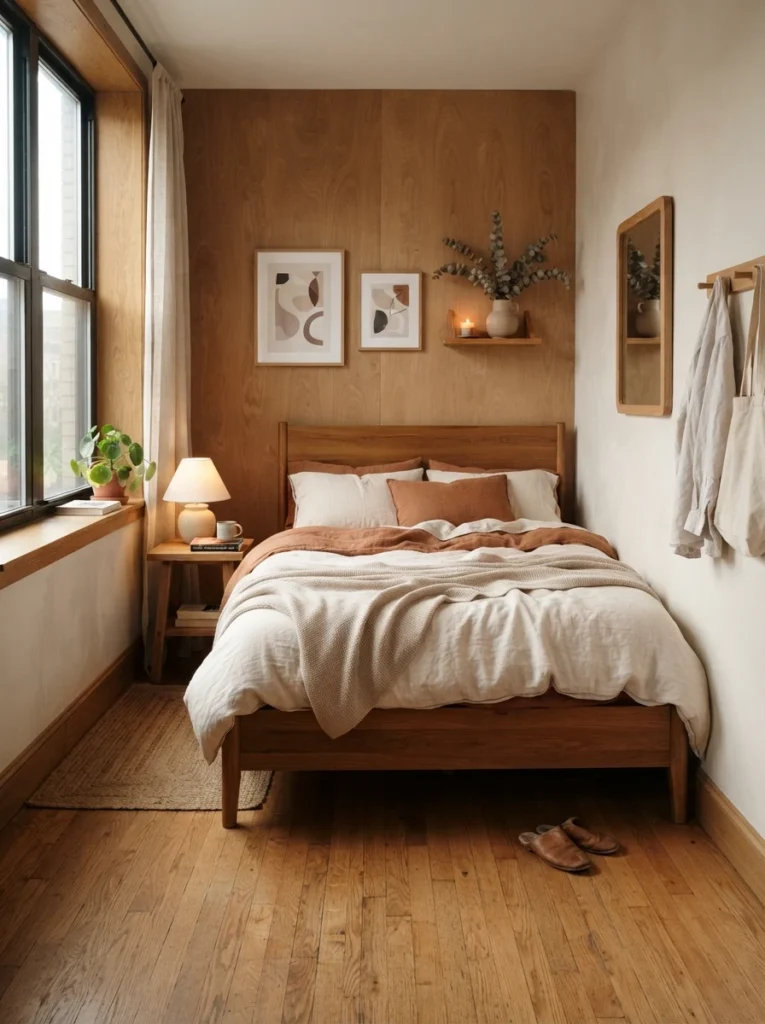
11. Create One Calm Visual Focal Point
Chaotic bedrooms often lack visual hierarchy. Every object competes equally for attention, which quietly overwhelms the eye throughout the day.
A calm focal point changes this immediately. Soft bedding, a warm lamp corner, oversized artwork, or a textured headboard gives the eye somewhere intentional to settle naturally.
Rooms feel calmer when attention has direction.
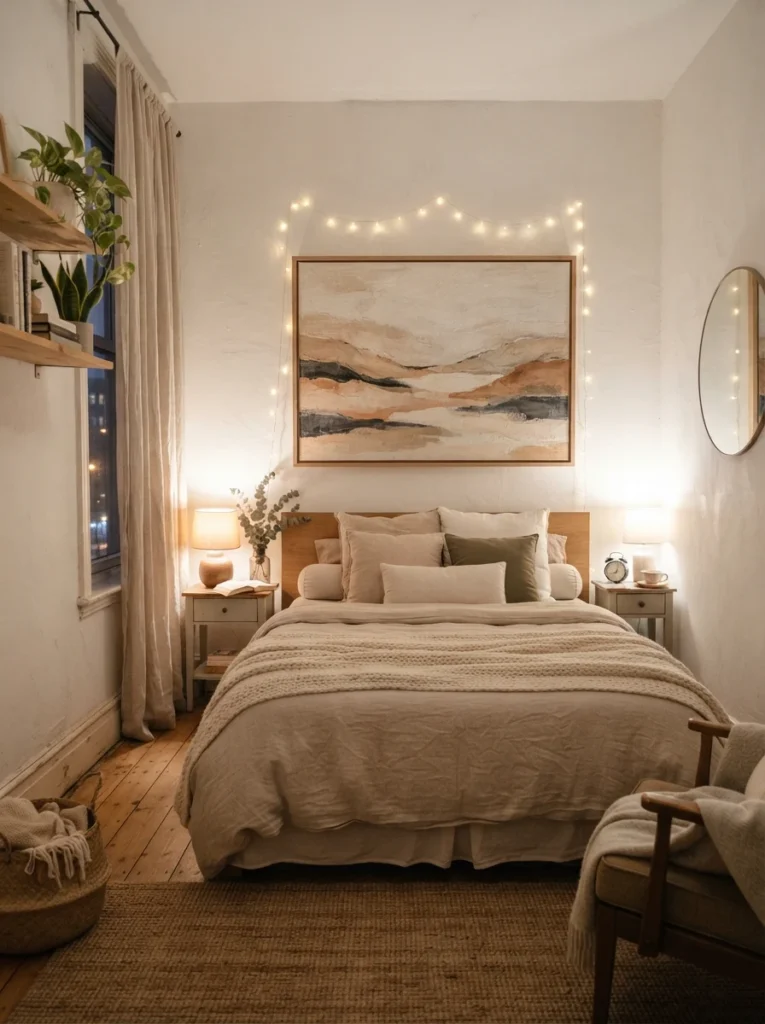
12. Stop Trying To Make the Room “Perfect”
Many bedrooms feel emotionally stressful because people constantly chase impossible aesthetic perfection instead of realistic comfort. Tiny rooms especially become exhausting when every object feels like another styling decision.
Slightly relaxed bedding, soft imperfections, and lived-in warmth usually feel calmer than rigidly staged minimalism. Real comfort comes from emotional softness, not visual pressure.
The room should support life, not perform constantly.
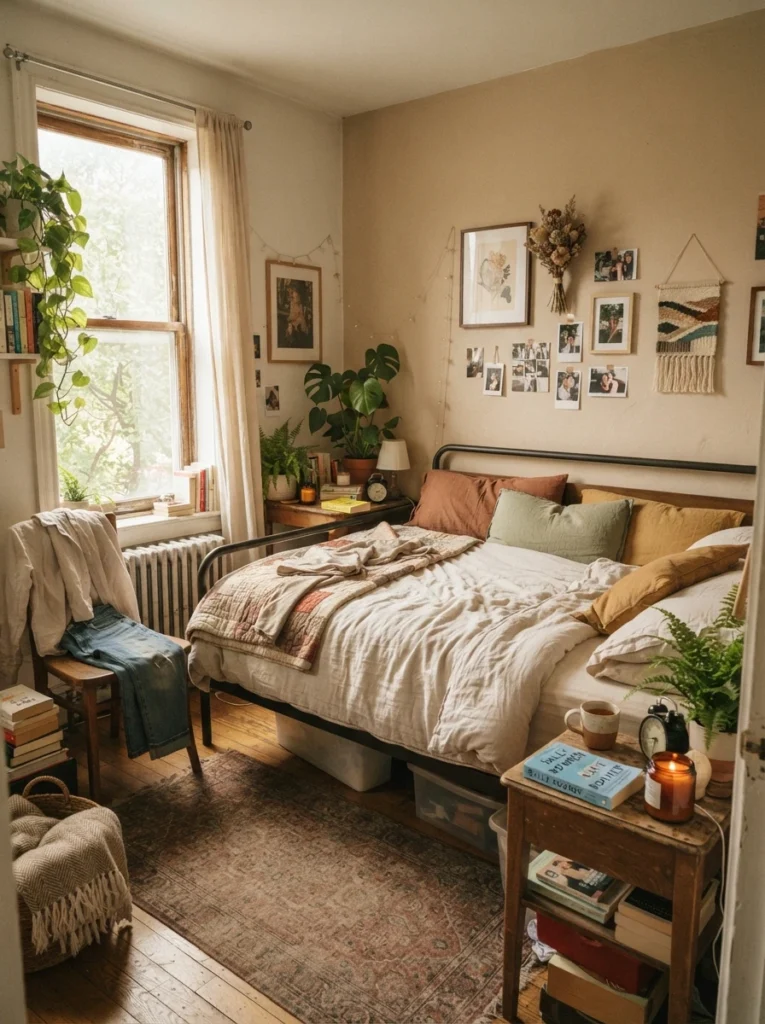
13. Build the Room Around Emotional Calm, Not Just Storage
Most chaotic bedrooms do not actually need more organizers. They need less visual pressure, softer lighting, better flow, and fewer competing objects constantly demanding attention.
A calmer room usually comes from subtraction first. Fewer visible distractions. Better lighting. Softer textures. Easier movement. Cleaner surfaces. More breathing room.
Tiny bedrooms feel emotionally lighter when the environment stops overstimulating the nervous system all day.
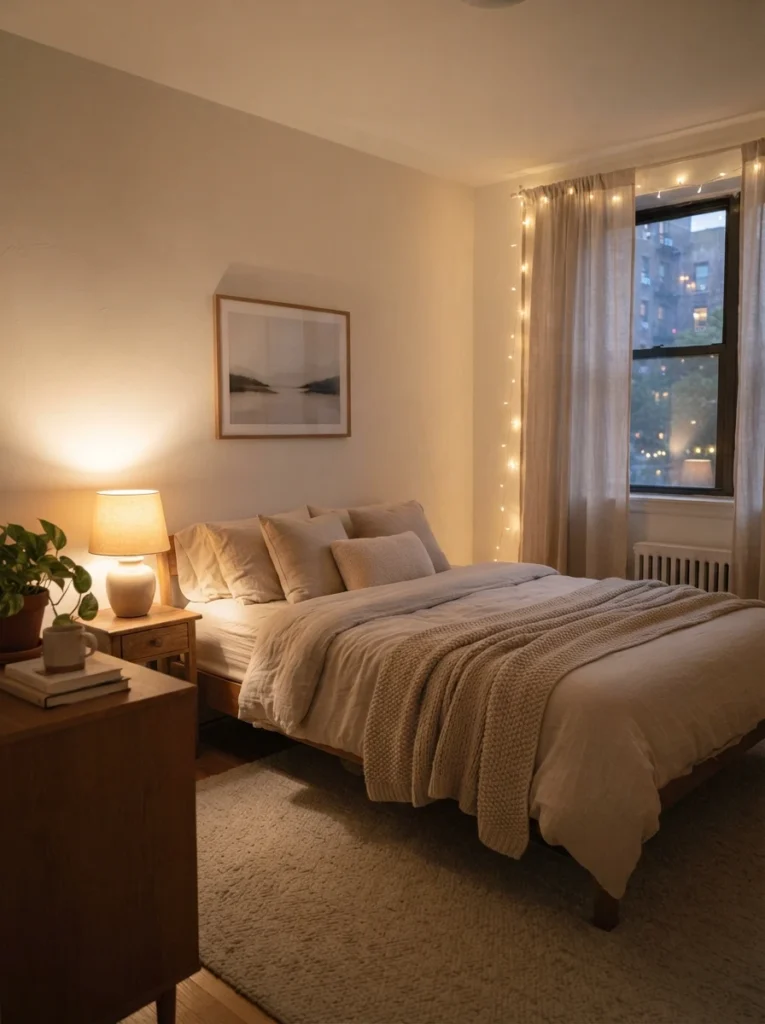
Final Thoughts
Chaotic bedrooms rarely happen overnight. They slowly build through visual overload, overcrowded surfaces, harsh lighting, unfinished clutter, and layouts that never truly support daily life comfortably.
The calmest tiny bedrooms usually succeed because they reduce what the eye constantly has to process. Softer lighting, hidden clutter, simpler styling, visible floor space, and emotional breathing room create a quieter atmosphere that feels easier to exist inside.
A small bedroom does not need to feel perfectly minimal to feel peaceful. It just needs to stop fighting for your attention every second you are inside it.