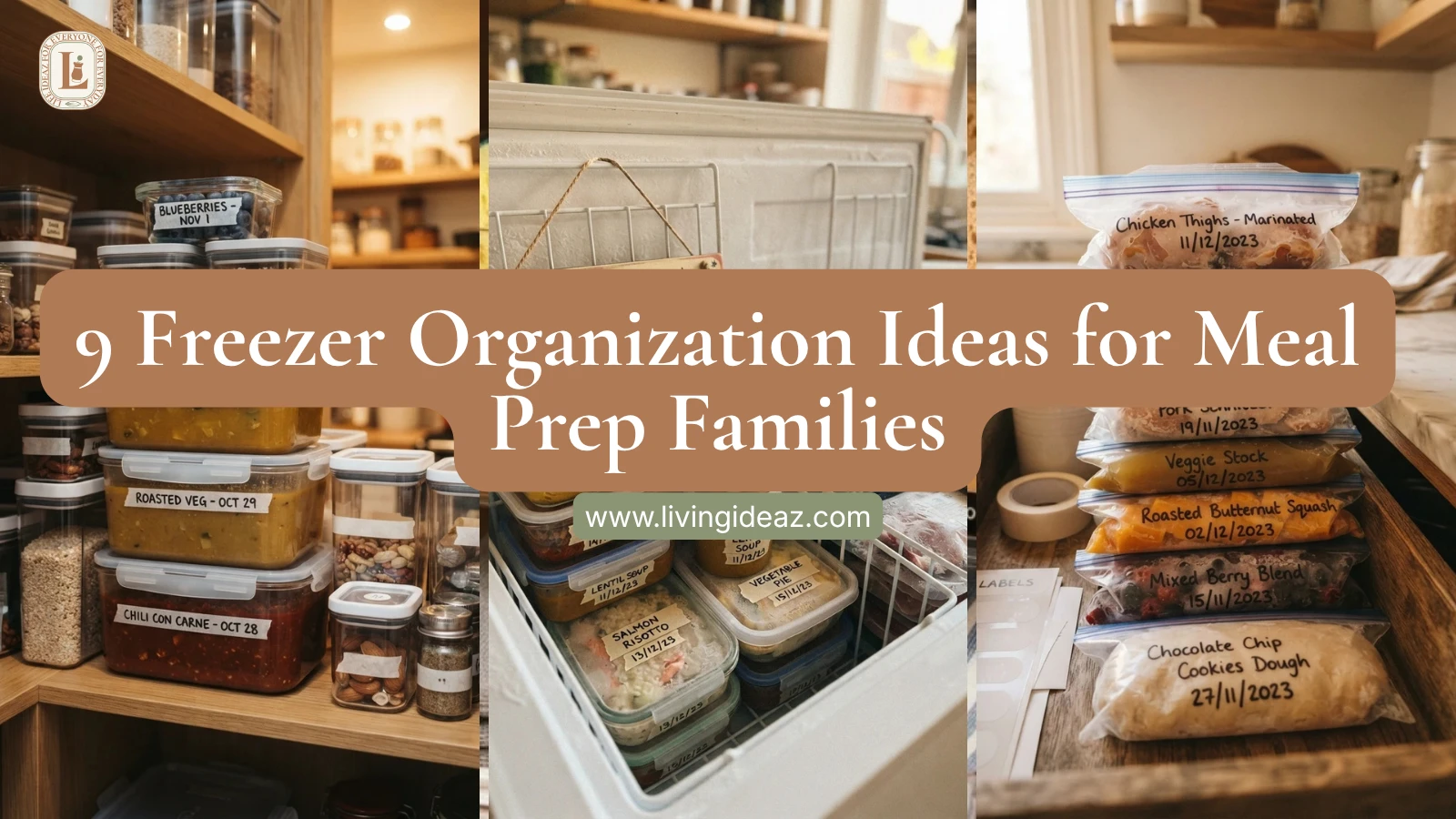
9 Freezer Organization Ideas for Meal Prep Families
TL;DR: A freezer full of meal prep only saves time if you can actually find what’s in it. Zones for proteins, produce, and full meals, combined with date-forward labels and vertical storage, turn a chest of mystery bags into a system you can scan in seconds. Most families don’t need a bigger freezer, they need three or four defined zones and a habit of restacking instead of shoving new food wherever it fits.
Meal prep is supposed to save time, but a disorganized freezer can undo all of that effort. You batch-cook a week’s worth of dinners, freeze them with the best intentions, and then two weeks later you’re digging through unlabeled bags trying to guess whether that’s the chicken chili or the turkey ragu. The freezer itself usually isn’t the problem. It’s the lack of a system that tells you at a glance what you have, what needs cooking, and what’s been sitting there so long it should probably be eaten first.
Here are 9 freezer organization ideas built specifically for families doing regular meal prep.
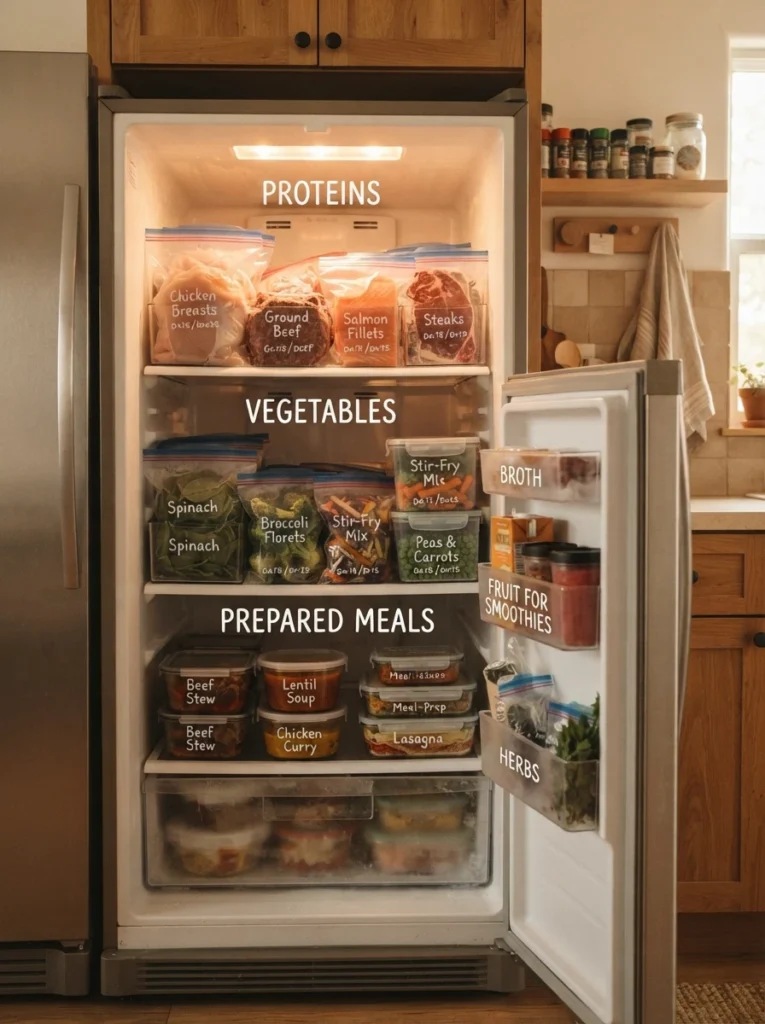
1. Divide the Freezer Into Clear Zones
Professional kitchens don’t organize freezers by whatever fits where, and a home freezer benefits from the same logic. Dedicate specific areas to proteins, vegetables, breads, and full prepped meals, so you’re scanning one section instead of digging through the entire freezer for a single item.
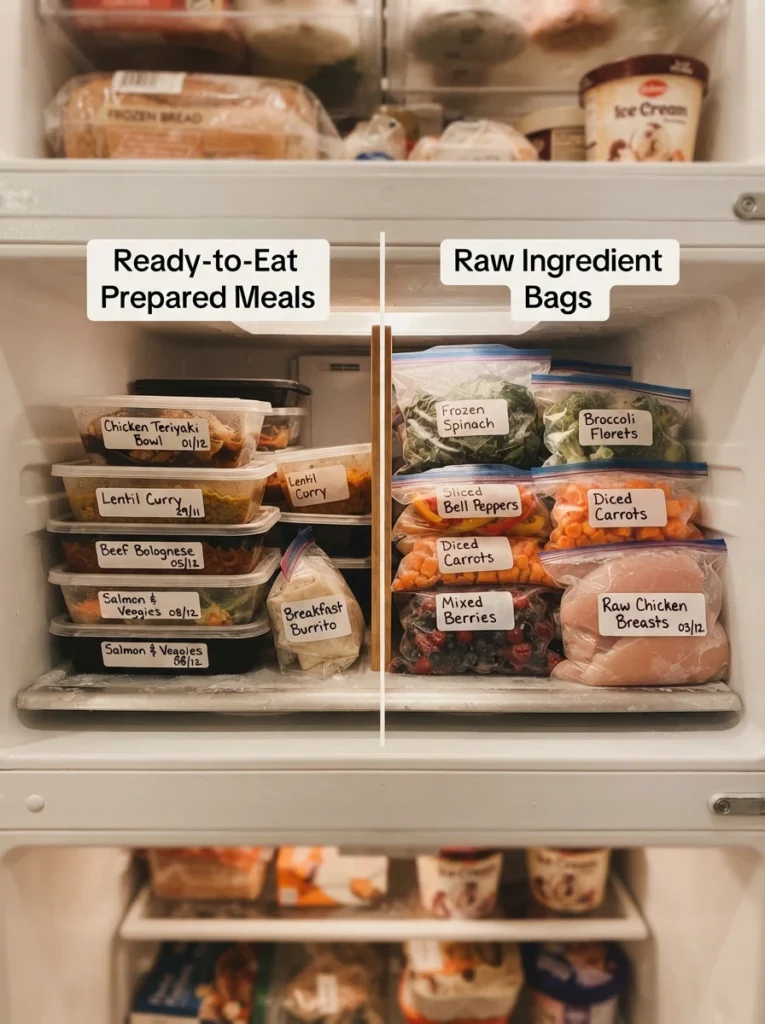
2. Separate Ready-to-Eat Meals From Ingredients-Only Items
Mixing fully prepared dinners with raw ingredients meant for future meals creates the exact kind of confusion that makes weeknights harder, not easier. Keep a clear line between what can go straight into the oven and what still needs to be built into a meal, so nobody’s left guessing during a rushed dinner.
3. Label With Both Contents and Date, Even When It Looks Obvious
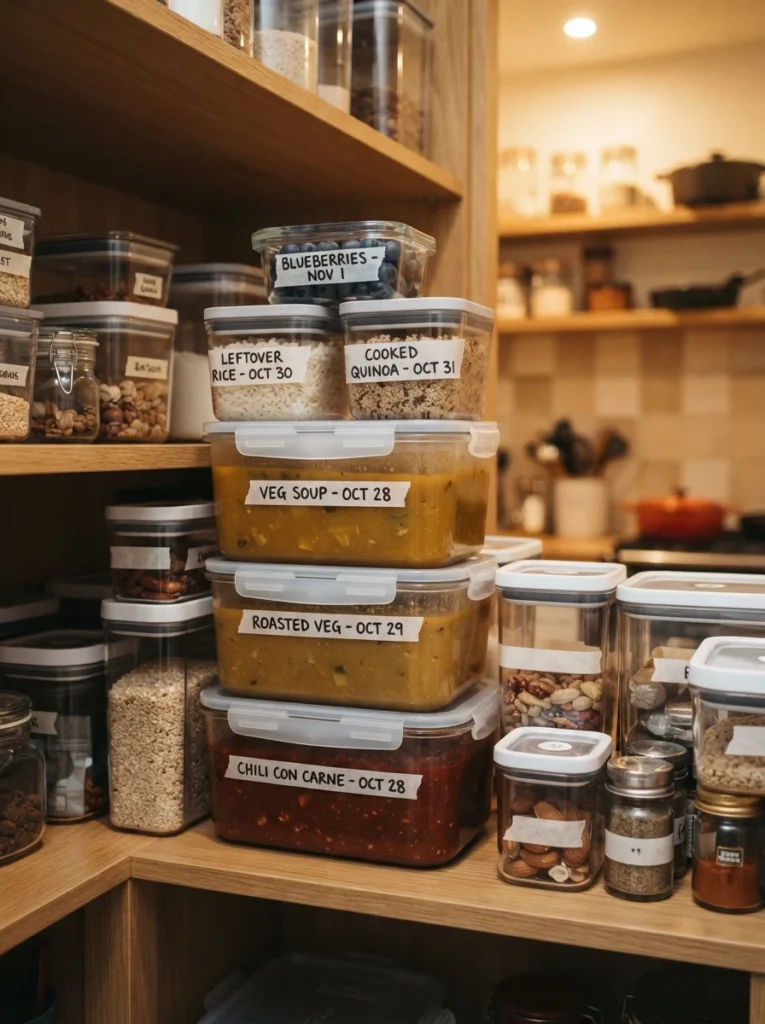
It’s tempting to skip labeling something that looks identifiable through the bag, but frozen food changes appearance fast, and two weeks from now that certainty disappears. A marker and freezer labels noting contents and date take seconds and remove all the guesswork later.
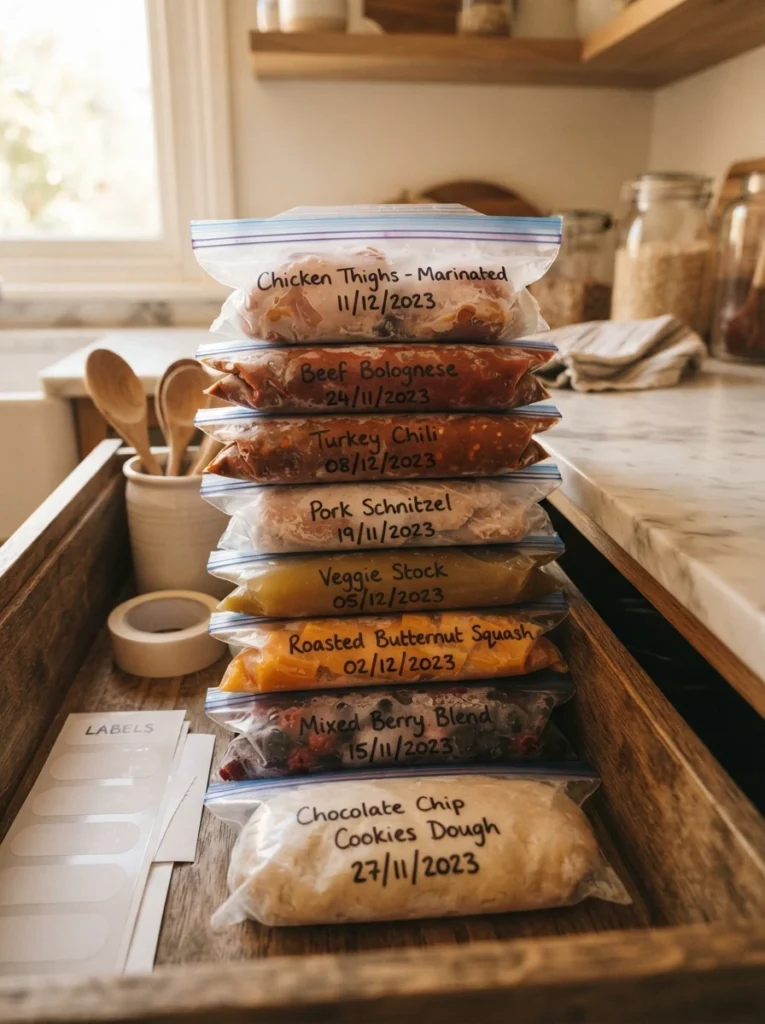
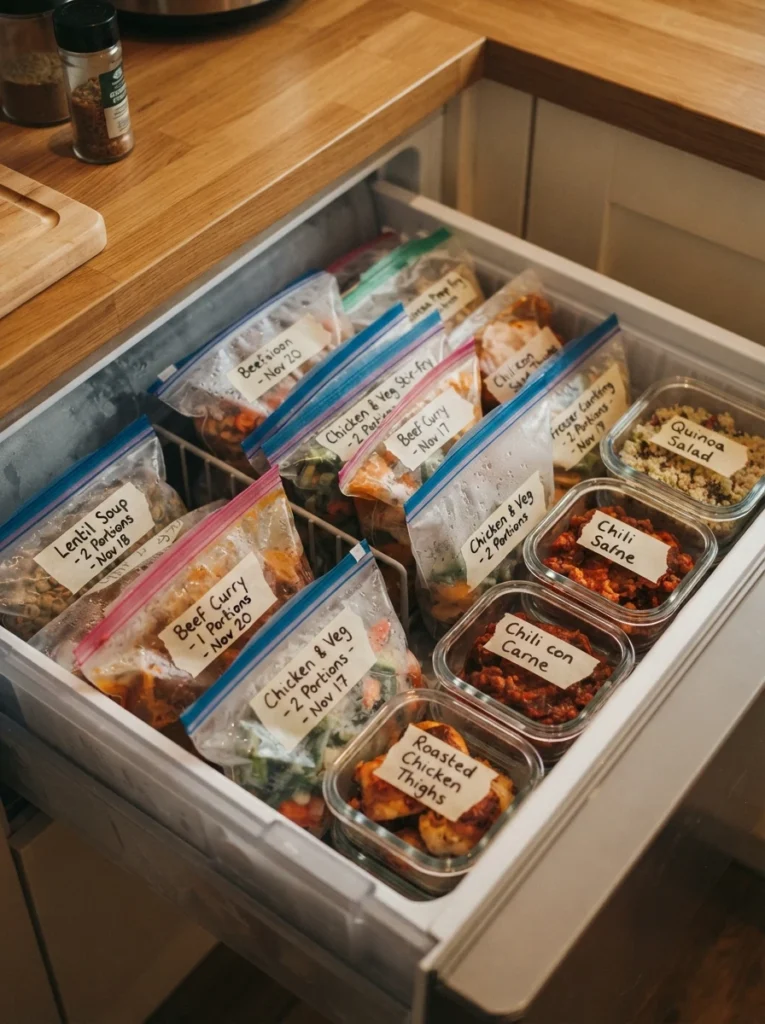
4. Store Meal Prep Bags and Containers Vertically
Lining freezer bags and containers up vertically, the way you’d shelve books, makes everything visible at once instead of forcing you to unstack a pile to see what’s underneath. This works particularly well in upright freezers, and even in a freezer drawer, a few dividers can recreate the same effect.
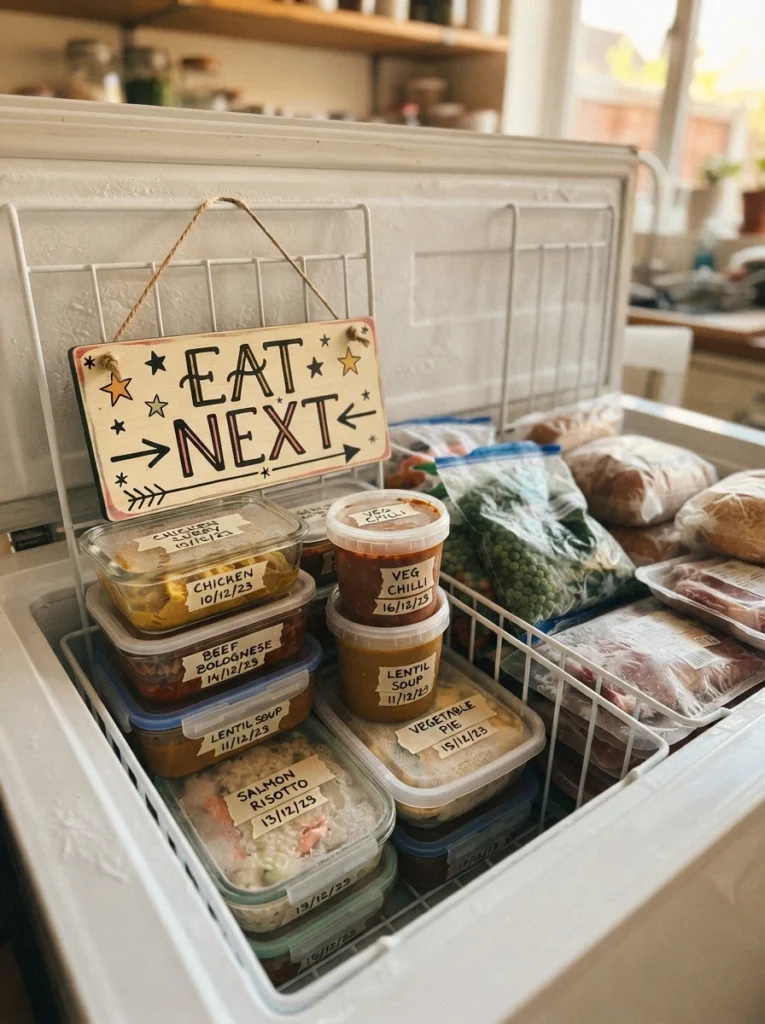
5. Create a Small “Eat Next” Section
Set aside one small, easy-to-see spot specifically for meals or components that need to be used soon. Instead of scanning the entire freezer every time you’re deciding on dinner, you start with the options already flagged as priorities, which makes rotation automatic instead of something you have to remember on your own.
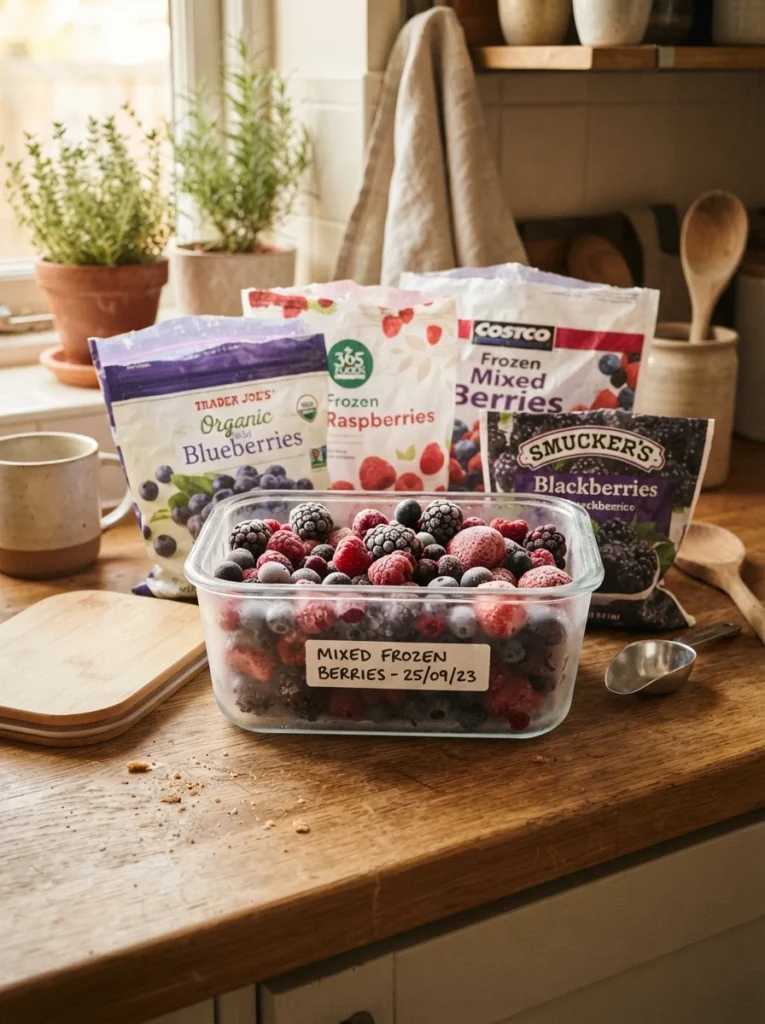
6. Batch Similar Items Into One Container Instead of Scattering Them
If you’ve got four separate bags of frozen berries scattered across different shelves, consolidate them into one larger container or bin and label it once. This single habit turns a freezer full of small, easy-to-lose bags into a much smaller number of easy-to-find groups.
7. Choose Square or Rectangular Containers Over Round Ones
Round containers waste space every time they’re set next to each other, since curved edges leave gaps a rectangular container wouldn’t. Square and rectangular freezer-safe containers nest efficiently and stack cleanly, which adds up to real extra capacity over the course of a full meal prep cycle.
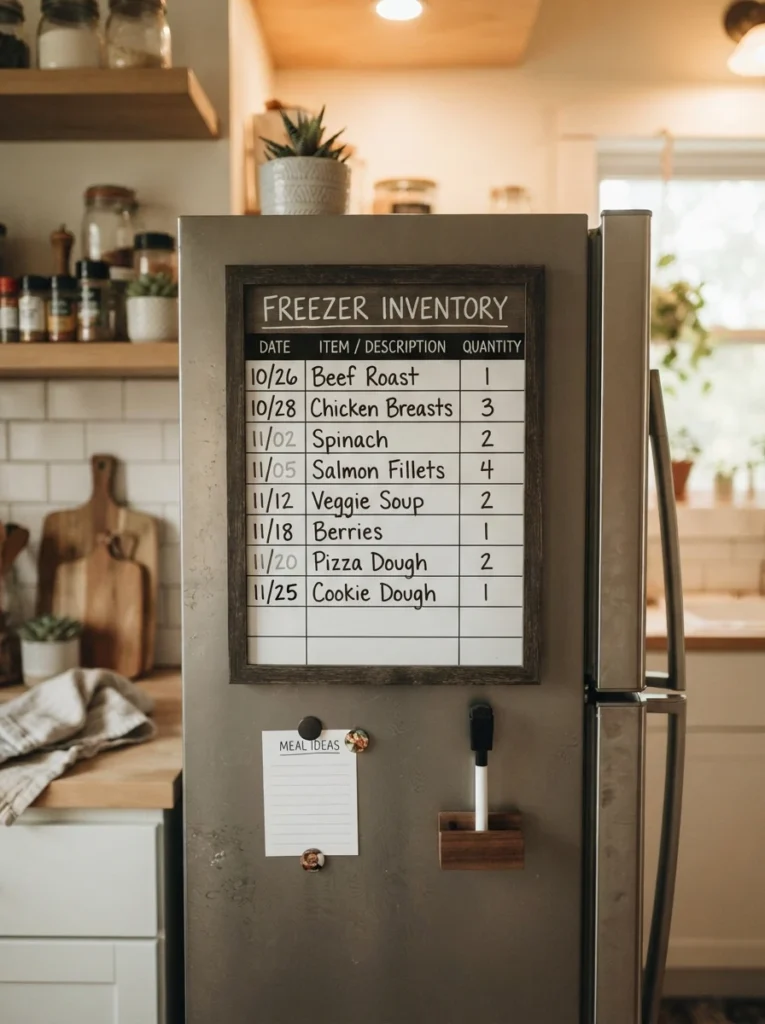
8. Keep a Running Inventory List on the Freezer Door
A dry-erase board or simple written list on the freezer door, updated each time something goes in or gets used, prevents both overbuying and the slow buildup of forgotten items. It takes a few minutes each week, but it saves far more time than repeatedly digging through a freezer trying to remember what’s actually in there.
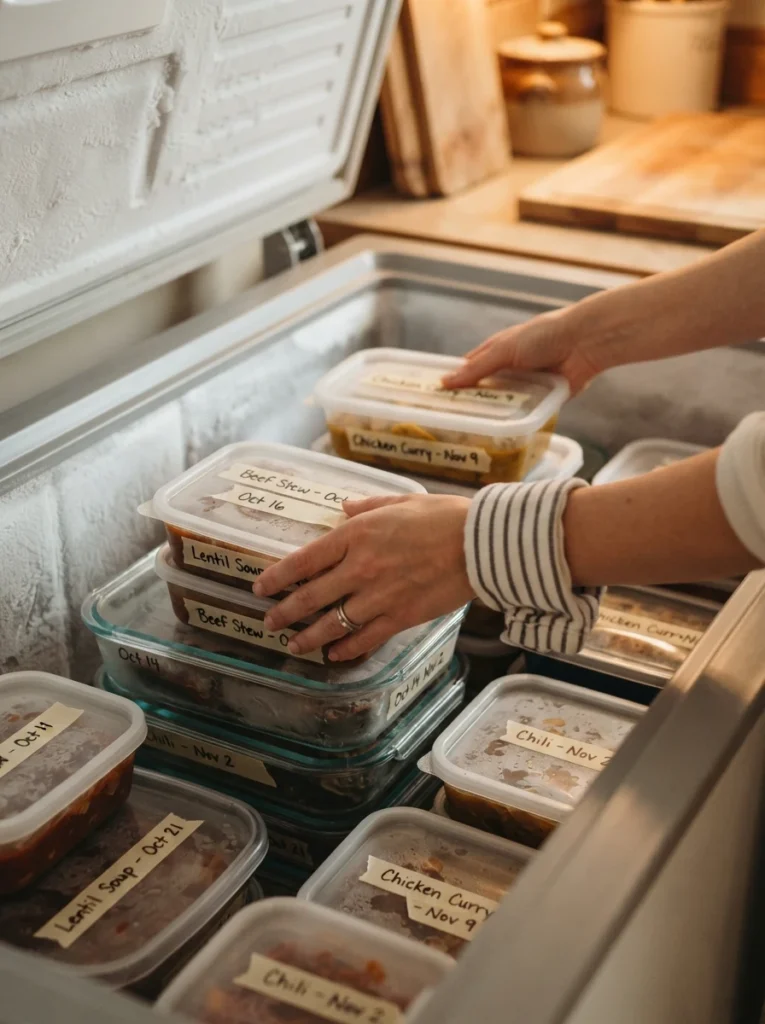
9. Restack After Every Prep Session Instead of Just Adding to the Pile
It’s faster in the moment to drop new meal prep into any open spot, but that habit is exactly what buries older meals and lets them get forgotten. Taking a few extra minutes to restack, moving older items forward and placing newer ones behind, keeps the whole system working the way it’s supposed to.
None of this requires a bigger freezer or expensive organizing products. It requires a handful of defined zones, labels that actually get used, and the habit of restacking instead of piling. Once that’s in place, meal prep starts delivering on the time it’s supposed to save, instead of creating a second chore of searching through frozen mystery bags every week.