15 Small Apartment Kitchen Organization Ideas That Don’t Need Renovation
TL;DR: A tiny rental kitchen isn’t a permanent storage problem, it’s a temporary-solution problem. Removable adhesive hooks, rolling carts, and vertical wall storage give you nearly the same function as a full renovation, and every single one of them comes off clean when you move out. The security deposit stays intact, and so does your sanity.
Renting a small kitchen comes with a specific kind of frustration. You can see exactly how the space could work better, a shelf here, a rack there, but a lease usually stands between you and a drill. The good news is that most of what makes a kitchen function well was never actually about permanent construction. It’s about using vertical space, choosing furniture that earns its footprint, and picking storage that goes wherever you need it that day.
Here are 15 small apartment kitchen organization ideas that work entirely within rental limits, no landlord approval and no risk to your deposit required.
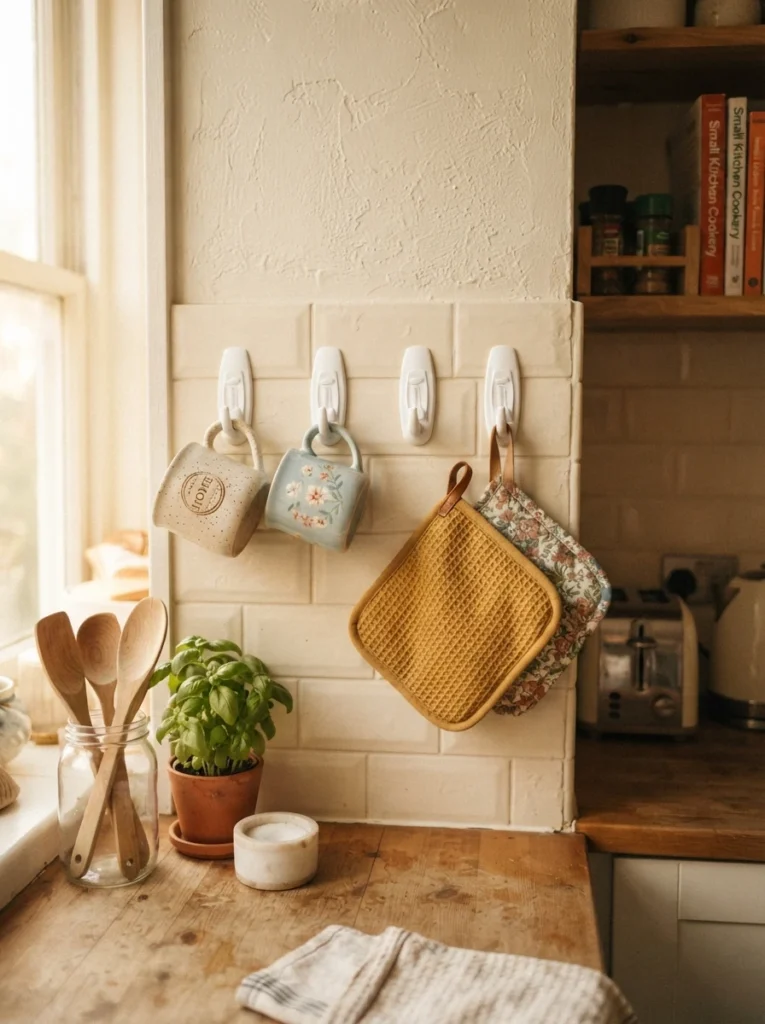
1. Use Removable Adhesive Hooks Instead of Drilled Ones
Command-style adhesive hooks hold real weight, enough for pot holders, mugs, or a small utensil crock, and they come off cleanly without leaving marks or peeling paint. This is usually the first swap renters make, since it solves the “nowhere to hang anything” problem without a single tool.
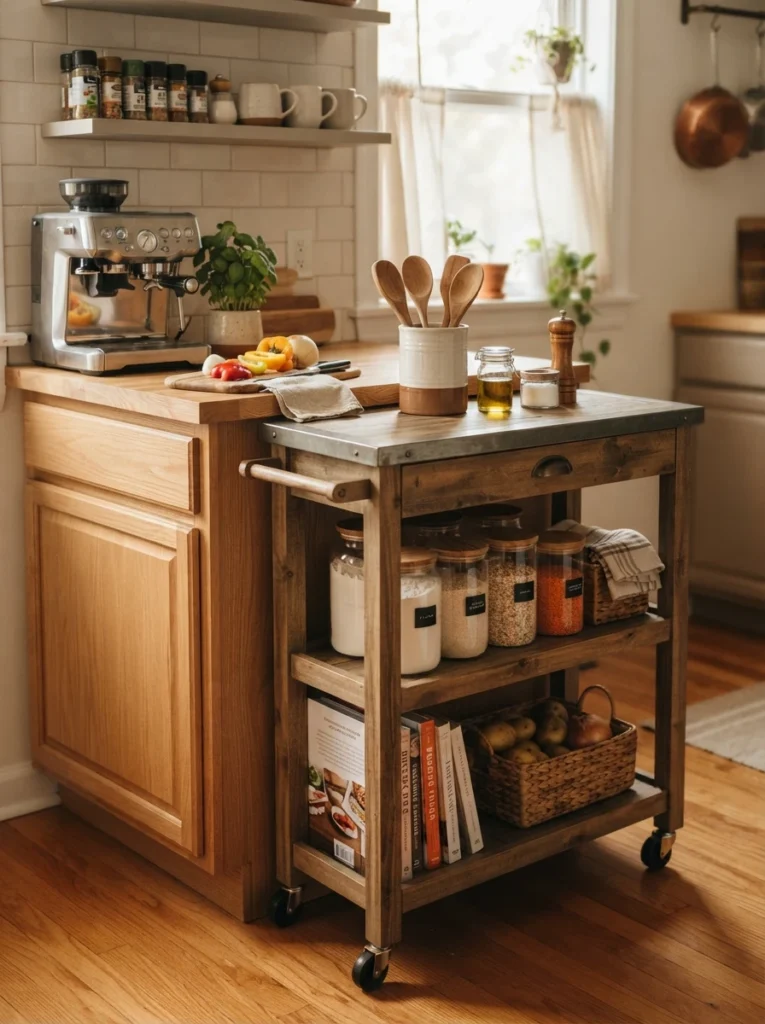
2. Add a Rolling Cart That Moves Wherever You Need It
A rolling cart with a few shelves works as a pantry extension most days and slides into place as extra prep space on cooking days. Its mobility is what makes it worth the investment in a tiny kitchen, since you’re not locked into one fixed use for the square footage it takes up.
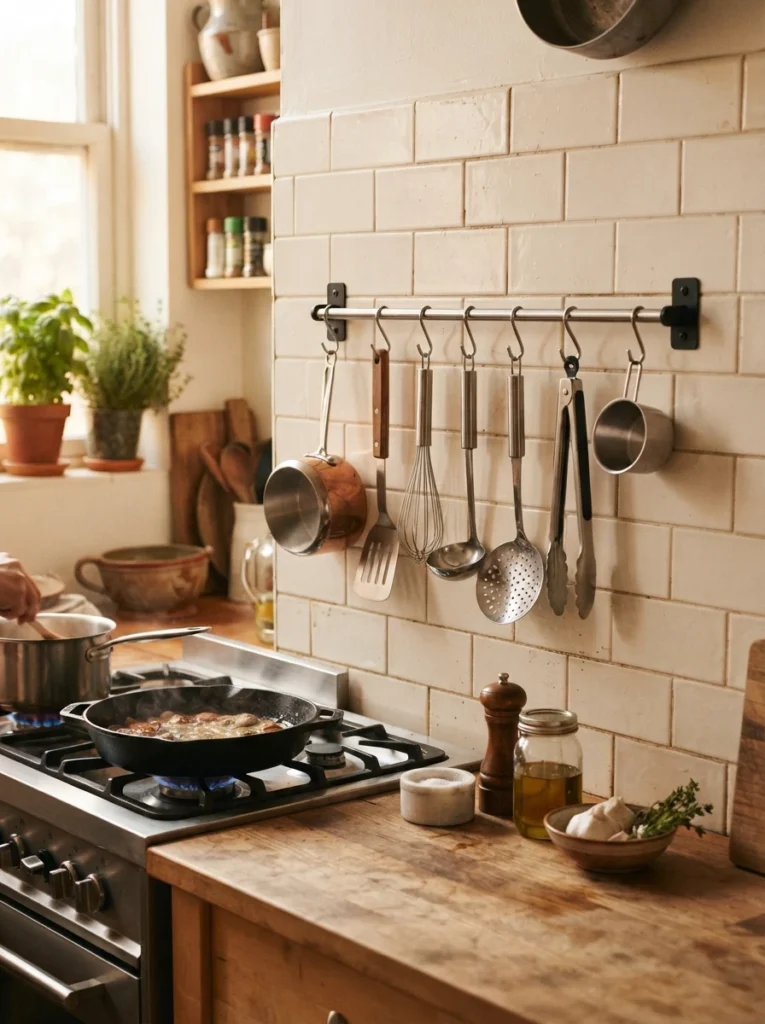
3. Mount an Adhesive Rail System for Cooking Tools
Adhesive-mount rail systems give you the same look and function as a built-in rail from an expensive renovation, minus the installation. A horizontal rail with S-hooks holds utensils, small pots, or even a paper towel holder within arm’s reach of the stove.
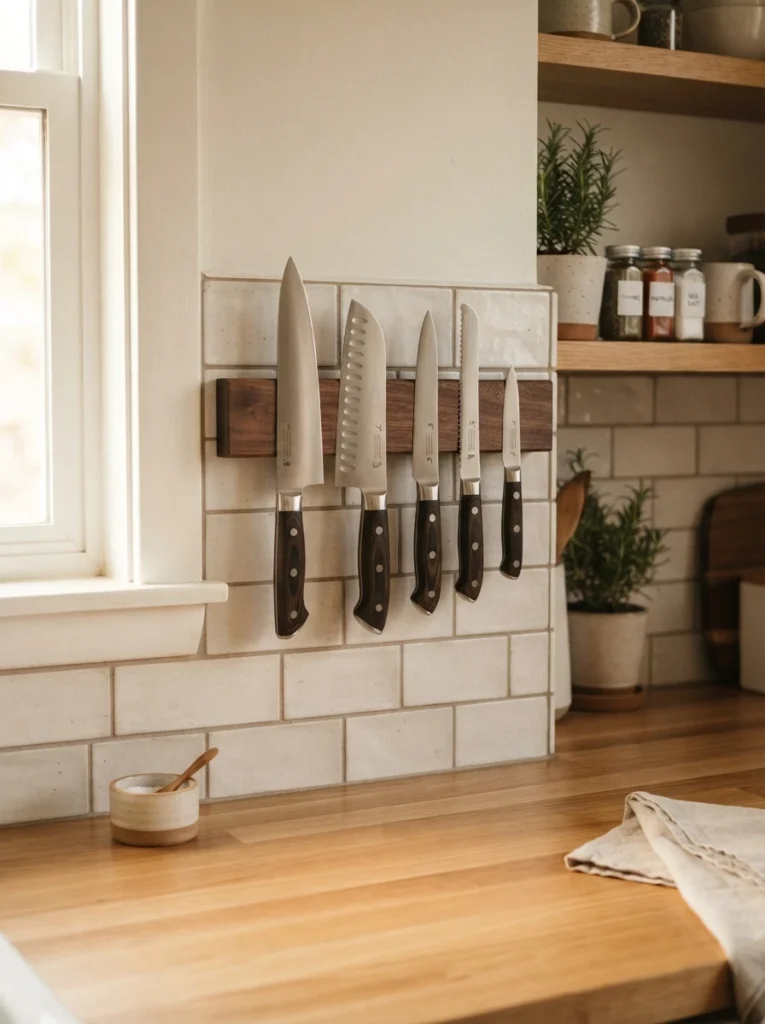
4. Install Magnetic Strips for Knives and Metal Tools
A magnetic strip mounted with removable adhesive backing holds knives vertically along the wall, which clears both drawer space and counter space at once. Beyond the storage win, it also keeps blades fully visible and easier to grab than digging through a drawer.
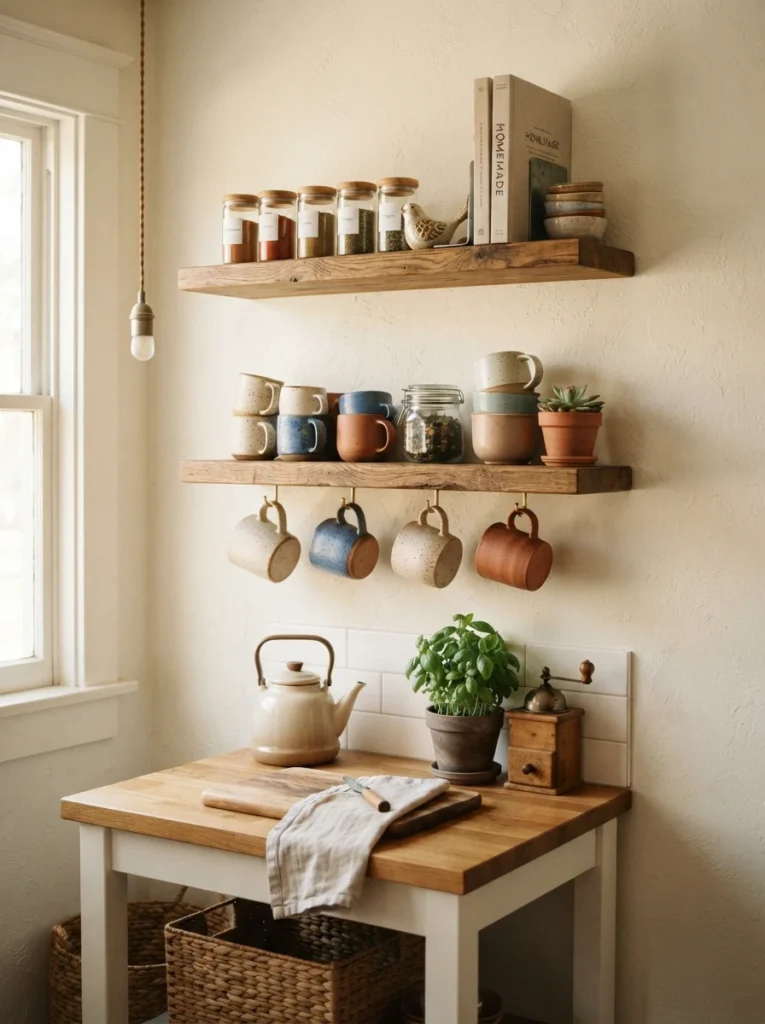
5. Add Floating Shelves for Frequently Used Items
Floating shelves installed above the counter give you open storage for the items you reach for daily, mugs, spices, a favorite cookbook, without eating into cabinet space. Many renter-friendly versions use adhesive or tension mounts that avoid drilling into the wall entirely.
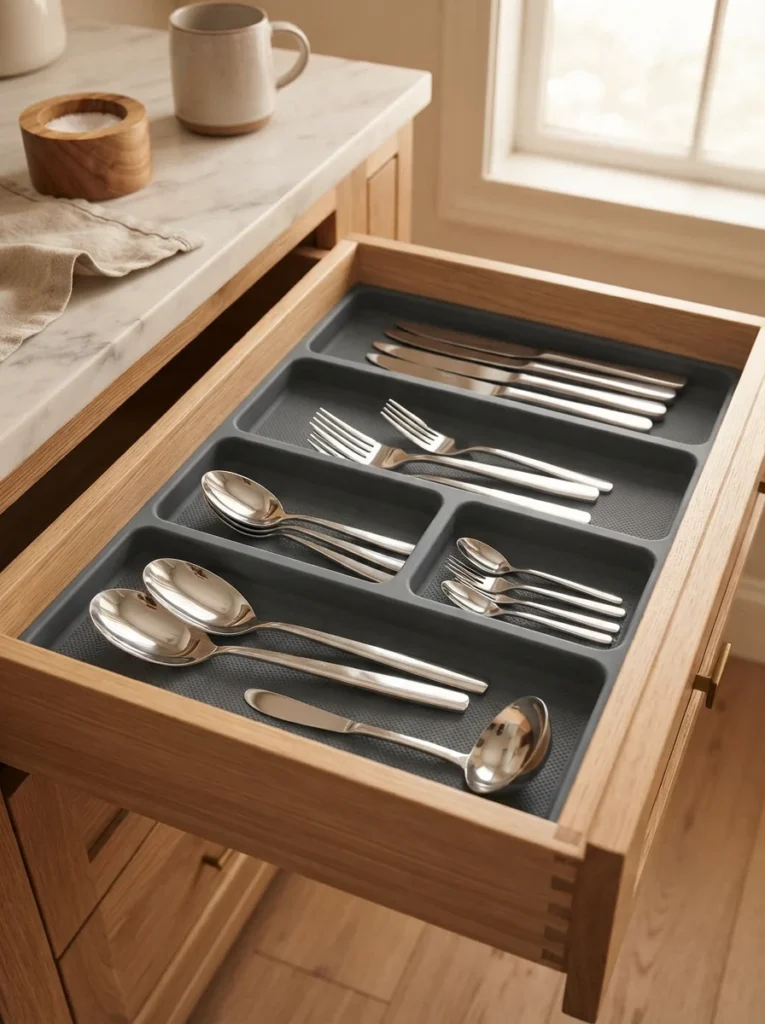
6. Use Non-Slip Drawer Mats Instead of Built-In Dividers
A non-slip drawer mat with molded utensil sections gives instant organization to flatware and everyday tools without needing separate purchased dividers. It also protects the drawer’s actual surface from scratches, which matters more in a rental where you want the unit to look the same as when you moved in.
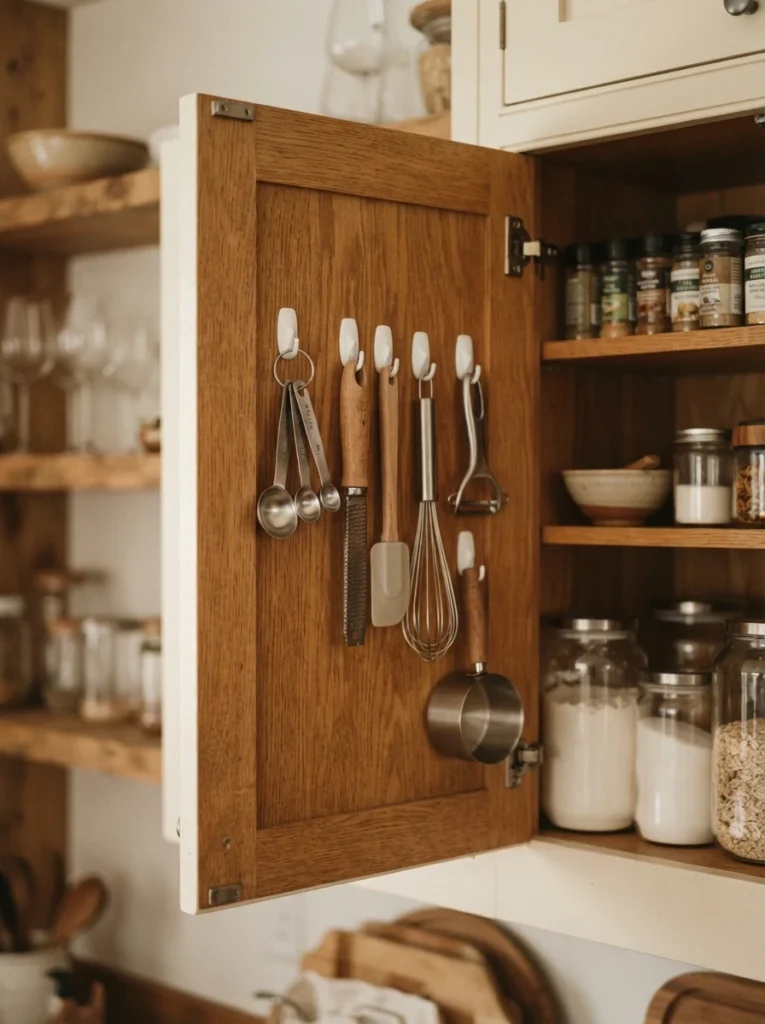
7. Add Temporary Hooks Inside Cabinet Doors
The inside of a cabinet door is wasted space in most small kitchens, and small removable hooks mounted there can hold measuring spoons, small gadgets, or lids. Since nothing here is visible from outside the cabinet, it’s one of the lowest-risk spots to experiment with renter-friendly storage.
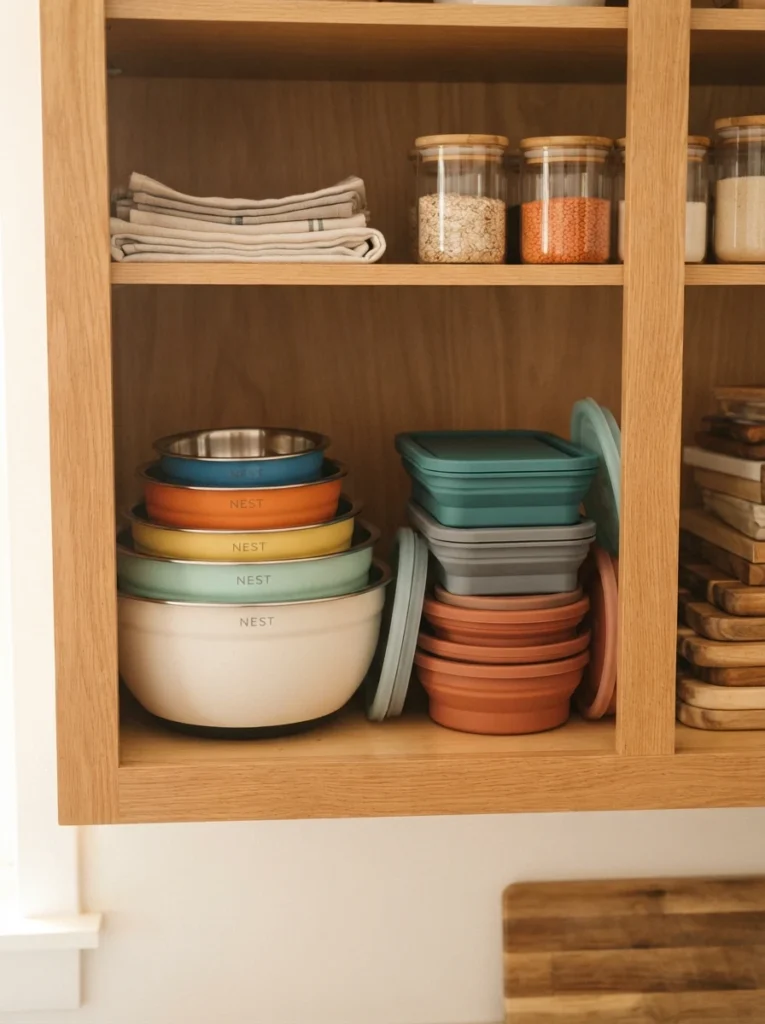
8. Choose Nesting Bowls and Collapsible Containers
Bulky mixing bowls and rigid storage containers take up far more cabinet space than their contents actually need. Nesting bowls and collapsible silicone containers compress down to a fraction of the size when not in use, which matters most in a kitchen where every cabinet inch is already spoken for.
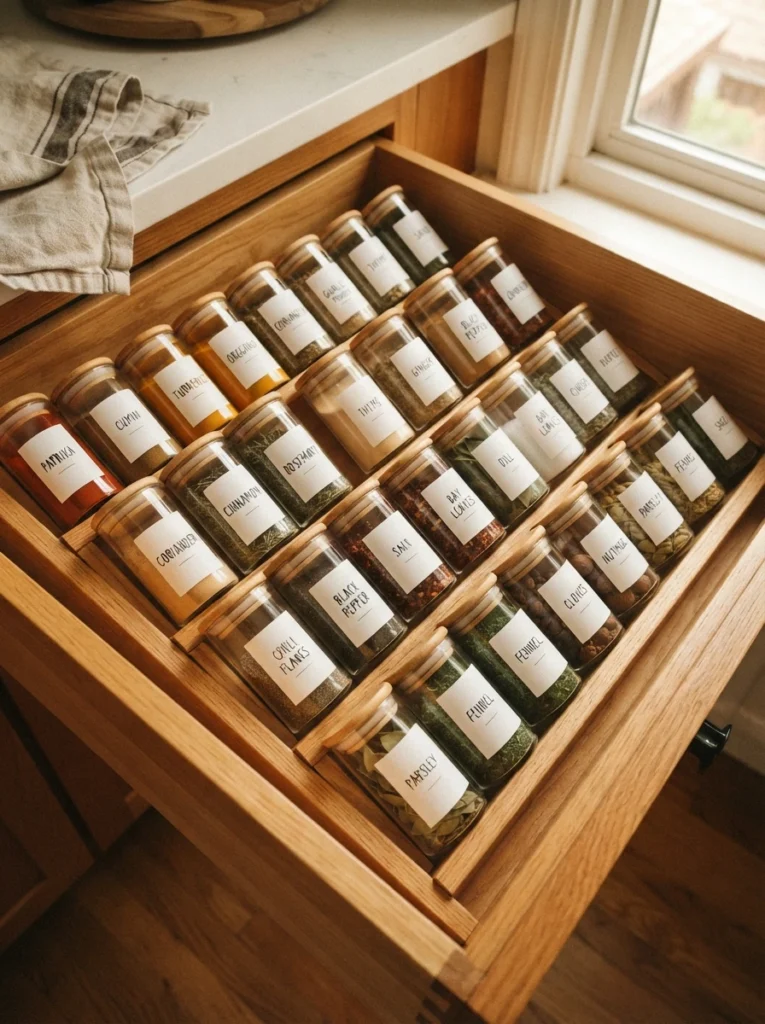
9. Use an Angled Spice Insert Instead of a Spice Rack
A tiered, angled spice insert sits directly inside a drawer and displays jars label-up, so you’re not stacking spice bottles on top of each other or dedicating counter space to a standalone rack. It’s a small swap, but in a kitchen with almost no counter to spare, it adds up.
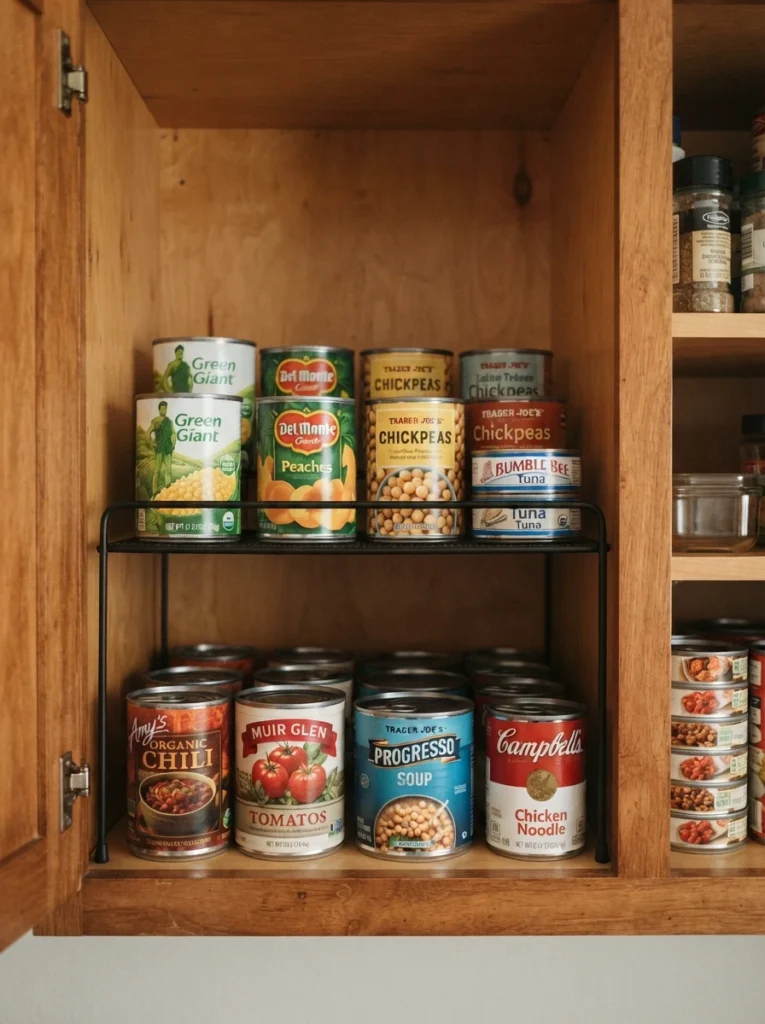
10. Add Shelf Risers to Double a Cabinet’s Storage
A simple wire or acrylic shelf riser adds a second usable tier above short items like cans or mugs, taking advantage of the dead air space most cabinets waste. This is one of the cheapest ways to add real storage capacity without adding a single new piece of furniture.
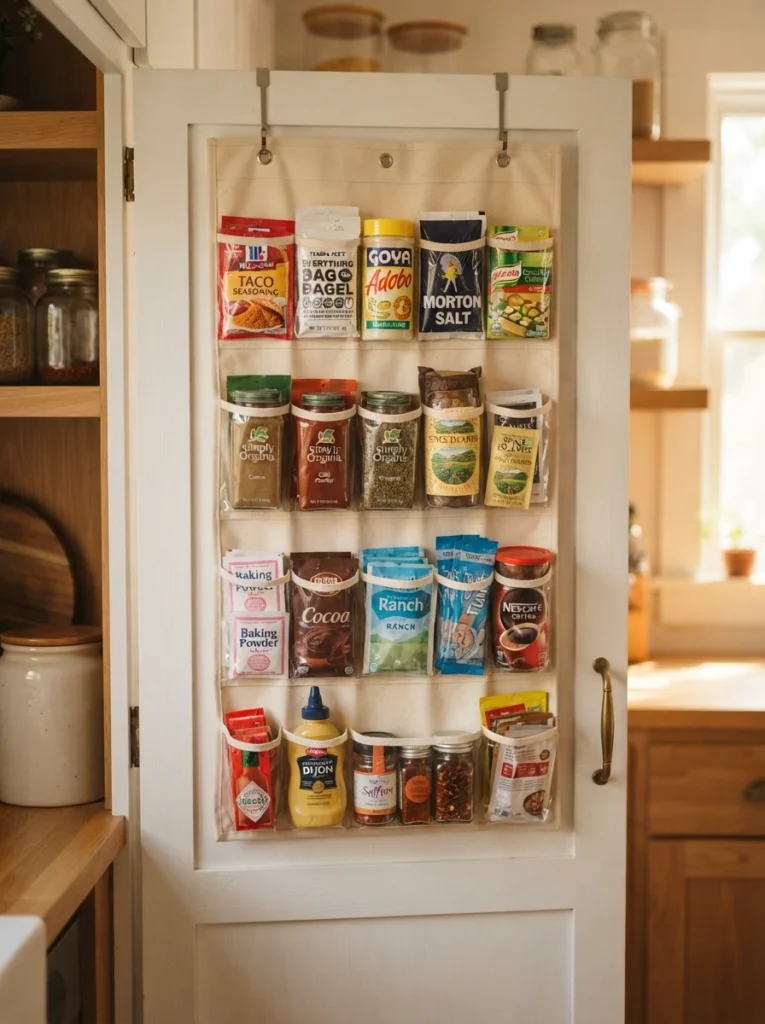
11. Use Over-the-Door Organizers for Pantry Overflow
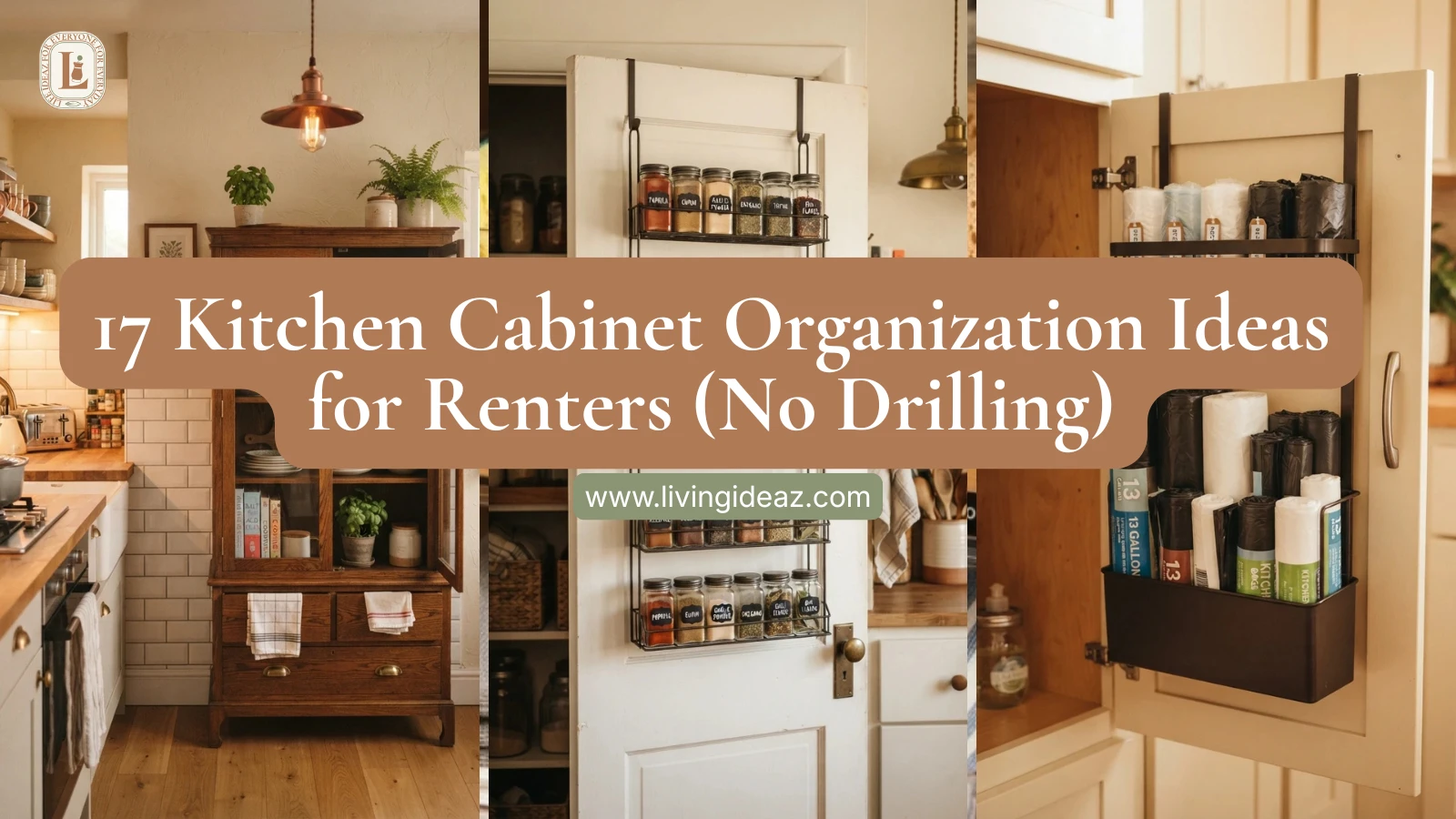
An over-the-door organizer hung on a pantry or cabinet door adds several rows of pocket storage for spice packets, snack bags, or small jars, all without touching the walls or shelves. It’s especially useful for renters dealing with a kitchen that has little to no dedicated pantry space to begin with.
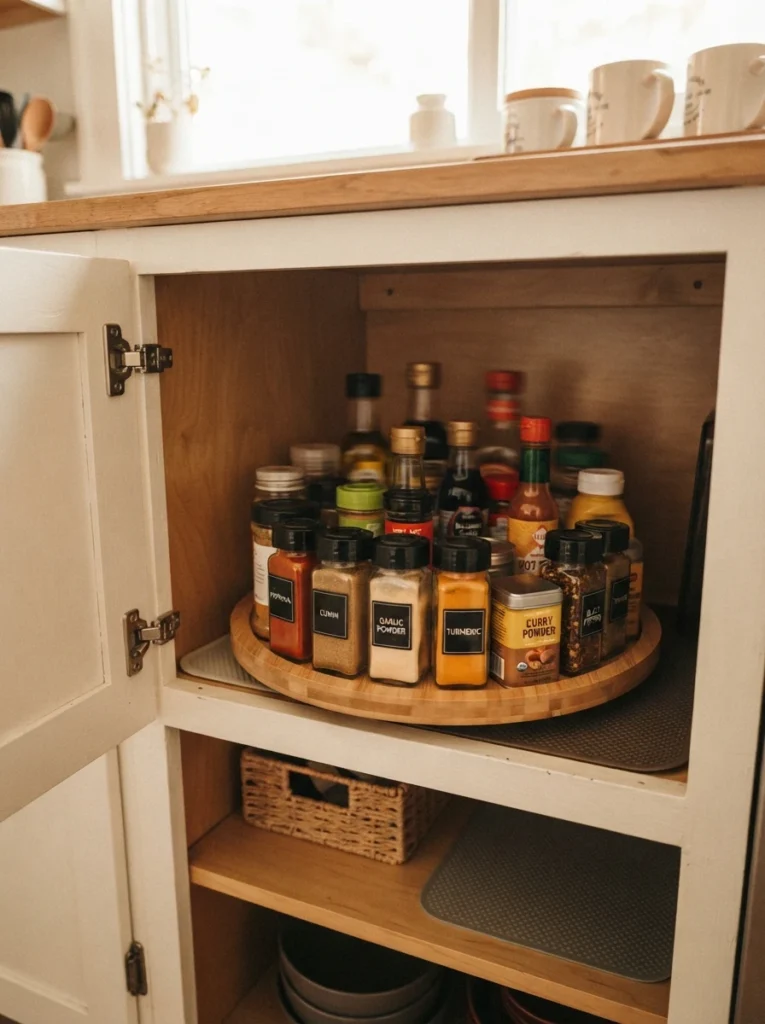
12. Choose a Lazy Susan for Awkward Cabinet Corners
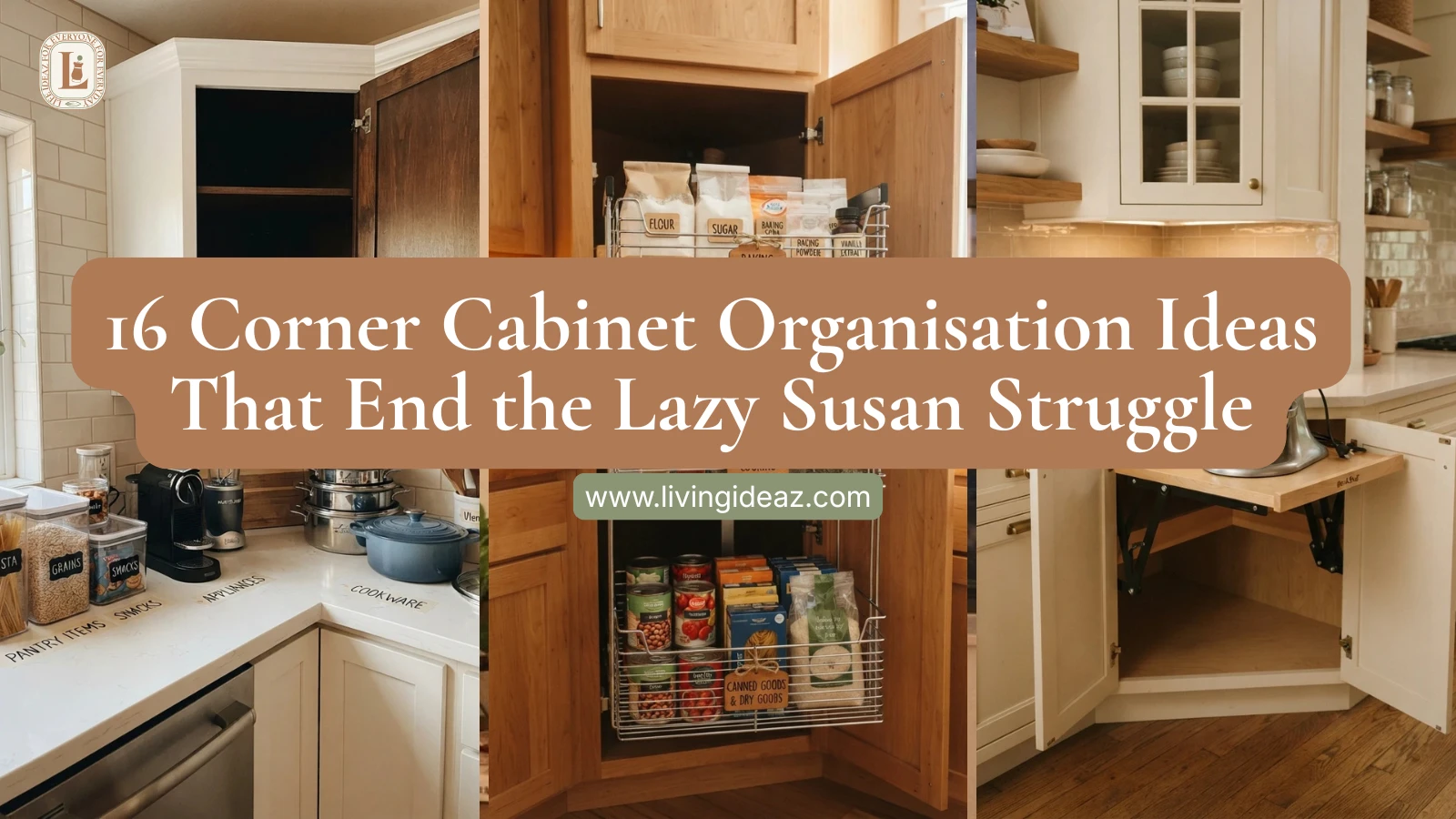
Even a small freestanding lazy susan, no installation required, can turn an awkward cabinet corner into usable, visible storage. Renters can simply set one inside an existing cabinet without any modification to the unit itself.
13. Use Multi-Purpose Furniture Instead of Single-Use Pieces
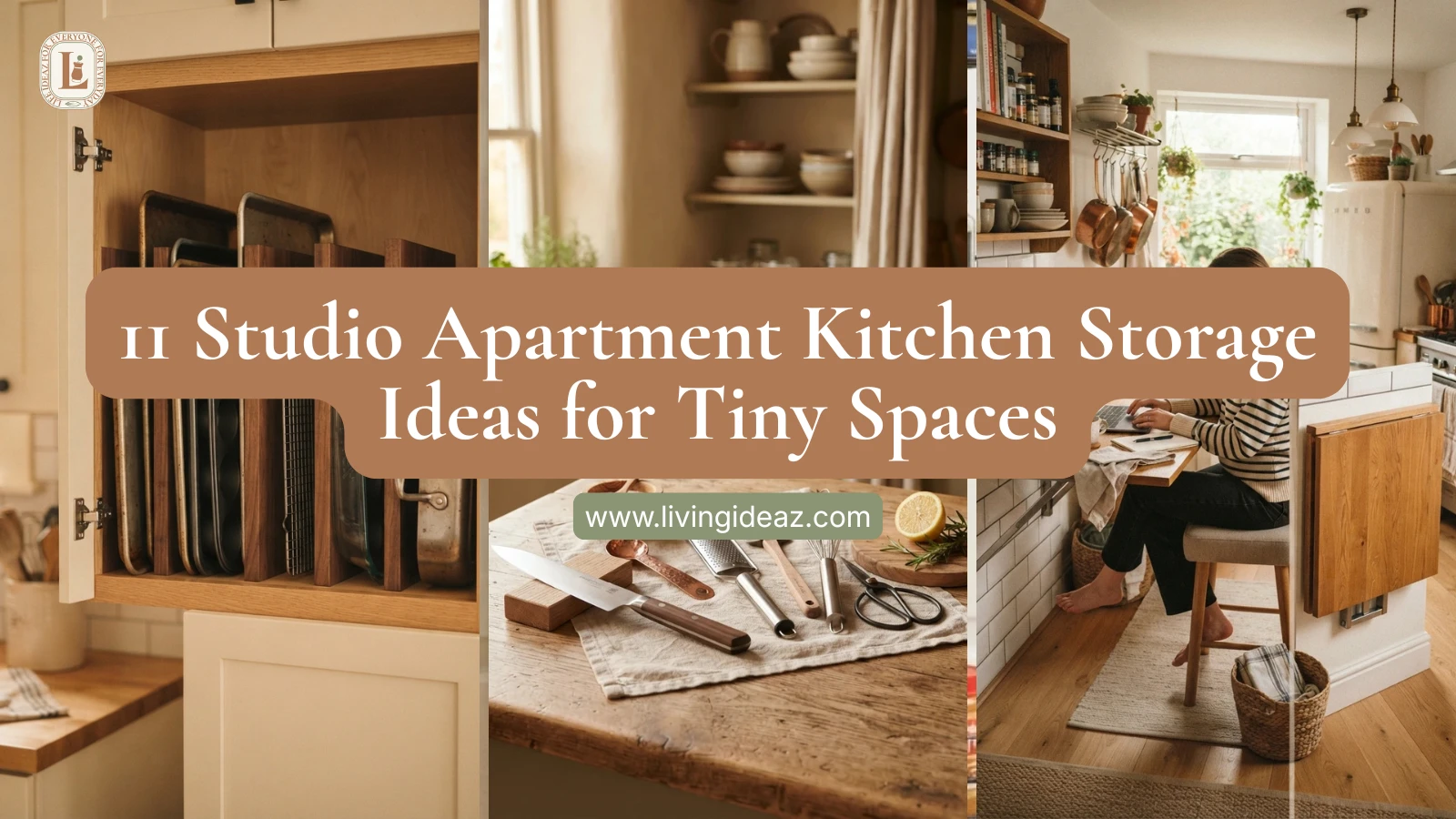
A wall-mounted fold-down table or a rolling island with a chopping surface and cabinet below does double duty as both prep space and storage. In a kitchen where every square foot needs to justify itself, furniture that only does one job is a harder sell than a piece that does two.
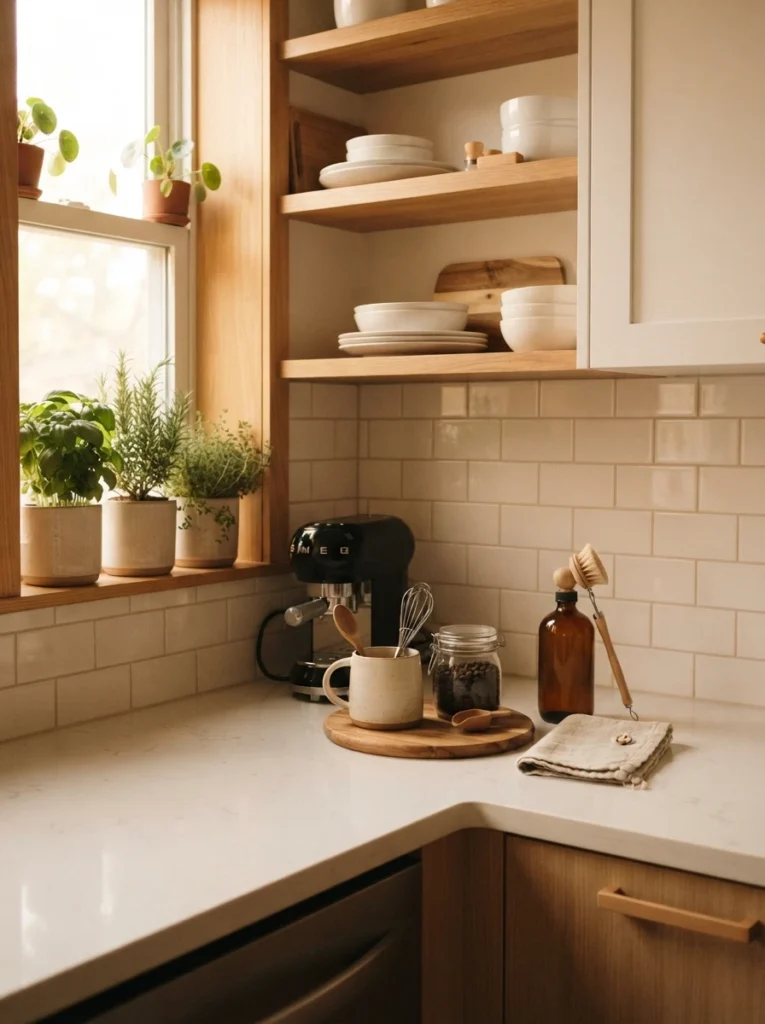
14. Add Peel-and-Stick Backsplash Tile for a Renovated Look
Peel-and-stick backsplash tiles add real texture and color behind the stove or sink without grout, tools, or permanent changes, and they’re heat and moisture resistant enough to handle both spots. When it’s time to move, they peel off clean, leaving the original wall exactly as it was.
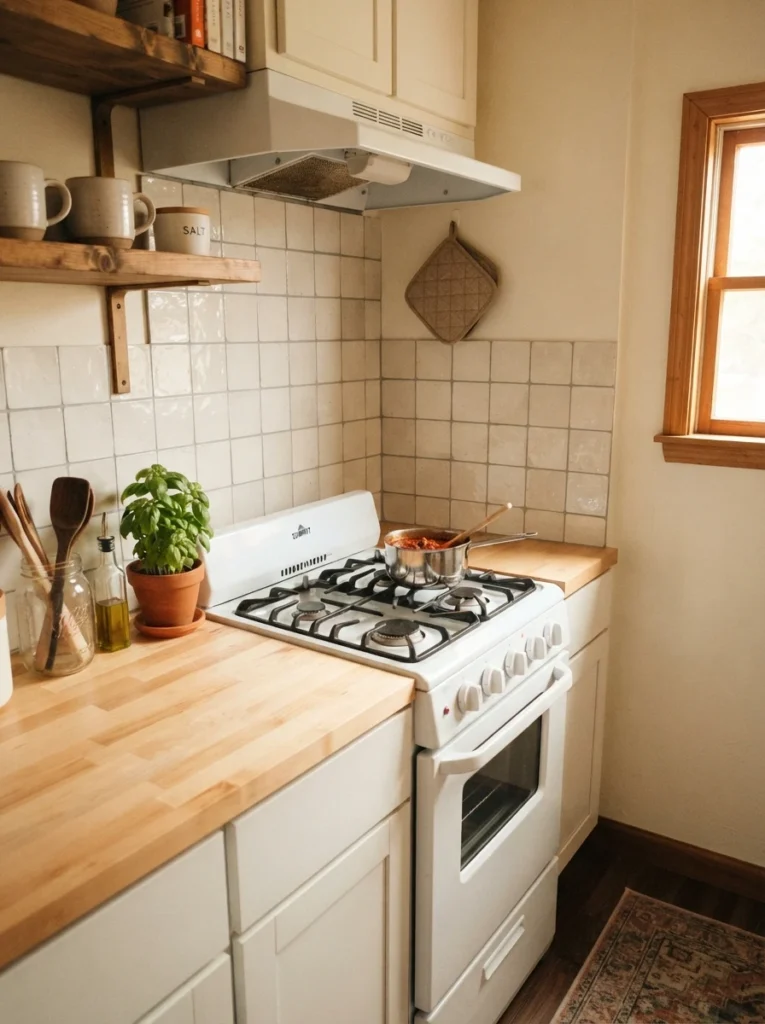
15. Keep Only Daily-Use Items on the Counter
The single rule that does the most work in a small rental kitchen is simple: if you don’t use it every day, it doesn’t live on the counter. Everything else gets reassigned to a hook, a shelf, a cart, or a drawer, which keeps the limited counter space usable for the actual cooking you came there to do.
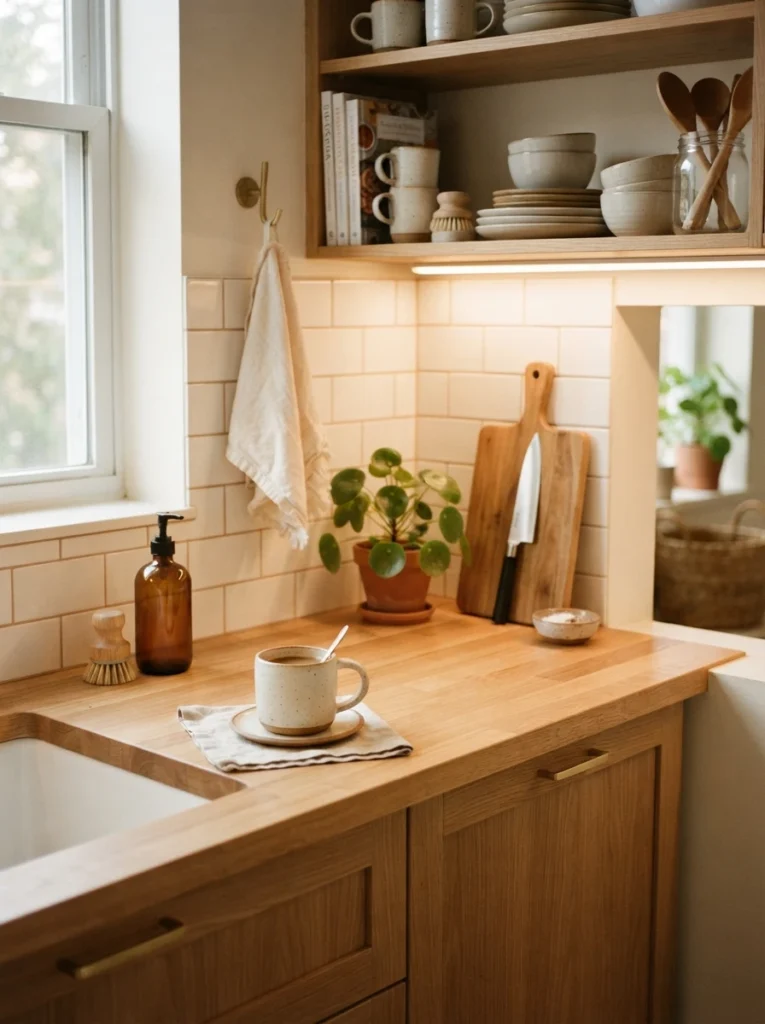
None of these fixes require a landlord’s permission or a security deposit gamble. What they add up to is a kitchen that functions like a much bigger one, built entirely from pieces that travel with you to the next place. Start with whichever problem bothers you most daily, whether that’s a bare wall or an overstuffed drawer, and build the rest of the system from there.