20 Bedroom Lighting Ideas That Make Small Rooms Feel Warmer
TL;DR
Small bedrooms often feel emotionally cold not because of bad furniture or poor decor, but because the lighting works against the room instead of supporting it. Harsh ceiling lights, flat white bulbs, dark corners, and uneven shadows quietly make spaces feel smaller, more stressful, and less comforting. These bedroom lighting ideas focus on creating warmth, softness, visual depth, and emotional calm inside tiny bedrooms and apartments without requiring expensive renovations.
1. Stop Relying Only on the Ceiling Light
One bright overhead light is one of the fastest ways to make a small bedroom feel flat and emotionally exposed. Ceiling lights spread brightness evenly across every surface, which removes depth and creates a harsher atmosphere at night.
Layered lighting feels calmer because it creates softer pockets of illumination instead of flooding the entire room at once. A bedside lamp, warm wall sconce, or soft floor lamp immediately changes the emotional tone of a bedroom.
This is why hotels rarely depend entirely on overhead lighting in sleeping spaces.
2. Use Warm White Bulbs Instead of Cool White
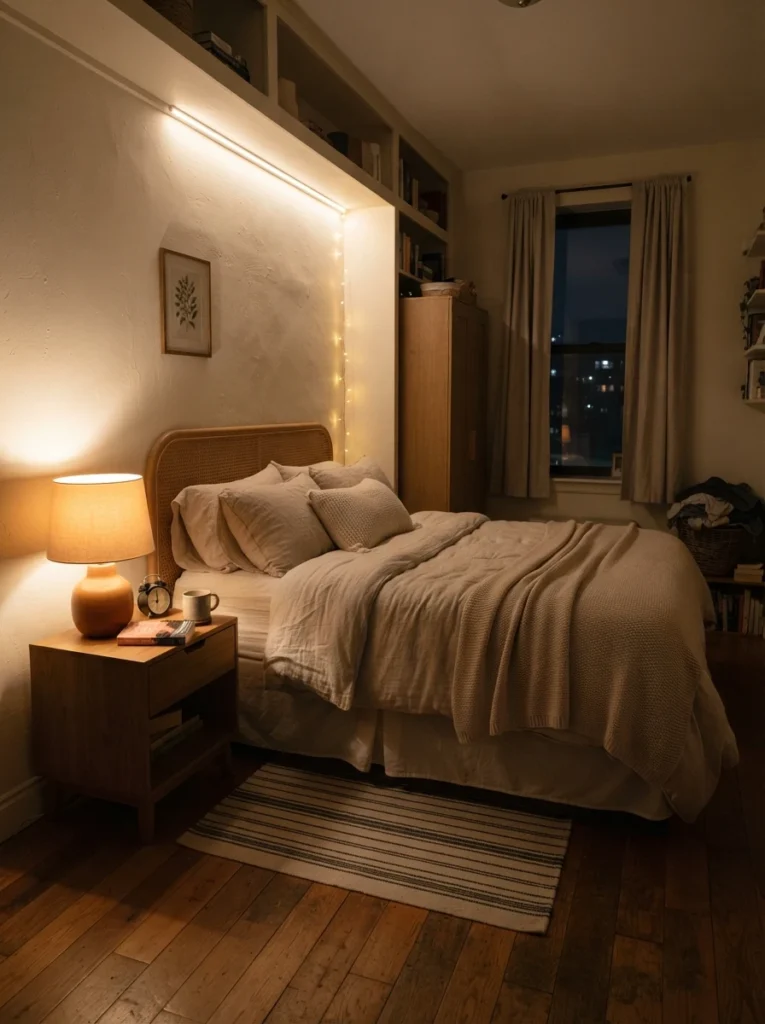
Lighting temperature changes how a room emotionally feels more than many people realize. Cool white bulbs often make bedrooms feel sterile because they resemble office lighting or retail stores more than restful environments.
Warm white bulbs create softer shadows and warmer skin tones, which psychologically makes spaces feel safer and more comforting. Bedrooms usually feel best around 2700K lighting because it mimics evening sunset warmth naturally.
Even inexpensive lamps feel dramatically better with warmer bulbs.
3. Add a Lamp Near the Floor
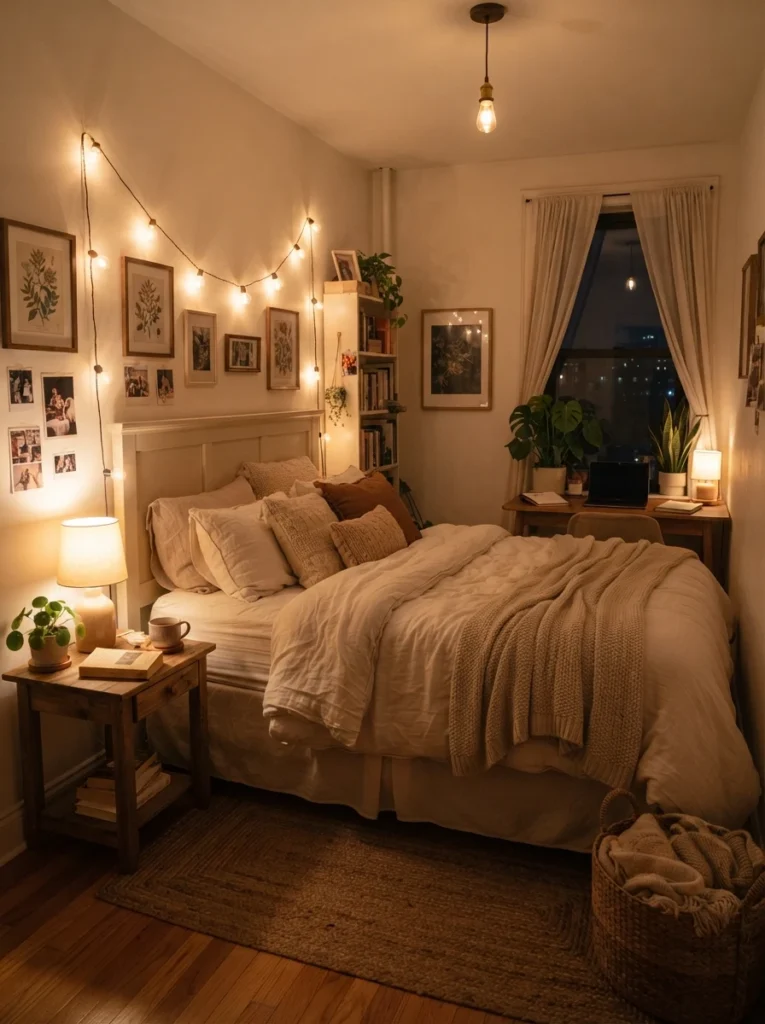
Most people place all lighting at eye level or above, which leaves lower parts of the room feeling visually heavy and dark. A low floor lamp or soft ambient light near the ground adds depth that makes tiny bedrooms feel more layered.
This subtle glow softens harsh shadows while visually expanding the room horizontally. Small apartments often feel more emotionally balanced when light exists at multiple heights instead of one harsh central source.
Warm pools of light create intimacy naturally.
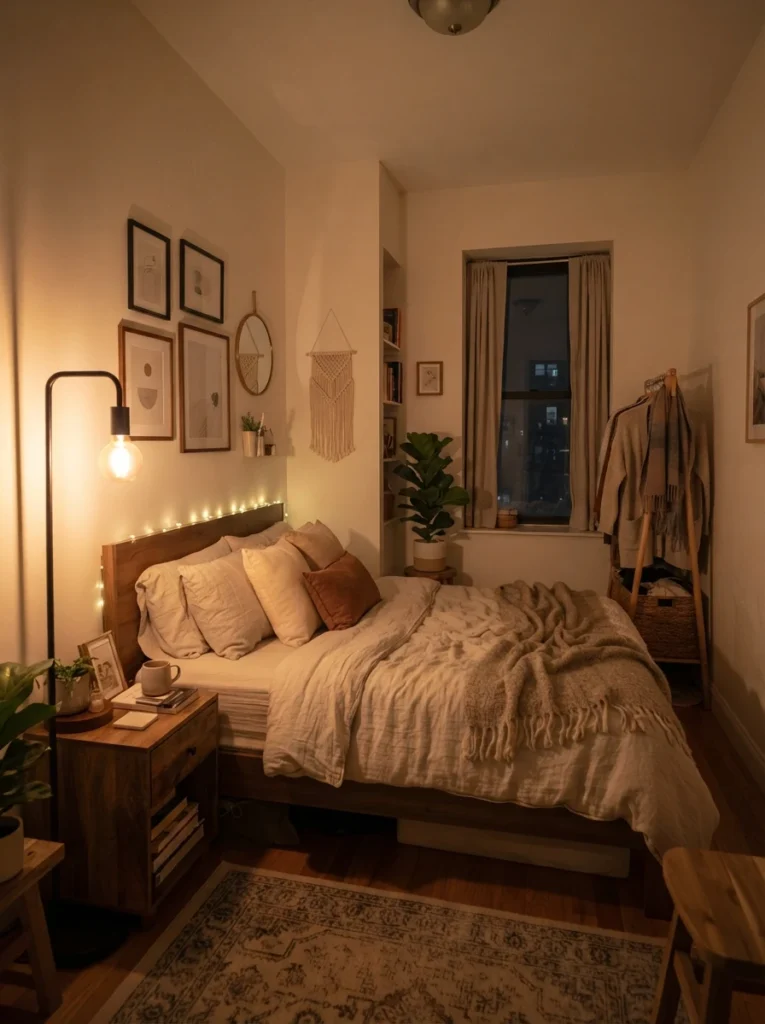
4. Use Wall Sconces to Free Up Surface Space
Tiny bedrooms become cluttered quickly when bulky table lamps occupy already-limited nightstand space. Wall sconces solve two problems at once by adding warmth while reducing visual crowding beside the bed.
This works especially well in renter-friendly setups using plug-in sconces or peel-and-stick lighting options. Bedrooms instantly feel more intentional and spacious when surfaces remain cleaner and less crowded.
Lighting should support calm, not create more visual obstacles.
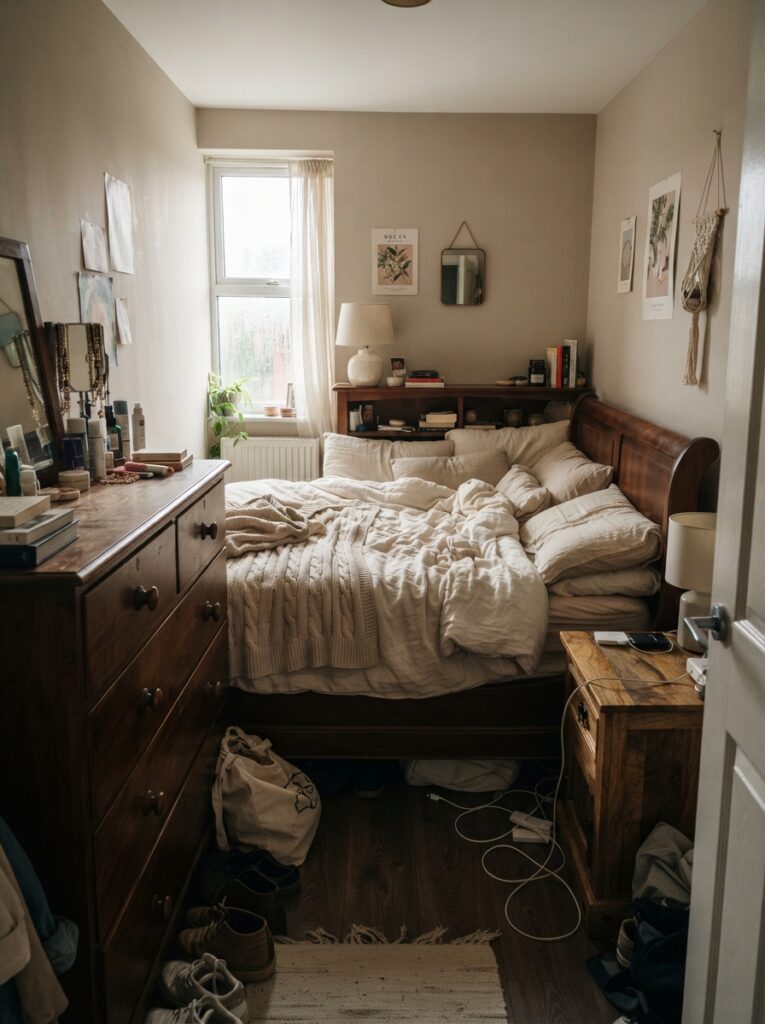
5. Place Lamps in Dark Corners Instead of Bright Areas
One common lighting mistake is placing lamps where natural light already exists while ignoring darker corners completely. Tiny bedrooms feel smaller when corners disappear into shadow because the room visually stops earlier than it physically does.
Soft lighting in darker areas expands perceived depth and creates a more balanced atmosphere overall. Even one small lamp near a neglected corner can dramatically soften the room emotionally.
Balanced lighting makes layouts feel calmer and more intentional.
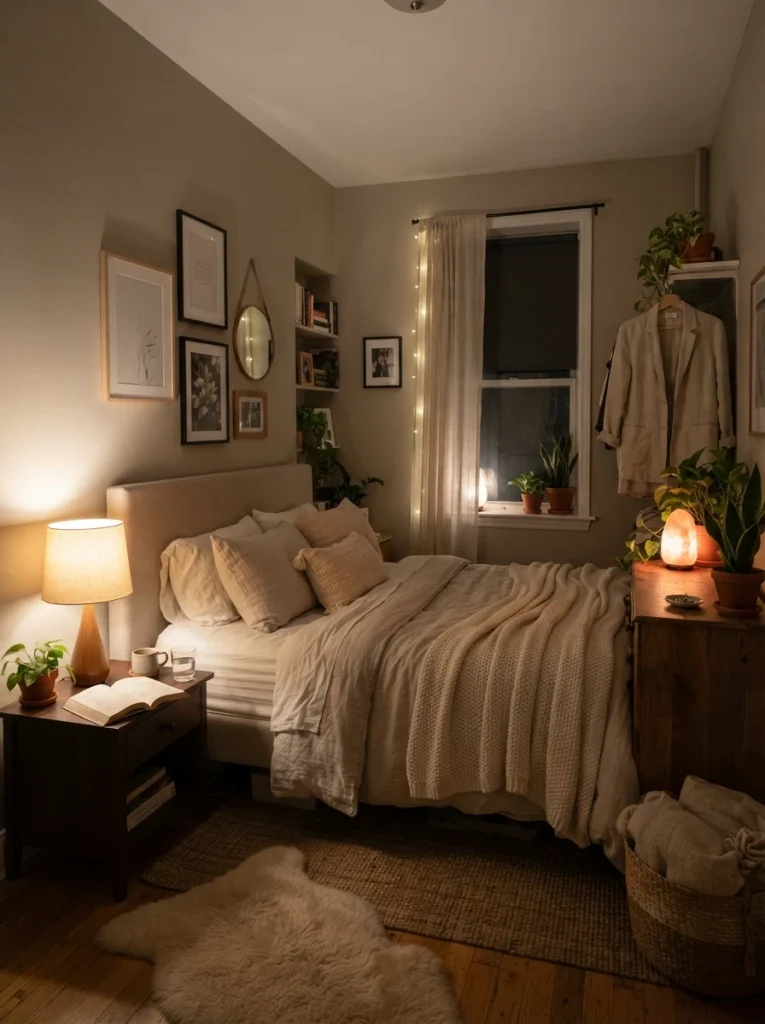
6. Use Linen or Fabric Lamp Shades
Bare bulbs and glossy shades often create harsh directional light that makes tiny bedrooms feel colder emotionally. Fabric lamp shades soften light naturally because they diffuse brightness instead of concentrating it aggressively.
Linen shades work especially well in cozy bedrooms because they create warmer shadows and gentler texture throughout the room. This subtle softness changes the emotional feel of the entire space at night.
Tiny rooms respond strongly to lighting texture.
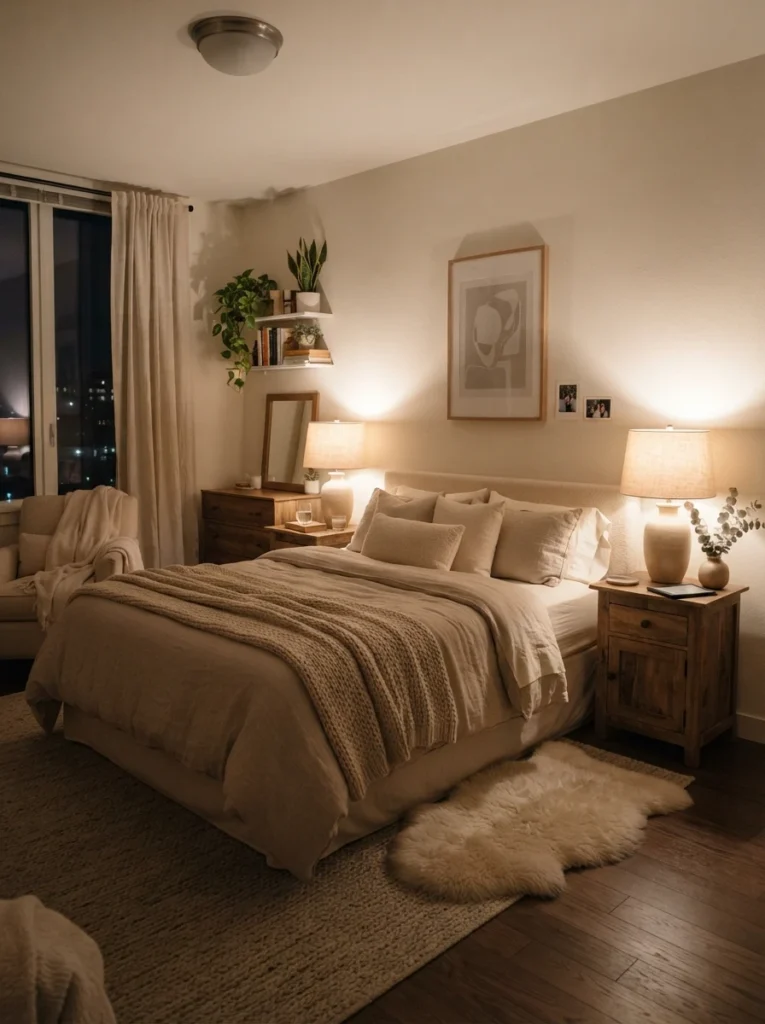
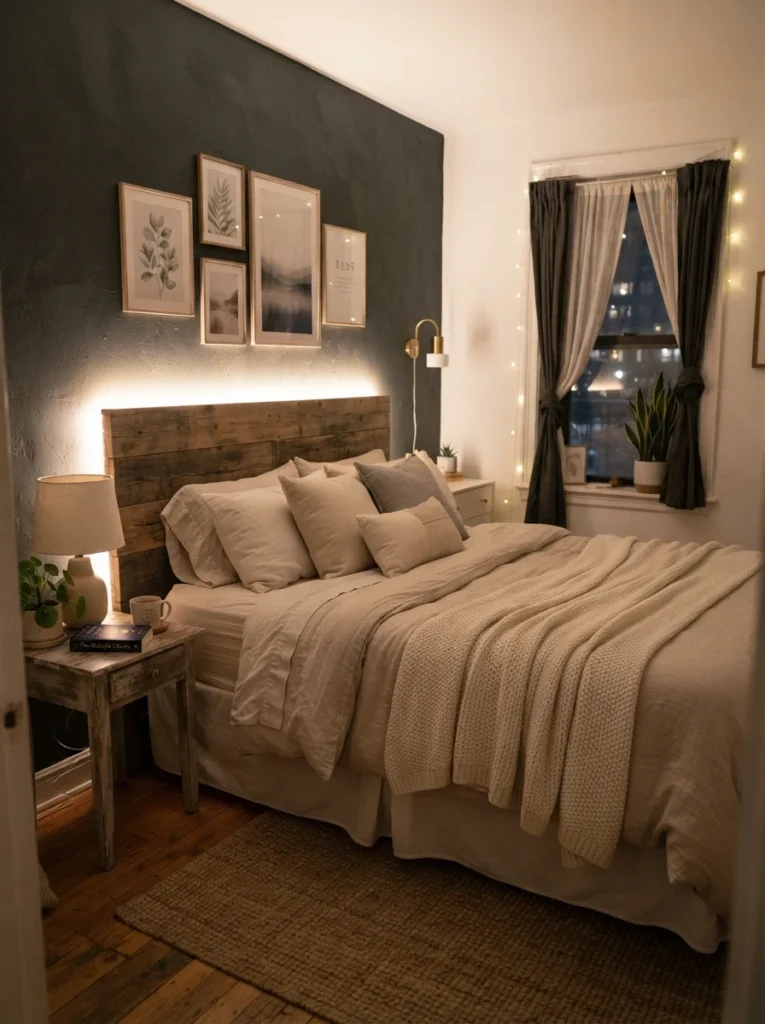
7. Add LED Lighting Behind the Headboard
Hidden LED lighting creates depth without adding physical clutter, which makes it ideal for tiny bedrooms where every inch matters visually. Soft backlighting behind the headboard creates a floating effect that makes the room feel less boxed in.
This works especially well with warm dimmable strips that create subtle evening atmosphere instead of bright gaming-style lighting. Bedrooms should feel soft and relaxing, not overstimulating.
The calmer the glow, the better the room usually feels emotionally.
8. Use Mirrors to Multiply Warm Light
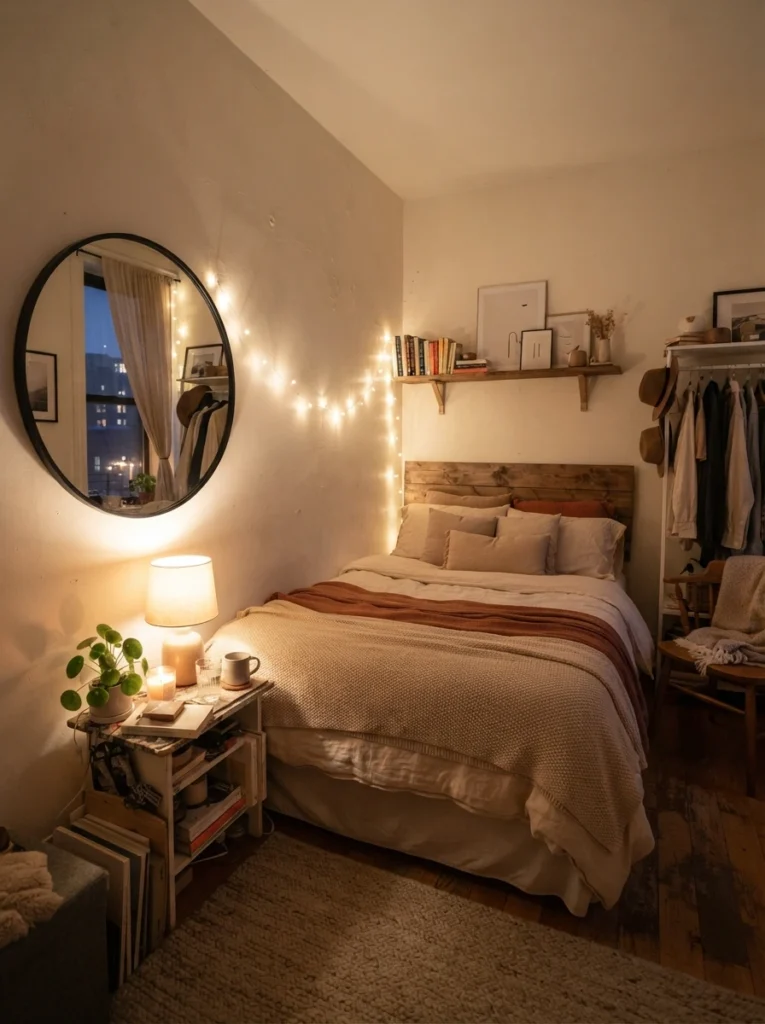
Warm lighting becomes even more effective when reflected properly. Mirrors positioned beside lamps or opposite windows help bounce light deeper into small bedrooms, which instantly makes the room feel more open emotionally.
The key is reflecting softness, not clutter. Mirrors that bounce warm light and calm textures create spaciousness. Mirrors reflecting piles of laundry simply double visual stress.
Light reflection quietly shapes atmosphere.
9. Keep Nighttime Lighting Dimmer Than You Think
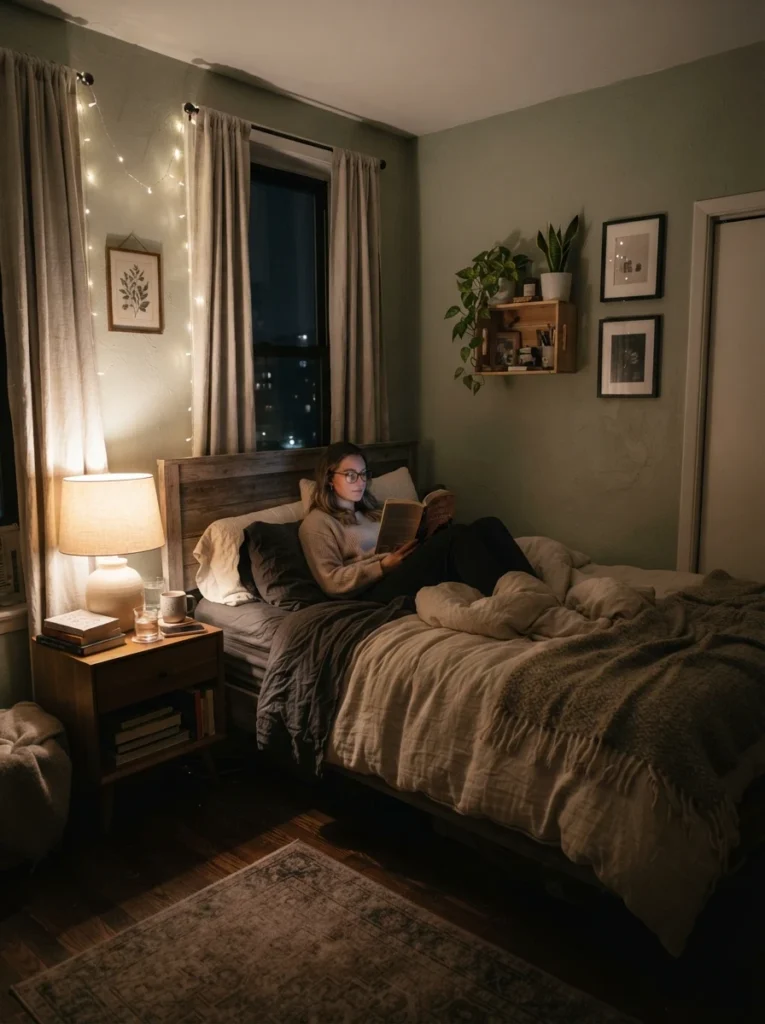
Many small bedrooms feel emotionally overstimulating at night because the lighting remains too bright long after sunset. Soft dim lighting naturally signals relaxation to the nervous system while harsh brightness keeps the room feeling active.
This is why candlelight, warm bedside lamps, and subtle evening lighting feel comforting psychologically. Bedrooms should gradually soften visually as the evening progresses.
Overly bright bedrooms rarely feel truly cozy.
10. Layer Different Light Sources Together
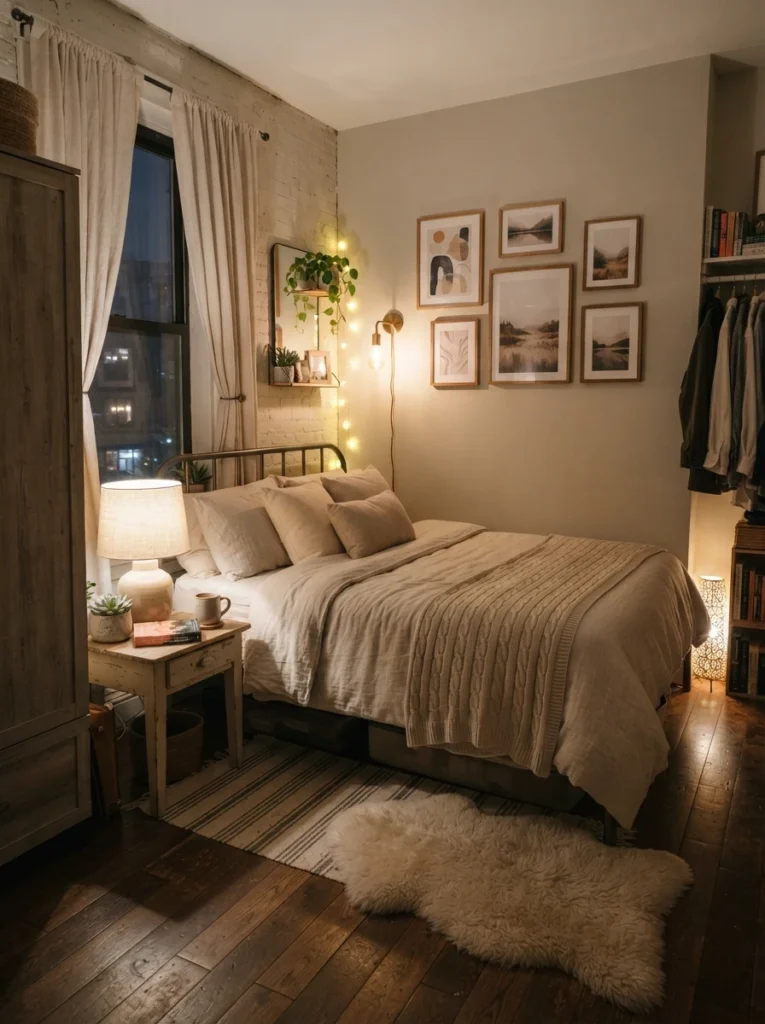
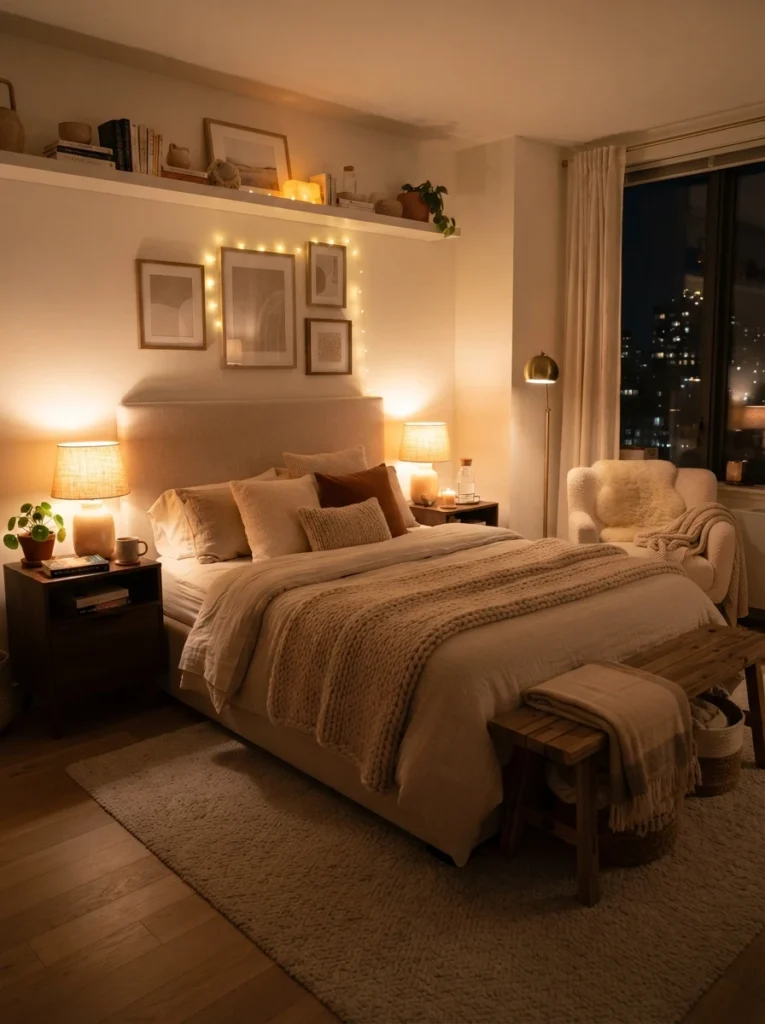
The coziest bedrooms rarely depend on one type of lighting alone. A combination of bedside lamps, ambient wall lighting, floor lamps, and soft natural daylight creates visual layering that makes rooms feel richer emotionally.
This layering effect helps tiny bedrooms feel more dynamic and less visually flat. Even simple apartments become dramatically warmer when light exists in multiple zones throughout the room.
Good lighting creates atmosphere more than decoration ever can.
11. Use Soft Morning Light to Wake the Room Naturally
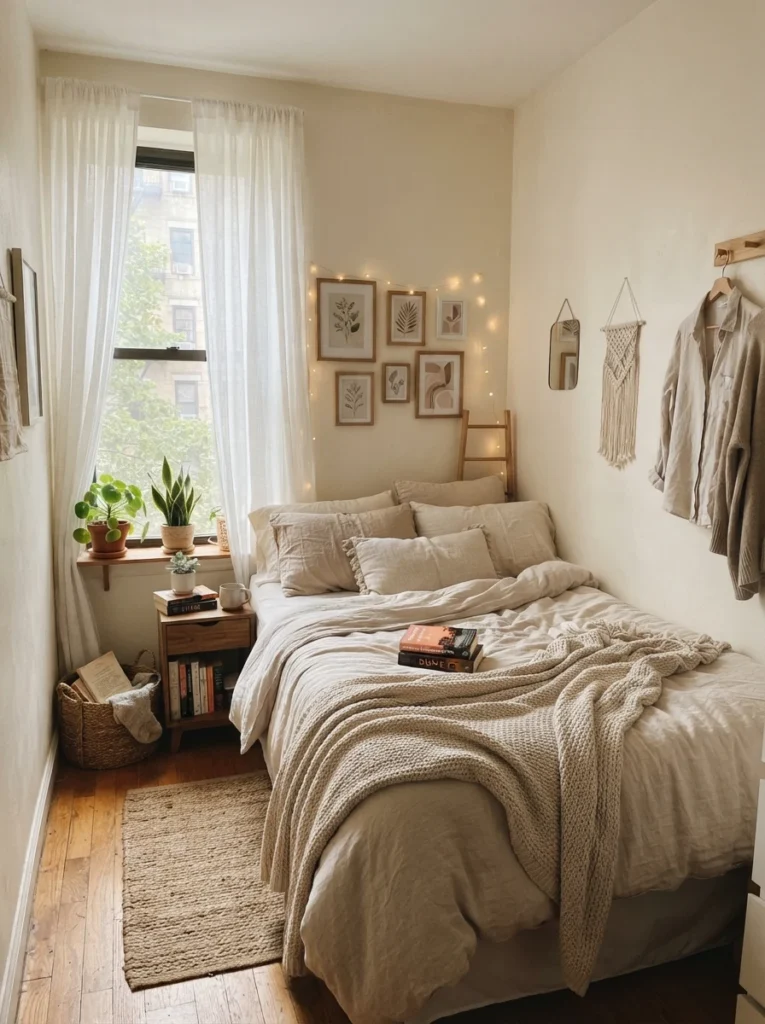
Bedrooms feel emotionally different depending on how morning light enters the space. Harsh direct sunlight can feel overstimulating in tiny rooms, while soft filtered daylight creates a calmer and more welcoming atmosphere.
Sheer curtains work especially well because they diffuse brightness instead of blocking it completely. The room still feels airy and connected to daylight without becoming visually harsh during early mornings.
Soft natural light often makes small bedrooms feel cleaner and more peaceful automatically.
12. Avoid Blue-Tinted LED Strips in Cozy Bedrooms
Many trendy bedroom setups accidentally feel emotionally cold because the lighting leans heavily into blue or icy white tones. These colors often make small bedrooms resemble gaming setups or office environments instead of restful spaces.
Warm amber lighting usually creates a far calmer atmosphere. Tiny rooms benefit from softer tones because harsh cool lighting exaggerates clutter, shadows, and visual sharpness.
Comfort almost always comes from warmth, not brightness.
Final Thoughts
Lighting changes tiny bedrooms more dramatically than many expensive furniture upgrades ever could. Soft layered light reduces visual harshness, creates emotional warmth, improves depth, and helps cramped rooms feel calmer and more breathable.
The coziest small bedrooms rarely rely on brightness alone. They rely on softness, shadow balance, warmth, and intentional atmosphere. Even simple renter-friendly lighting changes can completely shift how a room emotionally feels at the end of the day.
A bedroom should not feel visually aggressive once the sun goes down. It should slowly become softer, quieter, and more emotionally restful as the evening settles in.