
15 Halloween Scavenger Hunt Ideas for a Fun Family Night
TL;DR: A Halloween scavenger hunt is an easy way to turn an ordinary evening into an exciting family activity. Use picture clues, hidden treats, glow sticks, spooky objects, riddles, and themed challenges to keep children and adults involved. The best hunts are simple to set up, safe for the space, and flexible enough for different ages. Add flashlights, costumes, music, and Halloween snacks to make the night feel like a complete seasonal adventure.
A Halloween scavenger hunt does not need to take place outdoors or require expensive supplies. You can hide clues around the living room, backyard, garage, or neighborhood and create a hunt based on whatever your family enjoys. Younger children may prefer pictures and easy-to-find objects, while older kids can solve riddles, decode messages, and complete small challenges along the way.
Here are 15 Halloween scavenger hunt ideas for a fun family night.
1. Create a Classic Halloween Object Hunt
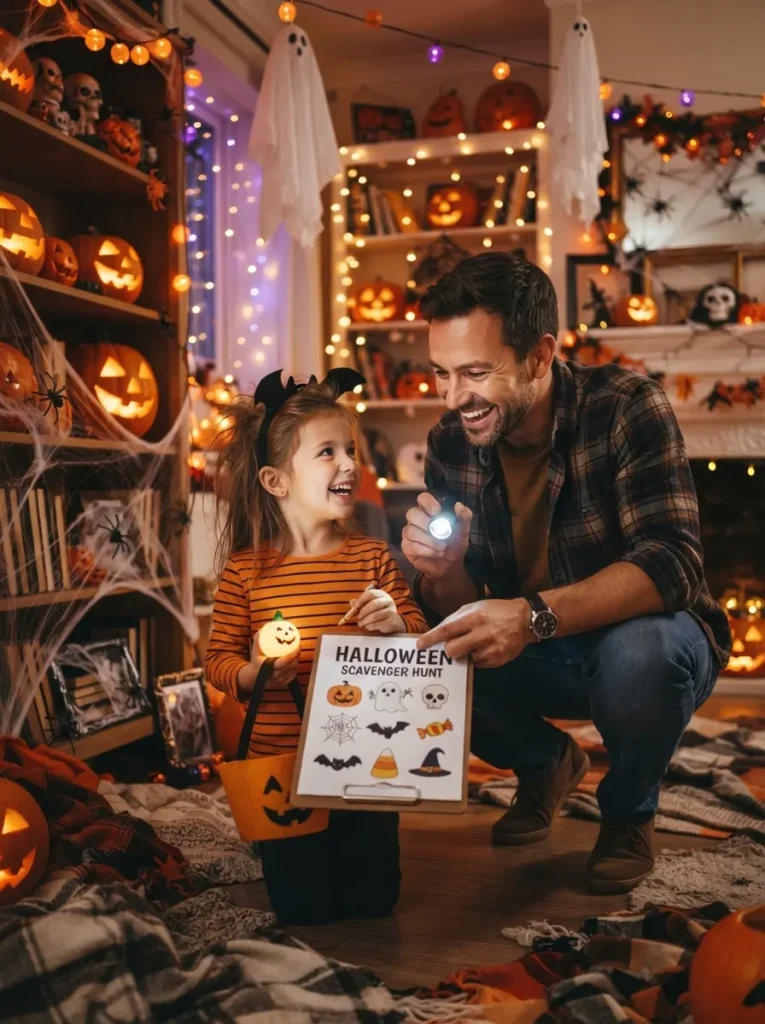
Make a list of common Halloween items for everyone to find, such as a pumpkin, black cat decoration, spiderweb, witch hat, ghost, orange candle, or bag of candy.
Give each participant a checklist and a flashlight, then let them search the house or yard. Younger children can use picture cards instead of written lists so they can participate independently.
2. Hide Riddle Cards Around the House
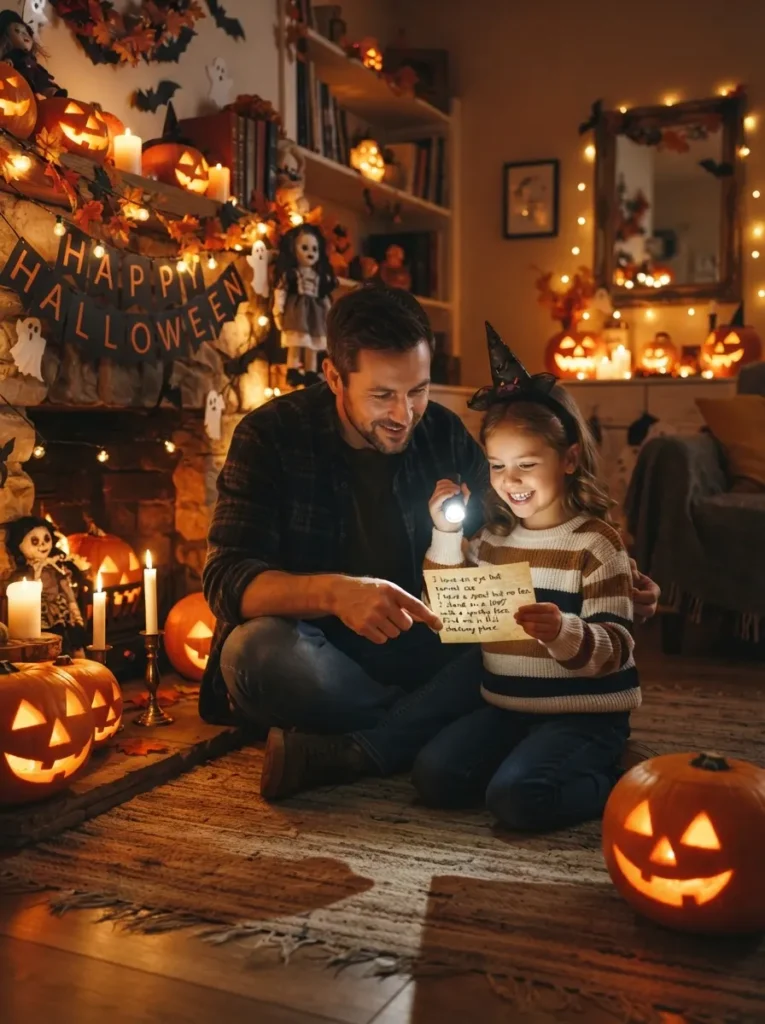
Write a series of simple Halloween-themed riddles that lead participants from one location to the next. For example, a clue about a place where coats sleep could lead to a closet, while a clue about something cold could point toward the refrigerator.
Use orange and black cardstock for the cards and add small drawings to make them feel more festive. The final clue can lead to a basket of candy, a movie-night snack, or a family prize.
3. Organize a Glow Stick Hunt
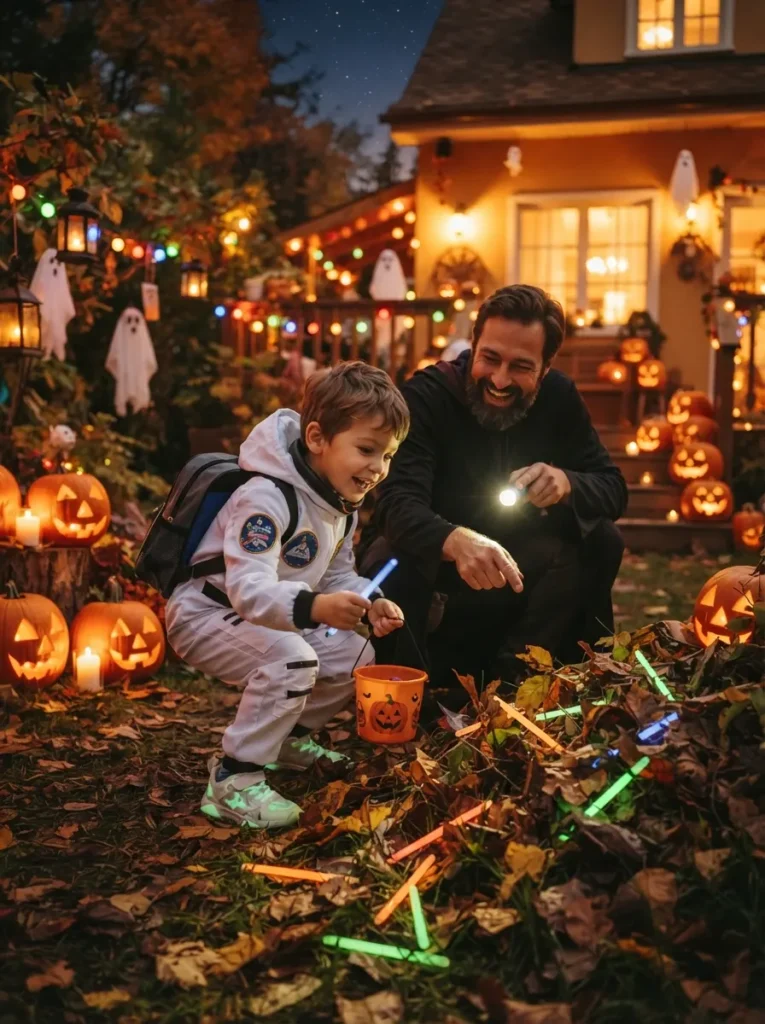
Hide colorful glow sticks around a dimly lit room, covered porch, or enclosed backyard. Give each participant a basket or small bag and challenge them to find as many glowing sticks as possible within a set time.
Use different colors for different point values if older children enjoy competition. Keep the search area clearly defined and remove obstacles so everyone can move around safely.
4. Plan a Pumpkin Patch Hunt
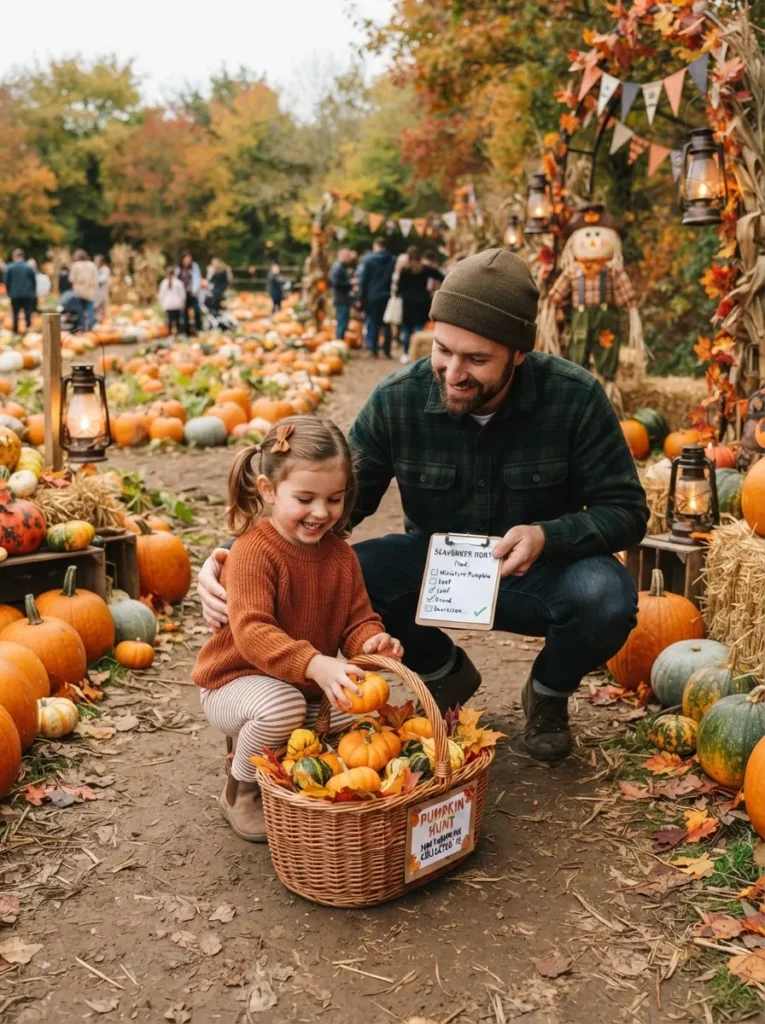
Hide small pumpkins, foam pumpkins, or paper pumpkins around the house or yard. Give each child a basket and ask them to collect the pumpkins they discover.
Write letters on the paper pumpkins so the family can rearrange them to spell a Halloween message at the end. You can also hide tiny prizes inside a few plastic pumpkins for an extra surprise.
5. Make a Halloween Photo Scavenger Hunt
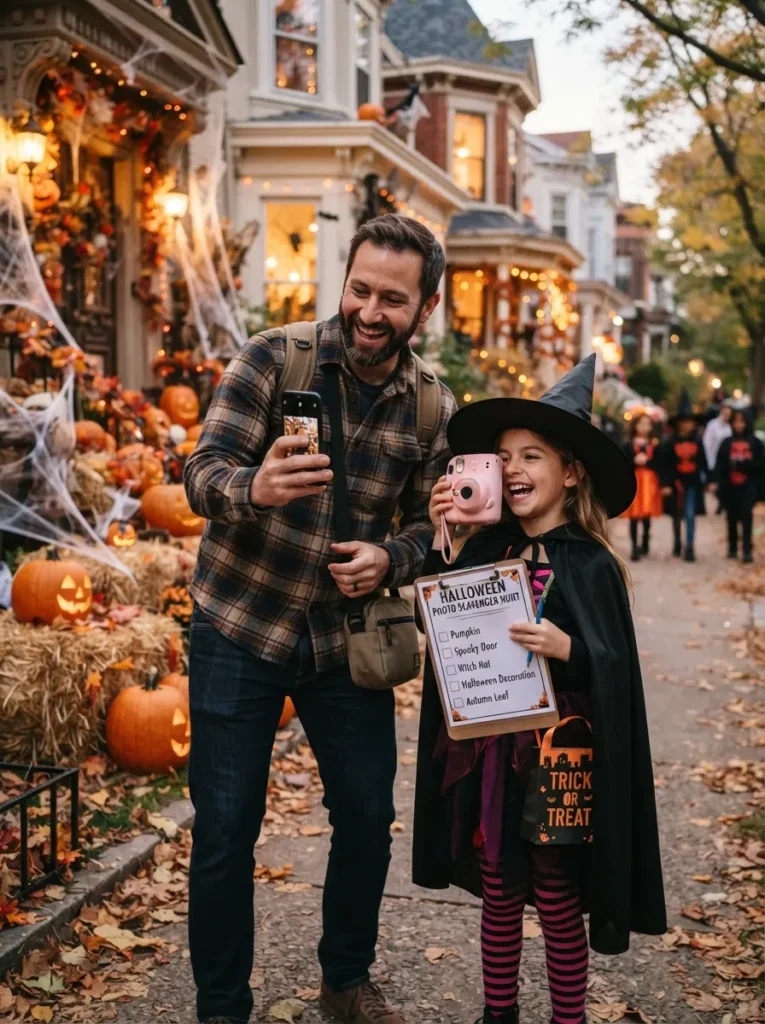
Create a list of Halloween scenes for family members to photograph, such as a carved pumpkin, a spooky front door, a costume detail, a decorated window, or a pile of autumn leaves.
Participants can use phones or instant cameras to document each discovery. This version works well for older children and adults, especially when exploring a safe neighborhood during daylight or early evening.
6. Set Up a Candy Clue Trail
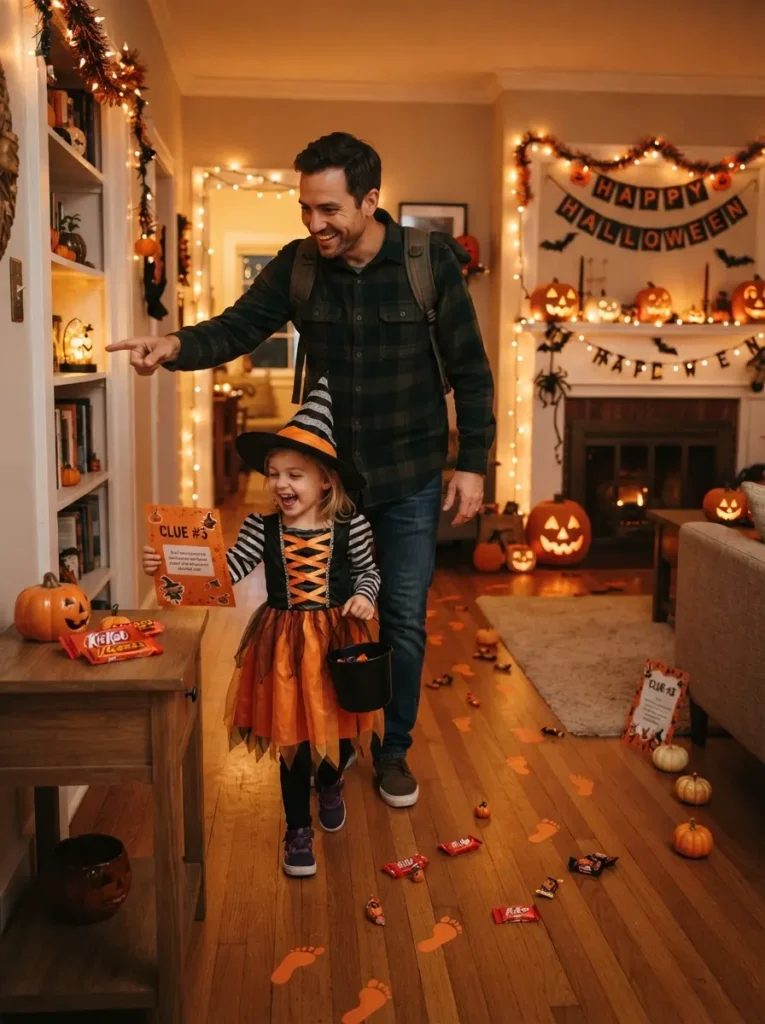
Place individually wrapped pieces of candy along a trail of clues. Each treat can be attached to a card that directs participants to the next location.
Use a mixture of easy and challenging clues so the hunt keeps moving. At the end, provide a larger shared treat or let everyone trade the candy they collected.
7. Create a Monster Hunt
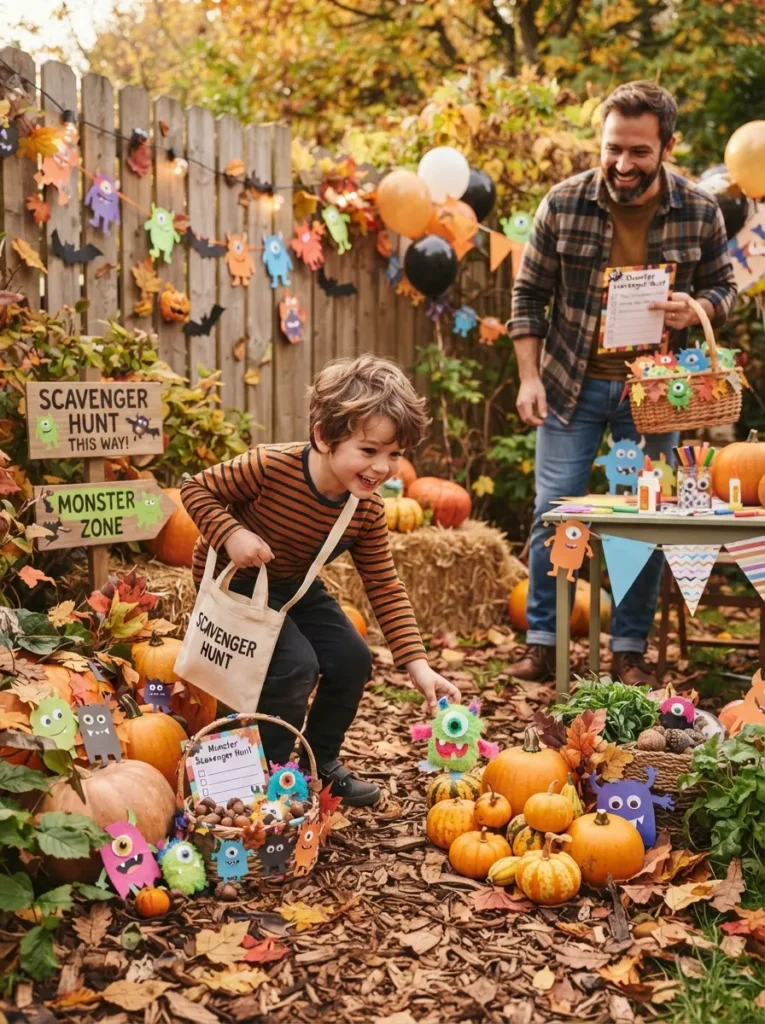
Hide small monster figures, paper cutouts, stickers, or stuffed toys around the house. Give children a card showing the different monsters they need to find, such as a green monster, one-eyed monster, purple monster, and tiny monster.
Add a simple story to make the game more engaging: the monsters escaped from a pretend laboratory and need to be returned to their basket. Give each found monster a silly name or personality.
8. Play a Haunted House Mystery Hunt
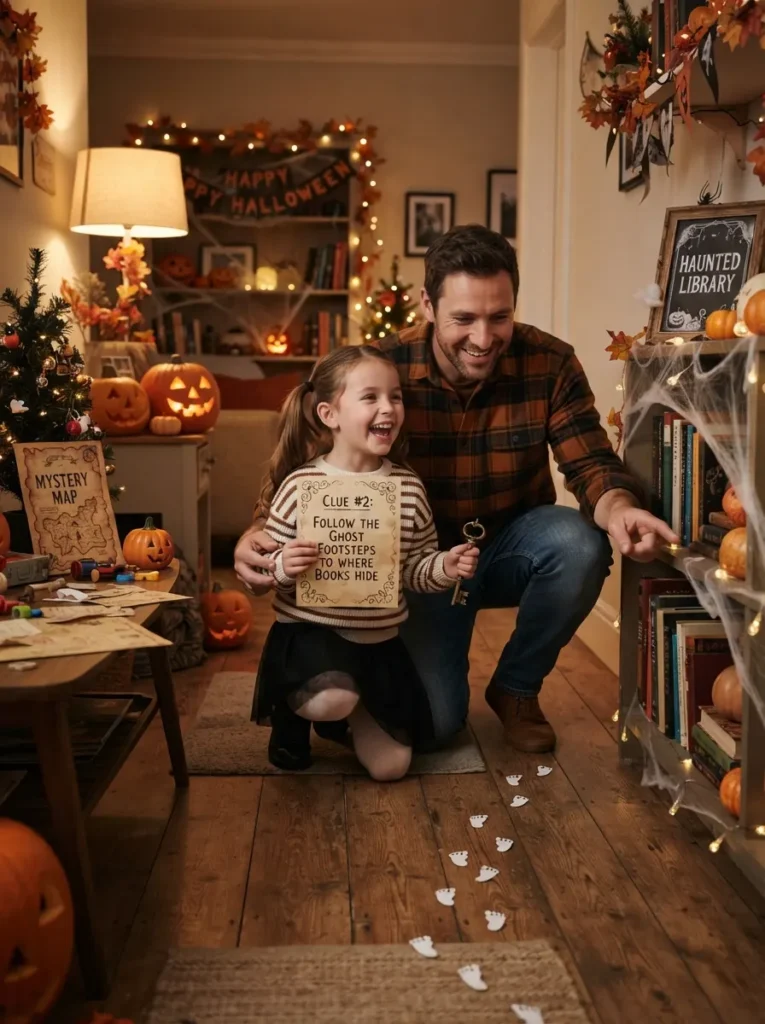
Turn several rooms into parts of a pretend haunted house. Hide clues that reveal a simple mystery, such as who moved the missing pumpkin or where the haunted house ghost lost its key.
Use harmless props such as toy keys, paper footprints, faux cobwebs, and handwritten notes. Keep the story lighthearted so younger children feel curious rather than frightened.
9. Make a Costume Detail Checklist
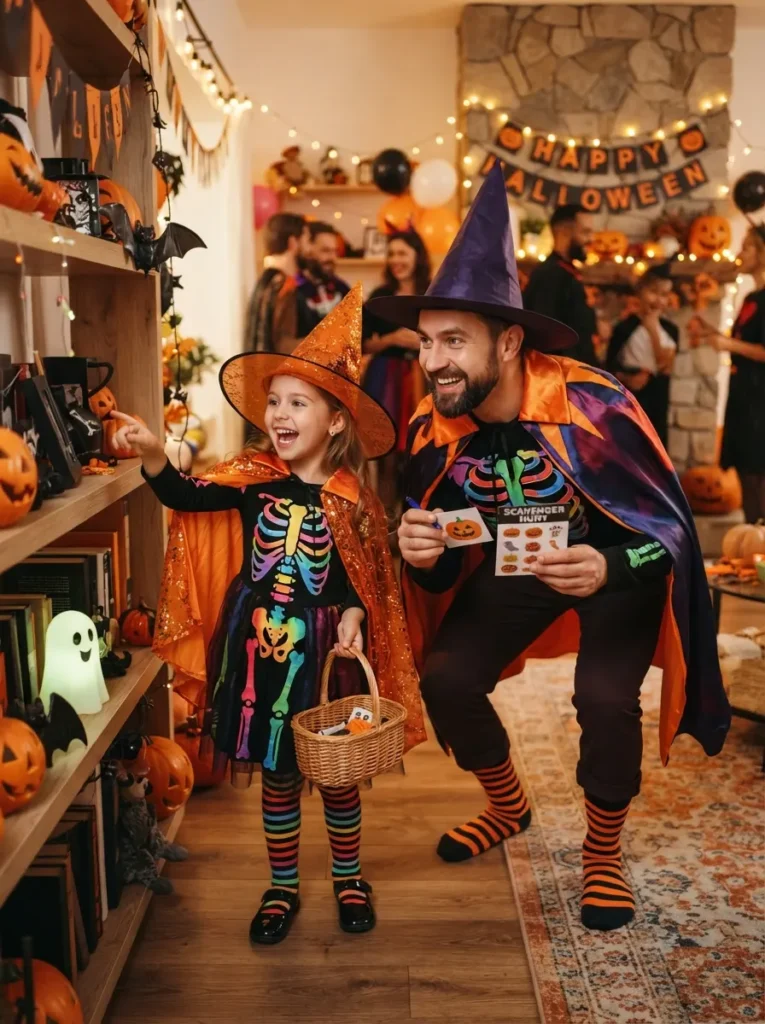
Ask participants to find people or decorations showing specific Halloween details, such as striped socks, a witch hat, a skeleton, orange shoes, a cape, or a pair of fake fangs.
This can be played at home during a family costume party or adapted for a safe gathering with friends. Have everyone complete the list by taking photographs or checking off the items they spot.
10. Organize a Backyard Nature Hunt
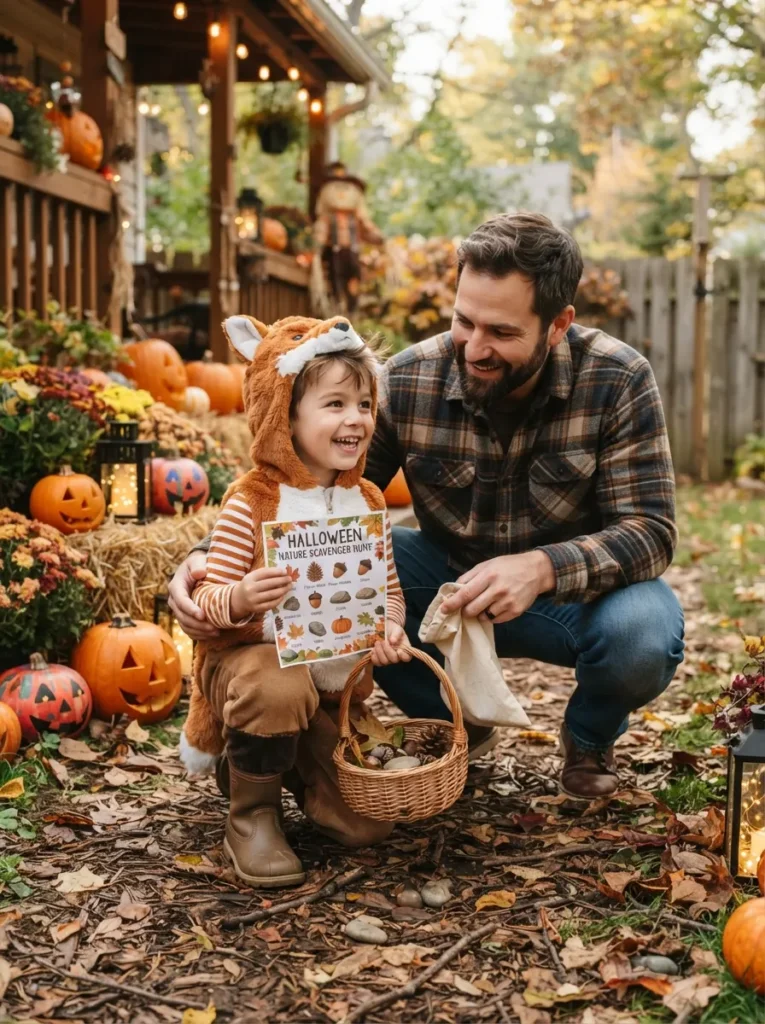
Create a nature-themed scavenger hunt using safe outdoor discoveries such as an orange leaf, acorn, pinecone, twig, smooth stone, or spiderweb.
Give each participant a picture card or checklist and establish clear boundaries before the search begins. Avoid asking children to touch insects, unfamiliar plants, or anything that could be unsafe.
11. Use a Color-Coded Hunt
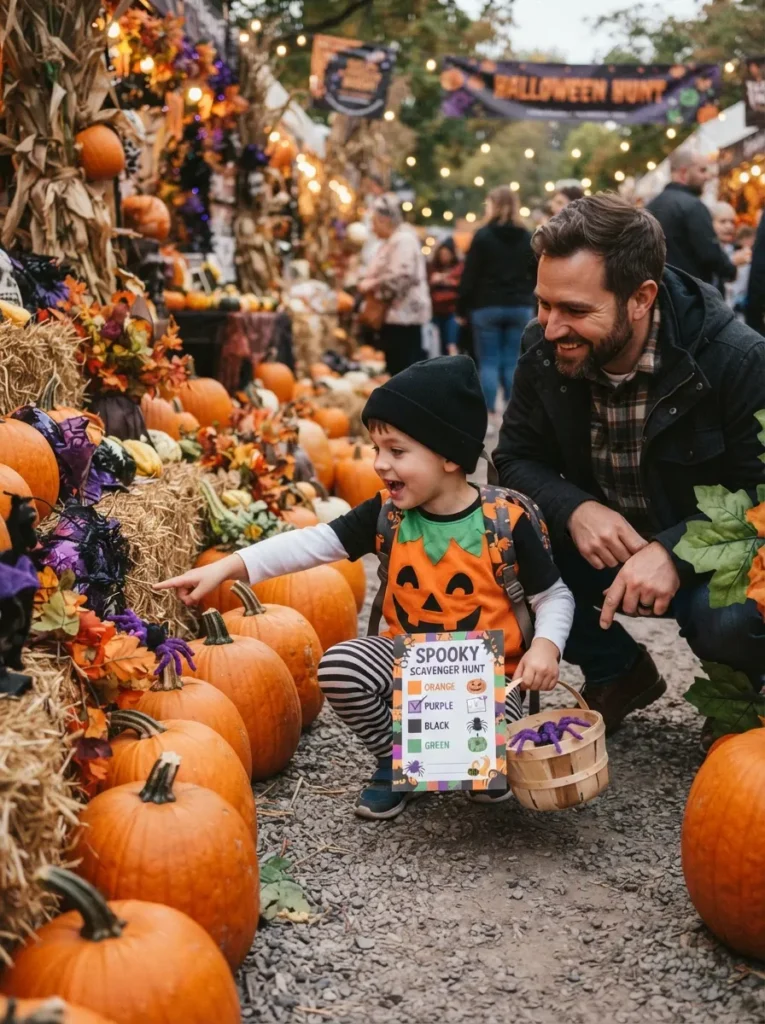
Assign each family member a Halloween color and hide matching objects around the search area. One player might look for orange items, another for purple items, and another for black or green items.
Use safe household objects, paper shapes, plastic toys, or decorations. This format is easy for young children to understand and can be completed indoors without much preparation.
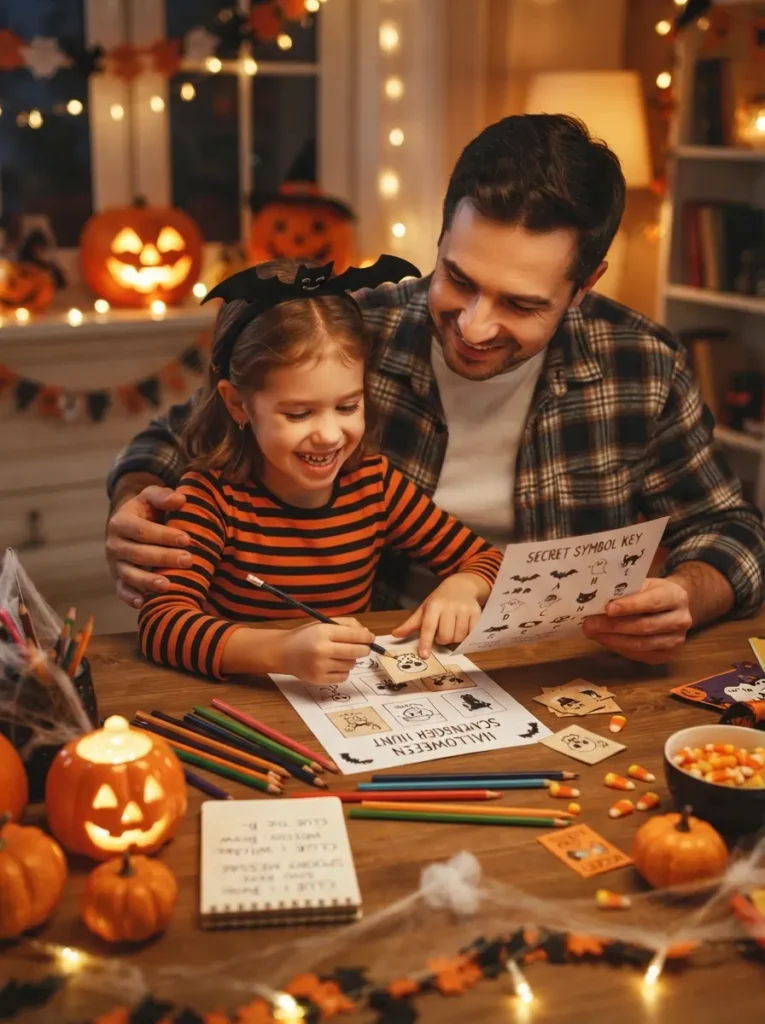
12. Create a Secret Code Hunt
Write clues using a simple code, such as replacing each letter with a Halloween symbol, using picture symbols, or arranging letters backward. Provide a key that helps children decode the first message.
Keep the code age-appropriate and let younger participants work with an older sibling or adult. The final decoded message can reveal the location of a family dessert or movie-night basket.
13. Plan a Spooky Sound Hunt
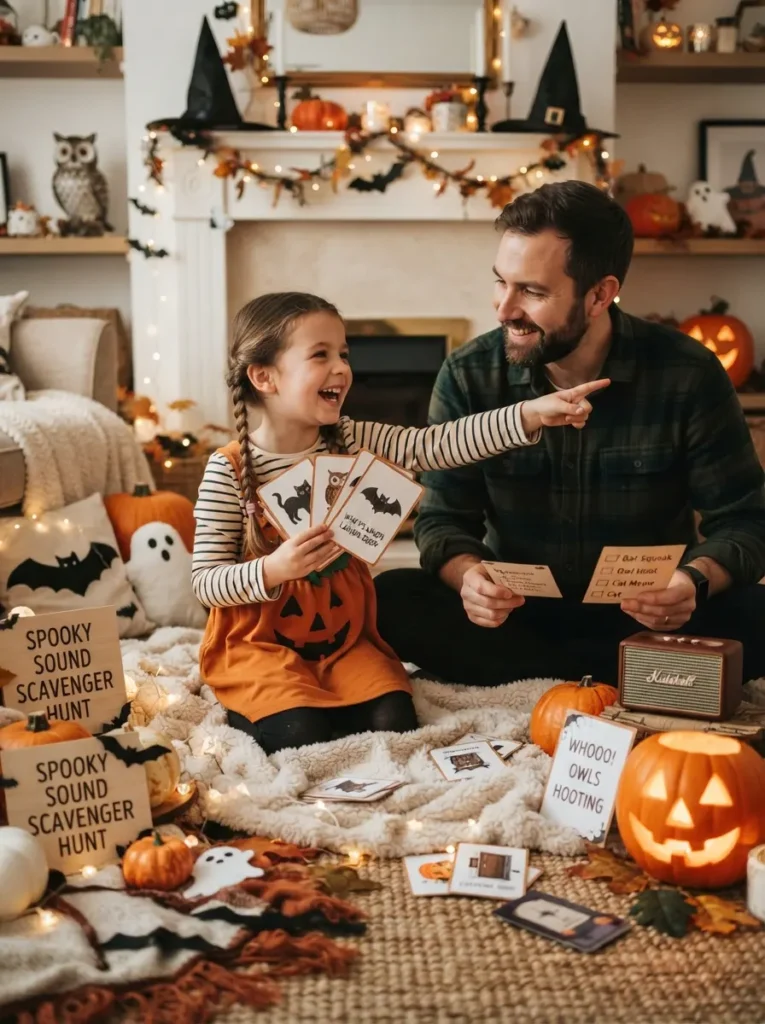
Play or create gentle Halloween sounds and ask children to match each sound to a picture or hidden object. You can use recordings of bats, owls, rain, wind, footsteps, or a creaking door.
Hide the matching picture cards around the room and let participants find them after identifying the sounds. Keep the volume comfortable and avoid sudden effects if younger children are participating.
14. Set Up a Treat-or-Task Hunt
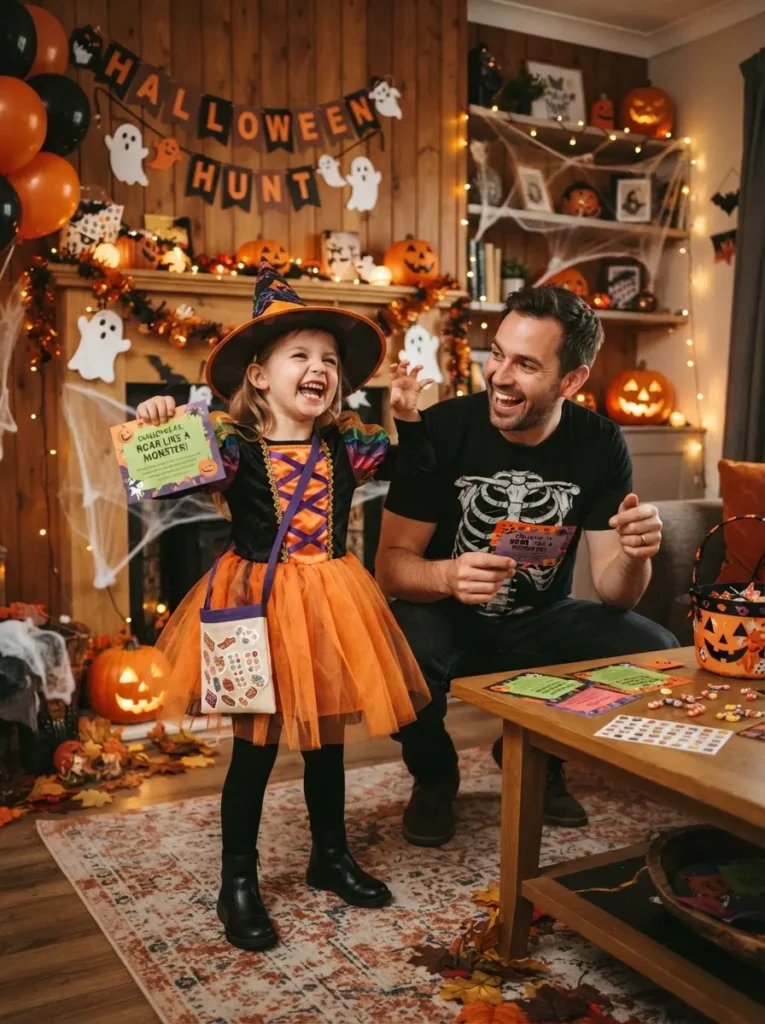
Hide cards that offer either a small treat or a fun Halloween task. Tasks might include telling a spooky joke, doing a monster impression, naming three Halloween foods, or walking like a mummy across the room.
This version keeps the hunt interactive even when participants find a clue quickly. Use non-food rewards such as stickers, stamps, temporary tattoos, or small craft supplies as alternatives to candy.
15. Finish With a Halloween Treasure Hunt
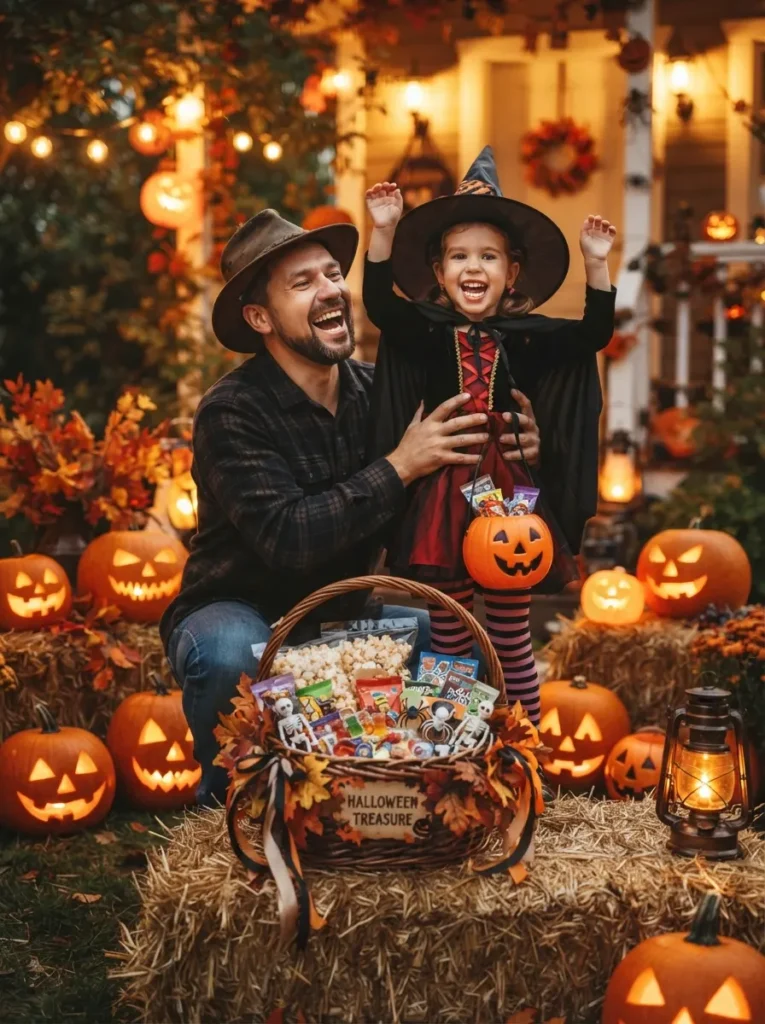
End the evening with a larger treasure hunt that brings everyone to a shared prize. Hide several small clues around the house, with each one leading closer to a basket filled with popcorn, candy, small toys, craft supplies, or movie-night treats.
Decorate the treasure basket with black ribbon, orange tissue paper, or a spooky label. The final discovery can become the transition to a Halloween movie, craft activity, or family dessert.
A successful Halloween scavenger hunt should be easy to follow, safe for the participants, and flexible enough for different ages. Use picture clues for younger children, riddles or codes for older kids, and shared challenges when the whole family is playing together. Add flashlights, costumes, music, glow sticks, and a final treat basket to turn a simple search game into a memorable Halloween night.