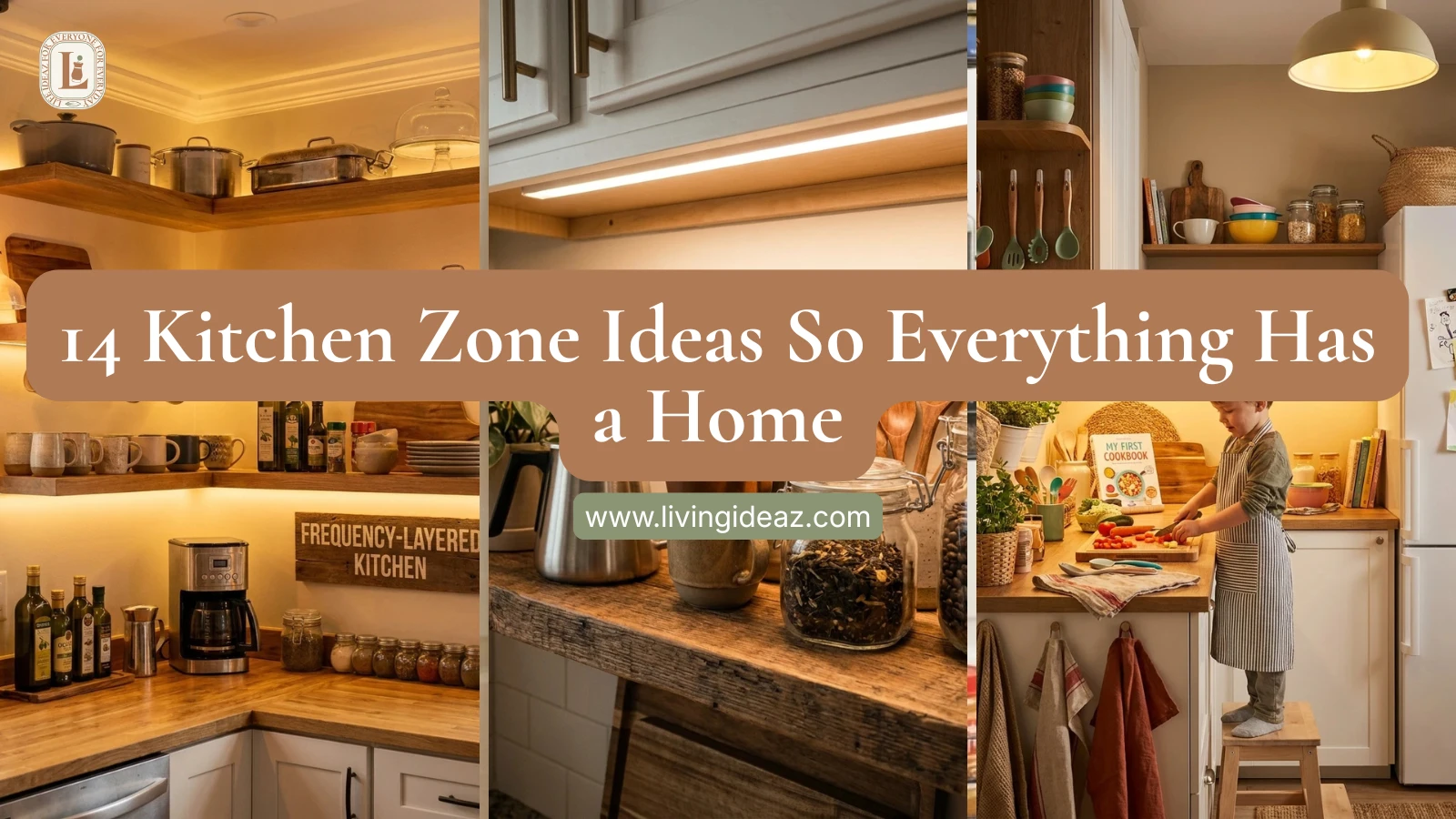
14 Kitchen Zone Ideas So Everything Has a Home
TL;DR: A kitchen that stays organized long-term isn’t usually the one with the most storage, it’s the one organized around zones, prep, cooking, baking, cleanup, coffee, so every item lives near where it’s actually used. Setting this up starts with imagining you’re moving in for the first time and asking where each task should happen, then grouping tools accordingly. Once every zone has a clear purpose, putting things away stops requiring any real thought.
Most kitchen clutter isn’t really about owning too much, it’s about things not having an obvious home. When an item doesn’t have a defined spot, it ends up wherever it was last used, and that habit is the root of most kitchen chaos. Zone-based organization solves this by mapping the kitchen around what actually happens in each part of it, so every tool, dish, and ingredient has a logical place based on the task it belongs to rather than just whatever cabinet had room.
Here are 14 kitchen zone ideas for building a system where everything genuinely has a home.
1. Start by Reimagining the Kitchen From Scratch
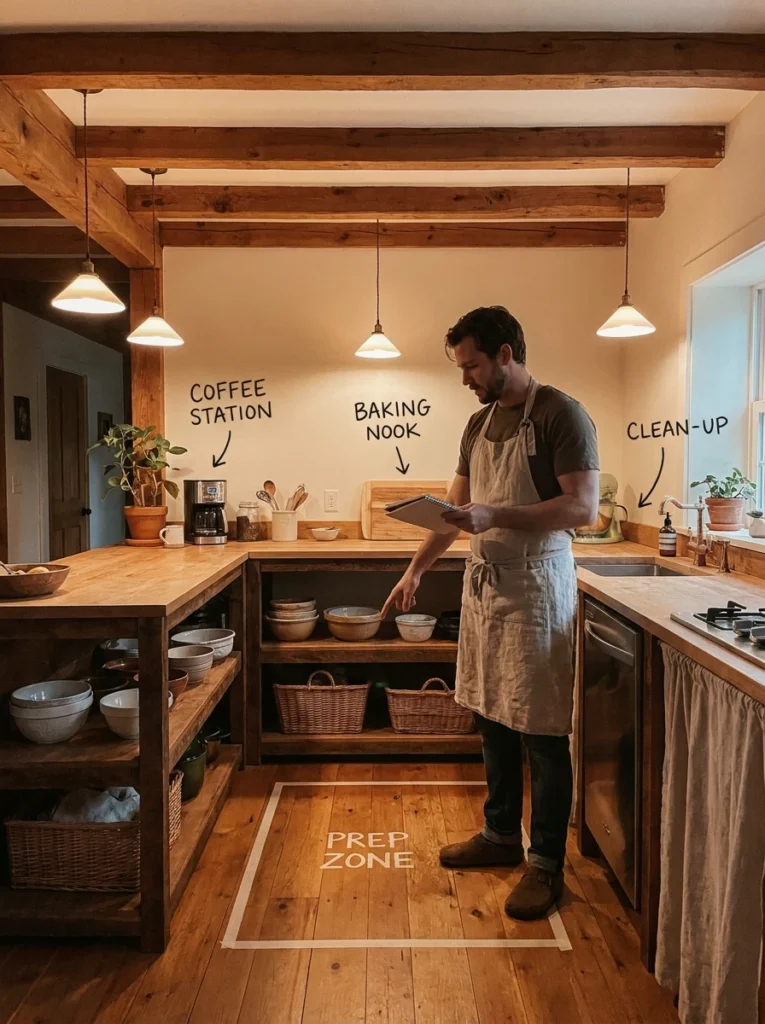
Before assigning anything, pretend you’re moving into the kitchen for the first time and ask where you’d naturally do each task. Where would you cook? Where would you prep? Where would you wash dishes? Answering these questions honestly, rather than defaulting to how things have always been, often reveals a much more logical layout than the one currently in place.
2. Create a Dedicated Food Prep Zone
Your prep zone should hold everything used to get ingredients ready before cooking starts, cutting boards, knives, mixing bowls, and measuring tools. Positioning this zone near the fridge keeps the whole prep-to-cook workflow moving in one direction instead of requiring trips across the kitchen.
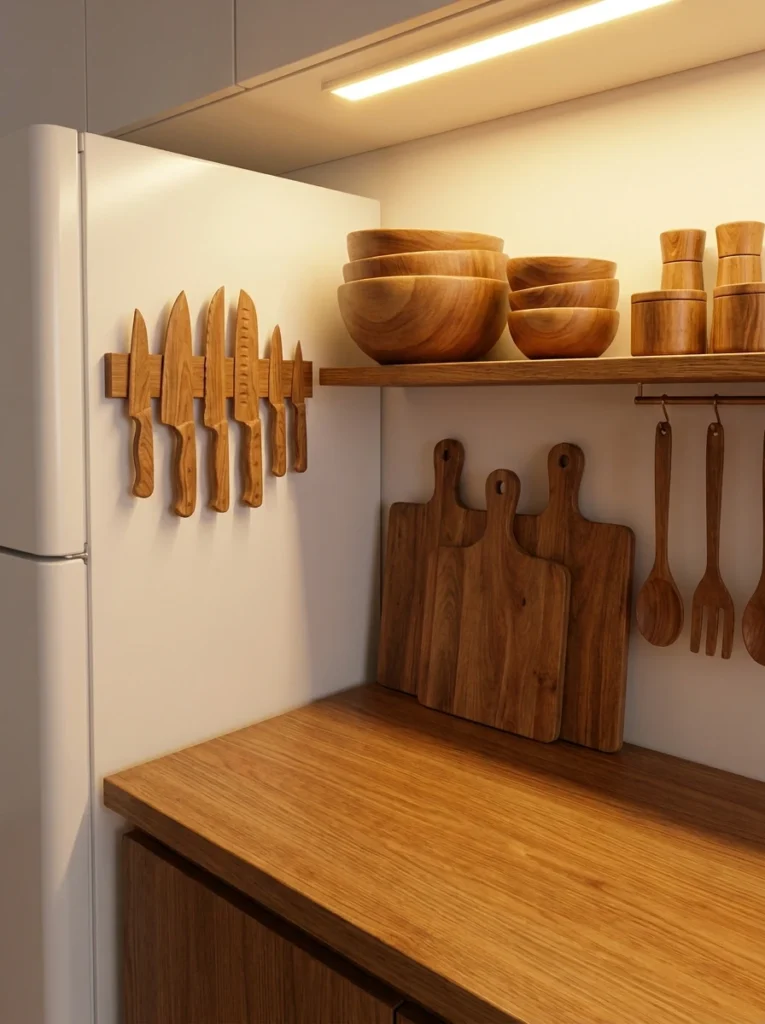
3. Set Up a Cooking Zone Around the Stove
Pots, pans, spatulas, and cooking oils belong within arm’s reach of the stove, since these are the tools you need mid-cook when stepping away isn’t really an option. Keeping this zone tightly focused on active cooking tools, rather than letting prep or baking items drift in, keeps it functional during the busiest part of a meal.
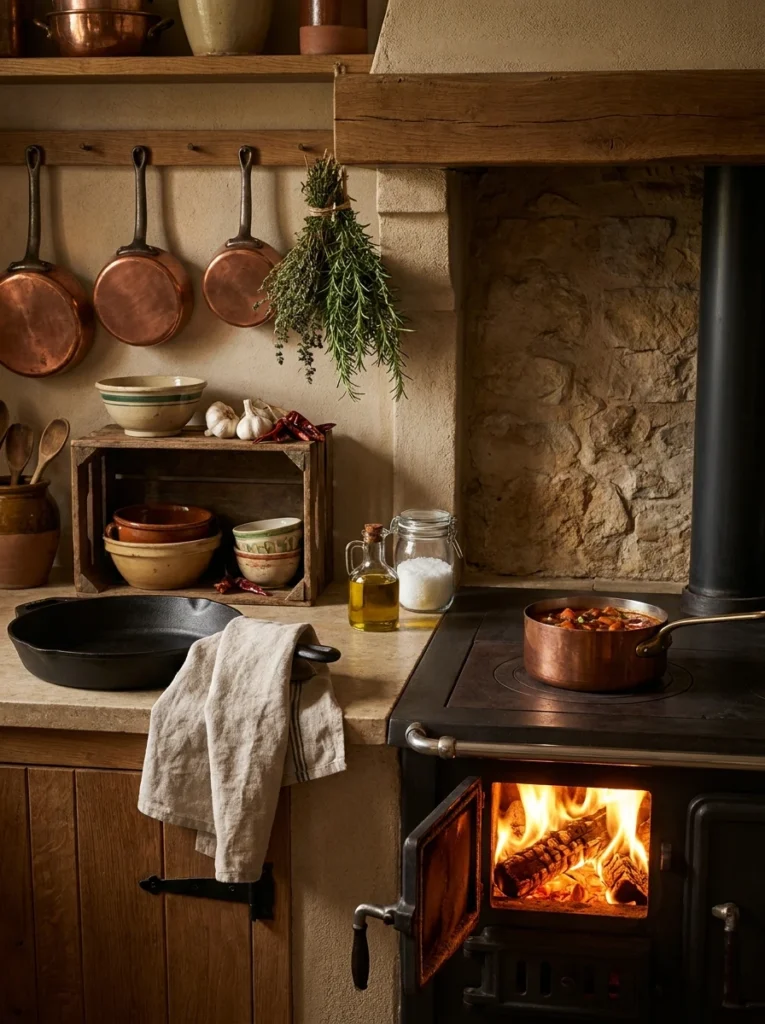
4. Build a Separate Baking Zone
If baking is a regular activity, group mixing bowls, measuring cups, flour, sugar, and bakeware into their own dedicated zone rather than scattering them among general cooking supplies. This makes it much easier to pull together everything a recipe calls for in one trip instead of several.
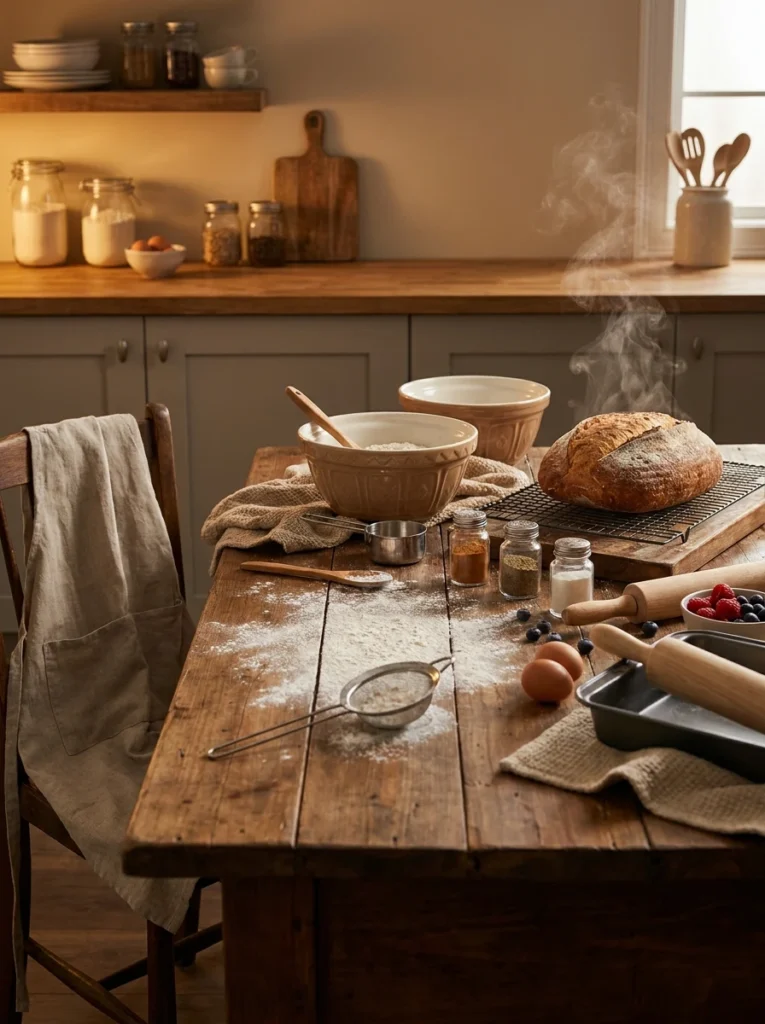
5. Place the Cleanup Zone Near the Sink and Dishwasher
Dish soap, sponges, and cleaning supplies should live as close to the sink as possible, and everyday dishes and glasses work best stored in the cabinet directly above or beside the dishwasher. This small positioning detail makes unloading dishes noticeably faster, since nothing has to travel far to reach its spot.
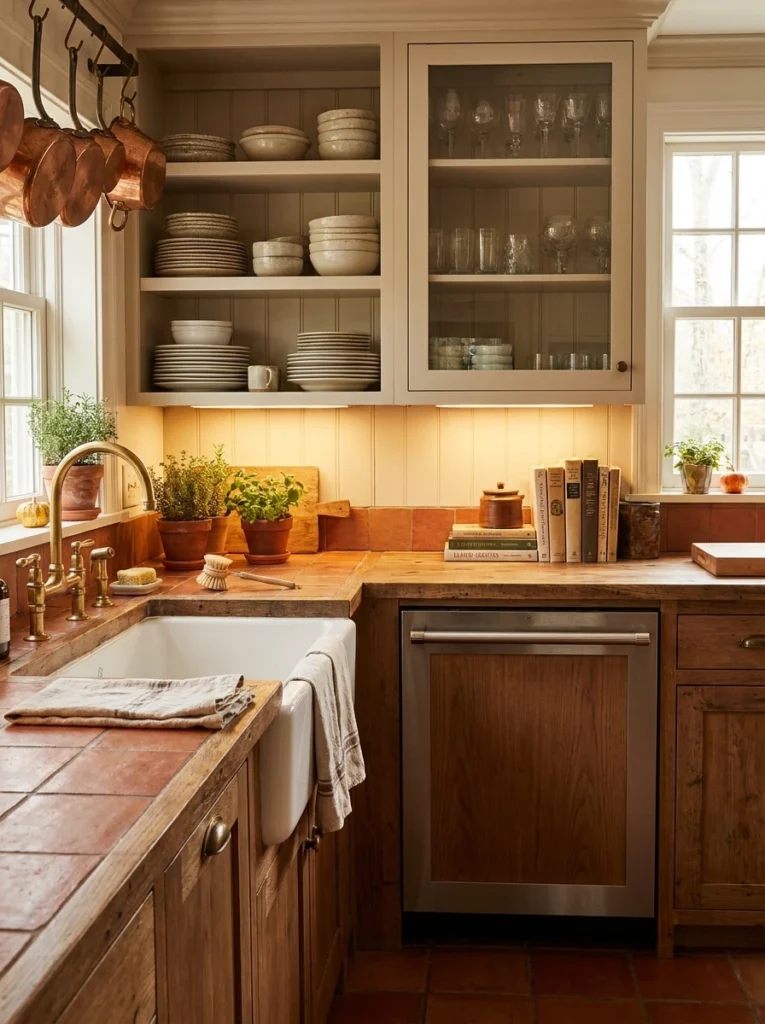
6. Add a Coffee or Beverage Zone
A defined coffee station, coffee maker, mugs, tea, and drink prep essentials grouped together, keeps morning routines from spilling supplies across the rest of the kitchen. Even a small bar cart or a single shelf dedicated to this zone can contain everything needed without competing with other kitchen tasks.
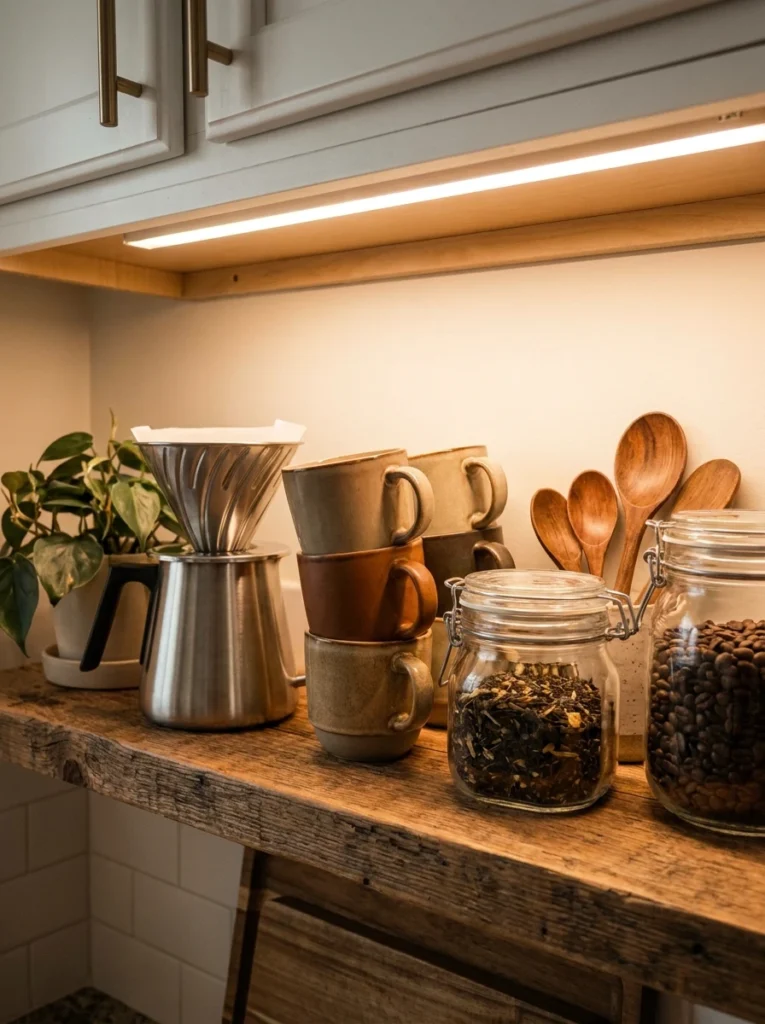
7. Reserve a Zone Specifically for Food Storage Containers
Tupperware and other food storage containers tend to end up wherever there’s room unless they’re given their own specific zone, ideally near where meal prep or leftovers actually happen. Keeping lids and bottoms together in this one spot also cuts down on the mismatched-lid frustration most kitchens deal with.
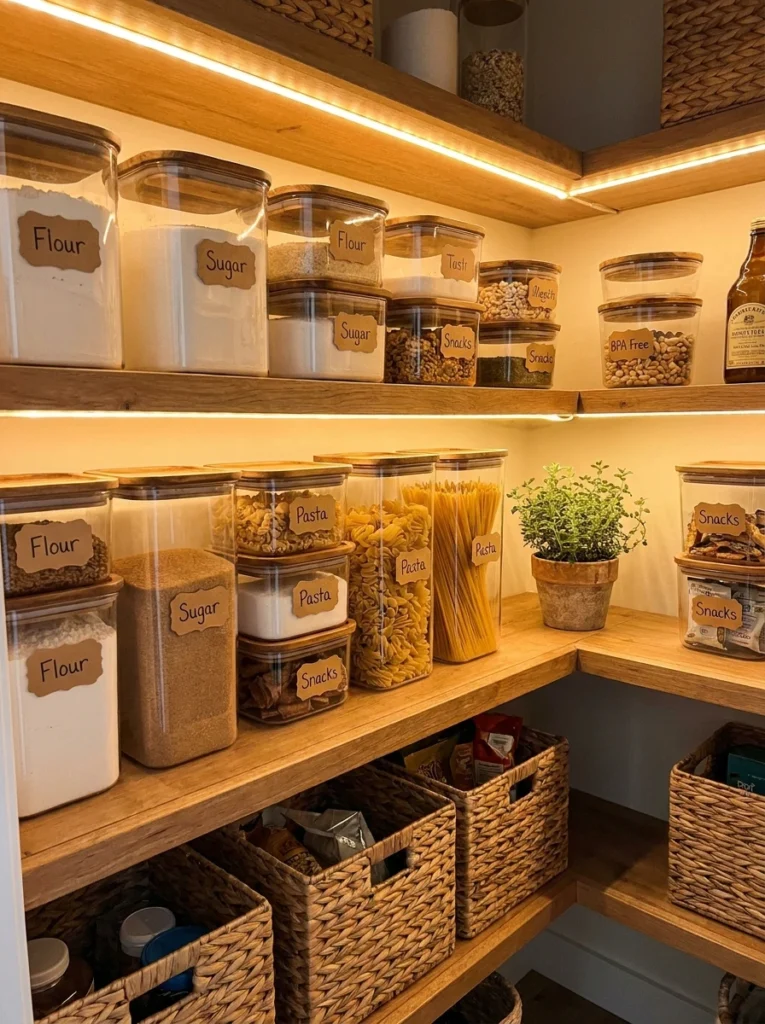
8. Use Sticky Notes to Test Zone Placement Before Committing
Write down each task or item category on a sticky note and place it where you think that zone should live, then observe how it feels over the next few days of actually cooking. This low-commitment method lets you test and adjust before permanently moving anything, since the right layout often takes a bit of trial and error to find.
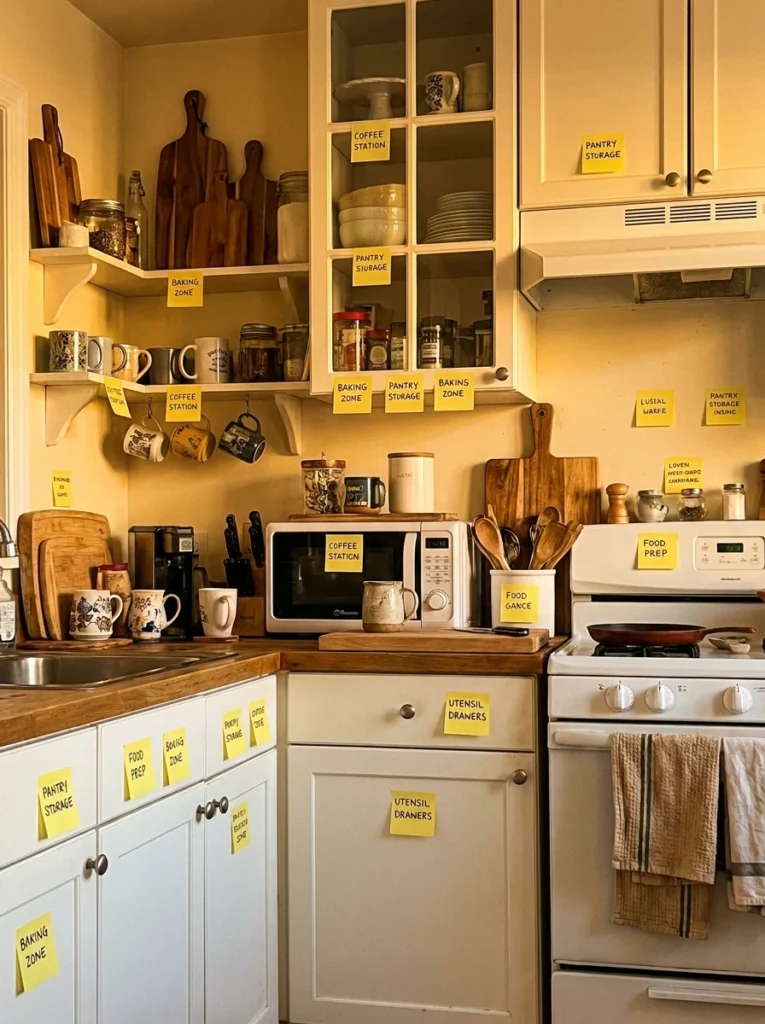
9. Group Items by Frequency of Use Within Each Zone
Within any given zone, the tools you reach for constantly should sit at the most accessible height and depth, while occasional-use items can go higher, lower, or further back. This second layer of organization, frequency within a zone, matters just as much as the zone itself for keeping daily tasks efficient.
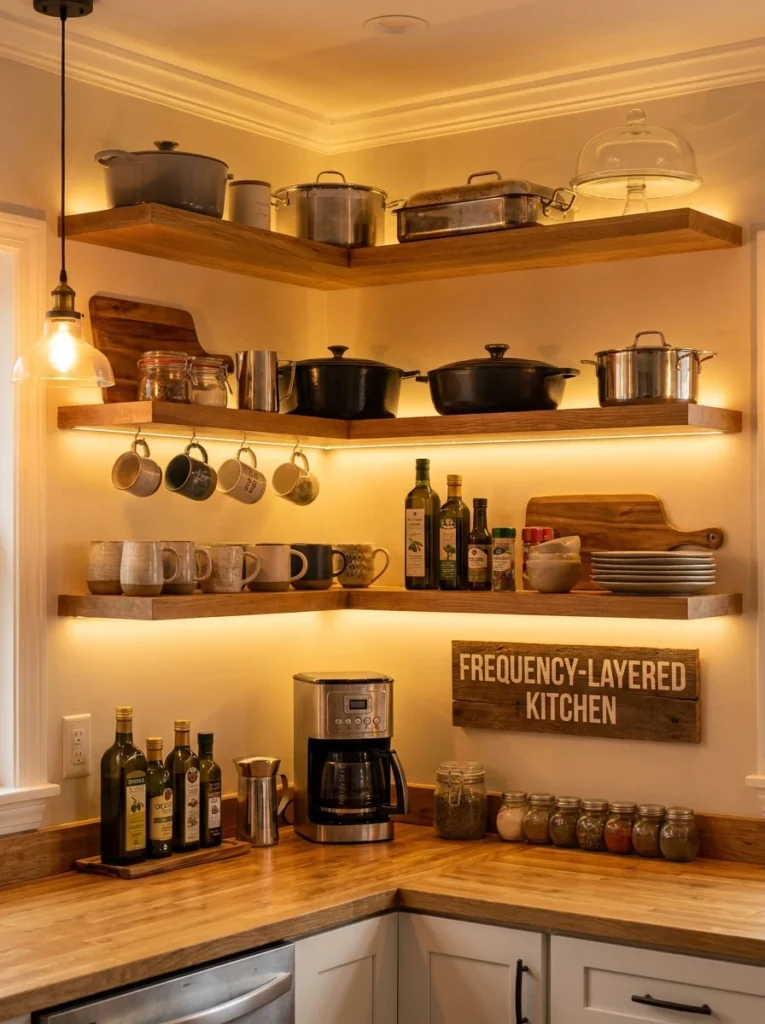
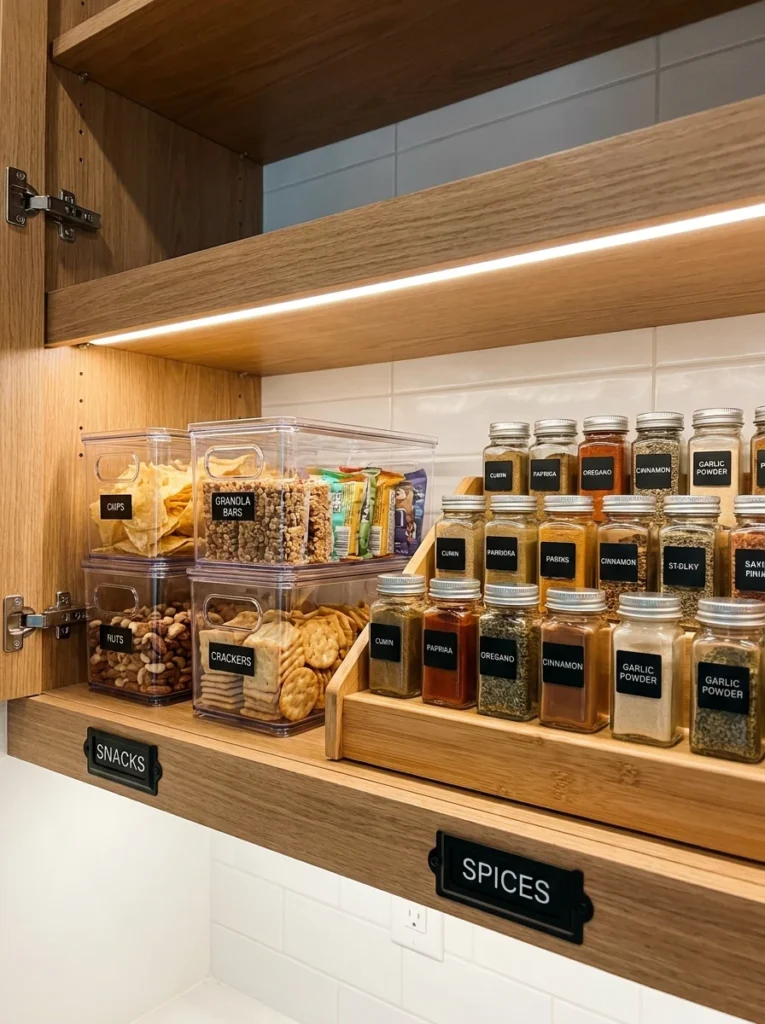
10. Label Each Zone So Everyone in the Household Knows the System
Once zones are set, labeling shelves or cabinets removes any ambiguity about where something belongs, which matters most in a household where more than one person is cooking or putting things away. A system only works long-term if everyone using the kitchen actually understands it.
11. Don’t Force a Zone Into a Space That Doesn’t Suit It
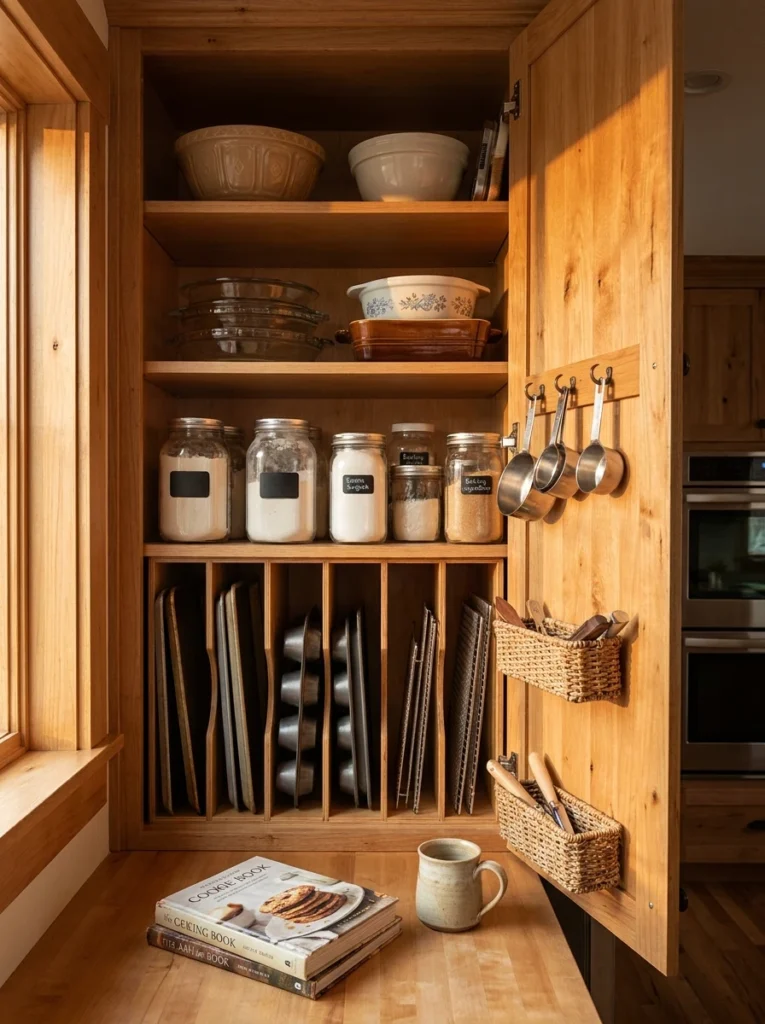
If your instinct says the baking zone belongs near the oven but the only available cabinet there is too shallow for bakeware, don’t force it. Adjust the zone to fit a cabinet that actually works, even if it’s a few steps further away, since a zone that doesn’t physically fit its assigned space will fail no matter how logical the plan seemed.
12. Give Yourself Permission to Rearrange More Than Once
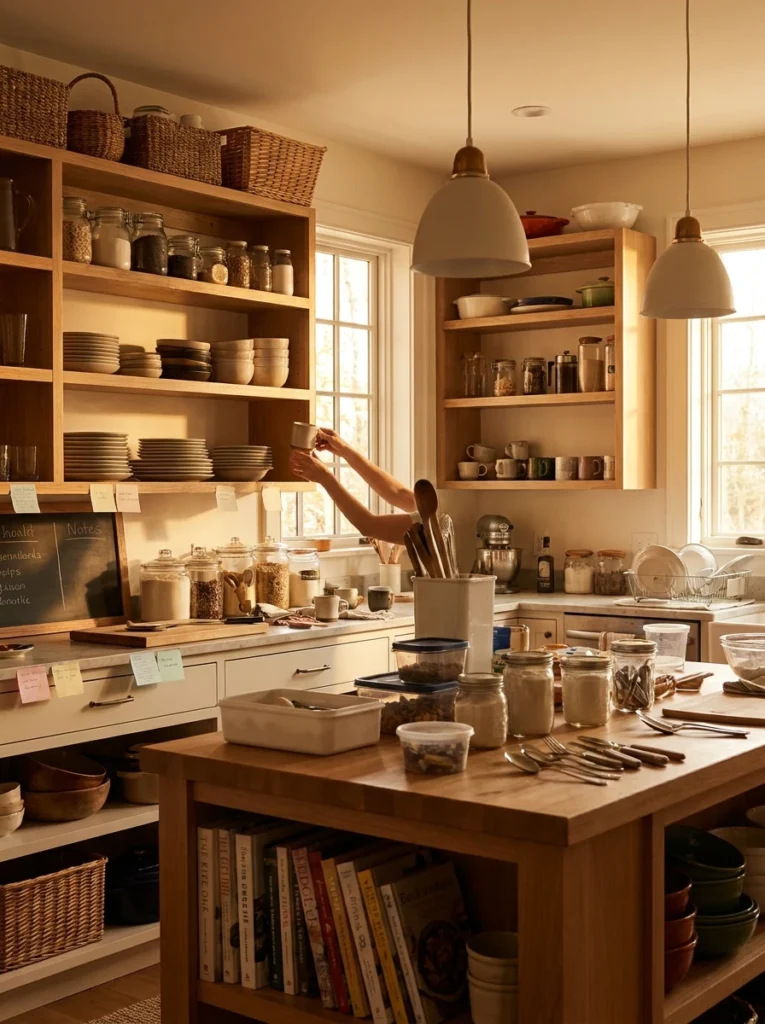
Finding the right zone layout is rarely a one-shot process, and shifting things around after a week or two of actually using the new system is completely normal. Treating the first setup as a draft rather than a final answer takes the pressure off getting it perfect immediately.
13. Keep a Catch-All Zone for Items That Don’t Fit a Category
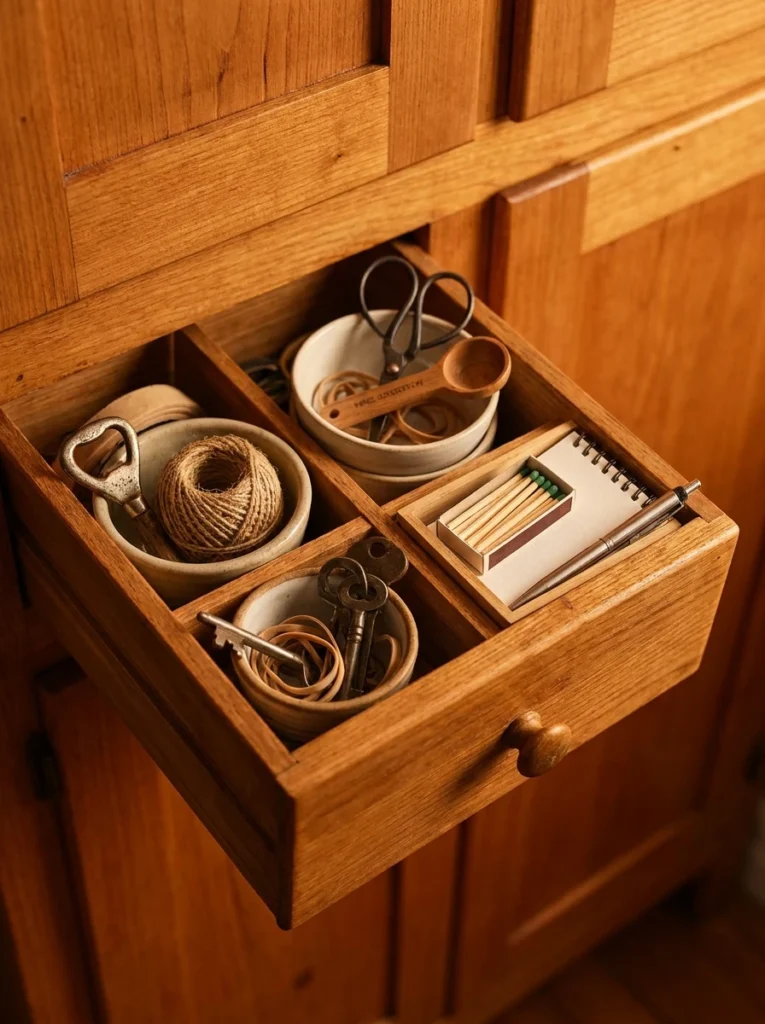
Not everything in a kitchen fits neatly into prep, cook, bake, or clean. A small designated spot for the odds and ends, twist ties, extra batteries, takeout menus, prevents these miscellaneous items from disrupting the more defined zones elsewhere.
14. Revisit Zones Whenever Your Cooking Habits Change
A zone system built around how you cooked two years ago might not match how you cook now, especially if a new hobby, diet, or family member has shifted your routine. Periodically reassessing whether each zone still matches your actual habits keeps the whole system relevant instead of becoming outdated clutter with a label on it.
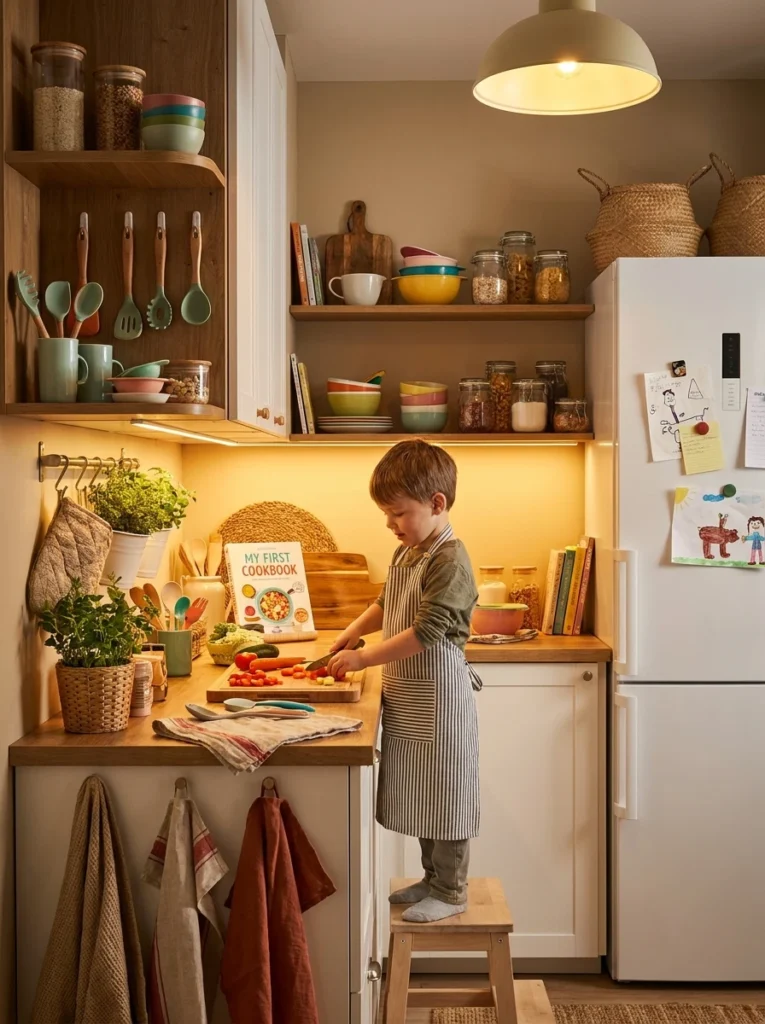
Zones work because they organize a kitchen around behavior instead of arbitrary cabinet space. Once prepping, cooking, baking, and cleanup each have their own defined area, putting something away stops being a decision and starts being automatic, which is really the whole point of an organized kitchen in the first place.