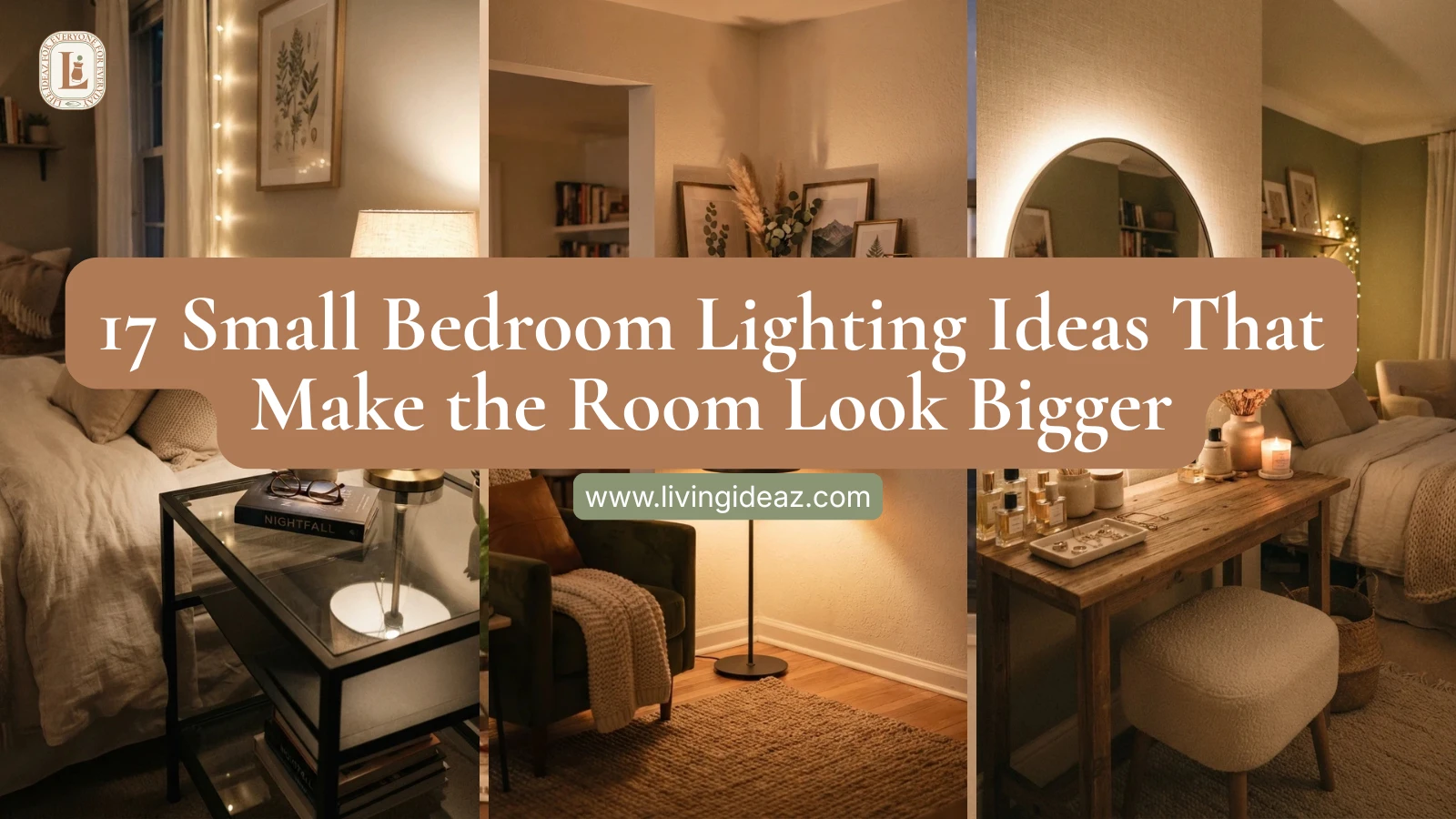
17 Small Bedroom Lighting Ideas That Make the Room Look Bigger
TL;DR: Beyond layering light sources, the real space-expanding tricks come down to mirror pairing, color temperature, and avoiding a few common mistakes, like downward-only recessed spots that leave the walls in shadow. Cooler general light paired with warm accents, plus glass and glossy surfaces near your lamps, does more for perceived size than most people expect.
Lighting isn’t just about making a room bright, it’s about shaping how that room feels. A room filled with soft, even light tends to feel more open because your eyes can move through it without hitting a hard shadow, and a few specific placement and color choices push that effect even further.
Here are 17 more ways to use lighting specifically to make a small bedroom read as bigger than it measures.
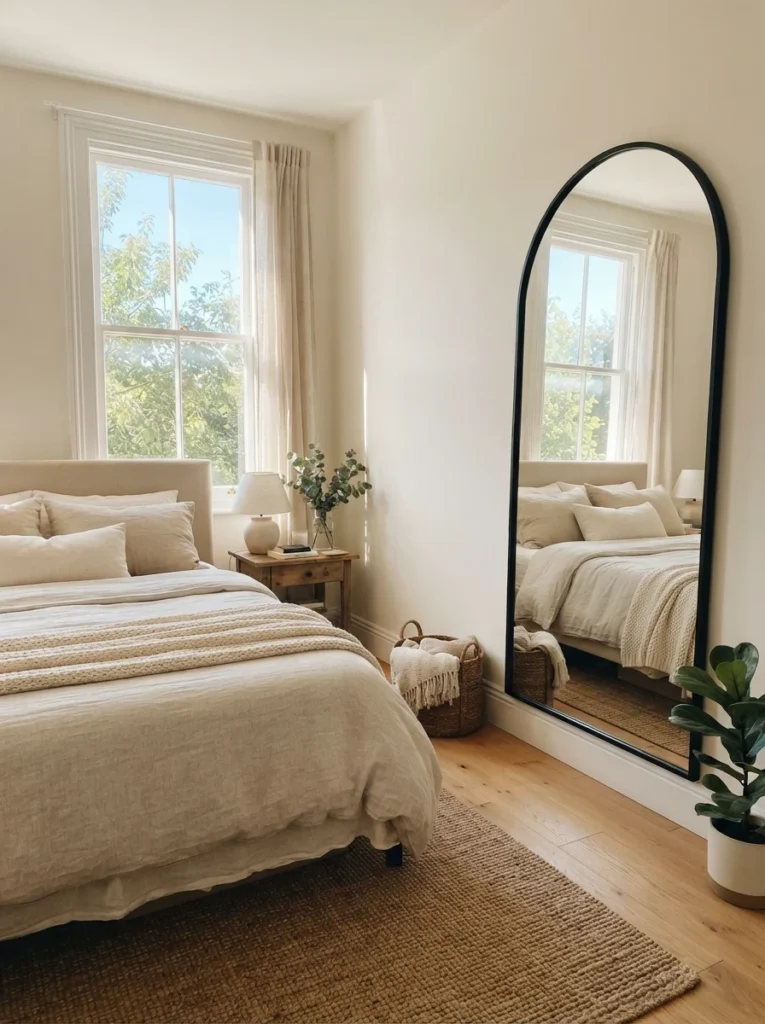
1. Place a Large Mirror Directly Opposite a Window
This is the oldest trick in the book for a reason. A mirror placed directly opposite a window doubles the natural light bouncing through the room and creates a genuine sense of added depth.
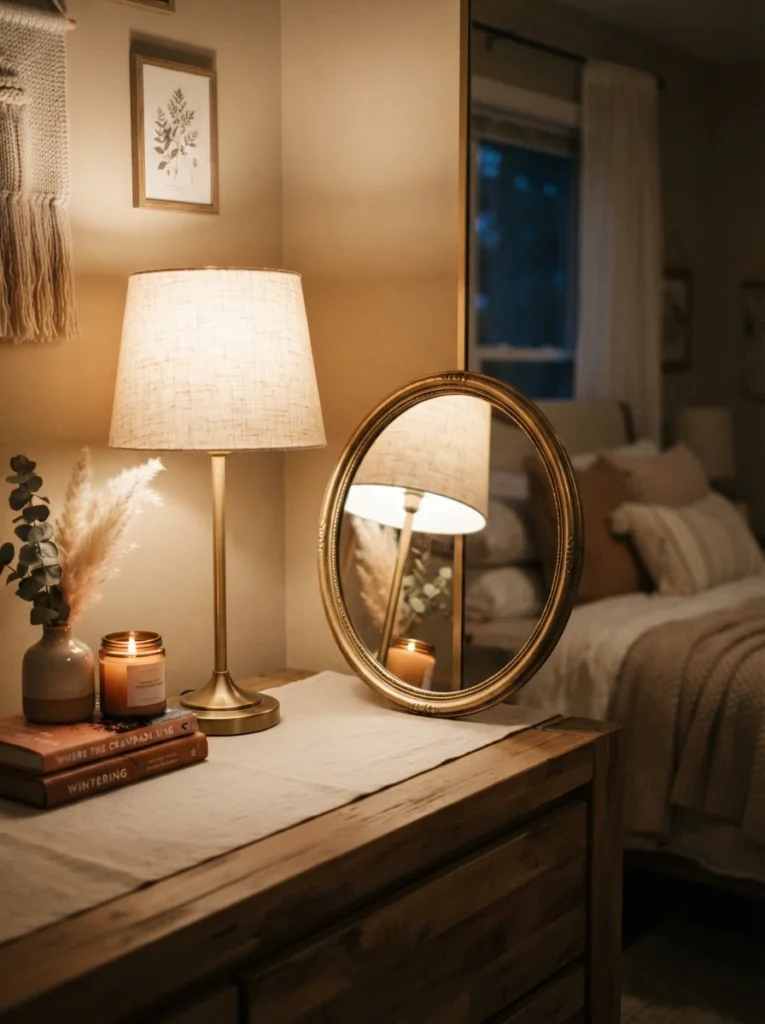
2. Pair a Mirror Behind or Beside a Table Lamp
Placing a mirror behind or beside a lamp reflects and redistributes that light around the room, giving you a genuine double effect, more brightness and more perceived depth from a single fixture.
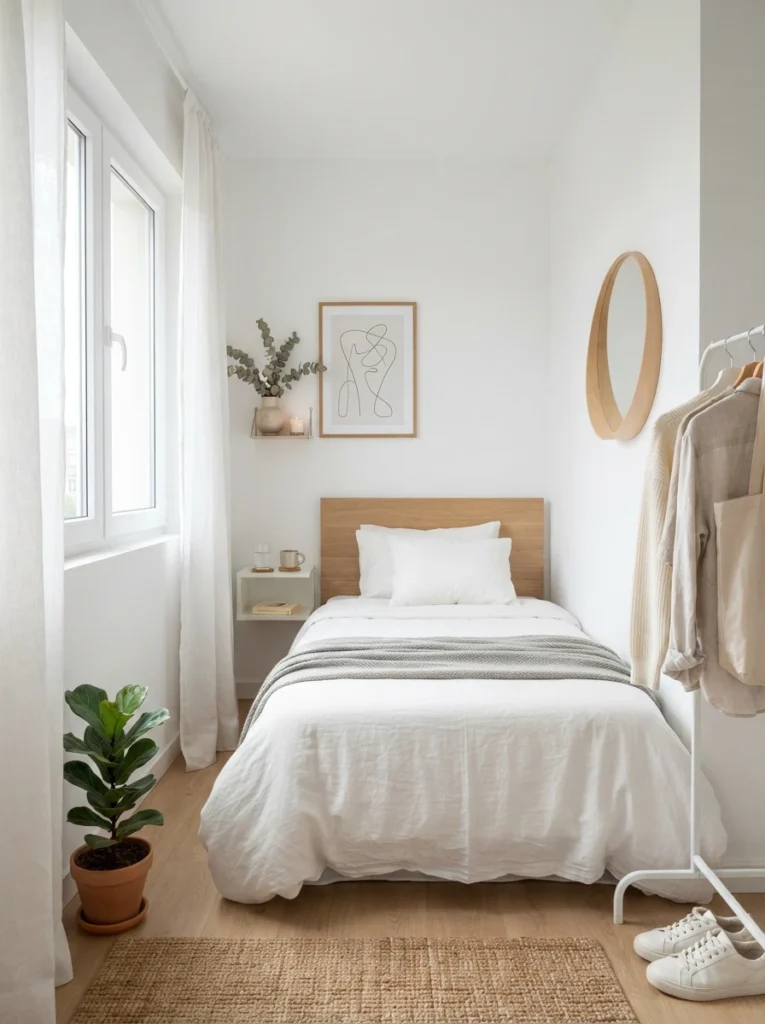
3. Use Cooler White Light for General Illumination
Neutral or cool white light in the 4000K to 6000K range reflects better off surfaces and creates a greater sense of spaciousness than warm light does for general, everyday illumination.
4. Save Warm Light for Accent Spots Only
Warm light in the 2700K to 3000K range creates a cozy atmosphere but can make a space feel smaller when used throughout. Use neutral light for your general fixtures, then add warm light only in strategic accent spots for a touch of coziness.
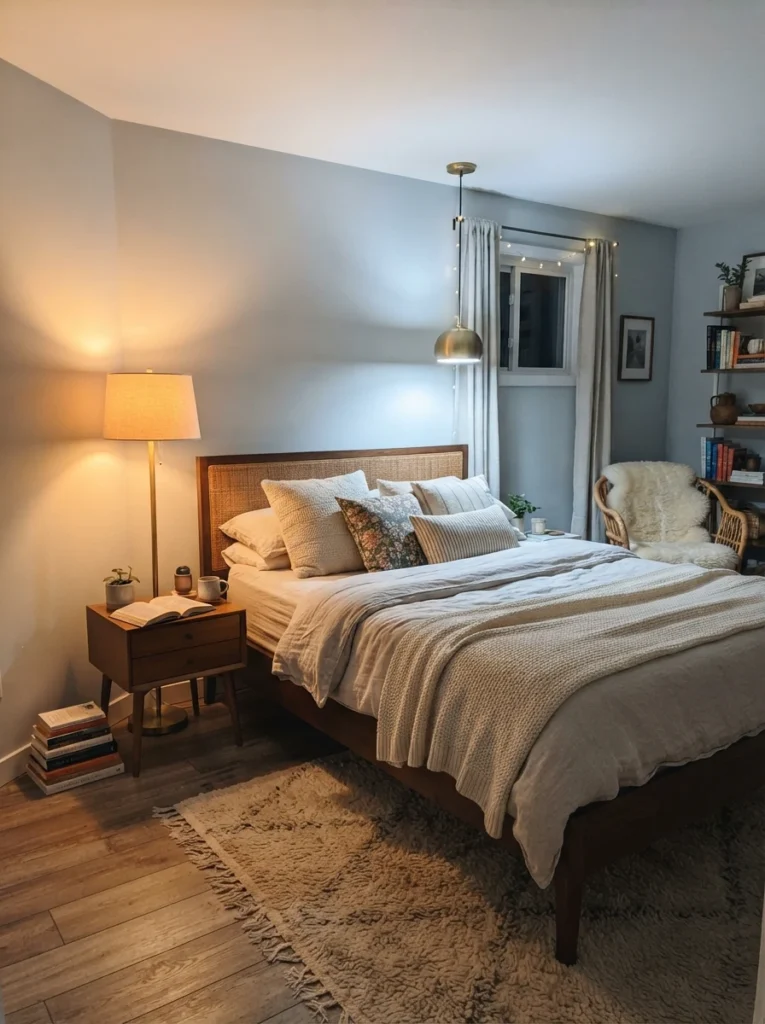
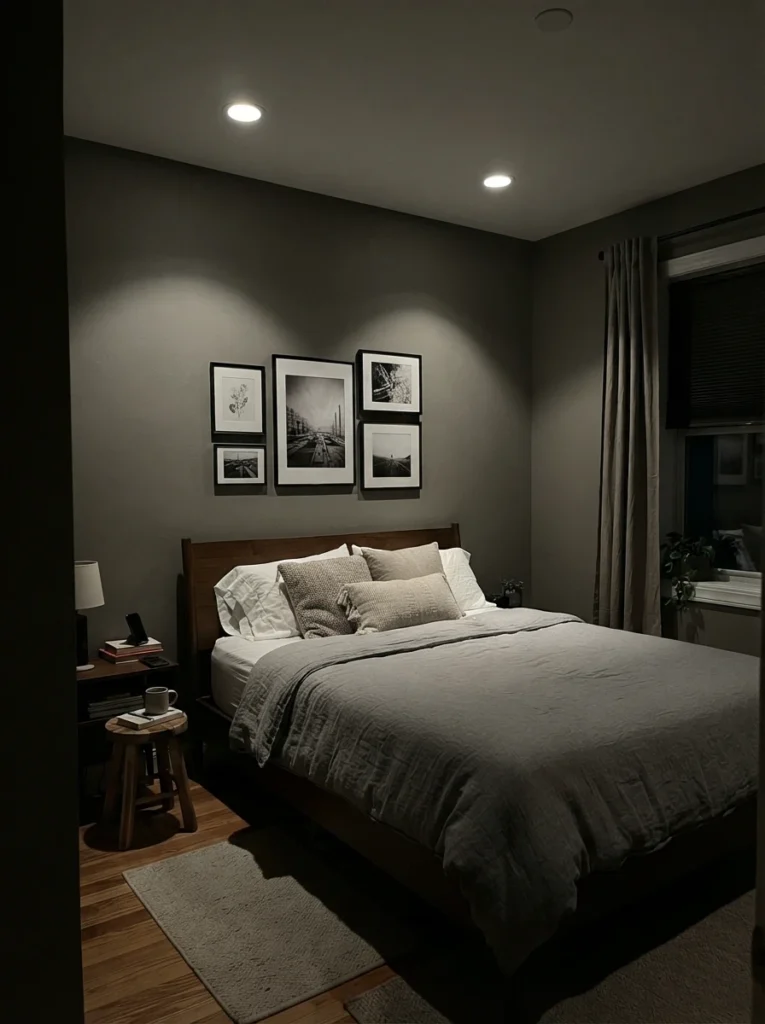
5. Avoid Downward-Only Recessed Spotlights
Recessed spots that project only downward create cones of light on the floor while leaving the walls and ceiling in shadow, which is genuinely the most common lighting mistake in small spaces and makes a room look lower and narrower.
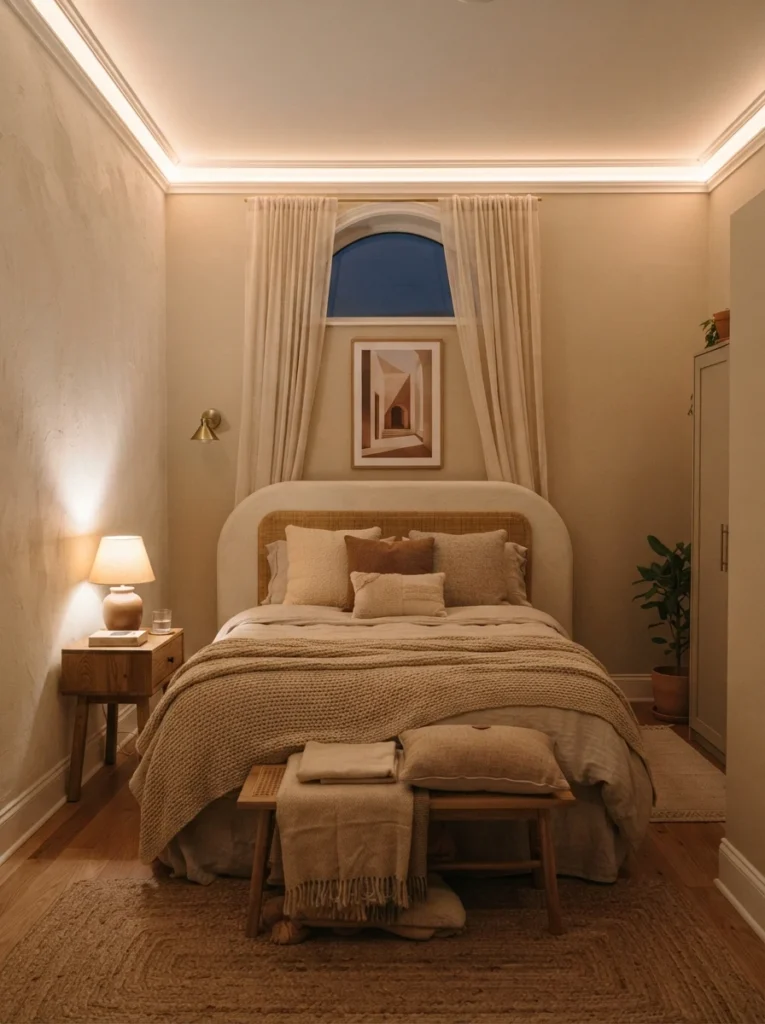
6. Use Perimeter Ceiling Lighting for a Floating Effect
Lighting installed along the perimeter of the ceiling creates a soft “floating” effect that adds a real sense of spaciousness, distinct from a single central fixture that only lights the middle of the room.
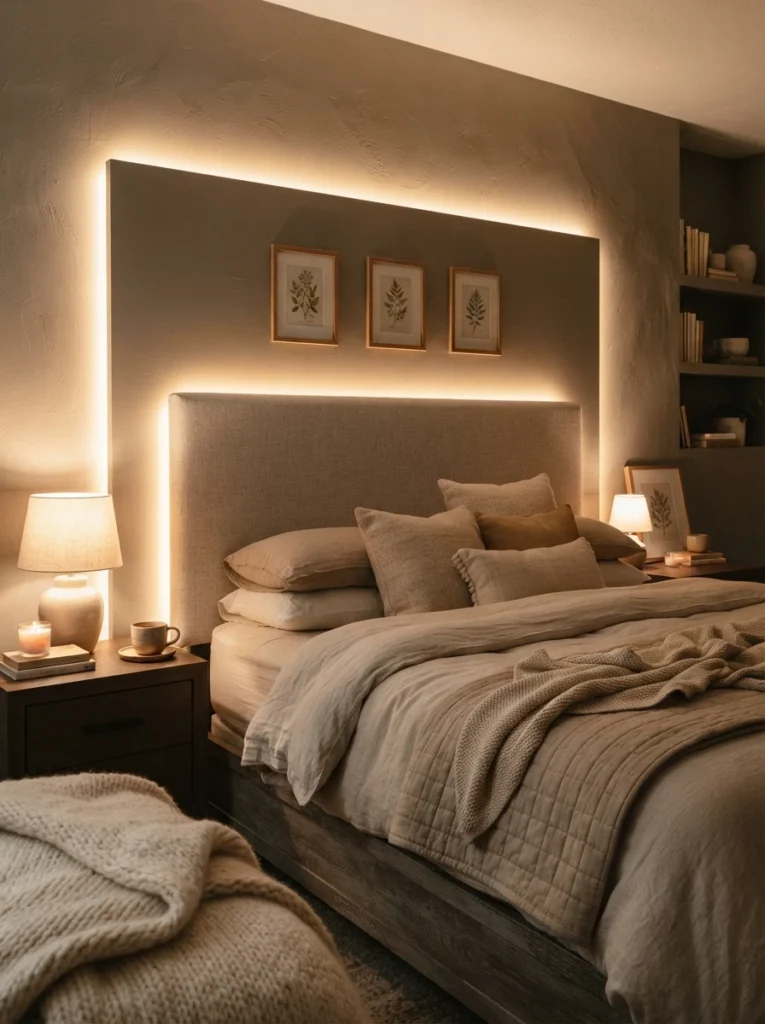
7. Backlight Furniture to Add Depth
Backlighting a headboard or dresser doesn’t just banish darkness behind the furniture, it creates a genuine sense of depth that visually stretches the room, an effect that flat, evenly-lit surfaces simply can’t achieve.
8. Choose Tall, Spindly Table Lamps With Small Shades
Tall, narrow lamps with small shades draw the eye upward rather than across, which shifts focus away from the room’s actual width and toward its height instead.
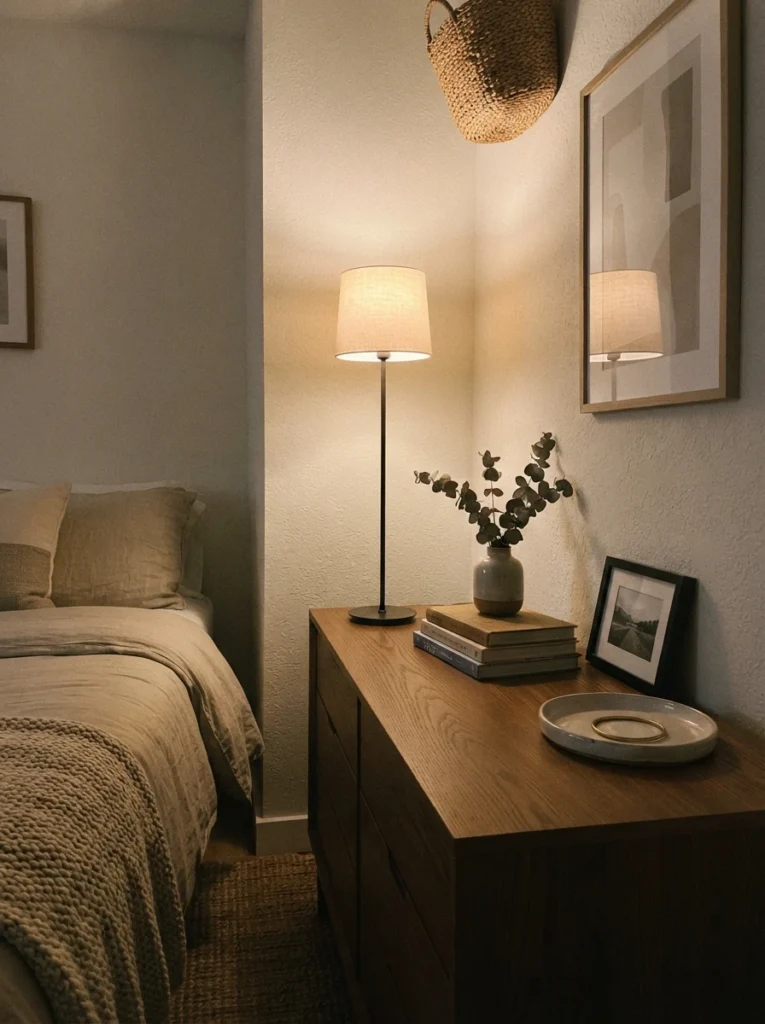
9. Swap a Bulky Floor Lamp for a Wall Sconce
Bulky lamps can visually overwhelm a small room and reduce the sense of spaciousness. Swapping a floor lamp for a wall sconce reclaims the floor space entirely while still delivering the same light.
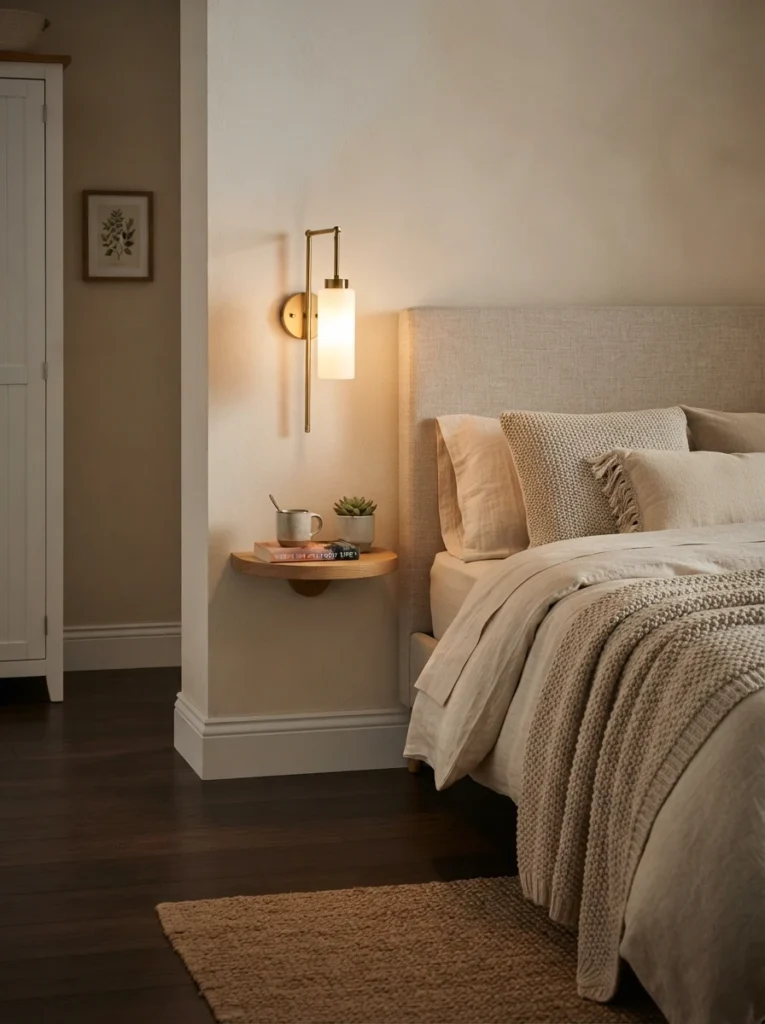
10. Choose Glossy or Glass Furniture Near Your Light Source
Furniture with glossy finishes or glass surfaces reflects artificial light further into the room than matte materials do, extending the reach of whatever fixture you already have.
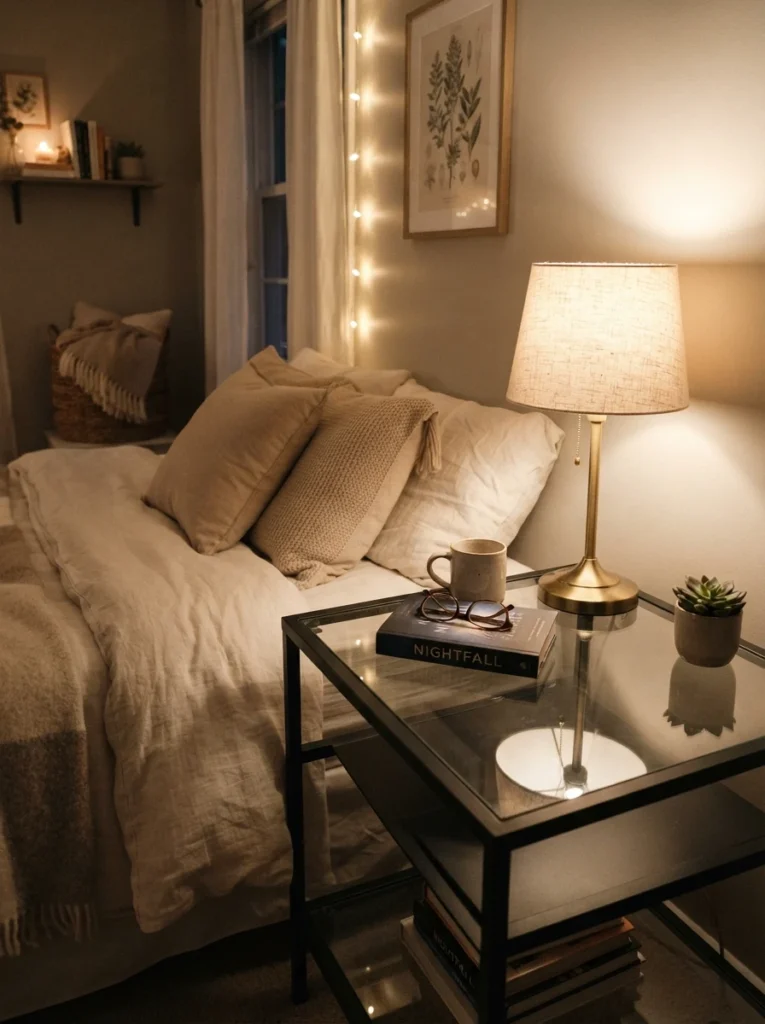
11. Stick to Light-Colored, Neutral Lampshades for General Light
Matching light, neutral lampshades made of linen or silk let more light through than dark ones, which matters most on the lamps doing your room’s general, everyday lighting work.
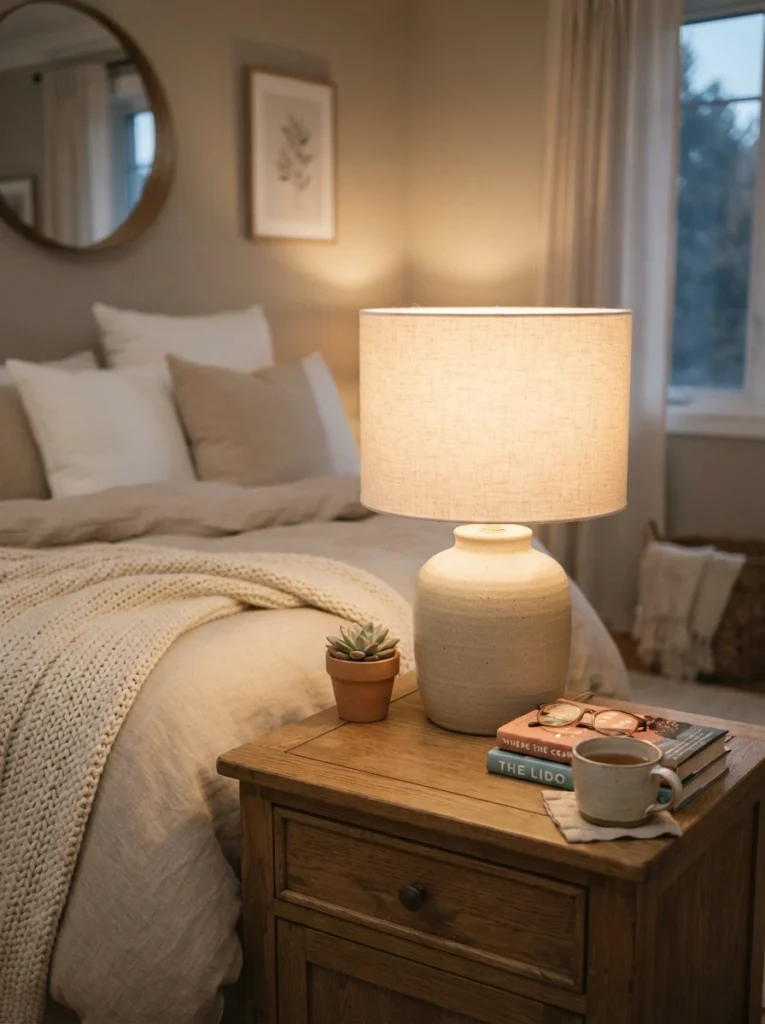
12. Save Dark Shades for Intentional Corner Accents
A dark, opaque shade is genuinely the right choice when you want to send light upward to accent one specific feature or corner, rather than use that lamp for the room’s overall ambient light.
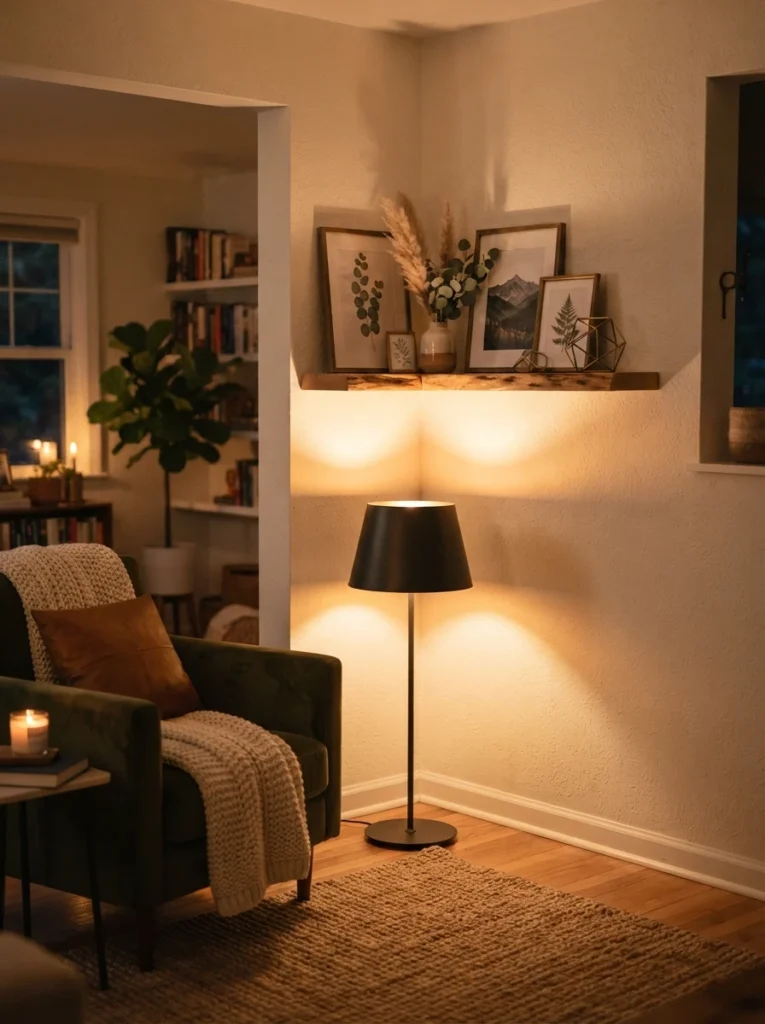
13. Light the Peripheral Walls, Not Just the Center
Wall washing, lighting the walls at the edges of the room, creates the illusion that those walls recede outward, making the room read larger than a single central light source ever could.
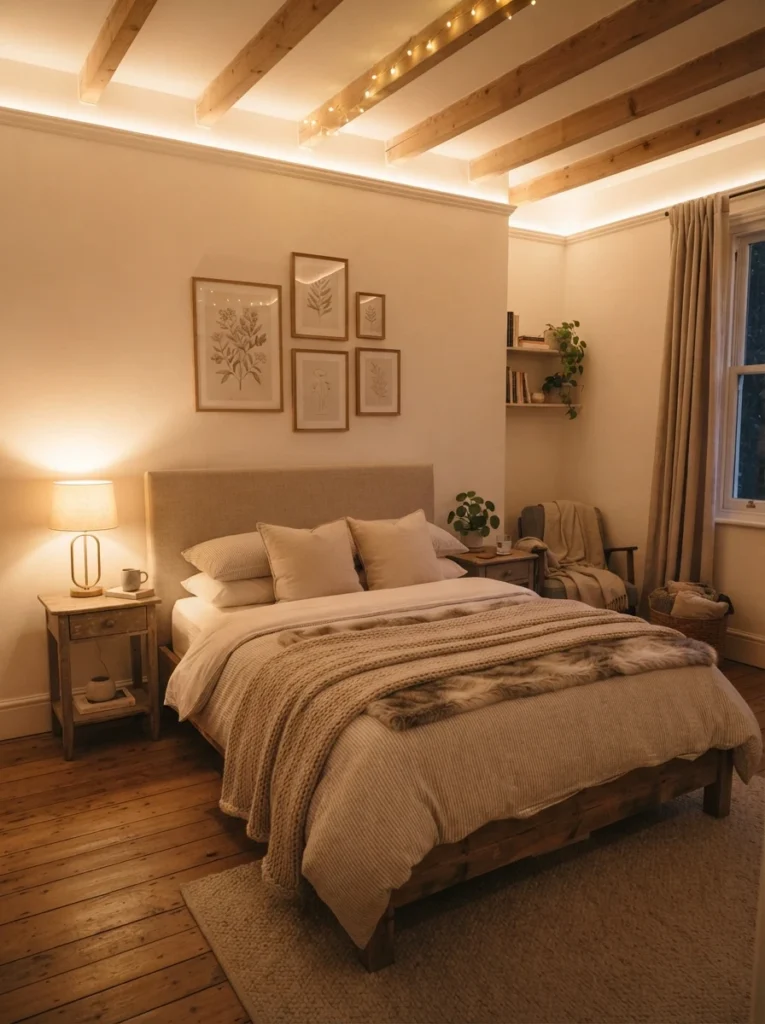
14. Spread Multiple Smaller Sources Around the Edges
Don’t rely on a single central light source. Multiple light sources positioned around the room’s edges, floor lamps in corners, table lamps on a dresser, spread focus across the full area instead of pooling it in the middle.
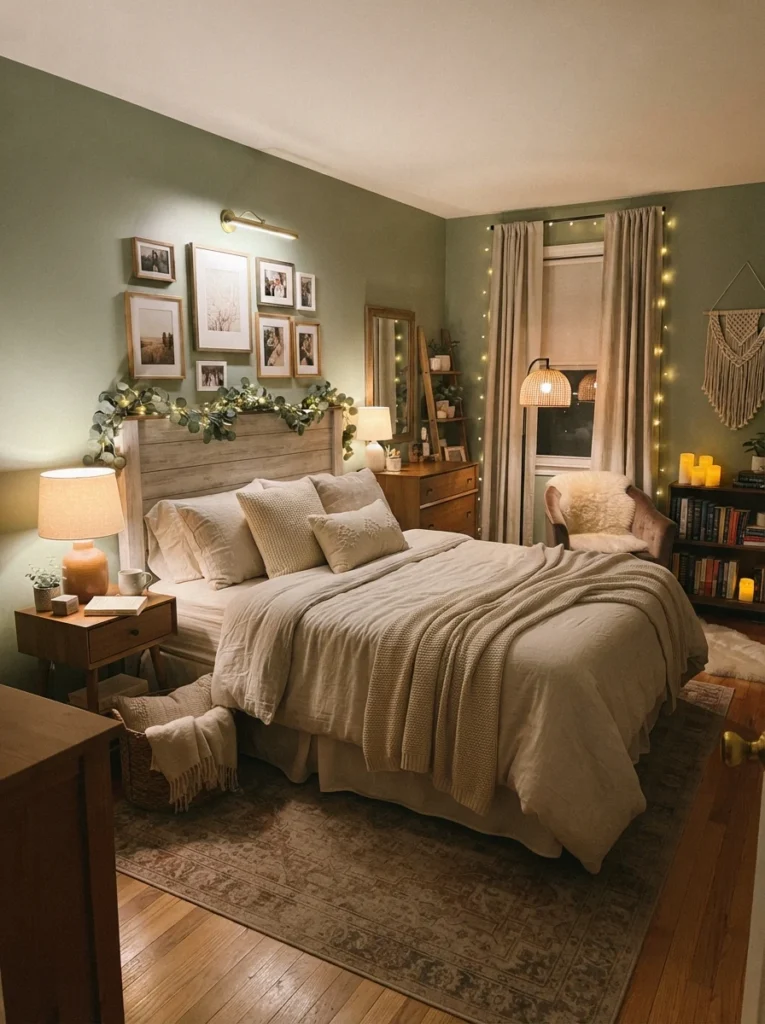
15. Maximize Daylight Reflection With Light Flooring
Light-colored or reflective flooring bounces daylight further into the room, keeping the space evenly lit during the day and reducing how much you rely on artificial lighting until evening actually falls.
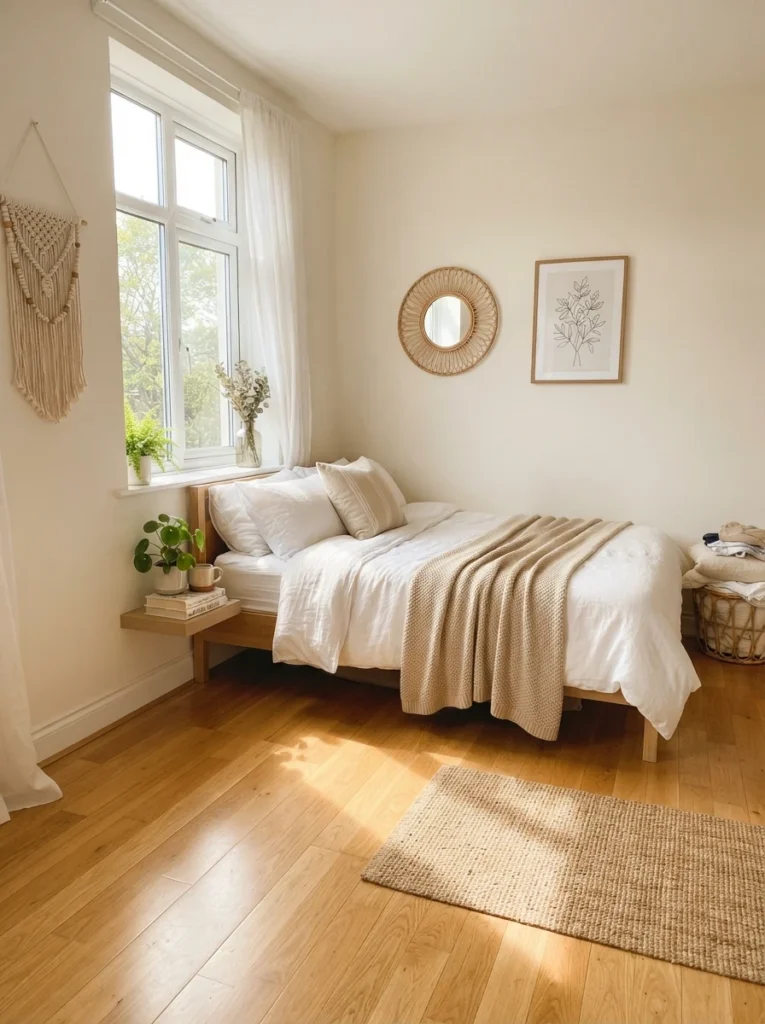
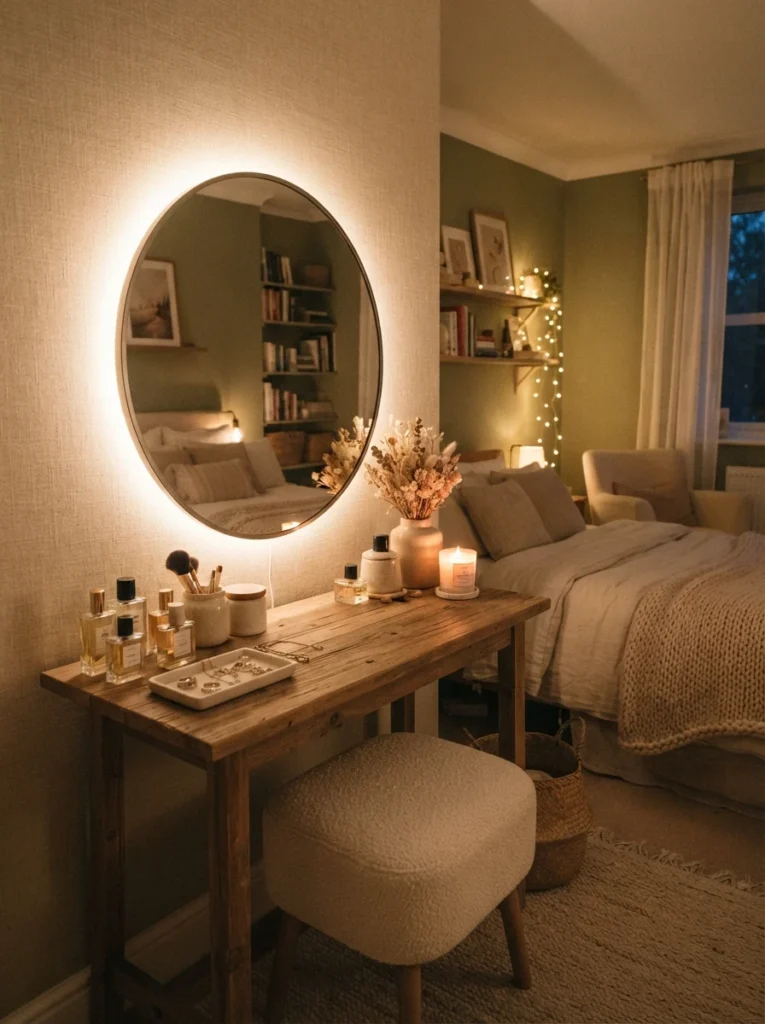
16. Add an LED-Backlit Mirror to a Vanity or Closet Corner
A mirror with built-in LED backlighting enhances the sense of depth specifically in a vanity or closet corner, an area that’s easy to overlook but adds up when it’s left dim.
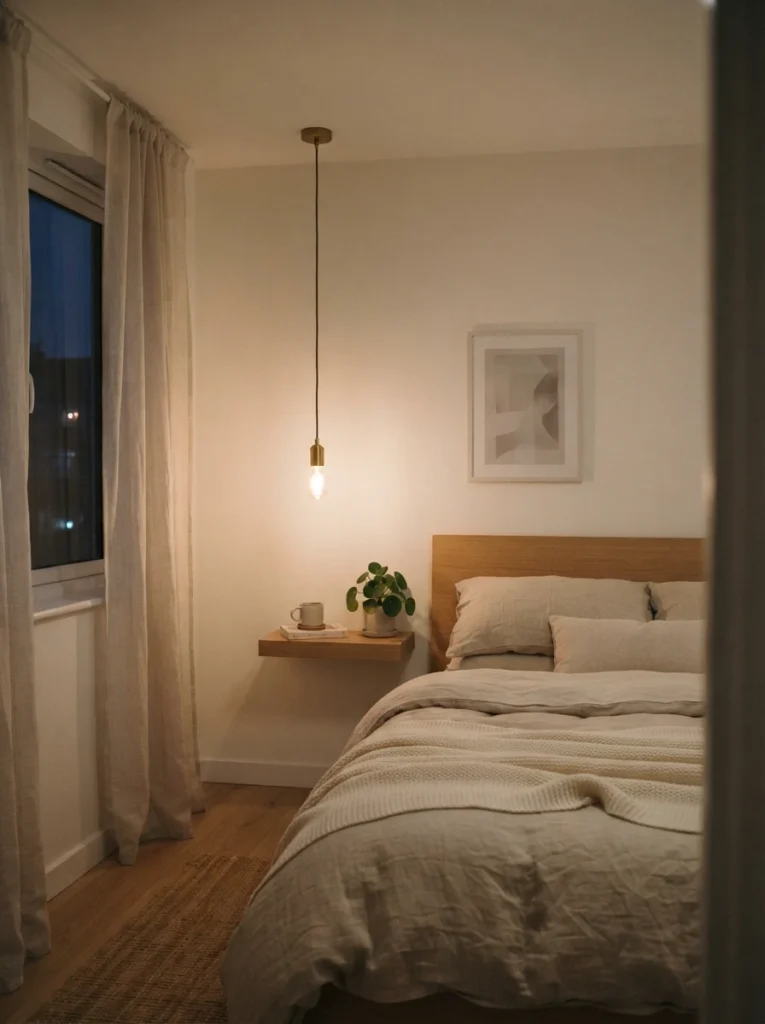
17. Choose Small, Minimalist Pendants Over Large Ornate Ones
In small spaces, every centimeter counts. A minimalist, small-scale pendant does the same lighting job as a large ornate fixture without visually crowding the ceiling of a room that’s already working with limited height.
The common thread across all 17 of these ideas is contrast and reflection working together, cooler general light paired with warm accents, glossy surfaces near your lamps, and mirrors doing double duty wherever they’re placed. Start with the mirror-and-window pairing since it costs nothing, then work through color temperature and perimeter lighting as your next steps.